
The verdict
A mixed-report full-size luxury sedan, strong on reliability and held back by efficiency.
The 2017 LS 460 is the last of the old-school Lexus flagships: a 386-hp V8, a whisper-quiet cabin, and Lexus's best-in-the-industry reliability and dealer service record, all for $73,515 new — around $9,000 less than a six-cylinder BMW 740i. It is also a car that was already a decade old when it was built, with the all-new LS 500 revealed in January 2017, no Apple CarPlay or Android Auto, no crash test data from NHTSA, and every driver-assist feature sold as an option. Running it is expensive: 19 MPG combined on required premium, about $4,100 a year in fuel, and roughly 40% of sticker retained at five years. As a used buy today it makes far more sense than it did new — enormous comfort and durability for a fraction of its original price — provided you can live with 2007-era technology and a $73,000 car's thirst.
Jump to scoresStrengths
- Lexus reliability and service at their absolute peak
- One of the quietest, most comfortable cabins ever sold
- A naturally aspirated V8 that no LS will ever have again
What holds it back
- It drinks — 16 MPG in town, $4,100 a year in premium
- Brutal depreciation — the worst reason to buy one new
- No smartphone mirroring, no head-up display, a mouse for a controller
Top alternatives
Cars shoppers cross-shop with the Lexus LS 3.19B
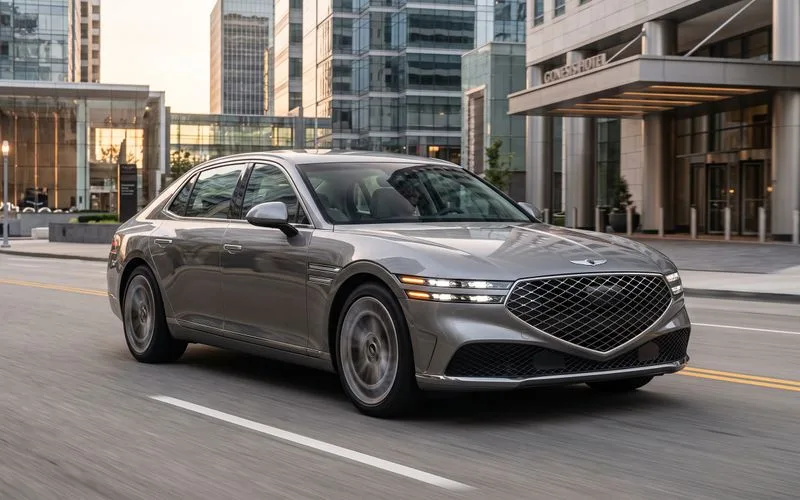 Genesis G90Full-Size Luxury SedanBetter at: Modern tech
It makes the same value-flagship pitch with a current infotainment system, more rear-seat space, rear-axle steering and a far longer warranty with included maintenance.
Compare 3.51A-
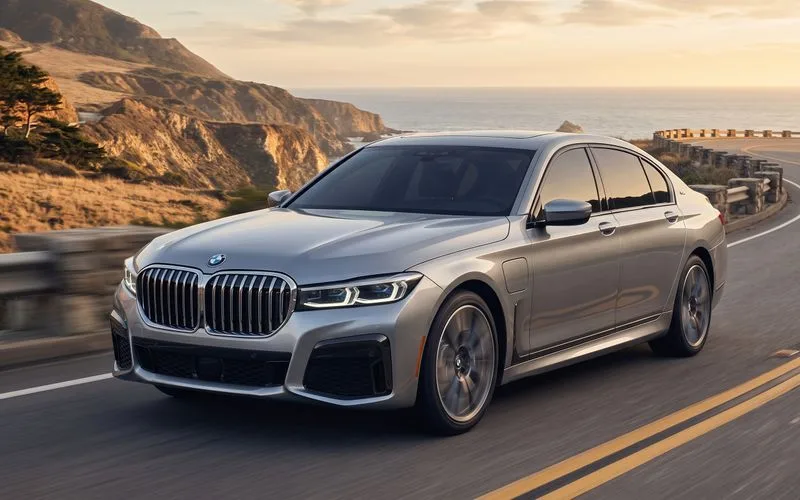 BMW 7 SeriesFull-Size Luxury SedanBetter at: Rear-seat space
For a buyer who wants the long-wheelbase rear seat, hands-free highway driving and 27 MPG, and will accept German maintenance costs to get them.
Compare 3.11B
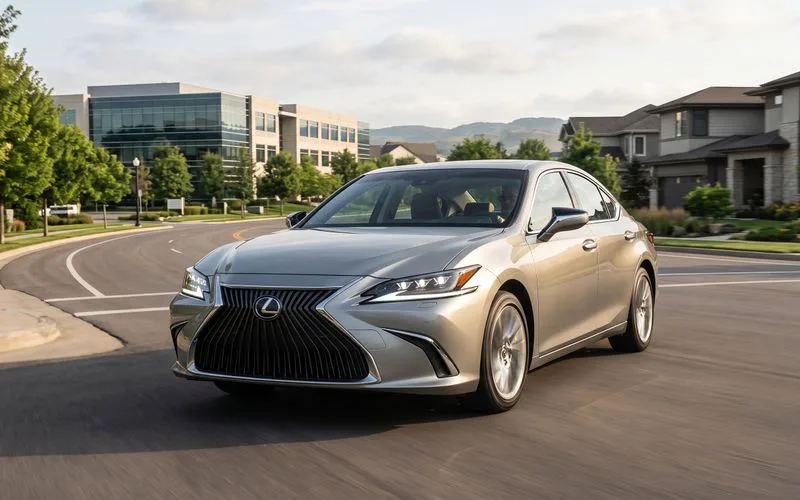 Lexus ESMid-Size Luxury SedanBetter at: Running costs
Nearly the same rear legroom and newer technology for tens of thousands less, with about 43 MPG in hybrid form and stronger resale.
CompareHow it's evolved
10 scored model years · 2017–2026
Subject scores by year
Hover or tap a score to see what moved it versus the year before. A corner mark flags a big swing.
| Year | Performance | Efficiency | Safety | Space | Cost | Reliability | Tech | Use-case | Driving | Value |
|---|---|---|---|---|---|---|---|---|---|---|
| 2026 | 77 | 18 | 79 | 74 | 15 | 85 | 77 | 55 | 70 | 66 |
| 2025 | 76 | 24 | 73 | 71 | 14 | 84 | 78 | 53 | 69 | 65 |
| 2024 | 76 | 20 | 60 | 73 | 15 | 85 | 76 | 48 | 67 | 63 |
| 2023 | 77 | 20 | 72 | 72 | 15 | 85 | 75 | 50 | 68 | 63 |
| 2022 | 75 | 20 | 59 | 72 | 14 | 85 | 64 | 49 | 68 | 61 |
| 2021 | 77 | 20 | 70 | 72 | 26 | 85 | 65 | 50 | 68 | 72 |
| 2020 | 76 | 21 | 69 | 71 | 24 | 80 | 59 | 49 | 65 | 69 |
| 2019 | 76 | 21 | 73 | 71 | 20 | 81 | 59 | 49 | 65 | 71 |
| 2018 | 76 | 21 | 66 | 72 | 19 | 81 | 55 | 47 | 66 | 75 |
| 2017 | 65 | 13 | 38 | 75 | 14 | 86 | 40 | 42 | 65 | 60 |
Compare two years
Best fit & conditions
Higher scores mean a better fit for that use case. Learn more about use-case fit →
Subject profile
Academic Probation · NHTSA safety recalls
No NHTSA safety recall is on record for the 2017 Lexus LS. Other model years of the LS have 10 — listed below.
10 recalls on other model years of the LS (2018–2025)
Feb 18, 2026Power train: automatic transmissionIn the event of transmission solenoid failure, the communication may fail between the transmission electronic control unit (ECU) and the engine ECU, resulting in transmission damage.
Defect
Toyota Motor Engineering & Manufacturing (Toyota) is recalling certain 2025-2026 Lexus LX600 vehicles. In the event of transmission solenoid failure, the communication may fail between the transmission electronic control unit (ECU) and the engine ECU, resulting in transmission damage.
Risk
A damaged transmission can cause a loss of drive power, increasing the risk of a crash. In addition, a damaged transmission can leak transmission fluid, increasing the risk of a fire.
Remedy
Dealers will update the transmission ECU software, free of charge. Owner notification letters were mailed April 13, 2026. Owners may contact Toyota's customer service at 1-800-331-4331. Toyota's number for this recall is 26LA01.
NHTSA campaign 26V094000 ↗Manufacturer no. 26LA014,374 vehicles potentially affected (all models in the campaign)Owners notified Apr 9, 2026Filed by Toyota Motor Engineering & ManufacturingFiled as LS HYBRIDOct 30, 2025Back over prevention: display functionPlease see the recall report for a complete list of models. A software error may cause the rearview camera to freeze or display a blank screen when the vehicle is in reverse. As such, these vehicles fail to comply with the requirements of Federal Motor Vehicle Safety Standard (FMVSS) number 111, "Rear Visibility."
Defect
Toyota Motor Engineering & Manufacturing (Toyota) is recalling certain 2022-2026 Toyota, Lexus, and Subaru Solterra vehicles equipped with a Panoramic View Monitor (PVM) system. Please see the recall report for a complete list of models. A software error may cause the rearview camera to freeze or display a blank screen when the vehicle is in reverse. As such, these vehicles fail to comply with the requirements of Federal Motor Vehicle Safety Standard (FMVSS) number 111, "Rear Visibility."
Risk
A rearview camera that fails to display an image can reduce the driver's view behind the vehicle, increasing the risk of a crash.
Remedy
Dealers will update the parking assist software, free of charge. Owner letters were mailed January 2, 2026. Owners may contact Toyota's customer service at 1-800-331-4331. Toyota's numbers for this recall are 25TB13 and 25LB06. Subaru's number for this recall is WRE25.
NHTSA campaign 25V744000 ↗Manufacturer no. 25TB13/25LB06/WRE251,024,407 vehicles potentially affected (all models in the campaign)Owners notified Dec 5, 2025Filed by Toyota Motor Engineering & ManufacturingFiled as LS, LS HYBRIDSep 11, 2025Electrical system: instrument cluster/panelDue to an error in the instrument panel software at vehicle startup, the instrument panel may fail to display vehicle speed, brake system, and tire pressure warning lights.
Defect
Toyota Motor Engineering & Manufacturing (Toyota) is recalling certain 2023-2024 Toyota Venza, 2023-2025 RAV4 Prime, RAV4, Highlander, GR Corolla, Crown, 2024-2025 Lexus TX, LS, Toyota Tacoma, Grand Highlander, and 2025 Lexus RX, Toyota Crown Signia, Camry, RAV 4 Plug-in Hybrid (PHEV), and 4 Runner vehicles. Due to an error in the instrument panel software at vehicle startup, the instrument panel may fail to display vehicle speed, brake system, and tire pressure warning lights.
Risk
An instrument panel display that does not show critical information can increase the risk of a crash or injury.
Remedy
Dealers will update the instrument panel software over-the-air (OTA) for non-PHEV vehicles, free of charge. For PHEV vehicles, dealers will inspect the instrument panel assembly, and either replace it, or update the software, free of charge. Owner letters were mailed December 5, 2025. Additional letters will be sent, anticipated in May 2026. This is a phased recall. Owners may contact Toyota's customer service at 1-800-331-4331. Toyota's numbers for this recall are 25TB08 and 25TA08. Lexus' numbers for this recall are 25LB05 and 25LA05.
NHTSA campaign 25V595000 ↗Manufacturer no. See Part 573 Report591,377 vehicles potentially affected (all models in the campaign)Owners notified Dec 5, 2025Filed by Toyota Motor Engineering & ManufacturingFiled as LSApr 17, 2024Air bags: sensor: occupant classification: front passengerAs such, these vehicles fail to comply with the requirements of Federal Motor Vehicle Safety Standard number 208, "Occupant Crash Protection."
Defect
Toyota Motor Engineering & Manufacturing (Toyota) is recalling certain 2018-2021 Lexus LS500 and 2018-2020 Lexus LS500 Hybrid vehicles equipped with the "Executive Package." The front passenger seat may have been assembled with interference between internal parts that can cause the Occupant Classification System (OCS) sensor to incorrectly detect the occupant. As such, these vehicles fail to comply with the requirements of Federal Motor Vehicle Safety Standard number 208, "Occupant Crash Protection."
Risk
Incorrect detection of an occupant may result in improper air bag deployment during a crash, increasing the risk of injury.
Remedy
Dealers will inspect and repair the front passenger seat, as necessary, free of charge. Owner notification letters were mailed June 7, 2024. Owners may contact Toyota customer service at 1-800-331-4331. Toyota's number for this recall is 24LA03.
NHTSA campaign 24V275000 ↗Manufacturer no. 24LA03509 vehicles potentially affected (all models in the campaign)Owners notified Jun 7, 2024Filed by Toyota Motor Engineering & ManufacturingFiled as LS, LS HYBRIDFeb 21, 2024Back over prevention: display functionDue to incorrect programming of the parking-assist electronic control unit (ECU) software, the rearview camera image may not immediately display within a couple of seconds after the shifter is placed into reverse. As such, these vehicles fail to comply with the requirements of Federal Motor Vehicle Safety Standard number 111, "Rear Visibility."
Defect
Toyota Motor Engineering & Manufacturing (Toyota) is recalling certain 2023 Mirai, Lexus LS500, LS500H, 2023-2024 Lexus ES250, ES300H, ES350, 2024 Lexus LC500, and LC500H vehicles equipped with a Panoramic View Monitor (PVM) system. Due to incorrect programming of the parking-assist electronic control unit (ECU) software, the rearview camera image may not immediately display within a couple of seconds after the shifter is placed into reverse. As such, these vehicles fail to comply with the requirements of Federal Motor Vehicle Safety Standard number 111, "Rear Visibility."
Risk
A rearview camera that fails to display an image can reduce the driver's rear view, increasing the risk of a crash.
Remedy
Dealers will update the parking assist ECU software, free of charge. Owner notification letters were mailed April 10, 2024. Owners may contact Toyota customer service at 1-800-331-4331. Toyota's numbers for this recall are 24TA01 and 24LA01.
NHTSA campaign 24V124000 ↗Manufacturer no. 24TA01 / 24LA0118,616 vehicles potentially affected (all models in the campaign)Owners notified Apr 10, 2024Filed by Toyota Motor Engineering & ManufacturingFiled as LS, LS HYBRIDApr 13, 2022Electronic stability control (esc): control module: softwareThe Skid Control ECU software may not turn on the Vehicle Stability Control (VSC) system when the vehicle is restarted after the driver has disabled the VSC system. As such, these vehicles fail to comply with the requirements of Federal Motor Vehicle Safety Standard number 126, "Electronic Stability Control Systems."
Defect
Toyota Engineering & Manufacturing (Toyota) is recalling certain 2022 Lexus LX 600, Lexus NX 350h, Lexus NX 450h+, Toytoa RAV4 Hybrid, 2021-2022 Lexus LS 500h, Toyota Mirai, RAV4 PRIME, Sienna, Venza, and 2020-2022 Toyota Highlander Hybrid vehicles. The Skid Control ECU software may not turn on the Vehicle Stability Control (VSC) system when the vehicle is restarted after the driver has disabled the VSC system. As such, these vehicles fail to comply with the requirements of Federal Motor Vehicle Safety Standard number 126, "Electronic Stability Control Systems."
Risk
Driving with a deactivated stability control system increases the risk of a crash.
Remedy
Dealers will update the Skid Control ECU software, free of charge. Owner notification letters were mailed May 27, 2022. Owners may contact Toyota customer service at 1-800-331-4331. Toyota's number for this recall is 22TA03. Lexus' number for this recall is 22LA01.
NHTSA campaign 22V239000 ↗Manufacturer no. 22TA03, 22LA01458,110 vehicles potentially affected (all models in the campaign)Owners notified May 27, 2022Filed by Toyota Motor Engineering & ManufacturingFiled as LS HYBRIDNov 4, 2020Fuel system, gasoline: delivery: fuel pumpThe low-pressure fuel pump inside the fuel tank may fail.
Defect
Toyota Motor Engineering & Manufacturing (Toyota) is recalling certain 2018-2019 4Runner, 2019-2020 Avalon, 2019 Corolla Hatchback, 2017-2019 Highlander, 2018-2020 Camry, 2020 Corolla, 2018-2019 Land Cruiser, 2017-2020 Tacoma, 2019-2020 RAV4, 2019-2020 Sequoia, 2017-2020 Sienna, 2019-2020 Tundra, 2018-2020 Lexus ES350, 2017 Lexus GS200t, 2017-2019 Lexus GS350, 2019 Lexus GS300, 2018-2020 Lexus LC500h, 2019-2020 Lexus LS500, 2018-2019 Lexus GX460, 2017 Lexus IS200t, 2019 Lexus IS300, 2019 Lexus IS350, 2018-2020 Lexus LC500, 2018 Lexus LS500, 2019 Lexus LS500h, 2018-2019 Lexus LX570, 2017 Lexus RC200t, 2019 Lexus RC300, RC350, 2017 and 2019-2020 Lexus RX350, 2018-2020 RX350L, 2019 Lexus UX200, 2018-2019 Lexus NX300 vehicles. The low-pressure fuel pump inside the fuel tank may fail.
Risk
If the fuel pump fails, the engine can stall while driving, increasing the risk of a crash.
Remedy
Toyota will notify owners, and dealers will replace the fuel pump assembly with an improved one, free of charge. Owners of specific models were notified that remedy parts were available starting January 21, 2021. Owners of other models will be notified as remedy parts become available. Remedy parts should be available for all affected vehicles by late March 2021. Owners may contact Toyota customer service at 1-888-270-9371 or Lexus customer service at 1-800-255-3987. Note: This recall is an expansion of recall 20V-012. Toyota's number for this recall is 20TA02. Lexus' number for this recall is 20LA01.
NHTSA campaign 20V682000 ↗Manufacturer no. 20TA02, 20LA011,525,742 vehicles potentially affected (all models in the campaign)Owners notified Jan 21, 2021Filed by Toyota Motor Engineering & ManufacturingFiled as LS HYBRID, LS500Jan 13, 2020Fuel system, gasoline: delivery: fuel pumpToyota Motor Engineering & Manufacturing (Toyota) recalled certain 2018-2019 4Runner, Highlander, Camry, Land Cruiser, Sequoia, Sienna, Tacoma and Tundra, and Lexus RC 300, RC 350, GS 350, GX 460, IS 300, LC 500, LS 500, LX 570, RX 350L, and 2019 Toyota Avalon and Corolla, and certain Lexus NX 300, and ES 350 vehicles on January 13, 2020. On March 4, 2020, Toyota expanded the recall to include certain 2014-2015 Toyota 4Runner and Land Cruiser, 2018 Avalon, Corolla, 2014 FJ Cruiser, 2017 Sienna and Lexus 2018 ES 350, 2018-2019 GS 300, 2013-2014 GS350, 2014-2015 GX 460, IS 350 and LX 570, 2014 IS F, 2018-2019 IS 350, LC 500H and LS 500H, 2013-2015 LS 460, 2015 NX 200T and RC350, 2017 RC 200T and RX 350. Toyota also removed the 2018-2019 Toyota 4Runner and Land Cruiser and 2018-2019 Lexus GX 460 and LX 570 and 2019 NX300 from inclusion in this recall. On March 19, 2020, Toyota expanded the recall to include 2015 Lexus GS350 vehicles. The low-pressure fuel pump inside the fuel tank may fail.
Defect
Toyota Motor Engineering & Manufacturing (Toyota) recalled certain 2018-2019 4Runner, Highlander, Camry, Land Cruiser, Sequoia, Sienna, Tacoma and Tundra, and Lexus RC 300, RC 350, GS 350, GX 460, IS 300, LC 500, LS 500, LX 570, RX 350L, and 2019 Toyota Avalon and Corolla, and certain Lexus NX 300, and ES 350 vehicles on January 13, 2020. On March 4, 2020, Toyota expanded the recall to include certain 2014-2015 Toyota 4Runner and Land Cruiser, 2018 Avalon, Corolla, 2014 FJ Cruiser, 2017 Sienna and Lexus 2018 ES 350, 2018-2019 GS 300, 2013-2014 GS350, 2014-2015 GX 460, IS 350 and LX 570, 2014 IS F, 2018-2019 IS 350, LC 500H and LS 500H, 2013-2015 LS 460, 2015 NX 200T and RC350, 2017 RC 200T and RX 350. Toyota also removed the 2018-2019 Toyota 4Runner and Land Cruiser and 2018-2019 Lexus GX 460 and LX 570 and 2019 NX300 from inclusion in this recall. On March 19, 2020, Toyota expanded the recall to include 2015 Lexus GS350 vehicles. The low-pressure fuel pump inside the fuel tank may fail.
Risk
If the fuel pump fails, the engine can stall while driving, increasing the risk of a crash.
Remedy
Toyota will notify owners, and dealers will replace the fuel pump, free of charge. The recall began May 4, 2020. Owners may contact Toyota customer service at 1-888-270-9371 or Lexus customer service at 1-800-255-3987. Toyota's numbers for this recall are 20TB02 and 20TA02 for Toyota vehicles and 20LB01 and 20LA01 for Lexus vehicles.
NHTSA campaign 20V012000 ↗Manufacturer no. 20TB02/20TA02/20LB011,830,752 vehicles potentially affected (all models in the campaign)Owners notified May 1, 2020Filed by Toyota Motor Engineering & ManufacturingFiled as LS HYBRID, LS500Jul 24, 2019Electronic stability control (esc) · Service brakesThe brake booster pump may fail causing a deactivation of the Vehicle Stability Control system and a loss of braking assist. As such, these vehicles fail to comply with the requirements of Federal Motor Vehicle Safety Standard (FMVSS) number 126, "Electronic Stability Control Systems."
Defect
Toyota Motor Engineering & Manufacturing (Toyota) is recalling certain 2019 Lexus LS500, LC500, ES300h, UX250h, LS500h, Toyota Prius, RAV4 HV, 2019-2020 Toyota Prius Prime, and 2020 Corolla HV vehicles. The brake booster pump may fail causing a deactivation of the Vehicle Stability Control system and a loss of braking assist. As such, these vehicles fail to comply with the requirements of Federal Motor Vehicle Safety Standard (FMVSS) number 126, "Electronic Stability Control Systems."
Risk
Deactivation of the vehicle stability control system or a loss of braking assist increases the risk of a crash.
Remedy
Toyota will notify owners, and dealers will inspect and, if necessary, replace the brake booster pump, free of charge. The recall began September 20, 2019. Toyota owners may contact Toyota customer service at 1-888-270-9371 and Lexus owners may contact Lexus customer service at 1-800-255-3987. Toyota's numbers for this recall are K1L/K0L. Lexus' numbers for this recall are K2F/KLF.
NHTSA campaign 19V544000 ↗Manufacturer no. K1L/K0L, K2F/KLF6,925 vehicles potentially affected (all models in the campaign)Owners notified Sep 20, 2019Filed by Toyota Motor Engineering & ManufacturingFiled as LS HYBRID, LS500Feb 27, 2019Tires · Tires: sidewallThe tire-on-wheel assembly process may have caused the reinforcement layer to crack, possibly resulting in the tire tread layer separating from the tire.
Defect
Toyota Motor Engineering & Manufacturing (Toyota) is recalling certain 2018 Lexus LS vehicles equipped with run-flat tires with a sidewall reinforcement layer inside the tire. The tire-on-wheel assembly process may have caused the reinforcement layer to crack, possibly resulting in the tire tread layer separating from the tire.
Risk
If the tire tread layer separates from the vehicle, vehicle handling and stability may be affected, increasing the risk of crash.
Remedy
Toyota will notify owners, and Lexus dealers will replace the affected tires, free of charge. The recall began April 26, 2019. Owners may contact Lexus customer service at 1-800-255-3987. The Toyota number for this recall is KLC.
NHTSA campaign 19V134000 ↗Manufacturer no. KLC6,296 vehicles potentially affected (all models in the campaign)Owners notified Apr 26, 2019Filed by Toyota Motor Engineering & ManufacturingFiled as LS
Source: NHTSA Office of Defects Investigation recall database, model years 2017–2026. Recalls are listed by model year as the manufacturer filed them; whether a specific car is affected depends on its VIN — check a VIN at nhtsa.gov ↗. NHTSA model names matched to this page: LS, LS HYBRID, LS500.
Detailed scoring by subject
1Performance & PowertrainMid-pack among this car's ten categories.2.37C+
2017 is the last model year of the fourth-generation XF40 LS and a carry-over year mechanically: the 4.6-liter 1UR-FSE V8 is unchanged at 386 hp in rear-drive form, which was still among the strongest standard engines in the full-size luxury class and the last V8 any LS would be given. It sits in the upper-middle of the sedan horsepower band — ahead of a 740i or an A8 3.0T of the same year, behind the V8 S 550.
367 lb-ft from a naturally aspirated 4.6 places the LS in the upper quarter of the sedan torque band, but it arrives at 4,100 rpm rather than just off idle — the characteristic trade of a large atmospheric V8 against the turbocharged rivals that had already taken over this class by 2017, and the reason the successor's 442 lb-ft from 1,600 rpm felt like a step change.
5.4 seconds to 60 was quick for a 4,365-lb flagship whose brief is isolation rather than pace, and quicker than the six-cylinder base versions of the S-Class, 7 Series and A8 it was cross-shopped against. It is mid-band for sedans and roughly half a second off the fifth-generation LS 500 that replaced it.
Smoothness is the single thing this powertrain does best: a naturally aspirated D-4S V8 has no turbos to spool and no hybrid handoffs to mask, so throttle response is linear and immediate and the engine is essentially inaudible at cruise in a car built around shutting the world out. It stops short of the very top band only because reviewers flag an abrupt-feeling throttle map in Sport mode, and because by 2017 the delivery — strong but peaky, with the muscle high in the rev range — read as old-school beside turbocharged rivals.
The eight-speed automatic shifts smoothly and unobtrusively in the cruising the LS exists for, which is most of what this car is asked to do. It sits in the middle band because reviewers consistently judged it good rather than best-in-class — Edmunds said outright that it should be better — and because the long-standing XF40 complaint is hesitation and a slow kickdown when a sudden pass is demanded, a trait the ZF eight-speed in the 7 Series and S-Class did not share.
All-wheel drive was orderable across the 2017 range rather than locked to one trim — LS 460 AWD, LS 460 L AWD and F Sport AWD were all catalogued — and the hardware is real, a Torsen limited-slip center differential with a rear-biased split that redistributes as grip changes. It stays out of the top band because AWD is a roughly $3,000 option on a rear-drive baseline rather than standard as with quattro or 4MATIC, costs 26 hp in the process, and offers no low range, terrain modes or torque vectoring beyond wet- and snow-road traction.
2017 is the year the LS lineup narrowed to a single engine: the LS 600h L hybrid was dropped for the US market, leaving the 4.6-liter V8 as the only powertrain, with the choice reduced to rear or all-wheel drive and short or long wheelbase. A flagship with no electrified option at all — in a year when the S-Class offered a diesel, multiple V8s, a V12, AMG variants and a plug-in hybrid — lands squarely in the bottom band, and the position is worse than it had been, since the hybrid existed the year before.
2Efficiency & RangeThe LS's lowest-graded category.0.00F
A 4.6-liter naturally aspirated V8 hauling a 4,365-lb, heavily sound-deadened flagship returns 19 MPG combined — within a point of the floor of the gas-sedan band and the worst combined figure any LS has posted in this catalog. With the LS 600h L dropped for 2017 there is no efficient way to order one, and the 2018 redesign's downsized twin-turbo V6 gained two to four MPG immediately.
City is where the LS is at its worst: a large atmospheric V8 with no stop-start, no cylinder deactivation and, from 2017, no hybrid alternative in the range, moving well over two tons in stop-and-go traffic. 16 MPG sits at the bottom of the sedan city band and scores zero — this is the duty cycle the departed LS 600h L had existed to cover.
Highway is the LS's least-compromised figure and still only 24 MPG, at the very bottom of the sedan highway band. The slippery 0.26-drag body and tall eighth gear help, but eight cylinders of displacement with no deactivation cannot follow a band whose upper reaches are set by downsized-turbo and hybrid rivals — the point the 2018 LS 500 made by jumping straight to 30 MPG highway in rear-drive form.
A big 22.2-gallon tank rescues what the fuel economy loses: 422 miles between fills is lower-middle of the sedan band and enough for the long-haul touring the car is built for. Range is the one efficiency measure on which the 2017 LS is merely unremarkable rather than poor, and it is the only reason this category is not scoring near zero outright.
EPA's label puts the 2017 LS 460 at $4,100 a year on required premium — well above the $3,200 ceiling of the sedan band, so it scores zero, and it is the highest annual fuel cost of any LS model year in this catalog. Running costs this far above the norm are a real ownership burden rather than a rounding detail: EPA estimates the AWD car spends over $10,000 more on fuel across five years than an average new vehicle.
EPA lists every 2017 LS configuration as premium-required — not merely recommended — so there is no way to order or operate one on regular, and the octane surcharge compounds against an already heavy 19-MPG consumption for the life of the car. With the hybrid gone for 2017 there is no lower-cost variant to hedge with at all, and no flex-fuel, diesel or plug-in option exists; it is no worse on this count than the S-Class, 7 Series and A8 of the same year, which also require premium, but it burns considerably more of it.
3SafetyOne of the LS's weakest categories.0.48F
NHTSA lists both 2017 LS 460 drivelines but has never crash-tested either: every frontal, side, pole and rollover sub-rating returns "Not Rated", and no other year of the XF40 generation supplies a rating to fall back on. Per the framework's definition of this item, 0 is the sentinel for never rated — not a zero-star crash result.
IIHS holds only two results for the 2017 LS, both Good — moderate overlap front and head restraints & seats — carried across the whole 2007–17 XF40 run. Small overlap front, side, and roof strength were never run, front crash prevention is listed as not tested, and the car appears on no Top Safety Pick list. Good where measured with no adverse findings, but a buyer gets no small-overlap or side data at all on a decade-old structure, which is why this sits mid-band rather than higher.
None of the five checklist features is standard on the volume LS 460. Lexus's own 2017 brochure lists Blind Spot Monitor with Rear Cross-Traffic Alert and Pre-Collision System with All-Speed Dynamic Radar Cruise Control under INDIVIDUAL OPTIONS, and Lane Keep Assist only inside the Advanced Pre-Collision System Package; Lexus Safety System+ was never fitted to this generation. The as-delivered base car gets eight airbags, VDIM stability control, a backup camera and Intuitive Parking Assist and nothing else — a real gap on a flagship, lifted off the floor only because every item is orderable on any LS.
The volume LS 460 leaves the factory with no automatic braking at all — PCS is an extra-cost item. Optioned, the Advanced Pre-Collision System is capable for its era (stereo camera plus infrared Active Pedestrian Detection, seatbelt pre-tensioning, brake assist) but Lexus caps its autonomous authority at a full stop from 24 mph, with Low-Speed Collision Avoidance Assist likewise operating at 24 mph or less. IIHS never ran front crash prevention on the car, so there is no independent vehicle-to-vehicle or pedestrian score, day or night.
Blind Spot Monitor with Rear Cross-Traffic Alert is orderable on any LS as a standalone option rather than locked to an upper trim, but it is alert-only — mirror warning and reverse chime, with no steering or braking intervention, no safe-exit warning, and no surround-view camera to back it up. Not fitted to a base car.
Lane Keep Assist exists only inside the Advanced Pre-Collision System Package — there is no lane departure warning on a base car — and the lane-centering function added for 2017 operates only while All-Speed Dynamic Radar Cruise Control is engaged, so it cannot be used as a standalone assist. Corrective input is a light steering nudge rather than sustained centering, and some sources report the package was restricted to the long-wheelbase LS 460 L.
All-Speed Dynamic Radar Cruise Control is a genuine full-speed-range system that will brake to a stop and resume in traffic, and pairing it with the 2017 lane-centering function gives a rudimentary highway assist — but it is optional rather than standard, its low-speed follow-and-resume authority is bounded at 24 mph, and it predates the smoother radar-plus-camera systems its 2017 rivals were shipping.
No hands-free highway system of any kind — the 2017 LS offers no Lexus equivalent of Super Cruise or BlueCruise, and its lane centering is explicitly a hands-on driver aid tied to adaptive cruise. Lexus Teammate arrived years later on the successor LS 500h.
Standard lighting on the volume LS 460 is adaptive, self-levelling xenon HID with LED daytime running lights and LED foglamps — good hardware for a 2017 luxury sedan and better than a fixed reflector setup — but LED headlamps and the intelligent high-beam system are extra-cost items, so the as-delivered car has no automatic high beams. IIHS never rated this generation's headlights, so there is no measured reach or glare figure either way.
Slim A-pillars and tall side glass give a good forward and lateral view, but thick center and rear pillars and a high deck cut the rearward view, and the car's sheer length makes it awkward in parking structures. Camera compensation is basic by modern standards: a backup camera with gridlines plus front and rear Intuitive Parking Assist sensors are standard, but there is no surround-view or panoramic monitor at any price on this generation.
Cars.com's Car Seat Check on the same XF40 generation graded the LS 460 a D: the outboard lower LATCH anchors are blocked by stiff seat cushions and take real digging, and despite full-size-sedan dimensions only two child seats fit across the back — the center position is raised and effectively unusable. The three top tether anchors on the rear shelf are the one easy part. Ordering the Executive-Class Seating Package on the LWB drops the rear bench for two individual seats, removing the center position entirely.
4Space & ComfortOne of the LS's strongest categories.3.09B
The volume LS 460 is a conventional five-seat full-size sedan, the top of the sedan normalization band. The only configuration that reduces it is the long-wheelbase Executive-Class Seating Package, which swaps the rear bench for two thrones and a shared console.
38.0 inches is exactly mid-band for a sedan — generous in absolute terms but unremarkable for a car 200 inches long, because the XF40's low 57–58-inch roofline and standard moonroof housing eat into what the footprint could otherwise give.
43.7 inches sits near the top of the sedan band and is the clearest dividend of the flagship footprint: the driver gets full-size-truck legroom paired with a 16-way power seat and power tilt/telescoping column, so almost no adult runs out of travel.
38.0 inches is in the upper part of the sedan band — the XF40's rear cabin is tall enough that headroom is never the constraint back there, which matters because legroom in the short-wheelbase car very much is.
This is the LS's weakest dimension and the reason a 200-inch flagship scores below mid-band: 35.8 inches is compact-sedan rear legroom in a car the length of a Tahoe, a consequence of the XF40 devoting its length to the front compartment and trunk. Buyers who want the limousine experience have to step up to the L, which even then gains under an inch by the published measure and delivers its advantage through seat function instead.
18.0 cubic feet is near the top of the sedan band and one of the largest trunks in the full-size luxury class — reviewers describe it swallowing several sets of golf clubs — but the rear seats do not fold, so the volume is a fixed box rather than flexible space. MEDIUM rather than HIGH because Lexus's own US spec table was not retrieved directly and the Canadian listing quotes a conflicting 330 L.
Storage is competent and conventionally executed — a deep lidded console with two USB ports and an aux jack, sizeable door bins, a proper glovebox and a rear armrest with cupholders — but there is no single clever idea in the cabin, and the genuinely interesting items (a refrigerated rear cool box, the wood-trimmed retractable rear table, a rear console with its own climate and audio controls) are locked behind the Ultra Luxury and Executive-Class packages on the long-wheelbase car. Nothing folds, there is no underfloor or frunk space, and no household outlet.
Long-haul seat comfort is one of this car's defining strengths: the standard front seats are 16-way power for the driver and 12-way for the passenger with heating, and reviewers consistently describe the whole cabin as coddling over distance. It stops short of the top band for two concrete reasons — the raised rear center position is, in Edmunds's words, almost pointless, and the rear seat in the volume short-wheelbase car is a fixed bench with no recline, power adjustment or massage unless you buy up to the LWB packages.
Isolation is the whole design brief and the LS delivers it — reviewers describe riding on a magic pillow of air, with broken pavement essentially erased. The score stays out of the top band because the softness costs body control: the base car rides on steel springs (the Adaptive Variable Air Suspension is a standalone option, standard only on F Sport), and by 2017 reviewers were pointing out that rivals with more sophisticated dampers achieved the same comfort without the float.
Shutting the world out is what the LS was built to do better than anything else, and reviewers use the word whisper-quiet without qualification. A 0.26 drag coefficient keeps wind noise down, the naturally aspirated V8 is inaudible at cruise, and there is no turbo whistle or electric whine to mask — this is a segment benchmark even measured against 2026 rivals.
The as-delivered LS 460 RWD gets dual-zone automatic climate with air filter and smog sensor, heated leather front seats and a power moonroof — solid, not lavish. Everything that would make it a flagship costs extra: ventilated front seats come with the Comfort Package (standard only on the long-wheelbase car), the heated steering wheel is standard on AWD but an option on rear-drive, and four-zone climate, Climate Concierge, heated rear seats, rear sunshades and the air purifier are Ultra Luxury or Executive-Class items. Remote climate pre-conditioning exists through Enform Remote, but only for the first complimentary year before it becomes a subscription.
5Cost of OwnershipOne of the LS's weakest categories.0.00F
The 2017 LS opened at $72,520 before destination — the cheapest entry into a V8 full-size luxury flagship that year, roughly $9,000 under a six-cylinder BMW 740i and well under $20,000 below a V8 S 550, but still far above the sedan band's $55,000 ceiling, so the item scores 0 on its own and exists here as the input to the effective ownership cost.
Almost nobody bought a base-spec LS. Every meaningful driver-assistance feature on this car was an option rather than standard equipment, so the representative window sticker sits several thousand above base once the Comfort Package, Mark Levinson audio and the Pre-Collision/radar-cruise option are added — the same build pattern the 2018 LS 500 scorecard records ($75,995 base to ≈$82,000 typical). This is a build estimate from published option pricing, not a Lexus-published transaction figure.
No published estimate is specific to the 2017 LS 460, so this is a triangulation. CarEdge's LS figure reads as a floor because it models a car spending most of five years under warranty, while RepairPal's Lexus brand average of $551/yr in repairs alone reaches $2,755 before any scheduled service. A naturally aspirated 4.6 V8 on 5,000-mile intervals, 18–19-inch tires and — on optioned cars — an adaptive air suspension push consumables above the 2018 LS 500's V6, which is why this sits above the $4,500 recorded for that year; Lexus's dependability record keeps the unscheduled half unusually low for a full-size luxury sedan.
This is an observed outcome rather than a forecast: five-year-old 2017 LS 460s were advertised nationally around $29,000 in 2022, against $73,515 as delivered — about 40%, and that during an unusually strong used market. The nameplate's own later generation does considerably better (iSeeCars puts the LS 500 at 48.7% lost over five years against 60.1% for luxury large cars), so the gap is specific to the XF40 being superseded the moment it left the showroom, not to the LS badge.
Lexus's standard 4-year/50,000-mile basic coverage — a year longer than the mainstream norm and matching BMW and Mercedes-Benz at the time, so mid-band rather than a differentiator within the luxury class.
Six years/70,000 miles on the engine, transmission and drivetrain beats the 4-year/50,000-mile German norm this car was cross-shopped against, but sits near the bottom of a band anchored on the 10-year powertrain coverage offered by Hyundai and Kia — so it scores low against the fleet while still being the better warranty in its own showroom comparison.
The included-maintenance period is short — the first two scheduled services only, at 6 months/5,000 miles and 12 months/10,000 miles — which puts this in the middle band rather than the multi-year top band, and behind BMW's then-current 3-year/36,000-mile Ultimate Care. What holds it up is 4 years of unlimited-mileage roadside assistance and the flagship's dealer treatment (loaner cars, pickup and delivery). What keeps it below the 72 the 2018 LS earns is connected services: 2017 predates the change that made Enform Safety Connect and Service Connect complimentary for ten years, so this car's telematics ran on a one-year trial and then became a paid subscription.
$80,000 volume-trim price minus its estimated resale value after 5 years (40% retained, or about $32,000) leaves about $48,000 in depreciation. Add the projected $5,000 in 5-year maintenance and repairs, and owning this vehicle for 5 years costs about $53,000 in total.
6Reliability & QualityThe LS's best-graded category.3.85A+
The 2017 LS 460 is the final year of the XF40 generation (2007-2017, facelifted for 2013), a decade-mature platform with its early defects long since resolved, and it draws top-tier owner reliability marks; the flagship's air suspension, brake actuator and Remote Touch hardware keep it from the very top of the Lexus range.
Lexus was the single most dependable brand in the US in exactly this model year, and second only to parent Toyota in Consumer Reports' contemporaneous brand reliability ranking — about as strong a brand backdrop as a 2017 vehicle can have.
No NHTSA safety recall covers the 2017 LS 460 — the generation's four campaigns all landed on earlier model years and were remedied long before this one was built. Service-bulletin traffic for the XF40 (air suspension leaks, Remote Touch faults, climate-control backlighting) is the remaining, non-safety drag.
The volume LS 460 pairs the 4.6L 1UR-FSE V8 with an Aisin eight-speed automatic, a combination in continuous service since 2007 with a strong high-mileage record; the valve-spring defect that hit 2006-2008 cars was recalled and re-engineered nearly a decade before this model year.
Flagship-grade cabin materials — semi-aniline leather, real wood, dense switchgear — that reviewers rate among the best-assembled at any price, though by 2017 the design was aging against a then-current S-Class and the new Luxury Edition trim was largely a color-and-trim refresh.
Assembly consistency is the LS's signature strength — built at Toyota's Tahara plant to the brand's flagship standard, and in the final year of a ten-year production run every tolerance issue had long since been worked out.
Roughly 240 US Lexus dealers give adequate nationwide coverage, and service satisfaction was measurably the best in the entire industry in this model year — not merely best among luxury brands.
Routine consumables are reasonable and some hardware is shared with Toyota, but the parts that actually fail on a high-mileage LS — air suspension struts and compressor, brake actuator, Remote Touch and climate modules — are expensive, effectively dealer-sourced, and have only a thin independent aftermarket behind them.
7Technology & InfotainmentGrades near the bottom of the scale.0.67F
A 12.3-inch split-screen display standard on every trim was a large, high-resolution panel for 2017 and lands in the upper half of the sedan band. The caveat the number cannot carry is that it is a controller-driven display rather than a touchscreen, which is what the following item grades.
The hardware is good — a big, crisp, split-screen display with genuinely useful bird's-eye and 3D map rendering — but the interaction model is the generation's most-criticized feature. Remote Touch is a console mouse whose cursor wanders on a moving car, and reviewers found the menu structure confusing enough to be distracting in traffic. It sits at the floor of the middle band: usable, and backed by real physical climate and audio controls, but nobody in 2017 called it good.
Phone projection is not offered in any form — not wireless, not wired, not as a dealer option. Lexus shipped no CarPlay vehicle until the 2019 model year and no Android Auto until 2020, so the 2017 LS flagship's entire answer to smartphone integration is Siri Eyes Free plus Bluetooth audio. That is the bottom band, lifted a couple of points only because Siri Eyes Free does give an iPhone owner hands-free calls, messages and music by voice.
Native navigation is standard on every LS rather than optional, and it is a full-fat system for its era: 3D and bird's-eye rendering, predictive traffic, subscription-free HD Radio traffic and weather, and Enform Destinations with a live human agent who can push a destination to the car. Voice control is the weak half — a command-grammar system, not natural language, which is why Lexus bolted on Siri Eyes Free to handle conversational requests. Squarely the middle band: functional and comprehensive, but of its time.
Audio is the strongest part of this car's technology case. The standard system is a 10-speaker setup with digital sound processing — respectable rather than token — and the optional Mark Levinson Reference Surround is a 19-speaker, 450-watt, 15-channel amplifier install that Lexus says took 2,000 hours of tuning and that remains one of the better factory systems in any sedan, old or new.
The LS uses analog Optitron dials flanking a 5.8-inch TFT multi-information display — a partial-digital layout, and a small one, in a year when a configurable full-width virtual cockpit was already available on an A8 or a 7 Series. It is crisp and legible, which keeps it off the floor, but a flagship whose gauge screen is under six inches is squarely in the lower half of the band.
There is no over-the-air update path of any kind on this generation. The embedded telematics unit carries Safety Connect and Service Connect data in one direction, and Enform apps stream from a paired phone, but vehicle software and navigation map data are both dealer or media-based updates — nothing on this car gains a feature after it leaves the lot.
Lexus Enform Remote covers the core set — remote engine start and climate, lock and unlock, vehicle locator, alarm and guest driver monitors — alongside Safety Connect for collision notification and roadside assistance and Service Connect for maintenance data. Two things hold it in the middle band: everything is complimentary only for the first year and then becomes a paid subscription, and there is no digital key, so a phone can start the car remotely but cannot replace the fob.
Device power is the most dated corner of the cabin: a pair of USB-A ports and an auxiliary jack buried in the console box, nothing at all for rear passengers on the volume car, no USB-C anywhere, no Qi wireless charging pad at any price on this generation, and no household outlet. A 2017 flagship that cannot charge a modern phone at modern speeds or without a cable sits in the bottom band.
SmartAccess proximity entry with push-button start is standard on every LS, and Lexus adds power soft-close doors as standard — a genuinely flagship touch that most rivals charged for. Remote start comes through the Enform app rather than the key fob, the power trunk is a package item on the short-wheelbase car, and there is no phone-as-key, which together keep it out of the top band.
A backup camera and front-and-rear Intuitive Parking Assist sensors are standard on every LS, which is the right baseline — but there is no surround-view camera offered at any price on this generation, and no self-parking system in the 2017 equipment tables. On a 200-inch car whose thick rear pillars reviewers flag as a visibility problem, the absence of a 360-degree view is a real gap, and it arrived only with the 2018 LS 500's Panoramic View Monitor.
No head-up display was offered on the XF40 LS in any trim or package, including the 2017 run-out year — an odd omission for the brand's flagship when the smaller GS and RX offered one. The successor made the point emphatically: the 2018 LS 500 launched with what Lexus billed as the world's largest HUD at 24 inches.
8Use-Case FitGrades near the bottom of the scale.0.81F
The basics are there — wide rear doors on a 200-inch car, an 18-cubic-foot trunk that swallows strollers, easy tether anchors on the rear shelf — but the measured car-seat experience is poor: Cars.com graded the same XF40 generation a D because stiff seat cushions block the outboard lower LATCH anchors, and only two child seats fit across a full-size bench whose raised center position is effectively unusable. Rear legroom of 35.8 inches also makes a rear-facing seat a real negotiation with the front passenger.
A family buying this car gets almost no independent evidence and no standard driver assistance. NHTSA never crash-tested any 2017 LS, IIHS holds only two Good ratings on a decade-old structure with no small-overlap or side test at all, and every active safety feature — automatic emergency braking, adaptive cruise, blind-spot monitoring, lane keep assist — is an extra-cost option on a $73,000 car. There is no rear-occupant alert. The car is well built and has eight airbags, but that is the floor, not a safety proposition.
For two adults up front and two in back this is an excellent long-haul room: whisper-quiet, plush, and with a genuinely large trunk that takes a family's luggage without touching the cabin. What holds it to the middle band is that the amenities families actually use in the second row — rear climate controls, heated rear seats, sunshades, the Blu-ray rear entertainment system with its 9-inch ceiling screen — are all package items on the long-wheelbase car, so the volume LS 460 hands rear passengers a fixed bench with vents and little else, and the fifth seat is not a real seat.
Low-effort commuting is exactly what this car is engineered for, and it is near the top of the segment at it: deliberately light steering, a soft ride that erases urban pavement, an eight-speed automatic that is unobtrusive at part throttle, a naturally aspirated V8 with no turbo lag and no hybrid handoffs, and a cabin quiet enough to make a traffic jam restful. The only routine irritants are the fiddly Remote Touch controller and a downshift that takes its time when you need a sudden gap.
This is an expensive way to get to work. The EPA rates the volume LS 460 RWD at 19 MPG combined on required premium fuel — an estimated $4,100 a year at 15,000 miles — and 2017 was the year Lexus deleted the LS 600h, so there is no electrified alternative within the nameplate. Consumables follow the same logic: 18- or 19-inch luxury tires and flagship-sedan service intervals.
The LS hides its size better than the tape measure suggests — 35.4 feet curb-to-curb is a tight circle for a 200-inch car, the steering is feather-light at parking speeds, and a backup camera with front and rear sensors is standard on every trim. But it is still over sixteen feet long and 73.8 inches wide, the rear pillars are thick, and there is no surround-view camera available at any price, which is what separates this from a modern luxury sedan in a parking structure.
Lexus publishes no tow rating for the LS in the US market and offers no factory hitch, there is no bed or open cargo area, and the rear seats do not fold, so the 18-cubic-foot trunk is the whole of the car's load capability. It is a limousine, and its only work role is carrying people in suits.
The mechanical package is about as durable as a luxury car gets — the 1UR-FSE V8 and the XF40 chassis are long-run Toyota hardware with a strong high-mileage reputation, and the LS has a genuine livery-fleet history carrying executives for hundreds of thousands of miles. But the interior is semi-aniline leather, wood and Alcantara, there is no wear-friendly trim option, no rubber flooring, nothing washable, and air-suspension cars add a component that does not like neglect. Durable, but the wrong kind of durable for work duty.
Nothing here at all: no onboard AC power, no cargo tie-downs beyond a clip-in trunk net, no roof rails or rack provision, no hitch, no upfit ecosystem. The entire Genuine Lexus Accessories catalogue for the car is protective mats and trim guards.
As a mile-eater the LS is excellent on the two things that matter most — a whisper-quiet cabin and seats that stay comfortable for hours — and its 22.2-gallon tank gives roughly 420 miles between stops. Two things keep it below the top band: fatigue-reducing driver assistance is entirely optional (the volume car leaves the factory with no adaptive cruise at all, and the lane-centering function only works while that optional cruise is engaged), and the float in the base suspension is more noticeable over long highway stints than a better-damped rival's ride.
Pavement-bound by design. All-wheel drive with a Torsen center differential is orderable and makes the car genuinely useful in snow, and AWD models get a windshield de-icer and heated steering wheel as standard — but there is no ground clearance to speak of, no roof rails or rack provision for bikes or boxes, no tow rating for toys, no onboard power for camping, and no fold-flat load space. AWD traction is the whole of the case.
The trunk itself is a strength — 18 cubic feet is near the top of the sedan band and reviewers describe it handling several sets of golf clubs — but it is a sealed box. The rear seats do not fold on any 2017 LS, so nothing long or bulky goes in; there are no roof rails, no hitch and no underfloor storage; and on Executive-Class cars the rear console permanently occupies the center. Big, but completely inflexible.
9Driving ExperienceOne of the LS's strongest categories.2.41C+
Secure and utterly unbothered, but never agile: the volume LS 460 rides on steel springs tuned for isolation, and reviewers in 2017 were explicit that the softness had become float by the standards of rivals with adaptive dampers. Grip is modest for a car of its price — 0.83 g on the skidpad from an instrumented test of the sportiest version of this generation — and the 4,365-lb curb weight is always present. The available Adaptive Variable Air Suspension with VGRS, standard on F Sport, tightens body control meaningfully but is an extra-cost item on the car most people bought.
Lexus tuned the steering for effort, not information, and it shows: light and accurate enough to place the car, but numb on center and essentially devoid of feedback. Reviewers describe it in the same breath as effortless and uninspired. Variable Gear-Ratio Steering sharpens the ratio on air-suspension and F Sport cars without adding feel.
The pedal is calibrated the way everything else on this car is — progressive and soft-edged, easy to stop smoothly, never grabby — and no reviewer flags a fade or confidence problem in normal use. The measured performance is only average for the class, though: 168 feet from 70 mph on an instrumented test of this generation is a long stop for a luxury flagship, and the standard car does without the F Sport's six-piston Brembo front calipers and 14.9-inch discs.
This is the car's dynamic high point. A naturally aspirated 4.6-liter V8 with combined direct and port injection has no turbos to spool and no hybrid handoff to disguise, so tip-in is linear and immediate, and the eight-speed automatic slurs through its ratios unnoticed at cruise. Two things keep it out of the very top band: reviewers found the throttle map abrupt in Sport mode, and the transmission is slow to drop gears when a sudden pass is asked for — the long-standing complaint about this generation.
Near-silent at cruise and genuinely pleasant when extended — a big atmospheric V8 is the easiest engine in the world to isolate, and Lexus isolated this one thoroughly. There is no turbo whoosh, no three-cylinder stop-start shudder and no electric whine, and what reaches the cabin under load is a smooth, deep note reviewers call terrific rather than intrusive.
35.4 feet is genuinely tight for a 200-inch sedan and lands in the upper part of the band — the XF40's short front overhang and generous steering lock do real work here, and the lightness of the steering makes it feel smaller still. MEDIUM because Lexus's own US specification table could not be retrieved (the pressroom PDF returns 403/404) and third-party listings disagree: two independent sources give a 17.7-ft radius for the rear-drive car, KBB publishes 38.1 ft, and the Canadian listing quotes 12.2 m (40 ft) for AWD.
Adjustment range is a strength — a 16-way power driver's seat with memory, a power tilt-and-telescoping column, 43.7 inches of legroom and a commanding, well-cushioned position that suits nearly any frame, with the physical climate and audio controls laid out logically. Two things cost it the top band: the Remote Touch controller puts the most-used screen functions on a console mouse that is awkward on the move, and thick center and rear pillars compromise the over-shoulder view out of a very long car.
Deliberately, almost proudly, not fun. Every deliberate choice — the numb light steering, the soft springs, the sound deadening, the unhurried kickdown — is aimed at removing the driver from the experience rather than involving them, and the V8's terrific noise is the one thing that pushes back. Enthusiasts who want a big sedan to enjoy bought a 7 Series or an S-Class; the F Sport sharpens the car without changing its character.
10Value & Market PositionMid-pack among this car's ten categories.2.06C
On comfort content the base LS 460 was genuinely well stocked for $73,515 — heated and ventilated front seats, a 12.3-inch display with navigation, moonroof, power door closers, leather, 10-speaker audio, parking sensors and a backup camera are all standard, and rivals charged extra for several of those. The reason this lands mid-band rather than high is driver assistance: in 2017, when Toyota and Lexus were making Lexus Safety System+ standard across most of the range, the flagship still sold every one of those features as an option. Blind Spot Monitor, the Pre-Collision System with radar cruise, Lane Keep Assist and even LED headlamps were all extra-cost on the most expensive Lexus sedan you could buy.
The straightforward value argument held up: $73,515 bought a V8-powered full-size luxury flagship with navigation and ventilated seats standard, roughly $9,000 under a six-cylinder BMW 740i and more than $20,000 under a V8 S 550, with near-perfect predicted reliability attached. Against that, the content that actually defined the 2017 luxury class — standard automatic emergency braking, smartphone mirroring, semi-autonomous cruising, a modern infotainment interface — was either an expensive option or unavailable, and the package walk to a properly equipped car was steep. Fair value with an asterisk, not a bargain.
This is the LS lineup at its widest, and it is the one area where the run-out year beats its own replacement. Two wheelbases, rear- or all-wheel drive on both, a rear-drive F SPORT, and a long-wheelbase hybrid flagship gave six-plus distinct factory configurations spanning roughly $73,500 to past $120,000, with a deep package menu layered on top. The fifth-generation car that followed dropped the long wheelbase, the V8 and eventually the hybrid; by 2026 the LS is a single powertrain in two drivetrains.
2017 was the worst sales year the nameplate had ever had in the United States — 4,094 units, barely 340 a month, for a car that had been the segment's top-selling flagship for 15 of its first 17 years. The decline was structural (luxury buyers moving to SUVs, the LS losing prestige to the S-Class and 7 Series) and terminal for this generation; the redesign that followed more than doubled volume to 9,302 in 2018, which is the cleanest evidence that the 2017 car itself, not the segment alone, was what buyers had stopped wanting.
Lexus in 2017 carried real brand equity, but of a particular kind — dependability, service experience and owner loyalty rather than aspiration. That is worth a good deal to a buyer's satisfaction and something to resale, and it is the reason an LS holds value better than its German rivals. It is not the halo an S-Class badge carries in this specific segment, where image is much of what is being bought, and by 2017 the LS had visibly ceded the flagship-prestige argument.
Scored as buyer benefit per the item's inversion rule, and on that basis 2017 is close to the best case in the segment. A flagship selling 340 units a month, in a body style the market was abandoning, whose clean-sheet replacement had already been shown publicly in January of that model year, is a car nobody pays sticker for: dealers carried aging inventory they needed to clear before the LS 500 arrived, and Lexus Financial supported it with subvented leases and low-APR money. The signal is weakness, which is exactly what the inversion is for.
The weakest freshness case in the catalog and the defining fact about buying this car new. 2017 is the eleventh and final model year of the fourth-generation XF40, a platform launched for 2007 and already twice facelifted; it is a pure carry-over year with no mechanical or feature change. Worse for a 2017 buyer, the all-new fifth-generation LS 500 was revealed publicly on 9 January 2017 — before most of the model year's selling period — so the replacement was not a rumour to be weighed but a car that had been shown, with a new platform, a new engine and a new interior.
Reviewers settled into a consistent verdict in this generation's last years: the LS is superbly quiet, comfortable and well built, and will almost certainly never break — and it is the car you pick last in a flagship comparison test. Aggregate scores land it squarely mid-pack rather than at the bottom, which keeps it in the well-reviewed band, but it won no significant hardware in 2017 and was not a comparison-test contender against the then-new 7 Series and S-Class.