
The verdict
A capable full-size luxury sedan, strong on reliability and held back by efficiency.
The 2020 Lexus LS is a flagship luxury sedan that sells comfort, silence and Lexus dependability for roughly $76,475 — about $18,000 less than a 2020 Mercedes S 450 — and it delivers on all three. The cabin is one of the quietest and best-built at any price, the 416-hp twin-turbo V6 makes 442 lb-ft from just 1,600 rpm, and every car comes with the full Lexus Safety System+ 2.0 suite plus blind-spot monitoring, which the Germans still charged for. The catch is this specific model year: the 12.3-inch screen is not a touchscreen, every menu is driven by a fiddly console trackpad, and there is no Android Auto at any price — all of which Lexus fixed for 2021. Add 21 MPG combined on required premium and a $3,700-a-year fuel bill, and this is a car you buy for how it makes you feel on a long drive, not for how it works day to day.
Jump to scoresStrengths
- A cabin that is quiet, beautifully made and genuinely special
- The best long-haul companion in this catalog's sedan set
- Lexus ownership economics — the reason the price gap keeps paying
What holds it back
- The infotainment is the worst thing about this car, and 2020 is its worst year
- No Android Auto, no wireless charging, four dated USB-A ports
- Expensive to fuel, and premium is required
Top alternatives
Cars shoppers cross-shop with the Lexus LS 3.19B
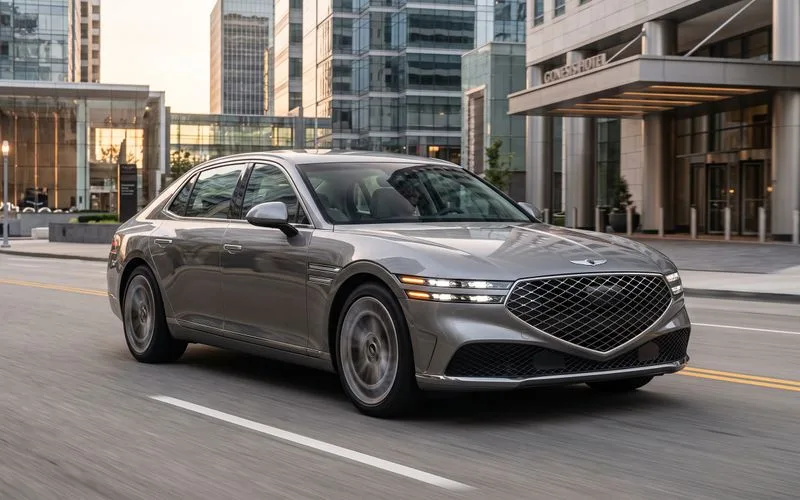 Genesis G90Full-Size Luxury SedanBetter at: Modern tech
It makes the same value-flagship pitch with a current infotainment system, more rear-seat space, rear-axle steering and a far longer warranty with included maintenance.
Compare 3.51A-
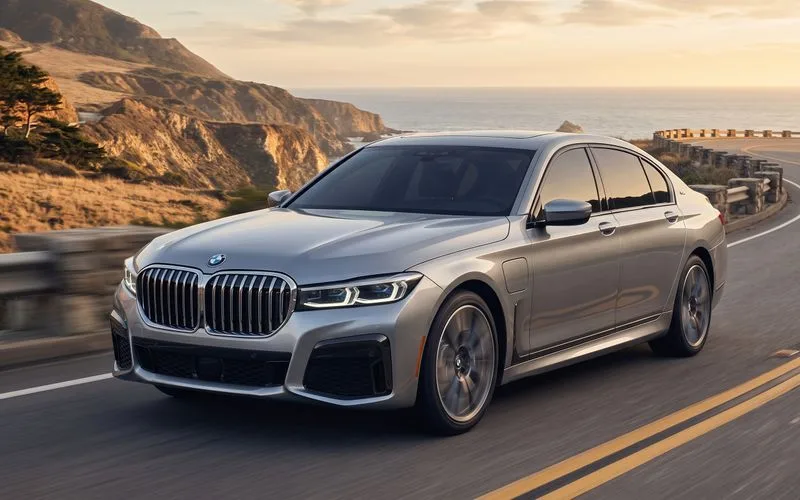 BMW 7 SeriesFull-Size Luxury SedanBetter at: Rear-seat space
For a buyer who wants the long-wheelbase rear seat, hands-free highway driving and 27 MPG, and will accept German maintenance costs to get them.
Compare 3.11B
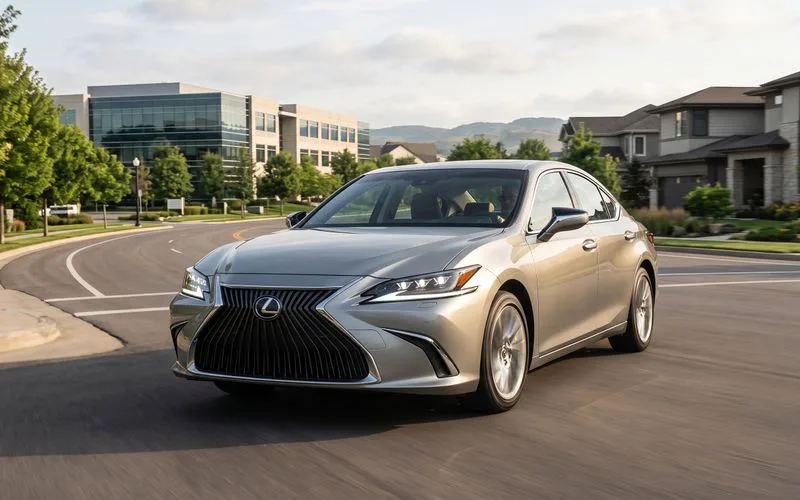 Lexus ESMid-Size Luxury SedanBetter at: Running costs
Nearly the same rear legroom and newer technology for tens of thousands less, with about 43 MPG in hybrid form and stronger resale.
CompareHow it's evolved
10 scored model years · 2017–2026
Subject scores by year
Hover or tap a score to see what moved it versus the year before. A corner mark flags a big swing.
| Year | Performance | Efficiency | Safety | Space | Cost | Reliability | Tech | Use-case | Driving | Value |
|---|---|---|---|---|---|---|---|---|---|---|
| 2026 | 77 | 18 | 79 | 74 | 15 | 85 | 77 | 55 | 70 | 66 |
| 2025 | 76 | 24 | 73 | 71 | 14 | 84 | 78 | 53 | 69 | 65 |
| 2024 | 76 | 20 | 60 | 73 | 15 | 85 | 76 | 48 | 67 | 63 |
| 2023 | 77 | 20 | 72 | 72 | 15 | 85 | 75 | 50 | 68 | 63 |
| 2022 | 75 | 20 | 59 | 72 | 14 | 85 | 64 | 49 | 68 | 61 |
| 2021 | 77 | 20 | 70 | 72 | 26 | 85 | 65 | 50 | 68 | 72 |
| 2020 | 76 | 21 | 69 | 71 | 24 | 80 | 59 | 49 | 65 | 69 |
| 2019 | 76 | 21 | 73 | 71 | 20 | 81 | 59 | 49 | 65 | 71 |
| 2018 | 76 | 21 | 66 | 72 | 19 | 81 | 55 | 47 | 66 | 75 |
| 2017 | 65 | 13 | 38 | 75 | 14 | 86 | 40 | 42 | 65 | 60 |
Compare two years
Best fit & conditions
Higher scores mean a better fit for that use case. Learn more about use-case fit →
Subject profile
Academic Probation · NHTSA safety recalls
Apr 17, 2024Air bags: sensor: occupant classification: front passengerAs such, these vehicles fail to comply with the requirements of Federal Motor Vehicle Safety Standard number 208, "Occupant Crash Protection."
Defect
Toyota Motor Engineering & Manufacturing (Toyota) is recalling certain 2018-2021 Lexus LS500 and 2018-2020 Lexus LS500 Hybrid vehicles equipped with the "Executive Package." The front passenger seat may have been assembled with interference between internal parts that can cause the Occupant Classification System (OCS) sensor to incorrectly detect the occupant. As such, these vehicles fail to comply with the requirements of Federal Motor Vehicle Safety Standard number 208, "Occupant Crash Protection."
Risk
Incorrect detection of an occupant may result in improper air bag deployment during a crash, increasing the risk of injury.
Remedy
Dealers will inspect and repair the front passenger seat, as necessary, free of charge. Owner notification letters were mailed June 7, 2024. Owners may contact Toyota customer service at 1-800-331-4331. Toyota's number for this recall is 24LA03.
NHTSA campaign 24V275000 ↗Manufacturer no. 24LA03509 vehicles potentially affected (all models in the campaign)Owners notified Jun 7, 2024Filed by Toyota Motor Engineering & ManufacturingFiled as LS, LS HYBRIDNov 4, 2020Fuel system, gasoline: delivery: fuel pumpThe low-pressure fuel pump inside the fuel tank may fail.
Defect
Toyota Motor Engineering & Manufacturing (Toyota) is recalling certain 2018-2019 4Runner, 2019-2020 Avalon, 2019 Corolla Hatchback, 2017-2019 Highlander, 2018-2020 Camry, 2020 Corolla, 2018-2019 Land Cruiser, 2017-2020 Tacoma, 2019-2020 RAV4, 2019-2020 Sequoia, 2017-2020 Sienna, 2019-2020 Tundra, 2018-2020 Lexus ES350, 2017 Lexus GS200t, 2017-2019 Lexus GS350, 2019 Lexus GS300, 2018-2020 Lexus LC500h, 2019-2020 Lexus LS500, 2018-2019 Lexus GX460, 2017 Lexus IS200t, 2019 Lexus IS300, 2019 Lexus IS350, 2018-2020 Lexus LC500, 2018 Lexus LS500, 2019 Lexus LS500h, 2018-2019 Lexus LX570, 2017 Lexus RC200t, 2019 Lexus RC300, RC350, 2017 and 2019-2020 Lexus RX350, 2018-2020 RX350L, 2019 Lexus UX200, 2018-2019 Lexus NX300 vehicles. The low-pressure fuel pump inside the fuel tank may fail.
Risk
If the fuel pump fails, the engine can stall while driving, increasing the risk of a crash.
Remedy
Toyota will notify owners, and dealers will replace the fuel pump assembly with an improved one, free of charge. Owners of specific models were notified that remedy parts were available starting January 21, 2021. Owners of other models will be notified as remedy parts become available. Remedy parts should be available for all affected vehicles by late March 2021. Owners may contact Toyota customer service at 1-888-270-9371 or Lexus customer service at 1-800-255-3987. Note: This recall is an expansion of recall 20V-012. Toyota's number for this recall is 20TA02. Lexus' number for this recall is 20LA01.
NHTSA campaign 20V682000 ↗Manufacturer no. 20TA02, 20LA011,525,742 vehicles potentially affected (all models in the campaign)Owners notified Jan 21, 2021Filed by Toyota Motor Engineering & ManufacturingFiled as LS HYBRID, LS500
8 recalls on other model years of the LS (2018–2019, 2021–2025)
Feb 18, 2026Power train: automatic transmissionIn the event of transmission solenoid failure, the communication may fail between the transmission electronic control unit (ECU) and the engine ECU, resulting in transmission damage.
Defect
Toyota Motor Engineering & Manufacturing (Toyota) is recalling certain 2025-2026 Lexus LX600 vehicles. In the event of transmission solenoid failure, the communication may fail between the transmission electronic control unit (ECU) and the engine ECU, resulting in transmission damage.
Risk
A damaged transmission can cause a loss of drive power, increasing the risk of a crash. In addition, a damaged transmission can leak transmission fluid, increasing the risk of a fire.
Remedy
Dealers will update the transmission ECU software, free of charge. Owner notification letters were mailed April 13, 2026. Owners may contact Toyota's customer service at 1-800-331-4331. Toyota's number for this recall is 26LA01.
NHTSA campaign 26V094000 ↗Manufacturer no. 26LA014,374 vehicles potentially affected (all models in the campaign)Owners notified Apr 9, 2026Filed by Toyota Motor Engineering & ManufacturingFiled as LS HYBRIDOct 30, 2025Back over prevention: display functionPlease see the recall report for a complete list of models. A software error may cause the rearview camera to freeze or display a blank screen when the vehicle is in reverse. As such, these vehicles fail to comply with the requirements of Federal Motor Vehicle Safety Standard (FMVSS) number 111, "Rear Visibility."
Defect
Toyota Motor Engineering & Manufacturing (Toyota) is recalling certain 2022-2026 Toyota, Lexus, and Subaru Solterra vehicles equipped with a Panoramic View Monitor (PVM) system. Please see the recall report for a complete list of models. A software error may cause the rearview camera to freeze or display a blank screen when the vehicle is in reverse. As such, these vehicles fail to comply with the requirements of Federal Motor Vehicle Safety Standard (FMVSS) number 111, "Rear Visibility."
Risk
A rearview camera that fails to display an image can reduce the driver's view behind the vehicle, increasing the risk of a crash.
Remedy
Dealers will update the parking assist software, free of charge. Owner letters were mailed January 2, 2026. Owners may contact Toyota's customer service at 1-800-331-4331. Toyota's numbers for this recall are 25TB13 and 25LB06. Subaru's number for this recall is WRE25.
NHTSA campaign 25V744000 ↗Manufacturer no. 25TB13/25LB06/WRE251,024,407 vehicles potentially affected (all models in the campaign)Owners notified Dec 5, 2025Filed by Toyota Motor Engineering & ManufacturingFiled as LS, LS HYBRIDSep 11, 2025Electrical system: instrument cluster/panelDue to an error in the instrument panel software at vehicle startup, the instrument panel may fail to display vehicle speed, brake system, and tire pressure warning lights.
Defect
Toyota Motor Engineering & Manufacturing (Toyota) is recalling certain 2023-2024 Toyota Venza, 2023-2025 RAV4 Prime, RAV4, Highlander, GR Corolla, Crown, 2024-2025 Lexus TX, LS, Toyota Tacoma, Grand Highlander, and 2025 Lexus RX, Toyota Crown Signia, Camry, RAV 4 Plug-in Hybrid (PHEV), and 4 Runner vehicles. Due to an error in the instrument panel software at vehicle startup, the instrument panel may fail to display vehicle speed, brake system, and tire pressure warning lights.
Risk
An instrument panel display that does not show critical information can increase the risk of a crash or injury.
Remedy
Dealers will update the instrument panel software over-the-air (OTA) for non-PHEV vehicles, free of charge. For PHEV vehicles, dealers will inspect the instrument panel assembly, and either replace it, or update the software, free of charge. Owner letters were mailed December 5, 2025. Additional letters will be sent, anticipated in May 2026. This is a phased recall. Owners may contact Toyota's customer service at 1-800-331-4331. Toyota's numbers for this recall are 25TB08 and 25TA08. Lexus' numbers for this recall are 25LB05 and 25LA05.
NHTSA campaign 25V595000 ↗Manufacturer no. See Part 573 Report591,377 vehicles potentially affected (all models in the campaign)Owners notified Dec 5, 2025Filed by Toyota Motor Engineering & ManufacturingFiled as LSFeb 21, 2024Back over prevention: display functionDue to incorrect programming of the parking-assist electronic control unit (ECU) software, the rearview camera image may not immediately display within a couple of seconds after the shifter is placed into reverse. As such, these vehicles fail to comply with the requirements of Federal Motor Vehicle Safety Standard number 111, "Rear Visibility."
Defect
Toyota Motor Engineering & Manufacturing (Toyota) is recalling certain 2023 Mirai, Lexus LS500, LS500H, 2023-2024 Lexus ES250, ES300H, ES350, 2024 Lexus LC500, and LC500H vehicles equipped with a Panoramic View Monitor (PVM) system. Due to incorrect programming of the parking-assist electronic control unit (ECU) software, the rearview camera image may not immediately display within a couple of seconds after the shifter is placed into reverse. As such, these vehicles fail to comply with the requirements of Federal Motor Vehicle Safety Standard number 111, "Rear Visibility."
Risk
A rearview camera that fails to display an image can reduce the driver's rear view, increasing the risk of a crash.
Remedy
Dealers will update the parking assist ECU software, free of charge. Owner notification letters were mailed April 10, 2024. Owners may contact Toyota customer service at 1-800-331-4331. Toyota's numbers for this recall are 24TA01 and 24LA01.
NHTSA campaign 24V124000 ↗Manufacturer no. 24TA01 / 24LA0118,616 vehicles potentially affected (all models in the campaign)Owners notified Apr 10, 2024Filed by Toyota Motor Engineering & ManufacturingFiled as LS, LS HYBRIDApr 13, 2022Electronic stability control (esc): control module: softwareThe Skid Control ECU software may not turn on the Vehicle Stability Control (VSC) system when the vehicle is restarted after the driver has disabled the VSC system. As such, these vehicles fail to comply with the requirements of Federal Motor Vehicle Safety Standard number 126, "Electronic Stability Control Systems."
Defect
Toyota Engineering & Manufacturing (Toyota) is recalling certain 2022 Lexus LX 600, Lexus NX 350h, Lexus NX 450h+, Toytoa RAV4 Hybrid, 2021-2022 Lexus LS 500h, Toyota Mirai, RAV4 PRIME, Sienna, Venza, and 2020-2022 Toyota Highlander Hybrid vehicles. The Skid Control ECU software may not turn on the Vehicle Stability Control (VSC) system when the vehicle is restarted after the driver has disabled the VSC system. As such, these vehicles fail to comply with the requirements of Federal Motor Vehicle Safety Standard number 126, "Electronic Stability Control Systems."
Risk
Driving with a deactivated stability control system increases the risk of a crash.
Remedy
Dealers will update the Skid Control ECU software, free of charge. Owner notification letters were mailed May 27, 2022. Owners may contact Toyota customer service at 1-800-331-4331. Toyota's number for this recall is 22TA03. Lexus' number for this recall is 22LA01.
NHTSA campaign 22V239000 ↗Manufacturer no. 22TA03, 22LA01458,110 vehicles potentially affected (all models in the campaign)Owners notified May 27, 2022Filed by Toyota Motor Engineering & ManufacturingFiled as LS HYBRIDJan 13, 2020Fuel system, gasoline: delivery: fuel pumpToyota Motor Engineering & Manufacturing (Toyota) recalled certain 2018-2019 4Runner, Highlander, Camry, Land Cruiser, Sequoia, Sienna, Tacoma and Tundra, and Lexus RC 300, RC 350, GS 350, GX 460, IS 300, LC 500, LS 500, LX 570, RX 350L, and 2019 Toyota Avalon and Corolla, and certain Lexus NX 300, and ES 350 vehicles on January 13, 2020. On March 4, 2020, Toyota expanded the recall to include certain 2014-2015 Toyota 4Runner and Land Cruiser, 2018 Avalon, Corolla, 2014 FJ Cruiser, 2017 Sienna and Lexus 2018 ES 350, 2018-2019 GS 300, 2013-2014 GS350, 2014-2015 GX 460, IS 350 and LX 570, 2014 IS F, 2018-2019 IS 350, LC 500H and LS 500H, 2013-2015 LS 460, 2015 NX 200T and RC350, 2017 RC 200T and RX 350. Toyota also removed the 2018-2019 Toyota 4Runner and Land Cruiser and 2018-2019 Lexus GX 460 and LX 570 and 2019 NX300 from inclusion in this recall. On March 19, 2020, Toyota expanded the recall to include 2015 Lexus GS350 vehicles. The low-pressure fuel pump inside the fuel tank may fail.
Defect
Toyota Motor Engineering & Manufacturing (Toyota) recalled certain 2018-2019 4Runner, Highlander, Camry, Land Cruiser, Sequoia, Sienna, Tacoma and Tundra, and Lexus RC 300, RC 350, GS 350, GX 460, IS 300, LC 500, LS 500, LX 570, RX 350L, and 2019 Toyota Avalon and Corolla, and certain Lexus NX 300, and ES 350 vehicles on January 13, 2020. On March 4, 2020, Toyota expanded the recall to include certain 2014-2015 Toyota 4Runner and Land Cruiser, 2018 Avalon, Corolla, 2014 FJ Cruiser, 2017 Sienna and Lexus 2018 ES 350, 2018-2019 GS 300, 2013-2014 GS350, 2014-2015 GX 460, IS 350 and LX 570, 2014 IS F, 2018-2019 IS 350, LC 500H and LS 500H, 2013-2015 LS 460, 2015 NX 200T and RC350, 2017 RC 200T and RX 350. Toyota also removed the 2018-2019 Toyota 4Runner and Land Cruiser and 2018-2019 Lexus GX 460 and LX 570 and 2019 NX300 from inclusion in this recall. On March 19, 2020, Toyota expanded the recall to include 2015 Lexus GS350 vehicles. The low-pressure fuel pump inside the fuel tank may fail.
Risk
If the fuel pump fails, the engine can stall while driving, increasing the risk of a crash.
Remedy
Toyota will notify owners, and dealers will replace the fuel pump, free of charge. The recall began May 4, 2020. Owners may contact Toyota customer service at 1-888-270-9371 or Lexus customer service at 1-800-255-3987. Toyota's numbers for this recall are 20TB02 and 20TA02 for Toyota vehicles and 20LB01 and 20LA01 for Lexus vehicles.
NHTSA campaign 20V012000 ↗Manufacturer no. 20TB02/20TA02/20LB011,830,752 vehicles potentially affected (all models in the campaign)Owners notified May 1, 2020Filed by Toyota Motor Engineering & ManufacturingFiled as LS HYBRID, LS500Jul 24, 2019Electronic stability control (esc) · Service brakesThe brake booster pump may fail causing a deactivation of the Vehicle Stability Control system and a loss of braking assist. As such, these vehicles fail to comply with the requirements of Federal Motor Vehicle Safety Standard (FMVSS) number 126, "Electronic Stability Control Systems."
Defect
Toyota Motor Engineering & Manufacturing (Toyota) is recalling certain 2019 Lexus LS500, LC500, ES300h, UX250h, LS500h, Toyota Prius, RAV4 HV, 2019-2020 Toyota Prius Prime, and 2020 Corolla HV vehicles. The brake booster pump may fail causing a deactivation of the Vehicle Stability Control system and a loss of braking assist. As such, these vehicles fail to comply with the requirements of Federal Motor Vehicle Safety Standard (FMVSS) number 126, "Electronic Stability Control Systems."
Risk
Deactivation of the vehicle stability control system or a loss of braking assist increases the risk of a crash.
Remedy
Toyota will notify owners, and dealers will inspect and, if necessary, replace the brake booster pump, free of charge. The recall began September 20, 2019. Toyota owners may contact Toyota customer service at 1-888-270-9371 and Lexus owners may contact Lexus customer service at 1-800-255-3987. Toyota's numbers for this recall are K1L/K0L. Lexus' numbers for this recall are K2F/KLF.
NHTSA campaign 19V544000 ↗Manufacturer no. K1L/K0L, K2F/KLF6,925 vehicles potentially affected (all models in the campaign)Owners notified Sep 20, 2019Filed by Toyota Motor Engineering & ManufacturingFiled as LS HYBRID, LS500Feb 27, 2019Tires · Tires: sidewallThe tire-on-wheel assembly process may have caused the reinforcement layer to crack, possibly resulting in the tire tread layer separating from the tire.
Defect
Toyota Motor Engineering & Manufacturing (Toyota) is recalling certain 2018 Lexus LS vehicles equipped with run-flat tires with a sidewall reinforcement layer inside the tire. The tire-on-wheel assembly process may have caused the reinforcement layer to crack, possibly resulting in the tire tread layer separating from the tire.
Risk
If the tire tread layer separates from the vehicle, vehicle handling and stability may be affected, increasing the risk of crash.
Remedy
Toyota will notify owners, and Lexus dealers will replace the affected tires, free of charge. The recall began April 26, 2019. Owners may contact Lexus customer service at 1-800-255-3987. The Toyota number for this recall is KLC.
NHTSA campaign 19V134000 ↗Manufacturer no. KLC6,296 vehicles potentially affected (all models in the campaign)Owners notified Apr 26, 2019Filed by Toyota Motor Engineering & ManufacturingFiled as LS
Source: NHTSA Office of Defects Investigation recall database, model years 2017–2026. Recalls are listed by model year as the manufacturer filed them; whether a specific car is affected depends on its VIN — check a VIN at nhtsa.gov ↗. NHTSA model names matched to this page: LS, LS HYBRID, LS500.
Detailed scoring by subject
1Performance & PowertrainOne of the LS's strongest categories.3.18B
2020 is a carry-over powertrain year in the middle of the XF50 generation — the mid-cycle refresh did not arrive until 2021 — so the V35A-FTS twin-turbo V6 delivers the same 416 hp it has since the generation launched for 2018. That is the strongest standard engine among full-size luxury sedans' base cars and lands in the upper third of the sedan horsepower band without asking a V8 premium.
442 lb-ft on a plateau that starts at 1,600 rpm sits at the very top of the sedan torque band and was the highest base-engine figure in the 2020 full-size luxury set, ahead of the S 450, 740i and A8 55. It is the number that explains the LS's effortless part-throttle character, which is how a car of this brief is actually driven.
Lexus publishes 4.6 seconds to 60 mph for the 2020 LS 500 in rear-drive form and 5.1 for the LS 500h, with no separate AWD claim; instrumented runs of AWD XF50 cars (the powertrain is unchanged across 2018–2020) land around 5.0 s, so the manufacturer figure is the optimistic end of the real range. Even at the slower end it is quicker than a 740i or an A8 and genuinely fast for a ~4,700–4,900-lb car whose brief is isolation rather than pace.
Reviewers of the 2020 car describe it as smooth and silent in normal running with power to spare, and the twin-turbo V6 is credited with a fuller, almost V8-like voice under load — strong marks for a flagship. It stays out of the top band because this is the pre-refresh car: the piston redesign for quieter cold running, the revised engine mounts, the extra sound deadening and the wastegate-control change all arrived for 2021, and 2020 reviews are blunt that the LS hesitates off the line before the turbos surge.
The Direct Shift-10AT earns praise on the 2020 car for quick, imperceptibly smooth upshifts that keep the V6 in its band, which is most of what this vehicle asks of it. It sits below the top band because the known fault is unaddressed in 2020 — kickdown is slow when a sudden highway pass is requested — and the shift-logic recalibration Lexus applied to fix exactly that did not arrive until 2021.
All-wheel drive was offered across the 2020 LS range — on the LS 500 and the LS 500h alike, rather than reserved for the top of it — and the hardware is more than a token: a Torsen limited-slip center differential with a rear-biased 31/69 split that moves to 48/52 on slick surfaces. It falls short of the top band because AWD remains a cost option on a rear-drive baseline (unlike standard quattro or 4MATIC), with no torque vectoring, terrain mode or low range to add capability beyond wet- and snow-road traction.
The 2020 LS offers two genuinely distinct powertrains — the twin-turbo V6 LS 500 and the Atkinson-cycle V6 Multi Stage Hybrid LS 500h, each in rear- or all-wheel drive — which covers the mainstream buyer and the efficiency-minded one but nothing beyond. There is no V8, no plug-in hybrid and no battery-electric LS, so against a 2020 S-Class spanning inline-six, V8, V12 and PHEV, or a 7 Series still offering a V8, a V12 and a plug-in, the slate is thin for a flagship.
2Efficiency & RangeThe LS's lowest-graded category.0.00F
A 416-hp 3.4-liter twin-turbo V6 hauling roughly 4,800 lb of heavily sound-deadened flagship returns 21 MPG combined on the EPA cycle in AWD form — near the bottom of the gas-sedan band and below most of the peers this vehicle is graded against. Rear-drive 2020 cars do measurably better at 23 MPG, two better than the 2021 refresh would manage once it added weight and sound deadening.
City is the LS 500's weakest figure: a large turbocharged V6 moving a heavy car with no electrical assist, no cylinder deactivation and — unusually even for 2020 — no stop-start lands at 18 MPG, in the bottom tenth of the sedan band. This is precisely the duty cycle in which the LS 500h's Multi Stage Hybrid earns its premium, adding five to seven MPG in town.
Highway is where the LS is least compromised — slippery aerodynamics and tall top gears in the 10-speed give it 27 MPG in AWD form and a genuinely respectable 30 in rear-drive. It still sits in the lower fifth of the sedan highway band, because that band spans downsized-turbo and hybrid rivals the LS's displacement cannot follow.
A large 21.7-gallon tank offsets much of the thirst, giving the volume LS 500 AWD roughly 456 miles between fills — mid-band for sedans and genuinely adequate for the long-haul touring this car exists to do. Range is the one efficiency measure on which the LS is competitive rather than compromised, and the hybrid pushes past 600 miles on its larger 22.2-gallon tank.
EPA's own label puts the 2020 LS 500 AWD at $3,700 a year on required premium at 15,000 miles — above the $3,200 ceiling of the sedan band, so it scores zero — and EPA additionally estimates $7,250 more spent on fuel over five years than the average new vehicle. This is a real ownership cost, not a rounding detail: the RWD car saves $350 a year and the hybrid $700 to $950.
EPA lists the 2020 LS as a premium-fuel vehicle across every variant — the twin-turbo V6 and the Multi Stage Hybrid alike — so there is no way to configure an LS that runs on regular, and premium carries a persistent per-gallon surcharge over the car's life. There is no flex-fuel, diesel or plug-in variant to hedge with, which lands it in the low band, though it is no worse on this count than the 2020 S-Class, 7 Series and A8, which all require premium too.
3SafetyMid-pack among this car's ten categories.2.65C+
NHTSA has never crash-tested the fifth-generation (XF50) LS and 2020 is no exception: both the RWD and AWD LS 500 records return "Not Rated" for overall, frontal, side and rollover. That is the routine outcome for a low-volume full-size luxury flagship rather than a poor result — the Audi A8, BMW 7 Series, Mercedes S-Class and Genesis G90 are all untested too — so the value is inferred at 4.5 stars to match how this catalog handles the adjacent 2021, 2023, 2025 and 2026 LS years.
The 2020 LS carries no IIHS award and, more importantly, no IIHS results of any kind — the Institute publishes no ratings page for the LS in any year of the XF50 generation, so there is no small-overlap, moderate-overlap, side, roof or head-restraint result for a buyer to read. This is a data void rather than a bad outcome: Lexus models the Institute did test for 2020 (ES, RX, NX, UX) collected Top Safety Pick and TSP+ awards, and the XF50 uses the stiff multi-material GA-L platform with a full airbag complement. It sits mid-band because a $75,000 flagship buyer gets zero verified crashworthiness data.
Every 2020 LS leaves the factory with Lexus Safety System+ 2.0 — radar-and-camera Pre-Collision System with low-light pedestrian detection and daytime bicyclist detection, All-Speed Dynamic Radar Cruise Control, Lane Departure Alert with Steering Assist, Lane Tracing Assist, Road Sign Assist and automatic high beams — and Lexus makes Blind Spot Monitor and Rear Cross-Traffic Alert standard rather than package-locked, which the German rivals at this price do not. All five features the framework asks about (AEB, ACC, LKA, BSM, RCTA) are standard on the base car, squarely the top band. It sits below the 2022-and-later LS because this is the 2.0 suite: intersection turning assist, front cross-traffic alert, lane change assist and active steering assist all require the $3,000 Lexus Safety System+ A option.
The standard hardware is the strong end of the 2020 Toyota/Lexus line — millimetre-wave radar plus monocular camera, with pedestrian detection that works in low light as well as daylight and daytime bicyclist detection, a meaningful step past the 2018–2019 LS. What the standard car does not get is the intersection layer: turning-assist braking for an oncoming vehicle on a left turn arrives only with the optional Lexus Safety System+ A, two model years before it became standard with LSS+ 2.5. And there is no published result of any kind — IIHS has never rated the LS for front crash prevention, vehicle-to-vehicle or pedestrian, day or night — so the braking is credible but unverified.
Blind Spot Monitor and Rear Cross-Traffic Alert are standard on every 2020 LS — genuinely better than the A8, 7 Series and S-Class of the same year, which charge for one or both — and front and rear parking sensors add coverage at low speed. The coverage is otherwise alert-only: no active braking intervention for approaching cross traffic, and the XF50's conventional door handles mean it cannot carry the e-Latch-based Safe Exit Assist Lexus fits to later models. Front Cross-Traffic Alert and Lane Change Assist both sit inside the $3,000 LSS+ A option, so the as-delivered car covers the basics well and the extras not at all.
Lane Departure Alert with Steering Assist and Lane Tracing Assist are both standard, which is more than the base A8 offers, but the calibration is the weak point of this car's assistance suite and reviewers driving the 2020 said so plainly. LTA reads visible lane markings and falls back to following the preceding vehicle, only functions with Dynamic Radar Cruise Control engaged, and on anything but a straight, well-marked highway it wanders. Active Steering Assist, which adds steering support to avoid an obstacle, is optional with LSS+ A. Scored below the 2021 car because the centering criticism here is first-hand for this model year rather than inherited.
All-Speed Dynamic Radar Cruise Control with stop-and-go is standard and pairs with Lane Tracing Assist into a proper hands-on highway assist — a complete system at no extra cost, unlike the A8. The rough edges keep it mid-band: reviewers fault it as slow to react to traffic and overly conservative with following distances, the classic Toyota/Lexus radar-cruise complaint, and the sharper behaviour is effectively something Lexus asks you to buy via the LSS+ A package.
No 2020 LS of any powertrain or trim can be ordered with hands-free highway driving. Lexus Teammate with Advanced Drive — the brand's hands-off-capable system for mapped limited-access roads — did not reach the US until the 2022 LS 500h AWD, two model years later, and even then not on the gas LS 500 scored here. Every 2020 LS driver-assistance feature, including the optional LSS+ A content, is a hands-on assist. For a 2020 buyer the capability does not exist at any price, which is the bottom band.
Triple-beam LED headlamps in the vertically stacked layout are standard across the 2020 range with automatic high beams, which is better base lighting content than the A8 gives before you open the options book; the Adaptive Front-lighting System version is an extra-cost item. It stays mid-band because the auto high beams only toggle between high and low rather than shading individual vehicles, Lexus's BladeScan adaptive high-beam hardware was not sold on the US LS in this period (FMVSS 108 still barred adaptive driving beams, and BladeScan arrived with the 2021 facelift outside North America), and IIHS has published no headlight rating for the LS in any year — good, conventional lighting with nothing independently verified.
The XF50's coupe-like roofline, high beltline and heavy rear pillars buy the LS its styling at the cost of glass area, and reviewers driving the 2020 called out real rear blind spots. Standard kit covers the near blind zones competently — backup camera, front and rear parking sensors, and standard blind-spot monitoring with rear cross-traffic alert — but both of the features that would properly compensate are extra-cost on this model year: the Panoramic View Monitor and the camera-based digital rearview mirror are options rather than standard equipment, which is the main reason this sits below the 2021 car.
This is a genuine strength and the one place the LS beats its German rivals on family duty: the two outboard lower-anchor sets sit under a single large Velcro flap that pulls back for direct access rather than requiring a dig through the seat bight, the three top tethers on the rear shelf are clearly marked, and there is enormous legroom to load a rear-facing seat into. Cars.com's Car Seat Check of this generation graded it A for LATCH, infant, rear-facing convertible and forward-facing convertible seats. It falls short of the ceiling because a booster only rates a B (the buckles sink into the cushion), three seats will not go across, and Executive Package cars trade the usable bench for a reclining ottoman seat and a fixed rear console.
4Space & ComfortOne of the LS's strongest categories.2.78B-
The fifth-generation (XF50) LS seats five in its standard configuration, the top of the sedan band, and 2020 is a carry-over year in the middle of that generation — the mid-cycle refresh that revised the cabin did not arrive until 2021, and nothing about the body or seating layout changed for this model year. The caveat is that the configuration Lexus markets the car on — the Executive Package with its reclining right-rear seat and ottoman — deletes the center position and makes it a four-seater.
37.3 inches is modest for a 206-inch flagship and is the direct cost of the XF50's coupe-like roofline — the LS trades headroom for silhouette in a way the boxier S-Class and 7 Series do not. The figure is unchanged from the generation's 2018 launch, since 2020 brought no body revisions.
41.0 inches sits near the bottom of the sedan band and is genuinely surprising in a flagship — the 123-inch wheelbase is spent on the rear compartment and a low, laid-back seating position rather than on front-row stretch-out room. No 2020 reviewer calls the driver's seat cramped (AAA describes the front as spacious with abundant legroom and headroom), but the published number does not flatter it.
Rear headroom matches the front at 37.3 inches, above the sedan midpoint and better than the tapering roofline suggests from outside, because Lexus recessed the rear cushion specifically to protect the figure. It is not the unqualified win the number implies — multiple 2020 reviews report taller adults running short of headroom back there, and the posture is lower and more reclined than in an S-Class.
38.9 inches is comfortably above the sedan band midpoint and is real chauffeur space, but it is the figure that most exposes Lexus's decision to offer only one length in the fifth generation. Against the long-wheelbase S-Class and 7 Series that dominate this segment's rear-seat comparisons, the LS fights one size down — AAA's 2020 tester judged the back seat "not as roomy as some rivals."
17.0 cubic feet is a genuinely large trunk and one of the LS's quiet advantages — it scores well up the sedan band and beats the German flagships it is cross-shopped against. The shape is less impressive than the number: AAA found the opening wide but narrowing toward the back of the trunk, which makes large single items awkward. The hybrid surrenders 1.8 cubic feet to its battery; the gas car scored here keeps the full figure.
Storage is the conventional part of an otherwise elaborate cabin: a normal console bin, door pockets and a glovebox, no underfloor tricks and no onboard household power. Three 2020-specific facts hold it just below the refreshed cars — the LS carried no factory wireless phone charging pad at all (the feature did not reach this car until 2024), there are four USB ports rather than the six Lexus fitted from 2023, and the seat-heater and wheel-heater controls still live in the center-stack menus rather than on the console, where the 2021 refresh moved them. The rear seatbacks are fixed, so nothing in this interior folds flat.
Seats are the LS's core competence even before Lexus went at them directly: the base 2020 LS 500 comes with 16-way power heated and ventilated front seats as standard rather than optional, with 28-way electric/pneumatic massage seats with cushion-length extenders above that and, in the Executive Package, a reclining rear seat with massage and ottoman. Scored a notch under the 2021 car because the revised seat springs and thicker cushioning material Lexus added in the refresh are not in this one, and the F SPORT's heavily bolstered seats draw firmness complaints.
Comfortable and well isolated most of the time, but this is the pre-refresh chassis and 2020 testers found its limits more readily than 2021 testers did. The spring and damper revisions, larger liquid-filled bushings, new control arms and re-valved AVS solenoids that reviewers credited with a "notably smoother, more-stable ride" all arrive the following model year. On torn-up pavement the 2020 car lets heads bounce, the 20-inch wheels and run-flats add harshness, and the best version of the ride — adaptive variable suspension and air suspension — is a $1,500-and-up option rather than standard on the gas car.
Near the top of the class and the first thing most 2020 testers mention. Active Noise Cancellation and Active Sound Control are standard on every 2020 LS, and with acoustic glass the result is a cabin reviewers describe as having virtually no road, wind or engine noise at cruise. It sits a notch under the refreshed car because the extra sound deadening and the redesigned piston crown for quieter cold running came with 2021, and the twin-turbo V6 still turns coarse when pushed.
Rich and, unusually for the segment, largely standard rather than bundled: 16-way heated and ventilated front seats, a power rear sunshade and a power moonroof all come on the base LS 500. What holds it below the refreshed car is that the base climate control is only dual-zone — quad-zone climate, heated rear seats and rear massage all sit in option packages — that the heated-wheel situation is muddied (KBB lists a heated steering wheel as standard while AAA's 2020 tester records a $410 wood-and-leather heated wheel as an extra), that the ride-height access function requires the optional air suspension, and that the seat- and wheel-heater controls are still buried in the menus rather than on the console.
5Cost of OwnershipOne of the LS's weakest categories.0.00F
The 2020 LS 500 RWD opens at $75,450 before Lexus's $1,025 destination charge, giving $76,475 on the window sticker — some $18,000 under a 2020 Mercedes S 450 and $10,000 under a 740i, and the core of the LS's pitch. It sits far above the top of the sedan MSRP band ($55,000), so this item scores 0 by construction; what actually counts is the effective five-year cost below.
The representative build is the LS 500 AWD — $79,695 with destination — with one mid-level comfort or tech package, since AWD carries the take-rate on US luxury flagships and virtually no LS is delivered in base spec. That lands near $83,000, which brackets well against CarEdge's tracked average new LS 500 transaction price of $85,954 (a current-model figure, so slightly above a 2020 car) and against the ~$115,375 as-tested stickers reviewers quoted for package-heavy 2020 cars.
The published estimates bracket rather than agree — CarEdge projects $2,329 across five years for the LS 500, while RepairPal's data on the previous-generation LS shows $767 a year ($3,835 over five) against a $976-a-year luxury-full-size class average — and $4,200 blends them while reflecting the real shape of the bill: Lexus's 4 yr / 50,000 mi bumper-to-bumper absorbs almost all repairs, leaving 10,000-mile scheduled services, a set of low-profile tires and brakes as the genuine spend. That is cheap for a flagship; a contemporary S-Class is estimated near twice as much.
The 2020 car passed its five-year mark in 2025, so observed transactions beat any 2020-vintage forecast, and they are strong for the class: iSeeCars measures LS 500 five-year depreciation between 42.4% and 48.7% against 60.1% for luxury large cars generally. Anchored to the ~$83,000 typically-equipped car rather than to a base-MSRP denominator, and to the low-to-mid-$40,000s these actually fetch, retention reconciles to about 54% — good money in a segment where German rivals of the same year shed 55–62%.
Lexus's New Vehicle Limited Warranty runs 48 months or 50,000 miles, matching Mercedes-Benz, BMW and Audi exactly — the luxury standard, and mid-band against the 3–5 year sedan normalization range. It is the term doing most of the work in keeping this car's five-year repair bill low.
Lexus carries powertrain coverage two years past the basic term, to 72 months or 70,000 miles — better than the German flagships, which end powertrain coverage with the basic warranty at 4 yr / 50,000 mi, but well short of the 10-year terms anchoring the top of the 5–10 year band. The mileage cap is the practical limit: 70,000 miles arrives before six years for most owners.
The included-maintenance period is short — Lexus covers only the first two scheduled visits, at 6 months / 5,000 miles and 12 months / 10,000 miles — which caps this below the 80+ band that multi-year programs earn. What lifts it to the top of the middle band is the surrounding coverage: 48 months of roadside assistance with no mileage limit, a 10-year complimentary Safety Connect subscription (standard on MY2018-and-newer Lexus vehicles) and a 10-year Service Connect trial that began with select 2020 models. A point below the 2021 car because the shorter-trial Enform Remote/Destination Assist services were the connected package's headline here, before the 2021 refresh added the three-year Dynamic Navigation cloud-map trial. No charging credits apply to a gas car.
$83,000 volume-trim price minus its estimated resale value after 5 years (54% retained, or about $44,820) leaves about $38,180 in depreciation. Add the projected $4,200 in 5-year maintenance and repairs, and owning this vehicle for 5 years costs about $42,380 in total.
6Reliability & QualityThe LS's best-graded category.3.42B+
This is the weakest LS model year in the dataset on this item, and it is the one place where the model diverges sharply from its brand. 2020 is a settled carry-over year in the XF50 generation — no refresh hardware, no first-build risk — but the published predicted-reliability signal contemporary with the car was poor: Consumer Reports placed the 2020 LS at the bottom of the Lexus lineup and at the bottom of its ultra-luxury class, the only Lexus so rated, citing transmission-minor, brakes, body integrity and in-car electronics as the trouble spots. Owner-reported patterns on the fifth-generation car match that list — turbocharger failure, transmission hesitation, infotainment glitches and air-suspension leaks. Against it sits the strongest possible cohort evidence: the dependability study that surveyed exactly this cohort, 2020 model-year cars at three years, ranked Lexus highest of all brands. Scored in the middle of the 'mixed signals between sources' band, ten to twelve points below the sibling LS years (2021 82, 2023/2024/2025 85, 2022 86) because none of them carries a published model-level rating this poor, and still above the sedan peer median of 71.5.
A strong brand year but not one of Lexus's outright wins, which is what separates it from the 2021 and 2023 LS (93 each). In the dependability and reliability tables published while the 2020 car was on sale Lexus finished second and third respectively — beaten by Genesis in the J.D. Power study and by Mazda and Toyota in the Consumer Reports survey — and in initial quality it was above the industry average but behind Genesis among premium brands. The retrospective view of this exact cohort is better than the contemporaneous one: three years on, the same 2020 model-year cars put Lexus first overall. Scored level with the 2022 LS (87) and just under the 2026 LS (88), far above the German full-size peers in this dataset (BMW 7 Series cat6 80.2, Mercedes-Benz S-Class 71.5) and the sedan segment median of 71.5.
The worst recall year of any LS in this dataset, and unlike the hybrid-only campaigns that spare other years, both campaigns here reach the gas LS 500 volume trim being scored. The heavier one is the Denso low-pressure fuel-pump defect, which NHTSA's filing names for the 2019-2020 LS500 explicitly: the in-tank pump can fail and stall the engine while driving. It is a supplier defect shared across 1.5 million Toyota and Lexus vehicles rather than an LS design fault, and the remedy was a free pump replacement completed by early 2021 — which is why this lands at the top of the 'typical activity, nothing systemic' band rather than in the failing band an LS-specific powertrain recall would earn. The second is the Executive Package occupant-classification sensor fault, a genuine airbag-system defect but confined to 509 cars. Alongside them, the two known XF50 air-suspension ride-height bulletins are written against early 2018 builds, and the 2020 model year's own bulletin list is routine dealer-procedure material — storage, pre-delivery, navigation maps, Bluetooth pairing, battery testing — with no failure pattern in it. Scored seven points below the next-worst LS year (2025 at 79) and sixteen below 2021 (88), which carries one campaign and no fuel-system exposure.
The volume gas trim pairs the 3.4-liter twin-turbo V35A-FTS V6 (416 hp / 442 lb-ft) with the Aisin Direct-Shift 10-speed torque-converter automatic, a gearbox shared with the LC 500 and LX with no durability pattern against it. The engine family's headline problem does not attach here: the V35A main-bearing failures that produced recalls covering well over 100,000 vehicles are confined to the Tundra, Sequoia, LX 600 and GX 550, and Toyota's own recall documentation states other US-market Toyota and Lexus vehicles either do not use this engine or use a different V35A configuration with different main-bearing loading. What remains is ordinary turbo-V6 exposure — wastegate actuator wear, valve-cover and timing-cover oil seepage, ignition-coil degradation, with intake carbon limited by the D-4ST port-plus-direct injection system — plus two things specific to this year. The fuel-delivery system carried a defective in-tank pump from the factory until the recall remedy, and turbocharger failure is a recurring item in fifth-generation LS owner reports, which falls hardest on the earliest builds. Scored three points below the 2021-2024 LS (80) on those two, not lower: the pump was replaced free under campaign and the block, heads and gearbox have no defect record.
Material grade is the LS's strongest quality attribute and it is fully present in 2020: hand-folded pleated door trim, Kiriko cut-glass ornamentation polished at up to 147 points per piece, real metal and leather on effectively every touch point, and nine interior colour schemes against nine trim choices including an F SPORT-exclusive Naguri-style aluminium. Reviewers of the 2020 car call the cabin top-notch and note the materials resist premature ageing. Scored a point below the 2021, 2023, 2025 and 2026 LS (91) and level with the 2024 car (90) for one concrete reason rather than a vague one: the extra foam padding beneath the front seat surfaces, armrests, seat cushions and console touch points, the revised front-seat springs and stitching, and the Palomino leather and Open Pore Black additions all arrive with the 2021 refresh and are absent here. Still class-leading for the price band, which is this item's top band.
The strongest argument for this model year. 2020 is the third settled build year of the generation, assembled in Japan to the standard the flagship exists to demonstrate, with none of the early-build assembly complaints that attach to the 2018 launch cars or to the 2021 refresh cohort — contemporary tests of the 2020 car report no perceivable panel gaps or trim inconsistencies and call fit and finish typical Lexus perfection. It sits a point above the 2021 car (91), which carries documented early-refresh defects, and a point below the 2023/2025/2026 cars (93). What holds it there rather than higher is the initial-quality result for the year: Lexus beat the industry average but was not the premium leader, and audio, communication, entertainment and navigation remained the largest problem category industry-wide — which on this car is the much-criticised pre-refresh touchpad interface, still two years from replacement. Consumer Reports' trouble-spot list for this generation also names body integrity, the one build-quality row that does appear against it.
A win year for the item that is otherwise a brand constant. Coverage is thinner than BMW's or Mercedes-Benz's at roughly 245 US stores, but it is dense in the metropolitan markets where a flagship at this price actually sells, and in the customer-service study contemporary with this model year Lexus ranked outright highest among luxury brands — ahead of a tied Cadillac and Porsche — with loaners and pickup-and-delivery standard practice. Scored level with the 2023 and 2024 LS (90), which draw on the same outright-first result, and two points above the 2025/2026 cars (88), where Lexus had slipped to third among premium brands. This is a brand-wide attribute with no model-specific component beyond the study result.
The weak item on every LS scorecard, for structural reasons no model year can fix: a low-volume Japanese-built flagship whose expensive systems are bespoke to it. The multi-link air suspension with its accumulator reservoir is the defining exposure — a documented wear item on this generation with dealer-level pricing and no meaningful aftermarket — joined by the twin-turbo V6's turbo and wastegate hardware and flagship-specific glass, lighting and body panels. Routine maintenance is genuinely reasonable because the schedule and wear parts are Toyota-grade, and the projected five-year maintenance-and-repair burden runs well under the luxury-sedan norm with a below-average chance of a major repair. Scored one to four points above the sibling years (2025 66, 2023 67, 2024/2026 68, 2021 69) on the one real advantage the oldest year here has: six years of used and salvage supply for 2018-2020 XF50 cars is now deep enough to be a genuine alternative to dealer pricing on body, trim and electronics, and this car takes the original pre-2021 front struts, which share a parts pool with the whole 2018-2020 run rather than the redesigned 2021-on part. Still far below the parts-cheap Lexus IS (86), which shares its hardware with high-volume Toyotas.
7Technology & InfotainmentMid-pack among this car's ten categories.2.00C
The diagonal is respectable and mid-band for the sedan class, but 2020 is the last stretch of the XF50's pre-refresh interface: the 12.3-inch display sits too far forward to reach and accepts no touch input at all, so every entry goes through the trackpad on the console. The value recorded is the real screen diagonal (the car plainly has a center display); the cost of it not being touch-operated is carried by 7.1.2 below, where reviewers put it.
The single worst thing about this car, and 2020 is the model year where it is entirely unmitigated. With no touch input, every destination entry, radio preset and seat-massage selection is steered by a mouse-like trackpad that demands small, precise finger movements at speed, through menus reviewers describe as illogical and deep. Testers of the 2020 car were blunt — clunky, requiring the owner's manual to operate, and a genuine distraction risk — and Edmunds summarised the whole car's technology as falling behind class leaders. Scored well below the 2021 car, which at least made the screen touch-capable and moved it within reach.
Half the platform is missing. Apple CarPlay is standard on the 2020 LS — its first year on this car — but wired only, and Android Auto is not offered at any price or on any trim; Lexus added it to the LS for 2021. Owners of Android phones on a $79,000 flagship got nothing, which is squarely the bottom band for them, while iPhone owners get a mid-band wired-standard experience. There is also no wireless charging pad to soften the cable, and wireless projection did not reach the LS until the 2023 Lexus Interface head unit.
Mid-to-upper band and one of the few parts of this infotainment stack that does not embarrass itself. Embedded navigation is standard rather than a paid upgrade, Enform Dynamic Navigation adds cloud-sourced maps, routing and POI search on a trial, and Amazon Alexa is integrated for smart-home and shopping tasks. It falls short of the class benchmarks because this is the pre-Lexus Interface voice stack with no wake-word natural-language assistant, because cloud features lapse with the subscription, and because destination entry by voice is the workaround for a trackpad that owners bypass rather than a feature they chose.
The optional 23-speaker, 2,400-watt Mark Levinson Reference Surround system is one of the best factory audio installations sold in any car, and at $1,940 it is cheap relative to the German flagships' equivalent upgrades. The 12-speaker standard system is competent rather than special, which is the only thing keeping this from the very top of the band. Unchanged from 2019 and carried unchanged into 2021.
The LS carries a full-digital 12.3-inch gauge display as standard across the 2020 range, with the sliding meter ring Lexus derived from the LFA and layouts that reconfigure and change color with the selected drive mode. Crisp and cohesive with the rest of the cabin, and a conspicuous contrast with the center screen sitting next to it. Short of the ceiling only because the graphics are the generation's launch set and it is less freely configurable than the best German clusters.
Maps only, and only while you pay. Enform Dynamic Navigation keeps map data, routing and points of interest current over the air through the car's data communication module, which is genuine over-the-air updating and better than the dealer-visit-and-USB-stick arrangement it replaced. Nothing else updates that way — head-unit software, ADAS calibrations and vehicle systems all still require a service visit — and the capability lapses when the trial expires. Real whole-system OTA reached the LS only with the 2023 Lexus Interface head unit.
The core remote set is present and works from three places — phone, smartwatch and key fob — covering remote engine start and climate, lock/unlock, vehicle locator and guest-driver alerts, with Safety Connect adding automatic collision notification and roadside assistance. Two things keep it mid-band: Digital Key (phone-as-key) was not offered on the LS until the 2024 model year, and the remote functions are subscription-gated after a one-year Enform Remote trial — Lexus is among the brands that switched off even key-fob remote start when the subscription lapsed, which owners and the press treated as a genuine grievance.
Adequate and dated. Four USB ports are standard and reach both rows, but they are USB-A on a car cross-shopped against rivals already fitting USB-C, there is no household AC outlet anywhere, and there is no factory wireless charging pad at any price — the omission 2020 and 2021 reviewers alike complained about. Lexus addressed the port count for 2023 (six ports) and the charging pad for 2024; this car has neither fix.
Proximity keyless entry and push-button start are standard on the base 2020 LS 500, the trunk opens and closes hands-free, and remote engine start works from the fob, the Lexus app or a smartwatch. It is short of the top band for two reasons: phone-as-key was not offered on the LS this year, and the remote functions sit behind an Enform Remote subscription that takes the key-fob remote start down with it when it lapses.
Good coverage, weak automation, and everything beyond the basics costs money. A rearview camera and front and rear parking sensors with rear cross-traffic alert are standard; the Panoramic View Monitor surround-view system is a relatively cheap $800 option and the camera-based digital rearview mirror is a separate extra. What holds it below the 2021 car is that the LS has no automated parking at all this year — Lexus Teammate Advanced Park reached the US LS only with the 2022 LS 500h — and that the digital rearview mirror received its larger, higher-resolution display in the 2021 refresh rather than here. Reviewers also faulted image quality on both camera systems.
When fitted, the LS's head-up display is among the largest and most informative in the industry — a 24-inch full-color projection carrying speed, gear, tachometer, navigation and safety alerts. The score is held at the top of the middle band because it is a paid stand-alone option rather than volume-trim equipment, albeit an affordable one at $1,200 and available across the range rather than locked to the top trim.
8Use-Case FitOne of the LS's weakest categories.1.26D
Better than the segment reputation suggests and the one place the LS beats its German rivals on family duty: the outboard lower anchors sit under a single large Velcro flap that pulls straight back, the top tethers on the rear shelf are clearly marked, and 38.9 inches of rear legroom swallows a rear-facing seat easily. What keeps it mid-band is everything around the anchors — the low roofline and low seat height mean lifting a toddler down rather than across, three seats will not fit abreast, a booster rates only a B because the buckles sink into the cushion, the trunk opening narrows toward the back for stroller loading, and an Executive Package car trades the usable bench for an ottoman seat and a fixed rear console.
The equipment case is strong and the evidence case is empty. Every 2020 LS leaves the factory with Lexus Safety System+ 2.0 — AEB with low-light pedestrian and daytime bicyclist detection, all-speed adaptive cruise, lane departure alert with steering assist and lane tracing — plus standard blind-spot monitoring and rear cross-traffic alert, which the German rivals at this price charge for. Against that, a family buyer gets no verified crash data at all: NHTSA has never tested the XF50 LS and IIHS publishes no ratings page for it in any year of the generation, there is no rear-seat occupant reminder, and the intersection-turning and cross-traffic braking layers sit inside a $3,000 option.
Four people travel extremely well in this car and the back seat can be genuinely lavish — reclining, heated, massaging, with a 48-degree recline and ottoman in the Executive Package — while the quiet cabin does more for long-trip fatigue than any feature list. The limits are structural rather than fixable: five adults do not fit comfortably because the center rear position is stiff and short-trip only, taller teenagers run out of rear headroom under the tapering roof, the 17-cubic-foot trunk is the only luggage space since the rear seatbacks are fixed, and there is no rear entertainment, no wireless charging and only four USB-A ports to keep a carload of devices alive.
As a way to get through traffic without noticing it, the LS is close to ideal: 442 lb-ft from 1,600 rpm means the car moves on a whisper of throttle, the 10-speed shifts imperceptibly, stop-and-go adaptive cruise is standard, and the isolation and seat comfort leave a driver unfrazzled at the end of a commute. Two things keep it out of the top band and both are 2020-specific — the infotainment is operated entirely through a trackpad that demands precise finger movements exactly when a driver has none to spare, and the V6 hesitates off the line before the turbos surge, which is a real annoyance pulling into a gap.
Expensive per mile by any measure. The volume gas configuration returns 21 MPG combined on required premium fuel, which the EPA prices at roughly $3,700 a year, and a commuter's city figure is 18 MPG. Run-flat tires on 19- or 20-inch wheels and $1,000-plus service visits outside the two-year complimentary window add to it. The only mitigations are structural to the brand rather than to this powertrain — Lexus reliability means few unscheduled visits — and a buyer who wanted cheap commuting miles would take the LS 500h instead, at 26–28 MPG combined.
A 206-inch, 74.8-inch-wide, 4,700-pound car with a 36.8-foot turning circle is simply a large thing to place in a city space, and the XF50's high beltline and thick rear pillars create real blind spots behind. The standard aids cover the basics competently — rearview camera, front and rear parking sensors, blind-spot monitoring with rear cross-traffic alert — but the two features that would actually fix it are extra-cost on this model year (Panoramic View Monitor $800, digital rearview mirror separately), the camera image quality is criticized, and there is no self-parking of any kind: Lexus Teammate Advanced Park did not reach the US LS until 2022.
Essentially none, and by design. The LS is a unibody luxury sedan with no US tow rating, no hitch in the Lexus accessory catalog, a fixed rear seatback that prevents any long item from passing into the cabin, and a 17-cubic-foot trunk whose opening narrows toward the back. The powertrain has torque to spare, but there is no provision to put it to work. The score is above zero only because the trunk itself is large by sedan standards and will carry a sales rep's samples or a full set of luggage.
The mechanical case is better than the score — the V35A-FTS and 10-speed are shared with the LC and later Tundra, Lexus's brand reliability record is among the best sold in the US, and this vehicle-year grades 79.7 on reliability overall. But the item asks about toughness under abuse in a work context, and every surface of this car argues against it: semi-aniline leather, open-pore wood and Kiriko cut glass rather than wipe-clean plastics, air or adaptive suspension with expensive components, 19- and 20-inch run-flats, and repair costs that this catalog puts well above the mainstream. Nothing about the LS is fleet-proven in a work sense.
There is nothing here. No onboard household power or AC inverter, no bed or open load area, no roof rails or rack provision, no upfit ecosystem, no washable surfaces, no fold-flat cargo floor — the rear seatbacks are fixed — and the only tie-downs are the trunk's small standard hooks. A flagship luxury sedan is the furthest thing in the catalog from a work vehicle, and the score reflects that rather than any shortcoming against the car's actual brief.
This is what the LS is for, and it is the car's best single use case. Active Noise Cancellation and Active Sound Control are standard and the cabin is close to silent at cruise, the 16-way heated and ventilated front seats with available massage hold up over a full day, all-speed adaptive cruise with lane tracing is standard, and the 21.7-gallon tank buys roughly 456 highway-weighted miles in the AWD gas car and close to 500 in the RWD. It stays below the refreshed cars because the 2020 chassis is more easily upset by broken pavement, and because Lane Tracing Assist wanders badly enough on curves that reviewers turned it off — which is the opposite of fatigue reduction.
Pavement-bound. Optional all-wheel drive with a Torsen center differential makes the LS genuinely capable on a snowy road or a wet gravel driveway, which is the whole of its off-pavement case — there is no meaningful ground clearance, no drive mode beyond Eco through Sport S+, no skid plating, no tow rating for toys, no roof rails for a box or bikes, and no AC outlet for a campsite. Run-flat tires on 19- or 20-inch wheels are the wrong equipment for a forest road, and the fixed rear seatbacks mean nothing long goes inside.
Volume without flexibility. Seventeen cubic feet is a large sedan trunk and takes four large suitcases, and the hands-free power lid is genuinely useful with hands full — but the rear seatbacks are fixed rather than folding, so there is no pass-through and no way to carry anything long, the opening narrows toward the back of the trunk so bulky single items fight going in, and there is no roof rail, no hitch and no underfloor storage. Whatever you are carrying has to fit through a sedan's trunk lid in pieces.
9Driving ExperienceMid-pack among this car's ten categories.2.42C+
Competent and secure rather than engaging. The GA-L platform is stiff, Vehicle Dynamics Integrated Management coordinates the stability, steering, damping and air-suspension systems well enough that the car corners flatter than its 4,700-pound mass suggests, and 0.85 g of skidpad grip is respectable for the class. But reviewers of the 2020 car consistently note it never stops feeling like the big heavy sedan it is, and the hardware that would sharpen it — adaptive variable suspension at $1,500, and the F SPORT Performance Package's variable-ratio steering, active rear steering and active stabilizers — is optional rather than part of the volume car. Scored just under the 2021 refresh, which revised the anti-roll bar diameters and damper rates.
Accurate and consistent, but over-assisted and short on information — the classic Lexus flagship calibration. Reviewers of the 2020 car describe too much boost for the segment even by luxury-sedan standards, with Sport and Sport S+ adding weight that masks the lightness rather than adding feedback. It tracks straight and places the nose where you point it, which is most of what this car is asked to do; it simply does not tell the driver much. Variable Gear Ratio Steering is confined to the F SPORT Performance Package.
The stopping power is there and the pedal is not. 183 feet from 70 mph is a solid result for a car this heavy, the F SPORT's six-piston front monoblocks on 15.7-inch rotors resist fade under repeated use, and reviewers of hard-driven cars report the brakes not sweating. The complaint is uniform and specific: the pedal lacks the feel normally associated with stopping confidence, which is what the item measures as much as the distance. Scored a little under the 2021 car, which arrived with the refreshed brake-booster and pedal calibration.
Beautifully smooth once moving and flawed at the two moments a driver notices most. The twin-turbo V6 is effectively vibration-free at cruise and the 10-speed's upshifts are imperceptible, but the 2020 car hesitates off the line before the turbos surge, and the transmission is slow to kick down when a highway pass is requested. Both are documented complaints for this model year and both are things Lexus addressed for 2021 — shift logic recalibrated to keep the engine in a more responsive band, revised wastegate control, redesigned engine mounts — so this car sits below the refreshed one despite identical hardware.
Silent where it matters and a little coarse where it does not. At cruise the V6 is inaudible behind standard Active Noise Cancellation and Active Sound Control, and under load reviewers credit the twin turbos with giving it an unexpectedly V8-like voice rather than a V6 thrash. The reason it is not higher is that the note turns coarse at full throttle and the cold-running refinement measures — the redesigned piston crown for quiet cold operation, the new engine mounts and the extra sound deadening — all belong to the 2021 refresh, not to this car.
36.8 feet is mid-band for a sedan and quietly good for a car with a 123-inch wheelbase and 206 inches of overall length — a 7 Series or S-Class of the same year needs more room. It still means a 206-inch car in a parking structure, which is why the parking item in cat8 scores well below this one. Unchanged for 2020, since the model year brought no chassis or steering revisions.
The seat itself is excellent — 16 ways of power adjustment standard with a tilt-and-telescope wheel, and a low, laid-back, properly luxurious posture with abundant front legroom and headroom. Everything you have to reach for is worse. The 12.3-inch display sits too deep in the dash to touch, so common tasks route through a console trackpad that demands fine finger movements while driving; the seat-heater and wheel-heater controls are still in the menus rather than on the console where the 2021 refresh put them; and the roofline and thick rear pillars cut sightlines behind. Ingress and egress are a stoop unless the optional air suspension's access-height function is fitted.
Not the point, and the LS does not pretend otherwise. There is real satisfaction in 442 lb-ft arriving at 1,600 rpm and in how completely the car shrugs off a long drive, and the F SPORT with the Performance Package is more willing than its mass suggests. But the steering is numb, the character is deliberately serene rather than playful, and the thing enthusiasts actually miss is the V8 the fifth generation dropped — the LS's charisma now comes from its cabin rather than its chassis. Pleasant and forgettable, squarely in the middle band.
10Value & Market PositionMid-pack among this car's ten categories.2.68C+
Every 2020 LS — the $76,475 base car included — ships with Lexus Safety System+ 2.0 (pre-collision with daytime bicyclist and low-light pedestrian detection, Lane Tracing Assist, Road Sign Assist), and 2020 is the year Apple CarPlay and Amazon Alexa integration became standard, equipment German rivals still bundled into four-figure packages on cars costing $10,000–$30,000 more. It sits below the 2021 car and short of the 80+ band for two reasons: the flagship content — Mark Levinson audio, head-up display, 28-way massaging seats, rear-seat luxury — all lives in expensive packages, and the 12.3-inch display was still a non-touch screen driven by the Remote Touch trackpad, with no Android Auto until the 2021 refresh.
This is the LS's core argument and it is a strong one: a full-size flagship with a standard 416-hp twin-turbo V6, standard advanced driver assistance and a 10-speed automatic at $76,475, when a 2020 Mercedes S 450 opened near $94,000 and a 740i near $87,000 — backed by the segment's best reliability outlook and residuals, value that keeps paying after the sale. It is short of the 90+ band because what the discount buys is a car reviewers judged less opulent and less resolved than the Germans, with a V6 where the class expects a V8, and a 2020-spec infotainment system that was the most-criticized thing about it.
Seven configurations for 2020 — LS 500 and LS 500 F SPORT each in RWD and AWD, LS 500h hybrid in RWD and AWD, plus the 300-unit Inspiration Series — spanning $76,475 to $98,690 before options, with package-loaded cars past $115,000. That is genuine spread and a real powertrain choice. What holds it under the top band is what the fifth generation gave up: one wheelbase only for the US, and no V8 at any price.
3,650 US deliveries in 2020, down 33.9% on 2019 and down 61% from the XF50's 9,301-unit launch year in 2018 — a third straight year of decline, only part of which the pandemic explains, since the drop had already run 40.6% in 2019. It trailed the S-Class by roughly three to one. That is squarely the 0–49 band, though not a failure: the whole full-size luxury sedan segment was contracting around it, and Toyota's own volume forecast for this generation missed badly.
Lexus is among the strongest US brands on the measures that follow an owner home — dependability, service satisfaction and residual value, where it repeatedly collects J.D. Power resale-value honors — and that halo is worth real money on this car. Flagship desirability is a different currency, however, and the LS has never had it: the S-Class is what buyers in this bracket aspire to, and the LS's own segment awards are ownership-economics ones. Strong brand, thin flagship cachet.
A flagship selling under 4,000 units a year in a pandemic sales year is a deeply negotiable car, and Lexus backed it with factory money: documented 2020 LS 500 deals combined roughly 12.5% off MSRP before incentives with $9,000 in Lexus cash for a total near 24% off, alongside $2,500–$4,500 in lease cash and a first-payment offer. The buyer benefit is as large as it gets in this segment. Held just under the top of the band rather than above it precisely because discounts that deep start to read as clearing unsold inventory rather than ordinary negotiability.
2020 is the third year of the XF50 generation and a carry-over one — the year's news was a 300-unit appearance package, new wheel and interior-color options, revised F SPORT brake pads and discontinued paint colors, with no chassis, powertrain or interface change. That places it squarely mid-cycle, and slightly past the midpoint: the substantive refresh (12.3-inch touchscreen, retuned springs, dampers and bushings, new headlamps) landed the following year, and the all-new W223 S-Class was already announced, so a 2020 buyer was one year from a visibly fresher LS and a generationally newer benchmark rival.
Respectably reviewed and never the class pick, and for 2020 a notch below that — US News scored it 7.0/10 and placed it last in the super luxury car class. Praise is consistent for ride isolation, quietness, build quality and the standard safety suite; the reservations are just as consistent and concentrate on the pre-refresh interface (trackpad-driven menus, an unintuitive Enform app suite), adaptive cruise that reacts slowly and follows too conservatively, and a powertrain reviewers did not consider flagship-grade — Car and Driver dismissed the hybrid outright. Its honors are ownership-economics ones rather than comparison-test or NACTOY wins.