
The verdict
A capable full-size luxury sedan, strong on reliability and held back by ownership.
The 2018 LS is the clean-sheet fifth-generation Lexus flagship, and it launched at $75,000 — thousands under a BMW 740i and roughly $15,000 under an S-Class — with a 416-hp twin-turbo V6, a genuinely gorgeous hand-crafted cabin and the full Lexus Safety System+ suite standard. Buy it for what Lexus does best: near-silent long-distance cruising, a class-leading 4.5-of-5 predicted reliability score, and the strongest dealer network in luxury. The catches are real, though — the touchpad infotainment is genuinely frustrating, there was no Apple CarPlay at launch and never any Android Auto, and at 21 MPG combined on required premium the EPA figures roughly $3,700 a year in fuel. As a used buy today it is the value play of the class; as a 2018 new car it was the sensible choice rather than the desirable one.
Jump to scoresStrengths
- Lexus reliability, in a first-year flagship
- A cabin that beat everything in the class
- More power than the V8 it replaced
What holds it back
- The touchpad infotainment is the car's biggest flaw
- No CarPlay at launch, no Android Auto ever
- Expensive to fuel, on premium only
Top alternatives
Cars shoppers cross-shop with the Lexus LS 3.19B
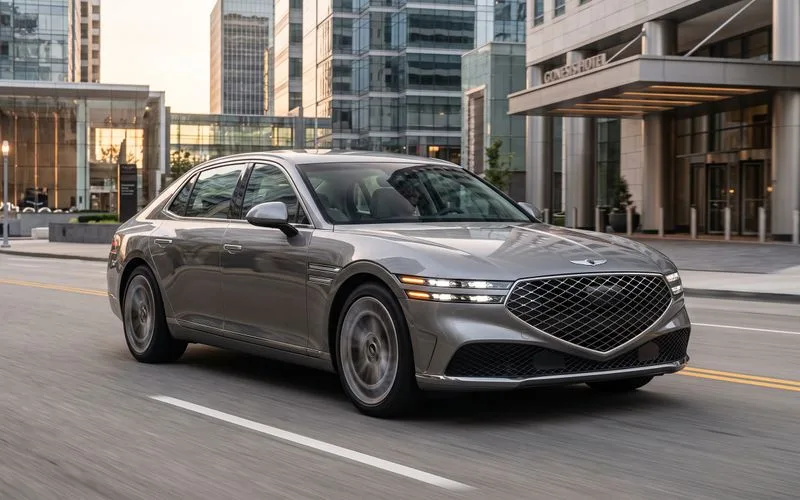 Genesis G90Full-Size Luxury SedanBetter at: Modern tech
It makes the same value-flagship pitch with a current infotainment system, more rear-seat space, rear-axle steering and a far longer warranty with included maintenance.
Compare 3.51A-
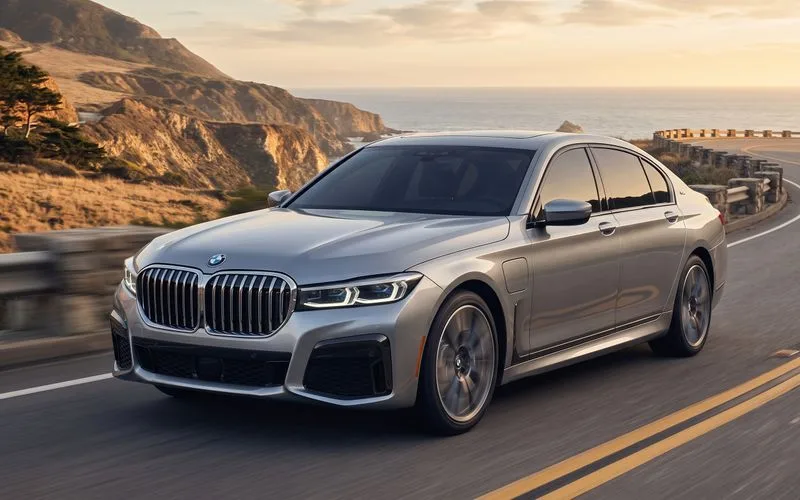 BMW 7 SeriesFull-Size Luxury SedanBetter at: Rear-seat space
For a buyer who wants the long-wheelbase rear seat, hands-free highway driving and 27 MPG, and will accept German maintenance costs to get them.
Compare 3.11B
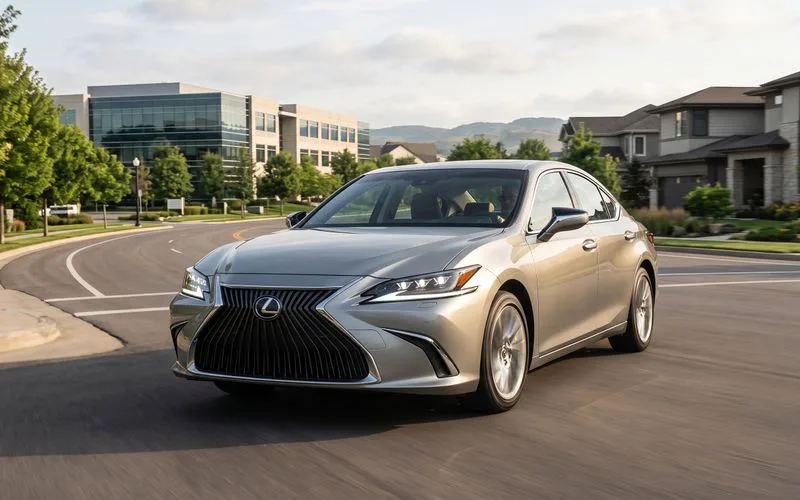 Lexus ESMid-Size Luxury SedanBetter at: Running costs
Nearly the same rear legroom and newer technology for tens of thousands less, with about 43 MPG in hybrid form and stronger resale.
CompareHow it's evolved
10 scored model years · 2017–2026
Subject scores by year
Hover or tap a score to see what moved it versus the year before. A corner mark flags a big swing.
| Year | Performance | Efficiency | Safety | Space | Cost | Reliability | Tech | Use-case | Driving | Value |
|---|---|---|---|---|---|---|---|---|---|---|
| 2026 | 77 | 18 | 79 | 74 | 15 | 85 | 77 | 55 | 70 | 66 |
| 2025 | 76 | 24 | 73 | 71 | 14 | 84 | 78 | 53 | 69 | 65 |
| 2024 | 76 | 20 | 60 | 73 | 15 | 85 | 76 | 48 | 67 | 63 |
| 2023 | 77 | 20 | 72 | 72 | 15 | 85 | 75 | 50 | 68 | 63 |
| 2022 | 75 | 20 | 59 | 72 | 14 | 85 | 64 | 49 | 68 | 61 |
| 2021 | 77 | 20 | 70 | 72 | 26 | 85 | 65 | 50 | 68 | 72 |
| 2020 | 76 | 21 | 69 | 71 | 24 | 80 | 59 | 49 | 65 | 69 |
| 2019 | 76 | 21 | 73 | 71 | 20 | 81 | 59 | 49 | 65 | 71 |
| 2018 | 76 | 21 | 66 | 72 | 19 | 81 | 55 | 47 | 66 | 75 |
| 2017 | 65 | 13 | 38 | 75 | 14 | 86 | 40 | 42 | 65 | 60 |
Compare two years
Best fit & conditions
Higher scores mean a better fit for that use case. Learn more about use-case fit →
Subject profile
Academic Probation · NHTSA safety recalls
Apr 17, 2024Air bags: sensor: occupant classification: front passengerAs such, these vehicles fail to comply with the requirements of Federal Motor Vehicle Safety Standard number 208, "Occupant Crash Protection."
Defect
Toyota Motor Engineering & Manufacturing (Toyota) is recalling certain 2018-2021 Lexus LS500 and 2018-2020 Lexus LS500 Hybrid vehicles equipped with the "Executive Package." The front passenger seat may have been assembled with interference between internal parts that can cause the Occupant Classification System (OCS) sensor to incorrectly detect the occupant. As such, these vehicles fail to comply with the requirements of Federal Motor Vehicle Safety Standard number 208, "Occupant Crash Protection."
Risk
Incorrect detection of an occupant may result in improper air bag deployment during a crash, increasing the risk of injury.
Remedy
Dealers will inspect and repair the front passenger seat, as necessary, free of charge. Owner notification letters were mailed June 7, 2024. Owners may contact Toyota customer service at 1-800-331-4331. Toyota's number for this recall is 24LA03.
NHTSA campaign 24V275000 ↗Manufacturer no. 24LA03509 vehicles potentially affected (all models in the campaign)Owners notified Jun 7, 2024Filed by Toyota Motor Engineering & ManufacturingFiled as LS, LS HYBRIDNov 4, 2020Fuel system, gasoline: delivery: fuel pumpThe low-pressure fuel pump inside the fuel tank may fail.
Defect
Toyota Motor Engineering & Manufacturing (Toyota) is recalling certain 2018-2019 4Runner, 2019-2020 Avalon, 2019 Corolla Hatchback, 2017-2019 Highlander, 2018-2020 Camry, 2020 Corolla, 2018-2019 Land Cruiser, 2017-2020 Tacoma, 2019-2020 RAV4, 2019-2020 Sequoia, 2017-2020 Sienna, 2019-2020 Tundra, 2018-2020 Lexus ES350, 2017 Lexus GS200t, 2017-2019 Lexus GS350, 2019 Lexus GS300, 2018-2020 Lexus LC500h, 2019-2020 Lexus LS500, 2018-2019 Lexus GX460, 2017 Lexus IS200t, 2019 Lexus IS300, 2019 Lexus IS350, 2018-2020 Lexus LC500, 2018 Lexus LS500, 2019 Lexus LS500h, 2018-2019 Lexus LX570, 2017 Lexus RC200t, 2019 Lexus RC300, RC350, 2017 and 2019-2020 Lexus RX350, 2018-2020 RX350L, 2019 Lexus UX200, 2018-2019 Lexus NX300 vehicles. The low-pressure fuel pump inside the fuel tank may fail.
Risk
If the fuel pump fails, the engine can stall while driving, increasing the risk of a crash.
Remedy
Toyota will notify owners, and dealers will replace the fuel pump assembly with an improved one, free of charge. Owners of specific models were notified that remedy parts were available starting January 21, 2021. Owners of other models will be notified as remedy parts become available. Remedy parts should be available for all affected vehicles by late March 2021. Owners may contact Toyota customer service at 1-888-270-9371 or Lexus customer service at 1-800-255-3987. Note: This recall is an expansion of recall 20V-012. Toyota's number for this recall is 20TA02. Lexus' number for this recall is 20LA01.
NHTSA campaign 20V682000 ↗Manufacturer no. 20TA02, 20LA011,525,742 vehicles potentially affected (all models in the campaign)Owners notified Jan 21, 2021Filed by Toyota Motor Engineering & ManufacturingFiled as LS HYBRID, LS500Jan 13, 2020Fuel system, gasoline: delivery: fuel pumpToyota Motor Engineering & Manufacturing (Toyota) recalled certain 2018-2019 4Runner, Highlander, Camry, Land Cruiser, Sequoia, Sienna, Tacoma and Tundra, and Lexus RC 300, RC 350, GS 350, GX 460, IS 300, LC 500, LS 500, LX 570, RX 350L, and 2019 Toyota Avalon and Corolla, and certain Lexus NX 300, and ES 350 vehicles on January 13, 2020. On March 4, 2020, Toyota expanded the recall to include certain 2014-2015 Toyota 4Runner and Land Cruiser, 2018 Avalon, Corolla, 2014 FJ Cruiser, 2017 Sienna and Lexus 2018 ES 350, 2018-2019 GS 300, 2013-2014 GS350, 2014-2015 GX 460, IS 350 and LX 570, 2014 IS F, 2018-2019 IS 350, LC 500H and LS 500H, 2013-2015 LS 460, 2015 NX 200T and RC350, 2017 RC 200T and RX 350. Toyota also removed the 2018-2019 Toyota 4Runner and Land Cruiser and 2018-2019 Lexus GX 460 and LX 570 and 2019 NX300 from inclusion in this recall. On March 19, 2020, Toyota expanded the recall to include 2015 Lexus GS350 vehicles. The low-pressure fuel pump inside the fuel tank may fail.
Defect
Toyota Motor Engineering & Manufacturing (Toyota) recalled certain 2018-2019 4Runner, Highlander, Camry, Land Cruiser, Sequoia, Sienna, Tacoma and Tundra, and Lexus RC 300, RC 350, GS 350, GX 460, IS 300, LC 500, LS 500, LX 570, RX 350L, and 2019 Toyota Avalon and Corolla, and certain Lexus NX 300, and ES 350 vehicles on January 13, 2020. On March 4, 2020, Toyota expanded the recall to include certain 2014-2015 Toyota 4Runner and Land Cruiser, 2018 Avalon, Corolla, 2014 FJ Cruiser, 2017 Sienna and Lexus 2018 ES 350, 2018-2019 GS 300, 2013-2014 GS350, 2014-2015 GX 460, IS 350 and LX 570, 2014 IS F, 2018-2019 IS 350, LC 500H and LS 500H, 2013-2015 LS 460, 2015 NX 200T and RC350, 2017 RC 200T and RX 350. Toyota also removed the 2018-2019 Toyota 4Runner and Land Cruiser and 2018-2019 Lexus GX 460 and LX 570 and 2019 NX300 from inclusion in this recall. On March 19, 2020, Toyota expanded the recall to include 2015 Lexus GS350 vehicles. The low-pressure fuel pump inside the fuel tank may fail.
Risk
If the fuel pump fails, the engine can stall while driving, increasing the risk of a crash.
Remedy
Toyota will notify owners, and dealers will replace the fuel pump, free of charge. The recall began May 4, 2020. Owners may contact Toyota customer service at 1-888-270-9371 or Lexus customer service at 1-800-255-3987. Toyota's numbers for this recall are 20TB02 and 20TA02 for Toyota vehicles and 20LB01 and 20LA01 for Lexus vehicles.
NHTSA campaign 20V012000 ↗Manufacturer no. 20TB02/20TA02/20LB011,830,752 vehicles potentially affected (all models in the campaign)Owners notified May 1, 2020Filed by Toyota Motor Engineering & ManufacturingFiled as LS HYBRID, LS500Feb 27, 2019Tires · Tires: sidewallThe tire-on-wheel assembly process may have caused the reinforcement layer to crack, possibly resulting in the tire tread layer separating from the tire.
Defect
Toyota Motor Engineering & Manufacturing (Toyota) is recalling certain 2018 Lexus LS vehicles equipped with run-flat tires with a sidewall reinforcement layer inside the tire. The tire-on-wheel assembly process may have caused the reinforcement layer to crack, possibly resulting in the tire tread layer separating from the tire.
Risk
If the tire tread layer separates from the vehicle, vehicle handling and stability may be affected, increasing the risk of crash.
Remedy
Toyota will notify owners, and Lexus dealers will replace the affected tires, free of charge. The recall began April 26, 2019. Owners may contact Lexus customer service at 1-800-255-3987. The Toyota number for this recall is KLC.
NHTSA campaign 19V134000 ↗Manufacturer no. KLC6,296 vehicles potentially affected (all models in the campaign)Owners notified Apr 26, 2019Filed by Toyota Motor Engineering & ManufacturingFiled as LS
6 recalls on other model years of the LS (2019, 2021–2025)
Feb 18, 2026Power train: automatic transmissionIn the event of transmission solenoid failure, the communication may fail between the transmission electronic control unit (ECU) and the engine ECU, resulting in transmission damage.
Defect
Toyota Motor Engineering & Manufacturing (Toyota) is recalling certain 2025-2026 Lexus LX600 vehicles. In the event of transmission solenoid failure, the communication may fail between the transmission electronic control unit (ECU) and the engine ECU, resulting in transmission damage.
Risk
A damaged transmission can cause a loss of drive power, increasing the risk of a crash. In addition, a damaged transmission can leak transmission fluid, increasing the risk of a fire.
Remedy
Dealers will update the transmission ECU software, free of charge. Owner notification letters were mailed April 13, 2026. Owners may contact Toyota's customer service at 1-800-331-4331. Toyota's number for this recall is 26LA01.
NHTSA campaign 26V094000 ↗Manufacturer no. 26LA014,374 vehicles potentially affected (all models in the campaign)Owners notified Apr 9, 2026Filed by Toyota Motor Engineering & ManufacturingFiled as LS HYBRIDOct 30, 2025Back over prevention: display functionPlease see the recall report for a complete list of models. A software error may cause the rearview camera to freeze or display a blank screen when the vehicle is in reverse. As such, these vehicles fail to comply with the requirements of Federal Motor Vehicle Safety Standard (FMVSS) number 111, "Rear Visibility."
Defect
Toyota Motor Engineering & Manufacturing (Toyota) is recalling certain 2022-2026 Toyota, Lexus, and Subaru Solterra vehicles equipped with a Panoramic View Monitor (PVM) system. Please see the recall report for a complete list of models. A software error may cause the rearview camera to freeze or display a blank screen when the vehicle is in reverse. As such, these vehicles fail to comply with the requirements of Federal Motor Vehicle Safety Standard (FMVSS) number 111, "Rear Visibility."
Risk
A rearview camera that fails to display an image can reduce the driver's view behind the vehicle, increasing the risk of a crash.
Remedy
Dealers will update the parking assist software, free of charge. Owner letters were mailed January 2, 2026. Owners may contact Toyota's customer service at 1-800-331-4331. Toyota's numbers for this recall are 25TB13 and 25LB06. Subaru's number for this recall is WRE25.
NHTSA campaign 25V744000 ↗Manufacturer no. 25TB13/25LB06/WRE251,024,407 vehicles potentially affected (all models in the campaign)Owners notified Dec 5, 2025Filed by Toyota Motor Engineering & ManufacturingFiled as LS, LS HYBRIDSep 11, 2025Electrical system: instrument cluster/panelDue to an error in the instrument panel software at vehicle startup, the instrument panel may fail to display vehicle speed, brake system, and tire pressure warning lights.
Defect
Toyota Motor Engineering & Manufacturing (Toyota) is recalling certain 2023-2024 Toyota Venza, 2023-2025 RAV4 Prime, RAV4, Highlander, GR Corolla, Crown, 2024-2025 Lexus TX, LS, Toyota Tacoma, Grand Highlander, and 2025 Lexus RX, Toyota Crown Signia, Camry, RAV 4 Plug-in Hybrid (PHEV), and 4 Runner vehicles. Due to an error in the instrument panel software at vehicle startup, the instrument panel may fail to display vehicle speed, brake system, and tire pressure warning lights.
Risk
An instrument panel display that does not show critical information can increase the risk of a crash or injury.
Remedy
Dealers will update the instrument panel software over-the-air (OTA) for non-PHEV vehicles, free of charge. For PHEV vehicles, dealers will inspect the instrument panel assembly, and either replace it, or update the software, free of charge. Owner letters were mailed December 5, 2025. Additional letters will be sent, anticipated in May 2026. This is a phased recall. Owners may contact Toyota's customer service at 1-800-331-4331. Toyota's numbers for this recall are 25TB08 and 25TA08. Lexus' numbers for this recall are 25LB05 and 25LA05.
NHTSA campaign 25V595000 ↗Manufacturer no. See Part 573 Report591,377 vehicles potentially affected (all models in the campaign)Owners notified Dec 5, 2025Filed by Toyota Motor Engineering & ManufacturingFiled as LSFeb 21, 2024Back over prevention: display functionDue to incorrect programming of the parking-assist electronic control unit (ECU) software, the rearview camera image may not immediately display within a couple of seconds after the shifter is placed into reverse. As such, these vehicles fail to comply with the requirements of Federal Motor Vehicle Safety Standard number 111, "Rear Visibility."
Defect
Toyota Motor Engineering & Manufacturing (Toyota) is recalling certain 2023 Mirai, Lexus LS500, LS500H, 2023-2024 Lexus ES250, ES300H, ES350, 2024 Lexus LC500, and LC500H vehicles equipped with a Panoramic View Monitor (PVM) system. Due to incorrect programming of the parking-assist electronic control unit (ECU) software, the rearview camera image may not immediately display within a couple of seconds after the shifter is placed into reverse. As such, these vehicles fail to comply with the requirements of Federal Motor Vehicle Safety Standard number 111, "Rear Visibility."
Risk
A rearview camera that fails to display an image can reduce the driver's rear view, increasing the risk of a crash.
Remedy
Dealers will update the parking assist ECU software, free of charge. Owner notification letters were mailed April 10, 2024. Owners may contact Toyota customer service at 1-800-331-4331. Toyota's numbers for this recall are 24TA01 and 24LA01.
NHTSA campaign 24V124000 ↗Manufacturer no. 24TA01 / 24LA0118,616 vehicles potentially affected (all models in the campaign)Owners notified Apr 10, 2024Filed by Toyota Motor Engineering & ManufacturingFiled as LS, LS HYBRIDApr 13, 2022Electronic stability control (esc): control module: softwareThe Skid Control ECU software may not turn on the Vehicle Stability Control (VSC) system when the vehicle is restarted after the driver has disabled the VSC system. As such, these vehicles fail to comply with the requirements of Federal Motor Vehicle Safety Standard number 126, "Electronic Stability Control Systems."
Defect
Toyota Engineering & Manufacturing (Toyota) is recalling certain 2022 Lexus LX 600, Lexus NX 350h, Lexus NX 450h+, Toytoa RAV4 Hybrid, 2021-2022 Lexus LS 500h, Toyota Mirai, RAV4 PRIME, Sienna, Venza, and 2020-2022 Toyota Highlander Hybrid vehicles. The Skid Control ECU software may not turn on the Vehicle Stability Control (VSC) system when the vehicle is restarted after the driver has disabled the VSC system. As such, these vehicles fail to comply with the requirements of Federal Motor Vehicle Safety Standard number 126, "Electronic Stability Control Systems."
Risk
Driving with a deactivated stability control system increases the risk of a crash.
Remedy
Dealers will update the Skid Control ECU software, free of charge. Owner notification letters were mailed May 27, 2022. Owners may contact Toyota customer service at 1-800-331-4331. Toyota's number for this recall is 22TA03. Lexus' number for this recall is 22LA01.
NHTSA campaign 22V239000 ↗Manufacturer no. 22TA03, 22LA01458,110 vehicles potentially affected (all models in the campaign)Owners notified May 27, 2022Filed by Toyota Motor Engineering & ManufacturingFiled as LS HYBRIDJul 24, 2019Electronic stability control (esc) · Service brakesThe brake booster pump may fail causing a deactivation of the Vehicle Stability Control system and a loss of braking assist. As such, these vehicles fail to comply with the requirements of Federal Motor Vehicle Safety Standard (FMVSS) number 126, "Electronic Stability Control Systems."
Defect
Toyota Motor Engineering & Manufacturing (Toyota) is recalling certain 2019 Lexus LS500, LC500, ES300h, UX250h, LS500h, Toyota Prius, RAV4 HV, 2019-2020 Toyota Prius Prime, and 2020 Corolla HV vehicles. The brake booster pump may fail causing a deactivation of the Vehicle Stability Control system and a loss of braking assist. As such, these vehicles fail to comply with the requirements of Federal Motor Vehicle Safety Standard (FMVSS) number 126, "Electronic Stability Control Systems."
Risk
Deactivation of the vehicle stability control system or a loss of braking assist increases the risk of a crash.
Remedy
Toyota will notify owners, and dealers will inspect and, if necessary, replace the brake booster pump, free of charge. The recall began September 20, 2019. Toyota owners may contact Toyota customer service at 1-888-270-9371 and Lexus owners may contact Lexus customer service at 1-800-255-3987. Toyota's numbers for this recall are K1L/K0L. Lexus' numbers for this recall are K2F/KLF.
NHTSA campaign 19V544000 ↗Manufacturer no. K1L/K0L, K2F/KLF6,925 vehicles potentially affected (all models in the campaign)Owners notified Sep 20, 2019Filed by Toyota Motor Engineering & ManufacturingFiled as LS HYBRID, LS500
Source: NHTSA Office of Defects Investigation recall database, model years 2017–2026. Recalls are listed by model year as the manufacturer filed them; whether a specific car is affected depends on its VIN — check a VIN at nhtsa.gov ↗. NHTSA model names matched to this page: LS, LS HYBRID, LS500.
Detailed scoring by subject
1Performance & PowertrainOne of the LS's strongest categories.3.17B
2018 is the launch year of the fifth-generation XF50 LS and a wholesale powertrain change year: the outgoing 4.6-liter naturally aspirated V8 is gone and the standard engine is the new twin-turbocharged V6 at 416 hp, more than the V8 it replaced. That is the strongest base engine among full-size luxury sedans of the year and sits in the upper third of the sedan horsepower band without a V8 premium, though the flagship now has no V8 above it at all.
442 lb-ft arriving from 1,600 rpm sits at the very top of the sedan torque band and was a large step over the old V8's 367 lb-ft, which is the change buyers actually feel in the part-throttle driving this car exists for. It led the 2018 full-size luxury base-engine field ahead of the S 450, 740i and A8.
Lexus publishes 4.6 seconds to 60 mph for the rear-drive LS 500 and 5.1 for the LS 500h, with no separate AWD claim; the 2018 car has the fullest instrumented record of any XF50 year and those runs land at 5.0–5.3 s for AWD, so the manufacturer number is the optimistic end of the real spread. Either way it is quicker than a 740i or an A8 and genuinely fast for a car near 5,000 lb whose brief is isolation rather than pace.
The new twin-turbo V6 was the best-received part of the 2018 redesign — reviewers called it one of the best luxury V6s available, smoother and stronger than the V8 it replaced, with an exhaust note that passes for a small eight. It stays out of the top band because the launch car has a real flaw that Lexus did not address until the 2021 refresh: it hesitates off the line and then surges as the turbos spool, and none of the refinement hardware from that refresh (revised piston crowns for quiet cold running, new engine mounts, added sound deadening, revised wastegate control) exists yet.
The Direct Shift-10AT was new to the segment for 2018 — the first 10-speed automatic in a premium passenger car — and reviewers rated its upshifts quick, direct and smooth, keeping the V6 in its band. It sits below the top band for the consistent complaint that it is slow to downshift when a sudden pass is asked of it, a fault Lexus only fixed with the 2021 shift-logic recalibration, and for shift quality still short of the ZF 8-speed benchmark in the S-Class and 7 Series.
All-wheel drive was offered from launch across the 2018 range — on the LS 500 and the LS 500h alike, not reserved for the top of it — and the hardware is substantive: a Torsen limited-slip center differential with a rear-biased 31/69 split that shifts to 48/52 on slick surfaces. It falls short of the top band because AWD is a cost option on a rear-drive baseline (unlike standard quattro or 4MATIC), with no torque vectoring, terrain mode or low range beyond wet- and snow-road traction.
The 2018 redesign narrows the flagship's slate rather than widening it: two powertrains — the twin-turbo V6 LS 500 and the Atkinson-cycle V6 Multi Stage Hybrid LS 500h, each in rear- or all-wheel drive — with the V8 dropped and never replaced. That covers the mainstream and the efficiency-minded buyer but nothing else, and against a 2018 S-Class spanning inline-six, V8, V12, AMG and PHEV, or a 7 Series offering a V8, a V12 and a plug-in, it is thin for a car at this price.
2Efficiency & RangeOne of the LS's weakest categories.0.00F
A 416-hp twin-turbo V6 hauling a roughly 4,900-lb, heavily sound-deadened flagship returns 21 MPG combined on the EPA cycle in AWD form — near the bottom of the gas-sedan band and below most peers. Downsizing from the old V8 did buy a real gain (the outgoing LS was 16/24), but 2018 still lands the LS well behind rivals that pair turbocharging with stop-start and cylinder deactivation, neither of which the gas LS has.
City is the LS 500's weakest figure: a large turbocharged V6 moving a heavy car with no electrical assist, no cylinder deactivation and — unusual even for 2018 in this class — no stop-start lands at 18 MPG, in the bottom tenth of the sedan band. This is exactly the duty cycle in which the LS 500h's Multi Stage Hybrid earns its premium, adding five to seven MPG in town.
Highway is where the LS is least compromised — slippery bodywork and the tall top gears of the new 10-speed give it 27 MPG in AWD form and a genuinely respectable 30 in rear-drive, the best highway figure any LS had posted. It still sits in the lower fifth of the sedan highway band, because that band spans downsized-turbo and hybrid rivals the LS's displacement cannot follow.
A large 82-liter (21.7-gallon) tank offsets much of the thirst, giving the volume LS 500 AWD roughly 456 miles between fills — mid-band for sedans and genuinely adequate for the long-haul touring this car exists to do. Range is the one efficiency measure on which the LS is competitive rather than compromised, and Lexus advertised over 600 miles for the hybrid at launch.
EPA's own label puts the 2018 LS 500 AWD at $3,700 a year on required premium at 15,000 miles — above the $3,200 ceiling of the sedan band, so it scores zero — and EPA additionally estimates $7,250 more spent on fuel over five years than the average new vehicle. This is a real ownership cost rather than a rounding detail: rear-drive saves $350 a year and the hybrid $700 to $950.
EPA lists every 2018 LS variant as a premium-fuel vehicle — the twin-turbo V6 and the Multi Stage Hybrid alike — so there is no way to configure an LS that runs on regular, and premium carries a persistent per-gallon surcharge for the life of the car. No flex-fuel, diesel or plug-in variant exists to hedge with, which lands it in the low band, though it is no worse on this count than the 2018 S-Class, 7 Series and A8, which all require premium too.
3SafetyMid-pack among this car's ten categories.2.49C+
2018 is the launch year of the fifth-generation (XF50) LS and NHTSA never crash-tested it: the agency's 2018 Lexus model list carries 21 nameplates and neither LS500 nor LS500h appears among them, so there is no overall, frontal, side or rollover star rating to report. That is the routine outcome for a low-volume full-size luxury flagship rather than a poor result — the Audi A8, BMW 7 Series, Mercedes S-Class and Genesis G90 are untested in the same years — so the value is inferred at 4.5 stars to match how this catalog handles the adjacent 2020–2026 LS years.
The all-new 2018 LS carries no IIHS award and, more importantly, no IIHS results of any kind — the Institute publishes no ratings page for the LS in any year of the XF50 generation, so there is no small-overlap, moderate-overlap, side, roof or head-restraint result for a buyer to read. This is a data void rather than a bad outcome: Lexus models the Institute did test for 2018 collected four Top Safety Picks and a TSP+, and the XF50 launches on the stiff multi-material GA-L platform with a full airbag complement including rear-seat side airbags. It sits mid-band, a point below the 2020 car, because a $75,000 flagship buyer gets zero verified crashworthiness data and this is the generation's first year on sale with no test history behind it at all.
Every 2018 LS leaves the factory with Lexus Safety System+ — Pre-Collision System with pedestrian detection, All-Speed Dynamic Radar Cruise Control with Lane Keep Assist, Lane Departure Alert and Intelligent High Beam — and Lexus makes Blind Spot Monitor and Rear Cross-Traffic Alert standard rather than package-locked, which the German rivals at this price do not. All five features the framework asks about (AEB, ACC, LKA, BSM, RCTA) are standard on the base car, which is the top band. It scores below the 2020-and-later LS because this is the first-generation LSS+, not LSS+ 2.0: low-light pedestrian detection, daytime bicyclist detection, Lane Tracing Assist and Road Sign Assist are all absent from the standard car, and the ones that exist at all sit inside the $3,000 Lexus Safety System+ A option.
The standard Pre-Collision System pairs millimetre-wave radar with a camera and brakes for vehicles and for pedestrians, which in 2018 was ahead of several rivals that still offered vehicle-only AEB — but it is the first-generation LSS+ sensor package, so pedestrian detection is daylight-only (low-light detection and daytime bicyclist detection arrive with LSS+ 2.0 in 2020) and there is no intersection or cross-traffic braking layer unless the $3,000 LSS+ A package is fitted. Nothing here is independently verified: IIHS has never rated the LS for front crash prevention, vehicle-to-vehicle or pedestrian, day or night, in any XF50 year.
Blind Spot Monitor and Rear Cross-Traffic Alert are standard on every 2018 LS — genuinely better than the A8, 7 Series and S-Class of the same year, which charge for one or both — and standard front and rear parking sensors add low-speed coverage. The coverage is otherwise alert-only: no active braking intervention for approaching cross traffic, and the XF50's conventional door handles mean it cannot carry the e-Latch-based Safe Exit Assist Lexus fits to later models. Front Cross-Traffic Alert sits inside the $3,000 LSS+ A option, and on this model year that option is gated behind roughly $12,800 of prerequisite packages, so in practice the as-delivered car covers the basics well and the extras not at all.
This is the weakest part of the 2018 car's assistance suite and the clearest gap against the rest of the generation: the standard system is Lane Departure Alert plus Lane Keep Assist, a bounce-off-the-marking corrective aid, not lane centering. True centering — Lane Tracing Assist, bundled with DRCC as Lexus CoDrive — is only available inside the $3,000 LSS+ A package, and even then reviewers of this generation describe it wandering on anything but a straight, well-marked highway. A base 2018 LS therefore offers less lane assistance than a 2020 LS does as standard, which is why it scores below that car rather than alongside it.
All-Speed Dynamic Radar Cruise Control with stop-and-go is standard and pairs with Lane Keep Assist, so a base car does have a usable hands-on highway aid at no extra cost — more than the A8 gives. The rough edges keep it mid-band and below the later LS years: the integrated highway-assist behaviour Lexus markets as CoDrive (lane tracing working with the radar cruise) is an option on this model year rather than standard equipment, reviewers fault the radar cruise as slow to react and conservative with following distances, and testers of the 2018 specifically complained that the assistance suite chatters with warnings in normal driving.
No 2018 LS of any powertrain or trim can be ordered with hands-free highway driving. Lexus Teammate with Advanced Drive — the brand's hands-off-capable system for mapped limited-access roads — did not reach the US until the 2022 LS 500h AWD, four model years later, and even then not on the gas LS 500 scored here. Every 2018 LS driver-assistance feature, including the optional LSS+ A content, is a hands-on assist that requires steering input. For a 2018 buyer the capability does not exist at any price, which is the bottom band.
LED headlamps with Intelligent High Beam are standard across the 2018 range, which is better base lighting content than the A8 gives before you open the options book, but the signature triple-beam LED unit with the Adaptive Front-lighting System is a cost option rather than the volume-trim fitment. It stays mid-band and just below the later LS years because the standard Intelligent High Beam only toggles between high and low rather than shading individual vehicles, Lexus's BladeScan adaptive high-beam hardware was never sold on the US LS in this period (FMVSS 108 still barred adaptive driving beams), and IIHS has published no headlight rating for the LS in any XF50 year — competent, conventional lighting with nothing independently verified.
Reviewers were divided on this car and the score reflects the split. In its favour, the XF50 is the first six-window Lexus sedan — the added rear quarter glass plus a relatively low beltline genuinely help the over-shoulder view, and testers said so at launch. Against it, the coupe-like roofline leaves a shallow rear window that shows little past the rear headrests, and both features that would properly compensate are extra-cost on this model year: the Panoramic View Monitor is an $800 option and the camera-based digital rearview mirror is likewise optional. Standard kit covers the near blind zones competently — backup camera, front and rear parking sensors, standard blind-spot monitoring with rear cross-traffic alert.
This is a genuine strength and the one place the LS beats its German rivals on family duty, and it is verified for this exact model year rather than inferred: Cars.com ran its Car Seat Check on the 2018 LS 500 and graded LATCH, infant, rear-facing convertible and forward-facing convertible all A. The two outboard lower-anchor sets sit under a single large Velcro flap that pulls back for direct access rather than requiring a dig through the seat bight, and there is enormous legroom to load a rear-facing seat into. It falls short of the ceiling because three seats will not go across a rear bench this contoured, and Executive Package cars trade the usable bench for a reclining ottoman seat and a fixed rear console.
4Space & ComfortGrades above the middle of the scale.2.88B-
The all-new XF50 LS 500 is a five-passenger sedan in every US trim; no four-seat executive package was offered in the US for 2018.
The fifth-generation LS sits about 0.6 in lower than its predecessor with a deliberately coupe-like roofline, so front headroom lands at the low end of the sedan band despite the car's size.
41.0 in is modest for a 206-inch flagship — the 123-inch wheelbase was spent on the rear compartment rather than the front footwell.
Rear headroom essentially matches the front and sits comfortably above the sedan midpoint, though the fastback roofline keeps it short of the upright full-size flagships.
The 123-inch wheelbase — 1.3 in longer than the outgoing standard-wheelbase LS — yields genuinely generous rear legroom that reviewers single out as excellent.
A 480-litre trunk is above average for the sedan band and large for a full-size luxury sedan, beating the 15.7 cu ft Genesis G90.
Console, door and glovebox storage are competent for the class and the rear armrest carries a control panel and storage, but there is no standout solution — wireless charging was not standard for 2018 and the transmission tunnel eats rear footwell space.
Heated and ventilated 16-way power front seats are standard, with optional 28-way pneumatic front seats with massage and 18-way power rear recliners with Shiatsu massage — among the most adjustable seating in any sedan; the only consistent criticism is weak ventilation airflow.
In Normal mode with the standard adaptive damping the LS delivers a genuine luxury-car ride, and the optional air suspension with 650-level AVS controls the body well — but reviewers repeatedly judged it less serene than the outgoing LS and firmer than rivals on the 20-inch run-flat summer tires, with Consumer Reports calling the car 'a misfire for a former leader.'
Noise isolation is the LS's standout comfort attribute — engineered to a sub-60 dB target at highway speed using laser screw welding, structural adhesive and acoustic glass, and described by testers as tomb-silent with virtually no wind or engine intrusion.
Heated and ventilated front seats, a power rear sunshade, four-zone climate and a hands-free trunk are standard, with heated rear seats, rear climate controls, massage and an Ottoman rear seat available — but Lexus charged separately for items rivals include, notably a $410 heated steering wheel.
5Cost of OwnershipThe LS's lowest-graded category.0.00F
2018 is the launch year of the fifth-generation XF50 LS, and Lexus priced the new car BELOW the outgoing one — $75,000 is $3,820 less than the long-wheelbase LS 460 L it replaced, despite more power and standard Lexus Safety System+. Against the sedan band, which spans the whole market from economy cars up, a full-size luxury flagship sits at the bottom of the price score by definition.
The representative 2018 LS is the plain LS 500 rather than the F SPORT or the hybrid, and in this segment almost nobody buys a stripped car — the Premium/Navigation/Interior Upgrade packages that carry the Mark Levinson audio, 24-inch head-up display and semi-aniline leather push a typical build a few thousand over base. The figure is a build estimate from published trim and destination pricing, not a Lexus-published transaction price.
Published estimates for this car straddle a wide range and none is 2018-specific, so this is a triangulation rather than a quoted figure: CarEdge's $2,329 reads as a floor because it models a car that spends most of the five years under a 4-year/50,000-mile warranty, while RepairPal's Lexus brand average of $551 a year in repairs alone already totals $2,755 before any scheduled service. A flagship's consumables — 20-inch tires, multi-piston brakes, and on optioned cars an air suspension — land above a mainstream sedan's, but Lexus's dependability record keeps unscheduled repair low.
Flagship sedans depreciate hardest of any body style, and the LS is no exception — but it loses less than its German rivals, which is the comparison that matters to an LS shopper. KBB's own tracking of the 2018 LS implies roughly $40,000 at the five-year mark against a $76,000 base sticker; published model-level estimates bracket that figure on both sides, so 50% is the middle of a genuinely uncertain range rather than a single quoted number.
Lexus's standard 4-year/50,000-mile basic coverage beats the 3-year/36,000-mile mainstream norm and matches what the German luxury flagships offered in 2018, but it is a year short of the 5-year terms Hyundai/Genesis and Kia use, which is what the top of the band represents.
Six years/70,000 miles is a year longer than the 5-year/60,000-mile luxury standard but well short of the 10-year/100,000-mile terms that define the top of this band, and the 70,000-mile cap binds before the sixth year for most drivers at 15,000 miles a year.
The included-maintenance period itself is short — one year/10,000 miles, just the 5,000- and 10,000-mile services — which caps this below the multi-year-maintenance top band. What lifts it well up the middle band is everything around it: 2018 is the first model year Lexus made Enform Safety Connect and Service Connect complimentary for a full ten years rather than a one- or three-year trial, an unusually long connected-services commitment for the era, alongside 4 years of unlimited-mileage roadside assistance and the flagship's own concierge-style owner benefits.
$82,000 volume-trim price minus its estimated resale value after 5 years (50% retained, or about $41,000) leaves about $41,000 in depreciation. Add the projected $4,500 in 5-year maintenance and repairs, and owning this vehicle for 5 years costs about $45,500 in total.
6Reliability & QualityThe LS's best-graded category.3.52A-
J.D. Power gave the 2018 LS a class-leading 4.5/5 predicted reliability, and long-run owner data has borne that out despite 2018 being the first year of the all-new XF50 generation; a small deduction from Lexus's usual ceiling because an all-new platform, engine and transmission arrived at once.
Lexus is the reference point for dependability in the US market, holding or sharing the top spot in the J.D. Power Vehicle Dependability Study across nearly every year of this car's ownership life.
Three to four NHTSA campaigns for the 2018 LS 500 — two of them for the Denso low-pressure fuel pump that can stall the engine in traffic, plus a run-flat tire recall and an Executive Package passenger-seat occupant-classification fix — and a heavy 206-TSB file typical of a first-model-year flagship. Nothing systemic to the structure or drivetrain, but the stall risk keeps this out of the clean band.
The 416-hp V35A-FTS twin-turbo V6 replaced the long-proven 1UR/2UR V8s and is the weakest link in the car's record: the family has since drawn crank/main-bearing failure claims and a machining-debris recall on 2022–2023 Tundra and LX 600 engines (the 2018 LS was not included), with scattered turbo failures and carbon buildup reported on the LS itself. The Aisin 10-speed shared with the LC 500 has no systemic pattern.
The XF50 cabin is the high-water mark for craftsmanship in the class — hand-cut Kiriko glass door inserts, hand-pleated fabric door panels, Art Wood and available semi-aniline leather — and reviewers who criticized this car's ride and controls still singled out the materials as best-in-segment.
Tahara assembly quality is tight and Lexus initial-quality standing is strong, but first-year XF50 cars drew a real cluster of complaints — front air-strut banging and slapping over broken pavement (Lexus redesigned the front struts for 2021) and infotainment glitches — that later years largely shed.
A dense nationwide Lexus dealer network paired with top-tier service satisfaction; the brand sat at the front of the luxury CSI field when this car was new and has taken the outright top spot repeatedly since, and flagship owners get the strongest treatment in the network.
Routine maintenance is reasonable for a $75k flagship and some hard parts are shared with Toyota, but the expensive failures are LS-specific and dealer-channel: multi-link air suspension struts, twin-turbo plumbing, run-flat tires and the Mark Levinson/Kiriko trim pieces have almost no aftermarket, and out-of-warranty air-strut work runs into four figures per corner.
7Technology & InfotainmentMid-pack among this car's ten categories.1.70C-
A 12.3-inch wide navigation display is standard across the 2018 LS line, large for its era, though it is a non-touch screen operated entirely through the console touchpad.
The Remote Touch touchpad controller is the single most criticized element of the car — slow to respond, demanding of fine fingertip inputs that are hard to make while driving, and forcing eyes off the road to confirm simple selections.
No phone projection of any kind was offered when the 2018 LS went on sale; Lexus added wired Apple CarPlay to cars built after October 2018 and a $199 dealer retrofit for some Enform 2.0 cars, but Android Auto was never available and earlier-build cars cannot be updated.
Built-in navigation is standard and benefits from the 12.3-inch split-screen display plus cloud-assisted Enform Dynamic Navigation routing, but the voice assistant is a command-list system rather than natural language and owners have no phone-projection alternative to fall back on.
The standard 12-speaker Pioneer system is solid, and the optional Mark Levinson 3D Surround system — 23 speakers in 16 locations on a 16-channel, roughly 2,400-watt amplifier — is a genuine flagship benchmark.
An 8-inch TFT LCD instrument display is standard and configurable, and F Sport models add the LFA-derived sliding meter ring — modern for 2018 but small and single-dial next to the full-width digital clusters arriving in rivals.
Enform Dynamic Navigation delivers map and destination data over the air, but vehicle and infotainment software itself was dealer-updated only — the CarPlay retrofit famously required a $199 shop visit rather than an OTA push.
Lexus Enform Remote covers the core set — remote start and climate, lock/unlock, vehicle locate, alarm notification — with Safety Connect for emergency assistance, but the app is basic by 2018 standards, there is no digital key, and the services lapse into paid subscriptions after the trial.
Two front USB-A ports plus two 2.1-amp USB-A ports in the rear armrest and a 12V outlet cover both rows, but there is no USB-C anywhere and no standard wireless charging pad on the 2018 car.
Smart Access proximity entry with push-button start is standard, as are power-closing doors and a hands-free power trunk — an unusually complete keyless package — but remote start runs through the subscription app rather than the key fob and there is no phone-as-key.
A backup camera and front/rear parking sensors with rear cross-traffic braking are standard, but the Panoramic View Monitor with curb view is an $800 option rather than standard equipment on a $75,000 flagship, and no automated parking system was offered in the US.
The 24-inch color head-up display was the largest in the world at launch and projects navigation, audio and driver-assist data high in the driver's view — but it is a $1,200 option rather than volume-trim standard equipment.
8Use-Case FitOne of the LS's weakest categories.1.11D
Rear legroom is generous and the trunk swallows strollers, but the low coupe-like roofline makes lifting a child into a seat awkward, the tall transmission tunnel rules out a third car seat in the middle, and the optional power rear recliners and Ottoman seat actively work against child-seat duty.
Lexus Safety System+ (pre-collision with pedestrian detection, lane departure alert with lane keep assist, all-speed radar cruise, auto high beams) plus blind-spot monitoring is standard on every LS, but neither IIHS nor NHTSA crash-tested the 2018 LS, and the stronger LSS+ A package with active steering assist costs an extra $3,000.
A near-silent cabin, excellent rear legroom, available heated rear seats with recline, rear climate controls and a 16.9 cu ft trunk make this an excellent multi-hour tourer for four — only the compromised middle seat and the lack of any rear-seat entertainment at the volume trim hold it back.
Effortless torque from the 416-hp twin-turbo V6, standard adaptive damping and an exceptionally quiet cabin make traffic painless, but the Remote Touch touchpad and an awkward shifter action are daily irritants and the 10-speed occasionally hunts at low speed.
EPA 18/27/21 mpg on required premium fuel, with a real-world 17.5 mpg in mostly city driving, plus 19-inch run-flat tires that are expensive to replace — this is a costly car to commute in.
At 206 in long on a 123-in wheelbase the LS is a handful in tight urban spaces, though a relatively tight 36.8-ft turning circle on 19-inch wheels and standard parking sensors help; the surround-view camera that would help most is an $800 option.
A full-size luxury sedan with no US towing rating, no payload provision beyond passengers and luggage, and a sealed trunk rather than any load-carrying space — it is not a work vehicle in any sense.
Lexus build quality and Toyota powertrain engineering are genuine assets, but the LS has no fleet or commercial reputation and is loaded with wear-sensitive luxury hardware — air suspension, pneumatic 28-way seats, semi-aniline leather and run-flat tires — that punishes hard use.
No bed, no tie-downs, no household outlet, no roof rack provision and no upfit ecosystem — the trunk and a 12V socket are the extent of it.
This is the LS's strongest mission: a sub-60 dB cabin, heated/ventilated multi-way seats, all-speed radar cruise with lane keep assist standard, and roughly 450 highway miles between fills from the 21.7-gallon tank at the EPA's 27 mpg highway figure.
All-wheel drive is available for bad weather, but low ground clearance, low-profile run-flat tires, no roof rails or rack provision and no tow rating leave the LS pavement-bound.
The 16.9 cu ft trunk is large and well-shaped for suitcases and opens hands-free, but the rear seats do not fold on the volume trim, so anything long or bulky simply will not fit.
9Driving ExperienceMid-pack among this car's ten categories.2.48C+
The XF50 is a clear dynamic step up on the old LS — 0.85 g on the skidpad, little body roll and genuinely composed body control from the double-ball-joint multilink front end and available air suspension — but 4,700 lb and a comfort-first brief keep it short of the class's sharper sedans.
Reviewers found the electrically assisted rack quicker and more naturally weighted than the previous LS, but it remains an isolated, low-feedback setup consistent with the car's luxury mission.
183 feet from 70 mph is a mediocre result for a modern luxury sedan — a consequence of curb weight and comfort-biased run-flat tires — though pedal feel is consistent and easy to modulate in normal driving.
The 416-hp twin-turbo V6 pulls smoothly and hard — 0-60 in 4.6 sec claimed, 5.0 sec instrumented — and the 10-speed automatic shifts cleanly at speed, but reviewers flagged awkward shifter action and occasional low-speed gear hunting from the ten-ratio box.
The V6 is near-inaudible at cruise inside a cabin engineered to stay under 60 dB, but under load it sounds ordinary and lacks the smooth V8 character that defined every previous LS — a loss reviewers noted repeatedly.
A 11.2-metre kerb-to-kerb circle is tight for a 206-inch sedan on a 123-inch wheelbase and better than most full-size luxury rivals, though the AWD and 20-inch-wheel configurations give much of that back.
Seat and wheel adjustment range is outstanding — 16-way power seats standard, 28-way available, with a power tilt/telescope heated wheel — but the low roofline hurts ingress and egress, and the touchpad plus cluster-mounted drive mode knob scatter key controls.
Fast, capable and far more willing than the old LS, but the isolated steering, muted V6 soundtrack and overriding comfort brief make it a car to be carried in rather than one enthusiasts seek out; the F Sport sharpens it without transforming it.
10Value & Market PositionOne of the LS's strongest categories.3.09B
Lexus launched the XF50 explicitly as a value play and the standard spec backs it: every 2018 LS 500 includes the full Lexus Safety System+ suite (pre-collision with pedestrian detection, all-speed radar cruise with lane keep assist, lane departure alert, intelligent high beams), a 12.3-inch display, LED lighting and a 416-hp twin-turbo V6, at a price $8,000–15,000 under an S 450 or 740i. It stops short of the top band because the content that makes an LS feel like a flagship — 28-way seats, Mark Levinson audio, the 24-inch head-up display, air suspension, semi-aniline leather, and Lexus Safety System+ A — all sit in packages rather than on the base car.
On the metric of what you get per dollar the 2018 LS is one of the strongest cases in the class — 416 hp and 442 lb-ft standard, a 10-speed automatic, a Wards-award interior and full ADAS for flagship-entry money, and Lexus cut the price relative to the car it replaced rather than raising it. The ceiling on the score is that the discount narrows fast once you option the car toward $100,000, and part of what the buyer gives up for the saving is intangible — no V8, no long-wheelbase choice, and a cabin interface reviewers found harder to use than the money suggests.
Six factory configurations — LS 500 and LS 500 F SPORT each in RWD and AWD, plus the LS 500h hybrid in both — with deep package menus (Executive, Luxury, Interior Upgrade, Kiriko cut-glass trim) covering $76,000 to past $110,000. What holds it mid-pack is that the fifth generation deleted two axes of choice its predecessor had: the V8 is gone entirely, and the long-wheelbase body that used to be the LS's signature limousine option was dropped for a single length.
The redesign worked commercially in its launch year: US LS sales more than doubled in 2018 to 9,302, making it the second best-selling flagship luxury sedan behind only the S-Class. It scores as a strong riser rather than a leader because the absolute volume is small, the S-Class still outsold it by 60%, and the surge proved to be launch-year demand — sales fell 40.6% the very next year as the whole full-size sedan segment contracted.
Lexus in 2018 carried genuine brand equity built on dependability and owner satisfaction — the LS itself drew a class-leading 4.5-of-5 predicted reliability from J.D. Power — and the nameplate has the historical standing of having been America's best-selling flagship luxury sedan for 15 of its first 17 years. It falls short of the aspirational top band because in this specific class the badge is the weak point: S-Class and 7 Series prestige still leads at the country-club door, and Lexus has never converted its US strength into flagship credibility in Europe.
Scored for buyer benefit, the 2018 LS is favourable: a low-volume flagship in a segment shrinking under the SUV shift is a negotiable car, and Lexus Financial Services supported it with subvented leases and low-APR finance offers, with real discounting arriving once the launch-year surge faded into 2019's 40% decline. It is not at the top of the band because in the opening months of the launch a genuinely new flagship transacts close to sticker, so the incentive picture depends heavily on when in the model year the car was bought.
2018 is year one of the fifth-generation XF50 — not a refresh but a clean-sheet car: new GA-L rear-drive platform, new twin-turbo V6 replacing the V8, new 10-speed automatic, new body and interior. A buyer in 2018 faced essentially zero redesign risk, which is exactly what the top of this band describes.
The 2018 LS won real hardware for its cabin — a Wards 10 Best Interiors award for the hand-pleated door trim and Kiriko cut glass — and reviewers admired the design and the powertrain's refinement. But it was not the class pick: Consumer Reports headlined its review "A Misfire for a Former Leader" over a ride that had lost the LS's trademark plushness, a touchpad interface it called tedious and distracting, and tighter interior space, and Car and Driver questioned whether the turbo V6 delivered convincingly on Lexus's claimed 4.6-second 0–60. That is the textbook profile of a well-reviewed car that rarely wins the comparison test.