
The verdict
A strong full-size luxury sedan, strong on reliability and held back by ownership.
The 2026 Lexus LS is the quiet, well-built, cheap-to-own way into a full-size luxury flagship — roughly $83,000 to start and about $92,000 as most people buy it, against $100,000-plus for an Audi A8 or BMW 7 Series and $140,000 for a loaded S-Class. What that money buys is the best-isolated cabin in the class, standard air suspension, Lexus build quality and dependability, a 416-hp twin-turbo V6 that hits 60 mph in 4.7 seconds, and a genuinely useful 17.0 cu ft trunk. What it doesn't buy is modern technology or cheap running costs: the infotainment is a software generation behind, the platform dates to 2018 with its last real update in 2021, and 20 MPG combined on required premium works out to about $3,050 a year in fuel. Buy it if serenity and reliability are the point; look elsewhere if you want rear-seat space, current tech, or a car with a future.
Jump to scoresStrengths
- The quietest, most comfortable cabin in the class
- Built better and breaks less than the Germans
- Flagship gadgets that actually impress
What holds it back
- It drinks, and only premium will do
- Depreciation and insurance eat the price advantage
- Tight inside, and inflexible with it
Top alternatives
Cars shoppers cross-shop with the Lexus LS 3.19B
3.19B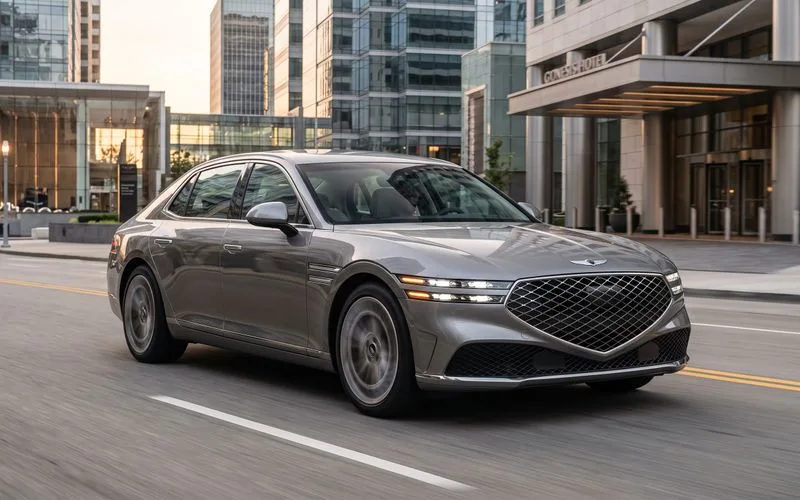 Genesis G90Full-Size Luxury SedanBetter at: Modern tech
It makes the same value-flagship pitch with a current infotainment system, more rear-seat space, rear-axle steering and a far longer warranty with included maintenance.
Compare 3.51A-
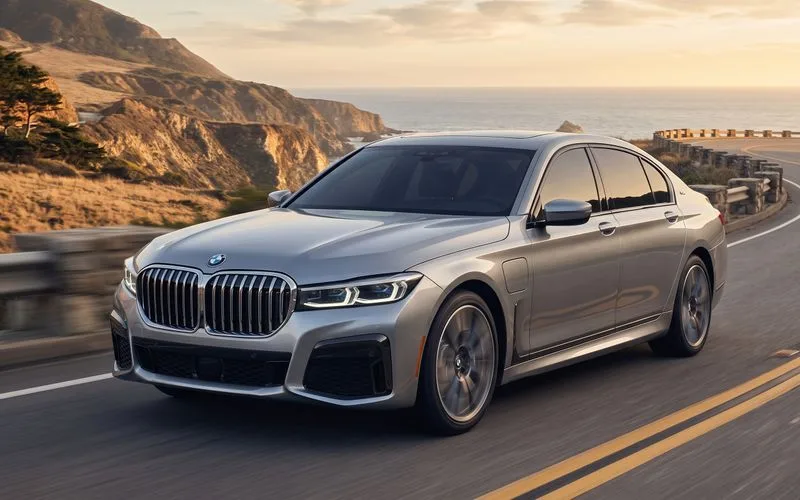 BMW 7 SeriesFull-Size Luxury SedanBetter at: Rear-seat space
For a buyer who wants the long-wheelbase rear seat, hands-free highway driving and 27 MPG, and will accept German maintenance costs to get them.
Compare 3.11B
3.11B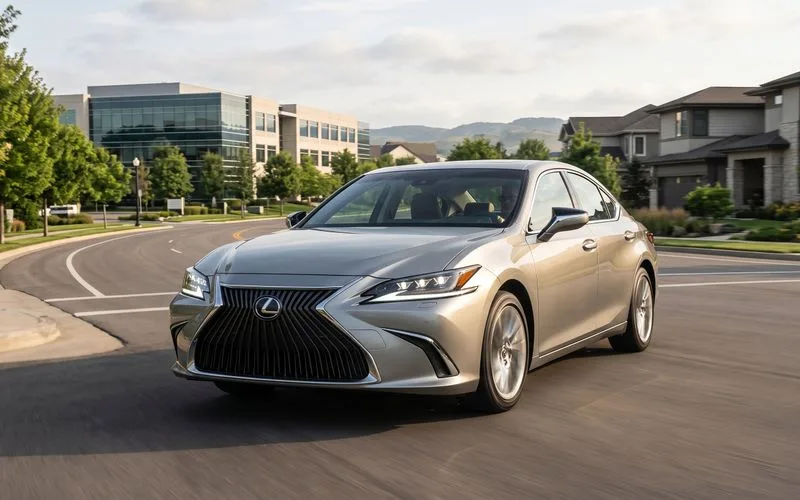 Lexus ESMid-Size Luxury SedanBetter at: Running costs
Nearly the same rear legroom and newer technology for tens of thousands less, with about 43 MPG in hybrid form and stronger resale.
CompareHow it's evolved
10 scored model years · 2017–2026
Subject scores by year
Hover or tap a score to see what moved it versus the year before. A corner mark flags a big swing.
| Year | Performance | Efficiency | Safety | Space | Cost | Reliability | Tech | Use-case | Driving | Value |
|---|---|---|---|---|---|---|---|---|---|---|
| 2026 | 77 | 18 | 79 | 74 | 15 | 85 | 77 | 55 | 70 | 66 |
| 2025 | 76 | 24 | 73 | 71 | 14 | 84 | 78 | 53 | 69 | 65 |
| 2024 | 76 | 20 | 60 | 73 | 15 | 85 | 76 | 48 | 67 | 63 |
| 2023 | 77 | 20 | 72 | 72 | 15 | 85 | 75 | 50 | 68 | 63 |
| 2022 | 75 | 20 | 59 | 72 | 14 | 85 | 64 | 49 | 68 | 61 |
| 2021 | 77 | 20 | 70 | 72 | 26 | 85 | 65 | 50 | 68 | 72 |
| 2020 | 76 | 21 | 69 | 71 | 24 | 80 | 59 | 49 | 65 | 69 |
| 2019 | 76 | 21 | 73 | 71 | 20 | 81 | 59 | 49 | 65 | 71 |
| 2018 | 76 | 21 | 66 | 72 | 19 | 81 | 55 | 47 | 66 | 75 |
| 2017 | 65 | 13 | 38 | 75 | 14 | 86 | 40 | 42 | 65 | 60 |
Compare two years
Best fit & conditions
Higher scores mean a better fit for that use case. Learn more about use-case fit →
Subject profile
Academic Probation · NHTSA safety recalls
No NHTSA safety recall is on record for the 2026 Lexus LS. Other model years of the LS have 10 — listed below.
10 recalls on other model years of the LS (2018–2025)
Feb 18, 2026Power train: automatic transmissionIn the event of transmission solenoid failure, the communication may fail between the transmission electronic control unit (ECU) and the engine ECU, resulting in transmission damage.
Defect
Toyota Motor Engineering & Manufacturing (Toyota) is recalling certain 2025-2026 Lexus LX600 vehicles. In the event of transmission solenoid failure, the communication may fail between the transmission electronic control unit (ECU) and the engine ECU, resulting in transmission damage.
Risk
A damaged transmission can cause a loss of drive power, increasing the risk of a crash. In addition, a damaged transmission can leak transmission fluid, increasing the risk of a fire.
Remedy
Dealers will update the transmission ECU software, free of charge. Owner notification letters were mailed April 13, 2026. Owners may contact Toyota's customer service at 1-800-331-4331. Toyota's number for this recall is 26LA01.
NHTSA campaign 26V094000 ↗Manufacturer no. 26LA014,374 vehicles potentially affected (all models in the campaign)Owners notified Apr 9, 2026Filed by Toyota Motor Engineering & ManufacturingFiled as LS HYBRIDOct 30, 2025Back over prevention: display functionPlease see the recall report for a complete list of models. A software error may cause the rearview camera to freeze or display a blank screen when the vehicle is in reverse. As such, these vehicles fail to comply with the requirements of Federal Motor Vehicle Safety Standard (FMVSS) number 111, "Rear Visibility."
Defect
Toyota Motor Engineering & Manufacturing (Toyota) is recalling certain 2022-2026 Toyota, Lexus, and Subaru Solterra vehicles equipped with a Panoramic View Monitor (PVM) system. Please see the recall report for a complete list of models. A software error may cause the rearview camera to freeze or display a blank screen when the vehicle is in reverse. As such, these vehicles fail to comply with the requirements of Federal Motor Vehicle Safety Standard (FMVSS) number 111, "Rear Visibility."
Risk
A rearview camera that fails to display an image can reduce the driver's view behind the vehicle, increasing the risk of a crash.
Remedy
Dealers will update the parking assist software, free of charge. Owner letters were mailed January 2, 2026. Owners may contact Toyota's customer service at 1-800-331-4331. Toyota's numbers for this recall are 25TB13 and 25LB06. Subaru's number for this recall is WRE25.
NHTSA campaign 25V744000 ↗Manufacturer no. 25TB13/25LB06/WRE251,024,407 vehicles potentially affected (all models in the campaign)Owners notified Dec 5, 2025Filed by Toyota Motor Engineering & ManufacturingFiled as LS, LS HYBRIDSep 11, 2025Electrical system: instrument cluster/panelDue to an error in the instrument panel software at vehicle startup, the instrument panel may fail to display vehicle speed, brake system, and tire pressure warning lights.
Defect
Toyota Motor Engineering & Manufacturing (Toyota) is recalling certain 2023-2024 Toyota Venza, 2023-2025 RAV4 Prime, RAV4, Highlander, GR Corolla, Crown, 2024-2025 Lexus TX, LS, Toyota Tacoma, Grand Highlander, and 2025 Lexus RX, Toyota Crown Signia, Camry, RAV 4 Plug-in Hybrid (PHEV), and 4 Runner vehicles. Due to an error in the instrument panel software at vehicle startup, the instrument panel may fail to display vehicle speed, brake system, and tire pressure warning lights.
Risk
An instrument panel display that does not show critical information can increase the risk of a crash or injury.
Remedy
Dealers will update the instrument panel software over-the-air (OTA) for non-PHEV vehicles, free of charge. For PHEV vehicles, dealers will inspect the instrument panel assembly, and either replace it, or update the software, free of charge. Owner letters were mailed December 5, 2025. Additional letters will be sent, anticipated in May 2026. This is a phased recall. Owners may contact Toyota's customer service at 1-800-331-4331. Toyota's numbers for this recall are 25TB08 and 25TA08. Lexus' numbers for this recall are 25LB05 and 25LA05.
NHTSA campaign 25V595000 ↗Manufacturer no. See Part 573 Report591,377 vehicles potentially affected (all models in the campaign)Owners notified Dec 5, 2025Filed by Toyota Motor Engineering & ManufacturingFiled as LSApr 17, 2024Air bags: sensor: occupant classification: front passengerAs such, these vehicles fail to comply with the requirements of Federal Motor Vehicle Safety Standard number 208, "Occupant Crash Protection."
Defect
Toyota Motor Engineering & Manufacturing (Toyota) is recalling certain 2018-2021 Lexus LS500 and 2018-2020 Lexus LS500 Hybrid vehicles equipped with the "Executive Package." The front passenger seat may have been assembled with interference between internal parts that can cause the Occupant Classification System (OCS) sensor to incorrectly detect the occupant. As such, these vehicles fail to comply with the requirements of Federal Motor Vehicle Safety Standard number 208, "Occupant Crash Protection."
Risk
Incorrect detection of an occupant may result in improper air bag deployment during a crash, increasing the risk of injury.
Remedy
Dealers will inspect and repair the front passenger seat, as necessary, free of charge. Owner notification letters were mailed June 7, 2024. Owners may contact Toyota customer service at 1-800-331-4331. Toyota's number for this recall is 24LA03.
NHTSA campaign 24V275000 ↗Manufacturer no. 24LA03509 vehicles potentially affected (all models in the campaign)Owners notified Jun 7, 2024Filed by Toyota Motor Engineering & ManufacturingFiled as LS, LS HYBRIDFeb 21, 2024Back over prevention: display functionDue to incorrect programming of the parking-assist electronic control unit (ECU) software, the rearview camera image may not immediately display within a couple of seconds after the shifter is placed into reverse. As such, these vehicles fail to comply with the requirements of Federal Motor Vehicle Safety Standard number 111, "Rear Visibility."
Defect
Toyota Motor Engineering & Manufacturing (Toyota) is recalling certain 2023 Mirai, Lexus LS500, LS500H, 2023-2024 Lexus ES250, ES300H, ES350, 2024 Lexus LC500, and LC500H vehicles equipped with a Panoramic View Monitor (PVM) system. Due to incorrect programming of the parking-assist electronic control unit (ECU) software, the rearview camera image may not immediately display within a couple of seconds after the shifter is placed into reverse. As such, these vehicles fail to comply with the requirements of Federal Motor Vehicle Safety Standard number 111, "Rear Visibility."
Risk
A rearview camera that fails to display an image can reduce the driver's rear view, increasing the risk of a crash.
Remedy
Dealers will update the parking assist ECU software, free of charge. Owner notification letters were mailed April 10, 2024. Owners may contact Toyota customer service at 1-800-331-4331. Toyota's numbers for this recall are 24TA01 and 24LA01.
NHTSA campaign 24V124000 ↗Manufacturer no. 24TA01 / 24LA0118,616 vehicles potentially affected (all models in the campaign)Owners notified Apr 10, 2024Filed by Toyota Motor Engineering & ManufacturingFiled as LS, LS HYBRIDApr 13, 2022Electronic stability control (esc): control module: softwareThe Skid Control ECU software may not turn on the Vehicle Stability Control (VSC) system when the vehicle is restarted after the driver has disabled the VSC system. As such, these vehicles fail to comply with the requirements of Federal Motor Vehicle Safety Standard number 126, "Electronic Stability Control Systems."
Defect
Toyota Engineering & Manufacturing (Toyota) is recalling certain 2022 Lexus LX 600, Lexus NX 350h, Lexus NX 450h+, Toytoa RAV4 Hybrid, 2021-2022 Lexus LS 500h, Toyota Mirai, RAV4 PRIME, Sienna, Venza, and 2020-2022 Toyota Highlander Hybrid vehicles. The Skid Control ECU software may not turn on the Vehicle Stability Control (VSC) system when the vehicle is restarted after the driver has disabled the VSC system. As such, these vehicles fail to comply with the requirements of Federal Motor Vehicle Safety Standard number 126, "Electronic Stability Control Systems."
Risk
Driving with a deactivated stability control system increases the risk of a crash.
Remedy
Dealers will update the Skid Control ECU software, free of charge. Owner notification letters were mailed May 27, 2022. Owners may contact Toyota customer service at 1-800-331-4331. Toyota's number for this recall is 22TA03. Lexus' number for this recall is 22LA01.
NHTSA campaign 22V239000 ↗Manufacturer no. 22TA03, 22LA01458,110 vehicles potentially affected (all models in the campaign)Owners notified May 27, 2022Filed by Toyota Motor Engineering & ManufacturingFiled as LS HYBRIDNov 4, 2020Fuel system, gasoline: delivery: fuel pumpThe low-pressure fuel pump inside the fuel tank may fail.
Defect
Toyota Motor Engineering & Manufacturing (Toyota) is recalling certain 2018-2019 4Runner, 2019-2020 Avalon, 2019 Corolla Hatchback, 2017-2019 Highlander, 2018-2020 Camry, 2020 Corolla, 2018-2019 Land Cruiser, 2017-2020 Tacoma, 2019-2020 RAV4, 2019-2020 Sequoia, 2017-2020 Sienna, 2019-2020 Tundra, 2018-2020 Lexus ES350, 2017 Lexus GS200t, 2017-2019 Lexus GS350, 2019 Lexus GS300, 2018-2020 Lexus LC500h, 2019-2020 Lexus LS500, 2018-2019 Lexus GX460, 2017 Lexus IS200t, 2019 Lexus IS300, 2019 Lexus IS350, 2018-2020 Lexus LC500, 2018 Lexus LS500, 2019 Lexus LS500h, 2018-2019 Lexus LX570, 2017 Lexus RC200t, 2019 Lexus RC300, RC350, 2017 and 2019-2020 Lexus RX350, 2018-2020 RX350L, 2019 Lexus UX200, 2018-2019 Lexus NX300 vehicles. The low-pressure fuel pump inside the fuel tank may fail.
Risk
If the fuel pump fails, the engine can stall while driving, increasing the risk of a crash.
Remedy
Toyota will notify owners, and dealers will replace the fuel pump assembly with an improved one, free of charge. Owners of specific models were notified that remedy parts were available starting January 21, 2021. Owners of other models will be notified as remedy parts become available. Remedy parts should be available for all affected vehicles by late March 2021. Owners may contact Toyota customer service at 1-888-270-9371 or Lexus customer service at 1-800-255-3987. Note: This recall is an expansion of recall 20V-012. Toyota's number for this recall is 20TA02. Lexus' number for this recall is 20LA01.
NHTSA campaign 20V682000 ↗Manufacturer no. 20TA02, 20LA011,525,742 vehicles potentially affected (all models in the campaign)Owners notified Jan 21, 2021Filed by Toyota Motor Engineering & ManufacturingFiled as LS HYBRID, LS500Jan 13, 2020Fuel system, gasoline: delivery: fuel pumpToyota Motor Engineering & Manufacturing (Toyota) recalled certain 2018-2019 4Runner, Highlander, Camry, Land Cruiser, Sequoia, Sienna, Tacoma and Tundra, and Lexus RC 300, RC 350, GS 350, GX 460, IS 300, LC 500, LS 500, LX 570, RX 350L, and 2019 Toyota Avalon and Corolla, and certain Lexus NX 300, and ES 350 vehicles on January 13, 2020. On March 4, 2020, Toyota expanded the recall to include certain 2014-2015 Toyota 4Runner and Land Cruiser, 2018 Avalon, Corolla, 2014 FJ Cruiser, 2017 Sienna and Lexus 2018 ES 350, 2018-2019 GS 300, 2013-2014 GS350, 2014-2015 GX 460, IS 350 and LX 570, 2014 IS F, 2018-2019 IS 350, LC 500H and LS 500H, 2013-2015 LS 460, 2015 NX 200T and RC350, 2017 RC 200T and RX 350. Toyota also removed the 2018-2019 Toyota 4Runner and Land Cruiser and 2018-2019 Lexus GX 460 and LX 570 and 2019 NX300 from inclusion in this recall. On March 19, 2020, Toyota expanded the recall to include 2015 Lexus GS350 vehicles. The low-pressure fuel pump inside the fuel tank may fail.
Defect
Toyota Motor Engineering & Manufacturing (Toyota) recalled certain 2018-2019 4Runner, Highlander, Camry, Land Cruiser, Sequoia, Sienna, Tacoma and Tundra, and Lexus RC 300, RC 350, GS 350, GX 460, IS 300, LC 500, LS 500, LX 570, RX 350L, and 2019 Toyota Avalon and Corolla, and certain Lexus NX 300, and ES 350 vehicles on January 13, 2020. On March 4, 2020, Toyota expanded the recall to include certain 2014-2015 Toyota 4Runner and Land Cruiser, 2018 Avalon, Corolla, 2014 FJ Cruiser, 2017 Sienna and Lexus 2018 ES 350, 2018-2019 GS 300, 2013-2014 GS350, 2014-2015 GX 460, IS 350 and LX 570, 2014 IS F, 2018-2019 IS 350, LC 500H and LS 500H, 2013-2015 LS 460, 2015 NX 200T and RC350, 2017 RC 200T and RX 350. Toyota also removed the 2018-2019 Toyota 4Runner and Land Cruiser and 2018-2019 Lexus GX 460 and LX 570 and 2019 NX300 from inclusion in this recall. On March 19, 2020, Toyota expanded the recall to include 2015 Lexus GS350 vehicles. The low-pressure fuel pump inside the fuel tank may fail.
Risk
If the fuel pump fails, the engine can stall while driving, increasing the risk of a crash.
Remedy
Toyota will notify owners, and dealers will replace the fuel pump, free of charge. The recall began May 4, 2020. Owners may contact Toyota customer service at 1-888-270-9371 or Lexus customer service at 1-800-255-3987. Toyota's numbers for this recall are 20TB02 and 20TA02 for Toyota vehicles and 20LB01 and 20LA01 for Lexus vehicles.
NHTSA campaign 20V012000 ↗Manufacturer no. 20TB02/20TA02/20LB011,830,752 vehicles potentially affected (all models in the campaign)Owners notified May 1, 2020Filed by Toyota Motor Engineering & ManufacturingFiled as LS HYBRID, LS500Jul 24, 2019Electronic stability control (esc) · Service brakesThe brake booster pump may fail causing a deactivation of the Vehicle Stability Control system and a loss of braking assist. As such, these vehicles fail to comply with the requirements of Federal Motor Vehicle Safety Standard (FMVSS) number 126, "Electronic Stability Control Systems."
Defect
Toyota Motor Engineering & Manufacturing (Toyota) is recalling certain 2019 Lexus LS500, LC500, ES300h, UX250h, LS500h, Toyota Prius, RAV4 HV, 2019-2020 Toyota Prius Prime, and 2020 Corolla HV vehicles. The brake booster pump may fail causing a deactivation of the Vehicle Stability Control system and a loss of braking assist. As such, these vehicles fail to comply with the requirements of Federal Motor Vehicle Safety Standard (FMVSS) number 126, "Electronic Stability Control Systems."
Risk
Deactivation of the vehicle stability control system or a loss of braking assist increases the risk of a crash.
Remedy
Toyota will notify owners, and dealers will inspect and, if necessary, replace the brake booster pump, free of charge. The recall began September 20, 2019. Toyota owners may contact Toyota customer service at 1-888-270-9371 and Lexus owners may contact Lexus customer service at 1-800-255-3987. Toyota's numbers for this recall are K1L/K0L. Lexus' numbers for this recall are K2F/KLF.
NHTSA campaign 19V544000 ↗Manufacturer no. K1L/K0L, K2F/KLF6,925 vehicles potentially affected (all models in the campaign)Owners notified Sep 20, 2019Filed by Toyota Motor Engineering & ManufacturingFiled as LS HYBRID, LS500Feb 27, 2019Tires · Tires: sidewallThe tire-on-wheel assembly process may have caused the reinforcement layer to crack, possibly resulting in the tire tread layer separating from the tire.
Defect
Toyota Motor Engineering & Manufacturing (Toyota) is recalling certain 2018 Lexus LS vehicles equipped with run-flat tires with a sidewall reinforcement layer inside the tire. The tire-on-wheel assembly process may have caused the reinforcement layer to crack, possibly resulting in the tire tread layer separating from the tire.
Risk
If the tire tread layer separates from the vehicle, vehicle handling and stability may be affected, increasing the risk of crash.
Remedy
Toyota will notify owners, and Lexus dealers will replace the affected tires, free of charge. The recall began April 26, 2019. Owners may contact Lexus customer service at 1-800-255-3987. The Toyota number for this recall is KLC.
NHTSA campaign 19V134000 ↗Manufacturer no. KLC6,296 vehicles potentially affected (all models in the campaign)Owners notified Apr 26, 2019Filed by Toyota Motor Engineering & ManufacturingFiled as LS
Source: NHTSA Office of Defects Investigation recall database, model years 2017–2026. Recalls are listed by model year as the manufacturer filed them; whether a specific car is affected depends on its VIN — check a VIN at nhtsa.gov ↗. NHTSA model names matched to this page: LS, LS HYBRID, LS500.
Detailed scoring by subject
1Performance & PowertrainOne of the LS's strongest categories.3.22B+
The volume LS 500 runs the 3.5L twin-turbocharged V6 (V35A-FTS) at 416 hp, a figure carried unchanged across the whole fifth-generation (XF50) run since 2018 and the strongest standard powertrain among full-size luxury sedans' base cars — a 740i opens at 375 hp, an A8 at 335. Only the S 580's V8 and the electric flagships out-muscle it, and the LS gives that up without asking a V8 premium.
442 lb-ft on a plateau from 1,600 rpm sits near the top of the sedan normalization band and is the highest base-trim torque figure in the full-size luxury set — more than the S 500 (413), the 740i (383) or the A8 (369). It is the number that best explains the LS's effortless part-throttle character, which is how these cars are actually driven.
Lexus claims 4.6 s for the rear-drive LS 500 and 4.7 s for the all-wheel-drive car that makes up most US sales, and instrumented tests through the generation have landed on or just under those numbers. That is quicker than a 740i (5.2 s) or an A8 (5.6 s) and within two tenths of an S 500 — genuinely fast for a car whose mission is isolation rather than pace.
Lexus's NVH work is the best part of the car — the twin-turbo V6 is near-silent at cruise, pulls hard from low revs on that broad torque plateau, and the hybrid's engine transitions are almost undetectable. It sits below the 7 Series (90) and S-Class (92) because reviewers have consistently faulted the V6 for a coarse, characterless note when extended and for a beat of turbo lag off idle that the effortless V8 and inline-six rivals do not have.
The Direct Shift-10AT shifts smoothly and almost imperceptibly in the light-throttle driving the LS is built for, and it has enough ratios to keep the V6 in its torque band. It stays out of the top band because ten closely stacked gears give it more chances to hunt and a noticeable pause before a kickdown, and the hybrid's Multi Stage system — a planetary split behind a four-speed — still lets revs flare in a way a ZF 8-speed never does.
All-wheel drive is offered across the LS range rather than reserved for the top of it, using a conventional full-time mechanical system that is the right hardware for a car of this weight and price. It falls short of the A8 (97) and S-Class (92), where quattro and 4MATIC are standard fit, because on the LS it remains a cost option on a rear-drive baseline, and there is no torque vectoring, terrain mode or low range to add sophistication beyond wet-road traction.
The LS offers two genuinely distinct powertrains — the twin-turbo V6 LS 500 and the V6 Multi Stage Hybrid LS 500h, each in rear- or all-wheel drive — which covers the mainstream and the efficiency-minded buyer but nothing beyond. There is no V8, no plug-in hybrid and no battery-electric LS, so against an S-Class spanning inline-six, V8 and PHEV (85) or a 7 Series with a full i7 EV alongside it (80) the slate is thin, and it is narrowing rather than growing as the nameplate reaches the end of its run.
2Efficiency & RangeOne of the LS's weakest categories.0.00F
The volume LS 500 AWD pairs a 416-hp 3.5L twin-turbo V6 with a 10-speed automatic and roughly 4,900 lb of curb weight, and returns about 20 MPG combined — below the 22 MPG floor of the sedan normalization band, so it scores zero on a scale that spans everything from a Versa to a Lucid Air. Choosing the LS 500h Multi Stage Hybrid lifts combined economy by roughly 30 percent, but it is an option rather than the representative configuration.
City is the LS 500's weakest number: a large-displacement turbo V6 hauling a heavy, heavily sound-deadened flagship with no electrical assist at low speed lands at about 17 MPG, under the 20 MPG band floor for sedans. This is exactly the duty cycle where the LS 500h's Multi Stage Hybrid earns its premium, adding roughly six MPG in town.
Highway is where the LS is least compromised — tall top-gear cruising and slippery aerodynamics give it about 27 MPG in AWD form, just above the 26 MPG band floor. It still trails the segment's electrified and downsized-turbo rivals, and the gap to the LS 500h narrows to roughly four MPG here, which is why the hybrid's case rests on city driving.
A 21.7-gallon tank offsets much of the thirst, giving the volume LS 500 AWD roughly 434 miles between fills — mid-pack for the sedan band and genuinely adequate for the long-haul touring this car is built around. The hybrid stretches that past 550 miles, which is the single strongest efficiency argument in the LS range.
Twenty MPG combined on required premium is the expensive end of the sedan set: about 750 gallons a year at roughly $4.05 puts running cost above the $2,800 ceiling of the normalization band, so it scores zero. The figure is a real ownership cost rather than a rounding detail — the hybrid saves on the order of $700 a year at the same mileage, recovering a meaningful share of its price premium.
Lexus specifies premium unleaded (91 octane) for the twin-turbo V6, and the LS 500h asks for the same grade, so there is no way to configure an LS that runs on regular. There is no E85, diesel or plug-in option to hedge with either, which lands it in the low band — though it is no worse on this count than the S-Class, 7 Series and A8, which all require premium as well.
3SafetyOne of the LS's strongest categories.3.35B+
NHTSA has not published an overall star rating for the fifth-generation (XF50) Lexus LS 500 / LS 500h; full-size luxury flagships are routinely skipped by the NCAP program because of their low volume. Estimated at 4.5 stars from segment norms, matching the treatment given to the equally untested Audi A8 and BMW 7 Series in this dataset.
The LS carries no IIHS award — the Institute has not run an award-eligible test slate on the XF50 generation, and the LS appears on neither the 2025 nor the 2026 Top Safety Pick lists. Scored in the upper middle band on the strength of Lexus's crashworthiness record where its sedans have been tested (the ES has repeatedly earned TSP/TSP+) and a flagship structure engineered around a high-strength multi-material body, not on any result specific to this car.
As the brand flagship the LS ships the advanced tier of Lexus Safety System+ on every trim — pre-collision with pedestrian/cyclist detection, intersection-turn and oncoming-vehicle support, active steering assist, full-speed-range Dynamic Radar Cruise Control, lane departure alert with steering assist, lane tracing assist, road sign assist and automatic high beams — and Lexus additionally makes Blind Spot Monitor, Rear Cross-Traffic Alert, Front Cross-Traffic Alert and Safe Exit Assist standard rather than package-locked. Nothing safety-relevant is paywalled to an upper trim, which is what puts it in the top band alongside the S-Class rather than the package-gated German mid-sizers.
The LS runs the advanced Lexus pre-collision hardware — stereo camera plus millimetre-wave radar with day/night pedestrian and daytime cyclist detection, low-speed intersection turn assist, and active steering avoidance that steers around an obstacle within the lane, which is more than the mainstream Toyota/Lexus systems offer. Held at the bottom of the top band because IIHS has published no front crash prevention result for this generation to confirm real-world performance.
Blind Spot Monitor with Rear Cross-Traffic Alert, Front Cross-Traffic Alert, Lane Change Assist and Safe Exit Assist are all standard, and Safe Exit Assist will hold the rear door against an approaching vehicle or cyclist rather than merely chiming. Scored just below the German trio because the rear cross-traffic system alerts rather than braking autonomously the way BMW's and Mercedes' do; trailer-aware coverage is not relevant in this segment.
Lane Departure Alert with steering assist and Lane Tracing Assist are standard and hold a well-marked highway lane calmly, helped by the LS's slow, heavily damped steering tune; on Lexus Teammate-equipped cars the centering is noticeably more assertive than the mainstream Toyota implementation. Still short of the German benchmarks — reviewers describe the Toyota/Lexus lineage as tracking between the markings rather than locking to the centre.
Full-speed-range Dynamic Radar Cruise Control with stop-and-go is standard and is one of the better-mannered systems in the class — smooth gap closure, curve-speed reduction, and lane-change assist that will execute a signalled change. It integrates cleanly with lane tracing into a genuine highway assist, but it lacks the map-linked predictive speed adaptation that lifts the S-Class and A8 above it.
The LS is the car Lexus launched Teammate with Advanced Drive on, and it permits hands-off operation on mapped limited-access divided highways under driver monitoring — a real hands-free capability most rivals in the segment lack. It sits mid-band rather than high because availability has been tied to specific configurations (Advanced Drive arrived on the LS 500h) rather than offered across the range, and because Lexus's mapped-road coverage is far narrower than GM Super Cruise's or Ford BlueCruise's nationwide networks.
LED headlamps with automatic high beam are standard, and the LS was the first US-market car offered with Lexus's BladeScan adaptive high-beam system, which sweeps light with a rotating mirror to shade oncoming traffic while keeping the shoulders lit — genuinely class-leading beam control. Scored below the Audi and Mercedes flagships because the best hardware is an upper-trim option rather than standard, and IIHS has published no headlight rating for this car.
The LS's coupe-like roofline, high beltline and thick rear pillars give it noticeably worse natural sightlines than an upright S-Class or G90 — the shallow rear glass in particular is a recurring reviewer complaint. Camera compensation is strong, with a Panoramic View Monitor, front and rear parking sensors with automatic braking, and an available digital rearview mirror, but it is covering for a genuinely compromised glasshouse rather than a good one.
Two outboard LATCH positions with top tethers, enormous rear legroom and wide-opening rear doors make a rear-facing seat easy to live with, and the LS seats five. Points come off for anchors recessed behind leather seat-cushion trim that takes some digging, a low roofline that forces a stoop when lifting a child in, and — on Executive-package cars — a reclining/ottoman rear seat and fixed rear console that eat into usable child-seat space.
4Space & ComfortGrades above the middle of the scale.3.01B
The volume LS 500 is a conventional five-passenger sedan with a three-place rear bench; only the low-volume Executive Package deletes the center position for a two-place rear lounge with ottoman, dropping capacity to four.
The LS trades headroom for its low 57.5 in coupe-like roofline; 37.0 in is mid-pack for a sedan in absolute terms and well behind the taller-roofed German flagships, and the standard moonroof erodes it slightly further.
At 41.0 in the LS sits near the bottom of the sedan normalization band despite its 123.0 in wheelbase — the XF50 packaging spends its length on the rear cabin and the long hood rather than on front-row stretch-out room.
Rear headroom is respectable for the class at 37.5 in, but the steeply tapered rear roofline and standard rear moonroof mean tall passengers sit closer to the headliner than the exterior size suggests.
The defining space weakness of the fifth-generation LS: Lexus dropped the long-wheelbase LS L for the XF50, so US buyers get one 123.0 in wheelbase and 38.9 in of rear legroom — roughly five inches short of the extended-wheelbase BMW 7 Series and Audi A8 L that define this segment, and no better than a mid-size Lexus ES.
The gas LS 500's 17.0 cu ft trunk is genuinely large for a sedan and sits in the upper third of the 10-20 cu ft normalization band; the LS 500h gives up roughly two cubic feet to the Multi Stage Hybrid battery, so hybrid buyers see a meaningfully smaller hold.
Competent but conservative: a usable center console bin, split-opening armrest, decent door pockets and wireless charging, with no packaging innovation of the sort that earns a top-band score. The narrow, heavily styled console leaves less usable open stowage than the exterior footprint implies, and there is no frunk, underfloor bin or fold-flat rear seat — the LS rear seatback is fixed, with only a pass-through on some configurations.
A long-standing LS strength. The front seats offer up to 28-way power adjustment with heating, ventilation and multi-mode massage, and are repeatedly cited as among the best long-haul chairs in the class; the rear bench is well-cushioned and reclines, and the Executive Package adds an ottoman and shiatsu massage. The score stops short of the top band only because the standard rear seat is constrained by the 38.9 in legroom above rather than by the seat itself.
Multi-link air suspension is standard across the LS range, and the 2021 mid-cycle update specifically retuned dampers, bushings and spring rates to restore the plush isolation the launch cars were criticized for lacking. The result is a genuinely serene ride on the standard setup; F Sport trims on 20-inch wheels remain noticeably firmer over broken pavement, which keeps this below the segment-leading road-scanning setups.
The clearest best-in-class attribute of the LS. Acoustic laminated glass front and rear, extensive body sealing, Active Noise Control and — on the hybrid — near-silent low-speed running make this a benchmark for suppressing wind and road noise at highway speed; the 2021 update added further insulation. The only intrusion reviewers reliably note is the twin-turbo V6's uninspiring note under hard acceleration, a character rather than a volume complaint.
Comfort equipment is rich and mostly standard rather than optional: four-zone climate control, heated and ventilated front seats, heated steering wheel, rear-seat climate controls with heated outboard rear seats, and available front massage. The Executive Package layers on a reclining right-rear seat with ottoman, shiatsu massage and rear-seat entertainment. Remote pre-conditioning is available through the Lexus app.
5Cost of OwnershipThe LS's lowest-graded category.0.00F
Replaces a placeholder value of $53,350 that was far below any full-size luxury sedan. The XF50 LS 500 RWD carried an MSRP in the high-$70Ks in MY2024 and low-$80Ks in MY2025; a typical model-year uplift puts the 2026 entry trim near $83,000 with destination. Either way the figure sits far above the sedan band ceiling of $55,000, so the item scores 0.
The volume configuration is the AWD LS 500 with a Premium/F SPORT Design-level package rather than the stripped RWD car, adding roughly $9,000 over base. Replaces a placeholder of $56,300. Still far above the $58,000 sedan band ceiling, so the item scores 0 — but the LS is meaningfully cheaper as-equipped than the German full-size trio.
The LS is the clear running-cost outlier in the full-size luxury class: Lexus reliability and Toyota-group parts pricing keep it well under the German norm, but the twin-turbo V6, air suspension, and 20-inch rubber push it above the smaller Lexus sedans. Replaces a placeholder of $8,396.90, which understated the brand's cost advantage.
Full-size luxury sedans are the worst-depreciating body style on the market and the LS is no exception, but Lexus's reliability reputation and thin used supply keep it roughly 5–10 points ahead of the German flagships. The prior placeholder of 63.5% was implausibly strong — it would have made the LS a better residual bet than a compact Lexus, which no residual study supports.
Lexus's brand-wide basic coverage, unchanged for 2026 and identical across the lineup. Matches every German rival at 4/50,000 but trails Genesis's 5/60,000. Replaces a placeholder of 4.7 years.
Lexus's standard 6 yr / 70,000 mi powertrain term applies. The US LS lineup has been gas-only (LS 500, 3.5L twin-turbo V6) since the LS 500h was dropped after MY2022, so the longer hybrid-component and hybrid-battery terms do not apply to the volume US configuration. Replaces a placeholder of 8.9 years, which had effectively credited the LS with Hyundai/Genesis-length coverage it does not offer.
Lexus includes 1 yr / 10,000 mi complimentary scheduled maintenance (the 5,000- and 10,000-mile services) plus 4 yr / unlimited-mile roadside assistance and connected-services trials — real but short, landing in the middle of the 50–79 'short included-maintenance period' band. Better than BMW and Mercedes, which include no scheduled maintenance, and well short of Genesis's multi-year plan with valet service. Replaces a placeholder of 75.
$92,000 volume-trim price minus its estimated resale value after 5 years (47% retained, or about $43,240) leaves about $48,760 in depreciation. Add the projected $6,300 in 5-year maintenance and repairs, and owning this vehicle for 5 years costs about $55,060 in total.
6Reliability & QualityThe LS's best-graded category.3.78A
The 2026 LS is a late-life carryover of the fifth-generation XF50 car that launched for 2018 and was facelifted for 2021 — nine model years of running changes with no new platform, engine or electrical architecture to introduce first-year faults, which is the strongest structural argument available for predicted reliability. It scores well clear of every German full-size rival in this dataset (7 Series 78, S-Class 68, A8 62) on Lexus's track record, but sits below the mature compact IS (89) because the LS is a genuinely complex flagship — multi-link air suspension, 24-way front seats, active noise control, a large infotainment stack — and complexity is where Lexus's own dependability results are weakest.
Lexus is a permanent fixture in the top tier of US dependability research — habitually first or second in J.D. Power's Vehicle Dependability Study and top-five in Consumer Reports' brand rankings. Scored identically to the 2026 IS since this is a brand-wide attribute, and a notch below the 93 on the 2026 ES because CR's 2026 survey places Lexus third behind Toyota and Subaru rather than sweeping both major studies outright.
The XF50 LS has run an unusually clean NHTSA record for a technology-dense flagship — no fire, ADAS or structural campaigns of the kind that have repeatedly hit the S-Class (62) and 7 Series (76), and Lexus TSB volume is low by class standards. Held short of the top band because early model years of this generation were swept into the industry-wide 2020 Denso low-pressure fuel-pump action that spanned much of the Toyota/Lexus range, and because no live NHTSA query was possible to confirm the 2026 car is campaign-free.
The volume LS 500 pairs the V35A-FTS 3.5-liter twin-turbo V6 with Aisin's 10-speed automatic — the gearbox is a robust, torque-converter-conventional unit shared with the LC and LX with an excellent field record, and the LS has shown no chronic engine failure mode across eight model years. The score is deliberately held out of the top band because this engine family is the one modern Toyota design with a documented systemic defect: the 2024 machining-debris campaign that replaced V35A engines in Tundra and LX 600 models. The LS was not included in that action and uses a different production window, but it is the same architecture, and a direct-injected twin-turbo carries more turbo, carbon-buildup and cooling exposure than the naturally aspirated Toyota V6s that anchor the brand's durability reputation.
The LS cabin is the most craft-forward interior Lexus builds — hand-pleated Nishijin-inspired door trim, Kiriko cut-glass and shimamoku wood options, semi-aniline leather and the brand's characteristically damped switchgear — and reviewers consistently single it out as a genuine point of difference in a class of screen-forward German rivals. It lands just under the S-Class (96), 7 Series (94) and A8 (93) because those cars push harder on visual richness and metal content, and because the LS's lower trims share visible switchgear and secondary surfaces with far cheaper Lexus models, which the price does not justify.
This is the LS's single strongest quality attribute and the best fit-and-finish score of any sedan in this dataset. It is built at Toyota's Tahara plant under the brand's takumi inspection regime, on a line and body that have had nine model years to converge — tight, repeatable panel gaps, essentially no squeak-and-rattle thread in owner reports, and class-leading NVH isolation. Scored above the A8 (92), the mature IS (90) and the S-Class (89).
Coverage is thinner than BMW's or Mercedes-Benz's at roughly 240 US stores, but Lexus is the industry reference point for luxury service satisfaction, regularly leading or placing top-three in J.D. Power's Customer Service Index, with loaners and pickup-and-delivery standard practice — and flagship LS buyers sit at the front of that queue. Scored identically to the 2026 ES and IS since the network is brand-wide, and above the 7 Series (86), S-Class (80) and A8 (76).
The LS is the weak spot in an otherwise strong Lexus ownership case: a low-volume flagship whose air suspension, adaptive dampers, 24-way seats and model-unique glass, lighting and body panels are dealer-dependent, expensive and essentially unserved by an aftermarket. It still beats the German full-size field (S-Class 42, A8 50, 7 Series 65) because the V35A engine and Aisin 10-speed are shared with high-volume Toyota trucks and SUVs, Lexus parts and labor pricing runs below the Germans', and independent shops will take the work — but it is far below the Toyota-commonality cars in the brand's own range (ES 80, IS 84).
7Technology & InfotainmentGrades above the middle of the scale.3.20B+
The fifth-generation LS (XF50) adopted a 12.3-inch touch-capable center display in the 2021 facelift — moved forward on the dash so it can be reached — and carries that same 12.3-inch screen into 2026 with no larger option. Replaces the placeholder value of 14.5 in, which had wrongly assumed the LS received the 14-inch Lexus Interface panel used by the redesigned 2026 ES.
The LS runs the older Lexus multimedia software rather than the newer Lexus Interface deployed on NX/RX/TX and the 2026 ES: menus are dated, and the console Remote Touch touchpad is retained alongside the touchscreen, so two competing input methods coexist. The 2021 move to a reachable touchscreen fixed the worst of the old car's usability, but this is the weakest part of an otherwise lavish flagship.
Wireless Apple CarPlay has been standard on the LS since the 2021 update, with Android Auto also supported; phone projection is standard equipment rather than a trim-gated option, which is where most of this score comes from.
The 'Hey Lexus' cloud natural-language assistant handles climate, media, and destination entry conversationally, and embedded navigation is standard on the flagship rather than optional — but the best cloud search and traffic features depend on an active connected-services subscription once the trial lapses, and the map graphics are a generation old.
The optional Mark Levinson 3D Surround system — 23 speakers and roughly 2,400 watts, with ceiling-mounted height channels — is among the strongest factory audio systems sold in any sedan, and the standard multi-speaker Pioneer system is competent on its own. This is a genuine best-in-class strength for the LS.
A 12.3-inch fully digital gauge display is standard, using the LFA-derived sliding-ring motif that physically shifts the central dial aside to expose secondary menus. Crisp and distinctive, though less freely reconfigurable than BMW's Curved Display or the newest Mercedes clusters.
The LS supports over-the-air map and multimedia updates through its embedded DCM telematics unit, but not the whole-vehicle, feature-adding OTA updates that BMW, Mercedes, Tesla, and Rivian ship — a meaningful gap for a flagship at this price, and one that will not be closed on a platform in its final years.
The Lexus app covers the core set — remote start and climate precondition, lock/unlock, vehicle locate, status and alerts — but the functionality is Remote Connect subscription-gated after the included trial, and phone-as-key is not a confirmed LS feature the way it is on newer Lexus models.
A wireless charging pad is standard and both rows get device power, appropriate for a flagship — but the LS's port complement dates to a 2018 architecture and mixes older USB-A with USB-C rather than offering high-wattage USB-C throughout, and there is no household AC outlet.
Proximity smart key with push-button start is standard, remote start runs through both the key fob and the Lexus app, and the LS adds flagship touches most rivals charge for — power-closing (soft-close) doors and a power trunk. Held under 90 because phone-as-key is not a confirmed feature.
The LS carries a comprehensive suite: Panoramic View Monitor surround camera with a see-through underfloor view, front and rear clearance sonar with Intelligent Clearance Sonar braking, rear cross-traffic braking, an available digital rearview mirror, and Advanced Park automated parking. Among the deepest parking-aid packages in the class.
The LS offers a 24-inch color head-up display — among the largest projection areas offered in any production car — showing navigation, driver-assist status, and audio without the driver looking down. It is optional rather than standard on the volume configuration, which is the only thing keeping it out of the high 90s.
8Use-Case FitOne of the LS's weakest categories.1.70C-
Wide-opening rear doors, two outboard LATCH sets with top tethers and a 17.0 cu ft trunk that swallows a stroller make the LS competent family transport, but 38.9 in of rear legroom is the tightest in the full-size luxury field and the US LS is offered in one short wheelbase only — a rear-facing seat behind a tall driver is a real squeeze. The low roofline and low seat height also make lifting a child in and out more awkward than the crossovers most families cross-shop.
Lexus Safety System+ A is standard on every 2026 LS — pre-collision with pedestrian detection, full-speed-range radar cruise, lane tracing — alongside standard blind-spot monitor, rear and front cross-traffic alert and Safe Exit Assist, so nothing families need is trim-gated on a car that starts in the eighties. Held back by the complete absence of published NHTSA and IIHS ratings for the fifth-generation LS and by an ADAS generation (LSS+ A) that predates the LSS+ 3.0 suite on the newer ES.
Four-zone climate, heated and ventilated rear seats, rear sunshades, a 17.0 cu ft trunk that stays usable with all seats occupied and the quietest cabin of any real-scored rival make multi-hour family runs genuinely restful, with the Executive Package adding a reclining rear seat with ottoman and massage (at the cost of dropping to four seats). The modest 38.9 in rear legroom is what keeps it below the long-wheelbase S-Class and 7 Series benchmarks.
Standard air suspension, class-topping isolation and a torque-rich twin-turbo V6 with 442 lb-ft from 1,600 rpm make the LS almost effortless in traffic, and full-speed-range radar cruise with stop-and-go plus lane tracing are standard. Two things keep it off the segment's top step: the 10-speed automatic's documented low-speed hesitation and shift-logic hunting, and a 206 in footprint with no rear-wheel steering to shrink it.
The volume LS 500 AWD returns roughly 20 MPG combined on required 91-octane premium — about $3,050/yr in fuel at EPA's 15,000-mile assumption — which is worse than the Audi A8's 22 MPG and far worse than the 7 Series' 27 MPG or its PHEV variant. The LS 500h Multi Stage Hybrid lifts that to about 26 MPG, but it is the expensive minority configuration, and staggered 20-inch tires and flagship service costs keep consumables dear either way.
At roughly 206 in long and 74.8 in wide the LS is marginally more city-friendly than the A8 L or S-Class, and the camera and sonar kit is excellent — Panoramic View Monitor, Intelligent Clearance Sonar, digital rearview mirror and Advanced Park. But there is no rear-wheel steering, so the turning circle stays around 38 ft, and the low, fastback-like roofline gives poorer over-the-shoulder sightlines than the boxier Germans.
No US tow rating, no bed, and no payload provision beyond passengers and luggage — a flagship luxury sedan is not a work tool. The one thing that separates it from the German field is a genuinely large 17.0 cu ft trunk (15.2 cu ft in the hybrid, where the battery intrudes), which at least carries a trade's samples or a photographer's cases better than an A8 or S-Class can.
Mechanically this is the toughest car in the full-size luxury field: the V35A-FTS twin-turbo V6 is shared with the Tundra, Sequoia, LX 600 and GX 550, and Lexus sits third in Consumer Reports' brand reliability, so the powertrain will absorb abuse the German rivals' will not. Everything around it is still flagship-fragile — semi-aniline leather, hand-finished trim, standard air suspension and a low front fascia — with no wear-friendly interior option and no fleet history to point to.
There is essentially nothing here: no bed, no factory hitch, no roof rails, no household 120V outlet, no washable surfaces, and no upfit ecosystem of any kind. The trunk offers carpeted trim and a handful of small hooks; the cabin is leather and open-pore wood.
This is the LS's core mission and it is superb at it: the quietest cabin of any real-scored rival, standard air suspension retuned for comfort in the 2021 update, 28-way heated and ventilated front seats, a 24-inch head-up display and standard full-speed radar cruise with lane tracing. Range is the only limiter — the 21.7-gal tank gives about 434 miles in the volume LS 500 AWD (477 RWD, ~564 in the hybrid) against roughly 620 for a 740i xDrive.
Pavement-bound, and less provisioned than the German flagships because AWD is a paid option rather than standard equipment — quattro is standard on the A8 and 4MATIC on the S-Class. Ground clearance is about 5 in, the air suspension's access-height function raises the body for entry and exit rather than for terrain, and there are no roof rails, no tow rating and no onboard AC power for camping.
The 17.0 cu ft trunk is the LS's quiet practicality win — a third larger than the S-Class's 12.8 and the A8's 12.5, and enough for four people's luggage on a long trip — though the hybrid gives back nearly two cubic feet to its battery. Flexibility is the problem: the rear seatback is fixed with no split-fold, so anything long simply will not go in, and there is no factory hitch or roof rail to work around it.
9Driving ExperienceGrades above the middle of the scale.2.76B-
The XF50 LS is secure and composed with strong grip for a ~5,000-lb sedan, and the F Sport's adaptive dampers, active stabilizer bars and limited-slip differential tighten body control meaningfully. But responses stay deliberate and remote — it never shrinks around the driver the way a 7 Series or G90 does — which is mid-band 'secure but unremarkable' territory.
Accurate and consistently weighted with good straight-line stability, but heavily filtered — very little road texture reaches the rim. The F Sport's variable-ratio steering quickens response off-center without adding genuine feedback.
Firm, progressive pedal with no fade in normal use, but measured stopping distances are only par for a full-size luxury sedan on all-season rubber. Where the Multi Stage hybrid is offered, its blended regen adds a touch of artificiality at low speeds that the pure-gas LS 500 does not have.
The 3.4L twin-turbo V6 (416 hp / 442 lb-ft) paired with the 10-speed automatic is one of the LS's clearest strengths — effortless mid-range, well-damped shifts, and no stop/start harshness. The residual knock is a beat of turbo lag off the line and occasional gear-hunting at low speed; the Multi Stage hybrid's simulated stepped ratios feel less natural under hard throttle.
Near-silent at a cruise and among the best-isolated cabins on sale — active noise control, acoustic glass and extensive sound deadening keep the V6 essentially inaudible in normal driving. Only at full throttle does the twin-turbo V6 sound comparatively ordinary next to the V8s and inline-sixes of its rivals; it is subdued, never coarse.
Estimated for the volume LS 500 AWD configuration; a long 123.0-in wheelbase with no rear-axle steering keeps the LS mid-pack for maneuverability among full-size luxury sedans. Not verified against a 2026 Lexus spec sheet in this run — treat as provisional.
Outstanding front-seat adjustability (up to 28-way power seats with heating, ventilation and massage) and a well-judged wheel-to-pedal relationship. Held back by the coupe-like roofline and high sills that make ingress and egress awkward for a car this size, plus a low seating position and thick rear pillars.
The LS is engineered as a serenity machine and succeeds on those terms, but there is little to seek out for its own sake. Effortless thrust and available rear drive keep it from feeling like an appliance; isolated steering, a muted V6 soundtrack and deliberate responses keep it well short of engaging.
10Value & Market PositionMid-pack among this car's ten categories.2.47C+
The LS 500 is the cheapest way into a genuine full-size luxury flagship, and it does not feel stripped at the entry point: the full Lexus Safety System+ suite, both 12.3-inch displays, wireless Apple CarPlay, wireless charging, power soft-close doors and a power trunk, heated and ventilated leather seating and 20-inch wheels are in the price. Rivals starting $10,000-$40,000 higher still option-gate items the LS includes, which is the whole argument for the car. Held below the mid-80s because the signature flagship pieces — the 24-inch head-up display, Mark Levinson 3D Surround audio, the 28-way front seats and the rear executive package — all live on higher trims or option packages.
Content-for-price is the LS's strongest remaining case: 416 hp from the twin-turbo V6, Lexus build quality and cabin isolation, and one of the best factory audio systems sold in any car, for roughly $20,000-$40,000 less as-equipped than a comparably specified S-Class or 7 Series. What keeps it out of the standout band is that the money buys a car a technology generation behind — the older Lexus multimedia software rather than Lexus Interface, infotainment-only OTA updates, and a rear compartment that is tight by full-size-flagship standards.
The US LS lineup is thin for a flagship: a single 3.5L twin-turbo V6 powertrain in rear- or all-wheel drive across a short trim walk. There is no V8, no F performance variant, no long-wheelbase body, and no electrified option since the LS 500h left the US market after MY2022 — so the roughly $83,000-to-$115,000 spread is achieved almost entirely through equipment packages rather than genuine mechanical choice.
The LS has fallen from segment benchmark to niche curiosity in the US, running in the low single-digit thousands per year and trending down through the back half of the XF50 generation. It is outsold several times over by the S-Class and by the 7 Series/i7 pair, and the registry's own production history closes the nameplate at 2026 — a trajectory squarely in the 'declining sharply' band rather than merely slow.
Lexus carries genuine brand equity — a perennial leader in dependability and ownership-satisfaction studies, with strong loyalty and a dealer experience buyers actively cite — and that reputation measurably supports residuals, which is what this item is asking about. It stops short of the top band because in the flagship arena specifically the badge lacks the aspirational pull of the three-pointed star: 'S-Class' is shorthand for the segment, 'LS' no longer is.
Scored as buyer benefit per the item's inversion rule, this is where a slow-selling run-out flagship pays the customer back: thin demand and aging inventory on a nameplate in its final model year mean subsidized lease and APR programs, real dealer discounting, and negotiating leverage that does not exist on a Lexus in normal circumstances. The same weakness that sinks the sales item is a straightforward win here.
The fifth-generation XF50 LS launched for MY2018 and took its mid-cycle facelift for MY2021, so 2026 is the eighth year of the generation and the fifth since its only significant update — the oldest platform in the full-size luxury class. The buyer risk this item measures is unusually concrete here: rather than an imminent redesign, the sedan appears to be ending outright, with the registry closing production at 2026 and the LS name being redirected toward a different body style.
Reviews of the late XF50 LS follow a settled pattern: sincere praise for ride serenity, cabin isolation, material craftsmanship, the Mark Levinson audio and Lexus's dependability record, paired with consistent criticism of the dated multimedia software and console touchpad, rear-seat space that trails the class on a car this large, and a chassis that never answers the German flagships dynamically. It reviews as a well-made alternative rather than a winner — respectably mid-pack in luxury-large-car rankings, but not a car that takes comparison tests or collects major awards.