

The verdict
A mixed-report compact luxury suv, strong on safety and held back by ownership.
The 2024 Lexus RZ is a quiet, beautifully built electric SUV with strong crash-test results, Lexus's reliability record behind it, and very low running costs. Its big problem is range. The volume 450e AWD is EPA-rated at just 220 miles and managed 202 in Consumer Reports' highway test, it charges no faster than 150 kW, and its cargo space is small. Together with steep depreciation, that makes a new or nearly new one at close to $60,000 hard to justify. It works best as a refined commuter car for someone with home charging. A used one, after the RZ's heavy early depreciation, is a far better deal.
Jump to scoresStrengths
- Top-tier crash protection
- Hushed, silky driving manners
- Lexus reliability and build quality
What holds it back
- Short range for the money
- Slow fast-charging
- Small cargo hold and scarce cabin storage
Top alternatives
Cars shoppers cross-shop with the Lexus RZ 2.54C+
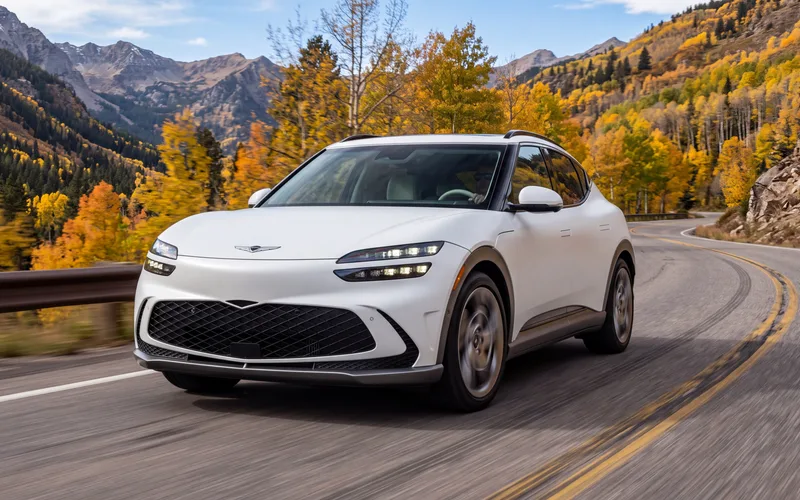 Genesis GV60Compact Luxury SUVBetter at: Charging speed
The obvious cross-shop for a luxury compact EV — 800V charging, sharper handling and a generous warranty for roughly $7,000 more.
Compare 2.56C+
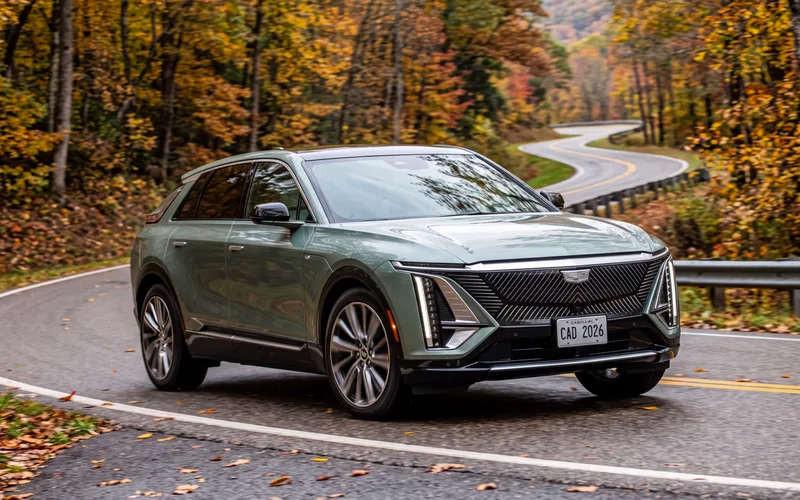 Cadillac OptiqCompact Luxury SUVBetter at: Range
More range and a more modern interior tech package at a comparable price, if you don't need the Lexus service network.
Compare 2.30C+
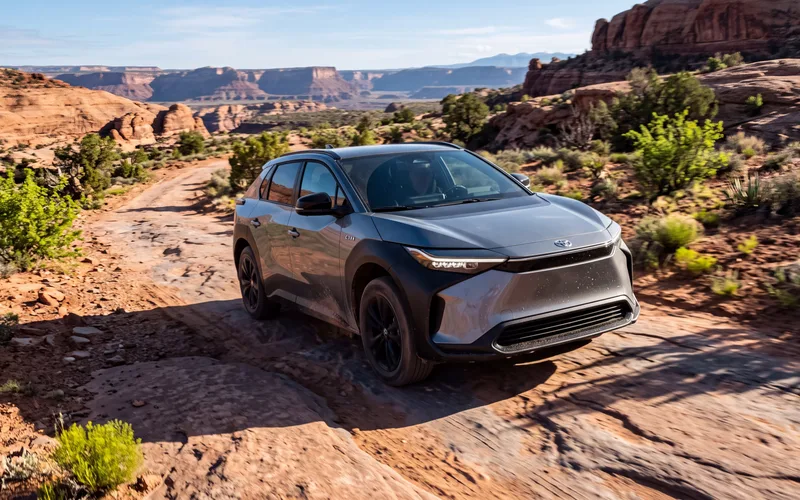 Toyota bZ4XCompact SUVBetter at: Value and capability
Same platform for thousands less, plus a 3,500-lb tow rating and roof rails the RZ can't match — at the cost of cabin quality.
CompareSubject scores by year
Hover or tap a score to see what moved it versus the year before. A corner mark flags a big swing.
| Year | Performance | Efficiency | Safety | Space | Cost | Reliability | Tech | Use-case | Driving | Value |
|---|---|---|---|---|---|---|---|---|---|---|
| 2026 | 50 | 64 | 82 | 51 | 47 | 77 | 79 | 63 | 70 | 76 |
| 2025 | 49 | 61 | 79 | 50 | 45 | 80 | 71 | 51 | 73 | 65 |
| 2024 | 49 | 62 | 81 | 51 | 42 | 79 | 74 | 60 | 68 | 65 |
| 2023 | 48 | 63 | 82 | 48 | 36 | 80 | 74 | 53 | 73 | 58 |
Compare two years
Best fit & conditions
Higher scores mean a better fit for that use case. Learn more about use-case fit →
Subject profile
Academic Probation · NHTSA safety recalls
Oct 30, 2025Back over prevention: display functionPlease see the recall report for a complete list of models. A software error may cause the rearview camera to freeze or display a blank screen when the vehicle is in reverse. As such, these vehicles fail to comply with the requirements of Federal Motor Vehicle Safety Standard (FMVSS) number 111, "Rear Visibility."
Defect
Toyota Motor Engineering & Manufacturing (Toyota) is recalling certain 2022-2026 Toyota, Lexus, and Subaru Solterra vehicles equipped with a Panoramic View Monitor (PVM) system. Please see the recall report for a complete list of models. A software error may cause the rearview camera to freeze or display a blank screen when the vehicle is in reverse. As such, these vehicles fail to comply with the requirements of Federal Motor Vehicle Safety Standard (FMVSS) number 111, "Rear Visibility."
Risk
A rearview camera that fails to display an image can reduce the driver's view behind the vehicle, increasing the risk of a crash.
Remedy
Dealers will update the parking assist software, free of charge. Owner letters were mailed January 2, 2026. Owners may contact Toyota's customer service at 1-800-331-4331. Toyota's numbers for this recall are 25TB13 and 25LB06. Subaru's number for this recall is WRE25.
NHTSA campaign 25V744000 ↗Manufacturer no. 25TB13/25LB06/WRE251,024,407 vehicles potentially affected (all models in the campaign)Owners notified Dec 5, 2025Filed by Toyota Motor Engineering & ManufacturingFiled as RZSep 4, 2025Visibility: defroster/defogger/hvac systemDuring certain HVAC system faults, such as electrical compressor failure, the defroster and defogger system may become inoperative.
Defect
Toyota Motor Engineering & Manufacturing (Toyota) is recalling certain 2023-2025 bZ4X, Lexus RZ, and Subaru Solterra vehicles. During certain HVAC system faults, such as electrical compressor failure, the defroster and defogger system may become inoperative.
Risk
An inoperative defroster and defogger system can decrease the driver's visibility under certain driving conditions, increasing the risk of a crash.
Remedy
Dealers will update the HVAC control ECU software, free of charge. Dealers will also inspect the electrical compressor, and replace it, if necessary, free of charge. Owner notification letters were mailed October 17, 2025. Owners may contact Toyota's customer service at 1-800-331-4331. Toyota's numbers for this recall are 25TB07 and 25TA07. Lexus' numbers for this recall are 25LB04 and 25LA04. Subaru's number for this recall is WRD-25.
NHTSA campaign 25V577000 ↗Manufacturer no. 25TB07,25LB04,WRD2594,320 vehicles potentially affected (all models in the campaign)Owners notified Oct 17, 2025Filed by Toyota Motor Engineering & ManufacturingFiled as RZ
1 recall on other model years of the RZ (2026)
Jun 18, 2026Electrical system: propulsion systemThe electronic control unit (ECU) that controls the high voltage battery may experience a fault, resulting in a loss of drive power.
Defect
Toyota Motor Engineering & Manufacturing (Toyota) is recalling certain 2026 Toyota BZ, Lexus RZ, and Subaru Solterra battery electric vehicles. The electronic control unit (ECU) that controls the high voltage battery may experience a fault, resulting in a loss of drive power.
Risk
An unexpected loss of drive power increases the risk of a crash.
Remedy
Dealers will update the battery ECU software, free of charge. Owner notification letters were mailed August 17, 2026. Owners may contact Toyota's customer service at 1-800-331-4331. Toyota's numbers for this recall are 26LA07 and 26TA11. Subaru's number for this recall is WRG26.
NHTSA campaign 26V393000 ↗Manufacturer no. 26LA07 26TA11 WRG2620,991 vehicles potentially affected (all models in the campaign)Owners notified Aug 17, 2026Filed by Toyota Motor Engineering & ManufacturingFiled as RZ
Source: NHTSA Office of Defects Investigation recall database, model years 2023–2026. Recalls are listed by model year as the manufacturer filed them; whether a specific car is affected depends on its VIN — check a VIN at nhtsa.gov ↗. NHTSA model names matched to this page: RZ.
Detailed scoring by subject
1Performance & PowertrainOne of the RZ's weakest categories.1.27D
2024 is the second model year of the first-generation RZ and adds the front-drive RZ 300e (201 hp) below the carry-over dual-motor 450e (308 hp). The 450e AWD, the launch model and the AWD configuration the class expects, is scored as representative.
DIRECT4 pairs a 150-kW front motor (≈196 lb-ft) with an 80-kW rear motor (≈124 lb-ft); Lexus publishes per-axle rather than combined torque, so the total is summed from those figures.
Manufacturer-quoted 0–60 for the 450e. That is brisk for a compact luxury SUV, though well short of the quickest dual-motor EVs.
Seamless, silent single-speed electric delivery with Lexus-grade isolation. Reviewers praise its smoothness but note the power tapers noticeably at highway speed. The regen setup lacks true one-pedal driving and paddle-selected regen resets each drive, so blending is the weak point.
Single-speed reduction gear with no shifts to mistime and no hunting. The 2024 car does not yet have the virtual-gear M Mode that arrived with the 2026 refresh.
Lexus publishes no US tow rating for any 2024 RZ grade, and the only hitch offered is for accessory racks. European RZs carry a 750 kg braked rating that does not apply to the US car.
DIRECT4 dual-motor AWD is standard on both 450e grades and varies the front/rear split continuously from 100:0 to 0:100. It is held out of the top band because the 2024 range adds the front-drive-only 300e and has no low range or terrain modes.
Pavement-oriented: about 8 in of ground clearance, car-type strut/double-wishbone suspension, and an aero underbody with no skid plates. There are no terrain modes and no off-road trim.
Battery-electric only, with no hybrid or gas alternative. 2024 does widen choice within EV to two outputs and drivetrains (201-hp FWD 300e and 308-hp AWD 450e).
2Efficiency & RangeMid-pack among this car's ten categories.2.19C
The volume 450e AWD on 18-inch wheels uses about 31 kWh/100 mi, which is mid-pack efficiency among EV SUVs. The 20-inch Luxury wheels cost 12 MPGe.
City is the strongest cycle, as it is for any EV, thanks to regen and no idle losses.
Highway efficiency drops under 100 MPGe on the dual-motor car, which compounds the RZ's short range on road trips.
The 71.4 kWh 450e manages only 220 EPA miles, one of the shortest ranges among EV SUVs and the RZ's defining weakness. The new 2024 300e with its CATL pack stretches that to 266 miles.
150 kW is the ceiling on a 400-volt architecture, well behind the 800V Korean EVs. The charging curve also tapers early, and cold-weather sessions have been notably slow.
Lexus quotes 30–35 minutes from the low-battery light to 80% under ideal conditions, and the midpoint is used here. Independent tests range from about 28 to 38 minutes, and cold-weather results are much worse.
At about 31 kWh/100 mi, energy cost is a fraction of a comparable luxury gas SUV. EPA estimates $8,000 in five-year savings against the average new vehicle.
It needs no fuel grade, and 2024 adds a standard dual-voltage (120V/240V) charging cable. The 2024 car still uses a CCS1 port without native Supercharger access, and its short range and slow Level 2 charging (≈10 h at 240V) make it harder to keep charged than longer-legged rivals.
3SafetyThe RZ's best-graded category.3.48B+
NHTSA rated the 2024 RZ 450e AWD 5 stars overall, with 5 stars in both frontal and side crash and 4 stars for rollover (10.5% rollover risk). The new 2024 RZ 300e FWD posted 5-star frontal and side results but has no overall rating because it lacks a rollover rating.
The 2024 RZ earned an IIHS 2024 Top Safety Pick, with Good ratings in the small overlap front, original moderate overlap front and updated side tests. It missed the Plus because of its Acceptable headlights. The updated moderate overlap (rear-passenger) test was never run on the RZ.
Lexus Safety System+ 3.0 is standard on every 2024 grade (the 300e and 450e, each in Premium or Luxury form). It includes Pre-Collision System with pedestrian detection, Full-Speed Dynamic Radar Cruise Control, Lane Departure Alert with Steering Assist and Lane Tracing Assist. Blind Spot Monitor, Rear Cross-Traffic Alert and rear automatic braking are also standard, so all five core systems come on the entry grade.
IIHS rates the RZ's pedestrian front crash prevention Good, and that rating applies to all 2024-25 models. It avoided the crossing-child and crossing-adult scenarios. Its weak spot is the parallel-adult night test, where it only reduced impact speed. IIHS has published no vehicle-to-vehicle FCP 2.0 result.
Blind Spot Monitor and Rear Cross-Traffic Alert with rear automatic braking are standard across the 2024 range, so the system intervenes rather than only alerting. Safe Exit Assist (the vehicle-exit safety system) is also fitted. The fullest coverage, including front cross-traffic alert and Lane Change Assist, is still reserved for the Luxury grade.
Lane Departure Alert with Steering Assist and Lane Tracing Assist centering are standard. Reviewers find the centering competent on highway curves but hands-on only. The driver-attention monitoring is widely criticized as over-eager.
Full-Speed Dynamic Radar Cruise Control with stop-and-go is standard on every grade, and it pairs cleanly with Lane Tracing Assist. Minor rough edges keep it just short of the top band: it runs slightly under the set speed, and there is no traffic-jam assist for 2024.
No 2024 RZ offers hands-free driving. Lexus's hands-free Traffic Jam Assist came to the RZ only with the 2026 update, so the 2024 car is limited to hands-on lane centering.
IIHS rates the RZ's LED projector headlights Acceptable, not Good, faulting inadequate low-beam reach on left curves. The rating applies to 2023-25 models. High-beam assist is standard, but no 2024 configuration earns a Good rating.
The low hoodline gives a good forward view, but the fastback roofline, rising beltline and thick rear pillars restrict the view over the shoulder and to the rear. Camera compensation is better than on the 2026 base car because every 2024 grade starts at Premium, which includes a surround-view camera. The digital rearview mirror remains a Luxury-grade item.
IIHS gives the RZ a Good+ LATCH rating with extra positions: two outboard seats with complete hardware, plus a center tether position that can borrow the adjacent lower anchors. The anchors are easy to reach. Rear legroom of about 37.5 in leaves space for a forward-facing seat.
4Space & ComfortOne of the RZ's weakest categories.1.40D
The 2024 RZ is a two-row, five-passenger crossover in every grade (300e Premium/Luxury FWD, 450e Premium/Luxury AWD); no third row is offered.
First-generation body unchanged since launch; the 450e Premium's standard panoramic glass roof trims about an inch, but the prompt convention uses the no-sunroof figure.
Mid-pack front legroom for a compact luxury SUV; the wide floating console crowds the driver's right knee in practice.
The flat e-TNGA floor and tall roof give unusually generous second-row headroom for the class.
Competitive on paper, but the battery raises the floor: Consumer Reports calls the rear seat unimpressive, with little under-leg support and tight foot space under the front seats.
No third row on any 2024 RZ grade: it is a strictly two-row, five-seat SUV.
Class-competitive against compact EV rivals, but low against the broad SUV band.
At the very bottom of the SUV band for maximum volume, and there is no frunk.
Small-item storage is weak: there is no conventional glove box, the console is small, the cupholders are undersized and there is no frunk. The open shelf under the floating console, the wireless-charging tray and a small underfloor cargo bin are the redeeming touches.
The front seats have comfortable cushions and good bolstering, with heating and ventilation standard on the Premium grade. Some testers found the seatback lumpy, and the driver gets only two-way lumbar adjustment. The rear bench gives little under-thigh support.
A typical Lexus ride: the suspension absorbs bumps and the car stays settled on the highway. The tradeoff is noticeable body roll when pushed, and the Luxury grade's 20-inch wheels firm the ride slightly.
A clear strength. Reviewers describe a near-whisper-quiet cabin with little motor whine, and wind and road noise are well suppressed.
Premium is the entry grade and is well equipped: heated and ventilated front seats, a heated steering wheel, dual-zone automatic climate, a panoramic glass roof and app-based remote climate. Luxury adds heated outboard rear seats. Climate is dual-zone only, with no rear controls.
5Cost of OwnershipThe RZ's lowest-graded category.0.82F
2024 adds the front-drive RZ 300e as a new entry grade below the carry-over 450e AWD, bringing the starting price down to about $55K. Even so, it is well above the $47K entry the 2026 update later set.
The AWD 450e Premium is the mainstream configuration, matching the representative trim used across this model year's scorecard. The FWD 300e is the price leader and the 450e Luxury the top grade.
With no oil changes or spark plugs, regen doing much of the braking, and Toyota/Lexus build quality underneath, upkeep is exceptionally low for a luxury SUV. Published estimates differ, so the figure is a midpoint.
Resale is the RZ's weakest ownership metric. A 220-mile range, heavy lease-cash discounting, and the 2026 price reset all push used values down. It still holds value slightly better than the average EV.
This is standard Lexus basic coverage: a year longer than the mainstream 3/36 but not class-leading.
For a BEV, the coverage that matters is the 8-year/100,000-mile EV-component warranty, which includes a battery-capacity guarantee. That matches the federal minimum norm but falls short of 10-year rivals.
Included maintenance is short, covering only the first two visits in year one. Around it are useful perks: 4 years of unlimited-mileage roadside assistance, the Lexus Reserve program (30 free rental days over 3 years, useful for road trips an EV struggles with), a BEV concierge line, a standard dual-voltage cable, and a free NACS adapter available later. There is no public-charging credit and no multi-year maintenance plan.
$59,850 volume-trim price minus its estimated resale value after 5 years (45% retained, or about $26,933) leaves about $32,918 in depreciation. Add the projected $3,600 in 5-year maintenance and repairs, and owning this vehicle for 5 years costs about $36,518 in total.
6Reliability & QualityOne of the RZ's strongest categories.3.36B+
Consumer Reports rates the 2024 RZ more reliable than other cars from its model year, a strong read for a second-year EV and above the segment's EV field. It is held out of the top band because every CR trouble-spot row (EV battery, motor, charging, in-car electronics) is still NA, so the verdict leans on Lexus brand and Toyota e-TNGA data rather than a deep RZ-specific survey sample.
Lexus is the dependability benchmark among premium brands and sits at or near the top of both major studies year after year — highest-ranked premium brand in J.D. Power's Vehicle Dependability Study across 2023-2026 and a perennial top-three brand in Consumer Reports' reliability rankings.
Two campaigns cover the 2024 RZ, both software fixes on non-propulsion systems: an HVAC fault that can disable the defroster/defogger and a rear camera display that can freeze or go blank. Neither touches the battery or drivetrain, and the RZ escaped the 2022 wheel-hub-bolt recall that hit its bZ4X and Solterra platform-mates — typical activity, nothing systemic, but two safety-relevant software faults and an electrical-heavy complaint pattern keep it out of the top band.
The 2024 RZ is a carry-over of the first-generation e-TNGA system (front and rear eAxles, 71.4 kWh pack shared in concept with bZ4X/Solterra), which has produced no drive-unit or traction-battery recalls on the RZ and is known for Toyota's conservative battery buffer and low capacity fade. Still a young powertrain family with only a few years of field data, so it sits in the 'newer powertrain, no red flags' band rather than earning the proven-hybrid scores Lexus gasoline-electric models get.
The cabin is the clearest step up from the related Toyota bZ4X — soft-touch surfaces throughout, Ultrasuede and NuLuxe synthetic leather, a hushed interior and solid switchgear. Held just shy of the top of the band because the palette is restrained and some reviewers find the button-light layout less rich than Volvo or Genesis rivals.
Assembled at Toyota's Motomachi plant in Japan, and assembly quality is not a criticism leveled at the RZ — reviewers report tight, rattle-free construction, and Lexus's initial-quality standing is among the best of premium brands. Complaints against the model concern range, charging speed and software, not how it is put together.
Lexus consistently ranks near the top of J.D. Power's premium-brand Customer Service Index, and a franchised dealer network with full service departments beats the service-center-only coverage of EV-native rivals. Docked because the roughly 240 US Lexus stores thin out outside metro areas and high-voltage diagnostic depth on a low-volume EV is uneven across them.
Routine running costs are low — no oil, belts, injectors or exhaust — but anything beyond routine wear is dealer-only on a low-volume, Japan-built EV with essentially no aftermarket, and EV auxiliary components (onboard charger, inverter) are quoted in the thousands. Normal-to-expensive rather than cheap and abundant, partly offset by some e-TNGA parts commonality with the bZ4X and Solterra.
7Technology & InfotainmentOne of the RZ's strongest categories.3.04B
The 14-inch Lexus Interface touchscreen is standard across both 2024 powertrains and both grades.
Lexus Interface is quick and graphically clean, but climate and media share the one screen, which makes routine tasks multi-step. Consumer Reports also criticized the unlabeled capacitive steering-wheel controls and EV displays that are stingy with state-of-charge and range data.
Wireless Apple CarPlay and wireless Android Auto are standard with Lexus Interface on every 2024 RZ.
The 'Hey Lexus' Intelligent Assistant handles natural-language requests, and Cloud Navigation brings live Google POI and traffic data. Both depend on the Drive Connect trial and then a paid subscription, and native routing is not especially EV-aware.
The volume Premium grade has a decent 10-speaker system. The good 13-speaker Mark Levinson PurePlay system is standard only on the Luxury grade.
Every RZ has a fully digital cluster, but it is a small 7-inch panel, and testers found its EV information thin. It lacks key battery state-of-charge and range readouts that rivals put front and center.
Lexus Interface receives over-the-air multimedia and map updates over Wi-Fi. Vehicle-control and powertrain software still goes through the dealer, and there are no meaningful feature drops by OTA.
The Lexus app covers the essential EV functions: charge status, charging-station finder, remote climate and heated seats/wheel, lock and unlock, and a phone-as-key. All of it runs on Remote Connect, a trial that becomes a subscription. Plug & Charge and NACS integration did not arrive until later model years.
Five USB-C ports (three front, two rear) plus a wireless charger are standard, which is generous for a two-row compact. Lexus's 2024 materials list no AC household outlet on the US car.
Smart-key entry with push-button start is standard, and the Premium grade adds a hands-free kick-sensor power liftgate. Digital Key works through the app but depends on the Remote Connect subscription after its trial.
A 360-degree surround-view camera and front/rear parking sensors are standard even on the entry Premium grade, with rear automatic braking. Luxury adds more advanced parking assistance.
A large color head-up display is offered, but only on the Luxury grade. The volume Premium grade does not have it.
8Use-Case FitMid-pack among this car's ten categories.2.05C
Car-seat logistics are good. IIHS rates LATCH G+ with extra positions, the floor is flat and tunnel-free, and 39.7 in of rear headroom helps with loading. A hands-free power liftgate is standard on the Premium grade. Held back by weak everyday clutter storage (no glove box, small console and cupholders), a low rear cushion, and only adequate cargo space for a stroller.
LSS+ 3.0, blind-spot monitoring, rear cross-traffic alert with rear automatic braking, and a 360-degree camera are all standard on the entry grade. NHTSA gives the 450e five stars overall, and IIHS named the 2024 RZ a Top Safety Pick. The main gap is Acceptable-rated headlights.
A very quiet cabin with a panoramic roof, rear USB-C ports and dual-zone climate. However, the rear bench offers little under-thigh support and tight foot space, there are no rear climate controls, and 220 miles of EPA range (202 miles in Consumer Reports' highway test) means frequent charging stops on a family trip.
Commuting is its best use. Delivery is smooth and silent, the ride is settled, full-speed radar cruise is standard, and heated/ventilated seats, a heated wheel and remote preconditioning are all included. Deductions: no one-pedal driving, a fiddly touchscreen-only climate interface, unlabeled wheel controls, and an eager driver-attention monitor.
Energy cost per mile is low: EPA estimates about $700 a year for the 450e AWD, with 115 MPGe city. Maintenance is minimal (about $3,600 over five years). Public charging is clumsier than on later model years because the 2024 car has a CCS1 port with no Supercharger access included, and insurance runs above the class norm.
The 37-ft turning circle is manageable, and the 360-degree camera and parking sensors are standard even on the entry Premium grade. On the other side, the body is 189 in long, the car weighs about 4,564 lb, and the fastback shape with thick rear pillars limits the over-the-shoulder view.
It is not a work vehicle: there is no US tow rating, maximum cargo is only about 55.6 cu ft, there is no frunk, and hauling weight cuts into an already short 220-mile range.
Lexus build quality and dependability are strong, and the 2024 powertrain has no propulsion recalls. But the cabin is comfort-oriented with no work fit-out, EV parts are dealer-only on a low-volume model, and the dealer network is modest in size.
Five USB-C ports and wireless charging cover devices, but there is little else: no AC outlet listed on the US 2024 car, no factory roof rails, no tow hitch rating, no frunk, and no washable-trim option.
The comfort is excellent (very quiet, settled ride, standard radar cruise), but range undermines it. The 450e is EPA-rated at only 220 miles and managed 202 miles in Consumer Reports' highway test, with 98 MPGe highway. DC charging peaks at 150 kW, and the CCS1 port had no native Supercharger access in 2024.
DIRECT4 AWD and about 8 in of ground clearance handle gravel roads and snow. There are no terrain modes, underbody protection, roof rails, tow rating or AC outlet, and the short range limits trips to remote trailheads.
Ordinary luggage fits well behind the seats (34.9 cu ft), and the hands-free liftgate helps. However, maximum space is only about 55.6 cu ft, there is no frunk, no roof rails and no rated hitch, and the folded floor is not fully flat.
9Driving ExperienceMid-pack among this car's ten categories.2.60C+
Secure and low-centered, but softly damped. Consumer Reports measured only 51 mph through its avoidance maneuver, which it calls low for the class, and noted considerable body roll. The car feels 'more mundane than sporty'. The 2026 chassis bracing and F SPORT tuning do not apply to the 2024 car.
US cars use a conventional rack with accurate aim and some reassuring weight, but little feedback. The steer-by-wire yoke was not offered in the US.
The pedal feels natural and free of EV grabbiness. However, Consumer Reports' wet stopping distance resembled that of a full-size Sequoia, and regen is weak with no one-pedal mode.
Smooth, vigorous dual-motor delivery, with 0–60 mph in 4.9 s in Consumer Reports' test. DIRECT4 shuffles torque seamlessly. It is held back by power that tapers at highway speed and by regen blending.
Essentially silent. There is little motor whine and no vibration, typical of a Lexus.
Mid-pack for a compact luxury SUV, a result of the long 112.2-in wheelbase.
Good headroom, armrest placement and a proper left footrest. On the other side, the wide console crowds the right knee, lumbar adjustment is two-way only, and the unlabeled capacitive wheel controls and touchscreen-only climate add distraction.
Quick and effortless, but deliberately tuned as a soft, isolated Lexus. Numb steering, body roll and weak regen give little reason to take the long way. There is no sporty variant in the 2024 US lineup.
10Value & Market PositionMid-pack among this car's ten categories.2.42C+
Every 2024 RZ is at least a Premium grade. Standard equipment includes the 14-inch touchscreen with cloud navigation, Lexus Safety System+ 3.0, synthetic leather, heated and ventilated front seats, a heated wheel, a power liftgate, a dual-voltage charging cable and five USB ports. That is generous, but it comes with a $55K entry price.
At about $60K, the 450e Premium delivers only 220 EPA miles (202 in Consumer Reports' highway test) and 150-kW DC charging. Similarly priced rivals such as the Genesis GV60, Tesla Model Y and Audi Q4 e-tron offer more range or faster charging. Quick acceleration (4.8–4.9 s instrumented) and Lexus refinement keep it at fair value. It was also ineligible for the purchase tax credit, though leases passed through the credit.
The 2024 lineup grows from one powertrain to two: a 201-hp FWD 300e and a 308-hp AWD 450e, each in Premium and Luxury grades. That makes four configurations spanning about $55K–$66K. There is no lower-cost entry and no battery choice.
US sales rose 80% in 2024 to 9,697 units, strong growth for a second year that the added 300e helped. In absolute terms it is a low-volume nameplate, far behind Lexus's NX/RX and the segment's EV volume leaders.
Lexus is one of the strongest luxury brands for reliability, dealer experience and resale; KBB repeatedly names it the best luxury brand for resale. Its halo carries less weight in EVs, where Lexus is seen as a late entrant and the RZ holds value worse than the brand's hybrids.
The Japan-built RZ didn't qualify for the purchase tax credit, but the $7,500 commercial-lease credit was passed through on leases. Lexus also backed the model with lease cash and subsidized APR, and dealer discounts were deep enough that a 2024 RZ lost about 44% of its value in two years. That points to substantial buyer savings from list price.
2024 is the second year of a generation launched for MY2023. Its change is the added 300e FWD grade, not a refresh. The platform is current, but the 400V e-TNGA, 150-kW charging and CCS1 port were already dated against 800V rivals, and the June 2025 update (larger batteries, NACS port) made the 2024 car the outgoing spec soon after.
Reviewers praise the RZ's quiet, smooth ride, cabin quality and quick acceleration. They consistently mark it down for short range (202 miles in CR's highway test), slow charging and a price at the top of its class, and it rarely wins comparison tests. It has no major awards.