

The verdict
A mixed-report compact luxury suv, strong on reliability and held back by ownership.
The 2025 Lexus RZ is a quiet, beautifully built and very safe luxury EV that is let down by the basics of electric ownership. The volume 450e AWD is rated for only 220 miles of EPA range (196 on 20-inch wheels) and charges at up to 150 kW. It is also the outgoing design, replaced for 2026 by a version with more range and a native NACS port. Buy one only at a deep discount or on a lease, and only if nearly all your driving is local with charging at home.
Jump to scoresStrengths
- Top-tier crash protection and standard safety tech
- Lexus build quality and dependability
- Hushed, silky driving experience
What holds it back
- Short driving range
- Slow, dated charging setup
- Steep depreciation on an outgoing design
Top alternatives
Cars shoppers cross-shop with the Lexus RZ 2.54C+
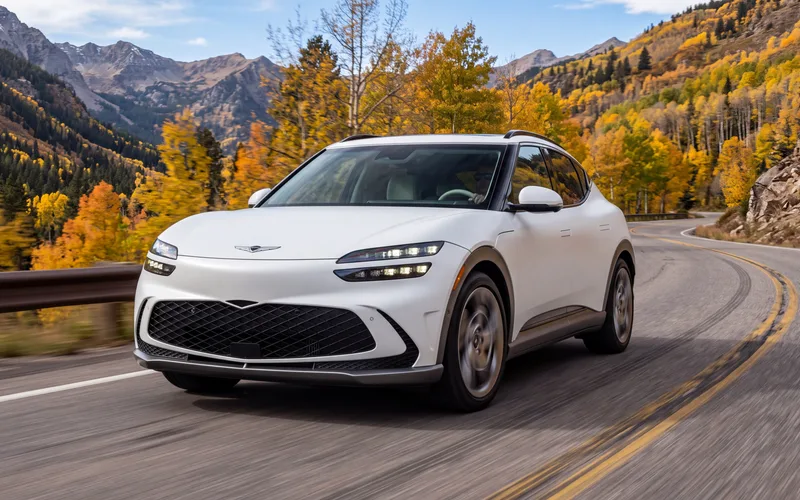 Genesis GV60Compact Luxury SUVBetter at: Charging speed
The obvious cross-shop for a luxury compact EV — 800V charging, sharper handling and a generous warranty for roughly $7,000 more.
Compare 2.56C+
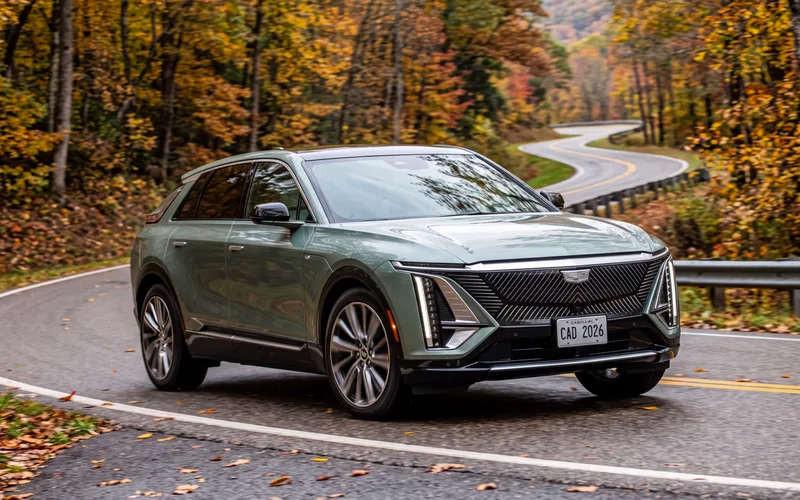 Cadillac OptiqCompact Luxury SUVBetter at: Range
More range and a more modern interior tech package at a comparable price, if you don't need the Lexus service network.
Compare 2.30C+
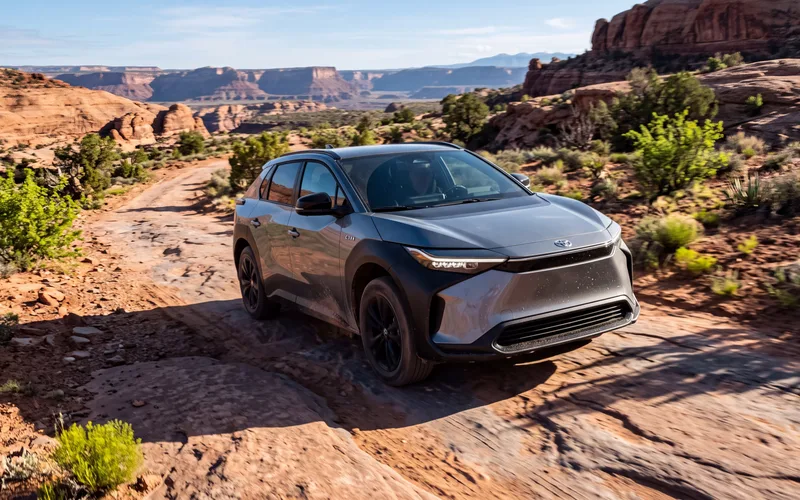 Toyota bZ4XCompact SUVBetter at: Value and capability
Same platform for thousands less, plus a 3,500-lb tow rating and roof rails the RZ can't match — at the cost of cabin quality.
CompareSubject scores by year
Hover or tap a score to see what moved it versus the year before. A corner mark flags a big swing.
| Year | Performance | Efficiency | Safety | Space | Cost | Reliability | Tech | Use-case | Driving | Value |
|---|---|---|---|---|---|---|---|---|---|---|
| 2026 | 50 | 64 | 82 | 51 | 47 | 77 | 79 | 63 | 70 | 76 |
| 2025 | 49 | 61 | 79 | 50 | 45 | 80 | 71 | 51 | 73 | 65 |
| 2024 | 49 | 62 | 81 | 51 | 42 | 79 | 74 | 60 | 68 | 65 |
| 2023 | 48 | 63 | 82 | 48 | 36 | 80 | 74 | 53 | 73 | 58 |
Compare two years
Best fit & conditions
Higher scores mean a better fit for that use case. Learn more about use-case fit →
Subject profile
Academic Probation · NHTSA safety recalls
Oct 30, 2025Back over prevention: display functionPlease see the recall report for a complete list of models. A software error may cause the rearview camera to freeze or display a blank screen when the vehicle is in reverse. As such, these vehicles fail to comply with the requirements of Federal Motor Vehicle Safety Standard (FMVSS) number 111, "Rear Visibility."
Defect
Toyota Motor Engineering & Manufacturing (Toyota) is recalling certain 2022-2026 Toyota, Lexus, and Subaru Solterra vehicles equipped with a Panoramic View Monitor (PVM) system. Please see the recall report for a complete list of models. A software error may cause the rearview camera to freeze or display a blank screen when the vehicle is in reverse. As such, these vehicles fail to comply with the requirements of Federal Motor Vehicle Safety Standard (FMVSS) number 111, "Rear Visibility."
Risk
A rearview camera that fails to display an image can reduce the driver's view behind the vehicle, increasing the risk of a crash.
Remedy
Dealers will update the parking assist software, free of charge. Owner letters were mailed January 2, 2026. Owners may contact Toyota's customer service at 1-800-331-4331. Toyota's numbers for this recall are 25TB13 and 25LB06. Subaru's number for this recall is WRE25.
NHTSA campaign 25V744000 ↗Manufacturer no. 25TB13/25LB06/WRE251,024,407 vehicles potentially affected (all models in the campaign)Owners notified Dec 5, 2025Filed by Toyota Motor Engineering & ManufacturingFiled as RZSep 4, 2025Visibility: defroster/defogger/hvac systemDuring certain HVAC system faults, such as electrical compressor failure, the defroster and defogger system may become inoperative.
Defect
Toyota Motor Engineering & Manufacturing (Toyota) is recalling certain 2023-2025 bZ4X, Lexus RZ, and Subaru Solterra vehicles. During certain HVAC system faults, such as electrical compressor failure, the defroster and defogger system may become inoperative.
Risk
An inoperative defroster and defogger system can decrease the driver's visibility under certain driving conditions, increasing the risk of a crash.
Remedy
Dealers will update the HVAC control ECU software, free of charge. Dealers will also inspect the electrical compressor, and replace it, if necessary, free of charge. Owner notification letters were mailed October 17, 2025. Owners may contact Toyota's customer service at 1-800-331-4331. Toyota's numbers for this recall are 25TB07 and 25TA07. Lexus' numbers for this recall are 25LB04 and 25LA04. Subaru's number for this recall is WRD-25.
NHTSA campaign 25V577000 ↗Manufacturer no. 25TB07,25LB04,WRD2594,320 vehicles potentially affected (all models in the campaign)Owners notified Oct 17, 2025Filed by Toyota Motor Engineering & ManufacturingFiled as RZ
1 recall on other model years of the RZ (2026)
Jun 18, 2026Electrical system: propulsion systemThe electronic control unit (ECU) that controls the high voltage battery may experience a fault, resulting in a loss of drive power.
Defect
Toyota Motor Engineering & Manufacturing (Toyota) is recalling certain 2026 Toyota BZ, Lexus RZ, and Subaru Solterra battery electric vehicles. The electronic control unit (ECU) that controls the high voltage battery may experience a fault, resulting in a loss of drive power.
Risk
An unexpected loss of drive power increases the risk of a crash.
Remedy
Dealers will update the battery ECU software, free of charge. Owner notification letters were mailed August 17, 2026. Owners may contact Toyota's customer service at 1-800-331-4331. Toyota's numbers for this recall are 26LA07 and 26TA11. Subaru's number for this recall is WRG26.
NHTSA campaign 26V393000 ↗Manufacturer no. 26LA07 26TA11 WRG2620,991 vehicles potentially affected (all models in the campaign)Owners notified Aug 17, 2026Filed by Toyota Motor Engineering & ManufacturingFiled as RZ
Source: NHTSA Office of Defects Investigation recall database, model years 2023–2026. Recalls are listed by model year as the manufacturer filed them; whether a specific car is affected depends on its VIN — check a VIN at nhtsa.gov ↗. NHTSA model names matched to this page: RZ.
Detailed scoring by subject
1Performance & PowertrainOne of the RZ's weakest categories.1.26D
2025 is a carry-over year for the first-generation RZ (on sale since MY2023, refreshed for 2026); the only change is a new entry grade for both the 300e and 450e. The dual-motor 450e AWD is scored as the representative volume configuration; its 308 hp is middling for a luxury EV SUV and the 201-hp FWD 300e is the only alternative.
The DIRECT4 system pairs a 150-kW front motor with an 80-kW rear motor for roughly 320 lb-ft combined; Lexus quotes per-axle rather than system torque, so the total is corroborated from secondary sources.
Manufacturer-quoted 5.0 s for the 450e AWD is brisk for the compact luxury EV class, though short of the Ioniq 5 / EV6 dual-motor tier; the FWD 300e is a leisurely 7.4 s.
Instant, silent single-speed delivery wrapped in typical Lexus acoustic isolation; reviewers praise its smoothness. Docked because regen is modest with no one-pedal mode and the pre-refresh car's power fades noticeably at higher speeds and lower states of charge.
Single-speed reduction gear: seamless with nothing to hunt or mistime. The virtual 'Interactive Manual Drive' gearbox arrives only with the 2026 refresh, so the 2025 car has no manual-mode novelty.
Lexus publishes no US tow rating for any 2025 RZ grade — a real gap against platform-mate Subaru Solterra (1,500 lb) and most luxury EV rivals.
DIRECT4 dual-motor AWD is available on every RZ 450e grade and continuously varies the front/rear split, which is sophisticated; but the 300e grades are FWD-only and there are no terrain modes or low range.
Pavement-oriented: about 8 in of ground clearance, car-type suspension, an aero underbody instead of skid plates, and no off-road modes or trims (unlike the X-Mode-equipped Solterra twin).
Battery-electric only, with just two configurations: a 201-hp FWD 300e and a 308-hp AWD 450e. Buyers wanting a hybrid or PHEV must move to the NX or RX.
2Efficiency & RangeMid-pack among this car's ten categories.2.11C
The volume 450e AWD on 18-inch wheels uses 31 kWh/100 mi — mid-pack for an EV SUV; 20-inch wheels cost it 12 MPGe.
City is the strongest cycle, as with every EV.
Highway efficiency is a couple of MPGe behind the refreshed 2026 car's 100 MPGe and drops sharply on 20-inch wheels.
220 miles from the 71.4 kWh pack is among the shortest ranges of any luxury EV SUV and the pre-refresh RZ's defining weakness; the 2026 update lifted the 450e to 264 mi.
150 kW on a 400-volt architecture is ordinary for the class and well behind 800V rivals; real-world tests of the pre-refresh RZ show a curve that tapers early.
Lexus quotes 30–35 minutes to 80% without stating a start SOC; the upper figure is used because the pre-refresh battery lacks the 2026 car's improved thermal management and real-world sessions often run longer in cold weather.
At 31 kWh/100 mi the RZ costs a fraction of a luxury gas SUV to fuel; EPA estimates $8,000 saved over five years versus the average new vehicle.
No fuel grade to worry about, and home charging is cheap, but the 2025 car is the less convenient pre-refresh setup: a CCS1 port that reaches Tesla Superchargers only by adapter, a slow ~9.5–10-hour Level 2 fill from a modest onboard charger, and a short range that makes public DC stops more frequent.
3SafetyOne of the RZ's strongest categories.3.39B+
NHTSA rated the 2025 RZ 450e AWD 5 stars overall, with 5-star frontal and side results and 4 stars for rollover (10.5% risk, no tip). The FWD 300e is listed for 2025 but has no published overall rating.
Every IIHS test run on the RZ rates Good (small overlap front for driver and passenger, updated side). But the updated moderate-overlap test (rear passenger) has never been run on it and the headlights rate only Acceptable, so the 2025 RZ earned no award under the tougher 2025 criteria. It had been a 2023 TSP+ and a 2024 TSP.
Every 2025 RZ, including the new entry-grade 300e and 450e, has Lexus Safety System+ 3.0 as standard. That covers Pre-Collision with pedestrian and cyclist detection, Full-Speed Dynamic Radar Cruise, Lane Departure Alert with Steering Assist, and Lane Tracing Assist. Blind Spot Monitor with Rear Cross-Traffic Alert is also standard. All five core systems come on the base trim; the parking cameras and Lexus Teammate Advanced Park are the only trim-gated pieces.
IIHS rates the standard Pre-Collision System Good for pedestrian front crash prevention, including night tests with high-beam credit. It avoided the crossing-child and crossing-adult night scenarios. The weak spot is the parallel-adult night test, where it only reduced impact speed. There is no vehicle-to-vehicle FCP 2.0 result.
Blind Spot Monitor, Rear Cross-Traffic Alert and rear automatic braking are standard on every trim. Safe Exit Assist is also standard: the e-latch doors are held shut if a car or cyclist is approaching. Front cross-traffic coverage only comes with the upper Luxury content.
Lane Departure Alert with Steering Assist and Lane Tracing Assist lane centering are standard. Reviewers find the centering competent on highway curves, but it needs a hand on the wheel. The driver-attention monitor draws repeated complaints about over-eager nagging.
Full-Speed Dynamic Radar Cruise Control with stop-and-go is standard on every trim and works cleanly with Lane Tracing Assist. Its rough edges are conservative gap behaviour and holding slightly under the set speed. Unlike the 2026 model, there is no Traffic Jam Assist layer.
The 2025 RZ has no hands-free driving mode on any trim. The low-speed hands-free Traffic Jam Assist arrived only with the 2026 refresh. Lexus Teammate on the 2025 model is limited to Advanced Park.
IIHS rates the LED projector headlights Acceptable because low-beam reach is inadequate on left curves. High-beam assist is standard, and BladeScan adaptive high beams are limited to upper trims, so the volume trims live with the Acceptable rating.
The low hood and deep windshield give a good forward view. The fastback roofline, rising beltline and thick rear pillars restrict the view over the shoulder and out the back. The Panoramic View Monitor that compensates for this is Luxury-grade content, not on the volume trims.
IIHS rates the LATCH hardware Good+: two full LATCH positions plus a center tether that can borrow the adjacent lower anchors, and the anchors are easy to reach. About 37.5 in of rear legroom leaves room for rear-facing seats, though the low rear cushion is a compromise.
4Space & ComfortOne of the RZ's weakest categories.1.36D
Two-row five-seater only; no third-row option in any 2025 RZ grade.
Roomy front headroom for a compact luxury crossover. The body is unchanged from 2023–2024; the dimension refresh arrives with the 2026 update.
Average front legroom for the segment.
Published rear headroom is generous, though reviewers note the sloping roofline makes it feel tighter than the number suggests.
The long 112.2-in wheelbase gives good rear knee room, although the rear bench is narrow for three across.
No third row is offered on any RZ grade, so this scores at the bottom of the band.
Cargo space is only average for the class; Lexus itself describes it as fitting three golf bags or two suitcases.
Seats-folded capacity is small for an SUV of this footprint because of the sloped rear hatch.
There is no glovebox, and reviewers call the floating center console underused. A wireless pad and five USB-C ports help only a little.
The front seats are supportive, with 10-way power adjustment and heating as standard. The rear bench is comfortable but narrow, and the battery raises its floor.
Frequency Reactive Dampers give a smooth, composed ride. The Luxury grade's 20-in wheels firm it up a little.
The cabin is very quiet, with little motor whine and hushed wind and road noise. Acoustic side glass comes on the Luxury grade.
Heated front seats and a heated wheel are standard, and ventilation comes on Premium. The distinctive radiant knee heaters and the heated rear seats are Luxury-only. Remote climate works through the app.
5Cost of OwnershipThe RZ's lowest-graded category.0.99F
For 2025 Lexus added new entry grades for both the 300e and 450e, cutting the price of entry sharply versus the 2024 line (the 450e alone dropped by $11,200). The RZ 300e FWD opens the range at $43,975 including destination.
The dual-motor 450e in Premium grade is the mainstream configuration and the one scored elsewhere in this scorecard; the new 300e and 450e entry grades serve as price leaders and the Luxury grade as the top of the ladder.
A battery-electric drivetrain with no oil changes and heavy regen use of the brakes, plus Toyota/Lexus build quality, makes upkeep exceptionally cheap for a luxury SUV. The 2025 car is mechanically the same first-generation 300e/450e as 2023–2024, so the generation's cost estimates apply.
The pre-refresh RZ's weakest ownership metric. Luxury-EV residuals are poor across the board, and the 2025 car adds a short 196–220-mile EPA range on the 450e, a slow 150-kW-class CCS charging setup, deep 2025 cash and lease incentives, and an immediately following 2026 overhaul with more range and an NACS port. All of that pushes used values down.
Standard Lexus basic coverage: a year longer than the mainstream 3/36 norm, but no better than most luxury rivals.
For a BEV the meaningful long-term coverage is the EV-component warranty: 8 years/100,000 miles, with a battery-capacity guarantee. That is the federal-minimum-style EV norm and short of the 10-year coverage Hyundai/Genesis/Kia advertise.
Included maintenance is short: only the first two services in the first year. The perks around it are decent: four years of unlimited-mileage roadside assistance, a free NACS adapter that opens Tesla Supercharger access, and the ChargePoint home-charging partnership Lexus launched with the RZ. The 2025 car lacks the 2026 model's native NACS port and standard adapter kit, and there is no multi-year maintenance plan.
$52,875 volume-trim price minus its estimated resale value after 5 years (40% retained, or about $21,150) leaves about $31,725 in depreciation. Add the projected $3,500 in 5-year maintenance and repairs, and owning this vehicle for 5 years costs about $35,225 in total.
6Reliability & QualityThe RZ's best-graded category.3.44B+
2025 is a carry-over year on the original e-TNGA hardware (71.4 kWh pack, RZ 300e FWD and RZ 450e Direct4 AWD) — the June 2025 battery/motor update applies to the 2026 model year — so Consumer Reports' above-average prediction, built on 2023 and 2024 owner surveys, describes this exact car. Placed at the bottom of the top band: well above the segment's EV field, but owner complaints about cold-weather range and an abrupt propulsion cutoff at 0% state of charge keep it below Lexus's proven hybrid nameplates.
Lexus is the premium-segment dependability benchmark across the multi-year window: highest-ranked premium brand in J.D. Power's VDS for four consecutive years (151 PP100 vs 204 industry average in 2026) and third overall in Consumer Reports' brand rankings. Kept off a perfect score because its initial-quality standing slipped to third premium in 2026.
The 2025 RZ carries two NHTSA campaigns, both generation-wide: an HVAC fault (electric-compressor failure) that can disable the defroster/defogger, remedied by software plus compressor inspection/replacement, and a panoramic-view-monitor software fault that can freeze the rearview image. Neither touches propulsion, and the 2026 loss-of-drive-power recall does not apply to the 2025 hardware — typical activity, nothing systemic, but the defroster campaign involves a hardware failure mode rather than pure software.
The 2025 RZ keeps the first-generation e-TNGA pack and eAxles shared with bZ4X/Solterra, which after three-plus years in the field show no drive-unit or pack failure pattern and a reputation for conservative battery management and low capacity fade. Still a young EV powertrain without a high-mileage record, so it sits in the 'newer powertrain, no red flags' band; charging speed and cold-weather range are performance limits, not durability faults.
Reviewers consistently praise the cabin: soft-touch surfaces across doors and dash, Ultrasuede and synthetic leather, metal accents and illuminated door-panel graphics, clearly a step above the related bZ4X. Held just short of the very top band because the vegan-leather palette is restrained rather than opulent at this price.
Built at Toyota's Motomachi plant in Japan with tight, consistent gaps; owner complaints center on software, range and HVAC rather than rattles or misalignment, consistent with Lexus's strong initial-quality standing.
Lexus service satisfaction is near the top of the industry and a franchised network beats service-center-only EV brands, but roughly 240 US stores is thin coverage outside metro areas and high-voltage diagnostic depth on a low-volume model is uneven across dealers.
Routine maintenance is minimal — no oil, belts or exhaust — and the 2025 RZ shares its pack, eAxles and much running gear with the higher-volume bZ4X and Solterra, which helps parts supply. But EV-specific components are dealer-only on a Japan-built, low-volume luxury model with little aftermarket, and auxiliary EV components are quoted in the $7,000-$14,000 range.
7Technology & InfotainmentGrades above the middle of the scale.2.82B-
A large 14-inch HD touchscreen is standard across the range.
Lexus Interface is logical and responsive, and it keeps physical temperature and volume dials. A permanent climate strip takes up about a third of the screen, and reviewers find it leans on touch a little too much.
Wireless Apple CarPlay and Android Auto are standard on every grade.
The 'Hey Lexus' natural-language assistant and cloud navigation work well, but both need a Drive Connect subscription after the trial.
The 13-speaker Mark Levinson system is excellent but only offered on upper grades. The volume grades get a competent standard system.
A digital driver display is standard but small, at 7 inches, with limited configurability. The 10-in HUD on the Luxury grade adds information.
Lexus Interface multimedia and some vehicle software update over the air. The updates do not add meaningful features the way Tesla's or Hyundai/Kia's do.
The Lexus app covers lock/unlock, remote climate, charge scheduling and Digital Key, all gated behind a Remote Connect subscription after the trial.
There are five USB-C ports (three front, two rear) plus a wireless pad. No 120V AC cabin outlet or V2L is offered in the US.
Smart-key entry and push-button start are standard, and phone-as-key is available with a subscription. The base grade has no power liftgate; it comes on Premium.
A rear camera and sensors are standard. The Panoramic View Monitor and Advanced Park automated parking are limited to the Luxury grade.
A large 10-inch color HUD is offered, but only on the top Luxury grade.
8Use-Case FitGrades below the middle of the scale.1.45D
IIHS rates the LATCH G+, and the long wheelbase gives wide rear door openings. The narrow rear bench, missing glovebox and middling cargo space limit family logistics.
It earns a five-star NHTSA overall rating, and LSS+ 3.0, blind-spot monitoring and Safe Exit Assist are standard on every grade.
The quiet, comfortable cabin has rear USB-C ports. About 220 miles of range, slow real-world charging and modest luggage space limit family road trips.
Smooth, quiet power and a supple ride make it relaxing in traffic. It has no true one-pedal mode, and the regen paddles make only a small difference.
Charging at home keeps per-mile costs low, at about $700 a year by EPA estimate. Efficiency is middling for an EV on the 20-inch wheels.
A turning circle of about 37 ft is reasonable for a 189-inch SUV. Rear visibility through the small backlight is poor, and the 360° camera is Luxury-only.
It has no US tow rating and modest cargo space, so it is not a meaningful work vehicle.
It has luxury-oriented materials and a young EV platform with no fleet or work track record, although Lexus build quality is strong.
It has no AC outlet or V2L, no hitch or tow rating, and only basic cargo tie-downs.
It is quiet and comfortable, with capable lane tracing and radar cruise. The short 196–220-mile EPA range, which falls sharply in cold weather, and charging that peaks at 150 kW make long trips a chore.
DIRECT4 AWD and about 8 inches of ground clearance handle gravel and snow. It has no tow rating, no terrain modes, no outlets and limited range away from chargers.
The rear seats split-fold, but the sloped hatch caps maximum space at about 56 cu ft, and there is no frunk or hitch.
9Driving ExperienceOne of the RZ's strongest categories.2.92B-
The low battery mass and DIRECT4 torque vectoring make handling quick and sure. It is composed rather than sporty.
The standard rack-assist electric power steering is light but precise and not numb, though feedback is limited.
Regenerative and friction braking blend smoothly. The adjustable regen levels are weak and there is no one-pedal mode.
The dual-motor drive is smooth and linear, tuned for refinement rather than punch.
The motors are near-silent and largely free of whine under load.
A tidy turning circle for a 112-inch wheelbase.
The driving position is commanding, with physical temperature and volume dials. The small rear window hurts rear visibility, there is no glovebox, and many controls sit on the touchscreen.
It is pleasant and 'just engaging enough' on back roads, but it prioritizes calm over character.
10Value & Market PositionMid-pack among this car's ten categories.2.36C+
The new 2025 entry grades bring the RZ in at $43,975 with a 14-inch touchscreen, Lexus Safety System+ 3.0, heated front seats, synthetic leather, a power liftgate and LED lighting, which is strong base content for the money. The volume 450e Premium adds ventilated seats and more, but the panoramic roof, the Mark Levinson audio and the larger wheels are held back for Luxury grades that climb toward $59K.
The 2025 price cuts make the RZ one of the cheapest luxury-badged EV SUVs, undercutting the Q4 e-tron and GV60 at entry. What the money buys, though, is weak: 196–220 miles of EPA range on the AWD 450e, only about 266 miles on the best 300e, slow DC charging and a CCS port. Rivals near the price go meaningfully farther and charge faster, which keeps value only fair.
Six grades (300e, 300e Premium and 300e Luxury FWD; 450e, 450e Premium and 450e Luxury AWD) plus 18- and 20-inch wheel choices span about $44K to $59K in sensible steps. The steps are broad for a single-battery EV, but there are only two power levels, no long-range option and no performance variant yet.
The 2025 RZ was a slow seller. The model sold just 1,454 US units in Q1 2025, and Lexus had to lean on up to $11,500 in offers to move the metal. Lexus says its EV sales jumped in 2025 on the RZ and UX 300e, but the nameplate stayed a fraction of NX/RX volume and far behind the segment's EV leaders until the 2026 refresh.
Lexus is among the most trusted luxury brands for reliability and resale and posted record 2025 sales. That halo carries only partly to the RZ, which is the weakest-retaining model in the Lexus range and a latecomer EV from a brand seen as hybrid-first.
Buyers of the 2025 RZ had deep support to work with: up to $11,500 off in mid-2025 and leases from $389–$399 a month that briefly made it the cheapest Lexus to lease, plus the federal EV lease credit passed through until it expired on September 30, 2025. The depth borders on clearance pricing, but the buyer benefit is exceptional.
2025 is the third year of a generation launched for MY2023 and essentially a carry-over; only the new entry grades and prices changed. An extensive refresh was announced in June 2025 for MY2026, bringing bigger batteries, more power, an NACS port and an 11-kW charger. A 2025 buyer is getting the outgoing spec just as it is replaced.
Reviewers praised the pre-refresh RZ's ride, quietness and cabin, but consistently marked it down for short range and slow charging. It rarely won comparisons against the Ioniq 5, GV60 or EV6. Edmunds framed the 2026 update as the version that is 'finally worth considering', which implicitly dismisses this one. It won no major awards.