

The verdict
A mixed-report compact luxury suv, strong on technology and held back by ownership.
The 2026 Lincoln Corsair is a quiet, comfortable, safety-loaded small luxury SUV in its final model year — production ended in December 2025, and dealers are clearing the last few hundred units with up to $8,000 cash back and 0% APR. That closeout pricing is the story: you get a 5-star NHTSA crash rating, a standard 13.2-inch SYNC 4 screen with wireless CarPlay, and one of the hushest cabins in the class for well under what a BMW X3 or Genesis GV70 costs. The catch is what happens after you sign: 250 hp and 24 MPG combined are unremarkable, cargo space (27.6 cu ft) is among the smallest in the segment, and the Corsair keeps only about 47% of its value after five years — roughly $27,600 of depreciation on a $52,000 Reserve. Buy it if you want a serene, well-equipped commuter at a discount and plan to keep it; skip it if resale value or driving enjoyment matters to you.
Jump to scoresStrengths
- One of the quietest, most comfortable cabins in the class
- Full safety suite standard, including on the base trim
- Modern tech that doesn't make you fight it
What holds it back
- Depreciation is the single biggest cost of owning one
- Cargo space is small even for a compact SUV
- Slow, thirsty, and premium-fuel-recommended
Top alternatives
Cars shoppers cross-shop with the Lincoln Corsair 2.63C+
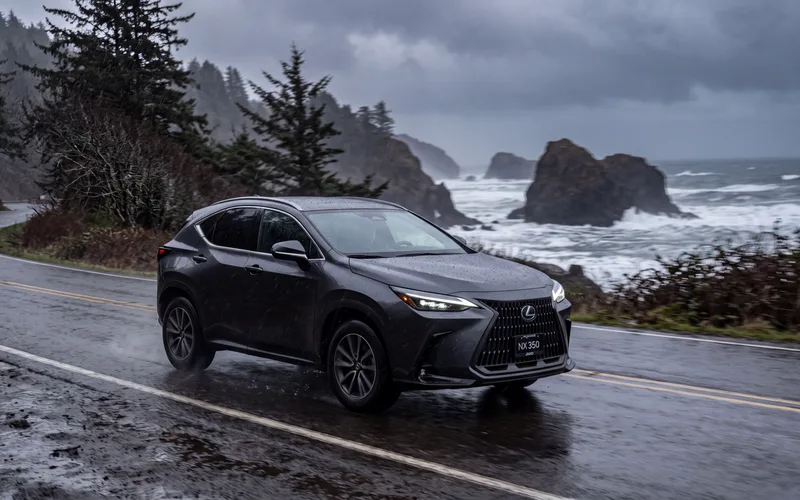 Lexus NXCompact Luxury SUVBetter at: Resale value
Nearly the same brief — a quiet, comfortable compact luxury SUV — but with hybrid efficiency, better predicted reliability, and resale value that doesn't evaporate.
Compare 2.46C+
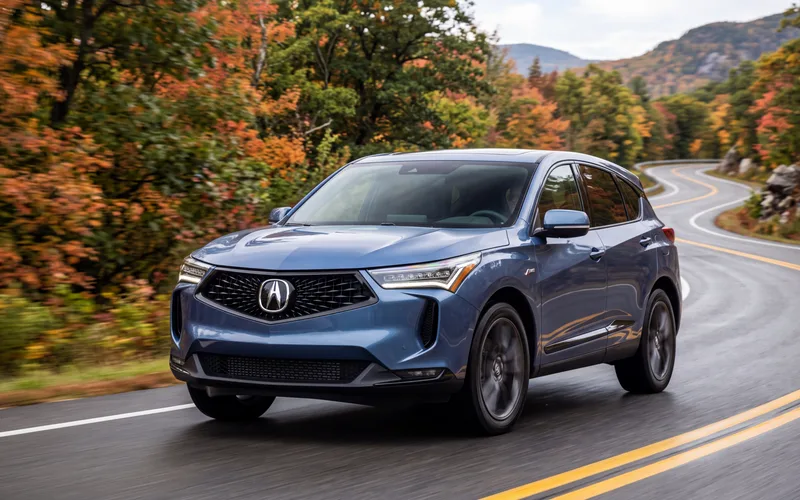 Acura RDXCompact Luxury SUVBetter at: Driving feel
More power, more cargo room, and a chassis that's actually fun, at a price that still undercuts the German set.
Compare 2.69C+
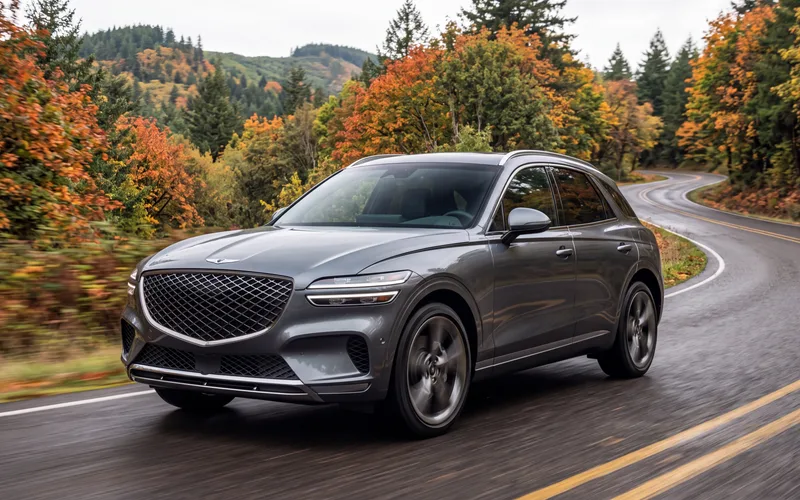 Genesis GV70Compact Luxury SUVBetter at: Overall polish
A newer, faster, better-warranted luxury SUV for shoppers who can stretch past the Corsair's discounted sticker.
CompareHow it's evolved
7 scored model years · 2020–2026
Subject scores by year
Hover or tap a score to see what moved it versus the year before. A corner mark flags a big swing.
| Year | Performance | Efficiency | Safety | Space | Cost | Reliability | Tech | Use-case | Driving | Value |
|---|---|---|---|---|---|---|---|---|---|---|
| 2026 | 46 | 45 | 82 | 55 | 44 | 70 | 83 | 73 | 69 | 65 |
| 2025 | 42 | 46 | 82 | 53 | 49 | 62 | 81 | 66 | 66 | 68 |
| 2024 | 45 | 47 | 77 | 53 | 51 | 60 | 80 | 66 | 68 | 71 |
| 2023 | 45 | 47 | 77 | 53 | 50 | 66 | 80 | 60 | 69 | 70 |
| 2022 | 45 | 47 | 71 | 52 | 49 | 57 | 61 | 60 | 65 | 68 |
| 2021 | 45 | 47 | 71 | 53 | 45 | 51 | 62 | 59 | 65 | 71 |
| 2020 | 40 | 48 | 76 | 53 | 46 | 45 | 61 | 61 | 70 | 73 |
Compare two years
Best fit & conditions
Higher scores mean a better fit for that use case. Learn more about use-case fit →
Subject profile
Academic Probation · NHTSA safety recalls
May 12, 2026Power train: automatic transmission: internal: park pawlThe integrated park module may fail to lock into the park position when the driver shifts into park. As such, these vehicles fail to comply with the requirements of Federal Motor Vehicle Safety Standard (FMVSS) number 114, "Theft Protection and Rollaway Prevention."
Defect
Ford Motor Company (Ford) is recalling certain 2026 Escape and Lincoln Corsair vehicles. The integrated park module may fail to lock into the park position when the driver shifts into park. As such, these vehicles fail to comply with the requirements of Federal Motor Vehicle Safety Standard (FMVSS) number 114, "Theft Protection and Rollaway Prevention."
Risk
A loss of park function can allow the vehicle to rollaway, increasing the risk of a crash.
Remedy
The Secondary On Board Diagnostic Module C (SOBDMC) software will be updated over-the-air (OTA) or by a dealer, free of charge. Interim letters, notifying owners of the safety risk, were mailed June 5, 2026. Additional letters will be sent once the remedy is available, anticipated in August 2026. Owners may contact Ford customer service at 1-866-436-7332. Ford's number for this recall is 25C69. Vehicle Identification Numbers (VINs) involved in this recall became searchable on NHTSA.gov on May 15, 2026. This recall expands previous NHTSA recall number 25V863.
NHTSA campaign 26V301000 ↗Manufacturer no. 25C69208 vehicles potentially affected (all models in the campaign)Filed by Ford Motor CompanyFiled as CORSAIRFeb 17, 2026Electrical system: propulsion system: traction batteryA manufacturing defect in one or more of the high voltage battery cells may result in an internal short circuit and battery failure.
Defect
Ford Motor Company (Ford) is recalling certain 2022-2026 Ford Escape and 2023-2026 Lincoln Corsair plug-in hybrid vehicles. A manufacturing defect in one or more of the high voltage battery cells may result in an internal short circuit and battery failure.
Risk
Battery failure can cause a loss of drive power, increasing the risk of a crash. Battery failure can also increase the risk of a fire.
Remedy
Dealers will update the battery energy control module (BECM) and hybrid powertrain control module (HPCM) software, free of charge. Owners are advised to only use "Auto EV" mode and will be instructed by mail to limit the maximum charge of the battery until the remedy has been completed. Owner notification letters were mailed September 4, 2026. Owners may contact Ford customer service at 1-866-436-7332. Ford's number for this recall is 25SC4. This recall expands previous recall numbers 24V954 and 25V489. Vehicle Identification Numbers (VINs) involved in this recall became searchable on NHTSA.gov on February 18, 2026.
NHTSA campaign 26V091000 ↗Manufacturer no. 25SC425,237 vehicles potentially affected (all models in the campaign)Owners notified Sep 4, 2026Filed by Ford Motor CompanyFiled as CORSAIR PHEVDec 12, 2025Seat belts: rear/other: retractorThe seat belt retractors for the left and right rear passenger seats may not be securely fastened.
Defect
Ford Motor Company (Ford) is recalling certain 2025-2026 Corsair and Escape vehicles. The seat belt retractors for the left and right rear passenger seats may not be securely fastened.
Risk
An improperly secured seat belt retractor may not restrain an occupant as intended, increasing the risk of injury during a crash.
Remedy
Dealers will inspect and secure, or replace the seat belt retractor bolts, as necessary, free of charge. Owner notification letters were mailed December 26, 2025. Owners may contact Ford customer service at 1-866-436-7332. Ford's number for this recall is 25C68. Vehicle Identification Numbers (VINs) involved in this recall became searchable on NHTSA.gov on December 15, 2025.
NHTSA campaign 25V862000 ↗Manufacturer no. 25C68780 vehicles potentially affected (all models in the campaign)Owners notified Dec 26, 2025Filed by Ford Motor CompanyFiled as CORSAIRDec 1, 2025EngineThe cylinder head may have been improperly manufactured, which can cause the ball plugs to fail, resulting in an oil leak.
Defect
Ford Motor Company (Ford) is recalling certain 2026 Explorer, Mustang, Lincoln Corsair, and 2025 Maverick vehicles. The cylinder head may have been improperly manufactured, which can cause the ball plugs to fail, resulting in an oil leak.
Risk
An oil leak in the presence of an ignition source such as hot engine or exhaust components increases the risk of a fire. In addition, the loss of oil can result in engine seizure and loss of motive power, increasing the risk of a crash.
Remedy
Dealers will replace the cylinder head assembly, free of charge. All affected vehicles are still within dealership inventory and therefore no owner notification letters will be mailed. Owners may contact Ford customer service at 1-866-436-7332. Ford's number for this recall is 25SD3. Vehicle Identification Numbers (VINs) involved in this recall became searchable on NHTSA.gov on November 24, 2025.
NHTSA campaign 25V828000 ↗Manufacturer no. 25SD36 vehicles potentially affected (all models in the campaign)Filed by Ford Motor CompanyFiled as CORSAIROct 24, 2025Visibility: windshieldThe windshield glass may have visible air bubbles, which can obscure the driver's visibility. As such, these vehicles fail to comply with the requirements of Federal Motor Vehicle Safety Standard number 205, "Glazing Materials."
Defect
Ford Motor Company (Ford) is recalling certain 2025-2026 Lincoln Corsair, Lincoln Aviator, and Explorer vehicles. The windshield glass may have visible air bubbles, which can obscure the driver's visibility. As such, these vehicles fail to comply with the requirements of Federal Motor Vehicle Safety Standard number 205, "Glazing Materials."
Risk
Reduced visibility while driving can increase the risk of a crash.
Remedy
Dealers will inspect and replace the windshield as necessary, free of charge. Owner notification letters were mailed November 6, 2025. Owners may contact Ford customer service at 1-866-436-7332. Ford's number for this recall is 25C60. Vehicle Identification Numbers (VINs) involved in this recall become searchable on NHTSA.gov beginning October 27, 2025.
NHTSA campaign 25V730000 ↗Manufacturer no. 25C6056,841 vehicles potentially affected (all models in the campaign)Owners notified Nov 6, 2025Filed by Ford Motor CompanyFiled as CORSAIR
33 recalls on other model years of the Corsair (2020–2025)
Mar 3, 2026Back over prevention: softwareThe image on the center display may flip or invert, resulting in an incorrectly displayed rearview image when the vehicle is placed in reverse. As such, these vehicles fail to comply with the requirements of Federal Motor Vehicle Safety Standard number 111, "Rear Visibility."
Defect
Ford Motor Company (Ford) is recalling certain 2020-2022 Escape, Lincoln Corsair, 2020-2024 Lincoln Aviator, and Explorer vehicles. The image on the center display may flip or invert, resulting in an incorrectly displayed rearview image when the vehicle is placed in reverse. As such, these vehicles fail to comply with the requirements of Federal Motor Vehicle Safety Standard number 111, "Rear Visibility."
Risk
An incorrectly displayed rearview image can reduce the driverâs view behind the vehicle, increasing the risk of a crash.
Remedy
Dealers will update the accessory protocol interface module (APIM) software, free of charge. Owner notification letters were mailed June 23, 2026. Owners may contact Ford customer service at 1-866-436-7332. Ford's number for this recall is 26C11. Vehicle Identification Numbers (VINs) involved in this recall became searchable on NHTSA.gov on March 5, 2026.
NHTSA campaign 26V123000 ↗Manufacturer no. 26C11889,950 vehicles potentially affected (all models in the campaign)Owners notified Jun 23, 2026Filed by Ford Motor CompanyFiled as CORSAIRMar 3, 2026Engine and engine cooling: exhaust system: emission control: gas recirculation valve (egr valve)The exhaust gas recirculation (EGR) valve may fail, resulting in an unexpected loss of drive power.
Defect
Ford Motor Company (Ford) is recalling certain 2025 Ranger, Lincoln Nautilus, Mustang, Maverick, Explorer, Escape, Lincoln Corsair, Bronco Sport, and Bronco vehicles. The exhaust gas recirculation (EGR) valve may fail, resulting in an unexpected loss of drive power.
Risk
An unexpected loss of drive power increases the risk of a crash.
Remedy
Dealers will replace the EGR valves, free of charge. Owner notification letters were mailed July 31, 2026. Owners may contact Ford customer service at 1-866-436-7332. Ford's number for this recall is 26S10. Vehicle Identification Numbers (VINs) involved in this recall became searchable on NHTSA.gov on March 4, 2026.
NHTSA campaign 26V122000 ↗Manufacturer no. 26S1047,804 vehicles potentially affected (all models in the campaign)Owners notified Jul 31, 2026Filed by Ford Motor CompanyFiled as CORSAIRMar 3, 2026Visibility: windshield wiper/washer: motorThe windshield wiper motor may fail and prevent the windshield wipers from operating properly.
Defect
Ford Motor Company (Ford) is recalling certain 2020-2022 Explorer, Escape, Lincoln Aviator, and Lincoln Corsair vehicles. The windshield wiper motor may fail and prevent the windshield wipers from operating properly.
Risk
Windshield wipers that fail to operate properly can reduce visibility, increasing the risk of a crash.
Remedy
Dealers will inspect and replace the front wiper motors as necessary, free of charge. Interim letters, notifying owners of the safety risk, were mailed April 2, 2026. Additional letters will be sent once the final remedy is available, anticipated in October 2026. Owners may contact Ford customer service at 1-866-436-7332. Ford's number for this recall is 26S14. Vehicle Identification Numbers (VINs) involved in this recall became searchable on NHTSA.gov on March 4, 2026.
NHTSA campaign 26V117000 ↗Manufacturer no. 26S14604,533 vehicles potentially affected (all models in the campaign)Filed by Ford Motor CompanyFiled as CORSAIRNov 14, 2025Electrical system: propulsion system: traction batteryA manufacturing defect in one or more of the high voltage battery cells may result in an internal short circuit and battery failure.
Defect
Ford Motor Company (Ford) is recalling certain 2020-2024 Ford Escape and 2021-2024 Lincoln Corsair plug-in hybrid vehicles. A manufacturing defect in one or more of the high voltage battery cells may result in an internal short circuit and battery failure.
Risk
Battery failure can cause a loss of drive power, increasing the risk of a crash. Battery failure can also increase the risk of a fire.
Remedy
Dealers will update the battery energy control module (BECM) and hybrid powertrain control module (HPCM), free of charge. Owners are advised to only use "Auto EV" mode and will be instructed by mail to limit the maximum charge of the battery until the remedy has been completed. Owner notification letters were mailed September 4, 2026. Owners may contact Ford customer service at 1-866-436-7332. Ford's number for this recall is 25SC4. Vehicles in this recall were previously recalled under 24V954 and will need to have the new remedy performed. Vehicle Identification Numbers (VINs) involved in this recall became searchable on NHTSA.gov on November 18, 2025.
NHTSA campaign 25V789000 ↗Manufacturer no. 25SC420,558 vehicles potentially affected (all models in the campaign)Owners notified Sep 4, 2026Filed by Ford Motor CompanyFiled as CORSAIR PHEVOct 10, 2025Exterior lightingWater may leak into the left and right rear combination lights, possibly resulting in a loss of reverse light, tail light, brake light, or rear turn signal function. As such, these vehicles fail to comply with the requirements of Federal Motor Vehicle Safety Standard (FMVSS) number 108, "Lamps, Reflective Devices, and Associated Equipment."
Defect
Ford Motor Company (Ford) is recalling certain 2024-2025 Lincoln Corsair vehicles. Water may leak into the left and right rear combination lights, possibly resulting in a loss of reverse light, tail light, brake light, or rear turn signal function. As such, these vehicles fail to comply with the requirements of Federal Motor Vehicle Safety Standard (FMVSS) number 108, "Lamps, Reflective Devices, and Associated Equipment."
Risk
Loss of rear lighting functions can reduce vehicle visibility and fail to alert other drivers that the vehicle is braking, turning, or reversing, increasing the risk of a crash.
Remedy
Dealers will inspect and replace the rear combination light assemblies, as necessary, free charge. Owner notification letters were mailed November 14, 2025. Owners may contact Ford customer service at 1-866-436-7332. Ford's number for this recall is 25C53. Vehicle Identification Numbers (VINs) involved in this recall became searchable on NHTSA.gov on October 14, 2025.
NHTSA campaign 25V688000 ↗Manufacturer no. 25C5384 vehicles potentially affected (all models in the campaign)Owners notified Nov 14, 2025Filed by Ford Motor CompanyFiled as CORSAIROct 10, 2025Equipment: electrical: engine block heaterThe engine block heater may crack and develop a coolant leak, causing it to short circuit when the block heater is plugged in.
Defect
Ford Motor Company (Ford) is recalling certain 2016-2019 Lincoln MKC, 2016-2023 Explorer, 2019-2020 Fusion, 2019-2024 Ranger, 2020-2022 Lincoln Corsair, Escape, 2021-2024 Bronco, Bronco Sport, and 2022-2024 Maverick vehicles. The engine block heater may crack and develop a coolant leak, causing it to short circuit when the block heater is plugged in.
Risk
An electrical short circuit can increase the risk of a fire.
Remedy
Owners are advised not to plug in their block heater until the vehicle is remedied. Dealers will replace the block heater, free of charge. Owners will also have a alternative option to replace engine block heater element with a threaded blanking plug, and remove the block heater electrical cord. Interim letters, notifying owners of the safety risk, were mailed December 3, 2025. Additional letters will be sent once the final remedy is available, anticipated September 2026. Owners may contact Ford customer service at 1-866-436-7332. Ford's number for this recall is 25SA4. Vehicle Identification Numbers (VINs) involved in this recall became searchable on NHTSA.gov on October 15, 2025.
NHTSA campaign 25V685000 ↗Manufacturer no. 25SA459,006 vehicles potentially affected (all models in the campaign)Filed by Ford Motor CompanyFiled as CORSAIRAug 8, 2025Back over prevention: sensing system: cameraWater may enter into the rearview camera connectors, which can cause the rearview camera image not to appear on the display or display a distorted image.
Defect
Ford Motor Company (Ford) is recalling certain 2020-2022 Lincoln Corsair vehicles. Water may enter into the rearview camera connectors, which can cause the rearview camera image not to appear on the display or display a distorted image.
Risk
A rearview camera that displays a blank or distorted image can reduce the drivers view of what is behind the vehicle, increasing the risk of a crash.
Remedy
Dealers will replace the rearview camera harness and rearview camera, free of charge. Owner notification letters were mailed May 1, 2026. Owners may contact Ford customer service at 1-866-436-7332. Ford's number for this recall is 25S83.
NHTSA campaign 25V510000 ↗Manufacturer no. 25S8341,875 vehicles potentially affected (all models in the campaign)Owners notified May 1, 2026Filed by Ford Motor CompanyFiled as CORSAIRJun 27, 2025Back over prevention: softwareA software error may cause the rearview camera to display a blank image, or the image may remain on the display after the backing event has ended.
Defect
Ford Motor Company (Ford) is recalling certain 2018-2022 Transit Connect, 2019-2020 MKZ, MKX, Edge, Continental, F-150, Nautilus, Fusion, 2019-2023 Ranger, Mustang, 2020-2021 EcoSport, Expedition, Navigator, 2020-2022 Escape, F-250 SD, Corsair, 2020-2023 Aviator, Transit, 2020-2024 Explorer, 2021-2024 Bronco Sport, and 2022-2024 Maverick vehicles. A software error may cause the rearview camera to display a blank image, or the image may remain on the display after the backing event has ended.
Risk
A rearview camera that displays a blank image can reduce the driver's view behind the vehicle. A rearview image that continues to be displayed after the vehicle is shifted out of reverse may distract the driver. Both of these situations can increase the risk of a crash.
Remedy
Dealers will update the rearview camera software, free of charge. Owner notification letters were mailed September 4, 2025. Owners may contact Ford customer service at 1-866-436-7332. Ford's number for this recall is 25S72.
NHTSA campaign 25V442000 ↗Manufacturer no. 25S72200,237 vehicles potentially affected (all models in the campaign)Owners notified Sep 4, 2025Filed by Ford Motor CompanyFiled as CORSAIRMay 23, 2025EngineIn the event of an engine failure, engine oil and fuel vapor may be released into the engine compartment and accumulate near ignition sources such as hot engine or exhaust components, possibly resulting in an engine compartment fire.
Defect
Ford Motor Company (Ford) is recalling certain 2020-2023 Escape, 2021-2023 Corsair, and 2022-2023 Maverick vehicles equipped with 2.5L HEV or PHEV engines that were repaired incorrectly under recall 23V380. In the event of an engine failure, engine oil and fuel vapor may be released into the engine compartment and accumulate near ignition sources such as hot engine or exhaust components, possibly resulting in an engine compartment fire.
Risk
An engine compartment fire increases the risk of injury.
Remedy
Owners are advised to park and shut off the engine as quickly as possible if they hear unexpected engine noises, notice a reduction in vehicle power, or see smoke. Dealers will update the powertrain control module software, free of charge. Owner notification letters were mailed June 27, 2025. Owners may contact Ford customer service at 1-866-436-7332. Ford's number for this recall is 25S54.
NHTSA campaign 25V345000 ↗Manufacturer no. 25S541,809 vehicles potentially affected (all models in the campaign)Owners notified Jun 27, 2025Filed by Ford Motor CompanyFiled as CORSAIRMay 23, 2025Electrical system · Equipment: electrical: engine block heaterThe engine block heater may overheat when the vehicle is parked with the block heater plugged in.
Defect
Ford Motor Company (Ford) is recalling certain 2024-2025 Lincoln Nautilus, 2023-2025 Escape, 2023 Lincoln Corsair, 2025 Lincoln Corsair, Maverick, and Bronco Sport vehicles equipped with a 1.5L or 2.0L MPC engine and an engine block heater. The engine block heater may overheat when the vehicle is parked with the block heater plugged in.
Risk
An overheated engine block heater can increase the risk of a fire.
Remedy
Dealers will replace the block heater element and inspect the electrical cord, replacing it if necessary, free of charge. Owners will also have a alternative option to replace engine block heater element with a threaded blanking plug coupled, and remove the block heater electrical cord. Owner notification letters were mailed June 9, 2026. Owners may contact Ford customer service at 1-866-436-7332. Ford's number for this recall is 25S52.
NHTSA campaign 25V343000 ↗Manufacturer no. 25S526,781 vehicles potentially affected (all models in the campaign)Owners notified Jun 9, 2026Filed by Ford Motor CompanyFiled as CORSAIRMay 23, 2025Seat belts: front: warning light/devicesWhen the driver's seat belt is not buckled and the vehicle is started, the seat belt warning system may activate the audible warning chime for an insufficient amount of time of less than 4 seconds. As such, these vehicles fail to comply with the requirements of Federal Motor Vehicle Safety Standard number 208, "Occupant Crash Protection."
Defect
Ford Motor Company (Ford) is recalling certain 2020-2023 Lincoln Aviator and Lincoln Corsair vehicles equipped with a Revel Audio System that were repaired incorrectly under recall 22V-953. When the driver's seat belt is not buckled and the vehicle is started, the seat belt warning system may activate the audible warning chime for an insufficient amount of time of less than 4 seconds. As such, these vehicles fail to comply with the requirements of Federal Motor Vehicle Safety Standard number 208, "Occupant Crash Protection."
Risk
An audible warning chime that does not properly alert of an unbelted seat belt can increase the risk of injury during a crash.
Remedy
Dealers will update the audio control module software, free of charge. Owner notification letters were mailed July 3, 2025. Owners may contact Ford customer service at 1-866-436-7332. Ford's number for this recall is 25C18.
NHTSA campaign 25V338000 ↗Manufacturer no. 25C184,442 vehicles potentially affected (all models in the campaign)Owners notified Jul 3, 2025Filed by Ford Motor CompanyFiled as CORSAIRMay 9, 2025Back over prevention: softwareA software error may cause the rearview camera image to delay, freeze, or not display when the vehicle is in reverse.
Defect
Ford Motor Company (Ford) is recalling certain 2021-2024 Bronco, F-150, 2021-2024 Edge, 2022-2025 Escape, F-250, F-350, F-450, F-550, F-600, 2022-2024 Expedition, 2022-2025 Transit, 2021-2023 Mach-E, 2024 Ranger, Mustang, 2021-2023 Lincoln Nautilus, 2022-2024 Navigator, and 2023-2024 Corsair vehicles. A software error may cause the rearview camera image to delay, freeze, or not display when the vehicle is in reverse.
Risk
A frozen or missing rearview camera image can reduce the driver's view behind the vehicle, increasing the risk of a crash.
Remedy
The accessory protocol interface module (APIM) software will be updated by a dealer or through an over-the-air update, free of charge. This will be a phased campaign, with the remedy becoming available in different phases based on model and model years. Interim letters notifying owners of the safety risk were mailed on June 26, 2025. Additional letters will be mailed once the final remedy is available on each phase. Owner notification letters were sent on October 8, 2025. Owners may contact Ford customer service at 1-866-436-7332. Ford's number for this recall is 25S49.
NHTSA campaign 25V315000 ↗Manufacturer no. 25S491,076,138 vehicles potentially affected (all models in the campaign)Owners notified Oct 8, 2025Filed by Ford Motor CompanyFiled as CORSAIRMar 14, 2025Back over prevention: softwareThe video output may fail, preventing the rearview camera image from displaying.
Defect
Ford Motor Company (Ford) is recalling certain 2020-2023 Explorer, Lincoln Aviator, and 2020-2022 Lincoln Corsair vehicles previously repaired incorrectly under recall number 23V-342. The video output may fail, preventing the rearview camera image from displaying.
Risk
Loss of the rearview camera image can reduce the driver's rear visibility, increasing the risk of a crash.
Remedy
Dealers will update the Image Processing Module software, free of charge. Owner notification letters were mailed April 25, 2025. Owners may contact Ford customer service at 1-866-436-7332. Ford's number for this recall is 25S27.
NHTSA campaign 25V159000 ↗Manufacturer no. 25S2749,399 vehicles potentially affected (all models in the campaign)Owners notified Apr 25, 2025Filed by Ford Motor CompanyFiled as CORSAIRFeb 28, 2025Power train: automatic transmission: control module (tcm/pcm/tecm)The Hybrid Powertrain Control Module (HPCM) software may cause the vehicle to shift into neutral unexpectedly, causing a loss of drive power.
Defect
Ford Motor Company (Ford) is recalling certain 2022-2024 Maverick, 2022 Escape, and 2021-2022 Lincoln Corsair vehicles previously repaired incorrectly under recall number 24V-330. The Hybrid Powertrain Control Module (HPCM) software may cause the vehicle to shift into neutral unexpectedly, causing a loss of drive power.
Risk
A loss of drive power increases the risk of a crash.
Remedy
Dealers will update the HPCM software, free of charge. Owner notification letters were mailed April 11, 2025. Owners may contact Ford customer service at 1-866-436-7332. Ford's number for this recall is 25S16.
NHTSA campaign 25V133000 ↗Manufacturer no. 25S16207 vehicles potentially affected (all models in the campaign)Owners notified Apr 11, 2025Filed by Ford Motor CompanyFiled as CORSAIRJan 31, 2025Electrical system: instrument cluster/panelThe Instrument Panel Cluster (IPC) may not illuminate at startup or while driving. As such, these vehicles fail to comply with the requirements of Federal Motor Vehicle Safety Standard numbers 101, "Control and Displays" and 102, "Transmission shift lever sequence, starter interlock, and transmission braking effect" as well as FMVSS numbers 126, 108, 135, 138, 208, and 305.
Defect
Ford Motor Company (Ford) is recalling certain 2025 Bronco Sport, Escape, and Lincoln Corsair vehicles. The Instrument Panel Cluster (IPC) may not illuminate at startup or while driving. As such, these vehicles fail to comply with the requirements of Federal Motor Vehicle Safety Standard numbers 101, "Control and Displays" and 102, "Transmission shift lever sequence, starter interlock, and transmission braking effect" as well as FMVSS numbers 126, 108, 135, 138, 208, and 305.
Risk
An instrument panel display that fails to show critical safety information, such as the speedometer or warning lights, increases the risk of a crash.
Remedy
Dealers will replace the instrument panel cluster, free of charge. Owner notification letters were mailed February 17, 2025. Owners may contact Ford customer service at 1-866-436-7332. Ford's number for this recall is 25C02.
NHTSA campaign 25V049000 ↗Manufacturer no. 25C02298 vehicles potentially affected (all models in the campaign)Owners notified Feb 17, 2025Filed by Ford Motor CompanyFiled as CORSAIRJan 31, 2025Back over prevention: sensing system: cameraThe rearview camera may display a blank or distorted image.
Defect
Ford Motor Company (Ford) is recalling certain 2021 Expedition, 2021-2022 Super Duty F-250, F-350, F-450, F-550, F-600, and 2020-2022 Lincoln Corsair vehicles. The rearview camera may display a blank or distorted image.
Risk
Rearview camera failure can reduce the driver's view of what is behind the vehicle, increasing the risk of a crash.
Remedy
Dealers will replace the rearview camera as necessary, free of charge. Owner notification letters were mailed September 18, 2025. Owners may contact Ford customer service at 1-866-436-7332. Ford's number for this recall is 25S05.
NHTSA campaign 25V048000 ↗Manufacturer no. 25S0591,580 vehicles potentially affected (all models in the campaign)Owners notified Sep 18, 2025Filed by Ford Motor CompanyFiled as CORSAIRDec 20, 2024Electrical system: propulsion system: traction battery: management system/energy control module (bms/becm)A manufacturing defect in one or more of the high voltage battery cells may result in an internal short circuit and battery failure.
Defect
Ford Motor Company (Ford) is recalling certain 2020-2024 Ford Escape, and 2021-2024 Lincoln Corsair vehicles. A manufacturing defect in one or more of the high voltage battery cells may result in an internal short circuit and battery failure.
Risk
Battery failure can cause a loss of drive power, increasing the risk of a crash. Battery failure can also increase the risk of a fire.
Remedy
Owners are advised not to charge battery till the remedy has been completed. Dealers will perform a battery energy control module (BECM) software update, and replace the high voltage battery pack, as necessary, free of charge. Owner notification letters were mailed on May 30, 2025. Owners may contact Ford customer service at 1-866-436-7332. Ford's number for this recall is 24S79.
NHTSA campaign 24V954000 ↗Manufacturer no. 24S7920,484 vehicles potentially affected (all models in the campaign)Owners notified May 30, 2025Filed by Ford Motor CompanyFiled as CORSAIRNov 8, 2024Equipment: other: labelsThe air bag warning label may be missing from the dashboard. As such, these vehicles fail to comply with the requirement Federal Motor Vehicle Safety Standard number 208, "Occupant Crash Protection."
Defect
Ford Motor Company (Ford) is recalling certain 2020-2025 Explorer, Lincoln Aviator, 2020-2024 Escape, Lincoln Corsair, 2018-2024 F-150, Expedition and Lincoln Navigator vehicles. The air bag warning label may be missing from the dashboard. As such, these vehicles fail to comply with the requirement Federal Motor Vehicle Safety Standard number 208, "Occupant Crash Protection."
Risk
Without a label that shows the proper restraint usage guidelines, the occupants may have an increased risk of injury in the event of a crash.
Remedy
Ford will mail owners the warning labels, free of charge. Owner notification letters were mailed December 19, 2024. Owners may call Ford customer service at 1-866-436-7332. Ford's number for this recall is 24C39.
NHTSA campaign 24V852000 ↗Manufacturer no. 24C3927,678 vehicles potentially affected (all models in the campaign)Owners notified Dec 19, 2024Filed by Ford Motor CompanyFiled as CORSAIRAug 23, 2024Fuel system, gasoline: fuel injection system: injectorsThe fuel injectors may have been assembled without O-ring support discs, which can result in a fuel leak.
Defect
Ford Motor Company (Ford) is recalling certain 2023 Lincoln Corsair, 2023-2024 Escape, 2024 Mustang, and 2025 Explorer vehicles. The fuel injectors may have been assembled without O-ring support discs, which can result in a fuel leak.
Risk
A fuel leak in the presence of an ignition source increases the risk of a fire.
Remedy
Dealers will install new fuel injector O-rings and O-ring support discs, free of charge. Owner notification letters were mailed on October 7, 2024. Owners may contact Ford customer service at 1-866-436-7332. Ford's number for this recall is 24S54.
NHTSA campaign 24V634000 ↗Manufacturer no. 24S5424 vehicles potentially affected (all models in the campaign)Owners notified Oct 7, 2024Filed by Ford Motor CompanyFiled as CORSAIRMay 10, 2024Power train: automatic transmission: control module (tcm/pcm/tecm)The Hybrid Powertrain Control Module (HPCM) software may cause the vehicle to shift into neutral unexpectedly, causing a loss of drive power.
Defect
Ford Motor Company (Ford) is recalling certain 2022-2024 Maverick, 2020-2022 Escape, and 2021-2022 Lincoln Corsair vehicles. The Hybrid Powertrain Control Module (HPCM) software may cause the vehicle to shift into neutral unexpectedly, causing a loss of drive power.
Risk
A loss of drive power increases the risk of a crash.
Remedy
Dealers will update the HPCM software, free of charge. Owner notification letters were mailed May 22, 2024. Owners may contact Ford customer service at 1-866-436-7332. Ford's number for this recall is 24S33.
NHTSA campaign 24V330000 ↗Manufacturer no. 24S339,312 vehicles potentially affected (all models in the campaign)Owners notified May 22, 2024Filed by Ford Motor CompanyFiled as CORSAIRMay 26, 2023EngineIn the event of an engine failure, engine oil and fuel vapor may be released into the engine compartment and accumulate near ignition sources such as hot engine or exhaust components, possibly resulting in an engine compartment fire.
Defect
Ford Motor Company (Ford) is recalling certain 2020-2023 Escape, 2022-2023 Maverick, and 2021-2023 Corsair vehicles equipped with 2.5L HEV or PHEV engines. In the event of an engine failure, engine oil and fuel vapor may be released into the engine compartment and accumulate near ignition sources such as hot engine or exhaust components, possibly resulting in an engine compartment fire.
Risk
An engine compartment fire increases the risk of injury.
Remedy
Owners are advised to park and shut off the engine as quickly as possible if they hear unexpected engine noises, notice a reduction in vehicle power, or see smoke. Dealers will replace the engine long-block in 2023 Escape and Corsair vehicles. For the other vehicles, dealers will update the powertrain control module software. If a connecting rod bearing failure is detected, dealers will replace the engine long-block. All inspections and repairs will be performed free of charge. Owner notification letters were mailed on June 14, 2024. Owners may contact Ford customer service at 1-866-436-7332. Ford's number for this recall is 23S27. This recall expands and replaces recall number 22V-484. Vehicles previously repaired under 22V-484 will need to have the new remedy completed.
NHTSA campaign 23V380000 ↗Manufacturer no. 23S27125,322 vehicles potentially affected (all models in the campaign)Owners notified May 3, 2024Filed by Ford Motor CompanyFiled as CORSAIRMay 12, 2023Back over prevention: sensing system: cameraThe video output may fail, preventing the rearview camera image from displaying.
Defect
Ford Motor Company (Ford) is recalling certain 2020-2023 Explorer, Lincoln Aviator, and 2020-2022 Lincoln Corsair vehicles equipped with a 360-degree camera. The video output may fail, preventing the rearview camera image from displaying.
Risk
Loss of the rearview camera image can reduce the driver's rear visibility, increasing the risk of a crash.
Remedy
Dealers will replace the 360-degree camera, free of charge. Owner notification letters were mailed November 10, 2023. Owners may contact Ford customer service at 1-866-436-7332. Ford's number for this recall is 23S23. This recall expands and replaces NHTSA recall number 23V-022. Vehicles previously repaired under 23V-022 will need to have the new remedy performed.
NHTSA campaign 23V342000 ↗Manufacturer no. 23S23442,973 vehicles potentially affected (all models in the campaign)Owners notified Nov 10, 2023Filed by Ford Motor CompanyFiled as CORSAIRJan 23, 2023Back over prevention: sensing system: cameraThe video output may fail, preventing the rearview camera image from displaying.
Defect
Ford Motor Company (Ford) is recalling certain 2020-2023 Explorer, Lincoln Aviator, and 2020-2022 Lincoln Corsair vehicles equipped with a 360-degree camera. The video output may fail, preventing the rearview camera image from displaying.
Risk
Loss of the rearview camera image can reduce the driver's rear visibility, increasing the risk of a crash.
Remedy
Dealers will update the image processing module (IPMB) software, free of charge. Interim owner notification letters informing owners of the safety risk were mailed April 25, 2023. Owner notification letters were mailed February 13, 2023. Owners may contact Ford customer service at 1-866-436-7332. Ford's number for this recall is 23S02. This recall expands and replaces NHTSA recall number 21V-735. Vehicles previously repaired under 21V-735 will need to have the new remedy performed.
NHTSA campaign 23V022000 ↗Manufacturer no. 23S02382,759 vehicles potentially affected (all models in the campaign)Owners notified Feb 13, 2023Filed by Ford Motor CompanyFiled as CORSAIRDec 23, 2022Seat belts: front: warning light/devicesWhen the driver's seat belt is not buckled and the vehicle is started, the seat belt warning system may activate the audible warning chime for an insufficient amount of time of less than 4 seconds. As such, these vehicles fail to comply with the requirements of Federal Motor Vehicle Safety Standard number 208, "Occupant Crash Protection."
Defect
Ford Motor Company (Ford) is recalling certain 2020-2023 Lincoln Aviator and 2020-2022 Lincoln Corsair vehicles equipped with a Revel Audio System. When the driver's seat belt is not buckled and the vehicle is started, the seat belt warning system may activate the audible warning chime for an insufficient amount of time of less than 4 seconds. As such, these vehicles fail to comply with the requirements of Federal Motor Vehicle Safety Standard number 208, "Occupant Crash Protection."
Risk
An audible warning chime that does not properly alert of an unbelted seat belt can increase the risk of injury during a crash.
Remedy
Dealers will update the audio control module software, free of charge. Owner notification letters were mailed February 7, 2023. Owners may contact Ford customer service at 1-866-436-7332. Ford's number for this recall is 22C35.
NHTSA campaign 22V953000 ↗Manufacturer no. 22C35101,001 vehicles potentially affected (all models in the campaign)Owners notified Feb 7, 2023Filed by Ford Motor CompanyFiled as CORSAIRJul 7, 2022Engine and engine cooling · Structure: body: bumpers: active shutters/grill · Structure: frame and members: underbody shieldsIn the event of an engine failure, engine oil and fuel vapor may be released into the engine compartment and accumulate near ignition sources such as hot engine or exhaust components, possibly resulting in an engine compartment fire.
Defect
Ford Motor Company (Ford) is recalling certain 2020-2022 Escape, 2021-2022 Lincoln Corsair, and 2022 Maverick vehicles equipped with 2.5L HEV or PHEV engines. In the event of an engine failure, engine oil and fuel vapor may be released into the engine compartment and accumulate near ignition sources such as hot engine or exhaust components, possibly resulting in an engine compartment fire.
Risk
An engine compartment fire increases the risk of injury.
Remedy
Owners are advised to park and shut off the engine as quickly as possible if they hear unexpected engine noises, notice a reduction in vehicle power, or see smoke. Dealers will modify the under engine shield and active grille shutter, free of charge. Owner notification letters were mailed August 19, 2022. Owners may contact Ford customer service at 1-866-436-7332. Ford's number for this recall is 22S47.
NHTSA campaign 22V484000 ↗Manufacturer no. 22S47100,689 vehicles potentially affected (all models in the campaign)Owners notified Aug 19, 2022Filed by Ford Motor CompanyFiled as CORSAIRMay 13, 2022Electrical system: propulsion system: traction batteryInsufficient welds inside the high voltage battery may fail, resulting in a loss of drive power.
Defect
Ford Motor Company (Ford) is recalling certain 2020 Escape and 2021 Lincoln Corsair vehicles equipped with 2.5L hybrid powertrains. Insufficient welds inside the high voltage battery may fail, resulting in a loss of drive power.
Risk
A loss of drive power increases the risk of a crash.
Remedy
Dealers will replace the high voltage battery, free of charge. Interim owner notification letters notifying owners of the safety risk were mailed on July 12, 2022. Owner notification letters were mailed August 8, 2022. Owners may contact Ford customer service at 1-866-436-7332. Ford's number for this recall is 22S33.
NHTSA campaign 22V331000 ↗Manufacturer no. 22S3327 vehicles potentially affected (all models in the campaign)Owners notified Aug 8, 2022Filed by Ford Motor CompanyFiled as CORSAIRMar 11, 2022Electrical system: propulsion system: traction battery · Hybrid propulsion systemThe high voltage battery may fail, resulting in a sudden loss of drive power.
Defect
Ford Motor Company (Ford) is recalling certain 2022 Corsair and 2021-2022 Escape vehicles equipped with a 2.5L Hybrid powertrain. The high voltage battery may fail, resulting in a sudden loss of drive power.
Risk
A sudden loss of drive power increases the risk of a crash.
Remedy
Dealers will replace the high voltage battery, free of charge. Owner notification letters were mailed March 28, 2022. Owners may contact Ford customer service at 1-866-436-7332. Ford's number for this recall is 21S48.
NHTSA campaign 22V149000 ↗Manufacturer no. 21S483 vehicles potentially affected (all models in the campaign)Owners notified Mar 28, 2022Filed by Ford Motor CompanyFiled as CORSAIRSep 22, 2021Back over prevention: sensing system: camera · Back over prevention: softwareThe video output may fail, preventing the rearview camera image from displaying.
Defect
Ford Motor Company (Ford) is recalling certain 2020-2021 Explorer, Lincoln Corsair, and Lincoln Aviator vehicles equipped with 360-degree cameras. The video output may fail, preventing the rearview camera image from displaying.
Risk
A rearview camera that does not display an image reduces the driver's rear view, increasing the risk of a crash.
Remedy
Dealers will update the Image Processing Module (IPMB) software, free of charge. Owner notification letters were mailed November 16, 2021. Owners may contact Ford customer service at 1-866-436-7332. Ford's number for this recall is 21S44.
NHTSA campaign 21V735000 ↗Manufacturer no. 21S44228,297 vehicles potentially affected (all models in the campaign)Owners notified Nov 16, 2021Filed by Ford Motor CompanyFiled as CORSAIRAug 10, 2021Fuel system, gasoline: delivery: fuel pump: control/drive moduleThe fuel delivery module may leak inside the fuel tank, causing low fuel pressure which could result in an engine stall.
Defect
Ford Motor Company (Ford) is recalling certain 2021 Escape, Lincoln Corsair, and 2021-2022 Bronco Sport vehicles. The fuel delivery module may leak inside the fuel tank, causing low fuel pressure which could result in an engine stall.
Risk
An engine stall increases the risk of a crash.
Remedy
Dealers will replace the fuel delivery module, free of charge. Interim notification letters (remedy not available) were mailed on September 30, 2021. Owner notification letters were mailed on December 14, 2021. Owners may contact Ford customer service at 1-866-436-7332. Ford's number for this recall is 21S38.
NHTSA campaign 21V625000 ↗Manufacturer no. 21S3813,773 vehicles potentially affected (all models in the campaign)Owners notified Dec 14, 2021Filed by Ford Motor CompanyFiled as CORSAIRJan 15, 2021Power train: driveline: driveshaftAn inadequate amount of lubricant in the rear drive unit may cause seizure of the rear drive axle.
Defect
Ford Motor Company (Ford) is recalling certain 2020-2021 Edge, 2020 Lincoln Nautilus and Ford Escape and 2021 Lincoln Corsair and Ford Bronco Sport vehicles. An inadequate amount of lubricant in the rear drive unit may cause seizure of the rear drive axle.
Risk
If the rear drive unit seizes, there may be a loss of drive and/or a loss of vehicle control, increasing the risk of a crash.
Remedy
Ford will notify owners, and dealers will check the rear drive unit lubricant level. Axles found to have lubricant at the minimum level will be filled to the full level. Axles found to be below the minimum lubricant fill level will be replaced, free of charge. This recall began March 12, 2021. Owners may contact Ford customer service at 1-866-436-7332. Ford's number for this recall is 21S02.
NHTSA campaign 21V011000 ↗Manufacturer no. 21S02147 vehicles potentially affected (all models in the campaign)Owners notified Mar 12, 2021Filed by Ford Motor CompanyFiled as CORSAIRSep 23, 2020Back over prevention: sensing system: cameraDue to a poor electrical connection, the rearview camera may intermittently display a blank or distorted image. As such, these vehicles fail to comply with the requirements of Federal Motor Vehicle Safety Standard (FMVSS) number 111, "Rear Visibility."
Defect
Ford Motor Company (Ford) is recalling certain 2020 Ford F-150, F-250, F-350, F-450, F-550, Explorer, Mustang, Transit, Expedition, Escape, Ranger and Edge, and Lincoln Nautilus and Corsair vehicles. Due to a poor electrical connection, the rearview camera may intermittently display a blank or distorted image. As such, these vehicles fail to comply with the requirements of Federal Motor Vehicle Safety Standard (FMVSS) number 111, "Rear Visibility."
Risk
Reduced rearward visibility can increase the risk of a crash.
Remedy
Ford will notify owners, and dealers will replace the rearview camera, free of charge. The recall began November 17, 2020. Remedy became available on February 1, 2021. Owner notification letters were mailed on February 1, 2021. Owners may contact Ford customer service at 1-866-436-7332. Ford's number for this recall is 20C19.
NHTSA campaign 20V575000 ↗Manufacturer no. 20C19620,246 vehicles potentially affected (all models in the campaign)Owners notified Feb 1, 2021Filed by Ford Motor CompanyFiled as CORSAIRSep 10, 2020Power train: automatic transmissionThe start/stop accumulator endcap may have missing or loose bolts.
Defect
Ford Motor Company (Ford) is recalling certain 2019-2020 Edge, Transit Connect and Lincoln MKX and 2020 Escape and Lincoln Corsair vehicles. The start/stop accumulator endcap may have missing or loose bolts.
Risk
Missing or loose bolts on the start stop accumulator endcap could result in a transmission fluid leak and may progress to a loss of transmission function. A transmission fluid leak in the presence of an ignition source may increase the risk of fire.
Remedy
Ford will notify owners, and dealers will replace the start/stop accumulator, free of charge. The recall began September 23, 2020. Owners may contact Ford customer service at 1-866-436-7332. Ford's number for this recall is 20S49.
NHTSA campaign 20V550000 ↗Manufacturer no. 20S4997 vehicles potentially affected (all models in the campaign)Owners notified Sep 23, 2020Filed by Ford Motor CompanyFiled as CORSAIRAug 10, 2020Suspension: rear: springs: coil springsThere may be insufficient clearance between the rear coil springs and the rear toe link brackets possibly allowing the components to make contact, resulting in the coil springs breaking.
Defect
Ford Motor Company (Ford) is recalling certain 2020 Lincoln Corsair vehicles. There may be insufficient clearance between the rear coil springs and the rear toe link brackets possibly allowing the components to make contact, resulting in the coil springs breaking.
Risk
A fractured rear coil spring can affect vehicle handling. Additionally, a broken rear coil spring may separate from the vehicle and potentially become a road hazard. Either scenario can increase the risk of a crash.
Remedy
Ford will notify owners, and dealers will inspect for proper clearance between the toe link bracket and coil spring. If necessary, the toe link bracket edge will be trimmed according to the service procedure and a new coil spring will be installed, free of charge. The recall began November 4, 2020. Owners may contact Ford customer service at 1-866-436-7332. Ford's number for this recall is 20S41.
NHTSA campaign 20V470000 ↗Manufacturer no. 20S412,965 vehicles potentially affected (all models in the campaign)Owners notified Nov 4, 2020Filed by Ford Motor CompanyFiled as CORSAIR
Source: NHTSA Office of Defects Investigation recall database, model years 2020–2026. Recalls are listed by model year as the manufacturer filed them; whether a specific car is affected depends on its VIN — check a VIN at nhtsa.gov ↗. NHTSA model names matched to this page: CORSAIR, CORSAIR PHEV.
Detailed scoring by subject
1Performance & PowertrainOne of the Corsair's weakest categories.1.04D
Volume trim (Reserve) runs the 2.0L turbocharged I4 rated at 250 hp; Grand Touring PHEV lifts combined system output to 266 hp. Modest for a luxury compact SUV against rivals that push 250–355 hp.
Peak torque of 275 lb-ft from the volume-trim 2.0L turbo is midpack for the compact luxury SUV class.
Instrumented and manufacturer estimates cluster around 6.1–6.6 s for the 250-hp 2.0L AWD; the heavier Grand Touring PHEV runs ~7 s. Respectable but not quick versus turbo-six or torque-vectoring luxury rivals.
Reviewers consistently praise the Corsair's quiet, smooth power delivery and luxury-brand refinement, though the 2.0L turbo occasionally sounds coarse under hard load and lacks the effortless swell of a six-cylinder rival.
The 8-speed automatic is generally smooth and well-calibrated per recent reviews, but multiple sources call out a lazy kickdown response and a slight disconnect between engine and gearbox under acceleration.
Lincoln rates the 2026 Corsair at 3,000 lbs across Premiere, Reserve, and Grand Touring — enough for a small trailer or a pair of jet skis but well short of six-cylinder luxury compacts like the X3 or Macan.
AWD is standard on Reserve and Grand Touring and optional on Premiere; the PHEV uses an electrified rear axle for on-demand AWD. Widely available but no low range or advanced torque-vectoring hardware.
The Corsair is a pavement-oriented luxury crossover — modest ground clearance (~7.4 in), no skid plates, lockers, or dedicated off-road trim. Terrain drive-modes exist for weather, not trails.
Two distinct powertrains for 2026: the 2.0L turbo I4 on Premiere/Reserve and the Grand Touring PHEV. Covers mainstream gas and electrified needs, but no pure-EV option and the previously available 2.3L turbo remains discontinued.
2Efficiency & RangeOne of the Corsair's weakest categories.1.03D
Volume trim is 2.0L turbo 4-cyl AWD (Reserve). EPA combined 24 MPG (AWD) / 25 MPG (FWD). PHEV Grand Touring available separately at 33 MPG combined / 76 MPGe. Middling combined economy for a compact luxury SUV.
AWD 2.0T volume trim EPA city rating of 21 MPG. Weak city figure without electrification, though PHEV Grand Touring lifts city to 34 MPG.
AWD 2.0T EPA highway 28 MPG. Below the luxury-hybrid competitive set; PHEV variant lifts to 32 MPG on gas alone.
Total range on 16.6-gal tank at 24 MPG combined for volume AWD trim (~398 mi). Grand Touring PHEV rated 450 mi total range with 27 mi all-electric.
At 24 MPG combined and premium-recommended fuel, EPA-methodology annual cost lands ~$2,500–2,600 for the AWD volume trim. Above segment median for compact luxury SUVs; PHEV variant would score much better on this metric.
Ford's 2.0L EcoBoost in the Corsair recommends premium (91+ AKI) for advertised output but accepts 87 octane. Grand Touring PHEV runs on regular and benefits from cheap overnight home charging. Mixed picture across the lineup — not costly like premium-required rivals (Audi Q5, BMW X3), but not as easy as regular-only Acura RDX or Lexus NX.
3SafetyOne of the Corsair's strongest categories.3.60A-
NHTSA awarded the 2026 Corsair 5 out of 5 stars overall, with 5 stars in frontal and side crash tests and 4 stars in rollover.
Corsair is not on the 2026 IIHS Top Safety Pick list. Small overlap front is Good but the updated side impact is rated Marginal, which blocks the award.
Co-Pilot360 2.0 is standard from the base Premiere: AEB with forward collision warning, adaptive cruise with stop-and-go, lane-centering, blind-spot monitoring, rear cross-traffic alert with automatic braking, rear parking sensors, auto high beams, and emergency steering assist.
Pre-Collision Assist with AEB and pedestrian detection is standard and the Ford/Lincoln stack has historically earned strong IIHS vehicle-to-vehicle front crash prevention marks, though the 2026 Corsair lacks a specifically cited Superior nighttime pedestrian result.
Blind Spot Information System (BLIS) plus rear cross-traffic alert with automatic braking is standard on every trim — active intervention, not alert-only.
Lane-centering steering, lane-keeping, and evasive-steering assist are standard. Reviewers describe the system as smooth and confident, sharing the sensor stack that enables BlueCruise on higher trims.
Full-range Intelligent Adaptive Cruise Control with stop-and-go plus lane-centering is standard across the range and forms the base for BlueCruise, giving well-integrated highway assist behavior.
BlueCruise 1.5 is optional on Reserve and Grand Touring, adding hands-free lane changes on top of hands-free highway operation over 130,000+ miles of mapped Blue Zones. Mature system but locked out of the base Premiere.
IIHS rates one of the Corsair's two headlight configurations Acceptable and the other Poor for forward visibility, with glare and only fair curve visibility flagged on the volume setup — a persistent weak spot.
Compact-luxury-SUV proportions give reasonable forward and side sightlines, but thick rear pillars and a rising beltline pinch over-shoulder view; the 360-degree camera that would compensate is optional, not standard.
IIHS rates the Corsair's LATCH hardware Good+ — two full sets of lower anchors, a middle tether, and the ability to borrow outboard anchors for the center seat. Wide rear doors and 38.6 in of rear legroom make installs straightforward.
4Space & ComfortGrades below the middle of the scale.1.68D
All 2026 Corsair trims (Premiere, Reserve, Grand Touring PHEV) seat five in two rows.
Mid-pack front headroom for a compact luxury SUV; unchanged from prior model years in this generation.
Generous front legroom near the top of the compact luxury SUV segment.
Rear headroom is competitive despite the sloping roofline; sliding second-row seat helps.
Sliding second-row seats can maximize rear legroom to 38.6 in — competitive with BMW X3 (36.3) and Audi Q5.
The Corsair is a two-row, five-seat compact SUV with no third row available on any trim.
Modest cargo hold behind the second row for a compact luxury SUV; small hybrid battery penalty on Grand Touring.
Max cargo with second row folded is modest — expected for the compact footprint but low against SUV segment norms.
Competitive everyday storage: center console bin, door pockets, wireless charging pad, and a sliding second-row seat that trades legroom for cargo — but no standout innovations like an in-bed trunk or giga console.
Front seats are widely praised, and the optional 24-way Perfect Position front seats with five massage modes are a segment highlight; only knock is a rear bench that sits slightly low for under-thigh support.
Lincoln's comfort-tuned suspension delivers a supple, quiet ride noted as a segment strength; Grand Touring PHEV benefits from added mass smoothing bumps further.
Double-glazed front side windows, active noise cancellation, and well-controlled wind and road noise deliver near-class-leading quietness.
Standard heated front seats, dual-zone auto climate, and available heated steering wheel, ventilated front seats, heated rear seats, and Perfect Position massaging seats; Grand Touring adds PHEV preconditioning.
5Cost of OwnershipThe Corsair's lowest-graded category.0.94F
The 2026 Corsair carries over the 2025 lineup with modest inflation; Premiere remains Lincoln's entry point at roughly $40,000 MSRP plus ~$1,495 destination.
Reserve is the volume trim for Corsair and represents the majority of retail deliveries; a typical build with Reserve I/II equipment groups lands near $52k as-configured.
Corsair shares its 2.0L EcoBoost powertrain and platform with the mainstream Ford Escape, so parts and labor sit below European luxury peers but above mainstream compact SUVs due to Lincoln dealer rates and premium tires.
Lincoln is one of the weaker luxury brands for retention; the Corsair depreciates faster than Lexus/Acura rivals and lands below segment average despite its lower entry price.
Standard Lincoln New Vehicle Limited Warranty — matches BMW/Audi/Mercedes-Benz at 4/50k and trails Genesis (5/60k) among luxury peers.
Lincoln's 6/70k powertrain warranty beats Audi and BMW (which match basic at 4/50k) but trails Genesis (10/100k) among luxury SUV rivals; midpack overall.
Lincoln includes 6-year/70,000-mile Roadside Assistance and Lincoln Pickup & Delivery Service (complimentary valet pickup and loaner during warranty) but no multi-year scheduled maintenance — the perk package is experiential rather than mile-covering; solid but behind Genesis and Lexus.
$52,000 volume-trim price minus its estimated resale value after 5 years (47% retained, or about $24,440) leaves about $27,560 in depreciation. Add the projected $6,800 in 5-year maintenance and repairs, and owning this vehicle for 5 years costs about $34,360 in total.
6Reliability & QualityGrades above the middle of the scale.2.72B-
Signals are mixed but net positive: Consumer Reports gave the 2026 Corsair a predicted reliability score of 44 (average) yet added it back to its Recommended list in December 2025, and J.D. Power's model page rates the Corsair in the 'Great' band. Prior generation history has been average with no systemic problems.
Two authoritative studies disagree: J.D. Power 2025 VDS moved Lincoln from 25th to 19th (221 PP100), the second-best year-over-year jump of any brand — but Consumer Reports' 2025 brand rankings put Lincoln at 40 points, bottom-third of the industry ahead of only Genesis, Chrysler, GMC, Jeep, Ram, and Rivian. Net: improving trajectory but still not top-tier.
The 2026 Corsair has been subject to four NHTSA recalls to date, including one for the integrated park module that can fail to engage (rollaway risk), a cylinder-head manufacturing defect that can cause an oil leak, and a windshield-glass air-bubble defect affecting 2025-2026 units. Nothing has been fire- or crash-related, and the park-module fix is deliverable over-the-air, but this is a noisier-than-typical launch year.
The 2.0L EcoBoost I4 and 8-speed automatic are mature Ford hardware with a long history in Corsair, Escape, Bronco Sport, and Edge; owner complaints about jerky low-speed shifts and occasional coolant leaks exist but are not systemic and there are no powertrain recalls on this generation. The PHEV variant carries an eight-year/100k-mile battery warranty and Ford's plug-in system has held up on the Escape PHEV since 2020.
Reviewers and owners consistently call out class-competitive materials: Lincoln Soft Touch or leather seating, real wood inserts on Reserve, and generous soft-touch coverage. Comparable to Lexus NX and Volvo XC60 for the money and clearly above BMW X1 / Audi Q3-tier plastics.
Panel gaps, trim consistency, and cabin isolation are strong points in reviewer road tests; the only recurring quality knock is uneven front-seat cushion support, which is a design comfort issue rather than assembly. Ford's Louisville assembly of the Corsair has not drawn IQS or initial-quality complaint clusters this generation.
About 400 U.S. Lincoln dealers — still more than most luxury brands even after the Lincoln Way network right-sizing — and Lincoln ranked 5th among premium brands in the 2025 J.D. Power U.S. Sales Satisfaction Index (score 830). Service satisfaction has been climbing as well.
Corsair shares its C2 platform, 2.0L EcoBoost, and 8-speed automatic with the Ford Escape, giving it excellent parts commonality and cheaper repair sourcing than most luxury rivals. RepairPal estimates 10-year maintenance-and-repair cost at $11,887 — about $2,468 under the luxury SUV average. Lincoln's brand-wide $879/yr average is still above mainstream cars but low for the luxury class.
7Technology & InfotainmentThe Corsair's best-graded category.3.62A-
Standard 13.2-inch center touchscreen running SYNC 4 across every 2026 Corsair trim; no larger screen option is offered.
SYNC 4 is generally praised for crisp graphics, intuitive layout, and quick responses; Corsair still retains physical volume/tuning knobs and a row of hard buttons that reviewers cite as making the system easier to use than pure-touch rivals. Falls short of the wow-factor of the Nautilus's 48-inch panoramic display.
Wireless Apple CarPlay and wireless Android Auto are standard on every 2026 Corsair trim.
2026 Lincolns move to Google Assistant as the native voice assistant with 'Hey Google' natural-language commands, Google Maps built into the head unit, and Google Play app access, backed by SYNC 4 cloud navigation with live traffic/weather/parking (3-year complimentary trial).
Standard 9-speaker system on volume trims is adequate; available Revel 14-speaker premium audio with QuantumLogic surround and a 12-channel amp (Reserve III / Grand Touring III packages) is genuinely well-regarded for the class.
Fully configurable 12.3-inch digital instrument cluster is standard on all trims, with clean graphics that match the segment's expectation.
SYNC 4 supports Ford/Lincoln 'Power-Up' over-the-air updates covering the infotainment system, connectivity features, and some vehicle modules. Scope is narrower than a Tesla-style whole-vehicle rewrite but broader than maps-only.
Lincoln Way app offers remote start/stop, lock/unlock, vehicle locator, status, and Phone As A Key that lets a paired smartphone unlock and drive the Corsair via BLE. Connected Services trial is complimentary; subscription required long-term.
Standard config gets four USB ports; the Premiere II Package adds wireless phone charging and two more USB ports, and wireless charging is standard from Reserve up. No household AC outlet.
Proximity entry, push-button start, hands-free power liftgate, and remote start are broadly available, and Corsair supports Lincoln Phone As A Key (BLE-based phone-as-key) — a differentiator versus most rivals at this price.
Available Lincoln Co-Pilot360 Vision 2.0 adds a 360-degree camera with side-mounted views, front and rear parking sensors, and Reverse Brake Assist. Rear camera and rear sensors are standard; 360 camera requires upper trims/packages.
Head-up display is offered but only on upper Corsair trims/packages, not on the volume trim.
8Use-Case FitOne of the Corsair's strongest categories.2.94B-
Wide-opening rear doors, IIHS-rated Good+ LATCH hardware, and a sliding/reclining second row that stretches rear legroom to 38.6 in make car-seat installs and stroller loading easier than most compact luxury rivals. Low step-in on the CD4 unibody and a nearly flat load floor help everyday kid logistics; smaller footprint means less reach across to the middle seat.
Lincoln Co-Pilot360 2.0 is standard on every trim families would buy: AEB with pedestrian detection, blind-spot with cross-traffic, lane-keeping, auto high beams, and a rear-occupant reminder. Adaptive cruise with lane-centering and BlueCruise hands-free are optional (Co-Pilot360 Plus / activation subscription), and the prior-gen Corsair carried IIHS Top Safety Pick recognition — a strong family safety proposition on the trims buyers actually pick.
Class-leading cabin quietness (active noise control standard) and available 24-way Perfect Position front seats, Revel 14-speaker audio, panoramic Vista Roof, tri-zone climate and rear USB-C outlets make multi-hour family trips genuinely restful. 27.6 cu ft behind row 2 (26.9 PHEV) is tight if all four seats are occupied and luggage grows, but the sliding second row lets families rebalance legroom vs cargo mid-trip.
Corsair is tuned to Lincoln's 'Quiet Flight' brief: soft compliant ride, hushed cabin at commuter speeds, unobtrusive 8-speed auto (or seamless PHEV CVT), light steering, and wireless CarPlay/Android Auto through SYNC 4. Effortless in traffic — this is where the Corsair is at its best.
Gas 2.0T AWD volume trim returns 21/28/24 mpg on regular fuel — competitive within luxury compacts and cheaper to feed than premium-only rivals. Grand Touring PHEV lifts efficiency dramatically: 76 MPGe combined, 33 mpg on gasoline, and 27 miles of EV range that covers most single-leg commutes at home-charging cost. Lincoln service intervals and consumables are moderate for a luxury brand.
At 180.6 in long — among the shortest luxury SUVs on sale — the Corsair squeezes into urban spots that stretch its rivals. Standard 360-degree camera on Reserve/Grand Touring, available Active Park Assist 2.0 (fully hands-off parallel/perpendicular), and a squared greenhouse deliver good sightlines. Turning circle ~38.7 ft is class-average.
3,000 lb tow rating with the factory Class II hitch (gas 2.0T AWD only — Grand Touring PHEV is not tow-rated) covers a small utility trailer or two jet-skis, but that's the ceiling. 27.6 cu ft behind the seats and a luxury-oriented interior make it a poor pick for jobsite duty; light chores at best.
Not a fleet or trades vehicle. Corsair shares mechanicals with the Ford Escape (proven 2.0T, 8-speed auto) but wraps them in a luxury interior with leather, Revel speakers, and complex 24-way seats that won't tolerate hard use. Small unibody chassis and 19-20 in wheels aren't jobsite-tough.
Standard 12V outlets and available Class II hitch cover basics for weekend gear, but there's no 120V household inverter, no washable cargo surfaces, no cargo tie-down system aimed at tradespeople, and no factory upfit/accessory ecosystem — Lincoln accessories are limited to roof carriers, cargo mats, and cross bars.
This is Corsair's strongest use-case. Active noise cancellation, available 24-way Perfect Position front seats with massage, and a compliant unibody suspension deliver top-tier highway calm for the class. BlueCruise 1.2 hands-free driving on ~130,000 miles of pre-mapped US highway meaningfully reduces long-haul fatigue. Range is strong: 17.5-gal tank × 28 hwy = ~490 mi (gas); Grand Touring PHEV posts a total range around 480–600 mi combining gas and battery.
AWD is available on Reserve and standard on Grand Touring PHEV, and Terrain-mode selectors handle snow/deep-snow/slippery — but ~7.4 in ground clearance, road-tuned all-seasons on 19-20 in wheels, no skid plates, and no dedicated off-road drive mode limit it to gravel roads and forest-service two-tracks. Roof rails and a factory hitch support kayaks, bikes, and small rooftop boxes.
The sliding, reclining 60/40 second row is genuinely useful — trade ~6 in of legroom for cargo when needed, matched by few rivals. Power tailgate with hands-free open standard on Reserve, 27.6 / 57.6 cu ft cargo (26.9 / 56.2 PHEV), factory hitch and roof rails available. Absolute cargo volume trails the class ceiling and there's no meaningful frunk or underfloor storage on the PHEV.
9Driving ExperienceMid-pack among this car's ten categories.2.67C+
Corsair is tuned as a comfortable cruiser rather than a sport SUV; body control is decent and it stays composed but noticeable body roll, modest grip and softly damped suspension leave it a step behind BMW X3 (76.6), Genesis GV70 (76.5) and Volvo XC60 (78.9) in the compact luxury class.
Electric power steering is very light, well-suited to parking-lot maneuvering but numb and vague on-center; almost no road feedback comes through, in line with Lincoln's isolation-first calibration philosophy.
Pedal is progressive with adequate stopping power for the segment; PHEV Grand Touring regen blending is well tuned. Instrumented 70-0 mph stops of ~175 ft are mid-pack for compact luxury SUVs.
The 2.0L EcoBoost turbo four (250 hp) delivers smooth linear power with only modest turbo lag; the 8-speed automatic shifts unobtrusively though it can hunt at low speeds. The Grand Touring PHEV (266 hp combined) transitions between EV and hybrid modes almost imperceptibly with a well-calibrated eCVT.
Active noise cancellation, acoustic laminated glass and thorough sound deadening make the Corsair cabin exceptionally quiet at cruise — a genuine Lincoln strength. Only under hard acceleration does the 2.0T sound a bit coarse; the PHEV is near-silent in EV mode.
Lincoln lists a 38.2 ft curb-to-curb turning diameter for the 2026 Corsair AWD (FWD is nearly identical). Reasonable for a compact luxury SUV, though not class-leading — BMW X3 and Audi Q5 sit around 38–39 ft as well.
Standard 10-way power driver seat with memory (24-way Perfect Position seats optional on Reserve) delivers excellent adjustability. High seating position gives good forward sightlines; over-the-shoulder visibility is only average. Post-2024 refresh consolidates HVAC into the 13.2" touchscreen, adding a small learning curve.
The Corsair is pleasant and calm rather than engaging — no enthusiast would call it fun. Character is smooth, quiet luxury with adequate straight-line pace; there is no sport mode that meaningfully sharpens responses. Buyers seeking driving joy in this class gravitate to BMW X3, Alfa Stelvio, Porsche Macan or Genesis GV70.
10Value & Market PositionMid-pack among this car's ten categories.2.42C+
Base Premiere ($39,985) includes the full Lincoln Co-Pilot360 2.0 suite (AEB, adaptive cruise with stop-and-go, lane centering, blind-spot monitoring, rear cross-traffic braking, rear sensors, auto high-beams), LED headlamps, and power liftgate — a generous safety kit for the entry price versus rivals that still bundle these as options.
Premiere undercuts BMW X3, GLC, and Genesis GV70 base prices by several thousand dollars and Grand Touring PHEV ($54,365) meaningfully undercuts GLC 350e and XC60 Recharge — but reviewers flag dated tech, less thrilling dynamics, and shorter PHEV EV range (27 mi vs 35–49 for XC60/GLE), so the value story is 'entry price advantage, mid-pack once optioned'.
Three trims (Premiere, Reserve, Grand Touring) covering gas 2.0T FWD/AWD and PHEV AWD — a workable spread but narrower than BMW X3, Audi Q5, or GLC lineups (multiple engines, M/S/AMG variants, and broader package permutations). Convenience/appearance packages fill some gaps.
US sales are collapsing in run-out: Q2 2026 deliveries 2,656 vs 6,856 a year earlier, YTD 2026 8,001 vs 13,096 (-38.9%) with only ~400 units left in inventory as Louisville Assembly retools for the new Ford small truck. Corsair has become a bottom-tier compact-luxury seller heading to zero.
Lincoln has recovered image relative to a decade ago (Navigator, Nautilus, Aviator do the heavy lifting) but the brand still trails BMW/Mercedes/Audi/Lexus in aspirational pull and resale, and the Corsair itself has never been a halo product. Confirmed discontinuation and rumored Chinese-built successor further muddy the image story for this nameplate.
End-of-model-life clearance is exceptional for buyers: up to $8,000 cash back, 0% APR on qualifying terms, and Employee Pricing For All in mid-2026. Escalated from ~$5–7k cash earlier in the year as Lincoln clears remaining ~400 units — near best-in-class buyer-side incentive value.
2026 gets a modest refresh (revised fascia/grille/headlamps, Lincoln Digital Experience panoramic display replacing SYNC 4, intelligent adaptive cruise) on a platform dating to the 2020 launch — but this is the confirmed FINAL model year with production already halted in December 2025. Buyers face maximum replacement/orphan risk and a rumored China-sourced next generation of uncertain timing and character.
Consistently praised for a quiet cabin, ride comfort, and standard-equipment value (Edmunds 5/5 owner rating, U.S. News 8.8/10), but reviewers routinely rank it behind the redesigned BMW X3, Genesis GV70, Mercedes GLC, and Acura RDX in comparisons — well-reviewed but rarely the segment pick, and no major 2026 accolades (10Best, NACTOY, IIHS TSP+ headline).