

The verdict
A mixed-report compact luxury suv, strong on technology and held back by performance.
The 2023 Corsair is the mid-life refresh that turned Lincoln's smallest SUV into a genuinely tempting quiet-luxury bargain: a 13.2-inch SYNC 4 screen and 12.3-inch digital gauges standard on every trim, one of the hushed cabins in the class, and a $40,085 starting price that undercuts a BMW X3 or Mercedes GLC by several thousand dollars. What you give up is muscle and space — a single 250-hp turbo four (the 295-hp 2.3L was deleted for 2023), 24 MPG combined, and 27.6 cubic feet behind the rear seats. The bigger cautions are safety and cost: the standard headlights rate Poor for glare, the Corsair is Marginal in the IIHS updated side test with no Top Safety Pick for 2023, and there is no complimentary maintenance at all. Buy it for the seats, the silence and the sticker; cross-shop hard if you drive a lot of dark two-lanes or plan to keep it ten years.
Jump to scoresStrengths
- Standard-issue safety tech that rivals charge extra for
- Screens and connectivity that were class-leading in 2023
- Quiet, plush and genuinely comfortable
What holds it back
- Poor-rated headlights and a Marginal side-crash result
- Small hold, two rows, no third-row option
- Depreciation and a short warranty make the long haul expensive
Top alternatives
Cars shoppers cross-shop with the Lincoln Corsair 2.63C+
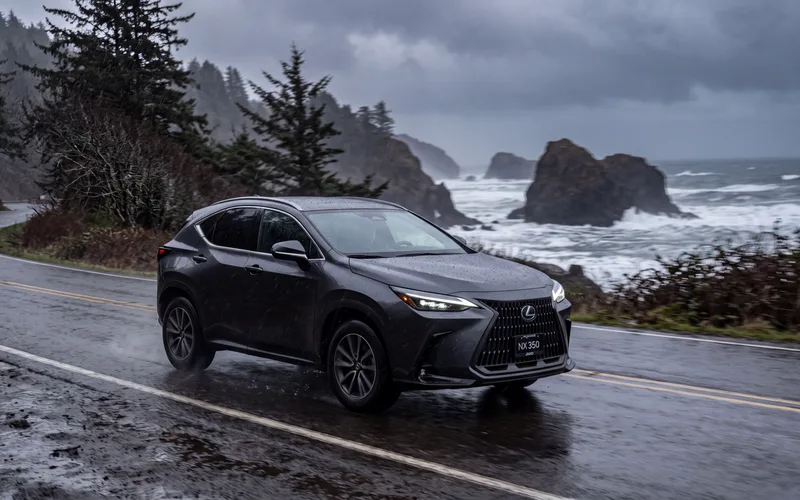 Lexus NXCompact Luxury SUVBetter at: Resale value
Nearly the same brief — a quiet, comfortable compact luxury SUV — but with hybrid efficiency, better predicted reliability, and resale value that doesn't evaporate.
Compare 2.46C+
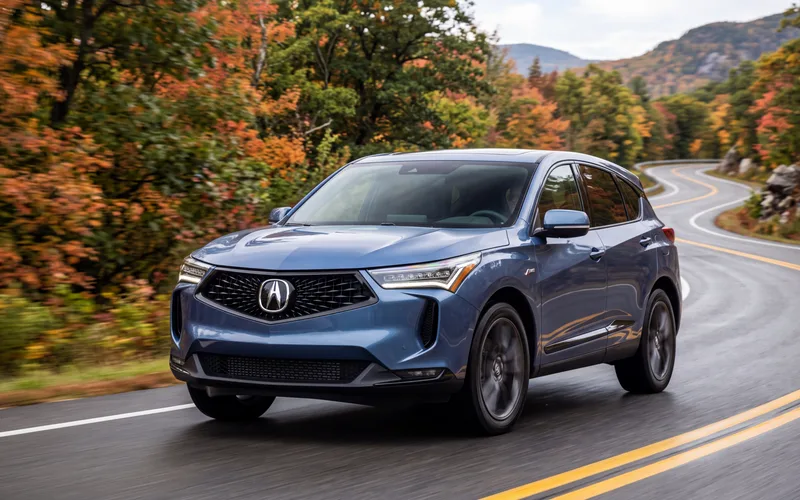 Acura RDXCompact Luxury SUVBetter at: Driving feel
More power, more cargo room, and a chassis that's actually fun, at a price that still undercuts the German set.
Compare 2.69C+
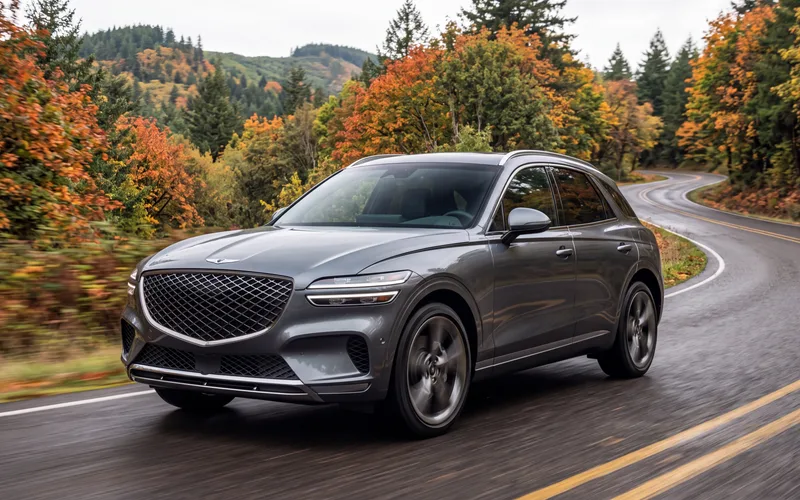 Genesis GV70Compact Luxury SUVBetter at: Overall polish
A newer, faster, better-warranted luxury SUV for shoppers who can stretch past the Corsair's discounted sticker.
CompareHow it's evolved
7 scored model years · 2020–2026
Subject scores by year
Hover or tap a score to see what moved it versus the year before. A corner mark flags a big swing.
| Year | Performance | Efficiency | Safety | Space | Cost | Reliability | Tech | Use-case | Driving | Value |
|---|---|---|---|---|---|---|---|---|---|---|
| 2026 | 46 | 45 | 82 | 55 | 44 | 70 | 83 | 73 | 69 | 65 |
| 2025 | 42 | 46 | 82 | 53 | 49 | 62 | 81 | 66 | 66 | 68 |
| 2024 | 45 | 47 | 77 | 53 | 51 | 60 | 80 | 66 | 68 | 71 |
| 2023 | 45 | 47 | 77 | 53 | 50 | 66 | 80 | 60 | 69 | 70 |
| 2022 | 45 | 47 | 71 | 52 | 49 | 57 | 61 | 60 | 65 | 68 |
| 2021 | 45 | 47 | 71 | 53 | 45 | 51 | 62 | 59 | 65 | 71 |
| 2020 | 40 | 48 | 76 | 53 | 46 | 45 | 61 | 61 | 70 | 73 |
Compare two years
Best fit & conditions
Higher scores mean a better fit for that use case. Learn more about use-case fit →
Subject profile
Detailed scoring by subject
1Performance & PowertrainThe Corsair's lowest-graded category.0.99F
For 2023 Lincoln dropped the optional 2.3L turbo, leaving the 250-hp 2.0L turbocharged I-4 as the only gas engine and therefore the volume configuration.
Peak torque of the 2.0L turbo four fitted to the Premiere/Reserve volume trims, unchanged through the 2023 refresh.
No manufacturer figure is published; instrumented and real-world results for the mechanically unchanged 2.0T AWD cluster in the low-to-mid 6s, so 6.5 s is taken as the consolidated value.
Reviewers consistently report strong low-end torque with little turbo lag and a notably hushed cabin, but the 2.0L four still sounds ordinary under hard acceleration in a class where rivals offer inline-sixes or smoother hybrids.
The 8-speed SelectShift automatic is described as smooth-shifting and unobtrusive with willing kickdown, though Excite mode holds low gears aggressively and some owners report hesitant or rough shifts.
Lincoln rates the Corsair at 3,000 lbs properly equipped, identical for the 2.0L gas and the Grand Touring PHEV, and unchanged by the 2023 refresh.
AWD is a cost option on both gas trims rather than standard, and the system is a conventional on-demand setup with drive-mode software rather than low range or genuine torque vectoring — mid-band, and below German rivals that make AWD standard.
A pavement-oriented luxury crossover on Escape underpinnings: roughly 7.8 in of ground clearance on gas trims, 20-inch wheels on the volume configuration, no skid plates, lockers or low range — only Slippery and Deep Conditions traction software.
Two distinct powertrains for 2023 — the 2.0L turbo gas four and the Grand Touring plug-in hybrid — which covers mainstream and electrified needs, but the refresh narrowed the range by deleting the 295-hp 2.3L, and there is no full EV.
2Efficiency & RangeOne of the Corsair's weakest categories.1.11D
The 2023 refresh dropped the 2.3L, leaving the 250-hp 2.0L turbo four as the only gas engine; AWD is taken as the volume configuration for a compact luxury SUV, at 24 MPG combined.
EPA city figure for the 2.0L turbo with all-wheel drive — mid-pack for a compact luxury SUV, where the extra mass and driveline losses of AWD cost roughly 1 MPG against FWD.
EPA highway rating for the 2.0L turbo AWD; the tall eighth gear and modest frontal area keep it respectable, though it trails class leaders on the highway cycle.
Derived from Lincoln's published 16.2-gallon tank and the EPA combined figure; the comparatively small tank is what limits range here rather than the fuel economy itself.
EPA's annual cost at standard assumptions for the 2.0L AWD; it stays out of the expensive tier only because the engine is happy on regular unleaded, unlike most premium-fuel German rivals.
The 2.0L EcoBoost is rated by the EPA on regular unleaded, so a luxury badge does not carry a premium-fuel surcharge — a real running-cost advantage over the Audi Q5, BMW X3 and Mercedes GLC, which all recommend premium.
3SafetyOne of the Corsair's strongest categories.3.23B+
NHTSA rated both the 2023 Corsair FWD and AWD five stars overall, with five stars in frontal and side impact and four in rollover (16.9% FWD / 17.4% AWD rollover risk, no tip).
Good in all five legacy crashworthiness tests, but Marginal in the updated side test — the dummy's head slipped below the curtain airbag and struck the driver door window sill — and no Top Safety Pick for 2023, the award having lapsed after the model's first three years.
Lincoln Co-Pilot360 2.1 is standard on the base Premiere trim and covers all five reference features — pre-collision assist with AEB and pedestrian detection, intelligent adaptive cruise control with stop-and-go, lane-keeping with blind spot assist, BLIS with cross-traffic alert, and rear cross-traffic braking — plus evasive steering assist and auto high beams.
IIHS rated the Corsair's Pre-Collision Assist Superior for vehicle-to-vehicle and Superior for daytime pedestrian detection on the standard system, avoiding collisions in both the 12 and 25 mph runs — but the system was never evaluated for nighttime pedestrian performance, which caps it below the top band.
Blind Spot Information System with cross-traffic alert is standard on every trim, and rear cross-traffic braking adds active intervention rather than warning alone; blind spot assist steers the car back when the lane-keeping system detects an occupied lane.
Reviewers found the In-Lane Positioning centering smooth and well-behaved, holding the car centered and even biasing away from passing semis, with none of the ping-ponging that afflicts weaker systems.
Intelligent adaptive cruise with stop-and-go is standard on every trim and integrates cleanly with lane centering, but reviewers flagged genuinely rough curve behavior — the system "slows too much and too suddenly" on sharper bends, to the point that tapping the brakes was preferable.
New for the 2023 refresh, ActiveGlide 1.2 (Lincoln's BlueCruise) delivers mature hands-free driving to 80 mph over roughly 130,000 miles of divided highway with hands-free lane change on a turn-signal tap — held back only by being locked inside the ~$10,400 Collection III package rather than offered standalone.
The LED reflector headlamp fitted to Premiere, Reserve and Grand Touring in base configuration rates Poor for excessive glare, and nothing in the range earns better than Acceptable — the curve-adaptive LED projector requires the Reserve Technology or Grand Touring Elements Technology package. Auto high-beam assist is at least standard.
Reviewers describe good all-round sightlines from the front seats in the Corsair's upright compact-SUV greenhouse, and camera compensation is thorough — but the 360-degree camera and front/side sensors sit in the Co-Pilot360 2.1 Vision upgrade rather than on the volume car.
IIHS rates the Corsair's LATCH hardware Good+, its highest, and Cars.com's car-seat check found exposed outboard lower anchors, three easy-to-find top tethers, and enough room to install seats without pushing the front occupants forward; only 3-across remains tight in a compact.
4Space & ComfortGrades below the middle of the scale.1.53D
The 2023 Corsair is a strictly two-row, five-passenger compact luxury SUV across the renamed Premiere, the Reserve and the PHEV Grand Touring — no six- or seven-seat configuration is offered — so it sits at the bottom of the SUV-wide 4–8 seat band.
Published 2023 Corsair front headroom is 39.5 in without the panoramic Vista Roof — squarely mid-pack in the 37–42 in SUV band. The 2023 facelift changed styling, the dash and the infotainment stack but not the body structure, so passenger dimensions carry over from the pre-refresh car.
43.2 in of front legroom is generous for the compact luxury class and is unchanged between the gas Premiere/Reserve and the PHEV Grand Touring.
38.7 in of second-row headroom is above average for a compact luxury SUV — the Corsair keeps a conventional upright roofline rather than the fastback profile that costs rear head space in several rivals.
The gas Corsair's 38.6 in of rear legroom is near the top of the compact luxury segment, helped by a second-row bench that slides roughly six inches fore/aft and reclines; the PHEV Grand Touring gives up about two inches to the battery pack.
The Corsair is a two-row, five-seat SUV — no third row is offered on any 2023 trim, so it scores in the low band by definition.
27.6 cu ft behind the rear seats is competitive within the compact luxury class — more than an XC60 or a Macan — but sits near the floor of the SUV-wide 25–80 cu ft normalization band, which is calibrated across three-row utilities.
57.6 cu ft with the second row folded is typical for a two-row compact luxury SUV but lands near the bottom of the 55–100 cu ft SUV band, which extends to larger three-row models.
Competent everyday storage without a headline innovation. The piano-key push-button shifter clears the console for an open tray plus a soft-lined bin, the 60/40 second row slides about six inches and reclines to trade legroom for cargo depth before folding, and the 2023 refresh relocated HVAC into the new 13.2-inch screen, freeing the lower stack. There is no underfloor trunk, frunk or fold-flat front passenger seat.
Seat comfort is the Corsair's signature strength: Lincoln Soft Touch heated front seats are standard even on the base Premiere, and the optional 24-way Perfect Position seats add heating, ventilation, massage and independently adjustable left/right thigh extensions that reviewers single out. Held just below the top band because the fine-grained adjustment is fiddly in practice and the 24-way chairs are a paid extra on the volume Reserve rather than standard equipment.
Tuned unapologetically for comfort and generally described as remarkably smooth, with insulated chassis mounting points smoothing broken pavement. Kept out of the top band because the soft default calibration floats — one 2023 tester found the body 'tends to bounce a bit more' in Normal and preferred Excite mode, where the adaptive dampers firm up.
Isolation is a headline strength: active noise control cancels road noise through the audio system, acoustic laminated windshield glass cuts wind rush at speed, and insulated mounting points keep the cabin hushed on rough surfaces. Short of the very top only because the 250-hp 2.0-liter EcoBoost four in the volume gas trims is audible when pushed.
The basics start low in the range — Lincoln Soft Touch heated front seats, dual-zone automatic climate control and remote start are standard on the base Premiere — but the luxury comfort kit is gated behind a large option group: for 2023 the heated steering wheel, ventilated front seats, panoramic Vista Roof, rain-sensing wipers, head-up display and wireless charging all live in the $10,730 Equipment Group 202A on Reserve. Rich once optioned, mid-band as the volume car is actually delivered.
5Cost of OwnershipOne of the Corsair's weakest categories.1.35D
2023 is the facelift year, and Lincoln held the entry price at $38,690 for the Standard FWD plus $1,395 destination — the cheapest way into the brand and several thousand under an X3, Q5 or GLC, which open in the mid-to-high $40Ks. Note Wikipedia's claim that the base trim was renamed Premiere for 2023 is a year early: Lincoln's own 2023 model-comparison brochure still lists Standard, Reserve and Grand Touring, and Premiere arrives for 2024.
Reserve is the volume trim and most buyers add AWD, putting the base sticker at $46,770 ($43,075 + $2,300 AWD + $1,395 destination); a typical build then adds a mid equipment group with the panoramic roof and Revel audio, landing transactions near $49,500. Heavily optioned cars run far higher — the Collection III 202A group that brings ActiveGlide alone is $10,730.
The published estimates diverge by a factor of two — Edmunds True Cost to Own projects roughly $7,500 over five years for the mechanically identical Corsair, while CarEdge projects only $3,618–$3,736 — so a mid-band figure is the fair read. The Corsair shares Ford Escape mechanicals, meaning cheap and widely stocked parts, but it is serviced at Lincoln labor rates.
Three years of real market data now exist for the 2023 car and they track the projection: KBB puts a 2023 Corsair at a $25,000 resale value against a $40,085 original sticker (≈62% retained at 3 years) and iSeeCars measures 34.9% depreciation at 3 years, both consistent with the ~52% five-year retention iSeeCars publishes for the nameplate. That is mid-pack — better than the luxury-compact-SUV average of ~47% but well behind the Lexus NX — and the December 2025 end of Corsair production with no successor is a headwind these forecasts predate.
Lincoln's New Vehicle Limited Warranty runs 4 years/50,000 miles — the luxury-brand standard, matching Acura, Lexus, BMW and Audi, and a year longer than the mainstream Ford coverage the Corsair's Escape platform-mate gets.
Six years/70,000 miles matches Acura and Lexus and beats BMW and Audi, whose powertrain coverage simply runs concurrent with the 4-year basic warranty — but it is far short of the 10-year coverage that anchors the top of the band.
No complimentary scheduled maintenance is included — Lincoln reserves its 4-year/50,000-mile service plan for Black Label, which the Corsair does not offer — so oil changes and rotations are the owner's cost from day one, unlike the RDX (2 yr/24k), X3 (3 yr/36k) or Audi's Signature Care. What Lincoln gives instead is service convenience: complimentary Lincoln Pickup & Delivery with a Lincoln loaner for the warranty period, 24/7 roadside for 6 years/70,000 miles, a 5-year Lincoln Connect remote-features subscription and 3 years of Alexa Built-In. Rated a notch under the 2024 car because ActiveGlide came with only a two-year subscription for 2023, which Lincoln extended to four years for 2024.
$49,500 volume-trim price minus its estimated resale value after 5 years (52% retained, or about $25,740) leaves about $23,760 in depreciation. Add the projected $6,500 in 5-year maintenance and repairs, and owning this vehicle for 5 years costs about $30,260 in total.
6Reliability & QualityMid-pack among this car's ten categories.2.48C+
The 2023 facelift launched with genuinely strong predictions — Consumer Reports made the Corsair a recommended vehicle on an above-average 5/5 predicted-reliability rating, and J.D. Power rates the 2023 model 83/100 for quality & reliability — but subscriber data since has softened, with CR's 2023 owner survey flagging 12V battery/electrical failures, blank infotainment screens, driveline vibration and unlocatable squeaks and rattles, and CR dropping the Corsair from its recommended list a year later. Mixed signals between the launch predictions and the accumulated owner data put it in the upper half of the average band rather than the top tier alongside the Lexus NX or Acura RDX.
Lincoln lands squarely mid-pack. The J.D. Power 2026 Vehicle Dependability Study — which surveys original owners of 2023 model-year vehicles at three years, i.e. exactly this model year — puts Lincoln at 217 PP100: an improvement on the prior year's 221 and level with the premium-segment average of 217, but worse than the 204 industry average and well behind Lexus (151), Cadillac (175) and Porsche (182). Consumer Reports' 2026 brand report card is the brighter signal, with Lincoln climbing 17 places to #7 overall and top domestic brand, though that figure blends road test, satisfaction and safety rather than dependability alone.
NHTSA lists eight campaigns against the 2023 Corsair, but three of them (23V380 and its 25V345 re-repair for engine-compartment fire, plus 24V954 high-voltage battery) are specific to the 2.5L hybrid/PHEV and do not touch the gas car being scored. Five still apply to the 2.0L: 24V634 fuel injectors assembled without O-ring support discs (fuel leak, fire risk), 25V343 engine block heater overheating (fire risk), 25V315 rearview camera software freeze, 24V852 missing airbag warning label and 25V338 short seat-belt chime. Two fire-risk campaigns on a single model year is more than routine, and 76 TSBs on file points to a fair amount of running rework, even allowing for Ford's habit of documenting thoroughly.
The volume 2023 gas Corsair pairs the 250 hp 2.0L EcoBoost — a long-serving, broadly proven Ford four with no systemic high-mileage red flag — with the 8F35 eight-speed automatic, which is the weak link. That gearbox has a documented problem record across the Escape/Corsair/Maverick family: valve-body separator-plate contamination producing P0766 and no-reverse engagement, harsh Park-Reverse-Drive and 4-5 shift behaviour addressed by PCM reflashes, and a TSB covering 2023-2024 8F35 cars with DTC P0767 and intermittent or constant loss of reverse from an internal mechanical fault. Owner reports of rear-differential failure on the AWD car around 35,000 miles add to the picture. A proven engine bolted to a transmission with known failure modes is a mixed history, not a clean one.
Cabin quality is the Corsair's strongest reliability-adjacent suit and the 2023 refresh pushed it further: a standard 12.3-inch digital cluster and a 13.2-inch Sync 4 touchscreen replace the old 8-inch pair, with new upholstery choices, Bridge of Weir leather, open-pore wood, chrome and piano-black trim, precision stitching and optional 24-way Perfect Position seats. Reviewers consistently rate it among the richer cabins in the compact luxury class. It stops short of class-leading because the lower cabin still shows its Escape origins — carpeting and some low-touch plastics draw specific owner criticism as below luxury expectations.
Assembly is generally solid — reviewers single out the Corsair's quiet, well-isolated cabin and Edmunds owners describe excellent fit and finish — but the complaints that do appear are exactly the fit-and-finish kind: CR's 2023 owner survey records squeaks and rattles throughout the vehicle that dealers could not locate, alongside blank-screen infotainment faults. J.D. Power's premium segment also underperforms mass market by 5.8 PP100 in features/controls/displays, the category those defects fall into. Solid with scattered, repeatable complaints.
Service satisfaction is a genuine Lincoln strength: the brand placed fifth among premium marques in the 2026 J.D. Power Customer Service Index at 891 points, above the 886 premium average and tied with Cadillac, behind only Porsche, Infiniti, Lexus and Jaguar, and it has ranked well in this study for years. Coverage is also better than most premium rivals in absolute terms — Lincoln's network remains substantially larger than Cadillac's. The reservation is direction of travel: the network has been deliberately shrunk from roughly 685 stores in 2021 to about 500 at the end of 2023 and around 438 by 2026, thinning coverage in smaller markets even as per-store experience improves.
The Corsair is built on the fourth-generation Ford Escape's platform at Louisville Assembly and shares its 2.0L EcoBoost and 8F35 transmission with high-volume Ford products, so parts commonality and supply are far better than for a low-volume European luxury compact, and Ford's US parts distribution is among the deepest there is. The cost data follows: CarEdge projects about $11,887 in maintenance and repairs over ten years, roughly $2,468 cheaper than the luxury SUV average, with a 34.45% chance of a major repair — about 6.6 points better than segment peers. Held below the top band because Lincoln-specific trim, the Revel audio hardware and the 13.2-inch Sync 4 unit are dealer-priced, and aftermarket support is thin next to a mainstream nameplate.
7Technology & InfotainmentThe Corsair's best-graded category.3.46B+
The 2023 facelift replaced the outgoing 8/10-inch SYNC 3 display with a 13.2-inch SYNC 4 center touchscreen, standard on every trim including the base Standard — there is no larger option, and the Corsair does not get the Nautilus/Aviator panoramic display.
SYNC 4 on the new 13.2-inch panel was well received at launch — sharp graphics, a logical uncluttered layout, and quick response — and first-drive reviewers called the screens easy to use rather than merely large. Held out of the top band because the 2023 refresh moved most HVAC functions into the screen's lower bar, which is the consistent criticism across launch reviews.
SYNC 4 brings wireless Apple CarPlay and wireless Android Auto as standard equipment on every 2023 trim including the base Standard — neither is trim-locked, packaged or subscription-gated.
SYNC 4's conversational voice recognition plus Alexa Built-In handles natural-language requests well, and cloud-connected native navigation with live traffic is standard with a three-year services trial and over-the-air map updates. Just short of the top band because the maps interface is a generation behind the Google-based systems arriving in rivals, and many owners default to phone projection.
A 10-speaker system is standard on every trim — a genuinely competent base setup for the class — and the optional 14-speaker Revel with subwoofer and 12-channel amplifier is one of the stronger premium units at this price, working in a cabin with active noise control and acoustic glass. Not top-band because Revel is buried in the $8,005–$10,730 Collection III package rather than being a standalone upgrade.
The 2023 refresh made the 12.3-inch fully digital cluster standard on all trims rather than an upper-trim option, running Lincoln's Constellation interface with crisp, configurable graphics that reviewers singled out. Short of the very top band only because it is a conventional configurable display rather than a class-leading one.
SYNC 4 supports Ford/Lincoln Power-Up over-the-air updates — the 2023 Corsair was launched with 'the latest Lincoln Enhance software updates' — covering infotainment, connected navigation maps and some vehicle modules without a dealer visit. Broader than maps-only, but not the whole-vehicle feature-adding rewrites the top band describes.
The Lincoln Way app covers remote start/stop, lock/unlock, vehicle locator and status, and the 2023 Corsair supports Phone As A Key — Bluetooth-based passive entry, start and drive from a paired phone, still uncommon in the compact luxury class. Kept below the top band because Phone As A Key is not base equipment, app-based remote start is a Reserve-and-up addition, and the Wi-Fi hotspot trial is only 3 months/3 GB.
Port provision is the weak spot: two smart-charging ports up front are standard with a further port at the rear of the console, the wireless charging pad is a Collection II package item rather than standard equipment, and there is no household AC outlet anywhere in the car. Adequate for a couple of devices, thin against rivals fitting four-plus USB-C outlets as standard.
Keyless entry with Lincoln's door keypad and push-button start are standard on every trim, remote start is available across the range, and Phone As A Key adds phone-as-key operation — a real differentiator among 2023 compact luxury SUVs. Short of the top band because the hands-free power liftgate sits inside the Collection II package rather than being standard.
A rear camera and rear parking sensors are standard on all trims, and Lincoln Co-Pilot360 Vision adds a 360-degree camera with front and side sensors plus Reverse Brake Assist, with the automated parking system arriving in Collection III. Not top-band because surround view is a package item on every trim rather than standard, and full parking automation costs the $8,005–$10,730 top package.
A digital head-up display is offered on every trim, but only inside the top Collection III package — an $8,005–$10,730 add-on bundled with the panoramic roof, Revel audio and ActiveGlide — so the Corsair as most 2023 buyers took delivery of it does not have one.
8Use-Case FitMid-pack among this car's ten categories.2.04C
Child-seat hardware is a genuine class benchmark — IIHS rates LATCH ease of use Good, and Cars.com found exposed outboard lower anchors, three easy-to-find top tethers and borrowable anchors for the middle seat, calling it among the easiest and most versatile systems available. The second row slides roughly six inches and reclines, so a rear-facing seat can be accommodated without pushing front occupants forward, and the upright roofline gives 38.7 in of rear headroom for loading kids through tall door openings. Held out of the top band by compact-class realities: 27.6 cu ft behind the second row is a squeeze for a stroller plus the week's gear, three-across remains tight, and the hands-free liftgate is a Collection II package item rather than standard — the one feature a parent with full arms actually wants.
The standard-equipment story is excellent — Lincoln Co-Pilot360 2.1 is fitted to the base Standard trim and covers AEB with pedestrian detection (IIHS Superior vehicle-to-vehicle and Superior daytime pedestrian), intelligent adaptive cruise with stop-and-go, lane keeping with blind spot assist, BLIS with cross-traffic alert and rear cross-traffic braking — so families are not paying extra for the driver aids. NHTSA gives five stars overall. What pulls it down is crashworthiness and lighting, both of which matter more to a family than feature count: the Corsair is Marginal in the IIHS updated side test, where the dummy's head slipped past the curtain airbag and struck the door sill, it holds no Top Safety Pick for 2023, and the LED reflector headlamp fitted to every volume configuration rates Poor for glare with nothing better than Acceptable available anywhere in the range.
The Corsair travels well for four: active noise control and acoustic laminated glass make it one of the quieter cabins in the compact luxury class, the suspension is tuned unapologetically for comfort, and the second row's six inches of slide plus six degrees of recline let back-seat passengers stretch out on a long haul — 38.6 in of legroom at full travel is near the top of the segment. Rear amenities are thinner than the price suggests, though: climate control is dual-zone front only with a single vent at the back of the console rather than a rear zone, heated rear seats require the Collection III package, and there is no rear-seat entertainment. With four aboard and their luggage, 27.6 cu ft is workable for a weekend but tight for a week.
Commuting is the Corsair's core competence. The 250-hp 2.0L turbo pulls away from a stop with almost no lag, the eight-speed stays out of the way, the comfort-biased damping absorbs broken pavement, and the cabin is genuinely hushed — the combination is low-fatigue in a way most compact luxury rivals tuned for sportiness are not. Intelligent adaptive cruise with stop-and-go is standard on every trim rather than optional, which is what makes it work in stop-start traffic, and remote start, keyless entry with the door keypad and Phone As A Key smooth the routine at either end of the drive. Short of the top band because the 2023 refresh moved most HVAC functions into the touchscreen — the consistent criticism in launch reviews and a daily irritant — and the 8F35 automatic draws owner reports of hesitant or rough shifts.
Middling per-mile costs. The EPA rates the volume 2.0L AWD at 24 MPG combined ($2,550/yr at standard assumptions), which is unremarkable in 2023 against hybrid rivals such as the NX 350h — but the engine is certified on regular unleaded, so there is no premium-fuel surcharge of the sort the Q5, X3 and GLC carry, and that is worth real money over a commuting year. Consumables benefit from Escape-shared mechanicals with cheap, widely stocked parts, and RepairPal puts Corsair repair costs below the luxury-SUV average. Working the other way: Lincoln includes no complimentary scheduled maintenance at all on the Corsair — that plan is Black Label-only — so oil changes and rotations are the owner's cost from day one, unlike the RDX, X3 or Audi's Signature Care, and they are billed at Lincoln labor rates.
The footprint is genuinely city-friendly at 181.4 in long and 74.3 in wide on a 106.7 in wheelbase, the upright greenhouse gives good all-round sightlines from the front seats, and the push-button shifter frees the console. The 37.1 ft curb-to-curb turning circle is only average, however, and camera assistance on the car most buyers took delivery of is basic: a rear-view camera with rear parking sensors is all that is standard, while the 360-degree camera, front and side sensors and Reverse Brake Assist require Co-Pilot360 Vision in the Collection II package and the automated parking system sits in Collection III. Manageable with care and the reversing camera — squarely the mid band.
Not a work tool in any meaningful sense. Lincoln rates the Corsair at 3,000 lbs with the trailer tow package — enough for a small utility or landscape trailer, a pair of jet skis or a light single-axle load, and nothing beyond that. There is no bed, no payload headroom worth quoting, and the cargo hold is 27.6 cu ft behind the second row on a unibody platform shared with the Ford Escape. The 250-hp four is adequate unladen but has no capacity in reserve under load. Scored above the floor only because the tow rating is real rather than zero.
A luxury-trimmed crossover with no fleet presence and no wear-friendly interior option — Lincoln Soft Touch upholstery and open-pore trim are the opposite of a surface you hose out. The mechanical picture is mixed rather than reassuring: the 2.0L EcoBoost itself is long-serving and broadly proven with cheap Escape-shared parts, but the 8F35 eight-speed carries documented valve-body and internal failures producing loss of reverse across the Escape/Corsair/Maverick family, owners report rear-differential failure on AWD cars around 35,000 miles, and Consumer Reports dropped the Corsair from its recommended list after subscriber data flagged electrical, infotainment and driveline trouble. Two fire-risk recalls apply to the gas car and 76 TSBs are on file.
Few work-oriented provisions. The Corsair does offer a genuine cargo management system — an adjustable load floor with an under-floor compartment around the spare, plus tie-down hooks and available cargo nets — and roof rails with the usual Thule/Yakima crossbar ecosystem and a 3,000-lb hitch can be fitted. But there is no household AC outlet anywhere in the vehicle, no bed or bed access features, no washable or rubberized surfaces, and no commercial upfit ecosystem of any kind; even the wireless charging pad and the hands-free liftgate are package items. What is here serves weekend gear, not a jobsite.
A strong tourer. Active noise control and acoustic glass keep the cabin hushed at speed, the damping is tuned for comfort over cornering, and the optional 24-way Perfect Position seats — with independently adjustable left and right thigh extensions, heating, ventilation and massage — are among the better long-haul chairs at this price. New for 2023, ActiveGlide adds mature hands-free highway driving to 80 mph across roughly 130,000 miles of divided highway with lane changes on a turn-signal tap, which is a real fatigue reducer; even without it, standard adaptive cruise and smooth In-Lane Positioning centering do most of the work. Two things keep it out of the top band: the 16.2-gallon tank yields only about 389 miles between fills on the AWD car, short for a highway cruiser, and ActiveGlide, the massaging seats and the head-up display all live inside the ~$10,730 Collection III package, so the volume Reserve has the quiet and the ride but not the flagship endurance kit. The Poor-rated standard headlamps are a further liability after dark.
Fine for gravel roads and a bike rack, and no more. Ground clearance of 7.8 in on the gas trims is respectable for the class, all-wheel drive with Slippery and Deep Conditions drive modes is offered, roof rails and accessory crossbars carry kayaks, bikes or a cargo box, and the 3,000-lb rating covers a small camper or boat trailer. But this is explicitly a pavement-oriented crossover on Escape underpinnings: AWD is a cost option rather than standard, there are no skid plates, no low range and no locking differentials, the volume configuration rides on 20-inch wheels, there is no household outlet for camping, and the folded second row does not give a flat load floor to sleep on. Placed at the lower edge of the mid band because the AWD-optional, no-power, no-flat-floor combination undercuts genuine outdoor use.
Normal luggage fits comfortably; bulky gear is a squeeze. The useful trick is the second row itself — it splits 60/40, slides about six inches and reclines, so cargo depth can be borrowed from rear legroom before anything is folded, and an adjustable load floor with an under-floor compartment plus tie-down hooks organizes what goes in. Roof rails, accessory crossbars and a 3,000-lb hitch extend it outward. The limits are structural: 27.6 cu ft behind the second row and 57.6 cu ft folded sit near the floor of the SUV-wide band, the split is 60/40 rather than 40/20/40 so there is no center pass-through for long items with two rear passengers aboard, there is no fold-flat front passenger seat and no frunk, and both the roof rails and the hands-free liftgate are extra-cost.
9Driving ExperienceMid-pack among this car's ten categories.2.66C+
2023 is the facelift year, but the chassis is unchanged Escape-derived hardware tuned for isolation over agility, and first-hand reviews of the volume gas trim split on it: Motor1 found body motions loose and the cornering uninterested, Automotive Addicts described the default Normal damper tune as bouncy and only well controlled once Excite firms it up, while MotorWeek's test-track run (on the Grand Touring PHEV) found body roll well checked. Grip is fine on the 20-in tires; composure in the default mode is what holds it below the compact-luxury benchmarks.
The electric rack is decently weighted and the short wheelbase makes the car easy to place, but two of the three first-hand 2023 gas-trim reviews call the steering outright vague or numb — it delivers effort rather than information. MotorWeek's 'sports car-like' verdict is an outlier taken in Excite mode on the PHEV, so the mid-pack score reflects the consensus rather than the best case.
Brakes are a genuine strength: MotorWeek measured a 110-ft 60-0 average with consistent, smooth stops, and the reviewer of a gas Reserve III singled out the pedal specifically, calling the braking sportier than usual with excellent feedback. The gas 2.0T uses conventional four-wheel discs with no regen blending to muddy pedal travel. Held out of the 80s because the instrumented figure comes from the heavier Grand Touring PHEV rather than the volume gas trim.
With the 295-hp 2.3L dropped for 2023, the 250-hp 2.0L turbo is the only gas engine — and press impressions of it are consistently good: little turbo lag, willing revs, roughly 6.0–6.4 sec to 60 mph, and an 8-speed automatic reviewers describe as smooth-shifting and unobtrusive. The deduction is for low-speed calibration: 2023 owners report bucking, hesitation from a stop and jolting engagement into gear, a known Ford 2.0 EcoBoost/8AT pattern often addressed by a TCM reflash — a real flaw in a vehicle sold on refinement.
Isolation is one of the 2023 Corsair's headline strengths — Motor1 credits low overall NVH with redeeming the car's ordinary dynamics, and MotorWeek recorded a very smooth and quiet full-throttle run. What keeps it from the 80s is engine character rather than volume: the Ford 2.0L EcoBoost is inoffensive but sounds ordinary worked hard, and one reviewer noted wind noise intruding on the otherwise well-insulated cabin above about 65 mph.
37.1 ft curb-to-curb on the 106.7-in Escape-derived wheelbase — tight for a compact luxury SUV and unchanged by the 2023 facelift, which altered styling and interior tech but not the platform.
The seats are near the top of the segment — 24-way Perfect Position fronts with heat, ventilation, massage and independently adjustable left/right leg extensions, plus a standard 12.3-in digital cluster for 2023, a large head-up display, and a floating console freed up by the pushbutton shifter. Marked down because the 2023 facelift moved the HVAC controls into the 13.2-in touchscreen — the criticism every reviewer of this model year returns to — with a Sync 4 build that testers found slower and more convoluted than Lincoln's other applications, and because the deepest seat adjustability is an option rather than standard on the volume trim.
The 2023 Corsair is deliberately a soft-luxury device: quick enough at roughly six seconds to 60 and noticeably better composed in Excite mode, but reviewers consistently frame it as a comfortable, quiet cruiser that makes no attempt to involve the driver. Dropping the 295-hp 2.3L for 2023 removed the only sporting gas variant, leaving nothing in the range that invites the long way home the way an X3, Macan or Stelvio does.
10Value & Market PositionOne of the Corsair's strongest categories.2.75B-
The 2023 facelift made the 13.2-inch SYNC 4 touchscreen and the 12.3-inch digital instrument cluster standard on the base trim, alongside Co-Pilot360 2.0 driver aids, dual-zone climate, power front seats, wireless CarPlay/Android Auto and Alexa Built-in — content German rivals charged extra for at the time. Falls short of the top band only because 24-way Perfect Position seats, Revel audio, head-up display, 360-camera and BlueCruise all remain options.
At roughly $40,085 delivered the Corsair undercuts the 2023 BMW X3, Audi Q5 and Mercedes GLC by several thousand dollars while matching or beating them on screen size, standard digital cluster and driver aids, and it offers hands-free highway driving the Germans did not. The bang-for-buck case is weakened by the 250 hp 2.0L four being noticeably unrefined at low speed and by the shared Ford Escape underpinnings limiting engineering substance per dollar.
Just three trims for 2023 — Standard, Reserve and the PHEV-only Grand Touring — with FWD/AWD choice confined to the two gas trims and no Black Label range-topper. The 2023 refresh also deleted the 295 hp 2.3L engine option, narrowing the lineup further, though gas and plug-in hybrid coverage keeps it from the bottom band.
The Corsair was Lincoln's best-selling model through 2023 and finished Q3 second in the compact luxury segment behind only the Lexus NX, outselling the BMW X1, Audi Q3, Cadillac XT4, Volvo XC40 and Buick Envision. Full-year volume of roughly 24,400 units was still down year over year after a production-constrained first quarter, which keeps it a strong mid-pack seller rather than a segment leader.
Lincoln sits in the second tier of US luxury brands, without the aspirational pull or cross-shopping gravity of BMW, Mercedes-Benz, Lexus or Genesis, and the Corsair's visible Ford Escape relationship works against its premium positioning. Resale is unremarkable rather than poor, landing mid-pack among 2023 SUVs, so the brand is a mild drag on the model rather than a serious liability.
Lincoln supports the Corsair with regular lease programs and cash/financing offers through its dealer network, and as a second-tier luxury nameplate it rarely transacts at or above MSRP, so buyers can generally negotiate below sticker. Scored on buyer benefit, that availability is a clear positive without reaching the desperation-pricing extreme.
2023 is the mid-cycle facelift year — revealed September 12, 2022 with a new grille and LED daytime running lights, SYNC 4 on a 13.2-inch touchscreen, a standard 12.3-inch digital cluster, new upholstery and available ActiveGlide/BlueCruise hands-free driving. Buyers got current-generation cabin tech with no imminent replacement, though the underlying generation dates to the 2020 model year.
Reviewers consistently praise the Corsair's quiet, comfortable cabin and interior design but rank it mid-field rather than as a class pick, and it is not a comparison-test winner. Recurring criticisms are the unrefined base 2.0L four and the 2023 refresh moving HVAC controls into the touchscreen; the IIHS Top Safety Pick run that covered its first three years did not extend to 2023.