

The verdict
A mixed-report compact luxury suv, strong on technology and held back by performance.
The 2024 Corsair is the cheapest way into a luxury badge — $40,125 to start — and it spends that money where you feel it: an eerily quiet cabin, a soft ride, seats that adjust 24 ways, and a 13.2-inch SYNC 4 screen with wireless CarPlay standard on every trim. It also throws in driver aids the Germans charge extra for, and it runs on regular 87-octane instead of premium. What you give up is muscle and polish underneath: 250 horsepower is the ceiling, 24 MPG combined and a small 16.2-gallon tank mean stops every 389 miles, Consumer Reports pulled its recommendation for this specific model year, and the standard headlights rate Poor from IIHS. Buy it for the hush and the sticker price, not for the driving or the long-term worry-free ownership.
Jump to scoresStrengths
- Driver-assist tech that's standard, not an upsell
- Screens and connectivity that punch above the price
- A genuinely quiet, comfortable place to sit
What holds it back
- Only one engine, and it's the modest one
- Poor-rated headlights and a Marginal side-crash score
- Small tank, ordinary MPG, frequent fill-ups
Top alternatives
Cars shoppers cross-shop with the Lincoln Corsair 2.63C+
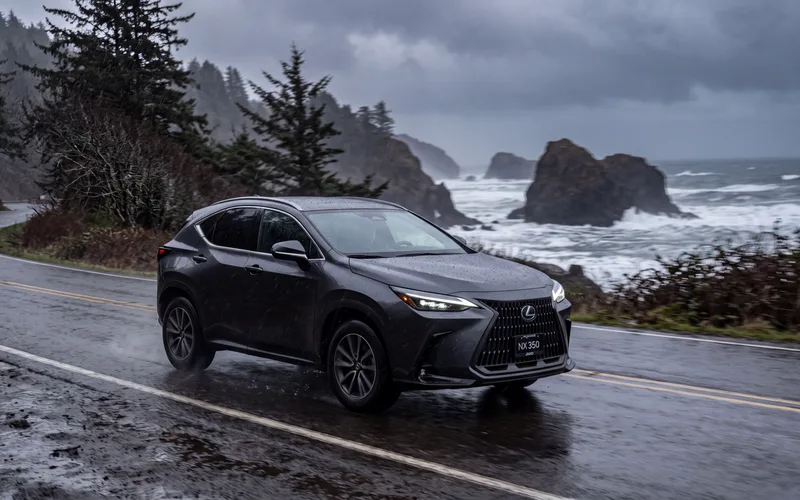 Lexus NXCompact Luxury SUVBetter at: Resale value
Nearly the same brief — a quiet, comfortable compact luxury SUV — but with hybrid efficiency, better predicted reliability, and resale value that doesn't evaporate.
Compare 2.46C+
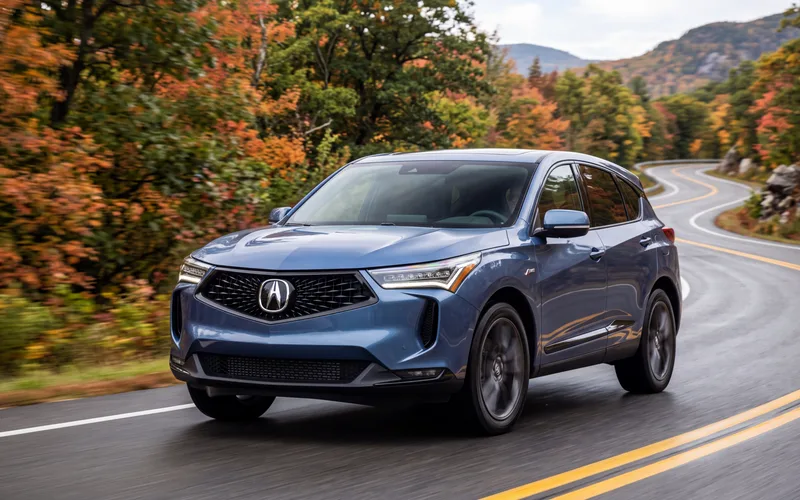 Acura RDXCompact Luxury SUVBetter at: Driving feel
More power, more cargo room, and a chassis that's actually fun, at a price that still undercuts the German set.
Compare 2.69C+
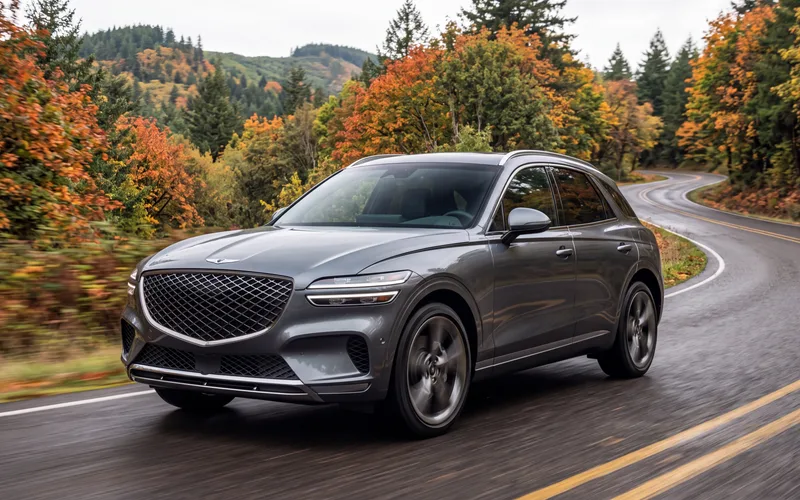 Genesis GV70Compact Luxury SUVBetter at: Overall polish
A newer, faster, better-warranted luxury SUV for shoppers who can stretch past the Corsair's discounted sticker.
CompareHow it's evolved
7 scored model years · 2020–2026
Subject scores by year
Hover or tap a score to see what moved it versus the year before. A corner mark flags a big swing.
| Year | Performance | Efficiency | Safety | Space | Cost | Reliability | Tech | Use-case | Driving | Value |
|---|---|---|---|---|---|---|---|---|---|---|
| 2026 | 46 | 45 | 82 | 55 | 44 | 70 | 83 | 73 | 69 | 65 |
| 2025 | 42 | 46 | 82 | 53 | 49 | 62 | 81 | 66 | 66 | 68 |
| 2024 | 45 | 47 | 77 | 53 | 51 | 60 | 80 | 66 | 68 | 71 |
| 2023 | 45 | 47 | 77 | 53 | 50 | 66 | 80 | 60 | 69 | 70 |
| 2022 | 45 | 47 | 71 | 52 | 49 | 57 | 61 | 60 | 65 | 68 |
| 2021 | 45 | 47 | 71 | 53 | 45 | 51 | 62 | 59 | 65 | 71 |
| 2020 | 40 | 48 | 76 | 53 | 46 | 45 | 61 | 61 | 70 | 73 |
Compare two years
Best fit & conditions
Higher scores mean a better fit for that use case. Learn more about use-case fit →
Subject profile
Detailed scoring by subject
1Performance & PowertrainThe Corsair's lowest-graded category.0.99F
The 2024 Corsair is a carry-over of the 2023 facelift, so the volume Premiere/Reserve trims run the 2.0L turbocharged I4 at 250 hp; the 2.3L turbo option remains discontinued since 2023. Modest output for a compact luxury SUV where rivals reach 255-375 hp.
Peak torque of 275 lb-ft from the volume-trim 2.0L turbo is midpack for the class. A few aggregator listings quote 280 lb-ft (the Ford Escape figure); Lincoln's own technical specification and Wikipedia both state 275, and the manufacturer figure wins.
Instrumented tests of the 250-hp 2.0L cluster at 6.6–6.7 s, with softer estimates as slow as 7.2 s; the heavier PHEV Grand Touring is actually quicker off the line thanks to its electrified rear axle. Adequate rather than quick against turbo-six luxury rivals.
The 2.0L turbo is quiet and smooth in normal driving and reviewers single out the Corsair's hushed cabin and linear power delivery, but the four-cylinder turns coarse under hard throttle and lacks the effortless swell of the six-cylinder engines in the X3 and Macan.
The 8-speed automatic (selected by Lincoln's piano-key buttons) shifts smoothly and unobtrusively in normal driving, but reviewers consistently flag a lazy kickdown when asked for a sudden burst of acceleration.
Properly equipped with the factory Class II Trailer Tow Package, the gas 2.0L Corsair is rated at 3,000 lbs; without the package it drops to 2,000 lbs, and the Grand Touring PHEV is capped at 2,000 lbs. Enough for a small utility trailer or pair of jet skis, well short of the 4,400–4,850 lbs the X3 and Macan manage.
For 2024 all-wheel drive is a roughly $2,300 option on both gas trims (Premiere and Reserve) rather than standard equipment, while the Grand Touring PHEV gets standard eAWD via a dedicated 50 kW rear motor. The gas system uses a disconnecting rear drive unit with Normal/Excite/Slippery/Deep Conditions modes — widely available and competent, but no low range or genuine torque vectoring.
A pavement-oriented luxury crossover on the unibody platform it shares with the Ford Escape: roughly 7.4 in of ground clearance, no skid plates, no locking differential, no low range, and no off-road trim anywhere in the 2024 lineup. The Slippery and Deep Conditions drive modes address weather, not trails.
Two distinct powertrains for 2024 — the 2.0L turbo gas I4 on Premiere and Reserve, and the Grand Touring plug-in hybrid with 14.4 kWh battery and ~27–28 mi of electric range. That covers mainstream gas plus a genuine electrified option, but there is no EV variant and the 2.3L turbo dropped after 2022 narrowed the gas side to one engine.
2Efficiency & RangeOne of the Corsair's weakest categories.1.11D
2024 is a carry-over of the 2023 facelift, with the 250-hp 2.0L turbo four and 8-speed automatic in the volume Premiere/Reserve gas trims; AWD is the representative configuration for this luxury compact SUV. 24 MPG combined is mid-pack for a gas compact luxury SUV, ahead of a Macan or Genesis GV70 but well behind the BMW X3.
The 2.0L EcoBoost carries no hybrid assist or engine stop-start advantage over rivals, so city economy is ordinary for the class; the Grand Touring PHEV is the trim that addresses urban driving, and it is scored separately.
28 MPG highway sits mid-band for a compact SUV — the tall body and AWD hardware cost roughly 2 MPG against the front-drive Corsair, which reaches 30.
A small 16.2-gallon tank is the limiting factor rather than the fuel economy — combined range lands under 400 miles, short of most compact SUVs, and highway range is about 454 miles.
EPA's annual cost at 15,000 mi/yr is helped by the engine's regular-fuel rating — several premium-required rivals in this segment cost more to run despite similar MPG.
The 2.0L EcoBoost is rated on regular 87-octane unleaded, not premium — a real running-cost advantage in a segment where the Audi Q5, BMW X3, Mercedes GLC and Porsche Macan all call for premium. No flex-fuel or other special requirement; premium is optional for peak output only.
3SafetyOne of the Corsair's strongest categories.3.25B+
NHTSA tested the 2024 Corsair in both drivetrains and awarded 5 stars overall, with 5 stars in every frontal and side measure and 4 stars for rollover.
The Corsair posts Good in small overlap front (both sides), moderate overlap front, roof strength and head restraints, but only Marginal in the updated side test — a key evaluation — and it carries no 2024 Top Safety Pick award.
Lincoln Co-Pilot360 2.1 is standard on every 2024 trim including the $40,125 Premiere, covering AEB with pedestrian detection, stop-and-go adaptive cruise, lane centering, blind-spot monitoring, rear cross-traffic alert, rear automatic braking, evasive steer assist and intersection assist — nothing core is trim-locked.
IIHS rated this generation Superior for vehicle-to-vehicle front crash prevention and Superior for daytime pedestrian detection with the standard system, but the Corsair has never been run through the updated night-pedestrian or 2024 front crash prevention evaluations, so its low-light performance is unverified.
Blind Spot Information System with cross-traffic alert and rear automatic braking are standard on all trims — active intervention on the reverse side, alert-only for lane changes — with front/side sensors and reverse brake assist bundled into Co-Pilot360 2.1 Vision.
Lane-keeping with steering assist is standard and lane centering comes bundled with the standard adaptive cruise; reviewers find it competent and predictable but the base lane-keep intervention is nudgier than the smooth centering ActiveGlide-equipped cars get with in-lane repositioning.
Full-speed-range adaptive cruise with stop-and-go, speed sign recognition and predictive speed assist is standard across the range and integrates with lane centering — a well-sorted Ford/Lincoln system that reviewers describe as smooth in traffic.
ActiveGlide 1.2 (Lincoln's BlueCruise) offers hands-free driving with hands-free lane change and in-lane repositioning across roughly 130,000 miles of mapped Blue Zones, and 2024 raised the included subscription from two years to four — but it arrives only inside the top Collection III package rather than as base equipment.
The LED reflector headlights fitted to the Premiere, Reserve and Grand Touring as delivered rate Poor from IIHS; only the curve-adaptive LED projector units in the Reserve Technology / Grand Touring Elements Technology packages reach Acceptable, so the volume configuration is the Poor one.
The Corsair's relatively upright glasshouse and slim pillars give good all-round sightlines for a compact luxury SUV, and standard rear parking sensors help; the 360-degree camera is optional rather than standard, so the volume car leans on natural visibility.
IIHS rates LATCH ease of use Good, with exposed lower anchors in both outboard seats and three clearly marked top tethers; the compact five-seat cabin is the limit — three-across is a squeeze — but installation itself is easy and forward-facing convertibles sit flush once the head restraint comes out.
4Space & ComfortGrades below the middle of the scale.1.54D
The 2024 Corsair is a strictly two-row, five-passenger compact luxury SUV across Premiere, Reserve and the PHEV Grand Touring — no six/seven-seat configuration is offered, so it sits at the bottom of the SUV-wide 4–8 seat band.
Published 2024 Corsair front headroom is 39.5 in without the panoramic Vista Roof — mid-pack for a compact luxury SUV. The 2024 model year is a carry-over of the 2023 facelift, so dimensions are unchanged.
43.2 in of front legroom is generous for the compact luxury class and is unchanged between the gas Premiere/Reserve and the PHEV Grand Touring.
38.7 in of second-row headroom is above average for a compact luxury SUV — the Corsair's upright roofline preserves rear head space better than the coupe-profile rivals in the class.
The gas Corsair's 38.6 in of rear legroom is near the top of the compact luxury segment, helped by a second-row bench that slides roughly six inches fore/aft; the PHEV Grand Touring gives up about two inches to the battery pack.
The Corsair is a two-row, five-seat SUV — no third row is offered on any 2024 trim, so it scores in the low band by definition.
27.6 cu ft behind the rear seats is competitive within the compact luxury class — comfortably more than an XC60 or Macan — but sits near the floor of the SUV-wide 25–80 cu ft normalization band, which spans three-row utilities.
57.6 cu ft with the second row folded is typical for a two-row compact luxury SUV but lands near the bottom of the SUV band, which is calibrated up to 100 cu ft for larger three-row models.
Competent everyday storage without a headline innovation: the piano-key push-button shifter frees a usable console bin and soft-lined console box, the 60/40 second row slides about six inches to trade legroom for cargo and folds flat, and a power liftgate is standard. There is no underfloor trunk, frunk or fold-flat front passenger seat.
Seat comfort is the Corsair's signature strength: heated power front seats are standard on every 2024 trim and the optional 24-way Perfect Position seats add heating, ventilation, massage, movable lumbar and extendable thigh cushions, drawing repeated praise on long highway stints. Held just below the top band because Consumer Reports' testers were not unanimous — the cushions were faulted for uneven support and for feeling confining to broad-shouldered drivers.
Tuned for comfort rather than sport and consistently described as remarkably smooth and composed, with the optional adaptive suspension keeping the available 20-inch wheels from spoiling it. Short of the plush-yet-controlled segment leaders, and the passive setup on Premiere is merely competent.
Isolation is a headline strength: acoustic laminated glass and active noise control keep wind and road noise well suppressed, and two independent 2024 reviews single the cabin out. Not scored higher because the 250-hp 2.0-liter turbo four in the volume gas trims is audible under hard acceleration.
The basics start low in the range — heated power front seats, dual-zone automatic climate and remote start are standard even on the base Premiere — but for 2024 the luxury comfort kit is gated behind money: the heated steering wheel, ventilated front seats, heated rear seat, wiper de-icer and panoramic Vista Roof all live in the $11,400 202A group on Reserve rather than being standard equipment. Rich once optioned, mid-band as the volume car is actually delivered.
5Cost of OwnershipOne of the Corsair's weakest categories.1.43D
The 2024 Corsair is a carry-over of the 2023 facelift, and its base Premiere FWD opens at $38,730 plus $1,395 destination — the cheapest way into the Lincoln brand and well under most compact luxury rivals, which start in the mid-to-high $40Ks.
Reserve is the volume trim and most leave the lot with AWD ($45,515 including destination) plus a common equipment group — Reserve II, panoramic roof, Revel audio — which lands typical transactions in the high $40Ks. That is roughly $6,000–$10,000 under an equivalent X3, Q5 or GLC.
Estimates diverge widely: Edmunds True Cost to Own projects $7,491 over five years for the 2024 Corsair (maintenance $5,602 + repairs $1,889) while CarEdge projects only $3,618. The Corsair shares Ford Escape mechanicals — cheap, widely stocked parts — but is serviced at Lincoln labor rates, so a figure toward the middle is the fair read, in line with the $6,200–$7,000 used for the RDX, NX, X3 and Q5.
Lincoln resale is mid-pack at best and the Corsair is no exception — industry projections cluster around 52–54% retention, below the Lexus NX (~62%) and roughly level with the German compacts. The December 2025 end of Corsair production at Louisville, with no successor, is a further headwind for residuals that these forecasts predate.
Lincoln's New Vehicle Limited Warranty runs 4 years/50,000 miles — the luxury-brand standard, matching Acura, Lexus, BMW and Audi, and a year longer than mainstream Ford coverage.
Six years/70,000 miles matches Acura and Lexus and beats BMW and Audi, which run powertrain coverage concurrent with the 4-year basic warranty — but it is far short of the 10-year coverage that anchors the top of the band.
No complimentary scheduled maintenance is included — that is reserved for Black Label, which the Corsair does not offer — so oil changes and rotations are the owner's from day one, unlike the RDX (2 yr/24k), X3 (3 yr/36k) or Q5 Signature Care. What Lincoln gives instead is service convenience: complimentary Lincoln Pickup & Delivery with a Lincoln loaner for the whole 4-year/50,000-mile warranty period, 24/7 roadside for 6 years/70,000 miles, and — new for 2024 — four years of BlueCruise/ActiveGlide hands-free driving included at purchase rather than the two years 2023 buyers got. Strong perks, no free maintenance, so mid-band.
$48,500 volume-trim price minus its estimated resale value after 5 years (52% retained, or about $25,220) leaves about $23,280 in depreciation. Add the projected $6,500 in 5-year maintenance and repairs, and owning this vehicle for 5 years costs about $29,780 in total.
6Reliability & QualityMid-pack among this car's ten categories.2.06C
2024 is the Corsair's down year: Consumer Reports rates it below average and "less reliable than other cars from the same model year," and dropped it from the recommended list in December 2024 after the 2023 car had earned an above-average 5-of-5 rating. CR's flagged trouble spots are in-car electronics (screens freezing, CarPlay dropouts, loss of climate and backup camera), minor engine oil leaks, and unlocatable squeaks and rattles.
Lincoln sat below the industry average in dependability around the 2024 model year and had not yet begun the climb it posted later — its 19th-place 2025 J.D. Power VDS finish was reported as a six-position gain, implying a mid-20s placement at the time of the 2024 study. Consumer Reports puts the brand at 42 (13th of 26) in its 2024 used-vehicle survey and 40, below average, in the 2025 new-vehicle survey, which keeps Lincoln mid-pack-to-weak rather than bottom-third.
Six recalls sit against the 2024 Corsair, but three are high-voltage traction-battery campaigns that apply only to the PHEV Grand Touring, not the gas volume trim being scored here. What actually touches the gas car is a rearview-camera software fault, water intrusion into the rear combination lights, and a missing airbag warning label — real but non-systemic. Critically, 2024 falls outside both of the serious powertrain campaigns that hit adjacent years: the 26S10 EGR-valve loss-of-drive-power recall covers 2025 Corsairs built November 2024 to April 2025, and the 25SD3 cylinder-head recall covers 2026 cars.
The volume 2024 Corsair carries the 2.0L turbo four (250 hp / 275 lb-ft) and Ford's 8-speed automatic — a very high-volume family shared with the Escape, with plenty of high-mileage examples but a documented pattern of EcoBoost coolant leaks and 8-speed hesitation, lurching and delayed engagement. Consumer Reports flags minor engine oil leaks on this exact model year, though 2024 escapes both the EGR-valve and cylinder-head defects that hit the 2025 and 2026 cars.
Post-facelift the Corsair's cabin is genuinely plush where occupants touch it most — rich leather on the armrests and wheel, paldao wood, aluminum and metallic finishes, and a notably quiet interior. It falls short of class-leading because the quality is inconsistent: much of each door panel is rough, cheap-looking plastic, the center console is little better, and rear passengers face scratchy black seat backs instead of the wood and leather up front.
Consumer Reports names Noises/Leaks as a 2024 trouble spot, with owners reporting unexplained squeaks and rattles that dealers could not locate — the assembly-consistency complaint this item exists to catch. A water-intrusion recall on the rear combination lights is a second workmanship defect on the same model year, and the premium segment as a whole posted worse initial quality than the mass market in 2024.
Lincoln's standalone footprint is thin next to a mainstream brand's, but roughly 438 US stores — most co-located with Ford dealers — make nationwide coverage workable, and complimentary Lincoln Pickup & Delivery with a loaner is a genuine ownership advantage that German rivals typically charge for. Lincoln does not appear among the J.D. Power premium service-satisfaction leaders, so this is good rather than best-in-class.
Sharing its platform and 2.0L EcoBoost with the fourth-generation Ford Escape turns most mechanical parts into commodity items with deep dealer stock and broad aftermarket support — a structural cost advantage over European compact luxury SUVs. Projected long-run costs confirm it: the Corsair lands well under the luxury SUV average for ten-year maintenance and repair, with a lower-than-segment chance of a major repair.
7Technology & InfotainmentThe Corsair's best-graded category.3.42B+
2024 is a carry-over year inside the 2023-facelift generation, so the Corsair keeps the 13.2-inch center touchscreen the refresh introduced; it is standard on every trim with no larger option, and the Corsair never received the panoramic display used by the Nautilus.
SYNC 4 on the 13.2-inch screen is a well-sorted system — crisp graphics, quick response, swipe navigation and a retained row of physical audio and drive-mode controls — but the 2023 facelift moved HVAC into a permanent lower bar on the screen, and 2024 reviewers specifically fault that plus the extra taps needed to move between nav, radio and CarPlay.
Wireless Apple CarPlay and wireless Android Auto are both standard on every 2024 Corsair trim including the base Premiere — nothing is trim-locked, packaged or subscription-gated.
SYNC 4's conversational voice recognition plus Amazon Alexa Built-In handles natural-language requests well and connected navigation is standard, with a reviewer calling the native nav and voice assistant flawless in use. Held below the top band because for 2024 the connected-nav and Alexa trials were still the short one-year terms Lincoln only extended for 2025, the Corsair never moved to the Google-based Lincoln Digital Experience the Nautilus got, and Ford has since announced Alexa Built-In is being switched off on 2024–2025 Lincolns.
The standard 10-speaker Lincoln Premium Audio system is a respectable base setup carried across Premiere and Reserve, and the 14-speaker Revel QuantumLogic 3D Surround system with its 12-channel amplifier is genuinely good. Marked down against 2025 because for 2024 the Revel upgrade sits inside the $11,030 Collection III package rather than being an easily-added option on the volume trim.
A configurable 12.3-inch fully digital gauge cluster is standard on all 2024 trims — it became standard equipment with the 2023 facelift rather than remaining an upper-trim option — with clean graphics that meet compact-luxury expectations without leading the class.
SYNC 4 supports Ford/Lincoln Power-Up over-the-air updates covering infotainment, connectivity and some vehicle modules, delivered without a dealer visit — broader than maps-only, but not the whole-vehicle feature-adding rewrites the top band describes.
The Lincoln Way app covers remote start/stop, lock/unlock, liftgate access, vehicle locator and status, and the Corsair supports Phone As A Key — BLE-based passive entry, start and drive from a paired phone. Kept out of the top band because Phone As A Key is an available rather than base feature and the Corsair's Lincoln Premium Connectivity trial stayed at one year for 2024.
Port provision is the weak spot: three USB ports total — two smart charging ports up front, one at the rear of the console — with the Qi wireless charging pad bundled into the Collection II package rather than standard, and no household AC outlet anywhere in the car. Adequate for a couple of devices, thin against rivals fitting four or more USB-C outlets as standard.
Full keyless convenience is standard across the 2024 range — proximity entry with Lincoln's door keypad, push-button start and remote start on every trim — and Phone As A Key adds phone-as-key operation, still a differentiator among compact luxury SUVs. Short of the top band because the hands-free liftgate is a Collection II item rather than standard on the volume trim.
A rear camera and rear parking sensors are standard on every 2024 trim, but the 360-degree camera and front parking sensors arrive only with Lincoln Co-Pilot360 2.1 Vision in the Collection II package, and Active Park Assist 2.0 is locked behind the far pricier Collection III — so a volume Reserve as commonly ordered has good but not surround-view coverage.
A head-up display is offered but only inside the top Collection III package — an $11,030–$11,400 add-on that also carries BlueCruise 1.2, the Vista Roof and the Revel audio system — so the Corsair as the overwhelming majority of 2024 buyers took delivery of it does not have one, and it is a costlier gate than the 2025 car's.
8Use-Case FitMid-pack among this car's ten categories.2.46C+
Car-seat logistics are a genuine strength for a compact luxury SUV: IIHS rates the 2024 Corsair's LATCH hardware Good, the lower anchors are exposed rather than buried in the seat bight, and the three top tethers sit midway down the seatbacks where they are easy to find. 38.6 in of rear legroom with a 60/40 bench that slides roughly 6 in fore/aft makes rear-facing installs and buckle-reaching easy, and 27.6 cu ft behind row two swallows a full-size stroller. It stops short of the top band because the body is only 74.3 in wide, so three seats abreast is a squeeze, and there is no third row to escape to.
The active-safety half is excellent and free: Lincoln Co-Pilot360 2.1 is standard from the $40,125 Premiere with AEB and pedestrian detection, adaptive cruise with stop-and-go, lane-centering, blind-spot monitoring and rear cross-traffic alert with rear automatic braking, and NHTSA awards 5 stars overall on both FWD and AWD. Crashworthiness undercuts it: the IIHS updated side test returns Marginal, there is no 2024 Top Safety Pick, and the headlights on the volume Premiere and un-optioned Reserve are rated Poor — a real deficit for the school-run-after-dark family.
Four adults travel well: acoustic laminated glass and active noise control keep the cabin hushed, the front seats are a segment strength with the optional 24-way Perfect Position chairs adding heat, ventilation and massage, and the sliding second row lets a family trade legroom for luggage mid-trip while 27.6 cu ft still holds the bags. Rear amenities are better than the class norm — second-row occupants get their own climate controls, two USB-C ports and heated reclining outboard seats — but the last of those is packaged, there is no rear entertainment, and a 389-mile combined range means more fuel stops than a family wants.
This is the Corsair at its best. Lincoln's Quiet Flight brief delivers a soft, composed ride and an unusually hushed cabin at commuter speeds, the steering is light, the footprint is small, and — rare for the class — adaptive cruise with stop-and-go and lane-centering are standard on the base trim, so the daily crawl is genuinely low-effort. Heated power front seats and remote start are standard, wireless CarPlay and Android Auto come on every trim, and the push-button shifter clears the console. Held out of the top band by the 8-speed automatic's documented lazy throttle response and hesitant low-gear shifts, which is exactly the failing that shows in stop-and-go traffic.
The 2.0L EcoBoost runs on 87-octane regular, which is the Corsair's real commuting advantage — the Audi, BMW and Mercedes rivals it is cross-shopped against want premium — and EPA puts the AWD volume trim at $2,550/yr in fuel over 15,000 miles. Consumables are cheap because the mechanicals are shared with the fourth-generation Ford Escape, so filters, brakes and plugs are commodity parts any shop can source. What keeps it mid-pack is the economy itself: 24 MPG combined is unremarkable against a hybridizing compact luxury field, and Lincoln includes no complimentary scheduled maintenance while dealer labor rates run above a Ford store's.
At 181.4 in long and 74.3 in wide the Corsair is one of the smaller luxury SUVs on sale, and a 37 ft curb-to-curb turning circle makes U-turns and garage ramps a non-event. A rear camera and rear parking sensors are standard; Co-Pilot360 2.1 Vision on Reserve adds a 360-degree camera reviewers rate for 'superb clarity', front sensors and reverse brake assist, and 2024 still offers the self-parking Active Park Assist that Lincoln deleted the following year. Only the rising beltline and thick rear pillars pinching the over-shoulder view, and the surround-view camera being a package item rather than base equipment, keep it out of the high 80s.
Properly equipped with the factory Class II Trailer Tow Package the gas Corsair tows 3,000 lbs with 300 lbs of tongue weight — enough for a small utility trailer, a pair of jet skis or a light single-axle camper, and no more; without the package it is rated 2,000 lbs, as is the PHEV Grand Touring. There is no bed, no meaningful payload headroom, and 27.6 cu ft of carpeted cargo space behind a 250-hp turbo four. It is a light-chores vehicle rather than a work tool, but the availability of a factory hitch keeps it off the floor of the band.
The hardware underneath is commodity Ford — the fourth-generation Escape unibody, the 2.0L EcoBoost and the 8-speed automatic — so parts are deep-stocked and a shop anywhere can work on it, which is more than most European compact luxury SUVs offer. Everything above that line is wrong for hard use: leather-trimmed seating, complex 24-way front seats, a carpeted cargo floor, 19-20 in wheels and no fleet or work variant. This particular model year also posted below-average predicted reliability and lost its Consumer Reports recommendation, which argues against trusting it under sustained abuse.
Provisions are aimed at weekend gear, not trades: cargo tie-downs and a cargo net, available underfloor storage and a package tray, roof-rack side rails (standard on Reserve and Grand Touring, optional on Premiere) with accessory cross bars, and the Class II hitch. Against that there are only 12V outlets and no household AC inverter, the wireless charging pad arrives with an equipment group rather than as standard kit, every cargo surface is carpeted rather than washable, and Lincoln's accessory catalog stops at carriers, cross bars, a hitch and cargo mats with no upfitter ecosystem behind it.
As a mile-eater the comfort side is close to class-best: acoustic laminated glass with active noise control, optional 24-way Perfect Position seats with massage that reviewers found comfortable across hours of highway travel, a comfort-tuned chassis with available adaptive dampers, and standard adaptive cruise with lane-centering on every trim — with BlueCruise 1.2 hands-free driving on 130,000+ miles of Blue Zones available on Reserve, and 2024's one real change being the prepaid subscription doubling to four years. Range is what holds it back: a 16.2-gallon tank against 24 MPG combined is only 389 EPA miles, a short leg for a touring SUV, and the Poor-rated headlights on volume trims are a genuine night-driving caveat.
Roughly 7.9-8.0 in of ground clearance on the AWD models is enough for forest-service roads and unplowed driveways, and roof rails plus a 3,000-lb hitch carry bikes, a small box or a pair of kayaks. But this is a pavement crossover: intelligent AWD is a ~$2,300 option on both volume trims rather than standard equipment, the drive modes stop at Slippery and a Deep Conditions mud/sand/snow setting, and there is no low range, no locking differential, no skid plating and no off-road trim — cat1 scores its off-road capability 22. Roof carrying is limited to about 100 lbs and cross bars are not recommended with the panoramic Vista Roof, which caps rooftop-tent and heavy-box ambitions.
The sliding, reclining 60/40 second row is the standout — about 6 in of travel lets you rebalance legroom against cargo depth on the fly, and it folds to a nearly flat 57.6 cu ft. A power liftgate is standard and hands-free on Reserve, roof-rack side rails are standard from Reserve up, and available underfloor storage, a package tray, a cargo net and tie-downs handle loose gear. Absolute volume is the ceiling: 27.6 / 57.6 cu ft is respectable within the compact luxury class but small in SUV terms, the PHEV Grand Touring gives up a little more to its battery, and there is no frunk or fold-flat front passenger seat for long items.
9Driving ExperienceMid-pack among this car's ten categories.2.60C+
2024 is a carry-over of the 2023 facelift, so the Escape-derived chassis is tuned for composure rather than agility. Testers find it more capable than expected — body roll stays well checked when pushed and it is composed on a twisty road — but every source stops short of calling it engaging, and the volume gas Reserve rides on passive dampers with the adaptive suspension an option, so it sits below the segment's dynamic benchmarks.
The electric rack is accurate and deliberately firmly weighted — reviewers call it well weighted and responsive at highway speed — but it trades in effort rather than information, with U.S. News stating flatly that there is not much steering feel. Precise enough, numb enough to stay mid-pack.
Instrumented stops are genuinely short for the class and repeatable: MotorWeek averaged 110 ft from 60 mph on its own test track and a 114-ft 60-0 is reported for the Corsair as being on par with the X3 and Macan. The gas 2.0T uses conventional four-wheel discs with no regen blending to muddy the pedal, and no fade or long-stop complaints appear in road tests. Held below the 80s because the published instrumented figure is for the heavier Grand Touring PHEV rather than the volume gas trim, and pedal-feel commentary is competent rather than enthusiastic.
The 250-hp 2.0L turbo four has ample thrust for the class (roughly 6.8–7.2 sec to 60 mph) and the 8-speed automatic is smooth at cruise, but the transmission draws persistent owner and Consumer Reports complaints about bucking, hesitation and jerky 1-2/2-3 shifts below about 12 mph — a meaningful deduction in a car sold on refinement. With the 295-hp 2.3L dropped at the 2023 facelift, 250 hp is the ceiling for the gas Corsair in 2024.
Isolation is one of the Corsair's real strengths — reviewers single out how hushed the cabin is at a cruise, and Lincoln backs it with active noise control, acoustic glass and the integral-bush rear suspension. What keeps it out of the 80s is engine character: worked hard, the Ford 2.0L EcoBoost sounds mechanical and buzzy rather than expensive, unlike the sixes and EVs at the top of the segment.
37.1 ft curb-to-curb, unchanged for 2024 as a carry-over year — tight for a compact luxury SUV thanks to the 107-in Escape-based wheelbase.
Among the best seats in the segment: an elevated, commanding position with easy ingress, optional 24-way Perfect Position front seats with power thigh extensions and three memory presets, a standard 12.3-in digital cluster and a large head-up display. Marked down because the 2023 facelift moved HVAC and most vehicle settings into the 13.2-in touchscreen — the single criticism reviewers of the 2024 car keep returning to — and the deepest seat adjustability is a $1,295 option rather than standard on the volume trim.
The 2024 Corsair's character is calm, quiet and elegant rather than playful, and reviewers frame it that way consistently — a comfortable cruiser with no sporting variant left in the gas range after the 2.3L was dropped. The Excite drive mode sharpens throttle and damping enough to be noticed, but nothing about the car invites the long way home the way an X3, Macan or Stelvio does.
10Value & Market PositionOne of the Corsair's strongest categories.2.80B-
At $38,990 the 2024 Premiere is one of the cheapest ways into a luxury-badged compact SUV and still arrives with the 13.2-inch SYNC 4 touchscreen, a standard 12.3-inch digital cluster, heated power front seats with power lumbar, dual-zone climate, wireless CarPlay/Android Auto, remote start and the full Lincoln Co-Pilot360 suite including adaptive cruise — content a BMW X3, Audi Q5 or Mercedes GLC charges thousands more to match. It stops short of the Genesis GV70's near-loaded base spec, and ventilated seats, the 360-degree camera and ActiveGlide still sit behind Reserve-level Collection packages.
A genuinely well-finished, quiet luxury compact SUV starting under $39,000 undercuts the German establishment by a wide margin, and depreciation is a shade better than the class norm rather than the disaster the badge might suggest. Against that, the 250-hp 2.0T is merely adequate for the segment and reviewers consistently note the GV70, GLC and RDX offer more car for their money — good value, not a segment bargain.
Three well-spaced trims — Premiere, Reserve and the PHEV-only Grand Touring — spanning roughly $39k to $54k, with FWD or AWD on the gas cars and layered Collection I/II/III equipment packages. The gaps are real: the plug-in hybrid is AWD-only and locked to the top trim, and no performance variant has existed since the 295-hp 2.3L was dropped in the 2023 facelift, leaving a narrower range than the German rivals' option catalogs.
2024 was a growth year — roughly 27,500 US units, up about 13% on 2023 with a very strong first half — and the Corsair remained Lincoln's volume model. It is a healthy, rising mid-pack seller rather than a segment leader, though, placing fifth or sixth in the luxury compact class behind the Lexus NX, X3, GLC and RDX.
Lincoln reads as credible mid-tier American luxury — the comfort-first "Quiet Flight" positioning genuinely lands and brand volume was growing through 2024 — but it carries none of the aspirational pull of BMW, Mercedes or Porsche, and the Escape-derived platform underneath is well known to shoppers. Neutral brand perception that neither lifts nor sinks the car.
One of the easiest luxury SUVs in the class to buy below sticker through 2024: interest-free financing ran for much of the year alongside bonus cash and trade assistance, with combined discounts reported past $5,000, and the Grand Touring PHEV added a $3,750 federal credit for eligible buyers. Substantial buyer benefit without the fire-sale pricing that signals a car nobody wants.
2024 is the fifth model year of the generation launched for 2020 and the second since the 2023 facelift, so the screen, cluster and ActiveGlide tech are current even though the platform is shared with the outgoing Ford Escape. Crucially for a 2024 buyer, the end-of-production decision had not yet been made — Ford did not announce the Louisville retooling until August 2025 — so this is a squarely mid-cycle car rather than one with a published expiry date.
Reliably well-reviewed for ride quality, cabin quiet, the 24-way front seats and hands-free ActiveGlide, but never the pick of a comparison test — it sits mid-table in class rankings and reviewers steer buyers toward the GV70, GLC or RDX. It carries no major 2024 award: unlike its first three years it did not make the IIHS Top Safety Pick list, and the redesigned Nautilus was the Lincoln that took TSP+ that year.