

The verdict
A struggling compact luxury suv, strong on safety and held back by performance.
The 2020 Corsair was Lincoln's launch-year swing at the compact luxury SUV, and it landed the quiet part beautifully: a hushed, well-finished cabin, a genuinely plush ride, 5-star NHTSA crash results and a $36,940 starting price that undercut the BMW X3 and Audi Q5 by roughly $5,000. Six years on, the problem is everything underneath that. Consumer Reports rated its predicted reliability 1 of 5, NHTSA lists 16 recalls against this single model year (eight of them chasing the same failing rearview camera), IIHS rated the headlights Poor on both trims most buyers actually bought, and the car has shed about 51% of its value. Buy one only if you find a well-documented, recall-complete example at a price that treats those risks as priced in — and budget for repairs, because at seven years old these average around $1,600 a year.
Jump to scoresStrengths
- Crash protection and child-seat hardware are genuinely top-tier
- One of the easiest cars in the class to live with day to day
- Cabin isolation and ride comfort worth the luxury badge
What holds it back
- The worst Corsair model year on record for reliability
- Cargo room and towing are the smallest numbers in the file
- Steep depreciation and thin warranty backup
Top alternatives
Cars shoppers cross-shop with the Lincoln Corsair 2.63C+
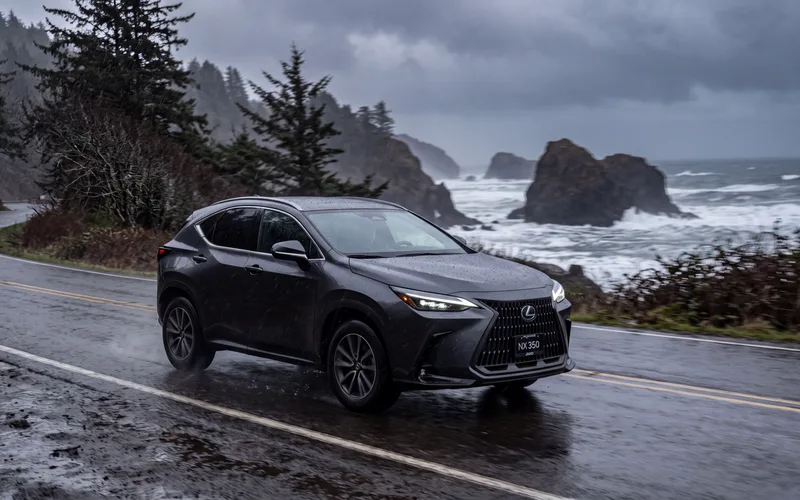 Lexus NXCompact Luxury SUVBetter at: Resale value
Nearly the same brief — a quiet, comfortable compact luxury SUV — but with hybrid efficiency, better predicted reliability, and resale value that doesn't evaporate.
Compare 2.46C+
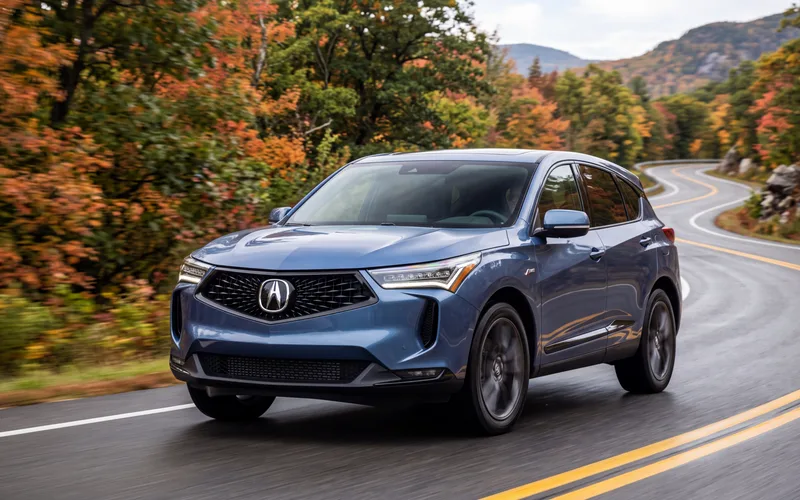 Acura RDXCompact Luxury SUVBetter at: Driving feel
More power, more cargo room, and a chassis that's actually fun, at a price that still undercuts the German set.
Compare 2.69C+
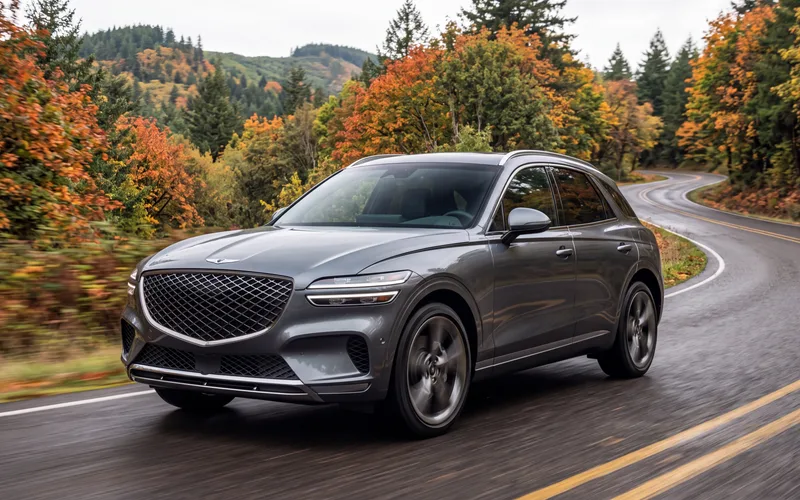 Genesis GV70Compact Luxury SUVBetter at: Overall polish
A newer, faster, better-warranted luxury SUV for shoppers who can stretch past the Corsair's discounted sticker.
CompareHow it's evolved
7 scored model years · 2020–2026
Subject scores by year
Hover or tap a score to see what moved it versus the year before. A corner mark flags a big swing.
| Year | Performance | Efficiency | Safety | Space | Cost | Reliability | Tech | Use-case | Driving | Value |
|---|---|---|---|---|---|---|---|---|---|---|
| 2026 | 46 | 45 | 82 | 55 | 44 | 70 | 83 | 73 | 69 | 65 |
| 2025 | 42 | 46 | 82 | 53 | 49 | 62 | 81 | 66 | 66 | 68 |
| 2024 | 45 | 47 | 77 | 53 | 51 | 60 | 80 | 66 | 68 | 71 |
| 2023 | 45 | 47 | 77 | 53 | 50 | 66 | 80 | 60 | 69 | 70 |
| 2022 | 45 | 47 | 71 | 52 | 49 | 57 | 61 | 60 | 65 | 68 |
| 2021 | 45 | 47 | 71 | 53 | 45 | 51 | 62 | 59 | 65 | 71 |
| 2020 | 40 | 48 | 76 | 53 | 46 | 45 | 61 | 61 | 70 | 73 |
Compare two years
Best fit & conditions
Higher scores mean a better fit for that use case. Learn more about use-case fit →
Subject profile
Detailed scoring by subject
1Performance & PowertrainThe Corsair's lowest-graded category.0.68F
2020 is the Corsair's launch year, and the volume Standard/Reserve configuration ships with the 250-hp 2.0L turbocharged four; the 295-hp 2.3L was a paid, AWD-only upgrade rather than the volume engine.
Lincoln rated the 2020 Corsair's 2.0L turbo four at 280 lb-ft, marginally above the 275 lb-ft Wikipedia quotes for the nameplate's base engine generally.
Lincoln publishes no 0–60 claim, so the figure comes from instrumented testing, and the published results for the launch-year 2.0T AWD scatter unusually widely; 6.7 s sits at the centre of that spread and matches Edmunds' own test.
The 2.0L pulls cleanly on a fat midrange inside a cabin reviewers single out as exceptionally hushed — Lincoln engineered a dual-wall air-gap dashboard specifically to keep engine noise out — but it is still an ordinary-sounding four-cylinder in a class where rivals field inline-sixes, and the launch cars carry the same off-idle turbo lag noted throughout this generation.
Press reviews of the launch-year 8-speed automatic were consistently positive on shift smoothness and gear selection, but owner reports on these first-year cars surface jerky low-speed engagement in stop-and-go traffic — a complaint that recurs across the pre-facelift gas Corsairs and keeps this out of the top band.
In its launch year the Corsair had no factory trailer tow package, so the 2,000-lb braked rating applies across the board regardless of trim, engine or drivetrain; the Class II package that lifts properly-equipped AWD cars to 3,000 lbs arrived for 2021.
All-wheel drive is offered on both 2020 trims and is mandatory with the 2.3L, but on the volume 2.0L it remains a cost option over standard front-wheel drive, and the hardware is a conventional on-demand system backed by drive-mode software — no low range, no true torque vectoring, and no eAWD hybrid variant this year.
A pavement-focused luxury crossover on fourth-generation Ford Escape underpinnings: 7.8 in of ground clearance, wheels up to 20 in on the appearance packages, and no skid plates, lockers, low range or off-road trim anywhere in the 2020 range.
The launch-year Corsair offered exactly two choices and both were gas turbocharged fours through the same 8-speed — a genuine performance step up to the 2.3L, but no electrified option at all, because the Grand Touring plug-in hybrid slipped out of the 2020 model year entirely.
2Efficiency & RangeGrades below the middle of the scale.1.19D
2020 is the Corsair's first full model year on sale (launch year of the first generation, well before the 2023 facelift), with the 250-hp 2.0L EcoBoost standard and the 295-hp 2.3L exclusive to Reserve AWD; the 2.0L with AWD is taken as the volume gas configuration at 24 MPG combined. The PHEV Grand Touring is scored separately and arrived later in 2020.
EPA city rating for the 2.0L EcoBoost with all-wheel drive, aided by standard stop-start; AWD's added mass and driveline losses cost about 1 MPG against the front-driver.
The eight-speed automatic's tall top gear lets the 2.0L match the front-driver's 29 MPG highway rating even with AWD fitted — the strongest of the Corsair's three EPA numbers and competitive with the compact luxury SUV field.
EPA's published total range for the 2.0L AWD; the modest 16.5-gallon tank rather than the fuel economy is what holds it down, leaving the Corsair well short of the 450-plus-mile figure common in this class.
EPA's annual cost at standard assumptions for the 2.0L AWD; it stays out of the expensive tier mainly because the engine is certified on regular unleaded, unlike the premium-drinking German rivals the Corsair is cross-shopped against.
Both 2020 gas engines — the 2.0L and the Reserve-exclusive 295-hp 2.3L — are EPA-certified on regular 87-octane unleaded, so the luxury badge carries no premium-fuel surcharge; the manual only suggests 91-octane for best performance when towing or in high heat, which is optional rather than required. A genuine running-cost edge over the Audi Q5, BMW X3 and Mercedes GLC, all of which recommend premium.
3SafetyThe Corsair's best-graded category.3.13B
NHTSA awarded the 2020 Corsair its top 5-star overall NCAP rating, with 5 stars in both frontal and side crash tests and 4 stars for rollover resistance — a full-marks result in its first model year.
A 2020 IIHS Top Safety Pick with Good in every crashworthiness test of the era — both small overlap fronts, moderate overlap, original side, roof strength and head restraints — but the award applied only to cars with the Reserve II headlights, and the later updated side test rates the generation Marginal.
Lincoln Co-Pilot360 is standard on both 2020 trims and covers AEB with pedestrian detection, forward collision warning, lane-keeping, blind-spot monitoring with cross-traffic alert and auto high beams — but adaptive cruise sits behind the $3,050 Co-Pilot360 Plus package on every trim, so the volume car ships without ACC.
IIHS rated the standard system Superior in both vehicle-to-vehicle front crash prevention and daytime pedestrian detection — the best available result for the 2020 test protocol. Held below the top band only because nighttime pedestrian testing did not exist for this model year, so night performance is unverified.
Blind-spot monitoring with rear cross-traffic alert is standard on every 2020 Corsair, which is better than several 2020 luxury rivals, but it is alert-only — reverse brake assist, the active intervention piece, is bundled into the optional Co-Pilot360 Plus package.
Lane-departure warning and lane-keeping assist are standard, but true lane centering requires the optional Co-Pilot360 Plus. Reviewers who drove the Plus system found the centering precise and resistant to dropouts from glare or faded markings, while noting it gets confused where the right-hand line disappears at exit ramps or where lanes widen.
The available adaptive cruise is full-speed-range with stop-and-go and traffic-jam assist, and reviewers called the combined Co-Pilot360 Plus behavior notably refined. It is marked down because it is a $3,050 option rather than standard equipment on a luxury compact, and the bundled speed-sign recognition twice misread 65 mph zones as 85 and accelerated on its own.
No hands-free highway driving of any kind was offered on the 2020 Corsair. Lincoln's ActiveGlide did not reach the model until the 2023 facelift, three model years later.
IIHS rated the headlights Poor on both the Standard and the Reserve trims — the configurations most buyers actually got. Only a Reserve fitted with the Reserve II package reached Acceptable, and that single build is the reason the Top Safety Pick award carried a headlight restriction.
A tall roof and a low beltline give the Corsair large windows and an airy cabin, and reviewers single out the sightlines as unusually good for a modern compact SUV. A 360-degree camera is available but only inside the Co-Pilot360 Plus package.
IIHS gave the Corsair its top LATCH ease-of-use result — Good, with credit for extra tether positions beyond the required set — and the wide rear doors and sliding rear bench make seat installation and access straightforward.
4Space & ComfortGrades below the middle of the scale.1.54D
The 2020 Corsair launched as a strictly two-row, five-passenger compact luxury SUV in Standard and Reserve trims, with no third-row configuration offered, so it sits at the floor of the SUV-wide 4–8 seat band.
39.5 in of front headroom lands exactly mid-band for the 37–42 in SUV range. 2020 is the launch year of the first-generation Corsair, so these are the original published dimensions rather than carry-over figures.
43.2 in of front legroom is generous for the compact luxury class and is identical on every 2020 trim and drivetrain, sitting well up the 40–44.5 in SUV band.
38.7 in of second-row headroom is above average for a compact luxury SUV, helped by the Corsair keeping a conventional upright roofline instead of the fastback profile that costs rear head space in several rivals.
38.6 in of rear legroom is near the top of the compact luxury segment, thanks to a standard second-row bench that slides six inches fore/aft and reclines — the trade being that cargo depth shrinks when it is all the way back.
The 2020 Corsair is a two-row, five-seat SUV — no third row is offered on any trim, so it scores in the low band by definition rather than for a poor third row.
27.6 cu ft behind the rear seats is competitive within the compact luxury class, but it sits near the floor of the SUV-wide 25–80 cu ft normalization band, which is calibrated across much larger three-row utilities.
57.6 cu ft with the second row folded is typical for a two-row compact luxury SUV but lands near the bottom of the 55–100 cu ft SUV band, which extends to far larger three-row models.
Competent everyday storage with no headline innovation: the piano-key push-button shifter clears the console for an open tray plus a lined bin with an available wireless charging pad, the 60/40 second row slides six inches and reclines to trade legroom for cargo depth, and EasyFold buttons plus an available hands-free liftgate ease loading. But there is no underfloor trunk, frunk or fold-flat front passenger seat, and the pre-facelift dash still carries a physical HVAC and media stack beneath the vents.
Seats are a Corsair strength — 10-way power heated front seats with driver memory are standard even on the base trim, and the optional 24-way Perfect Position chairs add heating, ventilation, separate left/right thigh extensions and five massage settings at three intensities. Held below the top band because those chairs are a paid option rather than standard equipment, and reviewers who liked their all-day comfort still flagged creaking and flimsy-feeling thigh supports and bolsters.
Tuned unapologetically for comfort and repeatedly rated at or near the top of the compact luxury class for smoothness, helped by a Lincoln-first Integral Bush rear suspension that absorbs impacts directly and by the available adaptive dampers. Kept out of the highest band because the adaptive suspension is an option rather than standard, and testers noted body oscillation over bumps taken at speed with the dampers in Normal.
Isolation is the 2020 Corsair's signature engineering claim and it earns the top band: a sound-dampening dual-wall dash, the Integral Bush rear suspension and Active Noise Control are all standard equipment — not an option group — and road tests describe wind, tire and engine noise as near-absent at highway speed. Short of the very top only because the 2.0-liter EcoBoost four becomes audible when worked hard.
The comfort basics start unusually low in the range — dual-zone automatic climate control, 10-way heated front seats with memory, remote start and a power liftgate are all standard on the base Standard trim — but the full luxury kit stays optional: ventilated front seats, the heated steering wheel and heated rear outboard seats are bundled into the $1,100 Elements Package on either trim, and the panoramic Vista Roof, 24-way Perfect Position seats and head-up display are separate extras. Strong for the class as delivered, short of the top band because nothing beyond heated fronts is standard anywhere in the 2020 lineup.
5Cost of OwnershipOne of the Corsair's weakest categories.1.08D
2020 is the Corsair's launch year, replacing the MKC, and the base Standard FWD opened at $35,945 plus $995 destination — a low point of entry for a compact luxury SUV, undercutting the X3, Q5 and GLC by several thousand dollars, though about $2,000 above the MKC it replaced.
Reserve is the volume trim and AWD is the common choice in this segment, putting the typical build at $45,825 before options; adding the usual Reserve II / panoramic roof / Revel audio content lands real transactions near $49,500, with a fully loaded 2.3L car reaching $60,660.
Estimates diverge widely — CarEdge projects $3,736 over five years while Edmunds True Cost to Own runs near $7,500 for this generation — and 2020 is the Corsair's weakest year for defects, so the fair read sits at the higher end. Escape-shared mechanicals keep parts cheap, but Lincoln labor rates and a heavy first-year electrical/camera complaint record push the figure above the $6,500 used for the later, settled model years.
Unlike a current model year this is largely observed rather than forecast: the 2020 Corsair lost about 51% of its value over its first five years, a little worse than the nameplate's 52.1% average and well behind the Lexus NX. Lincoln residuals are mid-pack at best, and first-year build reputation did the 2020 no favors.
Lincoln's New Vehicle Limited Warranty runs 4 years/50,000 miles — the luxury-brand standard, matching Acura, Lexus, BMW and Audi, and a year longer than the mainstream Ford coverage on the mechanically related Escape.
Six years/70,000 miles matches Acura and Lexus and beats BMW and Audi, whose powertrain coverage simply runs concurrent with the 4-year basic warranty — but it is far short of the 10-year coverage that anchors the top of the band.
No complimentary scheduled maintenance — Lincoln reserves its included service plan for Black Label, a tier the Corsair never offered — so oil changes and rotations are the owner's from day one, unlike the 2020 RDX (2 yr/24k), X3 (3 yr/36k) or Q5. What Lincoln substitutes is convenience: complimentary Lincoln Pickup & Delivery with a Lincoln loaner for the whole 4-year/50,000-mile warranty period, 24/7 roadside for 6 years/70,000 miles, Phone As A Key at no charge, and a connected-services trial through the Lincoln Way app. Rated just below the later 2024 car, which added four years of included BlueCruise/ActiveGlide — a perk that did not exist in 2020.
$49,500 volume-trim price minus its estimated resale value after 5 years (49% retained, or about $24,255) leaves about $25,245 in depreciation. Add the projected $7,200 in 5-year maintenance and repairs, and owning this vehicle for 5 years costs about $32,445 in total.
6Reliability & QualityOne of the Corsair's weakest categories.0.99F
2020 is the Corsair's launch year and it is the nameplate's worst on record. Consumer Reports gives it 1 of 5 for reliability — the lowest possible — with its worst marks in body integrity and power equipment, and CarComplaints ranks 2020 the worst Corsair model year on complaint volume, repair cost and the mileage at which faults appear. J.D. Power's consumer-facing Quality & Reliability score of 76/100 is the only softening signal, and it still places the car behind the Lexus NX and BMW X3. A first-year verdict this bad from the source with real owner data puts it below the 2021 car (42), which shares the platform but had a year of running fixes behind it.
The J.D. Power 2023 Vehicle Dependability Study surveys original owners of 2020 model-year vehicles at three years — this exact cohort — and put Lincoln at 259 PP100 against a 186 industry average, second-worst of every brand studied behind only Land Rover. That is the weakest wave in the run: the same study measured 251 PP100 for the 2021 cohort and 221 for the 2022 cohort, so a 2020 buyer sat at the bottom of the brand's recent trajectory rather than mid-pack. Lincoln's later recovery belongs to other model years and does nothing for this one.
NHTSA lists 16 campaigns against the 2020 Corsair and — unlike 2021 and 2022, where roughly a third are restricted to the PHEV that did not exist in this model year — every one of them applies to the gas car being scored. Two are launch-year-specific hardware defects: rear coil springs that contact the toe-link bracket and fracture, and a start/stop accumulator endcap with missing or loose bolts that can leak transmission fluid onto an ignition source. On top of that sit eight separate rearview-camera campaigns chasing the same blank, distorted or inverted image through remedies that repeatedly failed to hold, a block heater that can short and catch fire, a wiper motor that can quit outright, and a seat-belt chime recalled twice. 252 TSBs on file is a very heavy running-rework load for one model year. Repeat failed remedies on a federally mandated safety system plus two fire- or handling-risk campaigns is squarely in the low band.
The volume 2020 Corsair runs the 250 hp 2.0L EcoBoost turbo four — a long-serving, high-volume Ford family whose known wear items are direct-injection carbon buildup and high-mileage coolant leaks rather than catastrophic failure — through the 8F35 eight-speed automatic, and the gearbox is the weak half. Ford issued a TSB naming 2019-2020 Escape and Corsair specifically for DTC P0766 with intermittent no-reverse engagement caused by contamination in the main control valve-body separator plate orifice, plus P0741/P1744 on units built on or before 30-Sep-2020, and the 20V550 start/stop accumulator recall is a transmission fluid leak on the same assembly. Owners report jerky low-speed and stop-and-go shifting, usually addressed by a TCM update. A proven engine bolted to a transmission carrying year-specific defect bulletins is a mixed record, marginally worse than the 2021 and 2022 cars (both 50) because the launch-build TSBs land on this year.
Materials are the launch Corsair's clearest strength and reviewers place them at or near the top of the compact luxury class — Edmunds says the interior materials are as good as anything in the rest of the class, praising solid, well-finished surfaces in a quiet cabin, and The Car Connection calls the cabin sumptuous with premium materials in vivid colors. What holds it just under the class-leading band is the tech furniture rather than the richness: the 2020 car ships an 8-inch cluster display and 8-inch Sync 3 touchscreen as standard, with the 12.3-inch digital cluster, 24-way Perfect Position seats, 14-speaker Revel audio and head-up display all optional, so the screens read a generation behind rivals even where the leather and aluminum do not.
This is where the launch year is punished. Consumer Reports' owner data gives the 2020 Corsair its lowest marks in body integrity and power equipment — exactly what this item measures — and the reported defects are the assembly kind: panoramic sunroof and dashboard rattles, and piano-key shifter buttons that stick or fail to engage. Owner reviews split hard, with Edmunds carrying both "fit and finish are great" and "finish is poor" on the same car, which is itself a consistency signal. Press-car impressions of a well-isolated, finely finished cabin are real but do not survive contact with the owner survey, putting this at the bottom of the middle band, below the 2021 car (72) and near the 2022 (55).
Service satisfaction is a genuine Lincoln strength and was so exactly when this car was new: the brand placed fifth among premium marques in the J.D. Power 2020 Customer Service Index at 872, and Lincoln also topped the 2020 Sales Satisfaction Index outright. The network was also near its peak in 2020, before the deliberate thinning that cut it to roughly 500 stores by the end of 2023 and about 438 today — so a 2020 buyer had better practical coverage than a current one, backed by the Ford dealer body and Lincoln's pickup-and-delivery service, which beats the standalone luxury importers on reach. The reservation is that the same owners are now servicing these cars through a much smaller network.
The Corsair shares its platform with the fourth-generation Ford Escape and is built alongside it at Louisville, using the 2.0L EcoBoost and 8F35 found across high-volume Ford products, so parts are commodity items moving through one of the deepest US distribution networks rather than dealer-only luxury pieces. CarEdge projects roughly $11,886 in maintenance and repairs over ten years, about $2,468 below the luxury-SUV average. Held out of the top band because Lincoln-specific trim, the Revel audio hardware and the Sync unit are dealer-priced with thin aftermarket support, and this particular year is now expensive to keep: CarBuzz puts a seven-year-old 2020 Corsair at about $1,600 a year in repairs, with a timing chain tensioner job at $1,686-$2,356.
7Technology & InfotainmentMid-pack among this car's ten categories.2.11C
The first-generation Corsair launched for 2020 with a single 8.0-inch center touchscreen across Standard and Reserve; there was no larger option, so the volume trim and the top trim share it.
SYNC 3 is genuinely easy to live with — logical tile menus, clear graphics, and real HVAC and volume/tuning hardware below the vents — but by 2020 reviewers were calling it dated and slow next to newer luxury systems, and 8.0 inches is small for a $45k+ luxury crossover.
Apple CarPlay and Android Auto are standard on every 2020 trim, but wired only — SYNC 3 never offered wireless projection on this model year, and no trim or package added it.
SYNC 3's command-based voice control handles destinations, calls and audio reliably but is not natural-language, and the built-in navigation is an option (bundled into the Reserve equipment groups) rather than standard, so most Standard-trim buyers navigate through phone projection.
A 10-speaker system is standard and the optional 14-speaker Revel audio is a legitimately good premium setup that suits the Corsair's very quiet cabin — though it stops well short of the 20/28-speaker Revel Ultima systems in the Aviator and Navigator.
The volume configuration gets a partial-digital cluster — a small center screen flanked by physical gauges — with the crisp 12.3-inch full-digital cluster reserved for the $2,000 Technology Package, itself gated behind the Reserve equipment group.
SYNC 3 could pull infotainment software and navigation map updates over home Wi-Fi, but nothing beyond the head unit — there is no whole-vehicle Ford Power-Up-style OTA on this model year, and owners widely report the Wi-Fi update path as unreliable enough that USB is the recommended method.
The Lincoln Way app over the standard embedded modem covers remote start/stop, lock/unlock, vehicle locate, status and scheduled starts at no charge, and 2020 was the launch year for Phone As A Key — but the digital key is package-gated rather than standard on the volume car.
Front USB-A plus USB-C smart-charging ports and two 12-volt outlets are standard with additional rear-row ports, and a 110-volt household outlet is available — but wireless charging is locked behind the Reserve-only Technology/Reserve II packages, so the volume car goes without it.
Proximity entry with push-button start and app-based remote start are standard, the hands-free foot-activated liftgate is available, and Phone As A Key gives a true phone-as-key option — a strong keyless suite for 2020, held just short of top marks because the digital key needs a package.
A rear camera and rear parking sensors come standard as part of Co-Pilot360, while the 360-degree camera and Active Park Assist Plus require the Co-Pilot360 Plus package on Reserve equipment groups 201A/202A — capable hardware, but not on the car most buyers take home.
Lincoln offered a large, bright windshield-projected head-up display on the 2020 Corsair, but only high on the Reserve ladder — it is a top-package item, absent from the Standard trim and from most volume-trim builds.
8Use-Case FitMid-pack among this car's ten categories.2.14C
Best-in-segment LATCH hardware plus a second row that slides 6 in fore/aft makes car-seat installation and rear-facing clearance unusually easy for a compact luxury SUV; wide-opening rear doors, a low beltline and 27.6 cu ft behind the second row swallow a stroller. Held out of the 80s only by the two-row-only layout and compact footprint.
Strong crash credentials — NHTSA 5-star overall and an IIHS Top Safety Pick — with Co-Pilot360 (AEB with pedestrian detection, BLIS with cross-traffic alert, lane keeping) standard on the entry Standard trim. Two real family-relevant gaps keep it out of the top band: IIHS rated the headlights Poor on both Standard and Reserve (only the Reserve II package reaches Acceptable), and adaptive cruise with stop-and-go plus the 360-degree camera cost $3,050 in Co-Pilot360 Plus.
An exceptionally quiet cabin, a compliant ride and 38.6 in of rear legroom make four-up touring genuinely pleasant, with rear air vents and rear USB ports standard and a panoramic Vista Roof, heated rear seats and 14-speaker Revel audio available. Rear amenities stop short of the best in class — dual-zone climate only rather than a third rear zone, and no rear-seat entertainment — and 27.6 cu ft of luggage space with everyone aboard is adequate rather than generous.
This is what the Corsair was built for: reviewers consistently describe it as nimble in traffic, hushed and effortless, with an 8-speed automatic praised for imperceptible shifts and 250 hp that makes lane changes automatic. Compact dimensions, excellent outward visibility and a comfort-first tune produce a genuinely low-fatigue commuter — the class benchmark for relaxation rather than sport.
Middling economy for the class at 21/29/24 MPG in AWD form and $2,550/yr in EPA fuel cost, but it runs on regular gasoline — a real per-mile saving against the premium-fuel German rivals it shops beside — and parts and repair costs run below the luxury-SUV average. Reliability is the offsetting risk: Consumer Reports rated predicted reliability 1 of 5 and Lincoln finished well below the industry average in J.D. Power dependability for this model year, so unbudgeted shop visits are a live cost.
A 37.1 ft turning diameter on a 180.6 in body is genuinely tight, and the tall greenhouse and low beltline that reviewers single out give real over-the-shoulder visibility rather than camera-dependence. A rear camera is standard, with a 360-degree camera and active park assist available in Co-Pilot360 Plus.
A 2,000 lb tow rating with no factory trailer tow package offered for 2020 rules out all but the lightest utility trailer, and there is no bed, no meaningful payload headroom and no low-range or work-tuned drivetrain. Cargo capacity tops out at 57.6 cu ft with the rear seats down — useful for errands, not for a trade.
The C2 platform and 2.0L EcoBoost are shared with the high-volume Ford Escape, which is the one point in its favor, but the first-year Corsair's own record is poor: Consumer Reports rated it 1 of 5 with body integrity and power equipment its worst areas, and NHTSA lists 16 recalls for the 2020 model year including a fracturing rear coil spring. Leather, 24-way power seats and carpeted surfaces are the opposite of wear-friendly, and the model has no fleet presence.
The provisions that exist are consumer conveniences rather than work equipment: roof side rails, cargo tie-downs, two USB and two 12V outlets, an available 110V/150W household outlet in the Technology Package, and an available hands-free liftgate. There is no bed, no factory hitch or wiring, no upfit ecosystem, and a carpeted cargo floor with no washable-surface option.
A strong mile-eater for its size: 24-way Perfect Position front seats with Active Motion massage, Active Noise Control and a dual-wall dash for a class-leading hush, and 396 miles between fills on regular fuel. What keeps it below the top band is that the fatigue-reducing driver assists are not standard — adaptive cruise with stop-and-go, traffic jam assist and lane centering all sit in the $3,050 Co-Pilot360 Plus package, and hands-free highway driving did not arrive until the 2023 facelift.
Competent on gravel and in winter but not much beyond it: all-wheel drive is available (standard with the 2.3L), five Lincoln Drive Modes include Slippery and Deep Conditions for snow, and 7.8 in of ground clearance clears a forest-service road. Roof side rails take bikes or a box, but the 2,000 lb tow limit with no factory hitch or wiring rules out most trailered toys, and there is no underbody protection or terrain hardware — this sits at the bottom of the gravel-roads-and-bike-racks band.
Flexible for its footprint — 27.6 cu ft behind the second row expanding to 34.0 cu ft with the rear bench slid forward and 57.6 cu ft folded flat via power EasyFold release buttons, plus 60/40 split folding, underfloor storage and roof side rails. The ceiling is the limit: 57.6 cu ft trails the Q5 and X3, and with no factory hitch a bike or cargo tray has to go on the roof.
9Driving ExperienceOne of the Corsair's strongest categories.2.74B-
Launch-year (first-generation, on sale late 2019) Corsair is composed and secure with genuine agility when fitted with the optional adaptive dampers, but it is tuned for the 'Quiet Luxury' brief rather than corner-carving — well short of an X3, Macan or Stelvio.
Accurate and well weighted — and the electric rack adds weight in Excite mode — but reviewers single out the total absence of feedback as the one real dynamic flaw, which is the definition of precise-but-numb.
Instrumented stopping power is a genuine class leader, but pedal calibration on this launch-year car was criticized as grabby, which costs it the top band despite the numbers.
The volume 2.0L turbo four and 8-speed automatic shift smoothly and pull adequately, but acceleration is only class-average and reviewers noted occasionally uneven throttle response — competent calibration rather than impeccable.
NVH isolation is the Corsair's signature and the strongest part of its driving experience — a dual-wall dashboard, laminated acoustic glass and Active Noise Control keep the four-cylinder essentially out of the cabin at cruise.
Tight for a compact luxury SUV and better than the segment midpoint, making it easy to place in parking structures. Lincoln's own 2020 tech-specs PDF timed out on repeated fetches, so this rests on two independent secondary listings that agree.
A standout: an airy, well-judged seating height with genuinely good sightlines, Mercedes-style door-mounted seat controls, retained physical HVAC and audio controls, and optional 24-way Perfect Position seats with split thigh extensions.
Pleasant and quietly competent — Excite mode gives it a real second personality — but Lincoln deliberately avoided any sport pretense, and with numb steering and a modest turbo four this is a sanctuary, not a car enthusiasts seek out.
10Value & Market PositionOne of the Corsair's strongest categories.2.97B-
The launch-year Standard trim opens at $36,940 delivered with the full Co-Pilot360 driver-assist suite (AEB with pedestrian detection, blind-spot monitoring with cross-traffic alert, lane-keeping, auto high beams), SYNC 3 on an 8-inch touchscreen with 10 speakers and CarPlay/Android Auto, heated front seats, remote start, power liftgate, auto-folding heated mirrors, dual-zone climate and keyless entry/ignition — content a 2020 X3 ($41,950), Q5 ($43,300) or GLC 300 ($42,500) charged thousands more to match, several of them still billing extra for adaptive-cruise-free basics. It falls short of the top band because the 12.3-inch digital cluster, 24-way Perfect Position seats, 14-speaker Revel audio, head-up display, adaptive cruise, 360-degree camera and auto park all sit in option packages, and the base cluster is analog gauges flanking a small display.
As a $36,940 entry into the luxury compact class the Corsair delivered the segment's most convincing quiet-luxury argument on a budget — a genuinely well-finished, hushed cabin (Autotrader named it one of the 10 best interiors under $50,000 for 2020) and a supple ride, with 250 hp standard and 295 hp available, undercutting the German trio by roughly $5,000-$6,000 at base. It stays out of the standout band because it shares its bones with a far cheaper fourth-generation Ford Escape, the 2.0L turbo four is coarse under load, the driving experience trails the Q5 and X3, and climbing to the equipment level luxury buyers expect pushes a Reserve toward $63,000 where the value advantage evaporates.
The 2020 launch year is the narrowest configuration year of the generation: just two named trims (Standard and Reserve), two gas engines — the 250 hp 2.0L with FWD or AWD and the 295 hp 2.3L restricted to AWD — and equipment sold in bundled packages rather than an a-la-carte sheet. The plug-in hybrid Grand Touring that broadens the 2021 and later lineups was pushed out of the 2020 model year entirely, so an electrified Corsair simply wasn't buyable. Credit remains for a genuinely wide price ladder, roughly $36,940 to just under $63,000, which spans from near-mainstream money to fully loaded luxury.
The Corsair's first full year landed 26,227 US deliveries — up 1.6 percent over the Corsair/MKC total of the year before, and enough to make it Lincoln's best-selling vehicle ahead of the Aviator — which is a genuinely strong result in a pandemic year when most luxury compact rivals fell by double digits (Audi Q5 -43.7 percent, BMW X3 -36.7 percent, Acura RDX -24.6 percent in the first half). It sits in the middle-upper band rather than higher because in absolute volume it remained a mid-pack player in the class, well behind the RDX, X3, Q5 and NX, and its momentum came partly from replacing a weak predecessor rather than from taking segment leadership.
Lincoln entered 2020 mid-resurgence — a credible quiet-luxury identity, an SUV-only lineup posting its best retail SUV performance in years and a fresh Navigator/Aviator halo above the Corsair — but the badge still lacked the aspirational pull and cross-shopping gravity of BMW, Mercedes, Audi, Porsche or Lexus, and shoppers knew the car shared a platform with the Ford Escape. The net effect on a buyer is neutral-to-mildly-positive: it neither commands a premium nor repels shoppers, and residuals land near, not above, the class average.
2020 was a buyer-friendly year for the Corsair: Lincoln paired factory cash with subsidized financing from early in the year, and by December was stacking $2,500 rebates with 0 percent APR in some markets plus regional leases advertised at $0 down, $0 due at signing and $0 first payment after a $1,000 cash rebate. That is a meaningful discount on a brand-new nameplate rather than desperation pricing, so it scores well for buyer benefit — held back from the top band only because the strongest offers were region-restricted and the vehicle was fresh enough that dealer-level discounting off sticker was not yet routine.
2020 is the launch year — an all-new nameplate on a brand-new platform, revealed at the April 2019 New York show and on sale in late 2019, replacing the aging MKC and sharing the just-redesigned fourth-generation Ford Escape's underpinnings. A 2020 buyer faced essentially zero redesign risk: the refresh was still three model years out. It stops just short of a perfect score because the infotainment shipped as 8-inch SYNC 3 rather than the newer SYNC 4 that would arrive with the 2023 facelift, and the standard instrument cluster was analog.
The launch Corsair was well received — 7.9/10 and sixth of the 2020 luxury compact SUVs at U.S. News, with consistent praise for interior quality, quietness and ride comfort, an IIHS Top Safety Pick earned in November 2019 on superior front crash prevention, and a place on Autotrader's 10 Best Car Interiors under $50,000. It sits in the middle band because reviewers repeatedly stopped short of picking it over the class benchmarks, naming the Q5 more enjoyable to drive and the GLC more well-rounded, and it won no major model-of-the-year honor; the base engine's refinement and the SYNC 3 infotainment drew recurring criticism.