
The verdict
A mixed-report compact suv, strong on value and held back by performance.
Overall 2.36 (C+) across 10 graded subjects. Its strongest is value & market position at 3.41 (B+), its weakest performance & powertrain at 0.53 (F). 8 of 10 subjects grade at C− or better.
Jump to scoresStrengths
- Value & Market Position
- Safety
- Reliability & Quality
What holds it back
- Performance & Powertrain
- Space & Comfort
- Cost of Ownership
Top alternatives
Cars shoppers cross-shop with the Mazda CX-50 2.56C+
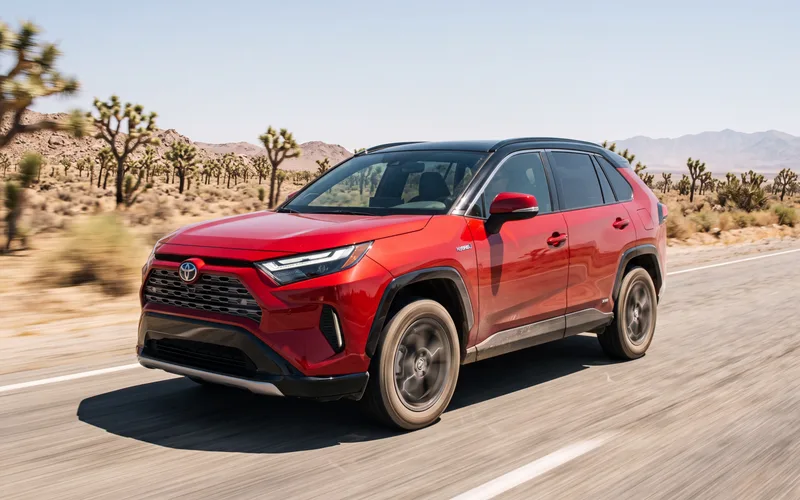 Toyota RAV4Compact SUVBetter at: Resale value
It gives up the driving polish but returns hybrid fuel economy, 37 cu ft of cargo and roughly 69% five-year resale — the strongest long-term financial case in the segment.
Compare 2.13C
2.13C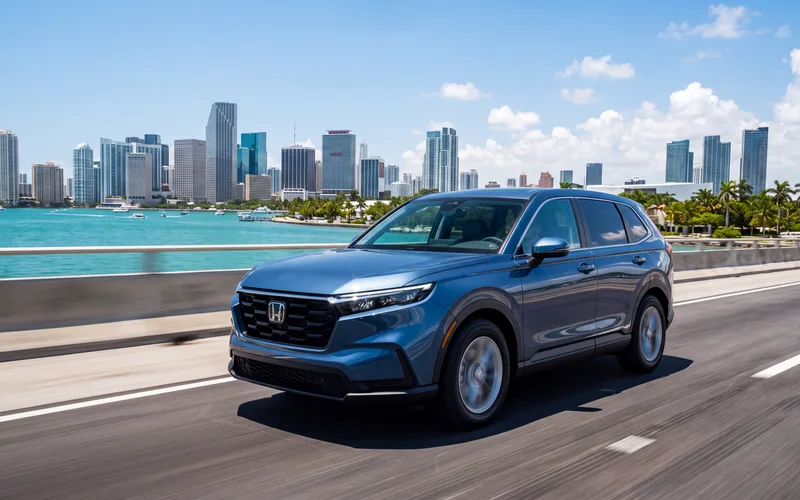 Honda CR-VCompact SUVBetter at: Cargo space
Nearly 8 cu ft more cargo behind the rear seats and 20 more with them folded, plus a hybrid and better rear-seat and visibility packaging, for shoppers who need the space the CX-50 doesn't have.
Compare 2.42C+
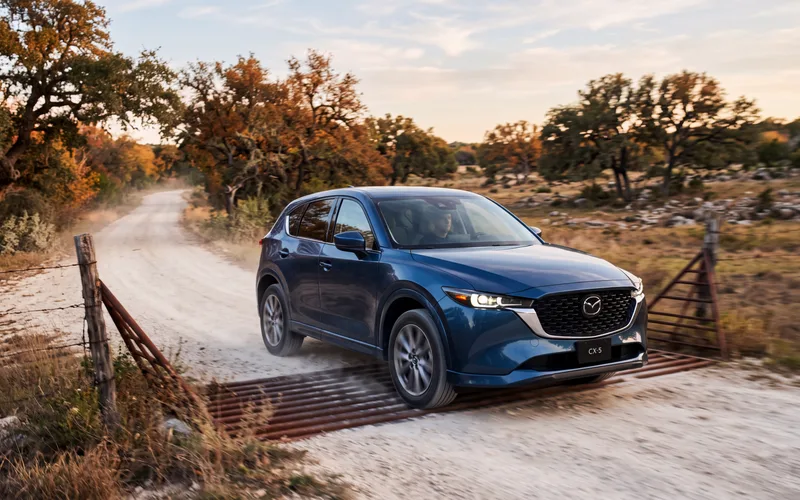 Mazda CX-5Compact SUVBetter at: Space and tech
The same Mazda driving character and interior in a taller, roomier body with a 15.6-inch Google built-in screen — the pick if you want the brand without the CX-50's packaging and tech compromises.
CompareSubject scores by year
Hover or tap a score to see what moved it versus the year before. A corner mark flags a big swing.
| Year | Performance | Efficiency | Safety | Space | Cost | Reliability | Tech | Use-case | Driving | Value |
|---|---|---|---|---|---|---|---|---|---|---|
| 2026 | 42 | 55 | 77 | 49 | 64 | 77 | 65 | 62 | 71 | 71 |
| 2025 | 38 | 65 | 74 | 47 | 62 | 71 | 66 | 68 | 75 | 80 |
| 2024 | 39 | 60 | 79 | 48 | 62 | 75 | 63 | 64 | 75 | 84 |
| 2023 | 38 | 61 | 78 | 44 | 56 | 76 | 62 | 66 | 73 | 80 |
Compare two years
Best fit & conditions
Higher scores mean a better fit for that use case. Learn more about use-case fit →
Subject profile
Trims & configurations
5 trimsScores above reflect the volume trim. Per-trim specs and scores are rolling out — the full lineup:
Academic Probation · NHTSA safety recalls
Apr 18, 2023Service brakes, hydraulic: antilock/traction control/electronic limited slip: control unit/moduleThe anti-lock brake system (ABS) Hydraulic Control Unit (HCU) may be damaged, which can result in reduced braking ability.
Defect
Mazda North American Operations (Mazda) is recalling certain 2022-2023 CX-30 and 2023 CX-50 vehicles. The anti-lock brake system (ABS) Hydraulic Control Unit (HCU) may be damaged, which can result in reduced braking ability.
Risk
Reduced braking ability can increase the distance required to stop the vehicle, increasing the risk of a crash.
Remedy
Dealers will inspect and replace the ABS HCU, as necessary, free of charge. Owner notification letters were mailed June 12, 2023. Owners may contact Mazda customer service at 1-800-222-5500 Option 6. Mazda's number for this recall is 5823D.
NHTSA campaign 23V275000 ↗Manufacturer no. 5823D2,410 vehicles potentially affected (all models in the campaign)Owners notified Jun 12, 2023Filed by Mazda North American OperationsFiled as CX-50Mar 1, 2023Trailer hitchesThe trailer hitch harness may detach and become damaged, which can result in inoperative trailer lights and/or brakes.
Defect
Mazda North America Operations (Mazda) is recalling certain 2023 CX-50 vehicles equipped with a Mazda Genuine Accessory trailer hitch. The trailer hitch harness may detach and become damaged, which can result in inoperative trailer lights and/or brakes.
Risk
Towing a trailer with inoperative lights or brakes can increase the risk of a crash.
Remedy
Dealers will repair the trailer hitch harness, free of charge. Owner notification letters were mailed April 11, 2023. Owners may contact Mazda customer service at 1-800-222-5500 option 6. Mazda's number for this recall is 5723B.
NHTSA campaign 23V135000 ↗Manufacturer no. 5723B560 vehicles potentially affected (all models in the campaign)Owners notified Apr 11, 2023Filed by Mazda North American OperationsFiled as CX-50
5 recalls on other model years of the CX-50 (2024–2025)
Oct 29, 2025Suspension: critical fastenersThe front suspension fastener bolts may not be tightened properly, which can result in suspension component and/or wheel detachment.
Defect
Mazda North American Operations is recalling certain 2025 CX-50 and CX-50 Hybrid vehicles. The front suspension fastener bolts may not be tightened properly, which can result in suspension component and/or wheel detachment.
Risk
Wheel or suspension component detachment can cause a loss of vehicle control and a loss of drive power, increasing the risk of a crash.
Remedy
Dealers will inspect the front suspension fastener bolts and, if necessary, replace and tighten them, free of charge. Owner notification letters were mailed December 10, 2025. Owners may contact Mazda customer service at 1-800-222-5500 Option 6. The manufacturer's number for this recall is 7925J. Vehicle Identification Numbers (VINs) involved in this recall became searchable on NHTSA.gov beginning November 3, 2025.
NHTSA campaign 25V737000 ↗Manufacturer no. 7925J1,007 vehicles potentially affected (all models in the campaign)Owners notified Dec 10, 2025Filed by Mazda North American OperationsFiled as CX-50, CX-50 HYBRIDJun 18, 2025Electrical system: propulsion system: hybrid management: power control unit/module (hpcu): software · Engine and engine cooling: engine: engine control module (ecu/ecm)The transmission gear shifter can be moved from Neutral to Drive without pressing the brake pedal.
Defect
Mazda North American Operations (Mazda) is recalling certain 2025 CX-50 Hybrid vehicles. The transmission gear shifter can be moved from Neutral to Drive without pressing the brake pedal.
Risk
Shifting into gear without the brake pedal depressed can result in unexpected vehicle movement, increasing the risk of a crash.
Remedy
Dealers will replace the Engine Control Module (ECM) and reprogram the Hybrid Control Unit (HCU) and Power Control Unit (PCU), free of charge. Interim owner notification letters were mailed August 15, 2025. A second notice will be sent once the remedy becomes available, anticipated late summer 2025. Owners may contact Mazda customer service at 1-800-222-5500 Option 6. The manufacturer's number for this recall is 7725F.
NHTSA campaign 25V418000 ↗Manufacturer no. 7725F22 vehicles potentially affected (all models in the campaign)Owners notified Sep 24, 2025Filed by Mazda North American OperationsFiled as CX-50 HYBRIDJun 18, 2025Air bags: air bag/restraint control module: softwareIncorrectly configured module software may cause the air bag to deploy improperly.
Defect
Mazda North American Operations (Mazda) is recalling certain CX-50 Hybrid and CX-50 vehicles. Incorrectly configured module software may cause the air bag to deploy improperly.
Risk
An air bag that deploys improperly increases the risk of injury during a crash.
Remedy
Dealers will update the module software, free of charge. Owner notifications will not be mailed due to all vehicles being under Mazda dealer control. Owners may contact Mazda customer service at 1-800-222-5500 Option 6. The manufacturer's number for this recall is 7625F.
NHTSA campaign 25V413000 ↗Manufacturer no. 7625F2 vehicles potentially affected (all models in the campaign)Filed by Mazda North American OperationsFiled as CX-50, CX-50 HYBRIDMar 14, 2025Trailer hitchesThe trailer hitch assembly bolts may loosen and cause the assembly to separate from the vehicle body during towing or normal driving conditions.
Defect
Mazda North American Operations (Mazda) is recalling certain 2024-2025 CX-50 vehicles equipped with Mazda Genuine Accessory trailer hitches. The trailer hitch assembly bolts may loosen and cause the assembly to separate from the vehicle body during towing or normal driving conditions.
Risk
A detached trailer hitch assembly can create a road hazard, increasing the risk of a crash.
Remedy
Dealers will tighten the trailer hitch bolts, free of charge. Owner notification letters were mailed April 4, 2025. Mazda's number for this recall is 7225C.
NHTSA campaign 25V167000 ↗Manufacturer no. 7225C63 vehicles potentially affected (all models in the campaign)Owners notified Apr 4, 2025Filed by Mazda North American OperationsFiled as CX-50, CX-50 HYBRIDSep 3, 2024Exterior lighting: headlights · Forward collision avoidance: automatic emergency braking · Lane departure: sensing system: cameraA malfunction in the forward sensing camera (FSC) may prevent the automatic emergency braking system and the lane-keep assist system from functioning. In addition, the headlights will not automatically adjust from high beams to low beams as intended.
Defect
Mazda North American Operations (Mazda) is recalling certain 2024 Mazda 3, CX-30, and 2025 CX-50 vehicles. A malfunction in the forward sensing camera (FSC) may prevent the automatic emergency braking system and the lane-keep assist system from functioning. In addition, the headlights will not automatically adjust from high beams to low beams as intended.
Risk
Automatic braking, steering assist, and headlight control systems that do not function as intended can increase the risk of a crash.
Remedy
Dealers will inspect and replace the forward sensing camera as necessary, free of charge. Owner notification letters were mailed September 24, 2024. Owners may contact Mazda customer service at 1-800-222-5500, Option 6. Mazda's number for this recall is 6824H.
NHTSA campaign 24V649000 ↗Manufacturer no. 6824H672 vehicles potentially affected (all models in the campaign)Owners notified Sep 24, 2024Filed by Mazda North American OperationsFiled as CX-50 HYBRID
Source: NHTSA Office of Defects Investigation recall database, model years 2023–2026. Recalls are listed by model year as the manufacturer filed them; whether a specific car is affected depends on its VIN — check a VIN at nhtsa.gov ↗. NHTSA model names matched to this page: CX-50, CX-50 HYBRID.
Detailed scoring by subject
1Performance & PowertrainThe CX-50's lowest-graded category.0.53F
The volume 2.5 S uses the naturally aspirated 2.5-liter four-cylinder with 187 hp. The 2023 range also offered a turbo with 227 hp on regular or 256 hp on premium.
The representative naturally aspirated engine makes 186 lb-ft at 4,000 rpm. Turbo variants make 310 lb-ft on regular or 320 lb-ft on premium.
MotorTrend's instrumented test put the standard-engine CX-50 at 8.5 seconds, slightly slower than several naturally aspirated AWD compact-SUV rivals.
The naturally aspirated four delivers predictable, linear response without turbo lag, but its modest low-end torque means it must work hard for passing and heavy acceleration. It is competent rather than especially effortless or refined.
The conventional six-speed avoids CVT drone and shifts comfortably in everyday use, but it is slow to respond under maximum acceleration. Sport mode usually holds the correct gear, leaving it solid but not class-leading.
The maximum applies to properly equipped turbo models; the representative naturally aspirated 2.5 S is rated at 2,000 pounds.
i-Activ AWD is standard on every 2023 trim, paired with Mi-Drive Sport and Off-Road modes; turbo models add a Towing mode. There is no low range or locking differential, keeping it below dedicated 4WD systems.
Standard AWD, an effective Off-Road mode, 8.3–8.6 inches of clearance, and the Meridian Edition's all-terrain tires make it credible on dirt and forest roads. It lacks lockers, low range, and rock-crawling hardware, so capability remains light-duty.
For the exact 2023 model year Mazda offered two distinct gas outputs: a volume naturally aspirated 2.5 and a substantially stronger 2.5 turbo. There was no hybrid, PHEV, or EV in 2023; the CX-50 Hybrid did not arrive until model year 2025.
2Efficiency & RangeMid-pack among this car's ten categories.2.08C
The volume naturally aspirated AWD configuration earns 27 mpg combined, two mpg better than the turbo but only mid-pack among gas compact SUVs.
EPA rates the representative naturally aspirated model at 24 mpg city. Standard AWD and no hybrid assistance constrain urban efficiency.
The six-speed automatic and cylinder deactivation help the naturally aspirated AWD model reach 30 mpg highway, though several gas compact-SUV rivals do better.
EPA does not publish a nonzero gasoline range field for this record, so total full-tank range is calculated using its 27 mpg combined rating and Mazda's 15.9-gallon tank specification.
EPA's current standard-assumption estimate is $2,300 per year for the naturally aspirated 4WD model. This is moderate among gas SUVs and benefits from regular-grade fuel.
The volume 2.5 S is designed for regular 87-octane gasoline, avoiding a premium-fuel penalty. Even the turbo can run on regular, though premium unlocks its maximum output.
3SafetyOne of the CX-50's strongest categories.3.30B+
The 2023 CX-50 earned NHTSA's maximum five-star overall rating; its frontal and side ratings were five stars and its rollover rating was four stars.
The all-new 2023 CX-50 earned 2022-criteria Top Safety Pick+ and Good results in the core frontal, roof, and head-restraint tests. Under the tougher 2023 criteria it was listed as Top Safety Pick, with an Acceptable updated-side result keeping it below a near-perfect score.
Every 2023 package includes AEB with pedestrian detection, adaptive cruise with stop-and-go, lane-departure warning and lane-keep assist, blind-spot monitoring, and rear cross-traffic alert. That is unusually complete standard coverage for a mainstream 2023 compact SUV.
Smart Brake Support was Superior in IIHS vehicle-to-vehicle and daytime pedestrian testing, avoiding both vehicle targets and performing strongly with pedestrians. Its Basic nighttime pedestrian rating is a meaningful weakness and holds it below the top band.
Blind-spot monitoring and rear cross-traffic alert are standard throughout the range, which is strong availability. They are primarily warning systems, however, without documented active steering intervention, rear cross-traffic braking, safe-exit assistance, or trailer-aware coverage.
Standard lane-departure warning and lane-keep assist can apply corrective steering, but the US 2023 CX-50 lacks a true sustained lane-centering or traffic-jam-assist function. It therefore provides useful departure prevention rather than a polished combined highway-centering system.
Mazda Radar Cruise Control includes full stop-and-go capability and is standard, a strong convenience feature for the class and year. Its lack of true lane centering limits the integration and capability of the overall highway-assist experience.
No hands-free highway-driving system was offered on the 2023 CX-50. Its assists require the driver to remain engaged and keep control of the steering wheel.
The naturally aspirated volume trims have Acceptable-rated LED projectors with automatic high beams but no curve adaptation; IIHS found inadequate illumination in some left curves. Turbo trims improve to Good with adaptive lighting, but that does not describe the scored volume powertrain trim.
The relatively high beltline and substantial rear pillars create ordinary compact-SUV blind zones, partly offset by standard blind-spot monitoring and the available 360-degree monitor on the top gas trim. The volume naturally aspirated trim does not get that full camera compensation.
IIHS awarded the rare Good+ rating: both outboard rear positions have complete, easy-to-find hardware, and the center can borrow lower anchors while retaining a tether. That makes installation notably easier and more flexible than the segment norm.
4Space & ComfortOne of the CX-50's weakest categories.0.95F
The two-row CX-50 seats five in every 2023 configuration.
The naturally aspirated volume configuration without the optional panoramic roof has 39.1 inches.
Front legroom is adequate but not exceptional for a compact SUV.
The roofline provides reasonable rear headroom without the panoramic roof, though tall adults are near the limit.
Second-row legroom is generous for the compact-SUV class.
The CX-50 is strictly a two-row SUV, so it provides no third-row utility.
Useful in shape, but capacity is near the bottom of the compact-SUV class.
Maximum cargo volume only narrowly clears the SUV normalization floor.
The console and door pockets work well, but there are no standout storage innovations or onboard-power features.
Front seats have good padding, support, and available power lumbar, while the rear bench is flatter and fixed.
The first-year chassis is controlled and rewarding on smooth roads but conspicuously firm and jostling on broken pavement.
The cabin is calm on smooth pavement, but coarse-road roar and mirror wind noise are more intrusive than in rivals.
The volume Preferred gets heated front seats and dual-zone climate with rear vents; ventilation, heated wheel, and heated rear seats require costly upper trims.
5Cost of OwnershipOne of the CX-50's weakest categories.1.80C-
Mazda's final 2023 pricing raised the 2.5 S MSRP to $27,550, and the destination charge effective April 2, 2023 was $1,375. This is the final delivered base price for the exact model year.
The naturally aspirated 2.5 S Select is the representative volume configuration: it adds the comfort and infotainment features most buyers expect without moving into expensive luxury equipment. Final 2023 MSRP was $28,950 before destination.
Edmunds' current model- and trim-specific projection for the 2023 2.5 S Select assumes 15,000 miles annually. It includes scheduled and unscheduled maintenance, including wear items and tires, so it is broader than routine dealer service alone.
CarEdge's model-level projection places the CX-50 well above the broad SUV residual midpoint. As a new-for-2023 nameplate, it lacks a full five-year model-specific history, so this remains a projection rather than an observed 2023 cohort result.
Mazda's standard bumper-to-bumper term sits at the lower boundary of the SUV normalization band and trails brands offering four or five years.
The five-year term is conventional for mainstream Japanese compact SUVs but is the lower boundary of this scoring band and shorter than Hyundai, Kia, and Mitsubishi coverage.
Mazda included no nationwide complimentary scheduled-maintenance plan for the 2023 CX-50. The useful but basic factory perk is 24/7 roadside assistance for 3 years/36,000 miles, plus short infotainment trials rather than paid servicing.
$30,325 volume-trim price minus its estimated resale value after 5 years (62.6% retained, or about $18,983) leaves about $11,342 in depreciation. Add the projected $10,338 in 5-year maintenance and repairs, and owning this vehicle for 5 years costs about $21,680 in total.
6Reliability & QualityOne of the CX-50's strongest categories.3.16B
The 2023 CX-50 has an above-average survey-based reliability signal, though its first-model-year status and scattered owner-reported electrical, hatch, and trim issues keep it below the top tier.
Mazda's multi-year record is better than the industry middle but not consistently top-five, supporting an upper-midpack score rather than an elite one.
Two recalls is modest launch-year activity, and both populations were narrow: an accessory trailer-harness issue and an ABS-unit campaign that included only nine CX-50s. Neither indicates a broad recurring powertrain defect.
The volume 2.5 S uses Mazda's long-running naturally aspirated Skyactiv-G 2.5-liter four-cylinder and conventional six-speed automatic, a mature and comparatively low-complexity pairing with no broad CX-50 powertrain recall pattern.
The volume non-turbo trim's soft-touch and stitched surfaces feel richer than most mainstream compact SUVs, even though hard plastic remains in lower-touch areas.
Basic assembly presents well, but repeated owner reports of panoramic-roof, headliner, and dashboard rattles make launch-year consistency merely average. The issue is more relevant on Preferred Plus-and-up vehicles with the panoramic roof than on lower trims.
Mazda provides genuine nationwide coverage but has a materially smaller footprint than the largest mainstream brands, so rural convenience can be uneven.
Its shared, established Mazda 2.5-liter powertrain supports routine parts availability and independent servicing, but CX-50-specific body, roof, and trim pieces have a smaller aftermarket than high-volume class leaders.
7Technology & InfotainmentMid-pack among this car's ten categories.2.18C
The volume naturally aspirated trim uses the larger display offered on every trim above base.
The well-placed rotary controller minimizes distraction and is easy once learned, but native functions are not touch-operated and menu structure can be quirky.
Both wireless Apple CarPlay and wireless Android Auto were standard from the base trim.
Voice address entry and clear factory navigation are functional, but native navigation is restricted to the top Turbo Premium Plus.
An adequate eight-speaker base system is complemented by an especially good 12-speaker Bose option on Premium trims.
A standard 7-inch TFT provides useful digital information, but the cluster remains only partially digital and is not highly configurable.
The 2023 platform does not provide feature-adding whole-vehicle OTA updates; update capability is limited compared with modern connected rivals.
MyMazda Connected Services includes remote start, lock/unlock, status, and vehicle finder, but lacks a digital key and rich climate targeting.
Select and higher trims provide four USB-A ports across both rows, but USB-C is absent and wireless charging is confined to the top trim.
Push-button start and remote app start are standard, with a programmable power liftgate on Preferred, but there is no phone-as-key.
The volume trim relies on its mandated rear camera; a useful surround-view system and parking sensors are limited to the expensive top configuration.
A clear windshield-projected Active Driving Display is available, but only on Premium Plus and upper turbo packages rather than volume trims.
8Use-Case FitMid-pack among this car's ten categories.2.47C+
Easy-access covered LATCH anchors, nearly 40 inches of rear legroom, and a broad cargo floor serve small families well, though cargo volume trails leaders.
Strong crashworthiness and a broad standard ADAS suite make affordable trims compelling family choices, with only non-turbo headlight performance holding it back.
Four adults get good legroom, rear vents, and adequate seats, but firm ride, road noise, a flat fixed rear bench, and modest luggage capacity limit long-haul comfort.
Good visibility, an excellent driving position, smooth adaptive cruise, and manageable dimensions help daily use, but heavy steering and the firm first-year ride raise effort.
The naturally aspirated AWD model's 27-mpg combined rating is ordinary and all-wheel drive adds tire/driveline costs, though regular fuel is sufficient.
Visibility and compact-SUV proportions are friendly, but the 39-foot circle and limited availability of surround cameras make tight parking merely average.
Standard AWD, a long cargo floor, and 2,000-pound towing capacity handle light duty, but the volume gas powertrain and modest cargo volume are not serious-work material.
The conventional naturally aspirated engine and six-speed automatic are straightforward, but this was an all-new first model year without a fleet-duty record.
Roof rails, accessories, cargo tie-downs, and AWD provide basics, but there is no onboard AC power, washable cabin, or deep commercial upfit ecosystem.
A roughly 429-mile EPA-rated combined range and effective adaptive cruise help touring, but firm ride, noise, and only adequate seat cushioning constrain endurance.
Standard AWD, effective Off-Road mode, 8.3-8.6 inches of clearance, roof-accessory support, and 2,000-pound towing are unusually adventure-ready for a mainstream crossover.
The 60/40 folding rear seat, roof rails/accessories, hitch capability, and long cargo floor suit bikes and camping gear, but total volume is well below class leaders.
9Driving ExperienceGrades above the middle of the scale.2.92B-
The wide, controlled chassis has little body roll and unusually intuitive turn-in, placing it among the compact-SUV handling leaders.
Steering is exceptionally accurate, naturally consistent, and communicative by crossover standards, though its heavy low-speed weighting will not suit everyone.
Conventional four-wheel discs provide predictable everyday control without hybrid regen-blending issues, but no cited segment-leading stop distinguishes the volume model.
The naturally aspirated 2.5 and six-speed automatic are linear and well integrated, but 187 horsepower yields leisurely acceleration and the gearbox can hunt for response.
The four-cylinder is generally inoffensive, but working the modest-output engine adds audible strain and the cabin admits meaningful road noise.
The turning diameter is on the wide side for a compact SUV.
Upright but carlike seating, broad seat/wheel adjustment, excellent sightlines, and logically placed physical controls create a first-rate cockpit.
Precise steering and class-leading cornering engagement encourage taking the long route, even though the volume engine is slow and the ride can diminish enjoyment.
10Value & Market PositionThe CX-50's best-graded category.3.41B+
Even the base model includes AWD, LED headlights, wireless Apple CarPlay and Android Auto, an eight-speaker system, blind-spot monitoring, lane-keeping assistance, rear cross-traffic alert, and automatic emergency braking. The volume Select adds dual-zone climate control, rear vents, a 10.25-inch display, four USB ports, and a leather-wrapped wheel at a modest premium.
At roughly $30,000 delivered, the Select combines standard AWD, strong safety content, upscale cabin design, and engaging handling for less than many AWD rivals. Its naturally aspirated engine is merely adequate and its cargo and rear-seat space trail class leaders, preventing an elite score.
Ten packages span value, luxury, turbo performance, and the Meridian Edition's outdoors theme, with prices from $27,550 to $42,300 before destination. Every trim is AWD, so there is no cheaper FWD choice, but the unusually broad and well-spaced equipment ladder serves many budgets.
The CX-50 was not a compact-SUV sales leader, but acceptance built quickly from its partial launch year. U.S. sales more than doubled to 44,595 in 2023 and continued rising strongly afterward, validating the new nameplate.
Mazda has a loyal enthusiast image and a near-premium reputation for design, cabins, and driving dynamics, which gives the CX-50 more emotional pull than many mainstream crossovers. Its smaller dealer footprint and lower mass-market recognition than Toyota or Honda limit the halo and resale advantage.
As an all-new 2023 model, the CX-50 generally launched near MSRP, though modest Mazda financing rebates and occasional subsidized APR offers emerged later in the model year. Buyer benefit was present but not consistently aggressive.
The 2023 CX-50 is the first model year of the first generation, with North American production beginning in January 2022. It introduced Mazda's new outdoors-oriented compact SUV alongside the CX-5, so redesign risk at purchase was minimal.
Reception was strongly positive but not unanimous: Car and Driver made it an Editors' Choice and ranked it second in the class, while reviewers consistently praised handling and cabin quality. It missed MotorTrend SUV of the Year finalist status, and Cars.com's comparison exposed ride, visibility, rear-seat, and interface weaknesses.