
The verdict
A mixed-report compact suv, strong on value and held back by performance.
Overall 2.47 (C+) across 10 graded subjects. Its strongest is value & market position at 3.69 (A-), its weakest performance & powertrain at 0.57 (F). 8 of 10 subjects grade at C− or better.
Jump to scoresStrengths
- Value & Market Position
- Safety
- Driving Experience
What holds it back
- Performance & Powertrain
- Space & Comfort
- Efficiency & Range
Top alternatives
Cars shoppers cross-shop with the Mazda CX-50 2.56C+
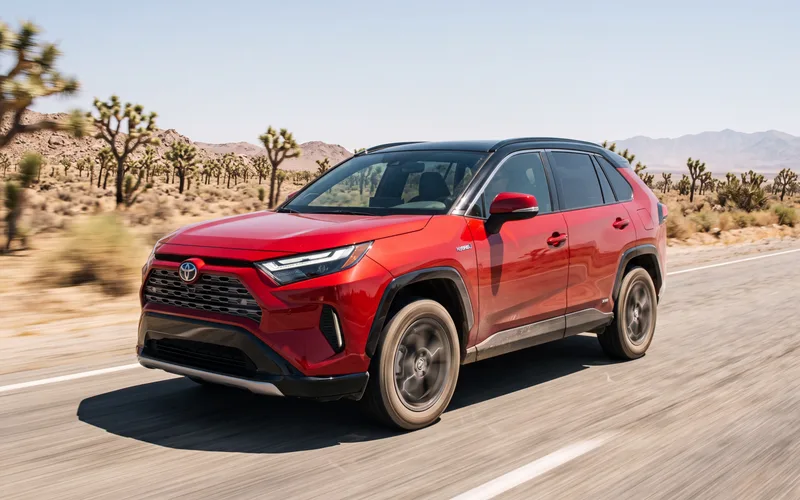 Toyota RAV4Compact SUVBetter at: Resale value
It gives up the driving polish but returns hybrid fuel economy, 37 cu ft of cargo and roughly 69% five-year resale — the strongest long-term financial case in the segment.
Compare 2.13C
2.13C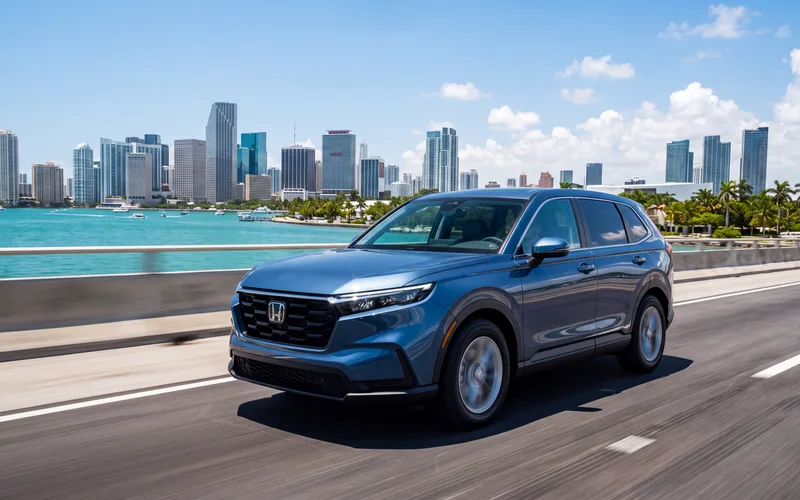 Honda CR-VCompact SUVBetter at: Cargo space
Nearly 8 cu ft more cargo behind the rear seats and 20 more with them folded, plus a hybrid and better rear-seat and visibility packaging, for shoppers who need the space the CX-50 doesn't have.
Compare 2.42C+
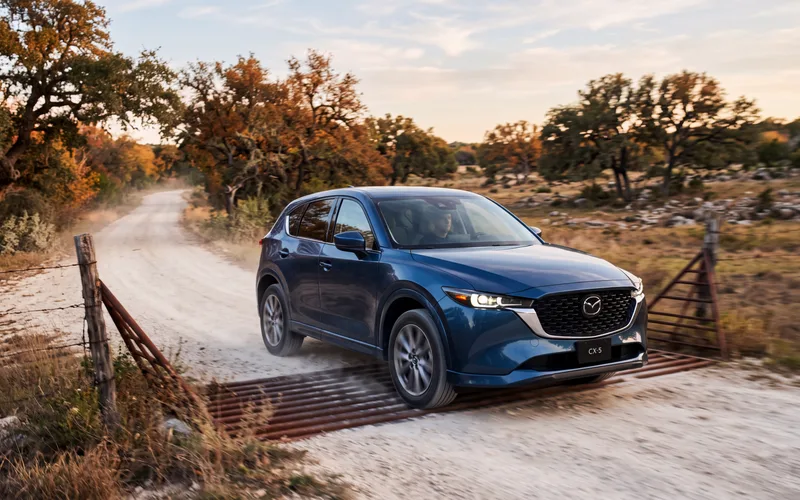 Mazda CX-5Compact SUVBetter at: Space and tech
The same Mazda driving character and interior in a taller, roomier body with a 15.6-inch Google built-in screen — the pick if you want the brand without the CX-50's packaging and tech compromises.
CompareSubject scores by year
Hover or tap a score to see what moved it versus the year before. A corner mark flags a big swing.
| Year | Performance | Efficiency | Safety | Space | Cost | Reliability | Tech | Use-case | Driving | Value |
|---|---|---|---|---|---|---|---|---|---|---|
| 2026 | 42 | 55 | 77 | 49 | 64 | 77 | 65 | 62 | 71 | 71 |
| 2025 | 38 | 65 | 74 | 47 | 62 | 71 | 66 | 68 | 75 | 80 |
| 2024 | 39 | 60 | 79 | 48 | 62 | 75 | 63 | 64 | 75 | 84 |
| 2023 | 38 | 61 | 78 | 44 | 56 | 76 | 62 | 66 | 73 | 80 |
Compare two years
Best fit & conditions
Higher scores mean a better fit for that use case. Learn more about use-case fit →
Subject profile
Trims & configurations
5 trimsScores above reflect the volume trim. Per-trim specs and scores are rolling out — the full lineup:
Academic Probation · NHTSA safety recalls
Mar 14, 2025Trailer hitchesThe trailer hitch assembly bolts may loosen and cause the assembly to separate from the vehicle body during towing or normal driving conditions.
Defect
Mazda North American Operations (Mazda) is recalling certain 2024-2025 CX-50 vehicles equipped with Mazda Genuine Accessory trailer hitches. The trailer hitch assembly bolts may loosen and cause the assembly to separate from the vehicle body during towing or normal driving conditions.
Risk
A detached trailer hitch assembly can create a road hazard, increasing the risk of a crash.
Remedy
Dealers will tighten the trailer hitch bolts, free of charge. Owner notification letters were mailed April 4, 2025. Mazda's number for this recall is 7225C.
NHTSA campaign 25V167000 ↗Manufacturer no. 7225C63 vehicles potentially affected (all models in the campaign)Owners notified Apr 4, 2025Filed by Mazda North American OperationsFiled as CX-50, CX-50 HYBRID
6 recalls on other model years of the CX-50 (2023, 2025)
Oct 29, 2025Suspension: critical fastenersThe front suspension fastener bolts may not be tightened properly, which can result in suspension component and/or wheel detachment.
Defect
Mazda North American Operations is recalling certain 2025 CX-50 and CX-50 Hybrid vehicles. The front suspension fastener bolts may not be tightened properly, which can result in suspension component and/or wheel detachment.
Risk
Wheel or suspension component detachment can cause a loss of vehicle control and a loss of drive power, increasing the risk of a crash.
Remedy
Dealers will inspect the front suspension fastener bolts and, if necessary, replace and tighten them, free of charge. Owner notification letters were mailed December 10, 2025. Owners may contact Mazda customer service at 1-800-222-5500 Option 6. The manufacturer's number for this recall is 7925J. Vehicle Identification Numbers (VINs) involved in this recall became searchable on NHTSA.gov beginning November 3, 2025.
NHTSA campaign 25V737000 ↗Manufacturer no. 7925J1,007 vehicles potentially affected (all models in the campaign)Owners notified Dec 10, 2025Filed by Mazda North American OperationsFiled as CX-50, CX-50 HYBRIDJun 18, 2025Electrical system: propulsion system: hybrid management: power control unit/module (hpcu): software · Engine and engine cooling: engine: engine control module (ecu/ecm)The transmission gear shifter can be moved from Neutral to Drive without pressing the brake pedal.
Defect
Mazda North American Operations (Mazda) is recalling certain 2025 CX-50 Hybrid vehicles. The transmission gear shifter can be moved from Neutral to Drive without pressing the brake pedal.
Risk
Shifting into gear without the brake pedal depressed can result in unexpected vehicle movement, increasing the risk of a crash.
Remedy
Dealers will replace the Engine Control Module (ECM) and reprogram the Hybrid Control Unit (HCU) and Power Control Unit (PCU), free of charge. Interim owner notification letters were mailed August 15, 2025. A second notice will be sent once the remedy becomes available, anticipated late summer 2025. Owners may contact Mazda customer service at 1-800-222-5500 Option 6. The manufacturer's number for this recall is 7725F.
NHTSA campaign 25V418000 ↗Manufacturer no. 7725F22 vehicles potentially affected (all models in the campaign)Owners notified Sep 24, 2025Filed by Mazda North American OperationsFiled as CX-50 HYBRIDJun 18, 2025Air bags: air bag/restraint control module: softwareIncorrectly configured module software may cause the air bag to deploy improperly.
Defect
Mazda North American Operations (Mazda) is recalling certain CX-50 Hybrid and CX-50 vehicles. Incorrectly configured module software may cause the air bag to deploy improperly.
Risk
An air bag that deploys improperly increases the risk of injury during a crash.
Remedy
Dealers will update the module software, free of charge. Owner notifications will not be mailed due to all vehicles being under Mazda dealer control. Owners may contact Mazda customer service at 1-800-222-5500 Option 6. The manufacturer's number for this recall is 7625F.
NHTSA campaign 25V413000 ↗Manufacturer no. 7625F2 vehicles potentially affected (all models in the campaign)Filed by Mazda North American OperationsFiled as CX-50, CX-50 HYBRIDSep 3, 2024Exterior lighting: headlights · Forward collision avoidance: automatic emergency braking · Lane departure: sensing system: cameraA malfunction in the forward sensing camera (FSC) may prevent the automatic emergency braking system and the lane-keep assist system from functioning. In addition, the headlights will not automatically adjust from high beams to low beams as intended.
Defect
Mazda North American Operations (Mazda) is recalling certain 2024 Mazda 3, CX-30, and 2025 CX-50 vehicles. A malfunction in the forward sensing camera (FSC) may prevent the automatic emergency braking system and the lane-keep assist system from functioning. In addition, the headlights will not automatically adjust from high beams to low beams as intended.
Risk
Automatic braking, steering assist, and headlight control systems that do not function as intended can increase the risk of a crash.
Remedy
Dealers will inspect and replace the forward sensing camera as necessary, free of charge. Owner notification letters were mailed September 24, 2024. Owners may contact Mazda customer service at 1-800-222-5500, Option 6. Mazda's number for this recall is 6824H.
NHTSA campaign 24V649000 ↗Manufacturer no. 6824H672 vehicles potentially affected (all models in the campaign)Owners notified Sep 24, 2024Filed by Mazda North American OperationsFiled as CX-50 HYBRIDApr 18, 2023Service brakes, hydraulic: antilock/traction control/electronic limited slip: control unit/moduleThe anti-lock brake system (ABS) Hydraulic Control Unit (HCU) may be damaged, which can result in reduced braking ability.
Defect
Mazda North American Operations (Mazda) is recalling certain 2022-2023 CX-30 and 2023 CX-50 vehicles. The anti-lock brake system (ABS) Hydraulic Control Unit (HCU) may be damaged, which can result in reduced braking ability.
Risk
Reduced braking ability can increase the distance required to stop the vehicle, increasing the risk of a crash.
Remedy
Dealers will inspect and replace the ABS HCU, as necessary, free of charge. Owner notification letters were mailed June 12, 2023. Owners may contact Mazda customer service at 1-800-222-5500 Option 6. Mazda's number for this recall is 5823D.
NHTSA campaign 23V275000 ↗Manufacturer no. 5823D2,410 vehicles potentially affected (all models in the campaign)Owners notified Jun 12, 2023Filed by Mazda North American OperationsFiled as CX-50Mar 1, 2023Trailer hitchesThe trailer hitch harness may detach and become damaged, which can result in inoperative trailer lights and/or brakes.
Defect
Mazda North America Operations (Mazda) is recalling certain 2023 CX-50 vehicles equipped with a Mazda Genuine Accessory trailer hitch. The trailer hitch harness may detach and become damaged, which can result in inoperative trailer lights and/or brakes.
Risk
Towing a trailer with inoperative lights or brakes can increase the risk of a crash.
Remedy
Dealers will repair the trailer hitch harness, free of charge. Owner notification letters were mailed April 11, 2023. Owners may contact Mazda customer service at 1-800-222-5500 option 6. Mazda's number for this recall is 5723B.
NHTSA campaign 23V135000 ↗Manufacturer no. 5723B560 vehicles potentially affected (all models in the campaign)Owners notified Apr 11, 2023Filed by Mazda North American OperationsFiled as CX-50
Source: NHTSA Office of Defects Investigation recall database, model years 2023–2026. Recalls are listed by model year as the manufacturer filed them; whether a specific car is affected depends on its VIN — check a VIN at nhtsa.gov ↗. NHTSA model names matched to this page: CX-50, CX-50 HYBRID.
Detailed scoring by subject
1Performance & PowertrainThe CX-50's lowest-graded category.0.57F
The volume 2.5 S uses Mazda's naturally aspirated 2.5-liter four-cylinder with 187 hp. The optional turbo makes 227 hp on regular fuel or 256 hp on 93 octane.
The representative naturally aspirated engine produces 186 lb-ft. Turbo trims offer substantially more torque but are not the volume configuration.
MotorTrend's instrumented test of the standard-engine CX-50 recorded 8.5 seconds, slow for the class but preferable to using the much quicker optional turbo as the representative figure.
The naturally aspirated engine provides predictable, linear response without turbo lag, but reviewers describe its acceleration as merely adequate and strained rather than effortless. It is acceptably smooth, not a class benchmark.
The conventional six-speed responds promptly with needed downshifts, but its limited ratio count and occasional rough upshifts and downshifts keep it in the lower half of the acceptable band.
The maximum applies to all turbo packages when properly equipped; the representative naturally aspirated trims are limited to 2,000 lb.
i-Activ AWD is standard on every 2024 trim, accompanied by Mi-Drive Sport and Off-Road modes. It lacks a low range or locking differentials, keeping it below true 4WD systems.
Standard AWD, an Off-Road mode, 8.3–8.6 inches of clearance, and the Meridian Edition's all-terrain tires make it credible for rough roads and light trails. There is no low range, locker, crawl control, or serious underbody hardware.
For the exact 2024 model year, buyers could choose naturally aspirated or turbocharged 2.5-liter gas engines. That covers economy and performance needs, but there was no 2024 hybrid, PHEV, or EV; the CX-50 Hybrid arrived for 2025.
2Efficiency & RangeOne of the CX-50's weakest categories.2.06C
The volume naturally aspirated AWD configuration earns 27 MPG combined. Turbo models fall to 25 MPG combined.
EPA rates the representative 2.5 S AWD at 24 MPG city, a mid-pack gas-SUV result.
EPA rates the representative 2.5 S AWD at 30 MPG highway; standard AWD makes the result respectable but not class-leading.
EPA economy and Mazda's 15.9-gallon tank imply about 429 miles on the combined cycle. Published EPA city/highway range figures are 381.6 and 477.0 miles.
EPA's current standardized estimate for the 27-MPG 2024 CX-50 4WD is $2,300 per year. This is normalized only against other gas SUVs.
The volume 2.5 S runs at full rated output on inexpensive 87-octane regular unleaded. Even the turbo can use regular, although premium raises its output, so there is no mandatory premium-fuel penalty anywhere in the range.
3SafetyOne of the CX-50's strongest categories.3.40B+
The 2024 CX-50 AWD earned NHTSA's maximum five-star overall rating; its frontal and side ratings are five stars and rollover is four stars.
Vehicles built after August 2023 earned 2024 Top Safety Pick+ with Good results in small overlap, both moderate-overlap tests, and the updated side test. Earlier 2024 builds retain an Acceptable updated-side result, so the score stops short of perfect.
Every 2024 package includes all five rubric essentials: pedestrian-capable AEB, stop-and-go adaptive cruise, lane-departure prevention, blind-spot monitoring, and rear cross-traffic alert. Rear automatic braking remains optional on upper equipment, but the standard suite is unusually complete for a mainstream compact SUV.
Standard Smart Brake Support performed well in the daytime child test but was less decisive in the tougher nighttime adult scenarios, yielding an IIHS Acceptable rather than Good rating. This is capable AEB with verified night detection, but not top-tier performance.
Blind Spot Monitoring and Rear Cross Traffic Alert are standard throughout the range, providing excellent availability. They are primarily warning systems, however, while rear automatic braking is optional and there is no trailer-aware blind-zone or safe-exit function.
Lane-departure warning and corrective Lane Keep Assist are standard, but the 2024 system is departure mitigation rather than continuous lane centering. It can nudge the vehicle back near a boundary but does not deliver the smooth, sustained highway centering expected in the upper bands.
Mazda Radar Cruise Control includes Stop & Go and is standard, giving the volume trim useful full-range adaptive cruise. Its lack of continuous lane centering keeps it from functioning as a fully integrated highway-assist system.
No hands-free highway-driving system was offered on any 2024 CX-50 trim. All available assistance remains hands-on and driver-supervised.
The scored naturally aspirated volume trims have Acceptable LED projector headlights with automatic high beams; only turbo trims gain Good-rated curve-adaptive units. Illumination is solid on straights and right curves but weaker on left curves.
Forward visibility is generally straightforward, but the CX-50's low roof, relatively small rear glass, and thick rear pillars create ordinary-to-below-average rear-quarter sightlines. Standard blind-spot monitoring helps, while the 360-degree View Monitor is confined to the Turbo Premium Plus rather than the volume gas trim.
IIHS gives the CX-50 its top G+ rating: both outboard positions have visible, open-access lower anchors, and the center can borrow anchors while retaining its own tether. Three-across use is constrained because borrowed center anchors make the outboard anchors unavailable, but day-to-day installation is exceptionally easy.
4Space & ComfortOne of the CX-50's weakest categories.1.22D
The 2024 CX-50 is a two-row, five-passenger compact SUV.
The volume 2.5 S Preferred lacks the panoramic moonroof and uses the higher published headroom figure.
Front legroom is adequate but not unusually generous for a compact SUV.
Second-row headroom is competitive for the segment.
The published rear legroom is strong, though the low roof and cabin shape can make the space feel less expansive than leading rivals.
There is no third row, so the CX-50 cannot accommodate more than five occupants.
Cargo volume increased for 2024 but remains near the bottom of the compact-crossover class.
Maximum volume is modest relative to the CX-50's long exterior footprint.
Everyday storage is well designed, but there is no standout underfloor, onboard-power, or other class-leading solution.
Front seats have good padding and bolstering plus useful power lumbar adjustment on the Preferred, while the rear bench is flatter.
The 2024 dampers improve comfort and the Preferred's 17-inch wheels help, but the chassis remains firmer than many rivals.
Highway wind and road noise are mild, though the naturally aspirated engine becomes conspicuous under full throttle.
The volume Preferred has dual-zone climate control, rear vents, and heated front seats; ventilation, heated rear seats, and heated steering wheel require much higher trims.
5Cost of OwnershipMid-pack among this car's ten categories.2.21C
Mazda dropped the prior 2.5 S entry trim for 2024, making the well-equipped AWD Select the least expensive version. The delivered price uses the destination charge in effect when the 2024 model launched.
The naturally aspirated Preferred is the representative volume gas trim; it adds the power driver's seat, heated front seats and power liftgate without moving into the expensive turbo range. Its launch MSRP plus destination is used consistently with the base-price figure.
Edmunds projects fairly high scheduled-maintenance and wear-item spending at its 15,000-mile-per-year assumption, partly offset by modest repair expense during the warranty years. This is the exact sum of its two relevant ownership-cost categories for the volume gas trim.
Projected retention is strong for a mainstream compact SUV, reflecting Mazda's solid used-market standing, though the young nameplate has less long-run history than a CR-V or RAV4. The figure is the inverse of CarEdge's published five-year depreciation estimate.
Mazda provides the mainstream-industry baseline, at the floor of the scoring band. It matches Toyota and Honda but trails Hyundai and Kia's five-year basic coverage.
The powertrain term is the segment baseline and therefore the floor of the normalization band. This score concerns the requested gasoline CX-50, so no later hybrid-system coverage applies.
Mazda includes roadside assistance and a useful three-year connected-services trial, but no nationwide complimentary scheduled maintenance. That earns the bottom of the basic-perks band and trails rivals with factory-paid service visits.
$33,025 volume-trim price minus its estimated resale value after 5 years (63% retained, or about $20,806) leaves about $12,219 in depreciation. Add the projected $7,415 in 5-year maintenance and repairs, and owning this vehicle for 5 years costs about $19,634 in total.
6Reliability & QualityGrades above the middle of the scale.3.08B
Owner-survey evidence is broadly average rather than exceptional. Consumer Reports calls the 2024 CX-50 about average, while J.D. Power's model-specific quality and reliability score is 72/100.
Mazda's recent record is above average but not consistently top-five across studies. It placed sixth in Consumer Reports' 2024 reliability ranking, while J.D. Power's 2024 VDS put Mazda only slightly better than the industry average.
The recall record is unusually light and the only campaign is a very small accessory-hitch torque issue, not a core vehicle-system defect. The score stops short of the top band because the young generation has accumulated numerous service communications, including a documented panoramic-roof rattle procedure.
The volume gas trim's naturally aspirated 2.5-liter Skyactiv-G and conventional six-speed automatic are mature, comparatively low-complexity components used across Mazda products for roughly a decade. This is a substantially more proven combination than many newer turbocharged or continuously variable rival powertrains.
The CX-50's padded surfaces, high-quality switchgear, and sophisticated design are class-leading for mainstream-compact-SUV money. Less-visible hard plastic keeps it below true luxury-car quality, but reviewers consistently identify the cabin as a standout.
Professional reviews generally praise assembly and detailing, but owner reports and Mazda's own service procedure show a recurring panoramic-roof rattle concern. That supports a solid but not exceptional score for the Alabama-built model.
About 543 U.S. stores provide adequate nationwide metropolitan coverage, but the network is materially thinner than Toyota, Honda, or Ford and can mean longer travel in rural areas. Mazda reported moderate 56.2% national service retention in late 2024.
The mature engine and transmission, domestic assembly, and component sharing with high-volume Mazdas support normal mainstream parts pricing and availability. The model-specific aftermarket is younger and smaller than for a RAV4 or CR-V, so it does not merit the cheap-and-abundant top band.
7Technology & InfotainmentMid-pack among this car's ten categories.2.23C
For 2024, the 10.25-inch center display is standard from the Select upward, including the volume Preferred.
Physical controls and the rotary controller reduce distraction once learned, but reviewers repeatedly criticize the menu logic and limited touch behavior.
Both wireless Apple CarPlay and wireless Android Auto are standard across the 2024 lineup.
Voice commands and useful connected navigation functions exist, but built-in Mazda Navigation is restricted to the top Turbo Premium Plus and most buyers will use phone projection.
The standard eight-speaker system is adequate, and an unusually good 12-speaker Bose upgrade begins on the Premium trim.
A 7-inch TFT display is standard, but it is only a partial-digital cluster rather than a large configurable full-digital panel.
The connected platform supports OTA and online updates, but there is no evidence of broad feature-adding whole-vehicle updates.
MyMazda provides remote start, lock/unlock, vehicle status, locate, and send-to-car functions, but the included service lasts only three years and there is no phone-as-key.
Four USB ports cover both rows, but they are older USB-A ports and wireless charging starts on Premium for 2024; no household outlet is offered.
Advanced proximity keyless entry, push-button start, app-based remote start, and a power liftgate on Preferred provide strong everyday convenience, without phone-as-key or hands-free liftgate operation.
The volume trim has the mandatory rear camera but neither parking sensors nor surround view; both are confined to the top Turbo Premium Plus.
The windshield-projected Active Driving Display is available, but not on the volume Preferred and only reaches upper naturally aspirated and turbo trims.
8Use-Case FitMid-pack among this car's ten categories.2.33C+
Wide-opening rear doors, accessible anchors, and useful rear legroom help, but rear-facing seats can squeeze tall front occupants and cargo volume trails family-focused rivals.
Strong IIHS crash performance combines with standard blind-spot monitoring, lane support, and adaptive cruise on the affordable Select and Preferred trims.
Four people get good legroom, rear vents, a quiet cabin, and four USB ports, but the firm ride, flat rear bench, and modest luggage space impose limits.
Good ergonomics, conventional controls, standard adaptive cruise, and 2024's lighter steering calibration make commuting easy, although the base engine is slow and the six-speed can shift less smoothly than modern rivals.
Regular fuel and 27 mpg combined are acceptable, but efficiency is unremarkable for a compact SUV and there was no 2024 hybrid.
A 36-foot curb-to-curb turning diameter is manageable, but the long hood and 185.8-inch body require care and the volume trim lacks sensors or surround view.
Standard AWD and a 2,000-pound tow rating handle light duty, but the naturally aspirated volume trim has modest power and cargo capacity and is not a serious work vehicle.
The conventional naturally aspirated engine and six-speed automatic are straightforward, but this relatively new crossover generation lacks a fleet-work record and its upscale cabin is not abuse-focused.
Factory crossbars, roof-platform accessories, and a hitch are available, but there is no onboard AC power, washable cabin, or meaningful commercial-upfit ecosystem.
Supportive front seats, low highway noise, adaptive cruise, and roughly 477 miles of EPA highway range make it a sound tourer, tempered by firm ride tuning and modest luggage room.
Standard AWD, Off-Road mode, 8.3 inches of clearance, a useful roof-accessory catalog, and 2,000-pound towing make it notably adventure-ready, though not a technical off-roader.
A low, long cargo floor, 60/40 folding seat, roof hardware, and hitch support outdoor gear, but 31.4/56.3 cubic feet is near the class floor.
9Driving ExperienceOne of the CX-50's strongest categories.3.10B
The CX-50 has unusually disciplined body control and cornering composure for a mainstream compact SUV, further refined by 2024 damper revisions.
Accurate, quick, naturally substantial steering is a class strength, though it can still feel heavy at parking speeds.
Large four-wheel discs, conventional hydraulic feel, ABS, and EBD provide reassuring, predictable braking without evidence that stopping performance leads the class.
The naturally aspirated 2.5 and six-speed automatic deliver direct, predictable response, but 187 hp yields slow acceleration and some tests note bumpy shifts.
The engine is unobtrusive in normal cruising but becomes loud when the modest-output base powertrain is worked hard.
Mazda publishes an 18-foot curb-to-curb radius, equivalent to the requested 36-foot diameter.
The low, carlike driving position, excellent physical climate controls, and Preferred's power lumbar seat are driver-focused, though the long hood and rotary infotainment learning curve modestly reduce ease.
Even with the slower base engine, the precise steering, taut chassis, conventional automatic, and standard AWD give this compact SUV genuine enthusiast appeal.
10Value & Market PositionThe CX-50's best-graded category.3.69A-
The $31,675 delivered Select includes AWD, a 10.25-inch display, wireless smartphone integration, dual-zone climate control, rain-sensing wipers and a broad active-safety suite. Heated seats and the power liftgate require the still-reasonable Preferred, keeping it just below loaded-at-base territory.
The Preferred delivers standard AWD, an upscale cabin and engaging road manners for about $33,000 delivered, and reviewers found its pricing competitive with similarly equipped CR-V and RAV4 trims. Mediocre fuel economy and less cargo/rear-seat room than the leaders prevent standout bargain status.
Eight trims span sensible naturally aspirated, turbo and adventure-themed choices from $30,300 to $43,300 before destination. Standard AWD and one transmission reduce drivetrain flexibility, and the hybrid did not join the U.S. range until model year 2025.
The young nameplate nearly doubled U.S. sales in 2024 and repeatedly set monthly records, demonstrating unusually fast acceptance even though absolute volume remained below segment leaders. Its trajectory is firmly that of a fast riser.
Mazda carries a strong enthusiast and premium-adjacent image built on design, cabins and driving dynamics, giving the CX-50 more emotional pull than many mainstream rivals. Its smaller footprint and weaker resale halo than Toyota or Honda cap the score below aspirational-brand territory.
Mazda repeatedly supported the 2024 CX-50 with 0% financing and later substantial customer cash as the model year cleared out. Those were meaningful, broadly useful buyer benefits, though the heavier late-year cash also reflected inventory pressure.
The 2024 CX-50 was only the second model year of the generation that began for 2023, so platform and design freshness were excellent. It was not a pure carry-over: Mazda fitted new dampers, recalibrated steering and comfort/convenience updates, while the hybrid remained a 2025-model change.
The CX-50 combined Editors' Choice recognition with an outright win in Car and Driver's eight-SUV comparison, unusually strong evidence in a crowded class. Edmunds also ranked it narrowly ahead of the CR-V, while space and economy criticisms keep it short of universal dominance.