
The verdict
A mixed-report compact suv, strong on value and held back by performance.
Overall 2.30 (C+) across 10 graded subjects. Its strongest is value & market position at 3.46 (B+), its weakest performance & powertrain at 0.50 (F). 8 of 10 subjects grade at C− or better.
Jump to scoresStrengths
- Value & Market Position
- Driving Experience
- Safety
What holds it back
- Performance & Powertrain
- Space & Comfort
- Cost of Ownership
Top alternatives
Cars shoppers cross-shop with the Mazda CX-50 2.56C+
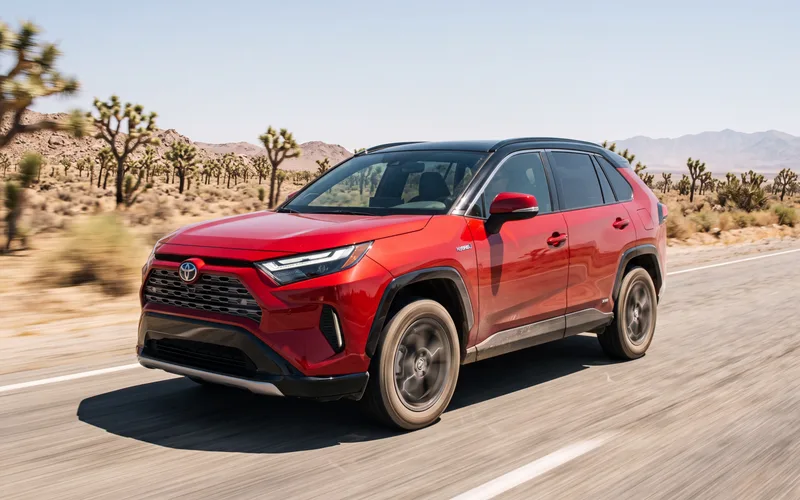 Toyota RAV4Compact SUVBetter at: Resale value
It gives up the driving polish but returns hybrid fuel economy, 37 cu ft of cargo and roughly 69% five-year resale — the strongest long-term financial case in the segment.
Compare 2.13C
2.13C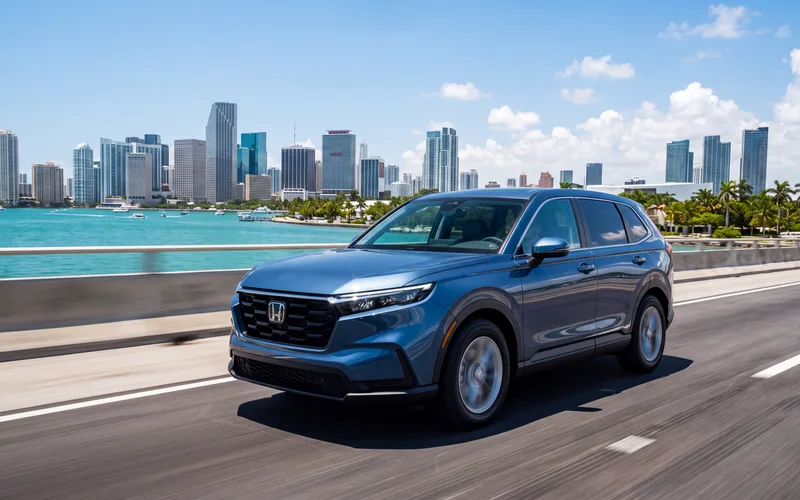 Honda CR-VCompact SUVBetter at: Cargo space
Nearly 8 cu ft more cargo behind the rear seats and 20 more with them folded, plus a hybrid and better rear-seat and visibility packaging, for shoppers who need the space the CX-50 doesn't have.
Compare 2.42C+
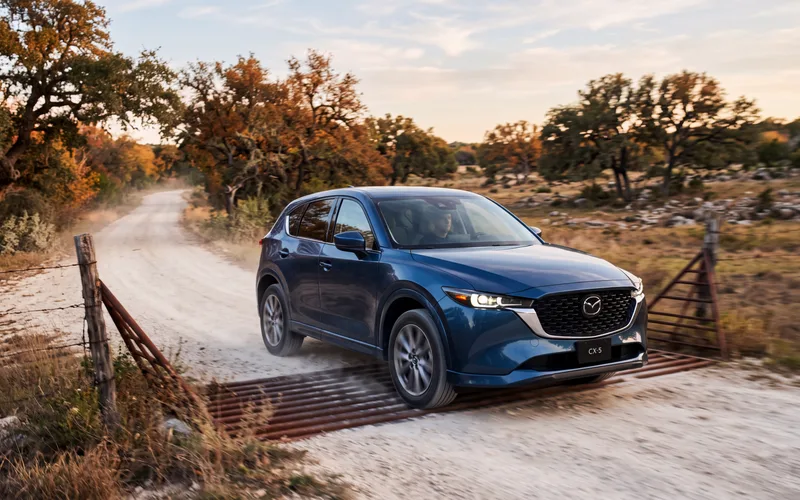 Mazda CX-5Compact SUVBetter at: Space and tech
The same Mazda driving character and interior in a taller, roomier body with a 15.6-inch Google built-in screen — the pick if you want the brand without the CX-50's packaging and tech compromises.
CompareSubject scores by year
Hover or tap a score to see what moved it versus the year before. A corner mark flags a big swing.
| Year | Performance | Efficiency | Safety | Space | Cost | Reliability | Tech | Use-case | Driving | Value |
|---|---|---|---|---|---|---|---|---|---|---|
| 2026 | 42 | 55 | 77 | 49 | 64 | 77 | 65 | 62 | 71 | 71 |
| 2025 | 38 | 65 | 74 | 47 | 62 | 71 | 66 | 68 | 75 | 80 |
| 2024 | 39 | 60 | 79 | 48 | 62 | 75 | 63 | 64 | 75 | 84 |
| 2023 | 38 | 61 | 78 | 44 | 56 | 76 | 62 | 66 | 73 | 80 |
Compare two years
Best fit & conditions
Higher scores mean a better fit for that use case. Learn more about use-case fit →
Subject profile
Trims & configurations
5 trimsScores above reflect the volume trim. Per-trim specs and scores are rolling out — the full lineup:
Academic Probation · NHTSA safety recalls
Oct 29, 2025Suspension: critical fastenersThe front suspension fastener bolts may not be tightened properly, which can result in suspension component and/or wheel detachment.
Defect
Mazda North American Operations is recalling certain 2025 CX-50 and CX-50 Hybrid vehicles. The front suspension fastener bolts may not be tightened properly, which can result in suspension component and/or wheel detachment.
Risk
Wheel or suspension component detachment can cause a loss of vehicle control and a loss of drive power, increasing the risk of a crash.
Remedy
Dealers will inspect the front suspension fastener bolts and, if necessary, replace and tighten them, free of charge. Owner notification letters were mailed December 10, 2025. Owners may contact Mazda customer service at 1-800-222-5500 Option 6. The manufacturer's number for this recall is 7925J. Vehicle Identification Numbers (VINs) involved in this recall became searchable on NHTSA.gov beginning November 3, 2025.
NHTSA campaign 25V737000 ↗Manufacturer no. 7925J1,007 vehicles potentially affected (all models in the campaign)Owners notified Dec 10, 2025Filed by Mazda North American OperationsFiled as CX-50, CX-50 HYBRIDJun 18, 2025Electrical system: propulsion system: hybrid management: power control unit/module (hpcu): software · Engine and engine cooling: engine: engine control module (ecu/ecm)The transmission gear shifter can be moved from Neutral to Drive without pressing the brake pedal.
Defect
Mazda North American Operations (Mazda) is recalling certain 2025 CX-50 Hybrid vehicles. The transmission gear shifter can be moved from Neutral to Drive without pressing the brake pedal.
Risk
Shifting into gear without the brake pedal depressed can result in unexpected vehicle movement, increasing the risk of a crash.
Remedy
Dealers will replace the Engine Control Module (ECM) and reprogram the Hybrid Control Unit (HCU) and Power Control Unit (PCU), free of charge. Interim owner notification letters were mailed August 15, 2025. A second notice will be sent once the remedy becomes available, anticipated late summer 2025. Owners may contact Mazda customer service at 1-800-222-5500 Option 6. The manufacturer's number for this recall is 7725F.
NHTSA campaign 25V418000 ↗Manufacturer no. 7725F22 vehicles potentially affected (all models in the campaign)Owners notified Sep 24, 2025Filed by Mazda North American OperationsFiled as CX-50 HYBRIDJun 18, 2025Air bags: air bag/restraint control module: softwareIncorrectly configured module software may cause the air bag to deploy improperly.
Defect
Mazda North American Operations (Mazda) is recalling certain CX-50 Hybrid and CX-50 vehicles. Incorrectly configured module software may cause the air bag to deploy improperly.
Risk
An air bag that deploys improperly increases the risk of injury during a crash.
Remedy
Dealers will update the module software, free of charge. Owner notifications will not be mailed due to all vehicles being under Mazda dealer control. Owners may contact Mazda customer service at 1-800-222-5500 Option 6. The manufacturer's number for this recall is 7625F.
NHTSA campaign 25V413000 ↗Manufacturer no. 7625F2 vehicles potentially affected (all models in the campaign)Filed by Mazda North American OperationsFiled as CX-50, CX-50 HYBRIDMar 14, 2025Trailer hitchesThe trailer hitch assembly bolts may loosen and cause the assembly to separate from the vehicle body during towing or normal driving conditions.
Defect
Mazda North American Operations (Mazda) is recalling certain 2024-2025 CX-50 vehicles equipped with Mazda Genuine Accessory trailer hitches. The trailer hitch assembly bolts may loosen and cause the assembly to separate from the vehicle body during towing or normal driving conditions.
Risk
A detached trailer hitch assembly can create a road hazard, increasing the risk of a crash.
Remedy
Dealers will tighten the trailer hitch bolts, free of charge. Owner notification letters were mailed April 4, 2025. Mazda's number for this recall is 7225C.
NHTSA campaign 25V167000 ↗Manufacturer no. 7225C63 vehicles potentially affected (all models in the campaign)Owners notified Apr 4, 2025Filed by Mazda North American OperationsFiled as CX-50, CX-50 HYBRIDSep 3, 2024Exterior lighting: headlights · Forward collision avoidance: automatic emergency braking · Lane departure: sensing system: cameraA malfunction in the forward sensing camera (FSC) may prevent the automatic emergency braking system and the lane-keep assist system from functioning. In addition, the headlights will not automatically adjust from high beams to low beams as intended.
Defect
Mazda North American Operations (Mazda) is recalling certain 2024 Mazda 3, CX-30, and 2025 CX-50 vehicles. A malfunction in the forward sensing camera (FSC) may prevent the automatic emergency braking system and the lane-keep assist system from functioning. In addition, the headlights will not automatically adjust from high beams to low beams as intended.
Risk
Automatic braking, steering assist, and headlight control systems that do not function as intended can increase the risk of a crash.
Remedy
Dealers will inspect and replace the forward sensing camera as necessary, free of charge. Owner notification letters were mailed September 24, 2024. Owners may contact Mazda customer service at 1-800-222-5500, Option 6. Mazda's number for this recall is 6824H.
NHTSA campaign 24V649000 ↗Manufacturer no. 6824H672 vehicles potentially affected (all models in the campaign)Owners notified Sep 24, 2024Filed by Mazda North American OperationsFiled as CX-50 HYBRID
2 recalls on other model years of the CX-50 (2023)
Apr 18, 2023Service brakes, hydraulic: antilock/traction control/electronic limited slip: control unit/moduleThe anti-lock brake system (ABS) Hydraulic Control Unit (HCU) may be damaged, which can result in reduced braking ability.
Defect
Mazda North American Operations (Mazda) is recalling certain 2022-2023 CX-30 and 2023 CX-50 vehicles. The anti-lock brake system (ABS) Hydraulic Control Unit (HCU) may be damaged, which can result in reduced braking ability.
Risk
Reduced braking ability can increase the distance required to stop the vehicle, increasing the risk of a crash.
Remedy
Dealers will inspect and replace the ABS HCU, as necessary, free of charge. Owner notification letters were mailed June 12, 2023. Owners may contact Mazda customer service at 1-800-222-5500 Option 6. Mazda's number for this recall is 5823D.
NHTSA campaign 23V275000 ↗Manufacturer no. 5823D2,410 vehicles potentially affected (all models in the campaign)Owners notified Jun 12, 2023Filed by Mazda North American OperationsFiled as CX-50Mar 1, 2023Trailer hitchesThe trailer hitch harness may detach and become damaged, which can result in inoperative trailer lights and/or brakes.
Defect
Mazda North America Operations (Mazda) is recalling certain 2023 CX-50 vehicles equipped with a Mazda Genuine Accessory trailer hitch. The trailer hitch harness may detach and become damaged, which can result in inoperative trailer lights and/or brakes.
Risk
Towing a trailer with inoperative lights or brakes can increase the risk of a crash.
Remedy
Dealers will repair the trailer hitch harness, free of charge. Owner notification letters were mailed April 11, 2023. Owners may contact Mazda customer service at 1-800-222-5500 option 6. Mazda's number for this recall is 5723B.
NHTSA campaign 23V135000 ↗Manufacturer no. 5723B560 vehicles potentially affected (all models in the campaign)Owners notified Apr 11, 2023Filed by Mazda North American OperationsFiled as CX-50
Source: NHTSA Office of Defects Investigation recall database, model years 2023–2026. Recalls are listed by model year as the manufacturer filed them; whether a specific car is affected depends on its VIN — check a VIN at nhtsa.gov ↗. NHTSA model names matched to this page: CX-50, CX-50 HYBRID.
Detailed scoring by subject
1Performance & PowertrainThe CX-50's lowest-graded category.0.50F
The representative 2.5 S Preferred uses the naturally aspirated engine's 187-hp rating; the gas range also offers a substantially stronger turbo.
The volume naturally aspirated engine's output is adequate but modest for a modern compact SUV; turbo models provide much more torque.
Consumer Reports' instrumented result for the standard 187-hp powertrain is slow for the class, although the optional turbo is considerably quicker.
The naturally aspirated four-cylinder is predictable and responsive enough in ordinary driving, but its merely adequate output makes it work hard and keeps it from feeling polished or effortless under load.
The six-speed automatic downshifts promptly, but documented roughness on both upshifts and downshifts prevents an above-average refinement score.
The category calls for the model-range maximum: properly accessorized turbo models tow 3,500 pounds, while the representative naturally aspirated trim is limited to 2,000 pounds.
AWD is standard on every gas and hybrid package, and Mi-Drive adds dedicated Sport and Off-Road calibrations. It lacks a low range or locking differential, so it stops short of the most sophisticated off-road systems.
Standard AWD, Off-Road mode, 8.3 inches of clearance on 17-inch gas trims, and a Meridian Edition with all-terrain tires make it credible for trails and poor weather. Modest approach angles and no locker, low range, or crawl control keep it in light-duty territory.
Three meaningfully distinct choices cover value, performance, and efficiency: naturally aspirated gas, turbo gas, and a newly introduced hybrid. There is no plug-in or full-EV choice, but breadth is excellent for a mainstream compact SUV.
2Efficiency & RangeMid-pack among this car's ten categories.2.42C+
The 2025 naturally aspirated gas model gained one combined MPG through internal updates and is competitive among non-hybrid AWD compact SUVs.
The 2025 internal engine updates improved the naturally aspirated model's city rating by one MPG from the preceding model year.
The updated 2.5 S delivers a solid highway figure despite standard AWD and a conventional six-speed automatic.
A 15.9-gallon tank and 28-MPG combined rating give the gas CX-50 useful but not exceptional compact-SUV range.
EPA's standard 15,000-mile assumptions put annual regular-gas cost in the middle of the gas-SUV field.
The representative naturally aspirated engine runs at full rated output on inexpensive 87-octane regular unleaded. Even the turbo can use regular, though premium unlocks its maximum output.
3SafetyOne of the CX-50's strongest categories.2.99B-
The gas AWD 2025 CX-50 earned NHTSA's maximum five-star overall score, with five stars in frontal and side testing and four stars for rollover resistance.
The 2025 CX-50 is an IIHS Top Safety Pick+ with Good ratings in both small-overlap tests, the updated moderate-overlap test, and the updated side test. Its Poor whiplash-prevention rating is the notable blemish and keeps it below the very top of the band.
The volume gas 2.5 S Preferred includes AEB with pedestrian detection, lane-departure warning, lane-keep assist, blind-spot monitoring, rear cross-traffic alert, driver-attention alert, vehicle-exit warning, and rear-seat alert. Adaptive cruise is the key omission: for 2025 Mazda adds MRCC with Stop & Go only from the 2.5 S Premium upward.
IIHS rates the revised 2025 standard system Good for pedestrian prevention, including nighttime scenarios, and Acceptable in the tougher vehicle-to-vehicle 2.0 test. It avoided every passenger-car collision but only reduced speed in most motorcycle-target runs, preventing a higher score.
Blind-spot monitoring, rear cross-traffic alert, and the newly added vehicle-exit warning are standard even on the volume Preferred. These are alert-oriented systems on this trim; active Blind Spot Assist and rear automatic braking require the gas Turbo Premium Plus, so the score stays just below the active-intervention band.
Lane-departure warning and lane-keep assist are standard, but the volume Preferred only provides corrective lane intervention rather than continuous centering. Mazda's highway-speed Cruising & Traffic Support centering is restricted to the much more expensive Turbo Premium and Turbo Premium Plus.
The volume 2.5 S Preferred has conventional cruise rather than adaptive cruise. Full-speed MRCC with Stop & Go starts on the 2.5 S Premium, while combined highway-speed centering and adaptive cruise requires a Turbo Premium model, making capable highway assistance available but substantially paywalled.
No hands-free driving system is offered on any 2025 CX-50. Even the top Cruising & Traffic Support system is explicitly a hands-on assistance feature.
The volume Preferred's LED projectors earn an IIHS Acceptable rating and include automatic high beams. Good-rated curve-adaptive headlights are limited to the three turbo trims, matching the rubric's Good-upper-trims/Acceptable-volume-trims band.
The CX-50's low, wide stance and rear-quarter bodywork create ordinary compact-SUV blind zones, though standard blind-spot monitoring helps. The volume Preferred has only a reversing camera; meaningful camera compensation via a 360-degree See-Through View monitor is confined to Turbo Premium Plus.
IIHS awards the CX-50 its top Good+ LATCH rating: the two complete outboard positions have accessible anchors, and the center position can borrow lower anchors and has its own tether. That extra usable position supports multiple-seat flexibility, though borrowed anchors cannot be used simultaneously by the adjacent seat.
4Space & ComfortOne of the CX-50's weakest categories.1.17D
The CX-50 is exclusively a five-seat, two-row SUV.
The volume Preferred trim lacks the Premium trim's panoramic moonroof, so the no-moonroof measurement applies.
Front legroom is adequate but not unusually generous for a compact SUV.
The upright portion of the roof preserves useful rear head clearance on the no-moonroof Preferred.
The published number is competitive, though reviewers find the rear seat less spacious in practice than segment leaders.
No CX-50 trim offers a third row.
Useful for everyday luggage, but modest among compact SUVs.
The low roof and styling constrain maximum volume relative to boxier compact SUVs.
Door pockets, console storage, split-folding rear seats and a low cargo floor cover daily needs, but there is no standout storage innovation or household outlet on the volume trim.
Supportive front seats, power lumbar and heating suit long drives, while the rear bench and below-average perceived room keep it short of benchmark status.
The Preferred's 17-inch wheels soften impacts, but the chassis remains firmer than most rivals over broken pavement.
Noise is acceptably controlled at cruise, though the naturally aspirated engine becomes audible under acceleration and the cabin is not a segment quietness leader.
The Preferred includes dual-zone climate, rear vents and heated front seats; ventilation, heated rear seats and a heated wheel require higher gas trims.
5Cost of OwnershipOne of the CX-50's weakest categories.2.19C
The naturally aspirated 2.5 S Select is the least expensive 2025 CX-50 and includes AWD as standard.
The 2.5 S Preferred is the representative high-volume gas trim: it sits one step above base and adds heated seats, a power driver's seat, power liftgate, heated mirrors/wipers and wireless charging without the Premium's larger price jump.
Edmunds provides a trim-specific five-year projection for the scored 2.5 S Preferred AWD, making it the closest available estimate to this configuration.
The CX-50's projected 37% five-year depreciation is better than the compact-SUV norm and benefits from Mazda's improving demand, although the nameplate has only a short used-market history.
Mazda's new-vehicle limited warranty is the mainstream segment minimum rather than an ownership-cost advantage.
The powertrain term is conventional for a mainstream compact SUV and trails the 10-year coverage offered by Hyundai and Kia.
There is no factory-included scheduled-maintenance plan. Mazda does include roadside assistance for the 3-year/36,000-mile basic-warranty period and one complimentary year of Connected Services, so the package offers modest perks but remains in the no-complimentary-maintenance band.
$33,345 volume-trim price minus its estimated resale value after 5 years (63% retained, or about $21,007) leaves about $12,338 in depreciation. Add the projected $6,081 in 5-year maintenance and repairs, and owning this vehicle for 5 years costs about $18,419 in total.
6Reliability & QualityGrades above the middle of the scale.2.79B-
The 2025 CX-50 earns an average model-specific result rather than a top-tier one: J.D. Power scores Quality & Reliability at 71/100, while Consumer Reports recommends the model but places its predicted reliability in the middle band. Its short history since the 2023 model year limits confidence in long-term outcomes.
Mazda has a strong recent multi-source record: it ranked sixth in Consumer Reports' 2024 reliability survey and second among mass-market brands in the 2025 J.D. Power VDS. That supports a high score, though the record is not consistently top-five across every study.
Four safety campaigns cover subsets of gas 2025 CX-50s, including forward-camera/ADAS failure, loose trailer-hitch bolts, incorrectly configured airbag software, and improperly tightened front-suspension bolts. Most populations were small and remedies straightforward, but ADAS impairment and possible wheel or suspension separation are serious enough to prevent an average-or-better score.
The volume gas trim's naturally aspirated 2.5-liter Skyactiv-G four-cylinder and conventional six-speed automatic are mature, widely used Mazda components with a long service history and no broad failure pattern. This is substantially less complex and better proven than many newer turbo, hybrid, or CVT alternatives, though the CX-50 application itself dates only to 2023.
The volume 2.5 S Preferred has leatherette seating, a leather-wrapped wheel and shifter, and generous pleasant-touch surfaces; reviewers consistently judge the cabin richer than mainstream norms. Some hard plastic remains on rear doors and lower-touch areas, keeping it just short of unequivocally class-leading.
Professional reviews generally find the Alabama-built CX-50 solid and well assembled, but owner reports repeatedly mention panoramic-roof, dash, and trim rattles plus easily marked interior plastics. The evidence supports generally sound assembly with scattered consistency issues rather than exceptional fit and finish.
Mazda's 543 independently owned U.S. dealerships provide adequate national support, particularly in metropolitan areas, but the footprint is materially thinner than high-volume Toyota, Ford, or Chevrolet networks and can leave rural buyers with longer trips. Mazda reports substantial investment in modernized showrooms and digital service processes.
The conventional 2.5-liter gas powertrain shares mature components across Mazda's lineup, supporting normal parts supply and independent-shop serviceability, while U.S. assembly and a mainstream dealer network help routine availability. Costs are not bargain-basement and CX-50-specific body or trim parts have a smaller aftermarket than major segment leaders.
7Technology & InfotainmentMid-pack among this car's ten categories.2.43C+
The larger display became standard fleet-wide for 2025, replacing the prior base 8.8-inch screen.
The crisp, quick system and physical commander minimize distraction, but limited touch operation and menu learning divide reviewers.
Both wireless Apple CarPlay and Android Auto are standard on all gas trims.
Standard Alexa Built-in materially improves natural-language control, but Mazda Online Navigation is confined to select upper trims and most owners will use phone maps.
The volume trim's eight-speaker system is adequate; the well-regarded 12-speaker Bose upgrade begins at Premium.
A standard 7-inch TFT supplies useful information but remains a partial digital cluster with limited configurability.
Connected-service and navigation online updates exist, but Mazda does not advertise feature-adding whole-vehicle OTA updates.
MyMazda supplies core remote start, lock, locate and status functions, but lacks a digital key and connected services become subscription-gated after the trial.
Four standard USB-C ports and Preferred-standard wireless charging are strong for the class, though no household outlet is provided.
Advanced keyless entry, push-button start, app remote start and a programmable power liftgate are standard on the Preferred, but phone-as-key and hands-free liftgate are absent.
The volume trim has only the federally required rear camera; surround view and parking sensors are restricted to Turbo Premium Plus.
A full-color windshield HUD is offered, but only on Premium Plus and upper turbo trims rather than the volume Preferred.
8Use-Case FitMid-pack among this car's ten categories.2.58C+
Wide-opening rear doors, easy LATCH anchors and 31.4 cu ft of cargo work well for a small family, though rear space is not class-leading.
Top Safety Pick+ crash performance combines with broad standard ADAS and new-for-2025 rear-seat alert and exit warning.
Supportive heated fronts, rear vents and useful luggage room serve four occupants, but firm ride and middling rear spaciousness limit long-trip ease.
Good visibility, tidy controls, supportive seating and a conventional automatic help, though the base engine is slow and stop-and-go adaptive cruise begins one trim higher.
The gas Preferred's 28-mpg combined rating is respectable for standard AWD but trails the most efficient compact-SUV gas and hybrid choices.
A 36-foot turning circle is agile for an SUV, but the long hood and lack of parking sensors or surround camera on Preferred require care.
Standard AWD, roof rails and 2,000-lb towing handle light utility tasks, but this is not a heavy-duty work vehicle.
A conventional naturally aspirated engine and six-speed automatic are relatively simple, but the young nameplate lacks a long fleet-duty record and its upscale cabin is not abuse-focused.
Roof rails, cargo tie-downs and a dealer hitch provide basics, but there is no onboard AC power, washable work cabin or broad commercial upfit ecosystem.
Supportive seats, a roughly 445-mile combined theoretical range and stable highway manners make a good tourer, offset by firm ride and basic lane support on Preferred.
Standard AWD, 8.3-inch clearance, Off-Road mode, roof rails and 2,000-lb towing make it unusually adventure-ready for a mainstream compact crossover.
A broad cargo floor, 60/40 folding seat, roof rails and hitch support bikes and camping gear, but 56.3 cu ft maximum volume is modest.
9Driving ExperienceOne of the CX-50's strongest categories.3.10B
Taut body control, strong grip and unusual chassis engagement place the CX-50 near the top of mainstream compact SUVs.
Accurate, naturally weighted and communicative steering is a signature strength.
The conventional brake system has progressive everyday manners and adequate stopping confidence, without evidence of class-leading test distances.
The naturally aspirated engine has linear response and the six-speed avoids CVT behavior, but 187 hp feels slow and some shifts can be bumpy.
The four-cylinder is generally unobtrusive at cruise but grows coarse and vocal when worked for acceleration.
A compact 36-foot diameter aids U-turns and tight urban maneuvering.
The supportive power seat, good control placement and physical commander create a driver-focused cockpit, although the long hood and rearward visibility take acclimation.
Even with the slower base engine, the responsive chassis and steering make this one of the few compact SUVs enthusiasts routinely recommend.
10Value & Market PositionThe CX-50's best-graded category.3.46B+
Even the Select includes standard AWD, a 10.25-inch display, wireless phone integration, leatherette upholstery, dual-zone climate control and a broad safety suite. The volume Preferred adds the comfort features most buyers seek, though adaptive cruise with stop-and-go waits until Premium.
At $33,345 delivered, the Preferred combines standard AWD, useful comfort equipment, upscale cabin presentation and above-average driving dynamics at a competitive compact-SUV price. Its 187-hp engine is merely adequate, and desirable Premium features raise the price, keeping it shy of standout-bargain status.
Ten packages span naturally aspirated gas, turbo gas and hybrid powertrains, all with AWD, with sensible steps from Select through Premium Plus and adventure-oriented Meridian. The absence of FWD is a minor limitation, but the overall choice is unusually broad.
The CX-50 is not a CR-V/RAV4-scale segment leader, but it became a fast-rising, meaningful seller: December 2024 set a record and full-year 2025 volume rose strongly again. That trajectory demonstrates excellent acceptance for a young nameplate.
Mazda has a loyal enthusiast following and a near-premium design-and-driving image that strengthens the CX-50's appeal and resale. It remains a smaller mainstream marque without the mass awareness of Toyota or Honda or the status of a luxury badge.
During its model-year sales window the 2025 CX-50 was commonly supported with low promotional APR offers and customer cash, providing real buyer savings without the fire-sale pattern of a rejected model. Programs varied by month and region and generally could not be combined.
The 2025 model is only the third model year of the generation that began for 2023. It also received a new hybrid choice, internal efficiency updates to the 2.5 S engine, expanded safety technology and Alexa Built-in, making it fresher than a simple carry-over without constituting a full redesign.
The 2025 CX-50 earned Car and Driver Editors' Choice and ranked third of 14 compact SUVs in MotorTrend's ranking, reflecting broad praise for handling, styling and safety. It is strongly regarded but not a dominant comparison-test winner or 10Best/NACTOY champion.