
The verdict
A mixed-report compact suv, strong on safety and held back by performance.
The 2026 CX-50 is the compact SUV for people who still care how a car drives: Mazda's best-in-class steering, a real six-speed automatic instead of a CVT, and i-Activ AWD standard on every trim from about $32,400 delivered. The trade is packaging and efficiency — 31.4 cu ft of cargo behind the rear seats is the smallest in the mainstream class, and the volume 187-hp 2.5 manages only 26 MPG combined and a mid-8-second 0-60. Safety and durability are genuine strengths (5-star NHTSA, the full i-Activsense suite standard, a 2.5L engine in production since 2012), while the 10.25-inch screen and 56% five-year resale are the clearest reasons to look elsewhere. Buy it for the drive, the standard AWD and the 8.3-inch ground clearance; skip it if you haul gear, kids' luggage or want hybrid-grade fuel bills without stepping up to the Hybrid trims.
Jump to scoresStrengths
- Drives like nothing else in the class
- Full safety kit standard on the cheapest trim
- Low-risk mechanicals and a cabin above its price
What holds it back
- The smallest cargo hold in the class
- Expensive to fuel unless you buy the Hybrid
- The volume engine is slow
Top alternatives
Cars shoppers cross-shop with the Mazda CX-50 2.56C+
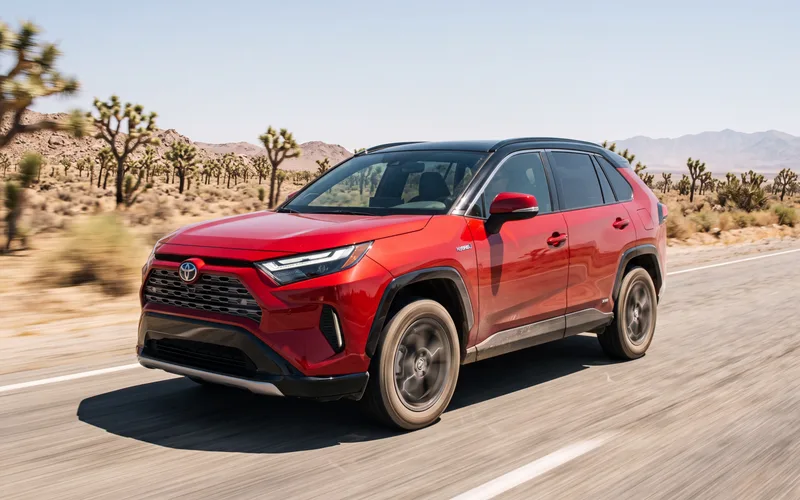 Toyota RAV4Compact SUVBetter at: Resale value
It gives up the driving polish but returns hybrid fuel economy, 37 cu ft of cargo and roughly 69% five-year resale — the strongest long-term financial case in the segment.
Compare 2.13C
2.13C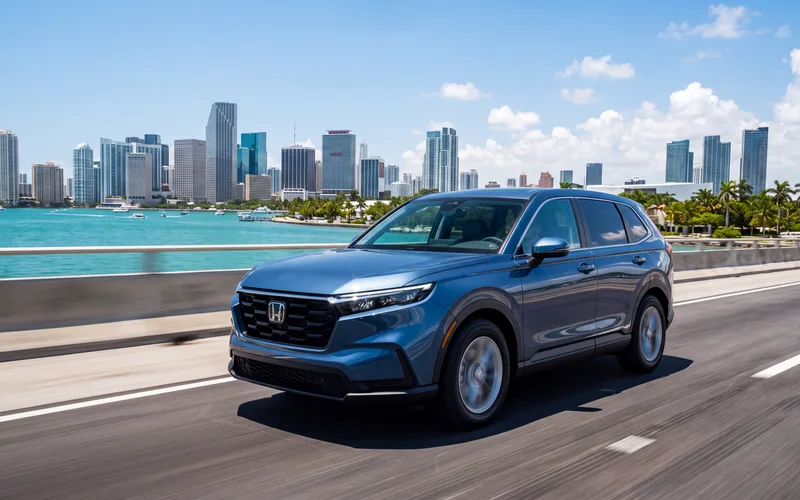 Honda CR-VCompact SUVBetter at: Cargo space
Nearly 8 cu ft more cargo behind the rear seats and 20 more with them folded, plus a hybrid and better rear-seat and visibility packaging, for shoppers who need the space the CX-50 doesn't have.
Compare 2.42C+
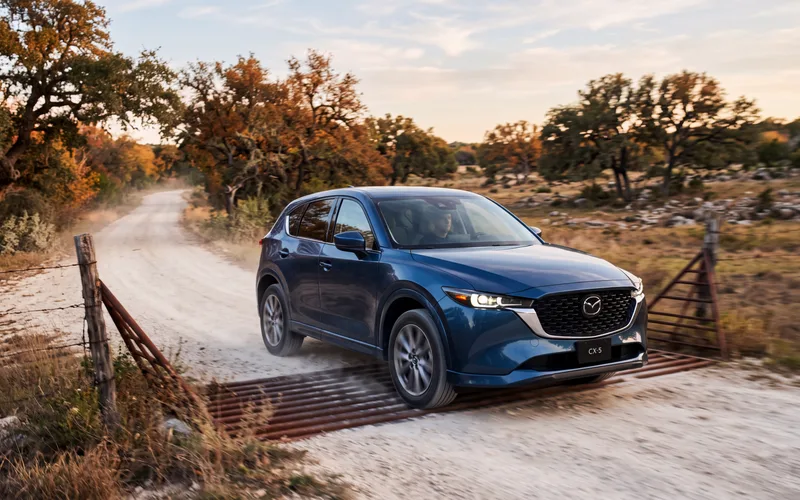 Mazda CX-5Compact SUVBetter at: Space and tech
The same Mazda driving character and interior in a taller, roomier body with a 15.6-inch Google built-in screen — the pick if you want the brand without the CX-50's packaging and tech compromises.
CompareSubject scores by year
Hover or tap a score to see what moved it versus the year before. A corner mark flags a big swing.
| Year | Performance | Efficiency | Safety | Space | Cost | Reliability | Tech | Use-case | Driving | Value |
|---|---|---|---|---|---|---|---|---|---|---|
| 2026 | 42 | 55 | 77 | 49 | 64 | 77 | 65 | 62 | 71 | 71 |
| 2025 | 38 | 65 | 74 | 47 | 62 | 71 | 66 | 68 | 75 | 80 |
| 2024 | 39 | 60 | 79 | 48 | 62 | 75 | 63 | 64 | 75 | 84 |
| 2023 | 38 | 61 | 78 | 44 | 56 | 76 | 62 | 66 | 73 | 80 |
Compare two years
Best fit & conditions
Higher scores mean a better fit for that use case. Learn more about use-case fit →
Subject profile
Trims & configurations
5 trimsScores above reflect the volume trim. Per-trim specs and scores are rolling out — the full lineup:
Academic Probation · NHTSA safety recalls
No NHTSA safety recall is on record for the 2026 Mazda CX-50. Other model years of the CX-50 have 7 — listed below.
7 recalls on other model years of the CX-50 (2023–2025)
Oct 29, 2025Suspension: critical fastenersThe front suspension fastener bolts may not be tightened properly, which can result in suspension component and/or wheel detachment.
Defect
Mazda North American Operations is recalling certain 2025 CX-50 and CX-50 Hybrid vehicles. The front suspension fastener bolts may not be tightened properly, which can result in suspension component and/or wheel detachment.
Risk
Wheel or suspension component detachment can cause a loss of vehicle control and a loss of drive power, increasing the risk of a crash.
Remedy
Dealers will inspect the front suspension fastener bolts and, if necessary, replace and tighten them, free of charge. Owner notification letters were mailed December 10, 2025. Owners may contact Mazda customer service at 1-800-222-5500 Option 6. The manufacturer's number for this recall is 7925J. Vehicle Identification Numbers (VINs) involved in this recall became searchable on NHTSA.gov beginning November 3, 2025.
NHTSA campaign 25V737000 ↗Manufacturer no. 7925J1,007 vehicles potentially affected (all models in the campaign)Owners notified Dec 10, 2025Filed by Mazda North American OperationsFiled as CX-50, CX-50 HYBRIDJun 18, 2025Electrical system: propulsion system: hybrid management: power control unit/module (hpcu): software · Engine and engine cooling: engine: engine control module (ecu/ecm)The transmission gear shifter can be moved from Neutral to Drive without pressing the brake pedal.
Defect
Mazda North American Operations (Mazda) is recalling certain 2025 CX-50 Hybrid vehicles. The transmission gear shifter can be moved from Neutral to Drive without pressing the brake pedal.
Risk
Shifting into gear without the brake pedal depressed can result in unexpected vehicle movement, increasing the risk of a crash.
Remedy
Dealers will replace the Engine Control Module (ECM) and reprogram the Hybrid Control Unit (HCU) and Power Control Unit (PCU), free of charge. Interim owner notification letters were mailed August 15, 2025. A second notice will be sent once the remedy becomes available, anticipated late summer 2025. Owners may contact Mazda customer service at 1-800-222-5500 Option 6. The manufacturer's number for this recall is 7725F.
NHTSA campaign 25V418000 ↗Manufacturer no. 7725F22 vehicles potentially affected (all models in the campaign)Owners notified Sep 24, 2025Filed by Mazda North American OperationsFiled as CX-50 HYBRIDJun 18, 2025Air bags: air bag/restraint control module: softwareIncorrectly configured module software may cause the air bag to deploy improperly.
Defect
Mazda North American Operations (Mazda) is recalling certain CX-50 Hybrid and CX-50 vehicles. Incorrectly configured module software may cause the air bag to deploy improperly.
Risk
An air bag that deploys improperly increases the risk of injury during a crash.
Remedy
Dealers will update the module software, free of charge. Owner notifications will not be mailed due to all vehicles being under Mazda dealer control. Owners may contact Mazda customer service at 1-800-222-5500 Option 6. The manufacturer's number for this recall is 7625F.
NHTSA campaign 25V413000 ↗Manufacturer no. 7625F2 vehicles potentially affected (all models in the campaign)Filed by Mazda North American OperationsFiled as CX-50, CX-50 HYBRIDMar 14, 2025Trailer hitchesThe trailer hitch assembly bolts may loosen and cause the assembly to separate from the vehicle body during towing or normal driving conditions.
Defect
Mazda North American Operations (Mazda) is recalling certain 2024-2025 CX-50 vehicles equipped with Mazda Genuine Accessory trailer hitches. The trailer hitch assembly bolts may loosen and cause the assembly to separate from the vehicle body during towing or normal driving conditions.
Risk
A detached trailer hitch assembly can create a road hazard, increasing the risk of a crash.
Remedy
Dealers will tighten the trailer hitch bolts, free of charge. Owner notification letters were mailed April 4, 2025. Mazda's number for this recall is 7225C.
NHTSA campaign 25V167000 ↗Manufacturer no. 7225C63 vehicles potentially affected (all models in the campaign)Owners notified Apr 4, 2025Filed by Mazda North American OperationsFiled as CX-50, CX-50 HYBRIDSep 3, 2024Exterior lighting: headlights · Forward collision avoidance: automatic emergency braking · Lane departure: sensing system: cameraA malfunction in the forward sensing camera (FSC) may prevent the automatic emergency braking system and the lane-keep assist system from functioning. In addition, the headlights will not automatically adjust from high beams to low beams as intended.
Defect
Mazda North American Operations (Mazda) is recalling certain 2024 Mazda 3, CX-30, and 2025 CX-50 vehicles. A malfunction in the forward sensing camera (FSC) may prevent the automatic emergency braking system and the lane-keep assist system from functioning. In addition, the headlights will not automatically adjust from high beams to low beams as intended.
Risk
Automatic braking, steering assist, and headlight control systems that do not function as intended can increase the risk of a crash.
Remedy
Dealers will inspect and replace the forward sensing camera as necessary, free of charge. Owner notification letters were mailed September 24, 2024. Owners may contact Mazda customer service at 1-800-222-5500, Option 6. Mazda's number for this recall is 6824H.
NHTSA campaign 24V649000 ↗Manufacturer no. 6824H672 vehicles potentially affected (all models in the campaign)Owners notified Sep 24, 2024Filed by Mazda North American OperationsFiled as CX-50 HYBRIDApr 18, 2023Service brakes, hydraulic: antilock/traction control/electronic limited slip: control unit/moduleThe anti-lock brake system (ABS) Hydraulic Control Unit (HCU) may be damaged, which can result in reduced braking ability.
Defect
Mazda North American Operations (Mazda) is recalling certain 2022-2023 CX-30 and 2023 CX-50 vehicles. The anti-lock brake system (ABS) Hydraulic Control Unit (HCU) may be damaged, which can result in reduced braking ability.
Risk
Reduced braking ability can increase the distance required to stop the vehicle, increasing the risk of a crash.
Remedy
Dealers will inspect and replace the ABS HCU, as necessary, free of charge. Owner notification letters were mailed June 12, 2023. Owners may contact Mazda customer service at 1-800-222-5500 Option 6. Mazda's number for this recall is 5823D.
NHTSA campaign 23V275000 ↗Manufacturer no. 5823D2,410 vehicles potentially affected (all models in the campaign)Owners notified Jun 12, 2023Filed by Mazda North American OperationsFiled as CX-50Mar 1, 2023Trailer hitchesThe trailer hitch harness may detach and become damaged, which can result in inoperative trailer lights and/or brakes.
Defect
Mazda North America Operations (Mazda) is recalling certain 2023 CX-50 vehicles equipped with a Mazda Genuine Accessory trailer hitch. The trailer hitch harness may detach and become damaged, which can result in inoperative trailer lights and/or brakes.
Risk
Towing a trailer with inoperative lights or brakes can increase the risk of a crash.
Remedy
Dealers will repair the trailer hitch harness, free of charge. Owner notification letters were mailed April 11, 2023. Owners may contact Mazda customer service at 1-800-222-5500 option 6. Mazda's number for this recall is 5723B.
NHTSA campaign 23V135000 ↗Manufacturer no. 5723B560 vehicles potentially affected (all models in the campaign)Owners notified Apr 11, 2023Filed by Mazda North American OperationsFiled as CX-50
Source: NHTSA Office of Defects Investigation recall database, model years 2023–2026. Recalls are listed by model year as the manufacturer filed them; whether a specific car is affected depends on its VIN — check a VIN at nhtsa.gov ↗. NHTSA model names matched to this page: CX-50, CX-50 HYBRID.
Detailed scoring by subject
1Performance & PowertrainThe CX-50's lowest-graded category.0.78F
Volume trim is a naturally aspirated 2.5 S (S Select / S Preferred / S Premium), rated 187 hp — modest for the compact-SUV band, which runs to 550 hp. The 2.5 Turbo and the Toyota-derived hybrid sit above it but are not the volume configuration.
The volume 2.5 NA's 186 lb-ft is low-mid in the 130–500 lb-ft SUV band; the turbo's 310–320 lb-ft would score far higher but is confined to the top Turbo trims.
The 187-hp NA engine hauling a standard-AWD compact SUV of roughly 3,700 lb yields a mid-8-second run — near the slow end of the segment. Buyers wanting real pace must step to the Turbo, which nearly halves the gap to the class quick cars.
Mazda's 2.5 NA is consistently described as smooth, linear and free of turbo lag, with clean throttle mapping — the weakness is a lack of low-end urgency and a coarse note when worked hard, not roughness. The hybrid's Toyota-sourced system is the least refined choice in the lineup, drawing engine-drone complaints under acceleration.
The Skyactiv-Drive 6-speed torque-converter automatic is a class benchmark for shift quality and decisiveness — it holds gears sensibly and never hunts, a clear win over the CVTs in the CR-V, RAV4 and Rogue. Only six ratios costs some efficiency, and the hybrid's eCVT gives up this advantage.
3,500 lbs when properly equipped with the turbo engine is at the top of the compact-SUV norm and 1,500 lbs better than the CX-5 — genuinely useful for a small camper or a pair of jet skis, though far short of the 8,000-lb band ceiling. The volume NA trim tows only 2,000 lbs.
i-Activ AWD with predictive torque distribution is standard on every CX-50 trim — not optional, not top-trim-only — and pairs with Mi-Drive modes including Off-Road and Towing. That is stronger than the CX-5 and Mazda3, where AWD availability varies by trim. No low range or locking differential keeps it out of the top band.
The CX-50 is Mazda's deliberately outdoorsy compact SUV: ~8.3 in of ground clearance (against 7.6 in for the CX-5), standard AWD, a Mi-Drive Off-Road mode, a load-rated roof platform, and a Meridian Edition with Falken Wildpeak A/T Trail all-terrains and underbody protection. It is still a unibody crossover with no low range, no locker and no real articulation — solid light-duty trail and trailhead ability, not off-road credibility.
Three genuinely distinct powertrains — 2.5L NA, 2.5L Turbo, and a Toyota-derived hybrid — cover economy, performance and efficiency buyers, and the registry lists the CX-50 as Gas + Hybrid for 2026. It stops short of the top band because there is no PHEV and no EV variant, unlike the RAV4's NA/hybrid/plug-in ladder.
2Efficiency & RangeOne of the CX-50's weakest categories.1.66D
The volume 2.5 S trims carry over the 187-hp naturally aspirated 2.5L Skyactiv-G with a 6-speed automatic and standard i-Activ AWD, rated at 26 MPG combined — low in the 18–45 MPG SUV band and behind every hybrid-equipped compact rival. Mazda's Toyota-sourced CX-50 Hybrid reaches 38 MPG combined, but it is confined to the three Hybrid trims and is not the volume configuration.
City driving is where the un-assisted 2.5 and its torque-converter 6-speed lose most, landing near the bottom of the 16–48 MPG SUV band and level with the Hyundai Tucson 2.5 AWD (24). The CX-50 Hybrid's 39 MPG city is a 63% improvement, which is exactly the gap a 2.5 S buyer gives up.
Highway is the gas CX-50's best figure — tall top-gear ratios and a lower, wagon-like roofline than most compact crossovers keep it at 30 MPG, mid-band in the 20–42 MPG SUV range and competitive with non-hybrid rivals (Tucson 30, CR-V 31) even though the Forester's 33 and hybrids' mid-to-high 30s are out of reach.
A roughly 14.9-gallon tank at 26 MPG combined gives about 387 miles between fills — below the midpoint of the 230–600 mi SUV band, ahead of the Tucson (372) and Sportage (358) but short of the CR-V (406) and Forester (481). The Hybrid clears roughly 530 miles on a smaller tank, the single largest practical gain the electrified trims offer.
At EPA standard assumptions the gas CX-50 burns about 577 gallons a year, roughly $2,250 — expensive within the $700–$3,200 SUV band and about $550/yr more than a CR-V and $700/yr more than the CX-50's own Hybrid. It matches the Tucson 2.5 AWD exactly, which draws the same figure off an identical 26 MPG rating.
The volume 2.5 S trims and the Hybrid both run on regular 87-octane with no premium recommendation and no special energy needs, which is the cheapest and simplest arrangement available. A couple of points come off the 90 earned by the CR-V, Forester, Tucson and the now turbo-free CX-5 because the CX-50 still sells 2.5 Turbo trims that need 93 octane to make their full 256 hp — regular is permitted there, but at 227 hp, so requirements are mixed across the lineup.
3SafetyThe CX-50's best-graded category.3.23B+
The CX-50 has held a 5-star NHTSA overall rating since the nameplate launched for 2023, and 2026 is a carryover year on the same body structure with no redesign, so the result carries forward. Confidence is capped at LOW because nhtsa.gov could not be read live on this run.
The CX-50 has been a consistent IIHS award winner across this generation with Good results in the small-overlap driver and passenger tests, the updated side test, roof strength and head restraints. The rear-occupant-focused updated moderate-overlap test is the likely limiter that holds it to Top Safety Pick rather than TSP+, the same pattern as its CX-5 sibling, so it sits at the bottom of the top band rather than clearly inside it.
i-Activsense is standard on every CX-50 trim including the base 2.5 S Select, bundling Smart Brake Support (AEB with pedestrian detection), Mazda Radar Cruise Control with Stop & Go, lane departure warning, lane keep assist, blind spot monitoring, rear cross traffic alert, driver attention alert and high beam control. Having blind-spot monitoring and full-speed adaptive cruise standard on the cheapest trim is the top band for this item; the deduction is for the 360-degree View Monitor and Cruising & Traffic Support remaining upper-trim equipment.
Smart Brake Support handles vehicle-to-vehicle and daytime pedestrian scenarios well, but Mazda's radar-and-camera set has not reached the top tier in the tougher combined day/night pedestrian front-crash-prevention evaluation. Solid rather than class-leading, and scored in line with the mechanically related CX-5.
Blind spot monitoring and rear cross traffic alert are standard on every CX-50 trim rather than locked to upper trims, which is better than much of the mainstream compact SUV class. Coverage is alert-based, with braking intervention limited to the rear-crossing function and no front cross-traffic coverage on this carryover generation, so it stops short of the fully active top band.
Lane departure warning and lane keep assist are standard across the range, and Cruising & Traffic Support adds true lane centering on upper trims. Mazda's lane keep assist behaves as a corrective nudge rather than continuous centering, and centering is unavailable on the volume lower trims — competent, but not the confident centering the top band describes.
Mazda Radar Cruise Control with full-speed stop-and-go is standard on every trim and is consistently praised for natural following distances and smooth resume; Cruising & Traffic Support layers lane centering on top for a genuine highway assist on upper trims. Held below the very top because that combined highway assist is not standard fleet-wide.
Mazda offers no hands-free highway driving system on any US model and the CX-50 is no exception — there is no BlueCruise, Super Cruise or equivalent, and Cruising & Traffic Support is a hands-on Level 2 system requiring steering-wheel contact. The prior placeholder score of 58 implied a capability that does not exist.
LED headlights with automatic high beam control are standard across the CX-50 range, and acceptable-or-better IIHS headlight ratings on every trim are a precondition of the Top Safety Pick awards this generation has earned. Adaptive front lighting that swivels with steering remains an upper-trim item, keeping it out of the top band.
The CX-50's low-and-wide styling is the weak point here: a chopped roofline, high beltline, thick rear roof pillars and shallow rear glass pinch the over-the-shoulder and rear three-quarter view more than in the taller CX-5. Forward sightlines are good, but the 360-degree View Monitor that would compensate is restricted to upper trims, leaving the volume car with only a reversing camera.
The CX-50 has the class-standard layout of two outboard lower-anchor positions and three top tethers, but its rear quarters are a tighter place to work than the redesigned CX-5's: a smaller door aperture and a sloping roofline make swinging a rear-facing seat into place awkward, and three seats across is a squeeze. Workable with effort rather than easy.
4Space & ComfortOne of the CX-50's weakest categories.1.24D
The CX-50 is a two-row, five-seat compact SUV in every US trim from S Select through Turbo Premium Plus and Meridian Edition; no third row or six-seat configuration has ever been offered. Scores low against the SUV band (4-8 seats), which rewards three-row capacity.
Mazda's published front headroom for the current CX-50 generation without the moonroof; the volume S Preferred trim adds a power moonroof that drops the figure to roughly 38.6 in. Mid-band for a compact SUV — the CX-50's deliberately low, wagon-like roofline costs it against taller rivals.
Front legroom is adequate but unremarkable for the class, landing in the lower third of the 40-44.5 in SUV band. Mazda prioritized a low, driver-focused seating position over outright front stretch-out room.
Second-row headroom is mid-band for a compact SUV. The CX-50's sloping roofline and standard-on-most-trims moonroof are the limiting factor — reviewers routinely note that taller rear passengers are closer to the headliner here than in a CR-V or Tucson.
Rear legroom is a genuine strength and the CX-50's best passenger-space number, sitting high in the 30-42 in SUV band. The 110.8 in wheelbase — long for a compact crossover — pays off in second-row knee room even though headroom does not follow.
The CX-50 has no third row in any trim or model year — it is a five-seat two-row crossover, and buyers needing seven seats must move up to the CX-90 or across to a Highlander/Palisade. Scored in the low band as a structural absence, not a data gap.
Cargo volume behind the second row is the CX-50's clearest packaging weakness — well short of the Honda CR-V (about 39 cu ft) and Toyota RAV4 (about 37 cu ft) despite the CX-50 being longer and wider than both. The low roof and steeply raked tailgate trade outright volume for styling.
Maximum cargo volume sits at the very bottom of the 55-100 cu ft SUV band and trails compact rivals badly — the CR-V offers roughly 76 cu ft and the RAV4 about 70. For a vehicle marketed on outdoor adventure, seats-folded capacity is the CX-50's least competitive dimension.
Competitive but conventional: usable center console and door bins, a covered cubby ahead of the shifter, underfloor storage in the cargo area and cargo tie-downs, plus a flat-folding 60/40 rear bench. Nothing approaching a Ford Bronco Sport's cargo-area work surface or a Telluride-class console — and the shallow cargo hold limits what the clever bits can do.
Front seats are a Mazda strength — well-bolstered, supportive over long stints, and praised by US reviewers as near-luxury for the price. The rear bench is the weaker half: it sits low with a short cushion and a reclined backrest, so adult thigh support on long trips falls behind the CR-V and Tucson.
Body control is excellent and the CX-50 stays composed on smooth roads, but the suspension is tuned firm and reviewers repeatedly flag a busy, sometimes brittle ride over broken pavement — most pronounced on Turbo and Meridian trims riding on 20-inch wheels. Sporting intent costs it compliance against softer-riding rivals.
Above average for a mainstream compact SUV — Mazda's NVH work keeps wind noise low and the interior feels more isolated than the class average — but tire and coarse-surface road noise intrude more than in the CX-5, especially on the Meridian Edition's more aggressive all-terrain-biased rubber.
Strong availability across the range: dual-zone automatic climate control and heated front seats arrive at the volume S Preferred trim, with a heated steering wheel, heated rear seats and ventilated front seats on Premium and above, plus rear vents and remote start. Held back from the top band by the lack of a separate rear climate zone.
5Cost of OwnershipMid-pack among this car's ten categories.2.31C+
The 2026 CX-50 carries over the first-generation car with modest price movement, opening near $32,400 delivered. The number is better than it looks against posted rivals because i-Activ AWD is standard on every CX-50 — the Honda CR-V LX ($32,315) and Toyota RAV4 LE ($33,350) base figures already in this dataset are front-drive, so on an AWD-for-AWD basis the CX-50 undercuts both.
The 2.5 S Preferred remains the CX-50's volume seller — heated seats, power liftgate and the larger centre display without turbo money — and should land near $35,200 delivered. That is close to the new CX-5 S Preferred (~$35,000) and undercuts the CR-V EX-L ($36,850) and RAV4 XLE Premium ($38,950) while sitting above the Tucson SEL ($34,000) and Sportage EX ($33,700).
The volume CX-50 runs the naturally aspirated 2.5 with a conventional torque-converter automatic — no turbo, no CVT, no hybrid system — which keeps it near the low end of the class. It gives back a little to the CX-5 (~$5,000) because AWD is standard rather than optional, adding driveline fluid services, and upper trims wear 20–21 inch tyres that are expensive to replace.
The heaviest-weighted item in the category and the CX-50's clearest weakness. Standard i-Activ AWD plays well in snow-belt used markets and the Toyota-based hybrid added for 2025 gives the range an electrified option the 2026 CX-5 lacks, so it should edge past its own showroom sibling (~54%) and the Korean pair (~53%). But it remains far behind the class benchmarks — RAV4 (~69%) and CR-V (~68%) — held back by lower production volume and a more niche outdoorsy positioning that narrows used demand.
Mazda offers the industry-baseline 3-year/36,000-mile bumper-to-bumper term — the floor of the 3–5 year normalization band, so it scores zero. It matches Toyota, Honda and Subaru but is two years short of the Hyundai and Kia 5-year/60,000-mile coverage that sets the compact-SUV benchmark.
The volume gas 2.5 S Preferred carries Mazda's baseline 5-year/60,000-mile powertrain term, the bottom of the 5–10 year band, so it scores zero against the 10-year/100,000-mile Hyundai and Kia coverage. Buyers who step up to the CX-50 Hybrid do gain separate long-term coverage on the hybrid system and battery, but that does not apply to the trim scored here.
Mazda bundles complimentary scheduled maintenance for 2 years/24,000 miles with 3 years/36,000 miles of roadside assistance and a Mazda Connected Services trial — a real, if short, included-service package covering the first few visits. That places it above rivals with no included maintenance at all (CR-V and Forester at 55, Sportage at 50, Escape at 28) and essentially level with ToyotaCare on the RAV4 (75), while remaining short of Hyundai's 3-year/36,000-mile program on the Tucson (90).
$35,200 volume-trim price minus its estimated resale value after 5 years (56% retained, or about $19,712) leaves about $15,488 in depreciation. Add the projected $5,300 in 5-year maintenance and repairs, and owning this vehicle for 5 years costs about $20,788 in total.
6Reliability & QualityOne of the CX-50's strongest categories.3.21B+
The CX-50 enters 2026 as a settled, fourth-model-year design rather than a fresh sheet — no redesign since its 2023 launch, so there are several years of real owner data behind it and none of the first-year exposure that caps its CX-5 sibling. It pairs that with the lowest-risk driveline in the compact class on the volume trim (carryover naturally aspirated 2.5 and a torque-converter six-speed, no CVT or dual-clutch) and Mazda's above-average nameplate record. Held out of the 80+ band by two model-specific drags: Mazda's persistent infotainment-and-controls complaints, which is what actually depresses its survey scores, and an assembly source with a shorter history than Hiroshima.
The two major studies disagree on Mazda, which caps this just under the top-5 band. Consumer Reports has repeatedly placed Mazda in the top tier of its brand predicted-reliability rankings, including a first-place finish and several top-three showings, while J.D. Power's Vehicle Dependability Study has consistently had the brand only around mid-pack. Strong on the CR side, unremarkable on the JDP side. Scored identically to the Mazda3, CX-5 and MX-5 in this dataset, as it is a brand-level rather than model-level judgment.
This generation has been on sale since 2023, so unlike a first-year car it has an actual record rather than an unearned clean sheet — and that record shows no systemic powertrain, fire or safety-system campaign, which is what the 0-49 band is reserved for. Mazda's overall campaign rate across the lineup is low. It sits in the typical band rather than the 80+ band because a launch-era vehicle from a then-new assembly plant accumulated the ordinary run of early-production campaigns, and Mazda's infotainment stack remains the brand's densest source of service bulletins.
The strongest card in the category, and the reason the model's other risks stay contained. The volume trim's 2.5L Skyactiv-G (PY-series) has been in continuous production since 2012 with a 200,000-mile-plus reputation, driving a conventional Skyactiv-Drive six-speed torque-converter automatic — so the CX-50 carries neither a CVT nor a dual-clutch, the two components that generate most of the driveline complaints against the Rogue, CR-V, Forester and Sportage. The hybrid variant is if anything even better protected, running Toyota's hybrid system, the most road-proven electrified driveline in the industry. Scored two points under the CX-5 only because the CX-50 range retains the 2.5 Turbo, whose boost-related wear exposure the CX-5 lineup has now shed.
Still comfortably class-leading for the money — Mazda's signature well-damped switchgear, broad soft-touch coverage on the upper dash and doors, and restrained trim detailing at a price where most rivals default to hard plastic. It scores below the CX-5 (87) and Mazda3 (88) rather than alongside them because the CX-50's brief is deliberately more rugged than plush: harder-wearing surfaces in the lower cabin and cargo area, and outdoorsy trim treatments on the Meridian Edition that trade some of the CX-5's showroom richness for durability.
Solid rather than exceptional. The CX-50 is the one Mazda built in the United States — at the Mazda Toyota Manufacturing joint venture in Huntsville, Alabama — and by 2026 that line has had roughly five years to settle, so the launch-era variance a new plant produces should be behind it, but it does not carry the long-run reputation of Mazda's Hiroshima operations. Structural solidity and panel consistency draw good reviewer notes. What holds this in the same range as the CX-5 is Mazda's below-average J.D. Power Initial Quality Study placement, which is widely attributed to infotainment and controls complaints rather than assembly defects but lands in the same measure.
Network density is the clearest ownership weakness and it is brand-level, so it applies to the CX-50 exactly as to every other Mazda in this dataset. Mazda operates roughly 560 US dealers against about 1,200-plus for Toyota and roughly 1,000 for Honda, leaving thin coverage across rural and smaller-metro markets — a buyer outside a major metro can face a materially longer drive for warranty work than a RAV4 or CR-V owner. Service satisfaction itself sits near the mainstream average and the Retail Evolution program has improved facility quality, but coverage is what sets the score.
Routine running costs are genuinely low — Mazda compact crossovers sit below both the compact-SUV and all-vehicle averages on annual repair-and-maintenance estimates — and the CX-50 has two structural advantages the rest of the brand lacks: it is assembled in Alabama, which shortens the supply line for service parts, and it shares its core driveline and much of its mechanical hardware with the high-volume CX-5. Four model years of production also mean a real used-parts and aftermarket supply now exists. It stays in the normal band because Mazda's US volume is a fraction of Toyota's or Honda's, so the aftermarket catalogue is thinner and a number of body, trim and electronic components remain effectively dealer-only.
7Technology & InfotainmentMid-pack among this car's ten categories.2.40C+
The 2026 CX-50 carries over the Mazda Connect hardware from the 2025 update: a 10.25-inch widescreen center display fitted as standard across the range, with no larger option anywhere in the trim walk. That is the smallest headline screen among mainstream compact SUVs now that the RAV4 and the redesigned CX-5 have moved to 12.9–15.6-inch units, and it lands low in the 7–15.5 in SUV normalization band.
Mazda Connect's strength is the part reviewers keep rewarding: a rotary Commander controller, real climate knobs and a volume dial, so the CX-50 asks for far fewer glances than screen-first rivals. Against that, the graphics and menu architecture are the oldest in the class, the 10.25-inch display is small, and knob-driven scrolling through lists is slower than simply touching a target — a system that is pleasant to live with but clearly a generation behind Hyundai/Kia and the new CX-5.
Wireless Apple CarPlay and wireless Android Auto are standard on every 2026 CX-50 trim including the base S Select — top-band coverage with no trim gate. It matters more here than on most rivals, because phone projection is how CX-50 owners work around the dated native software, and running projected apps is also where the display behaves as a conventional touchscreen.
The CX-50's embedded voice system is command-word driven rather than natural language, and the built-in navigation is a dated TomTom-based unit that is not even fitted to lower trims — S Select and S Preferred buyers rely entirely on phone projection. It works, but it is exactly the case the scoring band describes as functional and routinely bypassed for CarPlay or Google Maps.
A 12-speaker Bose Centerpoint surround system is available from the Premium grade upward and is an audible step beyond the standard eight-speaker setup, so a buyer who wants good sound can get it without reaching the flagship. Held below the top band because Bose in Mazda applications reads as competent rather than class-leading, and the CX-50's more road-noise-prone cabin works against it.
The CX-50 uses a 7-inch TFT panel in the middle of the instrument binnacle — part-analog on lower grades, a full-digital 7-inch meter that renders simulated dials on upper ones. It is crisp, but small and deliberately fixed in layout, with none of the reconfigurability of the 12.3-inch clusters now standard on Hyundai, Kia and VW rivals. Low end of the partial-digital band.
This is the CX-50's clearest software weakness. Mazda Connect on this platform has no whole-vehicle over-the-air program — map data is refreshed by USB/SD card or a dealer visit, and the connected-services link handles telematics rather than pushing features. A 2026 buyer should not expect the car to gain functions after purchase, which puts it at the top of the no-meaningful-OTA band rather than in it.
The MyMazda app covers the core remote set — start/stop, lock/unlock, vehicle locate, status and maintenance alerts — but it is subscription-gated once the included Connected Services trial lapses, there is no phone-as-key on the CX-50, and owners report sluggish command round-trips. Functional, not a reason to buy the car.
Front and rear USB-C charge points cover both rows and a wireless charging pad is available from the mid grades upward, which is adequate for a five-seat compact SUV. Kept mid-band because the port count is unremarkable, wireless charging is not standard on the volume trim, and there is no household AC outlet or onboard power provision of the kind the CX-50's outdoorsy marketing would suggest.
Advanced Keyless Entry with push-button start is standard on every trim and key-fob remote engine start is standard equipment rather than an app subscription — genuinely better than rivals that paywall remote start. What keeps it out of the top band is that the power liftgate is a trim-walk item with hands-free operation reserved for upper grades, and Mazda offers no phone-as-key on this vehicle.
A rear camera is standard and the 360-degree View Monitor arrives with front and rear parking sensors, but only on the upper Premium Plus, Turbo and special-edition grades — out of reach for the volume buyer. Image presentation also suffers for being rendered on the class's smallest center display, and Mazda offers no automated parking assist in this segment.
Mazda's Active Driving Display is among the better mainstream head-up displays — full colour, projected onto the windshield rather than a pop-up combiner, showing speed, navigation prompts and driver-assist status — and Mazda fits it from S Preferred upward instead of reserving it for the flagship, so the volume buyer gets it. Just short of the top band because the base S Select goes without, and rivals like the CR-V offer no HUD at all only because they skip the feature entirely.
8Use-Case FitMid-pack among this car's ten categories.2.21C
The CX-50's 110.8 in wheelbase buys a genuinely generous 39.8 in of rear legroom, so a rear-facing seat can go behind an adult driver without moving the front chair forward — but everything around it fights back. The sloping roofline and a smaller rear-door aperture than the CX-5's make swinging a bulky convertible seat into place awkward, and 31.4 cu ft behind the second row is the smallest cargo hold in the mainstream compact class, so a stroller plus a grocery run is a real Tetris problem rather than a non-event.
This is the CX-50's strongest family argument: a 5-star NHTSA overall rating and an IIHS award-winning structure, with the full i-Activsense bundle — AEB with pedestrian detection, full-speed radar cruise with stop-and-go, lane departure warning and keep assist, blind spot monitoring and rear cross traffic alert — standard on the cheapest 2.5 S Select rather than gated behind a package families have to stretch for. It stays out of the top band because the features that matter most with kids aboard are the ones still costing extra: the 360-degree View Monitor and rear parking sensors are upper-trim items, Mazda's pedestrian AEB is mid-pack in the tougher night-time evaluation, and a rear-seat occupant reminder could not be confirmed as CX-50 equipment.
Fine for four people on a two-hour run, compromised past that. The front seats are near-luxury, rear legroom is generous, and dual-zone climate with rear vents and available heated rear seats covers the basics. But the rear cushion is low, short and reclined, so adult thigh support fades on a long stint; headroom is pinched under the standard-on-most-trims moonroof; there is no independent rear climate zone and no rear entertainment; and the item's actual discriminator — luggage space with the seats occupied — is where the CX-50 finishes last in class at 31.4 cu ft, so four people's bags mean a roof box.
Mazda's fundamentals suit commuting well: the naturally aspirated 2.5 is smooth and lag-free, the Skyactiv-Drive six-speed is one of the best conventional automatics in the class and spares owners the CVT drone of a CR-V or RAV4, radar cruise with stop-and-go is standard on every trim, and the rotary Commander controller plus real climate and volume knobs mean far fewer glances away from traffic than screen-first rivals. What keeps it mid-band is 187 hp and an 8.6-second 0-60 that makes short freeway merges a planning exercise, a firm tune that gets busy over city expansion joints, and the class's most pinched over-the-shoulder view when changing lanes.
The volume 2.5 S Preferred is an expensive way to commute by 2026 standards — 26 MPG combined and just 24 MPG in the city work out to roughly $2,250 a year in fuel, some $550 more than a CR-V and $700 more than the CX-50's own Hybrid, and standard i-Activ AWD means there is no cheaper front-drive version to opt into. It clears the CX-5 because a 38 MPG Toyota-based hybrid does at least exist in the CX-50 range, and because consumables stay cheap: regular 87 octane, a conventional automatic with no CVT or turbo in the volume driveline, and below-average maintenance estimates.
The weakest use-case dimension. The CX-50 is styled long, low and wide — 185.8 in by 75.6 in, broader than a CR-V or RAV4 — and the shape that gives it presence also gives it a high beltline, thick rear roof pillars and shallow rear glass, so judging the back corners in a tight garage is guesswork. The volume 2.5 S Preferred compounds it with only a reversing camera: the 360-degree View Monitor and front and rear parking sensors that would fix the problem are locked to Premium Plus and above, and the camera feed is rendered on the smallest centre display in the class.
Better than most compact crossovers on paper and still not a work vehicle. The 2.5 Turbo's 3,500 lb properly-equipped rating is the top of the mainstream compact class and 1,500 lb more than the CX-5, and Mi-Drive includes a dedicated Tow mode — but the volume 2.5 S trims tow only 2,000 lb and the Hybrid about 1,500 lb, so the headline number is not what most buyers drive home. Against that there is no bed, payload headroom is ordinary for a ~3,700 lb unibody five-seater, the cargo bay is the shallowest and smallest in the segment, and the 187-hp NA engine audibly runs out of ideas with a trailer behind it.
Mechanically this is the low-risk choice in the class: the volume trim's PY-series 2.5 has been in continuous production since 2012 with a 200,000-mile reputation, and it drives a conventional torque-converter six-speed rather than a CVT or a dual-clutch, with i-Activ AWD standard so the driveline is not an afterthought. What holds it in the middle band is that none of this has been proven under abuse — Mazda sells no CX-50 to commercial fleets, so there is no fleet record to point at, the interior is finished in soft-touch materials and light upholstery chosen for showroom appeal rather than wear, and the Turbo trims add boost complexity to the equation.
Provisions exist, but they are aimed at kayaks rather than conduit. Standard roof rails on a roof Mazda rates for a usefully high dynamic load, a factory accessory catalogue of crossbars, bike, ski and watersport carriers and a hitch, cargo tie-downs and an underfloor bin, plus a cargo-area AC outlet on upper grades, add up to more than a CX-5 offers. But there is no bed, no washable interior surface or rubber-floor option, no work-oriented trim, no bed-access or upfitter provisions of any kind, and the shallow 31.4 cu ft hold limits what can actually be carried inside.
A competent tourer with two clear ceilings. In its favour: excellent, well-bolstered front seats, better-than-class-average highway isolation, a low roofline that helps it hold 30 MPG on the interstate, standard full-speed radar cruise with a natural following distance, a windshield-projected head-up display from S Preferred up, and Cruising & Traffic Support lane centering on upper trims. Against it: the firm suspension turns busy and occasionally brittle on the broken concrete that makes up much of a long US drive, the rear bench is not an adult's friend past a couple of hours, roughly 387 miles of range is mid-pack, and there is no hands-free assist to take the edge off a long day.
The mission the CX-50 was designed for, and its best score in the category. Every trim gets i-Activ AWD with predictive torque distribution and a Mi-Drive Off-Road mode, ground clearance is about 8.3 in against the CX-5's 7.6, the roof is rated to carry real weight including a rooftop tent, the range tows up to 3,500 lb for toys, and the Meridian Edition adds Falken Wildpeak A/T Trail all-terrains with underbody protection. It stops short of the genuine-enabler band because the hardware ends there — unibody construction, no low range, no locking differential, minimal articulation, and a long front overhang that limits approach angle mean this is a trailhead and forest-road vehicle, not a trail vehicle.
Volume is what this item measures, and volume is the CX-50's structural weakness: 31.4 cu ft behind the second row and 56.3 cu ft folded are the smallest figures in the mainstream compact class, roughly 20 cu ft short of a CR-V with the seats down, and the rear bench splits only 60/40 with no 40/20/40 pass-through for skis plus two passengers. What pulls it back to mid-band is that Mazda answered the problem outside the cabin — standard load-rated roof rails with a full carrier catalogue, an available hitch with the class's best tow rating, plus underfloor storage and tie-downs — so bulky gear can go on the roof or behind rather than not at all.
9Driving ExperienceOne of the CX-50's strongest categories.2.83B-
The CX-50 is the wide-track, low-roof member of Mazda's compact-SUV pair — 75.6 in wide on a 110.8 in wheelbase with a roofline several inches lower than a CR-V's — and it corners flatter than almost anything mainstream in the class, with standard i-Activ AWD and G-Vectoring Control Plus metering weight transfer through a bend. That puts it in the same top tier as the CX-5 (76) and a clear step above the CR-V (70) and the Tucson/Sportage/Rogue cluster (60-63). It lands a hair below the CX-5 rather than above it because the CX-50 carries roughly 150-200 lb more mass and 8.6 in of ground clearance for its outdoor mission, and the Meridian Edition's Falken Wildpeak all-terrain tires trade away on-road grip and steering precision outright.
Steering is the most consistently praised thing about any current Mazda and the CX-50 inherits the same EPS calibration philosophy — quick and linear just off-center, weight that builds naturally with lock, and more genuine feedback than any mainstream compact-SUV rival offers. It sits just below the CX-5 (80) because the CX-50's wider, taller-riding body and heavier nose blunt a little of that immediacy, and the all-terrain tires on the Meridian introduce a soft patch around straight-ahead.
A firm, progressive pedal that is easy to modulate is a durable Mazda trait and better than the long-travel, soft pedals common in this class, and the volume 2.5 S trim is a pure gas car with no regen handoff to blend. Held to the upper half of the adequate band rather than the 80+ band for three reasons: no instrumented 70-0 mph test of the 2026 car was available, the CX-50 is heavier than the CX-5 on the same brake-hardware family, and the Toyota-sourced CX-50 Hybrid adds a blended-regen pedal that is the least linear in the lineup — a real caveat for buyers cross-shopping within the range.
Mazda's refusal to fit a CVT to the gas cars is a genuine drivability advantage — the Skyactiv-Drive torque-converter six shifts crisply with sensible ratio choices, and the naturally aspirated 2.5 has honest lag-free tip-in with no turbo step and no hybrid mode-change shunt. What caps it in the low 70s is thrust rather than polish: 187 hp and 186 lb-ft in a ~3,700 lb standard-AWD crossover means roughly 8.6 s to 60 mph and an engine worked hard on merges and grades, six ratios is fewer than most rivals' eight, and the optional Hybrid gives the whole advantage back to an eCVT.
The geared automatic sidesteps the sustained high-rpm drone that penalizes nearly every rival here — the CVT and eCVT cars in this dataset score 50-64 on this item largely for that reason — so the CX-50 stays comfortably in the upper half. It sits below the CX-5 (73) because the CX-50's cabin is measurably less isolated, so the 2.5 comes through more when it is being revved, which with only 187 hp in a heavy body happens often; and the Hybrid trims reintroduce exactly the eCVT drone the gas cars avoid. Inoffensive rather than pleasant.
The CX-50's 110.8 in wheelbase is long for a compact crossover and it wears wide front rubber (225/55R19, 245/45R20 on Turbo grades), both of which work against low-speed maneuverability, putting it around 38.0 ft curb-to-curb — mid-to-lower-pack for the segment, roughly half a foot worse than the CR-V's 37.3 ft and comparable to the Sportage's 37.7 ft. Replaces a placeholder value of 39.9 ft that was not traceable to any Mazda figure and overstated the problem.
The CX-50 keeps what the redesigned CX-5 gave up: a rotary Commander controller, real climate knobs and a volume dial, so it asks for far fewer glances than screen-first rivals, and it pairs that with a low cowl, a driver-canted dash, well-shaped seats and a windshield-projected head-up display from the volume trim upward. Two structural things keep it below the segment leaders anyway — the low roofline, high beltline and shallow rear glass give it some of the poorest outward visibility in the class, and the same styling brief squeezes front headroom and legroom (39.3 in / 41.7 in, dropping to ~38.6 in with the moonroof fitted on volume trims), so the cockpit is snug and the sightline is car-low rather than SUV-commanding.
In a segment of appliances the CX-50 is one of the few cars enthusiasts actually recommend, and for 2026 it scores above its own CX-5 sibling for one concrete reason: it still offers the 2.5 Turbo (227 hp on 87 octane, 256 hp on 93, ~6.0 s to 60) that the redesigned CX-5 no longer does, so the chassis has an engine worthy of it if a buyer pays for one. Add Mazda steering, a wide low stance and a genuine outdoorsy character with Off-Road mode and a load-rated roof, and it earns the top of the pleasant band. It stops short of the genuinely-fun 80s because the volume 2.5 S is an 8.6-second car, the firm damping reads as busy rather than sporting on broken pavement, and the Hybrid trims are the least engaging way to buy one.
10Value & Market PositionGrades above the middle of the scale.2.81B-
The CX-50's base spec is one of the most complete in the mainstream compact class on hardware: i-Activ AWD is standard on every single trim (the CR-V LX and the RAV4 LE are front-drive at their base prices), the full i-Activsense suite including blind-spot monitoring, rear cross-traffic alert and radar cruise with stop-and-go is standard from the 2.5 S Select, and wireless CarPlay/Android Auto, LED headlights, keyless entry and key-fob remote start all come standard rather than as trim-walk or subscription items. It stays out of the 80+ band because the comfort content buyers actually notice — heated seats, power liftgate, wireless charging — waits for the S Preferred step, and because the standard tech is thin by 2026 measure: a 10.25-inch screen that is the smallest headline display among mainstream compact SUVs and a part-analog 7-inch cluster.
On an AWD-for-AWD basis the CX-50 is priced well — roughly $32,400 delivered to open and about $35,200 for the volume 2.5 S Preferred undercuts the CR-V EX-L and the RAV4 XLE Premium while delivering a near-premium cabin and the best steering and body control in the class. What holds it to fair-value rather than bargain territory is what the money does not buy: 26 MPG combined and a mid-8-second 0-60 from the 187-hp naturally aspirated 2.5, roughly 12 MPG behind the hybrid-only RAV4 on the axis 2026 compact-SUV shoppers weigh hardest, plus the segment's smallest infotainment screen and the weakest resale of the group at about 56% retained. Buyers pay a real efficiency and depreciation penalty for the driving polish.
This is the CX-50's strongest value card and the clearest place it beats its own showroom sibling. Three genuinely distinct powertrains — the 187-hp naturally aspirated 2.5, the 256-hp 2.5 Turbo and the Toyota-derived Hybrid — spread across an S Select-to-Turbo Premium Plus ladder plus the off-road-flavoured Meridian Edition give roughly $32.4K to $45K of coverage with a real choice at most rungs, where the redesigned CX-5 offers one engine and one transmission. Short of the top band on two counts: there is no PHEV or EV variant, unlike the RAV4's and the Korean pair's plug-in options, and because i-Activ AWD is standard there is no cheaper front-drive entry point for a budget buyer.
The CX-50 has been accepted — it found a real audience as the outdoorsy alternative to the CX-5 rather than cannibalising it, and adding the Hybrid for 2025 broadened its appeal into the part of the segment that was previously closed to it, so the trajectory going into 2026 is upward. But it operates at a fraction of leader scale: annual US volume in the tens of thousands against the CR-V's and RAV4's several hundred thousand, and below its own CX-5 sibling, which remains Mazda's volume backbone. A steady mid-pack seller on a mild upswing, not a segment force.
Mazda punches far above its market share on image — it is the mainstream brand critics and enthusiasts single out for driving feel and interior execution, and its premium-adjacent positioning gives the CX-50 a favourable halo against Nissan and Mitsubishi. The CX-50's own adventure-flavoured styling and Meridian Edition are genuinely on-trend and desirable in a way the CX-5 is not. It stops short of the top band on brand-level limits that the model cannot escape: a small US footprint, roughly 560 dealers against Toyota's 1,200-plus, and resale that trails the Toyota and Honda benchmarks by a wide margin.
Unlike the launch-year CX-5, the CX-50 sits in a favourable spot in the incentive cycle for 2026: a fourth-model-year design on a settled generation, with inventory depth and a manufacturer that has had years to build lease and APR support around it, so buyers should find modest rebates, subvented financing and genuine negotiating room below MSRP. It does not reach the top band because Mazda spends less per unit on incentives than the domestics and Nissan do, and because the Hybrid trims — the ones most in demand — are the least likely to be discounted.
2026 is the fourth model year of the generation the CX-50 launched with for 2023, and a carryover year at that — squarely mid-cycle. It is not stale: the MY2025 update standardised the 10.25-inch centre display across the range and, more importantly, added the Toyota-derived Hybrid, which is the single biggest thing that could have been done to keep the car current. But the platform, the naturally aspirated 2.5 with its six-speed automatic and the Mazda Connect software stack are all now the oldest parts of the package, and with the CX-5 having just been redesigned for 2026 a CX-50 replacement is a visible if not imminent prospect.
The CX-50 reviews well and has a durable set of praised attributes — steering and body control no mainstream rival matches, an interior held up as class-leading for the money, standard AWD and standard driver assists, and an IIHS award record across the generation. It is rarely the pick of the class, though, and for consistent reasons that comparison tests keep landing on: it is slower and thirstier than hybrid rivals in volume form, its low roofline costs rear-seat space, cargo room and over-the-shoulder visibility against a CR-V or RAV4, and its infotainment is now the oldest and smallest-screened in the segment. Well-reviewed, second or third on the podium, with no 10Best or NACTOY result to its name.