

The verdict
A mixed-report subcompact luxury suv, strong on safety and held back by ownership.
The redesigned 2026 GLB is the practical one in Mercedes' small-SUV lineup: a boxy body with a longer 114.1-inch wheelbase, second-row space up 2.5 inches in headroom and 2.7 inches in legroom, and an optional third row that makes it the only seven-seat entry in the subcompact luxury class. Safety tech, MBUX screens and brand appeal are strong, and it starts at $46,050 with destination. What holds it back is the running cost — premium fuel, 27 MPG combined, a 4-year/50,000-mile powertrain warranty with no complimentary scheduled maintenance, and roughly $13,200 in projected five-year service and repair. Buy it for the packaging and the badge, not for the 221-hp engine or the low-speed manners of its dual-clutch gearbox.
Jump to scoresStrengths
- A third row nobody else in the class offers
- Second-row space that punches above the size class
- Strong safety hardware where it counts
What holds it back
- Ownership costs are the worst part of the car
- 221 hp and one engine choice
- The dual-clutch transmission is clumsy at low speed
Top alternatives
Cars shoppers cross-shop with the Mercedes-Benz GLB 2.65C+
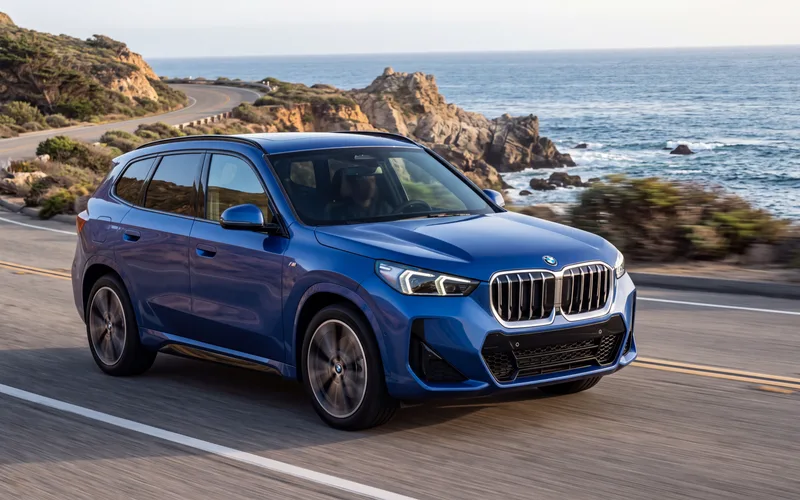 BMW X1Subcompact Luxury SUVBetter at: Driving dynamics
The most direct rival — more power, sharper driving manners and more standard equipment at a similar price, if you can live without the third row.
Compare 2.19C
2.19C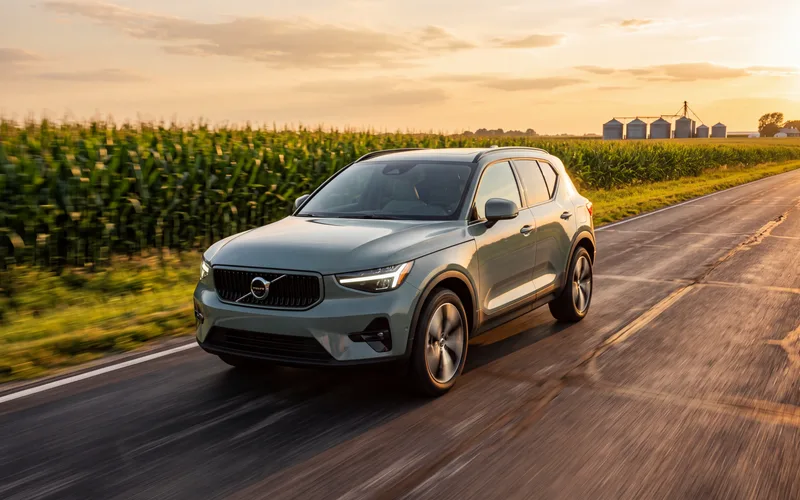 Volvo XC40Subcompact Luxury SUVBetter at: Ownership cost
Bundles more standard gear and includes scheduled maintenance, so the five-year bill lands far below the GLB's roughly $13,200 in projected service and repairs.
Compare 2.63C+
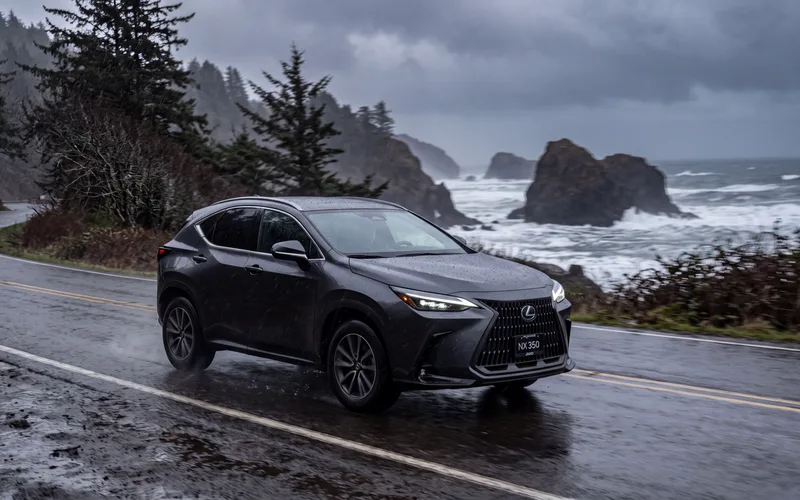 Lexus NXCompact Luxury SUVBetter at: Reliability
A size larger with hybrid and plug-in options, regular-fuel running costs and class-leading reliability for buyers who plan to keep the car a decade.
CompareHow it's evolved
7 scored model years · 2020–2026
Subject scores by year
Hover or tap a score to see what moved it versus the year before. A corner mark flags a big swing.
| Year | Performance | Efficiency | Safety | Space | Cost | Reliability | Tech | Use-case | Driving | Value |
|---|---|---|---|---|---|---|---|---|---|---|
| 2026 | 42 | 55 | 80 | 59 | 35 | 66 | 75 | 64 | 68 | 73 |
| 2025 | 42 | 51 | 51 | 51 | 33 | 65 | 70 | 58 | 61 | 71 |
| 2024 | 42 | 50 | 51 | 50 | 39 | 64 | 70 | 58 | 61 | 71 |
| 2023 | 41 | 40 | 66 | 49 | 48 | 66 | 59 | 57 | 60 | 67 |
| 2022 | 41 | 40 | 65 | 49 | 51 | 66 | 59 | 57 | 60 | 67 |
| 2021 | 41 | 45 | 65 | 49 | 50 | 58 | 59 | 57 | 60 | 68 |
| 2020 | 40 | 45 | 63 | 48 | 49 | 54 | 58 | 56 | 60 | 68 |
Compare two years
Best fit & conditions
Higher scores mean a better fit for that use case. Learn more about use-case fit →
Subject profile
Academic Probation · NHTSA safety recalls
Jul 24, 2026Latches/locks/linkages: doors: lockPlease refer to MBUSA's recall report for specific model information. The micro-switch in the driver's door lock may corrode and fail to detect an open door, preventing the electronic parking brake or "Auto-Park" feature from engaging automatically. This may result in a vehicle rollaway.
Defect
Mercedes-Benz USA, LLC (MBUSA) is recalling certain 2020-2021 CLA, 2019-2022 A-Class, 2022-2023 C-Class, 2024 CLE, 2020-2026 GLA/GLB, and 2023-2024 GLC vehicles. Please refer to MBUSA's recall report for specific model information. The micro-switch in the driver's door lock may corrode and fail to detect an open door, preventing the electronic parking brake or "Auto-Park" feature from engaging automatically. This may result in a vehicle rollaway.
Risk
A vehicle rollaway increases the risk of a crash or injury.
Remedy
Dealers will replace the driver's door lock, free of charge. Owner notification letters are expected to be mailed September 18, 2026. This will be a phased campaign, with the remedy becoming available in different phases based on model and model years. Owners may contact MBUSA customer service at 1-800-367-6372. Vehicle Identification Numbers (VINs) involved in this recall will be searchable on NHTSA.gov beginning July 31, 2026.
NHTSA campaign 26V481000 ↗310,667 vehicles potentially affected (all models in the campaign)Owners notified Sep 18, 2026Filed by Mercedes-Benz USA, LLCFiled as AMG GLB35, AMG GLB35 4MATIC, GLB 250, GLB 250 4MATIC
25 recalls on other model years of the GLB (2020–2021, 2024–2025)
Oct 18, 2024Tires: sidewallThe right-side front and rear tires may have sidewall damage, which can result in a sudden loss of tire pressure.
Defect
Mercedes-Benz USA, LLC (MBUSA) is recalling certain 2025 GLB 250, GLB 250 4MATIC, and GLB 35 4MATIC vehicles. The right-side front and rear tires may have sidewall damage, which can result in a sudden loss of tire pressure.
Risk
A sudden loss of tire pressure can result in a loss of vehicle control, increasing the risk of a crash.
Remedy
Dealers will inspect and replace the tires as necessary, free of charge. Owner notification letters were mailed November 22, 2024. Owners may contact MBUSA customer service at 1-800-367-6372. MBUSA's number for this recall is 2024100014.
NHTSA campaign 24V780000 ↗Manufacturer no. 2024100014416 vehicles potentially affected (all models in the campaign)Owners notified Nov 22, 2024Filed by Mercedes-Benz USA, LLCFiled as AMG GLB35, GLB 250Aug 9, 2024Service brakes, hydraulic: foundation components: hoses, lines/piping, and fittingsThe brake hoses on the rear axle may have been improperly routed, which could allow chafing, and result in a brake fluid leak.
Defect
Mercedes-Benz USA, LLC (MBUSA) is recalling certain 2024 AMG GLB 35 4MATIC vehicles. The brake hoses on the rear axle may have been improperly routed, which could allow chafing, and result in a brake fluid leak.
Risk
A brake fluid leak can cause a loss of brakes and increase the risk of a crash.
Remedy
Dealers will inspect and reroute the rear axle brake hoses as necessary, free of charge. Owner notification letters were mailed September 11, 2024. Owner may contact MBUSA customer service at 1-877-496-3691.
NHTSA campaign 24V592000 ↗16 vehicles potentially affected (all models in the campaign)Owners notified Sep 11, 2024Filed by Mercedes-Benz USA, LLCFiled as AMG GLB35Nov 1, 2023Equipment: other: owners/service/other manual · Service brakes, hydraulic: foundation components: disc: padsThe vehicles may not be equipped with an inspection gauge to check the wear of the rear brake pads. In addition, information for using this inspection gauge might not be included in the owner's manual. As such, these vehicles fail to comply with the requirements of Federal Motor Vehicle Safety Standard number 135, "Light Vehicle Brake Systems."
Defect
Mercedes-Benz USA, LLC (MBUSA) is recalling certain 2019-2020 A220, 2020 CLA250, GLB250, AMG A35, AMG CLA45, AMG CLA35, and 2021 GLA250 vehicles. The vehicles may not be equipped with an inspection gauge to check the wear of the rear brake pads. In addition, information for using this inspection gauge might not be included in the owner's manual. As such, these vehicles fail to comply with the requirements of Federal Motor Vehicle Safety Standard number 135, "Light Vehicle Brake Systems."
Risk
Driving with worn brake pads can reduce braking ability, increasing the risk of a crash.
Remedy
Dealers will install an inspection gauge and provide supplemental owner's manual information, free of charge. Owner notification letters were mailed on February 29, 2024. Owners may contact MBUSA customer service at 1-800-367-6372.
NHTSA campaign 23V732000 ↗42,742 vehicles potentially affected (all models in the campaign)Owners notified Feb 29, 2024Filed by Mercedes-Benz USA, LLCFiled as GLB 250Sep 12, 2022Electronic stability control (esc): control moduleThe Electronic Stability Program (ESP) unit may be damaged, which can result in disabled anti-lock brakes (ABS), disabled electronic stability control (ESC), and an electrical short circuit.
Defect
Mercedes-Benz USA, LLC (MBUSA) is recalling certain 2021 GLB250 vehicles. The Electronic Stability Program (ESP) unit may be damaged, which can result in disabled anti-lock brakes (ABS), disabled electronic stability control (ESC), and an electrical short circuit.
Risk
Disabled anti-lock brakes and electronic stability control can increase the risk of a crash or injury. An electrical short circuit increases the risk of a fire.
Remedy
Dealers will replace the ESP unit, free of charge. Owner notification letters were mailed October 28, 2022. Owners may contact MBUSA customer service at 1-800-367-6372. MBUSA's number for this recall is 2022090009.
NHTSA campaign 22V679000 ↗Manufacturer no. 20220900094 vehicles potentially affected (all models in the campaign)Owners notified Oct 28, 2022Filed by Mercedes-Benz USA, LLCFiled as GLB 250May 20, 2022Communication: auto crash notification · Electrical system: softwarePlease refer to MBUSA's recall report for specific vehicle model details. An error in the communication module's SIM card software can cause a mobile network connection failure, disabling the emergency call (eCall) system.
Defect
Mercedes-Benz USA, LLC (MBUSA) is recalling certain 2017-2022 CLA-Class, GLA-Class, GLE-Class, GLS-Class, SLC-Class, A-Class, AMG GT-Class, C-Class, E-Class, S-Class, SL-Class, GLC-Class, CLS-Class, GLB-Class, and G-Class vehicles. Please refer to MBUSA's recall report for specific vehicle model details. An error in the communication module's SIM card software can cause a mobile network connection failure, disabling the emergency call (eCall) system.
Risk
A disabled eCall system would prevent a vehicle occupant from contacting the emergency services call center in an emergency, potentially delaying emergency responders and increasing the risk of injury.
Remedy
The communication module software will be updated through an Over-the-Air (OTA) update or by a dealer, free of charge. Owner notification letters were mailed July 8, 2022. Owner notification letters will be mailed in phases, on July 8, 2022, May 17, 2024, July 29, 2024, and September 27, 2024. Owners may contact MBUSA customer service at 1-800-367-6372. MBUSA's numbers are for this recall is 2022060005 and 2023110006.
NHTSA campaign 22V365000 ↗Manufacturer no. See Recall Schedule242,722 vehicles potentially affected (all models in the campaign)Owners notified Jul 8, 2022Filed by Mercedes-Benz USA, LLCFiled as AMG GLB35, GLB 250May 9, 2022Exterior lighting: headlights · Suspension: multiple axle · Suspension: rearThe level sensor linkage on the rear axle might not have been installed properly, which could affect the headlight leveling function. MBUSA's number for this recall is 2022050011.
Defect
Mercedes-Benz USA, LLC (MBUSA) is recalling certain 2021 GLB 250 vehicles. The level sensor linkage on the rear axle might not have been installed properly, which could affect the headlight leveling function. MBUSA's number for this recall is 2022050011.
Risk
Improperly leveled headlights may project a glare, which can impact other drivers and increase the risk of a crash.
Remedy
Dealers will inspect and repair the level sensor linkage, as necessary, free of charge. Owner notification letters were mailed June 10, 2022. Owners may contact MBUSA customer service at 1-800-367-6372.
NHTSA campaign 22V314000 ↗Manufacturer no. 202205001188 vehicles potentially affected (all models in the campaign)Owners notified Jun 10, 2022Filed by Mercedes-Benz USA, LLCFiled as GLB 250Apr 8, 2022Back over prevention: display functionPlease refer to MBUSA's recall report for specific vehicle model details. The rearview camera may not display the rearview image due to a software error. As such, these vehicles fail to comply with the requirements of Federal Motor Vehicle Safety Standard number 111, "Rear Visibility."
Defect
Mercedes-Benz USA, LLC (MBUSA) is recalling certain 2018-2021 CLA-Class, GLE/GLS-Class, A-Class, C-Class, E-Class, E-Class Coupe/Convertible, GLA/GLB-Class, GLC-Class, and CLS-Class vehicles. Please refer to MBUSA's recall report for specific vehicle model details. The rearview camera may not display the rearview image due to a software error. As such, these vehicles fail to comply with the requirements of Federal Motor Vehicle Safety Standard number 111, "Rear Visibility."
Risk
An inoperable rearview camera display reduces the driver's rear view, increasing the risk of a crash.
Remedy
Dealers will update the rearview camera software, free of charge. Owner notification letters were mailed July 15, 2022. Owners may contact MBUSA customer service at 1-800-367-6372. MBUSA's number for this recall is 2022060007.
NHTSA campaign 22V232000 ↗Manufacturer no. 2022060007126,443 vehicles potentially affected (all models in the campaign)Owners notified Jul 15, 2022Filed by Mercedes-Benz USA, LLCFiled as AMG GLB35, GLB 250Feb 11, 2022Air bags: frontalThese vehicles may be equipped with an incorrect front driver's air bag module.
Defect
Mercedes-Benz USA, LLC. (MBUSA) is recalling certain 2021 GLB 250 vehicles. These vehicles may be equipped with an incorrect front driver's air bag module.
Risk
An incorrect air bag module may not properly restrain an occupant during a crash. In addition, the air bag module could detach from the steering wheel during deployment. Either of these scenarios can increase the risk of injury in the event of a crash.
Remedy
Dealers will inspect and replace the front driver's air bag, as necessary, free of charge. Owner notification letters were mailed March 25, 2022. Owners may contact MBUSA customer service at 1-800-367-6372.
NHTSA campaign 22V078000 ↗Manufacturer no. 202203000750 vehicles potentially affected (all models in the campaign)Owners notified Mar 25, 2022Filed by Mercedes-Benz USA, LLCFiled as GLB 250Dec 17, 2021Steering · Suspension: frontThe integral carrier that supports the front axle may corrode, causing it to fail.
Defect
Mercedes-Benz USA, LLC. (MBUSA) is recalling certain 2021 AMG GLB35, 2019-2020 A220, and 2020 GLB250 vehicles. The integral carrier that supports the front axle may corrode, causing it to fail.
Risk
Front axle carrier failure may result in a loss of steering control, increasing the risk of a crash.
Remedy
Dealers will inspect and replace the integral carrier, as necessary, free of charge. Owner notification letters were mailed July 29, 2022. Owners may contact MBUSA customer service at 1-800-367-6372. MBUSA's number for this recall is 2022070009.
NHTSA campaign 21V990000 ↗Manufacturer no. 202207000938,312 vehicles potentially affected (all models in the campaign)Owners notified Jul 29, 2022Filed by Mercedes-Benz USA, LLCFiled as AMG GLB35, GLB 250Dec 13, 2021Fuel system, gasoline: fuel injection system: fuel rail · Fuel system, gasoline: fuel injection system: injectorsDuring the manufacturing process, particles may have been trapped between the fuel rail and injectors, which can cause a fuel leak.
Defect
Mercedes-Benz USA, LLC (MBUSA) is recalling certain 2019 AMG G63, C300, E300, G550, AMG GT63, AMG GT53, 2019-2020 A220, GLA250, GLC300, 2016 C300, 2020 AMG A35, AMG C43, AMG C63, CLA250, E350, E450, GLB250, GLE450, GLS450, GLS580, S560, and SL550 vehicles equipped with a gasoline engine. During the manufacturing process, particles may have been trapped between the fuel rail and injectors, which can cause a fuel leak.
Risk
A fuel leak in the presence of an ignition source, such as hot engine or exhaust components, can increase the risk of a fire.
Remedy
Dealers will replace the fuel rail and fuel injectors, free of charge. Owner notification letters were mailed April 22, 2022. Owners may contact MBUSA customer service at 1-800-367-6372. MBUSA's number for the recall is 2022030003.
NHTSA campaign 21V961000 ↗Manufacturer no. 2022030003139 vehicles potentially affected (all models in the campaign)Owners notified Apr 22, 2022Filed by Mercedes-Benz USA, LLCFiled as GLB 250Nov 5, 2021Air bags: side/windowThe driver-side window air bag may not have been mounted correctly to the lower area of the A-pillar. As such, these vehicles fail to comply with the requirements of Federal Motor Vehicle Safety Standard number 226, "Ejection Mitigation."
Defect
Mercedes-Benz USA, LLC (MBUSA) is recalling certain 2021 GLB 250 and AMG GLB 35 vehicles. The driver-side window air bag may not have been mounted correctly to the lower area of the A-pillar. As such, these vehicles fail to comply with the requirements of Federal Motor Vehicle Safety Standard number 226, "Ejection Mitigation."
Risk
The driver-side window air bag may not function properly during a crash, increasing the risk of injury.
Remedy
Dealers will inspect the mounting of the driver-side window air bag and repair it as necessary, free of charge. Owner notification letters were mailed December 2021. Owners may contact MBUSA customer service at 1-800-367-6372.
NHTSA campaign 21V860000 ↗Manufacturer no. 202111001446 vehicles potentially affected (all models in the campaign)Owners notified Dec 21, 2021Filed by Mercedes-Benz USA, LLCFiled as AMG GLB35, GLB 250Aug 13, 2021Air bags: air bag/restraint control module: softwareIn the event of a crash, the air bag control unit software may not activate the front seat belts and front passenger air bag properly.
Defect
Mercedes-Benz USA, LLC. (MBUSA) is recalling certain 2020 GLB250 vehicles. In the event of a crash, the air bag control unit software may not activate the front seat belts and front passenger air bag properly.
Risk
Air bags and seat belts that do not function properly can increase the risk of injury in a crash.
Remedy
Dealers will update the air bag control unit software, free of charge. Owner notification letters were mailed on September 17, 2021. Owners may contact MBUSA customer service at 1-800-367-6372.
NHTSA campaign 21V639000 ↗Manufacturer no. 202108001966 vehicles potentially affected (all models in the campaign)Owners notified Sep 17, 2021Filed by Mercedes-Benz USA, LLCFiled as GLB 250Jul 12, 2021Electrical system: wiring: connectors/plugs: accesory power outlet/jack/port/usb/sae/cigarette lighterThe accessory power outlet for the second-row seating may have excessive voltage due to an incorrect voltage converter socket.
Defect
Mercedes-Benz USA, LLC (MBUSA) is recalling certain 2020 GLB 250 vehicles. The accessory power outlet for the second-row seating may have excessive voltage due to an incorrect voltage converter socket.
Risk
Excessive voltage through the accessory power outlet to a connected device can increase the risk of a fire.
Remedy
Dealers will inspect and replace the voltage converter, as necessary, free of charge. Owner notification letters were mailed on September 3, 2021. Owners may contact MBUSA customer service at 1-800-367-6372. MBUSA's number for this recall is 2021080005.
NHTSA campaign 21V526000 ↗Manufacturer no. 20210800051,690 vehicles potentially affected (all models in the campaign)Owners notified Sep 3, 2021Filed by Mercedes-Benz USA, LLCFiled as GLB 250Jul 2, 2021Exterior lighting: headlightsThe LED headlights may have been incorrectly adjusted during a vehicle repair. As such, these vehicles fail to comply with the requirements of Federal Motor Vehicle Safety Standard number 108, "Lamps, Reflective Devices, and Associated Equipment."
Defect
Mercedes-Benz LLC (MBUSA) is recalling certain 2018-2020 C300, 2019-2020 A220, AMG C43, AMG C63, 2020 GLE580, GLB250, 2020-2021 GLE450, GLE350, 2021 AMG GLE63, and AMG GLE53 vehicles. The LED headlights may have been incorrectly adjusted during a vehicle repair. As such, these vehicles fail to comply with the requirements of Federal Motor Vehicle Safety Standard number 108, "Lamps, Reflective Devices, and Associated Equipment."
Risk
Incorrectly adjusted headlights may reduce visibility, increasing the risk of a crash.
Remedy
Dealers will replace the LED headlights, free of charge. Interim letters notifying owners of the safety risk were mailed August 13, 2021. A second notice will be sent once the remedy is available. Owner notification letters were mailed January 2022. Owners may contact MBUSA customer service at 1-800-367-6372.
NHTSA campaign 21V509000 ↗Manufacturer no. 20211200111,467 vehicles potentially affected (all models in the campaign)Owners notified Jan 7, 2022Filed by Mercedes-Benz USA, LLCFiled as GLB 250May 28, 2021Air bags: frontal: passenger side: inflator module · Air bags: passenger side frontal: cushionThe front passenger air bag inflator and cushion may be improperly attached inside the air bag module, which could result in the air bag cushion tearing upon deployment.
Defect
Mercedes-Benz USA, LLC (MBUSA) is recalling certain 2020 GLB250 vehicles. The front passenger air bag inflator and cushion may be improperly attached inside the air bag module, which could result in the air bag cushion tearing upon deployment.
Risk
An air bag that does not deploy properly during a crash can increase the risk of injury.
Remedy
Dealers will replace the front passenger air bag module, free of charge. Owner notification letters were mailed July 16, 2021. Owners may contact MBUSA customer service at 1-800-367-6372. MBUSA's number for this recall is 2021060011.
NHTSA campaign 21V405000 ↗Manufacturer no. 202106001117 vehicles potentially affected (all models in the campaign)Owners notified Jul 16, 2021Filed by Mercedes-Benz USA, LLCFiled as GLB 250May 28, 2021Air bags: side/window: curtainThe side curtain air bags may not deploy properly during a crash.
Defect
Mercedes-Benz USA, LLC (MBUSA) is recalling certain 2020 GLB250 vehicles. The side curtain air bags may not deploy properly during a crash.
Risk
Air bags that do not deploy as intended can increase the risk of injury.
Remedy
Dealers will replace the side curtain air bags, free of charge. Owner notification letters were mailed on September 24, 2021. Owners may contact MBUSA customer service at 1-800-367-6372.
NHTSA campaign 21V404000 ↗Manufacturer no. 202108001216 vehicles potentially affected (all models in the campaign)Owners notified Sep 24, 2021Filed by Mercedes-Benz USA, LLCFiled as GLB 250May 28, 2021Electrical system · StructureWater may enter through the wheel well area into the front occupant foot wells, potentially damaging certain electrical components. This may result in the instrument cluster going blank, an engine stall while driving, or the vehicle may not start.
Defect
Mercedes-Benz USA, LLC (MBUSA) is recalling certain 2020 GLB250 vehicles. Water may enter through the wheel well area into the front occupant foot wells, potentially damaging certain electrical components. This may result in the instrument cluster going blank, an engine stall while driving, or the vehicle may not start.
Risk
Either a blank instrument cluster display or an engine stall can increase the risk of a crash.
Remedy
Dealers will seal the vehicle body in the wheel well area and inspect the front foot wells for water intrusion, repairing as necessary, free of charge. Owner notification letters were mailed July 20, 2021. Owners may contact MBUSA customer service at 1-800-367-6372. MBUSA's number for this recall is 2020070009.
NHTSA campaign 21V403000 ↗Manufacturer no. 20200700095,680 vehicles potentially affected (all models in the campaign)Owners notified Jul 20, 2021Filed by Mercedes-Benz USA, LLCFiled as GLB 250May 14, 2021Back over prevention: sensing system: camera · Electrical system: softwarePlease refer to MBUSA's recall report for specific vehicle model details. The MBUX multimedia system software may cause the display to remain black, or reboot after startup. This could result in the rearview camera image not displaying properly. As such, these vehicles fail to comply with the requirements of Federal Motor Vehicle Safety Standard (FMVSS) number 111, "Rear Visibility."
Defect
Mercedes-Benz USA, LLC (MBUSA) is recalling certain 2019-2021 CLA-Class, GLE/GLS-Class, A-Class, E-Class, E-Class Coupe and Convertible, GLA/GLB-Class, GLC-Class, CLS-Class, and AMG GT-Class 4-door Coupe vehicles. Please refer to MBUSA's recall report for specific vehicle model details. The MBUX multimedia system software may cause the display to remain black, or reboot after startup. This could result in the rearview camera image not displaying properly. As such, these vehicles fail to comply with the requirements of Federal Motor Vehicle Safety Standard (FMVSS) number 111, "Rear Visibility."
Risk
A backup camera that displays a blank image reduces the driver's rear view, increasing the risk of a crash or injury.
Remedy
The multimedia system software will be updated by a dealer, or through an over-the-air (OTA) update, free of charge. Owner notification letters were mailed beginning June 28, 2021. Owners may contact MBUSA customer service at 1-800-367-6373. MBUSA's number for this recall is 2021050012.
NHTSA campaign 21V354000 ↗Manufacturer no. 2021050012343,191 vehicles potentially affected (all models in the campaign)Owners notified Jun 28, 2021Filed by Mercedes-Benz USA, LLCFiled as AMG GLB35, GLB 250Apr 1, 2021Structure: bodyThe wheel arch covers on the front fenders might not have been installed correctly, allow them to detach.
Defect
Mercedes-Benz USA, LLC (MBUSA) is recalling certain 2020-2021 GLB250 vehicles. The wheel arch covers on the front fenders might not have been installed correctly, allow them to detach.
Risk
Detached wheel arch covers can create a road hazard, increasing the risk of a crash or injury.
Remedy
MBUSA will notify owners, and dealers will check the installation of the front wheel arch covers and correct them as necessary, free of charge. Owner letters were mailed May 21, 2021. Owners may contact MBUSA customer service at 1-800-367-6372. MBUSA's number for this recall is 2021040015.
NHTSA campaign 21V232000 ↗Manufacturer no. 20210400152,362 vehicles potentially affected (all models in the campaign)Owners notified May 21, 2021Filed by Mercedes-Benz USA, LLCFiled as GLB 250Apr 1, 2021Structure: body: tailgateThe side spoilers on the tailgate might not have been installed correctly, allowing them to detach.
Defect
Mercedes-Benz USA, LLC (MBUSA) is recalling certain 2021 GLB35 AMG, and 2020-2021 GLB250 vehicles. The side spoilers on the tailgate might not have been installed correctly, allowing them to detach.
Risk
Detached spoilers can create a road hazard, increasing the risk of a crash or injury.
Remedy
MBUSA will notify owners, and dealers will inspect and, if necessary, replace the side spoilers, free of charge. Owner letters were mailed July 2, 2021. Owners may contact MBUSA customer service at 1-800-367-6372. MBUSA's number for this recall is 2021050009.
NHTSA campaign 21V231000 ↗Manufacturer no. 20210500095,215 vehicles potentially affected (all models in the campaign)Owners notified Jul 2, 2021Filed by Mercedes-Benz USA, LLCFiled as AMG GLB35, GLB 250Feb 5, 2021Communication: auto crash notification · Electrical system: softwarePlease refer to the Part 573 report for specific vehicle model details. The software design of the communication module may fail to communicate the correct vehicle location for the emergency call system (eCall) in the event of a crash.
Defect
Mercedes-Benz USA, LLC (MBUSA) is recalling certain 2016 - 2021 CLA-Class, GLA-Class, GLE-Class, GLS-Class, SLC-Class, A-Class, GT-Class, C-Class, E-Class, S-Class, CLS-Class, SL-Class, B-Class, GLB-Class, GLC-Class, and G-Class vehicles. Please refer to the Part 573 report for specific vehicle model details. The software design of the communication module may fail to communicate the correct vehicle location for the emergency call system (eCall) in the event of a crash.
Risk
Failure of the eCall system may result in emergency responders being dispatched to the wrong location, increasing the risk of injury following a crash.
Remedy
MBUSA will notify owners, and the communication module software will be updated by a dealer, or through an over-the-air (OTA) update, free of charge. The recall began March 12, 2021. Owners may contact MBUSA customer service at 1-877-762-8267. MBUSA's number for this recall is 2021020025.
NHTSA campaign 21V058000 ↗Manufacturer no. 20210200251,292,258 vehicles potentially affected (all models in the campaign)Owners notified Mar 12, 2021Filed by Mercedes-Benz USA, LLCFiled as AMG GLB35, GLB 250Oct 9, 2020Air bags: side/windowThe window air bag in the A-pillar area may not be mounted correctly, affecting its performance. As such, these vehicles fail to comply with the requirements of Federal Motor Vehicle Safety Standard number 226, "Ejection Mitigation."
Defect
Mercedes-Benz USA, LLC. (MBUSA) is recalling certain 2020 GLB 250 vehicles. The window air bag in the A-pillar area may not be mounted correctly, affecting its performance. As such, these vehicles fail to comply with the requirements of Federal Motor Vehicle Safety Standard number 226, "Ejection Mitigation."
Risk
In the event of a crash that deploys the window air bag, the catch strap could disconnect and increase the risk of injury.
Remedy
MBUSA will notify owners, and dealers will check the mounting of the window air bag and correct it as necessary, free of charge. The recall began October 30, 2020. Owners may contact MBUSA customer service at 1-800-367-6372. MBUSA's number for this recall is 2020100010.
NHTSA campaign 20V628000 ↗Manufacturer no. 20201000107 vehicles potentially affected (all models in the campaign)Owners notified Oct 30, 2020Filed by Mercedes-Benz USA, LLC.Filed as GLB 250Sep 14, 2020Seats: mid/rear assemblyThe second row seat may not be correctly aligned within the seat track on one side, possibly causing the seat to not lock properly into place.
Defect
Mercedes-Benz USA, LLC. (MBUSA) is recalling certain 2020 GLB250 vehicles. The second row seat may not be correctly aligned within the seat track on one side, possibly causing the seat to not lock properly into place.
Risk
If the second row seat is not locked into place, there could be an increased risk of injury to the seat occupants in a crash.
Remedy
MBUSA will notify owners, and dealers will inspect the installation of the second row seat and correct it, if necessary, free of charge. The recall began October 23, 2020. Owners may contact MBUSA customer service at 1-800-367-6372. MBUSA's number for this recall is 2020090020.
NHTSA campaign 20V558000 ↗Manufacturer no. 202009002036 vehicles potentially affected (all models in the campaign)Owners notified Oct 23, 2020Filed by Mercedes-Benz USA, LLC.Filed as GLB 250Aug 14, 2020Structure: bodyThe rear spoiler above the tailgate may not have been welded correctly. This could result in parts of the spoiler detaching from the vehicle.
Defect
Mercedes-Benz USA, LLC. (MBUSA) is recalling certain 2020 GLB250 vehicles. The rear spoiler above the tailgate may not have been welded correctly. This could result in parts of the spoiler detaching from the vehicle.
Risk
If the spoiler detaches while driving, it can become a road hazard, increasing the risk of a crash.
Remedy
MBUSA will notify owners, and dealers will inspect the rear spoiler and replace it, if necessary, free of charge. The recall began October 23, 2020. Owners may contact MBUSA customer service at 1-800-367-6372. MBUSA's number for this recall is 2020090006.
NHTSA campaign 20V480000 ↗Manufacturer no. 202009000610,644 vehicles potentially affected (all models in the campaign)Owners notified Oct 23, 2020Filed by Mercedes-Benz USA, LLC.Filed as GLB 250May 1, 2020Electrical system · StructureWater may enter through the wheel well area into the front occupant foot wells, potentially damaging certain electrical components. This may result in the instrument cluster going blank, or an engine stall while driving without the ability to restart the vehicle.
Defect
Mercedes-Benz USA, LLC. (MBUSA) is recalling certain 2020 GLB 250 vehicles. Water may enter through the wheel well area into the front occupant foot wells, potentially damaging certain electrical components. This may result in the instrument cluster going blank, or an engine stall while driving without the ability to restart the vehicle.
Risk
Either a blank instrument cluster display or an engine stall can increase the risk of a crash.
Remedy
MBUSA will notify owners, and dealers will seal the vehicle body in the wheel well area and inspect the front foot wells for water intrusion, repairing as necessary, free of charge. The recall began July 31, 2020. Owners may contact MBUSA customer service at 1-800-367-6372. MBUSA's number for this recall is 2020070009.
NHTSA campaign 20V246000 ↗Manufacturer no. 202007000926 vehicles potentially affected (all models in the campaign)Owners notified Jul 31, 2020Filed by Mercedes-Benz USA, LLC.Filed as GLB 250
Source: NHTSA Office of Defects Investigation recall database, model years 2020–2026. Recalls are listed by model year as the manufacturer filed them; whether a specific car is affected depends on its VIN — check a VIN at nhtsa.gov ↗. NHTSA model names matched to this page: AMG GLB35, AMG GLB35 4MATIC, GLB 250, GLB 250 4MATIC.
Detailed scoring by subject
1Performance & PowertrainOne of the GLB's weakest categories.0.80F
Volume GLB 250 uses the M254 2.0L turbo I4 with 48V mild-hybrid rated at 221 hp; AMG GLB 35 tops the range at 302 hp.
GLB 250's 2.0L turbo delivers 258 lb-ft; AMG 35 raises it to 295 lb-ft with the same displacement, higher boost, and hotter tune.
Manufacturer-quoted 0–60 for the GLB 250 4MATIC is 6.9 s; the AMG GLB 35 drops that to about 5.1 s.
The mild-hybrid 2.0L turbo is generally smooth and quiet under moderate load, but reviewers note some coarseness when pushed hard and light hesitation off the line as the DCT engages.
The 8-speed dual-clutch shifts crisply at speed but is widely criticized for jerky, low-speed engagement in stop-and-go traffic and reluctant creep — a recurring GLB/GLA/CLA gripe.
With the factory trailer hitch/tow package (Class II) the GLB is rated at 3,500 lbs braked; without the package the standard rating is 1,500 lbs.
4MATIC AWD is a low-cost option on every GLB 250 and standard on the AMG GLB 35; system is competent for weather but lacks low range or serious terrain modes.
Pavement-oriented crossover with modest 6.9 in ground clearance; the optional Off-Road Engineering Package adds a dedicated drive mode, hill descent control, and skid-plate look but no lockers or dedicated off-road trim.
Only two variants of the same 2.0L turbo I4 (GLB 250 at 221 hp and AMG GLB 35 at 302 hp) with mild-hybrid assist; no PHEV or EV in the US (the electric EQB is sold as a separate model).
2Efficiency & RangeOne of the GLB's weakest categories.1.70C-
GLB 250 4MATIC (volume AWD trim) is EPA-rated 27 MPG combined; FWD returns 28 MPG. Turbo 2.0L I4 with 8-speed DCT plus 48V mild-hybrid ISG.
EPA city rating for the 4MATIC volume trim; AWD losses cost 1 MPG vs FWD.
EPA highway rating for the 4MATIC volume trim; identical to FWD on highway thanks to tall DCT gearing.
Calculated from EPA combined MPG and manufacturer tank capacity; FWD trim extends to ~445 mi. Larger tank than GLA gives meaningfully better one-tank range despite similar MPG.
EPA-style estimate: 15,000 mi / 27 MPG × ~$4.30/gal premium ≈ $2,390. FWD trim shaves ~$70/yr thanks to the extra MPG.
Premium unleaded (91 octane) is required across the GLB lineup — no regular-gas fallback, no home-charging alternative. Costly relative to mainstream subcompact SUVs that run on regular.
3SafetyThe GLB's best-graded category.3.43B+
NHTSA has not published a full overall rating for the current X247-generation GLB in the US; 5-star estimate reflects Mercedes-Benz structural pedigree and the Euro NCAP 5-star result for the shared MFA2 platform.
Current-generation GLB earns Good ratings in most IIHS crashworthiness tests and has previously been a Top Safety Pick candidate, but does not appear on the latest TSP list under the updated moderate overlap and headlight protocols.
Standard Active Brake Assist (AEB with pedestrian detection), Blind Spot Assist, and Attention Assist cover the essentials, but DISTRONIC adaptive cruise and Active Steering Assist require the optional Driver Assistance Package on the volume trim.
Mercedes-Benz Active Brake Assist consistently earns Superior IIHS front crash prevention ratings across the compact lineup; day and night vehicle-to-vehicle and pedestrian scenarios are well covered on the shared GLA/GLB platform.
Blind Spot Assist is standard; rear cross-traffic alert comes with the Parking Assistance Package, and Active Blind Spot Assist (with braking intervention) is bundled in the Driver Assistance Package.
Active Lane Keeping Assist plus Active Steering Assist (optional Driver Assistance Package) delivers smooth, confident lane centering that reviewers rate among the better luxury systems, though centering requires the option package.
DISTRONIC adaptive cruise with stop-and-go is a full-speed-range system with predictive route-based speed adjustment via MBUX Navigation Plus; well-integrated with Active Steering Assist, though optional on the volume trim.
Mercedes-Benz DRIVE PILOT (the brand's hands-free/eyes-off Level 3 system) is limited to the S-Class and EQS; no hands-free highway system is available on the GLB.
Standard LED High Performance headlights typically rate Acceptable in IIHS testing; optional MULTIBEAM LED with adaptive high beam earns Good but is not standard on the volume trim.
GLB's boxier, more upright greenhouse and taller roof deliver noticeably better sightlines than the sloping GLA, with generous side glass and standard rearview camera plus optional 360-degree camera for parking.
GLB's larger footprint versus the GLA yields generous rear-seat legroom and accessible LATCH anchors in the outboard positions; the available third row makes it uniquely family-friendly among subcompact luxury SUVs, though three-across in a single row remains tight.
4Space & ComfortMid-pack among this car's ten categories.2.00C
All-new 2026 GLB offers optional third row bringing max capacity to 7 (standard 5-seat, third row optional across trims).
Manufacturer-published front headroom for 2026 GLB 250.
Manufacturer-published front legroom for 2026 GLB 250; adequate in class but low against the broader SUV normalization band.
New GLB gains 2.5 in of second-row headroom via revised roofline and 2.4 in longer wheelbase.
Longer 114.1 in wheelbase adds 2.7 in of second-row legroom — class-leading among subcompact luxury SUVs.
Optional third row is kid- and short-adult friendly for occasional use; 12.4 cu ft remains behind row 3 when deployed. Not adult-usable long-haul, but a rare 7-seat option in the subcompact luxury class.
Cargo behind the second row (5-seat config, or 7-seat with row 3 folded). Small against the SUV band anchored by mid-size and larger utilities.
Max cargo with second and optional third rows folded. Modest against the SUV band (55–100 cu ft) that spans through full-size utilities.
New GLB adds a 'two trunks' layout (main hold plus underfloor bin), sliding second row, and revised MBUX-integrated console storage. Competitive but not standout.
Mercedes front seats deliver typical brand support and cushioning; expanded second-row space meaningfully improves rear comfort. Multicontour front seats optional on upper trims for long-haul use.
MMA-derived architecture with revised suspension delivers a composed ride; sport-tuned trims are firmer. Not as plush as larger GLE/GLS but competent for the subcompact luxury class.
Additional sound insulation and available acoustic front glass yield a quiet cabin at highway speed; some wind noise around upright A-pillars in early impressions.
Dual-zone climate standard; heated front seats, heated steering wheel, ambient lighting, and rear vents standard or in low-cost packages. Ventilated seats and heated rear seats on upper trims via options.
5Cost of OwnershipThe GLB's lowest-graded category.0.30F
Base GLB 250 FWD starts at $44,800 plus $1,250 destination = $46,050 for 2026; slightly above the GLA and in line with Audi Q3 and Cadillac XT4, undercutting BMW X1 xDrive28i.
GLB 250 4MATIC starts around $48,050; typical buyer adds the Premium package (heated seats, blind-spot, keyless-go) plus Exclusive trim and a couple of options, landing near $52,500. 4MATIC AWD is the dominant configuration in northern markets.
Mercedes-Benz premium parts, dealer-only service labor, and scheduled A/B services push 5-year maintenance + repair well above the SUV segment ceiling; the GLB shares the GLA's 2.0T service burden plus a slightly larger drivetrain footprint.
The GLB retains value modestly better than the Mercedes lineup average thanks to CPO demand for entry-luxury family SUVs; CarEdge projects ~45% depreciation over 5 years, roughly middle-of-pack for subcompact luxury SUVs.
Standard Mercedes-Benz new-vehicle limited warranty; matches BMW, Audi, and Volvo at 4 yr / 50k mi but trails Genesis (5 yr) and Jaguar (5 yr) among luxury peers.
Mercedes-Benz does not offer separate powertrain coverage beyond the basic warranty term; powertrain expires with the bumper-to-bumper at 4 yr / 50,000 mi, well short of the 5–10 yr luxury norm and dramatically behind Genesis (10 yr).
Mercedes-Benz includes 3-year complimentary Roadside Assistance and a Mercedes me Connect connected-services trial, but bundles NO complimentary scheduled maintenance — required A/B services are out-of-pocket or via a paid Prepaid Maintenance plan. Weaker than BMW's 3-yr/36k Ultimate Care and Volvo's 3-yr scheduled maintenance; ahead of brands with no roadside.
$52,500 volume-trim price minus its estimated resale value after 5 years (55% retained, or about $28,875) leaves about $23,625 in depreciation. Add the projected $13,200 in 5-year maintenance and repairs, and owning this vehicle for 5 years costs about $36,825 in total.
6Reliability & QualityMid-pack among this car's ten categories.2.44C+
Consumer Reports expects the 2026 GLB to be less reliable than the average new car, extrapolated from similar Mercedes-Benz SUV models. Owner-reported reliability at KBB runs above average (4.4/5), and the 2026 model year is showing the fewest complaints of the generation, so the below-average CR outlook is tempered somewhat by real-world owner feedback.
Mercedes-Benz consistently lands in the lower third of Consumer Reports brand reliability rankings. In J.D. Power's 2025 Vehicle Dependability Study the brand sits mid-pack around 200 PP100 versus the 186 PP100 industry average — trailing Lexus, Genesis, Buick, and Toyota at the luxury/premium end.
The 2025 GLB 250/GLB 250 4MATIC/GLB 35 line was hit with a right-side tire sidewall recall (owner letters November 2024), and Mercedes-Benz issued a May 2026 brand-wide infotainment cluster-reset recall affecting 144,049 vehicles. Nothing systemic to the powertrain, but the compact-luxury Mercedes lineup has averaged multiple recalls per generation (steering, fuel pump, backup camera, eCall on the shared MFA2 platform).
The 2026 GLB pairs the newer M254 2.0L turbo I4 with a 48V ISG mild-hybrid and the 8G-DCT dual-clutch. The M254 addresses head issues of the earlier M264/M260 with a reinforced cylinder head, twin-scroll turbo, and cylinder-wall coating aimed at long-term durability, though it's still young in the field and Camtronic/carbon-buildup complaints and DCT low-speed refinement have surfaced on the family.
The 2026 GLB carries the current Mercedes design language — turbine vents, twin-screen MBUX layout with a 10.25-inch touchscreen, and available leather — that clearly reads above mainstream compact SUVs. Reviewers note it is deliberately less polished than the GLC/GLE, with more hard plastic in lower cabin areas to hold price, keeping it competitive rather than class-leading among subcompact luxury rivals.
Assembly is generally solid across the current GLB generation with tight panel gaps and few systemic rattle complaints in reviewer test units. GLB production runs at Mercedes-Benz's Aguascalientes, Mexico plant (COMPAS joint venture with Nissan) rather than the German Rastatt plant that builds the closely related GLA, which historically has drawn slightly more mixed initial-quality feedback than European-built Mercedes.
Mercedes-Benz USA operates ~380+ dealerships with strong metro coverage and typical luxury-brand amenities (loaners, pickup/delivery). J.D. Power Customer Service Index scores for the brand land respectably mid-pack among luxury makes but consistently trail Lexus and Cadillac.
Mercedes-Benz OEM parts and dealer labor rates are among the highest in the industry, and the MBUX/48V mild-hybrid electronics drive most non-trivial repairs into the dealer. RepairPal and CarEdge peg annual maintenance/repair costs for the GLB and GLA family well above compact-luxury-SUV averages, and aftermarket depth for MFA2-platform Mercedes is thinner than for BMW or Audi rivals.
7Technology & InfotainmentOne of the GLB's strongest categories.3.07B
The 2026 GLB uses Mercedes' dual-10.25-inch MBUX layout — a 10.25-inch center touchscreen alongside a matching 10.25-inch driver display. The center screen size does not change with optional packages.
MBUX is quick and graphically polished, but reviewers consistently flag the fragmented input model (touchscreen + steering-wheel touchpads + center-console touchpad) as a UX drag on daily use. Competent, not class-leading.
Both wireless Apple CarPlay and wireless Android Auto are standard on every GLB trim through MBUX.
'Hey Mercedes' natural-language assistant handles conversational commands well, and MB Navigation with Augmented Video (available) is one of the better native systems in the segment.
Standard audio is competent for the segment. The optional Burmester Surround Sound system is a strong premium upgrade praised for clear highs and punchy lows, though it lags Burmester 4D setups found in bigger Mercedes models.
A 10.25-inch fully digital, configurable driver display is standard alongside the matching center screen — one of the more crisp and polished layouts in the subcompact luxury segment.
Mercedes has expanded MBUX/MB.OS over-the-air updates to add navigation, entertainment, and personalization features, but the GLB does not yet run the full MB.OS platform, so OTA scope is broader than maps-only but narrower than a whole-vehicle software update stack like Tesla's or Rivian's.
Mercedes me is a polished app covering remote lock, remote start, cabin preconditioning, vehicle locator, and vehicle status. Digital Vehicle Key via Apple Wallet is offered on select trims/packages. Some Digital Extras remain subscription-gated.
Four USB-C ports (front and rear) are standard. Wireless smartphone charging with NFC pairing is bundled with the optional Exclusive Trim / packages rather than being standard on the base 250. No 120V household outlet.
Push-button start is standard, but KEYLESS-GO handsfree entry is bundled into optional trim/premium packages on the base 250. Hands-free power liftgate is available. Digital Vehicle Key (phone-as-key via Apple Wallet) is offered on select Mercedes models.
Rear camera and PARKTRONIC parking sensors are standard, but the 360-degree Surround View camera and Active Parking Assist require the optional Parking Package or Pinnacle Trim Package rather than being standard on the volume 250.
A head-up display is available only via the top Pinnacle Trim Package on GLB 250 and AMG GLB 35 — not offered on the volume 250 as a standalone option and absent on the base configuration.
8Use-Case FitMid-pack among this car's ten categories.2.33C+
Redesigned 2026 GLB is the family standout of the subcompact luxury class: boxier greenhouse and generous rear door openings ease car-seat loading, second row gains +2.5 in headroom / +2.7 in legroom vs. prior gen, and it is one of the only subcompact luxury SUVs with an optional third row for a growing family.
5-star NHTSA (Euro NCAP-derived estimate) and standard Active Brake Assist, Blind Spot Assist, and Attention Assist cover the essentials on the trim families actually buy, but DISTRONIC adaptive cruise, Active Steering Assist, and Rear Cross-Traffic Alert require the optional Driver Assistance and Parking Assistance packages, and the GLB is not on the current IIHS TSP list.
Expanded second-row space and dual-zone climate with standard rear vents make three-across kids workable for a subcompact; heated steering wheel and heated rear seats live in options bundles, and 24 cu ft behind row 2 (5-seat config) is tight once you stack a stroller and roadside gear.
Upright visibility, quiet cabin, compact footprint, and well-weighted controls make the GLB a competent commuter, but the 8G-DCT is widely criticized for jerky low-speed engagement and reluctant creep in stop-and-go traffic — a real daily annoyance that keeps it below best-in-class.
EPA 27 MPG combined (4MATIC) is only OK for a subcompact, and premium unleaded plus premium dealer-only service push per-mile running costs well above mainstream compact SUVs; ~$2,400/yr fuel plus a $13k five-year maintenance/repair projection make it an expensive daily.
Subcompact footprint, upright greenhouse and generous side glass yield SUV-like sightlines; standard rearview camera plus optional 360-degree camera make tight urban parking straightforward, though the new boxier styling adds a bit of blind area versus the outgoing GLB.
With the optional trailer hitch package the GLB tows 3,500 lbs braked (respectable for a subcompact) and 221 hp handles moderate loads, but 24/62 cu ft cargo volumes and a car-based platform limit it to light-duty work — a small trailer, landscaping runs, or hauling supplies rather than serious job-site duty.
Compact-luxury interior with soft-touch surfaces and MBUX screens is not fleet-oriented; MMA/MFA-derived architecture is roadworthy but not proven under commercial abuse, and Mercedes-Benz reliability projections sit in the middle of the pack for premium brands.
Basic cargo-area tie-downs, standard roof rails, and an optional trailer hitch cover the fundamentals; no factory 120V/bed-power outlet, no washable work-truck interior option, and Mercedes has no meaningful commercial upfit ecosystem for the GLB.
~429 mi one-tank range, revised NVH package with available acoustic glass, and comfortable front seats make the GLB a competent tourer; DISTRONIC adaptive cruise plus Active Steering Assist reduce highway fatigue but require the Driver Assistance Package.
4MATIC AWD (optional on GLB 250, standard on AMG 35) plus an available Off-Road Engineering Package with hill descent control handle gravel and light forest roads, but 6.9 in ground clearance, no low range, and no lockers keep it pavement-plus rather than trail-capable.
New sliding second row, 'two trunks' layout (main hold plus underfloor bin), 40/20/40 fold, standard roof rails, and available trailer hitch cover most weekend gear needs, but 24 cu ft behind row 2 and 62 cu ft max are modest against SUVs a size up — bulky gear becomes a puzzle.
9Driving ExperienceMid-pack among this car's ten categories.2.63C+
Body roll is well controlled and the GLB is composed in corners, but its taller, boxier body and heavier curb weight make it less agile than the BMW X1 or Audi Q3. Secure rather than engaging.
Well-weighted and accurate with acceptable feedback for the class, though not as communicative as the sportier German rivals. Recalibrated down from placeholder toward reviewer consensus.
Pedal is easy to modulate for smooth stops and strong when hustled, with predictable performance in wet and dry testing. Above segment average.
The 2.0T + 8-speed DCT pulls smartly and shifts quickly at pace, but reviewers note occasional turbo lag off the line and some gear hunting at low speeds. Placeholder was substantially inflated.
Cabin stays pleasantly quiet on the highway even over rough surfaces, though the 2.0T four-cylinder gets audible under hard acceleration — typical for the segment.
Manufacturer-published curb-to-curb diameter for the volume GLB 250. Middle of the SUV normalization band.
Upright, SUV-like seating with tall windows delivers excellent outward visibility, and the front seats stay comfortable on long drives. One knock: the column-mounted gear selector sits where wiper stalks normally live, an adjustment quirk for new drivers.
Reviewers are direct: the non-AMG GLB 250 is not fun. It is competent and comfortable but lacks character; the AMG GLB 35 addresses this but is not the volume trim.
10Value & Market PositionOne of the GLB's strongest categories.2.97B-
Post-2024 refresh brought dual 10.25-in MBUX screens, LED headlights, heated front seats, 18-in wheels, blind-spot assist and Apple CarPlay/Android Auto as standard, but many desirable items (panoramic roof, wireless charging, keyless-go, adaptive cruise/full ADAS suite, Burmester audio, 3rd-row bench) live in packages. Competitive at base but Mercedes' option-heavy playbook keeps this out of segment-leading territory (BMW X1, Volvo XC40 bundle more).
Base GLB 250 opens around $46K and climbs quickly with 4MATIC and popular packages; power (221 hp) trails the BMW X1 xDrive28i (241 hp) and Volvo XC40 T5, and a well-equipped GLB commonly transacts near $55K. The unique optional 7-seat layout adds real utility no rival matches, but overall content-for-price is only fair versus X1/Q3/XC40.
Lineup spans GLB 250 FWD, GLB 250 4MATIC and AMG GLB 35 4MATIC, with an optional 3rd-row bench that turns it into the only 7-seat entry in the subcompact luxury class. Broad packages (Premium, Pinnacle, Night Package, AMG Line) and wheel/color choices give buyers a well-spaced range from mainstream to hot-hatch AMG.
Steady mid-pack seller in the subcompact luxury SUV class — regularly outsold by BMW X1 and Audi Q5 (larger) but a consistent volume contributor within the Mercedes entry-lux stable alongside GLA and EQB. Not a segment leader in units, but a stable, expected presence.
Mercedes-Benz remains one of the most globally aspirational luxury marques; the three-pointed star still commands strong image equity, driveway presence and shopper cross-shop consideration, particularly for first-time luxury buyers stepping into the GLB.
Entry Mercedes SUVs are historically supported by aggressive regional lease specials (money-factor buydowns, loyalty and conquest cash) to keep pace with BMW and Audi lease programs; buyers routinely negotiate meaningfully off MSRP without the model reading as fire-sale desperate.
Current generation launched for 2020 MY and received a mid-cycle refresh for 2024 (new dual-screen MBUX dash, exterior updates, driver-assist upgrades); the underlying MFA2 platform is aging and a next-gen replacement on Mercedes' MMA architecture is on the horizon, so freshness is decent but not cutting-edge.
Reviewers praise the GLB's boxy practicality, cabin quality, MBUX tech and unique optional 7-seat layout, while criticizing the DCT's low-speed manners, firm ride on larger wheels and merely adequate power. Generally well-regarded but rarely the outright class winner versus BMW X1, Volvo XC40 or Audi Q3.