
The verdict
A struggling full-size truck, strong on reliability and held back by efficiency.
The 2024 Titan is the last one Nissan ever built, and it goes out as the friendliest full-size truck to own and the least capable one to work. Every version gets the same 400-hp V8, Safety Shield 360 driver aids and an unmatched 5-year/100,000-mile bumper-to-bumper warranty — but it tows just 9,290 lbs when an F-150 pulls 13,500, carries a mid-size-truck 1,710 lbs of payload, returns 17 MPG on recommended premium fuel ($4,450/yr), and keeps only about 51% of its value after five years, the worst in the segment. Buy it used, where somebody else has already eaten the depreciation and the warranty may still be running, and it's a genuinely sensible truck. Buy it new at $47,665 and you're paying F-150 money for less truck.
Jump to scoresStrengths
- The best warranty in any pickup, full stop
- A simple, durable V8 with nothing exotic to break
- Safety gear standard where rivals charge for it
What holds it back
- It tows and hauls like a mid-size truck
- The thirstiest half-ton on sale — and it wants premium
- Depreciation is brutal, and the nameplate is dead
Top alternatives
Cars shoppers cross-shop with the Nissan Titan 2.20C
2.20C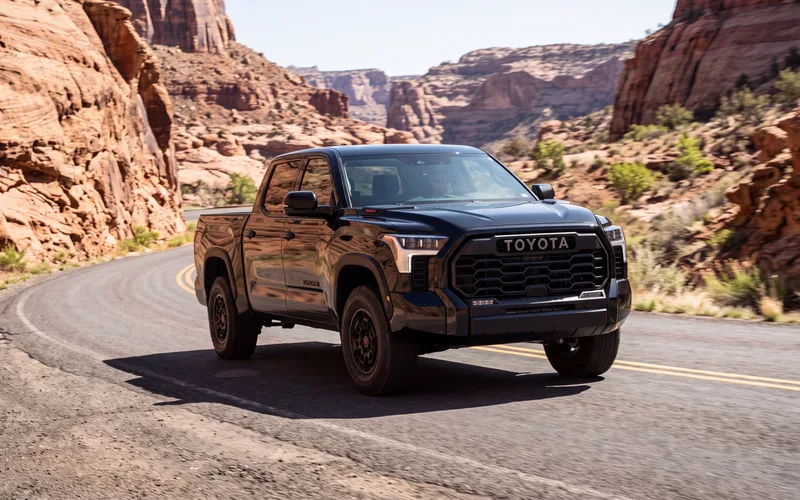 Toyota TundraFull-Size TruckBetter at: Resale value
Same import-truck logic with far better economics — 12,000 lbs of towing, a hybrid option, regular fuel, and resale in the mid-60% range against the Titan's 51%.
Compare 2.66C+
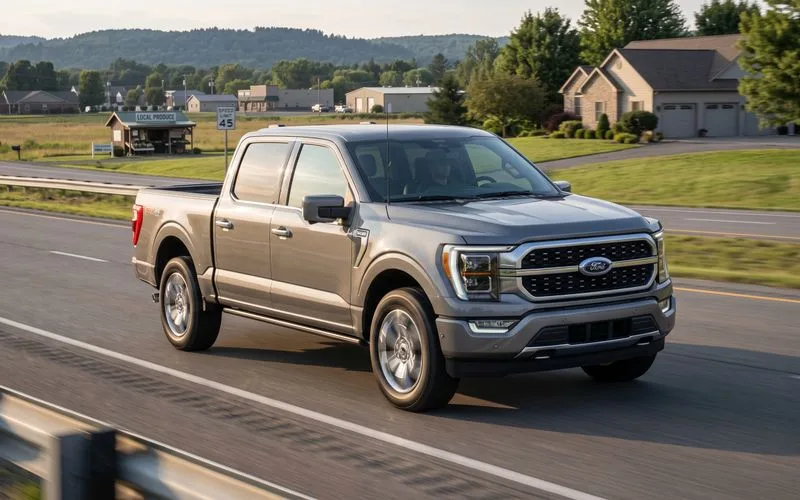 Ford F-150Full-Size TruckBetter at: Capability
The default cross-shop: 13,500 lbs of towing, five powertrains, three bed lengths, a much roomier back seat, and hands-free highway driving for similar money.
Compare 1.74C-
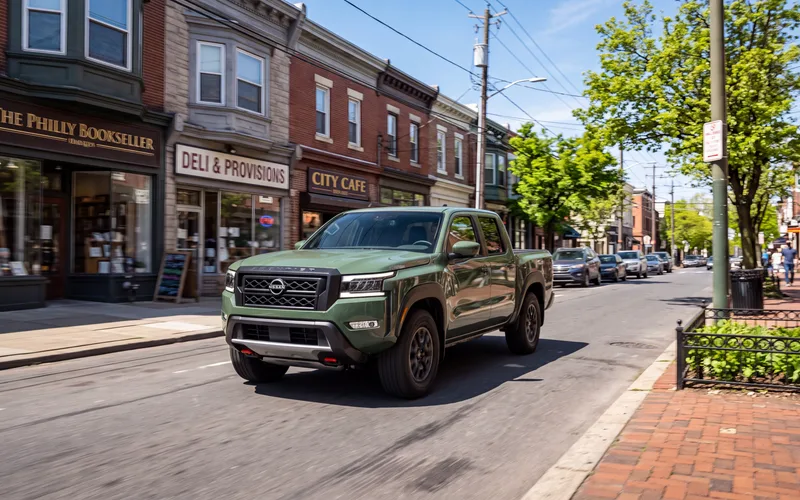 Nissan FrontierMid-Size TruckBetter at: Running costs
If the Titan's 9,290-lb tow rating is more than you need, the Frontier does most of the same jobs for less money, better fuel economy and easier parking at the same dealer.
CompareHow it's evolved
8 scored model years · 2017–2024
Subject scores by year
Hover or tap a score to see what moved it versus the year before. A corner mark flags a big swing.
| Year | Performance | Efficiency | Safety | Space | Cost | Reliability | Tech | Use-case | Driving | Value |
|---|---|---|---|---|---|---|---|---|---|---|
| 2024 | 45 | 26 | 54 | 58 | 53 | 67 | 49 | 60 | 61 | 45 |
| 2023 | 45 | 30 | 54 | 58 | 54 | 70 | 49 | 60 | 61 | 50 |
| 2022 | 47 | 30 | 55 | 58 | 56 | 64 | 48 | 60 | 62 | 50 |
| 2021 | 45 | 30 | 56 | 59 | 57 | 62 | 48 | 60 | 61 | 53 |
| 2020 | 45 | 30 | 56 | 59 | 55 | 58 | 49 | 60 | 61 | 55 |
| 2019 | 48 | 38 | 34 | 59 | 59 | 66 | 43 | 58 | 60 | 51 |
| 2018 | 49 | 38 | 34 | 59 | 60 | 66 | 34 | 57 | 61 | 55 |
| 2017 | 49 | 38 | 29 | 58 | 61 | 62 | 33 | 56 | 61 | 60 |
Compare two years
Best fit & conditions
Higher scores mean a better fit for that use case. Learn more about use-case fit →
Subject profile
Academic Probation · NHTSA safety recalls
Aug 5, 2024Air bags: air bag/restraint control moduleThe Air Bag Control Unit (ACU) may be missing a spacer, which can allow the fastener to loosen and result in an unsecured ACU.
Defect
Nissan North America, Inc. (Nissan) is recalling certain 2021 and 2024 Titan vehicles. The Air Bag Control Unit (ACU) may be missing a spacer, which can allow the fastener to loosen and result in an unsecured ACU.
Risk
An unsecured ACU can prevent or delay air bags from deploying as intended, increasing the risk of injury in a crash.
Remedy
Dealers will replace the ACU, free of charge. Owner notification letters were mailed September 19, 2024. Owners may contact Nissan customer service at 1-800-867-7669. Nissan's number for this recall is PD120.
NHTSA campaign 24V580000 ↗Manufacturer no. PD1207 vehicles potentially affected (all models in the campaign)Owners notified Sep 19, 2024Filed by Nissan North America, Inc.Filed as TITANFeb 27, 2024Air bags: frontal: driver side: inflator moduleDue to a manufacturing issue, the driver's air bag inflator may absorb moisture, and cause the air bag to deploy improperly.
Defect
Nissan North America, Inc. (Nissan) is recalling certain 2024 Titan, Frontier, Infiniti QX60, Pathfinder, 2023-2024 Sentra, Versa, Kicks, Infiniti QX50, and 2023 Rogue vehicles. Due to a manufacturing issue, the driver's air bag inflator may absorb moisture, and cause the air bag to deploy improperly.
Risk
An air bag that deploys improperly may not protect the driver as intended during a crash, increasing the risk of injury.
Remedy
Dealers will replace the front driver's air bag assembly, free of charge. Owner notification letters were mailed April 10, 2024. Owners may contact Nissan customer service at 1-800-867-7669. Nissan's numbers for this recall are PD103, PD104, and PMA34.
NHTSA campaign 24V154000 ↗Manufacturer no. PD103, PD104, PMA34351 vehicles potentially affected (all models in the campaign)Owners notified Apr 10, 2024Filed by Nissan North America, Inc.Filed as TITAN
13 recalls on other model years of the Titan (2017–2023)
Apr 17, 2023Tires: beadThe tires may have a tear in the inner bead which can cause a rapid loss of tire pressure.
Defect
Nissan North America, Inc. (Nissan) is recalling certain 2023 Titan and Frontier vehicles. The tires may have a tear in the inner bead which can cause a rapid loss of tire pressure.
Risk
A rapid loss of tire pressure while driving can lead to a loss of vehicle control, increasing the risk of a crash.
Remedy
Dealers will replace all four road tires, or inspect and replace the spare tire assembly, as necessary, free of charge. Owner notification letters are expected to be mailed June 10, 2023. Owners may contact Nissan's customer service at 1-800-867-7669. Nissan's number for this recall is PC973 and PC974.
NHTSA campaign 23V273000 ↗Manufacturer no. PC973, PC9744,249 vehicles potentially affected (all models in the campaign)Owners notified Jun 7, 2023Filed by Nissan North America, Inc.Filed as TITANOct 13, 2022Back over prevention: display functionThe in-vehicle infotainment (IVI) system may continuously reboot when the vehicle is restarted, which can result in an inoperative rearview display. As such, these vehicles fail to comply with the requirements of Federal Motor Vehicle Safety Standard number 111, "Rear Visibility."
Defect
Nissan North America, Inc. (Nissan) is recalling certain 2022 Titan, Titan XD, Frontier, and 2021-2022 Rogue vehicles. The in-vehicle infotainment (IVI) system may continuously reboot when the vehicle is restarted, which can result in an inoperative rearview display. As such, these vehicles fail to comply with the requirements of Federal Motor Vehicle Safety Standard number 111, "Rear Visibility."
Risk
An inoperative rearview camera display reduces the driver's rear visibility, increasing the risk of a crash.
Remedy
The IVI software will be updated by a dealer, or through an over-the-air (OTA) update, free of charge. Owner notification letters are expected to be mailed November 18, 2022. Owners may contact Nissan's customer service at 1-800-867-7669. Nissan's numbers for this recall are R22B8, R22C1, and PC923/25.
NHTSA campaign 22V772000 ↗Manufacturer no. R22B8 R22C1 PC923/2527,388 vehicles potentially affected (all models in the campaign)Owners notified Dec 9, 2022Filed by Nissan North America, Inc.Filed as TITAN, TITAN XDSep 7, 2022Power train: automatic transmissionThe transmission parking pawl may not engage when the vehicle is shifted into park, which can result in a vehicle rollaway.
Defect
Nissan North America, Inc. (Nissan) is recalling certain 2020-2023 Titan, 2020-2022 Frontier, and 2023 Z vehicles. The transmission parking pawl may not engage when the vehicle is shifted into park, which can result in a vehicle rollaway.
Risk
A vehicle rollaway increases the risk of a crash.
Remedy
Owners are advised to apply the parking brake every time they park their vehicle. Dealers will perform the applicable repairs below, free of charge: Â Model Year 2020-2022 Frontier vehicles: reprogram Transmission Control Module (TCM) Â Model Year 2020-2022 Titan vehicles: reprogram TCM and Engine Control Module (ECM) Â Model Year 2023 Titan vehicles: reprogram TCM Â Model Year 2023 Z vehicles: reprogram TCM. Owner notification letters were mailed October 28, 2022. Owners may contact Nissan's customer service at 1-800-867-7669.
NHTSA campaign 22V671000 ↗Manufacturer no. R22A9 R22B1/2/3197,230 vehicles potentially affected (all models in the campaign)Owners notified Oct 28, 2022Filed by Nissan North America, Inc.Filed as TITANJul 21, 2022Back over prevention: sensing system: camera · Equipment: electrical: infotainment: softwareWhen the Sirius XM subscription is set to "Not Subscribed," it may cause the infotainment head unit to reboot, resulting in an inoperative rearview camera. As such, these vehicles fail to comply with the requirements of Federal Motor Vehicle Safety Standard number 111, "Rear Visibility."
Defect
Nissan North America, Inc. (Nissan) is recalling certain 2021-2022 Rogue, 2022 Frontier, Pathfinder, and Titan rental vehicles. When the Sirius XM subscription is set to "Not Subscribed," it may cause the infotainment head unit to reboot, resulting in an inoperative rearview camera. As such, these vehicles fail to comply with the requirements of Federal Motor Vehicle Safety Standard number 111, "Rear Visibility."
Risk
An inoperative rearview camera display reduces the driver's rear visibility, increasing the risk of a crash.
Remedy
The Infotainment system software will be updated by a dealer, or through an over-the-air (OTA) update, free of charge. Owner notification letters are expected to be mailed July 29, 2022. Owners may contact Nissan's customer service at 1-800-867-7669. Nissan's number for this recall is R22A5 PC901 PC902.
NHTSA campaign 22V527000 ↗Manufacturer no. R22A5 PC901 PC90210,477 vehicles potentially affected (all models in the campaign)Owners notified Jul 29, 2022Filed by Nissan North America, Inc.Filed as TITANJun 24, 2022Power train: automatic transmissionThe transmission parking pawl may not engage when the vehicle is shifted into park, which can result in a vehicle rollaway.
Defect
Nissan North America, Inc. (Nissan) is recalling certain 2020-2022 Frontier and Titan vehicles. The transmission parking pawl may not engage when the vehicle is shifted into park, which can result in a vehicle rollaway.
Risk
A vehicle rollaway increases the risk of a crash.
Remedy
Owners are advised to apply the parking brake every time they park their vehicle. Dealers will replace the transmission parking pawl pin, free of charge. Owner notification letters were mailed November 2022. Owners may contact Nissan's customer service at 1-800-867-7669. Nissan's number for this recall is R22A2 R22A3.
NHTSA campaign 22V457000 ↗Manufacturer no. R22A1180,176 vehicles potentially affected (all models in the campaign)Owners notified Nov 30, 2022Filed by Nissan North America, Inc.Filed as TITANJun 23, 2021Exterior lighting: turn signal: bulbsThe front right and/or left turn signal bulb can crack and fail to illuminate.
Defect
Nissan North America, Inc. (Nissan) is recalling certain 2020-2021 Titan, Titan XD, and Versa vehicles. The front right and/or left turn signal bulb can crack and fail to illuminate.
Risk
Inoperable front turn signals cannot alert on-coming drivers and/or pedestrians that the vehicle will be turning, increasing the risk of a crash.
Remedy
Dealers will inspect and replace the bulbs as necessary, free of charge. Owner notification letters were mailed August 20, 2021. Owners may contact Nissan customer service at 1-800-867-7669. Nissan's numbers for this recall are PM986 and PC811.
NHTSA campaign 21V471000 ↗Manufacturer no. PM986 / PC81130,799 vehicles potentially affected (all models in the campaign)Owners notified Aug 20, 2021Filed by Nissan North America, Inc.Filed as TITAN, TITAN XDMar 11, 2021Tires · Tires: sidewallOn the affected vehicles, it is possible that one or more tires were cured for too long during tire production.
Defect
Nissan North America, Inc. (Nissan) is recalling certain 2019-2020 Altima and 2018-2021 Titan vehicles equipped with Continental tires. On the affected vehicles, it is possible that one or more tires were cured for too long during tire production.
Risk
Over cured tires may develop a break in the sidewall, resulting in sudden air loss or belt edge separation which could lead to tread/belt loss. Either condition can cause a loss of vehicle control, increasing the risk of a crash.
Remedy
Nissan will notify owners, and dealers will inspect the tires, and replace them as necessary, free of charge. Owner notification letters were mailed on May 11, 2021. Owners may contact Nissan customer service at 1-800-867-7669. Nissan's number for this recall is PC798.
NHTSA campaign 21V169000 ↗Manufacturer no. PC79836,141 vehicles potentially affected (all models in the campaign)Owners notified May 11, 2021Filed by Nissan North America, Inc.Filed as TITANDec 8, 2020Electrical system: wiring: front underhood · EngineThe engine wiring harness could contain an exposed wire that can cause an electrical short or arcing if it contacts another wire.
Defect
Nissan North America, Inc. (Nissan) is recalling certain 2020 Titan and Titan XD pickup trucks. The engine wiring harness could contain an exposed wire that can cause an electrical short or arcing if it contacts another wire.
Risk
An electrical short can impair the performance of the engine, transmission, or fuel pump, increasing the risk of an engine stall and a crash. An electrical short or arcing increases the risk of a fire.
Remedy
Nissan will notify owners, and dealers will inspect the engine harness, replacing it if necessary, free of charge. The recall began January 27, 2021. Owners may contact Nissan customer service at 1-800-647-7261
NHTSA campaign 20V759000 ↗7,583 vehicles potentially affected (all models in the campaign)Owners notified Jan 27, 2021Filed by Nissan North America, Inc.Filed as TITANSep 11, 2020Exterior lighting: headlightsThe headlights may have incorrect aiming marks. As such, these vehicles fail to comply with the requirements of Federal Motor Vehicle Safety Standard number 108, "Lamps, Reflective Devices, and Associated Equipment."
Defect
Nissan North America, Inc. (Nissan) is recalling certain 2019 Titan vehicles equipped with LED headlights. The headlights may have incorrect aiming marks. As such, these vehicles fail to comply with the requirements of Federal Motor Vehicle Safety Standard number 108, "Lamps, Reflective Devices, and Associated Equipment."
Risk
The incorrect marks may cause the headlights to be aimed incorrectly during servicing, resulting in insufficient illumination of the road while driving at night, thereby increasing the risk of a crash.
Remedy
Nissan will notify owners, and dealers will inspect and, as necessary, replace the headlight assemblies, free of charge. The recall began October 20, 2020. Owners may contact Nissan customer service at 1-800-867-7669. Nissan's number for this recall is PC751.
NHTSA campaign 20V556000 ↗Manufacturer no. PC75182 vehicles potentially affected (all models in the campaign)Owners notified Oct 20, 2020Filed by Nissan North America, Inc.Filed as TITANSep 12, 2019Back over prevention: sensing system: cameraAdditionally included are 2019 Nissan GT-R and Taxi and Infiniti QX50, QX60, Q70, Q70L vehicles. The back-up camera and display settings can be adjusted such that the rear view image is no longer visible and the system will retain that setting the next time the vehicle is placed in reverse. As such, these vehicles fail to comply with the requirements of Federal Motor Vehicle Safety Standard (FMVSS) number 111, "Rear Visibility."
Defect
Nissan North America, Inc. (Nissan) is recalling certain 2018-2019 Nissan Altima, Armada, Frontier, Kicks, Leaf, Maxima, Murano, NV, NV200, Pathfinder, Rogue, Rogue Sport, Sentra, Titan, Titan Diesel, Versa Note and Versa Sedan vehicles, as well as Infiniti Q50, Q60, QX30 and QX80 vehicles. Additionally included are 2019 Nissan GT-R and Taxi and Infiniti QX50, QX60, Q70, Q70L vehicles. The back-up camera and display settings can be adjusted such that the rear view image is no longer visible and the system will retain that setting the next time the vehicle is placed in reverse. As such, these vehicles fail to comply with the requirements of Federal Motor Vehicle Safety Standard (FMVSS) number 111, "Rear Visibility."
Risk
The lack of an image in the back-up camera display increases the risk of a crash.
Remedy
Nissan will notify owners in phases, having dealers update the back-up camera settings software, free of charge. The recall began November 11, 2019 and all affected VINs should be activated. Owners may contact Nissan customer service at 1-800-867-7669 or INFINITI customer service at 1-800-662-6200.
NHTSA campaign 19V654000 ↗1,228,830 vehicles potentially affected (all models in the campaign)Owners notified Nov 11, 2019Filed by Nissan North America, Inc.Filed as TITANJun 26, 2019Electrical system: alternator/generator/regulator · Electrical system: wiringThe alternator harness may have been damaged during the engine installation process, possibly resulting in an electrical short.
Defect
Nissan North America, Inc. (Nissan) is recalling certain 2017-2019 gasoline, light duty, Titan vehicles. The alternator harness may have been damaged during the engine installation process, possibly resulting in an electrical short.
Risk
An electrical short may cause an engine stall, increasing the risk of a crash. In addition, it increases the risk of a fire.
Remedy
Nissan will notify owners, and dealers will inspect the alternator harness for the proper routing and any damage. The harness will be clipped into the correct position or replaced as necessary, free of charge. The recall began August 8, 2019. Owners may contact Nissan customer service at 1-800-867-7669.
NHTSA campaign 19V495000 ↗91,319 vehicles potentially affected (all models in the campaign)Owners notified Aug 6, 2019Filed by Nissan North America, Inc.Filed as TITANApr 16, 2018Equipment: other: labelsAccessories installed on these vehicles reduced the load carrying capacity, however, a Load Carrying Capacity modification label was not installed, possibly allowing the vehicle to be overloaded. As such, these vehicles fail to comply with the requirements of Federal Motor Vehicle Safety Standard (FMVSS) number 110, "Tire Selection and Rims."
Defect
Nissan North America, Inc. (Nissan) is recalling certain 2016-2018 Nissan Titan, 2016 and 2018 Nissan Titan XD vehicles. Accessories installed on these vehicles reduced the load carrying capacity, however, a Load Carrying Capacity modification label was not installed, possibly allowing the vehicle to be overloaded. As such, these vehicles fail to comply with the requirements of Federal Motor Vehicle Safety Standard (FMVSS) number 110, "Tire Selection and Rims."
Risk
An overloaded vehicle can increase the risk of a crash.
Remedy
Nissan will notify owners and provide a new modification label, with installation instructions, free of charge. The recall began on June 4, 2018. Owners may contact Nissan customer service at 1-800-867-7669.
NHTSA campaign 18V240000 ↗483 vehicles potentially affected (all models in the campaign)Owners notified Jun 4, 2018Filed by Nissan North America, Inc.Filed as TITANApr 24, 2017Seat belts: rear/otherIn the event of a crash, the rear seatbelt assembly may not adequately protect the occupant's head, allowing it to contact the D-ring bolt trim cap. As such, these vehicles fail to conform to Federal Motor Vehicle Safety Standard (FMVSS) number 201, "Occupant Protection in Interior Impact."
Defect
Nissan North America, Inc. (Nissan) is recalling certain 2016-2017 Nissan Titan Crew Cab and Titan XD Crew Cab vehicles. In the event of a crash, the rear seatbelt assembly may not adequately protect the occupant's head, allowing it to contact the D-ring bolt trim cap. As such, these vehicles fail to conform to Federal Motor Vehicle Safety Standard (FMVSS) number 201, "Occupant Protection in Interior Impact."
Risk
If the occupant's head contacts the D-ring bolt trim cap during a crash, there is an increased risk of injury.
Remedy
Nissan will notify owners, and dealers will install energy absorbing material to the C-Pillar Finishers and replace the Seatbelt Bolt and Bolt Cap, free of charge. The recall began September 19, 2017. Owners may contact Nissan customer service at 1-800-647-7261.
NHTSA campaign 17V268000 ↗44,264 vehicles potentially affected (all models in the campaign)Owners notified Sep 19, 2017Filed by Nissan North America, Inc.Filed as TITAN
Source: NHTSA Office of Defects Investigation recall database, model years 2017–2024. Recalls are listed by model year as the manufacturer filed them; whether a specific car is affected depends on its VIN — check a VIN at nhtsa.gov ↗. NHTSA model names matched to this page: TITAN, TITAN XD.
Detailed scoring by subject
1Performance & PowertrainOne of the Titan's weakest categories.0.98F
Every 2024 Titan runs the same 5.6L Endurance V8 at 400 hp, so the volume Crew Cab SV and the Platinum Reserve share one figure with no trim range to note. That is a strong naturally aspirated number — more than a base F-150's 325 hp V6 — but the truck band runs to 800 hp to accommodate electric pickups, so it normalizes near the lower-middle.
413 lb-ft is respectable for a naturally aspirated V8, but it arrives high in the rev range and is well short of the turbocharged and diesel half-tons it competes with — Ford's 3.5L EcoBoost makes 500 lb-ft, Ram's Hurricane 469 lb-ft. Against a truck band reaching 800 lb-ft it lands low, and the shortfall is the reason the Titan's tow ratings trail the class.
Instrumented tests of the 400 hp Titan Crew Cab cluster tightly around 7.3–7.7 seconds — respectable but unremarkable for a V8 half-ton, and a long way off the 5-second turbo and hybrid rivals that now set the pace. The much lighter King Cab rear-driver is nearly a second quicker, so the displayValue notes the spread. Against a band anchored by 2.5-second electric pickups this scores low.
The Endurance V8 is the best part of the truck: naturally aspirated, so there is no turbo lag or hybrid handoff to manage, and throttle response is linear and immediate with a pleasant V8 note under load. It gives up ground to the forced-induction competition in low-end shove — it wants revs to deliver its best work — and it gets audibly busy when worked hard, which is a fair trade for the absence of any drivability quirks.
The 9-speed Jatco automatic that arrived with the 2020 refresh is a clear improvement on the old 7-speed and keeps the V8 in its powerband well enough under load, but it is not the class benchmark. Reviewers report occasional hesitancy and low-speed clunkiness in stop-and-go traffic and some indecision hunting between the closely spaced upper ratios. Acceptable rather than polished.
This is the Titan's defining competitive weakness. At 9,290 lbs it is the lowest-rated full-size half-ton on sale in 2024 — an F-150 tows 13,500 lbs, a Silverado 13,300 lbs, a Tundra 12,000 lbs — and it is only about 2,500 lbs clear of a well-equipped mid-size Ranger or Colorado. The separate heavier-frame Titan XD stretches to roughly 11,050 lbs, but even that trails the half-ton leaders.
A 1,710 lb ceiling is mid-size territory, not full-size — the Frontier and Tacoma rate about the same, while half-ton rivals routinely exceed 2,000 lbs and the payload leaders clear 2,400. The volume Crew Cab configurations come in lower still at 1,600–1,650 lbs, so a real-world Titan buyer sees less than the headline number. Against a truck band reaching 3,400 lbs this is a genuine capability shortfall rather than a normalization artifact.
The core towing kit is genuinely complete — an integrated trailer brake controller, tow/haul mode with downhill speed control, trailer sway control, a 7-pin harness and the Intelligent Around View Monitor's 360-degree views for lining up a hitch, plus a remote trailer light check operable from the key fob, which is a neat touch rivals mostly lack. What is absent is the advanced layer the Detroit trucks made standard equipment during this generation: no trailer backup steering assist, no trailer profiles or stored setups, no onboard scales, no auxiliary trailer camera inputs.
Proper truck four-wheel drive — a part-time shift-on-the-fly system with a two-speed transfer case and genuine low range — is available across the 2024 range and standard on PRO-4X and on every Titan XD, with an electronic locking rear differential on the off-road trim. It falls short of the top band only because rear-wheel drive is the default on the standard Titan, 4WD is a cost option on most trims, and there is no full-time or torque-vectoring mode for on-road use.
The PRO-4X is a credible factory off-road trim rather than an appearance package: Bilstein off-road shocks, an electronic locking rear differential, skid plates over the engine, transmission and transfer case, hill descent control, all-terrain tires and a dedicated off-road display showing pitch, roll, 4x4 engagement and locker status. It sits a clear tier below the segment's purpose-built specialists — there is no Raptor/TRD Pro/ZR2-grade widened track, long-travel or spool-valve damping, and no front locker or disconnecting sway bar.
One engine, one transmission, no alternatives — the most literal reading of the bottom band's take-it-or-leave-it description. The 5.6L V8 and 9-speed automatic are the entire 2024 lineup: no turbo six, no four-cylinder, no hybrid, no plug-in and no EV, and the 5.0L Cummins diesel that once gave the XD a genuine second option was dropped after 2019. By 2024 every full-size rival offered at least three powertrains and most offered an electrified one, which is a large part of why Nissan exited the segment.
2Efficiency & RangeThe Titan's lowest-graded category.0.00F
One 400 hp naturally aspirated 5.6L V8 with a 9-speed automatic is the entire 2024 lineup, and it returns 17 MPG combined — the worst figure among gasoline half-tons on sale that year. There is no downsized turbo four, no diesel and no hybrid to raise the average, so 17 MPG is not the thirsty end of a range but the whole story.
City economy is where a large naturally aspirated V8 with no electrification and no cylinder deactivation of consequence pays the heaviest penalty — 15 MPG puts the Titan near the bottom of the truck band. Rivals that shut cylinders, use a turbo four or add a hybrid motor all pull clear here, and the PRO-4X's all-terrain tires and 4x4 hardware cost another MPG.
The highway number is the Titan's least embarrassing efficiency figure — the 2020 refresh's 9-speed automatic gives it a genuinely tall top gear, and at a steady cruise the big V8 is loafing. It still only matches what turbocharged and hybrid rivals manage in mixed driving, and the shortened 3.69:1 axle ratio adopted in 2020 for towing response caps how far it can stretch.
A generous 26-gallon tank is doing the work here — it rescues the Titan's range from its economy, landing it mid-pack rather than last. It is a longer legal leg than a 2024 F-150 on the standard 23-gallon tank manages, but rivals offer 30-plus-gallon extended-range tanks that push past 600 miles and the Titan has no such option.
This is the worst figure on the Titan's whole scorecard and it compounds two penalties: the lowest combined MPG in the segment multiplied by premium-grade fuel that rivals do not ask for. At roughly 880 gallons a year of 91-octane, it runs past the top of the truck band entirely — a Silverado 5.3L V8 at the same 17 MPG combined costs materially less simply because it drinks regular.
Premium is recommended rather than strictly required — Nissan specifies 91 octane for the rated 400 hp and permits 87 temporarily when 91 is unavailable, with the engine controller retarding timing to suit. That is textbook mid-band, but it sits at the bottom of it: the EPA label itself reads 'Premium Gasoline Recommended' and computes the annual cost at premium prices, so the recommendation carries a real and unavoidable running-cost penalty on every trim. There is no regular-fuel engine to step down to, no E85 flex-fuel capability and no diesel or electrified alternative.
3SafetyGrades below the middle of the scale.1.66D
NHTSA rates the 2024 Titan Crew Cab — the volume body style — 4 stars overall, held down by a 4-star frontal result and a 4-star rollover figure typical of a tall body-on-frame half-ton. The side-impact result is the one 5-star element.
No Top Safety Pick of any kind, and the published rating set for 2024 is unusually thin: small overlap front comes out Acceptable (Good driver-side, Acceptable passenger-side) and moderate overlap front original is Good, with no updated moderate overlap, updated side, roof strength or head restraint result published for the 2024 truck. Both frontal ratings were assigned from tests Nissan ran itself, not IIHS, on 2020/2021 trucks and carried forward — this is a 2016-generation structure in its final model year rather than a freshly validated one.
Content-wise this is the Titan's strongest safety card and it beats most full-size rivals at the volume trim: Safety Shield 360 is standard on every 2024 trim (AEB with pedestrian detection, blind spot warning, rear cross traffic alert, lane departure warning, high beam assist, rear automatic braking), and Intelligent Cruise Control, Intelligent Forward Collision Warning and Intelligent Driver Alertness are standard on SV, PRO-4X and Platinum Reserve alike — adaptive cruise is not a package upsell here the way it is on a base Silverado or Ram. The gap that keeps it out of the top band is real: there is no lane keep assist or lane centering anywhere in the lineup, only a warning.
The standard system earns IIHS Superior for daytime vehicle-to-pedestrian, which is a genuine result and better than several rivals manage. But that is the only front crash prevention rating published for the 2024 truck — no nighttime pedestrian result and no rating under the updated vehicle-to-vehicle test that IIHS introduced for 2022+, so the harder half of the modern evaluation is simply unverified on a radar-plus-camera system dating to the 2020 refresh.
Blind spot warning and rear cross traffic alert are standard on all three trims, and rear automatic braking adds real intervention behind the truck. What is missing is the trailer-aware coverage that matters in this segment — no blind spot zone extension for a trailer as Ford and GM offer — and the front-facing side alerts are warning-only with no steering intervention.
The 2024 Titan offers lane departure warning with a haptic steering-wheel vibration and nothing more — no lane keep assist that steers back, and no lane centering at any price on any trim. Every domestic full-size rival offers at least active lane keeping, and most offer centering, so this is the clearest ADAS deficit on the truck.
Radar Intelligent Cruise Control is standard on every 2024 trim — a real advantage over rivals that lock ACC behind a package — and it operates to a full stop behind a stopped lead vehicle, though it cancels rather than holding and auto-resuming in stop-and-go. There is no highway assist to combine it with: without lane centering the Titan's ACC is a solo longitudinal system, and reviewers describe the calibration as usable but dated next to a 2024 F-150 or Tundra.
No hands-free highway system of any kind — the Titan never received ProPILOT Assist, let alone a hands-off tier, and it left the market in 2024 without one while BlueCruise and Super Cruise were shipping on rival half-tons.
IIHS rates the 2024 Titan's headlights Poor, and the rating holds across the range — the LED units on the upper trims fare no better than the base setup, with inadequate visibility on all four curve approaches and excessive low-beam glare. Standard high beam assist does not offset a Poor low beam, and this single result is what keeps the truck out of any Top Safety Pick contention.
The Titan gives the commanding forward view the segment expects, but the tall hood, thick A-pillars and high beltline create the usual full-size blind zones, and camera compensation is badly distributed: the Intelligent Around View Monitor 360-degree camera is unavailable on the volume SV entirely, optional on PRO-4X and standard only on the $60k+ Platinum Reserve. A rear-view monitor and rear sonar are standard, which is the floor rather than the fix.
The Crew Cab has two complete LATCH sets in the outboard rear positions plus a top tether for the center, and the rear doors open wide on a flat floor, so installing seats is workable. It falls short of the top band because the rear compartment is tight by full-size standards — reviewers consistently call the back seat the Titan's weak point relative to an F-150 SuperCrew or Tundra CrewMax — which makes three-across and rear-facing installs behind a tall driver a squeeze.
4Space & ComfortMid-pack among this car's ten categories.1.93C-
The volume 2024 configuration — the SV Crew Cab — comes standard with a 40/20/40 split front bench, so its maximum capacity is six, the ceiling of the truck band. Buyers who option the front buckets, or step up to PRO-4X or Platinum Reserve, get a five-seat cabin instead.
41.0 inches is a genuinely airy front cabin and identical across SV, PRO-4X and Platinum Reserve — Nissan publishes one figure for the Crew Cab regardless of trim, and the optional dual-panel panoramic moonroof is not called out as reducing it.
41.8 inches is adequate but sits near the bottom of the full-size truck band, where rivals stretch past 44 inches — the Titan's cab was designed in the mid-2010s and never got the front-seat stretch its Detroit competition received. Tall drivers notice the shortfall well before rear passengers do.
40.4 inches of second-row headroom is near the top of the truck band and one of the Titan's real strengths — the upright roofline gives back-seat passengers more clearance than the front row of many crossovers. The King Cab gives up nearly two inches under its shorter rear roof.
38.5 inches seats adults comfortably but lands mid-band and trails the class benchmarks badly — an F-150 SuperCrew offers 43.6 in and a Ram 1500 Crew Cab 45.2 in, so the Titan gives up roughly half a foot of rear stretch-out to the trucks it is priced against. The King Cab's 24.8 in is the reason Nissan sells it as a two-plus-occasional truck.
The volume Crew Cab is locked to the 67.0-inch short bed — unlike an F-150 or Silverado crew cab, which can be ordered with a 6.5-ft box, the Titan Crew Cab offers no longer bed at all, and the 8-ft box that anchors the top of the segment band was dropped with the second generation. Buyers who need bed length have to give up the full-size rear seat and take the King Cab.
Nissan publishes the box dimensions rather than a Crew Cab volume figure, so the 5.5-ft bed is derived from them: 67.0 × 63.8 × 20.8 in works out to ~51.5 cu ft geometrically, and scaling Nissan's published 59.6 cu ft long-bed figure by bed length gives ~50.7 — the two agree closely. Either way the short box is well under the ~53 cu ft an F-150 SuperCrew's 5.5-ft bed holds and among the smallest cargo boxes in the full-size class.
The fundamentals are all present — a console bin deep enough for a small laptop, flip-up rear seat cushions over configurable under-seat storage, a fold-down rear bench for in-cabin cargo, eight bottle holders, eight cupholders in the Crew Cab, a locking glovebox and 120-volt outlets in cabin and bed — plus the Utili-track bed channel system with movable cleats, which remains a genuinely good idea. What is missing is the innovation tier the segment moved to during this generation: no in-bed trunk, no multifunction tailgate, no fold-flat load floor, no Pro Power-style onboard generator, and reviewers consistently find the small-item storage less useful than rivals'. Note that the volume SV goes without the front center console, the overhead storage console, the phone holder and the 120-volt outlets unless they are optioned.
Seats are the Titan's most consistently praised comfort attribute — the front chairs are described as cushy and genuinely supportive on long stints, and reviewers repeatedly credit them with carrying the truck's comfort case. The rear bench is flatter and more upright than the class best, and adjustability is thin at the volume end: the SV's driver seat is 4-way manual with no power, no lumbar and no heating, so the praise really attaches to PRO-4X and Platinum Reserve trims with 8-way power, power lumbar and memory.
Composed rather than plush. On smooth pavement the Titan settles nicely and takes cracks and expansion joints without unsettling the cabin, helped by a heavy curb weight, but the multi-leaf solid rear axle gets busy and skittish over broken surfaces when the bed is empty — the classic unladen half-ton trade the coil-sprung Ram has largely engineered out. The PRO-4X's Bilstein monotube shocks add body control off-road without softening the on-road secondary ride. Reviewers land on 'mediocre' as often as 'smooth,' which is what keeps this in the middle band.
The weakest comfort attribute and the one reviewers raise unprompted. The blunt front end generates real wind rush at highway speed — enough that testers report raising their voices to hold a conversation — and the climate system's ventilation fan is loud enough to add a constant noise floor even at rest. There is no acoustic laminated glass or active noise cancellation to counter it, and the V8 gets vocal under load, so the Titan sits clearly behind the acoustically insulated Detroit half-tons.
Well equipped at the top, thin where most Titans sell. Platinum Reserve gets dual-zone automatic climate, heated and cooled front seats, heated rear seats and a heated steering wheel, and PRO-4X can be optioned to match — but the volume SV Crew Cab ships with single-zone manual climate control, no heated seats of any kind and no heated wheel, with rear vents and dual-zone auto both cost options. Remote engine start is standard, which is the one comfort feature that reaches every trim. That combination — rich at the top, sparse at the bottom — is squarely the mid band.
5Cost of OwnershipGrades below the middle of the scale.1.54D
Nissan dropped the S grade for 2024, so the SV Crew Cab 4x2 at $45,770 is the entry point — roughly $5,000 above where a base F-150 or Silverado work-truck trim starts, because there is no fleet-spec regular cab below it.
Titan volume concentrates on the SV Crew Cab 4x4 at $48,960 + $1,895 destination, with the new-for-2024 Bronze Edition package ($2,980) the common add. That undercuts a comparably equipped Tundra SR5 CrewMax 4x4 or Sierra Elevation by several thousand dollars — discounting off MSRP was also heavy in the final model year.
Estimates diverge widely — CarEdge models $3,069 over five years, Edmunds roughly $6,500 — so this sits between them, weighted toward the low side because Nissan's 60-month/100,000-mile basic coverage pays for essentially all unscheduled repair inside the window, unlike the 3 yr/36,000 mi coverage on every domestic rival. Offsetting that: the 5.6-liter V8 takes a large synthetic oil fill, nothing is prepaid, and the nameplate's discontinuation after 2024 thins out dealer service volume later in the period.
Depreciation is the Titan's defining ownership weakness and the single biggest drag on this category. Multiple independent residual models converge near 51%, well behind the ~57.5% full-size class average and far behind a Tundra's mid-60s. Nissan's August 2023 confirmation that the Titan would be killed after 2024 removed any prospect of the final-year truck being propped up by nameplate demand.
Best-in-class and by a wide margin: every domestic full-size rival stops at 3 years/36,000 miles, so the Titan carries two extra years and nearly three times the mileage of bumper-to-bumper coverage. Tires, corrosion and emissions items are excluded as usual.
Five years is the floor of the normalization band and scores accordingly, but the years figure understates the coverage: the 100,000-mile cap is double the 5 yr/60,000 mi powertrain terms on the F-150, Silverado, Sierra and Ram 1500, and matches the Tundra's mileage while the Titan's basic coverage runs alongside it.
No complimentary scheduled maintenance whatsoever — the first oil change is the owner's, where ToyotaCare covers the Tundra for 2 years/25,000 miles and GM includes a first-visit service. What the Titan does have is the longest included roadside assistance in the segment: 60 months/100,000 miles, tracking the basic warranty rather than Nissan's usual 3 yr/36,000 mi term, plus a NissanConnect Services trial. That is meaningfully better than 'basic roadside only' but falls short of anything prepaid, so it lands at the boundary between the two bands.
$51,000 volume-trim price minus its estimated resale value after 5 years (51% retained, or about $26,010) leaves about $24,990 in depreciation. Add the projected $5,400 in 5-year maintenance and repairs, and owning this vehicle for 5 years costs about $30,390 in total.
6Reliability & QualityThe Titan's best-graded category.2.52C+
Reliability is the Titan's best argument in its final model year: by 2024 the A61 is a nine-year-old design running a naturally aspirated V8 and a conventional torque-converter automatic, with none of the turbocharging, cylinder deactivation or hybrid hardware that generates warranty claims on the domestic full-size trucks. The survey data backs that up rather than merely tolerating it — J.D. Power rates the 2024 truck in its "Great" band and RepairPal ranks the nameplate near the top of the full-size class. What keeps it out of the 80s is that J.D. Power's score slid from 88 for 2023 to 81 for 2024, the sample is thin because Titan volume is a fraction of its rivals', and repairs when they do come are rated more severe than the class norm.
Nissan's multi-year dependability standing is mid-pack rather than either a strength or a liability — Consumer Reports placed the brand 12th of 22 in its 2024 survey, the lowest-ranked Japanese marque, while J.D. Power's 2024 Initial Quality Study had Nissan jumping seven places to 6th. Almost all of the brand's reputational damage traces to Xtronic CVT passenger cars and crossovers, which the Titan shares no hardware with, but this item scores the brand and is held consistent with the other Nissan entries in the dataset.
Two NHTSA campaigns against the 2024 model year, both airbag-related and both straightforward dealer replacements — nothing touching the engine, transmission, frame or fire risk. That is a lighter recall load than the full-size norm, where engine-replacement and software campaigns have run into six figures of vehicles on rival trucks. The offsetting note is that a low-volume truck simply has fewer units in the field to surface defects, so a clean sheet here carries less statistical weight than it would on an F-150.
The single strongest item on this scorecard. The 5.6-liter VK56VD "Endurance" V8 is a two-decade-old naturally aspirated design shared with the Armada and Infiniti QX56/QX80, with a well-established high-mileage record and no turbochargers, no cylinder deactivation and no belt-driven hybrid motor to fail. The nine-speed Jatco automatic that arrived with the 2020 refresh was four model years old by 2024 and has drawn shift-quality complaints rather than failure reports — a real but minor deduction, as is the first generation's history of transmission-cooler contamination, which does not apply to this drivetrain.
The clear weak point, and it scores below the mid band because this item measures richness relative to price — the Titan's cabin was already a generation behind when the 2020 refresh left most of it alone, and by 2024 it was being sold against Ram and Silverado interiors at $50,000-plus. Reviewers are close to unanimous that hard plastic dominates even touch-frequent surfaces and that the top Platinum Reserve reads like a rival's mid-level trim; a minority of owners find the materials perfectly acceptable, but professional consensus runs the other way.
Assembly quality sits well above perceived material quality. The A61 was built on a mature body-on-frame line at Canton, Mississippi through nine model years, and owners consistently describe a solid, rattle-free structure rather than the squeaks and misalignment that would push this into the penalty band. It stays mid-pack rather than higher because Consumer Reports calls the interior fit and finish lackluster, and because the cheap trim materials make any panel gap or hollow-sounding surface more conspicuous than it would be in a better-furnished cabin.
Physical coverage is fine — roughly a thousand US Nissan franchises put a service bay within reach almost everywhere, including the rural markets a work truck lives in, and Nissan has committed to parts, service and warranty support for the discontinued nameplate. What pulls this below the Frontier's mark is orphan status rather than geography: Nissan confirmed in August 2023 that it was exiting the full-size segment, so 2024 is the last Titan a dealer will ever see, technician familiarity with a low-volume V8 truck thins as the fleet ages, and Nissan's own service-satisfaction standing has run at or slightly below the mass-market average to begin with.
Running costs are genuinely low: RepairPal puts the Titan's average annual repair and maintenance bill at roughly 40 percent below the full-size truck average, helped by a body-on-frame layout with cheap wear items and by a V8 shared with the Armada and Infiniti QX80, which keeps engine components in production well past the truck itself. Nissan's 5-year/100,000-mile bumper-to-bumper coverage also absorbs most unscheduled repair inside the ownership window. It does not score higher because the Titan never cracked a fifth of its 100,000-unit sales target, so the aftermarket is a fraction of the F-150's or Silverado's, body panels and trim are effectively dealer-only, and a discontinued nameplate's specific parts get scarcer and slower as the years pass.
7Technology & InfotainmentGrades below the middle of the scale.1.27D
The 2024 Titan's volume trim is the SV (the S grade was dropped, leaving SV / PRO-4X / Platinum Reserve), and the SV carries an 8.0-inch center display as standard with the 9.0-inch Integrated Command Center as a paid option. Scored on the 8.0-inch standard unit per the volume-trim rule, which sits at the very floor of the full-size-truck normalization band.
NissanConnect on the Titan is genuinely simple to operate — real volume and tuning knobs, large clearly-labelled HVAC buttons and a menu structure with no depth to get lost in — and reviewers credit the screen's responsiveness. What drags it down is age: the A61 architecture dates to 2016 and by 2024 the standard 8.0-inch SV display is the smallest and lowest-resolution head unit in the full-size class.
Apple CarPlay and Android Auto are standard on every 2024 Titan grade, but on the volume SV both are wired only — wireless CarPlay is restricted to PRO-4X and Platinum Reserve, and Android Auto is wired on every trim with no wireless option at all. That is textbook "wired standard, wireless on upper trims," and the fact that one platform never goes wireless holds it to the lower half of that band.
The volume SV has neither built-in navigation nor Nissan Voice Recognition — both arrive only with the 9-inch Integrated Command Center on PRO-4X and Platinum Reserve. Even there the assistant is command-list based rather than natural-language, so owners default to CarPlay or Android Auto maps; the connected Door to Door Navigation itself is competent but subscription-tethered.
A 6-speaker display-audio system is standard, and the available Fender-powered 12-speaker system — with a branded amplifier, under-seat subwoofer, center channel and front/rear tweeters — is a legitimately strong premium upgrade for a mainstream truck, on par with Bose in the GM trucks and B&O in the F-150. The weak point is that the base six-speaker setup is unremarkable and the Fender system is package- or top-trim-only.
Every 2024 Titan gets a 7-inch programmable color driver-information display flanked by analog Fine Vision dials, with off-road gauges included — standard across all three grades, which is better than rivals that gate any color cluster display behind an upgrade. But it is a partial-digital setup with no full-digital gauge cluster offered at any price, so there is no path to what the F-150, Silverado and Ram all provide.
There is no whole-vehicle over-the-air update programme on the Titan — Nissan's OTA capability covers the NissanConnect head unit's own software and, on nav-equipped trims, map data. No feature-adding vehicle software updates reach the truck, and on the volume SV even the connected-navigation map updates are absent because NissanConnect with Navigation is not offered on that grade.
NissanConnect Services covers the expected core set — remote start/stop, remote lock/unlock, vehicle locator and alerts — through the MyNISSAN app on a new-vehicle trial that converts to a paid subscription. Two things hold it back: there is no phone-as-key of any kind, and on the volume SV the connected-services hardware is itself an option rather than standard equipment.
Front ports are thin but modern-enough for the era — two illuminated USB (one Type-A, one Type-C) standard on every grade — and the truck's real strength is household power: a rear 120-volt outlet in the cabin plus an available in-bed 120-volt outlet, which matters more on a work truck than port count. Against it, there is no Qi wireless charging pad at any trim or price in 2024 (only a mechanical "dedicated configurable cell phone holder"), and the rear charge-only USB-A pair is optional on the SV.
Remote keyless entry with a multi-function fob (windows-lowering, trailer light check, two-driver memory) is standard, but proximity entry — the Intelligent Key system with driver and passenger request switches — is an option on the volume SV and only standard from PRO-4X up, and remote engine start likewise arrives via the PRO-4X Convenience Package or Platinum Reserve. No phone-as-key is offered, and being a pickup there is no hands-free liftgate; the electronically-locking tailgate is itself a package item.
The Titan's parking suite is squarely mid-band: a RearView Monitor and rear sonar are standard on SV and PRO-4X, front-and-rear sonar is available, and the Intelligent Around View Monitor with Moving Object Detection — a genuinely useful 360-degree system Nissan marketed as class-exclusive — is optional on PRO-4X and standard on Platinum Reserve. Camera resolution is dated 2016-era hardware and there is no automated parking of any kind.
No head-up display was ever offered on the second-generation Titan, including the final 2024 model year — it does not appear on any grade, in any package, or on the standalone accessory list. Scored in the low band for outright absence.
8Use-Case FitOne of the Titan's strongest categories.2.02C
The Crew Cab has four full-size doors, a 60/40 rear bench whose cushions flip up and whose seatbacks fold down and lock for in-cabin gear, and two complete LATCH sets on the outboard positions — but 38.5 in of rear legroom is the tightest back seat among full-size crew cabs (F-150 and Sierra offer 43.6 in) and the 23.9 in rear step-in height on a 4x4 means small kids have to be lifted in.
Safety Shield 360 — AEB with pedestrian detection, blind-spot warning, rear cross-traffic alert, rear automatic braking, lane departure warning, high-beam assist — plus Intelligent Cruise Control and Rear Door Alert are standard on every 2024 trim, which is exactly the content families shop for. The credentials underneath are the problem: 4 stars overall from NHTSA, IIHS-rated Poor headlights, and lane departure warning with no lane keep or centering assist.
Rear passengers get 38.5 in of legroom, a flip-down center armrest, reading lamps, four bottle holders and — on PRO-4X and Platinum Reserve — rear A/C vents, two illuminated USB charging ports and a rear 120-volt outlet, with heated rear seats and dealer-accessory rear-seat entertainment above that. On the volume SV all of those rear amenities are locked inside the Convenience Package, luggage lives in an open 5.5-ft bed unless a tonneau is added, and reviewers consistently flag ambient cabin noise on the highway.
The naturally aspirated 5.6L Endurance V8 is the Titan's commuting asset — 400 hp delivered linearly with no turbo lag or low-speed hesitation behind a 9-speed torque-converter automatic — and press and owner reviews describe a smooth, composed ride around town. Against that, reviewers call the steering heavy enough to make maneuvering 'a chore,' note pronounced body roll, and the cabin carries constant ambient noise; step-in height of 22.0 in front on a 4x4 is a daily climb.
This is the Titan's worst use case by a wide margin: 17 MPG combined with premium gasoline recommended works out to an EPA-estimated $4,450 a year in fuel, well above the roughly $3,050 a Sierra 5.3L V8 costs at the same 17 MPG on regular unleaded, because the fuel itself is dearer. There is no hybrid, diesel or any electrified option to soften it — the Cummins diesel left after 2019 and the V8 is the entire lineup.
At 228.2 in long and 79.5 in wide on a 139.8-in wheelbase the SV Crew Cab is squarely full-size, though its 48.0-ft wall-to-wall turning circle is no worse than the class norm. The camera help that makes a truck this size manageable is badly gated: only a RearView Monitor is standard, the Intelligent Around View 360-degree monitor is unavailable on the volume SV and packaged on PRO-4X, and front/rear sonar is optional below Platinum Reserve.
The 400-hp V8 pulls well and 9,290 lbs of towing is real capability, but both headline figures are the lowest in the full-size half-ton class by a wide gap — F-150 reaches 13,500 lbs, Sierra 13,300, Tundra 12,000 — and payload of 1,600-1,710 lbs is mid-size-truck territory that a pallet or a loaded bed of gravel will exhaust. The Crew Cab is further limited to a single 5.5-ft bed; buyers who need more must step to the King Cab's 6.5-ft bed or the separate Titan XD, which reaches 11,050 lbs with a gooseneck and 2,360 lbs of payload.
Mechanically the Titan is the conservative pick — a naturally aspirated 5.6L V8 with no turbochargers on a fully boxed ladder frame, behind a torque-converter 9-speed, backed by a 5-year/100,000-mile bumper-to-bumper and powertrain warranty that no domestic rival matches. What it lacks is the fleet track record that grades this item at the top: the Titan never reached meaningful commercial volume, Nissan confirmed in August 2023 it was exiting the full-size segment after 2024, and a discontinued nameplate raises legitimate long-term parts-and-service questions for a hard-use buyer.
The Utili-track channel system — three bed rails with two lockable aluminum cleats that slide to wherever the load actually sits — remains the best factory bed-management hardware in the class, and it comes alongside four fixed tie-downs, a 120-volt in-bed outlet, LED under-rail and tailgate lighting, a spray-on bedliner, a damped removable tailgate, a rear utility bed step and lockable in-bed TITAN Boxes. Two things hold it back: on the volume SV nearly all of it is bundled into the Utility Package rather than standard, and there is no multifunction tailgate or high-output onboard generator to match Ford's Pro Access tailgate and Pro Power Onboard.
A 26.0-gallon tank at 17 MPG combined gives an EPA total range of 442 miles, the front seats draw consistent praise for multi-hour stints, and Intelligent Cruise Control is standard on every trim. The fatigue-reduction story stops there — the Titan offers only lane departure warning with no lane keep or lane centering, so the driver steers every mile — and reviewers repeatedly flag ambient cabin noise at highway speed.
PRO-4X is a real off-road trim rather than a decal package: Bilstein off-road shocks, an electronic locking rear differential, hill descent control, skid plates and all-terrain tires on a 4x4 chassis with 10.6 in of front ground clearance, a 22.8-degree approach angle and a 21.7-degree breakover angle. Camping is well served by the 120-volt bed outlet, bed lighting, Off-Road Protection accessory packages and a sport-bar option — but 9,290 lbs of towing limits what toys come along, and there is no front locker, disconnecting sway bar or 33-inch-tire halo variant of the sort Tundra TRD Pro and F-150 Raptor offer.
Inside, the rear bench flips up and its seatbacks fold down and lock over a flat-floor function with tie-down hooks and a divided, lockable storage box; outside, the Utili-track cleats let tie-down points move to the load instead of living at four fixed corners, with lockable TITAN Boxes, a receiver hitch and a rear utility bed step available. The ceiling on it is the bed itself — the Crew Cab is offered only with a 5.5-ft box, the shortest single option in the full-size class, where every domestic rival lets a buyer step up to a 6.5-ft or 8-ft bed.
9Driving ExperienceOne of the Titan's strongest categories.2.14C
2024 is the final model year of the second-generation (A61) Titan, a 2016 design whose last meaningful chassis work was the 2020 refresh — and it is the least composed of the conventional full-size trucks. Reviewers consistently report pronounced body roll in corners, a jittery, hoppy rear end with an empty bed, and dynamics that are simply less refined than the Ram 1500 or F-150. It tracks honestly on the highway and the PRO-4X's off-road hardware is genuine, but nothing about the way it corners is composed.
The Titan's rack-and-pinion steering is heavy without being informative — reviewers describe it as imprecise and a chore in low-speed maneuvering, with soft on-center definition and little feedback about front grip. Combined with the truck's 48-foot turning diameter, it makes the Titan feel bigger and clumsier than its rivals in exactly the situations where a half-ton gets used most.
The single best dynamic attribute of the truck, and a legacy of the Titan sharing hardware philosophy with Nissan's heavier commercial line. Four-wheel vented discs with roughly 13.8-inch front rotors are standard across the lineup, and instrumented stops from 60 mph land around 128-133 feet — short for a full-size pickup and well ahead of what the Titan's soft-edged handling would suggest. Pedal feel is firm and progressive rather than the long, dead travel common in the class.
The Titan's other genuine strength. Every 2024 truck carries the naturally aspirated 5.6L Endurance V8 (400 hp / 413 lb-ft) and the nine-speed Jatco automatic fitted in the 2020 refresh — one powertrain, no turbo lag, no hybrid handoff to fumble, no cylinder-deactivation shudder, and no stop/start roughness to calibrate around. Reviewers single out the nine-speed for confident, predictable shifts that stay in gear at highway speed rather than hunting through ratios, and 0-60 mph lands around 6.0-6.5 seconds.
The 5.6L V8 has a pleasant, deep character under load — no coarse turbo-four thrash, no droning — but the Titan's cabin isolation is a 2016 design that was never a class leader, so wind and road noise intrude more than in a current F-150 or Ram, and the engine is more present in the cabin than it needs to be. Pleasant powertrain, dated sound-deadening around it.
A real weakness and one reviewers name directly. Every 2024 Titan uses the same 139.8-inch wheelbase whether Crew Cab or King Cab, so unlike the Tundra, F-150 or Silverado there is no short-wheelbase configuration to escape to — the volume truck and the long-bed truck turn identically badly. At 48.0 ft it is worse than an F-150 SuperCrew (47.8 ft) and far worse than a Tundra CrewMax short-bed (44.2 ft).
Better than the Titan's dynamics. Nissan's Zero Gravity front seats are among the segment's most comfortable for long stints, the tall, squared-off greenhouse gives good sightlines, and the dash keeps physical climate and audio controls rather than burying them in the 9-inch touchscreen added in the 2020 refresh. Held back by a dated layout and less steering-column and seat adjustment range than a current F-150 offers.
What character the Titan has comes from the V8 — a 400-hp naturally aspirated engine is increasingly rare in a half-ton, and it pulls hard and sounds good doing it. Everything around it is inert: numb steering, roly handling, a 48-ft turning circle, and by 2024 the knowledge that Nissan had already announced the truck's death, which killed whatever enthusiast momentum it had. The 20th-anniversary Bronze Edition is a styling package, not a driving one.
10Value & Market PositionOne of the Titan's weakest categories.0.97F
Two things are genuinely generous: every 2024 Titan gets the 400 hp 5.6L Endurance V8 and 9-speed automatic — there is no penalty-box base engine the way an F-150 XL gets a 3.3L V6 — and Safety Shield 360 with automatic emergency braking and pedestrian detection, blind-spot warning, rear cross-traffic alert, lane-departure warning, rear automatic braking, high-beam assist and traffic-sign recognition is standard on all three grades, along with an 8-inch touchscreen, wired CarPlay and Android Auto, a 7-inch color driver display, a 120V cabin outlet and the 5 yr/100,000 mi warranty. What holds it to the middle of the band is what the volume SV still lacks at $47,665 delivered: halogen headlights rather than LED, a 4-way manually adjustable cloth seat, a manual sliding rear window, no proximity key (Intelligent Key is an option), no built-in navigation and no tow package — all of which are line items rivals include or bundle cheaply at that price. Dropping the S grade for 2024 also removed the well-equipped-for-the-money entry point.
Sits at the bottom edge of the 'fair value' band because the Titan asks class-average money for below-class capability. At $47,665 delivered the volume SV Crew Cab is priced against an F-150 XLT or Silverado LT while towing 9,290 lbs at best (versus 13,500 for an F-150), carrying 1,600–1,710 lbs of payload, and returning a class-worst 17 MPG combined on recommended premium fuel — roughly $4,450 a year in gas. Losing the S grade for 2024 raised the entry price more than $5,000 without adding content. Two things pull it back to mid-band: the 5 yr/100,000 mi bumper-to-bumper warranty is worth real money against the 3 yr/36,000 mi coverage on every domestic rival, and the top Platinum Reserve at $59,710 is a legitimately loaded truck where a comparably trimmed F-150 Limited or Sierra Denali Ultimate runs $15,000–$20,000 higher. The decisive drag is that the value never survives resale — roughly 51% retained at five years against a ~57.5% class average means the sticker discount is paid back on the trade.
The 2024 lineup is the narrowest in the full-size class by a wide margin. Nissan deleted the S grade, leaving three trims — SV, PRO-4X and Platinum Reserve — spanning $45,770 to $59,710. There is one engine, one transmission and one axle setup; the regular cab went away with the 2020 refresh; the King Cab survives only as a 4x4 SV; and each cab offers a single bed length (5.5-ft on the Crew Cab, 6.5-ft on the King Cab). A buyer wanting a work-spec regular cab, a long bed, a diesel, a hybrid or a fleet-price entry model has nothing to choose. Against an F-150 with five powertrains, three cabs, three bed lengths and seven-plus trims, or a Silverado with eight, this is close to take-it-or-leave-it — the only real configuration flexibility left is cosmetic, via the new $2,980 Bronze Edition package on the SV.
The weakest possible reading of this item short of a vehicle that never went on sale. Nissan moved roughly 13,400 Titans in the US in 2024, down about 16% from roughly 15,900 in 2023 — against more than 750,000 F-Series, and well under a tenth of even the fourth-place Tundra. Nissan targeted 100,000 annual sales and a 5% segment share when the A61 launched in 2016 and hit 21,880 in its best year, so the generation never came close and then declined every year after. Market rejection was total enough that Nissan confirmed in August 2023 it was exiting the full-size segment entirely; Canadian sales had already ended after 2021 and Canton production stopped in November 2024.
Nissan overall is a neutral mainstream badge — competent, value-priced, no halo — but full-size trucks are the most brand-loyal purchase in the US market, and there the Nissan badge is an active liability rather than a neutral one. The segment is defined by three domestic nameplates with decades of accumulated credibility and by Toyota's separately earned durability reputation; a Nissan pickup carries none of that with the towing-and-jobsite buyer, and by 2024 the badge also carried Nissan's own well-publicized financial and product-cycle troubles plus the announced exit from the segment, which signals to buyers that the company itself did not believe in the truck. What keeps this above the bottom band is that owners who do buy in are satisfied — the Titan won its J.D. Power APEAL segment and 90% of KBB owner reviewers recommend it — so the image problem is one of consideration, not of disappointment after purchase.
Scored as buyer benefit, this is the Titan's strongest item in the category and close to the definitional case for the top band's caveat. Slow sales and a confirmed end-of-life meant unusually deep money on the hood throughout the run-out: 0% financing for up to 60 months, factory cash back in the $1,500–$3,000 range stacking with loyalty and NMAC finance cash, and dealers with aging inventory of a discontinued nameplate willing to negotiate hard off a sticker few buyers were competing for. A shopper who wanted a Titan in 2024 could get thousands below MSRP at a time when F-150 and Tundra buyers were paying at or near it. It stops short of the 80–100 band precisely because the discounts were desperation pricing on a dead model — the same forces producing the discount produce the worst residuals in the segment, so much of the saving is handed back at trade-in.
The worst freshness position a vehicle can occupy: the A61 generation launched for MY2016, took its only significant refresh for MY2020, and 2024 is a pure carry-over ninth and final model year of that generation. The architecture underneath is older still — a naturally aspirated V8 first seen in 2004-era Nissan trucks, a 2016-vintage infotainment platform, no electrification, no over-the-air vehicle updates. Every direct rival redesigned or substantially refreshed inside this window (F-150 in 2021 and refreshed for 2024, Silverado/Sierra refreshed 2022, Tundra all-new 2022, Ram 1500 all-new for 2025). Normally 'imminent redesign risk' is the penalty here; for the Titan there is no redesign at all — Nissan confirmed the exit in August 2023 and Canton stopped building the truck in November 2024, so a 2024 buyer is buying the last unit of an orphaned nameplate.
Professional reviewers were consistently polite and consistently unconvinced: the Titan is described as a capable, comfortable, well-warrantied truck that is simply outclassed, and it has never won a full-size comparison test. Edmunds rated it 7.1/10 and The Car Connection 5/10, both bottom-of-class for light-duty full-size trucks, and US News placed it last among mainstream full-size pickups at 8.1 versus 8.9 for the class-leading Ram 1500. Typical verdicts run to 'an unworthy final chapter' and 'doesn't offer an experience well-rounded enough to keep up with the competition.' Two real counterweights keep this out of the bottom band rather than in it: the Titan was named most appealing Large Light Duty Pickup in the J.D. Power 2023 US APEAL Study — beating the F-150 and Silverado on the owner-experience measure — and owner sentiment is strongly positive, with 90% of KBB reviewers recommending it. Critics rank it last; the people who own one like it.