

The verdict
A mixed-report full-size truck, strong on driving and held back by ownership.
Overall 2.52 (C+) across 10 graded subjects. Its strongest is driving experience at 3.86 (A+), its weakest cost of ownership at 0.00 (F). 8 of 10 subjects grade at C− or better.
Jump to scoresStrengths
- Driving Experience
- Safety
- Value & Market Position
What holds it back
- Cost of Ownership
- Reliability & Quality
- Space & Comfort
Top alternatives
Cars shoppers cross-shop with the Rivian R1T 2.60C+
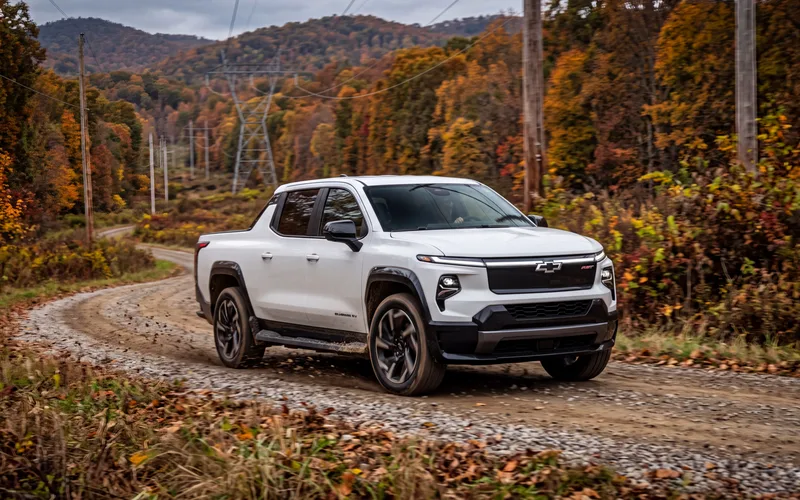 Chevrolet Silverado EVFull-Size TruckBetter at: Practicality
If you want an electric truck that still works as a truck — 44.3 in of rear legroom, a longer bed with a midgate, 12,500 lbs of towing, up to 493 miles of range and a dealer network — for roughly $20,000 less.
Compare 2.21C
2.21C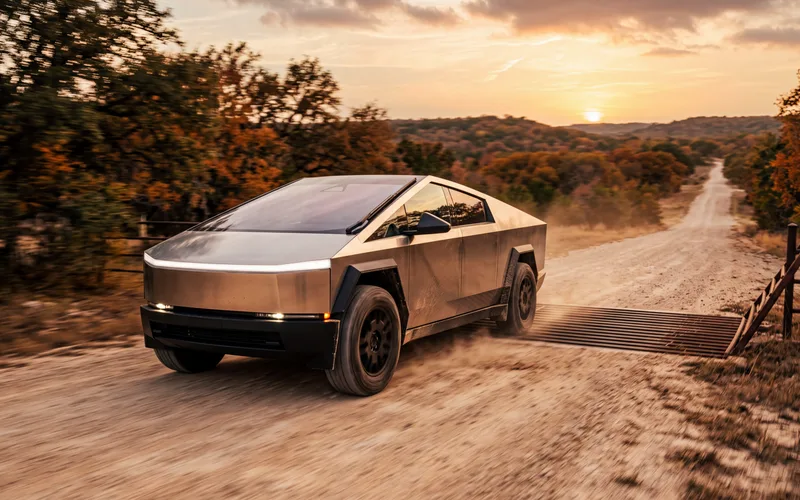 Tesla CybertruckFull-Size TruckBetter at: Cargo capability
Similar money buys more payload, a 72.4-in bed and the Supercharger network, if you can live with a plainer cabin and a harsher ride.
Compare 2.66C+
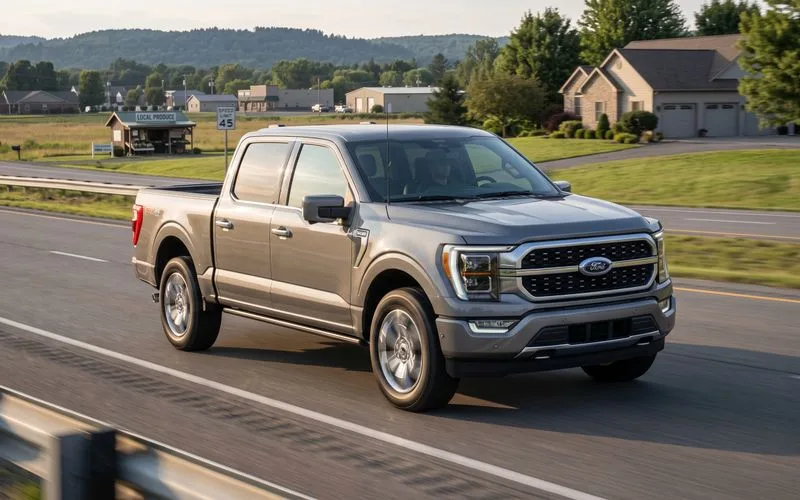 Ford F-150Full-Size TruckBetter at: Value and resale
The default full-size truck: half the price, 60% five-year resale, any bed length you want, and a service bay in every town — at the cost of the R1T's refinement and running costs.
CompareSubject scores by year
Hover or tap a score to see what moved it versus the year before. A corner mark flags a big swing.
| Year | Performance | Efficiency | Safety | Space | Cost | Reliability | Tech | Use-case | Driving | Value |
|---|---|---|---|---|---|---|---|---|---|---|
| 2026 | 67 | 69 | 78 | 53 | 22 | 46 | 73 | 74 | 84 | 71 |
| 2025 | 69 | 67 | 81 | 55 | 27 | 40 | 72 | 78 | 86 | 80 |
| 2024 | 70 | 66 | 76 | 54 | 22 | 43 | 69 | 76 | 79 | 76 |
| 2023 | 81 | 65 | 81 | 51 | 20 | 42 | 70 | 79 | 85 | 79 |
| 2022 | 77 | 64 | 85 | 54 | 27 | 38 | 70 | 79 | 85 | 78 |
Compare two years
Best fit & conditions
Higher scores mean a better fit for that use case. Learn more about use-case fit →
Subject profile
Detailed scoring by subject
1Performance & PowertrainMid-pack among this car's ten categories.2.68C+
The volume Dual Standard uses Rivian's two-motor AWD system and delivers substantially more output than a typical gas full-size truck. Higher 2025 configurations greatly expand the performance envelope.
The standard dual-motor system supplies strong, immediately available torque at both axles. Performance, Tri- and Quad-Motor versions offer markedly greater peak output.
Even the volume version is sports-car quick for a pickup, while the optional motor configurations move into supercar acceleration territory.
The dual electric motors respond immediately and deliver power progressively without combustion vibration or gear interruptions. Reviewers describe the Dual-Motor truck as quiet, smooth and effortlessly quick.
Single-speed direct drive has no shifts to time, hunt or shock occupants. Predictable regenerative braking complements the seamless response.
The rubric calls for the nameplate maximum, reached by Large/Max and Tri configurations with a weight-distributing hitch. The lighter Standard-pack volume configuration is limited to 7,700 pounds.
The Standard pack gives the R1T its greatest payload headroom, though the figure remains modest against payload-focused gas half-tons.
It includes an integrated brake controller, sway control, trailer profiles, automatic trailer detection, estimated trailer weight and trailer-aware range. It lacks the guided reverse-steering and transparent-trailer camera tricks of the most elaborate rivals.
AWD is standard throughout the range, with at least one motor on each axle and increasingly precise torque control in Tri- and Quad-Motor variants. Multiple terrain modes and adjustable air suspension add real sophistication despite no mechanical low range.
Standard adjustable air suspension, All-Terrain and Snow modes, strong clearance and an optional All-Terrain package make even the volume truck credible off pavement. Tri/Quad versions add specialized modes and finer torque control, though there is no two-speed transfer case.
Every R1T is an EV, so there is no gas, hybrid or range-extender alternative. Within that constraint, buyers get Dual, Performance Dual, Tri and Quad motor layouts plus Standard, Large and Max battery packs—unusually broad choice for one EV nameplate.
2Efficiency & RangeMid-pack among this car's ten categories.2.53C+
The volume Dual Standard on its included 20-inch wheels is near the top of the EV-truck efficiency band. The optional 22-inch road wheels improve its EPA result despite their larger diameter.
Regenerative braking makes city driving the R1T's strongest cycle, with a very good result for a heavy electric pickup.
Highway efficiency drops as aerodynamic drag dominates, but it remains close to the ceiling of the EV-truck highway band.
The included-wheel volume configuration's EPA range is adequate but near the lower end among current electric trucks. Rivian offers much longer-range Large and Max packs at added cost.
The Standard pack's 200-kW ceiling is competitive with older 400-volt EVs but trails newer 300–350-kW electric trucks. Rivian does not state peak kW in the comparison sheet, so the figure is corroborated from multiple reputable launch reports.
The relatively compact LFP Standard battery produces the quickest manufacturer-quoted 10–80% time in the launch lineup despite its lower peak rate.
At EPA assumptions, home electricity makes this dramatically cheaper to energize than a combustion full-size truck and competitive among electric pickups.
It is inexpensive to charge at home, accepts 11.5-kW Level 2 charging and works across CCS networks plus Tesla Superchargers with Rivian's NACS adapter. A 240-volt installation is needed for practical overnight charging, and the 2025 truck's CCS1 port requires the adapter for Tesla sites.
3SafetyOne of the R1T's strongest categories.3.54A-
NHTSA lists the 2025 R1T but has not published an Overall Vehicle Score or component crash-test stars. The 4.5-star value is the dataset convention for an untested vehicle, not an actual NHTSA award; independent 2025-generation IIHS testing is scored separately.
The redesigned 2025 R1T earns an IIHS Top Safety Pick, with Good small-overlap and updated-side results. It misses the top band because the updated moderate-overlap test is Acceptable, including a Marginal rear-passenger restraint/kinematics subrating, and therefore does not earn Top Safety Pick+.
Every second-generation R1T receives Rivian Autonomy Platform and the complete core suite: AEB, adaptive cruise, lane departure prevention/Highway Assist, blind-spot monitoring and rear cross-traffic protection. Premium automation adds capabilities, but the safety essentials are not trim-gated.
IIHS rates the standard pedestrian front-crash-prevention system Good, including excellent nighttime performance. It avoided every adult nighttime collision in both low- and high-beam testing; only the 25-mph daytime child test prevented a perfect showing, reducing impact speed by 9 mph rather than avoiding contact.
Blind-spot monitoring and rear cross-traffic warning are standard, with rear automatic braking adding active intervention while reversing. Coverage falls just short of the top band because Rivian does not document trailer-aware blind-spot extension or a safe-exit alert, and the blind-spot feature itself is principally warning-based.
Standard lane-departure prevention is joined by true lane centering through Highway Assist, and reviewers find the lane-keeping system reliable and smooth. Centering is limited to selected highways, so it is less universally useful than systems that operate on most marked roads.
Standard ACC works from traffic-jam speeds through 85 mph, can stop the truck, and integrates lane centering, curve-speed control and highway lane-change assistance. It is polished overall, though mapped-road restrictions and occasional unexpected system disengagement keep it from class-leading status.
Gen 2 2025 trucks gained hands-off, eyes-on Enhanced Highway Assist by software update, but its launch coverage of 135,000 highway miles is materially narrower and its behavior less mature than Super Cruise or BlueCruise. Independent testing reports useful operation in suitable conditions alongside unexpected disengagements.
All trims use curve-adaptive LED projectors with automatic high beams, but IIHS rates the single range-wide setup Acceptable rather than Good. Strong straight-road and right-curve reach is offset by only fair illumination on left curves and excessive low-beam glare on right curves.
The R1T remains a wide pickup with unavoidable over-the-shoulder blind zones, but its exceptionally clear multi-angle surround-view system provides unusually effective compensation for parking and off-road maneuvering. Gen 2's 11-camera, 4K-HDR system also improves low-light and high-contrast visibility.
IIHS rates LATCH ease of use Good: both rear outboard positions have complete hardware with anchors that are shallow, require little force and leave room to maneuver, while the center has a tether anchor. It readily supports two seats, though the lack of center lower anchors prevents full three-across LATCH flexibility.
4Space & ComfortOne of the R1T's weakest categories.1.72C-
The 2025 Dual Standard volume configuration is a five-seat crew cab.
Generous front headroom, though not class-leading for a full-size truck.
The front seat has adequate but relatively modest truck legroom.
Second-row headroom is competitive.
Rear legroom suits adults but trails larger crew-cab pickups.
The R1T has one notably short bed configuration.
The short bed's volume falls just below the framework's full-size-truck floor.
Gear Tunnel, powered front trunk, under-bed storage, outlets and a clever tailgate make this a storage benchmark despite the short bed.
Supportive, highly adjustable heated and ventilated front seats and heated rears work well over distance; rear space is less expansive than conventional full-size trucks.
The adaptive air suspension delivers an unusually supple, controlled, non-trucky ride.
The EV powertrain and Gen 2 noise improvements produce a quiet highway cabin, with some tire noise depending on wheel choice.
The volume trim is richly equipped with ventilated/heated front seats, heated rear seats and wheel, dual-zone climate and app preconditioning.
5Cost of OwnershipThe R1T's lowest-graded category.0.00F
The second-generation 2025 R1T launched at $69,900 before destination; the delivered base MSRP is $71,700.
Edmunds identifies Dual Standard as the most-popular 2025 configuration, so its delivered MSRP is the representative volume-trim price.
Kelley Blue Book's model-year- and trim-specific projection combines relatively low EV maintenance with a meaningful repair allowance.
KBB projects $41,622 of depreciation from a $71,700 starting price, leaving $30,078, or 41.95% retained.
Rivian provides one year more basic coverage than the common three-year truck warranty.
The volume Dual Standard receives eight years of EV battery and drivetrain protection, though its mileage cap is below the 150,000-mile coverage on eligible Large/Max Dual configurations.
Rivian includes roadside assistance through the 4-year/50,000-mile comprehensive-warranty period, but no complimentary scheduled-maintenance program or durable charging credit was standard on the 2025 R1T.
$71,700 volume-trim price minus its estimated resale value after 5 years (41.95% retained, or about $30,078) leaves about $41,622 in depreciation. Add the projected $5,293 in 5-year maintenance and repairs, and owning this vehicle for 5 years costs about $46,915 in total.
6Reliability & QualityOne of the R1T's weakest categories.0.67F
Consumer Reports shows no model-level reliability data for the redesigned 2025 R1T, but its subsequent owner-survey reporting places the R1T in the far-below-average tier. The redesign's extensive new electronics and drive-unit changes add first-year risk rather than a proven carry-over record.
Rivian has only sold customer vehicles since 2021 and lacks a mature multi-year dependability record. In Consumer Reports' 2024 survey it ranked last among the 22 brands with sufficient data, firmly in the bottom third.
Eight NHTSA recalls are heavy activity for one redesigned model year, spanning lighting, restraints and software/driver-assistance functions. Some remedies were over-the-air, but the count and safety-system breadth are materially worse than normal.
The volume Dual-Motor configuration uses Rivian-designed and manufactured Enduro drive units, but the 2025 redesign substantially revised the battery packs, thermal system and electrical architecture. There is no high-mileage history for this complete Gen 2 powertrain, although no systemic battery or motor failure pattern has yet emerged.
The Adventure interior is convincingly upscale for a luxury truck, with real wood, attractive textiles and rich touch surfaces. Reviewers consistently describe it as premium, though its minimalist controls and touchscreen dependence are not universally praised.
Professional reviews generally find the refreshed truck solidly assembled, and Gen 2 brought noise and quality improvements. Scattered owner reports of trim, headliner and alignment defects keep consistency below established luxury-truck standards.
Rivian supports app-based scheduling and mobile service, but its direct-service footprint remains far thinner than nationwide truck-dealer networks and has substantial geographic gaps. Capacity expanded during 2025, yet long travel distances remain a real ownership penalty outside major metros.
Rivian-specific body, lighting and high-voltage parts have little aftermarket competition and generally require Rivian or certified repair channels. Published owner estimates show even localized body repairs can run into several thousand dollars, with limited certified-shop access and parts delays worsening downtime.
7Technology & InfotainmentGrades above the middle of the scale.2.86B-
A large center screen is standard on every configuration.
Gen 2 adds faster electronics and attractive Unreal Engine graphics; the layout is praised, though touch-only climate controls add distraction.
Neither Apple CarPlay nor Android Auto was offered for 2025.
Clear native route planning includes chargers, while Alexa and Rivian voice functions cover common tasks.
The 10-speaker base system is adequate and a strong Dolby Atmos-capable Rivian Premium Audio upgrade is available, but costs extra on Adventure.
A crisp 12.3-inch digital driver display is standard and gains useful blind-spot camera views.
Rivian regularly updates infotainment and vehicle functions over the air and adds features after delivery.
The polished app supports phone key, locking, location, charging and remote cabin preconditioning.
Wireless charging, multiple USB-C ports and four household outlets provide excellent device and accessory power.
Proximity access and broad phone/watch-as-key support make entry nearly frictionless.
The redesigned platform supplies high-resolution surround imagery, 11 cameras, five radars and standard 360 View.
No head-up display was offered on the 2025 R1T.
8Use-Case FitGrades above the middle of the scale.3.33B+
Four full doors, a flat rear floor and Good-rated, accessible outboard LATCH anchors make two-child duty easy, while the short bed and frunk absorb strollers.
The redesigned truck is an IIHS Top Safety Pick with broad standard collision avoidance, though its updated moderate-overlap result is Acceptable rather than Good.
Excellent ride, quietness, heated rear seats and abundant separate storage suit four-person trips, but 36.6 inches of rear legroom is not full-size class-leading.
Smooth dual-motor response, strong one-pedal driving, air suspension and Highway Assist reduce fatigue, though touchscreen controls take acclimation.
Home charging makes energy cost favorable versus gasoline trucks, but 43 kWh/100 miles and large, costly tires keep it from economy-EV territory.
It is shorter than many full-size trucks and excellent cameras help, but 82-inch width and a 44.9-foot turning circle still demand care.
A 1,984-pound payload and 7,700-pound tow rating are useful, but the volume Standard battery and 54-inch bed constrain sustained heavy work.
The chassis is capable, but this young luxury EV lacks a fleet-proven hard-use record and its upscale cabin is not optimized for abuse.
Four 120V outlets, tie-down/storage solutions and a utility panel are strong, while the short bed and limited traditional upfit ecosystem hold it below work-truck leaders.
Superb ride, seats and driver assistance make a fine tourer, but the volume Dual Standard's 258-mile EPA range and charging stops limit endurance.
Standard dual-motor AWD, adjustable air suspension, strong approach/departure geometry and purpose-built accessory storage make it an exceptional adventure truck.
The bed, power frunk, Gear Tunnel, underbed bin, folding rear seat and hitch provide exceptional separation and flexibility for bulky gear.
9Driving ExperienceThe R1T's best-graded category.3.86A+
Hydraulic roll control and air suspension give this heavy truck exceptional body control and grip without ruining its ride.
Direct, accurate steering is unusually satisfying for a truck, though feedback remains filtered by its size and mass.
Strong adjustable regeneration, brake hold and well-integrated friction brakes inspire confidence, though curb weight remains substantial.
The standard 533-hp dual-motor system is seamless and immediately responsive, delivering 0-60 mph in 4.5 seconds without shift interruption.
Dual electric motors are near-silent and vibration-free under normal load, with only modest motor sound under acceleration.
The turning diameter is reasonable for a pickup of this width but not compact.
Eight-way power seats, a power-adjustable wheel and commanding sightlines fit most drivers, but touchscreen dependence and the wide body complicate daily use.
Sports-car acceleration, unusually agile chassis tuning and genuine off-road ability give the R1T rare breadth and character.
10Value & Market PositionOne of the R1T's strongest categories.3.46B+
Even the Dual Standard includes air suspension, a panoramic roof, heated and ventilated power front seats, four-zone climate control, a large display, surround-view cameras, parking sensors and adaptive cruise control. Its premium price tempers an otherwise loaded base specification.
At $71,700 delivered, the volume truck is expensive but combines luxury content with standard AWD, strong road performance, real off-road ability and distinctive storage solutions. The compact bed and absence of Apple CarPlay/Android Auto keep it just below exceptional value.
Adventure and Ascend trims, three battery sizes and Dual/Tri powertrains provide meaningful performance and range choices. One crew-cab/short-bed body and no inexpensive fleet trim make it far less configurable than conventional full-size pickups.
The R1T remained a recognized premium EV pickup, but demand contracted sharply during 2025 rather than expanding after the refresh.
Rivian has built a distinctive, aspirational adventure-tech identity, and the R1T remains its halo product. Startup-scale service and resale uncertainty prevent established-luxury-brand status.
Buyers saw unusually meaningful factory-supported lease and conquest-style savings during 2025, improving transaction value, though eligibility and configuration restrictions meant the headline amounts were not universal.
The 2025 model is the first year of the second-generation R1T, with redesigned electrical architecture, new compute and sensor hardware, revised batteries and new Tri-Motor hardware. It is effectively new beneath familiar styling.
The refreshed truck was both an Editors' Choice 10/10 and Edmunds' 2025 Top Rated Electric Truck, with reviewers consistently praising its on-road dynamics, off-road competence and range. This is class-leading recognition despite some ergonomic and packaging drawbacks.