

The verdict
A mixed-report full-size truck, strong on driving and held back by ownership.
The 2026 Rivian R1T is the best-driving, best-finished pickup you can buy, and the least practical full-size truck to actually own. Standard air suspension, a 352-mile range on the volume Dual-Motor Large Pack, an 11,000-lb tow rating and a lockable 11.6 cu-ft gear tunnel make it a brilliant adventure vehicle with a cabin that shames trucks costing more. But the bed is just 4 ft 6 in, rear legroom is 35.5 in — mid-size-truck territory — and the ownership math is brutal: roughly $79,700 for a typically-equipped example, ~$3,300/yr insurance, an estimated 40% resale after five years, and a service network of about 100 company-owned centers nationwide. Buy it because you love it, not because it pencils out.
Jump to scoresStrengths
- Drives better than any other pickup, full stop
- Storage nobody else offers
- Cheap to fuel, by truck standards
What holds it back
- The ownership math is the worst in the segment
- Full-size price, mid-size cab and bed
- Reliability record is still below average
Top alternatives
Cars shoppers cross-shop with the Rivian R1T 2.60C+
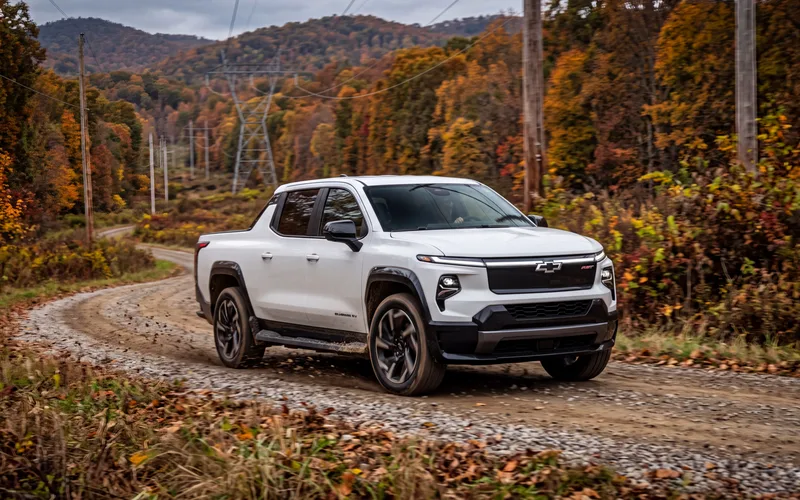 Chevrolet Silverado EVFull-Size TruckBetter at: Practicality
If you want an electric truck that still works as a truck — 44.3 in of rear legroom, a longer bed with a midgate, 12,500 lbs of towing, up to 493 miles of range and a dealer network — for roughly $20,000 less.
Compare 2.21C
2.21C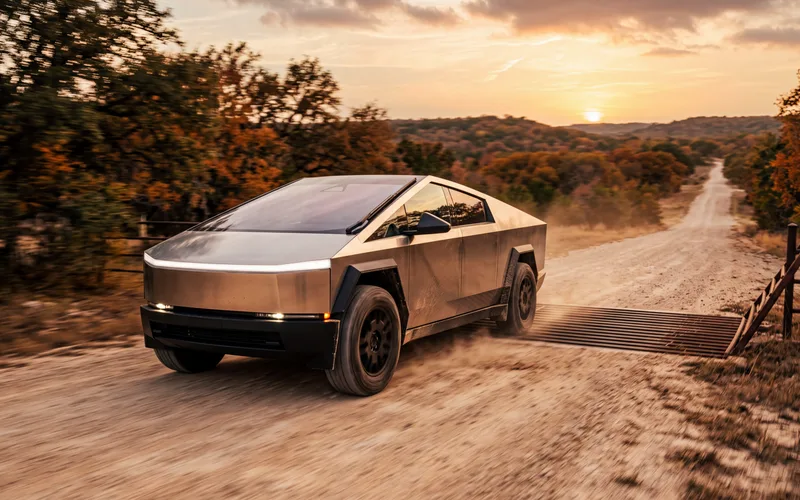 Tesla CybertruckFull-Size TruckBetter at: Cargo capability
Similar money buys more payload, a 72.4-in bed and the Supercharger network, if you can live with a plainer cabin and a harsher ride.
Compare 2.66C+
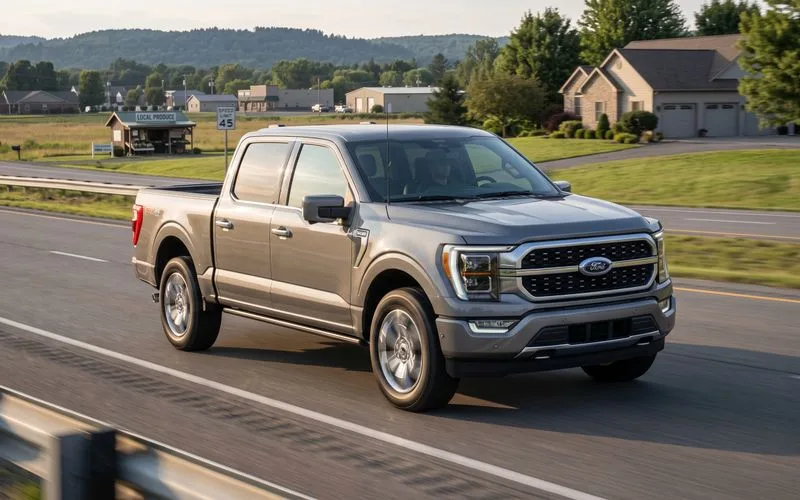 Ford F-150Full-Size TruckBetter at: Value and resale
The default full-size truck: half the price, 60% five-year resale, any bed length you want, and a service bay in every town — at the cost of the R1T's refinement and running costs.
CompareSubject scores by year
Hover or tap a score to see what moved it versus the year before. A corner mark flags a big swing.
| Year | Performance | Efficiency | Safety | Space | Cost | Reliability | Tech | Use-case | Driving | Value |
|---|---|---|---|---|---|---|---|---|---|---|
| 2026 | 67 | 69 | 78 | 53 | 22 | 46 | 73 | 74 | 84 | 71 |
| 2025 | 69 | 67 | 81 | 55 | 27 | 40 | 72 | 78 | 86 | 80 |
| 2024 | 70 | 66 | 76 | 54 | 22 | 43 | 69 | 76 | 79 | 76 |
| 2023 | 81 | 65 | 81 | 51 | 20 | 42 | 70 | 79 | 85 | 79 |
| 2022 | 77 | 64 | 85 | 54 | 27 | 38 | 70 | 79 | 85 | 78 |
Compare two years
Best fit & conditions
Higher scores mean a better fit for that use case. Learn more about use-case fit →
Subject profile
Academic Probation · NHTSA safety recalls
Sep 16, 2026Back over prevention: softwareThe rearview camera image may be obstructed by a notification when in reverse. As such, these vehicles fail to comply with the requirements of Federal Motor Vehicle Safety Standard (FMVSS) number 111, "Rear Visibility."
Defect
Rivian Automotive, LLC (Rivian) is recalling certain 2022-2027 R1S, 2022-2026 R1T, and 2027 R2 vehicles. The rearview camera image may be obstructed by a notification when in reverse. As such, these vehicles fail to comply with the requirements of Federal Motor Vehicle Safety Standard (FMVSS) number 111, "Rear Visibility."
Risk
An obstructed rearview camera image can reduce the driver's view behind the vehicle, increasing the risk of a crash.
Remedy
Rivian has released an over-the-air (OTA) software update, free of charge. Owner notification letters are expected to be mailed November 9, 2026. Owners may contact Rivian customer service at 1-888-748-4261. Rivian's number for this recall is FSAM-1866. Vehicle Identification Numbers (VINs) involved in this recall will be searchable on NHTSA.gov on November 9, 2026.
NHTSA campaign 26V597000 ↗Manufacturer no. FSAM-186698,828 vehicles potentially affected (all models in the campaign)Filed by Rivian Automotive, LLCFiled as R1TAug 5, 2026Exterior lighting: turn signalOne or both front turn signals may fail to illuminate and flash. As such, these vehicles fail to comply with the requirements of Federal Motor Vehicle Safety Standard (FMVSS) number 108, "Lamps, Reflective Devices, and Associated Equipment."
Defect
Rivian Automotive, LLC (Rivian) is recalling certain 2025-2026 R1S and R1T vehicles. One or both front turn signals may fail to illuminate and flash. As such, these vehicles fail to comply with the requirements of Federal Motor Vehicle Safety Standard (FMVSS) number 108, "Lamps, Reflective Devices, and Associated Equipment."
Risk
Turn signals that do not function properly increase the risk of a crash.
Remedy
Rivian will inspect and replace the front turn signals as necessary, free of charge. Owner notification letters were mailed September 28, 2026. Owners may contact Rivian customer service at 1-888-748-4261. Rivian's number for this recall is FSAM-1833. This is an expansion of Recall 25V387. Vehicle Identification Numbers (VINs) involved in this recall will be searchable on NHTSA.gov on August 31, 2026.
NHTSA campaign 26V508000 ↗Manufacturer no. FSAM-18333,829 vehicles potentially affected (all models in the campaign)Owners notified Sep 28, 2026Filed by Rivian Automotive, LLCFiled as R1T
16 recalls on other model years of the R1T (2022–2025)
Jan 15, 2026Seat belts: critical fasteners · Seat belts: rear/other: retractorThe bolts that secure the second-row driver and passenger side seat belt retractor assemblies may be improperly tightened.
Defect
Rivian Automotive, LLC (Rivian) is recalling certain 2022-2025 R1T and 2022-2026 R1S vehicles. The bolts that secure the second-row driver and passenger side seat belt retractor assemblies may be improperly tightened.
Risk
An improperly secured seat belt retractor may not adequately restrain the seat occupant, increasing the risk of injury during a crash.
Remedy
Rivian will inspect and tighten the bolts as necessary, free of charge. Owner notification letters were mailed March 2, 2026. Owners may contact Rivian customer service at 1-888-748-4261. Rivian's number for this recall is FSAM-1795.
NHTSA campaign 26V009000 ↗Manufacturer no. FSAM-1795869 vehicles potentially affected (all models in the campaign)Owners notified Mar 2, 2026Filed by Rivian Automotive, LLCFiled as R1TJan 5, 2026Suspension: critical fastenersThe toe link may have been reassembled incorrectly during service procedures performed before March 10, 2025.
Defect
Rivian Automotive, LLC (Rivian) is recalling certain 2022-2025 R1S and R1T vehicles that previously had service performed. The toe link may have been reassembled incorrectly during service procedures performed before March 10, 2025.
Risk
The toe link joint may separate, increasing the risk of a crash.
Remedy
Rivian will replace the rear toe link bolts, free of charge. Owner notification letters were mailed February 17, 2026. Owners may contact Rivian customer service at 1-888-748-4261. Rivian's number for this recall is FSAM-1794. Vehicle Identification Numbers (VINs) involved in this recall will be searchable on NHTSA.gov beginning February 24, 2026.
NHTSA campaign 26V003000 ↗Manufacturer no. FSAM-179419,641 vehicles potentially affected (all models in the campaign)Owners notified Feb 17, 2026Filed by Rivian Automotive, LLCFiled as R1TSep 8, 2025Forward collision avoidance: adaptive cruise control: softwareThe Hands-Free Highway Assist (HWA) software may fail to correctly identify a lead vehicle.
Defect
Rivian Automotive, LLC (Rivian) is recalling certain 2025 R1S and R1T vehicles operating a software version prior to 2025.18.30. The Hands-Free Highway Assist (HWA) software may fail to correctly identify a lead vehicle.
Risk
Failure to detect another vehicle increases the risk of a crash.
Remedy
Rivian has released an over-the-air (OTA) software update, free of charge. Owner notification letters were mailed October 17, 2025. Owners may contact Rivian customer service at 1-888-748-4261. Rivian's number for this recall is FSAM-1744.
NHTSA campaign 25V585000 ↗Manufacturer no. FSAM-174424,214 vehicles potentially affected (all models in the campaign)Owners notified Oct 17, 2025Filed by Rivian Automotive, LLCFiled as R1TAug 21, 2025Electrical system: propulsion system: traction batteryAn improperly grounded connection inside the High Voltage Distribution Box (HVDB) may cause a loss of drive power.
Defect
Rivian Automotive, LLC (Rivian) is recalling certain 2025 R1S and R1T vehicles. An improperly grounded connection inside the High Voltage Distribution Box (HVDB) may cause a loss of drive power.
Risk
A loss of drive power increases the risk of a crash.
Remedy
Rivian will inspect and repair the HVDB ground strap joint or replace the high voltage battery pack as necessary, free of charge. Owner notification letters were mailed October 17, 2025. Owners may contact Rivian customer service at 1-888-748-4261. Rivian's number for this recall is FSAM-1723.
NHTSA campaign 25V537000 ↗Manufacturer no. FSAM-172323 vehicles potentially affected (all models in the campaign)Owners notified Oct 17, 2025Filed by Rivian Automotive, LLCFiled as R1TJun 11, 2025Exterior lighting: turn signalOne or both front turn signals may fail to illuminate and flash. As such, these vehicles fail to comply with the requirements of Federal Motor Vehicle Safety Standard (FMVSS) number 108, "Lamps, Reflective Devices, and Associated Equipment."
Defect
Rivian Automotive, LLC (Rivian) is recalling certain 2025 R1S and R1T vehicles. One or both front turn signals may fail to illuminate and flash. As such, these vehicles fail to comply with the requirements of Federal Motor Vehicle Safety Standard (FMVSS) number 108, "Lamps, Reflective Devices, and Associated Equipment."
Risk
Turn signals that do not function properly, failing to indicate the driver's intention to change direction, increase the risk of a crash.
Remedy
Rivian will inspect and replace the front turn signals as necessary, free of charge. Owner notification letters were mailed September 22, 2025. Owners will receive a second notice once the remedy becomes available. Owners may contact Rivian customer service at 1-888-748-4261. Rivian's number for this recall is FSAM-1693.
NHTSA campaign 25V387000 ↗Manufacturer no. FSAM-169327,882 vehicles potentially affected (all models in the campaign)Owners notified Sep 22, 2025Filed by Rivian Automotive, LLCFiled as R1TJun 3, 2025Seat belts: front: anchorageThe D-ring bolts for one or both front seat belt anchorage assemblies may not have been properly installed.
Defect
Rivian Automotive, LLC (Rivian) is recalling certain 2022-2025 R1T and R1S vehicles. The D-ring bolts for one or both front seat belt anchorage assemblies may not have been properly installed.
Risk
An improperly secured seat belt may not restrain an occupant as intended, increasing the risk of injury during a crash.
Remedy
Rivian will inspect and properly secure the seat belt anchorage assemblies as necessary, free of charge. Owner notification letters were mailed July 8, 2025. Owners may contact Rivian customer service at 1-888-748-4261. Rivian's number for this recall is FSAM-1681.
NHTSA campaign 25V370000 ↗Manufacturer no. FSAM-1681536 vehicles potentially affected (all models in the campaign)Owners notified Jul 8, 2025Filed by Rivian Automotive, LLCFiled as R1TJun 20, 2024Equipment: other: labelsThe maximum vehicle capacity weight value on the tire placard label is incorrect. As such, these vehicles fail to comply with the requirements of Federal Motor Vehicle Safety Standard number 110, "Tire Selection and Rims."
Defect
Rivian Automotive, LLC. (Rivian) is recalling certain 2022-2023 R1S and R1T vehicles. The maximum vehicle capacity weight value on the tire placard label is incorrect. As such, these vehicles fail to comply with the requirements of Federal Motor Vehicle Safety Standard number 110, "Tire Selection and Rims."
Risk
A vehicle with an incorrect maximum capacity weight value may be overloaded, which can increase the risk of a crash.
Remedy
Rivian will mail owners a corrected overlay tire placard label, free of charge. Owner notification letters were mailed August 8, 2024. Owners may contact Rivian customer service at 1-888-748-4264. Rivian's number for this recall is FSAM-1491.
NHTSA campaign 24V458000 ↗Manufacturer no. FSAM-1491666 vehicles potentially affected (all models in the campaign)Owners notified Aug 8, 2024Filed by Rivian Automotive, LLCFiled as R1TJun 5, 2024Air bags: critical fasteners · Air bags: side/window: curtainThe attachment clips on the upper B-pillar and/or C-pillar trim panels may have been damaged during a service procedure.
Defect
Rivian Automotive, LLC (Rivian) is recalling certain 2022-2024 R1T and R1S vehicles. The attachment clips on the upper B-pillar and/or C-pillar trim panels may have been damaged during a service procedure.
Risk
Damaged pillar trim panel clips can result in improper side curtain air bag deployment, increasing the risk of injury during a crash.
Remedy
Rivian will replace the pillar trim panels, free of charge. Owner notification letters were mailed July 16, 2024. Owners may contact Rivian customer service at 1-888-748-4261. Rivian's number for this recall is FSAM 1464.
NHTSA campaign 24V408000 ↗Manufacturer no. FSAM-14641,723 vehicles potentially affected (all models in the campaign)Owners notified Jul 16, 2024Filed by Rivian Automotive, LLCFiled as R1TMay 23, 2024Exterior lighting: headlightsThe headlights may be improperly aimed. As such, these vehicles fail to comply with the requirements of Federal Motor Vehicle Safety Standard number 108, "Lamp, Reflective Devices and Associated Equipment."
Defect
Rivian Automotive, LLC. (Rivian) is recalling certain 2023-2024 EDV, R1S, and R1T vehicles. The headlights may be improperly aimed. As such, these vehicles fail to comply with the requirements of Federal Motor Vehicle Safety Standard number 108, "Lamp, Reflective Devices and Associated Equipment."
Risk
Improperly aimed headlights can result in insufficient illumination of the road, decreasing the driver's visibility and increasing the risk of a crash.
Remedy
Rivian will inspect and adjust the headlight alignment as necessary, free of charge. Owner notification letters were mailed June 28, 2024. Owners may contact Rivian customer service at 1-888-748-4264. Rivian's number for this recall is FSAM-1445.
NHTSA campaign 24V367000 ↗Manufacturer no. FSAM-14452,334 vehicles potentially affected (all models in the campaign)Owners notified Jun 28, 2024Filed by Rivian Automotive, LLCFiled as R1TMay 9, 2024Equipment: other: labelsThe dashboard air bag warning label may be missing. As such, these vehicles fail to comply with the requirements of Federal Motor Vehicle Safety Standard number 208, "Occupant Crash Protection."
Defect
Rivian Automotive, LLC. (Rivian) is recalling certain 2024 R1T and R1S vehicles. The dashboard air bag warning label may be missing. As such, these vehicles fail to comply with the requirements of Federal Motor Vehicle Safety Standard number 208, "Occupant Crash Protection."
Risk
Without the dashboard label, operators may be unaware of the increased risks that an air bag poses to an infant or child in the front seat, increasing the risk of injury to occupants.
Remedy
Rivian mailed owners the warning label information, free of charge. Owner notification letters were mailed May 30, 2024. Owners may contact Rivian customer service at 1-888-748-4264. Rivian's number for this recall is FSAM-1429.
NHTSA campaign 24V319000 ↗Manufacturer no. FSAM-1429127 vehicles potentially affected (all models in the campaign)Owners notified May 30, 2024Filed by Rivian Automotive, LLCFiled as R1TDec 21, 2023Vehicle speed control: accelerator pedalThe accelerator pedal may not detect when the driver releases the pedal, failing to activate "auto-hold" or "park" as intended.
Defect
Rivian Automotive, LLC (Rivian) is recalling certain 2022 R1T and R1S vehicles. The accelerator pedal may not detect when the driver releases the pedal, failing to activate "auto-hold" or "park" as intended.
Risk
Failure to activate "auto-hold" or "park" can result in unintended vehicle movement, increasing the risk of a crash.
Remedy
Rivian has released an over-the-air (OTA) software update. Rivian will also replace the accelerator pedals, free of charge. Owner notification letters were mailed January 18, 2024. Owners may contact Rivian customer service at 1-888-748-4261. Rivian's number for this recall is FSAM 1342.
NHTSA campaign 23V883000 ↗Manufacturer no. FSAM 13427,873 vehicles potentially affected (all models in the campaign)Owners notified Jan 18, 2024Filed by Rivian Automotive, LLCFiled as R1TNov 21, 2023Equipment: electrical: infotainment: software · Visibility: defroster/defogger/hvac systemA software update may have deactivated the defroster and defogger system controls.
Defect
Rivian Automotive, LLC (Rivian) is recalling certain 2022-2023 R1T and R1S vehicles. A software update may have deactivated the defroster and defogger system controls.
Risk
The inability to operate the windshield defrosting and defogging system can decrease the driver's visibility, increasing the risk of a crash.
Remedy
Rivian has released an over-the-air (OTA) software update, free of charge. Owner notification letters were mailed December 21, 2023. Owners may contact Rivian customer service at 1-888-748-4261. Rivian's number for this recall is FSAM-1331.
NHTSA campaign 23V783000 ↗Manufacturer no. FSAM-13311,463 vehicles potentially affected (all models in the campaign)Owners notified Dec 21, 2023Filed by Rivian Automotive, LLCFiled as R1TFeb 22, 2023Air bags: frontal · Seat belts: front: retractorA faulty automatic locking retractor (ALR) sensor in the front passenger seat belt system may incorrectly report as ON when it is actually OFF, causing the suppression or improper deployment of the air bag. As such, these vehicles fail to comply with the requirements of Federal Motor Vehicle Safety Standard number 208, "Occupant Crash Protection."
Defect
Rivian Automotive, LLC (Rivian) is recalling certain 2022 R1T and R1S vehicles. A faulty automatic locking retractor (ALR) sensor in the front passenger seat belt system may incorrectly report as ON when it is actually OFF, causing the suppression or improper deployment of the air bag. As such, these vehicles fail to comply with the requirements of Federal Motor Vehicle Safety Standard number 208, "Occupant Crash Protection."
Risk
Failure of the air bag to deploy as intended increases the risk of injury to the front passenger during a crash.
Remedy
Dealers will inspect and replace the front passenger seat belt system components as necessary, free of charge. Owner notification letters were mailed April 5, 2023. Owners may contact Rivian customer service at 1-888-748-4261. Rivian's number for this recall is FSAM-1166.
NHTSA campaign 23V109000 ↗Manufacturer no. FSAM-116612,716 vehicles potentially affected (all models in the campaign)Owners notified Apr 5, 2023Filed by Rivian Automotive, LLCFiled as R1TOct 6, 2022Steering: linkages: knuckle: spindle: arm · Suspension: front: control arm: upper armThe fastener connecting the front upper control arm and steering knuckle may have been improperly tightened.
Defect
Rivian Automotive, LLC (Rivian) is recalling certain 2022 R1T, R1S, and EDV vehicles. The fastener connecting the front upper control arm and steering knuckle may have been improperly tightened.
Risk
A loose steering knuckle fastener could separate, causing a loss of vehicle control and increasing the risk of a crash.
Remedy
Dealers will inspect and, as necessary, tighten the steering knuckle fastener, free of charge. Owner notification letters were mailed November 11, 2022. Owners may contact Rivian customer service at 1-888-748-4261. Rivian's number for this recall is FSAM 997.
NHTSA campaign 22V744000 ↗Manufacturer no. FSAM 99712,212 vehicles potentially affected (all models in the campaign)Owners notified Nov 11, 2022Filed by Rivian Automotive, LLCFiled as R1TAug 25, 2022Seat belts: front: anchorageThe front seat belt anchors may have been inadequately attached to the B-pillar.
Defect
Rivian Automotive, LLC (Rivian) is recalling certain 2022 R1T and R1S vehicles. The front seat belt anchors may have been inadequately attached to the B-pillar.
Risk
An improperly secured seat belt anchor may not adequately restrain the seat occupant during a crash, increasing the risk of injury.
Remedy
Rivian will inspect the front seat belt assemblies and, as necessary, properly secure the bolts, free of charge. Owner notification letters were September 30, 2022. Owners may contact Rivian customer service at 1-888-748-4261. Rivian's number for this recall is FSAM-924.
NHTSA campaign 22V641000 ↗Manufacturer no. FSAM-924207 vehicles potentially affected (all models in the campaign)Owners notified Sep 30, 2022Filed by Rivian Automotive, LLCFiled as R1TMay 10, 2022Air bags: sensor: occupant classification: front passenger · SeatsThe Occupant Classification System (OCS) may not deactivate the air bag when a child or child seat occupies the front passenger seat. As such, these vehicles fail to comply with the requirements of Federal Motor Vehicle Safety Standard number 208, "Occupant Crash Protection."
Defect
Rivian Automotive, LLC (Rivian) is recalling certain 2022 R1T vehicles. The Occupant Classification System (OCS) may not deactivate the air bag when a child or child seat occupies the front passenger seat. As such, these vehicles fail to comply with the requirements of Federal Motor Vehicle Safety Standard number 208, "Occupant Crash Protection."
Risk
A child in the front seat may be at a greater risk of injury in the event of a passenger air bag deployment during a crash.
Remedy
Rivian Service Centers will replace the front passenger seat, free of charge. Owner notification letters were mailed July 6, 2022. Owners may contact Rivian customer service at 1-734-855-4345. Rivian's number for this recall is FSAM-651.
NHTSA campaign 22V319000 ↗Manufacturer no. FSAM-651473 vehicles potentially affected (all models in the campaign)Owners notified Jul 6, 2022Filed by Rivian Automotive, LLCFiled as R1T
Source: NHTSA Office of Defects Investigation recall database, model years 2022–2026. Recalls are listed by model year as the manufacturer filed them; whether a specific car is affected depends on its VIN — check a VIN at nhtsa.gov ↗. NHTSA model names matched to this page: R1T.
Detailed scoring by subject
1Performance & PowertrainMid-pack among this car's ten categories.2.52C+
Scored on the Dual-Motor, the entry configuration and the volume seller across the second-generation R1T range. 533 hp comfortably clears every gas half-ton but sits below the Cybertruck AWD (600 hp) and Silverado EV LT (625 hp) at the volume-trim level, even though the Quad-Motor halo above it is the most powerful pickup in the segment.
Instant full-torque delivery from Rivian's in-house dual drive units, roughly 60% above a 5.3L V8 Silverado 1500's 383 lb-ft. Mid-pack among electric trucks at the volume trim — the Silverado EV LT (775 lb-ft) leads it — but the Tri- and Quad-Motor variants are the segment's outright torque leaders.
Rivian's claim for the Dual-Motor R1T — a few tenths behind the Cybertruck AWD (4.1 s claimed) but comfortably ahead of the Silverado EV LT (~5.7 s) and every gas half-ton. The Quad-Motor's 2.5 s is the quickest figure in the segment and effectively pins the top of the truck band.
Single-speed BEV delivery with no lag, no shift interruption and no combustion coarseness, and Rivian's torque calibration is widely regarded as the most natural and progressive among electric trucks — the second-generation in-house drive units also cut motor whine relative to the first-generation supplied hardware. Scored just above the Silverado EV and Cybertruck (92 each) and level with the Hummer EV (93).
Single-speed reduction gear at each axle — nothing to hunt for and no shift shock. One-pedal driving and selectable regen are well calibrated and stay predictable under load, though Rivian's low-speed regen blending is a touch less polished than Tesla's class-reference calibration, placing it level with the Silverado EV (93) and just under the Cybertruck (94) and Hummer EV (95).
11,000 lbs matches the Cybertruck exactly and beats the Hummer EV (7,500 lbs), but trails the Silverado EV LT (12,500 lbs) and the Ram 1500 REV's 14,000 lb target. The rating holds across every motor configuration rather than being gated behind a towing package. As with every BEV truck, range collapses far harder under load than on a gas or diesel rival — a penalty captured in cat2, not here.
The battery pack consumes most of the GVWR headroom, so payload lands well under a comparably equipped gas half-ton and far under the Cybertruck (2,500 lbs), whose lighter structure is its one clear capability advantage over the R1T. It also trails the Silverado EV (~1,800 lbs), sitting above only the Hummer EV (~1,300 lbs) among electric trucks. This is the R1T's weakest capability metric by a wide margin. The prior placeholder value of 2,985.5 lbs was not physically plausible for this truck.
Factory hitch with an integrated trailer brake controller, a Tow Mode that retunes the air suspension and stability control, trailer-aware range estimation and charge-stop routing in the navigation, and useful camera coverage. Held well below the Silverado EV (86) and Ram 1500 REV (82) by the absence of trailer backup steering assist, transparent-trailer view, onboard scales and a trailer profile library; lands essentially level with the Cybertruck (73) and just under the Hummer EV (75).
Electric AWD is standard on every trim with no FWD/RWD rung in the lineup, and the Quad-Motor configuration gives one motor per wheel — genuine independent per-wheel torque control that functions as a software-defined locking differential and out-resolves any mechanical locker in the class. Adaptive air suspension supports it across the range. Only the absence of a true two-speed low range keeps it below the Hummer EV (94); it sits above the Cybertruck (85) and Silverado EV (84).
The most credible off-road electric pickup short of the Hummer EV: adaptive air suspension raising ground clearance to roughly 14.9 in, standard underbody armor over the battery pack, strong approach and departure angles, dedicated Rock Crawl, Rally, Drift and Soft Sand drive modes, and Quad-Motor per-wheel torque control that substitutes convincingly for mechanical lockers. Well clear of the Cybertruck (74), Ram 1500 REV (66) and Silverado EV (65); the lack of a low range and roughly 7,000 lbs of curb weight hold it just under the gas Ram 1500 (87) and well under the Hummer EV (95).
One powertrain type only — a single-speed BEV drivetrain — with no gas, hybrid, PHEV or range-extended option offered or announced, which caps this item below 50 the same way it does for every rival electric truck. Scored a couple of points above the Cybertruck (46), Hummer EV (45) and Silverado EV (44) because the four distinct motor configurations and three battery packs give buyers a genuinely wider spread of capability and price than any competitor's two-tier range.
2Efficiency & RangeMid-pack among this car's ten categories.2.66C+
The Gen 2 Enduro dual-motor drivetrain makes the R1T the most efficient full-size electric pickup in the set by a wide margin — 85 MPGe combined against 68 for the Silverado EV and 66 for the Cybertruck — and it tops the 45–80 MPGe EV-truck band outright.
City MPGe runs well above combined thanks to regenerative braking, and 94 MPGe clears the top of the 48–90 MPGe EV-truck city band — no electric pickup in the set is close in stop-and-go use.
A 0.30 drag coefficient is low for a pickup, so the highway penalty is modest and 77 MPGe still tops the 42–75 MPGe EV-truck highway band; towing or the 20-in All-Terrain tires cut it sharply in practice.
The volume Dual Large pack is EPA-rated at 329 miles — mid-pack against the 230–430 mi EV-truck band and behind the Silverado EV's extended-range 410 mi, though the 420-mile Max pack is available for a step up in price.
Rivian's 400-volt Gen 2 architecture peaks at 215 kW on the Large pack after the 2025.18 software update — respectable and well-sustained, but roughly 60% of the 350 kW an 800-volt Ultium truck like the Silverado EV can take, which is what the 100–350 kW truck band measures against.
About 35 minutes for the volume Large pack — better than the Silverado EV's ~40 minutes because there is less energy to move, but the 400V ceiling keeps it off the pace of 800V rivals.
EPA puts annual energy cost at $900 for the Dual Large — the cheapest of any electric pickup in the set and roughly a third of what a gas full-size truck burns — though the figure assumes home charging and public DC fast charging at $0.40–0.55/kWh would multiply it.
No fuel grade to think about, 11.5 kW overnight AC charging, and for 2026 a native NACS port replaces the CCS1 socket — over 21,500 Tesla Superchargers now work plug-and-play, which is the single biggest practical improvement to the truck this model year, and a complimentary CCS1 adapter covers the legacy networks. Held short of the top because the 400V peak is mid-pack, Rivian no longer bundles a home wall charger, and a Max-pack road trip is still a long stop.
3SafetyOne of the R1T's strongest categories.3.29B+
NHTSA has published no NCAP overall star rating for the Rivian R1T in any model year; carried at the dataset's 4.0-star convention for untested vehicles. Replaces a placeholder 4.9-star figure that was never a real NHTSA result.
The R1T is the rare electric pickup with a real IIHS crashworthiness record — Good across the tests it has taken, and a Top Safety Pick+ award — but that award was earned under the 2023 criteria and current-criteria standing for the Gen 2 (2025+) truck is unverified.
The Rivian Autonomy Platform is standard on every R1T trim — nothing safety-relevant is paywalled behind a higher trim, which is the specific thing this item measures. Gen 2's 11-camera / 5-radar array on NVIDIA Orin is the broadest standard sensor set in the truck segment.
The R1T holds Superior IIHS front crash prevention ratings including nighttime pedestrian detection, which is what the top band asks for — held back from higher because those results were recorded on the Gen 1 sensor suite and the Gen 2 truck sold for 2026 uses entirely different hardware.
Blind-spot monitoring and rear cross-traffic warning are standard on every trim with good camera-and-radar coverage, but Rivian offers no trailer-aware blind-spot extension — a real gap on a truck rated to tow 11,000 lbs.
Gen 2's Orin compute and reworked camera set turned lane centering from a Gen 1 weak point into a strength; reviewers describe confident, largely ping-pong-free centering on divided highways, though it is still not held up as the polish benchmark that Super Cruise is.
Full-speed-range adaptive cruise with stop-and-go is standard and well integrated with Highway Assist, so the two behave as one system rather than as bolted-together features.
Genuine hands-free highway driving is available via Enhanced Highway Assist, but it is a paid add-on rather than standard and its mapped-road network is a fraction of Super Cruise's — a capable system that is still the newest and narrowest of the truck hands-free options.
IIHS rated the R1T's headlights Good, and because the lighting hardware does not vary by trim that rating applies across the entire range — the exact condition the top band describes.
A standard 360-degree camera and a lower cowl than most full-size trucks help, but the R1T still carries thick A-pillars, a tall hood and a shallow rear window with the tonneau in place, so the cameras are compensating rather than the sightlines being genuinely good.
The crew-cab body gives wide-opening rear doors and the skateboard platform gives a flat rear floor with generous legroom, which makes seat installation and access easy; the anchors themselves are set in the seat bight and take some digging.
4Space & ComfortOne of the R1T's weakest categories.1.57D
The R1T is sold only as a five-passenger crew cab; there is no single-cab, extended-cab or front-bench configuration, so seating is fixed across the 2026 lineup. That matches every full-size electric rival (Cybertruck, Silverado EV, Hummer EV) and trails the six-seat front-bench configurations still offered on gas F-150, Silverado 1500 and Ram 1500.
Front headroom is mid-pack for a full-size truck: the R1T stands 78.2 in tall, but the skateboard battery raises the floor and the standard fixed glass roof eats into the headliner, so occupants sit high in a cabin that is not as airy as the exterior bulk suggests. Comfortable for six-footers without being class-leading.
The R1T's 135.8 in wheelbase is spent on the bed and gear tunnel rather than the cab, and the front footwell is correspondingly shorter than the domestic half-tons — roughly 1.5–2 in behind an F-150 SuperCrew (43.9 in) or Silverado 1500 (44.5 in). Adequate rather than generous, and the clearest early sign that this is a full-size truck wrapped around a mid-size cabin.
Rear headroom lands near the bottom of the full-size truck band. The roofline falls away behind row one and the battery floor sits high, so second-row passengers ride knees-up with limited air above the head — adequate for average adults, tight for anyone over six feet. This item is high-leverage because the truck normalization band is only 38–41 in wide.
This is the R1T's defining packaging compromise. To fit the gear tunnel between cab and bed, Rivian gave the R1T a cab sized like a mid-size truck: rear legroom sits between a Ranger SuperCrew (34.5 in) and a Ridgeline (36.7 in), and gives up roughly eight inches to an F-150 SuperCrew (43.6 in) or Silverado EV (44.3 in). Reviewers consistently describe the back seat as usable for adults on short hops but cramped next to any conventional half-ton crew cab.
The R1T has the shortest bed of any pickup in this dataset — shorter than a Toyota Tacoma's 5-ft short box and 18 in shorter than a Cybertruck's, landing at the absolute floor of the 54–98 in truck band. A 4x8 sheet of plywood cannot lie flat even with the tailgate down. The gear tunnel and frunk recover a lot of the lost utility, but they are scored separately under 4.2.5; as a bed, this is the least capable full-size truck sold.
Bed volume falls below the bottom of the 30–80 cu ft truck band and clamps to zero — a direct consequence of the 4.5-ft box. This is the honest reading of the R1T purely as a load-hauler: it carries less in the bed than any conventional pickup here, including compact entries like the Maverick. Buyers get that space back as lockable, weatherproof storage elsewhere in the vehicle, which 4.2.5 credits heavily.
The most inventive storage package of any pickup on sale, and the item where the R1T's short bed is repaid. The gear tunnel — a lockable, weatherproof ~11.6 cu ft pass-through between cab and bed, with doors that drop to form a seat/step and an optional slide-out camp kitchen — has no equivalent anywhere in the segment. Add an 11.1 cu ft lockable frunk, an under-bed bin sized for the spare or wet gear, an available powered tonneau that turns the bed into a vault, a deep center console, fold-flat rear seats, and 110V outlets plus an onboard air compressor in the bed and tunnel. Scored above the Cybertruck and Silverado EV because the gear tunnel adds a genuinely new class of secure storage rather than a better version of an existing one.
Front buckets are well shaped and well padded with heating and ventilation, and reviewers rate them comfortable over long stints — better resolved than the flat cushions in a Cybertruck. The rear bench is the limiter: with 35.5 in of legroom and a low, short cushion over the battery floor, adults sit knees-up and second-row occupants notice it inside an hour. Front-seat comfort alone would score in the mid-80s; the rear seat pulls the item down.
The R1T's strongest comfort attribute and the best ride in this dataset's truck set. Standard adaptive air suspension with hydraulic cross-linked roll control gives it independent rear suspension manners no leaf-sprung pickup can match — critically, it never suffers the unladen rear-axle patter and head toss that afflicts an empty F-150 or Silverado, and the second-generation chassis tuning tightened body control without adding harshness. Marked below a perfect score only because 20-in all-terrain tires introduce some impact noise and the near-7,000 lb mass can feel float-prone over long swells.
No engine, transmission or exhaust noise, acoustic laminated glass and a comparatively slippery shape for a pickup keep the cabin hushed at highway speed — quiet enough that reviewers reach for luxury-SUV comparisons rather than truck ones. Held back from the top of the band by road roar from the available all-terrain tires and some wind rustle around the large door mirrors and glass roof.
Comfort equipment is rich and mostly standard rather than optional: heated and ventilated front seats, heated rear seats, heated steering wheel, heated wiper park, a fixed panoramic glass roof, app-based remote pre-conditioning, and Camp and Pet Comfort modes that hold cabin temperature with the vehicle parked. The second row gets its own vents and controls. Marked below the Cybertruck and Hummer EV only because the entry Explore trim drops front ventilation and some upholstery upgrades, so the full set arrives with Adventure.
5Cost of OwnershipThe R1T's lowest-graded category.0.00F
The Dual-Motor Standard Pack is the entry point of the second-generation R1T ladder, and even that cheapest configuration lands in the top fifth of the full-size truck price band — roughly $30,000 above a base F-150 or Silverado 1500. Replaces a placeholder estimate of $77,250, so the score moves up modestly, but the R1T remains a luxury-priced truck by any reading.
Volume sits on the Dual-Motor Large Pack — the configuration the rest of this scorecard is scored on — and a typically-optioned example lands near $80,000, close to the ceiling of the full-size truck band. This and the resale item are what put the R1T's ownership case near the bottom of the segment: the truck is good, but the buy-in is luxury-SUV money. Replaces a placeholder estimate of $82,150.
The one genuinely strong line in this category, for the usual EV reasons: Rivian's schedule is essentially cabin filters, brake fluid, tire rotation and an annual inspection, and one-pedal regen leaves friction pads largely untouched. It scores below the GM and Tesla electric trucks rather than above them because Rivian's service economics are worse — a thin company-owned service network with long waits, high labour rates, and 20–22-inch tires on a ~7,100 lb truck that wear fast and cost roughly $1,500–$2,200 a set. Replaces a placeholder estimate of $9,441, which was implausibly high for an EV, so the score rises steeply.
The single heaviest-weighted item in the category and the R1T's worst. Electric pickups are the fastest-depreciating mainstream segment in the US, and the R1T carries an extra discount on top: the federal clean-vehicle credit lapsed on 2025-09-30, resetting used EV prices downward while new MSRPs stayed high, and residual-setters continue to price in single-manufacturer risk on parts, software and service for a company that is not yet consistently profitable. Replaces a placeholder estimate of 70.5%, which was wildly optimistic — that one number was carrying most of the old category score.
Rivian's five-year/60,000-mile comprehensive term tops the truck band outright and is the best bumper-to-bumper coverage of any pickup in this dataset — two years longer than the 3-year/36,000-mile terms Ford, GM and Ram still offer, and a year past Tesla's. Replaces a placeholder estimate of 4.9 years, a small correction upward to the real figure.
Eight years is the term essentially every EV sold in the US carries, so the duration is competitive rather than distinguishing — but the mileage cap is the segment's most generous at 175,000 miles on the Large and Max packs, 75,000 more than GM's EV trucks and 25,000 more than a Cybertruck. Because the normalization band reads years only, none of that mileage advantage reaches the score. Replaces a placeholder estimate of 9.4 years, so the score drops materially even though the real coverage is class-leading on the axis that matters.
Scored in the middle of the band, and the placeholder 95 was far too generous: Rivian bundles no complimentary scheduled maintenance at all, so it cannot reach the 80-plus tier that included-maintenance programs earn. What it does offer is better than the GM and Tesla trucks — 24/7 roadside assistance running with the full five-year comprehensive term rather than three, and mobile service that performs a large share of routine and warranty work at the owner's home or workplace, which has real cash and time value where the fixed-service network is thin. Add the Rivian Adventure Network with a NACS adapter for Supercharger access, a Connect+ connectivity trial before the subscription, and standard Gear Guard and Camp Mode software features.
$79,700 volume-trim price minus its estimated resale value after 5 years (40% retained, or about $31,880) leaves about $47,820 in depreciation. Add the projected $6,200 in 5-year maintenance and repairs, and owning this vehicle for 5 years costs about $54,020 in total.
6Reliability & QualityOne of the R1T's weakest categories.1.06D
Consumer Reports has held the R1T below average in predicted reliability every year it has had enough survey data, with owner-reported problems concentrated in in-car electronics, power equipment (door, frunk and tonneau actuators), 12V system and climate control rather than in the high-voltage drivetrain. The second-generation re-engineering that arrived for 2025 directly targets that failure profile — the zonal electrical architecture cut the ECU count from seventeen to seven and removed roughly 1.6 miles of wiring — and 2026 is its second model year, so the worst of the launch software churn is behind it. But no R1T model year has yet posted an average-or-better owner-survey result, and the redesign is too recent to have generated the survey history that would confirm the fix. Scored below the Silverado EV, whose problems are similar in kind but which benefits from a longer settled-production run.
Rivian has ranked at or near the bottom of Consumer Reports' brand reliability standings in every year it has been ranked, and J.D. Power's Vehicle Dependability Study measures three-year-old vehicles — a window Rivian has only just entered, and entered on the strength of its most problematic early build years. The countervailing signal is real but measures something else: Rivian scores strongly in J.D. Power's APEAL study, which rates how much owners love the vehicle, not how often it breaks. A brand consistently in the bottom third on dependability is squarely the 0–49 band, and with only two nameplates and five years of production there is no deep track record to argue against it.
The R1T has accumulated NHTSA campaigns at a high rate relative to its production volume across its five model years, and the record includes genuinely mechanical items alongside the software ones — most notably a 2022 campaign covering roughly 13,000 vehicles for an inadequately torqued front upper control arm fastener that could degrade steering control, and multiple seat-belt anchorage campaigns. That is worse than routine. Two things keep it out of the failing band: a large and growing share of Rivian remedies ship over the air rather than through a service visit, and there is no known systemic fire, pack or drive-unit defect on the second-generation build that carries into 2026. Frequency is the problem here, not severity.
This is the least-proven part of the 2026 truck. The second-generation R1T replaced the Bosch-supplied dual-motor hardware with Rivian's own in-house-designed drive units across the dual, tri and quad-motor lineup, and the Max pack moved to large-format 4695 cells — so the two most expensive components in the vehicle are effectively two model years old with no high-mileage record behind them. Against that, an EV drivetrain carries a fraction of the wear items of the V8s and turbo sixes in this segment, Rivian's high-voltage packs have not produced a systemic thermal or capacity-loss event of the kind that has hit other EV makers, and the 8-year/175,000-mile battery and drivetrain warranty on the larger packs covers the catastrophic case. Unproven rather than known-bad, which is the bottom of the mid band — level with GM's Ultium hardware, which is newer to nobody but has a Bolt-shaped shadow over it.
The clear high point of the vehicle and one of the best cabins in any pickup at any price. Reviewers consistently single out the open-pore ash and walnut trim, the genuinely convincing vegan leather, the machined metal speaker grilles and the near-total absence of parts-bin switchgear — there is no corporate switch cluster to give it away, because Rivian has no corporate parts bin. Hard plastics are confined to low-touch areas below the knee. It reads more expensive than the Silverado EV and Hummer EV cabins that cost similar money, and materially richer than the Cybertruck's deliberately austere interior. Held below the 90s only because the minimal-switchgear approach pushes climate and mirror adjustment into the touchscreen, which several reviewers count against perceived quality of interaction even while praising the materials themselves.
Sheetmetal assembly out of Normal, Illinois is competitive — panel gaps and body fit draw far less criticism than the Cybertruck's, and the second-generation build tightened things further. The drag is the long tail: owner reports across generations cite interior rattles and trim squeaks, powered-actuator faults on the gear tunnel doors, frunk and tonneau, occasional water intrusion around seals, and infotainment and connectivity glitches. J.D. Power's Initial Quality Study counts all of those as defects, and the software and power-equipment categories are exactly where Rivian's owner-reported problem counts concentrate. Solid structure, inconsistent details — which lands it just below the Silverado EV rather than above it, despite the far better materials.
Rivian sells direct, so there is no franchised network at all — service runs through roughly a hundred-odd company-owned service centers nationwide, against Chevrolet's ~2,900 dealers. In truck country that gap is not academic: owners in several states drive hundreds of miles to reach a service center, and body and collision work routes to an even smaller certified network with reported waits running into months. The genuine offset is Rivian's mobile service fleet, which resolves a large share of jobs at the owner's home or workplace and rates well in owner satisfaction — for software, 12V and accessory faults, which is most of what goes wrong, it is a better experience than a dealer visit. Scored above the failing band on the strength of mobile service, but well below every franchised rival in this segment.
The worst-scoring item in the category and a well-documented weak point of Rivian ownership. Body panels and structural components are dealer-only with no second source, backorders measured in months are routine, and the certified collision network is small enough to be the binding constraint even when parts are in stock. The downstream effect shows up in insurance: R1T premiums run high specifically because repair severity and total-loss rates are elevated, and modest damage near the pack or the cast structure can write the truck off. Independent aftermarket support for high-voltage components is effectively nonexistent. Routine maintenance is genuinely cheap — no oil, long brake life from regen — but that is measured in category 5, not here. Scored below the Silverado EV, which at least shares body and interior parts with a mainstream high-volume truck line.
7Technology & InfotainmentGrades above the middle of the scale.2.97B-
The R1T's 15.6-inch landscape center display is standard across Dual-, Tri- and Quad-Motor trims and carried over unchanged into the second-generation truck. The previous placeholder value of 16.6 in was wrong.
Rivian's in-house software is routinely called the best-looking and most coherent non-Tesla system in the segment, and the Gen 2 zonal architecture with new compute made it materially quicker than the launch trucks. It loses points for pushing mirror adjustment, vent direction and steering-column setup into screen menus with almost no physical controls.
Rivian does not offer Apple CarPlay or Android Auto in any form on the R1T — an absence by design, not a lower-trim omission, so it lands in the bottom band. Rivian substitutes native Apple Music, Spotify and Google Cast integration, which covers media but not phone projection.
Native navigation is a genuine strength — Google Maps map data with EV trip planning, charger routing and battery preconditioning, and Gen 2 added NACS/Supercharger routing. The voice assistant is the weak half: command coverage has historically been narrow and reviewers report owners falling back to the screen.
Rivian Elevation Audio with Dolby Atmos is among the best factory systems in any truck, and even the standard Dual-Motor setup is well-regarded. The premium system's speaker count and output are competitive with branded upgrades from Meridian or Bose in this class.
A 12.3-inch full-digital driver display is standard on every trim, crisp and clearly laid out, with drive-mode and driver-assist visualisations in the forward sightline. It is somewhat less user-configurable than the best legacy-OEM clusters, which keeps it out of the top band.
Rivian is second only to Tesla here: frequent whole-vehicle over-the-air releases have added drive modes, changed powertrain calibration and range behaviour, and expanded driver assistance since launch rather than just refreshing maps.
The Rivian app is polished and covers the full set — phone-as-key as the primary key, remote climate and preconditioning, lock/unlock, locate, charge scheduling and limits, and Gear Guard camera review — with no subscription gating the core functions.
Very strong: high-wattage USB-C at both rows, wireless phone charging up front, 120V outlets in the bed and gear tunnel, plus the built-in air compressor. It trails the best only because the bed power is 120V, with no 240V NEMA 14-50 outlet, and home backup depends on Rivian's own charger hardware.
Phone-as-key is the standard primary key with walk-up unlock, backed by a key fob and a wearable key band, and the power tailgate, power frunk and available powered tonneau are all app- or screen-operable. Deduction for reported Bluetooth phone-key connection delays.
The Gen 2 Autonomy Platform brought a substantially expanded camera and radar suite with new compute, feeding a high-resolution surround view plus dedicated off-road and trail views that are genuinely useful on a truck this wide. Ultrasonic parking sensors are retained, so low-speed proximity accuracy does not depend on vision alone.
No head-up display is offered on the R1T at any trim or as an option, placing it at the floor of this item. It scores marginally above the Cybertruck because the standard 12.3-inch instrument cluster still puts core information in the driver's forward sightline.
8Use-Case FitOne of the R1T's strongest categories.3.04B
Crew-cab-only body with full-size rear doors, a flat skateboard floor, three top tethers and a kneel mode that drops the air suspension for loading kids, plus an 11.6 cu ft lockable gear tunnel that swallows strollers at waist height. Held back by 35.5 in of rear legroom — the tightest of any full-size truck by a wide margin, which makes rear-facing seats a real negotiation with the front seats.
The Rivian Autonomy Platform is standard on every 2026 configuration — AEB with pedestrian detection, blind-spot warning, rear cross-traffic warning, full-speed adaptive cruise and Highway Assist — so families buying the entry Dual-Motor get the same safety content as a Quad-Motor buyer, with no ADAS paywall on the basics. Capped by the absence of any NHTSA NCAP rating and an IIHS Top Safety Pick+ earned under the older 2023 criteria rather than the harder current tests.
Segment-leading ride and quietness, heated rear seats and rear vents, a standard panoramic glass roof and roughly 62 cu ft of storage across bed, frunk, gear tunnel and under-bed bin mean gear is never the constraint on a family trip. The rear bench's knees-up posture over the battery pack and the absence of rear entertainment keep it short of the class benchmark, and a full car plus gear meaningfully shortens the interval between charging stops.
The most car-like truck in the segment to live with day to day: silent single-speed drive, one-pedal driving, standard stop-and-go adaptive cruise with Highway Assist lane centering, and adaptive air suspension that reviewers single out as the segment's best-controlled. The tax is a ~7,000 lb curb weight and Rivian's touchscreen-only handling of mirrors, vents and the steering column, which is a genuine daily-use annoyance.
Energy cost per commuting mile is genuinely low — roughly $0.07/mi on home charging, about a third of what a gas full-size truck burns — and there is no oil, plug, transmission or exhaust service to fund. Consumables are the offset: 20- and 21-inch tires carrying seven thousand pounds wear fast and are expensive, insurance runs high, and a commuter dependent on DC fast charging loses most of the advantage.
At about 217 in long the R1T is roughly a foot and a half shorter than an F-150 or Silverado crew cab — closer to a mid-size double cab — because the 4 ft 6 in bed and skateboard packaging buy back length, and a standard 360-degree camera with parking sensors plus a suspension that lowers make tight spots manageable. It is still a ~79 in wide, seven-thousand-pound truck with a wide turning circle, so it beats its full-size rivals rather than being genuinely easy in a city.
The numbers that matter for towing are competitive — 11,000 lbs across every motor configuration, ~1,760 lbs of payload, and instant torque that makes the truck utterly unbothered under load, with a factory trailer brake controller and Tow Mode. What limits it as a work tool is geometry and endurance: a single 4 ft 6 in bed with no 6.5 or 8 ft option and no midgate, no gooseneck or fifth-wheel provision, and a real-world range that roughly halves under a heavy trailer, leaving well under 150 miles between charges.
This is the R1T's weakest mission by a distance. The structure itself is robust and has proven itself in hard off-road use, but there is no fleet track record, no work-oriented trim with vinyl floors or wipe-down surfaces, and the cabin's open-pore wood and vegan leather are aimed squarely at private buyers. The ownership data is what pushes it into the low band: below-average predicted reliability, a brand at the bottom of the reliability rankings, recurring power-accessory and fit-and-finish complaints, and single-source parts that strand vehicles for months.
Onboard provisions are genuinely good — 120V outlets in the bed and gear tunnel, a built-in air compressor, bed tie-downs and lighting, a lockable gear tunnel that works as a toolbox, an available powered tonneau, and bidirectional home backup with Rivian charging hardware. The ecosystem around it is aimed at recreation rather than trades: crossbars, bed racks and tents rather than ladder racks or service bodies, no upfitter switches or chassis-cab variant, modest outlet power next to the F-150's Pro Power Onboard, and no wipe-down work interior.
A superb mile-eater on the metrics that fatigue a driver: the segment's most compliant ride, a quiet cabin, front seats reviewers praise for long-haul support, and hands-free Enhanced Highway Assist on mapped divided highways layered over standard lane centering. Range of about 352 miles on the volume Dual-Motor Large Pack is strong for an electric truck but still means planned 20–40 minute stops, and the rear bench is a poorer place to spend a long day than the front.
The R1T's signature mission and the segment benchmark: up to about 14.9 in of ground clearance from the adaptive air suspension, standard skid plates and underbody battery protection, Rock Crawl and Soft Sand modes, per-wheel torque vectoring on the Quad-Motor, an onboard air compressor for airing tires back up, Camp Mode leveling, 120V outlets and 11,000 lbs of tow rating for boats and toys. The one real limit is infrastructure — the backcountry has no chargers, and towing a trailer to a trailhead cuts usable range roughly in half.
Nothing in the segment splits gear into useful, lockable spaces as well as the R1T: an 11.1 cu ft frunk, an 11.6 cu ft pass-through gear tunnel between cab and bed, a 4.9 cu ft under-bed bin and a 29.2 cu ft bed under an available powered tonneau, roughly 62 cu ft in total with most of it secure. Roof crossbars and bed racks are catalogued, the tow hitch doubles as a rack mount, and the rear seat bottoms flip up for in-cabin loads; only the short bed keeps it from a perfect score.
9Driving ExperienceThe R1T's best-graded category.3.73A
Scored on the Dual-Motor Adventure, the volume configuration, with standard adaptive air suspension and Rivian's hydraulic cross-linked roll control in place of conventional anti-roll bars — the R1T is the consensus benchmark for pickup body control, holding flat through corners in a way no ladder-frame half-ton manages. It is still a ~7,000 lb truck with a high center of gravity and its limit grip is set by all-terrain rubber, so it is not a sports sedan; the second-generation (2025-on) chassis retune sharpened body control further and 2026 carries it over unchanged.
Quick, accurate and naturally weighted for the segment, with consistent build-up off center and selectable weighting by drive mode — reviewers routinely call it car-like relative to any ladder-frame rival. Genuine road feel is still muted by the electric rack, which keeps it out of the 80-plus band.
Instrumented 70-0 mph stops around 170 ft are strong for a truck of this mass, and the regen-to-friction handoff is among the best-blended in any EV — one-pedal driving is smooth and predictable with no grabby transition at the changeover. Pedal feel is firm and consistent; repeated hard stops from speed show some heat-related softening, which is what keeps it below the 90s.
Single-speed dual-motor drive with instant torque, no shifts, no lash and no stop/start behavior to calibrate — tip-in is progressive rather than the abrupt on/off some EVs exhibit, and torque distribution between axles is seamless. The second-generation in-house drive units (new for 2025, carried into 2026) are quieter and smoother than the launch units they replaced.
Effectively silent under load — no engine note, and the second-generation motors reduced the whine that was audible under hard acceleration in early cars. Nothing reaches the controls as vibration. The remaining noise is tire roar from the 20-in all-terrains fitted to most Adventure trucks, which is road noise rather than a powertrain fault.
A 135.8-in wheelbase and no rear-axle steering put the R1T mid-pack for the segment — tighter than an F-150 SuperCrew (47.8 ft) or Ram 1500 (46.2 ft), but well off the rear-steer Hummer EV (37.1 ft) and Cybertruck (43.5 ft). The Quad-Motor's Kick Turn is an off-road pivot trick, not a road-going turning-circle aid, so it does not change this figure.
Commanding sightlines over a short hood, wide power seat and column adjustment, and adjustable air-suspension ride height that eases ingress at the lowest setting. The score is held back by Rivian's all-touchscreen philosophy: mirror adjustment, steering-column adjustment, vent direction and most HVAC functions live in menus with almost no physical switchgear, and step-in is high on trucks without the optional running boards.
The one pickup enthusiasts recommend on driving merit rather than novelty — quick, flat-cornering and genuinely rewarding on a back road, with real off-road ability layered on top. The Quad-Motor halo (1,025 hp, 2.5 s to 60, Kick Turn pivots and the RAD Tuner dynamics adjuster) adds theater the volume Dual-Motor does not have, but even the base truck is entertaining rather than appliance-like. Not a 100 only because silent EV thrust lacks the aural character some buyers want.
10Value & Market PositionGrades above the middle of the scale.2.83B-
Genuinely generous for the money in the ways that are hardest to buy elsewhere: adaptive air suspension with hydraulic cross-linked roll control is standard on every trim — an F-150 cannot be optioned with it at any price and a Silverado EV does not offer it — alongside a standard 15.6-in center display and 12.3-in digital cluster, glass roof, gear tunnel, onboard air compressor, 120V bed outlets, phone-as-key and the full Autonomy Platform camera/radar hardware. Held out of the high band because the $71,700 entry configuration is the short-range Standard Pack, the powered tonneau is a four-figure option rather than standard equipment, and two ordinary conveniences are absent at any price — no Apple CarPlay or Android Auto and no head-up display.
The content is real — best cabin in any pickup, the best-driving truck in the segment, 11,000 lb towing, 352 mi of range and a 5-year/60,000-mile warranty no rival matches — but it is priced as the luxury good it is, and value is a ratio. A typically-optioned Dual-Motor Large Pack lands near $79,700, roughly $30,000 above a comparably useful F-150, and the ownership side compounds it: ~1,760 lb payload, ~$3,300/yr insurance, worst-in-band five-year resale and a service network that is the binding constraint on a repair. The prior placeholder of 97 implied a bargain; this truck is the opposite of a bargain, and the honest reading is fair-value-for-what-it-is rather than bang-for-buck.
Broad where it is electric, narrow where it is a truck. The powertrain ladder is the widest in the electric-pickup field — three battery packs (Standard, Large, Max), four motor configurations (Dual, Dual Performance, Tri, Quad) and a price span from roughly $71,700 to $117,700 — but the body is take-it-or-leave-it: one crew cab, one short bed, one wheelbase, no regular or extended cab, no long-bed or work-spec variant. That is the axis full-size truck buyers actually shop, which is why this cannot approach the F-150's 93 despite the pack-and-motor breadth putting it well clear of the Cybertruck's two-trim lineup.
Acceptance is high, volume is not. Rivian's total annual deliveries run on the order of 50,000 units across R1T, R1S and the commercial van, and the R1S outsells the R1T by roughly two to one — so the pickup is a low-five-figure nameplate against the F-150's several hundred thousand, and the trajectory softened through 2025-26 as the federal clean-vehicle credit lapsed and Rivian's attention and capital shifted to the R2 launch. It scores above the Hummer EV and Ram 1500 REV and roughly level with where the Cybertruck has settled, but this is a niche seller by any full-size-truck measure and the placeholder 87 was reading owner enthusiasm as market share.
This is Rivian's strongest market-position card and the one place the placeholder was directionally right. The brand carries a genuinely aspirational outdoors image, an unusually engaged owner community, and owner-satisfaction results that have repeatedly placed it at or near the top of the industry — buyers who want an R1T rarely cross-shop it down. What keeps it out of the 80s is that this item is explicitly tied to resale as well as satisfaction, and resale is the truck's single worst line: five-year retention near 40%, plus a reliability reputation at the bottom of the brand standings and lingering buyer doubt about the service footprint and the company's long-run footing.
Scored on buyer benefit. Rivian sells direct at a fixed, published price, so there is no negotiation and no dealer to play against — but slow demand for a $70-120K electric pickup has kept real promotional levers in play, chiefly subsidized APR, charging credits and periodic discounts on inventory and demo units. The material change for a 2026 buyer is that the $7,500 federal clean-vehicle credit expired on 2025-09-30, including the leasing pathway that had been Rivian's most effective price lever; that loss hits every EV truck here equally and does not separate the R1T from its rivals. Sits below the Cybertruck and the heavily-incentivized domestics, well above the Ram 1500 REV.
2026 is the second model year of a second generation that arrived for MY2025, and that redesign was far more than a facelift: a zonal electrical architecture that stripped out the great majority of the wiring harness and ECU count, Rivian's own in-house drive units replacing the Bosch-supplied hardware, new 4695 cells in the Max pack, and a new Autonomy Platform with a substantially expanded sensor set and new compute. Mechanically it is the freshest truck in the full-size field and redesign risk for a 2026 buyer is minimal. Held below the low 90s only because the bodywork is near-indistinguishable from the first-generation truck, so the update does not read as new on the street, and Rivian's development focus has visibly moved to the R2.
The R1T is the critical benchmark of the electric-pickup class and the item where its placeholder was closest to fair. It took MotorTrend Truck of the Year at launch and has appeared on Car and Driver's 10Best, and in the years since it has been the default winner of electric-truck comparison tests against the F-150 Lightning, Silverado EV, Hummer EV and Cybertruck — reviewers converge on the chassis, the interior, the gear tunnel and the off-road ability. The reservation that keeps it out of the low 90s is that the headline awards belong to the first-generation launch rather than to the 2025-26 truck, and that Consumer Reports withholds a recommendation on reliability grounds, which shows up in the buying-advice tier of the coverage even where the driving reviews are glowing.