

The verdict
A struggling sport compact, strong on driving and held back by efficiency.
Overall 1.61 (D) across 10 graded subjects. Its strongest is driving experience at 2.83 (B-), its weakest efficiency & range at 0.00 (F). 4 of 10 subjects grade at C− or better.
Jump to scoresStrengths
- Driving Experience
- Value & Market Position
- Reliability & Quality
What holds it back
- Efficiency & Range
- Use-Case Fit
- Technology & Infotainment
Top alternatives
Cars shoppers cross-shop with the Subaru WRX 2.44C+
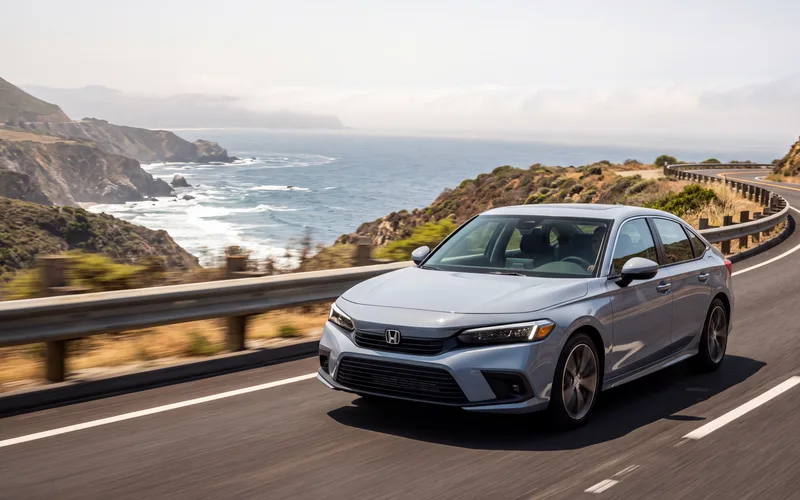 Honda CivicCompact SedanBetter at: Daily comfort & MPG
A Civic Si delivers most of the sport-sedan fun (great manual, sharp chassis) with far better fuel economy and daily comfort for roughly $5K less — the trade is 200 hp front-drive vs. 271 hp AWD.
Compare 2.40C+
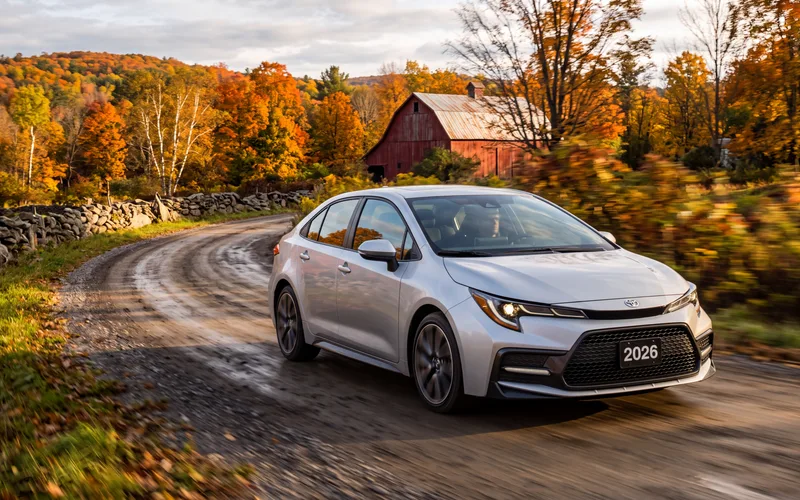 Toyota CorollaCompact SedanBetter at: Performance & reliability
The GR Corolla is the closest spiritual rival — AWD, turbocharged, manual — with more power (300 hp) and Toyota reliability, though it costs more and only comes as a hatchback.
Compare 2.13C
2.13C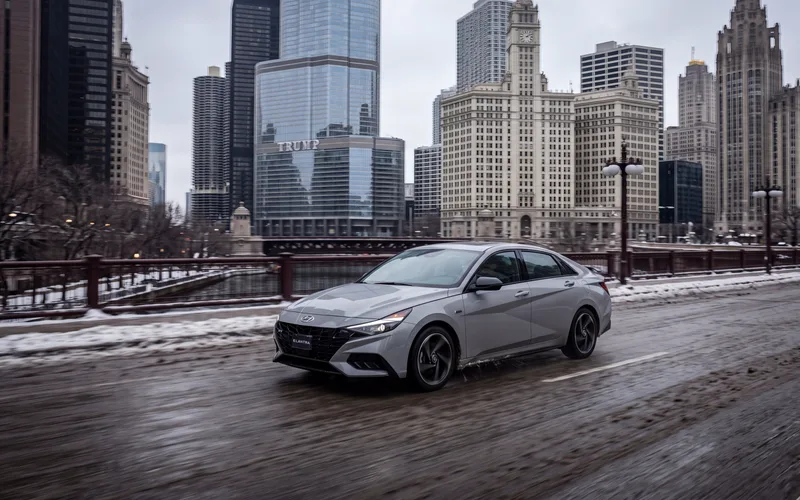 Hyundai ElantraCompact SedanBetter at: Warranty & interior
The Elantra N matches WRX power at a similar price with a nicer interior and a class-leading 10 yr / 100,000 mi powertrain warranty, though buyers give up standard AWD.
CompareHow it's evolved
10 scored model years · 2017–2026
Subject scores by year
Hover or tap a score to see what moved it versus the year before. A corner mark flags a big swing.
| Year | Performance | Efficiency | Safety | Space | Cost | Reliability | Tech | Use-case | Driving | Value |
|---|---|---|---|---|---|---|---|---|---|---|
| 2026 | 54 | 17 | 69 | 56 | 53 | 63 | 53 | 45 | 75 | 68 |
| 2025 | 53 | 18 | 67 | 57 | 49 | 61 | 46 | 42 | 74 | 64 |
| 2024 | 54 | 17 | 66 | 57 | 51 | 59 | 46 | 39 | 74 | 65 |
| 2023 | 53 | 17 | 57 | 58 | 53 | 58 | 46 | 39 | 73 | 65 |
| 2022 | 53 | 17 | 59 | 58 | 54 | 57 | 46 | 40 | 73 | 65 |
| 2021 | 53 | 21 | 42 | 53 | 56 | 62 | 35 | 36 | 70 | 61 |
| 2020 | 53 | 21 | 42 | 53 | 57 | 61 | 35 | 32 | 71 | 64 |
| 2019 | 53 | 21 | 42 | 53 | 57 | 62 | 35 | 32 | 71 | 64 |
| 2018 | 53 | 21 | 42 | 53 | 57 | 62 | 35 | 32 | 71 | 66 |
| 2017 | 52 | 21 | 38 | 52 | 58 | 61 | 28 | 36 | 71 | 67 |
Compare two years
Best fit & conditions
Higher scores mean a better fit for that use case. Learn more about use-case fit →
Subject profile
Academic Probation · NHTSA safety recalls
Jul 21, 2022Exterior lighting: back up lights: switchThe backup light switch may corrode and become inoperative, which can result in the backup lights not illuminating and the rearview camera image not displaying when the vehicle is in reverse.
Defect
Subaru of America, Inc. (Subaru) is recalling certain 2015-2021 WRX vehicles. The backup light switch may corrode and become inoperative, which can result in the backup lights not illuminating and the rearview camera image not displaying when the vehicle is in reverse.
Risk
Inoperative backup lights and an inoperative rearview camera can reduce vehicle visibility and driver awareness, increasing the risk of a crash.
Remedy
Dealers will inspect and replace the backup light switch, as necessary, free of charge. Owner notification letters were mailed September 16, 2022. Owners may contact Subaru's customer service at 1-844-373-6614. Subaru's number for this recall is WRE-22.
NHTSA campaign 22V522000 ↗Manufacturer no. WRE-2259,934 vehicles potentially affected (all models in the campaign)Owners notified Sep 16, 2022Filed by Subaru of America, Inc.Filed as WRXJul 29, 2021Fuel system, gasoline: delivery: fuel pumpThe low-pressure fuel pump inside the fuel tank may fail.
Defect
Subaru of America, Inc. (Subaru) is recalling certain 2019-2020 Ascent, 2018 Forester, 2018-2020 Impreza, Legacy, Outback, 2018-2019 BRZ, WRX, and Toyota 86 vehicles. The low-pressure fuel pump inside the fuel tank may fail.
Risk
Fuel pump failure can cause an engine stall while driving, increasing the risk of a crash.
Remedy
Dealers will replace the low-pressure fuel pump, free of charge. Owner notification letters were mailed September 24, 2021. Subaru and Toyota owners may call customer service at 1-844-373-6614. Subaru's number for this recall is WRG-21.
NHTSA campaign 21V587000 ↗Manufacturer no. WRG-21175,968 vehicles potentially affected (all models in the campaign)Owners notified Sep 24, 2021Filed by Subaru of America, Inc.Filed as WRX
2 recalls on other model years of the WRX (2022–2023)
Nov 9, 2023Power train: driveline: driveshaftThe front driveshaft assemblies' outer race may develop cracks and break.
Defect
Subaru of America, Inc. (Subaru) is recalling certain 2024 Crosstrek, Impreza, 2023-2024 Forester, and 2023 WRX vehicles. The front driveshaft assemblies' outer race may develop cracks and break.
Risk
A broken driveshaft can cause a loss of drive power while driving or vehicle rollaway when the vehicle is in park without the parking brake engaged. Either of these scenarios can increase the risk of a crash.
Remedy
Dealers will inspect and replace the left and right front driveshafts as necessary, free of charge. Owner notification letters were mailed January 8, 2024. Owners may contact Subaru's customer service at 1-844-373-6614. Subaru's number for this recall is WRP-23.
NHTSA campaign 23V754000 ↗Manufacturer no. WRP-234,701 vehicles potentially affected (all models in the campaign)Owners notified Jan 8, 2024Filed by Subaru of America, Inc.Filed as WRXJan 23, 2023Equipment: other: owners/service/other manualThe owner's manual may contain incorrect instructions for adjusting the sensitivity of the High Beam Assist function. As such, these vehicles fail to comply with the requirements of Federal Motor Vehicle Safety Standard number 108, "Lamps, Reflective Devices, and Associated Equipment."
Defect
Subaru of America, Inc. (Subaru) is recalling certain 2022 WRX vehicles equipped with the "Eyesight" feature. The owner's manual may contain incorrect instructions for adjusting the sensitivity of the High Beam Assist function. As such, these vehicles fail to comply with the requirements of Federal Motor Vehicle Safety Standard number 108, "Lamps, Reflective Devices, and Associated Equipment."
Risk
Incorrect instructions for adjusting the sensitivity of the High Beam Assist function contained in the owner's manual may cause the lights to not be adjusted as intended, increasing the risk of a crash.
Remedy
Subaru will mail an owner's manual insert containing the correct information, free of charge. Owner notification letters are expected to be mailed February 15, 2023. Owners may contact Subaru customer service at 1-844-373-6614. Subaru's number for this recall is WRA-23.
NHTSA campaign 23V016000 ↗Manufacturer no. WRA-234,615 vehicles potentially affected (all models in the campaign)Owners notified Feb 15, 2023Filed by Subaru of America, Inc.Filed as WRX
Source: NHTSA Office of Defects Investigation recall database, model years 2017–2026. Recalls are listed by model year as the manufacturer filed them; whether a specific car is affected depends on its VIN — check a VIN at nhtsa.gov ↗. NHTSA model names matched to this page: WRX.
Detailed scoring by subject
1Performance & PowertrainGrades below the middle of the scale.1.54D
Every 2018 WRX trim (Base, Premium, Limited) uses the same FA20DIT 2.0L direct-injection turbocharged boxer-four rated at 268 hp @ 5,600 rpm — carried over unchanged from 2017 as part of the mid-cycle refresh.
FA20DIT peak torque is 258 lb-ft on a broad 2,000–5,200 rpm plateau — unchanged for the 2018 refresh across the entire WRX lineup.
Instrumented tests of the volume Premium/6MT trim landed in the 5.3–5.4 s range; MotorWeek's 2018 test recorded 5.6 s and Car and Driver has repeatedly measured 5.3–5.4 s. The Sport Lineartronic CVT is roughly 0.6–0.8 s slower.
The FA20DIT is carried over unchanged for 2018, so the same review consensus applies: strong midrange but noticeable turbo lag below ~3,000 rpm, a coarse boxer note under load, and a peaky delivery that punishes lugging — competent but not seamless for a modern turbo four.
For 2018 Subaru redesigned the 6-speed manual's synchros to address the 'rubbery/notchy' complaints of prior model years — reviewers universally noted a noticeably slicker, more decisive shift feel while gearing and throws were unchanged. The optional Sport Lineartronic CVT (with 6- or 8-step manual mode and paddles) is more responsive than most CVTs but still drones under throttle and remains the weaker choice for the volume enthusiast trim.
Symmetrical full-time AWD is standard on every 2018 WRX trim — a core brand pillar — with a viscous-coupling limited-slip center diff on 6MT cars and a Variable Torque Distribution planetary center diff (45:55 default) on Sport Lineartronic CVT cars. Not driver-selectable, unlike the STI's DCCD.
Single powertrain across every 2018 WRX trim (2.0L turbo boxer, 268 hp) with no hybrid, PHEV, or EV option — take-it-or-leave-it. The WRX STI (2.5L EJ257, 305 hp) is marketed and sold as a separate model line.
2Efficiency & RangeThe WRX's lowest-graded category.0.00F
EPA rates the 2018 WRX 6MT (volume trim) at 23 MPG combined and the Sport Lineartronic CVT at 21 MPG combined — powertrain is carried over unchanged from 2017, so EPA ratings are identical and remain well below the sedan-segment norm.
EPA city rating for the 2018 WRX 6MT is 21 MPG — near the bottom of the sedan normalization band. The Sport Lineartronic CVT drops to 18 MPG city.
EPA highway rating for the 2018 WRX 6MT is 27 MPG; the CVT is 24 MPG. Turbocharged AWD sport sedan makes highway efficiency modest.
15.9-gallon tank paired with EPA 23 MPG combined yields roughly 366 miles per fill on the volume 6MT; CVT drops to about 334 miles. Tank size and combined MPG are unchanged from 2017.
fueleconomy.gov's updated annual-cost figure for the 2018 WRX runs approximately $2,900 under current EPA assumptions (15k mi/yr, premium fuel) — at the top end of the sedan cost band because of premium fuel plus middling combined MPG.
Subaru's 2018 WRX owner's manual specifies 91-octane premium unleaded as the design fuel for full rated output; 87 octane is permitted with no durability harm but reduces performance. Meaningful ongoing fuel-cost penalty versus regular-fuel competitors.
3SafetyGrades near the bottom of the scale.0.80F
NHTSA did not directly crash-test the 2018 WRX. Per the prompt's guidance to use the latest tested year of this generation, the 2017 Subaru WRX 4-DR AWD earned 4 stars overall (5-star driver frontal, 4-star passenger frontal, 5-star side crash, 4-star side pole, 4-star rollover) — the platform and body structure are unchanged for 2018, so this figure applies.
Big step forward for 2018: the WRX earned the 2018 IIHS Top Safety Pick+ award when equipped with EyeSight and the new LED Steering Responsive Headlights (Limited/STI), with Good ratings across all six crashworthiness tests (small overlap front, moderate overlap front, side, roof strength, head restraints, and passenger-side small overlap front). Front crash prevention rated Superior with EyeSight. Crashworthiness capability is now class-leading; the caveat is that the volume Premium 6MT trim can't reach TSP+ because EyeSight and the qualifying headlights are unavailable on that trim.
The 2018 WRX volume trim (Premium 6MT) still has no standard ADAS — no AEB, no lane keeping, no adaptive cruise, no blind-spot monitoring, no rear cross-traffic alert. EyeSight remains gated to the CVT-equipped Limited trim, locking out the majority of enthusiast buyers who choose the manual. Blind-spot detection with RCTA is a Limited-trim option only.
When equipped with EyeSight (CVT Limited only), the 2018 WRX's front crash prevention was rated Superior by IIHS with full points in the 12-mph and 25-mph vehicle-to-vehicle tests. Because AEB is unavailable on Base, Premium, and any 6MT trim — which are the volume sellers — most buyers get no AEB at all, pulling the score well below the on-trim capability.
Blind Spot Detection with Rear Cross Traffic Alert is optional on the WRX Limited (both 6MT and CVT) as part of a package — a slight expansion vs 2017 in that it isn't strictly gated to CVT, but it is still unavailable on Base and Premium volume trims. Alert-only, no active intervention.
Lane departure warning and lane sway warning are included with EyeSight — CVT-Limited only. No active lane keep assist and no lane centering on any 2018 WRX. Reviewers describe the EyeSight lane systems as competent warnings but not corrective steering.
Adaptive Cruise Control ships as part of the EyeSight package on CVT-equipped Limited trims and is reviewed as competent full-speed-range with smooth follow. Not offered on Base, Premium, or any 6MT WRX — so the volume manual buyer has standard cruise only. No integrated highway assist.
No hands-free highway driving system was available on the 2018 WRX. Cadillac Super Cruise was the only mainstream hands-free system in 2018 and was CT6-exclusive; Subaru did not offer any hands-off capability.
Major improvement for 2018 at the top of the range: the Limited and STI got new LED Steering Responsive Headlights that IIHS rated Good — the specific change that unlocked the 2018 TSP+ award. However, the volume Base and Premium trims retain halogen projector headlights that continue to rate Marginal/Poor, and the WRX Premium — the sales-mix leader — cannot be optioned with the LED units. Mixed picture: top trims are best-in-class, volume trims are still lit by the same halogens IIHS panned in 2017.
Sightlines are decent for a compact sedan — thin A-pillars, low beltline relative to modern sedans, and a functional rear window. Backup camera remains standard (federal mandate). 360-degree cameras are unavailable at any trim. Reviewers consistently praise the WRX's forward and side visibility.
Two full LATCH sets in the outboard rear positions with a tether for the center seat — standard compact-sedan layout, unchanged from 2017. IIHS rates LATCH ease-of-use as Acceptable on the Impreza/WRX platform. Rear door openings and rear seat space remain tight, making car-seat installation workable but not spacious, and the cabin does not accommodate three seats across.
4Space & ComfortGrades below the middle of the scale.1.58D
Every 2018 WRX trim is a 5-passenger compact sedan with front sport buckets and a 60/40 split-folding rear bench.
Subaru's published front headroom for the 2018 WRX Impreza-based sedan is 39.8 in without moonroof; the optional moonroof (Premium/Limited packages) reduces it to 38.6 in. Interior dimensions carry over from 2017 — the VA-generation body and roofline are unchanged for the 2018 refresh.
Subaru's published front legroom for the 2018 WRX is 43.1 in, well within the sedan norm and generous for the compact class. Unchanged for 2018.
Rear headroom of 37.1 in is mid-pack for compact sedans. The tapered roofline behind the C-pillar and rear seat position leave adequate but not generous overhead space. Unchanged from 2017.
Rear legroom is a genuine weak point at 35.4 in — a full inch tighter than a Civic sedan (37.4) and far behind mid-size rivals. Two adults behind two adult front occupants is workable for short trips but cramped for long ones. Unchanged for 2018.
The 2018 WRX trunk holds 12.0 cu ft — small for the segment (Civic sedan is 15.1, Corolla is 13.1) largely because the sedan-only WRX lost the hatchback variant after 2014. Rear-seat pass-through helps for skis or long items. Unchanged for 2018.
In-cabin storage is functional but unremarkable. The 2018 refresh added a slightly reshaped center console with soft-touch trim, revised armrest, and standard front USB ports; still just a modest bin, two front cupholders, two rear cupholders in the fold-down armrest, and shallow door pockets. No underfloor bins, sliding console, or standout organization vs a Golf GTI's smart storage. Marginal step forward for 2018 but still segment-average at best.
The 2018 WRX front sport buckets got revised bolstering and updated upholstery materials as part of the mid-cycle refresh, slightly improving long-drive comfort while retaining the aggressive lateral hold. Limited trim continues to offer leather/Ultrasuede and 8-way power driver seat; STI keeps Recaros. Rear bench remains firm and shallow. Reviewer verdicts trend slightly warmer for 2018 than 2017 but still land in 'good support, firm cushioning' territory.
Ride quality remained the WRX's biggest comfort penalty in 2018, though Subaru's refresh included revised suspension tuning (softer front springs on non-STI, retuned damper valving) explicitly aimed at improving compliance. Reviewers noted the 2018 rides slightly better over broken pavement than the 2017 but is still firm and busy for the segment. Base/Premium (17-inch wheels) is more compliant than Limited (18-inch); STI remains punishing.
The 2018 refresh added sound insulation to the firewall, floor, and wheel-well liners to reduce road and engine noise, and Subaru advertised improved NVH. In practice the FA20DIT turbo boxer remains audible and summer-oriented rubber (Premium/Limited) keeps road roar elevated, but wind and road noise at highway speed are measurably down from 2017. Still on the noisy side of the compact-sedan segment.
Climate and comfort equipment carries over largely unchanged for 2018. Manual single-zone A/C is standard on Base; dual-zone automatic climate control and heated front seats are standard on Premium and above; heated exterior mirrors and windshield wiper de-icer standard. No heated steering wheel, no ventilated seats, no rear-vent HVAC, and no remote pre-conditioning on any 2018 WRX trim — well behind luxury-badge and even some mainstream rivals of the era.
5Cost of OwnershipMid-pack among this car's ten categories.1.84C-
The 2018 Subaru WRX Base sedan carried a $26,995 MSRP plus $860 destination, for a $27,855 out-the-door base price with the standard 6-speed manual. CVT (Sport Lineartronic) added $1,200. Modest ~$340 increase over 2017 reflecting mid-cycle refresh updates (upgraded 7-inch Starlink infotainment with standard Apple CarPlay/Android Auto, chassis stiffening, quicker steering ratio).
Premium continued as the volume trim in 2018 — it added alloy wheels, heated seats, dual-zone climate, sunroof, and the upgraded 7-inch Starlink touchscreen with CarPlay/Android Auto that most buyers wanted. Premium 6-MT MSRP was $29,395 plus $860 destination = $30,255.
The turbocharged FA20DIT and full-time AWD drive higher-than-average service costs for a compact sedan — mandatory synthetic oil at 6-month/6,000-mile intervals, expensive Dunlop Sport Maxx or Yokohama Advan Sport tires, and more frequent brake wear from enthusiast use. Premium fuel required. Edmunds True Cost to Own for the 2018 WRX Premium projects roughly $4,500 maintenance and ~$2,000 repairs over the first 5 years — unchanged from 2017 as the powertrain and service intervals carried over.
WRX/STI models have among the strongest 5-year residuals in the compact segment — enthusiast demand, limited supply, and cult following keep used prices high. The 2018 refresh (better interior materials, standard CarPlay/Android Auto, chassis updates) slightly improves used-market desirability versus early VA-generation cars. KBB and ALG project 2018 WRX 5-year retention in the ~55–60% range, top-tier for the sport-compact class.
Subaru's 2018 bumper-to-bumper coverage remained the industry-standard 3 yr / 36,000 miles — matching Toyota, Honda, Mazda, and Ford but well behind Hyundai/Kia's 5 yr and Mitsubishi's 5 yr / 60k. No warranty enhancement accompanied the 2018 mid-cycle refresh.
Subaru 2018 powertrain coverage is 5 yr / 60,000 miles — standard for mainstream brands but well behind Hyundai/Kia's 10 yr / 100,000 mile powertrain warranty. No change for 2018.
Subaru offered no complimentary scheduled maintenance on the 2018 WRX — unlike BMW (4 yr / 50k), Toyota (2 yr / 25k), or Jaguar (5 yr / 60k) of the era. Buyers pay for every oil change and service interval out of pocket. Included perks: basic 3 yr / 36,000-mile roadside assistance and a SiriusXM All Access 4-month trial with Starlink-equipped Premium/Limited trims. A meaningful gap versus the class competition.
$30,255 volume-trim price minus its estimated resale value after 5 years (58% retained, or about $17,548) leaves about $12,707 in depreciation. Add the projected $6,500 in 5-year maintenance and repairs, and owning this vehicle for 5 years costs about $19,207 in total.
6Reliability & QualityOne of the WRX's strongest categories.2.17C
Consumer Reports rated the 2018 WRX below-average for predicted reliability (2/5), with owner-survey trouble spots including in-car electronics/infotainment, drive system, and body integrity — essentially unchanged from 2017 as the 2018 mid-cycle refresh carried the same FA20DIT powertrain and Starlink infotainment platform. J.D. Power VDS/quality studies place Subaru at or slightly better than industry average — not a red-flag model, but well behind mainstream compact sedans like the Civic or Corolla.
Subaru brand ranks in the upper-middle tier for reliability — Consumer Reports typically places Subaru in the top 8–12 brands, and J.D. Power VDS ranks Subaru mid-pack (industry average or slightly better) in the 2017-2019 studies. Consistent but not a top-5 brand for dependability.
The 2018 WRX has had multiple NHTSA recalls including the industry-wide Takata passenger airbag inflator campaigns and a Subaru-specific coil spring recall affecting some 2016–2018 WRX/Forester units, plus TSBs for steering column rattle, transmission shifter feel, and Starlink infotainment glitches. Recall activity is typical for the era with no fire-risk or systemic safety-critical issues specific to 2018 — slightly cleaner than earlier VA years as several first-generation infotainment issues were addressed in the refresh.
The FA20DIT 2.0L direct-injected turbo flat-four (carried over unchanged for 2018) has a mixed durability reputation — solid when driven gently and maintained on schedule, but known for ringland cracking and connecting-rod failures when tuned or driven hard on high boost, plus carbon-buildup tendencies common to DI engines. The 6-speed manual is robust; the TR690 CVT (used on non-manual WRX) is a stress point that many enthusiasts avoid. Well behind the previous EJ255's aftermarket-proven durability at stock power, and behind mainstream compact-sedan powertrains.
The 2018 mid-cycle refresh brought modest but noticeable interior upgrades over the 2015–2017 WRX — revised switchgear, softer-touch dash surfaces on the upper trims, a redesigned steering wheel with new controls, and the standard 7-inch Starlink touchscreen with CarPlay/Android Auto. Still, hard plastics dominate the lower dash and door panels, and reviewers continue to call the cabin the weakest part of the car relative to its ~$28K–$36K price range — behind the VW Golf R and closer to a Civic Si in feel.
Assembly at Subaru's Gunma/Yajima plant is consistent — panel gaps are tight and initial-quality complaints are scattered rather than systemic. The 2018 chassis stiffening (5.4% torsionally stiffer) helps reduce structural rattles and improves the perceived solidity of the car versus earlier VA years. J.D. Power IQS places Subaru near industry average. Some owner reports flag minor rattles from the dash and rear parcel shelf under boost, but nothing systemic.
Subaru operates approximately 630 US dealerships — adequate national coverage though notably denser in the Northeast, Pacific Northwest, and Mountain West than in the Deep South or Great Plains. J.D. Power customer service satisfaction ranks Subaru mid-pack (industry-average to slightly above). Owners of performance models sometimes report dealer techs being less experienced with WRX-specific service (turbo, AWD center diff).
The WRX has one of the strongest aftermarket support ecosystems of any compact car — COBB, Perrin, Grimmspeed, Invidia, and countless others make plug-and-play performance and maintenance parts. OEM parts are widely available at fair prices, though turbo-specific service and AWD driveline work costs more than a naturally-aspirated FWD compact. RepairPal estimates average annual repair cost around $700, above compact-sedan average (~$525) but reasonable for a turbocharged AWD sport sedan.
7Technology & InfotainmentOne of the WRX's weakest categories.0.27F
Volume Premium trim carries the 7.0-inch Starlink 7.0 touchscreen unchanged from 2017, and Limited uses the same 7.0-inch unit. For 2018 Subaru bumped the Base trim's head unit from 6.2 to 6.5 inches, but the volume Premium representative configuration remains 7.0 inches.
Starlink 7.0 hardware is largely unchanged from 2017 — legible menus and welcome physical volume/tuning knobs — but Subaru added Apple CarPlay and Android Auto for 2018, which is the biggest usability improvement of the refresh: owners can bypass the dated native UI for a modern phone-projected experience. Native menus remain slow to boot and graphics look dated; middle-of-the-pack for the 2018 mainstream compact class.
The 2018 refresh added WIRED Apple CarPlay and Android Auto — the headline infotainment change for the model year — standard on the 7.0-inch Starlink 7.0 head unit fitted to Premium and Limited (the volume Premium buyer gets it). Base's smaller 6.5-inch unit does not include phone projection. Nothing is wireless: cable-tethered only. Solid middle score for wired-standard on the volume trim with no wireless option.
Native voice recognition remains a rigid command-tree system tied to Bluetooth dialing and Starlink audio — not natural-language. TomTom-based built-in navigation stays a Limited-trim option only via the Starlink Multimedia Plus package. Bumped slightly from 2017 because CarPlay/Android Auto (new for 2018) now lets buyers use Siri/Google Assistant and Google/Apple Maps as effective replacements for the weak native systems.
Base and Premium trims carry an adequate but unremarkable 6-speaker system. An optional Harman Kardon 9-speaker premium audio system with a 320-watt amplifier remains available on Limited and is a genuine upgrade per reviewers. The loud cabin and exhaust drone at highway speed limit even the premium system's perceived quality. Carryover from 2017.
Traditional analog tachometer and speedometer remain, flanking a small 3.5-inch color TFT multi-information display showing boost, coolant, fuel economy, and trip data, with a supplemental color LCD atop the dashboard for climate/audio info. No configurable full-digital cluster on any 2018 trim.
The 2018 WRX has no meaningful over-the-air update capability — Starlink 7.0 receives no whole-vehicle OTA firmware pushes. Any infotainment updates or maps refreshes require a dealer visit or a USB stick from the Subaru map-update site. Standard for a 2018 mainstream Japanese sedan but a real weakness against modern rivals.
Subaru Starlink Safety & Security remains available on Premium and Limited trims equipped with the 7.0-inch head unit, providing SOS, stolen-vehicle recovery, remote lock/unlock, vehicle finder, roadside assistance, and remote engine start via app on higher subscription tiers. Interface is functional but basic; ongoing use is subscription-gated after the trial. No digital-key. Essentially unchanged from 2017.
The 2018 WRX retains one front USB-A port and an aux-in in the center stack, plus a 12V outlet in the console — no rear USB ports, no USB-C anywhere, no wireless phone charging, and no 110V household outlet. Basic even by 2018 mainstream standards; well behind the emerging norm of USB in both rows.
Keyless Access with Push-Button Start is standard on Limited only; Premium can option it (through certain packages), and Base retains a traditional turn-key ignition. Remote start still requires the paid Starlink Security Plus subscription. No hands-free trunk release, no phone-as-key. Unchanged from 2017.
A rear-view camera remains standard on all 2018 WRX trims (Subaru made it standard ahead of the May 2018 federal mandate) with reasonable image quality. No front or rear parking sensors on any trim, no 360-degree surround camera, and no automated parking assist. Blind-spot detection with rear cross-traffic alert is optional on Limited only (2018 expanded it to both 6MT and CVT Limiteds).
No head-up display is offered on any 2018 WRX trim from Base through Limited. HUD is available on premium-priced sport-compact rivals (BMW/Audi) but Subaru did not put it on the VA-generation WRX option sheet.
8Use-Case FitOne of the WRX's weakest categories.0.09F
The 2018 WRX is a compact sport sedan with tight rear legroom (35.4 in — a full inch behind a Civic sedan) and a small 12.0 cu-ft trunk that limits stroller/gear headroom. Rear door openings are compact-sedan-average with two outboard LATCH sets (IIHS Acceptable ease-of-use). The firm sport-tuned ride amplifies bumps for rear-facing infant seats. Workable for one child but a compromise for two-plus, and small compared to mainstream compacts on both key metrics families care about.
The volume Premium 6MT trim families would likely buy has NO ADAS — no AEB, no adaptive cruise, no lane departure, no blind-spot detection. Subaru gates EyeSight (which enables the 2018 TSP+ award) to the CVT-equipped Limited only, and the LED Steering Responsive Headlights that unlock TSP+ are Limited/STI-exclusive; halogens on Base/Premium rated Marginal/Poor by IIHS. Crashworthiness itself is Good across the board and the platform earned a 4-star NHTSA overall (2017 test carryover). Big gap between top-trim safety and what most affordable-trim family buyers actually get.
Rear passengers get 35.4 in of legroom and 37.1 in of headroom — cramped for adults on multi-hour drives — with no rear HVAC vents, no rear USB, and firm rear cushioning. The 12 cu-ft trunk struggles to hold four-adult luggage; the 60/40 pass-through helps for skis/long items but not for volume. Sport-tuned ride and elevated cabin noise (improved but still busy per 2018 reviews) further limit multi-hour family comfort. Below-segment for the family road-trip mission.
The 2018 refresh helps — revised 6MT synchros give a slicker shift, retuned suspension is slightly more compliant, added sound insulation lowers NVH — but daily driving still asks work of the driver: a firm clutch, notchy shifter takeup, noticeable turbo lag below ~3,000 rpm, and a busy ride versus mainstream compact peers. Standard symmetric AWD is a real daily-use plus in bad weather. Better than a 2015–2017 WRX daily but still a step down from a Civic or Corolla for effortless commuting.
23 MPG combined (6MT) or 21 MPG combined (CVT) is well below the compact-sedan norm, and Subaru specifies 91-octane premium unleaded for full rated output — fueleconomy.gov puts annual fuel cost at roughly $2,900. Insurance runs elevated (~$2,200/yr full coverage) due to performance-car classification and theft risk. Maintenance is above compact-sedan average (mandatory synthetic oil at 6k intervals, expensive summer/performance tires, brake wear). Expensive per-mile to commute in versus a Civic or Corolla.
Compact-sedan footprint (180.9 in overall, 104.3 in wheelbase) and a ~36.1 ft turning circle make the WRX easy to thread and park versus mid-size or luxury peers. Thin A-pillars and a low beltline give good sightlines, and a rear-view camera is standard on every trim. Downside: no parking sensors on any 2018 WRX trim, no 360-degree surround-view camera, no automated parking assist — features that are common on newer compact rivals. Solid but not standout urban usability.
The 2018 WRX has no US towing rating published by Subaru and no bed or truck-style cargo — it's a compact 4-door sedan with a 12 cu-ft trunk. Not designed, marketed, or engineered for work duty. Effectively zero real work capability beyond hauling personal items in the trunk.
The WRX is engineered as a performance sport sedan, not a work vehicle. The FA20DIT direct-injected turbo has a mixed durability reputation under abuse (ringland cracking and rod issues on tuned/hard-driven cars), the TR690 CVT is a stress point avoided by enthusiasts, and the interior uses hard plastics rather than wipeable/rugged fleet surfaces. Chassis is stiff but the low ride height and street-oriented suspension aren't built for jobsite abuse. No fleet reputation.
No bed, no factory tow hitch, no bed-mounted power outlets, no washable cargo surfaces, no fleet upfit ecosystem, no rack-integration points beyond mediocre aftermarket cross-bar solutions bolted to the sedan roof. A single front USB-A and a 12V outlet cover onboard power. Effectively zero jobsite provisions.
Range is decent — a 15.9-gal tank at 23 MPG combined yields about 366 mi per fill on the 6MT — but the mile-eating experience is compromised. Adaptive cruise control is unavailable on the volume Premium 6MT (EyeSight is CVT-Limited-only), the cabin is quieter for 2018 but still noisier than mainstream sedans at highway speed, front sport buckets are firm on long stints, and rear-seat comfort is limited by 35.4 in legroom and no rear vents/USB. Premium fuel adds per-tank cost. Below-segment as a pure long-haul tourer.
Standard Symmetrical Full-Time AWD is the WRX's genuine adventure asset — a legitimate advantage over rear- and front-drive sport sedans on gravel, snow, and light forest roads and a core Subaru brand pillar. Ground clearance is only about 4.9 inches, however, and no factory roof rails or factory tow hitch are offered on the WRX sedan (aftermarket cross-bar towers exist but the roof isn't rail-equipped from Subaru). No 110V outlet, no camping-mode power features, and no factory bike/kayak accessories in the WRX catalog. Better than most sport sedans for outdoor use but well behind a Crosstrek or Outback.
12.0 cu-ft trunk is small for the compact sedan segment (Civic 15.1, Corolla 13.1) — the sedan-only VA-generation body dropped the hatchback variant after 2014, which cost the WRX its historic gear-hauling flexibility. Standard 60/40 split-folding rear seat plus a ski-pass helps for long items but there's no underfloor storage, no factory roof rails, and no factory hitch. Restrictive for anyone hauling anything bigger than four suitcases.
9Driving ExperienceThe WRX's best-graded category.2.83B-
For 2018 Subaru retuned the WRX chassis — stiffer front stabilizer bar, revised bushings, and firmer damping — sharpening what was already the sport-compact-sedan benchmark for grip and body control. Symmetrical AWD with active torque vectoring, quick turn-in, and neutral, adjustable balance let reviewers extract 0.90+ g on the skidpad. In the broader sedan universe its dynamics run with entry-luxury sport sedans (3 Series, Giulia) while giving up polish.
The WRX's electric power steering was retuned for 2018 with quicker off-center response and a slightly heavier build-up. Reviewers praise its precision and directness for the class but consistently note the boosted rack is short on genuine road feel — good by EPS standards, not a match for the best hydraulic setups.
Base and Premium trims use 12.4-in vented front / 11.3-in rear discs; the Limited-only Performance Package adds larger Jurid pads and drilled rotors. Instrumented 70–0 mph stops land near 165–170 ft with firm pedal feel — competitive for the sport-compact class, though sustained hard use fades the base setup faster than the Performance Package's upgraded pads.
The FA20DIT carries over unchanged for 2018 and its calibration remains a mixed bag: strong, linear surge from ~3,000 rpm on but noticeable turbo lag below that, a lumpy tip-in, and the boxer's characteristic vibration through the shifter and pedals. Better than an older EJ but still one of the roughest modern turbo fours in the class.
The turbo boxer's warble is beloved by enthusiasts but objectively coarse: audible at idle, boomy under load, and never really fades on the highway. Interior sound-deadening was left largely alone for 2018, and reviewers still cite intrusive drivetrain noise as a daily-drive weak point. Vibration through the shifter is also above class norms.
Subaru lists 36.1 ft curb-to-curb turning diameter for every 2018 WRX trim — average for a compact sedan; the AWD driveshafts and wide tires limit steering angle vs. FWD rivals.
The WRX has an aggressive, low seating position with well-placed pedals for heel-toe work and a good steering-wheel adjustment range (tilt and telescope). Sightlines are decent, but the interior still carries pre-refresh gripes: hard plastics, a small non-standard sunroof intrusion on Limited, and a driver's seat that lacks height/thigh support adjustability outside of the optional Recaros in the 2018 Performance Package.
The 2018 WRX remains a top enthusiast pick in the class — communicative chassis, standard AWD grip, an eager (if peaky) turbo boxer, a rally-bred soundtrack, and a manual gearbox that was noticeably improved for 2018. It's the kind of car buyers deliberately choose over quieter, cheaper Civics and Corollas specifically because it's engaging.
10Value & Market PositionOne of the WRX's strongest categories.2.43C+
The 2018 refresh added a 6.2-in Starlink touchscreen with Apple CarPlay/Android Auto standard across the range, plus steering-responsive LED headlights on Premium and up. Base ($26,995) gets AWD, 17-in alloys, dual-zone climate, keyless entry, and backup camera — but no sunroof, no blind-spot monitoring, and critically no EyeSight (Subaru's driver-assist suite is unavailable on any WRX for 2018 because of the manual and turbo calibration), a gap rivals like the Civic Si (Honda Sensing) fill for less money.
A 268-hp turbo AWD sport sedan with a proper 6MT starting under $27K remains a bang-for-buck standout — no rival delivered comparable all-weather performance at the price. Civic Si is cheaper but FWD and 205 hp; GTI is FWD; the closest AWD hot-sedan alternatives (Audi S3, Mercedes CLA45) cost $15–20K more. The Limited Performance Package (Recaros + Brembos + STI-derived brakes) at ~$34K is an especially strong performance-per-dollar play.
Three well-spaced trims — Base ($26,995), Premium ($29,295), Limited ($31,795) — plus a Limited-only Performance Package (Recaros, Brembos, no sunroof/blind-spot) that gives track-oriented buyers a dedicated build. Six-speed manual is standard; the Lineartronic CVT is optional on Premium and Limited (not Base). No sedan-vs-hatch choice (the 5-door was killed after 2014), and no engine options — a fairly focused range but with enough spread to cover budget, comfort, and track-focused buyers.
Combined 2018 WRX/STI US sales were roughly 31,000 units — a steady niche performer well behind mainstream compacts (Civic sold 20×+ that volume) but healthy for a $27–37K enthusiast-only sport sedan. Sales were essentially flat versus 2017 as the compact sedan segment as a whole shrank; the WRX held its buyer base while broader sedan interest slid toward crossovers.
Subaru in 2018 was riding a strong image wave — 'love-what-you-drive' marketing, outdoorsy loyalist base, and standard symmetrical AWD. The WRX carries an additional halo from Subaru's WRC rally heritage and the STI's icon status; the badge itself is meaningful to enthusiasts in a way few mainstream sedan nameplates are, driving strong resale and buyer intent for this specific model.
Subaru historically runs one of the leanest incentive programs in the industry, and the 2018 WRX in particular routinely transacted at or above MSRP — Performance Package Limiteds were commonly marked up by dealers. Financing offers were plain-vanilla APR rather than the aggressive rebates found on domestic compacts. Bad for a buyer looking to negotiate, though it protects resale value.
The VA-chassis WRX launched for 2015, so 2018 marked year four of a six-year cycle — clearly mid-cycle but with a substantive refresh: retuned suspension (stiffer front stabilizer, revised bushings), quicker steering, new Starlink infotainment with CarPlay/Android Auto, revised interior trim, and standard steering-responsive LED headlights on Premium/Limited. Not cutting-edge, and a full redesign was known to be coming (arrived for 2022), but the 2018 update kept it credible.
Consistently well-reviewed for driving engagement and value, but rarely the outright winner of sport-compact comparison tests, which usually go to the more polished VW GTI or Civic Si/Type R. Car and Driver named it a 2018 10Best contender and 'Editors' Choice.' No IIHS Top Safety Pick+ (no available forward-collision warning), and it was not on the 2018 NACTOY shortlist. Strong reputation among enthusiasts; middling in mainstream car-of-the-year and comparison contexts.