

The verdict
A mixed-report sport compact, strong on driving and held back by efficiency.
Overall 2.07 (C) across 10 graded subjects. Its strongest is driving experience at 3.02 (B), its weakest efficiency & range at 0.00 (F). 5 of 10 subjects grade at C− or better.
Jump to scoresStrengths
- Driving Experience
- Safety
- Value & Market Position
What holds it back
- Efficiency & Range
- Use-Case Fit
- Technology & Infotainment
Top alternatives
Cars shoppers cross-shop with the Subaru WRX 2.44C+
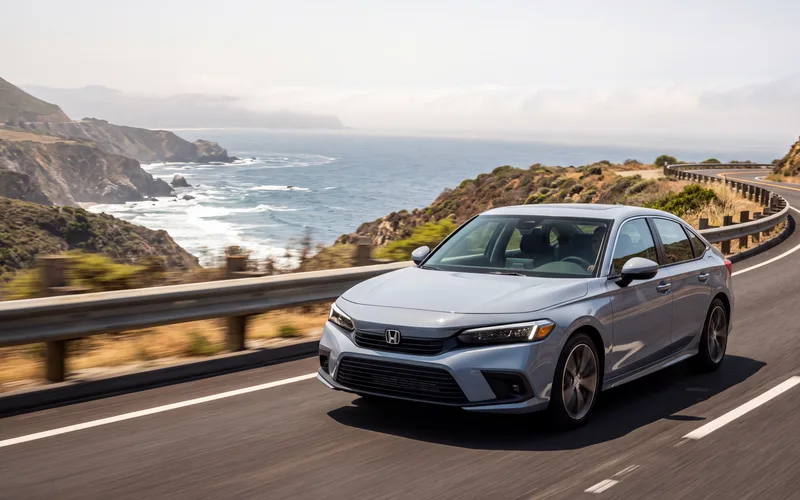 Honda CivicCompact SedanBetter at: Daily comfort & MPG
A Civic Si delivers most of the sport-sedan fun (great manual, sharp chassis) with far better fuel economy and daily comfort for roughly $5K less — the trade is 200 hp front-drive vs. 271 hp AWD.
Compare 2.40C+
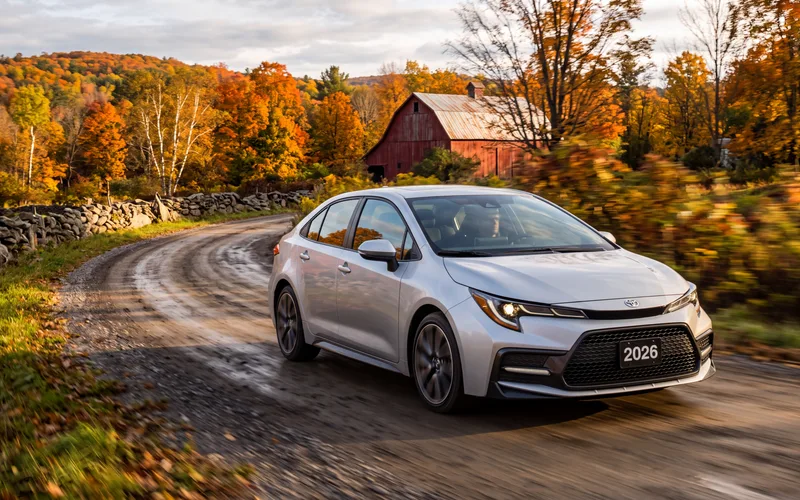 Toyota CorollaCompact SedanBetter at: Performance & reliability
The GR Corolla is the closest spiritual rival — AWD, turbocharged, manual — with more power (300 hp) and Toyota reliability, though it costs more and only comes as a hatchback.
Compare 2.13C
2.13C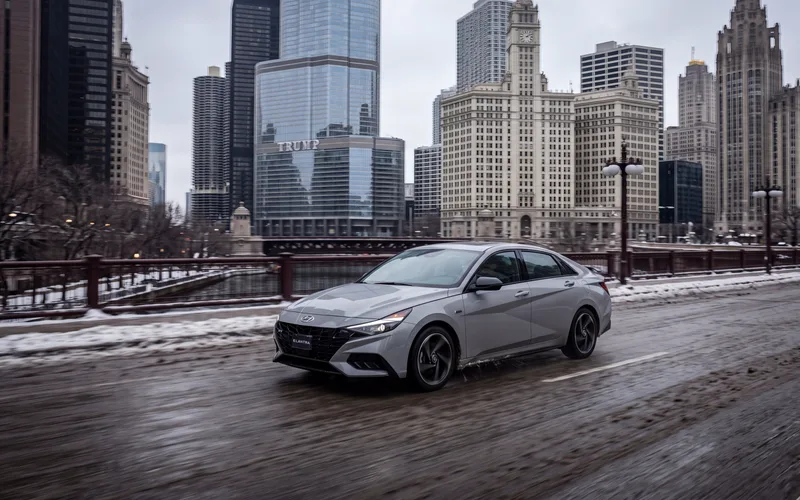 Hyundai ElantraCompact SedanBetter at: Warranty & interior
The Elantra N matches WRX power at a similar price with a nicer interior and a class-leading 10 yr / 100,000 mi powertrain warranty, though buyers give up standard AWD.
CompareHow it's evolved
10 scored model years · 2017–2026
Subject scores by year
Hover or tap a score to see what moved it versus the year before. A corner mark flags a big swing.
| Year | Performance | Efficiency | Safety | Space | Cost | Reliability | Tech | Use-case | Driving | Value |
|---|---|---|---|---|---|---|---|---|---|---|
| 2026 | 54 | 17 | 69 | 56 | 53 | 63 | 53 | 45 | 75 | 68 |
| 2025 | 53 | 18 | 67 | 57 | 49 | 61 | 46 | 42 | 74 | 64 |
| 2024 | 54 | 17 | 66 | 57 | 51 | 59 | 46 | 39 | 74 | 65 |
| 2023 | 53 | 17 | 57 | 58 | 53 | 58 | 46 | 39 | 73 | 65 |
| 2022 | 53 | 17 | 59 | 58 | 54 | 57 | 46 | 40 | 73 | 65 |
| 2021 | 53 | 21 | 42 | 53 | 56 | 62 | 35 | 36 | 70 | 61 |
| 2020 | 53 | 21 | 42 | 53 | 57 | 61 | 35 | 32 | 71 | 64 |
| 2019 | 53 | 21 | 42 | 53 | 57 | 62 | 35 | 32 | 71 | 64 |
| 2018 | 53 | 21 | 42 | 53 | 57 | 62 | 35 | 32 | 71 | 66 |
| 2017 | 52 | 21 | 38 | 52 | 58 | 61 | 28 | 36 | 71 | 67 |
Compare two years
Best fit & conditions
Higher scores mean a better fit for that use case. Learn more about use-case fit →
Subject profile
Academic Probation · NHTSA safety recalls
No NHTSA safety recall is on record for the 2025 Subaru WRX. Other model years of the WRX have 4 — listed below.
4 recalls on other model years of the WRX (2017–2023)
Nov 9, 2023Power train: driveline: driveshaftThe front driveshaft assemblies' outer race may develop cracks and break.
Defect
Subaru of America, Inc. (Subaru) is recalling certain 2024 Crosstrek, Impreza, 2023-2024 Forester, and 2023 WRX vehicles. The front driveshaft assemblies' outer race may develop cracks and break.
Risk
A broken driveshaft can cause a loss of drive power while driving or vehicle rollaway when the vehicle is in park without the parking brake engaged. Either of these scenarios can increase the risk of a crash.
Remedy
Dealers will inspect and replace the left and right front driveshafts as necessary, free of charge. Owner notification letters were mailed January 8, 2024. Owners may contact Subaru's customer service at 1-844-373-6614. Subaru's number for this recall is WRP-23.
NHTSA campaign 23V754000 ↗Manufacturer no. WRP-234,701 vehicles potentially affected (all models in the campaign)Owners notified Jan 8, 2024Filed by Subaru of America, Inc.Filed as WRXJan 23, 2023Equipment: other: owners/service/other manualThe owner's manual may contain incorrect instructions for adjusting the sensitivity of the High Beam Assist function. As such, these vehicles fail to comply with the requirements of Federal Motor Vehicle Safety Standard number 108, "Lamps, Reflective Devices, and Associated Equipment."
Defect
Subaru of America, Inc. (Subaru) is recalling certain 2022 WRX vehicles equipped with the "Eyesight" feature. The owner's manual may contain incorrect instructions for adjusting the sensitivity of the High Beam Assist function. As such, these vehicles fail to comply with the requirements of Federal Motor Vehicle Safety Standard number 108, "Lamps, Reflective Devices, and Associated Equipment."
Risk
Incorrect instructions for adjusting the sensitivity of the High Beam Assist function contained in the owner's manual may cause the lights to not be adjusted as intended, increasing the risk of a crash.
Remedy
Subaru will mail an owner's manual insert containing the correct information, free of charge. Owner notification letters are expected to be mailed February 15, 2023. Owners may contact Subaru customer service at 1-844-373-6614. Subaru's number for this recall is WRA-23.
NHTSA campaign 23V016000 ↗Manufacturer no. WRA-234,615 vehicles potentially affected (all models in the campaign)Owners notified Feb 15, 2023Filed by Subaru of America, Inc.Filed as WRXJul 21, 2022Exterior lighting: back up lights: switchThe backup light switch may corrode and become inoperative, which can result in the backup lights not illuminating and the rearview camera image not displaying when the vehicle is in reverse.
Defect
Subaru of America, Inc. (Subaru) is recalling certain 2015-2021 WRX vehicles. The backup light switch may corrode and become inoperative, which can result in the backup lights not illuminating and the rearview camera image not displaying when the vehicle is in reverse.
Risk
Inoperative backup lights and an inoperative rearview camera can reduce vehicle visibility and driver awareness, increasing the risk of a crash.
Remedy
Dealers will inspect and replace the backup light switch, as necessary, free of charge. Owner notification letters were mailed September 16, 2022. Owners may contact Subaru's customer service at 1-844-373-6614. Subaru's number for this recall is WRE-22.
NHTSA campaign 22V522000 ↗Manufacturer no. WRE-2259,934 vehicles potentially affected (all models in the campaign)Owners notified Sep 16, 2022Filed by Subaru of America, Inc.Filed as WRXJul 29, 2021Fuel system, gasoline: delivery: fuel pumpThe low-pressure fuel pump inside the fuel tank may fail.
Defect
Subaru of America, Inc. (Subaru) is recalling certain 2019-2020 Ascent, 2018 Forester, 2018-2020 Impreza, Legacy, Outback, 2018-2019 BRZ, WRX, and Toyota 86 vehicles. The low-pressure fuel pump inside the fuel tank may fail.
Risk
Fuel pump failure can cause an engine stall while driving, increasing the risk of a crash.
Remedy
Dealers will replace the low-pressure fuel pump, free of charge. Owner notification letters were mailed September 24, 2021. Subaru and Toyota owners may call customer service at 1-844-373-6614. Subaru's number for this recall is WRG-21.
NHTSA campaign 21V587000 ↗Manufacturer no. WRG-21175,968 vehicles potentially affected (all models in the campaign)Owners notified Sep 24, 2021Filed by Subaru of America, Inc.Filed as WRX
Source: NHTSA Office of Defects Investigation recall database, model years 2017–2026. Recalls are listed by model year as the manufacturer filed them; whether a specific car is affected depends on its VIN — check a VIN at nhtsa.gov ↗. NHTSA model names matched to this page: WRX.
Detailed scoring by subject
1Performance & PowertrainGrades below the middle of the scale.1.57D
Every 2025 WRX trim (Base, Premium, Limited, GT, tS, TR) uses the same FA24F 2.4L direct-injection turbocharged boxer-four rated at 271 hp @ 5,600 rpm — carried over unchanged since the VB generation launched in 2022. No STI variant is offered.
FA24F peak torque is 258 lb-ft on a broad 2,000–5,200 rpm plateau — identical on every 2025 WRX trim and unchanged since the VB launch.
Instrumented tests of the volume Premium 6MT continue to land in the 5.3–5.5 s range; the Subaru Performance Transmission (SPT/CVT) adds roughly 0.4–0.6 s. Powertrain and gearing are unchanged from 2024.
The VB-generation FA24F is smoother and torquier at low rpm than the outgoing FA20DIT, with reduced turbo lag and a broader torque plateau, but reviewers still call out coarse boxer harmonics under load and a soft, laggy zone below ~2,500 rpm. Competent modern turbo but not seamless — a small step up from the 2021 VA.
The standard 6-speed manual is praised for a shorter, more decisive throw than the VA car's, with well-matched gearing. The optional Subaru Performance Transmission (a re-tuned CVT with an 8-step manual mode and paddles, on Premium/Limited/GT only) is noticeably more responsive than the old Lineartronic but still drones under sustained throttle. The new-for-2025 tS trim is 6MT-only.
Symmetrical full-time AWD is standard on every 2025 WRX trim — a core brand pillar — with a Torsen limited-slip center diff on 6MT cars and a Variable Torque Distribution planetary center diff (45:55 default) on SPT/CVT cars. Not driver-selectable, but more sophisticated than the VA's viscous-coupling setup on manuals.
Single powertrain across every 2025 WRX trim (2.4L FA24F turbo boxer, 271 hp) with no hybrid, PHEV, or EV option, and no WRX STI variant on sale — Subaru discontinued the STI after the 2021 VA and has not returned an STI to the VB generation. Even narrower than the 2021 lineup, which at least offered the STI as a distinct model.
2Efficiency & RangeThe WRX's lowest-graded category.0.00F
EPA rates the 2025 WRX Premium 6MT (volume trim) at 22 MPG combined; the Subaru Performance Transmission (SPT/CVT) drops to 21 MPG combined. The 2.4L FA24DIT turbo boxer with standard Symmetrical AWD is a carryover from the 2024 model year and sits at the very bottom of the sedan segment.
EPA city rating for the 2025 WRX is 19 MPG for both the 6-speed manual and SPT (CVT) — below the sedan-segment normalization floor. The larger 2.4L turbo delivers more torque than the outgoing 2.0L but at a modest city-MPG penalty.
EPA highway rating for the 2025 WRX 6MT is 26 MPG; the SPT drops to 25 MPG. Standard full-time Symmetrical AWD and short gearing keep highway efficiency modest compared to FWD sedan peers.
The 16.6-gallon fuel tank (VB generation) paired with EPA 22 MPG combined yields roughly 365 miles per fill on the volume 6MT; SPT drops to about 349 miles. Tank capacity and EPA figures are carried over unchanged for 2025.
fueleconomy.gov's dynamically updated annual-cost figure for the 2025 WRX 6MT is roughly $2,900–$3,000 under current EPA assumptions (15k mi/yr split 55/45 city/hwy, premium unleaded) — at the top of the sedan cost band due to premium fuel plus below-average combined MPG.
The 2025 WRX owner's manual specifies 91-octane premium unleaded as the recommended fuel for full rated output; lower-octane regular is permitted without engine-durability harm but reduces performance. Meaningful ongoing fuel-cost penalty versus regular-fuel sedan competitors, but no E85/diesel complications and no charging-infrastructure dependency.
3SafetyOne of the WRX's strongest categories.2.51C+
Per the CarScore VB-generation constraint (one body structure, one NHTSA test result across 2022–2026), item 3.1.1 carries the same value on every VB year. Secondary-source consensus points to 5 stars overall for the generation; nhtsa.gov was not reachable from the scoring environment on this run, so confidence is MEDIUM. The prior 2025 file cited a "5-star carryover from the 2022 test" while the 2022 file records 4 stars — that self-refuting citation is removed; this run harmonizes toward 5 pending a primary-source pass.
The 2025 WRX earned no 2025 Top Safety Pick award. Under the tougher IIHS moderate-overlap-updated protocol, the WRX rates Poor for rear-passenger chest injury protection and Marginal for rear-passenger restraints/dummy kinematics — the rear lap belt rides up onto the abdomen. Small-overlap driver and passenger remain Good, updated side crash is Good (improved by MY2024 side-structure and curtain-airbag changes), roof strength Good, head restraints Good. Subaru revised pretensioners, load limiters, and belt tongues for MY2024 and made further belt changes on units built after August 2025, but these fixes did not lift the WRX (or its 2026 successor) into TSP eligibility.
No new ADAS content on the 2025 WRX — the step change was MY2024, when EyeSight (with Pre-Collision Braking, ACC, LDW/LSW, LKA, and Lead Vehicle Start Alert) first became standard on every trim including the 6MT. What changes for 2025 is small and indirect: the Base trim is discontinued, so the cheapest 2025 WRX is a Premium and the entry buyer now gets BSD/RCTA (which on 2024 was optional/absent on Base) as part of standard content. That is a modest lift over 2024's 72 for the same entry buyer, not a categorical uplift. Reverse Automatic Braking is still gated to Limited/tS/GT (not on Premium), which keeps this well below the top band.
AEB hardware and software carry over unchanged from MY2024 — same wide-field-of-view EyeSight stereo cameras, same Pre-Collision Braking calibration. IIHS front-crash-prevention for the VB WRX: Superior vehicle-to-vehicle, Advanced daytime pedestrian, Basic nighttime pedestrian. The nighttime shortfall keeps the WRX behind class leaders. EyeSight is standard on every trim and both transmissions since MY2024, so the coverage-times-quality composite is unchanged year-over-year; scoring at 2024's level.
Blind Spot Detection with Lane Change Assist and Rear Cross Traffic Alert are standard on all four 2025 WRX trims (Premium, Limited, tS, GT). This is a genuine — but modest — lift versus 2024, where the Base trim went without BSD/RCTA; killing the Base trim for 2025 means the cheapest WRX now includes BSD/RCTA as standard content, so the entry-buyer coverage is uniformly better. Alert-based intervention only, no active steering-back. Reverse Automatic Braking is included on Limited/tS/GT but not on Premium. No trailer-aware logic (irrelevant on a sport sedan).
Unchanged hardware and calibration from MY2024. LDW, Lane Sway Warning, and Lane Keep Assist are standard on every trim (including 6MT) via EyeSight. Advanced Adaptive Cruise Control with Lane Centering Function remains a CVT/SPT feature on Limited and GT — the 6MT cars get keeping, not centering. Reviewers describe Subaru's centering as competent and predictable on straight highway but less polished than Honda/Genesis-tier systems, with occasional mid-lane wander on sweepers. Serviceable for daily commuting; scoring at 2024's level because nothing about the system changed year-over-year.
ACC hardware and calibration carry over from MY2024 — no change for 2025. Adaptive Cruise Control is standard on every trim and both transmissions via EyeSight. On SPT-equipped cars ACC is full-speed-range with stop-and-go; on 6MT trims ACC operates down to ~20 mph and disengages when the clutch is depressed (standard manual-transmission EyeSight behavior). No integrated highway-assist stack beyond ACC + Lane Centering — no navigation-linked speed adjustment, no automated lane change. Scoring at 2024's level.
No hands-free highway driving system is available on the 2025 Subaru WRX. Subaru offers no BlueCruise/Super Cruise/FSD-Supervised equivalent on any 2025 model. All lane-centering functionality requires the driver's hands on the wheel and is monitored by the standard DriverFocus / Distraction Mitigation camera (fatigue/distraction warning, not hands-free enabling).
Unchanged from 2024: LED low- and high-beam headlights standard on every trim; Automatic High-Beam Headlights standard across the range. IIHS evaluates two headlight variants — the Steering-Responsive Headlights on Limited/tS/GT rate Good, while the base LED setup on Premium rates Acceptable (straightaway visibility Good on the left, Fair on the right). Better than pre-2024 mixed halogen/LED lineups but not uniform-Good across all trims. Scoring at 2024's level because the lamps and IIHS results are unchanged.
Body and glass unchanged from the VB launch — relatively thin A-pillars, low beltline, functional rear window, and a hood scoop that does not intrude on sightlines. Backup camera is standard (federal mandate). No 360-degree/surround-view camera is offered on any 2025 WRX trim, which is a competitive gap against Civic Si and Elantra N. Reviewers consistently praise the WRX's natural forward and side visibility.
Unchanged from 2024. Two full LATCH sets in the outboard rear positions with a top-tether anchor for the center seat — standard compact-sedan layout, carried over from the VB launch. IIHS rates LATCH ease-of-use as Acceptable on the WRX platform (lower anchors set back into the seat bight; visible but not the easiest to reach). Rear door openings and rear seat area remain tight for a compact-class sedan, making car-seat installation workable but not spacious; three-across is not practical.
4Space & ComfortMid-pack among this car's ten categories.1.86C-
Every 2025 WRX trim is a 5-passenger compact sport sedan with front sport buckets and a 60/40 split-folding rear bench. Unchanged for the VB generation; the discontinued Base trim and the retired TR were also 5-seaters.
Subaru publishes front headroom of 39.8 in, dropping to 38.8 in on trims with the standard power moonroof. For 2025, the Base trim was discontinued and the new tS trim replaces the TR — the tS deletes the moonroof for weight savings and additional headroom for helmeted drivers (per Subaru press materials), while Premium/Limited/GT keep the moonroof standard.
Subaru's published front legroom for the 2025 WRX is 43.1 in, generous for the compact sport-sedan class and carried over from the 2022 VB redesign. The tS's Recaro Performance Design buckets sit on the same rails as the standard sport seats and do not change this figure.
Rear headroom of 36.7 in is mid-pack for compact sedans and a small step down from the VA-generation's 37.1 in due to the more raked VB roofline. Unchanged from 2022–2024.
The VB WRX's longer wheelbase (104.9 in) provides 36.5 in of rear legroom — a full inch more than the outgoing 2021 VA (35.4 in) but still short of a Civic sedan (37.4 in). Adequate for adults behind adult front occupants on short trips. Unchanged for 2025.
The 2025 WRX trunk holds 12.5 cu ft — small for the compact-sedan segment (Civic sedan is 14.8, Corolla is 13.1, Jetta is 14.1). The sedan-only WRX still lacks a hatchback body style; the 60/40 split-folding rear seat provides a pass-through for skis or long items. Unchanged from 2024.
In-cabin storage is functional but unremarkable in the VB WRX and unchanged for 2025. Modest center console bin, two front cupholders, two rear cupholders in a fold-down armrest, and shallow door pockets. The 11.6-inch vertical tablet (now standard across the lineup with the Base trim gone) does not add hidden bins, and no underfloor storage, sliding console, or standout organization vs a Golf R. Segment-average for a compact sport sedan.
Seat quality is a bright spot in the 2025 lineup. The new tS gains Recaro Performance Design front buckets (black Ultrasuede with blue leather bolsters and 'WRX tS' embossed headrests) that Hagerty and other outlets praise for long-haul support and lateral hold — an evolution of what the outgoing TR offered. Premium/Limited/GT retain Subaru's sport buckets with an 8-way power driver seat on Limited/GT and available leather/Ultrasuede on GT. Rear bench remains firm with a short cushion. Score held flat vs 2024 — the Recaros migrated from TR to tS but seat availability is essentially the same.
The 2025 WRX ride profile improves incrementally at the top of the range and gets marginally harsher at the very top. Premium (17-inch wheels) is the most compliant configuration; Limited (18s) is firmer. GT retains its electronically adjustable dampers with a Comfort mode. The new tS also gets electronically adjustable dampers (STI-tuned, three modes: Comfort/Normal/Sport) — a meaningful upgrade over the retired TR's passive Bilsteins — but rides on 19-inch Bridgestone Potenza S007 tires that add a firmness penalty over broken pavement. Reviewers still describe the WRX as busy on rough roads. Small uptick vs 2024's 42 because two of the four trims now have driver-adjustable damping.
Unchanged from 2024. The VB body's acoustic windshield, thicker glass, and added sound deadening give the 2025 WRX a modest quietness improvement over the outgoing VA generation. The FA24 turbo boxer is still audible under load and summer-oriented rubber (Limited/GT/tS) keeps road roar elevated. Wind noise at 70 mph is competitive with the segment; boxer thrum and road noise remain the intrusive elements. Still on the noisy side of the compact-sedan class.
Comfort equipment gets a small effective bump for 2025 because the sparse Base trim is discontinued — Premium is now the entry point, so heated front seats are standard across the entire lineup. Dual-zone automatic climate control standard from Premium up; heated steering wheel standard on Limited and GT (tS omits it); heated exterior mirrors and wiper de-icer standard on all trims. All 2025 WRXs now include EyeSight driver-assist regardless of transmission. Still no ventilated seats, no rear-vent HVAC, and no remote pre-conditioning on any trim — behind luxury sport-sedan rivals. tS deletes the moonroof.
5Cost of OwnershipGrades below the middle of the scale.1.30D
The 2025 WRX Base sedan MSRP was $33,245 plus $1,170 destination, for a $34,415 out-the-door base price with the standard 6-speed manual — roughly a $1,700 lift over 2024, driven by broader across-the-lineup price increases and a $50 destination bump. Fourth year of the VB generation with no mechanical changes (2.4L FA24DIT turbo boxer, 271 hp/258 lb-ft, symmetrical AWD).
Premium remained the volume trim in 2025 — 18-inch alloys, heated front seats, 11.6-inch portrait Starlink touchscreen with wireless CarPlay/Android Auto, dual-zone climate, sunroof. Premium 6-MT MSRP was $35,405 plus $1,170 destination = $36,575, about $1,640 more than 2024 Premium. The big lineup news for 2025 was the new range-topping tS trim (adaptive dampers — a first for US WRX, Brembo 6-piston front brakes, Recaro seats, 12.3-inch digital gauge cluster, 19-inch STI-designed matte-gray wheels, 6-MT only). The SPT-only GT trim was discontinued, replaced at the top by the tS.
The turbocharged 2.4L FA24DIT and full-time symmetrical AWD continue to drive elevated service costs — mandatory synthetic oil at 6-month/6,000-mile intervals, expensive summer tires on Premium/Limited/TR/tS trims, elevated brake wear from enthusiast use, and premium fuel required. Fourth-year VB data still relatively thin but Edmunds True Cost to Own projects roughly $4,900 maintenance and ~$2,100 repairs over 5 years — flat to modestly up versus 2024 on higher parts and labor rates. TR and new tS trims will run higher due to Brembo brakes and (tS only) adaptive-damper service.
WRX models remain top-tier for compact-sedan residuals — enthusiast demand, standard symmetrical AWD, manual availability, and a cult following keep used prices high. The VB generation gives up a small amount of retention versus the beloved VA generation because of the polarizing plastic cladding and the absence of a factory STI, but the new-for-2025 tS trim (limited production, adaptive dampers, Recaro seats) may hold better than average as an enthusiast-configured range-topper. KBB and ALG project ~55–58% 5-year retention across the 2025 WRX lineup, still strong for the sport-compact class.
Subaru's 2025 bumper-to-bumper coverage remained the industry-standard 3 yr / 36,000 miles — matching Toyota, Honda, Mazda, and Ford but well behind Hyundai/Kia's 5 yr and Mitsubishi's 5 yr / 60k. No warranty enhancement for 2025.
Subaru 2025 powertrain coverage is 5 yr / 60,000 miles — standard for mainstream brands but well behind Hyundai/Kia's 10 yr / 100,000 mile powertrain warranty. No change for 2025.
Subaru continues to offer no complimentary scheduled maintenance on the 2025 WRX — a gap versus Toyota (2 yr / 25k ToyotaCare), BMW (3 yr / 36k of the era), and Jaguar (5 yr / 60k). Buyers pay for every oil change and service interval out of pocket. Included perks: 3 yr / 36,000-mile roadside assistance and SiriusXM All Access trials (3–4 months) with the standard Starlink infotainment. Unchanged from 2022–2024 — a meaningful shortfall versus most direct rivals.
$36,575 volume-trim price minus its estimated resale value after 5 years (56% retained, or about $20,482) leaves about $16,093 in depreciation. Add the projected $7,000 in 5-year maintenance and repairs, and owning this vehicle for 5 years costs about $23,093 in total.
6Reliability & QualityMid-pack among this car's ten categories.2.09C
The 2025 WRX is the fourth model year of the VB generation and carries the FA24DIT powertrain, Subaru Performance Transmission, and 11.6-inch portrait Starlink stack forward from 2024 essentially unchanged — the new-for-2025 tS trim adds adaptive electronic dampers and extends EyeSight to the 6-speed manual (via a new Automatic Emergency Steering-capable stack) but does not alter the underlying reliability picture. Consumer Reports predicted reliability for the 2025 WRX remains near the bottom of the class (roughly 1/5) — the persistent Starlink freeze/reboot pattern, wireless CarPlay dropouts, and below-average trouble scores on in-car electronics and drive system continue to drag the score. J.D. Power VDS covering the 2025 MY trends below average. A modest improvement vs 2024 reflects a fourth year of accumulating field data with no new failure patterns emerging beyond the known infotainment quirks.
Subaru remains in the upper-middle tier of mass-market brands — Consumer Reports typically ranks Subaru in the top 8–12 brands and J.D. Power's 2025 VDS placed Subaru near industry average. No meaningful shift from 2024; the redesigned WRX and Ascent continue to drag on the brand mean while Forester, Impreza, and Crosstrek prop it up.
The 2025 WRX carries a lighter recall footprint than earlier VB model years — NHTSA campaigns for the 2025 MY are limited to a modest number of actions, primarily continued Starlink software updates and residual driveline hardware campaigns carried over from earlier VB VINs. Adding EyeSight to the 6-speed manual for 2025 introduces some new-content risk, but no systemic issue has emerged. TSB volume around Starlink freezes and wireless CarPlay dropouts remains elevated but the trajectory continues to improve as software campaigns land. Still below class average for compact sport sedans.
With seven years of FA24DIT service across Ascent/Outback XT/WRX (2019–2026) and four years in the WRX specifically, the 2.4L direct-injected turbo flat-four has not developed the widespread ringland or connecting-rod failure reputation that plagued the outgoing FA20DIT — the biggest durability black eye of the prior VA generation is effectively addressed. The Subaru Performance Transmission (reinforced CVT variant on the automatic) has shown better durability than the TR690 it replaced, though the 6-speed manual remains the more durable and enthusiast-preferred choice. Still short of top-tier proven-powertrain status pending broader 100k+-mile fleet data, but the pattern is now well-established.
The cabin carries over from 2022–2024 — 11.6-inch portrait Starlink touchscreen, Ultrasuede accents on Limited/GT/tS, Recaro seats on GT/TR/tS — but hard plastics still dominate the lower dash and door cards, and reviewers consistently call out that materials trail the VW Golf R and Honda Civic Si for a $35k+ car. The new-for-2025 tS trim adds an Ultrasuede-wrapped steering wheel and gold-stitched Recaros, incrementally lifting perceived quality at the top of the range without addressing the base/Premium plastics complaints. The center-screen surround still uses glossy piano-black plastic that scratches easily.
Fourth-year VB build quality improves modestly on 2024 — the textured black plastic body cladding is fit more consistently on 2025 units per owner-forum consensus, and the Starlink stability picture continues to improve (though not fully resolved) after additional mid-cycle software campaigns. Structural NVH from the stiffer Subaru Global Platform chassis remains a strength. J.D. Power 2025 IQS again scored Subaru near industry average. Still short of the polished 2021 sunset build quality but the delta continues to narrow.
Subaru operated approximately 640 US dealerships in 2025 — adequate national coverage though notably denser in the Northeast, Pacific Northwest, and Mountain West than in the Deep South or Great Plains. J.D. Power 2025 Customer Service Index placed Subaru near the mass-market average. WRX-specific service expertise varies dealer-to-dealer since it remains a low-volume performance halo car in a lineup dominated by Foresters, Outbacks, and Crosstreks.
By 2025 the VB aftermarket is fully mature — COBB Accessport, Perrin, GrimmSpeed, Invidia, and other established WRX vendors ship full FA24DIT/SPT support, closing the early ecosystem gap entirely. OEM parts are widely available at fair prices through Subaru's national network, but turbo-specific service and the SPT transmission still cost more than mainstream compact repairs, and Edmunds True Cost to Own repair projections trend above the compact-sedan average given the AWD driveline and turbo. The new tS trim's adaptive electronic dampers add a small out-of-warranty repair-cost risk unique to that trim. Ecosystem depth now essentially matches the mature VA generation.
7Technology & InfotainmentOne of the WRX's weakest categories.1.09D
The 2025 WRX is the fourth year of the VB generation and continues the 11.6-inch portrait Starlink Multimedia Plus touchscreen on every trim above Base — Premium, Limited, TR, and the new-for-2025 top-of-the-line tS (which replaces the discontinued GT). Only the entry Base trim keeps the legacy 7.0-inch dual-display head unit. Volume Premium buyers still get the class-competitive 11.6-inch unit; screen hardware is unchanged for 2025.
The 11.6-inch Starlink Multimedia Plus system carries over for 2025 with only minor firmware polish. Reviewer verdict is unchanged: crisp graphics, useful shortcut bar, welcome physical volume/tuning knobs and dual-zone climate hard controls, offset by laggy boot times, occasional touch misses, and HVAC fine-adjustments routed through the screen. Middle-of-the-pack — better than the older 2021 unit, still behind Hyundai/Kia and Honda's newer systems.
Wireless Apple CarPlay remains standard on all 11.6-inch-equipped trims (Premium, Limited, TR, tS) for 2025. Android Auto continues to be wired via the front USB port — Subaru did not add wireless Android Auto for 2025. The entry Base with the 7.0-inch dual-display retains wired CarPlay and Android Auto. Volume Premium buyer gets a modern phone-projection experience, but the CarPlay-only wireless story still keeps it out of the class-leading tier.
Subaru's native voice recognition is unchanged for 2025 — a rigid command-tree implementation tied to phone dialing and audio source selection, not natural-language. TomTom-based built-in navigation continues to be bundled with Starlink Multimedia Plus with Navigation on Limited and tS and is unavailable on Base/Premium/TR. Standard wireless CarPlay makes Siri/Google Maps the practical choice for most owners.
Base and Premium continue with the 6-speaker system reviewers describe as adequate but flat. Limited and the new-for-2025 tS retain the upgraded Harman Kardon 11-speaker, 504-watt premium system with subwoofer. The track-focused TR remains 6MT-only and ships with the standard 6-speaker system rather than the HK setup (weight/spec preference for the track buyer). Reviewers still rate the HK unit among the better factory setups in the sport-compact class, though highway exhaust drone and modest cabin sound isolation cap perceived quality.
The 2025 WRX carries over the analog primary tach/speedometer layout with a 4.2-inch color TFT multi-information display in the gauge cluster showing boost, fuel economy, driver-assist status, and trip data. No fully configurable digital cluster is available on any trim from Base through the new tS — a clear miss versus the Honda Civic Si's semi-digital cluster and Hyundai Elantra N's full-digital option. Subaru did not use the tS launch to add one.
The 2025 WRX has no meaningful whole-vehicle over-the-air update capability. The Starlink Multimedia Plus 11.6-inch system supports OTA map/POI database refreshes on nav-equipped trims (Limited/tS), but firmware and non-nav infotainment updates still require a dealer visit or USB stick. Unchanged from 2024 and far behind Tesla and software-defined GM/Ford vehicles.
MySubaru with Starlink Safety Plus is standard on Premium, Limited, TR, and the new tS (Base excluded because of the older head unit) with a trial period covering SOS, stolen-vehicle recovery, remote lock/unlock, vehicle finder, and roadside assistance. Remote engine start with climate pre-conditioning continues to require the paid Security Plus subscription tier. App interface is functional but visually dated; no digital key. Unchanged from the 2022–2024 offering.
The 2025 WRX carries the 2022–2024 port layout: 11.6-inch-equipped trims (Premium/Limited/TR/tS) get one USB-A and one USB-C in the front console plus two USB-A ports for rear passengers. Wireless phone charging remains optional on Limited and standard on tS via the STI content package; the track-focused TR omits the wireless charging pad. No AC household outlet on any trim. Competitive with mainstream compact sedan norms but not a class leader.
Keyless Access with Push-Button Start remains standard on Premium, Limited, TR, and the new tS for 2025. Base retains a traditional turn-key ignition. Remote engine start still requires the paid Starlink Security Plus subscription. No hands-free trunk release and no phone-as-key on any trim.
Rear-view camera is standard on all 2025 WRX trims. Blind Spot Detection with Rear Cross Traffic Alert is standard on Premium, Limited, TR, and the new tS. The front-view camera continues on Limited and tS, projected on the 11.6-inch screen for tight parking scenarios (TR omits it as part of its track-focused content). The new-for-2025 tS also adds a digital rearview camera mirror. Still no rear parking sensors, no 360-degree surround view, and no automated parking assist on any trim — the real omissions for a Premium price class.
No head-up display is offered on any 2025 WRX trim, from Base through the new-for-2025 flagship tS. Subaru did not use the tS launch to add HUD to the VB-generation option sheet, despite it being available on premium sport-compact rivals such as the BMW M240i and Audi S3.
8Use-Case FitOne of the WRX's weakest categories.0.76F
Physical rear-cabin geometry is unchanged for 2025 — 36.5 in rear legroom, 36.7 in rear headroom, 12.5 cu ft trunk, and a 60/40 split-folding bench with pass-through. IIHS still rates LATCH ease-of-use only Acceptable (lower anchors set into the seat bight), rear door apertures are narrow, and three-across seating remains impractical. Better than the 2021 VA (35.4 in legroom, 12.0 cu ft trunk) but well behind Civic (~65) and Corolla (~70) mainstream compact sedans that families actually shop. Flat vs 2024 — no dimensional changes for 2025.
Categorical upgrade for 2025: EyeSight (AEB / Pre-Collision Braking, Adaptive Cruise Control, Lane Keep Assist, Lane Departure Warning, Lane Centering) is now STANDARD on every trim including the volume 6MT (Premium, Limited, tS 6MT; GT SPT), and Blind Spot Detection + Rear Cross Traffic Alert are also standard across the entire lineup. The persistent CVT-only ADAS gap that hurt every prior WRX is closed — every family-price buyer finally gets AEB and lane assistance. Reverse Automatic Braking is on Limited/tS/GT. NHTSA holds a 5-star overall rating. Big offset: IIHS awarded no 2025 TSP/TSP+ — the WRX rates Poor for rear-passenger chest injury under the updated moderate-overlap protocol and Marginal for rear-restraint kinematics. Meaningful step up from 2024's 42 on ADAS coverage alone, but the rear-crash rating keeps this out of the mainstream-Civic/Corolla top band.
Rear-cabin fundamentals carry over from 2024 — 36.5 in rear legroom, two rear USB-A charging ports, dual-zone automatic climate control standard from Premium up, heated steering wheel standard on Limited/GT (tS deletes it), acoustic windshield, and 12.5 cu ft trunk. Real 2025 gain for multi-hour trips: Adaptive Cruise Control is now standard on the volume 6MT for the first time, taking a significant fatigue tax off interstate drives that hurt every prior WRX manual buyer. Still no rear HVAC vents, no heated rear seats, and a firm/busy ride on 18-inch trims (tS's 19s are firmer still). Modest bump vs 2024's 47 for the manual-ACC uplift; still trails mainstream Camry/Accord tourers meaningfully.
The 2.4L FA24 turbo boxer carries over from 2024 — broad 258 lb-ft plateau from 2,000–5,200 rpm makes stop-and-go less lag-limited than the old FA20DIT. Two 2025 daily-usability wins over 2024: EyeSight is now standard on every trim including manuals so ACC and lane-centering finally aid the volume 6MT in commuter traffic, and the new tS's STI-tuned electronic dampers add a genuine Comfort mode (joining GT's adaptive setup) that softens broken pavement. Standard wireless Apple CarPlay on the 11.6-inch screen, standard rearview camera, and front-view camera on Limited/tS/GT further help tight-lot maneuvering. The 6MT still demands constant clutch work in traffic and cabin noise is above segment average — but this is the most livable WRX yet. Modest bump vs 2024's 55.
22 MPG combined on the volume 6MT (21 on the SPT/CVT) is unchanged from 2024 and near the bottom of the sedan class — the Corolla returns 35 MPG combined, the Civic ~36. Premium fuel remains recommended and fueleconomy.gov's annual fuel-cost estimate is ~$2,950 under current EPA assumptions. Full-time symmetrical AWD plus a 271-hp boosted powertrain is inherently expensive to feed, and add enthusiast tire and brake wear and this remains one of the most expensive compact sedans to commute in. Flat vs 2024.
The VB WRX remains compact-sedan-small (~183.8 in long) with reviewers again praising forward and side visibility from the low beltline and thin A-pillars. Front-view camera projected on the 11.6-inch screen is standard on Limited/tS/GT — a parking aid the 2021 car did not offer. Still no rear parking sensors on any trim, no 360-degree surround view, and no automated parking assist — Civic Touring and Mazda3 Premium buyers get more parking tech at similar money. Flat vs 2024 — parking equipment carries over.
Subaru still publishes no US towing rating for the sedan-only 2025 WRX and offers no factory tow-prep package on any trim. The 12.5 cu ft trunk with narrow aperture is minimal for cargo, and the 271-hp FA24 is tuned for enthusiast responsiveness, not load-pulling — the new-for-2025 tS trim doubles down on track focus (STI-tuned adjustable dampers, Recaros, moonroof-delete, 19-in Bridgestone S007 summer tires) rather than any work capability. No meaningful work capability, unchanged from 2024.
The FA24 2.4L is now four model years into the VB generation and the sport-compact enthusiast use case remains reliability-negative rather than positive — the platform still lacks a fleet-proven under-hard-use track record. Symmetrical AWD hardware is robust for weather duty, but the low-slung sport-sedan body, sport tires (Limited/GT on 18s, tS on 245/35R19 Potenza S007s), and driver-focused interior aren't set up for wear-and-tear abuse. Not a work vehicle proposition — flat vs 2024.
Still no factory tow hitch, no bed, no onboard 110V/1500W AC power outlet, no bed tie-down system, and no factory roof-rail system on the WRX sedan. Front console retains USB-A + USB-C, rear gets USB-A charging only. Interior is cloth/Ultrasuede or optional leather — none of it wash-oriented, and the new tS's Recaro Ultrasuede/leather buckets are especially unfriendly to workwear. Effectively zero work-focused features or upfit ecosystem, unchanged from 2024.
Range is roughly 365 mi from the 16.6-gal tank at 22 MPG combined on the volume 6MT — unchanged from 2024. The real 2025 uplift is the fatigue equation: Adaptive Cruise Control and lane-centering are now standard on the volume 6MT (Premium and up) for the first time in WRX history, closing the biggest highway-endurance gap of every prior model year. The new tS adds STI-tuned electronic dampers with a Comfort mode (joining GT's adaptive setup), and its Recaro Performance Design buckets — with black Ultrasuede and blue leather bolsters — draw first-drive praise for multi-hour support. Persistent tourer penalties: cabin noise remains elevated by segment standards, and no ventilated seats or rear vents on any trim. Meaningful bump vs 2024's 46 driven mostly by manual ACC availability.
Standard Symmetrical AWD — with the VLSD center diff on 6MT cars and VTD on the SPT/CVT, plus Active Torque Vectoring standard across every 2025 trim — remains the WRX's genuine adventure card versus RWD-biased sport-sedan rivals. Subaru's rally-rooted brand character and a huge aftermarket for lift kits, all-terrain tires, and skid plates back it up. Real limits unchanged: ~5 in of ground clearance is car-low (SUVs run 8+), Limited/GT ship on summer tires that need seasonal swapping, and the new tS's 245/35R19 Potenza S007s are even more summer-focused. No factory hitch, no factory roof-rail system on the sedan. Still meaningfully more adventure-capable than a Civic/Corolla or Giulia/A4 — flat vs 2024.
12.5 cu ft trunk is unchanged from 2024 and remains one of the smallest in the compact-sedan class (Civic 14.8, Jetta 14.1, Corolla 13.1). A 60/40 split-folding rear seat with pass-through helps for skis or long items. No factory roof-rail system on the WRX sedan (unlike the Impreza hatch/wagon), no factory hitch offered by Subaru of America on any 2025 trim including the new tS, and no underfloor storage. Bulky-gear flexibility remains restricted — flat vs 2024.
9Driving ExperienceThe WRX's best-graded category.3.02B
Fourth model year of the VB WRX on the SGP-based chassis (~28% torsional-rigidity gain vs the VA), wider track, MacPherson strut front / double-wishbone rear geometry. For 2025 Subaru added the tS trim in place of the 2024 TR at the top of the lineup — tS uses STI-tuned Electronic Adjustable dampers (a genuine adaptive setup, not just retuned passives), 245/40R18 summer performance rubber, and stiffer subframe bushings, raising the lineup's handling ceiling. Volume Premium 6MT retains the 2022–2024 chassis tune with instrumented ~0.90 g skidpad and the same rally-bred, rotate-friendly balance that continues to slot near the top of sub-$35k sedans.
Dual-pinion electric power steering carries over unchanged from 2022–2024 with the VB's quicker ratio and firmer on-center weighting versus the VA car. Reviewers again describe it as accurate and appropriately weighted with good mid-corner feedback for an EPS setup, though still short of hydraulic-rack benchmarks in pure road-texture feel. The tS trim's adaptive suspension slightly heightens perceived precision, but the rack hardware and calibration are unchanged for 2025.
Brake hardware on volume Premium trim carries over unchanged (12.4-in front rotors with dual-piston calipers). For 2025 the new tS adds Brembo six-piston front / two-piston rear calipers with drilled rotors — a signal of the lineup's brake credibility that carries over from the 2024 TR's setup. Instrumented 70-0 mph stops on the Premium remain in the ~155–162 ft range with firm pedal feel and no meaningful fade in normal use; tS shortens that further with the Brembos.
FA24F 2.4-liter turbo boxer (271 hp / 258 lb-ft) is unchanged for 2025 — peak torque at 2,000 rpm holding to 5,200 rpm remains meaningfully more usable than the outgoing FA20DIT on the volume 6MT Premium. Reviewers still call out some off-boost tip-in softness and a mid-range flat spot around 3,000–3,500 rpm. The SPT CVT (available on Premium/Limited/GT, not offered on tS) is competent for a CVT but blunts response versus the manual — scored on volume 6MT as representative. No engine calibration changes vs 2024.
NVH package is unchanged from 2022–2024 — acoustic glass and thicker floor/firewall insulation on higher trims cut highway drone versus the VA car. Under load, the boxer flat-four's signature thrum and turbo whoosh remain very audible — enthusiasts consider this character, mainstream buyers consider it coarse. A step up from the VA generation for NVH but still trails contemporary Honda Civic Si and VW Golf GTI in refinement. The tS's summer tires add a touch of road roar but don't change powertrain NVH.
Subaru's published minimum turning diameter for the 2025 WRX is 36.1 ft curb-to-curb — mid-pack for a compact sport sedan and unchanged from 2022–2024 on the same 105.2-inch wheelbase.
Interior carries over on Premium: 11.6-inch portrait STARLINK touchscreen (Base retains the 7-inch dual-display setup), sport buckets, telescoping steering wheel, and a low-slung driver's position. Same recurring demerit — HVAC controls remain in the touchscreen with only a couple of physical shortcut buttons, and the touchscreen is still noticeably slow to respond compared to rivals. New for 2025: the tS adds a 12.3-inch STI-tuned digital instrument cluster and Recaro sport seats — a real ergonomic upgrade, but reserved for that trim. Volume Premium is unchanged.
The 2025 WRX remains the enthusiast's default sub-$40k AWD sport sedan — 6MT + Symmetrical AWD + boxer character + rally lineage — and the addition of the tS trim (adaptive dampers, Brembos, Recaros, digital cluster, 6MT-only) is Subaru's clearest signal yet that the WRX will remain a driver-first car in the absence of an STI. Volume Premium 6MT is unchanged from 2024 and still one of the last true drivers' sedans in this price tier; enthusiast outlets treated the tS launch as a genuine step forward. Polarizing plastic body cladding and continued CVT availability remain criticized, but the manual Premium (and especially tS) are firmly enthusiast recommendations.
10Value & Market PositionOne of the WRX's strongest categories.2.32C+
2025 WRX Base ($33,245 + $1,170 destination = $34,415) equipment carries over from 2024 — 271-hp 2.4L FA24DIT turbo boxer, symmetrical AWD, 6-speed manual, LED headlights, dual 7-inch Starlink display with wireless Apple CarPlay/Android Auto, dual-zone auto climate, backup camera, 17-inch alloys. EyeSight (Pre-Collision Braking, Adaptive Cruise, Lane Keep Assist) remains standard on every CVT-equipped WRX and completely unavailable on any 6MT trim, including the new tS. Premium and above still add the 11.6-inch portrait Starlink touchscreen, heated seats, and sunroof. Slight step down vs 2024 because Subaru added ~$1,700 across the lineup without meaningful equipment lifts, widening the gap versus Civic Si (Honda Sensing standard across the range) and Elantra N (SmartSense standard).
271-hp turbocharged AWD sport sedan at $34,415 Base / $36,575 Premium (both incl. $1,170 destination) remains the segment's AWD bang-for-buck standout — no direct AWD hot-sedan rival exists at the price for 2025. The 2025 Civic Si is FWD/200 hp at ~$31K, the Elantra N (~$36K) is FWD/276 hp, the Mk8 Golf GTI (~$33K) is FWD, and the Golf R AWD ($48K+) is $12K+ more. Modest step down from 2024 because Subaru added ~$1,640–$1,700 across the range for the second straight year with no mechanical improvements and the new tS at $46,875 pushes the flagship 6MT nearly $4K over the (retained) TR without a power bump — the AWD-turbo-manual value proposition remains unmatched at $34–37K, but Subaru captured more of the buyer's dollar again.
Five trims for 2025 — Base ($34,415), Premium ($36,575), Limited (~$39,075–$40,875), TR ($44,825, carryover from 2024), tS ($46,875, NEW) — with 6-speed manual on Base/Premium/Limited/TR/tS and Subaru Performance Transmission (SPT) CVT optional on Premium/Limited. The CVT-only GT trim was discontinued for 2025 and replaced at the top by the 6MT-only tS, which adds a genuine adaptive-damper setup (the first for a US WRX) plus Brembo 6-piston front brakes, Recaro seats, and 19-inch STI-designed wheels. Small lift versus 2024's 73 because the tS meaningfully broadens the enthusiast ceiling with hardware that's a step beyond the TR's passive upgrades. Persistent constraints unchanged: no CVT range-topper anymore, no hatchback bodystyle, still no full STI variant.
2025 US WRX sales were roughly flat-to-modestly-down versus 2024 at ~20,000–23,000 units — the new tS trim generated enthusiast media buzz but did not move total volume, and the broader sport-sedan segment continued its crossover-driven contraction (Civic Si and Elantra N similarly stagnant). Subaru of America 2025 reporting continued to identify WRX as one of the slower-growing nameplates while Crosstrek, Forester, and Outback drove brand volume. Solid but sub-mid-pack for the sport-compact niche and a small step down from 2024 as the VB generation moves further past its launch novelty.
Subaru remained one of the strongest mainstream brands on image and loyalty in 2025 — KBB Most Trusted Brand streak still intact, top-tier retention, outdoorsy lifestyle equity, and enduring WRC rally-heritage halo on the WRX. The new tS trim gave enthusiast media a fresh reason to talk about the nameplate — the tS badge itself carries STI-tuned pedigree from prior generations, restoring a small aspirational anchor to complement the retained TR. Polarizing plastic body cladding continues to draw criticism and the ongoing absence of a full STI variant caps the ceiling.
Subaru's incentive program remained one of the industry's leanest in 2025 — negligible rebates, plain financing, and near-MSRP transactions on WRX. Marginal improvement for buyers vs 2024 as broader auto-industry inventories normalized further, so hitting MSRP on Base/Premium/Limited became routine and occasional low-APR captive-finance offers appeared late in the year — but Subaru still declined to spiff the nameplate meaningfully. The new tS commanded consistent MSRP transactions and occasional dealer markups from enthusiast demand. Bad for hagglers, good for resale (rewarded in cat5.2.3).
2025 is year four of the VB-generation WRX on the Subaru Global Platform — the 2.4L FA24DIT turbo, 11.6-inch portrait Starlink touchscreen, and stiffer chassis are all four model years old and clearly mid-cycle. Step down from 2024's 72 because the platform is now further out of the launch window and the core mechanical story is unchanged for a fourth straight year, but the new-for-2025 tS trim (adaptive dampers — a genuine US-WRX first — plus Brembo/Recaro/19-inch STI wheels) adds real hardware news within the year and there's no replacement risk imminent (VB is expected to run through the mid-to-late 2020s).
Reception in year four mirrored 2022–2024's mixed verdict on the sedan lineup — reviewers still praised the sharper chassis, distinctive AWD character, and improved cabin tech, while continuing to criticize the polarizing plastic cladding, modest 271-hp output, CVT-only Limited SPT calibration, and the persistent absence of EyeSight on any manual. The new-for-2025 tS earned warmer reviews than the 2024 TR (MotorTrend: 'the adaptive dampers finally give the WRX a dual-personality suspension it has always deserved') but the chassis and brake upgrades alone were not enough to win comparison tests without a power bump. Absent from Car and Driver's 2025 10Best, not a NACTOY nominee, no IIHS TSP or TSP+ award for 2025 (updated moderate overlap front still Marginal, updated side Acceptable). Small lift vs 2024 on the tS-driven media enthusiasm.