

The verdict
A mixed-report sport compact, strong on driving and held back by efficiency.
The 2026 Subaru WRX is one of the last sub-$40K enthusiast sedans that pairs a 271-hp turbo boxer, standard symmetrical AWD and a genuinely great 6-speed manual — a rally-flavored formula almost nobody else builds anymore. That character comes with real daily-driver compromises: 22 MPG combined on required premium fuel, a firm, noisy ride, a cramped 12.5 cu-ft trunk and interior materials that feel cheap for a $35K+ car. Buy it if the drive matters more than the commute; skip it if you want a comfortable, efficient sedan for family and freeway duty.
Jump to scoresStrengths
- Genuinely fun, all-weather sport sedan
- Standard turbo AWD punch for the money
- Strong resale for a compact sedan
What holds it back
- Terrible efficiency on required premium fuel
- Firm ride, noisy cabin, tight rear seat
- Small trunk, no cargo flexibility
Top alternatives
Cars shoppers cross-shop with the Subaru WRX 2.44C+
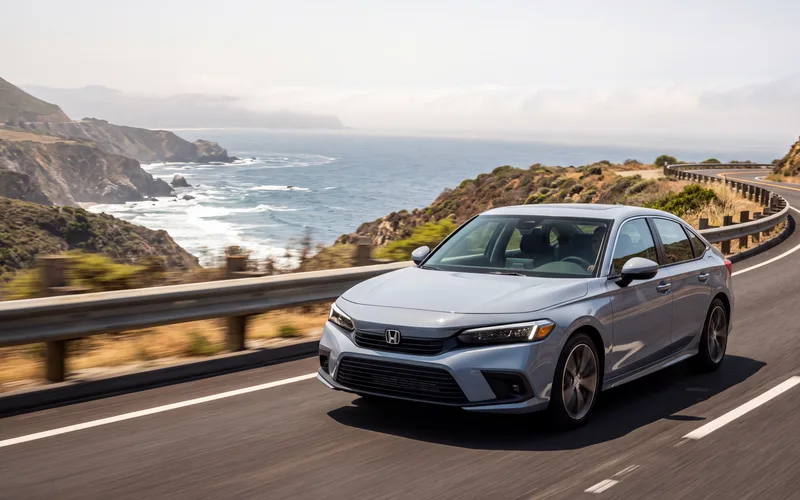 Honda CivicCompact SedanBetter at: Daily comfort & MPG
A Civic Si delivers most of the sport-sedan fun (great manual, sharp chassis) with far better fuel economy and daily comfort for roughly $5K less — the trade is 200 hp front-drive vs. 271 hp AWD.
Compare 2.40C+
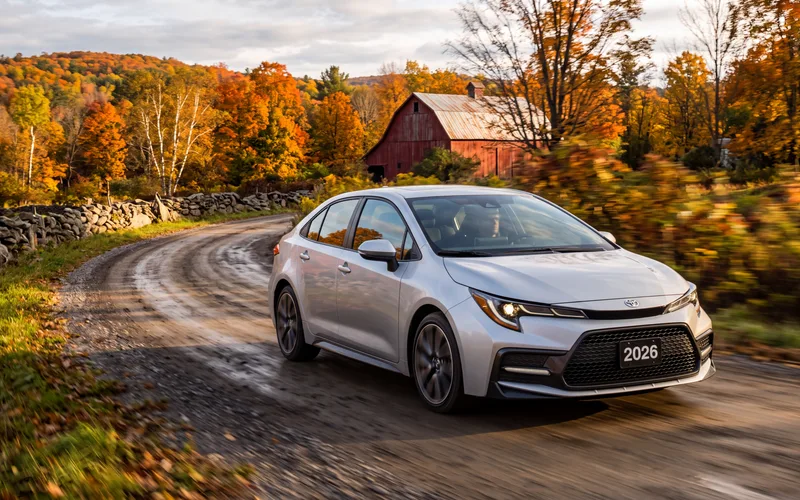 Toyota CorollaCompact SedanBetter at: Performance & reliability
The GR Corolla is the closest spiritual rival — AWD, turbocharged, manual — with more power (300 hp) and Toyota reliability, though it costs more and only comes as a hatchback.
Compare 2.13C
2.13C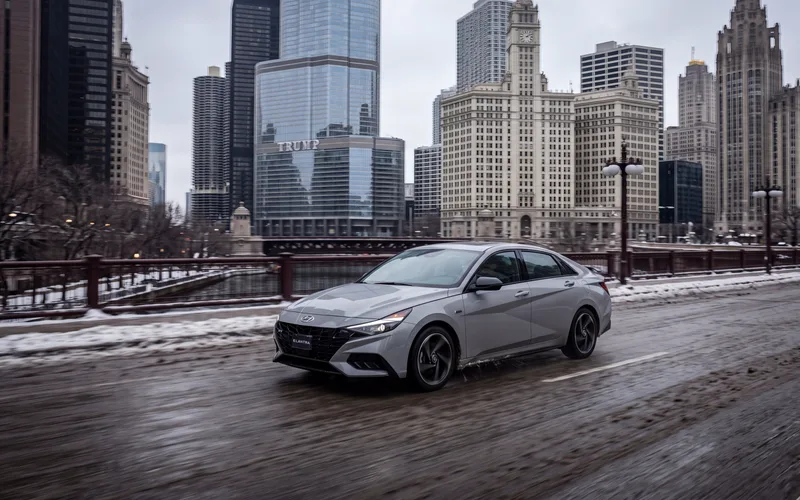 Hyundai ElantraCompact SedanBetter at: Warranty & interior
The Elantra N matches WRX power at a similar price with a nicer interior and a class-leading 10 yr / 100,000 mi powertrain warranty, though buyers give up standard AWD.
CompareHow it's evolved
10 scored model years · 2017–2026
Subject scores by year
Hover or tap a score to see what moved it versus the year before. A corner mark flags a big swing.
| Year | Performance | Efficiency | Safety | Space | Cost | Reliability | Tech | Use-case | Driving | Value |
|---|---|---|---|---|---|---|---|---|---|---|
| 2026 | 54 | 17 | 69 | 56 | 53 | 63 | 53 | 45 | 75 | 68 |
| 2025 | 53 | 18 | 67 | 57 | 49 | 61 | 46 | 42 | 74 | 64 |
| 2024 | 54 | 17 | 66 | 57 | 51 | 59 | 46 | 39 | 74 | 65 |
| 2023 | 53 | 17 | 57 | 58 | 53 | 58 | 46 | 39 | 73 | 65 |
| 2022 | 53 | 17 | 59 | 58 | 54 | 57 | 46 | 40 | 73 | 65 |
| 2021 | 53 | 21 | 42 | 53 | 56 | 62 | 35 | 36 | 70 | 61 |
| 2020 | 53 | 21 | 42 | 53 | 57 | 61 | 35 | 32 | 71 | 64 |
| 2019 | 53 | 21 | 42 | 53 | 57 | 62 | 35 | 32 | 71 | 64 |
| 2018 | 53 | 21 | 42 | 53 | 57 | 62 | 35 | 32 | 71 | 66 |
| 2017 | 52 | 21 | 38 | 52 | 58 | 61 | 28 | 36 | 71 | 67 |
Compare two years
Best fit & conditions
Higher scores mean a better fit for that use case. Learn more about use-case fit →
Subject profile
Academic Probation · NHTSA safety recalls
No NHTSA safety recall is on record for the 2026 Subaru WRX. Other model years of the WRX have 4 — listed below.
4 recalls on other model years of the WRX (2017–2023)
Nov 9, 2023Power train: driveline: driveshaftThe front driveshaft assemblies' outer race may develop cracks and break.
Defect
Subaru of America, Inc. (Subaru) is recalling certain 2024 Crosstrek, Impreza, 2023-2024 Forester, and 2023 WRX vehicles. The front driveshaft assemblies' outer race may develop cracks and break.
Risk
A broken driveshaft can cause a loss of drive power while driving or vehicle rollaway when the vehicle is in park without the parking brake engaged. Either of these scenarios can increase the risk of a crash.
Remedy
Dealers will inspect and replace the left and right front driveshafts as necessary, free of charge. Owner notification letters were mailed January 8, 2024. Owners may contact Subaru's customer service at 1-844-373-6614. Subaru's number for this recall is WRP-23.
NHTSA campaign 23V754000 ↗Manufacturer no. WRP-234,701 vehicles potentially affected (all models in the campaign)Owners notified Jan 8, 2024Filed by Subaru of America, Inc.Filed as WRXJan 23, 2023Equipment: other: owners/service/other manualThe owner's manual may contain incorrect instructions for adjusting the sensitivity of the High Beam Assist function. As such, these vehicles fail to comply with the requirements of Federal Motor Vehicle Safety Standard number 108, "Lamps, Reflective Devices, and Associated Equipment."
Defect
Subaru of America, Inc. (Subaru) is recalling certain 2022 WRX vehicles equipped with the "Eyesight" feature. The owner's manual may contain incorrect instructions for adjusting the sensitivity of the High Beam Assist function. As such, these vehicles fail to comply with the requirements of Federal Motor Vehicle Safety Standard number 108, "Lamps, Reflective Devices, and Associated Equipment."
Risk
Incorrect instructions for adjusting the sensitivity of the High Beam Assist function contained in the owner's manual may cause the lights to not be adjusted as intended, increasing the risk of a crash.
Remedy
Subaru will mail an owner's manual insert containing the correct information, free of charge. Owner notification letters are expected to be mailed February 15, 2023. Owners may contact Subaru customer service at 1-844-373-6614. Subaru's number for this recall is WRA-23.
NHTSA campaign 23V016000 ↗Manufacturer no. WRA-234,615 vehicles potentially affected (all models in the campaign)Owners notified Feb 15, 2023Filed by Subaru of America, Inc.Filed as WRXJul 21, 2022Exterior lighting: back up lights: switchThe backup light switch may corrode and become inoperative, which can result in the backup lights not illuminating and the rearview camera image not displaying when the vehicle is in reverse.
Defect
Subaru of America, Inc. (Subaru) is recalling certain 2015-2021 WRX vehicles. The backup light switch may corrode and become inoperative, which can result in the backup lights not illuminating and the rearview camera image not displaying when the vehicle is in reverse.
Risk
Inoperative backup lights and an inoperative rearview camera can reduce vehicle visibility and driver awareness, increasing the risk of a crash.
Remedy
Dealers will inspect and replace the backup light switch, as necessary, free of charge. Owner notification letters were mailed September 16, 2022. Owners may contact Subaru's customer service at 1-844-373-6614. Subaru's number for this recall is WRE-22.
NHTSA campaign 22V522000 ↗Manufacturer no. WRE-2259,934 vehicles potentially affected (all models in the campaign)Owners notified Sep 16, 2022Filed by Subaru of America, Inc.Filed as WRXJul 29, 2021Fuel system, gasoline: delivery: fuel pumpThe low-pressure fuel pump inside the fuel tank may fail.
Defect
Subaru of America, Inc. (Subaru) is recalling certain 2019-2020 Ascent, 2018 Forester, 2018-2020 Impreza, Legacy, Outback, 2018-2019 BRZ, WRX, and Toyota 86 vehicles. The low-pressure fuel pump inside the fuel tank may fail.
Risk
Fuel pump failure can cause an engine stall while driving, increasing the risk of a crash.
Remedy
Dealers will replace the low-pressure fuel pump, free of charge. Owner notification letters were mailed September 24, 2021. Subaru and Toyota owners may call customer service at 1-844-373-6614. Subaru's number for this recall is WRG-21.
NHTSA campaign 21V587000 ↗Manufacturer no. WRG-21175,968 vehicles potentially affected (all models in the campaign)Owners notified Sep 24, 2021Filed by Subaru of America, Inc.Filed as WRX
Source: NHTSA Office of Defects Investigation recall database, model years 2017–2026. Recalls are listed by model year as the manufacturer filed them; whether a specific car is affected depends on its VIN — check a VIN at nhtsa.gov ↗. NHTSA model names matched to this page: WRX.
Detailed scoring by subject
1Performance & PowertrainGrades below the middle of the scale.1.61D
Every 2026 WRX trim (Base, Premium, Limited, GT, tS, TR) uses the same FA24DIT 2.4L turbocharged boxer-four rated at 271 hp @ 5,600 rpm.
FA24DIT peak torque is 258 lb-ft on a broad 2,000–5,200 rpm plateau across the entire 2026 WRX lineup.
Instrumented tests of the volume Premium/6MT trim cluster around 5.4–5.5 s; the SPT (CVT) is roughly 0.6 s slower.
Reviewers consistently call the FA24 gruff and turbo-laggy off-boost, with characteristic boxer thrum and a narrow sweet spot; strong once on boil but not seamless for a modern turbo four.
The standard 6-speed manual is one of the segment's best — short throws, positive engagement — and defines the volume-trim experience; the optional Subaru Performance Transmission (CVT with 8 preset ratios) is competent with paddles but less liked.
Symmetrical full-time AWD is standard on every WRX trim — a core brand pillar — with a driver-adjustable active center differential (DCCD-style) on GT and tS grades.
Single powertrain across every 2026 trim (2.4L turbo boxer, 271 hp) with no hybrid, PHEV, or EV option — take-it-or-leave-it, and no STI-tier variant either.
2Efficiency & RangeThe WRX's lowest-graded category.0.00F
EPA combined MPG for the volume 6-speed manual trim of the carryover VB-generation WRX. The turbocharged 2.4L flat-four with standard Symmetrical AWD prioritizes performance over efficiency and sits at the bottom of the sedan segment band (22–60 MPG). Replaces placeholder estimate.
EPA city MPG. Turbo boost enrichment and full-time AWD hurt stop-and-go economy; falls below the sedan band floor of 20 MPG. Replaces placeholder estimate.
EPA highway MPG for the volume manual trim. Aerodynamic drag from the wide fender flares and always-engaged AWD keep highway numbers at the sedan-segment floor. Replaces placeholder estimate.
Full-tank cruising range from the 16.6-gallon fuel tank at EPA combined 22 MPG. Modest for a gasoline sedan — the small tank and low mpg push it toward the bottom of the 280–650 mi sedan band. Replaces placeholder estimate.
EPA estimated annual fuel cost given 22 MPG combined and required premium unleaded. Exceeds the sedan band ceiling ($2,800), reflecting the double penalty of low mpg plus the premium-fuel surcharge. Replaces placeholder estimate.
Premium unleaded (91 octane) is required, not merely recommended — the high-compression turbocharged FA24 needs it to hit rated 271 hp and avoid knock. No E85, no diesel, no home-charging option to offset cost. Placeholder overstated flexibility.
3SafetyOne of the WRX's strongest categories.2.65C+
The VB-generation WRX (2022–2026) is a single body/structure with one NHTSA test result, so this value must apply to every year of the generation including 2026. Secondary sources indicate a 5-star overall rating for the generation; primary confirmation against nhtsa.gov was not possible from the scoring environment, hence MEDIUM confidence.
Not an IIHS Top Safety Pick. Current-gen WRX earns Good on moderate overlap and small overlap driver but only Acceptable on the updated side test, with weak headlight ratings on lower trims dragging it out of award contention.
EyeSight (AEB, ACC, lane departure/keep, lane centering) is standard across all 2026 WRX trims including the 6-speed manual, but Blind Spot Detection and Rear Cross-Traffic Alert require Premium trim or higher, leaving the base car short on rear-facing coverage.
Subaru EyeSight has historically posted Superior vehicle-to-vehicle and Advanced pedestrian ratings in IIHS front crash prevention testing; nighttime pedestrian detection is present but less strong than best-in-class systems.
Blind Spot Detection with Lane Change Assist and Rear Cross-Traffic Alert are standard from Premium trim up but unavailable on the base model, and the system is alert-only with no active braking intervention.
EyeSight lane departure warning, lane keep assist, and lane centering function on all trims and generally track well without heavy ping-ponging, though reviewers rate it a step behind Toyota Safety Sense and Honda Sensing in refinement.
Full-speed-range EyeSight adaptive cruise with stop-and-go operates on CVT-equipped Subaru Performance Transmission trims; the manual gets ACC that disengages at low speed. Combined highway assist is competent but not class-leading.
Subaru does not offer any hands-free highway driving system on the WRX or elsewhere in its 2026 lineup — no analog to Ford BlueCruise, GM Super Cruise, or Tesla FSD-Supervised.
IIHS has historically rated WRX headlights only Acceptable or Marginal on volume trims, with Good ratings limited to top trims equipped with the upgraded LED units; this holds for the current generation.
Sedan proportions, relatively low beltline, and reasonable A/C-pillar thickness give the WRX above-average natural sightlines for the segment; hood scoop is visible but not obstructive. No 360-degree camera is offered.
Compact sport sedan packaging leaves a snug rear bench with LATCH anchors set deep in the seat bight; IIHS ease-of-use ratings have been Acceptable rather than Good, and fitting three car seats across is impractical.
4Space & ComfortMid-pack among this car's ten categories.1.77C-
Standard 5-passenger sport sedan layout across all trims.
Non-moonroof trims (Base/Premium/tS) offer 38.8 in; moonroof-equipped Limited/GT drop to 37.0 in.
Generous front legroom for a compact sedan, on par with the Impreza platform mate.
Rear headroom is on the tight side for the segment, though acceptable for a sport-tuned compact sedan.
Rear legroom is below the segment mean; usable for adults short-trip but cramped behind tall front occupants.
Small trunk for a compact sedan; the spare-tire well and rear strut towers eat into usable space. 60/40 folding rear seats help for long items.
Ordinary storage complement — modest center console bin, small door pockets, single glovebox. No standout innovations; the tall portrait touchscreen crowds the dash.
Standard cloth/StarTex seats are firm and heavily bolstered — supportive for spirited driving but flat cushions and limited adjustability make long stints tiring. Optional Recaros on Limited/tS improve support at the cost of ingress.
Sport-tuned suspension is notably firm and busy over broken pavement — a known WRX weakness. tS adds electronically adjustable dampers that soften Comfort mode but the baseline ride is still stiffer than segment norms.
Notable road, tire, and boxer-engine noise at highway speed. Turbo-four intake and exhaust intrude even in cruise; sport tires generate constant roar on coarse pavement.
Heated front seats and dual-zone automatic climate control arrive on Premium and up; heated steering wheel on Limited/GT/tS. No ventilated seats or rear climate on any trim — modest for a Premium price-class sedan.
5Cost of OwnershipGrades below the middle of the scale.1.54D
Base trim MSRP with the standard 6-speed manual, 2.4L turbo boxer, and Symmetrical AWD. Priced above compact-sedan norms because of the standard AWD and 271-hp turbocharged powertrain.
Premium is the best-selling WRX trim, adding 11-speaker Harman Kardon, heated front seats, moonroof, and upgraded upholstery. Well above segment average because the WRX carries turbo AWD hardware plus performance-oriented content.
Turbocharged flat-four with premium-fuel requirement and manual clutch wear push maintenance and repair well above compact-sedan norms; Edmunds/CarEdge class data for the WRX cluster near $6,000–$6,500 over 5 years.
The WRX enjoys unusually strong residuals for a compact sedan thanks to enthusiast demand, the standard manual, and limited direct rivals (Civic Si and Elantra N being the only near-peers). Retention lands well above mainstream sedan norms.
Subaru's standard 3-year/36,000-mile new-vehicle limited warranty — industry-baseline coverage, trailing Hyundai/Kia/Genesis (5 yr) and Mitsubishi (5 yr) meaningfully.
5-year/60,000-mile powertrain coverage matches most mainstream brands but falls short of Hyundai/Kia's 10 yr / 100,000 mi and Mitsubishi's 10 yr / 100,000 mi — especially notable given the WRX's turbocharged, higher-stress drivetrain.
Subaru includes zero complimentary scheduled maintenance visits — unlike Toyota (2 yr/25k ToyotaCare), BMW/Mercedes/Genesis, or even Hyundai (3 yr/36k) — a meaningful gap on a car whose turbo services aren't cheap. Perks are limited to 3 yr / 36k mi roadside assistance during the basic warranty and a short STARLINK Safety Plus trial.
$37,495 volume-trim price minus its estimated resale value after 5 years (58% retained, or about $21,747) leaves about $15,748 in depreciation. Add the projected $6,200 in 5-year maintenance and repairs, and owning this vehicle for 5 years costs about $21,948 in total.
6Reliability & QualityMid-pack among this car's ten categories.2.28C
Consumer Reports has historically rated the current VB-generation WRX as average to below-average for predicted reliability; JDP VDS puts the WRX below the compact-car average. No clear signal it has moved into the top tier for 2026.
Subaru sits mid-pack in recent CR brand reliability rankings (roughly 12th–16th of ~30 brands) and near industry average in J.D. Power VDS — solid but not a top-5 dependability brand like Toyota, Lexus, or Mazda.
The current-generation WRX (2022+) has had a modest recall count including PCV valve replacement and forward-facing camera / EyeSight-related campaigns; typical for the segment, nothing systemic to the powertrain, but not a clean record.
The FA24DIT turbo boxer has been in service since 2019 in the Ascent/Outback XT with a reasonable durability record; the 6MT is well-proven, and the CVT-based Subaru Performance Transmission is newer with limited long-term data. Turbo-boxer heritage carries a lingering (but weaker in FA-series) oil-consumption / head-gasket reputation.
The WRX cabin is widely criticized by reviewers (Car and Driver, MotorTrend, Edmunds) for hard plastics, basic switchgear, and a rental-grade feel that trails German and even mainstream Korean rivals at its $35k+ price point.
Japanese-built (Gunma plant) with generally consistent panel gaps and few systemic assembly complaints, but J.D. Power Initial Quality places Subaru around or slightly below industry average — solid rather than standout.
Subaru operates roughly 630 US dealers — adequate national coverage but concentrated in the Northeast, Pacific Northwest, and Mountain West, with thinner presence in the South and Plains. J.D. Power Customer Service Index typically places Subaru near mainstream-brand average.
WRX has one of the deepest enthusiast aftermarkets of any current car (Cobb, Perrin, IAG, Whiteline, etc.) and shares the FA24 with higher-volume Subaru models, so parts are abundant. Turbo + AWD hardware means major repair costs run higher than a naturally aspirated FWD compact.
7Technology & InfotainmentOne of the WRX's weakest categories.1.54D
Volume Premium trim carries the 11.6-inch portrait Starlink touchscreen shared across the WRX lineup above Base.
The 11.6-inch Starlink system is broadly criticized as slow with cluttered menus, though Subaru preserved physical volume/tuning knobs and dedicated climate shortcut buttons that soften the experience.
Wireless Apple CarPlay and Android Auto are standard on trims equipped with the 11.6-inch screen (Premium and above); Base retains wired-only.
Basic Starlink voice recognition and TomTom-based native navigation are functional but rarely praised; most owners default to phone projection for routing.
Six-speaker base audio is adequate; an 11-speaker Harman Kardon system is available on Limited and standard on GT/tS, delivering a modest but competent upgrade.
The WRX retains twin analog dials flanking a small color multi-information display across every trim — no full digital cluster is offered.
Subaru's OTA scope is limited primarily to map and infotainment content — no whole-vehicle software updates that add drivetrain, ADAS, or feature functionality.
The MySubaru/Starlink app provides remote start, lock/unlock, locate, and vehicle status, but the useful Safety Plus/Concierge features are subscription-gated after the trial and there is no digital key.
Front-row USB-A + USB-C plus rear USB ports on higher trims; wireless phone charging is available on Limited/GT rather than standard, and no household AC outlet.
Proximity key with push-button start is standard from Premium up (Base still uses a traditional key), and remote start is available through the Starlink app rather than the key fob.
Rear camera is standard and front-view camera is available on upper trims, but no 360-degree surround-view camera or automated parking is offered on any WRX trim; rear park sensors are not standard.
The 2026 WRX does not offer a head-up display on any trim.
8Use-Case FitOne of the WRX's weakest categories.1.00D
Tight rear cabin (36.5 in legroom / 36.7 in headroom, below the compact-sedan mean) makes rear-facing seats a squeeze behind tall front occupants, LATCH ease-of-use is rated Acceptable rather than Good, and the sport-firm ride is harder on kids than a Civic or Corolla. 60/40 folding rear seat and standard 5-passenger layout keep it merely workable.
For 2026 Subaru extended EyeSight (AEB, ACC, LKAS, lane centering) to all trims including the 6MT, but the WRX is not an IIHS Top Safety Pick, NHTSA overall is only 4 stars, and Blind Spot Detection / Rear Cross-Traffic Alert still require Premium trim or higher — a gap on the base car families would actually buy on price.
Cramped rear seat, small 12.5 cu ft trunk that also has to swallow the compressor kit, no rear climate vents on any trim, and prominent road/engine noise at highway speed make multi-hour family trips a stretch versus the segment.
The 6MT rewards on a back road but is fatiguing in stop-and-go, the FA24 turbo lags below ~3,000 rpm, and the sport-firm suspension (even in tS Comfort mode) is busy over broken pavement. EyeSight ACC in stop-and-go is only fully available on the CVT-based Subaru Performance Transmission trims — the MT loses low-speed ACC.
EPA mid-19s combined MPG on required premium fuel is well below the compact-sedan average, and sport-sedan insurance rates for a 271-hp AWD turbo further push per-mile costs to the top of the class. Consumables (summer/perf tires on tS/TR) add to running cost.
Compact ~183.8-in length, low nose and beltline, and above-average natural sightlines make it easy to place in tight urban spaces; standard rearview camera helps. No 360-degree camera is offered on any trim and the 37.5 ft turning circle is only average.
Subaru publishes no tow rating for the WRX in the US, there is no bed, and the 12.5 cu ft trunk with a small opening rules out any meaningful load-hauling. Powertrain is tuned for performance, not sustained load duty.
The turbocharged FA24 boxer is more thermally stressed than a Camry/Accord four, sport-firm suspension components see hard duty, and the interior (cloth/StarTex or leather-trim Recaros) is not built for jobsite abuse. No fleet reputation and Subaru turbo boxers historically show more powertrain complaints than the naturally-aspirated Impreza.
No bed, no factory 120V outlet, no factory tie-downs beyond trunk hooks, no washable interior option, and effectively no work-focused upfit ecosystem — the WRX offers virtually nothing for jobsite use.
Firm ride, prominent tire/boxer noise on the highway, and heavily-bolstered sport seats (Recaros especially) hurt seat endurance on 300+ mi legs. Range is roughly 365 mi on the 16.6-gal tank at EPA highway — well below hybrid-sedan tourers — and full-speed ACC is limited to SPT trims.
Symmetrical full-time AWD is standard on every trim — a genuine sport-sedan advantage in snow and gravel that class rivals (Civic Si, Jetta GLI, Elantra N) can't match. But ~5.4 in of ground clearance, no factory roof rails, and no factory tow/hitch limit real outdoor use to trailheads and dirt roads.
60/40 split-folding rear seat helps with long items, but the small 12.5 cu ft trunk, narrow sedan trunk aperture, no roof rails, and no factory hitch make bikes, roof boxes, or bulky camping gear impractical without aftermarket solutions.
9Driving ExperienceThe WRX's best-graded category.3.09B
Standard symmetrical AWD, quick steering rack, and firm sport-tuned suspension give the WRX composed, grippy cornering; the tS trim adds electronically controlled dampers that broaden the envelope. Reviewers rate body control and grip near the top of the sport-compact class, though not as adjustable or sharp as a Civic Type R or Elantra N.
The dual-pinion electric power steering is quick and accurate with a natural on-center feel, but reviewers routinely call out muted feedback compared with hydraulic legends of past WRXs. Weighting is well-judged; road texture through the wheel is limited.
Standard 12.4-in front discs deliver reliable stopping distances near 110 ft from 60 mph with firm pedal feel, though sustained track use produces fade on the base trim. The tS trim's Brembo calipers markedly improve fade resistance and pedal modulation.
The FA24 2.4L turbo boxer (271 hp / 258 lb-ft) has largely tamed earlier turbo lag, pulling cleanly from ~2,500 rpm; the standard 6-speed manual has short, positive throws that make it engaging. The Subaru Performance Transmission (CVT) is competent with paddle-actuated stepped ratios but blunts response versus the manual.
The boxer engine has a distinctive off-beat rumble that enthusiasts love but non-enthusiasts find coarse, with audible turbo whoosh and some highway drone around 75 mph. Vibration through pedals and shifter is present under load — character-rich rather than refined.
Subaru's published curb-to-curb turning circle for the current-gen WRX sedan, carried over for 2026. Competitive for a compact sport sedan on a 105.2-in wheelbase.
Supportive sport seats with power adjustment on higher trims, good outward visibility for a sport sedan, and a proper flat-bottom wheel; however, the portrait 11.6-in touchscreen buries HVAC controls behind menus and cabin materials feel dated versus rivals.
The WRX is one of the few remaining sub-$40K enthusiast sedans with a manual gearbox, standard rally-derived AWD, and a turbo boxer engine — a formula with a dedicated following. All-weather point-and-shoot capability combined with a communicative, playful chassis makes it a genuine 'take the long way home' car.
10Value & Market PositionOne of the WRX's strongest categories.2.60C+
Base WRX (~$34K) bundles 271-hp turbo boxer, standard symmetrical AWD, 6-spd manual and LED headlights, but heated seats, blind-spot monitor, larger 11.6" screen and EyeSight (auto only) all require moving up to Premium or beyond — average base kit for a $35K sport sedan.
Only sub-$40K way to combine turbocharged 271 hp, standard AWD, a proper 6-spd manual and a sedan body — a genuinely unique bundle. GR Corolla (300 hp AWD) and Golf R (315 hp AWD) beat it on raw output per dollar, and Civic Si undercuts the entry price, so it's strong but not the segment's bang-for-buck champ.
Five well-spaced trims (Base, Premium, Limited, GT, tS) from ~$34K to ~$47K, with the returning tS adding STI-tuned electronically adjustable dampers. Manual on Base/Premium/Limited/tS and Subaru Performance Transmission on GT/tS give a real drivetrain choice; the missing hatchback body remains the only meaningful gap.
WRX runs at roughly 20–25K US units/year — leader of the tiny AWD sport-compact niche but well behind mainstream Impreza/Civic volumes, and current VB-generation sales trail the pre-2022 peak. Steady but a small piece of the market.
The WRX badge carries rally heritage, one of the most engaged enthusiast followings in the segment and years of stunt-and-tune culture behind it. Subaru brand adds broader appeal on safety and durability, so the halo is stronger than sales volume implies.
WRX typically transacts at or slightly below MSRP with modest Subaru factory financing/lease offers — better for buyers than perennially marked-up Civic Type R, but no fire-sale incentives on this halo model.
Current VB generation launched for 2022, so 2026 is roughly year five on the same platform. The 2026 return of the tS trim and interior tweaks freshen the lineup without a redesign, leaving it mid-cycle with no imminent replacement announced.
Reviewers consistently praise the WRX's grip, steering and manual gearbox, but it usually finishes behind the Civic Type R, Golf R and GR Corolla in three-way comparisons, and the VB generation has not landed on Car and Driver's 10Best or won NACTOY. Solid but not a benchmark.