
The verdict
A struggling off-road suv, strong on reliability and held back by technology.
The 2018 4Runner is a tough, simple, trail-ready SUV that holds its value better than almost anything on the road: about 74.6% of its price after five years. The trade-off is that it was already an old design in 2018. It has no automatic emergency braking or blind-spot monitoring, no Apple CarPlay or Android Auto, a 5-speed automatic and just 18 MPG combined. Buy it for off-road ability, long-term durability and resale. Look elsewhere if you want modern safety tech or a comfortable daily driver.
Jump to scoresStrengths
- Real off-road hardware
- Built to last
- Exceptional resale value
What holds it back
- No driver-assistance tech at all
- Middling crash scores and poor headlights
- Thirsty at the pump
Top alternatives
Cars shoppers cross-shop with the Toyota 4Runner 1.95C-
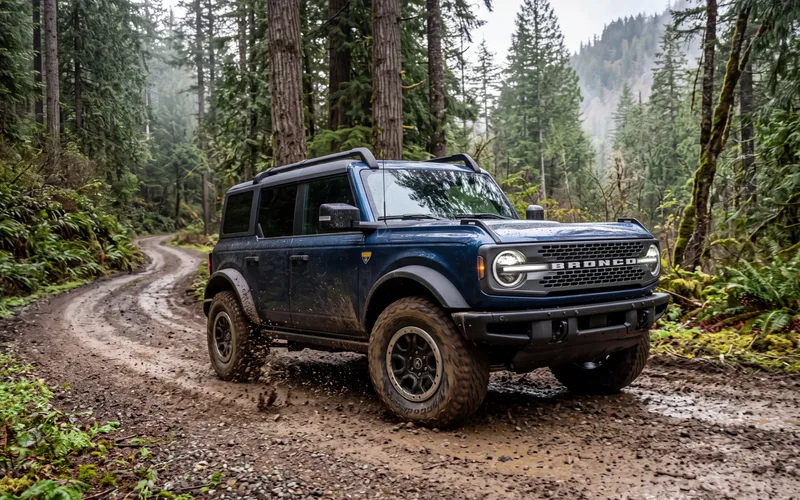 Ford BroncoOff-Road SUVBetter at: Daily comfort
The head-to-head rival: more rear legroom, open-air doors and roof, better on-road manners and actual discounts — worth taking unless you need the 4Runner's 6,000-lb tow rating, hybrid option or resale value.
Compare 2.40C+
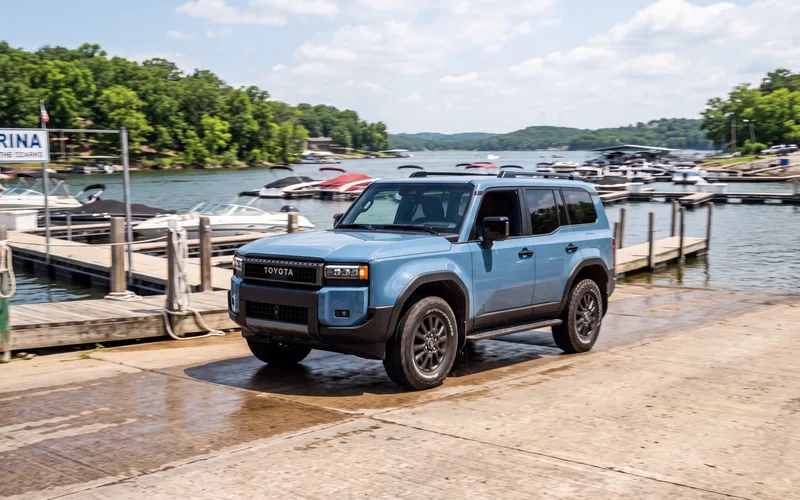 Toyota Land CruiserOff-Road SUVBetter at: Refinement
Sits in the same showroom on the same platform with the hybrid standard and a plusher cabin, overlapping a loaded 4Runner on price — the move if you want one nice off-roader rather than a purpose-built one.
Compare 2.63C+
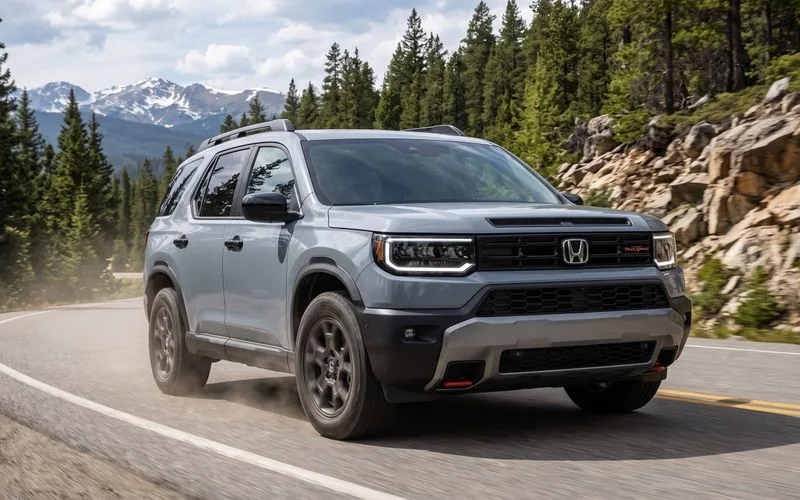 Honda PassportMid-Size SUVBetter at: Everyday livability
Rides, steers and seats people far better for less money while still handling forest roads and snow, giving up low range, the 6,000-lb tow rating and 4Runner-grade resale.
CompareHow it's evolved
10 scored model years · 2017–2026
Subject scores by year
Hover or tap a score to see what moved it versus the year before. A corner mark flags a big swing.
| Year | Performance | Efficiency | Safety | Space | Cost | Reliability | Tech | Use-case | Driving | Value |
|---|---|---|---|---|---|---|---|---|---|---|
| 2026 | 59 | 38 | 65 | 50 | 62 | 75 | 68 | 67 | 65 | 74 |
| 2025 | 58 | 41 | 64 | 47 | 61 | 75 | 68 | 64 | 58 | 76 |
| 2024 | 49 | 25 | 54 | 44 | 61 | 83 | 46 | 61 | 54 | 59 |
| 2023 | 47 | 21 | 52 | 46 | 62 | 83 | 46 | 61 | 53 | 56 |
| 2022 | 47 | 24 | 52 | 46 | 62 | 83 | 46 | 61 | 56 | 56 |
| 2021 | 47 | 31 | 43 | 46 | 62 | 86 | 39 | 60 | 52 | 55 |
| 2020 | 46 | 31 | 43 | 42 | 64 | 82 | 33 | 60 | 54 | 58 |
| 2019 | 46 | 27 | 26 | 44 | 70 | 84 | 25 | 57 | 59 | 53 |
| 2018 | 46 | 25 | 25 | 44 | 70 | 81 | 22 | 56 | 57 | 52 |
| 2017 | 46 | 25 | 25 | 44 | 70 | 86 | 22 | 56 | 59 | 54 |
Compare two years
Best fit & conditions
Higher scores mean a better fit for that use case. Learn more about use-case fit →
Subject profile
Trims & configurations
7 trimsScores above reflect the volume trim. Per-trim specs and scores are rolling out — the full lineup:
Academic Probation · NHTSA safety recalls
Nov 4, 2020Fuel system, gasoline: delivery: fuel pumpThe low-pressure fuel pump inside the fuel tank may fail.
Defect
Toyota Motor Engineering & Manufacturing (Toyota) is recalling certain 2018-2019 4Runner, 2019-2020 Avalon, 2019 Corolla Hatchback, 2017-2019 Highlander, 2018-2020 Camry, 2020 Corolla, 2018-2019 Land Cruiser, 2017-2020 Tacoma, 2019-2020 RAV4, 2019-2020 Sequoia, 2017-2020 Sienna, 2019-2020 Tundra, 2018-2020 Lexus ES350, 2017 Lexus GS200t, 2017-2019 Lexus GS350, 2019 Lexus GS300, 2018-2020 Lexus LC500h, 2019-2020 Lexus LS500, 2018-2019 Lexus GX460, 2017 Lexus IS200t, 2019 Lexus IS300, 2019 Lexus IS350, 2018-2020 Lexus LC500, 2018 Lexus LS500, 2019 Lexus LS500h, 2018-2019 Lexus LX570, 2017 Lexus RC200t, 2019 Lexus RC300, RC350, 2017 and 2019-2020 Lexus RX350, 2018-2020 RX350L, 2019 Lexus UX200, 2018-2019 Lexus NX300 vehicles. The low-pressure fuel pump inside the fuel tank may fail.
Risk
If the fuel pump fails, the engine can stall while driving, increasing the risk of a crash.
Remedy
Toyota will notify owners, and dealers will replace the fuel pump assembly with an improved one, free of charge. Owners of specific models were notified that remedy parts were available starting January 21, 2021. Owners of other models will be notified as remedy parts become available. Remedy parts should be available for all affected vehicles by late March 2021. Owners may contact Toyota customer service at 1-888-270-9371 or Lexus customer service at 1-800-255-3987. Note: This recall is an expansion of recall 20V-012. Toyota's number for this recall is 20TA02. Lexus' number for this recall is 20LA01.
NHTSA campaign 20V682000 ↗Manufacturer no. 20TA02, 20LA011,525,742 vehicles potentially affected (all models in the campaign)Owners notified Jan 21, 2021Filed by Toyota Motor Engineering & ManufacturingFiled as 4RUNNERSep 20, 2019Steering · SuspensionDuring installation, certain steering and suspension components may not have been properly tightened.
Defect
Southeast Toyota Distributors, LLC (SET) is recalling certain 2018-2019 Toyota 4Runner vehicles. During installation, certain steering and suspension components may not have been properly tightened.
Risk
Loose fasteners may cause a loss of vehicle control, or cause an accessory to detach from the vehicle and become a road hazard. Either of these scenarios can increase the risk of a crash or injury.
Remedy
SET will notify owners, and dealers will inspect and re-tighten the steering and suspension fasteners as necessary, free of charge. The recall is expected to begin November 19, 2019. Owners may contact SET customer service at 1-866-405-4226. SET's number for this recall is SET19B.
NHTSA campaign 19V670000 ↗Manufacturer no. SET19B34 vehicles potentially affected (all models in the campaign)Owners notified Oct 28, 2019Filed by Southeast Toyota Distributors, LLCFiled as 4RUNNEROct 25, 2018Equipment: other: labelsThe Gross Vehicle Weight Rating (GVWR) on the certification label may be incorrect, possibly resulting in the vehicle being overloaded. As such, these vehicles fail to comply with the requirements of Federal Motor Vehicle Safety Standard (FMVSS) number 110, "Tire Selection and Rims."
Defect
Southeast Toyota Distributors, LLC (SET) is recalling certain 2017-2019 Toyota 4Runner vehicles that SET modified to be equipped with a TRD wheel package. The Gross Vehicle Weight Rating (GVWR) on the certification label may be incorrect, possibly resulting in the vehicle being overloaded. As such, these vehicles fail to comply with the requirements of Federal Motor Vehicle Safety Standard (FMVSS) number 110, "Tire Selection and Rims."
Risk
An overloaded vehicle can increase the risk of a crash.
Remedy
SET will notify owners and mail them corrected certification labels, free of charge. The recall began November 28, 2018. Owners may contact SET customer service at 1-866-405-4226. SET's number for this recall is SET18A.
NHTSA campaign 18V753000 ↗Manufacturer no. SET18A1,295 vehicles potentially affected (all models in the campaign)Owners notified Nov 28, 2018Filed by Southeast Toyota Distributors, LLCFiled as 4RUNNERDec 20, 2017Equipment: other: labelsThese vehicles may have incorrect load carrying capacity modification labels. As such, these vehicles fail to comply with the requirements of Federal Motor Vehicle Safety Standard (FMVSS) number 110, "Tire Selection and Rims."
Defect
Toyota Motor Engineering & Manufacturing (Toyota) is recalling certain 2017-2018 Toyota 4Runner and Tundra, 2018 Toyota Highlander, RAV4 and Lexus GX460 and 2017 Toyota Sienna and Tacoma vehicles. These vehicles may have incorrect load carrying capacity modification labels. As such, these vehicles fail to comply with the requirements of Federal Motor Vehicle Safety Standard (FMVSS) number 110, "Tire Selection and Rims."
Risk
An incorrect load information label can result in the operator overloading the vehicle and increasing the risk of a crash.
Remedy
Toyota will notify owners and provide them with corrected labels, free of charge. The recall began on January 23, 2018. Owners may contact Toyota customer service at 1-800-331-4331. Toyota's numbers for this recall are H0Z for Toyota vehicles, and HLF for Lexus vehicles.
NHTSA campaign 17V831000 ↗Manufacturer no. Toyota H0Z Lexus HLF649 vehicles potentially affected (all models in the campaign)Owners notified Jan 23, 2018Filed by Toyota Motor Engineering & ManufacturingFiled as 4RUNNERNov 29, 2017Structure: body: hoodThe U-nut that secures the overlay grille may fracture, allowing the Billet Grille Overlay to detach from the vehicle.
Defect
Southeast Toyota Distributors, LLC (SET) is recalling certain 2015-2018 Toyota 4Runner vehicles equipped with an accessory Billet Grille Overlay installed by SET or provided by SET and installed by SET dealers. The U-nut that secures the overlay grille may fracture, allowing the Billet Grille Overlay to detach from the vehicle.
Risk
If the Billet Grille Overlay detaches while driving, it can become a road hazard, increasing the risk of a crash.
Remedy
SET will notify owners, and dealers will replace the securing U-nuts with upgraded hardware, free of charge. The recall is expected to begin January 26, 2018. Owners may contact SET customer service at 1-866-405-4226. SET's number for this recall is SET17C.
NHTSA campaign 17V763000 ↗Manufacturer no. SET17C431 vehicles potentially affected (all models in the campaign)Owners notified Jan 17, 2018Filed by Southeast Toyota Distributors, LLCFiled as 4RUNNER
11 recalls on other model years of the 4Runner (2017, 2019–2026)
Sep 2, 2026Equipment: other: labelsThe load carrying capacity modification label may display inaccurate added weight values. As such, these vehicles fail to comply with the requirements of Federal Motor Vehicle Safety Standard number 110, "Tire Selection and Rims."
Defect
Toyota Motor Engineering & Manufacturing (Toyota) is recalling certain 2024 Toyota Tacoma Hybrid, 2025 Tundra Hybrid, Tundra, 2026 RAV4 Hybrid, 4Runner i-Force Max Hybrid, and 4Runner vehicles. The load carrying capacity modification label may display inaccurate added weight values. As such, these vehicles fail to comply with the requirements of Federal Motor Vehicle Safety Standard number 110, "Tire Selection and Rims."
Risk
A vehicle with an incorrect maximum capacity weight value may be overloaded, increasing the risk of a crash.
Remedy
Dealers will replace the load carrying capacity modification label, free of charge. Owner notification letters are expected to be mailed October 18, 2026. Owners may contact Toyota's customer service at 1-800-331-4331. Toyota's number for this recall is 26TA18.
NHTSA campaign 26V571000 ↗Manufacturer no. 26TA18135 vehicles potentially affected (all models in the campaign)Filed by Toyota Motor Engineering & ManufacturingFiled as 4RUNNER, 4RUNNER I-FORCE MAX HYBRIDMay 4, 2026Equipment: other: labelsThe load carrying capacity modification label states the incorrect load carrying capacity. As such, these vehicles fail to comply with the requirements of Federal Motor Vehicle Safety Standard number 110, "Tire Selection and Rims."
Defect
Gulf States Toyota, Inc. (GST) is recalling certain 2026 4Runner vehicles. The load carrying capacity modification label states the incorrect load carrying capacity. As such, these vehicles fail to comply with the requirements of Federal Motor Vehicle Safety Standard number 110, "Tire Selection and Rims."
Risk
An incorrect load carrying capacity label may lead to improper loading of the vehicle, increasing the risk of a crash.
Remedy
GST will mail a new modification label to owners, free of charge. Owner notification letters were mailed June 18, 2026. Owners may contact GST customer service at 1-800-444-1074. GST's number for this recall is 26R1.
NHTSA campaign 26V282000 ↗Manufacturer no. 26R194 vehicles potentially affected (all models in the campaign)Owners notified Jun 18, 2026Filed by Gulf States Toyota, Inc.Filed as 4RUNNERSep 11, 2025Electrical system: instrument cluster/panelDue to an error in the instrument panel software at vehicle startup, the instrument panel may fail to display vehicle speed, brake system, and tire pressure warning lights.
Defect
Toyota Motor Engineering & Manufacturing (Toyota) is recalling certain 2023-2024 Toyota Venza, 2023-2025 RAV4 Prime, RAV4, Highlander, GR Corolla, Crown, 2024-2025 Lexus TX, LS, Toyota Tacoma, Grand Highlander, and 2025 Lexus RX, Toyota Crown Signia, Camry, RAV 4 Plug-in Hybrid (PHEV), and 4 Runner vehicles. Due to an error in the instrument panel software at vehicle startup, the instrument panel may fail to display vehicle speed, brake system, and tire pressure warning lights.
Risk
An instrument panel display that does not show critical information can increase the risk of a crash or injury.
Remedy
Dealers will update the instrument panel software over-the-air (OTA) for non-PHEV vehicles, free of charge. For PHEV vehicles, dealers will inspect the instrument panel assembly, and either replace it, or update the software, free of charge. Owner letters were mailed December 5, 2025. Additional letters will be sent, anticipated in May 2026. This is a phased recall. Owners may contact Toyota's customer service at 1-800-331-4331. Toyota's numbers for this recall are 25TB08 and 25TA08. Lexus' numbers for this recall are 25LB05 and 25LA05.
NHTSA campaign 25V595000 ↗Manufacturer no. See Part 573 Report591,377 vehicles potentially affected (all models in the campaign)Owners notified Dec 5, 2025Filed by Toyota Motor Engineering & ManufacturingFiled as 4RUNNERJul 23, 2024Equipment: other: labelsThe load carrying capacity modification label may display inaccurate added weight values. As such, these vehicles fail to comply with the requirements of Federal Motor Vehicle Safety Standard number 110, "Tire Selection and Rims."
Defect
Gulf States Toyota, Inc. (GST) is recalling certain Toyota 2023 GR Supra, 2024 4 Runner, Corolla, Grand Highlander, Grand Highlander Hybrid, Land Cruiser Hybrid, Tacoma, Tacoma Hybrid, 2023-2024 BZ4X, Corolla Cross Hybrid, GR Corolla, GR86, Highlander, Highlander Hybrid, Prius, Prius Prime, Sequoia Hybrid, Tundra, Tundra Hybrid, Venza Hybrid, 2023-2025 Crown, and 2025 Camry Hybrid vehicles equipped with GST accessories. The load carrying capacity modification label may display inaccurate added weight values. As such, these vehicles fail to comply with the requirements of Federal Motor Vehicle Safety Standard number 110, "Tire Selection and Rims."
Risk
A vehicle with an incorrect maximum capacity weight value may be overloaded, which can increase the risk of a crash.
Remedy
GST will mail new labels to owners, free of charge. Owner notification letters were mailed September 16, 2024. Owners may contact GST customer service at 1-800-444-1074. GST's number for this recall is 24R2.
NHTSA campaign 24V548000 ↗Manufacturer no. 24R233,848 vehicles potentially affected (all models in the campaign)Owners notified Sep 16, 2024Filed by Gulf States Toyota, Inc.Filed as 4RUNNEROct 12, 2023Equipment: other: labelsThe load carrying capacity modification label states the incorrect load carrying capacity, which can result in an overloaded vehicle. As such, these vehicles fail to comply with the requirements of Federal Motor Vehicle Safety Standard number 110, "Tire Selection and Rims."
Defect
Southeast Toyota Distributors, LLC (SET) is recalling certain 2023 Toyota 4Runner vehicles. The load carrying capacity modification label states the incorrect load carrying capacity, which can result in an overloaded vehicle. As such, these vehicles fail to comply with the requirements of Federal Motor Vehicle Safety Standard number 110, "Tire Selection and Rims."
Risk
An overloaded vehicle increases the risk of a crash.
Remedy
Southeast Toyota Distributors, LLC will mail a new modified label, free of charge. Owner notification letters were mailed December 1, 2023. Owners may contact SET's customer service at 1-866-405-4226. SET's number for this recall is SET23A.
NHTSA campaign 23V680000 ↗Manufacturer no. SET23A13 vehicles potentially affected (all models in the campaign)Owners notified Dec 1, 2023Filed by Southeast Toyota Distributors, LLCFiled as 4RUNNERJul 6, 2022Equipment: other: labelsThe load carrying capacity modification labels are incorrect. As such, these vehicles fail to comply with the requirements of Federal Motor Vehicle Safety Standard number 110, "Tire Selection and Rims."
Defect
Southeast Toyota Distributors, LLC (SET) is recalling certain 2020-2022 4Runner vehicles equipped with 20-inch Black Gunner Wheels. The load carrying capacity modification labels are incorrect. As such, these vehicles fail to comply with the requirements of Federal Motor Vehicle Safety Standard number 110, "Tire Selection and Rims."
Risk
An incorrect label may lead to unintentionally overloading the vehicle, increasing the risk of a crash.
Remedy
SET will mail replacement labels to owners, free of charge. Owner notification letters are expected to be mailed September 4, 2022. Owners may contact SET's customer service at 954-429-2000. SET's number for this recall is SET22A.
NHTSA campaign 22V480000 ↗Manufacturer no. SET22A280 vehicles potentially affected (all models in the campaign)Owners notified Sep 1, 2022Filed by Southeast Toyota Distributors, LLCFiled as 4RUNNERMay 6, 2022Equipment: other: labelsThe load carrying capacity modification labels may not be permanent and can fade, becoming illegible. As such, these vehicles fail to comply with the requirements of Federal Motor Vehicle Safety Standard number 110, "Tire Selection and Rims."
Defect
Gulf States Toyota, Inc. (GST) is recalling certain 2022 4Runner, Tacoma, Highlander, and Highlander Hybrid vehicles. The load carrying capacity modification labels may not be permanent and can fade, becoming illegible. As such, these vehicles fail to comply with the requirements of Federal Motor Vehicle Safety Standard number 110, "Tire Selection and Rims."
Risk
An illegible label may allow the vehicle to be overloaded, increasing the risk of a crash.
Remedy
GST will notify owners by mail, including a replacement load carrying capacity modification label for their vehicle and detailed replacement instructions, free of charge. Owner notification letters were mailed June 30, 2022. Owners may contact GST customer service at 1-800-444-1074. GST's number for this recall is 22R1.
NHTSA campaign 22V310000 ↗Manufacturer no. 22R1661 vehicles potentially affected (all models in the campaign)Owners notified Jun 30, 2022Filed by Gulf States Toyota, Inc.Filed as 4RUNNERDec 13, 2021Exterior lighting: headlightsThe driver's side high beam may be inoperable after the installation of accessory fog lights. As such, these vehicles fail to comply with the requirements of Federal Motor Vehicle Safety Standard number 108, "Lamps, Reflective Devices, and Associated Equipment."
Defect
Southeast Toyota Distributors, LLC (SET) is recalling certain 2022 Toyota 4Runner vehicles. The driver's side high beam may be inoperable after the installation of accessory fog lights. As such, these vehicles fail to comply with the requirements of Federal Motor Vehicle Safety Standard number 108, "Lamps, Reflective Devices, and Associated Equipment."
Risk
An inoperable driver's side high beam may reduce visibility, increasing the risk of a crash.
Remedy
Dealers will install an updated wiring harness, free of charge. Owner notification letters were mailed February 11, 2022. Owners may contact SET customer service at 1-866-405-4226. SET's number for this recall is SET21A.
NHTSA campaign 21V963000 ↗Manufacturer no. SET21A78 vehicles potentially affected (all models in the campaign)Owners notified Feb 11, 2022Filed by Southeast Toyota Distributors, LLCFiled as 4RUNNERMar 27, 2019Equipment: other: labelsThe text on the load capacity label may become illegible. As such, these vehicles fail to comply with the requirements of Federal Motor Vehicle Safety Standard (FMVSS) number 110, "Tire Selection and Rims."
Defect
Gulf States Toyota (GST) is recalling certain 2019 C-HR, 4Runner, Avalon, Avalon Hybrid, Camry, Camry Hybrid, Highlander, Land Cruiser, Prius, RAV4, Sequoia, Tacoma, Sienna, Tundra and Yaris vehicles. The text on the load capacity label may become illegible. As such, these vehicles fail to comply with the requirements of Federal Motor Vehicle Safety Standard (FMVSS) number 110, "Tire Selection and Rims."
Risk
If the driver cannot read the label, they may unknowingly overload the vehicle, increasing the risk of a crash.
Remedy
GST will notify owners, and dealers will provide corrected load carrying capacity modification labels, free of charge. The recall began May 24, 2019. Owners may contact GST customer service at 1-800-444-1074. GST's number for this recall is 19R1.
NHTSA campaign 19V244000 ↗Manufacturer no. 19R13,634 vehicles potentially affected (all models in the campaign)Owners notified May 24, 2019Filed by Gulf States Toyota, Inc.Filed as 4RUNNERMay 2, 2017Tires: temporary/emergency spare tireThe spare tire air pressure was not adjusted to the proper pressure as stated on the Tire Pressure Label.
Defect
Gulf States Toyota, Inc. (Gulf States) is recalling certain 2017 4Runner , 86, Avalon, Camry, Camry Hybrid, Corolla, Corolla iM, Highlander, Highlander Hybrid, Prius, Prius C, RAV4, RAV4 Hybrid, Sienna and Yaris vehicles. The spare tire air pressure was not adjusted to the proper pressure as stated on the Tire Pressure Label.
Risk
A spare tire that is not inflated to the proper value may not perform as intended, increasing the risk of a crash.
Remedy
Gulf States will notify owners, and dealers will inspect the spare tires, adjusting their pressure as necessary, free of charge. The recall began June 15, 2017. Owners may contact Gulf States customer service at 1-800-444-1074. Toyota's number for this recall is 17R2.
NHTSA campaign 17V295000 ↗Manufacturer no. 17R2409 vehicles potentially affected (all models in the campaign)Owners notified Jun 15, 2017Filed by Gulf States Toyota, Inc.Filed as 4RUNNERMay 1, 2017EquipmentThe fasteners for the aftermarket roof rack may have been improperly tightened.
Defect
Gulf States Toyota, Inc (Gulf States) is recalling certain 2016-2017 4Runner vehicles equipped with the TFORCE accessory package. The fasteners for the aftermarket roof rack may have been improperly tightened.
Risk
If the roof rack fasteners loosen, the roof rack may detach from the vehicle, increasing the risk of a crash.
Remedy
Gulf States will notify owners, and dealers will inspect and, as necessary, tighten the roof rack fasteners, free of charge. The recall began June 15, 2017. Owners may contact Gulf States customer service at 1-800-444-1074. Gulf States' number for this recall is 17R1.
NHTSA campaign 17V291000 ↗Manufacturer no. 17R11,019 vehicles potentially affected (all models in the campaign)Owners notified Jun 15, 2017Filed by Gulf States Toyota, Inc.Filed as 4RUNNER
Source: NHTSA Office of Defects Investigation recall database, model years 2017–2026. Recalls are listed by model year as the manufacturer filed them; whether a specific car is affected depends on its VIN — check a VIN at nhtsa.gov ↗. NHTSA model names matched to this page: 4RUNNER, 4RUNNER I-FORCE MAX HYBRID.
Detailed scoring by subject
1Performance & PowertrainGrades below the middle of the scale.1.07D
2018 is a carry-over year in the fifth generation (2010–2024): every trim — SR5, SR5 Premium, TRD Off-Road, TRD Off-Road Premium, Limited and TRD Pro — uses the same naturally aspirated 4.0L V6 rated 270 hp at 5,600 rpm, so the volume SR5 and the range max are identical. Modest for the SUV band.
Peak torque of 278 lb-ft arrives high in the rev range at 4,400 rpm; adequate for trail crawling and mid-weight towing but mid-pack against turbocharged rivals.
Toyota publishes no official figure; instrumented tests of the unchanged fifth-gen V6/5-speed 4Runner land around 7.5–7.9 s, held back by a ~4,400–4,800 lb body-on-frame curb weight and short gear count.
The naturally aspirated V6 delivers linear, lag-free throttle response and strong low-speed control, but turns coarse and loud when worked hard and feels dated next to newer turbo and hybrid powertrains. Dependable rather than polished.
The 5-speed automatic is a generation behind rivals' 8- and 9-speeds; reviewers note hunting on grades and slow, sometimes clunky part-throttle downshifts, though it is smooth at steady cruise.
A 5,000 lb rating with standard tow hitch receiver and wiring harness is competitive for a mid-size body-on-frame SUV and well ahead of the Wrangler's 3,500 lbs, but short of full-size SUVs.
Part-time 4WD with a two-speed transfer case (SR5, TRD Off-Road, TRD Pro) and full-time 4WD with a locking Torsen center differential (Limited), with an electronic locking rear diff, Multi-Terrain Select and CRAWL Control on TRD grades. Held below the top band only because SR5 and Limited are also sold as RWD.
Genuine off-road credibility on a ladder frame: the 2018 TRD Pro adds TRD-tuned Bilstein remote-reservoir rear shocks, TRD front springs, a TRD front skid plate and all-terrain tires, while the TRD Off-Road brings a locking rear diff, CRAWL Control, Multi-Terrain Select and available KDSS. Roughly 9.6 in ground clearance; a notch below the Wrangler.
Single powertrain: every 2018 4Runner is the 4.0L V6 with a 5-speed automatic; no turbo, hybrid or plug-in option existed until the 2025 sixth-generation i-FORCE MAX.
2Efficiency & RangeOne of the 4Runner's weakest categories.0.00F
The carry-over 4.0L V6/5-speed lands at the floor of the gas SUV band, typical of a heavy body-on-frame off-roader of this era.
City economy near the bottom of the SUV band, reflecting the 4Runner's weight and short gearing.
Highway economy sits at the bottom of the SUV band — boxy aerodynamics and only five gears.
The large 23-gallon tank offsets poor economy, giving mid-pack range for the SUV band.
EPA's current annual fuel-cost estimate puts the 4Runner past the top of the SUV cost band, a direct consequence of its 18 MPG combined rating.
Runs on regular unleaded across every trim; no premium-fuel penalty.
3SafetyOne of the 4Runner's weakest categories.0.00F
NHTSA rates the 2018 4Runner 4 stars overall, held back by a 4-star frontal result and a 3-star rollover rating typical of a tall body-on-frame SUV.
Good in moderate overlap, side, roof strength and head restraints, but a Marginal driver-side small overlap result keeps the aging fifth-generation body out of any IIHS award for 2018.
The 2018 4Runner offers no AEB, lane departure, adaptive cruise, blind-spot or rear cross-traffic system on any trim; Toyota Safety Sense P did not arrive until the 2020 model year.
No pre-collision or automatic emergency braking system is fitted on any 2018 trim, so there is no front crash prevention capability or IIHS rating.
Blind-spot monitoring and rear cross-traffic alert are unavailable across the 2018 lineup; Toyota did not add BSM/RCTA to the 4Runner until MY2022.
No lane departure warning or lane-keeping assistance of any kind exists on the 2018 4Runner; Lane Departure Alert arrived with the 2020 TSS-P update.
Only conventional fixed-speed cruise control is offered on the 2018 4Runner; radar adaptive cruise arrived with TSS-P for 2020.
No hands-free driving system is available on the 2018 4Runner, which lacks even adaptive cruise control.
IIHS rated the headlights Poor on every 2018 trim (SR5 through TRD Pro and Limited), with inadequate low-beam visibility on all curve tests plus some glare, and no auto high beams.
The tall, upright seating position and boxy greenhouse give good forward and side sightlines, but thick rear pillars create typical SUV blind zones with only a backup camera and no BSM or 360 view to compensate.
The roomy second row and wide rear doors make fitting seats workable and reviewers fit three across, but IIHS rates the LATCH hardware Marginal, with lower anchors set deep in the seat bight and only two full LATCH positions.
4Space & ComfortGrades near the bottom of the scale.0.94F
The volume SR5 is a 5-passenger configuration; a third row is an extra-cost option only on SR5 and Limited for 2018.
The tall, boxy body-on-frame cabin gives mid-pack front headroom for the SUV band. 2018 has no dimensional changes within the fifth generation.
Front legroom sits in the lower half of the SUV band, reflecting the 2010-era fifth-generation packaging.
The square roofline carries into the second row, so rear headroom is above average for the segment.
Second-row legroom is among the tightest in the SUV class, a long-standing 4Runner weakness against newer unibody rivals. The 16-degree recline helps comfort but adds no space.
The optional third row (SR5 and Limited only, not offered on TRD grades) is a low, knees-up seat for small children on short trips, with only about 9 cu ft of cargo behind it. The volume SR5 has no third row.
Cargo space behind the second row is in the lower-middle of the SUV band.
The tall, square cargo bay gives strong maximum volume for the segment.
Small-item storage in the cabin is thin beyond a roomy center console. The optional 440-lb pull-out cargo deck, standard power roll-down rear window and standard 120V outlet are genuinely useful extras.
Front seats are wide and well cushioned for long drives, and the reclining second row is comfortable, though legroom is short. Fabric is standard on SR5; SoftTex/leather come on Premium grades and Limited.
Body-on-frame construction and a solid rear axle make the ride bouncy on broken pavement, with noticeable body motion. The X-REAS damping on the Limited softens it but does not change the truck character.
Road noise is reasonably controlled, but the boxy body brings noticeable wind noise at highway speed, and the V6 gets loud at high rpm.
Heated front seats start at SR5 Premium, and dual-zone automatic climate is limited to the Limited. No ventilated seats, heated wheel or remote start are offered, and the volume SR5 has none of these.
5Cost of OwnershipOne of the 4Runner's strongest categories.2.74B-
The SR5 4x2 opened the 2018 4Runner's six-grade lineup at $34,810 before destination; 4x4 SR5 added about $1,875. 2018 was a carry-over year of the 2010-launched fifth generation, with only new Wilderness and TRD Enhancement packages added.
TRD Off-Road Premium 4x4 is the representative volume pick for the off-road-focused 4Runner buyer (locking rear diff, Multi-Terrain Select, CRAWL Control, SofTex seats, navigation) — consistent with the trim used for adjacent model years.
Same 4.0L V6 / 5-speed body-on-frame hardware as 2019; servicing costs more than a crossover, but Toyota's durability keeps unscheduled repairs low, and ToyotaCare covers the first 2 yr/25k mi of scheduled maintenance.
The 4Runner is a perennial industry-leading resale performer thanks to body-on-frame durability and off-road cachet; well above the mid-size SUV norm and above the band's 70% ceiling.
Standard Toyota bumper-to-bumper coverage — at the bottom of the band versus Hyundai/Kia 5-year plans.
Standard Toyota powertrain coverage plus 5-yr/unlimited-mile corrosion perforation; short end of the band versus 10-year rivals.
ToyotaCare gives 2 years/25,000 miles of scheduled maintenance and 24-hour roadside assistance — solid basics but shorter than 3-year plans from some rivals, with no connected-service or charging perks of note.
$40,990 volume-trim price minus its estimated resale value after 5 years (74.6% retained, or about $30,579) leaves about $10,411 in depreciation. Add the projected $5,200 in 5-year maintenance and repairs, and owning this vehicle for 5 years costs about $15,611 in total.
6Reliability & QualityThe 4Runner's best-graded category.3.48B+
The 2018 4Runner is a carry-over year of the fifth generation (2010–2024) on the unchanged 1GR-FE V6/5-speed drivetrain, yet Consumer Reports' predicted reliability for the 2018 model came in at only 2/5 — an outlier against the nameplate's otherwise top-tier CR history and later 'most reliable' standing. Owner-survey sources since then rate the year well, so the signals are mixed rather than poor, keeping this in the upper part of the average band rather than top tier.
Toyota sat at the top of mainstream brands in the 2018 J.D. Power VDS, just behind luxury leaders Lexus and Porsche, and Toyota Motor Corp. took the most segment awards of any manufacturer — a consistent top-5 multi-year dependability standing.
Five NHTSA recalls touch the 2018 4Runner; the substantive one is the multi-model Denso low-pressure fuel pump campaign (engine stall risk), while the rest are small-population fastener and certification/load-label campaigns. Typical activity with one real safety-of-motion issue sourced from a shared supplier part, not a 4Runner-specific design flaw.
The 1GR-FE 4.0L V6 and 5-speed automatic (A750) carried into 2018 unchanged; the combination is one of the most proven gas powertrains on sale, with a well-documented record of 250,000–300,000-mile examples. The fuel pump recall concerns a shared supplier component, not the engine or transmission.
The cabin is rugged and functional but largely unchanged since 2010 (2014 refresh aside), with plentiful hard plastics; reviewers rate it behind newer midsize SUV rivals on perceived richness for a premium-priced vehicle.
A mature, well-sorted production line nine model years into the generation yields tight, consistent assembly with few owner-reported rattles or misalignment complaints.
Toyota operates one of the largest, densest dealer networks in the US with consistently solid service satisfaction.
Abundant OEM and aftermarket parts — the 4Runner has one of the largest off-road aftermarket ecosystems (TRD, ARB, independents) — and the simple, long-running platform keeps repair costs at or below segment average.
7Technology & InfotainmentThe 4Runner's lowest-graded category.0.00F
Every 2018 4Runner uses a 6.1-inch Entune touchscreen, well below the segment band. No larger screen was offered on any trim.
The small, dated Entune unit is simple, and the physical knobs help, but the graphics, response and app-based features were already behind rivals by 2018.
Neither Apple CarPlay nor Android Auto was offered in any form on the 2018 4Runner. Wired projection arrived for MY2020.
The volume SR5 relies on the phone-tethered Connected Navigation (Scout GPS) app. Built-in navigation and Siri Eyes Free start at SR5 Premium, and basic voice commands are dated.
The 8-speaker base system is adequate. The Limited's 15-speaker JBL GreenEdge system with a subwoofer is a real upgrade, but only on the top trim.
All trims use analog gauges with a small multi-information display. No digital cluster was offered.
The 2018 Entune head units have no over-the-air software or vehicle updates. Map and software updates go through a dealer or USB.
There is no remote start, lock or locate app. Entune App Suite only brings phone-based apps to the screen on upper trims, and Safety Connect telematics (crash notification, stolen-vehicle locator) is limited to the Limited.
USB is limited to a single USB-A media port up front, with no USB-C and no wireless charging. A standard 120V outlet and two 12V outlets partly make up for it.
Smart Key with push-button start is Limited-only. The volume SR5 and TRD grades use a conventional key, and no remote start or power liftgate is offered.
A backup camera is standard, and front/rear sonar is Limited-only. There is no surround view, though upper TRD grades offer a Multi-Terrain Monitor for off-road use.
No head-up display was offered on any 2018 4Runner trim.
8Use-Case FitMid-pack among this car's ten categories.1.77C-
Wide rear doors help, but the tall step-in, tight second-row legroom and LATCH anchors that need digging for make daily kid duty workable rather than easy. The optional third row is kids-only.
There is no automatic emergency braking, lane departure warning, adaptive cruise or blind-spot monitoring on any 2018 trim. Crash results are mixed (IIHS small overlap Marginal, headlights Poor, NHTSA 4-star overall with 3-star rollover).
The reclining second row, 47 cu ft of luggage space and a household outlet help on trips, but tight rear legroom, no rear climate controls and a bouncy ride limit multi-hour comfort.
The commanding view and simple controls are pluses, but slow steering, the dated 5-speed automatic and truck-like ride make it more tiring in traffic than crossover rivals.
At an EPA 18 mpg combined, per-mile fuel costs are high for a midsize SUV, though it runs on regular fuel and consumables are cheap.
It is tall and about 190 in long, with only a backup camera on most trims (sonar is Limited-only), but its 37.4-ft turning circle and good outward sightlines keep it manageable.
A 5,000-lb tow rating and a robust V6/body-on-frame drivetrain handle light trailer and gear work, but there is no bed and the capacity is modest next to pickups.
The proven body-on-frame chassis and long-running 4.0L V6/5-speed drivetrain have an outstanding long-term durability reputation.
A standard 120V outlet, a power roll-down rear window, the 440-lb pull-out cargo deck and a deep rack/armor aftermarket support light work use, but there is no bed.
The 23-gallon tank gives roughly 400+ miles of highway range and the seats are comfortable, but with no adaptive cruise or lane assist, plus wind noise and a bouncy ride, long stints are tiring.
Off-road ability is the 4Runner's defining strength: part-time 4WD with low range, a locking rear diff, Crawl Control and Multi-Terrain Select on TRD grades, available KDSS, and 9.6 in of ground clearance.
A fold-flat second row (89.7 cu ft max), the available pull-out cargo deck, standard roof rails, a roll-down rear glass and an integrated hitch make bulky gear easy to carry.
9Driving ExperienceOne of the 4Runner's strongest categories.1.82C-
Body-on-frame construction with a solid rear axle brings pronounced body roll and an unsettled feel through corners. It is secure but clumsy on pavement.
Steering is slow and vague on-center, with little road feedback, though it is predictable at low speeds and off-road.
Stopping power is adequate for the class, but the soft pedal and noticeable nose-dive under hard braking reflect the heavy, tall chassis.
The 270-hp 4.0L V6 gives smooth, predictable low-end response, and the 5-speed shifts smoothly, though it has few ratios and kickdown can be slow.
It is quiet at a steady cruise, but the V6 gets coarse and loud near redline. Audible but not intrusive overall.
A 37.4-ft turning diameter is mid-pack for an SUV of this size.
The tall command seating, good outward visibility and large, glove-friendly knobs are strengths. A tilt-only wheel (no telescope) and the high step-in are minor drawbacks.
It has real character and is rewarding off-road, which enthusiasts love, but on pavement it drives like a dated truck.
10Value & Market PositionGrades below the middle of the scale.1.51D
The 2018 SR5 brings 17-in alloys, rear-seat A/C vents, the power rear window and a backup camera, but no standard driver-assist suite (Toyota Safety Sense P didn't arrive until MY2020), no Apple CarPlay/Android Auto, a small 6.1-in Entune screen and cloth seats — sparse against 2018 rivals that already made AEB and smartphone mirroring standard.
Buyers pay for genuine off-road hardware, durability and resale rather than content or efficiency: a dated 5-speed V6 rated 17 mpg combined and missing active-safety tech at ~$41k for the volume trim. For the off-road buyer the TRD Off-Road's locker and CRAWL Control still deliver real capability per dollar.
Six grades span SR5 to Limited and TRD Pro, with RWD, part-time 4WD and full-time 4WD (Limited) drivetrains, optional third row, and new-for-2018 Wilderness and TRD Enhancement packages — a reasonable spread though only one powertrain.
2018 was a then-record sales year for the 4Runner despite its age, with US volume near 140,000 and rising — exceptional acceptance for a niche body-on-frame SUV.
Toyota's reliability halo plus the 4Runner's cult following among off-roaders and overlanders give it outsized pull and loyal repeat buyers.
Strong demand and Toyota's disciplined incentive strategy meant the 4Runner typically transacted near MSRP with minimal cash or subsidized financing — good for resale, poor for bargain hunters.
The fifth generation launched for MY2010 with a 2014 facelift; by 2018 it was among the oldest designs in the segment, still on a 5-speed automatic and lacking active-safety tech. The redesign wasn't due until MY2025, so redesign risk was low, but the platform was clearly aging.
Mainstream reviewers ranked the 2018 4Runner low among midsize SUVs for ride, handling, fuel economy and missing driver aids, but it was praised off-road and remained a Kelley Blue Book Best Resale Value award winner.