
The verdict
A mixed-report off-road suv, strong on value and held back by efficiency.
The all-new 2025 4Runner is a true body-on-frame off-roader. It has real 4WD hardware, a 6,000-lb tow rating and some of the best resale value of any SUV, and it rides on a modern platform for the first time since 2010. The trade-offs are on pavement. The base 278-hp turbo four is slow (about 7.8 s to 60 mph) and gruff, it averages only 21 MPG combined, the rear seat is tight and the ride is busy. It also missed a Top Safety Pick on a Marginal crash result and Poor base headlights. Buy it for trails, towing and long-term value, not as a refined family crossover.
Jump to scoresStrengths
- Serious, factory-built off-road ability
- Fresh redesign with strong standard tech
- Toyota reliability and a huge service network
What holds it back
- Thirsty for its size
- Slow, coarse base engine
- Disappointing crash and headlight results
Top alternatives
Cars shoppers cross-shop with the Toyota 4Runner 1.95C-
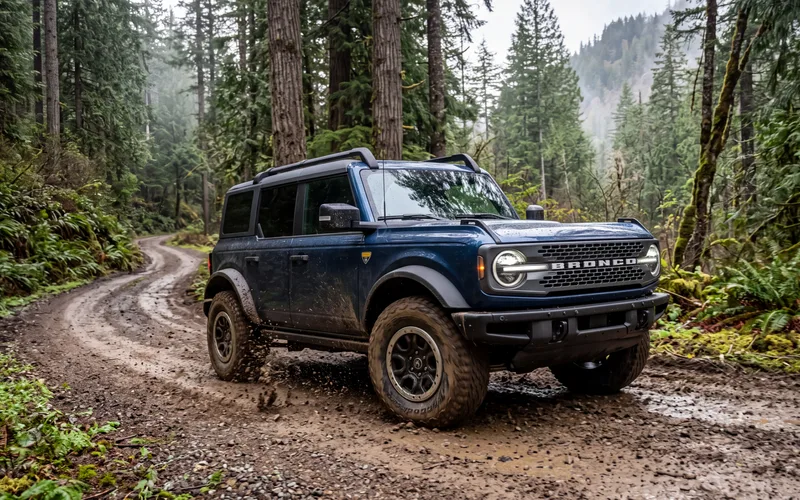 Ford BroncoOff-Road SUVBetter at: Daily comfort
The head-to-head rival: more rear legroom, open-air doors and roof, better on-road manners and actual discounts — worth taking unless you need the 4Runner's 6,000-lb tow rating, hybrid option or resale value.
Compare 2.40C+
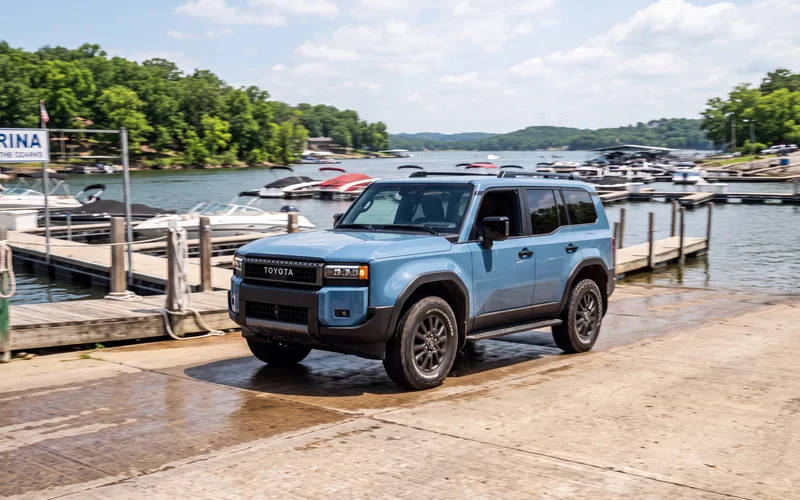 Toyota Land CruiserOff-Road SUVBetter at: Refinement
Sits in the same showroom on the same platform with the hybrid standard and a plusher cabin, overlapping a loaded 4Runner on price — the move if you want one nice off-roader rather than a purpose-built one.
Compare 2.63C+
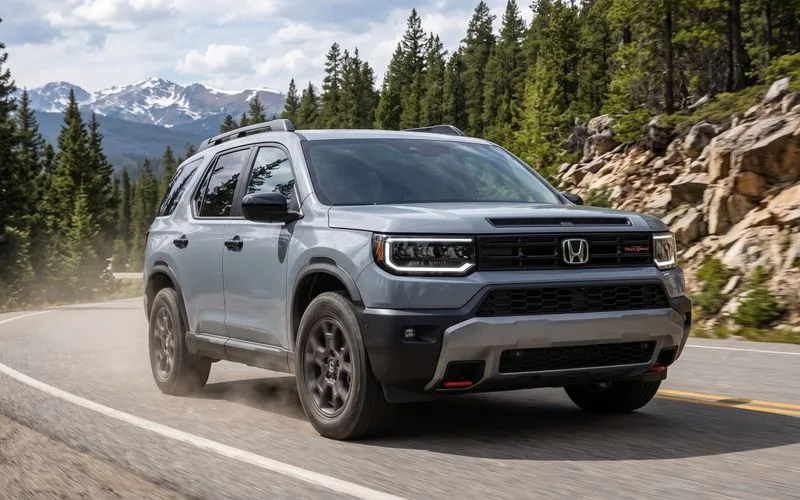 Honda PassportMid-Size SUVBetter at: Everyday livability
Rides, steers and seats people far better for less money while still handling forest roads and snow, giving up low range, the 6,000-lb tow rating and 4Runner-grade resale.
CompareHow it's evolved
10 scored model years · 2017–2026
Subject scores by year
Hover or tap a score to see what moved it versus the year before. A corner mark flags a big swing.
| Year | Performance | Efficiency | Safety | Space | Cost | Reliability | Tech | Use-case | Driving | Value |
|---|---|---|---|---|---|---|---|---|---|---|
| 2026 | 59 | 38 | 65 | 50 | 62 | 75 | 68 | 67 | 65 | 74 |
| 2025 | 58 | 41 | 64 | 47 | 61 | 75 | 68 | 64 | 58 | 76 |
| 2024 | 49 | 25 | 54 | 44 | 61 | 83 | 46 | 61 | 54 | 59 |
| 2023 | 47 | 21 | 52 | 46 | 62 | 83 | 46 | 61 | 53 | 56 |
| 2022 | 47 | 24 | 52 | 46 | 62 | 83 | 46 | 61 | 56 | 56 |
| 2021 | 47 | 31 | 43 | 46 | 62 | 86 | 39 | 60 | 52 | 55 |
| 2020 | 46 | 31 | 43 | 42 | 64 | 82 | 33 | 60 | 54 | 58 |
| 2019 | 46 | 27 | 26 | 44 | 70 | 84 | 25 | 57 | 59 | 53 |
| 2018 | 46 | 25 | 25 | 44 | 70 | 81 | 22 | 56 | 57 | 52 |
| 2017 | 46 | 25 | 25 | 44 | 70 | 86 | 22 | 56 | 59 | 54 |
Compare two years
Best fit & conditions
Higher scores mean a better fit for that use case. Learn more about use-case fit →
Subject profile
Trims & configurations
7 trimsScores above reflect the volume trim. Per-trim specs and scores are rolling out — the full lineup:
Academic Probation · NHTSA safety recalls
Sep 11, 2025Electrical system: instrument cluster/panelDue to an error in the instrument panel software at vehicle startup, the instrument panel may fail to display vehicle speed, brake system, and tire pressure warning lights.
Defect
Toyota Motor Engineering & Manufacturing (Toyota) is recalling certain 2023-2024 Toyota Venza, 2023-2025 RAV4 Prime, RAV4, Highlander, GR Corolla, Crown, 2024-2025 Lexus TX, LS, Toyota Tacoma, Grand Highlander, and 2025 Lexus RX, Toyota Crown Signia, Camry, RAV 4 Plug-in Hybrid (PHEV), and 4 Runner vehicles. Due to an error in the instrument panel software at vehicle startup, the instrument panel may fail to display vehicle speed, brake system, and tire pressure warning lights.
Risk
An instrument panel display that does not show critical information can increase the risk of a crash or injury.
Remedy
Dealers will update the instrument panel software over-the-air (OTA) for non-PHEV vehicles, free of charge. For PHEV vehicles, dealers will inspect the instrument panel assembly, and either replace it, or update the software, free of charge. Owner letters were mailed December 5, 2025. Additional letters will be sent, anticipated in May 2026. This is a phased recall. Owners may contact Toyota's customer service at 1-800-331-4331. Toyota's numbers for this recall are 25TB08 and 25TA08. Lexus' numbers for this recall are 25LB05 and 25LA05.
NHTSA campaign 25V595000 ↗Manufacturer no. See Part 573 Report591,377 vehicles potentially affected (all models in the campaign)Owners notified Dec 5, 2025Filed by Toyota Motor Engineering & ManufacturingFiled as 4RUNNER
15 recalls on other model years of the 4Runner (2017–2024, 2026)
Sep 2, 2026Equipment: other: labelsThe load carrying capacity modification label may display inaccurate added weight values. As such, these vehicles fail to comply with the requirements of Federal Motor Vehicle Safety Standard number 110, "Tire Selection and Rims."
Defect
Toyota Motor Engineering & Manufacturing (Toyota) is recalling certain 2024 Toyota Tacoma Hybrid, 2025 Tundra Hybrid, Tundra, 2026 RAV4 Hybrid, 4Runner i-Force Max Hybrid, and 4Runner vehicles. The load carrying capacity modification label may display inaccurate added weight values. As such, these vehicles fail to comply with the requirements of Federal Motor Vehicle Safety Standard number 110, "Tire Selection and Rims."
Risk
A vehicle with an incorrect maximum capacity weight value may be overloaded, increasing the risk of a crash.
Remedy
Dealers will replace the load carrying capacity modification label, free of charge. Owner notification letters are expected to be mailed October 18, 2026. Owners may contact Toyota's customer service at 1-800-331-4331. Toyota's number for this recall is 26TA18.
NHTSA campaign 26V571000 ↗Manufacturer no. 26TA18135 vehicles potentially affected (all models in the campaign)Filed by Toyota Motor Engineering & ManufacturingFiled as 4RUNNER, 4RUNNER I-FORCE MAX HYBRIDMay 4, 2026Equipment: other: labelsThe load carrying capacity modification label states the incorrect load carrying capacity. As such, these vehicles fail to comply with the requirements of Federal Motor Vehicle Safety Standard number 110, "Tire Selection and Rims."
Defect
Gulf States Toyota, Inc. (GST) is recalling certain 2026 4Runner vehicles. The load carrying capacity modification label states the incorrect load carrying capacity. As such, these vehicles fail to comply with the requirements of Federal Motor Vehicle Safety Standard number 110, "Tire Selection and Rims."
Risk
An incorrect load carrying capacity label may lead to improper loading of the vehicle, increasing the risk of a crash.
Remedy
GST will mail a new modification label to owners, free of charge. Owner notification letters were mailed June 18, 2026. Owners may contact GST customer service at 1-800-444-1074. GST's number for this recall is 26R1.
NHTSA campaign 26V282000 ↗Manufacturer no. 26R194 vehicles potentially affected (all models in the campaign)Owners notified Jun 18, 2026Filed by Gulf States Toyota, Inc.Filed as 4RUNNERJul 23, 2024Equipment: other: labelsThe load carrying capacity modification label may display inaccurate added weight values. As such, these vehicles fail to comply with the requirements of Federal Motor Vehicle Safety Standard number 110, "Tire Selection and Rims."
Defect
Gulf States Toyota, Inc. (GST) is recalling certain Toyota 2023 GR Supra, 2024 4 Runner, Corolla, Grand Highlander, Grand Highlander Hybrid, Land Cruiser Hybrid, Tacoma, Tacoma Hybrid, 2023-2024 BZ4X, Corolla Cross Hybrid, GR Corolla, GR86, Highlander, Highlander Hybrid, Prius, Prius Prime, Sequoia Hybrid, Tundra, Tundra Hybrid, Venza Hybrid, 2023-2025 Crown, and 2025 Camry Hybrid vehicles equipped with GST accessories. The load carrying capacity modification label may display inaccurate added weight values. As such, these vehicles fail to comply with the requirements of Federal Motor Vehicle Safety Standard number 110, "Tire Selection and Rims."
Risk
A vehicle with an incorrect maximum capacity weight value may be overloaded, which can increase the risk of a crash.
Remedy
GST will mail new labels to owners, free of charge. Owner notification letters were mailed September 16, 2024. Owners may contact GST customer service at 1-800-444-1074. GST's number for this recall is 24R2.
NHTSA campaign 24V548000 ↗Manufacturer no. 24R233,848 vehicles potentially affected (all models in the campaign)Owners notified Sep 16, 2024Filed by Gulf States Toyota, Inc.Filed as 4RUNNEROct 12, 2023Equipment: other: labelsThe load carrying capacity modification label states the incorrect load carrying capacity, which can result in an overloaded vehicle. As such, these vehicles fail to comply with the requirements of Federal Motor Vehicle Safety Standard number 110, "Tire Selection and Rims."
Defect
Southeast Toyota Distributors, LLC (SET) is recalling certain 2023 Toyota 4Runner vehicles. The load carrying capacity modification label states the incorrect load carrying capacity, which can result in an overloaded vehicle. As such, these vehicles fail to comply with the requirements of Federal Motor Vehicle Safety Standard number 110, "Tire Selection and Rims."
Risk
An overloaded vehicle increases the risk of a crash.
Remedy
Southeast Toyota Distributors, LLC will mail a new modified label, free of charge. Owner notification letters were mailed December 1, 2023. Owners may contact SET's customer service at 1-866-405-4226. SET's number for this recall is SET23A.
NHTSA campaign 23V680000 ↗Manufacturer no. SET23A13 vehicles potentially affected (all models in the campaign)Owners notified Dec 1, 2023Filed by Southeast Toyota Distributors, LLCFiled as 4RUNNERJul 6, 2022Equipment: other: labelsThe load carrying capacity modification labels are incorrect. As such, these vehicles fail to comply with the requirements of Federal Motor Vehicle Safety Standard number 110, "Tire Selection and Rims."
Defect
Southeast Toyota Distributors, LLC (SET) is recalling certain 2020-2022 4Runner vehicles equipped with 20-inch Black Gunner Wheels. The load carrying capacity modification labels are incorrect. As such, these vehicles fail to comply with the requirements of Federal Motor Vehicle Safety Standard number 110, "Tire Selection and Rims."
Risk
An incorrect label may lead to unintentionally overloading the vehicle, increasing the risk of a crash.
Remedy
SET will mail replacement labels to owners, free of charge. Owner notification letters are expected to be mailed September 4, 2022. Owners may contact SET's customer service at 954-429-2000. SET's number for this recall is SET22A.
NHTSA campaign 22V480000 ↗Manufacturer no. SET22A280 vehicles potentially affected (all models in the campaign)Owners notified Sep 1, 2022Filed by Southeast Toyota Distributors, LLCFiled as 4RUNNERMay 6, 2022Equipment: other: labelsThe load carrying capacity modification labels may not be permanent and can fade, becoming illegible. As such, these vehicles fail to comply with the requirements of Federal Motor Vehicle Safety Standard number 110, "Tire Selection and Rims."
Defect
Gulf States Toyota, Inc. (GST) is recalling certain 2022 4Runner, Tacoma, Highlander, and Highlander Hybrid vehicles. The load carrying capacity modification labels may not be permanent and can fade, becoming illegible. As such, these vehicles fail to comply with the requirements of Federal Motor Vehicle Safety Standard number 110, "Tire Selection and Rims."
Risk
An illegible label may allow the vehicle to be overloaded, increasing the risk of a crash.
Remedy
GST will notify owners by mail, including a replacement load carrying capacity modification label for their vehicle and detailed replacement instructions, free of charge. Owner notification letters were mailed June 30, 2022. Owners may contact GST customer service at 1-800-444-1074. GST's number for this recall is 22R1.
NHTSA campaign 22V310000 ↗Manufacturer no. 22R1661 vehicles potentially affected (all models in the campaign)Owners notified Jun 30, 2022Filed by Gulf States Toyota, Inc.Filed as 4RUNNERDec 13, 2021Exterior lighting: headlightsThe driver's side high beam may be inoperable after the installation of accessory fog lights. As such, these vehicles fail to comply with the requirements of Federal Motor Vehicle Safety Standard number 108, "Lamps, Reflective Devices, and Associated Equipment."
Defect
Southeast Toyota Distributors, LLC (SET) is recalling certain 2022 Toyota 4Runner vehicles. The driver's side high beam may be inoperable after the installation of accessory fog lights. As such, these vehicles fail to comply with the requirements of Federal Motor Vehicle Safety Standard number 108, "Lamps, Reflective Devices, and Associated Equipment."
Risk
An inoperable driver's side high beam may reduce visibility, increasing the risk of a crash.
Remedy
Dealers will install an updated wiring harness, free of charge. Owner notification letters were mailed February 11, 2022. Owners may contact SET customer service at 1-866-405-4226. SET's number for this recall is SET21A.
NHTSA campaign 21V963000 ↗Manufacturer no. SET21A78 vehicles potentially affected (all models in the campaign)Owners notified Feb 11, 2022Filed by Southeast Toyota Distributors, LLCFiled as 4RUNNERNov 4, 2020Fuel system, gasoline: delivery: fuel pumpThe low-pressure fuel pump inside the fuel tank may fail.
Defect
Toyota Motor Engineering & Manufacturing (Toyota) is recalling certain 2018-2019 4Runner, 2019-2020 Avalon, 2019 Corolla Hatchback, 2017-2019 Highlander, 2018-2020 Camry, 2020 Corolla, 2018-2019 Land Cruiser, 2017-2020 Tacoma, 2019-2020 RAV4, 2019-2020 Sequoia, 2017-2020 Sienna, 2019-2020 Tundra, 2018-2020 Lexus ES350, 2017 Lexus GS200t, 2017-2019 Lexus GS350, 2019 Lexus GS300, 2018-2020 Lexus LC500h, 2019-2020 Lexus LS500, 2018-2019 Lexus GX460, 2017 Lexus IS200t, 2019 Lexus IS300, 2019 Lexus IS350, 2018-2020 Lexus LC500, 2018 Lexus LS500, 2019 Lexus LS500h, 2018-2019 Lexus LX570, 2017 Lexus RC200t, 2019 Lexus RC300, RC350, 2017 and 2019-2020 Lexus RX350, 2018-2020 RX350L, 2019 Lexus UX200, 2018-2019 Lexus NX300 vehicles. The low-pressure fuel pump inside the fuel tank may fail.
Risk
If the fuel pump fails, the engine can stall while driving, increasing the risk of a crash.
Remedy
Toyota will notify owners, and dealers will replace the fuel pump assembly with an improved one, free of charge. Owners of specific models were notified that remedy parts were available starting January 21, 2021. Owners of other models will be notified as remedy parts become available. Remedy parts should be available for all affected vehicles by late March 2021. Owners may contact Toyota customer service at 1-888-270-9371 or Lexus customer service at 1-800-255-3987. Note: This recall is an expansion of recall 20V-012. Toyota's number for this recall is 20TA02. Lexus' number for this recall is 20LA01.
NHTSA campaign 20V682000 ↗Manufacturer no. 20TA02, 20LA011,525,742 vehicles potentially affected (all models in the campaign)Owners notified Jan 21, 2021Filed by Toyota Motor Engineering & ManufacturingFiled as 4RUNNERSep 20, 2019Steering · SuspensionDuring installation, certain steering and suspension components may not have been properly tightened.
Defect
Southeast Toyota Distributors, LLC (SET) is recalling certain 2018-2019 Toyota 4Runner vehicles. During installation, certain steering and suspension components may not have been properly tightened.
Risk
Loose fasteners may cause a loss of vehicle control, or cause an accessory to detach from the vehicle and become a road hazard. Either of these scenarios can increase the risk of a crash or injury.
Remedy
SET will notify owners, and dealers will inspect and re-tighten the steering and suspension fasteners as necessary, free of charge. The recall is expected to begin November 19, 2019. Owners may contact SET customer service at 1-866-405-4226. SET's number for this recall is SET19B.
NHTSA campaign 19V670000 ↗Manufacturer no. SET19B34 vehicles potentially affected (all models in the campaign)Owners notified Oct 28, 2019Filed by Southeast Toyota Distributors, LLCFiled as 4RUNNERMar 27, 2019Equipment: other: labelsThe text on the load capacity label may become illegible. As such, these vehicles fail to comply with the requirements of Federal Motor Vehicle Safety Standard (FMVSS) number 110, "Tire Selection and Rims."
Defect
Gulf States Toyota (GST) is recalling certain 2019 C-HR, 4Runner, Avalon, Avalon Hybrid, Camry, Camry Hybrid, Highlander, Land Cruiser, Prius, RAV4, Sequoia, Tacoma, Sienna, Tundra and Yaris vehicles. The text on the load capacity label may become illegible. As such, these vehicles fail to comply with the requirements of Federal Motor Vehicle Safety Standard (FMVSS) number 110, "Tire Selection and Rims."
Risk
If the driver cannot read the label, they may unknowingly overload the vehicle, increasing the risk of a crash.
Remedy
GST will notify owners, and dealers will provide corrected load carrying capacity modification labels, free of charge. The recall began May 24, 2019. Owners may contact GST customer service at 1-800-444-1074. GST's number for this recall is 19R1.
NHTSA campaign 19V244000 ↗Manufacturer no. 19R13,634 vehicles potentially affected (all models in the campaign)Owners notified May 24, 2019Filed by Gulf States Toyota, Inc.Filed as 4RUNNEROct 25, 2018Equipment: other: labelsThe Gross Vehicle Weight Rating (GVWR) on the certification label may be incorrect, possibly resulting in the vehicle being overloaded. As such, these vehicles fail to comply with the requirements of Federal Motor Vehicle Safety Standard (FMVSS) number 110, "Tire Selection and Rims."
Defect
Southeast Toyota Distributors, LLC (SET) is recalling certain 2017-2019 Toyota 4Runner vehicles that SET modified to be equipped with a TRD wheel package. The Gross Vehicle Weight Rating (GVWR) on the certification label may be incorrect, possibly resulting in the vehicle being overloaded. As such, these vehicles fail to comply with the requirements of Federal Motor Vehicle Safety Standard (FMVSS) number 110, "Tire Selection and Rims."
Risk
An overloaded vehicle can increase the risk of a crash.
Remedy
SET will notify owners and mail them corrected certification labels, free of charge. The recall began November 28, 2018. Owners may contact SET customer service at 1-866-405-4226. SET's number for this recall is SET18A.
NHTSA campaign 18V753000 ↗Manufacturer no. SET18A1,295 vehicles potentially affected (all models in the campaign)Owners notified Nov 28, 2018Filed by Southeast Toyota Distributors, LLCFiled as 4RUNNERDec 20, 2017Equipment: other: labelsThese vehicles may have incorrect load carrying capacity modification labels. As such, these vehicles fail to comply with the requirements of Federal Motor Vehicle Safety Standard (FMVSS) number 110, "Tire Selection and Rims."
Defect
Toyota Motor Engineering & Manufacturing (Toyota) is recalling certain 2017-2018 Toyota 4Runner and Tundra, 2018 Toyota Highlander, RAV4 and Lexus GX460 and 2017 Toyota Sienna and Tacoma vehicles. These vehicles may have incorrect load carrying capacity modification labels. As such, these vehicles fail to comply with the requirements of Federal Motor Vehicle Safety Standard (FMVSS) number 110, "Tire Selection and Rims."
Risk
An incorrect load information label can result in the operator overloading the vehicle and increasing the risk of a crash.
Remedy
Toyota will notify owners and provide them with corrected labels, free of charge. The recall began on January 23, 2018. Owners may contact Toyota customer service at 1-800-331-4331. Toyota's numbers for this recall are H0Z for Toyota vehicles, and HLF for Lexus vehicles.
NHTSA campaign 17V831000 ↗Manufacturer no. Toyota H0Z Lexus HLF649 vehicles potentially affected (all models in the campaign)Owners notified Jan 23, 2018Filed by Toyota Motor Engineering & ManufacturingFiled as 4RUNNERNov 29, 2017Structure: body: hoodThe U-nut that secures the overlay grille may fracture, allowing the Billet Grille Overlay to detach from the vehicle.
Defect
Southeast Toyota Distributors, LLC (SET) is recalling certain 2015-2018 Toyota 4Runner vehicles equipped with an accessory Billet Grille Overlay installed by SET or provided by SET and installed by SET dealers. The U-nut that secures the overlay grille may fracture, allowing the Billet Grille Overlay to detach from the vehicle.
Risk
If the Billet Grille Overlay detaches while driving, it can become a road hazard, increasing the risk of a crash.
Remedy
SET will notify owners, and dealers will replace the securing U-nuts with upgraded hardware, free of charge. The recall is expected to begin January 26, 2018. Owners may contact SET customer service at 1-866-405-4226. SET's number for this recall is SET17C.
NHTSA campaign 17V763000 ↗Manufacturer no. SET17C431 vehicles potentially affected (all models in the campaign)Owners notified Jan 17, 2018Filed by Southeast Toyota Distributors, LLCFiled as 4RUNNERMay 2, 2017Tires: temporary/emergency spare tireThe spare tire air pressure was not adjusted to the proper pressure as stated on the Tire Pressure Label.
Defect
Gulf States Toyota, Inc. (Gulf States) is recalling certain 2017 4Runner , 86, Avalon, Camry, Camry Hybrid, Corolla, Corolla iM, Highlander, Highlander Hybrid, Prius, Prius C, RAV4, RAV4 Hybrid, Sienna and Yaris vehicles. The spare tire air pressure was not adjusted to the proper pressure as stated on the Tire Pressure Label.
Risk
A spare tire that is not inflated to the proper value may not perform as intended, increasing the risk of a crash.
Remedy
Gulf States will notify owners, and dealers will inspect the spare tires, adjusting their pressure as necessary, free of charge. The recall began June 15, 2017. Owners may contact Gulf States customer service at 1-800-444-1074. Toyota's number for this recall is 17R2.
NHTSA campaign 17V295000 ↗Manufacturer no. 17R2409 vehicles potentially affected (all models in the campaign)Owners notified Jun 15, 2017Filed by Gulf States Toyota, Inc.Filed as 4RUNNERMay 1, 2017EquipmentThe fasteners for the aftermarket roof rack may have been improperly tightened.
Defect
Gulf States Toyota, Inc (Gulf States) is recalling certain 2016-2017 4Runner vehicles equipped with the TFORCE accessory package. The fasteners for the aftermarket roof rack may have been improperly tightened.
Risk
If the roof rack fasteners loosen, the roof rack may detach from the vehicle, increasing the risk of a crash.
Remedy
Gulf States will notify owners, and dealers will inspect and, as necessary, tighten the roof rack fasteners, free of charge. The recall began June 15, 2017. Owners may contact Gulf States customer service at 1-800-444-1074. Gulf States' number for this recall is 17R1.
NHTSA campaign 17V291000 ↗Manufacturer no. 17R11,019 vehicles potentially affected (all models in the campaign)Owners notified Jun 15, 2017Filed by Gulf States Toyota, Inc.Filed as 4RUNNER
Source: NHTSA Office of Defects Investigation recall database, model years 2017–2026. Recalls are listed by model year as the manufacturer filed them; whether a specific car is affected depends on its VIN — check a VIN at nhtsa.gov ↗. NHTSA model names matched to this page: 4RUNNER, 4RUNNER I-FORCE MAX HYBRID.
Detailed scoring by subject
1Performance & PowertrainMid-pack among this car's ten categories.1.90C-
The all-new sixth-generation 2025 4Runner drops the old 4.0L V6 for a 2.4L turbocharged four. The volume SR5/TRD Off-Road trims run the standard i-FORCE at 278 hp; the optional i-FORCE MAX hybrid (standard on TRD Pro and Trailhunter) lifts the range max to 326 hp. 278 hp is a middling figure in the SUV band and about 8 hp up on the outgoing V6.
The standard turbo four makes 317 lb-ft — mid-pack for the SUV band and a clear improvement on the old V6's 278 lb-ft thanks to boost. The optional hybrid vaults to 465 lb-ft from low rpm, but the volume trim's standard powertrain is the 317 lb-ft figure.
Toyota publishes no figure; the volume non-hybrid i-FORCE is unhurried in a ~5,000 lb body-on-frame SUV, with MotorWeek recording 8.0 s. The i-FORCE MAX hybrid's extra torque drops it to roughly the low-6s. Scored on the volume non-hybrid trim, which lands in the slow half of the SUV band.
The turbo four gives strong midrange but is coarse and buzzy when extended, and reviewers note it lacks the effortless smoothness of the old V6 despite more power; the hybrid masks turbo lag and adds low-end shove but introduces a slightly artificial brake-pedal feel. Refinement is adequate rather than a highlight.
The new 8-speed automatic is a big step up from the old 5-speed — sensible gear selection, uphill/downhill trail logic, and it rarely hunts on grades. Low-speed tip-in on the hybrid is slightly less polished than a pure torque-converter setup, but shifts are smooth and well-timed overall.
Up to 6,000 lbs when properly equipped — a 1,000 lb gain over the outgoing 4Runner and strong for a mid-size off-road SUV, comfortably ahead of the Wrangler (3,500) and Bronco (4,500), though short of full-size body-on-frame rivals.
Serious four-wheel-drive hardware is widely available: part-time 4WD with a two-speed transfer case on most trims, full-time 4WD with a locking center differential on Limited/Platinum, plus an electronic locking rear diff, Multi-Terrain Select and CRAWL Control on off-road grades. Held below the Land Cruiser (92) only because base SR5/TRD Sport trims are still sold rear-wheel drive.
Genuine off-road credibility with dedicated halo grades: the TRD Pro adds 2.5-in Fox internal-bypass shocks and 33-inch tires, and the Trailhunter brings Old Man Emu suspension and ARB overland kit, both on a ladder frame with a disconnecting front stabilizer bar, skid plates, locking rear diff, Multi-Terrain Select/Monitor and CRAWL Control. Among the most capable mid-size SUVs; a notch below the extreme Wrangler (96).
Two distinct powertrains covering the range — the 278 hp i-FORCE turbo four and the 326 hp i-FORCE MAX hybrid — one of which is electrified. No V6, PHEV or EV option, so it stops short of the top band, but a gas-plus-hybrid pairing is broader than most rivals in the segment.
2Efficiency & RangeThe 4Runner's lowest-graded category.0.73F
The all-new sixth-generation (N300) 4Runner's volume powertrain is the gas 2.4L turbocharged i-FORCE four, which in 4WD form rates 21 MPG combined. That is a genuine improvement over the outgoing 4.0L V6 (17 combined) but still lands near the bottom of the unibody-dominated SUV band this item normalizes into.
EPA city rating for the volume gas 4WD configuration. A ~4,800-lb body-on-frame 4WD SUV keeps stop-and-go economy low; buyers wanting a meaningful city bump must step up to the i-FORCE MAX hybrid, which lifts city to 23 MPG.
EPA highway rating for the gas 4WD volume trim. Notably, the gas engine beats the hybrid on the highway (25 vs 24 MPG) — the i-FORCE MAX carries extra battery/motor mass that offers little benefit at steady-state cruise.
A 19.0-gallon tank paired with 21 MPG combined yields roughly 400 miles of gas 4WD range — mid-pack for the segment. The hybrid uses the same tank and stretches range to about 435 miles.
At the EPA's 15,000 mi/yr assumption the gas 4WD 4Runner burns roughly 715 gallons of regular a year. The hybrid trims running costs modestly (to ~$2,150) but not enough to reach crossover territory.
Runs on 87-octane regular unleaded with no premium requirement, no diesel exhaust fluid, and no charging hardware — the i-FORCE MAX hybrid self-charges. About as low-friction as fuelling gets, which is a real running-cost advantage even though absolute MPG is low.
3SafetyMid-pack among this car's ten categories.2.29C
The redesigned 2025 4Runner earned a 4-star result in NHTSA's full-overlap frontal crash test (4 stars driver and passenger). As a tall, body-on-frame off-road SUV on the new TNGA-F platform it lands mid-band rather than at the 5-star ceiling typical of car-based crossovers.
The 2025 4Runner posts Good in the driver-side small overlap front and the updated side test, but only Marginal in IIHS's updated moderate overlap front test — the rear dummy's head contacted the front seatback and the lap belt slid from the pelvis to the abdomen, raising rear-occupant injury risk. That Marginal in a key crashworthiness test, plus sub-par base headlights, keeps the 4Runner off the Top Safety Pick list entirely.
Toyota Safety Sense 3.0 is standard on every 2025 4Runner from base SR5 up: Pre-Collision System with pedestrian detection, Full-Speed Range Dynamic Radar Cruise Control, Lane Departure Alert with Steering Assist, Lane Tracing Assist, Road Sign Assist, Automatic High Beams, and Proactive Driving Assist. Critically, Blind Spot Monitor with Rear Cross-Traffic Alert is ALSO standard across the entire lineup, so the full AEB/ACC/LKA/BSM/RCTA set is present on the volume trim.
The standard Pre-Collision System with pedestrian detection performed well in IIHS front crash prevention evaluation for the 2025 4Runner, and TSS 3.0 adds intersection and oncoming-turn support over older Toyota systems. Daytime vehicle-to-vehicle and pedestrian avoidance are strong; nighttime pedestrian performance remains the softer spot common to the segment.
Blind Spot Monitor with Rear Cross-Traffic Alert is standard on every 2025 4Runner trim, and the system extends its detection area to account for a towed trailer — genuinely useful given the 4Runner's tow-and-adventure mission. Coverage is alert-based rather than active cross-traffic braking, which caps the ceiling versus systems with rear automatic braking.
Lane Departure Alert with Steering Assist plus Lane Tracing Assist are standard and keep the 4Runner centered on marked highways, but reviewers note the system requires steering torque and can wander in gentle curves — functional single-lane assist rather than the polished centering of best-in-class rivals. The tall body-on-frame chassis also makes small corrections more perceptible.
Full-Speed Range Dynamic Radar Cruise Control is standard and operates down to a stop with stop-and-go capability, pairing with Lane Tracing Assist for competent single-lane highway assist. Following-distance calibration is smooth, but there is no automatic lane change or predictive/curve slowdown, so it trails premium highway-assist packages.
Toyota offers no hands-free highway driving system on the 2025 4Runner. Dynamic Radar Cruise Control and Lane Tracing Assist both require the driver's hands on the wheel — there is no equivalent to Ford BlueCruise, GM Super Cruise, or Tesla FSD Supervised anywhere in the lineup.
IIHS rated the 2025 4Runner's standard headlights (on the volume SR5) as Poor, and even the upgraded projector-type LED units standard on higher trims only rated Acceptable — low beams in both created glare and offered insufficient visibility. Poor headlights on the volume trim are a primary reason the 4Runner failed to earn a Top Safety Pick.
The boxy, upright sixth-gen body gives the 4Runner a tall, commanding seating position, a large glasshouse, and relatively thin pillars with good forward and side sightlines. A backup camera is standard and a Panoramic View Monitor (360-degree camera) is available on upper trims; the thick rear roof pillars and available spare-on-tailgate are the main compromise, largely offset by standard blind-spot coverage.
IIHS rated the 2025 4Runner's LATCH system Good for ease of use — the anchors are reasonably accessible and clearly marked. The tall, boxy cabin gives wide rear-door openings and generous second-row space for installing rear-facing and convertible seats, though the third row (when equipped) remains impractical for car seats.
4Space & ComfortOne of the 4Runner's weakest categories.1.15D
The volume SR5 configuration seats 5; a tight, cramped third row is optional on SR5 and Limited, pushing capacity to 7.
Generous front headroom typical of the tall body-on-frame sixth-generation 4Runner.
Adequate but not class-leading front legroom for the segment.
Mid-pack second-row headroom; reviewers note it gets tight for taller passengers.
Second-row legroom of 34.8 in is tight for a mid-size SUV; reviewers repeatedly flag the rear as cramped in both legroom and underleg support.
The optional third row is a token, kids-only bench with minimal legroom and awkward access; most 4Runners ship without it and reviewers call it tiny and cramped.
Behind the second row the non-hybrid holds 48.4 cu ft — competitive but not standout; the i-FORCE MAX hybrid loses some volume to the battery.
With the second row folded the non-hybrid offers a generous 90.2 cu ft of boxy, usable cargo space; the hybrid drops to 82.6 cu ft.
Competitive everyday storage — a deep center console, useful door and dash bins, and an available sliding/adjustable rear cargo deck and cargo-management features — but nothing class-leading in innovation.
Front seats are comfortable and supportive, but the rear bench draws consistent criticism for flat cushions, a low bottom cushion with little underleg support, and squished toe space.
The body-on-frame ride is unsettled and busy over broken pavement with clumsy on-road handling; owners describe it as rough for everyday use — expected trade-off for its off-road hardware.
Wind and road isolation is respectable for the class, but the new turbo four-cylinder produces a coarse, unrefined engine note that intrudes under acceleration.
Heated front seats, heated steering wheel, and ventilated front seats are available and standard on mid-to-upper trims, along with dual-zone climate; rear-seat comfort features are limited and top amenities require moving up the range.
5Cost of OwnershipMid-pack among this car's ten categories.2.08C
The all-new sixth-generation 2025 4Runner opens at $40,770 plus $1,450 destination for the base SR5 rear-drive — a meaningful jump over the outgoing fifth-gen's low-$40s delivered start and toward the upper half of the mid-size SUV band, reflecting the move to turbocharged i-FORCE power and a much more modern platform. That entry point is well above unibody family SUVs but expected for a body-on-frame off-roader.
The TRD Off-Road 4WD ($49,190 + $1,450 destination) is the natural volume/sweet-spot configuration — the 4Runner's traditional best-seller alongside the SR5, and the trim most buyers choose for the locking rear diff, Multi-Terrain Select and CRAWL Control. At roughly $50,640 delivered it sits mid-ladder, with the i-FORCE MAX hybrid adding about $2,800 and top TRD Pro/Trailhunter grades reaching the high-$60s.
The 4Runner nameplate has historically been among the cheapest body-on-frame SUVs to maintain, with simple scheduled service and exceptional reliability; the new-for-2025 turbocharged i-FORCE and i-FORCE MAX hybrid powertrains are more complex than the old naturally aspirated V6, so five-year upkeep is estimated a step above the outgoing model but still well below the truck-based SUV average. Figure is a knowledge-based estimate — live cost-to-own data for the first year of the new generation is not yet published.
Resale is the 4Runner's signature strength — the outgoing generation was one of the best value-retaining vehicles on the US market, routinely holding two-thirds or more of its value at five years on scarcity and rugged-SUV demand. The all-new sixth generation should retain class-leading residuals, though forward projections are pegged slightly below the fifth-gen's extraordinary record because the redesign lifts supply and the turbo/hybrid drivetrains lack the old V6's proven longevity track record.
Toyota's 36-month/36,000-mile basic coverage is the industry floor and unchanged for the 2025 4Runner — level with Honda and Nissan but well short of Hyundai/Kia's 5-year bumper-to-bumper terms.
The headline powertrain term is Toyota's standard 5 years/60,000 miles, the segment floor against Hyundai/Kia's 10-year coverage. On i-FORCE MAX hybrid models the electrified hardware carries much longer protection — hybrid components 8 years/100,000 miles and the traction battery 10 years/150,000 miles — but the gas-only volume trims see only the base 5/60 term.
ToyotaCare covers all factory-scheduled service for 2 years/25,000 miles plus 2 years of unlimited-mileage roadside assistance — real included maintenance where several body-on-frame rivals (Jeep Wrangler, Ford Bronco) offer none — and 2025 models carry connected-services trials. It falls short of top marks because the maintenance window is shorter than Hyundai/Kia's 3-year/36,000-mile plan and there are no fuel or charging credits.
$50,640 volume-trim price minus its estimated resale value after 5 years (65% retained, or about $32,916) leaves about $17,724 in depreciation. Add the projected $4,900 in 5-year maintenance and repairs, and owning this vehicle for 5 years costs about $22,624 in total.
6Reliability & QualityOne of the 4Runner's strongest categories.3.09B
Consumer Reports gives the redesigned 2025 4Runner an above-average predicted-reliability rating, aided by platform/powertrain sharing with the Tacoma and Land Cruiser — strong for a first-year generation, though the all-new turbo powertrain tempers full confidence.
Toyota is the #1 brand in Consumer Reports' 2025/2026 reliability rankings (predicted score 66, ahead of Subaru and Lexus) and remains above-average in J.D. Power's VDS, giving the 4Runner an exceptionally strong brand backbone.
As an all-new launch, the 2025 4Runner drew typical first-year recall activity — a 12.3-inch instrument-display-blank software recall and a fuel-pump/engine-stall notice being the most substantive, alongside numerous minor accessory recalls (hood scoops, exhaust tips, labels). Nothing systemic on the core structure, but launch-year volume is elevated.
The sixth generation drops the bulletproof 4.0L 2GR V6 for a new 2.4L i-FORCE turbo four (278 hp) and i-FORCE MAX hybrid (326 hp) shared with the Tacoma/Land Cruiser. These are modern, well-engineered units with no red flags yet, but they lack the long-mileage proof of the outgoing V6 and turbocharging adds complexity — a newer, unproven powertrain family.
A clear step up from the dated fifth gen, with soft-touch dash/door materials and near-luxury feel on Limited/Platinum trims, but reviewers flag a clash of textures, unconvincing faux-carbon-fiber trim, and hard plastics that fall short of similarly priced rivals like the Telluride and CX-90.
Built on the proven TNGA-F body-on-frame platform shared with the Tacoma, Land Cruiser, and Sequoia, assembly is generally solid and tight with Toyota's typical initial-quality consistency; scattered first-year complaints exist but no widespread rattle or misalignment reports.
Toyota operates one of the densest nationwide US dealer/service networks (~1,200 dealers) with consistently strong service-satisfaction scores, giving 4Runner owners broad, well-supported coverage.
The 4Runner carries one of the largest off-road aftermarkets of any SUV and benefits from Toyota's abundant, competitively priced parts supply; the new turbo/hybrid components may cost more to service than the old V6, but overall availability and repair economics remain strong.
7Technology & InfotainmentOne of the 4Runner's strongest categories.2.60C+
The all-new sixth-generation (N400) 4Runner launches for 2025 with Toyota Audio Multimedia on a standard 8.0-inch touchscreen — the volume SR5 grade's screen — with a 14.0-inch unit available higher up the range. Scored on the 8.0-inch screen, which sits at the floor of the SUV band.
Toyota Audio Multimedia boots and responds quickly with a shallow, logical menu tree, and the redesigned 4Runner keeps a strong physical-control balance — real HVAC knobs, volume/tune dials and hard switches for the 4WD range, locking rear diff and Multi-Terrain Select rather than burying them in menus. A thin native app catalog and the small standard screen on the volume trim keep it out of the top band.
Wireless Apple CarPlay and wireless Android Auto are standard on every 2025 4Runner trim including the base SR5 with the 8.0-inch screen — no package, trim gate or subscription. Held just below the ceiling because Qi wireless charging to keep the projecting phone alive is not standard on the lower grades.
The cloud-backed 'Hey Toyota' assistant handles natural phrasing for climate, media and point-of-interest search — a real step past the command-word systems still common in body-on-frame off-roaders. Native navigation is the weak half: cloud nav runs on a Drive Connect subscription once the factory trial lapses, so most owners default to CarPlay/Android Auto maps.
The available JBL Premium system is a genuine step up — a 14-speaker setup with subwoofer, roughly 800 watts and the party-trick JBL FLEX removable Bluetooth speaker — while the standard eight-speaker system on the volume SR5 is merely adequate. Strong ceiling, modest floor, so it lands mid-to-upper band.
The volume SR5 grade runs a 7-inch multi-information display flanked by analog gauges, not a full-screen digital cluster; the crisp 12.3-inch fully digital configurable cluster is reserved for higher trims. That is partial digital on the volume trim with full digital on upper trims only — squarely the middle band.
Toyota pushes over-the-air updates to the multimedia head unit and map data on Toyota Audio Multimedia vehicles, clearing the 'no meaningful OTA' floor, but there is no published program of routine whole-vehicle, feature-adding updates of the kind Rivian, Tesla or Ford's Power-Up deliver.
The Toyota app covers the core set well — remote start and climate, lock/unlock, vehicle status, vehicle finder, guest driver alerts, plus an available Digital Key phone-as-key. It sits mid-band because Toyota subscription-gates Remote Connect once the factory trial lapses, so remote functions stop working unless the owner keeps paying.
Provisioning is solid: USB-C charge and data ports for both rows and Qi wireless charging on upper grades, and the available i-FORCE MAX hybrid adds a 2,400-watt AC power system with a 120V bed/cargo outlet — a genuine overlanding asset. Kept out of the top band because wireless charging and the AC inverter are not standard on the volume SR5.
Smart Key proximity entry with push-button start is standard, remote start works through both the fob and the app, Digital Key offers phone-as-key, the power liftgate returns on upper grades, and the signature power roll-down rear window is retained. Mid-upper band rather than higher because full keyless convenience (power liftgate, wireless charging) is trim-dependent, not range-wide.
A rear camera plus front and rear parking sensors with Parking Support Brake are standard, and the Panoramic View Monitor with a Multi-Terrain Monitor underbody trail view is available on upper grades. It sits mid-band because surround view is not on the volume SR5 and no automated (self-parking) system is offered.
A color head-up display is offered on the 2025 4Runner but is restricted to the single top Platinum grade — not the Limited, TRD Pro or the volume SR5 — a limitation reviewers flagged given the related Tacoma offers a HUD more widely. That is squarely 'HUD limited to top trims,' scored at the lower end of the band because it reaches only one grade.
8Use-Case FitMid-pack among this car's ten categories.2.30C+
Wide, tall-opening rear doors and an upright body make loading kids and installing seats straightforward, with LATCH anchors and a returning power-down rear window; the available third row (gas SR5/Limited) adds flexibility, but the body-on-frame step-in height is higher than a crossover and second-row legroom (34.8 in) is only average.
Toyota Safety Sense 3.0 (pre-collision with pedestrian detection, lane-departure/tracing assist, adaptive cruise, road-sign assist) is standard on every trim including the base SR5, and rear-seat reminder is included; a 4-star NHTSA overall rather than 5, and blind-spot monitor reserved for higher trims, keep it just short of the class benchmark.
Roomy first and second rows, generous 90.2 cu ft max cargo and available rear-seat amenities make it a capable multi-hour family hauler, but the trucky body-on-frame ride, more road/wind noise than a unibody crossover, and a tight, occasional-use third row cap its long-trip refinement.
The tall, body-on-frame chassis, elevated seating and some turbo lag off the line make it competent but not effortless in daily traffic; it never feels as light and relaxed around town as a car-based crossover, though the commanding view and light steering help.
At 21 mpg combined for the volume gas 4WD (~$2,350/yr in fuel), per-mile commuting cost is well above the mid-size class norm; the i-FORCE MAX hybrid improves economy but adds several thousand dollars up front. At least it runs on regular unleaded.
A ~191-in mid-size footprint and boxy, upright body give good outward visibility and a manageable turning circle for the class, and cameras/parking sensors are available, but the height and squared-off ends still make tight urban spots more work than a compact crossover.
A 6,000-lb tow rating and strong hybrid torque (465 lb-ft i-FORCE MAX) handle boats, small trailers and jobsite duty, but as an enclosed SUV it lacks a cargo bed and trails real mid-size trucks and larger body-on-frame haulers on outright capacity.
The 4Runner nameplate is fleet- and overland-proven for durability, and the new sixth generation moves to the shared TNGA-F body-on-frame platform (Tacoma/Land Cruiser/Tundra) with a reputation for taking abuse; this is one of its core strengths.
Available bed/cargo power outlets (including a 2,400W inverter on i-FORCE MAX), roof rails, cargo tie-downs and one of the deepest overland/upfit aftermarkets make it well-suited to gear and jobsite prep, though the carpeted interior on most trims is less wash-friendly than a work truck.
Comfortable seats, a ~400-mile gas range and standard TSS 3.0 adaptive cruise make it a solid mile-eater, but the body-on-frame ride and wind noise from the boxy shape keep it a step behind the quietest crossovers on long highway hauls.
This is the 4Runner's headline strength: serious factory off-road hardware across TRD Off-Road (locking rear differential, CRAWL Control, Multi-Terrain Select) up to TRD Pro and Trailhunter (disconnecting sway bar, 33-in tires, upgraded suspension, high ground clearance), plus 6,000-lb towing for toys and full-time adventure gear provisions.
Up to 90.2 cu ft of cargo, flat-folding rear seats, the returning roll-down rear tailgate window, standard roof rails, an available slide-out rear cargo deck, hitch and underfloor storage add up to exceptional gear-hauling flexibility for road trips and adventure loads.
9Driving ExperienceOne of the 4Runner's weakest categories.1.87C-
The all-new sixth-gen TNGA-F chassis is noticeably more planted and composed than the outgoing model, cornering with more poise despite being taller and wider — but limits stay low with pronounced body roll, slow steering and modest grip, and reviewers flag a bouncy, jiggly ride over bumps. Secure and improved for a body-on-frame off-roader, not agile.
The new electric rack is a clear step up from the old 4Runner — precise and nicely weighted, tracking cleanly on-center — though the ratio is slow and genuine road feedback is muted by the tall, off-road-biased tires and suspension tuning.
One of the redesign's clearest wins: the brakes are much more direct with less empty pedal travel and improved feel, and the rubbery, dive-prone stops of the fifth-gen are gone. Confident and consistent for a ~5,000-lb off-roader.
The volume SR5's non-hybrid i-FORCE 2.4T turbo-four (278 hp/317 lb-ft) with the new 8-speed auto is a big functional upgrade over the old 5-speed V6 but is calibrated crudely — reviewers cite rough shifts and coarse response. The optional i-FORCE MAX hybrid (326 hp/465 lb-ft) is far smoother with immediate torque, so drivability rises well into the 70s on hybrid trims.
On the volume non-hybrid trim the turbo-four sounds gruff and uncouth under load with elevated noise levels; the i-FORCE MAX hybrid is markedly quieter inside — 'more in line with the midsize SUV segment' — so hybrid buyers experience clearly better refinement than this volume-trim score reflects.
The larger sixth-gen body (2.4 in longer wheelbase, 2.1 in wider) widens the turning circle to a published 39.4 ft, near the wide end of the SUV band and a real low-speed maneuverability compromise.
Commanding, upright seating with an excellent high sightline and easy ingress/egress, and the redesigned dash puts controls sensibly within reach; a minority of owners knock the seat comfort on longer drives, keeping it short of best-in-class.
On pavement it remains a tall, softly-sprung body-on-frame SUV rather than an entertaining driver, but the redesign's stronger powertrains (especially the torquey hybrid), genuine off-road ability and rugged character give it real appeal to its intended buyer — pleasant and much improved, not sporty.
10Value & Market PositionThe 4Runner's best-graded category.3.13B
The base SR5 at $42,220 comes with Toyota Safety Sense 3.0 (full ADAS suite) standard across the range and a usable feature set, but content is competitive rather than loaded — the larger 14-in touchscreen, leather, and off-road hardware are reserved for pricier trims, and the entry price crept up meaningfully with the redesign.
Genuine body-on-frame capability, real low-range gearing, a new i-FORCE MAX hybrid option and class-best value retention give strong capability-and-durability per dollar; the offset is that fully-kitted trims climb past $68k and the base turbo four, while efficient, isn't cheap for the segment.
Nine 2025 grades — SR5, TRD Sport, TRD Sport Premium, TRD Off-Road, TRD Off-Road Premium, Limited, Platinum, TRD Pro, Trailhunter — span gas and hybrid, RWD/part-time/full-time 4WD, an optional third row, and a ~$26k price spread, one of the widest and best-spaced lineups in the segment.
A perennial off-road-SUV favorite that responded strongly to the redesign: 98,804 US sales in 2025 (+7.2% YoY even through the model-year changeover) and a 141% jump in the first half of 2026 as the new generation reached full supply — a clear fast-riser trajectory pulling buyers from Wrangler and Bronco.
The 4Runner carries a rare combination of Toyota's reliability halo and a genuine enthusiast cult following, translating into the strongest resale in the SUV market and steady demand — an aspirational, beloved nameplate within its niche.
Incentives exist but are restrained by strong post-redesign demand — Toyota offered low-APR financing and modest lease/cash and college rebates, yet many dealers transact at or near MSRP with only small discounts, so buyer-side deal availability is limited rather than generous.
2025 is the launch year of the all-new sixth generation after fourteen years on the prior chassis — a clean-sheet TNGA-F platform shared with the Tacoma, Tundra and Land Cruiser, with the newest powertrains, tech and safety in the model's history and no redesign risk on the horizon.
The redesign was widely praised as 'worth the wait' with much-improved on-road manners and intact off-road ability, and it collected value and off-road honors; it isn't a clean comparison-test sweep (Edmunds ranked the gas model mid-pack among broader midsize SUVs) but is regarded as a class-leading off-roader, with the hybrid rating notably higher.