
The verdict
A struggling off-road suv, strong on reliability and held back by efficiency.
The 2022 4Runner is an old-school, body-on-frame SUV that trades modern polish for near-legendary durability, real trail hardware and resale value few vehicles can touch. Buy it for the 4.0L V6 that routinely outlasts the owner, a ladder frame with available locking rear diff, and roughly 63% of its price still in your pocket after five years. Live with 17 MPG combined, a 5-speed automatic, an 8-inch screen, a tight 32.9-inch back seat and safety scores that miss every IIHS award. It's a 12-year-old design sold at premium money, and it only makes sense if the toughness matters more to you than the refinement.
Jump to scoresStrengths
- Built to run forever
- Real off-road hardware
- Cheap to keep and easy to fix
What holds it back
- Thirsty at the pump
- Antique powertrain, no alternatives
- Middling crash scores and dated driver aids
Top alternatives
Cars shoppers cross-shop with the Toyota 4Runner 1.95C-
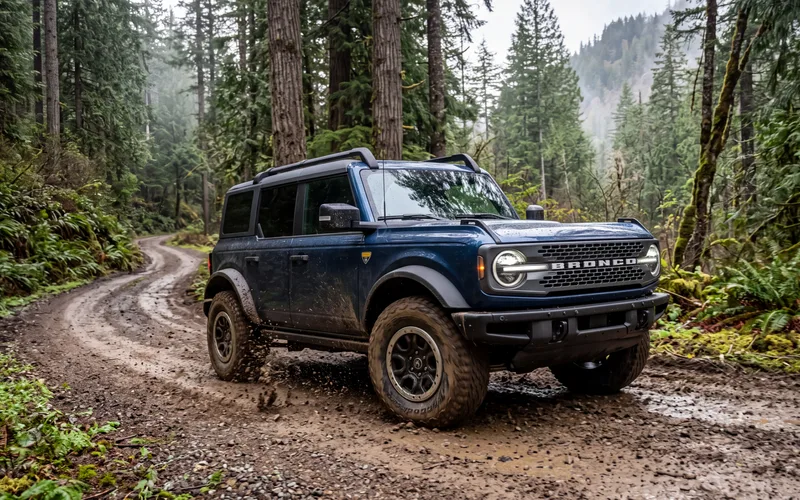 Ford BroncoOff-Road SUVBetter at: Daily comfort
The head-to-head rival: more rear legroom, open-air doors and roof, better on-road manners and actual discounts — worth taking unless you need the 4Runner's 6,000-lb tow rating, hybrid option or resale value.
Compare 2.40C+
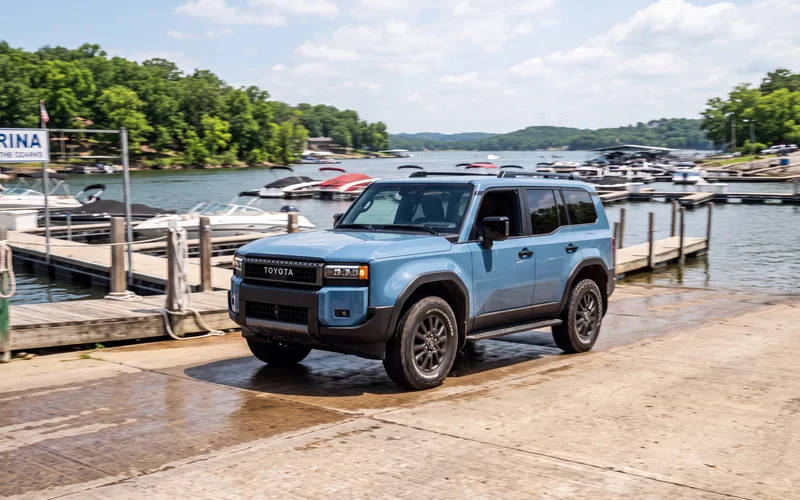 Toyota Land CruiserOff-Road SUVBetter at: Refinement
Sits in the same showroom on the same platform with the hybrid standard and a plusher cabin, overlapping a loaded 4Runner on price — the move if you want one nice off-roader rather than a purpose-built one.
Compare 2.63C+
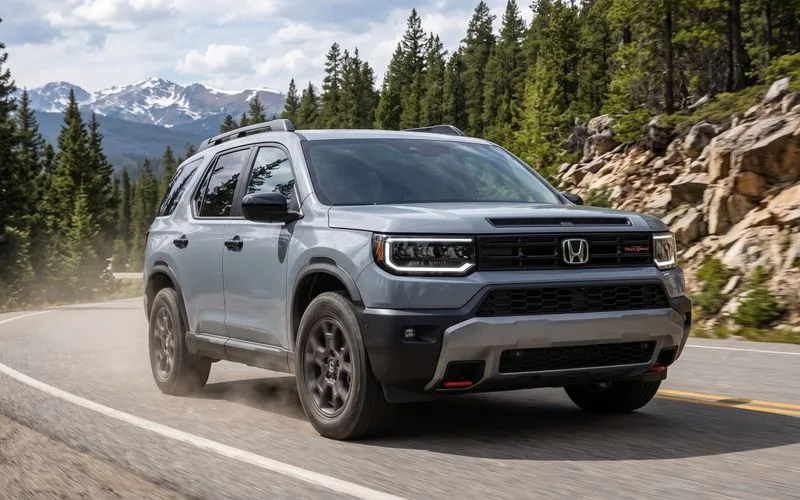 Honda PassportMid-Size SUVBetter at: Everyday livability
Rides, steers and seats people far better for less money while still handling forest roads and snow, giving up low range, the 6,000-lb tow rating and 4Runner-grade resale.
CompareHow it's evolved
10 scored model years · 2017–2026
Subject scores by year
Hover or tap a score to see what moved it versus the year before. A corner mark flags a big swing.
| Year | Performance | Efficiency | Safety | Space | Cost | Reliability | Tech | Use-case | Driving | Value |
|---|---|---|---|---|---|---|---|---|---|---|
| 2026 | 59 | 38 | 65 | 50 | 62 | 75 | 68 | 67 | 65 | 74 |
| 2025 | 58 | 41 | 64 | 47 | 61 | 75 | 68 | 64 | 58 | 76 |
| 2024 | 49 | 25 | 54 | 44 | 61 | 83 | 46 | 61 | 54 | 59 |
| 2023 | 47 | 21 | 52 | 46 | 62 | 83 | 46 | 61 | 53 | 56 |
| 2022 | 47 | 24 | 52 | 46 | 62 | 83 | 46 | 61 | 56 | 56 |
| 2021 | 47 | 31 | 43 | 46 | 62 | 86 | 39 | 60 | 52 | 55 |
| 2020 | 46 | 31 | 43 | 42 | 64 | 82 | 33 | 60 | 54 | 58 |
| 2019 | 46 | 27 | 26 | 44 | 70 | 84 | 25 | 57 | 59 | 53 |
| 2018 | 46 | 25 | 25 | 44 | 70 | 81 | 22 | 56 | 57 | 52 |
| 2017 | 46 | 25 | 25 | 44 | 70 | 86 | 22 | 56 | 59 | 54 |
Compare two years
Best fit & conditions
Higher scores mean a better fit for that use case. Learn more about use-case fit →
Subject profile
Trims & configurations
7 trimsScores above reflect the volume trim. Per-trim specs and scores are rolling out — the full lineup:
Academic Probation · NHTSA safety recalls
Jul 6, 2022Equipment: other: labelsThe load carrying capacity modification labels are incorrect. As such, these vehicles fail to comply with the requirements of Federal Motor Vehicle Safety Standard number 110, "Tire Selection and Rims."
Defect
Southeast Toyota Distributors, LLC (SET) is recalling certain 2020-2022 4Runner vehicles equipped with 20-inch Black Gunner Wheels. The load carrying capacity modification labels are incorrect. As such, these vehicles fail to comply with the requirements of Federal Motor Vehicle Safety Standard number 110, "Tire Selection and Rims."
Risk
An incorrect label may lead to unintentionally overloading the vehicle, increasing the risk of a crash.
Remedy
SET will mail replacement labels to owners, free of charge. Owner notification letters are expected to be mailed September 4, 2022. Owners may contact SET's customer service at 954-429-2000. SET's number for this recall is SET22A.
NHTSA campaign 22V480000 ↗Manufacturer no. SET22A280 vehicles potentially affected (all models in the campaign)Owners notified Sep 1, 2022Filed by Southeast Toyota Distributors, LLCFiled as 4RUNNERMay 6, 2022Equipment: other: labelsThe load carrying capacity modification labels may not be permanent and can fade, becoming illegible. As such, these vehicles fail to comply with the requirements of Federal Motor Vehicle Safety Standard number 110, "Tire Selection and Rims."
Defect
Gulf States Toyota, Inc. (GST) is recalling certain 2022 4Runner, Tacoma, Highlander, and Highlander Hybrid vehicles. The load carrying capacity modification labels may not be permanent and can fade, becoming illegible. As such, these vehicles fail to comply with the requirements of Federal Motor Vehicle Safety Standard number 110, "Tire Selection and Rims."
Risk
An illegible label may allow the vehicle to be overloaded, increasing the risk of a crash.
Remedy
GST will notify owners by mail, including a replacement load carrying capacity modification label for their vehicle and detailed replacement instructions, free of charge. Owner notification letters were mailed June 30, 2022. Owners may contact GST customer service at 1-800-444-1074. GST's number for this recall is 22R1.
NHTSA campaign 22V310000 ↗Manufacturer no. 22R1661 vehicles potentially affected (all models in the campaign)Owners notified Jun 30, 2022Filed by Gulf States Toyota, Inc.Filed as 4RUNNERDec 13, 2021Exterior lighting: headlightsThe driver's side high beam may be inoperable after the installation of accessory fog lights. As such, these vehicles fail to comply with the requirements of Federal Motor Vehicle Safety Standard number 108, "Lamps, Reflective Devices, and Associated Equipment."
Defect
Southeast Toyota Distributors, LLC (SET) is recalling certain 2022 Toyota 4Runner vehicles. The driver's side high beam may be inoperable after the installation of accessory fog lights. As such, these vehicles fail to comply with the requirements of Federal Motor Vehicle Safety Standard number 108, "Lamps, Reflective Devices, and Associated Equipment."
Risk
An inoperable driver's side high beam may reduce visibility, increasing the risk of a crash.
Remedy
Dealers will install an updated wiring harness, free of charge. Owner notification letters were mailed February 11, 2022. Owners may contact SET customer service at 1-866-405-4226. SET's number for this recall is SET21A.
NHTSA campaign 21V963000 ↗Manufacturer no. SET21A78 vehicles potentially affected (all models in the campaign)Owners notified Feb 11, 2022Filed by Southeast Toyota Distributors, LLCFiled as 4RUNNER
13 recalls on other model years of the 4Runner (2017–2019, 2023–2026)
Sep 2, 2026Equipment: other: labelsThe load carrying capacity modification label may display inaccurate added weight values. As such, these vehicles fail to comply with the requirements of Federal Motor Vehicle Safety Standard number 110, "Tire Selection and Rims."
Defect
Toyota Motor Engineering & Manufacturing (Toyota) is recalling certain 2024 Toyota Tacoma Hybrid, 2025 Tundra Hybrid, Tundra, 2026 RAV4 Hybrid, 4Runner i-Force Max Hybrid, and 4Runner vehicles. The load carrying capacity modification label may display inaccurate added weight values. As such, these vehicles fail to comply with the requirements of Federal Motor Vehicle Safety Standard number 110, "Tire Selection and Rims."
Risk
A vehicle with an incorrect maximum capacity weight value may be overloaded, increasing the risk of a crash.
Remedy
Dealers will replace the load carrying capacity modification label, free of charge. Owner notification letters are expected to be mailed October 18, 2026. Owners may contact Toyota's customer service at 1-800-331-4331. Toyota's number for this recall is 26TA18.
NHTSA campaign 26V571000 ↗Manufacturer no. 26TA18135 vehicles potentially affected (all models in the campaign)Filed by Toyota Motor Engineering & ManufacturingFiled as 4RUNNER, 4RUNNER I-FORCE MAX HYBRIDMay 4, 2026Equipment: other: labelsThe load carrying capacity modification label states the incorrect load carrying capacity. As such, these vehicles fail to comply with the requirements of Federal Motor Vehicle Safety Standard number 110, "Tire Selection and Rims."
Defect
Gulf States Toyota, Inc. (GST) is recalling certain 2026 4Runner vehicles. The load carrying capacity modification label states the incorrect load carrying capacity. As such, these vehicles fail to comply with the requirements of Federal Motor Vehicle Safety Standard number 110, "Tire Selection and Rims."
Risk
An incorrect load carrying capacity label may lead to improper loading of the vehicle, increasing the risk of a crash.
Remedy
GST will mail a new modification label to owners, free of charge. Owner notification letters were mailed June 18, 2026. Owners may contact GST customer service at 1-800-444-1074. GST's number for this recall is 26R1.
NHTSA campaign 26V282000 ↗Manufacturer no. 26R194 vehicles potentially affected (all models in the campaign)Owners notified Jun 18, 2026Filed by Gulf States Toyota, Inc.Filed as 4RUNNERSep 11, 2025Electrical system: instrument cluster/panelDue to an error in the instrument panel software at vehicle startup, the instrument panel may fail to display vehicle speed, brake system, and tire pressure warning lights.
Defect
Toyota Motor Engineering & Manufacturing (Toyota) is recalling certain 2023-2024 Toyota Venza, 2023-2025 RAV4 Prime, RAV4, Highlander, GR Corolla, Crown, 2024-2025 Lexus TX, LS, Toyota Tacoma, Grand Highlander, and 2025 Lexus RX, Toyota Crown Signia, Camry, RAV 4 Plug-in Hybrid (PHEV), and 4 Runner vehicles. Due to an error in the instrument panel software at vehicle startup, the instrument panel may fail to display vehicle speed, brake system, and tire pressure warning lights.
Risk
An instrument panel display that does not show critical information can increase the risk of a crash or injury.
Remedy
Dealers will update the instrument panel software over-the-air (OTA) for non-PHEV vehicles, free of charge. For PHEV vehicles, dealers will inspect the instrument panel assembly, and either replace it, or update the software, free of charge. Owner letters were mailed December 5, 2025. Additional letters will be sent, anticipated in May 2026. This is a phased recall. Owners may contact Toyota's customer service at 1-800-331-4331. Toyota's numbers for this recall are 25TB08 and 25TA08. Lexus' numbers for this recall are 25LB05 and 25LA05.
NHTSA campaign 25V595000 ↗Manufacturer no. See Part 573 Report591,377 vehicles potentially affected (all models in the campaign)Owners notified Dec 5, 2025Filed by Toyota Motor Engineering & ManufacturingFiled as 4RUNNERJul 23, 2024Equipment: other: labelsThe load carrying capacity modification label may display inaccurate added weight values. As such, these vehicles fail to comply with the requirements of Federal Motor Vehicle Safety Standard number 110, "Tire Selection and Rims."
Defect
Gulf States Toyota, Inc. (GST) is recalling certain Toyota 2023 GR Supra, 2024 4 Runner, Corolla, Grand Highlander, Grand Highlander Hybrid, Land Cruiser Hybrid, Tacoma, Tacoma Hybrid, 2023-2024 BZ4X, Corolla Cross Hybrid, GR Corolla, GR86, Highlander, Highlander Hybrid, Prius, Prius Prime, Sequoia Hybrid, Tundra, Tundra Hybrid, Venza Hybrid, 2023-2025 Crown, and 2025 Camry Hybrid vehicles equipped with GST accessories. The load carrying capacity modification label may display inaccurate added weight values. As such, these vehicles fail to comply with the requirements of Federal Motor Vehicle Safety Standard number 110, "Tire Selection and Rims."
Risk
A vehicle with an incorrect maximum capacity weight value may be overloaded, which can increase the risk of a crash.
Remedy
GST will mail new labels to owners, free of charge. Owner notification letters were mailed September 16, 2024. Owners may contact GST customer service at 1-800-444-1074. GST's number for this recall is 24R2.
NHTSA campaign 24V548000 ↗Manufacturer no. 24R233,848 vehicles potentially affected (all models in the campaign)Owners notified Sep 16, 2024Filed by Gulf States Toyota, Inc.Filed as 4RUNNEROct 12, 2023Equipment: other: labelsThe load carrying capacity modification label states the incorrect load carrying capacity, which can result in an overloaded vehicle. As such, these vehicles fail to comply with the requirements of Federal Motor Vehicle Safety Standard number 110, "Tire Selection and Rims."
Defect
Southeast Toyota Distributors, LLC (SET) is recalling certain 2023 Toyota 4Runner vehicles. The load carrying capacity modification label states the incorrect load carrying capacity, which can result in an overloaded vehicle. As such, these vehicles fail to comply with the requirements of Federal Motor Vehicle Safety Standard number 110, "Tire Selection and Rims."
Risk
An overloaded vehicle increases the risk of a crash.
Remedy
Southeast Toyota Distributors, LLC will mail a new modified label, free of charge. Owner notification letters were mailed December 1, 2023. Owners may contact SET's customer service at 1-866-405-4226. SET's number for this recall is SET23A.
NHTSA campaign 23V680000 ↗Manufacturer no. SET23A13 vehicles potentially affected (all models in the campaign)Owners notified Dec 1, 2023Filed by Southeast Toyota Distributors, LLCFiled as 4RUNNERNov 4, 2020Fuel system, gasoline: delivery: fuel pumpThe low-pressure fuel pump inside the fuel tank may fail.
Defect
Toyota Motor Engineering & Manufacturing (Toyota) is recalling certain 2018-2019 4Runner, 2019-2020 Avalon, 2019 Corolla Hatchback, 2017-2019 Highlander, 2018-2020 Camry, 2020 Corolla, 2018-2019 Land Cruiser, 2017-2020 Tacoma, 2019-2020 RAV4, 2019-2020 Sequoia, 2017-2020 Sienna, 2019-2020 Tundra, 2018-2020 Lexus ES350, 2017 Lexus GS200t, 2017-2019 Lexus GS350, 2019 Lexus GS300, 2018-2020 Lexus LC500h, 2019-2020 Lexus LS500, 2018-2019 Lexus GX460, 2017 Lexus IS200t, 2019 Lexus IS300, 2019 Lexus IS350, 2018-2020 Lexus LC500, 2018 Lexus LS500, 2019 Lexus LS500h, 2018-2019 Lexus LX570, 2017 Lexus RC200t, 2019 Lexus RC300, RC350, 2017 and 2019-2020 Lexus RX350, 2018-2020 RX350L, 2019 Lexus UX200, 2018-2019 Lexus NX300 vehicles. The low-pressure fuel pump inside the fuel tank may fail.
Risk
If the fuel pump fails, the engine can stall while driving, increasing the risk of a crash.
Remedy
Toyota will notify owners, and dealers will replace the fuel pump assembly with an improved one, free of charge. Owners of specific models were notified that remedy parts were available starting January 21, 2021. Owners of other models will be notified as remedy parts become available. Remedy parts should be available for all affected vehicles by late March 2021. Owners may contact Toyota customer service at 1-888-270-9371 or Lexus customer service at 1-800-255-3987. Note: This recall is an expansion of recall 20V-012. Toyota's number for this recall is 20TA02. Lexus' number for this recall is 20LA01.
NHTSA campaign 20V682000 ↗Manufacturer no. 20TA02, 20LA011,525,742 vehicles potentially affected (all models in the campaign)Owners notified Jan 21, 2021Filed by Toyota Motor Engineering & ManufacturingFiled as 4RUNNERSep 20, 2019Steering · SuspensionDuring installation, certain steering and suspension components may not have been properly tightened.
Defect
Southeast Toyota Distributors, LLC (SET) is recalling certain 2018-2019 Toyota 4Runner vehicles. During installation, certain steering and suspension components may not have been properly tightened.
Risk
Loose fasteners may cause a loss of vehicle control, or cause an accessory to detach from the vehicle and become a road hazard. Either of these scenarios can increase the risk of a crash or injury.
Remedy
SET will notify owners, and dealers will inspect and re-tighten the steering and suspension fasteners as necessary, free of charge. The recall is expected to begin November 19, 2019. Owners may contact SET customer service at 1-866-405-4226. SET's number for this recall is SET19B.
NHTSA campaign 19V670000 ↗Manufacturer no. SET19B34 vehicles potentially affected (all models in the campaign)Owners notified Oct 28, 2019Filed by Southeast Toyota Distributors, LLCFiled as 4RUNNERMar 27, 2019Equipment: other: labelsThe text on the load capacity label may become illegible. As such, these vehicles fail to comply with the requirements of Federal Motor Vehicle Safety Standard (FMVSS) number 110, "Tire Selection and Rims."
Defect
Gulf States Toyota (GST) is recalling certain 2019 C-HR, 4Runner, Avalon, Avalon Hybrid, Camry, Camry Hybrid, Highlander, Land Cruiser, Prius, RAV4, Sequoia, Tacoma, Sienna, Tundra and Yaris vehicles. The text on the load capacity label may become illegible. As such, these vehicles fail to comply with the requirements of Federal Motor Vehicle Safety Standard (FMVSS) number 110, "Tire Selection and Rims."
Risk
If the driver cannot read the label, they may unknowingly overload the vehicle, increasing the risk of a crash.
Remedy
GST will notify owners, and dealers will provide corrected load carrying capacity modification labels, free of charge. The recall began May 24, 2019. Owners may contact GST customer service at 1-800-444-1074. GST's number for this recall is 19R1.
NHTSA campaign 19V244000 ↗Manufacturer no. 19R13,634 vehicles potentially affected (all models in the campaign)Owners notified May 24, 2019Filed by Gulf States Toyota, Inc.Filed as 4RUNNEROct 25, 2018Equipment: other: labelsThe Gross Vehicle Weight Rating (GVWR) on the certification label may be incorrect, possibly resulting in the vehicle being overloaded. As such, these vehicles fail to comply with the requirements of Federal Motor Vehicle Safety Standard (FMVSS) number 110, "Tire Selection and Rims."
Defect
Southeast Toyota Distributors, LLC (SET) is recalling certain 2017-2019 Toyota 4Runner vehicles that SET modified to be equipped with a TRD wheel package. The Gross Vehicle Weight Rating (GVWR) on the certification label may be incorrect, possibly resulting in the vehicle being overloaded. As such, these vehicles fail to comply with the requirements of Federal Motor Vehicle Safety Standard (FMVSS) number 110, "Tire Selection and Rims."
Risk
An overloaded vehicle can increase the risk of a crash.
Remedy
SET will notify owners and mail them corrected certification labels, free of charge. The recall began November 28, 2018. Owners may contact SET customer service at 1-866-405-4226. SET's number for this recall is SET18A.
NHTSA campaign 18V753000 ↗Manufacturer no. SET18A1,295 vehicles potentially affected (all models in the campaign)Owners notified Nov 28, 2018Filed by Southeast Toyota Distributors, LLCFiled as 4RUNNERDec 20, 2017Equipment: other: labelsThese vehicles may have incorrect load carrying capacity modification labels. As such, these vehicles fail to comply with the requirements of Federal Motor Vehicle Safety Standard (FMVSS) number 110, "Tire Selection and Rims."
Defect
Toyota Motor Engineering & Manufacturing (Toyota) is recalling certain 2017-2018 Toyota 4Runner and Tundra, 2018 Toyota Highlander, RAV4 and Lexus GX460 and 2017 Toyota Sienna and Tacoma vehicles. These vehicles may have incorrect load carrying capacity modification labels. As such, these vehicles fail to comply with the requirements of Federal Motor Vehicle Safety Standard (FMVSS) number 110, "Tire Selection and Rims."
Risk
An incorrect load information label can result in the operator overloading the vehicle and increasing the risk of a crash.
Remedy
Toyota will notify owners and provide them with corrected labels, free of charge. The recall began on January 23, 2018. Owners may contact Toyota customer service at 1-800-331-4331. Toyota's numbers for this recall are H0Z for Toyota vehicles, and HLF for Lexus vehicles.
NHTSA campaign 17V831000 ↗Manufacturer no. Toyota H0Z Lexus HLF649 vehicles potentially affected (all models in the campaign)Owners notified Jan 23, 2018Filed by Toyota Motor Engineering & ManufacturingFiled as 4RUNNERNov 29, 2017Structure: body: hoodThe U-nut that secures the overlay grille may fracture, allowing the Billet Grille Overlay to detach from the vehicle.
Defect
Southeast Toyota Distributors, LLC (SET) is recalling certain 2015-2018 Toyota 4Runner vehicles equipped with an accessory Billet Grille Overlay installed by SET or provided by SET and installed by SET dealers. The U-nut that secures the overlay grille may fracture, allowing the Billet Grille Overlay to detach from the vehicle.
Risk
If the Billet Grille Overlay detaches while driving, it can become a road hazard, increasing the risk of a crash.
Remedy
SET will notify owners, and dealers will replace the securing U-nuts with upgraded hardware, free of charge. The recall is expected to begin January 26, 2018. Owners may contact SET customer service at 1-866-405-4226. SET's number for this recall is SET17C.
NHTSA campaign 17V763000 ↗Manufacturer no. SET17C431 vehicles potentially affected (all models in the campaign)Owners notified Jan 17, 2018Filed by Southeast Toyota Distributors, LLCFiled as 4RUNNERMay 2, 2017Tires: temporary/emergency spare tireThe spare tire air pressure was not adjusted to the proper pressure as stated on the Tire Pressure Label.
Defect
Gulf States Toyota, Inc. (Gulf States) is recalling certain 2017 4Runner , 86, Avalon, Camry, Camry Hybrid, Corolla, Corolla iM, Highlander, Highlander Hybrid, Prius, Prius C, RAV4, RAV4 Hybrid, Sienna and Yaris vehicles. The spare tire air pressure was not adjusted to the proper pressure as stated on the Tire Pressure Label.
Risk
A spare tire that is not inflated to the proper value may not perform as intended, increasing the risk of a crash.
Remedy
Gulf States will notify owners, and dealers will inspect the spare tires, adjusting their pressure as necessary, free of charge. The recall began June 15, 2017. Owners may contact Gulf States customer service at 1-800-444-1074. Toyota's number for this recall is 17R2.
NHTSA campaign 17V295000 ↗Manufacturer no. 17R2409 vehicles potentially affected (all models in the campaign)Owners notified Jun 15, 2017Filed by Gulf States Toyota, Inc.Filed as 4RUNNERMay 1, 2017EquipmentThe fasteners for the aftermarket roof rack may have been improperly tightened.
Defect
Gulf States Toyota, Inc (Gulf States) is recalling certain 2016-2017 4Runner vehicles equipped with the TFORCE accessory package. The fasteners for the aftermarket roof rack may have been improperly tightened.
Risk
If the roof rack fasteners loosen, the roof rack may detach from the vehicle, increasing the risk of a crash.
Remedy
Gulf States will notify owners, and dealers will inspect and, as necessary, tighten the roof rack fasteners, free of charge. The recall began June 15, 2017. Owners may contact Gulf States customer service at 1-800-444-1074. Gulf States' number for this recall is 17R1.
NHTSA campaign 17V291000 ↗Manufacturer no. 17R11,019 vehicles potentially affected (all models in the campaign)Owners notified Jun 15, 2017Filed by Gulf States Toyota, Inc.Filed as 4RUNNER
Source: NHTSA Office of Defects Investigation recall database, model years 2017–2026. Recalls are listed by model year as the manufacturer filed them; whether a specific car is affected depends on its VIN — check a VIN at nhtsa.gov ↗. NHTSA model names matched to this page: 4RUNNER, 4RUNNER I-FORCE MAX HYBRID.
Detailed scoring by subject
1Performance & PowertrainGrades below the middle of the scale.1.14D
The 2022 4Runner is deep in the fifth generation (2010–2024) and uses the same naturally aspirated 4.0L V6 across every trim — 270 hp at 5,600 rpm. There is no engine option, so the volume SR5 and the range max are identical. A modest figure for the SUV band, unchanged for over a decade.
The 4.0L V6 makes 278 lb-ft at 4,400 rpm. Solid low- and mid-range grunt that suits low-speed off-road work, but a high-rpm peak and no forced induction leave it mid-pack against turbocharged and hybrid SUV rivals.
Toyota publishes no figure; instrumented tests of the fifth-gen 4Runner cluster around 7.5–7.7 s regardless of trim, held back by a ~4,800–5,000 lb body-on-frame curb weight and a 5-speed automatic. Adequate but unremarkable, landing in the slower half of the SUV band.
The naturally aspirated V6 is smooth off idle with linear, lag-free response and a proven reliability record, but it grows coarse and boomy when revved hard and its efficiency and outright refinement trail newer turbo and hybrid powertrains. Dependable rather than polished.
The 5-speed automatic is the 4Runner's biggest dynamic weak point — two to five ratios behind rivals' 8- and 10-speed units. It shifts smoothly and is bulletproof, but the tall gaps hurt both acceleration and highway efficiency, and reviewers consistently flag it as antiquated.
Rated at 5,000 lbs across the range — competitive for a mid-size body-on-frame SUV and well ahead of unibody crossovers and the Jeep Wrangler (3,500 lbs), though short of full-size SUVs and the later sixth-gen 4Runner's 6,000 lbs.
Serious 4WD hardware is widely offered: part-time 4WD with a two-speed transfer case on SR5/TRD Sport/TRD Off-Road/TRD Pro, and full-time 4WD with a locking Torsen center differential on Limited, plus an available electronic locking rear diff and Multi-Terrain Select/CRAWL Control on off-road grades. Held below the top band only because SR5, TRD Sport and Limited are still sold in rear-wheel-drive form.
Genuine off-road credibility anchored by the TRD Pro halo grade — 2.5-inch Fox internal-bypass shocks, all-terrain tires, roof rack and skid plate — and the TRD Off-Road with KDSS sway-bar disconnect, Multi-Terrain Select, CRAWL Control and an electronic locking rear differential, all on a ladder frame with roughly 9.6 in of clearance. Among the most capable mid-size SUVs, a notch below the extreme Wrangler.
A single powertrain, take-it-or-leave-it: every 2022 4Runner is the 4.0L V6 with a 5-speed automatic. No turbo, hybrid, PHEV or EV option exists in the fifth generation — the newly added 2022 TRD Sport brought only cosmetics and X-REAS suspension, not a new powertrain. Electrification did not arrive until the 2025 sixth-gen i-FORCE MAX. Firmly in the bottom band for breadth.
2Efficiency & RangeThe 4Runner's lowest-graded category.0.00F
The 2022 4Runner uses an aging 4.0L V6 (270 hp) paired with a 5-speed automatic — no hybrid was offered that year — yielding one of the thirstiest ratings among mainstream SUVs, below the segment band floor.
City figure sits at the very bottom of the SUV band; the body-on-frame chassis, full-time/part-time 4WD hardware, and old 5-speed automatic all hurt stop-and-go economy.
Brick-like aerodynamics and tall off-road gearing keep highway economy below the segment band floor, worse than rival off-roaders like the Wrangler and Bronco.
A large 23-gallon fuel tank offsets the poor economy, giving a serviceable mid-pack cruising range despite the low MPG.
At 17 MPG combined the 4Runner burns roughly 880 gallons a year, placing annual energy cost in the upper (worse) end of the SUV band even on cheap regular fuel.
Runs on inexpensive 87-octane regular unleaded with no premium or special-fuel requirement — the one bright spot in an otherwise costly-to-fuel package.
3SafetyGrades below the middle of the scale.1.50D
NHTSA rates the 2022 4Runner 4 stars overall, held down by a 3.00 rollover result typical of a tall, body-on-frame off-road SUV; the side test earns 5 stars and frontal 4 stars. These carry across the long-running fifth generation (2010-2024).
The fifth-gen 4Runner (IIHS ratings apply to 2014-24 models) posts Good in moderate overlap front, side, roof strength and head restraints, but only Marginal in the driver-side small overlap front test and its headlights rate Poor. A Marginal in a key structural test plus Poor headlights keep it well off any Top Safety Pick and land it in the lower band.
Toyota Safety Sense P is standard on every 2022 trim (Pre-Collision System with pedestrian detection, Lane Departure Alert with Sway Warning, Dynamic Radar Cruise Control, Automatic High Beams). For 2022 Toyota newly made Blind Spot Monitor with Rear Cross-Traffic Alert standard on SR5 Premium, TRD Off-Road Premium, TRD Pro and Limited, but the volume base SR5 (and new TRD Sport) still gets it only via a package — so BSM/RCTA remains a trim gap and there is no lane-centering, keeping it just below the top band.
The standard Pre-Collision System with pedestrian detection earns Superior in IIHS vehicle-to-vehicle front crash prevention and includes daytime pedestrian braking, so straight-ahead avoidance is strong. It is the older TSS-P generation, without the intersection/turn-assist scenarios or the stronger night-pedestrian performance of Toyota's newer TSS 3.0, so it sits mid-band.
For 2022 Blind Spot Monitor with Rear Cross-Traffic Alert became standard on SR5 Premium, TRD Off-Road Premium, TRD Pro and Limited, but it is not standard on the volume base SR5 (available in a package) or the new TRD Sport — it only became standard across the whole lineup for 2024. Coverage is alert-only with no active cross-traffic braking, so it lands mid-band on availability rather than higher.
The 2022 4Runner's TSS-P provides only Lane Departure Alert with a Sway Warning function — a warning system, not active lane keeping. There is no lane-centering or lane-tracing steering assist anywhere in the lineup, so the driver gets an alert but no corrective steering, which is crude relative to segment rivals that hold a lane.
The 4Runner uses high-speed Dynamic Radar Cruise Control (operates roughly above 25 mph), not the full-speed-range stop-and-go system, so it disengages in slow traffic and cannot bring the vehicle to a stop. With no lane-centering to pair with, there is no integrated highway assist — it is functional radar cruise with dated limits rather than a modern highway aid.
The 2022 4Runner offers no hands-free highway driving system. DRCC and Lane Departure Alert are hands-on features requiring the driver's hands on the wheel — there is no equivalent to Ford BlueCruise, GM Super Cruise, or Tesla FSD anywhere in the lineup.
IIHS rated the fifth-gen 4Runner's headlights Poor — low-beam visibility was fair on straightaways but inadequate in the curve tests, with some glare. For 2022 Toyota did add standard LED high beams across the lineup, but the low-beam performance that drives the IIHS grade is unchanged, and even better-equipped variants only reach Acceptable. Poor headlights on the volume trims are a primary reason the 4Runner cannot earn a Top Safety Pick.
The boxy, upright fifth-gen body gives a tall, commanding seating position, a large glasshouse and relatively thin pillars, so natural forward and side sightlines are good. A backup camera is standard; a 360-degree/Multi-Terrain Monitor is limited to upper trims (TRD Pro adds standard Multi-Terrain Monitor for 2022), and the tailgate-mounted spare and thick rear pillars are the main compromise.
The 4Runner's tall, boxy cabin offers wide rear-door openings and a roomy second row that makes fitting rear-facing and convertible seats straightforward, but the lower LATCH anchors sit fairly deep in the seat bight and require some digging, and the optional third row is impractical for car seats. Workable rather than best-in-class LATCH access.
4Space & ComfortOne of the 4Runner's weakest categories.1.10D
The 2022 4Runner is a five-passenger two-row SUV in its volume SR5/TRD configurations; a cramped third row was a factory option on SR5, SR5 Premium and Limited that pushed capacity to seven, but it is rarely fitted and lands the volume trim in the low part of the SUV seating band.
The tall, boxy fifth-gen body gives good-but-not-class-leading front headroom, sitting mid-band for SUVs; the available moonroof trims it to 37.8 in.
Front legroom is merely adequate — mid-to-low in the SUV band and typical of the aging TGN body-on-frame architecture — though the upright, commanding seating position flatters day-to-day comfort.
Second-row headroom is a relative strength thanks to the square roofline, sitting in the upper part of the SUV band and among the better passenger-space specs on the car.
The defining passenger-space weakness: at 32.9 in the second row is tight for a mid-size SUV footprint, trailing the Bronco (36.3 in) and Wrangler (38.3 in) and leaving taller adults knees-up on longer trips.
The optional third row is token seating — a low, knees-up 50/50 bench with just 29.3 in of legroom and 34.3 in of headroom, suited only to small children on short trips, difficult to access and eating almost all cargo space when in use. Most 4Runners leave the factory without it, so the volume car is effectively two-row.
Usable, flat-floored space behind the second row that clears the off-road set it competes with (Bronco 35.6, Wrangler 31.7), but modest against unibody mid-size crossovers and mid-band overall.
With the rear seats folded the boxy body and near-vertical tailgate deliver a genuinely large, van-like hold — the strongest cargo spec on the car and ahead of the mechanically related Land Cruiser.
Above the everyday norm on the strength of two signature features: the power roll-down rear window (a 4Runner hallmark unique in the class) and the available sliding rear cargo deck that doubles as a tailgate seat/load platform. A deep console, big door bins, and a flat fold-flat floor round it out; it stops short of the standout band without onboard power or an in-floor trunk.
Front seats are supportive with an upright, high-set driving position most owners like, and SofTex/leather trims cushion well; the flatter rear bench and limited rear legroom make longer stints less agreeable, keeping this comfortably mid-band rather than a long-haul leader.
A trucky, old-school body-on-frame ride: composed and pliant on the highway but floaty over undulations and busy on broken pavement, with noticeable secondary motion. Better tied-down than a Wrangler (40) but behind any unibody crossover.
One of the noisier cabins in the segment: pronounced wind and road noise at highway speed from the boxy shape and (on TRD trims) all-terrain tires, plus a droning, coarse 4.0-liter V6 under load. The dated fifth-gen sound insulation shows against newer rivals.
Adequate for the class without being generous: dual-zone or optional auto climate, heated front seats on SR5 Premium and up, and heated steering wheel plus ventilated front seats on the Limited, but rear-climate provision and remote pre-conditioning are limited and much of the equipment lives on the pricier trims.
5Cost of OwnershipOne of the 4Runner's strongest categories.2.18C
The 2022 4Runner is a fifth-generation (2010–2024) body-on-frame SUV, and its entry SR5 2WD opens at $38,520 plus a $1,215 delivery charge for roughly $39,735 delivered — mid-band for a mid-size SUV and a hair cheaper than the 2023–2024 years. The aging platform keeps the sticker in check versus newer rivals.
The TRD Off-Road 4WD (~$42,350 base + $1,215 destination ≈ $43,565 delivered) is the fifth-gen 4Runner's traditional volume sweet spot — the grade buyers pick for the locking rear differential, Multi-Terrain Select and CRAWL Control — with SR5 Premium (~$43,805 base) close behind. That places the representative config mid-ladder in the mid-size SUV band.
The fifth-gen 4Runner's naturally aspirated 4.0L V6 and 5-speed automatic are simple, proven, low-maintenance hardware, and Toyota body-on-frame SUVs are consistently among the cheapest trucks to keep. Estimates cluster around $5,000–6,300 over five years — a touch above compact crossovers but well below the truck-based SUV average.
Resale is the 4Runner's signature strength. The fifth generation is one of the best value-retaining vehicles on the US market — scarcity, a devoted following and rugged-SUV demand keep it holding roughly two-thirds of MSRP at five years, dramatically better than the ~46% mid-size SUV average.
Toyota's 36-month/36,000-mile basic coverage is the industry floor — level with Honda and Nissan but far short of Hyundai/Kia's 5-year bumper-to-bumper terms.
The 2022 4Runner is gas-only (4.0L V6), so it carries Toyota's standard 5-year/60,000-mile powertrain coverage with no longer hybrid-component or battery terms — the segment floor against Hyundai/Kia's 10-year powertrain warranty.
ToyotaCare covers all factory-scheduled service for 2 years/25,000 miles plus 2 years of unlimited-mileage roadside assistance — real included maintenance where body-on-frame rivals like the Jeep Wrangler and Ford Bronco offer none. It falls short of top marks because the window is shorter than Hyundai/Kia's 3-year/36,000-mile plan and there are no fuel credits.
$43,565 volume-trim price minus its estimated resale value after 5 years (63% retained, or about $27,446) leaves about $16,119 in depreciation. Add the projected $5,600 in 5-year maintenance and repairs, and owning this vehicle for 5 years costs about $21,719 in total.
6Reliability & QualityThe 4Runner's best-graded category.3.67A-
As the 12th model year of the fully-matured fifth generation (2010-2024), the 2022 4Runner earns top-tier predicted reliability — Consumer Reports rates its predicted reliability well above average and it perennially tops longevity studies (iSeeCars consistently ranks the 4Runner #1 among vehicles most likely to reach 200,000+ miles).
Toyota consistently ranks at or near the top of Consumer Reports' brand reliability rankings and stays above average in J.D. Power's Vehicle Dependability Study, giving the 4Runner an exceptionally strong brand backbone.
By its 12th model year the fifth-gen 4Runner carried a clean, low-volume recall record with no systemic powertrain or structural defects; 2022 saw minimal recall activity on a design refined over more than a decade of production.
The 2022 4Runner uses the naturally-aspirated 4.0L 1GR-FE V6 (270 hp) paired with a simple 5-speed automatic — one of the most durable, high-mileage-proven powertrains Toyota has ever built, with no turbocharging or hybrid complexity and a track record of reaching very high odometer readings.
The 4Runner's cabin was among the most dated in its class by 2022 — reviewers routinely criticized the hard plastics, aging switchgear, and small 8-inch infotainment, materials that fall well short of similarly priced rivals despite durable, rugged execution.
Built on a long-proven body-on-frame platform, assembly is solid, tight, and rugged with Toyota's consistent initial quality and no widespread rattle or misalignment complaints — old-school truck build integrity even if the design is dated.
Toyota operates one of the densest nationwide US dealer/service networks (~1,200 dealers) with consistently strong service-satisfaction scores, giving 4Runner owners broad, well-supported coverage.
The 4Runner carries one of the largest off-road/enthusiast aftermarkets of any SUV, and the simple naturally-aspirated V6 and 5-speed automatic are cheap to service with abundant, competitively priced parts — repair economics are a genuine strength.
7Technology & InfotainmentOne of the 4Runner's weakest categories.1.06D
The 2022 4Runner is a mature late-run year of the fifth-generation (N280) platform and carries the 8.0-inch touchscreen that became standard on all grades in the MY2020 refresh — there is no larger screen option anywhere in the range, so it sits at the floor of the SUV band.
The 2022 4Runner runs Toyota's pre-Audio-Multimedia head unit — a dated system with low-resolution graphics, aging menus and modest responsiveness that reviewers routinely flagged as the vehicle's weakest area, though it keeps a full set of physical HVAC and off-road hard controls. It sits in the middle-to-lower band: functional and physically easy to use, but visibly a generation behind rivals.
Apple CarPlay, Android Auto and Amazon Alexa are standard on every 2022 trim including the base SR5 — but wired only. The fifth-generation 4Runner never offered wireless phone projection on any grade, so it lands in the wired-standard band with no wireless path.
The 4Runner offers command-word voice recognition and available Dynamic Navigation (connected nav with a multi-year trial, then subscription) rather than a natural-language cloud assistant. It is functional but dated — most owners default to CarPlay/Android Auto maps — placing it squarely mid-band.
The available JBL Premium system is a genuine strength — 15 speakers with subwoofer and amplifier, tuned to the cabin — while the standard eight-speaker system on the volume SR5 is merely adequate. Strong optional ceiling, ordinary floor, so it lands in the mid-upper band.
Every 2022 trim uses analog gauges flanking a small 4.2-inch color multi-information display — there is no full-digital configurable cluster on any grade, not even TRD Pro. That analog-dominant setup falls in the low band.
The fifth-generation head unit has no meaningful over-the-air software capability; the only remote-refreshable content is Dynamic Navigation map data via the connected-services subscription. There are no whole-vehicle, feature-adding OTA updates, keeping it near the floor.
The Toyota app with Remote Connect covers the core set — remote start and climate, lock/unlock, vehicle status and finder — but the 4Runner has no Digital Key phone-as-key, and Remote Connect is subscription-gated once the factory trial lapses. Core functions present, no premium features, paywalled: mid-band.
The 4Runner provides multiple USB ports (older USB-A charge/data, not USB-C) plus an available 120V AC outlet in the cargo area handy for overlanding, but there is no Qi wireless charging on any trim. Adequate but dated provisioning lands it mid-band.
Smart Key proximity entry with push-button start is standard from the SR5 up, and remote start works through both the fob and the Remote Connect app; the signature power roll-down rear window is retained. It stays mid-band because there is no hands-free power liftgate (the tailgate is manual) and no phone-as-key.
A rear backup camera is standard, and the available Multi-Terrain Monitor / Panoramic View Monitor adds a 360-degree stitched view on the upper trims (Limited, TRD Pro) — useful off-road — but the imagery is low-resolution on the 8-inch screen and surround view is confined to top grades. Rear-standard, 360 top-trim-only, dated image quality: solid mid-band.
No head-up display is offered on any 2022 4Runner trim, including TRD Pro and the TRD Sport. The item scores at the floor.
8Use-Case FitOne of the 4Runner's strongest categories.2.14C
The tall, boxy body helps daily logistics: wide, square rear door apertures and a high roofline make lowering a child into a convertible seat straightforward, and 47.2 cu ft behind the second row swallows strollers and gear with room to spare. Working against it, the 32.9 in second-row legroom is the defining space weakness of this fifth generation and genuinely constrains a rear-facing convertible seat, the body-on-frame step-in means lifting a toddler up rather than across, the LATCH anchors sit deep in the seat bight, and the volume car is five-seat two-row only (the rare optional third row is kids-only).
The credentials are middling for a family argument: NHTSA gives 4 stars overall (dragged down by a 3-star rollover), and IIHS rates the fifth-gen only Marginal in the driver-side small-overlap front test with Poor base headlights, so it earns no Top Safety Pick. Toyota Safety Sense P is standard on every 2022 trim, but it is the older generation — no lane-centering, only high-speed radar cruise without stop-and-go — and Blind Spot Monitor with Rear Cross-Traffic Alert is not standard on the volume base SR5 (SR5 Premium and up only), leaving safety gaps at the price points families actually shop.
Luggage is the strong suit — 47.2 cu ft behind the second row means a family of four never chooses between the cooler and the suitcases — and the signature power roll-down rear window plus available dual-zone climate cover the basics. The trip-length limiters are real: a tight 32.9 in second row tires adults over several hours, the cabin is one of the noisiest in the class, the dated V6/5-speed is thirsty enough to force frequent fuel stops, and there is no rear entertainment, third-zone climate or rear sunshades.
The upright commanding driving position, good outward visibility and a smooth, lag-free V6 off idle make the 4Runner easy to place and undemanding at low speed. But daily refinement is dated: a ~4,800–5,000 lb body-on-frame chassis feels heavy in traffic, the aging 5-speed automatic has tall ratio gaps, the ride is floaty over undulations, the cabin is noisy, and the radar cruise is high-speed-only with no stop-and-go for congested commutes — fine manners with a running list of annoyances.
Per-mile running cost is a genuine weakness. At 17 MPG combined the 2022 4Runner is among the thirstiest midsize SUVs still sold, with an EPA-estimated ~$3,100/yr fuel bill — expensive to commute in. It is kept off the floor by three real offsets: it runs cheap regular 87-octane, its simple naturally-aspirated V6 and 5-speed are inexpensive to service, and class-leading resale means the money is recovered at trade-in rather than burned in depreciation.
The upright greenhouse, low beltline and large glass area give good natural sightlines and the driver can see the hood corners, so the 4Runner is easier to place in town than its bluff looks suggest, and a backup camera is standard. It is still a wide, tall body-on-frame truck with a roughly 37–38 ft turning circle, a tailgate-mounted spare blocking the rear view, and the 360-degree Multi-Terrain/Panoramic monitor that rescues tight spaces is confined to the upper trims — manageable with care.
A 5,000 lb tow rating covers a boat, a pair of sleds or a small equipment trailer and comfortably clears the unibody crossovers and the Wrangler/Bronco (3,500 lb), while 89.7 cu ft of enclosed lockable space with the seats folded substitutes for a bed on many jobs. Against a real work brief it is only light-to-moderate duty: there is no bed, 5,000 lb trails full-size SUVs, and the tall-geared 5-speed hunts under a heavy load.
This is the 4Runner's single strongest use-case argument. The naturally-aspirated 4.0L 1GR-FE V6 and A750F 5-speed automatic are among the most durable, high-mileage-proven powertrains Toyota has ever built — no turbo or hybrid complexity to age — on a body-on-frame chassis refined over more than a decade of production. iSeeCars perennially ranks the 4Runner the SUV most likely to pass 200,000 miles, parts are cheap and everywhere, and the aftermarket for hard-use armor and recovery gear is the deepest in the class.
The upfit ecosystem is a genuine strength — drawers, racks, bumpers, armor and suspension are abundant from an enormous 4Runner aftermarket — and factory provisions cover the basics: an available 120V AC cargo outlet handy for tools and overlanding, roof rails, cargo tie-downs, factory hitch availability, the signature power roll-down rear window, and an available sliding rear cargo deck (~440 lb) that doubles as a load/work platform. It stops short of a work truck: no bed, no high-output inverter, and no washable rubber-floor work package.
A competent rather than commanding mile-eater. The upright, supportive front seats and a large 23-gallon tank giving ~391 miles between fills make the miles pass, and high-speed radar cruise takes some strain out of the interstate. Holding it back: one of the noisiest cabins in the segment, a floaty body-on-frame ride, a tight second row for rear passengers, only high-speed cruise with no stop-and-go or lane-centering, Poor-rated headlights that hurt night touring, and a coarse V6 that drones on grades.
Genuine adventure hardware is the 4Runner's other headline strength. The TRD Off-Road adds KDSS sway-bar disconnect, Multi-Terrain Select, CRAWL Control and an electronic locking rear differential, the TRD Pro halo layers 2.5-inch Fox internal-bypass shocks and all-terrain tires, and every 4x4 has a two-speed transfer case and roughly 9.6 in of ground clearance on a ladder frame. Add roof rails, a 5,000 lb rating for toys, a 120V cargo outlet and a flat-folding load floor for camping and it is a true trail-and-basecamp enabler — a step below only the extreme Wrangler/Bronco factory halos.
A square, near-vertical-tailgate box that holds 47.2 cu ft behind the second row and a van-like 89.7 cu ft folded — all enclosed, lockable and weatherproof — backed by standard roof rails, the unique power roll-down rear window for loading long items, an available sliding cargo deck, an underfloor bin and factory hitch availability. The deep 4Runner accessory catalogue for rooftop tents, drawers and racks makes it one of the most flexible gear-haulers in the class; the flat but non-sliding 60/40 second row is the only real limit.
9Driving ExperienceMid-pack among this car's ten categories.1.74C-
Deep in the fifth generation (2010–2024) on an aging body-on-frame chassis with a coil-sprung solid rear axle, the ~4,800–5,000 lb 4Runner leans heavily in corners and never feels like a road athlete — reviewers universally cite significant body roll and a truck-like gait. It is secure and predictable rather than nervous, and grips better than a Jeep Wrangler, but it trails every car-based crossover in the segment for composure. The 2022 TRD Sport's newly added X-REAS cross-linked hydraulic suspension trims roll slightly but does not transform the dynamics.
The fifth-gen 4Runner's steering is slow and vague: an 18.4:1 ratio needing 2.7 turns lock-to-lock, light effort, and almost no feedback about the front tires. Reviewers note you turn the wheel more than expected for simple maneuvers. Precise enough to place but numb and low-geared — the bottom of the 'numb' band, bordering on vague.
Four-wheel discs hauling down a ~4,800–5,000 lb body-on-frame SUV deliver class-typical, adequate stopping power with a reasonably firm pedal on the street-tire trims. Nothing about the brakes inspires enthusiasm — long-travel pedal and some nose-dive under hard braking — but there is no significant fade or grabbiness, and the non-hybrid V6 has no regen handoff to muddy pedal feel.
The naturally aspirated 4.0L 1GR-FE V6 is smooth off idle with linear, lag-free tip-in and a bulletproof record, but response is blunted by the antiquated 5-speed automatic — two to five ratios behind rivals — whose tall gaps leave the engine caught out of its powerband and force it to rev to make progress. Willing delivery, dated calibration.
The V6 is quiet and civil at light throttle but grows coarse and boomy when extended, and with only five gears it spins at higher revs than eight- and ten-speed rivals on the highway, adding a persistent drone. Some engine and road noise reaches the cabin through the trucky structure. Audible and dated rather than offensive.
Toyota's published curb-to-curb figure for the fifth-gen 4Runner is 37.4 ft on its 109.8-in wheelbase — mid-band for the SUV normalization range (34–42 ft). Manageable for parking but not tight; owners note the slow 2.7-turn steering makes it feel larger in low-speed maneuvers.
A genuine strength: a high, commanding hip point, a boxy body with upright glass and a low beltline that make the corners easy to place, and a dash that keeps real physical climate and 4WD controls. Held back by a high step-in that wants the running boards, an aging low-mounted infotainment screen, and a driver's seat with limited low-set adjustability that taller drivers find cramped for a vehicle this tall.
The appeal is character and capability, not chassis: an old-school, honest body-on-frame SUV with a devoted enthusiast following, retro charm, and hardware — locking rear diff, KDSS, Multi-Terrain Select, CRAWL Control, TRD Pro Fox shocks — that genuinely delivers off pavement. On road it is slow-witted and rolly, and nobody takes the long way home for the way it corners, but the rugged persona and off-road credibility give it real 'want' the dynamics alone would not.
10Value & Market PositionMid-pack among this car's ten categories.1.73C-
For a ~$38k base SR5, content is only adequate: Toyota Safety Sense P, an 8-inch touchscreen with standard Apple CarPlay/Android Auto and Amazon Alexa, plus cloth seats — but the aged 5th-gen interior lacks the larger screens, digital gauges, and broader driver-assist that similarly priced newer crossovers and the incoming Bronco bundle in.
On raw content-for-price the 4Runner is weak — you pay premium money for a 12-year-old platform, a dated 5-speed automatic, and ~17 mpg combined — but class-leading resale claws much of that back, so real cost-of-ownership value is far better than the window sticker suggests.
Seven trims span mainstream (SR5, SR5 Premium, Limited) to hardcore off-road (TRD Off-Road, TRD Off-Road Premium, TRD Pro), with the newly added-for-2022 TRD Sport slotting a street-oriented option in between, plus RWD or 4WD on most and an optional third row — a wide, well-spaced ladder.
Despite being the oldest design in its class, the 4Runner remained a strong seller with a devoted, self-renewing buyer base — near-record demand in the prior year and continued high volume in 2022 despite supply constraints show remarkable market acceptance for a vehicle deep into its generation.
The 4Runner carries a genuine cult following built on off-road credibility and a bulletproof reliability reputation, amplified by Toyota's brand strength; it is one of the most aspirational and loyalty-generating nameplates in the mainstream SUV space.
Scored on buyer benefit: 2022 was the peak of the pandemic inventory crunch, and strong demand plus tight supply meant the 4Runner routinely transacted at or above MSRP with essentially no factory incentives or negotiability — great for resale, but almost no upfront discount for the buyer.
The fifth generation launched for 2010, making the 2022 model roughly 12 years old on an ancient platform (5-speed automatic, dated infotainment) with an all-new sixth generation already known to be on the way for 2025 — the freshness of a vehicle near the very end of its life.
Reviews were sharply split: critics praised genuine off-road ability, reliability, and resale but repeatedly panned the unsettled ride, cheap dated interior, poor fuel economy, and old 5-speed drivetrain, and it rarely won on-road comparison tests.