
The verdict
A struggling compact suv, strong on safety and held back by performance.
Overall 1.86 (C-) across 10 graded subjects. Its strongest is safety at 3.21 (B+), its weakest performance & powertrain at 0.50 (F). 5 of 10 subjects grade at C− or better.
Jump to scoresStrengths
- Safety
- Technology & Infotainment
- Driving Experience
What holds it back
- Performance & Powertrain
- Space & Comfort
- Cost of Ownership
Top alternatives
Cars shoppers cross-shop with the Toyota bZ4X 2.74B-
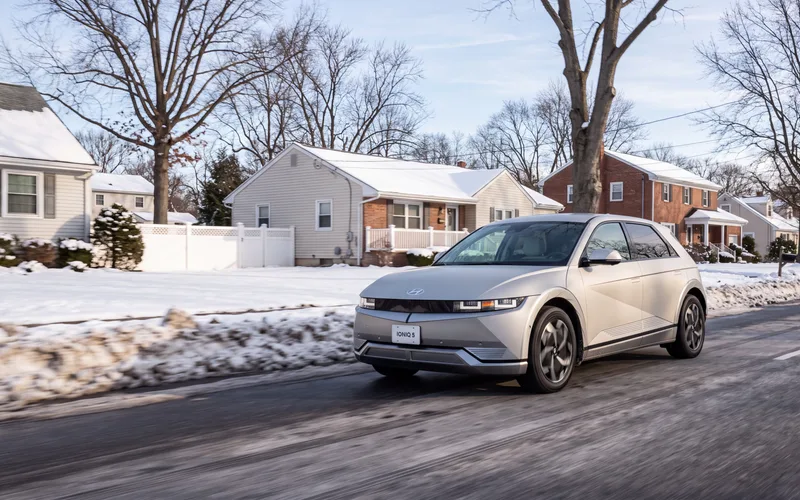 Hyundai Ioniq 5Compact SUVBetter at: Range and charging
More range, much faster charging, a roomier cabin, and vehicle-to-load power for about the same money, with double the basic warranty.
Compare 2.06C
2.06C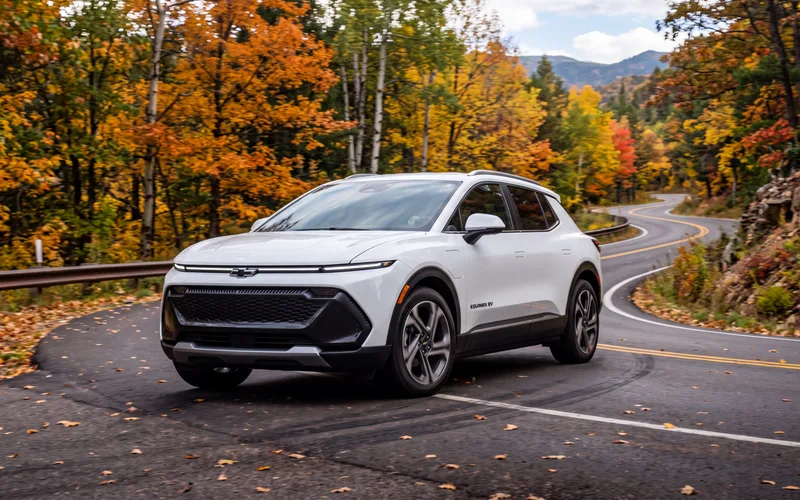 Chevrolet Equinox EVCompact SUVBetter at: Value and cargo
Costs less, goes farther, and gives you meaningfully more cargo room than the bZ's bottom-of-class 27.7 cu ft.
Compare 2.56C+
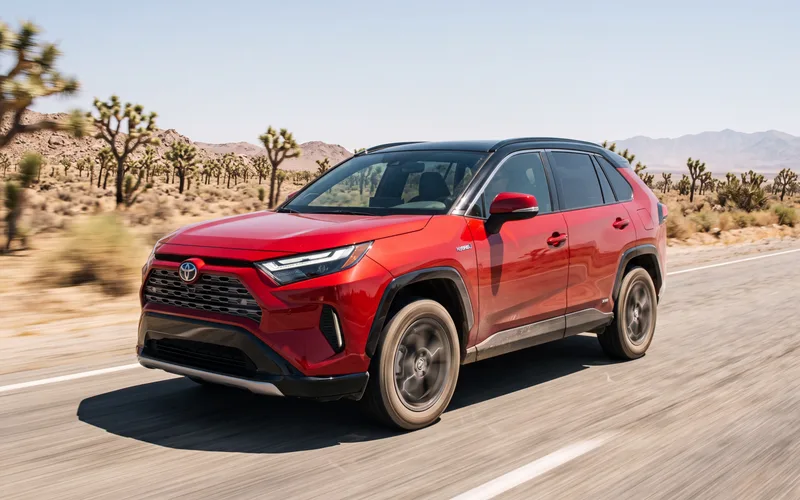 Toyota RAV4Compact SUVBetter at: Resale value
The same Toyota reliability without any charging logistics, plus far stronger resale value and a bigger cargo hold.
CompareSubject scores by year
Hover or tap a score to see what moved it versus the year before. A corner mark flags a big swing.
| Year | Performance | Efficiency | Safety | Space | Cost | Reliability | Tech | Use-case | Driving | Value |
|---|---|---|---|---|---|---|---|---|---|---|
| 2026 | 45 | 66 | 75 | 41 | 61 | 72 | 73 | 66 | 71 | 69 |
| 2025 | 38 | 64 | 83 | 41 | 57 | 72 | 67 | 57 | 65 | 60 |
| 2024 | 38 | 64 | 78 | 40 | 49 | 66 | 67 | 56 | 65 | 60 |
| 2023 | 38 | 63 | 77 | 40 | 47 | 60 | 65 | 54 | 65 | 55 |
Compare two years
Best fit & conditions
Higher scores mean a better fit for that use case. Learn more about use-case fit →
Subject profile
Detailed scoring by subject
1Performance & PowertrainThe bZ4X's lowest-graded category.0.50F
2023 was the bZ4X's first US model year, and the volume XLE front-drive car uses a single 150-kW motor rated 201 hp. Adding the dual-motor AWD system (two 80-kW motors) lifts combined output only to 214 hp, leaving the launch-year bZ4X near the bottom of the SUV horsepower band and behind same-price EV rivals like the Ioniq 5, ID.4 and Model Y.
196 lb-ft from the single front motor is modest for an EV crossover, and even the dual-motor AWD's 248 lb-ft sits well below the instant-torque figures buyers had come to expect from 2023 electric SUVs at this price.
Toyota's 7.1-second claim for the front-drive volume trim is fine against gas compact SUVs but slow for a 2023 EV in this bracket. The AWD's 6.5-second estimate — and the roughly 6.3 seconds instrumented testers recorded — is only a modest step up, and reviewers described the car as adequately quick rather than fast.
Delivery is quiet, linear and lag-free in the way a single-motor EV generally is, and launch-year reviewers consistently called the bZ4X smooth and easy to modulate in town. It loses points because thrust tapers noticeably above about 50 mph and output is further blunted by a cold or low-state-of-charge battery, making highway passing feel strained — a comfortable powertrain rather than a spirited one.
A single-speed direct-drive reduction gear means no shifts to hunt for and no CVT drone — power is uninterrupted from rest. The shortfall is regen control: the 2023 car offers only a single 'Regenerative Boost' button and cannot be driven to a full stop on the accelerator, where several rivals already had multi-stage paddles or true one-pedal driving.
Toyota published no US tow rating for the 2023 bZ4X and offered no tow package; Toyota's US guidance states the vehicle is not designed for trailer towing or for tow-hitch-mounted carriers, so there is no sanctioned hitch use at all. Overseas bZ4X variants carry a 750 kg braked rating, but that European approval does not apply to this US model year.
Dual-motor AWD — co-developed with Subaru for the Solterra — is optional on both 2023 grades (XLE and Limited) and is more than a token system, adding X-MODE Snow/Dirt and Deep Snow/Mud programs plus low-speed Grip Control. That terrain programming is well beyond 'basic operation', so it scores above the middle of the band, but it falls short of top marks because every trim starts as a front-driver and AWD is a paid option across the entire launch-year lineup, with no low range or torque vectoring.
8.1 inches of ground clearance is slightly better than most compact crossovers, and AWD cars add X-MODE terrain programs with Grip Control low-speed crawl for snow, dirt and mud. There is no off-road grade in the 2023 range, no locking differential, no skid plating and no low range, and the low-slung battery pack limits real trail use — this is an unpaved-road tool at best.
Battery-electric only, in two closely spaced tunes — 201 hp FWD or 214 hp AWD — across just two launch-year grades. No gas, hybrid or PHEV alternative was sold under the bZ4X name, so choosing a trim changes equipment and driven wheels but never the propulsion concept.
2Efficiency & RangeMid-pack among this car's ten categories.2.25C
The volume 2023 bZ4X XLE FWD is EPA-rated 119 MPGe combined (28 kWh/100 mi) in its launch model year, near the top of the EV SUV band; the heavier CATL-battery AWD models fall to 104 and 102 MPGe. 2023 is the nameplate's first US model year, so there is no prior-year figure to carry over.
EPA city rating of 131 MPGe for the XLE FWD — regenerative braking makes stop-and-go the bZ4X's strongest cycle, comfortably into the upper half of the EV SUV band.
EPA highway rating of 107 MPGe for the XLE FWD; as with every EV the highway cycle is the weaker of the two, but 107 MPGe sits near the top of the EV SUV highway band — the FWD car's mass and single-motor advantage over the AWD is worth 13 MPGe here.
252 miles from the 71.4-kWh PPES pack is the best case in the bZ4X's launch year and sits in the bottom quarter of the EV SUV band — well short of a 2023 Tesla Model Y or Ioniq 5, and the heavier CATL-pack AWD returns only 222–228 mi despite its larger 72.8-kWh battery. Range is the clearest weakness of this model year; the 2025 facelift's 74.7-kWh pack and revised motors address it, but none of that applies to 2023.
The volume XLE FWD with the 71.4-kWh PPES pack accepts up to 150 kW on CCS1, mid-pack for 2023 and roughly half what the 800-volt Ioniq 5/EV6 twins take; the North American AWD, on the 355-volt CATL pack, is capped lower still at 100 kW. The rated peak also flatters the car — an instrumented test of a FWD example never saw better than 52 kW.
Toyota quotes approximately 30 minutes to 80% for the FWD car on a 150-kW-or-better charger, measured from the low-battery light (~20%) rather than a true 10% start, so a genuine 10–80% session runs somewhat longer. The AWD is quoted at about 60 minutes for the same window, and instrumented tests overshot both figures badly — which is why confidence is MEDIUM despite the manufacturer number being firm.
EPA puts annual energy cost at $650 for the XLE FWD — near the floor of the EV SUV band — at $1.06 to drive 25 miles. Cheap running cost is the bZ4X's clearest efficiency win and partly offsets its short range.
No gasoline of any grade, the cheapest energy cost in its segment, and a year of unlimited complimentary EVgo fast charging — but the launch-year car makes energy access harder than it should be: a 120 V-only cable in the box, a 6.6-kW onboard charger needing roughly 9–11 hours on 240 V, CCS1 only with no Supercharger access, a three-session-per-day fast-charge throttle, and a cold-weather charging disclaimer stricter than rivals'. Held at 72 — raw charging speed is scored separately at 2.2.4/2.2.5, so this item is graded on energy cost and access practicality rather than re-penalizing the same slowness.
3SafetyThe bZ4X's best-graded category.3.21B+
NHTSA gives the 2023 bZ4X — the nameplate's first US model year — a 5-star overall rating, with 5 stars in both the overall frontal and overall side evaluations; only rollover falls short at 4 stars.
Every IIHS crashworthiness test run on the 2023 bZ4X came back Good — driver- and passenger-side small overlap front, moderate overlap front, and the updated side test — but the car carries no 2023 Top Safety Pick award, disqualified by its volume-trim headlights, and its moderate overlap result is the ORIGINAL test: IIHS never ran the 2023 through the updated rear-passenger version that the 2025 car later earned. Trimmed 2 points from the prior pass to sit level with the identically-tested 2024, since the updated side-test Good covers only units built after October 2022 and early 2023 builds predate that reinforcement.
Toyota Safety Sense 3.0 is standard on both 2023 grades — Pre-Collision System with pedestrian and cyclist detection, Lane Departure Alert with Steering Assist, Lane Tracing Assist, Full-Speed Range Dynamic Radar Cruise Control, Automatic High Beams and Road Sign Assist — and Blind Spot Monitor, Rear Cross-Traffic Alert and Safe Exit Assist are standard on both grades too, so every item on the AEB/ACC/LKA/BSM/RCTA checklist is included on the volume XLE. Only the parking-sensor and surround-view hardware is reserved for the Limited.
The TSS 3.0 Pre-Collision System earns Superior in IIHS front crash prevention for vehicle-to-vehicle and for vehicle-to-pedestrian in both daytime and nighttime conditions — a clean sweep of the evaluations in force for 2023. It is held short of the top band only because those were the pre-2024 test protocols, which the tougher updated evaluation later showed to be a lower bar.
Blind Spot Monitor, Rear Cross-Traffic Alert and Safe Exit Assist are standard on every 2023 grade — broader availability than most compact SUVs of the year — but the coverage is alert-only, with no braking or steering intervention, and neither Front Cross-Traffic Alert nor Lane Change Assist arrived until the 2025 model year.
Lane Tracing Assist and Lane Departure Alert with Steering Assist are standard and hold well-marked highway lanes competently, but reviewers rate Toyota's centering a step behind Subaru EyeSight and Hyundai/Kia Highway Driving Assist, and the system nags for steering input almost as soon as hands come off the wheel.
Full-Speed Range Dynamic Radar Cruise Control is standard on both trims and works down to a stop with smooth speed transitions and steady gap-keeping; paired with Lane Tracing Assist it makes a solid highway assist, though 2023 has no Traffic Jam Assist and the combined system asks for constant hands-on involvement.
The 2023 bZ4X offers no hands-free highway driving in any form — no Toyota equivalent of BlueCruise or Super Cruise was on the option sheet, and even Traffic Jam Assist did not reach the nameplate until 2025. The Limited's Advanced Park is hands-free parking, not hands-off driving.
This is the 2023 bZ4X's clear safety weak point and the reason it won no IIHS award: headlights on the volume XLE rate Poor on units built before August 2023 — which is most of the model year's production — and only Marginal on later builds, with the Good-rated multi-LED projectors confined to the Limited. Automatic High Beams are standard, but there is no curve-adaptive function to offset the poor low-beam reach.
Thick rear roof pillars and a rising beltline give the bZ4X large over-the-shoulder blind zones that reviewers flag repeatedly, and the Panoramic View Monitor with Perimeter Scan that would compensate is Limited-only. Standard blind-spot monitoring on every grade covers the worst of it electronically on the volume XLE.
IIHS rates the bZ4X's LATCH hardware Good for ease of use — two outboard positions with complete anchor sets plus a center tether anchor — and the flat-floor EV platform gives generous rear legroom and wide door openings for loading seats. The rear bench is still too narrow for a comfortable three-across.
4Space & ComfortOne of the bZ4X's weakest categories.0.62F
The 2023 bZ4X — the nameplate's first US model year — is a strictly two-row, five-passenger compact EV SUV in both trims (XLE, Limited) and both drivetrains (FWD, AWD); no six/seven-seat configuration was offered.
38.6 in of front headroom is mid-pack for a compact SUV — the coupe-influenced roofline and the high floor over the 71.4-kWh battery pack keep it short of boxier EV rivals like the ID.4 and Ioniq 5.
42.1 in of front legroom is competitive for the segment — the flat EV floor and long 112.2-in wheelbase of the e-TNGA platform give front occupants real stretch-out room.
37.1 in of second-row headroom is below the compact-SUV midpoint, and Consumer Reports' 2023 road test flagged it directly as the cabin's weak point for taller adults.
35.3 in of rear legroom is merely adequate for a 112.2-in wheelbase; reviewers noted plenty of knee room but a cushion mounted so low over the battery that under-thigh support is nearly absent, so the space feels tighter than the figure suggests.
The 2023 bZ4X has no third row at all — it is a two-row, five-seat compact SUV in every configuration — so it scores in the low band by definition.
27.7 cu ft behind the rear seats sits near the bottom of the SUV normalization band — the sloping tailgate, the packaging of the rear motor on AWD models, and the complete absence of a front trunk cap usable volume well short of the Equinox EV or ID.4.
Roughly 57 cu ft with the rear bench folded is at the very bottom of the SUV band; the load floor does not fold truly flat and there is no frunk to supplement it, leaving only a small underfloor bin for the charge cable. Toyota never published a US seats-folded figure, so outlets cite 56.1–56.9 cu ft.
The bridged center console with a large open pass-through bin underneath, a standard wireless charging pad, a covered console box, and an underfloor cargo bin for the Level 1 cable cover everyday needs competently, but there is no frunk and no onboard power export — nothing that stands out against EV rivals.
Lowered 5 points on re-score: Edmunds credits the front seats' soft padding, lateral support and adjustment range (8-way power driver's seat, SofTex trim standard) but reports support 'starts to wane after about 45 minutes', and calls the rear seat outright unimpressive because the cushion sits too low over the battery for under-thigh support — a long-haul penalty the earlier 65 understated.
Lowered 6 points on re-score: while the bZ4X absorbs big bumps well, Edmunds' detailed assessment faults 'short, frequent body motions' that leave it feeling jittery even on smooth pavement, matching the stiff-ride verdicts from MotorWeek and KBB — the Limited's 20-in wheels make it busier still than the XLE's 18s.
Quiet by class standards thanks to the absence of an engine, but wind and tire noise intrude more than in the Ioniq 5, EV6, or ID.4, so it lands mid-pack among 2023 EV SUVs rather than at the top.
Strong comfort content for a launch year: a heat pump is standard on every 2023 bZ4X, dual-zone automatic climate control and remote pre-conditioning via the Toyota app are included, and the Limited adds heated and ventilated front seats, heated rear seats and a radiant foot-and-leg heater — a Toyota first. It falls short of the top band because heated front seats and a heated steering wheel are a $500 Weather Package option on the volume XLE and there are no rear climate controls.
5Cost of OwnershipOne of the bZ4X's weakest categories.1.16D
The bZ4X's first US model year opened at $42,000 for the front-drive XLE, which with destination put the cheapest way into the car in the low $43,000s — mid-pack for the compact-SUV band on paper, but a premium ask against the Ioniq 5 and ID.4 given that Japanese assembly disqualified it from the IRA purchase credit for essentially the entire model year.
XLE is the volume grade, and the $2,080 dual-motor AWD that most cold-weather buyers chose puts the representative 2023 car just over $45,000 delivered. The Limited opens at $48,035 FWD and tops out a shade past $50,000 with AWD.
No oil changes, no exhaust, and regen-assisted braking give the bZ4X one of the lighter service ledgers in the compact-SUV set; most of the projection is tires, cabin filters, and the tire-rotation cadence rather than mechanical repair.
By far the weakest line on the card, and marked down this pass because the three-year data now on the ground is harsher than the nameplate-level forecasts used previously: KBB already shows the 2023 car 58% underwater at three years, not five. Heavy 2023–2025 lease subsidies pushed transaction prices far below sticker, and the launch-year car carries the June 2022 wheel-hub-bolt recall and buyback episode, the slowest-charging hardware in the nameplate's history, and no federal purchase credit — all now being marked to a used market sitting underneath Toyota's own ~$6,000 price cut on the 2025 car.
Standard Toyota coverage and the segment floor — Hyundai and Kia both offered 5 yr / 60,000 mi basic on their 2023 electric crossovers.
The traction battery, transaxle and inverter carry the federal-minimum 8 yr / 100,000 mi, with capacity falling below 70% treated as a covered failure — a term that matches rather than beats the class, and notably shorter than the 10 yr / 150,000 mi Toyota gives its own hybrid packs.
ToyotaCare covers factory-scheduled service for 2 yr / 25,000 mi with 3 years of unlimited-mileage roadside assistance, and every 2023 bZ4X added a full year of unlimited complimentary charging on EVgo's national network — a perk worth real money that the otherwise-identical Subaru Solterra did not match. Held out of the top band because the included-maintenance window is two years rather than the three or four some rivals gave, and because the launch-year car shipped without the dual-voltage Level 1/Level 2 charging cable later made standard.
$45,415 volume-trim price minus its estimated resale value after 5 years (38% retained, or about $17,258) leaves about $28,157 in depreciation. Add the projected $4,400 in 5-year maintenance and repairs, and owning this vehicle for 5 years costs about $32,557 in total.
6Reliability & QualityMid-pack among this car's ten categories.2.02C
Re-scored down: Consumer Reports does have a 2023-specific verdict, and it is negative — the 2023 bZ4X is rated less reliable than other cars from its own model year, which is survey-based actual reliability rather than a pooled prediction. The 2023 car's complaint rate also runs about 40% above its segment norm. Independent trackers still land the launch year in "good" territory on a thin file, so the signals genuinely conflict, but the weight of the most authoritative source now tips this below average rather than merely mixed.
Toyota's dependability standing when this car went on sale was near the top of the industry but not the clean sweep it later became — Lexus took the 2023 Consumer Reports brand crown from Toyota, and the 2023 J.D. Power VDS put six brands ahead of Toyota on problems per 100 vehicles even as Toyota Motor Corporation collected the most model-level awards of any automaker. Still a real tailwind for a buyer, just built on ICE and hybrid data rather than any BEV history.
Re-scored down on a confirmed four-recall count for this model year. The launch defect was as severe as they come — hub bolts that could loosen at low mileage and let a wheel detach in motion, triggering a stop-drive warning, a dealer stop-sale, and an offer to buy the car back outright before most 2023 cars had been delivered. Two of the other three campaigns are genuine federal safety-standard failures (rear visibility, windshield defogging) rather than housekeeping, and the 12V parasitic-drain pattern that starts with this year has been litigated as a design defect without ever producing a recall.
Buying the 2023 car meant buying an e-TNGA eAxle and 71.4 kWh pack with literally zero field history, and this year lacks the battery pre-conditioning hardware Toyota added for 2024 — which is why 2023 owners see the worst cold-weather charge behavior and a 24-hour DC-fast-charge throttle. With three-plus years of hindsight no systemic traction-motor or high-voltage pack failure pattern has emerged and Toyota's conservative charge curve favors pack longevity, but the 12V/DC-DC charging-system weakness is a genuine recurring defect on this year, severe enough to immobilize the car and lock the wheels against conventional towing.
At $43,215 to roughly $50,000 the cabin reads a clear step down from its direct rivals — vast swaths of unpadded hard black plastic, glossy piano-black on the center console that fingerprints immediately, and low-grade trim in the secondary surfaces. The gray fabric-wrapped dash and soft armrest touch points are legitimately distinctive, and 2023 pricing is the lowest of the pre-facelift run, but reviewers consistently rated it behind an Ioniq 5, EV6, or Mustang Mach-E at the same money.
Assembly is the better half of the quality story: the bZ4X is built at Toyota's Motomachi plant in Japan, the facility Toyota reserves for models needing tighter tolerances, and press cars of this generation drew almost no complaints about panel gaps, misalignment, rattles or squeaks. What keeps 2023 out of the upper band is that the launch-year defect was itself a fastener/assembly-adjacent failure serious enough to strand deliveries, on top of the electrical and infotainment glitches that dominate the owner complaint file.
Toyota's franchised network is one of the densest and best-regarded in the US — roughly 1,200-plus stores across 49 states, plus ToyotaCare scheduled maintenance and unlimited-mileage roadside assistance on every car — so a bZ4X owner is rarely far from a dealer. The 2023-specific caveat is sharper than in later years: this was the first BEV most Toyota stores had ever seen, EV-trained technicians and pack-service tooling were still being rolled out, and the recall required dealers to source and fit redesigned wheels and hub bolts before cars could be delivered at all.
Day-to-day running costs are genuinely low — no oil services, and regenerative braking pushes the first brake job well past 60,000 miles — and Toyota's distribution for shared components (brakes, suspension, glass, trim) is among the cheapest and fastest in the business. The 2023 car is the weakest year on the other side of the ledger: every bZ4X-specific EV part is dealer-only with essentially no aftermarket, the launch-year parts pipeline was thin enough that the hub-bolt remedy itself took months to supply, and out-of-warranty pack, eAxle or HVAC-compressor work is expensive on a nameplate this low-volume.
7Technology & InfotainmentOne of the bZ4X's strongest categories.2.39C+
The 12.3-inch Toyota Audio Multimedia display was standard across the bZ4X line from its 2023 launch year, so the volume XLE gets the same screen as the Limited — no smaller base unit was offered.
Toyota Audio Multimedia was one of the better mainstream systems at launch — a big high-mounted screen, quick response, logical menus, and (unusually for a 2023 EV) real physical knobs and buttons for volume and climate rather than everything buried in the display; launch-year software quirks keep it just under the segment's best.
Wireless Apple CarPlay and wireless Android Auto are both standard on every 2023 trim with no wired-only base configuration, which sits at the top of the scoring band.
Cloud-based navigation with real-time traffic, Destination Assist and the 'Hey Toyota' Intelligent Assistant arrive via a three-year Drive Connect trial standard on both trims, but the whole nav/voice layer is a connected service that reverts to a paid subscription, the assistant was new and less polished in 2023 than Google-based rivals, and most owners default to phone projection.
Six speakers are standard and the only upgrade is a nine-speaker JBL Premium system restricted to the Limited as an option — narrow coverage for a premium-priced EV, and reviewers judged the JBL merely adequate rather than a standout.
The 7-inch full-digital top-mount Multi-Information Display is standard, but its placement was the single most-criticized element of the launch car: mounted near the base of the windshield, the steering wheel rim cuts across the readout at normal driving positions and reviewers could not find a seat/wheel setting that showed speed, odometer and range at once.
The DCM does deliver over-the-air updates, but in the 2023 launch year the scope was effectively multimedia, cloud navigation and connected services; core vehicle software needed dealer visits, and OTA quality was poor — the v1.9.0 push broke wireless charging and the fix did not arrive until v2.1.0 in April 2024.
The Toyota app covers the EV essentials — remote climate preconditioning, lock/unlock, locate, charge status and charge scheduling — on a three-year Remote Connect trial, with Safety Connect on a 10-year trial, but the functions are subscription-gated after the trial, Digital Key phone-as-key is tied to an active Remote Connect service, and 2023 owners reported provisioning and reliability trouble.
Five ports — four USB-C charge ports split two front / two rear plus a USB-A media port — serve both rows, and the covered Qi wireless charging pad is standard on the volume XLE rather than a top-trim extra; what is missing is any household AC outlet or vehicle-to-load power that several EV rivals offer.
Smart Key proximity entry with push-button start and remote keyless entry are standard on both trims and remote start/climate runs through the app on a three-year trial, but the height-adjustable foot-activated power liftgate and Digital Key phone-as-key are both Limited-side features for 2023 rather than volume-trim standard equipment.
The volume XLE gets a rear camera plus Front and Rear Parking Assist with Automatic Braking as standard, which is solid mid-band coverage, but the four-camera 360-degree Panoramic View Monitor is Limited-only and no automated parking system was offered in 2023 — Advanced Park did not reach the bZ4X until later.
No projected head-up display is offered on any 2023 bZ4X trim. The high-mounted 7-inch cluster is occasionally described as HUD-like because it sits near the base of the windshield, but it is a conventional LCD panel viewed over the wheel — not a windshield or combiner projection — and reviewers treated it as a failed substitute rather than a HUD.
8Use-Case FitGrades below the middle of the scale.1.65D
Wide-opening rear doors, a flat EV floor and Good-rated LATCH hardware make seat-and-stroller duty straightforward, but 35.3 in of rear legroom is only average for a compact SUV, the 60/40 bench neither slides nor reclines, 27.7 cu ft behind it is small for stroller-plus-groceries weeks, and in this launch year the power liftgate is Limited-only — the XLE families actually buy has a manual tailgate.
The bZ4X was the first Toyota to launch with Toyota Safety Sense 3.0, and Blind Spot Monitor with Rear Cross-Traffic Alert, Safe Exit Assist and a rear-seat reminder are standard on the ~$43,300 XLE families actually buy, with 5 stars overall from NHTSA — but IIHS withheld Top Safety Pick because the XLE's standard headlights fell short, and Front Cross-Traffic Alert and Traffic Jam Assist were still years away.
The cabin is quiet and the rear bench is well padded with rear USB-C charging, but there are no rear climate controls, no sunshades and no rear-seat entertainment, heated rear seats are a top-of-range option, and a loaded family car is realistically doing 200-mile hops in the FWD — nearer 160 in the AWD most families choose — before a long stop, so range and the charge curve cap the trip well before the seats do.
Silent, smooth and untaxing in traffic, with 201 hp (214 AWD) that is more than enough for city work and standard full-speed adaptive cruise with lane tracing from TSS 3.0. What it lacks is the EV-specific convenience shoppers notice first: only a Regenerative Boost button rather than true one-pedal driving, and no Traffic Jam Assist.
Per-mile running cost is the bZ4X's outright win: 119 MPGe combined in the FWD, roughly $650 a year in electricity at 15,000 miles, a full year of unlimited complimentary EVgo DC fast charging, no oil changes and regen-reduced brake wear. Above-average insurance and the 6.6-kW onboard charger — which pushes commuters without a fast home circuit toward pricier public charging — keep it off the ceiling.
A 184.6-in by 73.2-in footprint fits ordinary city spaces and the Limited's 360-degree Panoramic View Monitor takes the guesswork out of tight bays, but the volume XLE gets only a basic backup camera, there is no self-parking assist in this launch year, and the high tail with thick rear pillars leaves real over-the-shoulder blind zones.
Toyota publishes no US tow rating for the 2023 bZ4X and does not sanction trailer towing, so there is no trailer, no hitch-mounted work gear and no payload headroom to trade on — work duty is limited to whatever fits in 56.9 cu ft with the bench folded.
Toyota's build reputation and an 8-year/100,000-mile EV component warranty count for something, but this is a soft-road crossover on a brand-new EV platform whose battery pack forms the low-slung floor, with zero fleet track record, no washable or rubber-floor work interior — and this exact model year is the one that was recalled for wheel hub bolts that could let a wheel detach, with a do-not-drive advisory and buyback offers.
There is essentially no work provision on the launch car: no 120V outlet or vehicle-to-load export power on either grade, no factory tow hitch, no frunk, no bed and only basic cargo-area tie-downs, and the accessory catalogue for a brand-new nameplate was thin — cargo trays, nets and a dealer-installed cross-bar set rather than anything work-oriented.
The car itself cruises well — quiet, softly damped, with standard full-speed adaptive cruise and lane centering — but this is the weakest year for road-tripping the nameplate: 252 EPA miles in the FWD fall to about 200–215 real miles at 70 mph, the AWD's 222–228 miles drop toward 160, its DC peak is capped at 100 kW, and instrumented charging tests found the taper so aggressive and the cold-weather behaviour so poor that a fast-charge stop cannot be planned around.
The AWD car is more capable off pavement than its shape suggests — 8.1 in of ground clearance plus X-MODE Snow/Dirt and Deep Snow/Mud with low-speed Grip Control genuinely handle gravel, mud and snow — but with no tow rating, no export power for camp, no underbody protection and the shortest usable range in the segment, it can reach the trailhead without being able to bring the toys, run the gear or reliably get home.
27.7 cu ft behind the rear seat is a usable hold and the 60/40 bench opens it to 56.9, but the flexibility stops there — the load floor does not fold truly flat, there is no frunk, no factory hitch for a bike or cargo rack, and roof carrying requires a dealer-installed cross-bar set on a rail-equipped car.
9Driving ExperienceOne of the bZ4X's strongest categories.2.36C+
The launch-year bZ4X hangs its battery low in the e-TNGA floor, and instrumented testers found the payoff in composure rather than grip — MotorTrend's 2023 AWD first test called the road manners smooth and composed with minimal body roll, and Consumer Reports found the suspension keeps lean in check. Measured cornering is only mid-pack, though: 0.82 g on the skidpad (0.77 g in MotorTrend's test), and Edmunds rated the 2023 car's handling middling against the Ioniq 5, EV6 and ID.4, so it lands as secure and pleasant rather than class-leading.
MotorTrend singled out the 2023 car's steering weight as a genuine strength — 'not so heavy as to require undue effort but not so light that things feel twitchy or vague' — and the quick rack makes parking and lane placement effortless. It stops short of the top band because the weight is well-judged rather than communicative: there is little road texture coming back through the rim, which is why other launch-year reviewers filed the steering under competent-but-numb.
A 174-ft 70-0 mph stop is competitive for a compact electric SUV, and the Advics cooperative regen system blends friction and motor braking without the grabby low-speed handoff that spoils many EV pedals. The 2023 car offers only a single Regenerative Boost button that decelerates to roughly 5 mph — the brake pedal is still required for a full stop, so there is no one-pedal driving to fall back on, and the pedal itself is soft enough that smooth repeatable stops take practice.
Single-speed direct drive gives the 2023 bZ4X seamless, shift-free, lag-free delivery with no stop/start shudder and easy accelerator modulation around town — launch-year reviewers uniformly praised the unstrained low-speed response from the 201 hp FWD / 214 hp AWD setup. It misses the top of the band because thrust tapers noticeably above roughly 50 mph and is blunted further by a cold or low-state-of-charge pack, so highway passing needs planning.
With no combustion engine there is effectively zero driveline vibration through the controls and the motor is near-silent under load, which is the single biggest refinement upgrade over the gas RAV4. It sits below the class best because the isolation around the powertrain is not matched elsewhere: Edmunds found more wind noise than expected at highway speed on the 2023 car and suspension racket over uneven surfaces entering the cabin, leaving it less hushed than the EV6, ID.4 or Ioniq 5.
Toyota's 2023 bZ4X product information lists 40.0 ft curb-to-curb on both the 18-in and 20-in fitments — poor for a compact SUV and a direct consequence of the e-TNGA platform's long 112.2 in wheelbase, which is nearly Highlander-length under a RAV4-sized body. Overseas sheets quote a tighter ~11.0 m kerb-to-kerb, but the US-published curb-to-curb figure is used here.
The launch-year bZ4X's defining ergonomic flaw is the 7-inch digital cluster set low at the base of the windshield to be read over the wheel rim: in the US car, which never got the overseas yoke, drivers around 5'6" and taller find the wheel cuts across the display and hides speed, odometer and state of charge unless the column is dropped to an awkwardly low position. Everything else is sound — soft, supportive front seats with enough adjustment for most builds, retained physical climate controls, and a high, airy sightline — but a driver who cannot see the range readout in an EV is a real defect, not a quibble.
Quiet, smooth and unusually relaxing for a first effort — MotorTrend went as far as calling it one of the better-driving Toyotas — but there is little to engage a driver: 7.1 s to 60 mph in the volume FWD car (6.5 s AWD) is slow for a 2023 EV at this price, the chassis is tuned squarely for comfort with no meaningful sport mode, and the absence of true one-pedal driving removes even that bit of EV play. Competent and forgettable rather than a car to take the long way home in.
10Value & Market PositionGrades below the middle of the scale.1.69D
The debut-year XLE covers the basics at $42,000: 12.3-inch Toyota Audio Multimedia with wireless Apple CarPlay and Android Auto, a 7-inch digital cluster, dual-zone automatic climate, a Qi wireless charging pad, 18-inch alloys, Toyota Safety Sense 3.0 and a year of complimentary EVgo charging. What holds it to mid-band is how much a 2023 XLE buyer did not get relative to what the same trim would include a year later — no power driver's seat, no power liftgate, and only a Level 1 cordset, with heated front seats and a heated steering wheel bundled into a Weather Package — at a time when Hyundai, Kia and VW were including more at similar or lower EV prices.
This is the weakest year of the car's life on price-for-content. A $42,000 XLE FWD (about $43,215 delivered) bought 252 EPA miles at best and 222 on a Limited AWD from a 71.4 kWh pack, with a 6.6 kW onboard AC charger and — on 2023 AWD models — DC fast charging capped near 100 kW, a limit Toyota only lifted to 150 kW for 2024. The decisive problem is the federal credit: Toyota exhausted its 200,000-unit cap on 30 September 2022, and the IRA's North America final-assembly rule disqualified the Japan-built bZ4X outright, so a 2023 buyer paid full freight against a Chattanooga-built ID.4 carrying $7,500 — an effective five-figure swing to a rival that also charged faster.
The launch lineup is two grades over four configurations — XLE and Limited, each FWD or AWD — spanning $42,000 to $48,780, with no Nightshade grade (that arrived for 2025) and a single 71.4 kWh battery offering no long-range or performance alternative. Freestanding choice at XLE is essentially AWD, paint and the Weather Package, so a buyer wanting heated seats, the JBL audio or the 360-degree camera has to climb a full grade rather than option up.
2023 was the first full sales year and it undershot: 9,329 US deliveries, roughly 600 a month, against Toyota's own stated target of about 10,000 units. The trajectory looks steep only because the recall-crippled 2022 base was 232 cars; in absolute terms this is a small fraction of the Mustang Mach-E, Ioniq 5 or ID.4 volumes in the same year, and a rounding error next to the gasoline compact SUVs sharing the showroom.
Toyota's reliability halo is worth real money to a first-time EV buyer and on the used lot later, and it is the single strongest asset this car has. But 2023 is the year that halo was at its thinnest on this nameplate: the wheel-hub-bolt recall that produced a 'do not drive' warning, a dealer stop-sale and a buyback offer applied specifically to 2023-model-year cars and was only months old, Toyota's leadership was publicly lukewarm on battery-electric vehicles, and the alphanumeric name gave shoppers nothing to hold onto.
Judged on buyer benefit the picture splits sharply by how you pay. Cash and finance buyers got nothing from Washington — no purchase credit at all — but Toyota Financial claimed the $7,500 commercial clean-vehicle credit on leases and passed it through, and as 2023 inventory aged the subvention grew enormous, with reported lease cash on 2023 cars reaching roughly $17,750 and dealers discounting off MSRP on a car running behind target. It sits below the 2024 car's mark because for much of the model year the incentives were ordinary rather than extraordinary, and because the deals that did appear were plainly distress pricing on slow-moving stock.
2023 is the debut model year — an all-new nameplate on Toyota's new e-TNGA battery-electric architecture, the first of the global bZ family, with no successor announced and no redesign risk for the buyer. It falls short of the top of the band because 'new' did not mean state of the art: a 400-volt system, a 6.6 kW onboard AC charger, AWD DC charging capped near 100 kW and no NACS port left it a step behind the 800-volt Hyundai Ioniq 5 and Kia EV6 it launched against.
The launch reviews were the harshest this car ever drew. Edmunds concluded that 'the bZ4X's lackluster range, performance and interior design sink it to also-ran status in the EV field' and separately tested it short of its EPA range estimate; U.S. News landed at 7.3 out of 10 and KBB at 4.3, ranking it sixth among 2023 electric SUVs. Even the sympathetic write-ups framed it as exceeding low expectations rather than as a class benchmark. It won no comparison test and no major award in its debut year.