
The verdict
A mixed-report compact suv, strong on safety and held back by performance.
Overall 2.02 (C) across 10 graded subjects. Its strongest is safety at 3.28 (B+), its weakest performance & powertrain at 0.49 (F). 7 of 10 subjects grade at C− or better.
Jump to scoresStrengths
- Safety
- Technology & Infotainment
- Reliability & Quality
What holds it back
- Performance & Powertrain
- Space & Comfort
- Cost of Ownership
Top alternatives
Cars shoppers cross-shop with the Toyota bZ4X 2.74B-
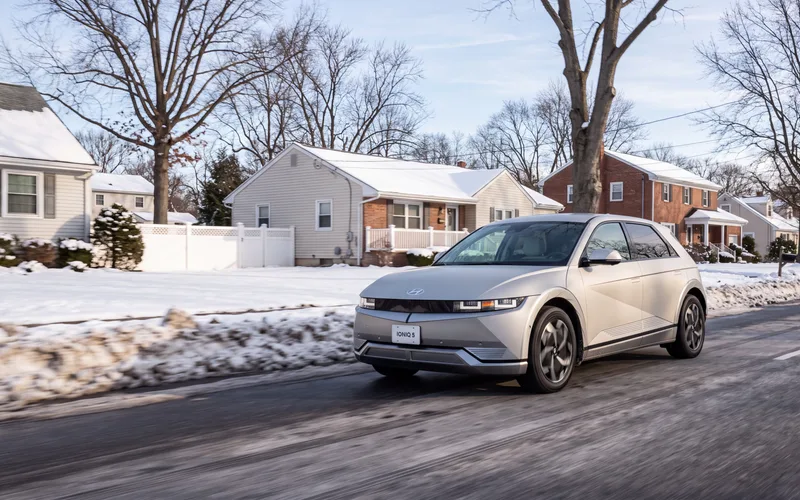 Hyundai Ioniq 5Compact SUVBetter at: Range and charging
More range, much faster charging, a roomier cabin, and vehicle-to-load power for about the same money, with double the basic warranty.
Compare 2.06C
2.06C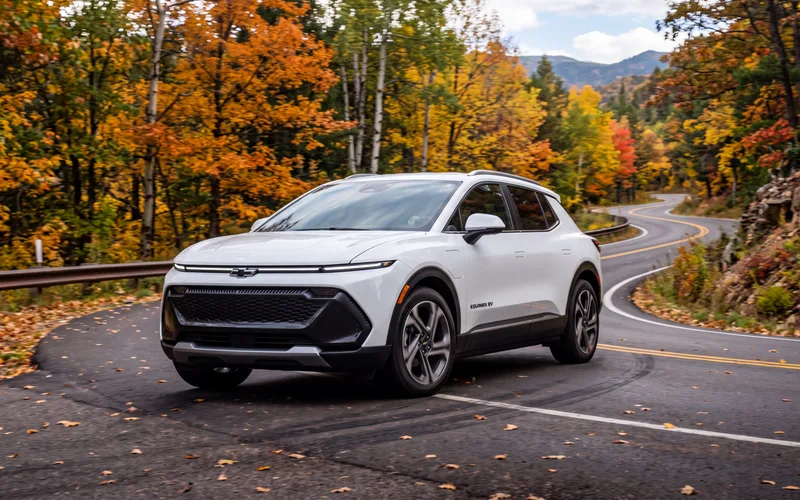 Chevrolet Equinox EVCompact SUVBetter at: Value and cargo
Costs less, goes farther, and gives you meaningfully more cargo room than the bZ's bottom-of-class 27.7 cu ft.
Compare 2.56C+
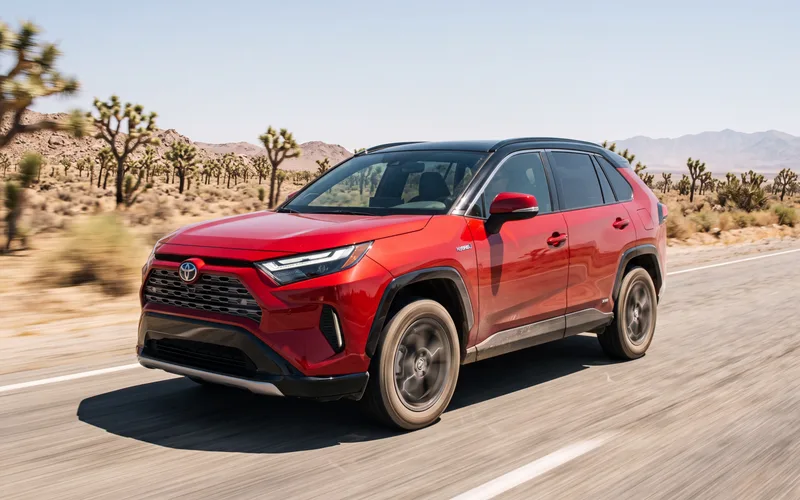 Toyota RAV4Compact SUVBetter at: Resale value
The same Toyota reliability without any charging logistics, plus far stronger resale value and a bigger cargo hold.
CompareSubject scores by year
Hover or tap a score to see what moved it versus the year before. A corner mark flags a big swing.
| Year | Performance | Efficiency | Safety | Space | Cost | Reliability | Tech | Use-case | Driving | Value |
|---|---|---|---|---|---|---|---|---|---|---|
| 2026 | 45 | 66 | 75 | 41 | 61 | 72 | 73 | 66 | 71 | 69 |
| 2025 | 38 | 64 | 83 | 41 | 57 | 72 | 67 | 57 | 65 | 60 |
| 2024 | 38 | 64 | 78 | 40 | 49 | 66 | 67 | 56 | 65 | 60 |
| 2023 | 38 | 63 | 77 | 40 | 47 | 60 | 65 | 54 | 65 | 55 |
Compare two years
Best fit & conditions
Higher scores mean a better fit for that use case. Learn more about use-case fit →
Subject profile
Detailed scoring by subject
1Performance & PowertrainThe bZ4X's lowest-graded category.0.49F
The volume 2024 XLE's single 150-kW front motor makes 201 hp, and the optional dual-motor AWD (two 80-kW motors) lifts combined output only to 214 hp. Output was unchanged for 2024 — the model-year updates were charging and thermal-management items, not power — leaving the bZ4X near the bottom of the SUV band and well under EV rivals like the Ioniq 5, ID.4 and Model Y.
196 lb-ft from the single front motor is modest even by compact-SUV standards, and the dual-motor AWD's 248 lb-ft is still far below the instant-torque figures typical of same-price 2024 EV crossovers.
Toyota's 7.1-second claim for the front-drive volume trim is respectable against gas compact SUVs but slow for a 2024 EV in this price bracket; the AWD's 6.5 s is only a modest improvement and reviewers describe the car as adequately quick rather than fast.
Delivery is quiet, linear and lag-free in the way EVs generally are, and 2024 reviewers consistently call the bZ4X smooth and easy to modulate around town with plenty of low-speed zip. It loses points against the best in class because thrust tapers noticeably at highway speeds — this is a comfortable powertrain, not a spirited one.
A single-speed direct-drive reduction gear means there are no shifts to hunt for and no CVT drone — power is uninterrupted from rest. Regen control on the 2024 car is limited to a single 'Regenerative Boost' button rather than the multi-stage paddles or true one-pedal driving some rivals offer, which is the only real shortfall.
Toyota publishes no US tow rating for the 2024 bZ4X and does not recommend trailer towing — the US owner's manual treats a trailer as off-label use, and a hitch is sanctioned only for bike racks and cargo carriers. Overseas bZ4X variants carry a 750 kg braked rating and the later 2026 redesign gains a real US tow rating, but neither applies to this model year.
Dual-motor AWD is optional on both 2024 trims (XLE and Limited) and is genuinely capable rather than a token system — X-MODE adds Snow/Dirt and Deep Snow/Mud programs plus low-speed Grip Control. It falls short of top marks because the base configuration is front-drive, AWD is a cost option on every trim, and unlike 2025 there is no AWD-standard grade in the 2024 lineup.
8.1 inches of ground clearance is a bit better than most compact crossovers, and AWD models add X-MODE terrain programs and Grip Control low-speed crawl for snow, dirt and mud. There is no dedicated off-road trim in the 2024 range, no locking differential, no skid plating and no low range — this is a light-duty, unpaved-road tool at best, and the low-slung battery pack limits real trail use.
Battery-electric only, in two closely spaced tunes — 201 hp FWD or 214 hp AWD — across just two 2024 grades. No gas, hybrid or PHEV alternative exists under the bZ4X name, so trim choice changes equipment and drive wheels but not the propulsion concept.
2Efficiency & RangeMid-pack among this car's ten categories.2.30C+
The volume 2024 bZ4X XLE FWD is EPA-rated 119 MPGe combined (28 kWh/100 mi), the strongest figure in the lineup; the heavier AWD and Limited variants fall to 104 and 112 MPGe.
EPA city rating of 131 MPGe for the XLE FWD — regenerative braking makes stop-and-go the bZ4X's strongest cycle, as with every EV.
EPA highway rating of 107 MPGe for the XLE FWD; the weaker of the two cycles for an EV, but still far beyond any combustion compact SUV.
252 miles from the 71.4-kWh FWD pack is the 2024 best case and the car's clearest weakness — a 2024 Model Y reaches 330 mi and an Ioniq 5 303 mi on comparable money — and the AWD's physically larger 72.8-kWh CATL pack actually returns less, at 222–228 mi. The Limited FWD also lost 6 miles versus 2023.
2024 is a real change year here: the FWD PPES pack has accepted 150 kW since launch, and for 2024 Toyota re-engineered the AWD's CATL pack with a water-to-water heat exchanger and a heating adjustment valve, lifting its peak from 100 kW to 150 kW so the whole lineup finally shares the figure. It is still only mid-pack — the 800-volt Ioniq 5 and EV6 at similar money take up to 350 kW.
Toyota quotes about 30 minutes to 80% on a 150-kW DC charger for the FWD volume trim and 35 for the AWD, but the quote is measured from the low-battery warning (roughly 20%) rather than a true 10%, and assumes ideal conditions — independent testing of the pre-facelift car puts a real 10–80% at 30–40 minutes. The caveats are the reason the 2025 facelift exists: this generation tapers early and throttled after repeated sessions within a day.
EPA puts annual energy cost at $650 for the XLE FWD — among the cheapest SUVs on the market to run — and credits it with $7,750 of fuel savings over five years against an average new vehicle.
No gasoline at all and the cheapest energy bill in the segment, and 2024 measurably improved home charging: the onboard AC charger went from 6.6 kW to 7.6 kW (Toyota quotes a full 240 V charge in about 9.5 hours, roughly 20 miles of range per hour), a dual-voltage Level 1/Level 2 cable became standard on XLE and Limited, and a year of complimentary EVgo public charging was included. Still docked from the top of the band on charging practicality rather than DC speed (scored separately at 2.2.4/2.2.5): 7.6 kW trails the 10.5–11 kW onboard chargers rivals fit, EPA still books 11 hours for a 240 V charge, and the CCS1 port meant no Tesla Supercharger access in 2024.
3SafetyThe bZ4X's best-graded category.3.28B+
NHTSA awards the 2024 bZ4X a 5-star overall rating, with 5 stars in both the overall frontal and overall side crash evaluations; only the rollover result falls short of five stars.
Crashworthiness is strong — Good in the small overlap front and the updated side test, Acceptable in the updated moderate overlap front — but the 2024 model year carries no IIHS award at all: the Top Safety Pick only arrived with post-December-2024 builds, once the Marginal XLE headlights were replaced.
Toyota Safety Sense 3.0 is standard on every 2024 trim (Pre-Collision System with pedestrian/cyclist detection, Lane Departure Alert with Steering Assist, Lane Tracing Assist, full-speed-range Dynamic Radar Cruise Control, Automatic High Beams, Road Sign Assist, Proactive Driving Assist), and Blind Spot Monitor with Rear Cross-Traffic Alert plus Safe Exit Assist are standard on all grades — nothing core is paywalled to the Limited.
The TSS 3.0 Pre-Collision System rates well in IIHS front crash prevention, earning Superior for both daytime and nighttime pedestrian detection on this generation and clearing the pedestrian requirement under the updated evaluation; radar-plus-camera coverage extends to cyclists and motorcyclists.
Blind Spot Monitor, Rear Cross-Traffic Alert and Safe Exit Assist are standard on every 2024 grade, which is broader than most compact SUVs, but the coverage is alert-only — Front Cross-Traffic Alert and Lane Change Assist were not added until the 2025 model year, and there is no active braking or steering intervention.
Lane Tracing Assist and Lane Departure Alert with Steering Assist are standard and hold well-marked highway lanes competently, but reviewers find Toyota's centering less settled than Subaru EyeSight or Hyundai/Kia HDA and note that the system scolds the driver almost immediately when hands come off the wheel.
Full-Speed Range Dynamic Radar Cruise Control is standard on every trim and reviewers praise its smooth speed changes and tight, confident gap-keeping; combined with Lane Tracing Assist it makes a solid highway assist, though 2024 lacks the Traffic Jam Assist that joined the Limited for 2025.
The 2024 bZ4X offers no hands-free driving of any kind — Toyota's Traffic Jam Assist did not reach the bZ4X until the 2025 model year, and the Advanced Park system that became standard on the 2024 Limited is hands-free parking, not hands-off driving.
The volume XLE's LED headlights rate only Marginal with IIHS for the 2024 model year — the deficiency that kept the bZ4X off the award list until Toyota changed the units on post-December-2024 builds; the Limited's headlights are Good, and Automatic High Beams are standard, but there is no curve-adaptive function.
The rising beltline and thick rear roof pillars create real over-the-shoulder blind zones, and the Panoramic View Monitor with Perimeter Scan that would compensate is confined to the Limited; standard BSM and RCTA cover the worst of it electronically on the volume XLE.
IIHS rates the bZ4X's LATCH hardware Good for ease of use, with two complete outboard anchor sets plus a center tether anchor, and the long-wheelbase EV platform gives generous rear legroom and wide rear door openings — though the bench is too narrow for a comfortable three-across.
4Space & ComfortOne of the bZ4X's weakest categories.0.67F
The 2024 bZ4X is a strictly two-row, five-passenger compact EV SUV in both of its trims (XLE and Limited) — no third-row or six/seven-seat configuration was offered.
Published front headroom of 38.6 in is mid-pack for a compact SUV; the low, coupe-influenced roofline and high battery floor keep it short of boxier EV rivals like the Ioniq 5 and ID.4.
42.1 in of front legroom is competitive for the segment — the flat EV floor and long 112.2-in wheelbase give front occupants genuine stretch-out room.
Second-row headroom of 37.1 in sits below the compact-SUV midpoint; the tapering roofline and the Limited's available panoramic glass roof cost taller rear passengers headroom.
35.3 in of rear legroom is only adequate given the 112.2-in wheelbase — the raised battery floor forces a knees-up posture that makes the space feel tighter than the number implies, though reviewers still call the back seat adult-friendly.
The bZ4X has no third row at all — it is a two-row, five-seat compact SUV in both 2024 trims, so it scores in the low band by definition.
27.7 cu ft behind the rear seats sits near the bottom of the SUV band — the sloping tailgate and the total absence of a front trunk cap usable volume well below space-efficient EV rivals.
56.9 cu ft with the 60/40 rear bench folded is at the very bottom of the SUV band; the load floor does not fold truly flat and there is no underfloor bin or frunk to supplement it.
The bridged center console with an open pass-through shelf underneath, standard Qi wireless charger, covered console box and door/seatback pockets cover the everyday basics, but reviewers call the console smaller than rivals' and the under-shifter shelf too shallow to hold taller items, and there is no frunk, no underfloor cargo bin and no onboard power export.
Front seats have soft padding, adequate lateral support and an 8-way power driver's seat standard on XLE (heated and ventilated on Limited), and the rear bench is nicely cushioned — but testers report support waning after roughly 45 minutes and the knees-up, upright rear seating position over the battery keeps it out of the top band.
The soft-leaning tune absorbs bumps well and strikes a reasonable balance for a family EV, but it is not segment-leading: the Limited's 20-in wheels make the ride busier over broken pavement and comparison tests rate the Solterra's tune marginally plusher.
Quiet by class standards thanks to the electric powertrain, but wind and tire roar on coarse pavement intrude more than in the Ioniq 5, EV6 or ID.4, placing it mid-pack among EV SUVs rather than at the top.
Good content on Limited — standard heated and ventilated front seats, heated steering wheel, power passenger seat, heat-pump HVAC, remote pre-conditioning via the Toyota app, plus an available $350 Weather Package adding heated rear seats and first-row radiant foot-and-leg heating — but on the volume XLE heated front seats and a heated wheel require the $500 Weather Package, and there are no rear climate controls.
5Cost of OwnershipOne of the bZ4X's weakest categories.1.27D
For 2024 Toyota raised the bZ4X's entry price by more than $1,000 to $43,070 before a $1,350 destination charge, leaving the cheapest way into the car above $44,000 — an ask that lands in the upper half of the compact-SUV band and well above the mainstream electric crossovers it competes with.
XLE is the volume grade and the dual-motor AWD most cold-weather buyers choose adds $2,080, putting the representative 2024 car at $46,500 delivered. The Limited opens at $48,530 FWD and $50,610 AWD.
No oil changes, no exhaust, and regen-assisted braking give the bZ4X one of the lighter service ledgers in the compact-SUV set; most of the projection is tires, cabin filters, and the tire-rotation cadence rather than mechanical repair.
This is the 2024's worst line and the worst bZ4X year on record: assembled in Japan, it was shut out of the federal purchase credit and moved on heavy discounts and $7,500 lease pass-throughs, then Toyota cut 2025 MSRPs by up to $6,000 — repricing the whole nameplate underneath every 2024 still on the road.
Standard Toyota coverage and the segment floor — Hyundai and Kia both offer 5 yr / 60,000 mi basic on their electric crossovers.
EV drive components and the traction battery carry the federal-minimum 8 yr / 100,000 mi, with Toyota layering on a longer capacity-retention commitment that is among the more durable battery promises in the segment — but the headline term itself only matches, rather than beats, the class.
ToyotaCare covers factory-scheduled service for 2 yr / 25,000 mi and roadside assistance runs 3 years with no mileage cap, and every 2024 bZ4X adds a full year of complimentary charging on EVgo's national network — a perk worth real money that the otherwise-identical Subaru Solterra does not match. Held below the top band only because the included-maintenance window is two years rather than the three or four some rivals give.
$46,500 volume-trim price minus its estimated resale value after 5 years (41% retained, or about $19,065) leaves about $27,435 in depreciation. Add the projected $4,400 in 5-year maintenance and repairs, and owning this vehicle for 5 years costs about $31,835 in total.
6Reliability & QualityOne of the bZ4X's strongest categories.2.48C+
The 2024 model year is the weakest of the pre-facelift bZ4X run on predicted dependability: Consumer Reports rates it less reliable than other cars of its model year, and the J.D. Power-derived predicted-reliability figure published by U.S. News lands at 64/100, inside the below-average band. The 2024 hardware changes (standard heat pump, battery pre-conditioning) address cold-weather charging complaints but arrived with their own first-year exposure, and owner-reported 12V and DC-fast-charge problems persisted through this model year.
Toyota's corporate dependability standing at the time this car was sold was as strong as it gets in the volume market — first in Consumer Reports' 2024 annual reliability survey and highest-ranked mass-market brand in the 2024 J.D. Power VDS. That is a genuine tailwind for a buyer even though it is built on ICE and hybrid data rather than BEV data.
Three NHTSA recall campaigns touch the 2024 bZ4X — a large HVAC-control software campaign that can leave the defroster/defogger inoperative, a wheel hub-bolt campaign in the same family as the 2022 defect that halted early sales, and a minor Gulf States Toyota load-capacity label mislabeling. Complaint volume also runs above the model's own norm, and the 12V parasitic-drain pattern spanning 2023-2025 is being litigated as a design defect without ever becoming a recall.
The eAxle/71.4 kWh e-TNGA drivetrain had roughly two years of field data by the 2024 model year with no systemic motor or high-voltage pack failure pattern, and 2024 specifically added a water-to-water heat exchanger and heating adjustment valve to pre-condition the pack for DC charging — a durability-positive change on a system Toyota already tunes conservatively. Held out of the upper band by how little high-mileage history existed at this point and by the recurring 12V/DC-DC charging-system weakness that owners hit within the first few thousand miles.
Reviewers were consistently hard on this cabin at 2024 money — $44,420 to $50,610 buys vast expanses of unpadded hard plastic, heavy piano-black on the console and door switch panels, and cheap-feeling trim around the wheel and instrument cluster. The fabric-trimmed dash and soft armrest touch points are real bright spots, but against an Ioniq 5 or EV6 at the same price this reads like a clear step down.
Assembly quality is a strength even where material choice is not — the bZ4X is built at Toyota's Motomachi plant in Japan, and press reviews of this generation rarely flag panel gaps, misalignment, rattles, or squeaks. What holds it below the top band is the electrical and electronics side of initial quality, which dominates the 2024 complaint file and includes structure/body and wheels-and-tires reports.
Toyota runs one of the densest and best-regarded franchised service networks in the US — roughly 1,200-plus stores across 49 states, so a bZ4X owner is rarely far from a dealer — and every 2024 car includes ToyotaCare scheduled maintenance and three years of unlimited-mileage roadside assistance. The caveat is EV exposure: bZ4X volume is a rounding error against Toyota's mainstream models, so per-store hands-on familiarity with the platform lags the rest of the lineup.
Routine running costs are genuinely low — no oil services, and regenerative braking stretches pad and rotor life well past normal intervals — and Toyota's parts distribution for shared components (brakes, suspension, glass, trim) is among the cheapest and fastest in the business. Against that, every bZ4X-specific EV part is dealer-only with essentially no aftermarket, and out-of-warranty pack, eAxle, or HVAC-compressor work is expensive on a nameplate this low-volume.
7Technology & InfotainmentOne of the bZ4X's strongest categories.2.51C+
For 2024 Toyota made the 12.3-inch Toyota Audio Multimedia display standard across the bZ4X line, so the volume XLE gets the same screen as the Limited; the 8-inch unit fitted to the 2023 XLE is gone.
Toyota Audio Multimedia is one of the better mainstream systems — sharp graphics, quick response, logical menu structure — and unlike most EVs it keeps real physical toggles for temperature plus dedicated climate and volume controls instead of burying them in the screen.
Wireless Apple CarPlay and wireless Android Auto are both standard on every 2024 trim with no wired-only base configuration, which sits at the top of the scoring band.
Cloud-based native navigation with EV routing and the 'Hey Toyota' intelligent assistant are included via a three-year Drive Connect trial and work competently, but the assistant lags Google-based systems, the service becomes a paid subscription, and most owners default to phone projection.
Six speakers are standard and the only upgrade is a nine-speaker, 800-watt JBL Premium system restricted to the Limited as a roughly $580 option — narrow coverage for a premium-priced EV, and reviewers found the JBL itself no better than adequate.
The 7-inch full-digital Multi-Information Display is standard and for 2024 gained more detailed charging and range readouts, but its top-of-dash placement is the car's most-criticized element: the steering wheel rim cuts across the screen unless the column is dropped to an unnatural position, and the panel is small and barely configurable.
The DCM does deliver over-the-air updates, but scope is limited to multimedia, cloud navigation and connected services plus occasional targeted fixes; charging, cluster and control-unit software changes have required dealer visits, and the 2024 car needed a mid-year OTA to repair a broken wireless charger.
The Toyota app covers the EV essentials — remote climate preconditioning, lock/unlock, locate, charge status and scheduling — and Digital Key phone-as-key is listed for the Limited, but the useful functions are gated behind Remote Connect once the trial lapses and 2024 owners reported Digital Key/Cloud Connect availability and reliability problems.
Four USB-C ports serve both rows plus a USB-A and a 12-volt socket, and the Qi wireless charging pad is standard on the volume XLE rather than a top-trim extra; what is missing is any household AC outlet or vehicle-to-load power that several EV rivals provide.
Smart Key proximity entry and push-button start are standard on both trims, a power liftgate became standard equipment for 2024, remote start runs through the app, and Digital Key adds phone-as-key — but hands-free liftgate operation is Limited-only and the remote functions are subscription-gated.
The volume XLE gets a rear camera plus front and rear parking sensors with Parking Support Brake, while the 360-degree Panoramic View Monitor and the Advanced Park automated parallel/perpendicular system — newly standard on the Limited for 2024 — remain Limited-only, matching the mid-band pattern rather than beating it.
No projected head-up display is offered on any 2024 bZ4X trim. The high-mounted 7-inch cluster is sometimes described as HUD-like because it sits near the base of the windshield, but it is a conventional LCD panel viewed over the wheel — not a windshield or combiner projection — and reviewers treat it as a failed substitute.
8Use-Case FitMid-pack among this car's ten categories.1.78C-
Wide-opening rear doors, a flat EV floor, Good-rated LATCH hardware and a power liftgate that became standard on the XLE for 2024 make daily seat-and-stroller duty straightforward, but 35.3 in of rear legroom is only average for a compact SUV, the bench neither slides nor reclines, and 27.7 cu ft behind it is small for stroller-plus-groceries weeks.
Toyota Safety Sense 3.0, Blind Spot Monitor with Rear Cross-Traffic Alert, Safe Exit Assist and a rear-seat reminder are all standard on the $43,070 XLE families actually buy, and NHTSA gives it 5 stars overall — but MY2024 carries no IIHS award, because the volume XLE's headlights rate only Marginal until the post-December-2024 running change, and Front Cross-Traffic Alert did not arrive until 2025.
The cabin is quiet and the rear bench is well padded with rear USB-C charging, but there are no rear climate controls, no rear sunshades and no rear-seat entertainment, heated rear seats are a Limited-only Weather Package item, and a loaded family car is realistically doing 200-mile hops before a 30-minute-plus stop — the range and charge curve, not the seats, cap the trip.
Silent, smooth and untaxing in traffic, with 201 hp that is more than enough for city work and standard full-speed adaptive cruise with lane tracing. The 2024 car still offers only a single Regenerative Boost button — no true one-pedal driving and no Traffic Jam Assist, which did not reach the bZ4X until 2025 — and that is the one daily annoyance EV shoppers notice immediately.
Per-mile running cost is the bZ4X's outright win: 119 MPGe combined, an EPA-estimated $650 a year in electricity at 15,000 miles, a year of complimentary EVgo charging, no oil changes and regen-reduced brake wear. Only above-average insurance and the 6.6-kW onboard charger (which pushes commuters toward pricier public DC) keep it off the ceiling.
A 184.6-in by 73.2-in footprint fits ordinary city spaces and Advanced Park — newly standard on the 2024 Limited — takes over parallel and perpendicular parking entirely, but the volume XLE gets neither that nor the Panoramic View Monitor, and the high tail with thick rear pillars leaves real over-the-shoulder blind zones.
Toyota publishes no US tow rating for the 2024 bZ4X and does not sanction trailer towing at all, so there is no trailer, no hitch-mounted work gear and no payload headroom to trade on — work duty is limited to whatever fits in 56.9 cu ft with the bench folded.
Toyota's build reputation and an 8-year/100,000-mile EV component warranty count for something, but this is a soft-road crossover on a dedicated EV platform whose battery pack forms the low-slung floor, with no fleet track record, no washable or rubber-floor work interior, and a well-publicized early-build wheel-hub-bolt stop-sale in the nameplate's short history.
There is essentially no work provision: no 120V outlet or vehicle-to-load export power on any 2024 grade, no factory tow hitch, no frunk, only basic cargo-area tie-downs — and the under-floor well that could carry tools is occupied by the dual-voltage charging cable that became standard for 2024.
The car itself cruises well — quiet, softly damped, with standard full-speed adaptive cruise and lane centering — but 252 miles EPA (222–228 in the AWD) falls to roughly 200–210 real miles at 70 mph and closer to 160–190 in the AWD, and even with 2024's new water-to-water heat exchanger the charge curve tapers early, making each stop longer than in an Ioniq 5 or Model Y.
The AWD car is more capable off pavement than its shape suggests — 8.1 in of ground clearance plus X-MODE Snow/Dirt and Deep Snow/Mud with low-speed Grip Control genuinely handle gravel, mud and snow — but with no tow rating, no export power for camp, no underbody protection and no long-range reserve, it can reach the trailhead without being able to bring the toys or run the gear.
27.7 cu ft behind the rear seat is a usable hold and the 60/40 bench opens it to 56.9, but the flexibility stops there — the load floor does not fold truly flat, there is no frunk, no underfloor bin once the charging cable is stowed, no factory hitch for a bike or cargo rack, and roof carrying requires a dealer-installed cross-bar set on a rail-equipped car.
9Driving ExperienceMid-pack among this car's ten categories.2.37C+
The floor-mounted battery gives the 2024 bZ4X a low center of gravity, and Consumer Reports' 2024 road test found it turns in willingly with the suspension keeping lean in check when pushed. Working against it, the comfort-biased tune produces short, frequent body motions that make the car feel jittery on ordinary pavement, and Edmunds rates the handling middling next to the Ioniq 5, EV6 and Mach-E — 0.82 g of measured grip is mid-pack rather than class-leading.
Steering is light, quick and accurate enough that parking and lane placement take no effort, and Consumer Reports notes weight that builds naturally off center. It is short on genuine road feel, however — 2024 reviewers describe it as confidence-inspiring but numb rather than communicative, unchanged from the 2023 launch calibration.
Instrumented 70-0 mph stops of 174 ft are competitive for a compact electric SUV, and the Advics cooperative regen system avoids the grabby low-speed blending that spoils many EV brake pedals. The pedal is still soft and somewhat inconsistent for smooth repeatable stops, and the 2024 car offers only a Regenerative Boost button that decelerates to about 5 mph — the brake pedal is still required to come to a full stop, so there is no true one-pedal driving.
Single-speed direct drive means seamless, lag-free, shift-free delivery with no stop/start shudder and easy tip-in modulation around town — 2024 reviewers consistently praise the smooth, unstrained low-speed response from the 201 hp FWD / 214 hp AWD setup. It falls short of the best-calibrated EVs only because thrust tapers noticeably at highway speed, so passing takes planning.
With no combustion engine there is essentially no drivetrain vibration through the controls and the motor is near-silent under load, making the 2024 bZ4X a relaxed cruiser. It sits below the class best because wind and tire noise become the dominant intrusion at highway speed — reviewers note the cabin is not as hushed as the EV6, ID.4 or Ioniq 5.
Toyota's US product information lists 40.0 ft curb-to-curb for the bZ4X on both 18-in and 20-in wheels, unchanged for 2024 — poor for a compact SUV and a consequence of the e-TNGA platform's long 112.2 in wheelbase. Overseas kerb-to-kerb sheets quote a tighter ~11.0 m (≈36 ft), but the US-published figure is used here.
The defining flaw is the small digital cluster recessed high and far forward to be read over the wheel: reviewers report that drivers around 5'6" and taller cannot see speed or state of charge without slouching or dropping the column awkwardly low. The Solterra twin got a flat-top-and-bottom steering wheel for 2024 to mitigate this; the 2024 bZ4X did not, and Toyota only fixed it with the 2026 bZ redesign. Seats, physical climate controls and outward sightlines are otherwise fine.
Quiet, smooth and easy, but there is little here for a driver: 7.1 seconds to 60 mph FWD (6.5 s AWD) is slow for an EV at this price, the chassis is tuned for comfort with no meaningful sport mode, and the absence of true one-pedal driving removes even that bit of EV play. 2024 reviewers land on competent and forgettable rather than something to take the long way home in.
10Value & Market PositionMid-pack among this car's ten categories.2.02C
The 2024 XLE covers the essentials well — 12.3-inch Toyota Audio Multimedia with wireless Apple CarPlay and Android Auto, a Qi charging pad, dual-zone automatic climate, Softex upholstery, Toyota Safety Sense 3.0, and two additions new for 2024 in the eight-way power driver's seat and power liftgate, plus a standard dual-voltage Level 1/Level 2 charge cable and a year of complimentary EVgo charging. What keeps it out of the generous band is that all of this arrived at a $43,070 base price for 2024, more than $1,000 up on 2023: heated front seats and a heated steering wheel are a Weather Package extra on the volume XLE and standard only on Limited, where Hyundai, Kia and VW were including them at comparable or lower EV price points.
At $44,420 delivered for an XLE FWD, the 2024 bZ4X asked near-luxury money for 252 miles of EPA range at best and 222 on a Limited AWD, from a 71.4 kWh pack with a 7 kW onboard AC charger, no NACS port and DC fast charging that reviewers repeatedly measured well under the quoted 150 kW peak. The decisive gap is the federal credit: because the car is built in Japan it was ineligible for the $7,500 purchase credit that a US-built ID.4 or Model Y carried, so a shopper cross-shopping on out-the-door price faced an effective five-figure penalty against rivals that also went farther and charged faster. This is the model year before Toyota's $6,000 correction, and the price is why.
For 2024 the lineup is just two grades over four configurations — XLE and Limited, each FWD or AWD — spanning $43,070 to $49,260, a narrower ladder than the five-config 2025 range that added the Nightshade. There is one battery size with no long-range or performance option, no NACS or towing configuration, and freestanding options at XLE amount to little more than AWD, paint and the Weather Package, so a buyer who wants heated seats or the 360-degree camera has to climb a full grade.
2024 was the bZ4X's best year: 18,570 US deliveries, up 97.8 percent on 2023's 9,329, helped by aggressive lease subvention and by Toyota finally having supply after the 2022 recall stop-sale. The trajectory was genuinely strong, but the absolute number is still modest — roughly a third of a Mustang Mach-E and well under half an Ioniq 5, and a rounding error beside the gasoline compact SUVs it shares showroom space with — so it reads as a solid mid-pack EV rather than a segment force.
Toyota is one of the two best-selling and most trusted brands in the US, and that reliability halo is worth real money to a first-time EV buyer and on the used lot later. The bZ4X nameplate itself carries none of that glow: the 2022 wheel-hub-bolt recall and buyback that halted deliveries was still fresh in 2024 coverage, Toyota's executives were publicly lukewarm on battery-electric cars, and an unpronounceable alphanumeric name left the car reading to shoppers as a compliance exercise rather than a halo product.
Judged on buyer benefit this is the strongest line on the 2024 car. Toyota Financial passed the full $7,500 federal commercial-lease credit through and stacked large regional lease subvention on top — advertised figures ran from $7,500 bonus lease cash in the Southeast to five-figure TFS lease cash elsewhere — producing widely advertised XLE leases around $219 a month, alongside a 0% APR for 72 months plus $2,500 cash alternative for buyers who wanted to own. It stops short of the top of the band only because these were plainly run-out-grade discounts on a slow-selling car rather than routine, dependable incentives, and the headline numbers varied sharply by region.
2024 is the second year of a generation launched for MY2023, and unlike the run-out 2025 it received a real engineering update: AWD models gained the FWD car's 150 kW DC peak, and a water-to-water heat exchanger plus a heating adjustment valve were added to speed cold-weather fast charging, with new state-of-charge and time-to-80-percent readouts in the digital cluster. No replacement had been announced at the time — the renamed 2026 bZ was not revealed until May 2025 — so a 2024 buyer was not shopping ahead of a known successor. It stays mid-band because the e-TNGA architecture was already behind 800-volt Hyundai/Kia rivals when it launched, so 'current' does not mean current-tech.
Reviewers in 2024 treated the bZ4X as competent and pleasant but never the pick of the class: Edmunds' test team scored it 7.5 out of 10, U.S. News landed at 8.0 while noting 'many of its rivals can go farther on a full charge,' and The Car Connection gave 7.2. Those are respectable mid-pack numbers — materially better than the ratings the same car drew a year later — but it won no comparison test and no major award, and unlike the post-December-2024 build it did not qualify for an IIHS Top Safety Pick because the XLE's headlights fell short. Range and charging kept it out of the winner's circle every time.