
The verdict
A mixed-report compact suv, strong on safety and held back by space.
The 2026 overhaul — Toyota dropped the "4X" and now just calls it the bZ — fixes most of what made the old bZ4X hard to recommend: a bigger 74.7 kWh battery good for roughly 290 miles, a factory NACS plug that opens Tesla Superchargers with no adapter, 221 hp instead of 201, a 14-inch screen standard, and heated seats and steering wheel on every trim, all for an estimated $36,350 to start — about $2,000 less than the 2025 car. Running costs are the headline: around $680 a year in home electricity and roughly $3,850 in maintenance over five years, backed by a 10-year/150,000-mile battery warranty that beats almost everything in the class. What has not improved is the packaging and the money you get back — 27.7 cu ft of cargo is near the bottom of the compact-SUV field with no frunk to help, rear headroom is a tight 37.1 in, and the nameplate retains only about 41% of its sticker after five years. Buy it as a cheap-to-run commuter with a Toyota badge and a dealer nearby; if you haul gear, drive long distances, or care about resale, an Ioniq 5 or Equinox EV is the better use of the same money.
Jump to scoresStrengths
- Almost nothing costs less to drive
- The best battery warranty in the segment, plus real included perks
- Every safety feature is standard, even on the cheapest trim
What holds it back
- Cargo space is near the bottom of the class, with no frunk to help
- Depreciation is brutal and the basic warranty is the shortest around
- The rear seat is tighter than the spec sheet suggests
Top alternatives
Cars shoppers cross-shop with the Toyota bZ4X 2.74B-
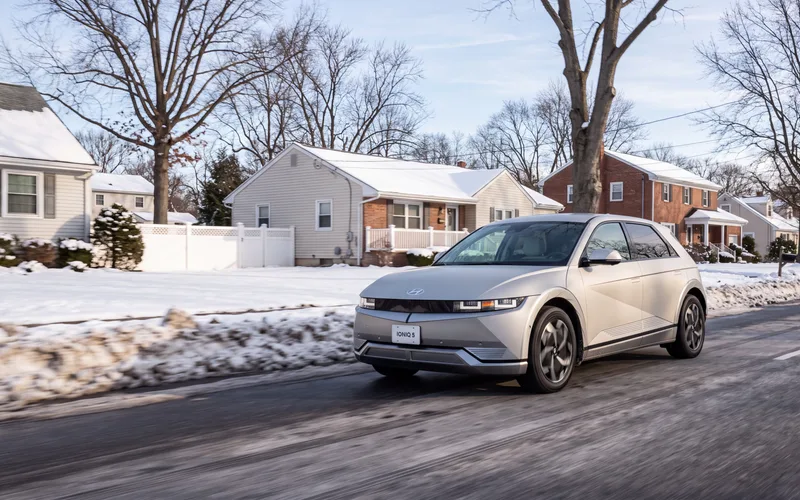 Hyundai Ioniq 5Compact SUVBetter at: Range and charging
More range, much faster charging, a roomier cabin, and vehicle-to-load power for about the same money, with double the basic warranty.
Compare 2.06C
2.06C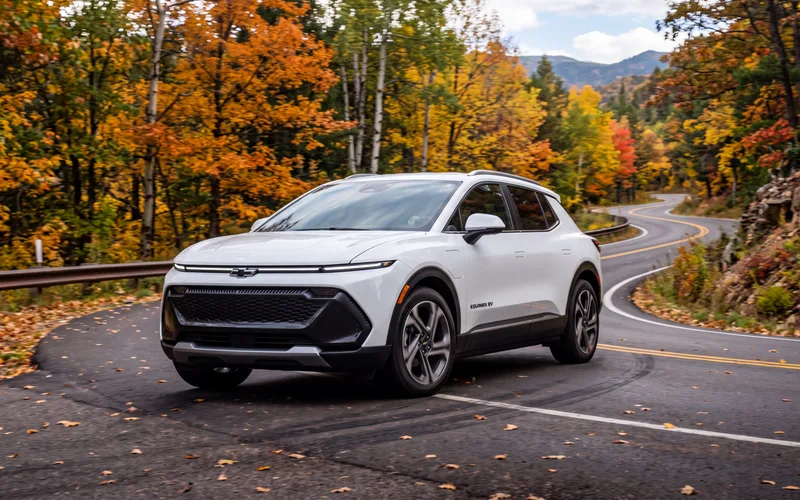 Chevrolet Equinox EVCompact SUVBetter at: Value and cargo
Costs less, goes farther, and gives you meaningfully more cargo room than the bZ's bottom-of-class 27.7 cu ft.
Compare 2.56C+
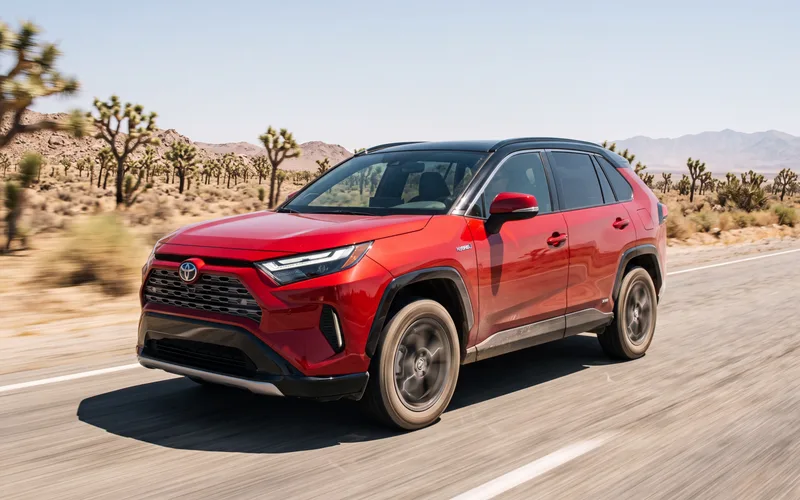 Toyota RAV4Compact SUVBetter at: Resale value
The same Toyota reliability without any charging logistics, plus far stronger resale value and a bigger cargo hold.
CompareSubject scores by year
Hover or tap a score to see what moved it versus the year before. A corner mark flags a big swing.
| Year | Performance | Efficiency | Safety | Space | Cost | Reliability | Tech | Use-case | Driving | Value |
|---|---|---|---|---|---|---|---|---|---|---|
| 2026 | 45 | 66 | 75 | 41 | 61 | 72 | 73 | 66 | 71 | 69 |
| 2025 | 38 | 64 | 83 | 41 | 57 | 72 | 67 | 57 | 65 | 60 |
| 2024 | 38 | 64 | 78 | 40 | 49 | 66 | 67 | 56 | 65 | 60 |
| 2023 | 38 | 63 | 77 | 40 | 47 | 60 | 65 | 54 | 65 | 55 |
Compare two years
Best fit & conditions
Higher scores mean a better fit for that use case. Learn more about use-case fit →
Subject profile
Academic Probation · NHTSA safety recalls
No NHTSA safety recall is on record for the 2026 Toyota bZ4X. Other model years of the bZ4X have 4 — listed below.
4 recalls on other model years of the bZ4X (2023–2025)
Oct 30, 2025Back over prevention: display functionPlease see the recall report for a complete list of models. A software error may cause the rearview camera to freeze or display a blank screen when the vehicle is in reverse. As such, these vehicles fail to comply with the requirements of Federal Motor Vehicle Safety Standard (FMVSS) number 111, "Rear Visibility."
Defect
Toyota Motor Engineering & Manufacturing (Toyota) is recalling certain 2022-2026 Toyota, Lexus, and Subaru Solterra vehicles equipped with a Panoramic View Monitor (PVM) system. Please see the recall report for a complete list of models. A software error may cause the rearview camera to freeze or display a blank screen when the vehicle is in reverse. As such, these vehicles fail to comply with the requirements of Federal Motor Vehicle Safety Standard (FMVSS) number 111, "Rear Visibility."
Risk
A rearview camera that fails to display an image can reduce the driver's view behind the vehicle, increasing the risk of a crash.
Remedy
Dealers will update the parking assist software, free of charge. Owner letters were mailed January 2, 2026. Owners may contact Toyota's customer service at 1-800-331-4331. Toyota's numbers for this recall are 25TB13 and 25LB06. Subaru's number for this recall is WRE25.
NHTSA campaign 25V744000 ↗Manufacturer no. 25TB13/25LB06/WRE251,024,407 vehicles potentially affected (all models in the campaign)Owners notified Dec 5, 2025Filed by Toyota Motor Engineering & ManufacturingFiled as BZ4XSep 4, 2025Visibility: defroster/defogger/hvac systemDuring certain HVAC system faults, such as electrical compressor failure, the defroster and defogger system may become inoperative.
Defect
Toyota Motor Engineering & Manufacturing (Toyota) is recalling certain 2023-2025 bZ4X, Lexus RZ, and Subaru Solterra vehicles. During certain HVAC system faults, such as electrical compressor failure, the defroster and defogger system may become inoperative.
Risk
An inoperative defroster and defogger system can decrease the driver's visibility under certain driving conditions, increasing the risk of a crash.
Remedy
Dealers will update the HVAC control ECU software, free of charge. Dealers will also inspect the electrical compressor, and replace it, if necessary, free of charge. Owner notification letters were mailed October 17, 2025. Owners may contact Toyota's customer service at 1-800-331-4331. Toyota's numbers for this recall are 25TB07 and 25TA07. Lexus' numbers for this recall are 25LB04 and 25LA04. Subaru's number for this recall is WRD-25.
NHTSA campaign 25V577000 ↗Manufacturer no. 25TB07,25LB04,WRD2594,320 vehicles potentially affected (all models in the campaign)Owners notified Oct 17, 2025Filed by Toyota Motor Engineering & ManufacturingFiled as BZ4XJul 23, 2024Equipment: other: labelsThe load carrying capacity modification label may display inaccurate added weight values. As such, these vehicles fail to comply with the requirements of Federal Motor Vehicle Safety Standard number 110, "Tire Selection and Rims."
Defect
Gulf States Toyota, Inc. (GST) is recalling certain Toyota 2023 GR Supra, 2024 4 Runner, Corolla, Grand Highlander, Grand Highlander Hybrid, Land Cruiser Hybrid, Tacoma, Tacoma Hybrid, 2023-2024 BZ4X, Corolla Cross Hybrid, GR Corolla, GR86, Highlander, Highlander Hybrid, Prius, Prius Prime, Sequoia Hybrid, Tundra, Tundra Hybrid, Venza Hybrid, 2023-2025 Crown, and 2025 Camry Hybrid vehicles equipped with GST accessories. The load carrying capacity modification label may display inaccurate added weight values. As such, these vehicles fail to comply with the requirements of Federal Motor Vehicle Safety Standard number 110, "Tire Selection and Rims."
Risk
A vehicle with an incorrect maximum capacity weight value may be overloaded, which can increase the risk of a crash.
Remedy
GST will mail new labels to owners, free of charge. Owner notification letters were mailed September 16, 2024. Owners may contact GST customer service at 1-800-444-1074. GST's number for this recall is 24R2.
NHTSA campaign 24V548000 ↗Manufacturer no. 24R233,848 vehicles potentially affected (all models in the campaign)Owners notified Sep 16, 2024Filed by Gulf States Toyota, Inc.Filed as BZ4XJun 23, 2022Wheels: hubThe hub bolts on the wheels may loosen, causing a wheel to detach from the vehicle after low-mileage use.
Defect
Toyota Motor Engineering & Manufacturing (Toyota) is recalling certain 2023 Subaru Solterra and Toyota BZ4X vehicles. The hub bolts on the wheels may loosen, causing a wheel to detach from the vehicle after low-mileage use.
Risk
A wheel detaching from a moving vehicle can result in a loss of vehicle control, increasing the risk of a crash.
Remedy
Owners are advised not to drive their vehicles until they are repaired. Dealers will replace the hub bolts and wheels, free of charge. Letters notifying owners of the safety risk were mailed June 27, 2022. A second letter will be sent once the remedy is available. Owners may contact Toyota's customer service at 1-800-331-4331.
NHTSA campaign 22V444000 ↗Manufacturer no. 22TA06661 vehicles potentially affected (all models in the campaign)Owners notified Nov 30, 2022Filed by Toyota Motor Engineering & ManufacturingFiled as BZ4X
Source: NHTSA Office of Defects Investigation recall database, model years 2023–2026. Recalls are listed by model year as the manufacturer filed them; whether a specific car is affected depends on its VIN — check a VIN at nhtsa.gov ↗. NHTSA model names matched to this page: BZ4X.
Detailed scoring by subject
1Performance & PowertrainOne of the bZ4X's weakest categories.0.97F
For 2026 the nameplate is sold as the Toyota bZ (the "4X" was dropped) and the powertrain lineup was re-tiered: a 168 hp entry XLE on the 57.7 kWh pack, a 221 hp single-motor FWD on the 74.7 kWh pack that anchors the volume XLE Plus/Limited mix, and a 338 hp dual-motor AWD, with the new lifted Woodland variant at 375 hp. Scored on the 221 hp 74.7 kWh FWD as the mainstream configuration; even so, 221 hp sits low in the 150–550 hp SUV band.
Toyota does not publish a clean combined torque figure for every 2026 bZ configuration; the front-drive car's single motor carries roughly 196 lb-ft, essentially the platform figure, delivered instantly from rest. The dual-motor AWD's combined output is reported near 415 lb-ft, which is why the AWD feels like a different vehicle.
The 221 hp front-drive bZ carries roughly 4,300 lb and needs around 7.2 seconds to 60 mph — adequate in traffic but unremarkable against electric compact crossovers, most of which are quicker. The 338 hp AWD drops to about 4.9 seconds, a large step up from the ~6.5 s of the pre-refresh bZ4X AWD.
Battery-electric delivery with no lag, no shift interruption and no combustion coarseness, in a cabin reviewers consistently call quiet — the usual EV best case. It falls short of the very top of the band only because the volume front-drive car runs out of urgency at highway speeds, a criticism carried over from the pre-refresh bZ4X.
Single-speed reduction gear — nothing to hunt for, no harsh downshifts, no CVT drone, continuous torque from rest. Held just below the segment's best because Toyota's regen implementation is coarser than the paddle-adjustable systems in the Ioniq 5 and EV6, relying on a Regen Boost button rather than graduated control.
The maximum manufacturer rating in any 2026 configuration is 3,500 lbs, carried by the new AWD Woodland variant — a real gain for a nameplate that was barely rated to tow before, and enough for a small utility or boat trailer. Buyers of the volume front-drive trims do not get that number, which is why this lands mid-band rather than high.
Front-wheel drive is standard and dual-motor AWD is an option across the XLE and Limited trims rather than being locked behind the top of the range, and it is standard on the Woodland. Operation is straightforward electronic torque split with X-MODE terrain programs on AWD cars — capable but without low range or the sophistication that would reach the top band.
Around 8.1 in of ground clearance on standard trims and 8.3 in on the Woodland, plus X-MODE and low-speed Grip Control on AWD cars, make it credible on a rough forest road — better provisioned than most electric crossovers. But there are no lockers, no low range, and a floor-mounted battery pack limits real articulation and underbody clearance; the Woodland's cladding, roof rails and all-terrain-oriented tires are a styling-plus-margin package, not off-road hardware.
Battery-electric is the only propulsion type under this nameplate — no gas, hybrid or plug-in variant — so the item's 80–100 band is unreachable by definition. Scored above the EV-only floor because the 2026 lineup does offer genuine mechanical choice within that one type: two battery sizes and three output levels from 168 to 375 hp, in both FWD and AWD.
2Efficiency & RangeMid-pack among this car's ten categories.2.48C+
The 2026 model year is the mid-cycle refresh Wikipedia documents — renamed simply "bZ" in North America, with silicon-carbide BluE Nexus eAxles and a larger 74.7 kWh pack on every grade above the base XLE FWD. The volume long-range FWD grade (XLE Plus, $37,900 — the trim reviewers and Toyota's own marketing lead with) is EPA-certified at 131 MPGe combined, the best figure in the lineup and above the 125-MPGe top of the EV SUV band, so the item clamps to 100.
Regenerative braking and zero idle draw make city driving the bZ's strongest case, and EPA rates the volume FWD grade at 143 MPGe there — above the 140-MPGe ceiling of the EV SUV city band, so the item clamps. Even the least efficient AWD Limited posts 128 MPGe in town.
Highway MPGe drops well below the city figure — normal EV behavior, and the bZ's blunt crossover aero makes the fall steeper than a slippery sedan's — but the EPA-certified 119 MPGe still clears the 110-MPGe top of the EV SUV highway band.
The refreshed 74.7 kWh FWD grade is EPA-rated 314 miles at 26 kWh per 100 mi — a genuine step past the outgoing bZ4X's 252-mile best case, landing mid-pack in the EV SUV band rather than near its floor, and Edmunds beat the rating at 331 miles in real-world testing. Toyota's "up to 314 miles" claim and the EPA certification agree, which is why this holds at HIGH confidence. Buyers should note the $34,900 base XLE FWD's 57.7 kWh pack is materially shorter-legged at 236 miles.
The refresh's charging story is consistency, not peak power: every 2026 bZ accepts 150 kW, up from the outgoing AWD grade's 100 kW CATL-pack limit, but the ceiling itself is unchanged and sits in the lower third of the EV band. The 400-volt e-TNGA architecture rules out the 230–350 kW figures the 800-volt Hyundai/Kia rivals post, which is why those cars out-score the bZ on this category despite similar range.
This is the headline fix of the refresh. The outgoing car needed up to an hour to reach 80% on some grades and capped owners at three DC sessions a day; a reworked charging curve, an upgraded heat pump and standard battery preconditioning cut that to roughly 30 minutes. Held to the manufacturer-quoted 30 rather than the faster tested figure per the item's definition, which puts the bZ mid-band — the flat 150 kW ceiling means the bigger pack simply takes longer, so it cannot approach the sub-20-minute times of 800-volt rivals.
At the EPA-certified 26 kWh per 100 miles, 15,000 annual miles draws roughly 3,900 kWh and costs $550 a year at the label's national residential rate — near the best end of the EV SUV cost band and a fraction of what a gasoline compact SUV burns. Owners who lean on public DC fast charging rather than a home outlet will pay two to three times this.
Cheap home charging is the whole story, and 2026 is a clear step up on energy flexibility: Toyota fits a native NACS port for direct Tesla Supercharger access — no adapter, unlike the 2025 car's CCS1 plug — alongside an 11 kW onboard AC charger and standard battery preconditioning with Plug & Charge. No premium fuel, E85, or diesel considerations apply. Short of full marks only because buyers without a garage still face Level 2 installation cost or public-charging reliance, and the 150 kW peak rate remains mid-pack rather than class-leading.
3SafetyThe bZ4X's best-graded category.3.07B
NHTSA testing of the shared Toyota e-TNGA BEV platform (bZ4X and its Subaru Solterra twin) returned a 4-star overall rating for this generation, and the 2026 refresh is cosmetic/powertrain rather than structural, so the rating carries forward until the car is retested. Replaces an invented placeholder value of 4.6 stars.
The current-generation bZ4X has earned IIHS Top Safety Pick+ with Good crashworthiness results in small overlap front (driver and passenger), the updated moderate overlap front, and the updated side test; the same structure underpins the Solterra, which is scored 90 here. Held just under the twin because the 2026 refresh has not been confirmed as retested under the tightened current-year award criteria.
Toyota Safety Sense 3.0 is standard on every 2026 bZ trim — pre-collision with pedestrian/motorcycle detection and intersection support, full-speed-range dynamic radar cruise, lane departure alert with steering assist, lane tracing assist, road sign assist, automatic high beams and proactive driving assist — and Blind Spot Monitor with Rear Cross-Traffic Alert and Safe Exit Assist are standard from the base XLE. Nothing safety-critical is paywalled to the top trim.
The TSS 3.0 pre-collision system earns Superior marks in IIHS vehicle-to-vehicle front crash prevention and adds intersection turn support and motorcycle detection, but nighttime pedestrian detection is mid-pack rather than class-leading — the pattern across recent Toyota BEVs.
Blind Spot Monitor, Rear Cross-Traffic Alert and Safe Exit Assist are standard across the trim walk, which is better than the segment norm of gating BSM to mid trims. Coverage is alert-only — there is no rear cross-traffic braking intervention — which caps it below the active-intervention band.
Lane Tracing Assist with lane departure alert and steering assist is standard and works reliably on clearly marked highways, but reviewers consistently describe Toyota's centering as conservative, prone to mild ping-ponging and quicker to hand back than Subaru EyeSight (scored 80 on the twin) or Hyundai/Kia HDA2.
Full-Speed Range Dynamic Radar Cruise Control is standard, operates to a stop and resumes in traffic, and is one of the better-regarded mainstream ACC systems for smooth gap management; combined with Lane Tracing Assist it makes a competent but hands-on highway assist rather than a polished single-pedal-of-attention system.
Toyota offers no hands-free highway driving system on the 2026 bZ — TSS 3.0 is a hands-on suite with a torque-sensing wheel, and there is no equivalent to Ford BlueCruise, GM Super Cruise or Tesla Autopilot/FSD. Scored in the low band per the item's 0-49 'no hands-free option' guidance, matching the Solterra twin.
LED projector headlights with automatic high beams are standard on every trim and the current generation's headlights have rated Good in IIHS testing, which is what a Top Safety Pick+ requires across the range. Not adaptive/curve-adaptive matrix lighting, so short of the top of the band.
Forward and over-shoulder sightlines are good — low cowl, upright glass, deeply set instrument binnacle — but the tapering roofline gives thick rear pillars and a shallow rear window, and the bZ4X's well-documented omission of a rear window wiper degrades rearward visibility in rain and snow. A 360-degree camera is available on Limited only, so the volume XLE relies on the standard backup camera.
The dedicated-BEV packaging helps: rear doors open wide, the floor is flat, and rear legroom is generous for a compact SUV, so two seats install easily and a rear-facing seat fits without punishing the front passenger. LATCH anchors sit recessed in the seat bight under trim covers, requiring some digging, and the bench is too narrow for a comfortable three-across.
4Space & ComfortThe bZ4X's lowest-graded category.0.74F
For 2026 the nameplate is renamed simply Toyota bZ in the US market, but it remains a strictly two-row, five-passenger compact EV SUV in every trim and drivetrain — the refresh changed styling, batteries and charging, not packaging.
Front headroom of 38.6 in carries over unchanged — the 2026 refresh reworks the fascia, dashboard and battery, not the roofline or seat mounting — and remains mid-pack for a compact SUV because the coupe-influenced roof and high battery floor cost height versus boxier EVs like the Ioniq 5 and ID.4.
42.1 in of front legroom is competitive for the segment and unchanged for 2026 — the flat EV floor and long 112.2-in wheelbase give front occupants genuine stretch-out room.
Second-row headroom of 37.1 in sits below the compact-SUV midpoint and is unchanged for 2026; the tapering roofline and the panoramic glass roof on upper trims cost taller rear passengers roughly another three-quarters of an inch.
35.3 in of second-row legroom is only adequate for a 112.2-in wheelbase and carries over for 2026; the raised battery floor forces a knees-up posture with little under-thigh support, so the space feels tighter than the figure implies.
The 2026 bZ has no third row at all — it is a two-row, five-seat compact SUV in every configuration — so it scores in the low band by definition. Toyota's three-row electric SUV is the separate bZ4X-derived-platform Highlander-size model, not this car.
27.7 cu ft behind the rear seats sits near the bottom of the SUV normalization band and is unchanged for 2026 — the sloping tailgate and the complete absence of a front trunk keep usable volume well short of the Equinox EV or ID.4.
Roughly 57 cu ft with the rear bench folded is at the very bottom of the SUV band and unchanged for 2026; the load floor does not fold truly flat and there is no frunk to supplement it, leaving only a small underfloor bin for the charge cable.
The 2026 interior update reworks the instrument panel and center console, adding a more usable tray and console bin than the criticized 2024–2025 arrangement, alongside the standard wireless charger, open pass-through shelf under the console bridge and underfloor cable bin — competitive everyday storage, but still no frunk, no fold-flat load floor and no onboard power export, so nothing that stands out among EV rivals.
Seat structures and mounting carry over for 2026: front buckets are well padded with adequate lateral support and an 8-way power driver's seat, and the rear bench is nicely cushioned, but the knees-up rear position over the battery and thin under-thigh support keep it out of the top band.
The soft-leaning tune absorbs bumps reasonably but is not segment-leading, and no suspension retune has been confirmed for 2026: reviewers of this chassis split between 'fairly good thanks to the soft suspension tuning' and 'too firm and fidgety for a family car', with the 20-in wheels on upper trims making it busier than the XLE's 18s.
Quiet by class standards with no engine noise — second-row conversation is easy at highway speed — but wind noise off the mirrors and tire roar on coarse pavement intrude more than in the Ioniq 5, EV6 or ID.4, and no acoustic-glass or active-noise-cancellation upgrade accompanied the 2026 refresh.
The 2026 refresh closes the nameplate's biggest comfort gap by making heated front seats and a heated steering wheel standard across the range instead of a Weather Package option on the volume XLE, on top of standard heat-pump HVAC, dual-zone automatic climate, and remote cabin and battery pre-conditioning via the Toyota app; Limited adds ventilated front seats, heated rear seats and the radiant foot-and-leg heater. It stops short of the top band because there are still no rear climate controls or massage seats.
5Cost of OwnershipOne of the bZ4X's weakest categories.2.12C
For 2026 the bZ4X was overhauled and renamed simply "bZ" in the US, and the entry price moved DOWN rather than up — the outgoing 2025 bZ4X XLE FWD opened at $37,070 + $1,350 destination (~$38,420), and the reworked 2026 car undercuts it by roughly $2,000. Estimated, not confirmed against toyota.com.
The volume configuration is the long-range FWD XLE — the 74.7 kWh / ~221 hp version rated near 300+ miles — rather than the short-range 57.7 kWh base or the 338 hp Limited AWD, because range is the deciding spec for buyers in this class. Priced as a step above the entry XLE.
A BEV drivetrain deletes oil changes, spark plugs, belts, exhaust and transmission service, and regenerative braking stretches pad life; scheduled service is essentially cabin filters, brake fluid, tire rotation and inspections. Toyota's parts pricing and dense dealer network keep it at the low end of the compact-EV-SUV band, partly offset by tire wear on a ~4,300–4,600 lb curb weight.
This is the bZ4X's single worst ownership metric and the main drag on the category. It has been one of the fastest-depreciating vehicles on the US market: soft demand, heavy lease and dealer-incentive volume, a reputation dented by the 2022 wheel-hub recall and stop-sale, and a used-EV market oversupplied with 200-mile-class crossovers. The 2026 overhaul (NACS port, more range and power, lower price) helps the next cycle but does not reset residuals on cars already in the fleet — and the 2026 price cut itself pulls down comparable used values.
Toyota's standard New Vehicle Limited Warranty, unchanged for the EV line and the shortest term in the band — Hyundai and Kia give 5 yr / 60,000 mi on directly competing electric crossovers, and even Tesla offers 4 yr / 50,000 mi.
Scored on the EV battery term as the item's EV clause directs, and it is the bZ4X's strongest ownership card: Toyota covers the traction battery for 10 years / 150,000 miles from first use with a guaranteed minimum 70% of original capacity — longer in both years and miles than the 8-year federal floor its rivals mostly stop at, and better than the 8 yr / 100,000 mi the mechanically identical Subaru Solterra gets. Note the drive units and other EV components stop at 8 yr / 100,000 mi, so the 10-year figure is battery-specific.
Strong for the class: ToyotaCare covers scheduled maintenance for 2 yr / 25,000 mi plus 2 years of unlimited-mileage roadside assistance, and the EV line adds a complimentary public-charging allowance — which for 2026 opens onto the Tesla Supercharger network now that the car ships with a native NACS port and Plug & Charge. Connected-services trials (Safety Connect, Remote Connect, Drive Connect) come standard. Held below the 90s because the maintenance period is 2 years rather than Hyundai's 3, and included charging is a capped introductory credit, not a long unlimited term.
$39,350 volume-trim price minus its estimated resale value after 5 years (41% retained, or about $16,133) leaves about $23,217 in depreciation. Add the projected $3,850 in 5-year maintenance and repairs, and owning this vehicle for 5 years costs about $27,067 in total.
6Reliability & QualityOne of the bZ4X's strongest categories.2.90B-
Toyota's brand halo and four model years of e-TNGA field data since the 2023 launch point to average-or-better predicted reliability, and the drivetrain is mechanically simple with a conservative state-of-charge buffer. But 2026 is a substantial mid-cycle refresh — larger battery pack, uprated motors, a native NACS port and a redesigned dash/electronics stack — so the prediction rests on the pre-refresh car rather than on this configuration.
Toyota is the strongest multi-year dependability brand in the US market, topping Consumer Reports' brand rankings again for 2026, though J.D. Power's 2026 VDS places it eighth after a four-spot slip. This is the single biggest asset the bZ4X inherits.
This generation opened with one of the more serious EV recalls of the decade — 2022 wheel hub bolts that could loosen enough to detach a wheel, triggering a stop-sale, buyback offers and months of halted production and deliveries. It was a fastener/torque-spec defect rather than a systemic design flaw, and the years since have been comparatively quiet, which keeps the score in the 'typical activity' band rather than the bottom one.
The e-TNGA drive units have a clean four-year field record and Toyota's battery management is deliberately conservative — owners report unusually low capacity fade, and the pack is backed by a 10-year/150,000-mile capacity warranty. The 2026 refresh's larger pack and higher-output motors are new hardware, however, so this is a 'newer powertrain with no red flags' rather than a proven high-mileage family.
The 2026 refresh directly addresses the cabin's worst reviews — a reworked dashboard, a larger 14-inch touchscreen and restored physical climate controls — but the material palette is still dominated by hard plastics that reviewers have consistently called out as thin for a vehicle in this price class.
US-market cars are built at Toyota's Motomachi plant in Japan, and assembly quality has never been the bZ4X's problem — there is no pattern of panel-gap, rattle or squeak complaints, and criticism of the car has centered on charging behavior and materials rather than how it is screwed together.
Toyota runs one of the densest service networks in the country — roughly 1,200 US dealers, far more reachable than any EV-only brand's — with ToyotaCare covering the first two years of maintenance. The offset is uneven EV-specific expertise at individual stores, a documented weak spot for legacy-brand EV owners.
Routine running costs are low — no oil changes, and shared Toyota parts-bin components for brakes, suspension and trim are cheap and everywhere. But the EV-specific hardware (pack, e-axle, thermal system) is dealer-only on a Japan-built, low-volume model with essentially no aftermarket, and collision repair on the aluminum-intensive structure runs above segment norm.
7Technology & InfotainmentOne of the bZ4X's strongest categories.2.97B-
The 2026 model-year overhaul that renamed the bZ4X to 'bZ' in the US made the 14-inch center touchscreen standard across the range, replacing the previous 8.0-inch base / 12.3-inch upper-trim split. Value corroborated by the mechanically identical 2026 Subaru Solterra, which shares the same dash and screen after the joint refresh.
The current Toyota Audio Multimedia generation on the 14-inch panel is a clear step up from the pre-refresh bZ4X system — quick to wake, sensible home-screen tiling, and real physical climate controls left below the display. It still trails the best in class on menu depth for EV/charging settings and does not match Hyundai/Kia dual-screen layouts for at-a-glance clarity.
Wireless Apple CarPlay and wireless Android Auto are standard on every 2026 bZ grade, matching the best practice in the segment. Held just under the 90s ceiling because projection runs in a windowed portion of the wide 14-inch panel rather than filling it.
Cloud-based Toyota navigation with live traffic and the 'Hey Toyota' natural-language assistant are both present and handle destination, climate, and audio requests conversationally — a real improvement on the old embedded system. Docked below 80 because the connected navigation and full assistant capability revert to a limited feature set once the Drive Connect trial lapses, and many owners default to CarPlay/Android Auto maps anyway.
A six-speaker system is standard, with a nine-speaker JBL premium setup reserved for the top grade — adequate rather than notable, and a smaller premium jump than the 11-speaker Harman Kardon offered in the twin Solterra. The quiet EV cabin flatters both systems.
A fully digital driver display is standard, and the refresh reworked its EV graphics, but it remains a small (roughly 7-inch) panel mounted unusually far forward in a hooded pod — a layout reviewers have criticized since launch for being distant and offering limited configurability. Standard-fit fully digital placement earns a solid middle score; size and adjustability keep it out of the 80s.
The 2026 bZ supports over-the-air updates covering the multimedia system, maps, and selected vehicle software modules — meaningfully more than maps-only, but not the whole-vehicle feature-adding cadence of Tesla, Rivian, or Hyundai's newest E-GMP cars.
The Toyota app covers the EV essentials — remote climate precondition, charge scheduling and charge status, lock/unlock, and vehicle locate — and Digital Key allows phone-as-key, with Apple Car Key support added to Toyota/Lexus during 2026. Points held back because the useful remote and connected functions sit behind Remote Connect / Drive Connect subscriptions after the trial period.
USB-C data/charge ports are provided in both rows and a Qi wireless charging pad is fitted on all but the entry grade — adequate provisioning for the class. No household AC outlet or vehicle-to-load capability is offered, which is a real omission on an EV where rivals increasingly provide it.
Proximity entry with push-button start is standard, a power liftgate is fitted on volume grades with hands-free operation higher up, and Digital Key provides phone-as-key — a fuller keyless set than the twin Solterra, which has no digital key. Short of the top band because the digital key and remote services are subscription-gated after the trial.
Rear camera and front/rear parking sensors with automatic braking are standard, a Panoramic View Monitor 360-degree camera comes on the upper grade, and Toyota's Advanced Park automated parking is available — parking automation the twin Solterra does not offer. Image resolution is good rather than class-leading.
No head-up display is offered on any 2026 bZ grade, at any price — an omission that stands out given the small, distant driver display it would have complemented. Scored in the low band per the item's 'not offered' guidance.
8Use-Case FitMid-pack among this car's ten categories.2.49C+
The dedicated-BEV packaging genuinely helps daily kid logistics — wide-opening rear doors, a flat tunnel-free floor, and 35.3 in of rear legroom that lets a rear-facing seat go in without punishing the front passenger — and a power liftgate is fitted on the volume grades. Against that, IIHS finds the LATCH anchors recessed deep in the seat bight, the five-seat bench is too narrow for a comfortable three-across, and 27.7 cu ft behind the second row is near the bottom of the compact-SUV band, so a stroller plus a grocery run is a real squeeze. The missing rear-window wiper is a family-specific irritant: rear glass stays dirty in the weather families actually load kids in.
This is the bZ's strongest family argument: Toyota Safety Sense 3.0 is standard on every grade including the cheapest one — pre-collision with pedestrian and intersection support, full-speed-range radar cruise, lane tracing — and Blind Spot Monitor, Rear Cross-Traffic Alert, Safe Exit Assist and the rear-seat reminder come standard from the base XLE rather than being bundled into a package families have to buy up to. Crashworthiness is Top Safety Pick+ territory. Held out of the high 80s because the NHTSA overall rating for this platform is 4 stars rather than 5, cross-traffic coverage is alert-only with no braking intervention, and the 360-degree camera is a Limited-only item.
Four adults or two adults plus two kids travel acceptably — quiet EV cabin, USB-C ports in both rows, a nicely padded bench, heated rear seats and a panoramic roof on Limited — but the second row is the weak link on a long day: 37.1 in of headroom is tight for taller passengers, the seat sits low on the battery for a knees-up posture with little under-thigh support, and there are no rear climate controls or rear entertainment provisions. Luggage space with all five seats occupied is the harder limit at 27.7 cu ft, and a ~290-mile range means a family trip includes charging stops that a gas RAV4 does not.
Commuting is what this car does best. Single-speed electric delivery means no lag, no shift hunting and no engine noise in stop-and-go; full-speed-range radar cruise with stop-and-go and Lane Tracing Assist are standard on every grade; the 2026 refresh makes heated front seats and a heated steering wheel standard and adds remote cabin and battery preconditioning through the app, so cold mornings start warm on a plug. The refresh also restores physical climate controls below the new 14-inch screen. Short of the top of the band because the volume front-drive car runs out of urgency merging at speed, regen is a Regen Boost button rather than the graduated paddle control Hyundai/Kia rivals offer, and the ride is busier on the upper trims' 20-inch wheels.
Per-mile running cost is excellent and better than the AWD-only Solterra twin: roughly $680 of home electricity a year at 15,000 miles on the volume front-drive grade, about 141 MPGe on the city cycle that dominates commuting, no oil changes or spark plugs, and regenerative braking that stretches pad life to roughly $3,850 in maintenance and repairs over five years. A native NACS port opens the Tesla Supercharger network for the days a home plug isn't available, and Toyota bundles a complimentary public-charging allowance. Held short of the 90s because insurance runs above the class norm at roughly $2,250 a year on EV repair economics, and commuters without a garage pay two to three times the home-charging figure.
The footprint is genuinely compact — about 184.6 in long on a 73-in-wide body, shorter than an Equinox EV — and forward sightlines are good over a low cowl, with front and rear parking sensors with automatic braking standard and Toyota's Advanced Park automated parking available. What keeps it mid-band is everything behind the driver: the long 112.2-in wheelbase gives a mediocre turning circle near 40 ft, the tapering roofline leaves thick rear pillars and shallow rear glass, there is no rear-window wiper to keep that glass usable in rain or snow, and the 360-degree Panoramic View Monitor is reserved for the Limited, so the volume XLE parks on a single backup camera.
Not meaningfully a work vehicle in the configuration most buyers take. The 3,500 lb maximum tow rating belongs to the new lifted AWD Woodland variant; the volume front-drive grades are rated far below it, so a trailer is not part of the ordinary ownership case. Cargo is the harder ceiling — 27.7 cu ft behind the bench and 56.9 cu ft with it folded is bottom-of-band for an SUV, there is no frunk to supplement it, no pass-through for long material, and the load floor does not fold truly flat. The 221 hp single motor is adequate unloaded and short of headroom with weight aboard. Scored above the floor only because a folded bench, a 3,500 lb rating somewhere in the range and instant low-speed torque cover genuinely light duty.
The reassurance here is the badge and the drivetrain, not the fit-out. An e-TNGA drive unit has four model years of clean field record, Toyota's battery management is conservative enough that owners report unusually low capacity fade, the pack carries a 10-year/150,000-mile capacity warranty, Japan-built assembly quality has never been the complaint, and roughly 1,200 US dealers mean a hard-worked example is never far from service. The offsets are real: the cabin is comfort-oriented with no rubber-floor or vinyl-seat work variant, this generation opened with a serious wheel-hub recall and stop-sale, and EV-specific hardware is dealer-only on a low-volume model with essentially no aftermarket, so downtime after a hard knock is longer than a fleet buyer would accept.
Almost nothing here is aimed at work. There is no 120V household outlet in the cabin and no vehicle-to-load export at any grade — a conspicuous gap on an EV when an Ioniq 5 will run tools off its pack — the underhood area is sealed so there is no frunk for dirty gear, there is no cargo pass-through, and the only underfloor provision is a shallow bin sized for the charge cable. Device power is USB-C ports and a wireless pad. Cargo tie-downs are the basic set, roof rails are a Woodland/upper-grade item rather than standard equipment, hitch availability effectively follows the Woodland, and no washable rubber-floor or vinyl-trim option exists. Toyota's accessory catalogue is broad by brand but thin for this nameplate specifically.
A workable tourer rather than a mile-eater. The 2026 refresh's larger 74.7 kWh pack takes the volume grade to roughly 290 miles, and the charging story is transformed: a native NACS port plugs straight into Tesla Superchargers with no adapter, standard battery preconditioning and Plug & Charge remove the two things that made the old bZ4X painful on a road trip, and DC fast charging runs to about 150 kW. Highway manners are quiet by class standards with standard full-speed radar cruise and lane tracing. What holds it in the 70s: highway MPGe drops steeply against the blunt crossover aero so real interstate range lands well under the label, Edmunds finds front-seat support waning after about 45 minutes, the assist suite is hands-on only with no head-up display and a small, distant driver cluster, and 27.7 cu ft is thin for four people's luggage.
The 2026 lineup adds real adventure intent for the first time — the lifted Woodland brings 8.3 in of clearance, 375 hp, standard AWD, roof rails, cladding and all-terrain-oriented tires plus the 3,500 lb tow rating — and AWD cars get X-MODE terrain programs with low-speed Grip Control. But the configuration being scored is the front-drive volume grade, which gets none of that: AWD is an option rather than standard as on the Subaru twin, clearance is 8.1 in, and there is no low range, no lockers and no meaningful articulation over a floor-mounted pack. For camping specifically, the absence of any V2L or 120V outlet is a real miss on an EV, and the load floor does not fold flat for sleeping.
This is the bZ's weakest practical dimension. 27.7 cu ft behind the bench expanding to 56.9 with the 60/40 seats down sits at the very bottom of the SUV band — a folded Solterra offers more by its own measurement, and an ID.4 or Equinox EV more again — and the shortfall is compounded by having no frunk to absorb dirty or awkward items, a load floor that does not fold truly flat, an underfloor bin sized only for the charge cable, no fold-flat front passenger seat for long loads, and roof rails that are an upper-grade item rather than standard. Normal suitcases fit; bikes, boards and flat-packed furniture are a genuine problem.
9Driving ExperienceGrades above the middle of the scale.2.84B-
The 2026 overhaul (marketed as the Toyota bZ in the US) stiffens the body structure and retunes dampers and steering, so turn-in is crisper and roll better contained than the 2023-25 bZ4X, and the low floor-mounted battery keeps the center of gravity down. It is still a comfort-biased crossover carrying roughly 4,300-4,700 lb on all-season tires — secure and predictable rather than agile, level with the Solterra twin (68) and clearly behind the Ioniq 5 (75), EV6 (76.9) and Mach-E (76.5).
Electrically assisted rack is accurate and sensibly weighted with good on-center stability, but it transmits almost nothing about front-tire grip — the same numb character reviewers criticized on the pre-2026 bZ4X, only modestly recalibrated. Fine for commuting, uninvolving on a good road.
Progressive pedal with better friction/regen blending than the awkward pre-refresh handoff, helped by the 2026 model's stronger selectable regen and one-pedal-style low-speed control. Stopping distances remain merely adequate for a heavy EV crossover on efficiency-minded all-season tires, and there is no performance brake option.
The 2026 model addresses the bZ4X's biggest dynamic complaint: AWD output rises to roughly 338 hp combined (from ~214 hp) for a mid-4- to low-5-second 0-60 mph, and the FWD volume car moves to about 221 hp. Delivery is instant, linear and completely free of shift or stop/start interruption through the single-speed reduction drive.
No engine, no transmission, no idle shake — only a faint motor whine under hard acceleration and no vibration through the wheel or pedals. Short of the isolation of luxury EVs like the Lyriq or EQE SUV, but excellent by mainstream compact-EV standards.
Mid-pack for the class: the 112.2 in wheelbase is long for a compact crossover, so the curb-to-curb diameter is wider than a Tiguan's but tighter than a Tesla Model Y's or Ioniq 5's. Figure is for the volume XLE on 18-in wheels; 20-in Limited trims turn slightly wider.
The 2026 redesign of the dash and the move to a 14-in center touchscreen with retained physical climate controls improves the control layout, and the tall seating position with a low cowl gives good forward sightlines and easy ingress. The distant, high-mounted digital instrument display read over rather than through the steering wheel remains the sticking point — some drivers cannot find a wheel position that leaves it fully visible.
The extra 120-plus hp makes the 2026 AWD genuinely quick off the line and effortless in traffic, which lifts it out of the outgoing car's 'slow and forgettable' territory. But the character is still deliberately pragmatic — no manufactured sound, no chassis playfulness, no enthusiast following — so it lands as pleasant transport rather than something you detour for.
10Value & Market PositionMid-pack among this car's ten categories.2.68C+
The base XLE arrives with Toyota Safety Sense 3.0 (AEB with pedestrian detection, lane-tracing assist, full-speed adaptive cruise), heated front seats and steering wheel, a native NACS charge port and an 11 kW onboard AC charger — solid content for the money. It scores below its Subaru Solterra twin because the entry XLE is front-wheel drive with the smaller 57.7 kWh pack, where Solterra makes dual-motor AWD and the big battery standard across the whole lineup.
The 2026 update fixes most of what made the old bZ4X poor value — up to ~74.7 kWh of battery, roughly 221 hp FWD / 338 hp AWD, ~150 kW DC fast charging with battery preconditioning, and Supercharger access via the NACS port — but at a mid-$30Ks to mid-$40Ks window it still trails Hyundai Ioniq 5 and Kia EV6 on range-and-charging per dollar, and as a Japan-built import it never had access to the point-of-sale federal purchase credit that US-assembled rivals used while the credit existed.
More configuration choice than the Solterra twin: two battery sizes (57.7 and 74.7 kWh), front- or all-wheel drive, and XLE/Limited trim steps, so buyers can trade range against price. Still narrower than Ioniq 5's RWD/AWD, standard/long-range and performance spread, with no off-road or performance variant.
The bZ4X sells roughly three times its Solterra twin — annual US volume grew from about 9,000 in 2023 to the high teens in 2024 and kept climbing — which makes it a genuine mid-pack compact EV rather than a marginal one. But it remains far behind Tesla Model Y, Ioniq 5 and Mustang Mach-E, and the nameplate never became a volume product for Toyota the way the RAV4 did.
Toyota is about as strong a badge as exists in this segment — top of Consumer Reports' brand reliability ranking and KBB's brand resale ranking — and that halo plus a 10-year/150,000-mile EV battery warranty reassures first-time EV buyers. It is marked down from a pure Toyota score because the bZ nameplate specifically carries baggage: the 2022 wheel-hub-bolt stop-sale, a reputation for Toyota being late to EVs, and weak used values on early bZ4X examples.
Scored on buyer benefit, this is the model's strongest value dimension: soft EV demand and no federal purchase credit on a Japan-built import have kept Toyota subsidizing the car directly, with heavily advertised low-payment leases and cash on the hood through 2024-2025 rather than desperation-only fire sales. Slightly below the Solterra's mark because stronger bZ volume gives Toyota marginally less need to discount.
2026 is the first substantive update to the 2023-vintage e-TNGA platform car and the year Toyota renamed it from bZ4X to bZ: restyled front and rear with body-colored cladding, larger battery options, more powerful motors, faster DC fast charging with preconditioning, a revised interior with a larger multimedia display, and a native NACS port. Modern EV hardware in a shell that is only three model years old, with no imminent replacement.
The 2023-2025 bZ4X was one of the more heavily criticized compact EVs — slow DC fast charging, disappointing real-world and cold-weather range, and a launch recall — and it collected no major segment honors, losing comparison tests to Ioniq 5, EV6 and Model Y. The 2026 refresh directly answers the charging and range complaints and reviews have warmed, but it has not yet built a record of comparison wins, 10Best selections or NACTOY recognition.