
The verdict
A mixed-report mid-size suv, strong on safety and held back by performance.
The 2023 Highlander is a safe, sensible three-row SUV with Toyota's reliability reputation and strong resale value. It earned an IIHS Top Safety Pick+ and keeps about 63% of its price after five years. This is also the year a 265-hp turbo four replaced the old V6, and that engine is louder and only slightly thriftier at 24 MPG combined. The third row fits kids only, and there's just 16 cu ft of cargo space behind it. Buy the 36-MPG hybrid if you can, and skip this one if you need to carry adults in the third row.
Jump to scoresStrengths
- Top-tier crash protection and standard safety tech
- Toyota dependability, cheap parts, service everywhere
- Holds its value like few rivals
What holds it back
- Kids-only third row and a small cargo area
- Warranty is the industry minimum
- New turbo four is louder and coarser
Top alternatives
Cars shoppers cross-shop with the Toyota Highlander 2.88B-
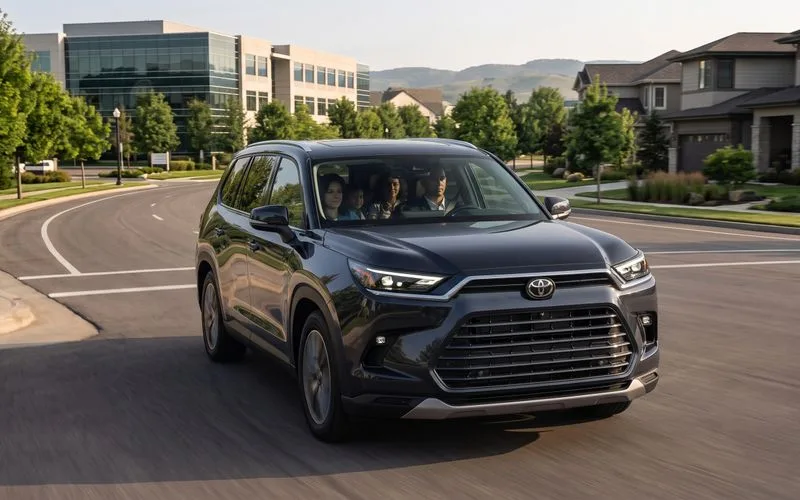 Toyota Grand HighlanderMid-Size SUVBetter at: Third-row space
Same Toyota reliability and the same hybrid tech, but with a third row and cargo hold that actually work — and an IIHS Top Safety Pick+ rating the Highlander doesn't have.
Compare 2.79B-
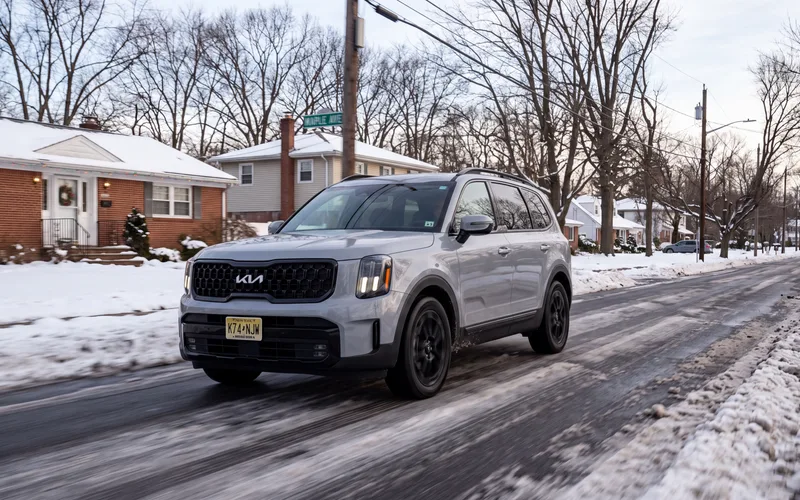 Kia TellurideMid-Size SUVBetter at: Space and warranty
More room, a nicer-feeling cabin at the same price, and a 10-year/100,000-mile powertrain warranty against Toyota's 5/60.
Compare 2.43C+
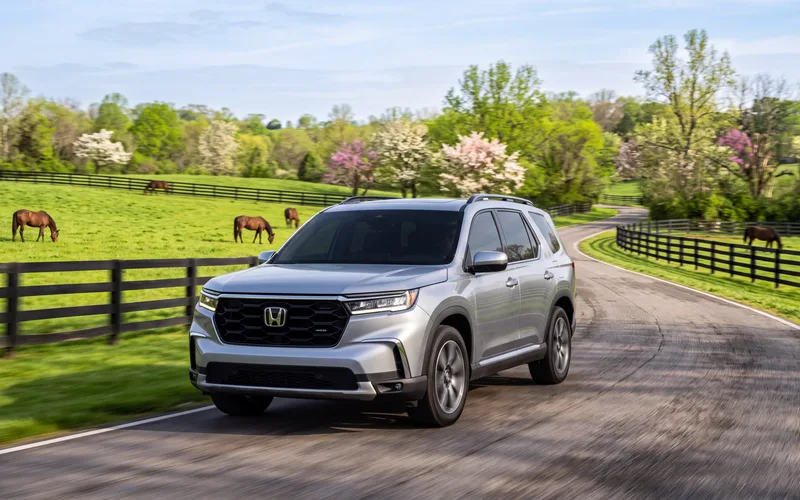 Honda PilotMid-Size SUVBetter at: Cargo versatility
The closest direct rival on size and price, with a more usable third row, smarter cargo solutions and a TrailSport trim for light off-road use.
CompareHow it's evolved
10 scored model years · 2017–2026
Subject scores by year
Hover or tap a score to see what moved it versus the year before. A corner mark flags a big swing.
| Year | Performance | Efficiency | Safety | Space | Cost | Reliability | Tech | Use-case | Driving | Value |
|---|---|---|---|---|---|---|---|---|---|---|
| 2026 | 49 | 54 | 71 | 72 | 55 | 80 | 65 | 65 | 62 | 62 |
| 2025 | 48 | 54 | 70 | 72 | 58 | 80 | 65 | 64 | 62 | 61 |
| 2024 | 47 | 54 | 80 | 72 | 60 | 77 | 64 | 64 | 62 | 64 |
| 2023 | 47 | 51 | 80 | 72 | 59 | 74 | 64 | 64 | 61 | 66 |
| 2022 | 49 | 43 | 79 | 72 | 60 | 81 | 52 | 63 | 65 | 65 |
| 2021 | 51 | 44 | 79 | 72 | 61 | 79 | 50 | 63 | 66 | 68 |
| 2020 | 50 | 49 | 76 | 72 | 61 | 77 | 50 | 63 | 64 | 68 |
| 2019 | 51 | 41 | 68 | 69 | 61 | 81 | 33 | 62 | 59 | 62 |
| 2018 | 50 | 47 | 70 | 70 | 59 | 80 | 33 | 61 | 60 | 71 |
| 2017 | 51 | 46 | 70 | 70 | 62 | 78 | 32 | 62 | 60 | 73 |
Compare two years
Best fit & conditions
Higher scores mean a better fit for that use case. Learn more about use-case fit →
Subject profile
Trims & configurations
5 trimsScores above reflect the volume trim. Per-trim specs and scores are rolling out — the full lineup:
Academic Probation · NHTSA safety recalls
Mar 5, 2026Seats: mid/rear assembly: reclinerThe second-row seat backs may fail to lock into position during seat back adjustment.
Defect
Toyota Motor Engineering & Manufacturing (Toyota) is recalling certain 2021-2025 Highlander and Highlander Hybrid vehicles. The second-row seat backs may fail to lock into position during seat back adjustment.
Risk
A seat back that fails to lock may not properly restrain an occupant during a crash, increasing the risk of injury.
Remedy
Dealers will replace the return springs in the seat back recliner assemblies, free of charge. Owner letters were mailed September 9, 2026. This is a phased recall. Owners may contact Toyotaâs customer service at 1-800-331-4331. Toyota's numbers for this recall are 26TB06 and 26TA06.
NHTSA campaign 26V128000 ↗Manufacturer no. 26TB06 / 26TA06686,588 vehicles potentially affected (all models in the campaign)Owners notified Sep 4, 2026Filed by Toyota Motor Engineering & ManufacturingFiled as HIGHLANDER, HIGHLANDER HYBRIDOct 30, 2025Back over prevention: display functionPlease see the recall report for a complete list of models. A software error may cause the rearview camera to freeze or display a blank screen when the vehicle is in reverse. As such, these vehicles fail to comply with the requirements of Federal Motor Vehicle Safety Standard (FMVSS) number 111, "Rear Visibility."
Defect
Toyota Motor Engineering & Manufacturing (Toyota) is recalling certain 2022-2026 Toyota, Lexus, and Subaru Solterra vehicles equipped with a Panoramic View Monitor (PVM) system. Please see the recall report for a complete list of models. A software error may cause the rearview camera to freeze or display a blank screen when the vehicle is in reverse. As such, these vehicles fail to comply with the requirements of Federal Motor Vehicle Safety Standard (FMVSS) number 111, "Rear Visibility."
Risk
A rearview camera that fails to display an image can reduce the driver's view behind the vehicle, increasing the risk of a crash.
Remedy
Dealers will update the parking assist software, free of charge. Owner letters were mailed January 2, 2026. Owners may contact Toyota's customer service at 1-800-331-4331. Toyota's numbers for this recall are 25TB13 and 25LB06. Subaru's number for this recall is WRE25.
NHTSA campaign 25V744000 ↗Manufacturer no. 25TB13/25LB06/WRE251,024,407 vehicles potentially affected (all models in the campaign)Owners notified Dec 5, 2025Filed by Toyota Motor Engineering & ManufacturingFiled as HIGHLANDER, HIGHLANDER HYBRIDSep 11, 2025Electrical system: instrument cluster/panelDue to an error in the instrument panel software at vehicle startup, the instrument panel may fail to display vehicle speed, brake system, and tire pressure warning lights.
Defect
Toyota Motor Engineering & Manufacturing (Toyota) is recalling certain 2023-2024 Toyota Venza, 2023-2025 RAV4 Prime, RAV4, Highlander, GR Corolla, Crown, 2024-2025 Lexus TX, LS, Toyota Tacoma, Grand Highlander, and 2025 Lexus RX, Toyota Crown Signia, Camry, RAV 4 Plug-in Hybrid (PHEV), and 4 Runner vehicles. Due to an error in the instrument panel software at vehicle startup, the instrument panel may fail to display vehicle speed, brake system, and tire pressure warning lights.
Risk
An instrument panel display that does not show critical information can increase the risk of a crash or injury.
Remedy
Dealers will update the instrument panel software over-the-air (OTA) for non-PHEV vehicles, free of charge. For PHEV vehicles, dealers will inspect the instrument panel assembly, and either replace it, or update the software, free of charge. Owner letters were mailed December 5, 2025. Additional letters will be sent, anticipated in May 2026. This is a phased recall. Owners may contact Toyota's customer service at 1-800-331-4331. Toyota's numbers for this recall are 25TB08 and 25TA08. Lexus' numbers for this recall are 25LB05 and 25LA05.
NHTSA campaign 25V595000 ↗Manufacturer no. See Part 573 Report591,377 vehicles potentially affected (all models in the campaign)Owners notified Dec 5, 2025Filed by Toyota Motor Engineering & ManufacturingFiled as HIGHLANDERJan 29, 2025Air bags: frontal: driver clockspring/spiral cassette · Steering: columnAn electrical connection inside the steering column's spiral cable assembly may be insufficiently welded, causing the connection to separate and deactivate the driver's air bag. As such, these vehicles fail to comply with the requirements of Federal Motor Vehicle Safety Standard number 208, "Occupant Crash Protection."
Defect
Toyota Motor Engineering & Manufacturing (Toyota) is recalling certain 2023 Toyota Corolla, Corolla Cross, Corolla Cross Hybrid, Highlander, Highlander Hybrid, Tacoma, Lexus RX350, 2023-2024 NX250, and NX350 vehicles that may have been incorrectly repaired under previous NHTSA recall number 23V-480. An electrical connection inside the steering column's spiral cable assembly may be insufficiently welded, causing the connection to separate and deactivate the driver's air bag. As such, these vehicles fail to comply with the requirements of Federal Motor Vehicle Safety Standard number 208, "Occupant Crash Protection."
Risk
A deactivated driver's air bag will not deploy as intended, increasing the risk of injury during a crash.
Remedy
Dealers will inspect and replace the spiral cable assembly as necessary, free of charge. Owner notification letters were mailed March 17, 2025. Owners may contact Toyota's customer service at 1-800-331-4331. Toyota's number for this recall is 25TA02. Lexus' number for this recall is 25LA02.
NHTSA campaign 25V040000 ↗Manufacturer no. 25TA02/25LA021,716 vehicles potentially affected (all models in the campaign)Owners notified Mar 17, 2025Filed by Toyota Motor Engineering & ManufacturingFiled as HIGHLANDER, HIGHLANDER HYBRIDJul 23, 2024Equipment: other: labelsThe load carrying capacity modification label may display inaccurate added weight values. As such, these vehicles fail to comply with the requirements of Federal Motor Vehicle Safety Standard number 110, "Tire Selection and Rims."
Defect
Gulf States Toyota, Inc. (GST) is recalling certain Toyota 2023 GR Supra, 2024 4 Runner, Corolla, Grand Highlander, Grand Highlander Hybrid, Land Cruiser Hybrid, Tacoma, Tacoma Hybrid, 2023-2024 BZ4X, Corolla Cross Hybrid, GR Corolla, GR86, Highlander, Highlander Hybrid, Prius, Prius Prime, Sequoia Hybrid, Tundra, Tundra Hybrid, Venza Hybrid, 2023-2025 Crown, and 2025 Camry Hybrid vehicles equipped with GST accessories. The load carrying capacity modification label may display inaccurate added weight values. As such, these vehicles fail to comply with the requirements of Federal Motor Vehicle Safety Standard number 110, "Tire Selection and Rims."
Risk
A vehicle with an incorrect maximum capacity weight value may be overloaded, which can increase the risk of a crash.
Remedy
GST will mail new labels to owners, free of charge. Owner notification letters were mailed September 16, 2024. Owners may contact GST customer service at 1-800-444-1074. GST's number for this recall is 24R2.
NHTSA campaign 24V548000 ↗Manufacturer no. 24R233,848 vehicles potentially affected (all models in the campaign)Owners notified Sep 16, 2024Filed by Gulf States Toyota, Inc.Filed as HIGHLANDER, HIGHLANDER HYBRIDJun 18, 2024TiresThe 20-inch accessory tires with an insufficient load rating for the vehicle's Gross Axle Weight Rating (GAWR) were installed. As such, these vehicles fail to comply with the requirements of Federal Motor Vehicle Safety Standard number 110, "Tire Selection and Rims."
Defect
Southeast Toyota Distributors, LLC (SET) is recalling certain 2021-2024 Highlander vehicles. The 20-inch accessory tires with an insufficient load rating for the vehicle's Gross Axle Weight Rating (GAWR) were installed. As such, these vehicles fail to comply with the requirements of Federal Motor Vehicle Safety Standard number 110, "Tire Selection and Rims."
Risk
Tires with an insufficient load rating can be overloaded and fail, increasing the risk of a crash.
Remedy
SET will inspect and replace the tires and information placard, as necessary free of charge. Owner notification letters were mailed August 16, 2024. Owners may contact SET's customer service at 1-866-405-4226. SET's number for this recall is SET24A.
NHTSA campaign 24V452000 ↗Manufacturer no. SET24A4,763 vehicles potentially affected (all models in the campaign)Owners notified Aug 16, 2024Filed by Southeast Toyota Distributors, LLCFiled as HIGHLANDERJun 6, 2024TiresThe installed tires have an insufficient load rating. As such, these vehicles fail to comply with the requirements of Federal Motor Vehicle Safety Standard number 110, "Tire Selection and Rims."
Defect
Gulf States Toyota, Inc. (GST) is recalling certain 2022-2024 model year Highlander L and Highlander LE vehicles equipped with the Blackout Package that includes 20" black alloy wheels and tires. The installed tires have an insufficient load rating. As such, these vehicles fail to comply with the requirements of Federal Motor Vehicle Safety Standard number 110, "Tire Selection and Rims."
Risk
Tires with an insufficient load rating may be overloaded and fail, increasing the risk of a crash.
Remedy
GST will inspect and replace the tires as necessary, and install a new tire information label as necessary, free of charge. Owner notification letters were mailed August 8, 2024. Owners may contact GST customer service at 1-800-444-1074. GST's number for this recall is 24R1.
NHTSA campaign 24V419000 ↗Manufacturer no. 24R14,869 vehicles potentially affected (all models in the campaign)Owners notified Aug 8, 2024Filed by Gulf States Toyota, Inc.Filed as HIGHLANDEROct 26, 2023Structure: body: bumpersDuring normal vehicle operation, minor impact to the front lower bumper cover may result in the cover coming loose or detaching.
Defect
Toyota Motor Engineering & Manufacturing (Toyota) is recalling certain 2020-2023 Highlander & Highlander Hybrid vehicles. During normal vehicle operation, minor impact to the front lower bumper cover may result in the cover coming loose or detaching.
Risk
A detached front bumper cover can become a road hazard, increasing the risk of a crash.
Remedy
Dealers will repair or replace the upper and lower front bumper covers as necessary, free of charge. Owner letters were mailed April 22, 2024. Owners may contact Toyota customer service at 1-800-331-4331. Toyota's number for this recall is 23TB12/23TA12.
NHTSA campaign 23V720000 ↗Manufacturer no. 23TB12 / 23TA12750,795 vehicles potentially affected (all models in the campaign)Owners notified Apr 22, 2024Filed by Toyota Motor Engineering & ManufacturingFiled as HIGHLANDER, HIGHLANDER HYBRIDJul 12, 2023Air bags: frontal: driver clockspring/spiral cassette · Steering: columnAn electrical connection inside the steering column's spiral cable assembly may be insufficiently welded, causing the connection to separate and deactivate the driver's air bag. As such, these vehicles fail to comply with the requirements of Federal Motor Vehicle Safety Standard number 208, "Occupant Crash Protection."
Defect
Toyota Motor Engineering & Manufacturing (Toyota) is recalling certain 2023 Corolla, Corolla Cross, Corolla Cross Hybrid, Highlander, Highlander Hybrid, Tacoma, 2023 Lexus RX350, RX350 Hybrid, RX500 Hybrid, 2023-2024 Lexus NX250, NX350, and NX350 Hybrid vehicles. An electrical connection inside the steering column's spiral cable assembly may be insufficiently welded, causing the connection to separate and deactivate the driver's air bag. As such, these vehicles fail to comply with the requirements of Federal Motor Vehicle Safety Standard number 208, "Occupant Crash Protection."
Risk
A deactivated driver's air bag that does not deploy as intended increases the risk of injury during a crash.
Remedy
Dealers will inspect and replace the spiral cable assembly, if necessary, free of charge. Owner notification letters were mailed September 8, 2023. Owners may contact Toyota's customer service at 1-800-331-4331. Toyota's number for this recall is 23TA08. Lexus' number for this recall is 23LA02.
NHTSA campaign 23V480000 ↗Manufacturer no. 23TA08/ 23LA02152,927 vehicles potentially affected (all models in the campaign)Owners notified Sep 8, 2023Filed by Toyota Motor Engineering & ManufacturingFiled as HIGHLANDER, HIGHLANDER HYBRID
14 recalls on other model years of the Highlander (2017–2022, 2024–2025)
Dec 17, 2025Seat belts: rear/other: anchorageThe third row center seat belt roof anchor may have been installed at an incorrect angle, preventing the seat belt from properly restraining the occupant.
Defect
Toyota Motor Engineering & Manufacturing (Toyota) is recalling certain 2024-2025 Highlander and Highlander Hybrid vehicles. The third row center seat belt roof anchor may have been installed at an incorrect angle, preventing the seat belt from properly restraining the occupant.
Risk
A seat belt that does not properly restrain an occupant increases the risk of injury during a crash.
Remedy
Dealers will reinstall the seat belt anchor with a new bolt, free of charge. Owner notification letters were mailed January 27, 2026. Owners may contact Toyota customer service at 1-800-331-4331. Toyota's number for this recall is 25TA16.
NHTSA campaign 25V872000 ↗Manufacturer no. 25TA1639 vehicles potentially affected (all models in the campaign)Owners notified Jan 20, 2026Filed by Toyota Motor Engineering & ManufacturingFiled as HIGHLANDER, HIGHLANDER HYBRIDDec 20, 2023Air bags: sensor: occupant classificationA short circuit may develop in the Occupant Classification System (OCS) sensor, preventing the front passenger air bag from deploying.
Defect
Toyota Motor Engineering & Manufacturing (Toyota) is recalling certain 2020-2021 Avalon, Avalon Hybrid, Corolla, Highlander, Highlander Hybrid, RAV4, RAV4 Hybrid, Lexus ES350, Lexus RX350, Lexus RX450H, 2021 Sienna Hybrid, Lexus ES250, 2020-2022 Camry, Camry Hybrid, and ES300H vehicles. A short circuit may develop in the Occupant Classification System (OCS) sensor, preventing the front passenger air bag from deploying.
Risk
An air bag that does not deploy during a crash increases the risk of injury.
Remedy
Dealers will inspect and replace the sensor as necessary, free of charge. Interim letters notifying owners of the safety risk were mailed in February 2024. Some final remedy owner letters were mailed October 31, 2024. Letters will continue to be mailed in phases through January 2026. Owners may contact Toyota customer service at 1-800-331-4331. Toyota's number for this recall is 23TB15/23TA15 Lexus 23LB03/23LA03.
NHTSA campaign 23V865000 ↗Manufacturer no. 23TA15, 23LA03999,901 vehicles potentially affected (all models in the campaign)Owners notified Oct 31, 2024Filed by Toyota Motor Engineering & ManufacturingFiled as HIGHLANDER, HIGHLANDER HYBRIDMay 6, 2022Equipment: other: labelsThe load carrying capacity modification labels may not be permanent and can fade, becoming illegible. As such, these vehicles fail to comply with the requirements of Federal Motor Vehicle Safety Standard number 110, "Tire Selection and Rims."
Defect
Gulf States Toyota, Inc. (GST) is recalling certain 2022 4Runner, Tacoma, Highlander, and Highlander Hybrid vehicles. The load carrying capacity modification labels may not be permanent and can fade, becoming illegible. As such, these vehicles fail to comply with the requirements of Federal Motor Vehicle Safety Standard number 110, "Tire Selection and Rims."
Risk
An illegible label may allow the vehicle to be overloaded, increasing the risk of a crash.
Remedy
GST will notify owners by mail, including a replacement load carrying capacity modification label for their vehicle and detailed replacement instructions, free of charge. Owner notification letters were mailed June 30, 2022. Owners may contact GST customer service at 1-800-444-1074. GST's number for this recall is 22R1.
NHTSA campaign 22V310000 ↗Manufacturer no. 22R1661 vehicles potentially affected (all models in the campaign)Owners notified Jun 30, 2022Filed by Gulf States Toyota, Inc.Filed as HIGHLANDER, HIGHLANDER HYBRIDApr 13, 2022Electronic stability control (esc): control module: softwareThe Skid Control ECU software may not turn on the Vehicle Stability Control (VSC) system when the vehicle is restarted after the driver has disabled the VSC system. As such, these vehicles fail to comply with the requirements of Federal Motor Vehicle Safety Standard number 126, "Electronic Stability Control Systems."
Defect
Toyota Engineering & Manufacturing (Toyota) is recalling certain 2022 Lexus LX 600, Lexus NX 350h, Lexus NX 450h+, Toytoa RAV4 Hybrid, 2021-2022 Lexus LS 500h, Toyota Mirai, RAV4 PRIME, Sienna, Venza, and 2020-2022 Toyota Highlander Hybrid vehicles. The Skid Control ECU software may not turn on the Vehicle Stability Control (VSC) system when the vehicle is restarted after the driver has disabled the VSC system. As such, these vehicles fail to comply with the requirements of Federal Motor Vehicle Safety Standard number 126, "Electronic Stability Control Systems."
Risk
Driving with a deactivated stability control system increases the risk of a crash.
Remedy
Dealers will update the Skid Control ECU software, free of charge. Owner notification letters were mailed May 27, 2022. Owners may contact Toyota customer service at 1-800-331-4331. Toyota's number for this recall is 22TA03. Lexus' number for this recall is 22LA01.
NHTSA campaign 22V239000 ↗Manufacturer no. 22TA03, 22LA01458,110 vehicles potentially affected (all models in the campaign)Owners notified May 27, 2022Filed by Toyota Motor Engineering & ManufacturingFiled as HIGHLANDER HYBRIDNov 4, 2020Fuel system, gasoline: delivery: fuel pumpThe low-pressure fuel pump inside the fuel tank may fail.
Defect
Toyota Motor Engineering & Manufacturing (Toyota) is recalling certain 2018-2019 4Runner, 2019-2020 Avalon, 2019 Corolla Hatchback, 2017-2019 Highlander, 2018-2020 Camry, 2020 Corolla, 2018-2019 Land Cruiser, 2017-2020 Tacoma, 2019-2020 RAV4, 2019-2020 Sequoia, 2017-2020 Sienna, 2019-2020 Tundra, 2018-2020 Lexus ES350, 2017 Lexus GS200t, 2017-2019 Lexus GS350, 2019 Lexus GS300, 2018-2020 Lexus LC500h, 2019-2020 Lexus LS500, 2018-2019 Lexus GX460, 2017 Lexus IS200t, 2019 Lexus IS300, 2019 Lexus IS350, 2018-2020 Lexus LC500, 2018 Lexus LS500, 2019 Lexus LS500h, 2018-2019 Lexus LX570, 2017 Lexus RC200t, 2019 Lexus RC300, RC350, 2017 and 2019-2020 Lexus RX350, 2018-2020 RX350L, 2019 Lexus UX200, 2018-2019 Lexus NX300 vehicles. The low-pressure fuel pump inside the fuel tank may fail.
Risk
If the fuel pump fails, the engine can stall while driving, increasing the risk of a crash.
Remedy
Toyota will notify owners, and dealers will replace the fuel pump assembly with an improved one, free of charge. Owners of specific models were notified that remedy parts were available starting January 21, 2021. Owners of other models will be notified as remedy parts become available. Remedy parts should be available for all affected vehicles by late March 2021. Owners may contact Toyota customer service at 1-888-270-9371 or Lexus customer service at 1-800-255-3987. Note: This recall is an expansion of recall 20V-012. Toyota's number for this recall is 20TA02. Lexus' number for this recall is 20LA01.
NHTSA campaign 20V682000 ↗Manufacturer no. 20TA02, 20LA011,525,742 vehicles potentially affected (all models in the campaign)Owners notified Jan 21, 2021Filed by Toyota Motor Engineering & ManufacturingFiled as HIGHLANDEROct 14, 2020Air bags · SeatsIncorrect seat trim covers on one or both of the front seats can prevent the seat-mounted side air bag from deploying properly.
Defect
Toyota Motor Engineering & Manufacturing (Toyota) is recalling certain 2020 Highlander and Highlander hybrid vehicles. Incorrect seat trim covers on one or both of the front seats can prevent the seat-mounted side air bag from deploying properly.
Risk
Improper deployment of the seat-mounted side air bag increases the risk of injury in the event of a crash.
Remedy
Toyota will notify owners, and dealers will inspect the front seats and replace the seat trim covers as necessary, free of charge. The recall began December 11, 2020. Owners may contact Toyota customer service at 1-800-331-4331. Toyota's number for this recall is 20TB14 / 20TA14.
NHTSA campaign 20V633000 ↗Manufacturer no. 20TB14 / 20TA143,121 vehicles potentially affected (all models in the campaign)Owners notified Dec 11, 2020Filed by Toyota Motor Engineering & ManufacturingFiled as HIGHLANDER, HIGHLANDER HYBRIDMar 19, 2020Engine · Fuel system, gasoline: deliveryDue to an Engine Control Unit (ECU) programming error, fuel may not be correctly supplied to the engine while using the stop and restart feature.
Defect
Toyota Motor Engineering & Manufacturing (Toyota) is recalling certain 2020 Highlander vehicles equipped with a 3.5 L, V6 (2GR-FKS) gasoline engine. Due to an Engine Control Unit (ECU) programming error, fuel may not be correctly supplied to the engine while using the stop and restart feature.
Risk
Improper fuel supply programming can result in a vehicle stall, increasing the risk of a crash.
Remedy
Toyota will notify owners, and dealers will reprogram the ECU, free of charge. The recall began May 15, 2020. Owners may contact Toyota customer service at 1-888-270-9371. Toyota's number for this recall is 20TA06.
NHTSA campaign 20V162000 ↗Manufacturer no. 20TA0638,810 vehicles potentially affected (all models in the campaign)Owners notified May 15, 2020Filed by Toyota Motor Engineering & ManufacturingFiled as HIGHLANDERJan 13, 2020Fuel system, gasoline: delivery: fuel pumpToyota Motor Engineering & Manufacturing (Toyota) recalled certain 2018-2019 4Runner, Highlander, Camry, Land Cruiser, Sequoia, Sienna, Tacoma and Tundra, and Lexus RC 300, RC 350, GS 350, GX 460, IS 300, LC 500, LS 500, LX 570, RX 350L, and 2019 Toyota Avalon and Corolla, and certain Lexus NX 300, and ES 350 vehicles on January 13, 2020. On March 4, 2020, Toyota expanded the recall to include certain 2014-2015 Toyota 4Runner and Land Cruiser, 2018 Avalon, Corolla, 2014 FJ Cruiser, 2017 Sienna and Lexus 2018 ES 350, 2018-2019 GS 300, 2013-2014 GS350, 2014-2015 GX 460, IS 350 and LX 570, 2014 IS F, 2018-2019 IS 350, LC 500H and LS 500H, 2013-2015 LS 460, 2015 NX 200T and RC350, 2017 RC 200T and RX 350. Toyota also removed the 2018-2019 Toyota 4Runner and Land Cruiser and 2018-2019 Lexus GX 460 and LX 570 and 2019 NX300 from inclusion in this recall. On March 19, 2020, Toyota expanded the recall to include 2015 Lexus GS350 vehicles. The low-pressure fuel pump inside the fuel tank may fail.
Defect
Toyota Motor Engineering & Manufacturing (Toyota) recalled certain 2018-2019 4Runner, Highlander, Camry, Land Cruiser, Sequoia, Sienna, Tacoma and Tundra, and Lexus RC 300, RC 350, GS 350, GX 460, IS 300, LC 500, LS 500, LX 570, RX 350L, and 2019 Toyota Avalon and Corolla, and certain Lexus NX 300, and ES 350 vehicles on January 13, 2020. On March 4, 2020, Toyota expanded the recall to include certain 2014-2015 Toyota 4Runner and Land Cruiser, 2018 Avalon, Corolla, 2014 FJ Cruiser, 2017 Sienna and Lexus 2018 ES 350, 2018-2019 GS 300, 2013-2014 GS350, 2014-2015 GX 460, IS 350 and LX 570, 2014 IS F, 2018-2019 IS 350, LC 500H and LS 500H, 2013-2015 LS 460, 2015 NX 200T and RC350, 2017 RC 200T and RX 350. Toyota also removed the 2018-2019 Toyota 4Runner and Land Cruiser and 2018-2019 Lexus GX 460 and LX 570 and 2019 NX300 from inclusion in this recall. On March 19, 2020, Toyota expanded the recall to include 2015 Lexus GS350 vehicles. The low-pressure fuel pump inside the fuel tank may fail.
Risk
If the fuel pump fails, the engine can stall while driving, increasing the risk of a crash.
Remedy
Toyota will notify owners, and dealers will replace the fuel pump, free of charge. The recall began May 4, 2020. Owners may contact Toyota customer service at 1-888-270-9371 or Lexus customer service at 1-800-255-3987. Toyota's numbers for this recall are 20TB02 and 20TA02 for Toyota vehicles and 20LB01 and 20LA01 for Lexus vehicles.
NHTSA campaign 20V012000 ↗Manufacturer no. 20TB02/20TA02/20LB011,830,752 vehicles potentially affected (all models in the campaign)Owners notified May 1, 2020Filed by Toyota Motor Engineering & ManufacturingFiled as HIGHLANDERMar 27, 2019Equipment: other: labelsThe text on the load capacity label may become illegible. As such, these vehicles fail to comply with the requirements of Federal Motor Vehicle Safety Standard (FMVSS) number 110, "Tire Selection and Rims."
Defect
Gulf States Toyota (GST) is recalling certain 2019 C-HR, 4Runner, Avalon, Avalon Hybrid, Camry, Camry Hybrid, Highlander, Land Cruiser, Prius, RAV4, Sequoia, Tacoma, Sienna, Tundra and Yaris vehicles. The text on the load capacity label may become illegible. As such, these vehicles fail to comply with the requirements of Federal Motor Vehicle Safety Standard (FMVSS) number 110, "Tire Selection and Rims."
Risk
If the driver cannot read the label, they may unknowingly overload the vehicle, increasing the risk of a crash.
Remedy
GST will notify owners, and dealers will provide corrected load carrying capacity modification labels, free of charge. The recall began May 24, 2019. Owners may contact GST customer service at 1-800-444-1074. GST's number for this recall is 19R1.
NHTSA campaign 19V244000 ↗Manufacturer no. 19R13,634 vehicles potentially affected (all models in the campaign)Owners notified May 24, 2019Filed by Gulf States Toyota, Inc.Filed as HIGHLANDERNov 27, 2018Electrical system · Visibility: windshieldThe windshields have an attached wire harness that water may leak into, possibly causing damage to the vehicle's Engine Control Module (ECM).
Defect
Fujian Wanda Automobile Glass Industry (Wanda) is recalling certain aftermarket Replacement Windshields sold for use in 2014-2018 Toyota Highlander vehicles. The windshields have an attached wire harness that water may leak into, possibly causing damage to the vehicle's Engine Control Module (ECM).
Risk
The ECM damage may result in the engine stalling, increasing the risk of a crash.
Remedy
Wanda will notify owners, and service centers will replace the windshields, and inspect the ECM for damage, having it replaced, as necessary, free of charge. The recall began January 29, 2019. Owners may contact Wanda customer service at 1-864-281-2760.
NHTSA campaign 18E107000 ↗8,202 vehicles potentially affected (all models in the campaign)Owners notified Jan 29, 2019Filed by Fujian Wanda Automobile Glass Industry CFiled as HIGHLANDERApr 3, 2018Service brakes, hydraulic: power assist: vacuumDuring the manufacturing process, the oil galley in the rotor for the brake booster vacuum pump assembly may have been improperly machined possibly resulting in a sudden loss of brake assist.
Defect
Toyota Motor Engineering & Manufacturing (Toyota) is recalling certain 2018 Toyota Camry and Highlander vehicles, 2017 Toyota Sienna and Tacoma vehicles and 2017 Lexus RX350 vehicles. During the manufacturing process, the oil galley in the rotor for the brake booster vacuum pump assembly may have been improperly machined possibly resulting in a sudden loss of brake assist.
Risk
A sudden loss of braking assist can increase the risk of a crash.
Remedy
Toyota will notify owners, and dealers will replace the brake booster vacuum pump, free of charge. The recall began on May 9, 2018. Owners may contact Toyota customer service at 1-888-270-9371, or Lexus customer service at 1-800-255-3987. Toyota's numbers for this recall are J0K/JLD.
NHTSA campaign 18V211000 ↗Manufacturer no. J0K/JLD6,046 vehicles potentially affected (all models in the campaign)Owners notified May 9, 2018Filed by Toyota Motor Engineering & ManufacturingFiled as HIGHLANDERDec 20, 2017Equipment: other: labelsThese vehicles may have incorrect load carrying capacity modification labels. As such, these vehicles fail to comply with the requirements of Federal Motor Vehicle Safety Standard (FMVSS) number 110, "Tire Selection and Rims."
Defect
Toyota Motor Engineering & Manufacturing (Toyota) is recalling certain 2017-2018 Toyota 4Runner and Tundra, 2018 Toyota Highlander, RAV4 and Lexus GX460 and 2017 Toyota Sienna and Tacoma vehicles. These vehicles may have incorrect load carrying capacity modification labels. As such, these vehicles fail to comply with the requirements of Federal Motor Vehicle Safety Standard (FMVSS) number 110, "Tire Selection and Rims."
Risk
An incorrect load information label can result in the operator overloading the vehicle and increasing the risk of a crash.
Remedy
Toyota will notify owners and provide them with corrected labels, free of charge. The recall began on January 23, 2018. Owners may contact Toyota customer service at 1-800-331-4331. Toyota's numbers for this recall are H0Z for Toyota vehicles, and HLF for Lexus vehicles.
NHTSA campaign 17V831000 ↗Manufacturer no. Toyota H0Z Lexus HLF649 vehicles potentially affected (all models in the campaign)Owners notified Jan 23, 2018Filed by Toyota Motor Engineering & ManufacturingFiled as HIGHLANDERAug 23, 2017EquipmentThe fasteners for the roof rails may not be torqued properly.
Defect
Gulf States Toyota, Inc. (GST) is recalling certain 2017 Toyota Highlander and Highlander Hybrid vehicles equipped with accessory roof rail cross bars. The fasteners for the roof rails may not be torqued properly.
Risk
The roof rails may loosen and possibly detach from the vehicle, becoming a road hazard and increasing the risk of a crash.
Remedy
GST will notify owners, and dealers will inspect and properly torque the fasteners, free of charge. The recall began September 29, 2017. Owners may contact GST customer service at 1-800-444-1074. GST's number for this recall is 17R3.
NHTSA campaign 17V520000 ↗Manufacturer no. 17R31,121 vehicles potentially affected (all models in the campaign)Owners notified Sep 29, 2017Filed by Gulf States Toyota, Inc.Filed as HIGHLANDER, HIGHLANDER HYBRIDMay 2, 2017Tires: temporary/emergency spare tireThe spare tire air pressure was not adjusted to the proper pressure as stated on the Tire Pressure Label.
Defect
Gulf States Toyota, Inc. (Gulf States) is recalling certain 2017 4Runner , 86, Avalon, Camry, Camry Hybrid, Corolla, Corolla iM, Highlander, Highlander Hybrid, Prius, Prius C, RAV4, RAV4 Hybrid, Sienna and Yaris vehicles. The spare tire air pressure was not adjusted to the proper pressure as stated on the Tire Pressure Label.
Risk
A spare tire that is not inflated to the proper value may not perform as intended, increasing the risk of a crash.
Remedy
Gulf States will notify owners, and dealers will inspect the spare tires, adjusting their pressure as necessary, free of charge. The recall began June 15, 2017. Owners may contact Gulf States customer service at 1-800-444-1074. Toyota's number for this recall is 17R2.
NHTSA campaign 17V295000 ↗Manufacturer no. 17R2409 vehicles potentially affected (all models in the campaign)Owners notified Jun 15, 2017Filed by Gulf States Toyota, Inc.Filed as HIGHLANDER, HIGHLANDER HYBRID
Source: NHTSA Office of Defects Investigation recall database, model years 2017–2026. Recalls are listed by model year as the manufacturer filed them; whether a specific car is affected depends on its VIN — check a VIN at nhtsa.gov ↗. NHTSA model names matched to this page: HIGHLANDER, HIGHLANDER HYBRID.
Detailed scoring by subject
1Performance & PowertrainThe Highlander's lowest-graded category.1.15D
2023 is the change year in the XU70 generation: the T24A-FTS 2.4L turbo four became the sole gas engine, replacing the 295-hp 3.5L 2GR-FKS V6 to meet tougher EPA emissions standards. The volume gas trim (XLE) makes 265 hp, 30 hp less than the V6 it superseded; the carried-over 2.5L hybrid makes 243 hp combined. Modest peak output in an SUV band that stretches to 550 hp.
The turbo four's 309 lb-ft is 46 lb-ft more than the outgoing V6's 263 and arrives far lower in the rev range — the reason the 2023 Highlander feels adequate in traffic despite losing horsepower in the swap.
Edmunds' instrumented run of the AWD turbo four returns 7.4 seconds, which they note is quicker than most V6 three-row midsize SUVs; U.S. News quotes about 8 seconds, so the honest range is mid-7s to 8s. Either way it is mid-pack for the class and roughly a half-second slower than the V6 the turbo replaced for 2023.
Adequate rather than polished, and 2023 is the year reviewers noticed the downgrade. The 2.4T pulls willingly on low-end boost but is repeatedly called loud and coarse when worked, with lag off the line — a clear step back in smoothness from the V6 it replaced. The hybrid is noticeably more refined around town but drones under full throttle.
The Direct Shift-8AT paired to the new turbo four is smooth and unobtrusive in normal driving but hesitates before a quick downshift; the hybrid's eCVT is seamless in traffic and only objectionable when held at full throttle. Solidly mid-band — neither a strength nor a flaw.
5,000 lbs properly equipped with the turbo four matches the Pilot and Explorer and is a real advantage over compact crossovers, though it trails body-on-frame and turbo-six three-rows. Choosing the hybrid drops the rating to 3,500 lbs.
AWD is optional — not standard — on every 2023 trim in both the gas and hybrid lines (electronic on-demand E-Four on hybrids; AWD only became standard across the hybrid range for 2025). Sophistication is genuine at the top: XSE, Limited and Platinum turbo models get Dynamic Torque Vectoring AWD with Drive Mode Select and rear driveline disconnect, while L, LE and XLE make do with a basic on-demand coupling. No low range.
Squarely pavement-oriented: 8.0 inches of ground clearance, unibody construction, no skid plates, no locking differential and no dedicated off-road grade anywhere in the 2023 lineup (L, LE, XLE, XSE, Limited, Platinum in gas; LE, XLE, XLE Bronze Edition, Limited, Platinum in hybrid — Bronze Edition and Nightshade are cosmetic packages). Well below the Pilot TrailSport or any TRD-equipped Toyota.
Two distinct powertrains for 2023 — the new 2.4L turbo gas four and the 2.5L hybrid — cover mainstream needs and put an electrified option across nearly the whole trim range. The V6 that had given buyers a third choice is gone this year, and there is no PHEV, no EV and no performance engine (unlike the Grand Highlander's Hybrid MAX arriving alongside it), which keeps it out of the top band.
2Efficiency & RangeOne of the Highlander's weakest categories.1.38D
2023 is the change year in which the 2.4L T24A-FTS turbo four replaced the 3.5L 2GR-FKS V6, and the volume XLE with that engine in AWD is EPA-rated 24 MPG combined — a roughly 1 MPG gain over the V6 it replaced, so the emissions-driven downsizing bought very little at the pump.
City is the turbo four's worst cycle — no electric assist to move a roughly 4,300 lb three-row off the line — and at 21 MPG it gives up 14–15 MPG to the hybrid in exactly the stop-and-go driving that dominates family-SUV mileage.
The 8-speed automatic's tall top gears make the highway cycle the turbo four's best case and close most of the gap to the hybrid — 28 vs 35 — confirming that the hybrid's real advantage here is a city-cycle advantage, not a road-trip one.
A 17.9-gallon tank at 24 MPG combined works out to roughly 430 miles between fills — an ordinary travel day's worth and mid-pack for a mid-size three-row — while the hybrid covers nearly 200 miles more on a smaller 17.1-gallon tank.
At EPA's standard 15,000 miles a year the turbo four burns about 625 gallons of regular — roughly $2,500 at the fuel price EPA applied to 2023-model-year labels — about $800 a year more than the same vehicle in hybrid form, which pays back the hybrid's price premium well inside a typical ownership period.
Both 2023 powertrains run on 87-octane regular with no premium recommendation, no diesel or E85 complication and no charging to arrange — the cheapest, simplest energy story available short of home charging.
3SafetyThe Highlander's best-graded category.3.41B+
The 2023 Highlander (XU70, the year the 2.4L turbo four replaced the 3.5L V6) carries NHTSA's top 5-star overall rating; the frontal barrier and rollover sub-scores are 4 stars and side impact is 5.
The 2023 Highlander earned IIHS TOP SAFETY PICK+ — Good in both small overlap front tests, the original moderate overlap and the updated side test, with Acceptable-or-better headlights on every trim. The caveat a buyer should know: the updated moderate overlap test (added to award criteria only from 2024) later rated this same XU70 structure Marginal for rear-passenger head, neck and abdomen injury measures, so the top-tier award reflects the 2023 criteria more than best-in-class rear-seat protection.
Toyota Safety Sense 2.5+ is standard on all six 2023 trims — pre-collision with pedestrian detection, full-speed-range dynamic radar cruise, lane departure alert with steering assist, lane tracing assist, road sign assist and automatic high beams. Blind Spot Monitor with Rear Cross-Traffic Alert is standard from the LE up but is not fitted to the entry L trim, the one gap versus a fully comprehensive suite.
IIHS rates the standard pre-collision system Superior in both the daytime and the nighttime vehicle-to-pedestrian front crash prevention evaluations — the top tier, and the nighttime result is the harder one that most three-row rivals of this era failed.
Blind Spot Monitor with Rear Cross-Traffic Alert covers the LE trim upward (the L goes without), and coverage is alert-only — Rear Cross-Traffic Braking requires the clearance-sonar bundle on Limited and above, the Panoramic View Monitor is a Limited option/Platinum standard, and there is no safe-exit assist.
Lane Departure Alert with Steering Assist plus Lane Tracing Assist is standard on every trim and centers the car whenever radar cruise is active, but reviewers call it competent rather than confident — it wants clean markings, gives up on faded lines and tighter curves, and the departure nudge can feel abrupt.
Full-Speed Range Dynamic Radar Cruise Control with stop-and-go is standard on all 2023 trims and pairs with Lane Tracing Assist for a real highway-assist experience, but Toyota's calibration is conservative — long following gaps, unhurried resume — and there is no lane-change assist or navigation-linked speed adjustment.
No hands-free highway system is offered on the 2023 Highlander at any trim or price. Toyota's hands-free Advanced Drive/Teammate was still limited to the Lexus LS 500h and Mirai in the US, leaving the Highlander hands-on-wheel only against Ford BlueCruise and GM Super Cruise three-rows.
IIHS tested two headlight variants on the 2023 Highlander: the standard LED projectors fitted to L through Limited rate only Acceptable — good visibility on the right, fair on the left with low beams — while the Good rating belongs to the Platinum's adaptive units. Automatic high beams are standard, but the volume XLE buyer gets the weaker lighting.
The upright seating position, tall glass and large door mirrors give a commanding forward view, but thick rear roof pillars and the shallow third-row quarter window pinch the over-the-shoulder view — and the Panoramic View Monitor that would compensate is a Limited option/Platinum standard rather than a volume-trim feature.
Two complete sets of lower anchors sit exposed in the second-row outboard positions and are easy to reach, with tether anchors midway down the seatbacks that are easy to find, plus a third tether-only position — strong hardware for the class. The third row has no lower anchors and a single center tether, and wide rear doors make the second row easy to work in.
4Space & ComfortOne of the Highlander's strongest categories.2.86B-
The 2023 Highlander is the fourth-generation XU70 sold in six grades — L, LE, XLE, XSE, Limited and Platinum — with three rows standard on every one. The L, LE and XSE use a second-row bench for eight seats; XLE and up come with captain's chairs for seven, so the representative maximum is eight.
Front headroom of 41.2 in sits near the top of the mid-size SUV band — the Highlander's upright greenhouse is a genuine strength. The quoted figure is the non-moonroof measurement per the item definition; the power moonroof standard from XLE up costs well over an inch.
Front legroom of 42.0 in is mid-pack for the segment — fine for most drivers but behind the Palisade/Telluride pair, reflecting the standard Highlander's tighter packaging on the GA-K platform. Toyota's answer arrived a few months later as the separate Grand Highlander for 2024.
Second-row headroom of 39.4 in lands high in the SUV normalization band — the boxy roofline pays off in the middle row, where adults sit without brushing the ceiling.
At 41.0 in fully rearward the second row is class-competitive and genuinely adult-sized, but that measurement is taken in exactly the position that leaves the third row unusable. Most aggregators publish the forward-set 38.7 in figure, which is the honest number when all three rows are occupied; the sliding second row is unchanged across the XU70's 2023–2025 run.
The third row is the weakest part of the package: 28.0 in of legroom and 36.1 in of headroom on a thin, low-mounted cushion make it a children-only bench, and adults can only be seated by sliding the second row uncomfortably far forward. Access via the tilt-and-slide second row is easy, and third-row air vents are standard, but Toyota conceded the point by unveiling the larger Grand Highlander in February 2023 for buyers who need real third-row space.
With the third row folded the Highlander offers 48.4 cu ft — usable but well short of the larger Korean three-rows and of the Grand Highlander that arrived alongside it. The 16.0 cu ft available with all three rows up covers a grocery run, not a family's luggage.
Maximum cargo volume of 84.3 cu ft is solidly mid-pack for a mid-size three-row SUV; both rear rows fold 60/40 to a near-flat floor with a low lift-over height. Reaching it is easiest from LE up — the base L still uses a manual tailgate, with a height-adjustable power liftgate on LE and a hands-free version from XLE.
Competitive everyday storage without a headline trick. The two-section shelf running under the center stack above the glovebox is genuinely useful, and the console adds a tambour-door bin under the armrest, twin cupholders, a phone well with USB-A and USB-C ports, plus large door pockets and bottle holders. Wireless charging is skipped on the L and LE, and there is no underfloor cargo well, no fold-flat front passenger seat and nothing like a Pilot-style removable middle seat.
Front seats are well shaped and comfortable over long stints — a 10-way power driver's seat with power lumbar and heating arrives on the volume XLE — and the standard second-row captain's chairs from XLE up are nearly as good. The score is held out of the top band by a third row uncomfortable for anyone larger than a child and by Softex/cloth upholstery on volume trims, with leather reserved for Limited and Platinum.
The Highlander rides in a composed, absorbent way that suits its family-hauler brief — large and small impacts are smoothed over without float at highway speed. It stays below the segment's plushest offerings because the XSE's sport suspension and the 20-inch wheels on XSE and Platinum pick up noticeably more sharp-edged harshness.
Wind and road noise are well suppressed at steady cruise, but 2023 is the year the 265-hp 2.4-liter T24A-FTS turbo four replaced the 3.5-liter V6, and the swap cost the Highlander real refinement: the cabin gets loud once the engine passes roughly 3,000 rpm, and the 2.5-liter hybrid drones under hard acceleration. That first-year turbo NVH complaint was prominent enough to headline Edmunds' launch drive.
Comfort equipment reaches well down the range: three-zone automatic climate control with second- and third-row vents is standard on the base L, and the volume XLE adds heated front seats, a power moonroof and second-row sunshades. It falls short of the top band because on the 2023 ladder the heated steering wheel and ventilated front seats both wait for Limited, heated second-row seats are Platinum-only, and the L and LE go without wireless charging.
5Cost of OwnershipOne of the Highlander's weakest categories.1.98C-
2023 is the last model year the XU70 Highlander offered the entry-level L grade, which opens the range at $36,420 plus a $1,335 delivery charge — $37,755 delivered. That is comfortably mid-band for a three-row mid-size SUV and about $1,500 cheaper to get into than the 2024 car, which dropped the L and started on the LE.
XLE is the best-selling Highlander grade and AWD — a common pick in a three-row family SUV — adds $1,800 for 2023, putting the representative car at roughly $45,000 delivered. That is real money for a mainstream badge, and 2023 is the year the newly launched Grand Highlander arrived to undercut it with a genuinely usable third row.
2023 is the debut year for the T24A-FTS 2.4L turbo four that replaced the 2GR-FKS V6, so there is less field history on the powertrain, but service intervals are ordinary and Toyota's defect record keeps the repair line small inside the warranty years. The ledger lands just past the middle of the band for a heavy three-row SUV. Sources disagree sharply because Edmunds prices dealer-retail scheduled service while CarEdge and RepairPal reflect what owners actually spend.
This is the Highlander's best ownership-cost line and the main offset to its high sticker: it holds roughly ten points more value at five years than the mid-size SUV average, on Toyota reliability equity and steady demand for three-row family crossovers. The hybrid does better still.
Standard Toyota coverage and the industry floor — the Hyundai Palisade and Kia Telluride, the Highlander's direct rivals, both give 5 yr / 60,000 mi basic.
The gas XLE scored here gets the segment-minimum 5 yr / 60,000 mi covering the new 2.4L turbo four and 8-speed automatic — half the 10 yr / 100,000 mi Hyundai and Kia hand three-row buyers. Stepping to the Highlander Hybrid buys materially longer coverage on the electrified hardware, which does not apply to the representative gas trim.
ToyotaCare covers factory-scheduled service for 2 yr / 25,000 mi with 2 years of unlimited-mileage roadside assistance — genuine savings on the first several services, but a short window with no extended connected-services package and no charging credits. Mid-band: better than the no-coverage brands, well short of the multi-year programs that earn 80+.
$44,955 volume-trim price minus its estimated resale value after 5 years (63% retained, or about $28,322) leaves about $16,633 in depreciation. Add the projected $5,800 in 5-year maintenance and repairs, and owning this vehicle for 5 years costs about $22,433 in total.
6Reliability & QualityOne of the Highlander's strongest categories.3.03B
The 2023 Highlander is the fourth year of the XU70 generation, so the body, chassis and hybrid system are mature, but 2023 is the debut model year of the 2.4L T24A-FTS turbo four that replaced the 3.5L V6 and of the new 12.3-inch Toyota Audio Multimedia system. Both raters put it at or just above the class norm rather than top-tier, and the first-year turbo's driveability complaints keep it a notch below the 2024 car.
Toyota is the benchmark mass-market brand for dependability, sitting at or near the top of Consumer Reports' brand reliability rankings year after year and taking multiple model-level awards in J.D. Power's dependability study. Held just short of the top of the band because Toyota itself (as distinct from Lexus) does not lead J.D. Power's three-year dependability ranking outright.
2023 carries the heaviest recall exposure of any XU70 model year — Consumer Reports counts nine NHTSA campaigns against the 2023 Highlander (six for the Hybrid) — and the mix is worse than software housekeeping: a driver airbag deactivation defect and a second-row seat-back restraint defect are both occupant-protection failures. Add the acceleration surging/hesitation bulletin written specifically against the 2023 turbo and this sits below the segment norm, though nothing points to a systemic transmission or hybrid-system fault.
The hybrid's 2.5L A25A-FXS with THS II eCVT is one of the most proven high-mileage powertrains on sale, shared with Camry and RAV4. But the volume gas trim's 2.4L T24A-FTS turbo four with the 8-speed automatic is brand new to the Highlander for 2023 — no high-mileage record of its own, and a first-year calibration problem serious enough to warrant a factory bulletin. Rated below the 2024 car because 2023 buyers got the engine before those running changes existed.
Toyota spends where hands land — padded SofTex on the dash, door tops and center console with accent stitching — but hard plastic dominates elsewhere and gets noticeably cheaper toward the rear doors and third row. Perceived richness trails the Hyundai Palisade, Kia Telluride and the redesigned Honda Pilot at comparable money; only Limited and Platinum with leather and wood trim narrow the gap.
Assembly is a genuine strength — a fourth year of XU70 production at Toyota's Indiana plant yields consistent panel gaps and few rattle or squeak complaints, and reviewers call the cabin solidly put together. Marked a step below the later years because 2023 pairs a new engine with an all-new multimedia system in the same model year, and CR's 2023 owner data shows infotainment among the reported trouble spots at a time when J.D. Power's initial-quality problem counts hit a record high industry-wide.
One of the densest service networks in the country — roughly 1,230 franchised dealers across all 50 states — so a Highlander can be serviced almost anywhere, with two years of scheduled maintenance included from new. Service satisfaction rates solidly rather than exceptionally among mass-market brands, which keeps this short of the top of the band.
Highlander volume and a long production run make parts cheap, abundant and familiar to independent shops, and measured repair cost runs well below the mid-size SUV average with fewer unscheduled shop visits than the class. The new 2.4L turbo adds some complexity versus the outgoing V6 but has not produced unusual parts pricing.
7Technology & InfotainmentMid-pack among this car's ten categories.2.33C+
2023 is the year the XU70 Highlander switched to Toyota Audio Multimedia, but the volume XLE grade still ships the 8.0-inch head unit; the 12.3-inch panel is a paid upgrade on XLE and XSE and standard only on Limited, Platinum and the Hybrid Bronze Edition. Eight inches sits at the very bottom of the mid-size SUV band for 2023.
Toyota Audio Multimedia replaced the aging Entune system for 2023 and brought markedly faster processing, sharper graphics and more conversational voice commands, and the Highlander keeps a physical volume knob and real HVAC switchgear. It loses ground for the small 8-inch panel on the volume trim, the deletion of a physical Home button and split-screen view, and launch-year software that Toyota has since patched via OTA bulletins.
Wireless Apple CarPlay and wireless Android Auto became standard on every 2023 Highlander grade, from the base L up to Platinum, alongside a Wi-Fi hotspot and Amazon Alexa integration — a headline change for this model year and the vehicle's clearest tech win.
The new 'Hey Toyota' Intelligent Assistant handles natural-language destination, climate and audio requests well and Cloud Navigation uses Google POI data, but both are bundled into Drive Connect on a one-year trial that converts to a paid subscription, with no embedded offline maps to fall back on. Volume-trim owners largely navigate through phone projection instead.
The six-speaker base system on L/LE/XLE is merely adequate, and the 11-speaker, 1,200-watt JBL upgrade — optional on XSE, standard on Limited and Platinum — is solid but unremarkable next to the Harman and Bose systems in Palisade and Telluride. A volume-trim buyer has to move up a grade or buy a package to get branded audio at all.
The 12.3-inch full-digital instrument cluster with Casual/Tough/Sporty/Smart themes arrived for 2023 but only on Limited and Platinum; the volume XLE keeps an analog cluster with a 7-inch color multi-information display. That is squarely the 'partial digital / full digital on upper trims only' band.
The new-for-2023 Toyota Audio Multimedia head unit accepts over-the-air software and map updates over Wi-Fi or the embedded data connection — a real gain over the outgoing Entune setup — but the XU70 Highlander has no whole-vehicle OTA architecture that adds powertrain, chassis or driver-assist capability after delivery. Infotainment/maps-only lands in the middle band.
The Toyota app covers the core set — remote start and climate, lock/unlock, vehicle locate and status — and 2023 is the first year Digital Key adds remote start-and-drive-off, but both Digital Key and app remote start ride on Remote Connect, which reverts to a paid subscription after a one-year trial. Key-fob remote start remains standard and subscription-free, which softens the hit.
Five USB ports (one USB-A media plus four USB-C charge) and two 12V outlets are standard, and for 2023 Toyota relocated the Qi wireless charger out of the console bin to a more usable spot ahead of the shifter — but the pad still starts at XLE and the ports serve only the first two rows, leaving third-row passengers with nothing to plug into.
Proximity keyless entry with push-button start is standard and the volume XLE gains a hands-free power liftgate for 2023 — a feature previously reserved for Limited and Platinum — with Digital Key phone-as-key newly available. It stays out of the top band because the base L and LE still make do with a manual tailgate this model year and phone-as-key is subscription-tied.
A backup camera with projected path is standard and the four-camera Panoramic View Monitor renders well on the 12.3-inch screen, but it is standard only on Platinum and optional on Limited — unavailable at any price on the volume XLE — and no automated parking system is offered anywhere in the 2023 lineup.
The 10-inch color head-up display is confined to the range-topping Platinum grade, so no volume-trim buyer can order one at any price — the textbook 'HUD limited to top trims' band.
8Use-Case FitMid-pack among this car's ten categories.2.32C+
Daily kid logistics work well: wide rear door openings, a tilt-and-slide second row that opens a path to the third row without uninstalling a child seat, two complete sets of exposed, easy-to-reach lower anchors plus a third tether-only position, and an eight-seat bench standard on L and LE. It stays mid-band because the second row is too narrow for three car seats abreast, XLE and above default to captain's chairs that cost a seat, only 16.0 cu ft sits behind the raised third row so a stroller has nowhere to go with the car full, and in 2023 the power liftgate still starts at LE — the base L makes do with a manual tailgate (Toyota made it standard across the range only after the L was dropped for 2024).
Strong credentials on the trims families actually buy: Toyota Safety Sense 2.5+ is standard on every 2023 trim, NHTSA awards 5 stars overall, and the Highlander earned IIHS TOP SAFETY PICK+ — the top award — for 2023. It falls short of the top band because that award reflects the 2023 criteria: the same structure rates only Marginal in IIHS's updated moderate overlap test on rear-passenger head, neck and abdomen injury measures, the Good headlights belong to the Platinum while L through Limited get Acceptable units, Blind Spot Monitor skips the base L entirely, and rear cross-traffic braking plus the Panoramic View Monitor stay on Limited/Platinum.
The front two rows travel well — 41.0 in of sliding second-row legroom, 39.4 in of headroom, three-zone automatic climate with second- and third-row vents standard from the base L, five USB ports and a Wi-Fi hotspot standard. It sits mid-band because the third row is a children-only bench with about 28 in of legroom that reviewers single out as the car's biggest liability against a Telluride or Palisade, luggage space with seven or eight aboard is just 16.0 cu ft, and no rear-seat entertainment system is offered anywhere in the 2023 lineup.
Commuting is the Highlander's home ground: the new 2.4T's 309 lb-ft arrives low enough to make it genuinely pleasant around town, the hybrid's eCVT is seamless in stop-and-go, the ride smooths broken pavement without float, the driving position is commanding, and TSS 2.5+ puts full-speed-range dynamic radar cruise and Lane Tracing Assist on every trim including the base L. It stops short of the top band because 2023 is the year the turbo four replaced the V6 and reviewers immediately flagged it as loud and coarse when worked, rearward sightlines are pinched with the third row raised, and owners report wind and road noise above 60 mph.
The hybrid is still offered in front-drive form for 2023, so the cheapest commuter configuration returns 36 MPG combined on regular unleaded — near the top of anything with a third row — and Toyota consumables and service costs are class-leading with ToyotaCare covering 2 years/25,000 miles. It misses the top band because the volume gas XLE runs the new 2.4T at only 24 MPG combined with AWD, roughly $2,500 a year at 15,000 miles, which is merely average for the class and no better than the V6 buyers gave up.
At 194.9 in long on a 112.2 in wheelbase the Highlander has one of the smallest footprints among mainstream mid-size three-rows — easier in a garage or a city street than a Telluride, Pilot or Atlas — and a 37.4 ft turning circle is good for the class. It stays mid-band because thick D-pillars and shallow rear glass create a real over-the-shoulder blind zone, the Panoramic View Monitor is a Limited option and Platinum standard rather than a volume-trim feature, and no automated parking assist is offered at any price.
Properly equipped with the 2.4L turbo the 2023 Highlander tows 5,000 lbs — enough for a small utility trailer, a pair of jet skis or a modest boat, and level with the Pilot and Explorer — but the hybrid most efficiency buyers take home drops to 3,500 lbs. It sits at the floor of the light-duty band because there is no bed, the unibody platform offers modest payload, and 265 hp is working hard anywhere near the rating.
Toyota's dependability record is the strongest in the mass market — top-tier brand reliability, cheap and universally stocked parts, and a dealer network that reaches everywhere — and the cloth and SofTex interiors on L, LE and XLE shrug off abuse better than leather-lined rivals. It scores below the 2024 car and well out of the fleet-proven band because 2023 is the T24A-FTS turbo four's very first model year in this application, with no service history at all under sustained load, and because this remains a family unibody crossover with no commercial or work-fleet track record in the role.
Work-oriented provisions are thin: cargo-area tie-down hooks, roof rails from XLE up, an accessory tow hitch and an all-weather cargo mat are essentially the whole list. It lands in the low band because there is no high-output inverter of the kind the Grand Highlander introduces alongside it for 2023, no factory washable or rubberized cargo surfaces (the liner is a dealer accessory), and no commercial upfit ecosystem behind the vehicle at all.
A capable mile-eater for the front two rows: generously cushioned front seats, captain's chairs nearly as good in row two, a compliant and well-controlled highway ride, roughly 600–616 miles from the hybrid's 17.9-gallon tank, and TSS 2.5+ radar cruise with Lane Tracing Assist to take the edge off a long day. It stays in the upper-middle of the band because the gas 2.4T covers only about 430 miles a tank, owners report wind and road noise building past 60 mph in this first turbo year, and no hands-free highway assist is available at any price.
AWD is optional across the whole 2023 range — Dynamic Torque Vectoring with a rear driveline disconnect on XSE, Limited and Platinum turbo models, electric E-Four on the hybrid — and roof rails plus the 5,000-lb gas tow rating cover bikes, a cargo box or a small camper. It sits mid-band because 8.0 in of ground clearance, unibody construction, no low range, no skid plates, no locking differential, no genuine off-road grade anywhere in the lineup (Bronze Edition and Nightshade are cosmetic packages) and no camp-grade onboard power keep it to gravel roads and trailheads rather than trails.
Both rear rows fold 60/40 to a near-flat floor for 84.3 cu ft, roof rails from XLE and an accessory hitch cover bikes, boxes and a small trailer, and the hands-free power liftgate on XLE and above makes loading easy. It stays in the middle of the band because 84.3 cu ft is no better than mid-pack for a three-row, the 16.0 cu ft behind the raised third row is genuinely restrictive with the car full, the base L still has a manual tailgate, and there is no underfloor cargo well and no fold-flat front passenger seat for long items.
9Driving ExperienceMid-pack among this car's ten categories.2.11C
2023 changes the engine, not the chassis — per Wikipedia the XU70's only mechanical revision for this year is the T24A-FTS 2.4L turbo four replacing the 3.5L V6, with the TNGA-K platform, 112.2-in wheelbase and suspension tuning carried over. Reviewers agree the swap left dynamics untouched: the Highlander stays composed and easy to place, among the shortest mainstream three-rows, with body roll contained in normal driving but visible once the pace rises on comfort-biased all-seasons. Secure and confidence-inspiring rather than engaging — near Pathfinder (66.9) and Traverse (65.4), above Pilot (59.4) and Grand Highlander (61.7), well short of CX-90 (74.5).
Toyota's electric rack is light, consistent and accurate enough for the family mission — parking-lot work is effortless and it never feels nervous — but it is heavily isolated, with negligible road feedback and little off-center weight build-up, and Consumer Reports specifically calls it slow. Precise enough but numb: behind the segment's better-steering entries (CX-90, Grand Cherokee), roughly level with Palisade and Telluride.
Pedal feel is a strength but the measured evidence is mixed, which keeps this just above mid-band. The 2.4T's pedal is firm and predictable with no fade complaints attached to this generation, and the hybrid's regen blending avoids the grabby initial bite that afflicts several electrified rivals. Against that, a published instrumented 60–0 mph test of a 2023 XSE returned 132 ft — noticeably longer than 116 ft and 122 ft recorded for 2021 XSE and XLE cars — so stopping power is at best class-typical rather than a standout.
2023 is the year the Highlander went backwards on this measure, and reviewers said so at launch. The new 265-hp T24A-FTS turbo four with the Direct Shift-8AT is quick enough — Edmunds timed 7.4 sec to 60 mph, quicker than most V6 three-rows — but it trades the outgoing V6's linear delivery for off-idle lag at tip-in and a transmission slow to commit to a downshift. The 243-hp 2.5L hybrid, unchanged for 2023, is the smoother of the two, with seamless engine start/stop and no shift shock. Averaged across the volume gas and hybrid trims this sits mid-band and a step below the 2022 V6 car.
The clearest dynamic casualty of the 2023 engine change and the weakest item here. The 2.4L turbo four is audibly coarser and less pleasant under load than the V6 it replaced — the headline complaint in essentially every 2023 first drive — and the hybrid drones under hard acceleration as the eCVT holds revs. Both are well isolated at a steady cruise with no objectionable vibration through the wheel or pedals, which keeps this out of the bottom band.
Published curb-to-curb turning diameter for the 2023 Highlander is 37.4 ft, unchanged from the rest of the XU70 run and consistent across both the 18-inch (L/LE/XLE) and 20-inch (XSE/Limited/Platinum) wheel packages. Mid-pack within the SUV band (34–42 ft) and tighter than larger three-rows such as the Pilot or Traverse, which follows from the comparatively short 112.2-in wheelbase.
One of the Highlander's genuine strengths and untouched by the 2023 changes: a tall, commanding seating position with thin front pillars and good forward sightlines, an easy step-in height for a three-row, front seats with wide adjustment and long-haul support, and retained physical HVAC and volume controls alongside the new-for-2023 Toyota Audio Multimedia screen. Documented compromises keep it just short of the top band — limited telescoping-wheel extension for tall drivers, a center console that intrudes on the driver's right knee, and a poorly placed door armrest for some.
The Highlander is the segment's archetypal appliance and is engineered to be exactly that — reviewers describe a soft, easy-going gait built for painless progress. It is quick enough in 2.4T form and pleasant to cover ground in, but light numb steering, muted chassis responses and, new for 2023, a coarse engine note leave little character to enjoy. The nominally sporty XSE is a trim-and-graphics exercise with no chassis or performance hardware behind it, and enthusiasts do not recommend the Highlander on dynamics.
10Value & Market PositionMid-pack among this car's ten categories.2.44C+
Competitive but not generous: every 2023 Highlander includes Toyota Safety Sense 2.5+, tri-zone automatic climate, LED headlights, eight-passenger seating and the new Toyota Audio Multimedia system with wireless Apple CarPlay/Android Auto, yet the $36,420 L is a genuinely stripped fleet-grade car and the volume $38,820 LE still lacks the power liftgate that Toyota only made standard for 2024, while the 12.3-inch touchscreen, JBL audio and panoramic monitor stay locked to Limited/Platinum.
The cheapest the XU70 Highlander ever got to be, and the hybrid is the reason: a $40,220 Hybrid LE put a ~36 mpg three-row family SUV within $1,400 of the gas LE, roughly $5,800 under where the hybrid entry point landed by 2025. Offsetting that, the money buys the segment's tightest third row and only 16.0 cu ft behind it, so Telluride, Palisade and Atlas return more usable space per dollar.
The widest ladder of the generation — eleven configurations spanning a sub-$37K L to a $50,675 Hybrid Platinum, with FWD or AWD across the gas 2.4L turbo range and hybrid versions of LE, XLE, Limited and Platinum plus a Bronze Edition appearance grade. Only the sporty XSE is gas-only, so a buyer can enter cheap, go hybrid cheap, or load up without leaving the lineup.
Near the very top of the class: 171,289 US deliveries in 2023 made the Highlander one of the two or three biggest three-row mainstream SUVs, and the Highlander family cleared roughly 217,500 units once the newly launched Grand Highlander is counted. It loses points only because 2023 is the year Ford's Explorer took the best-selling-midsize-SUV crown back from it, and the in-house Grand Highlander began drawing off the same shoppers.
About as strong as mainstream brand equity gets — the Highlander is one of the nameplates Toyota's reliability-and-resale halo was built on, and for three-row family shoppers the badge is a genuine purchase driver even where the product loses on paper to Telluride or Palisade.
Scored on buyer benefit, and 2023 was a bad year to shop one: Toyota ran among the thinnest incentives in the industry while the rest of the market re-opened the discount taps, so Highlander support amounted to subvented APR on selected grades plus stackable military and college rebates, with the early part of the year still transacting at or near sticker as supply recovered.
Mid-cycle but freshly updated: 2023 is the fourth model year of the XU70 generation launched for 2020, and it is the change year rather than a carry-over — the 2.4-liter T24A-FTS turbo replaced the 3.5-liter V6 and the cabin moved to Toyota Audio Multimedia, so the powertrain and interface a buyer touches were brand new. Held back by the platform's age and by the same-showroom debut of the Grand Highlander in February 2023.
Well-regarded but rarely the class pick — reviewers praise the quiet ride, standard driver aids and hybrid economy, then dock the confining third row and small cargo hold, leaving it ranked well down the affordable-midsize-SUV field behind Telluride, Palisade and Pilot. Its strongest credential is safety: the 2023 car earned the higher-tier IIHS Top Safety Pick+, an award the 2024 Highlander (Top Safety Pick) and the new Grand Highlander did not match.