
The verdict
A mixed-report off-road suv, strong on reliability and held back by efficiency.
The 2020 Land Cruiser is a 13-year-old design that is built to outlast its owner. It is one of the most durable and trail-capable SUVs ever sold here, it tows 8,100 lbs, and it held about 72% of its value after five years. You pay for that toughness: $86,740 to start, 14 MPG combined (about $4,800 a year in fuel), no Apple CarPlay or Android Auto, and no crash-test ratings from NHTSA or IIHS. As a used buy it makes sense for someone who wants a near-indestructible expedition vehicle and doesn't mind the running costs. As a family or commuter SUV, it's hard to justify.
Jump to scoresStrengths
- Legendary durability
- Serious off-road hardware as standard
- Tows like a full-size truck
What holds it back
- Among the thirstiest SUVs on sale
- Very expensive when new
- No independent crash-test data
Top alternatives
Cars shoppers cross-shop with the Toyota Land Cruiser 2.38C+
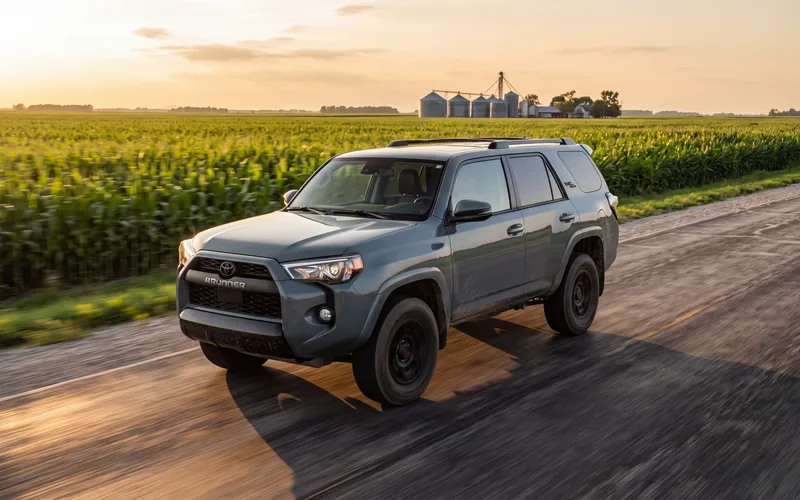 Toyota 4RunnerOff-Road SUVBetter at: Value
Same platform, engine and 6,000-lb tow rating for roughly $17,000 less, with more cargo room, an available third row and factory TRD Pro and Trailhunter off-road builds the Land Cruiser doesn't offer.
Compare 2.80B-
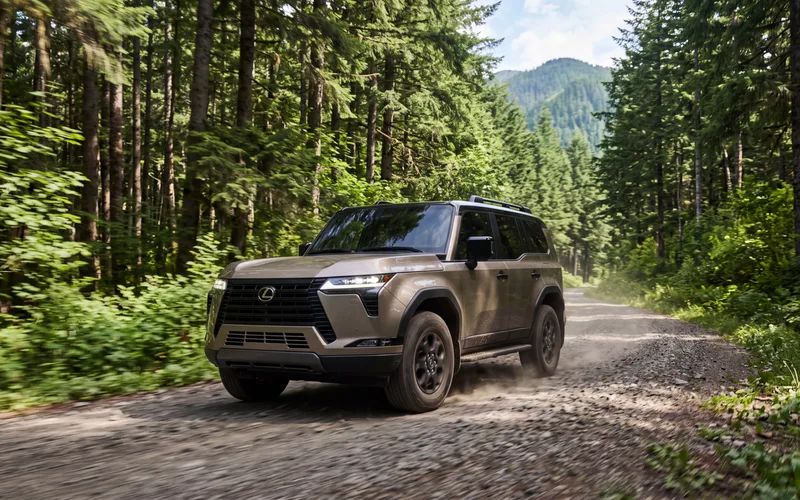 Lexus GXLuxury Off-Road SUVBetter at: Interior and seating
The luxury version of this exact chassis — a twin-turbo V6, a third row, genuinely premium materials and a head-up display — for buyers whose objection to the Land Cruiser is its plain interior and five-seat-only packaging.
Compare 1.95C-
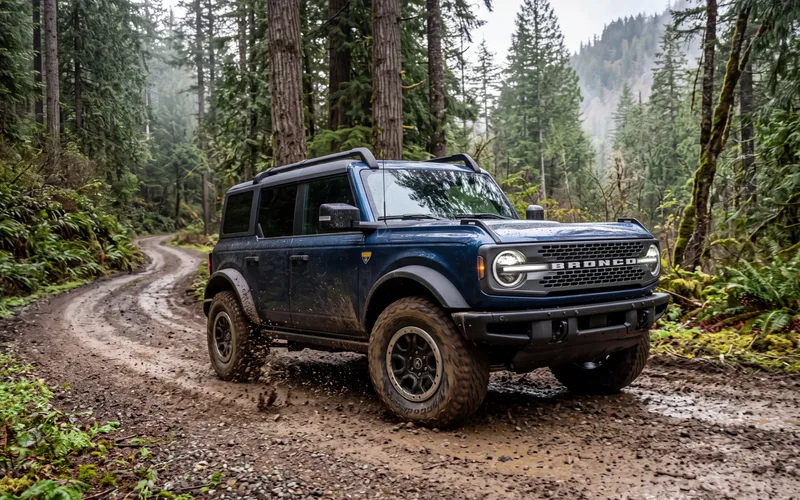 Ford BroncoOff-Road SUVBetter at: Fun and price
Costs less, seats rear passengers far better with 36.3 inches of legroom, and the roof and doors come off — the choice if the Land Cruiser's price and tight back seat are the sticking points and you can live with 17–20 MPG.
CompareHow it's evolved
8 scored model years · 2017–2026
Subject scores by year
Hover or tap a score to see what moved it versus the year before. A corner mark flags a big swing.
| Year | Performance | Efficiency | Safety | Space | Cost | Reliability | Tech | Use-case | Driving | Value |
|---|---|---|---|---|---|---|---|---|---|---|
| 2026 | 61 | 49 | 66 | 50 | 53 | 75 | 70 | 68 | 66 | 65 |
| 2025 | 59 | 36 | 65 | 56 | 51 | 73 | 74 | 68 | 55 | 69 |
| 2024 | 58 | 36 | 65 | 56 | 51 | 72 | 72 | 66 | 55 | 70 |
| 2021 | 69 | 14 | 45 | 60 | 53 | 85 | 35 | 59 | 59 | 52 |
| 2020 | 69 | 14 | 43 | 62 | 45 | 84 | 34 | 60 | 60 | 54 |
| 2019 | 68 | 16 | 43 | 61 | 41 | 81 | 35 | 63 | 59 | 55 |
| 2018 | 69 | 16 | 44 | 62 | 39 | 82 | 34 | 62 | 59 | 56 |
| 2017 | 69 | 16 | 45 | 62 | 29 | 82 | 36 | 63 | 62 | 56 |
Compare two years
Best fit & conditions
Higher scores mean a better fit for that use case. Learn more about use-case fit →
Subject profile
Academic Probation · NHTSA safety recalls
No NHTSA safety recall is on record for the 2020 Toyota Land Cruiser. Other model years of the Land Cruiser have 7 — listed below.
7 recalls on other model years of the Land Cruiser (2017–2019, 2024–2025)
May 27, 2026Electrical system: instrument cluster/panelThe instrument panel cluster combination meter may fail to display certain warnings or indicators. As such, these vehicles fail to comply with the requirements of Federal Motor Vehicle Safety Standard (FMVSS) number 101, "Control and Displays" and in addition, for the subject Mirai vehicles, FMVSS 305, "Electric-powered vehicles: Electrolyte Spillage and Electrical Shock Protection."
Defect
Toyota Motor Engineering & Manufacturing (Toyota) is recalling certain 2025 Lexus UX Hybrid, 2024 Lexus GX, Toyota Mirai, and 2024-2025 Toyota Land Cruiser Hybrid vehicles. The instrument panel cluster combination meter may fail to display certain warnings or indicators. As such, these vehicles fail to comply with the requirements of Federal Motor Vehicle Safety Standard (FMVSS) number 101, "Control and Displays" and in addition, for the subject Mirai vehicles, FMVSS 305, "Electric-powered vehicles: Electrolyte Spillage and Electrical Shock Protection."
Risk
An instrument panel display that fails to show critical safety information, such as engine coolant temperature or electrical charge increases the risk of a crash or injury.
Remedy
Dealers will update the combination meter software through an over-the-air (OTA) update, free of charge. Owner notification letters were mailed July 23, 2026. Owners may contact Toyota's customer service at 1-800-331-4331. Toyota's numbers for this recall are 26LB06, 26LA06, 26TB10, and 26TA10.
NHTSA campaign 26V341000 ↗Manufacturer no. See attached Part57381,893 vehicles potentially affected (all models in the campaign)Owners notified Jul 23, 2026Filed by Toyota Motor Engineering & ManufacturingFiled as LAND CRUISER HYBRIDMar 24, 2026Equipment: other: labelsThe load carrying capacity modification label may display inaccurate added weight values. As such, these vehicles fail to comply with the requirements of Federal Motor Vehicle Safety Standard number 110, "Tire Selection and Rims."
Defect
Toyota Motor Engineering & Manufacturing (Toyota) is recalling certain 2024-2025 Toyota Tundra, Tacoma Hybrid, Tacoma, RAV4 Hybrid, Land Cruiser Hybrid, Lexus GX550, 2024-2026 Tundra Hybrid, 2025 Sequoia Hybrid, Crown Signia, Grand Highlander, Lexus TX500 Hybrid, Lexus NX350 Hybrid, 2025-2026 Grand Highlander Hybrid, and Lexus TX350 vehicles. The load carrying capacity modification label may display inaccurate added weight values. As such, these vehicles fail to comply with the requirements of Federal Motor Vehicle Safety Standard number 110, "Tire Selection and Rims."
Risk
A vehicle with an incorrect maximum capacity weight value may be overloaded, which can increase the risk of a crash.
Remedy
Dealers will replace the load carrying capacity modification label, free of charge. Owner letters were mailed May 26, 2026. Owners may contact Toyota's customer service at 1-800-331-4331. Toyota's numbers for this recall are 26LB04, 26LA04, 26TB07, and 26TA07.
NHTSA campaign 26V179000 ↗Manufacturer no. See attached Part5738,230 vehicles potentially affected (all models in the campaign)Owners notified May 22, 2026Filed by Toyota Motor Engineering & ManufacturingFiled as LAND CRUISER HYBRIDOct 30, 2025Back over prevention: display functionPlease see the recall report for a complete list of models. A software error may cause the rearview camera to freeze or display a blank screen when the vehicle is in reverse. As such, these vehicles fail to comply with the requirements of Federal Motor Vehicle Safety Standard (FMVSS) number 111, "Rear Visibility."
Defect
Toyota Motor Engineering & Manufacturing (Toyota) is recalling certain 2022-2026 Toyota, Lexus, and Subaru Solterra vehicles equipped with a Panoramic View Monitor (PVM) system. Please see the recall report for a complete list of models. A software error may cause the rearview camera to freeze or display a blank screen when the vehicle is in reverse. As such, these vehicles fail to comply with the requirements of Federal Motor Vehicle Safety Standard (FMVSS) number 111, "Rear Visibility."
Risk
A rearview camera that fails to display an image can reduce the driver's view behind the vehicle, increasing the risk of a crash.
Remedy
Dealers will update the parking assist software, free of charge. Owner letters were mailed January 2, 2026. Owners may contact Toyota's customer service at 1-800-331-4331. Toyota's numbers for this recall are 25TB13 and 25LB06. Subaru's number for this recall is WRE25.
NHTSA campaign 25V744000 ↗Manufacturer no. 25TB13/25LB06/WRE251,024,407 vehicles potentially affected (all models in the campaign)Owners notified Dec 5, 2025Filed by Toyota Motor Engineering & ManufacturingFiled as LAND CRUISER HYBRIDJul 23, 2024Equipment: other: labelsThe load carrying capacity modification label may display inaccurate added weight values. As such, these vehicles fail to comply with the requirements of Federal Motor Vehicle Safety Standard number 110, "Tire Selection and Rims."
Defect
Gulf States Toyota, Inc. (GST) is recalling certain Toyota 2023 GR Supra, 2024 4 Runner, Corolla, Grand Highlander, Grand Highlander Hybrid, Land Cruiser Hybrid, Tacoma, Tacoma Hybrid, 2023-2024 BZ4X, Corolla Cross Hybrid, GR Corolla, GR86, Highlander, Highlander Hybrid, Prius, Prius Prime, Sequoia Hybrid, Tundra, Tundra Hybrid, Venza Hybrid, 2023-2025 Crown, and 2025 Camry Hybrid vehicles equipped with GST accessories. The load carrying capacity modification label may display inaccurate added weight values. As such, these vehicles fail to comply with the requirements of Federal Motor Vehicle Safety Standard number 110, "Tire Selection and Rims."
Risk
A vehicle with an incorrect maximum capacity weight value may be overloaded, which can increase the risk of a crash.
Remedy
GST will mail new labels to owners, free of charge. Owner notification letters were mailed September 16, 2024. Owners may contact GST customer service at 1-800-444-1074. GST's number for this recall is 24R2.
NHTSA campaign 24V548000 ↗Manufacturer no. 24R233,848 vehicles potentially affected (all models in the campaign)Owners notified Sep 16, 2024Filed by Gulf States Toyota, Inc.Filed as LAND CRUISER HYBRIDNov 4, 2020Fuel system, gasoline: delivery: fuel pumpThe low-pressure fuel pump inside the fuel tank may fail.
Defect
Toyota Motor Engineering & Manufacturing (Toyota) is recalling certain 2018-2019 4Runner, 2019-2020 Avalon, 2019 Corolla Hatchback, 2017-2019 Highlander, 2018-2020 Camry, 2020 Corolla, 2018-2019 Land Cruiser, 2017-2020 Tacoma, 2019-2020 RAV4, 2019-2020 Sequoia, 2017-2020 Sienna, 2019-2020 Tundra, 2018-2020 Lexus ES350, 2017 Lexus GS200t, 2017-2019 Lexus GS350, 2019 Lexus GS300, 2018-2020 Lexus LC500h, 2019-2020 Lexus LS500, 2018-2019 Lexus GX460, 2017 Lexus IS200t, 2019 Lexus IS300, 2019 Lexus IS350, 2018-2020 Lexus LC500, 2018 Lexus LS500, 2019 Lexus LS500h, 2018-2019 Lexus LX570, 2017 Lexus RC200t, 2019 Lexus RC300, RC350, 2017 and 2019-2020 Lexus RX350, 2018-2020 RX350L, 2019 Lexus UX200, 2018-2019 Lexus NX300 vehicles. The low-pressure fuel pump inside the fuel tank may fail.
Risk
If the fuel pump fails, the engine can stall while driving, increasing the risk of a crash.
Remedy
Toyota will notify owners, and dealers will replace the fuel pump assembly with an improved one, free of charge. Owners of specific models were notified that remedy parts were available starting January 21, 2021. Owners of other models will be notified as remedy parts become available. Remedy parts should be available for all affected vehicles by late March 2021. Owners may contact Toyota customer service at 1-888-270-9371 or Lexus customer service at 1-800-255-3987. Note: This recall is an expansion of recall 20V-012. Toyota's number for this recall is 20TA02. Lexus' number for this recall is 20LA01.
NHTSA campaign 20V682000 ↗Manufacturer no. 20TA02, 20LA011,525,742 vehicles potentially affected (all models in the campaign)Owners notified Jan 21, 2021Filed by Toyota Motor Engineering & ManufacturingFiled as LAND CRUISERMar 27, 2019Equipment: other: labelsThe text on the load capacity label may become illegible. As such, these vehicles fail to comply with the requirements of Federal Motor Vehicle Safety Standard (FMVSS) number 110, "Tire Selection and Rims."
Defect
Gulf States Toyota (GST) is recalling certain 2019 C-HR, 4Runner, Avalon, Avalon Hybrid, Camry, Camry Hybrid, Highlander, Land Cruiser, Prius, RAV4, Sequoia, Tacoma, Sienna, Tundra and Yaris vehicles. The text on the load capacity label may become illegible. As such, these vehicles fail to comply with the requirements of Federal Motor Vehicle Safety Standard (FMVSS) number 110, "Tire Selection and Rims."
Risk
If the driver cannot read the label, they may unknowingly overload the vehicle, increasing the risk of a crash.
Remedy
GST will notify owners, and dealers will provide corrected load carrying capacity modification labels, free of charge. The recall began May 24, 2019. Owners may contact GST customer service at 1-800-444-1074. GST's number for this recall is 19R1.
NHTSA campaign 19V244000 ↗Manufacturer no. 19R13,634 vehicles potentially affected (all models in the campaign)Owners notified May 24, 2019Filed by Gulf States Toyota, Inc.Filed as LAND CRUISERDec 13, 2018Air bags: frontal: passenger side: inflator module · Air bags: sensor: occupant classification · Seat belts: frontOver time, the seat belt tension sensor wire harness may break and deactivate the front passenger air bag, knee air bag, and passenger seat-mounted side airbag.
Defect
Toyota Motor Engineering & Manufacturing (Toyota) is recalling certain 2008-2019 Toyota Land Cruiser and Lexus LX 570 vehicles. Over time, the seat belt tension sensor wire harness may break and deactivate the front passenger air bag, knee air bag, and passenger seat-mounted side airbag.
Risk
In the event of a crash, deactivated air bags can increase the risk of injury .
Remedy
Toyota will notify owners, and dealers will modify the front passenger seat belt assembly or replace it with an improved one, as necessary, free of charge. The recall began February 11, 2019. Owners may contact Toyota customer service at 1-888-270-9371 or Lexus customer service at 1-800-255-3987. Toyota's numbers for this recall are Lexus Interim J2L and Remedy JLL, Toyota Interim J15 and Remedy J05.
NHTSA campaign 18V887000 ↗Manufacturer no. See attached report.89,740 vehicles potentially affected (all models in the campaign)Owners notified Feb 11, 2019Filed by Toyota Motor Engineering & ManufacturingFiled as LAND CRUISER
Source: NHTSA Office of Defects Investigation recall database, model years 2017–2026. Recalls are listed by model year as the manufacturer filed them; whether a specific car is affected depends on its VIN — check a VIN at nhtsa.gov ↗. NHTSA model names matched to this page: LAND CRUISER, LAND CRUISER HYBRID.
Detailed scoring by subject
1Performance & PowertrainOne of the Land Cruiser's strongest categories.2.65C+
2020 is a carry-over year of the J200 (200-series) Land Cruiser that began in 2008; the US car offered one engine, the naturally aspirated 5.7L V8. 381 hp is strong for an off-road SUV even if well short of supercharged/EV rivals.
401 lb-ft from the big V8 gives the heavy (~5,800 lb) body-on-frame wagon ample low-end pull for towing and crawling.
Instrumented tests of the 381-hp, 8-speed J200 cluster around 6.7 s, quick for a near-three-ton off-roader but mid-pack for the segment. The powertrain was unchanged 2016–2021, so earlier tests carry to 2020.
The naturally aspirated V8 is smooth, quiet and linear with no turbo lag, praised by reviewers for its effortless delivery; the trade-off is its sheer thirst and a mass that blunts responsiveness rather than any roughness.
The 8-speed automatic (added for 2016) shifts smoothly and keeps the V8 in its torque band; it is unhurried rather than crisp, and kickdowns can be leisurely, but it does not hunt.
An 8,100-lb rating at the top of the SUV band, matching full-size body-on-frame SUVs.
Full-time 4WD is standard on every 2020 Land Cruiser, with a Torsen limited-slip center differential that locks, two-speed transfer case with low range, Multi-Terrain Select, Crawl Control and A-TRAC — among the most sophisticated systems in the segment.
Hard-core off-road credibility: locking center diff, low range, Crawl Control, Multi-Terrain Select and KDSS (Kinetic Dynamic Suspension System) for articulation, with 8.9 in clearance and 32°/24°/21° approach/departure/breakover angles. Lacks factory front/rear axle lockers and its size and long rear overhang limit tight trails versus a Wrangler or Bronco.
One engine, one transmission, one drivetrain — take-it-or-leave-it. No hybrid, diesel or alternative engine was offered in the US for 2020.
2Efficiency & RangeThe Land Cruiser's lowest-graded category.0.00F
The 2020 Land Cruiser is the gas V8 J200, not the 2024+ hybrid; at 14 MPG combined it is among the thirstiest SUVs on sale, below the floor of any SUV band. Note: the registry scores this nameplate in the hybrid class, which is accurate only for 2024+.
13 MPG city reflects a ~5,800-lb wagon moved by a naturally aspirated V8 with full-time 4WD and no stop-start or hybrid assist.
17 MPG highway is limited by mass, frontal area and the always-engaged 4WD system.
The large 24.6-gallon tank partly offsets the V8's thirst, yielding roughly 344 miles at the EPA combined rate — less than the later hybrid's 412 miles despite a far bigger tank.
About 1,070 gallons a year at 14 MPG; even on regular fuel EPA's estimate is well beyond the top of the SUV band. The dollar figure moves with EPA's fuel-price assumption, but the 14 MPG basis keeps it at the floor under any price.
The 5.7L V8 is certified on regular 87-octane unleaded — no premium requirement, no plug, no DEF. Unlike the 2024+ hybrid Land Cruiser, which EPA lists as premium-required, the 2020 V8 has no costly fuel-grade penalty; the cost problem is volume, not grade.
3SafetyOne of the Land Cruiser's weakest categories.0.89F
The 2020 Land Cruiser (J200, final US year of the generation that began in 2008) was never crash-tested under NHTSA's NCAP, so no star rating exists.
No IIHS crash tests or award for the J200 Land Cruiser in the US; its body-on-frame 2008-era structure was never evaluated in small-overlap tests, leaving buyers with no independent crashworthiness data.
Single-trim vehicle: Toyota Safety Sense P (pre-collision with pedestrian detection, lane departure alert, auto high beams, dynamic radar cruise) plus blind-spot monitor and rear cross-traffic alert are all standard; lacks lane-keeping steering assist.
Standard TSS-P pre-collision system with daytime pedestrian detection, but it has never been evaluated by IIHS and is an older-generation camera/radar system without night pedestrian or cyclist capability.
Blind Spot Monitor and Rear Cross-Traffic Alert are standard on the only trim, but are alert-only with no braking intervention or safe-exit assist.
TSS-P on the Land Cruiser provides Lane Departure Alert (warning) only — no steering assist or lane centering.
Dynamic Radar Cruise Control is standard, but on this TSS-P implementation it is a high-speed-range system without full stop-and-go and with no combined highway assist.
No hands-free highway driving system was offered on the 2020 Land Cruiser.
Standard LED headlights with automatic high beams, but IIHS never rated the Land Cruiser's headlights, so real-world illumination is unverified.
Tall, upright greenhouse and commanding seating position give good natural sightlines, and the standard Multi-Terrain Monitor surround-view camera plus front/rear parking sensors compensate for the large body.
Wide second row and large rear doors make car-seat fitment workable, but the tall step-in height and the cramped, side-folding third row limit seat placement beyond row two.
4Space & ComfortOne of the Land Cruiser's strongest categories.2.16C
The 2020 Land Cruiser (J200, carry-over year of the 2008 generation, single US grade plus Heritage Edition) seats eight as standard. The Heritage Edition deleted the third row for five seats, but the volume configuration is the eight-seater.
Front headroom is modest for a large SUV because the power moonroof is standard and drops the ceiling.
Generous front legroom, in the upper half of the SUV band.
The tall, upright roof gives the second row more headroom than the front, which loses some to the standard moonroof.
Second-row legroom is merely adequate for a vehicle this large; the 2008-era packaging spends length on the frame and the side-stowed third row rather than on the rear bench.
The third row is a pair of child-sized jump seats with 28.3 in of legroom that fold up and hang off the cargo-area side walls rather than folding flat; teens and adults don't fit for more than a short trip.
Cargo space behind the second row is small for the vehicle's size, because the third-row seats fold up against the side walls and eat width instead of folding into the floor.
Maximum cargo space is competitive for the segment once both rear rows are stowed.
A refrigerated cool box in the center console is a real perk and the bins are adequate. Against that, the side-hung third row compromises the cargo floor and there are no modern cubby or underfloor solutions.
The heated and ventilated leather front seats are well cushioned and tire nobody on long drives, and the second row is comfortable. The third row is not.
The independent front suspension and KDSS give a cushy, well-isolated ride for a body-on-frame SUV, and body roll is well checked. There is some float and solid-axle jiggle over sharp bumps compared with unibody luxury rivals.
The unstressed V8 and heavy, well-sealed body keep the cabin quiet at highway speed, though the upright shape lets in some wind noise and it is not as hushed as a Lexus LX or a modern luxury SUV.
On the single, fully loaded US grade, heated and ventilated front seats, a heated steering wheel, four-zone automatic climate control and a cool box are all standard, so there is nothing to option up. Remote pre-conditioning is not offered.
5Cost of OwnershipGrades near the bottom of the scale.0.98F
The 2020 is a carry-over year of the J200 (200 Series) generation that began in 2008. The US got one loaded 5.7L V8 grade plus a limited Heritage Edition, which puts the price far above the SUV band ceiling.
The standard grade was the volume configuration, since the Heritage Edition was capped at 1,200 units. It had no factory options beyond color.
Repair frequency is low given the 200 Series' durability record. Maintenance (fluids, tires and brakes for a ~5,800 lb 4WD V8) runs above mainstream SUVs, so it lands mid-band.
The final-generation 200 Series became sought-after once Toyota withdrew the Land Cruiser from the US after 2021. Five years on, 2020 examples trade in the mid-$60Ks against an $86,740 MSRP.
This is Toyota's standard basic warranty, at the bottom of the band.
This is Toyota's standard powertrain coverage, at the bottom of the band.
ToyotaCare covers factory-scheduled maintenance and 24-hour roadside assistance for 2 years/25,000 miles. That is a short window next to the longer complimentary plans luxury rivals offer at this price.
$86,740 volume-trim price minus its estimated resale value after 5 years (72% retained, or about $62,453) leaves about $24,287 in depreciation. Add the projected $6,200 in 5-year maintenance and repairs, and owning this vehicle for 5 years costs about $30,487 in total.
6Reliability & QualityThe Land Cruiser's best-graded category.3.71A
The 2020 is a carry-over year late in the J200 (200 Series) generation that began in 2008. The registry tags this nameplate as hybrid, but no hybrid was sold in the US in 2020: the only powertrain was the 5.7L V8, which is what sibling categories score. The model sold too few units for Consumer Reports or J.D. Power to publish a model-specific prediction. That leaves the indirect signals: a mature 12-year-old design with its bugs worked out, no MY2020-specific recalls, and very few owner complaints. Those support the top band, but without a published rating it stops at the floor of it.
Around the 2020 model year, Toyota was a perennial top-tier finisher in both Consumer Reports' brand reliability rankings and J.D. Power's Vehicle Dependability Study. That puts it firmly in the 80–100 band.
The project's NHTSA flat-file recall feed lists no campaign covering the 2020 model year. Recall activity across the J200 generation was light: the 2018–2019 Denso fuel-pump campaign (20V682) and earlier Takata-adjacent airbag work (18V887) did not reach MY2020. Nothing systemic appears in the TSB record.
The 5.7L 3UR-FE V8 and Aisin 8-speed automatic form one of the most proven powertrain families in the industry. The same V8 is shared with the Tundra, Sequoia and Lexus LX 570, and it routinely runs past 300,000 miles. The full-time 4WD with a Torsen center differential is equally well-proven.
The cabin is solidly built and leather-lined, with real wood trim, a cooled center box and heavy-duty switchgear. At roughly $87,000, though, reviewers called the design and infotainment dated next to newer luxury SUVs, which holds it to mid-band for the price.
The Land Cruiser was built in Japan on a body that had been in production since 2008, so assembly was mature and consistent. Owner reviews rarely mention rattles or misalignment. No J.D. Power IQS figure was published for the model, which keeps confidence at medium.
Toyota's US network of roughly 1,200 dealers is among the densest in the country, and every one can service the shared 3UR-FE V8. The Lexus LX 570 twin widens the pool of technicians familiar with the platform.
Powertrain parts are cheap and plentiful because they are shared with the Tundra and Sequoia, and the overlanding aftermarket for the 200 Series is enormous. Land Cruiser-specific body, suspension and KDSS components cost more and are often dealer-only, and RepairPal rates its repair costs above the full-size SUV average.
7Technology & InfotainmentOne of the Land Cruiser's weakest categories.0.24F
Every 2020 Land Cruiser has a 9.0-inch touchscreen, which is small against current segment screens.
The older Toyota Entune-era head unit is dated and slow, with clumsy menus and dated graphics. The plentiful physical buttons help, but the software lags well behind 2020 rivals.
Neither Apple CarPlay nor Android Auto was offered, wired or wireless, on the 2020 Land Cruiser. Owners have to fit aftermarket units to get phone projection.
Built-in navigation is standard, which matters because there is no phone projection, but the maps and command-based voice recognition are dated and less capable than phone apps.
A 14-speaker JBL Synthesis system is standard and sounds good. There is no further upgrade, and it is not a top-tier system next to Mark Levinson or Bowers & Wilkins setups.
Analog Optitron gauges with a small center multi-information display; no full-digital cluster was offered.
There is no over-the-air software update capability; any head-unit or map updates need a dealer.
Connected services were limited to Safety Connect-style emergency and service features. Remote start, climate and digital key were not part of the 2020 Land Cruiser's package.
A Qi wireless charging pad is standard and there are USB ports, but they are USB-A only with no USB-C for 2020. The rear entertainment system does add inputs for the second row.
Smart Key proximity entry with push-button start and a power liftgate are standard. There is no factory remote start or phone-as-key.
The Multi-Terrain Monitor surround-view camera system and front/rear parking sensors are standard on every Land Cruiser, though image resolution is dated and there is no automated parking.
No head-up display was offered on the 2020 Land Cruiser.
8Use-Case FitMid-pack among this car's ten categories.2.07C
The second row is wide and the rear doors are big, so car seats fit fine. But the high step-in, the cramped jump-seat third row and only 16.1 cu ft behind row three make daily family logistics harder than in a modern three-row SUV.
Toyota Safety Sense P, blind-spot monitoring and surround view are standard. However, neither NHTSA nor IIHS ever crash-tested the 2020 Land Cruiser, so families get no independent crashworthiness data, and there is no lane centering.
With a dual-screen rear entertainment system, four-zone climate, heated and ventilated seats, a cool box and a quiet V8, it is a comfortable long-distance family hauler. The limit is luggage space once all eight seats are in use.
Smooth V8 and 8-speed, a comfortable ride and good visibility make it pleasant in traffic, but its 5,800-lb mass, slow steering and size make it tiring in dense urban driving.
At 13/17/14 MPG it is one of the thirstiest SUVs on sale, which makes every commuting mile expensive.
It is a big, heavy body-on-frame SUV, but the turning circle is reasonable for its size and the standard surround-view camera and sensors make tight parking manageable.
An 8,100-lb towing rating and a torquey 401 lb-ft V8 handle real trailers, and full-time 4WD with low range helps on boat ramps. As an SUV it has no bed, and the luxury interior limits jobsite duty.
The Land Cruiser's durability reputation is legendary. The proven 5.7L V8 and the J200's 2008-era chassis are fleet- and aid-agency-proven worldwide, and the platform was in its 13th year by 2020.
There is a huge global aftermarket for racks, bumpers, winches and drawers, plus a standard tow hitch, but few factory work provisions: no meaningful onboard power, and the cargo floor is compromised by the side-hung third row.
Highway comfort and seat endurance are excellent, with a quiet cabin and smooth V8. Range is limited by 14 MPG on a ~24.6-gal tank (roughly 350–400 highway miles), and driver assistance stops at TSS-P without lane centering or stop-and-go cruise.
It is a genuine expedition vehicle: full-time 4WD with a locking center differential, low range, Crawl Control, Multi-Terrain Select, KDSS, 8.9 in of ground clearance and an 8,100-lb tow rating for campers and boats.
There are 81.7 cu ft with the rear seats folded, plus standard roof rails and a hitch. The side-folding third row narrows the cargo bay and can't be removed easily, so bulky gear is more awkward than in rivals with fold-flat seats.
9Driving ExperienceMid-pack among this car's ten categories.2.07C
KDSS keeps body roll in check better than you'd expect from a nearly 3-ton body-on-frame SUV, and it is stable and secure, but it is heavy and unwilling when hustled. Lateral grip is modest.
The hydraulically assisted steering is slow, light and numb on-road. It is predictable and isolates trail kickback well, but offers little precision.
The brakes are strong enough for the mass, but the pedal is soft and the heavy wagon's stopping distances are long by modern SUV standards.
The naturally aspirated 5.7L V8 and 8-speed automatic are silky and lag-free, with no stop/start to disrupt them. Response is linear, if blunted by weight.
The V8 is quiet at a cruise and has a pleasant, muted burble when worked, and vibration is well isolated through the heavy chassis.
A turning circle of roughly 39 ft is mid-band for an SUV and decent for a vehicle of this size.
The commanding, upright seating position has good sightlines and logical physical controls, with a power-adjustable seat and wheel. The high step-in and a button-heavy dashboard are minor demerits.
On pavement it is an unhurried cruiser, but its V8 character and go-anywhere capability give it real charm, especially off-road.
10Value & Market PositionGrades below the middle of the scale.1.61D
Every 2020 Land Cruiser came fully loaded. Standard equipment included full-time 4WD with a locking center diff, Crawl Control, Multi-Terrain Select, KDSS, Toyota Safety Sense-P, blind-spot monitoring, a moonroof, JBL audio, a rear-seat entertainment system, four-zone climate, and heated/ventilated leather seats.
At ~$87k it cost far more than a Tahoe, Expedition or Sequoia, with infotainment that had aged a full generation and 13/17 MPG. Unmatched durability, off-road capability and resale partly justify the price.
This is a take-it-or-leave-it lineup: one V8, one drivetrain, one standard grade, and a limited two-row Heritage Edition. There are no factory options beyond color.
US volume was a niche ~3,000 units a year and trending down as the generation aged. That made it a low-volume halo rather than a segment player against Tahoe/Expedition volumes.
The Land Cruiser nameplate has a near-unmatched global reputation for go-anywhere durability and a devoted following. The 60th-anniversary Heritage Edition leaned on that image.
Toyota rarely put national cash incentives on the Land Cruiser. Discounts were modest dealer negotiations on aged inventory of a low-volume, loaded vehicle.
This was year 13 of the 200 Series (2008) and a carry-over since the 2016 facelift. Its 4.5-year-old refresh, aging infotainment and imminent US withdrawal after 2021 meant a dated generation with no direct successor for buyers.
Reviewers respected its capability, refinement and build quality but marked it down for price, thirst and dated tech. It was not a comparison-test winner against the Lexus LX, Range Rover or new Expedition.