
The verdict
A mixed-report off-road suv, strong on technology and held back by efficiency.
The 2025 Land Cruiser is a genuine trail machine that comes fully equipped from the cheapest trim: every one has full-time 4WD, low range and locking center and rear differentials. It also holds its value unusually well, keeping about 65% after five years. The price for that is a $58,150–$62,920 sticker, a coarse four-cylinder hybrid that needs premium fuel and costs about $3,300 a year to run, only five seats, and slow, wallowy on-road manners. Buy it for where it can go and what it will be worth later, not as a comfortable or efficient family SUV.
Jump to scoresStrengths
- Serious off-road hardware on every trim
- Holds its value like few SUVs do
- Toyota's reliability record and dealer network
What holds it back
- Hybrid fuel economy, premium fuel bills
- Only five seats, and a raised cargo floor
- Expensive for what you get
Top alternatives
Cars shoppers cross-shop with the Toyota Land Cruiser 2.38C+
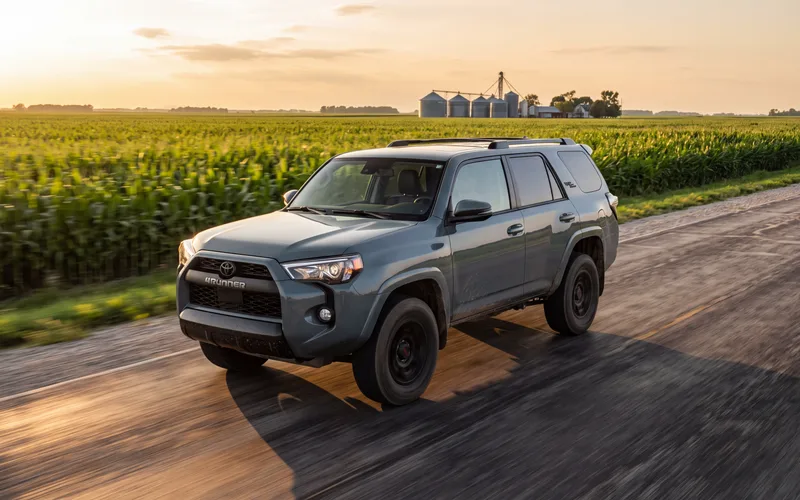 Toyota 4RunnerOff-Road SUVBetter at: Value
Same platform, engine and 6,000-lb tow rating for roughly $17,000 less, with more cargo room, an available third row and factory TRD Pro and Trailhunter off-road builds the Land Cruiser doesn't offer.
Compare 2.80B-
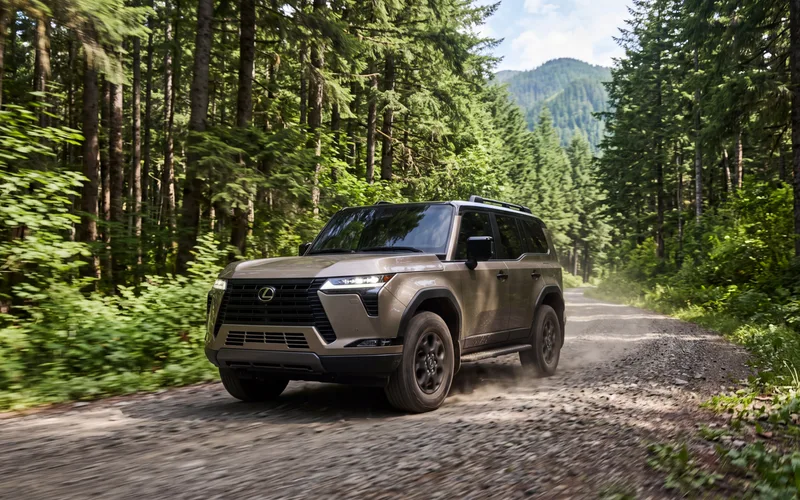 Lexus GXLuxury Off-Road SUVBetter at: Interior and seating
The luxury version of this exact chassis — a twin-turbo V6, a third row, genuinely premium materials and a head-up display — for buyers whose objection to the Land Cruiser is its plain interior and five-seat-only packaging.
Compare 1.95C-
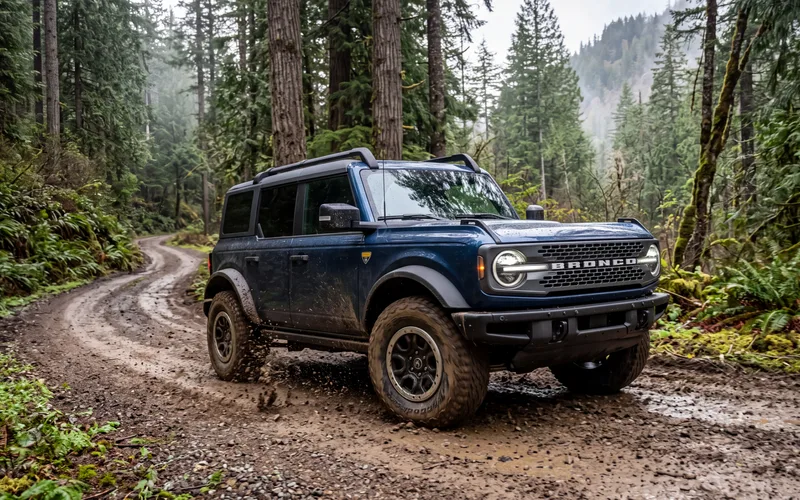 Ford BroncoOff-Road SUVBetter at: Fun and price
Costs less, seats rear passengers far better with 36.3 inches of legroom, and the roof and doors come off — the choice if the Land Cruiser's price and tight back seat are the sticking points and you can live with 17–20 MPG.
CompareHow it's evolved
8 scored model years · 2017–2026
Subject scores by year
Hover or tap a score to see what moved it versus the year before. A corner mark flags a big swing.
| Year | Performance | Efficiency | Safety | Space | Cost | Reliability | Tech | Use-case | Driving | Value |
|---|---|---|---|---|---|---|---|---|---|---|
| 2026 | 61 | 49 | 66 | 50 | 53 | 75 | 70 | 68 | 66 | 65 |
| 2025 | 59 | 36 | 65 | 56 | 51 | 73 | 74 | 68 | 55 | 69 |
| 2024 | 58 | 36 | 65 | 56 | 51 | 72 | 72 | 66 | 55 | 70 |
| 2021 | 69 | 14 | 45 | 60 | 53 | 85 | 35 | 59 | 59 | 52 |
| 2020 | 69 | 14 | 43 | 62 | 45 | 84 | 34 | 60 | 60 | 54 |
| 2019 | 68 | 16 | 43 | 61 | 41 | 81 | 35 | 63 | 59 | 55 |
| 2018 | 69 | 16 | 44 | 62 | 39 | 82 | 34 | 62 | 59 | 56 |
| 2017 | 69 | 16 | 45 | 62 | 29 | 82 | 36 | 63 | 62 | 56 |
Compare two years
Best fit & conditions
Higher scores mean a better fit for that use case. Learn more about use-case fit →
Subject profile
Academic Probation · NHTSA safety recalls
May 27, 2026Electrical system: instrument cluster/panelThe instrument panel cluster combination meter may fail to display certain warnings or indicators. As such, these vehicles fail to comply with the requirements of Federal Motor Vehicle Safety Standard (FMVSS) number 101, "Control and Displays" and in addition, for the subject Mirai vehicles, FMVSS 305, "Electric-powered vehicles: Electrolyte Spillage and Electrical Shock Protection."
Defect
Toyota Motor Engineering & Manufacturing (Toyota) is recalling certain 2025 Lexus UX Hybrid, 2024 Lexus GX, Toyota Mirai, and 2024-2025 Toyota Land Cruiser Hybrid vehicles. The instrument panel cluster combination meter may fail to display certain warnings or indicators. As such, these vehicles fail to comply with the requirements of Federal Motor Vehicle Safety Standard (FMVSS) number 101, "Control and Displays" and in addition, for the subject Mirai vehicles, FMVSS 305, "Electric-powered vehicles: Electrolyte Spillage and Electrical Shock Protection."
Risk
An instrument panel display that fails to show critical safety information, such as engine coolant temperature or electrical charge increases the risk of a crash or injury.
Remedy
Dealers will update the combination meter software through an over-the-air (OTA) update, free of charge. Owner notification letters were mailed July 23, 2026. Owners may contact Toyota's customer service at 1-800-331-4331. Toyota's numbers for this recall are 26LB06, 26LA06, 26TB10, and 26TA10.
NHTSA campaign 26V341000 ↗Manufacturer no. See attached Part57381,893 vehicles potentially affected (all models in the campaign)Owners notified Jul 23, 2026Filed by Toyota Motor Engineering & ManufacturingFiled as LAND CRUISER HYBRIDMar 24, 2026Equipment: other: labelsThe load carrying capacity modification label may display inaccurate added weight values. As such, these vehicles fail to comply with the requirements of Federal Motor Vehicle Safety Standard number 110, "Tire Selection and Rims."
Defect
Toyota Motor Engineering & Manufacturing (Toyota) is recalling certain 2024-2025 Toyota Tundra, Tacoma Hybrid, Tacoma, RAV4 Hybrid, Land Cruiser Hybrid, Lexus GX550, 2024-2026 Tundra Hybrid, 2025 Sequoia Hybrid, Crown Signia, Grand Highlander, Lexus TX500 Hybrid, Lexus NX350 Hybrid, 2025-2026 Grand Highlander Hybrid, and Lexus TX350 vehicles. The load carrying capacity modification label may display inaccurate added weight values. As such, these vehicles fail to comply with the requirements of Federal Motor Vehicle Safety Standard number 110, "Tire Selection and Rims."
Risk
A vehicle with an incorrect maximum capacity weight value may be overloaded, which can increase the risk of a crash.
Remedy
Dealers will replace the load carrying capacity modification label, free of charge. Owner letters were mailed May 26, 2026. Owners may contact Toyota's customer service at 1-800-331-4331. Toyota's numbers for this recall are 26LB04, 26LA04, 26TB07, and 26TA07.
NHTSA campaign 26V179000 ↗Manufacturer no. See attached Part5738,230 vehicles potentially affected (all models in the campaign)Owners notified May 22, 2026Filed by Toyota Motor Engineering & ManufacturingFiled as LAND CRUISER HYBRIDOct 30, 2025Back over prevention: display functionPlease see the recall report for a complete list of models. A software error may cause the rearview camera to freeze or display a blank screen when the vehicle is in reverse. As such, these vehicles fail to comply with the requirements of Federal Motor Vehicle Safety Standard (FMVSS) number 111, "Rear Visibility."
Defect
Toyota Motor Engineering & Manufacturing (Toyota) is recalling certain 2022-2026 Toyota, Lexus, and Subaru Solterra vehicles equipped with a Panoramic View Monitor (PVM) system. Please see the recall report for a complete list of models. A software error may cause the rearview camera to freeze or display a blank screen when the vehicle is in reverse. As such, these vehicles fail to comply with the requirements of Federal Motor Vehicle Safety Standard (FMVSS) number 111, "Rear Visibility."
Risk
A rearview camera that fails to display an image can reduce the driver's view behind the vehicle, increasing the risk of a crash.
Remedy
Dealers will update the parking assist software, free of charge. Owner letters were mailed January 2, 2026. Owners may contact Toyota's customer service at 1-800-331-4331. Toyota's numbers for this recall are 25TB13 and 25LB06. Subaru's number for this recall is WRE25.
NHTSA campaign 25V744000 ↗Manufacturer no. 25TB13/25LB06/WRE251,024,407 vehicles potentially affected (all models in the campaign)Owners notified Dec 5, 2025Filed by Toyota Motor Engineering & ManufacturingFiled as LAND CRUISER HYBRID
4 recalls on other model years of the Land Cruiser (2017–2019, 2024)
Jul 23, 2024Equipment: other: labelsThe load carrying capacity modification label may display inaccurate added weight values. As such, these vehicles fail to comply with the requirements of Federal Motor Vehicle Safety Standard number 110, "Tire Selection and Rims."
Defect
Gulf States Toyota, Inc. (GST) is recalling certain Toyota 2023 GR Supra, 2024 4 Runner, Corolla, Grand Highlander, Grand Highlander Hybrid, Land Cruiser Hybrid, Tacoma, Tacoma Hybrid, 2023-2024 BZ4X, Corolla Cross Hybrid, GR Corolla, GR86, Highlander, Highlander Hybrid, Prius, Prius Prime, Sequoia Hybrid, Tundra, Tundra Hybrid, Venza Hybrid, 2023-2025 Crown, and 2025 Camry Hybrid vehicles equipped with GST accessories. The load carrying capacity modification label may display inaccurate added weight values. As such, these vehicles fail to comply with the requirements of Federal Motor Vehicle Safety Standard number 110, "Tire Selection and Rims."
Risk
A vehicle with an incorrect maximum capacity weight value may be overloaded, which can increase the risk of a crash.
Remedy
GST will mail new labels to owners, free of charge. Owner notification letters were mailed September 16, 2024. Owners may contact GST customer service at 1-800-444-1074. GST's number for this recall is 24R2.
NHTSA campaign 24V548000 ↗Manufacturer no. 24R233,848 vehicles potentially affected (all models in the campaign)Owners notified Sep 16, 2024Filed by Gulf States Toyota, Inc.Filed as LAND CRUISER HYBRIDNov 4, 2020Fuel system, gasoline: delivery: fuel pumpThe low-pressure fuel pump inside the fuel tank may fail.
Defect
Toyota Motor Engineering & Manufacturing (Toyota) is recalling certain 2018-2019 4Runner, 2019-2020 Avalon, 2019 Corolla Hatchback, 2017-2019 Highlander, 2018-2020 Camry, 2020 Corolla, 2018-2019 Land Cruiser, 2017-2020 Tacoma, 2019-2020 RAV4, 2019-2020 Sequoia, 2017-2020 Sienna, 2019-2020 Tundra, 2018-2020 Lexus ES350, 2017 Lexus GS200t, 2017-2019 Lexus GS350, 2019 Lexus GS300, 2018-2020 Lexus LC500h, 2019-2020 Lexus LS500, 2018-2019 Lexus GX460, 2017 Lexus IS200t, 2019 Lexus IS300, 2019 Lexus IS350, 2018-2020 Lexus LC500, 2018 Lexus LS500, 2019 Lexus LS500h, 2018-2019 Lexus LX570, 2017 Lexus RC200t, 2019 Lexus RC300, RC350, 2017 and 2019-2020 Lexus RX350, 2018-2020 RX350L, 2019 Lexus UX200, 2018-2019 Lexus NX300 vehicles. The low-pressure fuel pump inside the fuel tank may fail.
Risk
If the fuel pump fails, the engine can stall while driving, increasing the risk of a crash.
Remedy
Toyota will notify owners, and dealers will replace the fuel pump assembly with an improved one, free of charge. Owners of specific models were notified that remedy parts were available starting January 21, 2021. Owners of other models will be notified as remedy parts become available. Remedy parts should be available for all affected vehicles by late March 2021. Owners may contact Toyota customer service at 1-888-270-9371 or Lexus customer service at 1-800-255-3987. Note: This recall is an expansion of recall 20V-012. Toyota's number for this recall is 20TA02. Lexus' number for this recall is 20LA01.
NHTSA campaign 20V682000 ↗Manufacturer no. 20TA02, 20LA011,525,742 vehicles potentially affected (all models in the campaign)Owners notified Jan 21, 2021Filed by Toyota Motor Engineering & ManufacturingFiled as LAND CRUISERMar 27, 2019Equipment: other: labelsThe text on the load capacity label may become illegible. As such, these vehicles fail to comply with the requirements of Federal Motor Vehicle Safety Standard (FMVSS) number 110, "Tire Selection and Rims."
Defect
Gulf States Toyota (GST) is recalling certain 2019 C-HR, 4Runner, Avalon, Avalon Hybrid, Camry, Camry Hybrid, Highlander, Land Cruiser, Prius, RAV4, Sequoia, Tacoma, Sienna, Tundra and Yaris vehicles. The text on the load capacity label may become illegible. As such, these vehicles fail to comply with the requirements of Federal Motor Vehicle Safety Standard (FMVSS) number 110, "Tire Selection and Rims."
Risk
If the driver cannot read the label, they may unknowingly overload the vehicle, increasing the risk of a crash.
Remedy
GST will notify owners, and dealers will provide corrected load carrying capacity modification labels, free of charge. The recall began May 24, 2019. Owners may contact GST customer service at 1-800-444-1074. GST's number for this recall is 19R1.
NHTSA campaign 19V244000 ↗Manufacturer no. 19R13,634 vehicles potentially affected (all models in the campaign)Owners notified May 24, 2019Filed by Gulf States Toyota, Inc.Filed as LAND CRUISERDec 13, 2018Air bags: frontal: passenger side: inflator module · Air bags: sensor: occupant classification · Seat belts: frontOver time, the seat belt tension sensor wire harness may break and deactivate the front passenger air bag, knee air bag, and passenger seat-mounted side airbag.
Defect
Toyota Motor Engineering & Manufacturing (Toyota) is recalling certain 2008-2019 Toyota Land Cruiser and Lexus LX 570 vehicles. Over time, the seat belt tension sensor wire harness may break and deactivate the front passenger air bag, knee air bag, and passenger seat-mounted side airbag.
Risk
In the event of a crash, deactivated air bags can increase the risk of injury .
Remedy
Toyota will notify owners, and dealers will modify the front passenger seat belt assembly or replace it with an improved one, as necessary, free of charge. The recall began February 11, 2019. Owners may contact Toyota customer service at 1-888-270-9371 or Lexus customer service at 1-800-255-3987. Toyota's numbers for this recall are Lexus Interim J2L and Remedy JLL, Toyota Interim J15 and Remedy J05.
NHTSA campaign 18V887000 ↗Manufacturer no. See attached report.89,740 vehicles potentially affected (all models in the campaign)Owners notified Feb 11, 2019Filed by Toyota Motor Engineering & ManufacturingFiled as LAND CRUISER
Source: NHTSA Office of Defects Investigation recall database, model years 2017–2026. Recalls are listed by model year as the manufacturer filed them; whether a specific car is affected depends on its VIN — check a VIN at nhtsa.gov ↗. NHTSA model names matched to this page: LAND CRUISER, LAND CRUISER HYBRID.
Detailed scoring by subject
1Performance & PowertrainMid-pack among this car's ten categories.1.95C-
The 2025 US Land Cruiser (J250, second year of the generation) is a carry-over year mechanically: a single powertrain, the 2.4L turbocharged four paired with a motor-generator inside the 8-speed automatic, rated at 326 net combined horsepower. Strong for a mid-size body-on-frame SUV but well short of the V8 and twin-turbo-V6 rivals it is cross-shopped against, including its own platform twin the Lexus GX (349 hp).
Peak system torque of 465 lb-ft, available low in the rev range thanks to the electric motor's instant assist — a genuine strength for low-speed crawling and trailer work, and the standout number on this vehicle's spec sheet.
Instrumented results scatter widely, so the value is the cluster mean rather than any single test: Car and Driver's 7.7 s is the fast outlier, Edmunds and U.S. News both record 8.2 s, and Consumer Reports logs 8.5 s — averaging about 8.1 s, consistent with the 16.3 s @ 84.3 mph quarter-mile on record. A curb weight near 5,500 lb blunts the hybrid's torque advantage, leaving it mid-pack among off-road SUVs. MEDIUM confidence reflects the ~0.8 s spread across testers, not doubt about the vehicle.
The hybrid transitions are seamless and low-speed response is strong, but reviewers consistently fault the four-cylinder for sounding strained and coarse under load — a notable demerit at this vehicle's price point and against the V6 and V8 rivals in the class. Placed at the low end of the 50–79 'occasional coarse notes under load' band because the criticism is near-universal rather than occasional.
The conventional 8-speed automatic (with the motor-generator packaged inside it) draws consistent praise for crisp, well-timed shifts and sensible gear selection — the clear high point of the drivetrain and a contrast to the CVTs used by car-based rivals.
Rated at 6,000 lbs across the range — enough for a mid-size boat or small travel trailer, but a step below the departed 8,100-lb V8 J200 and well behind the platform-sharing Lexus GX (9,096 lbs), which is the clearest cost of the four-cylinder hybrid strategy.
Full-time 4WD with a two-speed transfer case, locking center differential and an electronically locking rear differential is standard on both 2025 trims, joined by Multi-Terrain Select, Crawl Control and Downhill Assist Control — no trim walk required to get the hardware, which is rare in this class and is the strongest single element of the drivetrain.
The body-on-frame TNGA-F platform, low range, standard center and rear lockers, Multi-Terrain Select/Monitor and skid plates make this genuinely trail-capable, placing it just inside the top band. It is held back from a higher score by modest geometry — a 22° departure angle and ground clearance under 9 in — by the front stabilizer-bar disconnect being a $1,250 option on the upper trim rather than standard, and by the absence of any TRD Pro-grade trim in the 2025 lineup, leaving it below the Wrangler Rubicon / Bronco Raptor tier.
For 2025 the US Land Cruiser is a one-engine proposition — the 2.4L i-FORCE MAX hybrid across both remaining trims. There is no V6, no diesel and no non-hybrid option (a lower-cost non-hybrid 2.4T only arrives for later model years), so buyers get no choice at all; the 2025 lineup actually narrowed, dropping the First Edition.
2Efficiency & RangeThe Land Cruiser's lowest-graded category.0.39F
The US-market 2025 Land Cruiser is the J250 series in its second model year, sold hybrid-only: a 2.4L turbo four with an electric motor (326 hp / 465 lb-ft) through an 8-speed automatic and full-time 4WD. EPA rates both the 1958 and Land Cruiser trims at 23 MPG combined — a large gain over the V8 J200 it replaced, but still low against an SUV band set mostly by unibody crossovers.
22 MPG city is where the hybrid system earns its keep — the electric motor covers launches and low-speed crawl that would otherwise punish a ~5,400-lb body-on-frame 4WD SUV. It is still near the bottom of the SUV band, since that band is set by crossovers.
25 MPG highway is only 3 MPG above the city figure — a boxy, heavy ladder-frame off-roader with full-time 4WD gets little help from the hybrid at steady cruise, so aerodynamics and mass set the ceiling.
A 17.9-gallon tank at 23 MPG combined gives 412 miles between fills — mid-pack range, but modest for a vehicle whose whole premise is remote travel; the outgoing V8 J200 carried 24.6 gallons. Overlanders routinely add an auxiliary tank for this reason.
The EPA-published label figure, re-confirmed against the certification record. At 23 MPG combined the Land Cruiser burns about 650 gallons a year, and EPA prices those at premium grade, putting the label cost at $3,300/yr — past the top of the SUV band and so at the scoring floor. The premium-grade basis is what does the damage: the 4Runner and Tacoma hybrids return the identical 23 MPG combined on regular and are labelled $2,650/yr, so the Land Cruiser pays roughly $650 a year purely for its fuel-grade certification.
Moved down into the "premium required" band. The earlier 52 rested on the argument that Toyota's manual (91 octane "for optimal engine performance and fuel economy") outranks the EPA's "Required" field — but that reasoning does not hold, because the EPA fuel-grade designation is itself derived from the manufacturer's certification submission. It is Toyota declaring premium in a regulatory filing, not a secondhand source contradicting the manual. Decisively, Toyota certified the very same 2.4L i-FORCE MAX hybrid on regular gasoline in the 2025 4Runner and Tacoma Hybrid at the identical 23 MPG combined, so the Land Cruiser's premium designation is a deliberate manufacturer choice for this vehicle, and the filler-door label reads premium too. Scored at the top of the 0-49 band rather than its middle because the mitigations are genuine: 87 octane runs without engine damage (knock sensors retard timing, at reduced output), and as a self-charging hybrid there is no plug, no charging hardware and no DEF tank. That places it above premium-required rivals with no such latitude — Range Rover (38), Lexus TX and Mercedes-Benz GLE (40), Lexus GX (25), Lexus LX (24), Land Rover Defender (22) — but below genuinely premium-optional cases like Cadillac XT5 (52) and Genesis GV70 (50). Far below the mechanically related 4Runner (88) and Sequoia (84), both certified on 87.
3SafetyMid-pack among this car's ten categories.2.42C+
NHTSA rates the 2025 Land Cruiser (J250) 4 stars overall — 5 stars side impact, 4 stars frontal (4 both driver and passenger side), and a 3-star rollover result typical of a tall body-on-frame SUV. Unchanged from the prior pass, but now confirmed from NHTSA's own data rather than secondhand reports.
The Land Cruiser earns Good in the small overlap front (both driver and passenger), the updated side test and seat belt reminders, but only Marginal in the updated moderate overlap front — the failure is entirely in the second row, where restraints and dummy kinematics rate Marginal and the lap belt rides off the pelvis onto the abdomen. A Good in all three crashworthiness tests is required for any award, so no Top Safety Pick.
Nothing core is trim-locked: Toyota Safety Sense 3.0 is standard on both 2025 grades (pre-collision with pedestrian and motorcyclist detection, full-speed-range dynamic radar cruise with four following distances, lane departure alert with steering assist, lane tracing assist with Emergency Driving Stop System, road sign assist, automatic high beams, proactive driving assist), and standard on top of that are blind spot monitor with rear cross-traffic alert and trailer merge warning, Safe Exit Alert, front and rear parking assist with automatic braking, trailer sway control, the Star Safety System and nine airbags. Short of the very top only because front cross-traffic alert is option-package-only on the upper grade and there is no hands-free or active blind-spot steering tier.
IIHS rates front crash prevention Good against both vehicles and pedestrians under the updated (2024-onward) protocols, which fold in higher closing speeds and nighttime pedestrian scenarios — Good is the top available rating in both, so this is a best-case result, held just below the high 80s because the system is credited rather than standout in the class.
Raised from 79 and confidence upgraded: the prior pass held this below 80 only because the Safe Exit Alert and trailer-aware listings came from Toyota-derived dealer copy rather than a directly fetched Toyota page. Toyota's own specifications page has now been fetched and confirms, per trim, that blind spot monitor with rear cross-traffic alert AND trailer merge warning, Safe Exit Alert, and front and rear parking assist with automatic braking are all standard on both grades — standard trailer-aware coverage plus genuine braking intervention on the reverse side, which meets the top band. Held at 82 rather than higher because the blind-spot function itself is alert-only for a lane-change conflict, with no steering or braking countermeasure, and front cross-traffic alert is confined to an option package on the upper grade.
Lane Departure Alert with Steering Assist and Lane Tracing Assist are standard, and LTA will offset the path slightly when passing a vehicle in an adjacent lane, but Land Cruiser-specific reports describe the centering as functional rather than confidence-inspiring — it wanders, occasionally drops the lane, and is reported chasing exit-ramp markings at highway speed. Evidence is genuinely split: some coverage praises Toyota's self-steering as among the more accurate systems, but that reads as brand-level copy, while the vehicle-specific reviews and owner reports are the more critical and more relevant.
Full-Speed Range Dynamic Radar Cruise Control with stop-and-go is standard on both grades, now with a fourth following-distance setting, and behaves predictably in traffic; Proactive Driving Assist adds gentle braking and steering for curves and slower traffic. Paired with Lane Tracing Assist it forms a competent hands-on highway assist, with the steering half rather than the cruise itself as the weak link.
No hands-free highway system is offered on the Land Cruiser at any 2025 trim — Toyota's hands-off Teammate Advanced Drive remains confined to select Lexus models in the US, so this is hands-on-wheel assistance only.
IIHS headlight results split by trim and the split runs the wrong way: the base 1958's round LED projectors with high-beam assist rate Good, while the rectangular units on the pricier Land Cruiser grade — where much of the volume sits — rate only Marginal for low-beam glare and merely fair high-beam visibility.
The boxy greenhouse, upright glass and low beltline give excellent forward and side sightlines, and front and rear parking assist with automatic braking plus a backup camera are standard on both grades, but the tall second-row seatbacks block much of the rear window and the base 1958 cannot be had with the Multi-Terrain Monitor surround/underbody views that would compensate.
The model-year-specific Cars.com Car Seat Check grades the LATCH hardware itself an A — two sets of lower anchors under an easily raised flap, three top tether anchors, all easy to find and use — with B/B/A/B across infant, rear-facing convertible, forward-facing convertible and booster. Held below 80 because the five-seat second row will not take three seats across, both rear-facing installs eat into front passenger legroom, and booster belts sink into the upholstery.
4Space & ComfortMid-pack among this car's ten categories.1.75C-
The US-market J250 Land Cruiser is a five-passenger two-row SUV across both 2025 grades (1958 and Land Cruiser); the third row available on some overseas Land Cruiser 250 variants is not offered here, in part because the i-FORCE MAX hybrid battery occupies under-floor volume. Buyers needing seven seats are pushed to the Lexus GX or Sequoia.
The upright, boxy J250 greenhouse gives front occupants above-average headroom for the SUV band, ahead of the mechanically related 4Runner. The available moonroof costs about 0.8 in.
Front legroom is genuinely good — comfortably above the SUV band midpoint and better than most TNGA-F siblings — and combines with a commanding, upright seating position. Front-row space is not where this vehicle is compromised.
The square roof pays its biggest dividend in the second row: rear headroom sits near the top of the SUV normalization band and is the strongest passenger-space spec on the vehicle.
Mid-pack on paper — better than the 4Runner and adequate in raw inches — but the real-world complaint is the low, close-to-the-floor rear cushion that forces a knees-up posture, so it feels tighter than 36.7 in suggests for a 194-in, $60k-plus SUV.
There is no third row in the US-market Land Cruiser — not optional, not trim-dependent. Scored in the bottom band on the same basis as the two-row-only Bronco and Wrangler (both 15 in this dataset); the three-row alternatives inside Toyota's own showroom are the Lexus GX 550 and the Sequoia.
Usable in absolute terms and clearly better than the off-road set it competes with (Bronco 35.6, Wrangler 31.7), but modest for the exterior footprint and price — the hybrid battery sits beneath and raises the cargo floor, which is why several sources quote a smaller 37.5 cu ft figure for the practical space.
With the rear seats down, the square body and near-vertical tailgate deliver a genuinely large hold — the strongest cargo spec on the vehicle, though the 4Runner's larger figure shows what the same platform manages with a boxier tail and no under-floor battery.
Competent rather than clever: a deep center console, large door bins, a shelf-style dash trough on the retro-themed 1958, and a 60/40 folding second row cover the basics well. There is no signature trick — no 4Runner-style power roll-down rear window — and the battery-raised load floor compromises the folded-seat surface, keeping it out of the standout band.
Front seats draw consistent praise for cushioning and adjustment — Consumer Reports calls out the right mix of soft top layer over firm support plus ample thigh extension. The second row is the limiter: a cushion mounted too close to the floor leaves rear passengers knees-up, which caps the score below the plush three-row crossovers.
Comfortable by body-on-frame off-roader standards — the coil-sprung multi-link rear and available adaptive damping keep it well clear of the Wrangler (40) and Bronco (60) — but Consumer Reports found real shake and jiggle even on semi-smooth pavement and an unsettled feel on broken roads, so it stays short of unibody mid-size SUVs.
Split verdict: at a steady cruise the cabin is well isolated with little road noise, but the boxy body and roof rack generate noticeable wind noise above roughly 65–70 mph, and the 2.4-liter turbo four is coarse under load — a criticism that follows this engine across the Tacoma, 4Runner, and Land Cruiser and lands harder at this price.
Strong standard provision for an off-road SUV: heated front seats, a heated steering wheel and three-zone automatic climate control with rear vents are standard even on the stripped-back 1958 grade. Ventilated front seats and power seat adjustment require the Land Cruiser grade, and remote pre-conditioning runs through the Toyota app on subscription — enough restriction to keep it out of the top band.
5Cost of OwnershipOne of the Land Cruiser's weakest categories.1.45D
The 1958 grade is the entry point of the two-grade 2025 US lineup; Toyota's own launch release put it at $56,450 plus a $1,450 Delivery, Processing and Handling fee, and the grade was repriced to $56,700 during the model year. Every 2025 Land Cruiser is the J250 series with the 326-hp 2.4L i-FORCE MAX hybrid, so there is no cheaper non-hybrid entry.
The upper 'Land Cruiser' grade — heated and ventilated front seats, 12.3-in screens, SofTex or optional leather — is the mainstream seller and the one review outlets recommend as the all-round pick; Edmunds lists it as the most popular configuration at $61,470 before destination. Options (Premium Package, leather, moonroof) commonly push a delivered example toward $66,000.
Toyota's scheduled-service intervals are cheap and the 2.4L i-FORCE MAX has no timing belt or CVT to service, but the Land Cruiser requires premium fuel-grade care, 18/20-in tires and a body-on-frame driveline, and it is a first-generation US J250 with no long-term repair record. Placed just below its Lexus GX platform-mate and near the Sequoia on the maintenance-plus-repair basis used across this dataset.
The Land Cruiser badge, constrained supply and Toyota's brand-wide residual strength give it retention far above the SUV average; two independent projection services land within a point of each other at ~65%. This is the item that carries the category, offsetting a high entry price.
Toyota's standard basic coverage, unchanged for 2025 and at the segment floor — Lexus (4 yr/50,000 mi) and the Korean brands (5 yr/60,000 mi) beat it.
The headline powertrain term is Toyota's usual 5 yr / 60,000 mi, at the bottom of the band, but because every 2025 Land Cruiser is an i-FORCE MAX hybrid the electrified hardware carries substantially longer separate coverage than the spec value reflects.
ToyotaCare covers factory-scheduled maintenance for 2 years / 25,000 miles with 2 years of unlimited-mileage roadside assistance — real but short next to Lexus's or the Germans' longer plans — and Toyota's 10-year Safety Connect and Service Connect trials on 2025 models add genuine no-cost value beyond the usual 1-year telematics teaser.
$62,920 volume-trim price minus its estimated resale value after 5 years (65% retained, or about $40,898) leaves about $22,022 in depreciation. Add the projected $5,400 in 5-year maintenance and repairs, and owning this vehicle for 5 years costs about $27,422 in total.
6Reliability & QualityOne of the Land Cruiser's strongest categories.2.97B-
Both major predictors land on 'average', not the top tier the nameplate's reputation implies. Consumer Reports' predicted-reliability score for the J250 Land Cruiser is 53/100 — squarely average on CR's scale — and J.D. Power rates the 2025 car 70/100 for quality and reliability, the bottom edge of its 'Average' band. Scored in the middle of the average band, lifted a few points by Toyota's brand backbone and the Prado's enormous global fleet, but not above it: 2025 is only the J250's second US model year and the i-FORCE MAX hybrid is a North-America-specific driveline with barely a year of field data at the time. Deliberately placed below this dataset's 2025 4Runner (80), whose score rested on an unretrieved 'above average' claim rather than on the numeric ratings retrieved here.
Brand-level item, so the Land Cruiser inherits Toyota's standing unchanged: Toyota is the outright #1 brand in Consumer Reports' most recent annual reliability survey, and the wider Toyota Motor Corporation dominates J.D. Power's dependability study with Lexus first among all brands and Toyota taking more model-level awards than anyone. Held just short of the very top of the band because the two studies are not in lockstep — Toyota's own placement in the VDS is well above average but outside the top handful.
A genuinely light recall load, counted directly rather than inferred. Every campaign touching the 2025 Land Cruiser is a software update or a label — no powertrain, fire, structural or airbag action, and critically no exposure to the V35A-FTS machining-debris recall that shadows the Tundra, Sequoia and Lexus LX, since the Land Cruiser runs the unrelated T24A-FTS four. What holds it out of the top band is a real and widespread TSB pattern: front brake squeal severe enough that Toyota issued a pad/shim/fitting-kit bulletin, and brakes dominate the model year's NHTSA complaint file. Scored above this dataset's 2025 4Runner (64), which drew a fuel-pump engine-stall campaign the Land Cruiser did not.
Split evidence, and the split is the point. The 2.4L T24A-FTS turbo four is now spread across Highlander, Grand Highlander, Crown, Tacoma, 4Runner and the Lexus NX/RX with no systemic failure pattern attached, and Toyota's hybrid architecture has the best high-mileage record in the industry. Against that, this is a turbocharged four-cylinder hybrid hauling a roughly 5,300 lb body-on-frame SUV whose buyers expect 250,000 miles, replacing a naturally aspirated V8 lineage that delivered exactly that — and in the 2025 model year it had under two years of fleet data in that duty cycle. Scored a couple of points below the 2026 car (67) purely for the missing year of service history, and above the 4Runner (62) because the J250 reached US showrooms a model year earlier.
The clearest weakness in the category, and owner sentiment is blunt about it. The J250 cabin is deliberately rugged — nicely textured wipe-clean surfaces, honest switchgear, excellent ergonomics — but hard plastics dominate the lower dash, door bases and console sides, and even the door armrests go unpadded. Judged against a volume grade near $63,000 in the Premium price class, perceived richness trails the platform-mate Lexus GX badly and sits below the cheaper 4Runner's relative-to-price showing (64). On the retro 1958 grade the plainness reads as charm; on the loaded grade it reads as missing content.
Japanese assembly gives the Land Cruiser tighter, more consistent panel work than the North-America-built Tacoma, Tundra and Sequoia it shares a platform with, and no systemic squeak, rattle or misalignment theme has attached to the J250 — the materials may be plain, but they are screwed together well, which is the distinction that separates this item from 6.2.1. Scored two points under the 2026 car (79) for the scattered early-build complaints that show up in second-model-year owner reports, and capped short of the top band because Toyota tracks only around industry average in J.D. Power Initial Quality.
Toyota runs one of the densest US dealer networks at roughly 1,200 franchised stores, so warranty and routine service are within reach almost anywhere — including the rural and mountain markets Land Cruiser buyers actually drive to, which is where thinner luxury networks fail this item. Service satisfaction rates solidly among mass-market brands without leading them. Held a point below the 4Runner's 86–87 range on the same logic as the 2026 car: the Land Cruiser is a low-volume, allocation-constrained model, so fewer technicians see one regularly and 2025 demand meant waits for both delivery and shop time.
Availability is a real strength and cost is the cap. The Land Cruiser/Prado is among the best-supported overlanding platforms in the world — suspension, armor, bumpers, drawers and racks are abundant from established specialists — and heavy TNGA-F sharing with the Tacoma and 4Runner keeps OEM mechanical parts plentiful and quick. But Land Cruiser-badged body and trim parts have historically priced above mainstream Toyota equivalents, the turbo and hybrid hardware costs meaningfully more out of warranty than a naturally aspirated engine's, and the mass means pricier tires and brakes. Scored two points under the 2026 car for the thinner 2025 parts pipeline on a second-year model, and below the 4Runner (82), which shares the mechanicals without the premium badge.
7Technology & InfotainmentThe Land Cruiser's best-graded category.2.99B-
The J250 Land Cruiser runs Toyota Audio Multimedia on a 12.3-inch touchscreen that is standard equipment on the Land Cruiser grade — the volume trim this scorecard is built on, consistent with the ~$62,900 as-scored price used in cat5/cat6 — while the retro-spec 1958 entry grade keeps the 8.0-inch head unit. That puts it mid-pack in the SUV band rather than at the floor where the 8.0-inch 4Runner and Tacoma land, and well short of the 14-inch screens in the Sequoia and Tundra.
Toyota Audio Multimedia boots fast and responds cleanly through a shallow menu tree, and the Land Cruiser pairs it with the best physical-control balance in this segment — real knobs for three-zone climate and volume, and hard switches for the transfer case, locking diffs, Multi-Terrain Select, CRAWL Control and the stabilizer disconnect rather than menu-buried toggles. It stays out of the top band because the system is functionally shallow: no split-screen even on the 12.3-inch display, a thin app catalog, and sparse trip/economy data.
Wireless Apple CarPlay and wireless Android Auto are standard on every 2025 Land Cruiser — including the base 1958 with the small 8.0-inch head unit — with no package, trim gate or subscription attached. Held just below the ceiling because Qi wireless charging to keep the projecting phone alive is not standard alongside it, so the wireless connection still tends to want a cable.
The cloud-backed 'Hey Toyota' Intelligent Assistant takes natural phrasing for climate, media, calls and point-of-interest search — a real step past the command-word systems still common in body-on-frame off-roaders. Native navigation is the weak half: embedded Cloud Navigation rides on a Drive Connect subscription that lapses after the factory trial, and it is bundled with the Premium Package rather than being range-wide, so most owners default to CarPlay maps.
A 10-speaker system is standard on the volume Land Cruiser grade — a genuine step up from the 1958's six speakers and adequate for a body-on-frame cabin — but it is an unbranded Toyota setup, and the 14-speaker JBL premium system only arrives inside the $4,600 Premium Package on the top grade. Solid base, expensive path to the good stereo, so it sits in the upper half of the middle band rather than the 80s.
The volume Land Cruiser grade gets a 12.3-inch fully digital configurable cluster as standard equipment with four selectable styles and customizable widgets — clearing the bar the 4Runner and Tacoma miss by reserving their large display for grades above the volume trim. Kept just under 80 because the entry 1958 still runs a 7-inch display flanked by analog dials, so it is standard-on-the-volume-trim rather than standard range-wide.
Toyota pushes over-the-air updates to the multimedia head unit and to map data on Toyota Audio Multimedia vehicles, which clears the 'no meaningful OTA' floor, but there is no published program of routine whole-vehicle, feature-adding updates of the kind Rivian, Tesla and Ford's Power-Up deliver. Notably, when a real vehicle-level defect surfaced on this model year Toyota did remedy it by software — evidence the capability exists — but it arrived as a recall campaign, not as a rolling feature program.
The Toyota app covers the core set well — remote start and climate, lock/unlock, vehicle status, vehicle finder, guest driver alerts — and Digital Key adds phone-as-key entry, tailgate access and starting, shareable remotely without handing over a fob. It sits mid-band for two reasons: Remote Connect is subscription-gated, so remote start simply stops working once the trial lapses, and Digital Key itself both requires that active subscription and only arrives with the $4,600 Premium Package.
The strongest item in the category, and it is standard on the cheapest Land Cruiser you can buy: a 2400-watt AC inverter with a household 120V outlet in the cargo area, enough to run power tools, a compressor or camp gear off the hybrid system, plus five USB-C ports spread across both rows and the cargo area. Two more cargo USB-Cs come with the Premium Package. Held below the top band only because Qi wireless charging is not standard — it is packaged rather than range-wide — and the inverter runs only with the vehicle on.
Smart Key proximity entry with push-button start is standard on every grade, remote start works through both fob and app, the volume grade adds a power liftgate, and Toyota offers both a credit-card-sized key card and a shareable Digital Key. It lands just above the 4Runner rather than with the Sequoia because the J250's tailgate glass does not open independently — a convenience the 4Runner and Sequoia both keep and a recurring reviewer gripe about this generation — and because phone-as-key is package- and subscription-gated.
The Multi-Terrain Monitor surround-view system is standard on the volume Land Cruiser grade rather than reserved for a top trim, and its underbody and forward trail views are a genuinely useful off-road tool instead of a parking-lot gimmick. Front and rear parking assist with automatic braking backs it up, and the Premium Package adds a digital rearview mirror. It stays out of the top band because no automated parking system is offered at any price and the 1958 goes without the surround view entirely.
A full-color head-up display projecting speed, safety alerts and customizable driving information onto the windshield IS offered on the 2025 Land Cruiser — but only inside the $4,600 Premium Package on the upper of two grades, so a buyer needs roughly $68,000 before destination to get one and it is unavailable at any price on the 1958. That is textbook 'HUD limited to top trims.' This corrects the 2026 scorecard, which scored this item 20 on the knowledge-only assumption that no HUD was offered and explicitly flagged the item as unverified.
8Use-Case FitMid-pack among this car's ten categories.2.60C+
The J250's boxy body gives wide-opening rear doors, a tall roof and easy-to-reach LATCH hardware with three top tethers, and Cars.com's independent car-seat check graded it well on anchor access. Two hard limits keep it mid-band: 36.7 in of second-row legroom means a rear-facing seat pushes the front passenger forward, and the hybrid battery raises the cargo floor about four inches, so every stroller lift is higher than it should be in a $60K SUV.
Toyota Safety Sense 3.0 is standard on the $58,150 1958 grade as well as the volume trim — full-speed radar cruise, pre-collision with pedestrian/cyclist/motorcyclist detection, lane tracing with an emergency driving stop system, blind-spot monitor and rear-seat reminder — so families are not buying up for the ADAS. What holds it out of the top band is the crash record behind the electronics: 4 stars overall from NHTSA with only 3 stars for rollover, no IIHS Top Safety Pick, and headlights that rate as a weak point.
For a family of four or five this is a genuinely good long-haul room: reclining second-row seats with 39.3 in of rear headroom, three-zone automatic climate control with rear vents, two second-row USB-C ports, and 46.2 cu ft of luggage space behind occupied seats — far more than most three-row SUVs leave you. The ceiling is that there is no third row at any price, so a fifth and sixth passenger simply cannot come, and cabin quietness is only average with owners reporting highway wind noise on long trips.
The hybrid system is what makes this body-on-frame truck livable in traffic: the electric motor fills in below 1,700 rpm so it creeps and pulls away smoothly without turbo lag, the 8-speed automatic is unobtrusive, and the upright glasshouse gives real outward visibility. It lands well clear of the old 4Runner and near the GX, but not above it — 5,000-plus pounds, a coarse-sounding four-cylinder under hard acceleration, an 8.1-second 0–60 and a high step-in keep it from feeling effortless.
23 MPG combined is about as good as a 5,000-lb ladder-frame 4WD gets, and hybrid regeneration spares the brakes, but the running cost does not follow the MPG: Toyota asks for 91-octane premium, which puts the EPA annual fuel bill at roughly $3,300 and makes the per-mile fuel cost slightly worse than a 22-MPG 4Runner on regular. Add ~$2,650/yr insurance and this is an expensive way to commute even though it is the efficiency leader in its class.
Best of the off-road SUVs here, which is a low bar cleared honestly: at 194 in long on a 112-in wheelbase it turns inside 40 ft curb-to-curb, the squared-off corners and low beltline make the extremities easy to place, and the volume grade includes the Multi-Terrain Monitor surround-view system plus front and rear parking assist with automatic braking as standard rather than as a top-trim upgrade. Still 78 in wide and 76 in tall with no automated parking offered at any price, so garages and structure decks stay a conscious exercise.
6,000 lb of towing with 465 lb-ft arriving at 1,700 rpm, full-time 4WD with a locking center differential and trailer-sway control is real light-duty work capacity, and the standard 2,400-watt inverter turns it into a mobile power source on a jobsite. It is capped short of the serious tools in the segment: the GX tows 9,096 lb and the Sequoia 9,520, payload is modest for the price, there is no bed, and the battery-raised cargo floor costs it the flat, abuse-tolerant load bay a work SUV wants.
The nameplate's fleet reputation is the strongest in the category — Land Cruisers are the default choice of UN agencies, NGOs and outback operators precisely because they survive abuse — and the US J250 keeps a boxed ladder frame on the TNGA-F truck platform with the 1958's hard-wearing fabric interior. It sits below the old-generation 4Runner rather than above it because this specific combination is new: the light-duty 250-series chassis and the 2.4L turbo hybrid have only two model years of field history, against decades for the V6 and V8 truck engines they replaced.
The 2,400-watt AC inverter with a household 120V outlet in the cargo bay is standard on the cheapest Land Cruiser sold and will run a compressor, a chop saw or a site light without a generator — the single best work provision in this segment. Back that with five USB-C ports, cargo tie-downs, a standard hitch with 7-pin wiring, and roof rails supporting an unusually deep rack and overland upfit ecosystem. No bed, no vinyl-floor work grade and no factory upfitter program keep it out of the top band.
Roughly 412 miles between fills from the 17.9-gallon tank, a suspension that stays composed and unbothered over broken interstate, supportive seats and full-speed-range radar cruise with lane tracing standard make it a competent mile-eater. It stops short of the tourers above it on two counts reviewers keep raising: highway wind noise around the upright body, and lane centering that wanders enough to need supervision, with no hands-free system offered at any price.
This is what the vehicle is for, and the hardware is standard rather than optional: full-time 4WD with a two-speed transfer case and locking center and rear differentials on every grade, CRAWL Control, Multi-Terrain Select, downhill assist, 8.7 in of clearance, 27.6 in of fording depth, plus the volume grade's front stabilizer-bar disconnect and underbody camera. The 2,400W inverter powers a camp, and 6,000 lb tows the toys. It trails the segment's very top only because it ships on 18-inch street-biased tires with a 22-degree departure angle and no factory front locker or Rubicon/Sasquatch-grade trim above it.
46.2 cu ft behind the second row expanding to 82.1 cu ft is a lot of bulky-gear volume, and roof rails plus a standard hitch and a deep aftermarket rack catalog extend it upward and rearward. The hybrid battery costs it real flexibility, though: the load floor sits about four inches higher than it should, the 60/40 second row does not fold to a flat deck, there is no underfloor bin, and the rear glass does not open independently of the liftgate.
9Driving ExperienceOne of the Land Cruiser's weakest categories.1.66D
The TNGA-F body-on-frame chassis is well damped and more composed on pavement than a Bronco or Wrangler, but the measured limits are the lowest of its own platform family and reviewers uniformly report heavy body lean and early tire breakaway; the tall, ~5,500-lb body also shakes and jiggles over broken surfaces. Secure and unremarkable rather than agile.
The rack tracks straight and is precise enough for trail work, but it is criticized more sharply than the 4Runner's: slow off-center, artificially heavy and almost entirely devoid of road feedback. It sits at the bottom of the 'precise enough but numb' band.
This is the weakest element of the driving experience: a 133-ft stop from 60 mph is long for a mid-size SUV, the first attempt needed 149 ft, and the ABS intervened in half-second pulses that rocked the vehicle. Pronounced nose dive under hard braking compounds the impression, though normal-use pedal response is unobjectionable.
The best-calibrated part of the drivetrain: the i-FORCE MAX motor-generator sits inside a conventional 8-speed automatic, so gas-electric handoffs are seamless and the 465 lb-ft of low-rpm torque gives crisp tip-in with no CVT drone, and the transmission itself is widely praised for quick, well-timed shifts. Held below the top band by vibration that reaches the wheel and chassis at more than light throttle.
The 2.4L turbo four is the defining refinement flaw — criticism is near-universal rather than occasional, with a coarse, strained note under load and vibration through the controls that reviewers call unbecoming at this price. The boxy body also makes the cabin noisy at highway speed, though wind and road noise are outside this item.
A 40-ft circle sits at the wide end of the SUV band and is a genuine low-speed penalty — worse than the mechanically related 4Runner (39.4 ft) despite the Land Cruiser's shorter body, and a recurring owner complaint in parking lots and on tight trails. Unchanged across the 2025 trim walk.
A clear strength: an upright command position with an unusually good view out of the boxy greenhouse and a hood you can actually see the corners of, wide doors and grab handles for easy ingress, and a deliberately analog control set — real volume knob, climate toggles and physical 4WD switchgear — with the 12.3-in screen angled for the driver. Kept out of the top band by narrower front seats than the old Land Cruiser and only 6-way manual adjustment on the base 1958 grade.
Real character rather than real pace: the retro styling, standard locking differentials and instant hybrid torque make it satisfying to drive slowly and genuinely rewarding off pavement, but the slow steering, body roll and thrashy four-cylinder mean nobody takes the long way home in it for the road. Pleasant and characterful, not entertaining.
10Value & Market PositionOne of the Land Cruiser's strongest categories.2.66C+
The hardware that defines the car is standard on the $57,900 price-leader 1958 grade — the 326 hp i-FORCE MAX hybrid, full-time 4WD with a locking Torsen center differential, a locking rear differential, a two-speed transfer case, CRAWL Control, Downhill Assist, a 2,400W AC inverter, an integrated trailer brake controller and the full Toyota Safety Sense 3.0 suite — and a standard rear locker at the entry price is genuinely rare in this segment. The cabin content at that price is where it thins out: heated fabric seats, an 8-inch touchscreen, a 7-inch gauge cluster, six speakers, no power liftgate, with the 12.3-inch screens, SofTex, Multi-Terrain Select and the stabilizer disconnect all reserved for the upper grade. Scored just below this dataset's 4Runner (72), which tells a comparable standard-4WD and standard-safety story starting roughly $17,000 lower.
This is the Land Cruiser's weakest value argument and reviewers say so directly: Cars.com gave it the win over a 4Runner TRD Off-Road Premium on ride, quietness, interior quality and off-road hardware, then concluded it "doesn't feel like it's worth $12,000 more" at $73,344 as-tested versus $61,219. Against Toyota's own showroom the money buys 326 hp, roughly 22-23 mpg combined, five seats only and a cargo floor raised by the hybrid battery; against a Land Rover Defender or Lexus GX 550 it undercuts comparable genuine off-road hardware by a wide margin, which is what keeps it in the fair-value band rather than below it. Edmunds owner sentiment ranks value the model's weakest attribute.
2025 is the year the lineup got narrower, not wider: the one-year-only First Edition was dropped after 2024, leaving two grades — 1958 and Land Cruiser — on one powertrain, one body, one full-time 4WD driveline and one five-seat interior, with the Premium Package (leather, 14-speaker JBL, head-up display, moonroof, cool box) the only substantial configuration decision a buyer makes. Against a 4Runner spanning nine trims, two states of the 2.4-liter engine and rear- or four-wheel drive, or a Wrangler with multiple powertrains and body styles, this is close to take-it-or-leave-it; it is held out of the bottom band only because the two grades are genuinely well separated in price and character.
The nameplate's US relaunch is working commercially: 43,946 units in calendar 2025, up 50.9% on 2024, is a fast-rising trajectory for a body-on-frame SUV starting near $58,000, and it outsold Toyota's own Sequoia by a wide margin in its second year. It still sits well behind the 4Runner at 98,805 units, so it is a strong riser rather than a segment volume leader — scored just below this dataset's 4Runner (79) and clearly above the Wrangler (62).
Land Cruiser is arguably the strongest single nameplate Toyota owns — global cachet, a devoted following, and a durability reputation that underwrites unusually strong residuals — and the retro-styled J250 leaned into that equity deliberately with the 1958 grade's round headlamps and heritage grille. Toyota's brand-level residual standing reinforces it. Placed a few points above this dataset's 4Runner (87), which shares the Toyota halo without the Land Cruiser badge's aspirational weight.
Scored on buyer benefit, 2025 is a materially better year than the marked-up 2024 launch: Toyota cut lease prices on the 2025 Land Cruiser, national/regional programs included a $500 finance-or-lease rebate and advertised leases around $549/month on the 1958 and $749-789/month on the Land Cruiser grade, and dealer quotes show real money off sticker (an example 1958 at $58,734 MSRP discounted to $55,497). Discounting deepened further once the pricier 2026 arrived and leftover 2025 stock had to move. Meaningful support without desperation pricing, but nothing like the Wrangler's (78) routine heavy cash — scored above the 4Runner (50).
2025 is only the second model year of the J250 generation, which arrived for 2024 on Toyota's current TNGA-F body-on-frame architecture with an all-new hybrid powertrain — about as fresh as a body-on-frame SUV gets, with no redesign risk anywhere near a 2025 buyer. Held marginally below the 4Runner (92), whose sixth generation was brand new for 2025, and far above mid-cycle rivals like the Bronco (55) and Wrangler (52).
The 2025 Land Cruiser took Cars.com's Best SUV of 2025 — an overall best-in-show award, not a segment consolation — and won that outlet's direct head-to-head against the new 4Runner on ride, quietness, interior quality and off-road hardware, while also making the NACTOY Utility Vehicle of the Year semi-finalist list (it did not advance to the final three). The recurring criticisms are consistent and real: the price premium over a 4Runner, hard plastics in the 1958's cabin, highway wind noise, five-seat-only packaging, and real-world fuel economy that falls short of what the hybrid hardware implies. Well-regarded and an award winner, but too polarizing on value to sit in the top band; scored level with the Bronco (80) and above the 4Runner (72).