
The verdict
A mixed-report off-road suv, strong on reliability and held back by efficiency.
The 2024 Land Cruiser is the nameplate's return to the US after a two-year absence, and Toyota reinvented it as a smaller, cheaper, hybrid-only five-seater that starts at $57,345 delivered instead of the old V8's $87,000. What you get for that is serious, genuinely standard off-road hardware — full-time 4WD, locking center and rear differentials, Crawl Control on every grade — wrapped in resale value almost nothing else in the segment can match (about 65% retained after five years). What you give up is the third row, the 8,100-lb tow rating (now 6,000 lbs), and any pretense of cheap running costs: 23 MPG combined on premium fuel works out to roughly $3,300 a year. Buy it for the trail and the badge, not for the family logistics or the fuel bill.
Jump to scoresStrengths
- Serious off-road hardware, standard on every grade
- Resale value and badge equity that few SUVs approach
- Driver-assist safety kit standard from the base grade up
What holds it back
- It drinks premium fuel and the annual bill shows it
- Premium pricing on a bare-minimum warranty
- Five seats only, and the back seat is the tight one
Top alternatives
Cars shoppers cross-shop with the Toyota Land Cruiser 2.38C+
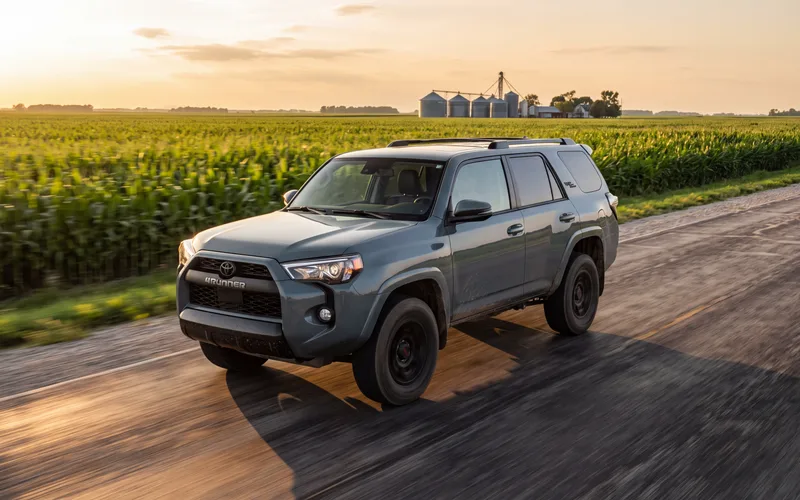 Toyota 4RunnerOff-Road SUVBetter at: Value
Same platform, engine and 6,000-lb tow rating for roughly $17,000 less, with more cargo room, an available third row and factory TRD Pro and Trailhunter off-road builds the Land Cruiser doesn't offer.
Compare 2.80B-
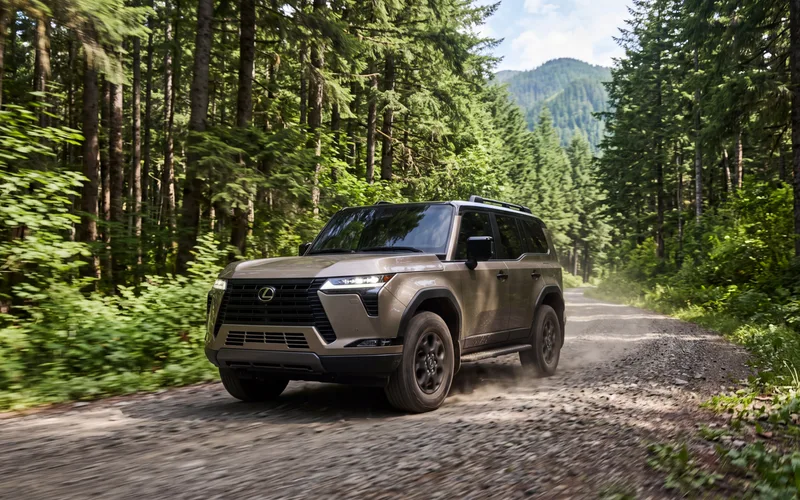 Lexus GXLuxury Off-Road SUVBetter at: Interior and seating
The luxury version of this exact chassis — a twin-turbo V6, a third row, genuinely premium materials and a head-up display — for buyers whose objection to the Land Cruiser is its plain interior and five-seat-only packaging.
Compare 1.95C-
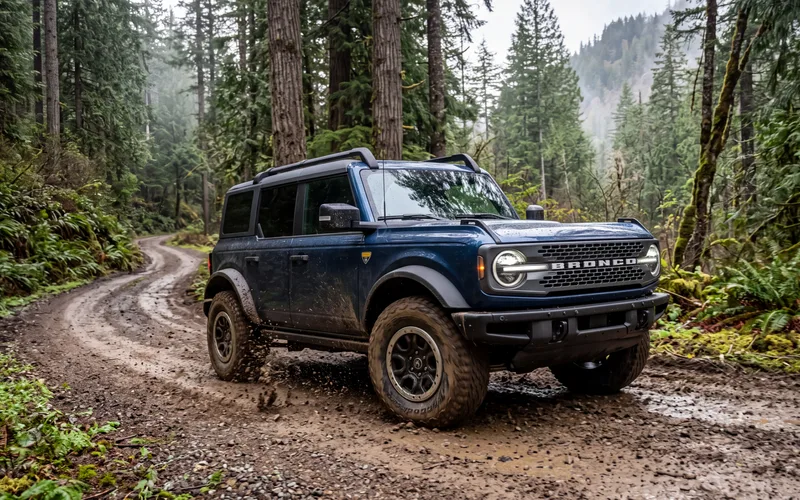 Ford BroncoOff-Road SUVBetter at: Fun and price
Costs less, seats rear passengers far better with 36.3 inches of legroom, and the roof and doors come off — the choice if the Land Cruiser's price and tight back seat are the sticking points and you can live with 17–20 MPG.
CompareHow it's evolved
8 scored model years · 2017–2026
Subject scores by year
Hover or tap a score to see what moved it versus the year before. A corner mark flags a big swing.
| Year | Performance | Efficiency | Safety | Space | Cost | Reliability | Tech | Use-case | Driving | Value |
|---|---|---|---|---|---|---|---|---|---|---|
| 2026 | 61 | 49 | 66 | 50 | 53 | 75 | 70 | 68 | 66 | 65 |
| 2025 | 59 | 36 | 65 | 56 | 51 | 73 | 74 | 68 | 55 | 69 |
| 2024 | 58 | 36 | 65 | 56 | 51 | 72 | 72 | 66 | 55 | 70 |
| 2021 | 69 | 14 | 45 | 60 | 53 | 85 | 35 | 59 | 59 | 52 |
| 2020 | 69 | 14 | 43 | 62 | 45 | 84 | 34 | 60 | 60 | 54 |
| 2019 | 68 | 16 | 43 | 61 | 41 | 81 | 35 | 63 | 59 | 55 |
| 2018 | 69 | 16 | 44 | 62 | 39 | 82 | 34 | 62 | 59 | 56 |
| 2017 | 69 | 16 | 45 | 62 | 29 | 82 | 36 | 63 | 62 | 56 |
Compare two years
Best fit & conditions
Higher scores mean a better fit for that use case. Learn more about use-case fit →
Subject profile
Academic Probation · NHTSA safety recalls
May 27, 2026Electrical system: instrument cluster/panelThe instrument panel cluster combination meter may fail to display certain warnings or indicators. As such, these vehicles fail to comply with the requirements of Federal Motor Vehicle Safety Standard (FMVSS) number 101, "Control and Displays" and in addition, for the subject Mirai vehicles, FMVSS 305, "Electric-powered vehicles: Electrolyte Spillage and Electrical Shock Protection."
Defect
Toyota Motor Engineering & Manufacturing (Toyota) is recalling certain 2025 Lexus UX Hybrid, 2024 Lexus GX, Toyota Mirai, and 2024-2025 Toyota Land Cruiser Hybrid vehicles. The instrument panel cluster combination meter may fail to display certain warnings or indicators. As such, these vehicles fail to comply with the requirements of Federal Motor Vehicle Safety Standard (FMVSS) number 101, "Control and Displays" and in addition, for the subject Mirai vehicles, FMVSS 305, "Electric-powered vehicles: Electrolyte Spillage and Electrical Shock Protection."
Risk
An instrument panel display that fails to show critical safety information, such as engine coolant temperature or electrical charge increases the risk of a crash or injury.
Remedy
Dealers will update the combination meter software through an over-the-air (OTA) update, free of charge. Owner notification letters were mailed July 23, 2026. Owners may contact Toyota's customer service at 1-800-331-4331. Toyota's numbers for this recall are 26LB06, 26LA06, 26TB10, and 26TA10.
NHTSA campaign 26V341000 ↗Manufacturer no. See attached Part57381,893 vehicles potentially affected (all models in the campaign)Owners notified Jul 23, 2026Filed by Toyota Motor Engineering & ManufacturingFiled as LAND CRUISER HYBRIDMar 24, 2026Equipment: other: labelsThe load carrying capacity modification label may display inaccurate added weight values. As such, these vehicles fail to comply with the requirements of Federal Motor Vehicle Safety Standard number 110, "Tire Selection and Rims."
Defect
Toyota Motor Engineering & Manufacturing (Toyota) is recalling certain 2024-2025 Toyota Tundra, Tacoma Hybrid, Tacoma, RAV4 Hybrid, Land Cruiser Hybrid, Lexus GX550, 2024-2026 Tundra Hybrid, 2025 Sequoia Hybrid, Crown Signia, Grand Highlander, Lexus TX500 Hybrid, Lexus NX350 Hybrid, 2025-2026 Grand Highlander Hybrid, and Lexus TX350 vehicles. The load carrying capacity modification label may display inaccurate added weight values. As such, these vehicles fail to comply with the requirements of Federal Motor Vehicle Safety Standard number 110, "Tire Selection and Rims."
Risk
A vehicle with an incorrect maximum capacity weight value may be overloaded, which can increase the risk of a crash.
Remedy
Dealers will replace the load carrying capacity modification label, free of charge. Owner letters were mailed May 26, 2026. Owners may contact Toyota's customer service at 1-800-331-4331. Toyota's numbers for this recall are 26LB04, 26LA04, 26TB07, and 26TA07.
NHTSA campaign 26V179000 ↗Manufacturer no. See attached Part5738,230 vehicles potentially affected (all models in the campaign)Owners notified May 22, 2026Filed by Toyota Motor Engineering & ManufacturingFiled as LAND CRUISER HYBRIDOct 30, 2025Back over prevention: display functionPlease see the recall report for a complete list of models. A software error may cause the rearview camera to freeze or display a blank screen when the vehicle is in reverse. As such, these vehicles fail to comply with the requirements of Federal Motor Vehicle Safety Standard (FMVSS) number 111, "Rear Visibility."
Defect
Toyota Motor Engineering & Manufacturing (Toyota) is recalling certain 2022-2026 Toyota, Lexus, and Subaru Solterra vehicles equipped with a Panoramic View Monitor (PVM) system. Please see the recall report for a complete list of models. A software error may cause the rearview camera to freeze or display a blank screen when the vehicle is in reverse. As such, these vehicles fail to comply with the requirements of Federal Motor Vehicle Safety Standard (FMVSS) number 111, "Rear Visibility."
Risk
A rearview camera that fails to display an image can reduce the driver's view behind the vehicle, increasing the risk of a crash.
Remedy
Dealers will update the parking assist software, free of charge. Owner letters were mailed January 2, 2026. Owners may contact Toyota's customer service at 1-800-331-4331. Toyota's numbers for this recall are 25TB13 and 25LB06. Subaru's number for this recall is WRE25.
NHTSA campaign 25V744000 ↗Manufacturer no. 25TB13/25LB06/WRE251,024,407 vehicles potentially affected (all models in the campaign)Owners notified Dec 5, 2025Filed by Toyota Motor Engineering & ManufacturingFiled as LAND CRUISER HYBRIDJul 23, 2024Equipment: other: labelsThe load carrying capacity modification label may display inaccurate added weight values. As such, these vehicles fail to comply with the requirements of Federal Motor Vehicle Safety Standard number 110, "Tire Selection and Rims."
Defect
Gulf States Toyota, Inc. (GST) is recalling certain Toyota 2023 GR Supra, 2024 4 Runner, Corolla, Grand Highlander, Grand Highlander Hybrid, Land Cruiser Hybrid, Tacoma, Tacoma Hybrid, 2023-2024 BZ4X, Corolla Cross Hybrid, GR Corolla, GR86, Highlander, Highlander Hybrid, Prius, Prius Prime, Sequoia Hybrid, Tundra, Tundra Hybrid, Venza Hybrid, 2023-2025 Crown, and 2025 Camry Hybrid vehicles equipped with GST accessories. The load carrying capacity modification label may display inaccurate added weight values. As such, these vehicles fail to comply with the requirements of Federal Motor Vehicle Safety Standard number 110, "Tire Selection and Rims."
Risk
A vehicle with an incorrect maximum capacity weight value may be overloaded, which can increase the risk of a crash.
Remedy
GST will mail new labels to owners, free of charge. Owner notification letters were mailed September 16, 2024. Owners may contact GST customer service at 1-800-444-1074. GST's number for this recall is 24R2.
NHTSA campaign 24V548000 ↗Manufacturer no. 24R233,848 vehicles potentially affected (all models in the campaign)Owners notified Sep 16, 2024Filed by Gulf States Toyota, Inc.Filed as LAND CRUISER HYBRID
3 recalls on other model years of the Land Cruiser (2017–2019)
Nov 4, 2020Fuel system, gasoline: delivery: fuel pumpThe low-pressure fuel pump inside the fuel tank may fail.
Defect
Toyota Motor Engineering & Manufacturing (Toyota) is recalling certain 2018-2019 4Runner, 2019-2020 Avalon, 2019 Corolla Hatchback, 2017-2019 Highlander, 2018-2020 Camry, 2020 Corolla, 2018-2019 Land Cruiser, 2017-2020 Tacoma, 2019-2020 RAV4, 2019-2020 Sequoia, 2017-2020 Sienna, 2019-2020 Tundra, 2018-2020 Lexus ES350, 2017 Lexus GS200t, 2017-2019 Lexus GS350, 2019 Lexus GS300, 2018-2020 Lexus LC500h, 2019-2020 Lexus LS500, 2018-2019 Lexus GX460, 2017 Lexus IS200t, 2019 Lexus IS300, 2019 Lexus IS350, 2018-2020 Lexus LC500, 2018 Lexus LS500, 2019 Lexus LS500h, 2018-2019 Lexus LX570, 2017 Lexus RC200t, 2019 Lexus RC300, RC350, 2017 and 2019-2020 Lexus RX350, 2018-2020 RX350L, 2019 Lexus UX200, 2018-2019 Lexus NX300 vehicles. The low-pressure fuel pump inside the fuel tank may fail.
Risk
If the fuel pump fails, the engine can stall while driving, increasing the risk of a crash.
Remedy
Toyota will notify owners, and dealers will replace the fuel pump assembly with an improved one, free of charge. Owners of specific models were notified that remedy parts were available starting January 21, 2021. Owners of other models will be notified as remedy parts become available. Remedy parts should be available for all affected vehicles by late March 2021. Owners may contact Toyota customer service at 1-888-270-9371 or Lexus customer service at 1-800-255-3987. Note: This recall is an expansion of recall 20V-012. Toyota's number for this recall is 20TA02. Lexus' number for this recall is 20LA01.
NHTSA campaign 20V682000 ↗Manufacturer no. 20TA02, 20LA011,525,742 vehicles potentially affected (all models in the campaign)Owners notified Jan 21, 2021Filed by Toyota Motor Engineering & ManufacturingFiled as LAND CRUISERMar 27, 2019Equipment: other: labelsThe text on the load capacity label may become illegible. As such, these vehicles fail to comply with the requirements of Federal Motor Vehicle Safety Standard (FMVSS) number 110, "Tire Selection and Rims."
Defect
Gulf States Toyota (GST) is recalling certain 2019 C-HR, 4Runner, Avalon, Avalon Hybrid, Camry, Camry Hybrid, Highlander, Land Cruiser, Prius, RAV4, Sequoia, Tacoma, Sienna, Tundra and Yaris vehicles. The text on the load capacity label may become illegible. As such, these vehicles fail to comply with the requirements of Federal Motor Vehicle Safety Standard (FMVSS) number 110, "Tire Selection and Rims."
Risk
If the driver cannot read the label, they may unknowingly overload the vehicle, increasing the risk of a crash.
Remedy
GST will notify owners, and dealers will provide corrected load carrying capacity modification labels, free of charge. The recall began May 24, 2019. Owners may contact GST customer service at 1-800-444-1074. GST's number for this recall is 19R1.
NHTSA campaign 19V244000 ↗Manufacturer no. 19R13,634 vehicles potentially affected (all models in the campaign)Owners notified May 24, 2019Filed by Gulf States Toyota, Inc.Filed as LAND CRUISERDec 13, 2018Air bags: frontal: passenger side: inflator module · Air bags: sensor: occupant classification · Seat belts: frontOver time, the seat belt tension sensor wire harness may break and deactivate the front passenger air bag, knee air bag, and passenger seat-mounted side airbag.
Defect
Toyota Motor Engineering & Manufacturing (Toyota) is recalling certain 2008-2019 Toyota Land Cruiser and Lexus LX 570 vehicles. Over time, the seat belt tension sensor wire harness may break and deactivate the front passenger air bag, knee air bag, and passenger seat-mounted side airbag.
Risk
In the event of a crash, deactivated air bags can increase the risk of injury .
Remedy
Toyota will notify owners, and dealers will modify the front passenger seat belt assembly or replace it with an improved one, as necessary, free of charge. The recall began February 11, 2019. Owners may contact Toyota customer service at 1-888-270-9371 or Lexus customer service at 1-800-255-3987. Toyota's numbers for this recall are Lexus Interim J2L and Remedy JLL, Toyota Interim J15 and Remedy J05.
NHTSA campaign 18V887000 ↗Manufacturer no. See attached report.89,740 vehicles potentially affected (all models in the campaign)Owners notified Feb 11, 2019Filed by Toyota Motor Engineering & ManufacturingFiled as LAND CRUISER
Source: NHTSA Office of Defects Investigation recall database, model years 2017–2026. Recalls are listed by model year as the manufacturer filed them; whether a specific car is affected depends on its VIN — check a VIN at nhtsa.gov ↗. NHTSA model names matched to this page: LAND CRUISER, LAND CRUISER HYBRID.
Detailed scoring by subject
1Performance & PowertrainMid-pack among this car's ten categories.1.93C-
2024 is the launch year of the J250 Land Cruiser in the US — an all-new nameplate return, not a carry-over — and Toyota fitted a single powertrain: the turbocharged 2.4L four with a motor-generator inside the 8-speed automatic, rated at 326 net combined horsepower. Respectable for a mid-size body-on-frame SUV, but a clear step down from the 381-hp V8 of the departed J200 and short of the platform-sharing Lexus GX's 349-hp twin-turbo V6.
Peak system torque of 465 lb-ft, delivered low in the rev range because the electric motor fills in before the turbo spools — the standout figure on the 2024 spec sheet and the reason the truck crawls and tows better than its four-cylinder displacement suggests.
Instrumented results cluster in the high sevens to low eights, so the value is the cluster mean rather than any single run: Car and Driver records 7.7 s, Edmunds 8.2 s, and 0-60specs logs 8.1 s with a 16.3 s quarter mile. A curb weight around 5,500 lb absorbs much of the hybrid's torque advantage, leaving acceleration merely adequate for the class. MEDIUM confidence reflects the half-second spread between testers, not doubt about the vehicle.
Gas-to-electric transitions are seamless and the instant low-speed torque is genuinely well judged off-road, but road testers of the launch-year truck repeatedly fault the four-cylinder for sounding strained and coarse under load and for on-road acceleration that feels weaker than 465 lb-ft implies. Placed at the low end of the 50–79 band because the criticism is near-universal rather than occasional, and it stings more at this price against V6 and V8 rivals.
The conventional 8-speed automatic (with the motor-generator packaged inside it) is the drivetrain's high point — quick, clean shifts and no CVT drone — but 2024 reviews stop short of unqualified praise, calling it more indecisive than the 10-speed in the platform-sharing Lexus GX, and early owners report some low-speed jerkiness. Upper half of the 50–79 band rather than the top tier.
Rated at 6,000 lbs on every 2024 grade — comfortably ahead of the off-road SUVs it is cross-shopped against (Bronco 4,500 lbs, Wrangler 3,500 lbs) but well below the 8,100-lb V8 J200 it replaces and the 9,096-lb Lexus GX on the same platform. That gap is the clearest price of the four-cylinder hybrid strategy.
Full-time 4WD with an electronically controlled two-speed transfer case, locking center differential and an electronically locking rear differential is standard on all three 2024 grades, alongside standard Crawl Control and Downhill Assist Control. No trim walk is required to get the serious hardware — rare in this class and the strongest single element of the drivetrain.
Body-on-frame TNGA-F architecture, low range, standard center and rear lockers, Crawl Control, Multi-Terrain Select/Monitor and — in this launch year — a front stabilizer-bar disconnect standard on both the Land Cruiser and First Edition grades put it solidly in the top band. It is held back from a higher score by modest geometry (22° departure angle, ground clearance under 9 in) and by the absence of any TRD Pro-grade trim, leaving it a rung below the Wrangler Rubicon / Bronco Raptor tier.
Three grades in the launch year, but exactly one powertrain: the 326-hp 2.4L i-FORCE MAX hybrid, standard everywhere. No V6, no V8, no diesel and no non-hybrid option — the lower-cost non-hybrid 2.4T does not arrive until later model years — so a 2024 buyer gets no drivetrain choice at all.
2Efficiency & RangeThe Land Cruiser's lowest-graded category.0.39F
2024 is the launch year of the J250-series Land Cruiser in the US, reviving the nameplate after the V8 J200 was dropped following 2021. It arrives hybrid-only: a turbocharged 2.4L four with a 48-hp electric motor (326 hp / 465 lb-ft combined) through an 8-speed automatic and full-time 4WD. EPA rates all three grades at 23 MPG combined — a big gain over the 13-14 MPG J200 V8, but still near the bottom of an SUV band whose upper reaches are set by unibody crossovers and EVs.
22 MPG city is where the hybrid system earns its keep, with the electric motor covering launches and low-speed crawl that would otherwise punish a ~5,400-lb body-on-frame 4WD SUV. It still lands near the floor of the SUV band, because that band is calibrated against crossovers.
25 MPG highway sits only 3 MPG above the city figure — at steady cruise a boxy, heavy ladder-frame off-roader with full-time 4WD gets little help from the hybrid, so frontal area and mass set the ceiling.
A 17.9-gallon tank at 23 MPG combined gives 412 miles between fills — mid-pack for the segment, but modest for a vehicle whose entire premise is remote travel; the J200 it replaces carried 24.6 gallons. Overlanders routinely fit an auxiliary tank for exactly this reason.
The EPA-published label figure, taken from the certification record. At 23 MPG combined the Land Cruiser burns roughly 650 gallons a year, and EPA prices those at premium grade, putting the label cost at $3,300/yr — past the top of the SUV band and therefore at the scoring floor. The premium-grade basis is what does the damage: the 2024 Tacoma Hybrid 4WD returns the same 23-24 MPG combined from the same 2.4L hybrid on regular and is labelled $2,550-$2,650/yr, so the Land Cruiser pays roughly $650-$750 a year purely for its fuel-grade certification.
Scored in the "premium required" band, matching 2025 and 2026. EPA lists the fuel type as Premium Gasoline Required, and that designation is derived from Toyota's own certification submission — it is the manufacturer declaring premium in a regulatory filing, not a secondhand source contradicting the manual. Decisively, Toyota certified the very same 2.4L i-FORCE MAX hybrid on regular gasoline in the 2024 Tacoma Hybrid at effectively the same combined MPG, so the premium designation is a deliberate choice for this vehicle, and the filler-door label reads premium too. Placed at the top of the 0-49 band rather than its middle because the mitigations are real: 87 octane runs without engine damage (knock sensors retard timing, at reduced output), and as a self-charging hybrid there is no plug, no charging hardware and no DEF tank. That puts it above premium-required rivals with no such latitude — Range Rover (38), Lexus GX (25), Lexus LX (24), Land Rover Defender (22) — but well below the Tacoma and Sequoia hybrids, both certified on 87.
3SafetyMid-pack among this car's ten categories.2.42C+
NHTSA never crash-tested the 2024 Land Cruiser — it is absent from NHTSA's own 2024 Toyota model list, unsurprising for a nameplate that returned mid-year as a late-arriving launch model. The prompt's fallback applies: the latest tested year of this generation is 2025, which NHTSA rates 4 stars overall (5 side, 4 frontal, 3 rollover). The 2024 and 2025 J250 are the same body, frame and restraint system built on the same line, so the generation result carries; confidence is MEDIUM rather than HIGH purely because the specific model year was not itself tested.
IIHS scopes its Land Cruiser ratings to 2025-26 models — there is no 2024 vehicle page — but the tested car is the same J250 with the same structure, so the generation result is what a 2024 buyer actually gets: Good in small overlap front (driver and passenger), Good in the updated side test and Good seat belt reminders, undone by a Marginal in the updated moderate overlap front. The failure is in the second row, where restraints and dummy kinematics rate Marginal and the rear lap belt slides off the pelvis onto the abdomen. A Good in all three crashworthiness tests is required for any award, so no Top Safety Pick at any trim.
Nothing core is trim-locked in the launch year. Toyota Safety Sense 3.0 is standard on all three 2024 grades — pre-collision with pedestrian, bicyclist and motorcyclist detection, full-speed-range dynamic radar cruise with a fourth following-distance setting, lane departure alert with steering assist, lane tracing assist, Emergency Driving Stop System, road sign assist, automatic high beams and proactive driving assist — and blind spot monitor with rear cross-traffic alert and trailer merge warning, safe exit alert, and front and rear parking sensors with automatic braking are standard on top of that. Short of the very top only because front cross-traffic alert is confined to the limited First Edition and there is no hands-free or active blind-spot-steering tier.
IIHS rates J250 front crash prevention Good against both vehicles and pedestrians under the updated protocols, which fold in higher closing speeds and nighttime pedestrian scenarios — Good is the top available result in both. The 2024 runs the identical TSS 3.0 hardware and software the tested car does, so the result carries, held just below the high 80s because the system is credited rather than standout in the class and confidence is capped at MEDIUM by IIHS scoping the rating to 2025-26.
Standard on every 2024 grade: blind spot monitor with rear cross-traffic alert AND trailer merge warning, safe exit alert, and front and rear parking sensors with automatic braking — trailer-aware coverage plus genuine braking intervention on the reverse side, which meets the top band. Held at 82 because the blind-spot function itself is alert-only for a lane-change conflict, with no steering or braking countermeasure, and front cross-traffic alert is restricted to the 5,000-unit First Edition rather than the volume grades.
Lane Departure Alert with Steering Assist and Lane Tracing Assist are standard on every grade, and LTA offsets the path slightly when passing a vehicle in an adjacent lane, but launch-year reviews split on how well the centering actually holds: one instrumented evaluation calls it bouncy, another calls it near-flawless apart from drifting toward one side in construction zones. Functional keeping with occasional wander is squarely the middle band for a 5,400-lb ladder-frame SUV.
Full-Speed Range Dynamic Radar Cruise Control with stop-and-go is standard on all three grades from launch, now with a fourth following-distance setting, and reviewers found it reliable at spotting decelerating and merging traffic and bringing the car to a full stop; Proactive Driving Assist adds gentle braking into curves. Paired with Lane Tracing Assist it forms a competent hands-on highway assist, with the steering half rather than the cruise itself as the weak link.
No hands-free highway system is offered on the 2024 Land Cruiser at any grade — Toyota's hands-off Teammate Advanced Drive is confined to select Lexus models in the US — so this is hands-on-wheel assistance only.
IIHS headlight results for the J250 split by trim and the split runs the wrong way: the 1958's round LED projectors with high-beam assist rate Good, while the rectangular units on the pricier Land Cruiser grade — the volume configuration — rate only Marginal for low-beam glare and merely fair high-beam visibility. The 2024 uses the same two lamp designs (the limited First Edition shares the 1958's round lamps), so the same split applies, with automatic high beams standard across the range.
The boxy greenhouse, upright glass, low beltline and deliberately repositioned A-pillars give excellent forward and side sightlines, and front and rear parking sensors with automatic braking plus a backup camera are standard on every grade. Held in the middle band because the tall second-row seatbacks block much of the rear window, the surround/underbody Multi-Terrain Monitor views are unavailable on the base 1958, and the digital rearview mirror that solves the loaded-cargo problem is an option-package item.
The model-year-specific Cars.com Car Seat Check grades the LATCH hardware itself an A — two sets of lower anchors under an easily raised flap, three top tether anchors, all easy to find and use — with B/B/A/B across infant, rear-facing convertible, forward-facing convertible and booster. Held below 80 because the five-seat second row will not take three seats across (a capability the outgoing J200 had), both rear-facing installs eat into front passenger legroom, and booster belts sink into the upholstery.
4Space & ComfortMid-pack among this car's ten categories.1.78C-
2024 is the launch year of the J250 Land Cruiser in the US, replacing the departed J200, and it arrives as a strictly five-passenger two-row SUV across all three grades (1958, Land Cruiser, First Edition). The third row available on some overseas Land Cruiser 250 variants is not offered here, partly because the i-FORCE MAX hybrid battery occupies under-floor volume.
The upright, boxy J250 greenhouse gives front occupants above-average headroom for the SUV band, ahead of the mechanically related 4Runner. The moonroof — Premium Package only in 2024, and unavailable at all on the 1958 grade — costs about 0.8 in.
Front legroom is genuinely good — comfortably above the SUV band midpoint and better than most TNGA-F siblings — and combines with a commanding, upright seating position. The front row is not where this vehicle is compromised.
The square roof pays its biggest dividend in the second row: rear headroom sits near the top of the SUV normalization band and is the strongest passenger-space spec on the vehicle.
Mid-pack on paper — adequate in raw inches and better than the 4Runner — but launch-year reviewers consistently flagged that the low rear cushion and modest knee room make the back seat feel tighter than 36.7 in implies for a 194-in, $57k-plus SUV.
There is no third row in the US-market 2024 Land Cruiser — not optional, not trim-dependent. Scored in the bottom band on the same basis as the two-row-only Bronco and Wrangler (both 15 in this dataset); the three-row alternatives inside Toyota's own showroom are the Lexus GX 550 and the Sequoia.
Usable in absolute terms and clearly better than the off-road set it competes with (Bronco 35.6, Wrangler 31.7), but modest for the exterior footprint and price. The hybrid battery sits beneath and raises the load floor roughly four inches, which is why several sources quote the smaller 37.5 cu ft beltline figure as the practical space.
With the rear seats down the square body and near-vertical tailgate deliver a genuinely large hold — the strongest cargo spec on the vehicle — but the folded floor is not flat, leaving a hump that undercuts the raw number for camping or long-load use.
Better than the segment norm on the strength of one genuine standout: a 2400-watt 120V household AC inverter in the cargo area, standard on every 2024 grade including the stripped-back 1958 — the Pro-Power-style feature the top band asks for. A deep console with palm rest and knee pads, large door bins, an available center-console cool box and a 60/40 folding second row cover the everyday basics. It stops short of the top band because the battery-raised, non-flat folded floor actively works against cargo versatility.
The volume Land Cruiser grade fits power heated and ventilated SofTex front seats as standard, with well-judged cushioning and a commanding position; the Premium Package adds leather with lumbar support and memory. The second row is the limiter — a low cushion and confining knee room leave rear passengers knees-up, capping this below the plush three-row crossovers. The 1958 grade's 6-way manual fabric seats also restrict adjustment at the bottom of the range.
Comfortable by body-on-frame off-roader standards — the coil-sprung multi-link rear and available adaptive damping keep it well clear of the Wrangler (40) and Bronco (60) — but launch-year testers still found truck-like shake over broken pavement, so it stays short of unibody mid-size SUVs.
Split verdict in the launch year. At a steady cruise the cabin is well isolated with muted road noise, but the boxy body and basket-style roof rack generate audible wind noise past roughly 60–70 mph, and the 2.4-liter turbo four is coarse and diesel-like under load — a criticism that follows this engine across the Tacoma, 4Runner and Land Cruiser and lands harder at this price.
Strong standard provision for an off-road SUV, and stronger than the grade structure suggests: the volume Land Cruiser grade includes power heated AND ventilated front seats as standard rather than as an option, while even the base 1958 gets heated front seats, a heated steering wheel and three-zone automatic climate with rear vents. Held out of the top band because the moonroof, lumbar support and memory seats are Premium Package items and remote pre-conditioning runs through the Toyota app on a post-trial subscription.
5Cost of OwnershipOne of the Land Cruiser's weakest categories.1.45D
2024 is the launch year of the J250-series Land Cruiser in the US, reviving the nameplate after the J200 V8 was dropped following 2021, and the entry point is the retro round-headlight 1958 grade at $55,950 plus Toyota's $1,395 Delivery, Processing and Handling fee. Every 2024 Land Cruiser is the 326-hp 2.4L i-FORCE MAX hybrid with full-time 4WD, so there is no cheaper non-hybrid entry — but at ~$57.3k delivered it still sits in the upper third of the SUV price band.
The middle 'Land Cruiser' grade is the mainstream seller and the one reviewers name as the pick — a clear step up from the deliberately spartan 1958 (12.3-in screen, heated and ventilated front seats, power liftgate) without the First Edition's limited-run premium. The First Edition was capped at 5,000 units and sold out, so it cannot be the volume configuration.
Toyota's scheduled-service intervals are cheap and the 2.4L i-FORCE MAX has no timing belt or CVT to service, but the Land Cruiser calls for premium-grade fuel care, 18/20-in tires and body-on-frame driveline service. Placed a touch above the mechanically identical 2025 car because 2024 is the first US model year of the J250 with no repair record and the usual first-build teething, and between the 4Runner and Lexus GX on the maintenance-plus-repair basis used across this dataset.
The Land Cruiser badge, a constrained launch-year allocation and Toyota's brand-wide residual strength put retention far above the SUV average, and the 2024 cars have real market history now to back the projection rather than a model alone. This is the item that carries the category, offsetting the high entry price and heavy fuel bill.
Toyota's standard basic coverage, at the segment floor — Lexus (4 yr / 50,000 mi) and the Korean brands (5 yr / 60,000 mi) both beat it, and a launch-year vehicle is where longer coverage would have been worth most.
The headline powertrain term is Toyota's usual 5 yr / 60,000 mi, at the bottom of the band, but because every 2024 Land Cruiser is an i-FORCE MAX hybrid the electrified hardware carries substantially longer separate coverage than the spec value reflects.
ToyotaCare covers factory-scheduled maintenance for 2 years / 25,000 miles with 2 years of unlimited-mileage roadside assistance — real, but short next to Lexus's or the Germans' longer plans — and the long Safety Connect / Service Connect trials on new-generation Toyota Audio Multimedia cars add genuine no-cost value beyond the usual one-year telematics teaser. Remote Connect (Digital Key, remote start) and Drive Connect run shorter trials and then bill.
$63,345 volume-trim price minus its estimated resale value after 5 years (65% retained, or about $41,174) leaves about $22,171 in depreciation. Add the projected $5,500 in 5-year maintenance and repairs, and owning this vehicle for 5 years costs about $27,671 in total.
6Reliability & QualityThe Land Cruiser's best-graded category.2.88B-
2024 is the first US model year of the J250-series Land Cruiser, and the two major predictors both land at average rather than top-tier: J.D. Power scores it 70/100 — the lowest of any Toyota SUV except the bZ4X — and Consumer Reports predicts only 'about average' reliability. The mechanicals are shared and proven (TNGA-F platform in its fourth year, a hybrid powertrain already running in the Highlander, Grand Highlander and Lexus NX/RX), which keeps it well clear of the Bronco/Wrangler end of the segment, but launch-year build issues are already documented and the Toyota badge alone does not earn the 80+ band here.
Toyota is the reference point for mainstream dependability — Consumer Reports' No. 1 brand and a consistent top-tier finisher in J.D. Power's dependability study — so the corporate track record is a genuine strength the model-specific data does not yet match.
Four recalls in roughly two years on the market, and every one of them is a software update or a mislabelled sticker — no powertrain, fire, structural or airbag campaign, and no NHTSA investigation opened. That is a clean recall record for a launch-year body-on-frame SUV. It is held out of the 80+ band by real TSB activity on early builds: Toyota published a front-brake-squeal bulletin replacing pads, shims and fitting kit, and a sunroof-sealant bulletin for water leaks.
Every 2024 Land Cruiser is the 2.4L turbo T24A-FTS i-FORCE MAX hybrid, and the components are individually proven rather than experimental — the same engine family runs in the Highlander, Grand Highlander and Lexus NX/RX, and Toyota's hybrid transaxle hardware has decades of high-mileage history behind it. Against that: a small turbo four hauling a ~5,500 lb body-on-frame SUV is a harder duty cycle than the crossovers it came from, the engine family is only a few years old, and the 8-speed automatic it pairs with drew a transmission-replacement bulletin in the closely related 2024 Tacoma. Proven parts in an unproven application, so upper-middle rather than the 80+ band the old 5.7L V8 J200 would have earned.
Measured against the price — $57k delivered for the base 1958 — this is the weakest part of the vehicle. Reviewers were blunt that the 1958's dashboard and door panels are hard plastic of a grade that would disappoint in a Corolla, and while the mid 'Land Cruiser' grade used as the volume trim adds soft-touch material on the dash and front door uppers, it is still a wash-out-the-cabin utility interior at a premium price rather than a rich one. Durable and honest, but not competitive on material richness with anything else in this price band.
Assembly is broadly solid — the structure is stiff, panel fit drew no systematic criticism, and a 110,000-mile owner reported nothing rattling loose — but this is first-year production and it shows: sunroof water leaks serious enough for a sealant bulletin, brake squeal common enough for its own TSB, and reviewers noting a hollow, tinny door close that undercuts the vault-like impression the badge implies. Scattered complaints on a generally sound car, which is the middle of the band.
Coverage is about as good as it gets in the US — roughly 1,250 Toyota dealers, every one of them able to service the car, which matters more than usual for a vehicle marketed on going a long way from home. Service satisfaction is the softer half: Toyota scores essentially at the segment average in J.D. Power's dealer-service study, not among the leaders, which keeps this out of the top band.
Toyota's parts distribution is dense and the Land Cruiser has one of the largest off-road aftermarkets of any nameplate, with the TNGA-F platform and 2.4L hybrid shared across the Tacoma, 4Runner and Lexus GX to keep volume up. But this is a premium body-on-frame hybrid, not a Corolla: RepairPal's estimates for the nameplate run well above the average car, and hybrid and 4WD-specific components are dealer-priced. Normal-to-slightly-expensive, so the middle of the band.
7Technology & InfotainmentOne of the Land Cruiser's strongest categories.2.88B-
2024 is the US launch year of the J250 Land Cruiser — an all-new vehicle, not a carry-over — and Toyota split the screen by grade: the 1958 gets an 8.0-inch display while the mid Land Cruiser grade (the volume trim) and First Edition get the 12.3-inch Toyota Audio Multimedia monitor. Mid-pack for the segment: bigger than a Bronco's 12.0-inch but well short of the 14.0-inch unit in the platform-sharing Lexus GX.
Toyota Audio Multimedia is one of the better mainstream systems and reviewers of the launch-year truck consistently call it fast and plainly laid out, helped by a genuine physical control set — HVAC knobs and buttons below the vents, a real volume knob, and a dedicated hard key for the exterior cameras. Held below the 80s because the tile-based menu structure is unremarkable rather than class-leading and the volume knob is mounted awkwardly far to the driver's side.
Wireless Apple CarPlay and wireless Android Auto are standard on every 2024 grade, including the entry 1958 with the smaller 8.0-inch screen — no packaging, no subscription, no wired-only base trim. Scored in the top band; a couple of points short of the ceiling only because the projection window on the 8.0-inch screen is small and phone-mirroring is where most owners will live given the native nav situation.
The 'Hey Toyota' natural-language assistant and the cloud navigation with Google points-of-interest data are both good when active, but both are bundled into the Drive Connect subscription — a one-year trial from purchase, then a paid renewal. A buyer who lets it lapse is left with basic embedded voice commands and no onboard maps at all, which is exactly the pattern this band describes: functional, and bypassed for phone projection by most owners.
The volume Land Cruiser grade runs a 10-speaker system that reviewers find perfectly acceptable but never call out as a strength, and the 14-speaker JBL premium upgrade is real but arrives only inside the $4,600 Premium Package (standard on First Edition). Solid mid-band: better base content than the six-speaker 1958, short of the Mark Levinson-grade offerings in the luxury off-roaders it is cross-shopped against.
The volume Land Cruiser grade gets a full 12.3-inch digital cluster that is crisp and genuinely configurable — a choice between conventional dials and a flat data readout — with the 1958's smaller 7.0-inch display sitting below it. Top band because the good cluster is standard on the trim most buyers take, not an option; not higher because the graphics are conventional rather than a showpiece.
Toyota lists over-the-air updates for the 2024 Land Cruiser, but in practice they cover the Audio Multimedia software, map data and connected-services content rather than adding vehicle capability the way Tesla, Rivian or Ford's BlueCruise-era OTA does. Placed just above the middle of the infotainment/maps-only band — real and standard across grades, but not whole-vehicle.
The Toyota app is competent and covers the expected set — remote start and climate, lock/unlock, vehicle locate, status, and Digital Key phone-as-key — but the whole Remote Connect bundle is a one-year trial that then becomes a paid subscription, and Digital Key on the volume grade sits inside the Premium Package. Textbook 50–79 territory: core remote functions present, subscription-gated.
Port provision is modern rather than generous — dual USB-C in front standard on the volume grade with rear-row USB-C available, plus a wireless phone charger and, notably for this vehicle's use case, an available 2,400W AC inverter feeding household outlets that most rivals cannot match. Kept out of the top band because the wireless pad and the rear ports are availability items (the 1958 goes without the charger entirely) rather than fleet-standard.
Smart Key proximity entry with push-button start is standard on every 2024 grade, the volume Land Cruiser grade adds a power liftgate the 1958 does without, and Digital Key phone-as-key is offered — but remote start and Digital Key both ride on the Remote Connect subscription after the one-year trial, and there is no hands-free kick-open tailgate. Upper half of the middle band.
The volume Land Cruiser grade carries the Panoramic View Monitor and Multi-Terrain Monitor — a 360-degree bird's-eye view plus front and underbody views summoned by a dedicated hard button, which is more useful on a rock ledge than in a parking bay and is genuinely a strength here. Front and rear parking assist with automatic braking is standard, and a digital rearview mirror comes with the Premium Package. Held below 80 because resolution is good-not-great and there is no automated parking function; note the entry 1958 grade goes without PVM entirely.
A head-up display is offered on the volume Land Cruiser grade rather than reserved for the range-topper, showing speed, speed limit and navigation prompts — but only as part of the $4,600 Premium Package, so a majority of 2024 examples leave the lot without it. Upper end of the 'limited to upper trims' band: available where it matters, expensive to get.
8Use-Case FitMid-pack among this car's ten categories.2.46C+
Cars.com's Car Seat Check gave the launch-year truck an A for LATCH access and an A for the forward-facing convertible, with Bs for the infant seat, rear-facing convertible and booster — a solidly above-average result helped by tall square door openings, a high seating position kids like and standard rear ceiling vents that keep working when a rear-facing seat blocks the side ducts. It is held to the middle of the band by two real regressions from the J200 it replaces: the second row no longer takes three car seats across, and the hybrid battery raises the cargo floor about four inches, so strollers get lifted higher.
Toyota Safety Sense 3.0 is standard on every 2024 grade — including the entry 1958 — with pre-collision braking, lane tracing, full-speed adaptive cruise, road-sign assist, blind-spot monitor, rear cross-traffic alert and a rear-seat reminder, so families are not trim-walked into the safety kit. What keeps it out of the top band is the crash-test side of the equation rather than the equipment: a 4-star NHTSA overall with only 3 stars for rollover, no IIHS Top Safety Pick, and headlight performance rated only adequate — and the cheapest way in is $57,345, which is not a family-friendly price point.
The gear side is genuinely strong — 46.2 cu ft behind an occupied second row is a lot of luggage for four people, and three-zone automatic climate with rear ceiling vents and rear USB-C is standard even on the 1958. The passenger side is where it gives ground: launch-year testers repeatedly flagged confining rear knee room and a low rear cushion that leaves adults knees-up, there is no rear entertainment or rear-seat recline of note, and owners single out wind and road noise above 60 mph as the thing that makes long trips tiring. Squarely mid-band — comfortable for a weekend, wearing for a week.
Far more civilized in traffic than the off-road SUVs it is cross-shopped against: the electric motor supplies torque instantly from rest so low-speed creep is smooth, the coil-sprung multi-link rear rides compliantly for a body-on-frame truck, steering is quicker than the shape suggests, and standard full-speed adaptive cruise with lane tracing takes the sting out of a commute. Reviewers and owners consistently dock it for the same three things — a coarse, diesel-sounding turbo four under any real throttle, residual truck-like shake over broken pavement, and an 8-speed that dithers more than the GX's 10-speed — which is why it sits mid-band rather than near the top.
Relative to its own class the hybrid is a real win — 23 MPG combined from a full-time-4WD body-on-frame SUV beats the Wrangler, Bronco, V6 4Runner and the platform-sharing Lexus GX by several MPG. In absolute per-mile terms, which is what this item measures, it is still expensive: the i-FORCE MAX asks for premium fuel, the EPA label works out to roughly $3,300 a year at 15,000 miles, insurance runs about $2,700 a year, and it wears large off-road-biased tires. That combination lands it exactly at the floor of the 'average for its class' band.
The squared-off J250 body is a genuine asset in a parking structure — the hood corners are visible from the driver's seat, and front and rear parking sensors plus a backup camera (with a Multi-Terrain Monitor including an underbody view on upper grades) are standard. Against that, 193.8 in long, 77.9 in wide and 76.1 in tall on a 112.2-in wheelbase is a substantial mid-size footprint, it weighs over 5,000 lb, and reviewers ask for wider mirrors to cover the blind spots. Manageable with camera help rather than easy — better than a Tahoe or Sequoia, clearly worse than a RAV4. MEDIUM confidence because published turning-circle figures for this model year conflict.
Properly equipped from the factory for light-to-moderate work — 6,000 lb tow rating on every grade with a receiver hitch, integrated trailer brake controller and four- and seven-pin wiring included, and Cars.com's tow test found the hybrid's 465 lb-ft made mountain grades undemanding. The ceiling is what caps it: 957 lb of payload is under half a ton of people-plus-gear, there is no bed, and 6,000 lbs trails the mechanically related Lexus GX 550 (9,096 lbs), the V8 J200 it replaces (8,200 lbs) and any half-ton pickup. A capable support vehicle, not a work truck.
The nameplate's fleet credentials are as strong as any vehicle sold — NGOs, the UN, militaries and outback operators have run Land Cruisers for decades precisely because they survive abuse — and the 2024 truck keeps the ingredients: a fully boxed TNGA-F ladder frame, a solid-feeling body-on-frame structure and Toyota's service backing. It is scored short of the very top because the reputation is largely inherited rather than earned by this vehicle: 2024 is the launch year of an all-new chassis with an all-new 2.4L turbo hybrid that has no field record, and the cabin is styled for lifestyle buyers rather than trimmed in the wipe-down vinyl a fleet spec would want.
One standout carries this above the segment norm: a 2400-watt 120V household AC inverter in the cargo area, standard on every 2024 grade including the base 1958 — enough to run corded tools or a compressor at a site. Add standard roof rails with a substantial aftermarket rack ecosystem already shipping for the J250, cargo tie-downs, and a hitch with 7-pin power as delivered. It stays mid-band because there is no bed, no factory work-package or upfitter program, and the SofTex/carpeted interior is not a washable surface.
A competent tourer without being a serene one. In its favour: roughly 412 miles between fills from the 17.9-gal tank, supportive heated-and-ventilated front seats standard on the volume grade, a compliant ride for a ladder-frame truck, and Toyota Safety Sense 3.0's full-speed adaptive cruise and lane tracing doing real fatigue work — one owner reported a 10,000-mile cross-country trip without complaint about the chassis. Against it, and consistently: wind and road noise past 60 mph from the boxy body and basket roof rack, a coarse engine note when the grade steepens, a rear bench adults tire of, and premium fuel at every stop.
The vehicle's reason to exist, and the strongest item in the category. Every 2024 grade gets full-time 4WD with an electronically controlled two-speed transfer case, a locking centre differential, an electronic locking rear differential, Crawl Control and Downhill Assist Control — no trim walk required — with Multi-Terrain Select and a front stabilizer-bar disconnect on the upper grades. For camping specifically, the standard 2400W AC inverter runs a fridge or induction plate, the 6,000 lb rating covers a boat or a teardrop, and roof rails plus a deep aftermarket handle the rest. Just short of the ceiling because the geometry is good rather than extreme — 22° departure and under 9 in of clearance — and there is no TRD Pro-grade variant in 2024.
Deleting the third row bought a big, squarely shaped hold: 46.2 cu ft behind the second row and 82.1 cu ft with the 60/40 bench folded, under a near-vertical tailgate, with roof rails standard, a receiver hitch fitted from the factory and a 2400W outlet in the cargo bay. Two real deductions keep it out of the top band — the hybrid battery lifts the load floor roughly four inches, and the folded second row leaves a pronounced hump instead of a flat deck, which anyone planning to sleep in the back has to engineer around.
9Driving ExperienceOne of the Land Cruiser's weakest categories.1.70C-
2024 is the US launch year of the J250 Land Cruiser on the TNGA-F platform, and the new chassis is a real step forward for a body-on-frame off-roader: testers found genuine balance and composure, and reviewers place it clearly above the Bronco and Wrangler in on-road refinement. It stays mid-band because outright grip is low — 0.70 g on the skidpad against 0.75 g for the platform-sharing Lexus GX 550 — there are no adaptive dampers on the volume grade, and nobody calls it nimble through corners.
Accurate off-centre and better resolved than the truck-based SUVs it shares a showroom with, but numb — testers agree there is little road feedback, and the weighting is heavy enough that it works against the vehicle at parking speeds. MEDIUM because launch-year opinion genuinely splits on the weighting (praised as reassuring by some, criticized as over-heavy by others) rather than because the data is thin.
The clearest dynamic weakness of the launch-year truck, and the reason this category does not score higher. Instrumented stops from 60 mph run about 133 ft where SUVs of this size and weight should be near 125 ft — its own platform-mates manage 126 ft (GX 550) and 127 ft (4Runner TRD Pro) — and the stops are not just long but unstable, with heavy nosedive and the rear stepping sideways under ABS. Compounding it, the hybrid's electronically controlled brake actuator blends regen to friction imperfectly at low speed, which owners report as a surge or a fade-then-grab. Scored in the low band because "long stops" and "poorly tuned" both apply.
The i-FORCE MAX hybrid's calibration is genuinely good where it matters most for this vehicle — gas-to-electric handovers are seamless and the pedals are easy to modulate at crawling speeds — but on-road response undercuts it: launch-year testers consistently report acceleration that feels weaker than 465 lb-ft implies, an 8-speed automatic that is more indecisive than the GX's 10-speed, and some low-speed driveline jerk in early cars. Consistent with the 55 given to powertrain refinement in category 1; placed slightly higher here because this item credits the hybrid transition calibration that reviewers single out for praise.
The 2.4-liter turbo four is the least refined element of the vehicle and the criticism is close to universal in the launch year: coarse and diesel-like under load, loud and clattery at idle, with vibration reaching the wheel and chassis. It is a four-cylinder doing a V8's job in a $57,000-plus SUV, and at this price the noise character lands harder than it does in a Tacoma. Low band because the intrusion is persistent rather than occasional.
Near the wide end of the SUV band and a genuine everyday liability — the 112.2-inch wheelbase is longer than the 4Runner's, and testers specifically flagged tight parking lots as a weak point. Toyota's own LC250 spec sheets quote a 6.0 m minimum turning radius (≈39.4 ft diameter), bracketing the 40 ft US figure from the manufacturer data feeds.
The strongest element of the driving experience. Reviewers single out an unusually wide seat and steering-column adjustment range, physical knobs and switches for climate and seat heating rather than touchscreen menus, and excellent outward visibility from a high hip point with low, square windowsills and a squared-off body whose corners are easy to place. Held just below the top band by a front seat cushion mounted close to the floor, a cabin that feels narrow for the footprint, and front legroom that taller drivers find merely adequate.
Character is not the problem — the boxy retro styling, the standard locking differentials and low range make it genuinely rewarding on a trail, and it is the rare Toyota SUV people want rather than merely need. But the on-road experience is not what enthusiasts recommend it for: 8-second acceleration, a coarse-sounding four-cylinder, low grip and numb steering add up to appeal that is more about image and capability than about driving. Mid-band, above the outgoing 4Runner but well short of the Bronco's playfulness.
10Value & Market PositionOne of the Land Cruiser's strongest categories.2.74B-
Hardware content at the base price is excellent for an off-road SUV — every 2024 Land Cruiser, including the $55,950 1958 grade, gets the 326-hp i-FORCE MAX hybrid, full-time 4WD with locking center and rear differentials, CRAWL Control, Downhill Assist, an integrated tow hitch and Toyota Safety Sense 3.0, none of it optional. What holds it out of the top band is cabin content for a $56K-plus premium SUV: the 1958 grade ships with an 8-inch touchscreen, a 7-inch cluster and heated fabric seats, and the stabilizer-bar Disconnect Mechanism, Multi-Terrain Select and Multi-Terrain Monitor only arrive on the $61,950 Land Cruiser grade, so the volume buyer steps up to get parity with rivals' mid-trims.
The core value argument of the 2024 relaunch is real: the J250 undercuts the discontinued 200-series by roughly $30K and undercuts the platform-sharing Lexus GX 550 by a similar margin while delivering the same TNGA-F chassis, the same locking-diff hardware and a standard hybrid, plus Toyota's 10-year/150,000-mile hybrid component coverage. Above fair-value but not standout, because the money buys a five-seat, 6,000-lb-tow SUV — the outgoing model seated eight and towed 8,100 lb — and reviewers consistently flagged hard interior plastics for the price, with the $74,950 First Edition landing in territory where the content-per-dollar case weakens against a better-equipped GX.
Deliberately narrow in its launch year: three grades spanning $55,950–$74,950, one powertrain, one transmission, one drivetrain, one body and one seating layout (five seats, no third row, no cargo/two-row split to choose between). The top First Edition was capped at 5,000 units for North America and offered for 2024 only, so effective choice for most buyers is two grades plus a Premium Package. Same-showroom rivals are far broader — the 2024 4Runner spans nine trims with two- and three-row seating, and the Bronco offers multiple engines, roof and door configurations.
A strong nameplate revival rather than a segment sales leader. Toyota moved 29,113 Land Cruisers in the US in calendar 2024 despite deliveries only starting mid-year, which is far above the 200-series' final full-year volumes and enough for the model to trade blows with the 4Runner month to month during the changeover — but it is a fraction of the volume of mainstream three-row SUVs, and capacity, not demand, set the ceiling in year one.
About as strong as a mainstream badge gets on this axis: Toyota carries the industry's benchmark reputation for durability and resale, and the Land Cruiser name itself is one of the most storied in four-wheel drive, with a 70-plus-year lineage and over 10 million global sales — the enthusiast pull is why dealers could ask over sticker in 2024. Short of the ceiling only because a slice of the faithful read the smaller, four-cylinder-hybrid J250 as a Prado wearing the badge.
Scored on buyer benefit, and the launch year offered close to none: no meaningful factory cash or subvented financing on a brand-new, supply-constrained model, and widely documented dealer addendums of $15,000–$30,000 over MSRP in the first months. It avoids the bottom of the band because the market cooled within the year — by mid-2024 MSRP deals were findable and some dealers were discounting $3,000–$5,700 — but a buyer walking in with average leverage was still paying sticker at best.
As fresh as a model year gets — 2024 is the first year of the all-new J250 generation and the nameplate's return to the US after a two-year absence, on the current TNGA-F body-on-frame platform with a new hybrid powertrain. Zero redesign risk for a 2024 buyer; it stops just short of 100 only because the J250 is the light-duty line that has existed as the Prado elsewhere, so the architecture was not brand-new globally.
Well reviewed and widely covered, but not a class-winner on the scoreboard. Aggregate expert scores sit solidly above average (U.S. News 8.7/10 at launch, KBB expert 4.2/5, a KBB Best Hybrid SUVs top-10 placing), and reviewers praise the off-road hardware, the hybrid torque and the styling. Against that, it collected no major hardware in the 2025 award cycle — a NACTOY Utility semifinalist that did not make the three finalists, and absent from MotorTrend's SUV of the Year finalist field — and several launch reviews were pointedly mixed about interior quality, braking and the loss of size and seats.