
The verdict
A mixed-report mid-size suv, strong on safety and held back by performance.
The 2026 Atlas Cross Sport is the three-row Atlas with the third row traded for a sloped roofline — and because it keeps the full 117.3-inch wheelbase, the payoff is 40.4 inches of rear legroom, among the best in any mid-size SUV, plus 40.3 cu ft of cargo behind those seats. It is a genuinely safe, well-equipped bargain up front: a 5-star NHTSA rating, IIHS Top Safety Pick+, the full IQ.DRIVE driver-assist suite standard on the $39,775 base SE, and $3,500 in run-out-year cash on the hood. The bill comes later. One 269-hp turbo four is the only engine (no hybrid at all), 22 MPG combined with 4Motion is thirsty by 2026 standards, VW finished dead last in J.D. Power's 2026 dependability study, and the powertrain warranty stops at 4 years/50,000 miles with roughly half the car's value gone in five years. Buy it for the space, the standard kit, and the discount — not as a long-haul keeper.
Jump to scoresStrengths
- Top-tier safety, standard on the cheapest trim
- Limousine-grade back seat and a big, square cargo hold
- Tech content that shames pricier rivals
What holds it back
- Thirsty in a class that has moved on
- One engine, no hybrid, no choice
- Short warranty and steep depreciation
Top alternatives
Cars shoppers cross-shop with the Volkswagen Atlas Cross Sport 2.31C+
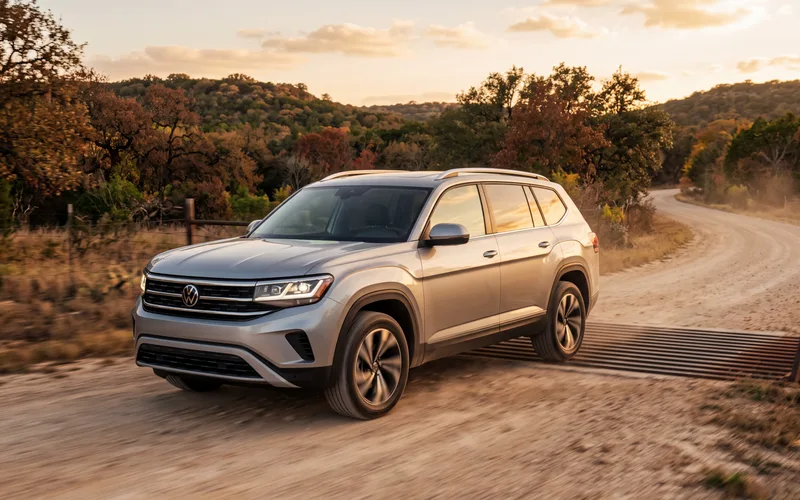 Volkswagen AtlasMid-Size SUVBetter at: Space and seats
Same platform, same engine and roughly the same money, but with a usable third row and 55.5 cu ft behind row two instead of 40.3 — the obvious first stop for anyone who doesn't specifically want the sloped roof.
Compare 2.63C+
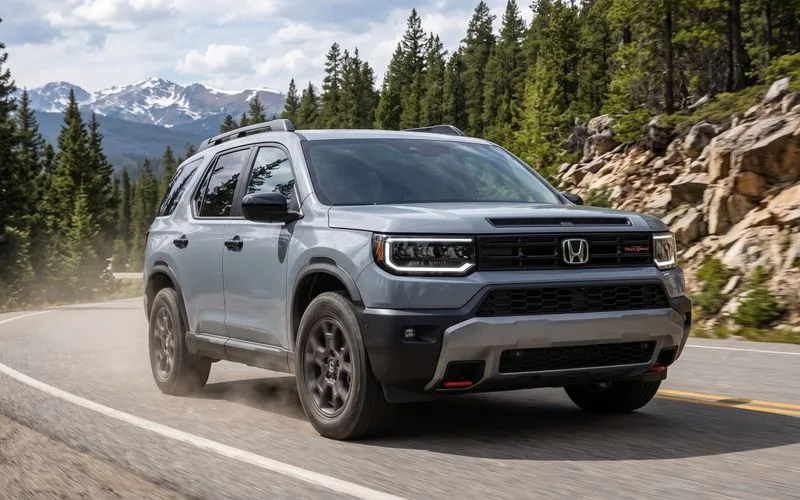 Honda PassportMid-Size SUVBetter at: Long-term ownership
Costs about $5,000 more up front but repays it with a V6, a much stronger reliability and resale record, and a 5-year/60,000-mile powertrain warranty.
Compare 2.79B-
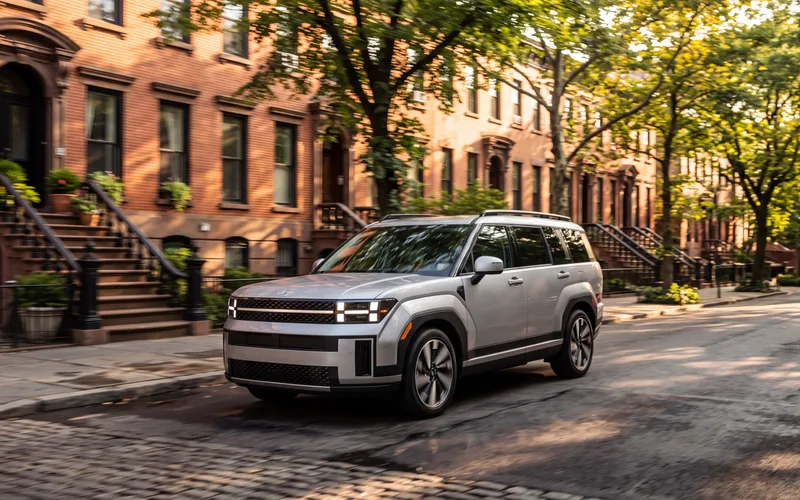 Hyundai Santa FeMid-Size SUVBetter at: Efficiency and warranty
Hybrid versions return 30-plus MPG against the VW's 22 combined and come with a 10-year/100,000-mile powertrain warranty, cutting the two biggest running-cost risks of the Cross Sport.
CompareHow it's evolved
7 scored model years · 2020–2026
Subject scores by year
Hover or tap a score to see what moved it versus the year before. A corner mark flags a big swing.
| Year | Performance | Efficiency | Safety | Space | Cost | Reliability | Tech | Use-case | Driving | Value |
|---|---|---|---|---|---|---|---|---|---|---|
| 2026 | 43 | 44 | 79 | 52 | 52 | 53 | 70 | 61 | 62 | 65 |
| 2025 | 45 | 33 | 78 | 52 | 50 | 52 | 69 | 60 | 62 | 63 |
| 2024 | 43 | 44 | 76 | 52 | 53 | 49 | 67 | 60 | 60 | 68 |
| 2023 | 44 | 38 | 64 | 51 | 55 | 53 | 59 | 57 | 60 | 61 |
| 2022 | 44 | 38 | 64 | 51 | 56 | 51 | 58 | 57 | 60 | 60 |
| 2021 | 44 | 38 | 65 | 51 | 57 | 50 | 53 | 56 | 58 | 62 |
| 2020 | 44 | 28 | 63 | 51 | 56 | 49 | 48 | 55 | 60 | 65 |
Compare two years
Best fit & conditions
Higher scores mean a better fit for that use case. Learn more about use-case fit →
Subject profile
Academic Probation · NHTSA safety recalls
Jul 22, 2026Back over prevention: softwareVolkswagen Group of America, Inc. (Volkswagen) is recalling 2024-2026 Atlas Cross Sport and Atlas vehicles. The vehicles may experience a low-voltage electrical event that affects display screen functions. As a result, the rearview camera image may fail to display as intended.
Defect
Volkswagen Group of America, Inc. (Volkswagen) is recalling 2024-2026 Atlas Cross Sport and Atlas vehicles. The vehicles may experience a low-voltage electrical event that affects display screen functions. As a result, the rearview camera image may fail to display as intended.
Risk
A rearview camera that fails to display an image can reduce the driverâs view behind the vehicle, increasing the risk of a crash.
Remedy
Dealers will update the rearview camera software, free of charge. Owner notification letters were mailed August 4, 2026. Owners may contact Volkswagen customer service at 1-800-893-5298. Volkswagen's number for this recall is 91TV. Vehicle Identification Numbers (VINs) involved in this recall became searchable on NHTSA.gov on July 28, 2026.
NHTSA campaign 26V473000 ↗Manufacturer no. 91TV57,851 vehicles potentially affected (all models in the campaign)Owners notified Aug 4, 2026Filed by Volkswagen Group of America, Inc.Filed as ATLAS CROSS SPORTDec 3, 2025Wheels: lugs/nuts/bolts/studsThe incorrect wheel bolts may have been installed during vehicle manufacturing.
Defect
Volkswagen Group of America, Inc. (Volkswagen) is recalling certain 2026 Atlas, Atlas Cross Sport, and ID.4 vehicles. The incorrect wheel bolts may have been installed during vehicle manufacturing.
Risk
Incorrect wheel bolts can allow a wheel to detach from the vehicle, increasing the risk of a crash.
Remedy
Owners are advised not to drive their vehicles until they have been repaired. Dealers will inspect and replace the wheel bolts as necessary, free of charge. Owner notification letters were mailed December 12, 2025. Owners may contact Volkswagen customer service at 1-800-893-5298. Volkswagen's number for this recall is 44BW. Vehicle Identification Numbers (VINs) involved in this recall became searchable on NHTSA.gov on December 5, 2025.
NHTSA campaign 25V835000 ↗Manufacturer no. 44BW27 vehicles potentially affected (all models in the campaign)Owners notified Dec 12, 2025Filed by Volkswagen Group of America, Inc.Filed as ATLAS CROSS SPORT
28 recalls on other model years of the Atlas Cross Sport (2020–2025)
Jun 30, 2025Service brakes · SuspensionCertain bolts on the chassis, brake system and/or suspension (such as bolts for certain cross member, engine mount, control arm, subframe, rear brake carrier, etc.) of affected vehicles may not have been correctly tightened during the manufacturing process.
Defect
Volkswagen Group of America, Inc. (Volkswagen) is recalling certain 2023-2025 Atlas, Atlas Cross Sport and 2023-2024 ID.4 vehicles. Certain bolts on the chassis, brake system and/or suspension (such as bolts for certain cross member, engine mount, control arm, subframe, rear brake carrier, etc.) of affected vehicles may not have been correctly tightened during the manufacturing process.
Risk
A loss of vehicle control increases the risk of a crash.
Remedy
Dealers will replace the bolts as necessary, free of charge. Owner notification letters were mailed July 25, 2025. Owners may contact Audi customer service at 1-800-253-2834. Volkswagen's number for this recall is 42HX.
NHTSA campaign 25V434000 ↗Manufacturer no. 42HX546 vehicles potentially affected (all models in the campaign)Owners notified Jul 25, 2025Filed by Volkswagen Group of America, Inc.Filed as ATLAS CROSS SPORTMay 21, 2025Back over prevention: sensing system: cameraA software error may cause the rearview camera image to become distorted when the vehicle is in reverse. As such, these vehicles fail to comply with the requirements of Federal Motor Vehicle Safety Standard number 111, "Rear Visibility."
Defect
Volkswagen Group of America, Inc. (Volkswagen) is recalling certain 2024-2025 Atlas Cross Sport and Atlas vehicles. A software error may cause the rearview camera image to become distorted when the vehicle is in reverse. As such, these vehicles fail to comply with the requirements of Federal Motor Vehicle Safety Standard number 111, "Rear Visibility."
Risk
A distorted rearview camera image can reduce the driver's view of what is behind the vehicle, increasing the risk of a crash.
Remedy
Dealers will update the camera control unit software, free of charge. Owner notification letters were mailed June 5, 2025. Owners may contact Volkswagen customer service at 1-800-893-5298. Volkswagen's number for this recall is 91SB.
NHTSA campaign 25V334000 ↗Manufacturer no. 91QE171,381 vehicles potentially affected (all models in the campaign)Owners notified Jun 5, 2025Filed by Volkswagen Group of America, Inc.Filed as ATLAS CROSS SPORTFeb 17, 2025EngineThe engine cover may have been improperly installed after vehicle service, allowing it to come loose and contact hot engine surfaces.
Defect
Volkswagen Group of America, Inc. (Volkswagen) is recalling certain 2024-2025 Atlas and Atlas Cross Sport vehicles. The engine cover may have been improperly installed after vehicle service, allowing it to come loose and contact hot engine surfaces.
Risk
A loose engine cover that contacts hot surfaces in the engine compartment can melt, increasing the risk of a fire.
Remedy
Dealers will remove the engine cover, free of charge. Owner notification letters were mailed March 7, 2025. Owners may contact Volkswagen customer service at 800-893-5298. Volkswagen's number for this recall is 10X5.
NHTSA campaign 25V100000 ↗Manufacturer no. 10X5177,493 vehicles potentially affected (all models in the campaign)Owners notified Mar 7, 2025Filed by Volkswagen Group of America, Inc.Filed as ATLAS CROSS SPORTFeb 12, 2025Power train: automatic transmissionThe transmission may have been manufactured incorrectly, which can result in a loss of drive power.
Defect
Volkswagen Group of America, Inc. (Volkswagen) is recalling certain 2025 Atlas and Atlas Cross Sport vehicles. The transmission may have been manufactured incorrectly, which can result in a loss of drive power.
Risk
A sudden loss of drive power can increase the risk of a crash.
Remedy
Dealers will replace the transmission, free of charge. Owner notification letters were mailed March 12, 2025. Owners may contact Volkswagen customer service at 1-800-893-5298. Volkswagen's number for this recall is 38CX.
NHTSA campaign 25V081000 ↗Manufacturer no. 38CX19 vehicles potentially affected (all models in the campaign)Owners notified Mar 12, 2025Filed by Volkswagen Group of America, Inc.Filed as ATLAS CROSS SPORTSep 27, 2024Service brakes, hydraulic: foundation components: master cylinderThe brake master cylinder may have been assembled with an incorrect secondary piston spring retainer, which can block the brake fluid port.
Defect
Volkswagen Group of America, Inc. (Volkswagen) is recalling certain 2024 Atlas and 2024 Atlas Cross Sport vehicles. The brake master cylinder may have been assembled with an incorrect secondary piston spring retainer, which can block the brake fluid port.
Risk
An obstructed brake fluid port can cause a loss of brake function, increasing the risk of a crash.
Remedy
Dealers will replace the brake master cylinder, free of charge. Owner notification letters were mailed November 21, 2024. Additionally, vehicles that were added to the population on November 21, 2024, their letters were mailed on December 2, 2024. Owners may contact Volkswagen Customer Relations at 1-800-893-5298. Volkswagen's number for this recall is 471F.
NHTSA campaign 24V723000 ↗Manufacturer no. 471F1,591 vehicles potentially affected (all models in the campaign)Owners notified Oct 21, 2024Filed by Volkswagen Group of America, Inc.Filed as ATLAS CROSS SPORTJun 27, 2024Back over prevention: softwareThe rearview camera image may be delayed or deactivated after shifting into reverse. As such, these vehicles fail to comply with the requirements of Federal Motor Vehicle Safety Standard number 111, "Rear Visibility."
Defect
Volkswagen Group of America, Inc. (VW) is recalling certain 2022-2024 Golf R, Golf GTI, 2024 Atlas, and 2024 Atlas Cross Sport vehicles. The rearview camera image may be delayed or deactivated after shifting into reverse. As such, these vehicles fail to comply with the requirements of Federal Motor Vehicle Safety Standard number 111, "Rear Visibility."
Risk
A rearview camera with a delayed or deactivated image reduces the driver's view of what is behind the vehicle, increasing the risk of injury or crash.
Remedy
Dealers will update the infotainment system software, free of charge. Owner notification letters were mailed July 15, 2024, and July 16, 2024. Owners may contact VW customer service at 1-800-893-5298. VW's number for this recall is 91US.
NHTSA campaign 24V480000 ↗Manufacturer no. 91US84,432 vehicles potentially affected (all models in the campaign)Owners notified Jul 15, 2024Filed by Volkswagen Group of America, Inc.Filed as ATLAS CROSS SPORTJun 20, 2024Air bags: sensor: occupant classification: front passengerThe passenger occupant detection system (PODS) may experience a fault in the wiring and deactivate the front passenger air bag when the seat is occupied.
Defect
Volkswagen Group of America, Inc. (Volkswagen) is recalling certain 2021-2024 Atlas and 2020-2024 Atlas Cross Sport vehicles. The passenger occupant detection system (PODS) may experience a fault in the wiring and deactivate the front passenger air bag when the seat is occupied.
Risk
A deactivated passenger air bag increases the risk of injury during a crash.
Remedy
Dealers will replace the PODS sensor mat and wiring harness, free of charge. Owner notification letters were mailed on September 30, 2024. Owner notification letters will be mailed in phases, on October 18, 2024, December 10, 2024, December 20, 2024, and January 17, 2025. Owners may contact Volkswagen's customer service at 1-800-893-5298. Volkswagen's number for this recall is 69PZ.
NHTSA campaign 24V464000 ↗Manufacturer no. 69PZ271,330 vehicles potentially affected (all models in the campaign)Owners notified Sep 30, 2024Filed by Volkswagen Group of America, Inc.Filed as ATLAS CROSS SPORTAug 23, 2023Engine and engine cooling: engine: hard parts internal/mechanicalThe engine connecting rod bearings may become damaged, which can result in engine failure.
Defect
Volkswagen Group of America, Inc. (Volkswagen) is recalling certain 2024 Atlas PA2 and Atlas Cross Sport PA vehicles. The engine connecting rod bearings may become damaged, which can result in engine failure.
Risk
A damaged engine can result in engine failure and a stall, increasing the risk of a crash. In addition, engine failure may cause an oil leak which can increase the risk of a fire.
Remedy
Dealers will inspect and, if necessary, replace the engine, free of charge. Owner notification letters were mailed September 28, 2023. Owners may contact Volkswagen's customer service at 1-800-893-5298. Volkswagen's number for this recall is 13i6.
NHTSA campaign 23V593000 ↗Manufacturer no. 13i62,018 vehicles potentially affected (all models in the campaign)Owners notified Sep 28, 2023Filed by Volkswagen Group of America, Inc.Filed as ATLAS CROSS SPORTMar 29, 2023Air bags: sensor: occupant classification: front passengerThe passenger occupant detection system (PODS) may experience a fault in the wiring and deactivate the front passenger air bag when the seat is occupied.
Defect
Volkswagen Group of America, Inc. (Volkswagen) is recalling certain 2018-2021 Atlas and 2020 Atlas Cross Sport vehicles. The passenger occupant detection system (PODS) may experience a fault in the wiring and deactivate the front passenger air bag when the seat is occupied.
Risk
A deactivated passenger air bag increases the risk of injury during a crash.
Remedy
Dealers will replace the PODS sensor mat and wiring harness, free of charge. Owner notification letters were mailed on March 22, 2024. Owners may contact Volkswagen's customer service at 1-800-893-5298. Volkswagen's number for this recall is 69FB.
NHTSA campaign 23V215000 ↗Manufacturer no. 69FB143,053 vehicles potentially affected (all models in the campaign)Owners notified Mar 22, 2024Filed by Volkswagen Group of America, Inc.Filed as ATLAS CROSS SPORTOct 31, 2022Tires: pressure monitoring and regulating systemsThe tire pressure monitoring system may not detect an air pressure loss in adequate time when deflating occurs among all four tires simultaneously. As such, these vehicles fail to comply with the requirements of Federal Motor Vehicle Safety Standard number 138, "Tire Pressure Monitoring Systems."
Defect
Volkswagen Group of America, Inc. (Volkswagen) is recalling certain 2019 Volkswagen Tiguan LWB, Golf Sportswagen A7, Golf Alltrack, Golf R GP, Audi Q3, Audi A3 Cabriolet, 2019-2020 Jetta NF, Jetta GLI, Golf GTI, Atlas, Golf A7, Audi A3, 2020-2021 Atlas Cross Sport, and 2021 Atlas FL vehicles. The tire pressure monitoring system may not detect an air pressure loss in adequate time when deflating occurs among all four tires simultaneously. As such, these vehicles fail to comply with the requirements of Federal Motor Vehicle Safety Standard number 138, "Tire Pressure Monitoring Systems."
Risk
An undetected sudden loss of pressure in all four tires increases the risk of a crash.
Remedy
Dealers will update the TPMS software, free of charge. Owner notification letters were mailed November 18, 2022. Owners may contact Volkswagen's customer service at 1-800-893-5298 or AudiÂs customer service at 1-800-253-2834. Volkswagen's numbers for this recall are (Audi) 45J7, and (VW) 45J6 and 45J8.
NHTSA campaign 22V815000 ↗Manufacturer no. AU:45J7,VW:45J6,45J8296,044 vehicles potentially affected (all models in the campaign)Owners notified Nov 18, 2022Filed by Volkswagen Group of America, Inc.Filed as ATLAS CROSS SPORTOct 26, 2022Suspension: critical fastenersThe driver-side rear trailing arm bolts may not have been tightened properly, allowing them to loosen and fall out.
Defect
Volkswagen Group of America, Inc. (Volkswagen) is recalling certain 2022 Volkswagen Atlas FL and 2022-2023 Atlas Cross Sport vehicles. The driver-side rear trailing arm bolts may not have been tightened properly, allowing them to loosen and fall out.
Risk
Unsecured bolts may cause the trailing arm to fracture, resulting in a sudden loss of vehicle control and increasing the risk of a crash.
Remedy
Dealers will replace the driver side rear trailing arm bolts, free of charge. Owner notification letters are expected to be mailed December 25, 2022. Owners may contact Volkswagen's customer service at 1-800-893-5298. Volkswagen's number for this recall is 42M2.
NHTSA campaign 22V807000 ↗Manufacturer no. 42M233 vehicles potentially affected (all models in the campaign)Owners notified Nov 22, 2022Filed by Volkswagen Group of America, Inc.Filed as ATLAS CROSS SPORTOct 7, 2022Engine and engine cooling: engine: hard parts internal/mechanicalThe engine connecting rod bearings may become damaged, which can result in engine failure.
Defect
Volkswagen Group of America, Inc. (Volkswagen) is recalling certain 2021-2023 Audi Q5 Sportback, Q5, 2022-2023 Volkswagen Atlas FL, and Atlas Cross Sport vehicles. The engine connecting rod bearings may become damaged, which can result in engine failure.
Risk
A damaged engine can result in engine failure and a stall, increasing the risk of a crash. If the engine failure causes an oil leak, it can increase the risk of a fire.
Remedy
Dealers will inspect and, if necessary, replace an affected engine, free of charge. Owner notification letters are expected to be mailed December 6, 2022. Owners may contact Volkswagen's customer service at 1-800-893-5298 and Audi's customer service at 1-800-253-2834. Volkswagen's numbers for this recall are 13i4 (VW) and 13i5 (Audi).
NHTSA campaign 22V753000 ↗Manufacturer no. VW: 13i4, Audi: 13i576,515 vehicles potentially affected (all models in the campaign)Owners notified Nov 8, 2022Filed by Volkswagen Group of America, Inc.Filed as ATLAS CROSS SPORTSep 26, 2022Service brakes, hydraulic: foundation components: hoses, lines/piping, and fittingsCertain brake lines may leak at the threaded connections.
Defect
Volkswagen Group of America, Inc. (Volkswagen) is recalling certain 2023 model year Atlas FL and Atlas Cross Sport vehicles. Certain brake lines may leak at the threaded connections.
Risk
A brake fluid leak may increase the distance required to stop, increasing the risk of a crash.
Remedy
Dealers will replace the affected brake lines, free of charge. Owner notification letters are expected to be mailed on November 23, 2022. Owners may contact Volkswagen's customer service at 1-800-893-5298. Volkswagen's number for this recall is 47T2.
NHTSA campaign 22V718000 ↗Manufacturer no. 47T2555 vehicles potentially affected (all models in the campaign)Owners notified Nov 22, 2022Filed by Volkswagen Group of America, Inc.Filed as ATLAS CROSS SPORTAug 31, 2022Trailer hitchesThe trailer hitch bolts may have been insufficiently tightened.
Defect
Volkswagen Group of America, Inc. (Volkswagen) is recalling certain 2022 Atlas and Atlas Cross Sport vehicles. The trailer hitch bolts may have been insufficiently tightened.
Risk
Loose bolts may fall out, causing the remaining bolts to break, which could lead to separation of the trailer hitch and trailer, increasing the risk of a crash.
Remedy
Dealers will tighten the trailer hitch bolts, free of charge. Owner notification letters are expected to be mailed October 28, 2022. Owners may contact Volkswagen's customer service at 1-800-893-5298. Volkswagen's number for this recall is 66N8.
NHTSA campaign 22V657000 ↗Manufacturer no. 66N83,184 vehicles potentially affected (all models in the campaign)Owners notified Sep 16, 2022Filed by Volkswagen Group of America, Inc.Filed as ATLAS CROSS SPORTJul 20, 2022Back over prevention: sensing system: camera · Equipment: electrical: infotainment: softwareThe manufacturing process of the eMMC memory module in the infotainment system may cause the rearview camera image not to display. As such, these vehicles fail to comply with the requirements of Federal Motor Vehicle Safety Standard number 111, "Rear Visibility."
Defect
Volkswagen Group of America, Inc. (Volkswagen) is recalling certain 2021 Golf GTI, Jetta GLI, Jetta NF, Arteon FL, Tiguan LWB, 2022 Taos, Jetta PA, Tiguan PA, 2021-2022 Atlas Cross Sport, and Atlas FL vehicles. The manufacturing process of the eMMC memory module in the infotainment system may cause the rearview camera image not to display. As such, these vehicles fail to comply with the requirements of Federal Motor Vehicle Safety Standard number 111, "Rear Visibility."
Risk
A rearview camera that does not display an image reduces the driver's rear view, increasing the risk of a crash.
Remedy
Dealers will update the infotainment software, free of charge. Owner notification letters are expected to be mailed September 16, 2022. Owners may contact Volkswagen's customer service at 1-800-893-5298. Volkswagen's number for this recall is 91DV.
NHTSA campaign 22V514000 ↗Manufacturer no. 91DV43,091 vehicles potentially affected (all models in the campaign)Owners notified Aug 2, 2022Filed by Volkswagen Group of America, Inc.Filed as ATLAS CROSS SPORTApr 13, 2022Fuel system, gasoline: fuel injection system: injectorsThe long fuel injectors may have been assembled without filters.
Defect
Volkswagen Group of America, Inc. (Volkswagen) is recalling certain 2021-2022 Atlas FL and Atlas Cross Sport vehicles. The long fuel injectors may have been assembled without filters.
Risk
Long fuel injectors with missing filters may leak fuel, increasing the risk of a fire.
Remedy
Dealers will replace the long fuel injectors, free of charge. Owner notification letters were mailed July 20, 2022. Owners may contact Volkswagen customer service at 1-800-893-5298. Volkswagen's number for this recall is 24iD.
NHTSA campaign 22V245000 ↗Manufacturer no. 24iD1,382 vehicles potentially affected (all models in the campaign)Owners notified Jul 20, 2022Filed by Volkswagen Group of America, Inc.Filed as ATLAS CROSS SPORTMar 28, 2022Air bags: side/windowThe door wiring harness electrical contacts may corrode, disrupting the electrical connection and delaying the deployment of the driver or passenger front side air bag during a side impact crash.
Defect
Volkswagen Group of America, Inc. (Volkswagen) is recalling certain 2019-2020 Atlas, 2020-2023 Atlas Cross Sport, and 2021-2023 Atlas FL vehicles. The door wiring harness electrical contacts may corrode, disrupting the electrical connection and delaying the deployment of the driver or passenger front side air bag during a side impact crash.
Risk
A delayed air bag deployment can increase the risk of injury.
Remedy
Dealers will secure and, as necessary, replace any the front door wiring harnesses showing a fault code, free of charge. Owner notification letters were mailed June 20, 2022. Owners may contact Volkswagen customer service at 1-800-893-5298. Volkswagen's number for this recall is 97GF.
NHTSA campaign 22V152000 ↗Manufacturer no. 97GF222,892 vehicles potentially affected (all models in the campaign)Owners notified Jun 22, 2022Filed by Volkswagen Group of America, Inc.Filed as ATLAS CROSS SPORTFeb 16, 2022Equipment: other: labelsThe reduced Gross Vehicle Weight Rating (GVWR) label, reflecting the additional weight of the side steps, was not installed. As such, these vehicles fail to comply with the requirements of Federal Motor Vehicle Safety Standard number 110, "Tire Selection and Rims."
Defect
Volkswagen Group of America, Inc. (Volkswagen) is recalling certain 2018-2021 Atlas and 2020-2021 Atlas Cross Sport vehicles equipped with accessory side steps. The reduced Gross Vehicle Weight Rating (GVWR) label, reflecting the additional weight of the side steps, was not installed. As such, these vehicles fail to comply with the requirements of Federal Motor Vehicle Safety Standard number 110, "Tire Selection and Rims."
Risk
Without the reduced GVWR label, the vehicle could be overloaded, leading to a loss of control and increasing the risk of a crash.
Remedy
Dealers will install the reduced GVWR label, free of charge. Owner notification letters were mailed March 31, 2022. Owners may contact Volkswagen customer service at 1-800-893-5298. Volkswagen's number for this recall is 09D9.
NHTSA campaign 22V086000 ↗Manufacturer no. 09D93,648 vehicles potentially affected (all models in the campaign)Owners notified Mar 31, 2022Filed by Volkswagen Group of America, Inc.Filed as ATLAS CROSS SPORTNov 17, 2021Air bags: air bag/restraint control module · Visibility: defroster/defogger/hvac systemThe air conditioning system drain tube could be blocked, causing water to leak inside the vehicle near the air bag control module.
Defect
Volkswagen Group of America, Inc. (Volkswagen) is recalling certain 2021 Atlas and 2020-2021 Atlas Cross Sport vehicles. The air conditioning system drain tube could be blocked, causing water to leak inside the vehicle near the air bag control module.
Risk
A water leak may damage the air bag control module, causing an inadvertent air bag deployment and increasing the risk of injury or a crash.
Remedy
Dealers will repair the drain tube and replace the air bag control module, as necessary, free of charge. Owner notification letters were mailed January 14, 2022. Owners may contact Volkswagen customer service at 1-800-893-5298. Volkswagen's number for this recall is 87H4.
NHTSA campaign 21V892000 ↗Manufacturer no. 87H454,429 vehicles potentially affected (all models in the campaign)Owners notified Jan 14, 2022Filed by Volkswagen Group of America, Inc.Filed as ATLAS CROSS SPORTOct 15, 2021Suspension: front: wheel bearing · Wheels: lugs/nuts/bolts/studsThe front wheel bearing bolts may have been incorrectly tightened.
Defect
Volkswagen Group of America, Inc. (Volkswagen) is recalling certain 2021 Atlas, Atlas Cross Sport, and Passat vehicles. The front wheel bearing bolts may have been incorrectly tightened.
Risk
The bolts may loosen and cause a loss of control, increasing the risk of a crash.
Remedy
Dealers will inspect the tightness of the wheel bearing bolts and replace the bolts, as necessary, free of charge. Owner notification letters were mailed November 2, 2021. Owners may contact Volkswagen customer service at 1-800-893-5298. Volkswagen's number for this recall is 40R7.
NHTSA campaign 21V812000 ↗Manufacturer no. 40R730 vehicles potentially affected (all models in the campaign)Owners notified Nov 2, 2021Filed by Volkswagen Group of America, Inc.Filed as ATLAS CROSS SPORTAug 6, 2021Electrical system: wiring: fuses and circuit breakers · Electrical system: wiring: relays/solenoidsDamaged relays may have been installed in the engine compartment fuse box, which could inadvertently activate the horn or engine starter.
Defect
Volkswagen Group of America, Inc. (Volkswagen) is recalling certain 2021 Atlas and Atlas Cross Sport vehicles. Damaged relays may have been installed in the engine compartment fuse box, which could inadvertently activate the horn or engine starter.
Risk
A horn or starter that remains activated for an extended period of time can overheat, increasing the risk of fire.
Remedy
Dealers will inspect and as necessary, replace the relays, free of charge. Owner notification letters were mailed August 27, 2021. Owners may contact Volkswagen customer service at 1-800-893-5298. Volkswagen's number for this recall is 97FR.
NHTSA campaign 21V616000 ↗Manufacturer no. 97FR33 vehicles potentially affected (all models in the campaign)Owners notified Aug 27, 2021Filed by Volkswagen Group of America, Inc.Filed as ATLAS CROSS SPORTMar 3, 2021Wheels: lugs/nuts/bolts/studs · Wheels: rimThe lug bolt holes on the wheels may have been machined incorrectly, preventing the wheel bolt from sufficiently attaching to the wheel bearing hub.
Defect
Volkswagen Group of America, Inc. (Volkswagen) is recalling certain 2021 Atlas and Atlas Cross Sport vehicles. The lug bolt holes on the wheels may have been machined incorrectly, preventing the wheel bolt from sufficiently attaching to the wheel bearing hub.
Risk
An insufficiently attached wheel may separate from the vehicle, increasing the risk of a crash.
Remedy
Volkswagen will notify owners, and dealers will inspect all four wheels, and as necessary, replace the wheels, lug bolts ,and wheel bearings, free of charge. The recall began March 4, 2021. Owners may contact Volkswagen customer service at 1-800-893-5298. Volkswagen's number for this recall is 44Q9.
NHTSA campaign 21V132000 ↗Manufacturer no. 44Q9128 vehicles potentially affected (all models in the campaign)Owners notified Mar 12, 2021Filed by Volkswagen Group of America, Inc.Filed as ATLAS CROSS SPORTJan 27, 2021SteeringThe front steering knuckle may fracture in the area of the strut mounting.
Defect
Volkswagen Group of America, Inc. (Volkswagen) is recalling certain 2021 Atlas and 2020-2021 Atlas Cross Sport vehicles. The front steering knuckle may fracture in the area of the strut mounting.
Risk
A fractured steering knuckle can cause a loss of vehicle control, increasing the risk of a crash.
Remedy
Volkswagen will notify owners, and dealers will inspect and, as necessary, replace one or both steering knuckles, free of charge. The recall began February 16, 2021. Owners may contact Volkswagen customer service at 1-800-893-5298. Volkswagen's number for this recall is 40Q7.
NHTSA campaign 21V026000 ↗Manufacturer no. 40Q710,303 vehicles potentially affected (all models in the campaign)Owners notified Feb 16, 2021Filed by Volkswagen Group of America, Inc.Filed as ATLAS CROSS SPORTNov 18, 2020Back over prevention: sensing system: cameraThe rear view camera could malfunction during an ignition cycle, leading to a black screen or infotainment system freeze. As such, these vehicles fail to comply with the requirements of Federal Motor Vehicle Safety Standard number 111, "Rear Visibility."
Defect
Volkswagen Group of America, Inc. (Volkswagen) is recalling certain 2021 Atlas Cross Sport, Tiguan LWB, Jetta NF, Jetta GLI, Golf GTI, Atlas FL and Arteon vehicles. The rear view camera could malfunction during an ignition cycle, leading to a black screen or infotainment system freeze. As such, these vehicles fail to comply with the requirements of Federal Motor Vehicle Safety Standard number 111, "Rear Visibility."
Risk
A black or frozen rear view image reduces the driver's visibility when reversing, increasing the risk of a crash.
Remedy
Volkswagen will notify owners, and dealers will update the infotainment system software, free of charge. The recall began December 11, 2020. Owners may contact Volkswagen customer service at 1-800-893-5298. Volkswagen's number for this recall is 91BB/91BC.
NHTSA campaign 20V716000 ↗Manufacturer no. 91BB / 91BC32,048 vehicles potentially affected (all models in the campaign)Owners notified Dec 11, 2020Filed by Volkswagen Group of America, Inc.Filed as ATLAS CROSS SPORTNov 17, 2020SteeringOne or both steering knuckles may have been damaged during production.
Defect
Volkswagen Group of America, Inc. (Volkswagen) is recalling certain 2021 Atlas and 2020-2021 Atlas Cross Sport vehicles. One or both steering knuckles may have been damaged during production.
Risk
A damaged steering knuckle can fail, causing a loss of steering, thereby increasing the risk of a crash.
Remedy
Volkswagen has notified owners, and dealers will inspect and, as necessary, replace the steering knuckle, free of charge. The recall began November 19, 2020. Owners may contact Volkswagen customer service at 1-800-893-5298. Volkswagen's number for this recall is 40Q6. Note: Owners are advised to DO NOT DRIVE the vehicle until the vehicle has been inspected and repaired if necessary.
NHTSA campaign 20V712000 ↗Manufacturer no. 40Q6776 vehicles potentially affected (all models in the campaign)Owners notified Nov 19, 2020Filed by Volkswagen Group of America, Inc.Filed as ATLAS CROSS SPORTNov 13, 2020Tires: sidewallThe tires may have been over cured.
Defect
Volkswagen Group of America, Inc. (Volkswagen) is recalling certain 2020-2021 Atlas Cross Sport and 2021 Atlas vehicles equipped with Continental Cross Contact LX Sport tires, size 255/50 R 20 105 T. The tires may have been over cured.
Risk
Over cured tires can result in a sidewall break causing a sudden loss of air pressure or the tread separating from the tire. Both conditions increase the risk of a crash.
Remedy
Volkswagen will notify owners, and dealers will inspect DOT date code and mold number on the vehicle's tires to see if they are affected, replacing them as necessary, free of charge. The recall began November 30, 2020. Owners may contact Volkswagen customer service at 1-800-893-5298. Volkswagen's number for this recall is 44Q5.
NHTSA campaign 20V702000 ↗Manufacturer no. 44Q5760 vehicles potentially affected (all models in the campaign)Owners notified Nov 30, 2020Filed by Volkswagen Group of America, Inc.Filed as ATLAS CROSS SPORTAug 26, 2020SeatsParts of the front seat frame and backrest adjuster may not have been welded properly.
Defect
Volkswagen Group of America, Inc. (Volkswagen ) is recalling certain 2020 Volkswagen Atlas Cross Sport, Jetta, Jetta GLI and Tiguan and Audi Q5 and SQ5 and 2021 Volkswagen Atlas vehicles. Parts of the front seat frame and backrest adjuster may not have been welded properly.
Risk
In the event of a rear-end crash, the backrest adjustment could break, possibly reducing the amount of occupant restraint, thus increasing risk of injury.
Remedy
Volkswagen will notify owners, and dealers will inspect the front seats, and, as necessary, replace the seatback frames, free of charge. The recall began September 11, 2020. Volkswagen owners may contact their customer service at 1-888-241-2289. Audi owners may contact their customer service at 1-800-893-5298. Volkswagen's numbers for this recall are 72L1, 72K8, and 72K9.
NHTSA campaign 20V505000 ↗Manufacturer no. 72L1, 72K8, 72K95,376 vehicles potentially affected (all models in the campaign)Owners notified Sep 11, 2020Filed by Volkswagen Group of America, Inc.Filed as ATLAS CROSS SPORTAug 26, 2020Exterior lighting: headlightsThe driver's side headlight may have been aimed too low during production. As such, these vehicles fail to comply with the requirements of Federal Motor Vehicle Safety Standard number 108, "Lamps, Reflective Devices, and Associated Equipment."
Defect
Volkswagen Group of America, Inc. (Volkswagen) is recalling certain 2020 Atlas Cross Sports and 2021 Atlas vehicles. The driver's side headlight may have been aimed too low during production. As such, these vehicles fail to comply with the requirements of Federal Motor Vehicle Safety Standard number 108, "Lamps, Reflective Devices, and Associated Equipment."
Risk
A headlight aimed incorrectly aimed reduces the driver's visibility, increasing the risk of a crash.
Remedy
Volkswagen will notify owners, and dealers will adjust the driver's side headlight, free of charge. The recall began September 9, 2020. Owners may contact Volkswagen customer service at 1-800-893-5298. Volkswagen's number for this recall is 94N7.
NHTSA campaign 20V504000 ↗Manufacturer no. 94N711 vehicles potentially affected (all models in the campaign)Owners notified Sep 9, 2020Filed by Volkswagen Group of America, Inc.Filed as ATLAS CROSS SPORT
Source: NHTSA Office of Defects Investigation recall database, model years 2020–2026. Recalls are listed by model year as the manufacturer filed them; whether a specific car is affected depends on its VIN — check a VIN at nhtsa.gov ↗. NHTSA model names matched to this page: ATLAS CROSS SPORT.
Detailed scoring by subject
1Performance & PowertrainThe Atlas Cross Sport's lowest-graded category.0.86F
2026 is a carry-over of the 2024-refresh first-generation Cross Sport: the VR6 was dropped after 2023 and the turbo 2.0L EA888 at 269 hp is the sole engine on all seven trims, with no higher-output option anywhere in the range.
Peak torque of 273 lb-ft arrives at just 1,600 rpm, giving strong low-end pull in everyday driving even though the absolute figure trails the V6 mid-size crossovers it competes against.
Car and Driver instrumented the post-refresh 269 hp Cross Sport at 7.7 seconds in heaviest SEL Premium R-Line 4Motion form; the volume SE w/Technology trim is a few hundred pounds lighter, so roughly 7.6 s is representative — mid-pack pace for a mid-size crossover.
The low, flat torque plateau makes the 2.0T feel willing in normal driving and reviewers note minimal lag off the line, but the four-cylinder turns audibly coarse and strained under hard acceleration in a ~4,400 lb body — the recurring complaint since the VR6 left the lineup.
The Hyundai-sourced 8-speed torque-converter automatic (no DSG here) shifts smoothly and reacts quickly enough that reviewers credit it with the engine's sprightly feel; documented torque-converter shudder and rough low-speed shifting on earlier examples of this transmission keep it out of the top band.
Rated at 5,000 lbs properly equipped — matching the three-row Atlas and the mainstream mid-size benchmark, and well ahead of the 3,500 lb two-row crossovers the Cross Sport is cross-shopped against.
4Motion with Active Control is optional on the two SE trims and standard from SEL upward, so most of the range is AWD — but it is a conventional on-demand system with drive modes only, no low range, no locking differential and no torque-vectoring rear unit.
Bottom band: a style-led coupe-roof crossover with roughly 6.3 inches of ground clearance — lower than the three-row Atlas — unibody construction, road-biased tires, no skid plates, no low range and no locking differential. The Offroad drive mode remaps throttle and traction control only, and unlike the Atlas there is no Peak Edition trim in the Cross Sport range.
Bottom band — one engine, one transmission, take it or leave it. The 269 hp 2.0T is the only powertrain on every 2026 trim, with no hybrid, PHEV or EV variant, a real gap against mid-size rivals that nearly all offer at least one electrified choice.
2Efficiency & RangeOne of the Atlas Cross Sport's weakest categories.0.94F
The 2026 Atlas Cross Sport carries the single 2.0L TSI EA888 evo4 turbo-four (269 hp / 273 lb-ft) with the Hyundai-sourced 8-speed automatic that became the only powertrain in the MY2024 facelift; EPA rates it 23 MPG combined FWD and 22 MPG combined with 4Motion. The lower roof and raked tailgate buy it exactly 1 MPG combined over the three-row Atlas (21 MPG 4Motion).
City economy is the weakest figure on the label — a ~4,500 lb two-row crossover on a boosted 2.0L returns 20 MPG city regardless of drivetrain, which trails the naturally-aspirated V6 Honda Passport only slightly and sits well behind hybrid mid-sizers. Notably it is 1 MPG better in town than the heavier three-row Atlas (19 MPG 4Motion).
The tall 8th gear and small-displacement turbo give a respectable-for-class 26 MPG highway with 4Motion, 27 with FWD — the coupe-ish roofline's aero advantage over the boxy Atlas shows up here as a 1 MPG gain. Still short of the Santa Fe and Grand Highlander hybrids.
An 18.6-gallon tank at 22 MPG combined gives roughly 409 miles of AWD cruising range — comfortably mid-pack for a two-row mid-size SUV and about 18 miles better than the three-row Atlas, though a hybrid rival like the Santa Fe clears 500.
At 22 MPG combined the Cross Sport costs about $100/yr less to fuel than the three-row Atlas and roughly $150/yr less than the Explorer AWD, but it is several hundred dollars a year worse than a hybrid two-row such as the Santa Fe Hybrid. The figure is derived rather than read off a live EPA label, hence MEDIUM.
The Cross Sport runs on regular 87-octane and is EPA-rated on it, but VW recommends 91-octane premium to reach the quoted 269 hp / 273 lb-ft — a real if optional running cost that keeps it in the 'premium recommended, not required' band, below straight-regular rivals like the Explorer (92) and Telluride (86). Matches the identical-engined three-row Atlas at 72.
3SafetyThe Atlas Cross Sport's best-graded category.3.35B+
The Atlas Cross Sport carries NHTSA's top 5-star overall rating; the 2026 car is an unchanged carry-over of the 2024-refreshed first generation, so the 2025 test result applies (NHTSA has not yet published a separate 2026 entry).
The 2026 Atlas Cross Sport is a 2025 IIHS TOP SAFETY PICK+ with Good ratings in all three crashworthiness tests that matter under current criteria — small overlap front, updated moderate overlap front, and updated side. Held just short of the top of the band because the front crash prevention (pedestrian) result is only Acceptable, not Good.
IQ.DRIVE is standard on every 2026 Atlas Cross Sport trim including the base SE, bundling Front Assist AEB with pedestrian/cyclist monitoring, Active Blind Spot Monitor, Rear Traffic Alert, adaptive cruise with stop-and-go, Lane Assist and Travel Assist. Nothing in the core five is trim-locked, which is the top of this band.
The standard front crash prevention system clears the TSP+ bar but only at Acceptable in the IIHS updated pedestrian test, which folds in nighttime scenarios — competent rather than class-leading. Solid daytime behavior with weaker night/pedestrian margins puts it in the upper half of the middle band.
Active Side Assist is standard on every trim and intervenes with steering correction rather than just warning, and Rear Traffic Alert plus Exit Warning (rear-occupant safe-exit) are standard as well. Falls short of the very top only because trailer-aware coverage isn't offered on a 5,000-lb-rated two-row crossover.
Lane Assist and Travel Assist lane centering are standard and functional, but reviewers consistently describe VW's centering as wandery within the lane and the lane-keep intervention as aggressive, tugging the wheel when the driver doesn't want it. That is mid-band behavior, not the confident centering the top band requires.
Full-speed-range ACC with stop-and-go is standard and pairs with Travel Assist for hands-on Level 2 highway driving, which reviewers rate as a good freeway companion. Marked down for known rough edges — notably clumsy responses when another vehicle cuts into the gap ahead.
No hands-free highway system is offered at any trim. Travel Assist is explicitly a hands-on system requiring continuous steering-wheel contact, so this sits in the bottom band alongside rivals without a BlueCruise/Super Cruise equivalent.
The LED Adaptive Front-lighting System with Light Assist auto high beams is standard on every trim from the SE up and earns IIHS's top Good rating — the award requires Acceptable-or-better headlights on all trims, and this one clears it with Good everywhere.
The coupe-style roofline is the whole point of the Cross Sport and it costs rearward vision: a shallower rear window than the boxy Atlas and thick rear pillars. Large mirrors and a standard rearview camera help, but the 360-degree Area View camera that would compensate is reserved for the top trim, leaving the volume trims with average-at-best sightlines.
IIHS rates the Atlas Cross Sport's LATCH hardware Marginal — the lower anchors sit too deep in the seat bight and take too much force to attach. The wide rear doors and generous second-row space make the seats themselves easy to live with, but the anchors are genuinely difficult, which is the bottom band's definition.
4Space & ComfortGrades below the middle of the scale.1.49D
The Atlas Cross Sport is the two-row variant of the Atlas — it shares the 117.3-in wheelbase but trades the third row for a lower, faster roofline, so every trim seats five.
Published 2026 figure for the volume SE with Technology trim, on which the panoramic sunroof is a $1,200 option rather than standard equipment; sunroof-equipped trims lose roughly an inch.
Carried unchanged from the three-row Atlas front structure; mid-pack for a mid-size SUV, where 43+ in is common.
The sloped coupe-style roofline costs about an inch of second-row headroom versus the boxy Atlas, leaving it adequate but not generous for six-footers in back.
Standout figure and the Cross Sport's best space attribute — it keeps the full three-row Atlas wheelbase but devotes all of it to two rows, so second-row legroom is near the top of the mid-size class.
There is no third row — the Cross Sport exists specifically as the two-row Atlas, so buyers needing seven or eight seats must step to the standard Atlas. Scored in the low band per the no-third-row rule rather than omitted.
Roomy in absolute terms for a five-seater, but the framework's SUV band measures behind-second-row space against three-row SUVs with the third row folded, where 55–80 cu ft is routine — the chopped roofline also costs usable height versus the standard Atlas.
Mid-pack maximum capacity — competitive with two-row rivals like the Murano and Blazer, but roughly 20 cu ft short of the three-row Atlas's 96.8 cu ft.
Solid, conventional family-SUV storage — a deep center bin, large door bottle holders, and a cupholder count in the double digits — plus a 115V household outlet and 45W USB-C ports from SE with Technology up, but no standout innovation like an underfloor frunk or fold-flat console.
Broad, supportive front chairs with an eight-way power driver's seat plus heating and ventilation standard from the base SE, and the class-leading 40.4 in of rear legroom makes the second row genuinely comfortable for adults on long trips; it stops short of the plushest mid-size SUVs on cushion depth and lower-trim adjustability.
Composed and settled at highway speed with good absorption of larger bumps, but tuned firm, and the 20-inch wheels standard from SE with Technology (21s on SEL Premium R-Line) introduce thumping over pavement seams and a brittle edge on broken surfaces.
Genuinely split verdicts: the 2024 refresh added sound insulation and retuned engine acoustics, and some testers find wind and road noise below the segment average, while others single out highway road and tire roar as a real weakness. Averages out to mid-pack.
Unusually generous at the bottom of the range — heated AND ventilated front seats plus a heated steering wheel are standard on the base SE, with remote start and a hands-free power liftgate from SE with Technology, and three-zone Climatronic on upper trims. Only the standard-vs-optional split on three-zone climate and the panoramic roof keeps it out of the top band.
5Cost of OwnershipOne of the Atlas Cross Sport's weakest categories.1.47D
2026 is the runout year for the first-generation Cross Sport (the second-generation car was confirmed for an August 10, 2026 reveal), so the lineup is a carry-over: SE FWD is the entry trim with the 269 hp 2.0T and 8-speed automatic. Undercuts the three-row Atlas by roughly $700 while pricing above the mainstream two-row midsize norm.
SE w/Technology is the volume configuration — it adds 18-inch wheels, adaptive cruise, heated front seats, leatherette, wireless charging, the 12-inch touchscreen and a hands-free power liftgate — and 4MOTION is a $1,900 option most Snowbelt buyers take. FWD SE w/Technology is $44,195 if AWD is skipped.
Published estimates for this nameplate span a wide range, so this is a center-weighted figure rather than any single source. Volkswagen parts and dealer labor run above Japanese and Korean mainstream rivals, and the turbocharged EA888 four adds wear items (water pump, timing-chain tensioner, carbon service) that push out-of-warranty years up — but the Cross Sport is mechanically identical to the three-row Atlas and should not cost meaningfully more or less to keep.
The weakest line in the category. The Cross Sport holds value marginally better than the three-row Atlas but still depreciates around half its value in five years, and 2026 being the runout year ahead of a redesigned second generation means heavy incentives on the way out — which depresses the residual base further than the raw projections suggest.
Volkswagen's New Vehicle Limited Warranty has been 4 yr / 50,000 mi across the US line since MY2021, when the 6 yr / 72,000 mi People First Warranty was retired. Better than the 3/36 from Honda, Toyota, Ford, Subaru and GM, but short of Hyundai and Kia's 5/60.
Volkswagen does not extend powertrain coverage beyond the bumper-to-bumper term — engine, transmission and drive axles are covered only for the same 4 yr / 50,000 mi. That is the shortest powertrain coverage in the class, against 5/60 from Honda, Toyota, Ford and GM and 10/100 from Hyundai and Kia, and it matters on a turbocharged four hauling a ~4,400 lb SUV.
VW Carefree Coverage bundles the first two scheduled services (2 yr / 20,000 mi, at the 10,000- and 20,000-mile intervals) with 3 yr / 36,000 mi roadside assistance and a Car-Net connected-services trial. Real value, but the 20,000-mile cap is tight and nothing extends past it.
$46,095 volume-trim price minus its estimated resale value after 5 years (49% retained, or about $22,587) leaves about $23,508 in depreciation. Add the projected $5,600 in 5-year maintenance and repairs, and owning this vehicle for 5 years costs about $29,108 in total.
6Reliability & QualityGrades below the middle of the scale.1.52D
Consumer Reports predicts only about-average reliability for the 2026 Atlas Cross Sport, and that prediction leans heavily on Volkswagen brand scores that are currently the worst in the industry. Owner feedback repeatedly names reliability as the model's weakest attribute even while praising its styling and comfort.
Volkswagen finished dead last in the J.D. Power 2026 Vehicle Dependability Study at 301 PP100 — its second consecutive last-place finish, and worse than the 285 PP100 it posted a year earlier. It also sits second-from-bottom in the 2026 Initial Quality Study, ahead of only Infiniti, with infotainment and control-interface complaints the recurring driver.
The 2026 Atlas Cross Sport already carries two NHTSA recalls in its first months on sale — a do-not-drive wheel-bolt campaign and a rearview-camera software failure spanning 2024–2026 build — on top of a 2025 transmission-manufacturing recall on the same platform. Volumes are modest and remedies are straightforward, so the pattern reads as typical-to-elevated post-refresh activity rather than a systemic defect.
The 269-hp turbo 2.0-liter is a late-generation EA888, a family with fifteen years of service and a 200k-mile-plus reputation when maintained, though direct injection still brings intake carbon buildup as a known wear item. The pairing is less proven: the VR6 was dropped in the 2024 refresh and the Hyundai-sourced 8-speed automatic that replaced its gearbox has only two years of US fleet history, and drew a small manufacturing-defect recall in 2025.
The post-refresh cabin presents above its $38,300 base price — standard perforated V-Tex leatherette, tri-zone climate, heated and ventilated front seats, and a broadly soft-touch dash that reviewers describe as more premium than the badge implies. What holds it back is switchgear: the capacitive climate pads and sliders below the 12-inch screen feel cheap in use and are unlit at night, which undercuts the otherwise upmarket impression.
Assembly quality out of Chattanooga is generally solid, with panel fit and finish drawing consistent praise in owner reviews and no widespread rattle or misalignment pattern reported. The score is pulled down by brand-level initial-quality data: Volkswagen ranks second-to-last in the 2026 IQS, and the wheel-bolt recall is itself a build-process failure on 2026 units.
Roughly 600–630 US Volkswagen dealers give adequate national coverage but a noticeably thinner footprint than Toyota, Honda or the domestics, which shows up as longer drives in rural markets. The 4-year/50,000-mile bumper-to-bumper warranty is better than the mainstream 3/36 norm and partly offsets a service reputation that runs mid-pack at best given the brand's dependability standing.
Running costs land near the midsize-SUV norm rather than below it — CarEdge puts 10-year maintenance and repair at about $8,411, roughly $100 better than the SUV average, with a 23.6% chance of a major repair. The EA888 has deep aftermarket and independent-shop support, but German componentry and the newer Hyundai-sourced transmission still mean pricier parts and more dealer-dependent work than a Toyota or Honda equivalent.
7Technology & InfotainmentOne of the Atlas Cross Sport's strongest categories.2.77B-
The 2026 Atlas Cross Sport is the final year of the first-generation (CA1) two-row car with the 2024 facelift hardware, and the 12.0-inch floating touchscreen is standard on all five trims rather than an upgrade. Standard-fleet-wide is the right framing, but 12.0 inches is only mid-pack in a mid-size class where Traverse ships 17.7 and Acadia 15.
The MIB3 head unit itself is quick and legible and the menu tree is sensible, but the Cross Sport routes temperature, fan and volume through capacitive touch sliders under the screen plus haptic pads on the steering wheel, and that is the single most consistent complaint in 2026 reviews — Consumer Reports calls the sliders more tedious than a knob, Edmunds calls the touch controls a driving distraction. That is squarely the middle band and below knob-equipped Highlander (65.1 category) and well below Traverse and Acadia.
Wireless App-Connect — wireless Apple CarPlay and wireless Android Auto — is standard on every 2026 Atlas Cross Sport trim including the base SE, with no navigation-package or top-trim gate, and it pairs with standard 15W wireless charging so the phone never needs a cable. Top band, and one of the Cross Sport's clearest tech wins.
The Atlas Cross Sport is one of the models receiving VW's IDA assistant with Cerence Chat Pro/ChatGPT for 2026, which lifts voice from fixed-phrase commands toward genuine natural language — but it rides on a Plus Speech with AI subscription rather than being included, and embedded Discover Pro navigation starts at SEL, above the volume SE with Technology. Better than the command-only middle of the class, short of the top band because both halves are gated.
The base system is a six-speaker setup — thin for a premium-priced mid-size SUV — and the 12-speaker, 400-watt Harman Kardon upgrade is confined to the single top SEL Premium R-Line trim rather than being reachable from the volume grade. The Harman Kardon itself is clean and well balanced but not a class benchmark, so this lands in the upper middle band.
Digital Cockpit Pro — a fully digital, reconfigurable 10.25-inch driver display with up to four view layouts including full-screen map — is standard on every trim with no analog base version, which is the top band's core requirement. It sits a little under Telluride and Traverse only because the panel is physically smaller than those rivals' 12.3- and 11-inch units.
VW does run a real OTA program — model year 2020 and newer vehicles are eligible for over-the-air software updates delivered through the myVW app — so the Cross Sport is not dealer-only for head-unit and map fixes. But the published scope is infotainment and system software rather than the whole-vehicle, feature-adding layer GM ships on Traverse and Acadia, which puts it in the middle band.
myVW covers the core set — remote start (where equipped), remote lock/unlock, last parked location, vehicle status and service history — and Car-Net Safe & Secure is free for five years on MY2026, but the remote-control functions sit behind myVW+ activation, there is no phone-as-key on this platform, and app reliability draws more owner complaints than the Kia and Chevrolet equivalents. Solidly middle band.
Device power is a genuine strength and the strongest single item here: four USB-C ports standard (six available) with up to 45-watt fast charging — laptop-grade, not the usual 15W trickle — a 15-watt wireless charging pad standard on every trim including the base SE, and a household-style 115V outlet from SE with Technology up. That combination of abundance, speed and an AC outlet is the top band.
Push-button start is standard across the range and the volume SE with Technology adds key-fob remote start plus the hands-free Easy Open/Close power liftgate, so the practical keyless package is complete from the volume trim up. It stays out of the top band because full KESSY proximity entry is a higher-trim item rather than standard on the base SE, and VW offers no phone-as-key on this platform.
Rear camera is standard and Park Distance Control front/rear sensors arrive with the volume SE with Technology, but the Area View 360-degree camera and semi-automated Park Assist stay at the top of the range — the textbook 'rear camera plus sensors standard, surround view on top trims' middle band. That trails Telluride and Traverse, where 360 views spread much further down the lineup.
A head-up display is fitted from the SEL trim upward — added to the Atlas family with the 2024 refresh and carried into 2026 — so it is available but sits one rung above the volume SE with Technology buyer. Middle band 'HUD limited to upper trims', which still beats the several mid-size rivals that do not offer one at all.
8Use-Case FitMid-pack among this car's ten categories.2.09C
Class-leading 40.4 in of rear legroom, very large rear door openings and a wide 40.3 cu ft load bay make daily kid-and-stroller logistics easy, but the IIHS rates the LATCH hardware Marginal and the two-row layout caps it at two lower-anchor positions.
Top-tier credentials with the whole ADAS suite standard on the $39,775 base SE — exactly the trim families actually buy — held back only by an Acceptable (not Good) pedestrian AEB result and the Marginal LATCH hardware.
Generous second-row space, rear vents, manual side sunshades and up to six 45W USB-C ports cover a long trip well, and 40.3 cu ft of luggage room survives with all five seats occupied; heated rear seats and the household outlet are trim-gated and there is no rear entertainment provision.
Composed low-speed manners, torque from 1,600 rpm and standard stop-and-go adaptive cruise with Travel Assist make it an easy commuter, but the touch-sensitive temperature and volume sliders, an over-eager lane-keep and reported low-speed driveline shudder add daily friction.
At 22 MPG combined with 4Motion this is one of the thirstiest ways to commute in the two-row mid-size class in 2026, where hybrid rivals return 30-plus, and above-average insurance and VW-brand service costs compound it per mile.
A 195.6-inch, 78.3-inch-wide body with a 40.0 ft turning circle is a genuine handful in tight urban parking, and the coupe-ish roofline shrinks the rear window while the base SE goes without parking sensors.
A properly equipped 5,000 lb tow rating matches the best two-row mid-size crossovers and 77.6 cu ft of flat load space swallows real materials, but this is a unibody wagon with no bed, no marketed payload headroom and only a 269 hp four to pull with.
The EA888 2.0T is a high-volume, well-understood engine and standard V-Tex leatherette wipes clean, but Volkswagen ranks last in dependability and near-last in initial quality, there is no fleet or work-duty track record, and a 4 yr/50,000 mi powertrain warranty gives hard users little cover.
Standard roof rails on every trim, a factory hitch, a 115-volt household outlet, 45W USB-C ports and wipe-down leatherette cover light trade use, but there is no bed, no meaningful onboard power, and no work-focused upfit ecosystem behind it.
Stable, comfortable highway manners with adaptive cruise and Travel Assist standard on every trim make it a competent tourer, but ~409 miles between fills, 20-inch tires that thump over pavement seams and a coarse-sounding four under load keep it out of the top band.
4Motion with Snow and Offroad drive modes, a 5,000 lb tow rating for a small boat or camper and standard roof rails cover gravel-road and toy-hauling duty, but 6.3 inches of ground clearance is low even by crossover standards, there is no off-road trim or underbody protection, and AWD is optional rather than standard on the cheaper trims.
40.3 cu ft with the seats up and 77.6 cu ft folded is a lot of usable, squared-off space for a two-row, and roof rails plus an available factory hitch extend it further; the plain 60/40 split with no pass-through and the sloping tailgate limit tall or long items versus the three-row Atlas.
9Driving ExperienceMid-pack among this car's ten categories.2.18C
Same MQB chassis as the three-row Atlas but roughly 200 lb lighter with a lower roof and a lower center of gravity, and reviewers consistently say it drives smaller than it is — body control is decent and grip is respectable, though it still leans and never rewards being hurried. A clear step above the Atlas (66 here) without reaching Mazda CX-70 territory.
VW's variable-ratio electromechanical rack is accurate and easy to place, and the lighter nose makes it feel a touch more responsive than in the Atlas — but it is light to the point of being disconnected at low speed and returns almost no feedback once loaded up.
13.4-in vented front and 12.2-in solid rear discs stop a ~4,340-lb crossover from 70 mph in about 175 ft — a slightly better-than-average result for a mid-size SUV — but the pedal has long, soft initial travel that undercuts confidence in a hard stop.
The 269-hp 2.0T with the 8-speed automatic shifts cleanly and pulls well once on boost — 0–60 in about 7.5 seconds, better than the segment average — but there is real lag off the line and the auto stop/start is the standing complaint, restarting roughly enough that the car surges as you come off the brake. Marginally better here than in the heavier Atlas.
Cruising refinement is a modest strength — cabin noise rates a bit above the mid-size average — but hauling a two-ton crossover on four cylinders means the engine is frequently working, and it sounds coarser and thrummier under load than the V6 rivals it replaced and competes with.
Despite being a foot and a half shorter than the Atlas, the Cross Sport shares its 117.3-in wheelbase and turns no tighter — 40.5 ft curb-to-curb is near the bottom of the mid-size SUV band and is felt in parking structures and three-point turns.
Front seats are supportive with a commanding, well-adjustable driving position, but two things pull it down: the 2024 refresh's capacitive steering-wheel pads and unlit touch sliders for temperature and volume, and the tapering roofline and thick rear pillars that cost over-shoulder visibility the boxy Atlas keeps.
The most engaging way to buy an Atlas — lighter, lower, quicker to 60 and genuinely pleasant on a good road — but the appeal is competence rather than character: there is no performance variant, R-Line is an appearance package, and the four-cylinder offers no reason to take the long way home.
10Value & Market PositionOne of the Atlas Cross Sport's strongest categories.2.38C+
Every 2026 trim gets a 12-inch touchscreen, 10.25-inch digital cluster, wireless Apple CarPlay/Android Auto, 15W wireless charging, four 45W USB-C ports and a full ADAS suite (forward and reverse AEB with pedestrian/cyclist detection, adaptive cruise, lane centering, blind-spot, rear cross-traffic, auto high beams) — content rivals often gate behind mid trims. The 4-year/50,000-mile bumper-to-bumper warranty also beats the 3/36 offered by Honda and Nissan.
At $38,300 base it undercuts every direct two-row midsize rival (Murano $41,670, Passport $44,750) while delivering the segment's stronger outputs (269 hp / 273 lb-ft) and ~40 cu ft of cargo behind the rear seats, and KBB puts its average transaction price about $1,300 below the two-row midsize norm. Value erodes at the top of the range — the SEL Premium R-Line 4MOTION runs $55,095 — and weak residuals (41% off in three years on a 2023) claw back some of the up-front saving.
Five well-spaced trims (SE, SE w/ Technology, SEL 4MOTION, SEL R-Line Black 4MOTION, SEL Premium R-Line 4MOTION) span roughly $38K to $55K, with FWD/4MOTION choice on the lower two and 4MOTION standard from SEL up. Powertrain choice is the gap: since the 2024 refresh dropped the VR6 there is one engine and one transmission, and no hybrid option in a class where several rivals now offer electrification.
Just over 31,500 US sales in 2025 — respectable for a style-led two-row derivative but less than half the three-row Atlas's 71,000+, and far off segment leaders. Volume is steady rather than rising, and 2026 is a run-out year with the redesigned 2027 already teased.
Volkswagen carries mainstream recognition and a residual German-engineering appeal that helps a design-led model like this, but it is not an aspirational badge in the US and lags Toyota/Honda on the reliability perception that drives repeat purchase. Soft resale is the clearest market read on that image.
Buyers are very well served in the 2026 run-out year: a $3,500 VW customer bonus running July 1–August 31, 2026, financing from 3.49% APR with up to $1,000 finance bonus, leases advertised from $349/month, plus a $500 military/first-responder bonus. Broad, stackable money rather than one narrow offer.
This is the seventh and final model year of the first-generation Cross Sport, which launched for 2020 and was last refreshed for 2024; the only 2026 change is standard HomeLink above base SE. The redesigned 2027 Cross Sport was teased for an August 2026 debut, so a buyer today is taking delivery of the outgoing car as its replacement is being revealed.
Reviewers land on solid-but-unremarkable: US News scores it 8.4/10 yet ranks it #23 among midsize SUVs, praising the styling, huge back seat and cargo hold and the standard-feature list while criticizing the infotainment and a driving experience that looks sportier than it feels. Its only 2026 recognition is finalist status for Best 2-Row Midsize SUV for the Money — no comparison-test wins or major awards.