

The verdict
A mixed-report compact suv, strong on safety and held back by ownership.
The 2026 ID.4 is the comfortable, cheap-to-run electric crossover — 112 MPGe, roughly $700 a year in electricity, a ride that soaks up broken pavement better than any Korean rival, and the full IQ.DRIVE safety suite standard on the cheapest trim. What it asks in return is patience: 275–291 miles of range and a 175 kW charging peak make road trips slower than the 800-volt competition, the reliability and recall record is among the worst in the class, and five-year resale of about 40 percent is the floor of the compact-SUV band. It is a car to buy heavily discounted and keep for a long time, not one to finance at sticker and trade in at year four. Shoppers who charge at home, drive mostly local miles and negotiate hard will get a lot of car for the money; everyone else should look at an Ioniq 5 first.
Jump to scoresStrengths
- Among the cheapest vehicles in America to fuel
- Every safety feature is standard, even on the cheapest one
- The most comfortable ride in the electric compact class
What holds it back
- Depreciation is the worst part of owning one
- A reliability and recall record that should give you pause
- Short range and slow charging make it a poor road-tripper
Top alternatives
Cars shoppers cross-shop with the Volkswagen ID.4 2.74B-
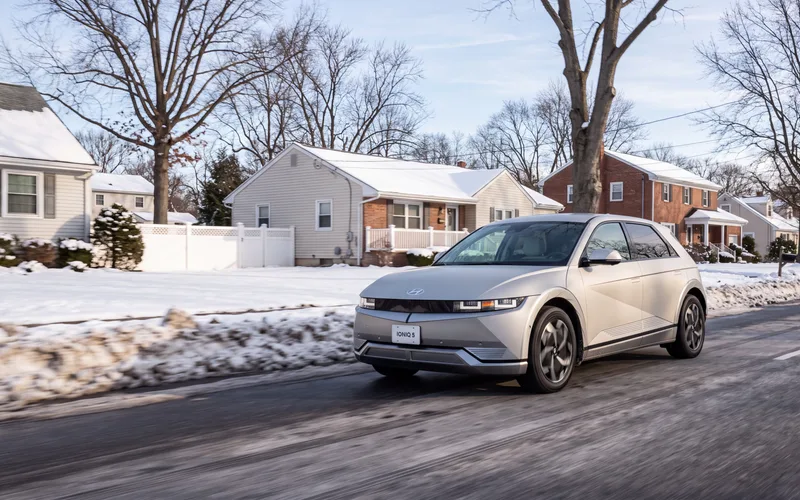 Hyundai Ioniq 5Compact SUVBetter at: Charging speed
More range, dramatically faster 800-volt charging, V2L export power and a far better reliability record for similar money — the default choice unless the ID.4's discount is extraordinary.
Compare 2.60C+
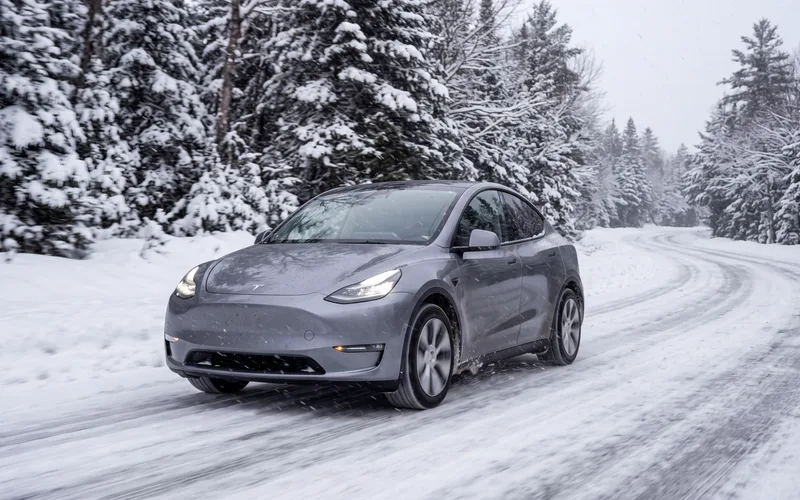 Tesla Model YCompact SUVBetter at: Resale value
Native Supercharger access, quicker acceleration, 3,500 lbs of towing and the best resale value in the class make it the sensible pick for anyone who drives long distances.
Compare 2.06C
2.06C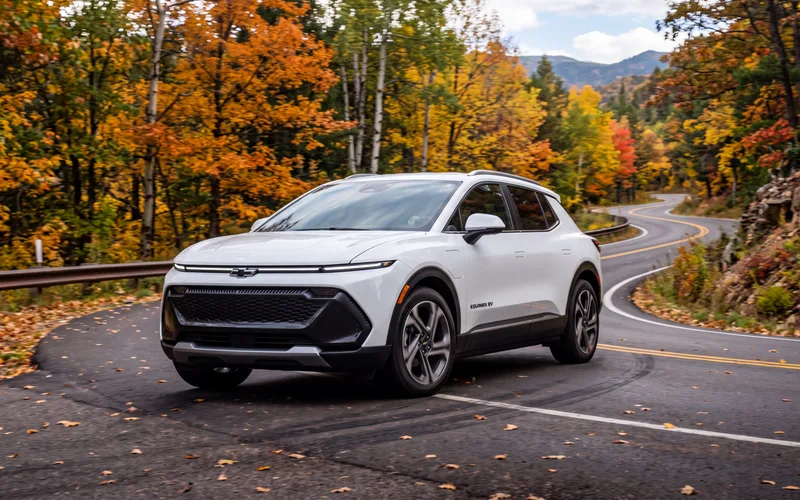 Chevrolet Equinox EVCompact SUVBetter at: Price
Delivers comparable electric range and running costs for meaningfully less money, with cheaper insurance and a far larger dealer network behind it.
CompareHow it's evolved
6 scored model years · 2021–2026
Subject scores by year
Hover or tap a score to see what moved it versus the year before. A corner mark flags a big swing.
| Year | Performance | Efficiency | Safety | Space | Cost | Reliability | Tech | Use-case | Driving | Value |
|---|---|---|---|---|---|---|---|---|---|---|
| 2026 | 51 | 67 | 78 | 52 | 43 | 44 | 71 | 65 | 73 | 60 |
| 2025 | 52 | 67 | 75 | 49 | 45 | 43 | 69 | 62 | 72 | 61 |
| 2024 | 52 | 67 | 79 | 51 | 44 | 41 | 66 | 66 | 73 | 66 |
| 2023 | 38 | 65 | 83 | 51 | 46 | 38 | 61 | 63 | 69 | 68 |
| 2022 | 38 | 60 | 81 | 51 | 47 | 41 | 55 | 62 | 69 | 63 |
| 2021 | 38 | 59 | 81 | 48 | 50 | 37 | 52 | 60 | 67 | 66 |
Compare two years
Best fit & conditions
Higher scores mean a better fit for that use case. Learn more about use-case fit →
Subject profile
Academic Probation · NHTSA safety recalls
Sep 30, 2026Electrical system: propulsion system: traction batteryThe high voltage battery may fail and lead to a vehicle fire.
Defect
Volkswagen Group of America, Inc. (Volkswagen) is recalling certain 2023-2026 ID.4 vehicles. The high voltage battery may fail and lead to a vehicle fire.
Risk
A vehicle fire increases the risk of injury.
Remedy
Owners are advised to only charge their vehicles to a maximum of 80% battery capacity until the repair has been completed. The remedy is currently under development. Interim letters, notifying owners of the safety risk, are expected to be mailed November 27, 2026. Additional letters will be sent once the remedy is available. Owners may contact Volkswagen customer service at 1-800-893-5298. Volkswagen's number for this recall is 93EX. Vehicle Identification Numbers (VINs) involved in this recall became searchable on NHTSA.gov on October 6, 2026.
NHTSA campaign 26V630000 ↗Manufacturer no. 93EX22,524 vehicles potentially affected (all models in the campaign)Filed by Volkswagen Group of America, Inc.Filed as ID.4Dec 3, 2025Wheels: lugs/nuts/bolts/studsThe incorrect wheel bolts may have been installed during vehicle manufacturing.
Defect
Volkswagen Group of America, Inc. (Volkswagen) is recalling certain 2026 Atlas, Atlas Cross Sport, and ID.4 vehicles. The incorrect wheel bolts may have been installed during vehicle manufacturing.
Risk
Incorrect wheel bolts can allow a wheel to detach from the vehicle, increasing the risk of a crash.
Remedy
Owners are advised not to drive their vehicles until they have been repaired. Dealers will inspect and replace the wheel bolts as necessary, free of charge. Owner notification letters were mailed December 12, 2025. Owners may contact Volkswagen customer service at 1-800-893-5298. Volkswagen's number for this recall is 44BW. Vehicle Identification Numbers (VINs) involved in this recall became searchable on NHTSA.gov on December 5, 2025.
NHTSA campaign 25V835000 ↗Manufacturer no. 44BW27 vehicles potentially affected (all models in the campaign)Owners notified Dec 12, 2025Filed by Volkswagen Group of America, Inc.Filed as ID.4
25 recalls on other model years of the ID.4 (2021–2025)
Jan 21, 2026Electrical system: propulsion system: traction batteryThe high-voltage battery may overheat.
Defect
Volkswagen Group of America, Inc. (Volkswagen) is recalling certain 2023-2025 ID.4 vehicles. The high-voltage battery may overheat.
Risk
A high-voltage battery that overheats increases the risk of a fire.
Remedy
Dealers will update the high-voltage battery software, and replace the high-voltage battery, as necessary, free of charge. Owner notification letters were mailed March 18, 2026. Owners may contact Volkswagen customer service at 1-800-893-5298. Volkswagen's number for this recall is 93EA. Vehicle Identification Numbers (VINs) involved in this recall became searchable on NHTSA.gov on January 23, 2026.
NHTSA campaign 26V030000 ↗Manufacturer no. 93EA43,881 vehicles potentially affected (all models in the campaign)Owners notified Mar 18, 2026Filed by Volkswagen Group of America, Inc.Filed as ID.4Jan 21, 2026Electrical system: propulsion system: traction batteryThe high voltage (HV) battery cell modules may contain misaligned electrodes that can result in a battery fire.
Defect
Volkswagen Group of America, Inc. (Volkswagen) is recalling certain 2023-2024 ID.4 vehicles. The high voltage (HV) battery cell modules may contain misaligned electrodes that can result in a battery fire.
Risk
A vehicle fire while parked or driving can increase the risk of injury.
Remedy
Owners are advised to park outside immediately after charging and not leave their vehicles charging indoors overnight until the recall repair is complete. Also, owners are advised not to use Level 3 DC chargers and to limit the maximum charge of the battery to 80% until the remedy has been completed. Dealers will replace the high voltage battery cell modules as necessary, free of charge. Owner notification letters were mailed March 18, 2026. Owners may contact Volkswagen customer service at 1-800-893-5298. Volkswagen's number for this recall is 93EW. Vehicle Identification Numbers (VINs) involved in this recall became searchable on NHTSA.gov on January 23, 2026.
NHTSA campaign 26V028000 ↗Manufacturer no. 93EW670 vehicles potentially affected (all models in the campaign)Owners notified Mar 18, 2026Filed by Volkswagen Group of America, Inc.Filed as ID.4Dec 3, 2025Electrical system: propulsion system: traction batteryThe high voltage (HV) battery cell modules may contain misaligned electrodes that can result in a battery fire.
Defect
Volkswagen Group of America, Inc. (Volkswagen) is recalling certain 2023-2024 ID.4 vehicles. The high voltage (HV) battery cell modules may contain misaligned electrodes that can result in a battery fire.
Risk
A vehicle fire while parked or driving can increase the risk of injury.
Remedy
Owners are advised to park outside immediately after charging and not leave their vehicles charging indoors overnight until the recall repair is complete. Also, owners are advised not to use Level 3 DC chargers and to limit the maximum charge of the battery to 80% until the remedy has been completed. Dealers will replace the high voltage battery cell modules as necessary, free of charge. Owner notification letters were mailed February 11, 2026. Owners may contact Volkswagen customer service at 1-800-893-5298. Volkswagen's number for this recall is 93EV. Vehicle Identification Numbers (VINs) involved in this recall became searchable on NHTSA.gov on December 5, 2025.
NHTSA campaign 25V836000 ↗Manufacturer no. 93EV629 vehicles potentially affected (all models in the campaign)Owners notified Feb 11, 2026Filed by Volkswagen Group of America, Inc.Filed as ID.4Jun 30, 2025Service brakes · SuspensionCertain bolts on the chassis, brake system and/or suspension (such as bolts for certain cross member, engine mount, control arm, subframe, rear brake carrier, etc.) of affected vehicles may not have been correctly tightened during the manufacturing process.
Defect
Volkswagen Group of America, Inc. (Volkswagen) is recalling certain 2023-2025 Atlas, Atlas Cross Sport and 2023-2024 ID.4 vehicles. Certain bolts on the chassis, brake system and/or suspension (such as bolts for certain cross member, engine mount, control arm, subframe, rear brake carrier, etc.) of affected vehicles may not have been correctly tightened during the manufacturing process.
Risk
A loss of vehicle control increases the risk of a crash.
Remedy
Dealers will replace the bolts as necessary, free of charge. Owner notification letters were mailed July 25, 2025. Owners may contact Audi customer service at 1-800-253-2834. Volkswagen's number for this recall is 42HX.
NHTSA campaign 25V434000 ↗Manufacturer no. 42HX546 vehicles potentially affected (all models in the campaign)Owners notified Jul 25, 2025Filed by Volkswagen Group of America, Inc.Filed as ID.4Feb 28, 2025Electrical system: 12v/24v/48v battery · Electrical system: propulsion system: dc/dc converterThe on-board charger (OCDC) may fail and stop charging the 12-volt battery, which can result in a loss of drive power.
Defect
Volkswagen Group of America, Inc. (Volkswagen) is recalling certain 2024-2025 AUDI Q4 E-Tron SUV, AUDI Q4 E-Tron Sportback, and 2024 ID.4 vehicles. The on-board charger (OCDC) may fail and stop charging the 12-volt battery, which can result in a loss of drive power.
Risk
A loss of drive power increases the risk of a crash.
Remedy
Dealers will replace the OCDC, free of charge. Owner notification letters were mailed on May 20, 2025. Owners may contact Volkswagen customer service at 1-800-893-5298 or Audi customer service at 1-800-253-2834. Volkswagen's number for this recall is 93CJ. Audi's number for this recall is 93FR.
NHTSA campaign 25V125000 ↗Manufacturer no. AUDI: 93FR WV: 93CJ13,769 vehicles potentially affected (all models in the campaign)Owners notified May 20, 2025Filed by Volkswagen Group of America, Inc.Filed as ID.4Feb 27, 2025Power train: automatic transmission: gear position indication (prndl) · Service brakes, hydraulic: antilock/traction control/electronic limited slip: control unit/moduleThe instrument panel may not properly display the transmission gear lever indicator. As such, these vehicles fail to comply with the requirements of Federal Motor Vehicle Safety Standard number 102, "Transmission Shift Lever Sequence, Starter Interlock, and Transmission Braking Effect."
Defect
Volkswagen Group of America, Inc. (Volkswagen) is recalling certain 2021-2023 ID.4, 2022-2023 Audi Q4 e-Tron, and Q4 e-Tron Sportback vehicles. The instrument panel may not properly display the transmission gear lever indicator. As such, these vehicles fail to comply with the requirements of Federal Motor Vehicle Safety Standard number 102, "Transmission Shift Lever Sequence, Starter Interlock, and Transmission Braking Effect."
Risk
Failure to display the gear position may result in a vehicle rollaway if the parking brake is not engaged, increasing the risk of a crash.
Remedy
Dealers will update the brake control unit software, free of charge. Owner notification letters were mailed March 14, 2025. Owners may contact Volkswagen customer service at 1-800-893-5298 or Audi customer service at 1-800-253-2834. Volkswagen's number for this recall is 97H3. Audi's number for this recall is 454R.
NHTSA campaign 25V120000 ↗Manufacturer no. Audi: 454R VW: 97H360,490 vehicles potentially affected (all models in the campaign)Owners notified Mar 14, 2025Filed by Volkswagen Group of America, Inc.Filed as ID.4Nov 20, 2024Back over prevention: sensing system: cameraThe rearview camera image may not display when the vehicle is placed in reverse or when the park function is manually activated. As such, these vehicles fail to comply with the requirements of Federal Motor Vehicle Safety Standard number 111, "Rear Visibility."
Defect
Volkswagen Group of America, Inc. (Volkswagen) is recalling certain 2023 ID.4 vehicles. The rearview camera image may not display when the vehicle is placed in reverse or when the park function is manually activated. As such, these vehicles fail to comply with the requirements of Federal Motor Vehicle Safety Standard number 111, "Rear Visibility."
Risk
A blank rearview camera display can reduce the driver's rear visibility, increasing the risk of a crash.
Remedy
Dealers will replace the peripheral camera control module, free of charge. Owner notification letters were mailed December 26, 2025. Owners may contact Volkswagen customer service at 1-800-893-5298. Volkswagen's number for this recall is 91B3.
NHTSA campaign 24V875000 ↗Manufacturer no. 91B3385 vehicles potentially affected (all models in the campaign)Owners notified Dec 26, 2024Filed by Volkswagen Group of America, Inc.Filed as ID.4Sep 4, 2024Structure: body: door: handle: exteriorThe door handles may allow water to enter the circuit board assembly, which can cause the doors to open unexpectedly.
Defect
Volkswagen Group of America, Inc. (Volkswagen) is recalling certain 2021-2024 ID.4 vehicles. The door handles may allow water to enter the circuit board assembly, which can cause the doors to open unexpectedly.
Risk
A vehicle door that opens unexpectedly while driving increases the risk of injury.
Remedy
Volkswagen dealers will inspect and replace the door handles as necessary, and update the vehicle software, free of charge. Owner notification letters were mailed on December 27, 2024. Owners may contact Volkswagen's customer service at 1-800-893-5298. Volkswagen's number for this recall is 57J9. This recall expands previous recall numbers 23V-312 and 23V-213. Vehicles previously repaired under 23V-312 and 23V-213 will need to have the new remedy completed.
NHTSA campaign 24V651000 ↗Manufacturer no. 57J999,064 vehicles potentially affected (all models in the campaign)Owners notified Dec 27, 2024Filed by Volkswagen Group of America, Inc.Filed as ID.4Aug 28, 2024Air bags: frontal: passenger side: inflator moduleThe fasteners securing the passenger frontal air bag inflator may be loose.
Defect
Volkswagen Group of America, Inc. (VW) is recalling certain 2023-2024 ID4 vehicles. The fasteners securing the passenger frontal air bag inflator may be loose.
Risk
An improperly secured air bag inflator may not deploy as intended, increasing the risk of injury during a crash.
Remedy
Dealers will inspect and replace the air bag as necessary, free of charge. Owner notification letters were mailed October 10, 2024. Owners may contact Volkswagen customer service at 1-800-893-5298. VolkswagenÂs number for this recall is 69E8.
NHTSA campaign 24V643000 ↗Manufacturer no. 69E8837 vehicles potentially affected (all models in the campaign)Owners notified Oct 10, 2024Filed by Volkswagen Group of America, Inc.Filed as ID.4May 15, 2024Back over prevention: software · Electrical system: instrument panel: speedometer/odometer · Equipment: electrical: infotainment: softwareDue to a software issue, affected vehicles may experience center displays and instrument panel displays that do not boot, or that sporadically reset. This can result in loss of speedometer information or loss of rearview camera image. As such, these vehicles fail to comply with the requirements of Federal Motor Vehicle Safety Standard numbers 101, "Control and Displays" and 111, "Rear Visibility."
Defect
Volkswagen Group of America, Inc. (VW) is recalling certain 2021-2023 ID.4 vehicles. Due to a software issue, affected vehicles may experience center displays and instrument panel displays that do not boot, or that sporadically reset. This can result in loss of speedometer information or loss of rearview camera image. As such, these vehicles fail to comply with the requirements of Federal Motor Vehicle Safety Standard numbers 101, "Control and Displays" and 111, "Rear Visibility."
Risk
Displays that do not show critical information, such as vehicle speed or the rearview camera image, increase the risk of a crash.
Remedy
Dealers will update the vehicle software, free of charge. Owner notification letters were mailed on December 20, 2024. Owners may contact VW customer service at 1-800-893-5298. VW's number for this recall is 919A.
NHTSA campaign 24V344000 ↗Manufacturer no. 919A79,965 vehicles potentially affected (all models in the campaign)Owners notified Dec 20, 2024Filed by Volkswagen Group of America, Inc.Filed as ID.4Dec 7, 2023StructureThe interior sunshade for the panoramic glass roof may be insufficiently fire retardant. As such, these vehicles fail to comply with the requirements of Federal Motor Vehicle Safety Standard number 302, "Flammability of Interior Materials."
Defect
Volkswagen Group of America, Inc. (Volkswagen) is recalling certain 2023-2024 ID.4 vehicles. The interior sunshade for the panoramic glass roof may be insufficiently fire retardant. As such, these vehicles fail to comply with the requirements of Federal Motor Vehicle Safety Standard number 302, "Flammability of Interior Materials."
Risk
In a fire, fabric that is not fire retardant may further fuel a fire, increasing the risk of injury.
Remedy
Dealers will apply flame retardant to the sunshade fabric, free of charge. Owner notification letters were mailed December 15, 2023. Owners may contact Volkswagen's customer service at 1-800-893-5298. Volkswagen's number for this recall is 60G3.
NHTSA campaign 23V750000 ↗Manufacturer no. 60G324,025 vehicles potentially affected (all models in the campaign)Owners notified Dec 15, 2023Filed by Volkswagen Group of America, Inc.Filed as ID.4Jun 21, 2023Back over prevention: display functionThe replacement infotainment central control unit (CCU) installed in the vehicle during a repair contains incorrect software that can cause the rearview camera image to be delayed or deactivated when reversing. As such, these vehicles fail to comply with the requirements of Federal Motor Vehicle Safety Standard number 111, "Rear Visibility."
Defect
Volkswagen Group of America, Inc. (Volkswagen) is recalling certain 2022 ID.4 vehicles. The replacement infotainment central control unit (CCU) installed in the vehicle during a repair contains incorrect software that can cause the rearview camera image to be delayed or deactivated when reversing. As such, these vehicles fail to comply with the requirements of Federal Motor Vehicle Safety Standard number 111, "Rear Visibility."
Risk
A rearview camera with a delayed or deactivated image may reduce the driver's rear visibility, increasing the risk of a crash.
Remedy
Dealers will update the software, free of charge. Owner notification letters are expected to be mailed August 18, 2023. Owners may contact Volkswagen's customer service at 1-800-893-5298. Volkswagen's number for this recall is 93S7.
NHTSA campaign 23V436000 ↗Manufacturer no. 93S74 vehicles potentially affected (all models in the campaign)Owners notified Aug 18, 2023Filed by Volkswagen Group of America, Inc.Filed as ID.4May 3, 2023Structure: body: door: handle: exteriorThe affected vehicles may have been manufactured with door handles that allow water to enter the circuit board assembly, which can cause the doors to open unexpectedly when the vehicle is subject to high lateral forces at speeds below 9 mph/15 kmh.
Defect
Volkswagen Group of America, Inc. (Volkswagen) is recalling certain 2021-2022 ID.4 vehicles. The affected vehicles may have been manufactured with door handles that allow water to enter the circuit board assembly, which can cause the doors to open unexpectedly when the vehicle is subject to high lateral forces at speeds below 9 mph/15 kmh.
Risk
A vehicle door that opens unexpectedly while the vehicle is in motion increases the risk of injury.
Remedy
Dealers will update the vehicle software, and inspect the door handles as necessary, free of charge. Owner notification letters were mailed March 19, 2023. Owners may contact Volkswagen's customer service at 1-800-893-5298. Volkswagen's number for this recall are 57J5 and 57J8. This recall was replaced by recall number 24V-651
NHTSA campaign 23V312000 ↗Manufacturer no. 57J5/57J835,325 vehicles potentially affected (all models in the campaign)Owners notified Sep 13, 2023Filed by Volkswagen Group of America, Inc.Filed as ID.4Mar 29, 2023Structure: body: door: handle: exteriorThe affected vehicles may have been manufactured with door handles that allow water to enter the circuit board assembly, which can cause the door to open unexpectedly when the vehicle is subject to high lateral forces at speeds below 9 mph/15 kmh.
Defect
Volkswagen Group of America, Inc. (Volkswagen) is recalling certain 2023 ID4 vehicles. The affected vehicles may have been manufactured with door handles that allow water to enter the circuit board assembly, which can cause the door to open unexpectedly when the vehicle is subject to high lateral forces at speeds below 9 mph/15 kmh.
Risk
A vehicle door that opens unexpectedly while the vehicle is in motion increases the risk of injury.
Remedy
Volkswagen dealers will inspect each door handle and replace them, if necessary, free of charge. A vehicle software update will also be performed to update the door handle parameters. Owner letters were mailed May 26, 2023. Owners may contact Volkswagen's customer service at 1-800-893-5298. Volkswagen's number for this recall is 57J4. This recall was replaced by recall number 24V-651
NHTSA campaign 23V213000 ↗Manufacturer no. 57J415,989 vehicles potentially affected (all models in the campaign)Owners notified May 23, 2023Filed by Volkswagen Group of America, Inc.Filed as ID 4Feb 1, 2023Electrical system: propulsion system: traction battery: management system/energy control module (bms/becm): softwareSoftware programing may cause the high voltage (HV) battery management control module to restart or the pulse inverter to deactivate.
Defect
Volkswagen Group of America, Inc. (Volkswagen) is recalling certain 2021 ID.4 vehicles. Software programing may cause the high voltage (HV) battery management control module to restart or the pulse inverter to deactivate.
Risk
A reset or deactivation may cause a loss of drive power, increasing the risk of a crash.
Remedy
Dealers will update the HV battery management control unit and the pulse inverter control unit software, free of charge. Owner notification letters are expected to be mailed March 31, 2023. Owners may contact Volkswagen's customer service at 1-800-893-5298. Volkswagen's number for this recall is 97ZZ.
NHTSA campaign 23V040000 ↗Manufacturer no. 97ZZ20,904 vehicles potentially affected (all models in the campaign)Owners notified Mar 30, 2023Filed by Volkswagen Group of America, Inc.Filed as ID.4Dec 29, 2022Electrical system: 12v/24v/48v battery: cablesThe 12-Volt battery charging cable may contact the steering column shaft and cause the cable insulation to wear, possibly resulting in a short circuit.
Defect
Volkswagen Group of America, Inc. (Volkswagen) is recalling certain 2023 ID4 rear-wheel drive vehicles. The 12-Volt battery charging cable may contact the steering column shaft and cause the cable insulation to wear, possibly resulting in a short circuit.
Risk
A short circuit may cause a loss of drive power, increasing the risk of a crash. A short circuit also increases the risk of a vehicle fire.
Remedy
Owners are advised to park outside and away from structures until the remedy has been completed. Dealers will inspect the 12-Volt battery charging cable and repair or replace it, as necessary, free of charge. Owner notification letters are expected to be mailed February 27, 2023. Owners may contact Volkswagen's customer service at 1-800-893-5298. Volkswagen's number for this recall is 97HA.
NHTSA campaign 22V956000 ↗Manufacturer no. 97HA1,042 vehicles potentially affected (all models in the campaign)Owners notified Jan 18, 2023Filed by Volkswagen Group of America, Inc.Filed as ID.4Nov 9, 2022Electrical system: propulsion system: traction motorThe electric motor sealing ring was improperly assembled, which may allow coolant to leak into the high-voltage system and interfere with the CAN communication and power supply.
Defect
Volkswagen Group of America, Inc. (Volkswagen) is recalling certain 2023 ID4 vehicles. The electric motor sealing ring was improperly assembled, which may allow coolant to leak into the high-voltage system and interfere with the CAN communication and power supply.
Risk
Coolant that leaks into the high-voltage system may impact safety-critical systems and warning lights, causing a loss of vehicle control or unintended air bag deployment, and increasing the risk of a crash or injury.
Remedy
Dealers will inspect and replace the electric motor, if necessary, free of charge. Owner notification letters are expected to be mailed January 6, 2023. Owners may contact Volkswagen's customer service at 1-800-893-5298. Volkswagen's number for this recall is 19Q9.
NHTSA campaign 22V830000 ↗Manufacturer no. 19Q9393 vehicles potentially affected (all models in the campaign)Owners notified Dec 19, 2022Filed by Volkswagen Group of America, Inc.Filed as ID.4Nov 2, 2022Air bags: frontalThe passenger air bag may be incorrectly folded. As such, these vehicles fail to comply with the requirements of Federal Motor Vehicle Safety Standard number 208, "Occupant Crash Protection."
Defect
Volkswagen Group of America, Inc. (Volkswagen) is recalling certain 2021 ID4 vehicles. The passenger air bag may be incorrectly folded. As such, these vehicles fail to comply with the requirements of Federal Motor Vehicle Safety Standard number 208, "Occupant Crash Protection."
Risk
An incorrectly folded air bag may not protect the occupant as intended during a crash, increasing the risk of injury.
Remedy
Volkswagen will replace the passenger air bag module, free of charge. Owner notification letters were mailed February 14, 2023. Owners may contact Volkswagen's customer service at 1-800-893-5298. Volkswagen's number to this recall is 69EH.
NHTSA campaign 22V858000 ↗Manufacturer no. 69EH55 vehicles potentially affected (all models in the campaign)Owners notified Feb 14, 2023Filed by Volkswagen Group of America, Inc.Filed as ID.4Nov 2, 2022Back over prevention: display functionThe rearview camera image may be blank or unresponsive when the vehicle is placed in reverse gear or when the park function is manually activated. As such, these vehicles fail to comply with the requirements of Federal Motor Vehicle Safety Standard number 111, "Rear Visibility."
Defect
Volkswagen Group of America, Inc. (Volkswagen) is recalling certain 2022 Golf R A8, Audi S3, RS3 Sedan, Q4 E-Tron SUV, A3 Sedan, and 2022-2023 Volkswagen Golf GTI, and ID4 vehicles. The rearview camera image may be blank or unresponsive when the vehicle is placed in reverse gear or when the park function is manually activated. As such, these vehicles fail to comply with the requirements of Federal Motor Vehicle Safety Standard number 111, "Rear Visibility."
Risk
An inoperative rearview camera display can reduce the driver's rear visibility, increasing the risk of a crash.
Remedy
Dealers will replace the rearview camera, free of charge. Owner notification letters were mailed to Audi owners February 14, 2023. Volkswagen owners will receive an owner notification letter once remedy parts become available. Owners may contact Volkswagen's customer service at 1-800-893-5298 and Audi's customer service at 1-800-253-2834. Volkswagen's numbers for this recall are (Volkswagen) 91EK and (Audi) 91EL.
NHTSA campaign 22V823000 ↗Manufacturer no. VW: 91EK, Audi: 91EL2,607 vehicles potentially affected (all models in the campaign)Owners notified Feb 14, 2023Filed by Volkswagen Group of America, Inc.Filed as ID.4Oct 12, 2022Back over prevention: softwareThe rearview camera image may be delayed or deactivated. As such, these vehicles fail to comply with the requirements of Federal Motor Vehicle Safety Standard number 111, "Rear Visibility."
Defect
Volkswagen Group of America, Inc. (Volkswagen) is recalling certain 2022 ID4 vehicles. The rearview camera image may be delayed or deactivated. As such, these vehicles fail to comply with the requirements of Federal Motor Vehicle Safety Standard number 111, "Rear Visibility."
Risk
A rearview camera with a delayed or deactivated image reduces the driver's view of what is behind the vehicle, increasing the risk of a crash.
Remedy
Dealers will update the vehicle's software, free of charge. Owner notification letters were mailed January 17, 2023. Owners may contact Volkswagen's customer service at 1-800-893-5298. Volkswagen's number for this recall is 91EG.
NHTSA campaign 22V764000 ↗Manufacturer no. 91EG5 vehicles potentially affected (all models in the campaign)Owners notified Jan 17, 2023Filed by Volkswagen Group of America, Inc.Filed as ID.4Mar 16, 2022Electrical system: propulsion system: traction batteryIncorrect soldering of the flexible printed circuit assembled (FPCA), inside the high voltage (HV) battery, may cause an unreliable connection.
Defect
Volkswagen Group of America, Inc. (Volkswagen) is recalling certain 2021 ID4 vehicles. Incorrect soldering of the flexible printed circuit assembled (FPCA), inside the high voltage (HV) battery, may cause an unreliable connection.
Risk
An unreliable battery connection may cause a stall, increasing the risk of a crash.
Remedy
Dealers will replace the battery cell modules, free of charge. Owner notification letters were mailed December 6, 2022. Owners may contact Volkswagen customer service at 1-800-893-5298. Volkswagen's number for this recall is 9302.
NHTSA campaign 22V162000 ↗Manufacturer no. 93O2356 vehicles potentially affected (all models in the campaign)Owners notified Dec 6, 2022Filed by Volkswagen Group of America, Inc.Filed as ID.4Nov 3, 2021Steering: gear box (other than rack and pinion)Volkswagen Group of American, Inc. (Volkswagen) is recalling one 2021 ID.4 vehicle. The steering gear may have an incorrectly assembled or missing drive bushing.
Defect
Volkswagen Group of American, Inc. (Volkswagen) is recalling one 2021 ID.4 vehicle. The steering gear may have an incorrectly assembled or missing drive bushing.
Risk
An incorrectly assembled or missing drive bushing may cause a loss of steering control, increasing the risk of a crash.
Remedy
A dealer will replace the steering gear, free of charge. Owner notification letters were mailed November 5, 2021. Owners may contact Volkswagen customer service at 1-800-893-5298. Volkswagen's number for this recall is 48Q7.
NHTSA campaign 21V852000 ↗Manufacturer no. 48Q71 vehicles potentially affected (all models in the campaign)Owners notified Nov 5, 2021Filed by Volkswagen Group of America, Inc.Filed as ID.4Aug 5, 2021Seat belts · Seat belts: rear/other: retractorThe rear seat belt automatic locking retractors may deactivate early, which can prevent the child restraint system from securing properly. As such, these vehicles fail to comply with the requirements of Federal Motor Vehicle Safety Standard number 208, "Occupant Crash Protection."
Defect
Volkswagen Group of America, Inc. (Volkswagen) is recalling certain 2021 Volkswagen ID4, Audi A4 Allroad, A4 Sedan, A5 Cabriolet, A5 Coupe, A5 Sportback, A6 Allroad, A6 Sedan, A7, A8, E-Tron Quattro, E-Tron Sportback Quattro, Q3, Q5, Q5 Sportback, Q7, Q8, RS5 Sportback, RS5 Coupe, RS6 Avant, RS7, RSQ8, S4 Sedan, S5 Cabriolet, S5 Coupe, S5 Sportback, S6 Sedan, S7, S8, SQ5, SQ5 Sportback, SQ7, SQ8, and 2021-2022 S3 Sedan vehicles. The rear seat belt automatic locking retractors may deactivate early, which can prevent the child restraint system from securing properly. As such, these vehicles fail to comply with the requirements of Federal Motor Vehicle Safety Standard number 208, "Occupant Crash Protection."
Risk
An unsecured child restraint system can increase the risk of injury during a crash.
Remedy
Dealers will inspect, and replace as necessary, the middle-rear seat belt assemblies, free of charge. Owner notification letters were mailed August 27, 2021. Owners may contact Volkswagen customer service at 1-800-893-5298 and Audi customer service at 1-800-253-2834. Volkswagen's numbers for this recall are 69CR (VW) and 69CS (Audi).
NHTSA campaign 21V606000 ↗Manufacturer no. 69CR, 69CS45,496 vehicles potentially affected (all models in the campaign)Owners notified Aug 27, 2021Filed by Volkswagen Group of America, Inc.Filed as ID.4Aug 4, 2021Seat belts · Seat belts: rear/other: retractorIncorrect rear outboard seat belt assemblies without an automatic locking retractor (ALR) function may have been installed, which can prevent the child restraint system from securing properly. As such, these vehicles fail to comply with the requirements of Federal Motor Vehicle Safety Standard number 208, "Occupant Crash Protection."
Defect
Volkswagen Group of America, Inc. (Volkswagen) is recalling certain 2021 ID4 vehicles. Incorrect rear outboard seat belt assemblies without an automatic locking retractor (ALR) function may have been installed, which can prevent the child restraint system from securing properly. As such, these vehicles fail to comply with the requirements of Federal Motor Vehicle Safety Standard number 208, "Occupant Crash Protection."
Risk
An unsecured child restraint system can increase the risk of injury during a crash.
Remedy
Dealers will inspect, and replace as necessary, the rear outboard seat belt assemblies, free of charge. Owner notification letters were mailed August 27, 2021. Owners may contact Volkswagen customer service at 1-800-893-5298. Volkswagen's number for this recall is 69CQ.
NHTSA campaign 21V607000 ↗Manufacturer no. 69CQ12,060 vehicles potentially affected (all models in the campaign)Owners notified Aug 27, 2021Filed by Volkswagen Group of America, Inc.Filed as ID.4Jun 2, 2021Exterior lighting: headlightsCaps were installed on the headlight vertical aim instead of the horizontal aim, allowing for horizontal adjustment of the headlight beam. As such, these vehicles fail to comply with the requirements of Federal Motor Vehicle Safety Standard number 108, "Lamps, Reflective Devices, and Associated Equipment."
Defect
Volkswagen Group of America, Inc. (Volkswagen) is recalling certain 2021 ID.4 vehicles. Caps were installed on the headlight vertical aim instead of the horizontal aim, allowing for horizontal adjustment of the headlight beam. As such, these vehicles fail to comply with the requirements of Federal Motor Vehicle Safety Standard number 108, "Lamps, Reflective Devices, and Associated Equipment."
Risk
Adjusting the horizontal headlight beam can increase glare, reducing visibility for the driver and increasing the risk of a crash.
Remedy
Dealers will remove the caps from the vertical aim and install them on the horizontal aim, free of charge. Owner notification letters were mailed June 18, 2021. Owners may contact Volkswagen customer service at 1-800-893-5298. Volkswagen's number for this recall is 9406.
NHTSA campaign 21V413000 ↗Manufacturer no. 94O63,240 vehicles potentially affected (all models in the campaign)Owners notified Jun 18, 2021Filed by Volkswagen Group of America, Inc.Filed as ID.4
Source: NHTSA Office of Defects Investigation recall database, model years 2021–2026. Recalls are listed by model year as the manufacturer filed them; whether a specific car is affected depends on its VIN — check a VIN at nhtsa.gov ↗. NHTSA model names matched to this page: ID 4, ID.4.
Detailed scoring by subject
1Performance & PowertrainOne of the ID.4's weakest categories.1.45D
The 2026 ID.4 carries over the post-2024 powertrain: a 210 kW (282 hp) APP550 permanent-magnet rear motor on the volume RWD Pro/Pro S trims, with a 250 kW (335 hp) dual-motor AWD option. Output is mid-pack for a compact electric SUV — below an Ioniq 5/EV6 Long Range AWD (320 hp) and well below a Model Y Premium AWD (384 hp).
The APP550 rear drive unit produces 545 Nm (402 lb-ft) from zero rpm, a strong figure for the segment that flatters the ID.4 in low-speed response even though peak horsepower is unremarkable.
The 282 hp RWD volume trim runs to 60 mph in roughly six seconds — brisk in absolute terms and a large improvement over the 201 hp pre-2024 car, but a half-second to a second behind the Long Range AWD Korean rivals and Model Y Premium at ~4.6 s.
Single-motor EV delivery is silent, lag-free and linear, and the APP550 motor gives the ID.4 genuine mid-range urgency the early 201 hp car lacked. It sits just below the Ioniq 5/EV6/Model Y trio (90–91) because throttle mapping is deliberately soft off the line and full-power delivery tapers earlier at highway speed.
A single-speed reduction gear means there is nothing to hunt or shift — delivery is seamless. Scored a few points under the Korean rivals because the ID.4 still offers no true one-pedal driving: B mode adds only mild regen and there are no paddle-adjustable regen levels.
VW rates the US-market ID.4 at 2,700 lbs when equipped with the accessory hitch — better than the 2,300 lbs of an Ioniq 5 or EV6 but well short of a Model Y's 3,500 lbs, and modest against the 1,000–8,000 lbs SUV band.
Dual-motor AWD is optional across essentially the whole trim range rather than reserved for the top of the lineup, but the system is a simple on-demand setup — an asynchronous front motor that engages when the rear slips — with no low range, terrain modes or torque-vectoring sophistication.
Roughly 8 inches of ground clearance is above average for an electric compact crossover and better than a Model Y's, but there is no off-road trim, no underbody protection beyond the standard battery tray, no locking differential and no terrain modes. Sits above the pavement-bound Model Y (28) and below the Ioniq 5 (52), which now has a dedicated XRT variant.
The ID.4 is EV-only with a single 82 kWh battery and two drive configurations (RWD or AWD) — the 62 kWh Standard model was dropped after 2023, leaving no entry battery, no performance variant and no combustion or hybrid alternative under the nameplate.
2Efficiency & RangeMid-pack among this car's ten categories.2.53C+
Re-verified against the 2026 EPA listing this run and unchanged at 113 MPGe combined (30 kWh/100 mi) for the volume rear-drive car. Solidly mid-pack among EV SUVs — the MEB platform is respectable but not in Ioniq 5 / Model Y territory.
Regenerative braking and zero idle draw make city the ID.4's strongest cycle, as with every EV, though 122 MPGe is only average against an EV-SUV city band that runs to 140.
Highway remains the weaker cycle for a tall crossover, but 104 MPGe sits high in the EV-SUV highway band and the 18 MPGe city-to-highway gap is narrower than most rivals manage.
291 miles is only mid-band for an EV SUV, and the AWD trims most snow-state buyers choose drop to 263. The 2026 change that matters is subtraction rather than addition: dropping the 62 kWh pack raises the floor of the lineup but leaves the ceiling exactly where it was.
Confidence rises from MEDIUM to HIGH this run — the 2026 press kit states 175 kW explicitly for all three trims rather than the figure being inferred from the MY2024 pack change. The number itself is unchanged, and 175 kW on a 400-volt architecture still lands well below the 800-volt E-GMP rivals (Ioniq 5, EV6) that peak at 230–350 kW.
Two Volkswagen sources disagree for 2026 — the vw.com model page says approximately 28 minutes, the 2026 press kit says around 30 minutes for all trims — so confidence drops from HIGH even though the value is retained. 28 is kept because it is the live 2026 consumer spec page and matches the documented MY2024 improvement for this exact pack; either figure is competitive for the peak kW involved, since the ID.4 makes up ground with a flat curve rather than a tall spike, and both are roughly 50% off the 18–20 minute 800-volt benchmark.
EPA's own published 2026 figure, re-confirmed this run. Near the bottom of the EV-SUV energy-cost band; owners on a home time-of-use rate will beat it, anyone leaning on public DC fast charging will not.
Holds at 88 on confirmation rather than a fresh change: the NACS DC adapter really is standard equipment on every 2026 Volkswagen EV, so the public fast-charging network open to an ID.4 roughly quintuples — the practical half of what this item measures — on top of 24 months of Electrify America Pass+ with Plug&Charge and a now-standard 2-in-1 mobile charging cable. No fuel grade to buy at all, and 11 kW onboard AC handles overnight Level 2. Held below the top of the band because the charging hardware is still 400-volt and the complimentary-energy perk is a fixed 24-month term, not permanent cheap fuel.
3SafetyThe ID.4's best-graded category.3.30B+
The ID.4's MEB platform generation has carried a 5-star NHTSA overall rating since the nameplate's US launch, helped by the very low rollover risk typical of a skateboard-battery EV. Replaces the placeholder 4.5-star value; NHTSA had not published a 2026-specific retest at time of scoring, so the generation result is carried forward.
The ID.4 earned IIHS Top Safety Pick in its early model years on largely Good crashworthiness results, but it has not appeared on the recent award lists that VW's gas SUVs (Atlas, Tiguan, Taos) still make — the tightened updated-moderate-overlap-front and standard-headlight requirements are the likely gap. Scored as solid-but-unawarded rather than TSP+; the placeholder's 93 assumed an award the vehicle does not currently hold.
VW's IQ.DRIVE package is standard on every ID.4 trim including the base car — Front Assist (forward collision warning with AEB and pedestrian monitoring), Blind Spot Monitor, Rear Traffic Alert, Lane Assist, Travel Assist adaptive cruise with lane centering, and Emergency Assist. Nothing from the core five (AEB/ACC/LKA/BSM/RCTA) is trim-locked, which is the top band.
Front Assist rates well in conventional vehicle-to-vehicle and daytime pedestrian evaluations, but the ID.4 has no confirmed strong result in IIHS's harder updated front crash prevention test or the nighttime pedestrian scenario, where most of the class falls off. Held at the placeholder's 70 — mid-band, adequate daytime performance with unverified night capability.
Blind Spot Monitor and Rear Traffic Alert are standard on every trim rather than optional, which is better coverage than most compact SUVs offer at base price. Held just at the top-band threshold rather than above it because the system is alert-only — no active steering or braking intervention.
Travel Assist's lane centering is standard and is among the better mainstream implementations — steady and confidence-inspiring on marked highway, with the usual hunting on faded lines or through wide curves. Trimmed from the placeholder's 92, which put it at flagship-system level it does not reach.
Full-speed-range adaptive cruise with stop-and-go, integrated with lane centering under Travel Assist, and augmented by predictive cruise that reads navigation and sign data to slow for curves, limit changes and roundabouts — a genuinely well-integrated highway assist for the segment. Slightly below the placeholder to leave room for the systems that add automated lane changes.
Volkswagen offers no hands-free highway driving on the ID.4 in the US — Travel Assist requires continuous hands-on contact with the capacitive wheel and nags quickly when it is lost. Bottom band per the item's guidance; the placeholder's 77 credited a capability the car does not have.
LED projector headlights are standard and the IQ.LIGHT LED matrix units with adaptive beam are reserved for the upper trim — the classic Good-on-top, weaker-on-volume-trim split that costs cars their IIHS award. Scored mid-band rather than the placeholder's 91, which assumed Good ratings across the range.
The upright greenhouse and low cowl give good forward and quarter sightlines, but the rising beltline, thick rear pillars and shallow back glass make over-the-shoulder and rearward views mediocre. A rearview camera is standard and a 360-degree Area View camera is available only on the top trim, so the volume car is not fully camera-compensated.
MEB packaging pays off here: a completely flat rear floor, a wide bench and large door apertures make seat installation and buckling a child easy, and rear legroom is generous for a compact SUV. Held out of the top band because the lower LATCH anchors sit recessed in the seat bight rather than on exposed hoops, and only the two outboard positions are equipped.
4Space & ComfortGrades below the middle of the scale.1.49D
The US-market ID.4 is a strictly two-row, five-passenger compact SUV on every trim; VW has never offered a third row or a six-seat configuration in the US, and nothing about the 2026 car changes that.
Best-in-class front headroom for a compact SUV — the ID.4's roofline stays flat over the front seats and the solid-roof trims give up nothing to it. Measured per the framework rule (solid roof where published separately), which flatters the ID.4 versus the glass-roofed Pro S most buyers actually take.
Front legroom is the ID.4's weakest interior measurement — it trails the Ioniq 5 (41.7 in), EV6 (42.4 in) and Equinox EV (42.6 in), a consequence of pushing the dash forward and the battery-driven high floor.
Second-row headroom is comfortably above the compact-SUV midpoint and better than the EV6 (38.0 in) despite the battery floor, thanks to a roofline that doesn't taper hard over the rear bench.
The 108.9-in wheelbase buys genuinely adult-usable rear legroom, though the ID.4 gives up nearly two inches to the Ioniq 5 (39.4 in) and EV6 (39.0 in), and its bench is fixed where the Hyundai's slides and reclines.
No third row is offered on the ID.4 in any market or trim — the MEB platform's US compact SUV is two-row only. Scored in the bottom band per the item's rule for two-row SUVs.
Roughly 30 cu ft behind the rear seats is the best of the mainstream MEB-and-E-GMP compact EV set — ahead of the Ioniq 5 (27.2) and EV6 (24.4) — but it still lands low against a band calibrated to the whole SUV segment, and the ID.4 has no frunk at all to add to it.
Seats-folded volume beats both Korean rivals (Ioniq 5 59.3, EV6 50.2) and the load floor is close to flat with the adjustable cargo floor at its upper setting, but it remains modest for an SUV in absolute terms.
Competent rather than clever: a flat floor, deep door bins, a two-level center console with a sliding cover and an open shelf beneath, an adjustable-height cargo floor with underfloor stowage, and a rear-seat pass-through. It loses ground to the Ioniq 5's sliding console and to nearly every rival with a frunk, since the ID.4 offers no front storage whatsoever and no place for the charging cable but the cargo bay.
Front seats draw steady praise for long-haul comfort, with 12-way power adjustment and a driver's massage function on Pro S trims; the rear bench is well shaped but sits low relative to the battery floor, leaving taller passengers slightly knees-up, and the backrest is fixed at a fairly upright angle.
Ride comfort is the ID.4's signature strength — long-travel, well-damped suspension that absorbs broken pavement better than either Korean rival, helped by the low-slung battery mass. The 20-inch wheels on Pro S trims turn sharp expansion joints brittle, which is what keeps this out of the top band.
Quiet in the way EVs are quiet — no powertrain noise and well-suppressed wind noise — but coarse-surface tire roar comes through more than in the acoustically-glazed Ioniq 5, so it is good for the class without leading it.
Unusually generous at the bottom of the range: heated front seats and a heated steering wheel are standard on every trim, alongside dual-zone automatic climate control, rear vents and app-based remote preconditioning with a departure timer. Ventilated front seats and heated rear seats arrive on Pro S Plus. The touch-slider climate controls are an ergonomic complaint, not an equipment gap, and are scored under Technology.
5Cost of OwnershipThe ID.4's lowest-graded category.0.85F
Estimated 2026 entry price for the ID.4 Standard RWD (62 kWh), carrying the 2024–2025 US ladder forward with normal escalation; VW list pricing for MY2026 could not be verified from an official source in this run. Mid-pack for a compact electric SUV but well above the gas Tiguan it shadows.
Pro S has been the ID.4's volume configuration in the US (larger 82 kWh pack, heat pump, panoramic roof), and it lands in the low-$50Ks — a premium ask now that the $7,500 federal credit has lapsed, which is what the 'Premium' price class reflects.
EV mechanical simplicity keeps scheduled service minimal, but the ID.4's record of software, 12V-system and door-handle service visits plus VW's above-average parts/labor put it worse than Korean and Tesla EV peers (Ioniq 5 ~$3,900, Model Y ~$4,200) while still far better than the gas Tiguan (~$6,800).
The ID.4 has been one of the fastest-depreciating vehicles on the US market, and VW brand residuals are weak on top of the general EV discount. Expiry of the $7,500 federal credit removes the single biggest drag on used EV pricing, so a 2026 car should retain slightly better than 2022–2023 examples did — but it still projects at or below the segment floor.
Volkswagen's standard New Vehicle Limited Warranty is 4 years/50,000 miles across the US lineup — a year better than the industry-standard 3/36 but well short of Hyundai/Kia's 5/60.
The 8-year/100,000-mile high-voltage battery warranty is the federally mandated floor rather than a standout, and VW does not extend separate long-term powertrain coverage to the drive motor — that reverts to 4/50,000, unlike Kia and Hyundai's 10-year EV powertrain terms.
A solid but not class-leading package: VW's Carefree Maintenance covers the first two scheduled services (2 years/20,000 miles), roadside assistance runs with the basic warranty, and ID.4 buyers have received three years of complimentary 30-minute Electrify America DC fast-charging sessions plus a NACS adapter for Tesla Supercharger access. Ranks above Ford's and Tesla's thin offerings, below Hyundai's charging-credit-plus-3-yr-maintenance bundle.
$52,500 volume-trim price minus its estimated resale value after 5 years (40% retained, or about $21,000) leaves about $31,500 in depreciation. Add the projected $5,400 in 5-year maintenance and repairs, and owning this vehicle for 5 years costs about $36,900 in total.
6Reliability & QualityOne of the ID.4's weakest categories.0.94F
The ID.4 has carried a below-average predicted-reliability outlook for most of its US life, driven by an unusually heavy electronics and software complaint record — 12V-battery-triggered no-starts, infotainment freezes and reboots, door-handle and door-control-module faults, and charging faults — rather than by mechanical wear. The 2026 car is a late year of the same first-generation MEB platform, so the accumulated record carries forward and there is no evidence of a step change that would lift the forecast into the average band.
Volkswagen sits in the bottom third of recent Consumer Reports brand-reliability rankings and below the industry average in J.D. Power's Vehicle Dependability Study, a sustained multi-year pattern rather than a single-year dip. The ID. family's software and electronics problems have been a specific drag on the brand's standing rather than an offset to it.
The ID.4's campaign history is worse than typical for the segment and includes safety-system defects severe enough to stop sales, most notably the door-handle water-ingress recall covering roughly 100,000 US vehicles, where a door could unlatch and open in motion — followed by a months-long stop-sale and a parts-supply backlog. That sits alongside earlier door-control-module/12V software campaigns and a long trail of software service actions, which is a pattern rather than isolated bad luck.
The MEB drive units (the APP550 rear motor in current Pro/AWD cars) and the 82 kWh pack have not produced a systemic mechanical failure pattern, and by 2026 the platform has several years and well over a million global units behind it — the ID.4's documented trouble is electrical and software, not drivetrain wear. It stays mid-band rather than high because scattered high-voltage battery module replacements and 12V-system faults that immobilize the car have been reported, and an EV powertrain of this age still lacks a deep high-mileage US record.
The cabin is the ID.4's weakest quality dimension relative to its premium-leaning price: reviewers consistently flag hard, hollow-feeling plastics on the doors and lower dash and switchgear that feels below the price point, and the capacitive slider controls remain a durability and usability complaint even after being backlit in the 2024 update. It reads as adequate rather than competitive against Ioniq 5, EV6 and Equinox EV cabins at similar money.
Physical assembly of the Chattanooga-built ID.4 is generally consistent — panel fit and structural solidity draw few complaints — but initial-quality standing is dragged down hard by software and electronics defects that owners report as quality problems, and the door-handle failures were a build/sealing defect, not just a software one.
Volkswagen's roughly 600-650 US dealers give reasonable metro coverage but leave real gaps in rural and interior markets versus Toyota, Honda or Chevrolet, and EV service adds friction on top: not every store is equally equipped or staffed for high-voltage work, and the door-handle recall exposed long waits and parts backlogs at the service counter.
Out-of-warranty economics are a weak point: ID.4-specific components are effectively dealer-only with almost no aftermarket, German-brand parts price above mainstream equivalents, and high-voltage repairs carry both high part cost and restricted labor. The recall parts backlog also showed availability itself is not dependable in a squeeze, though routine EV maintenance is genuinely cheap and partly offsets this.
7Technology & InfotainmentOne of the ID.4's strongest categories.2.83B-
The MY2024 mid-cycle update made the 12.9-inch center display standard on every ID.4 trim, retiring the 12.0-inch unit that base cars previously used, and that hardware carries into 2026 unchanged.
The ID.4 still runs VW's MEB-specific ID. Software rather than the newer MIB4 stack in the current Tiguan, and it remains the car's most-criticized attribute: capacitive steering-wheel pads, haptic climate and volume slider bars, and menu depth that reviewers routinely single out even after the 2024 update added backlighting and faster hardware.
Wireless App-Connect, covering both wireless Apple CarPlay and wireless Android Auto, is standard on every US ID.4 trim including the base car — no trim walk and no wired-only entry point.
IDA natural-language voice with cloud-backed responses is fitted and the native navigation includes EV route planning with charging stops, but built-in nav is not standard on the entry trim and reviewers report most owners default to phone projection for routing.
The standard system is competent but unremarkable, and the optional 480-watt Harman Kardon upgrade is a genuine improvement without matching the branded systems in Genesis or Volvo EVs at similar money.
The ID.4's column-mounted ID. Cockpit driver display measures just 5.3 inches and shows a fixed, minimally configurable set of readouts — a clear outlier in a class where 10-to-12-inch reconfigurable clusters are normal, including on VW's own Tiguan.
The MEB EVs get genuine over-the-air vehicle software releases — the ID. Software 3.x line delivered charging, range-display and infotainment changes to cars already in customers' hands — which is broader scope than the infotainment-only OTA on VW's combustion models, though rollout cadence has been slow and uneven and early cars needed dealer flashes.
The myVW app with Car-Net covers remote lock/unlock, cabin preconditioning, vehicle locate and EV-specific charge scheduling and state-of-charge monitoring, but there is no phone-as-key digital key on the ID.4 and app reliability draws recurring owner complaints.
USB-C ports are fitted in both rows with higher-wattage front outlets and wireless phone charging on upper trims, but the ID.4 offers no household AC outlet and no vehicle-to-load export — a real omission for an EV when the Ioniq 5 and EV6 both ship V2L.
Keyless entry with push-button start is standard from the volume trim up and a power liftgate with hands-free Easy Open is available higher in the range, but there is no phone-as-key option and the entry trim is not fully equipped.
Rear camera and front/rear Park Distance Control sensors are widely fitted, Area View surround camera is available on upper trims, and Park Assist Plus adds semi-automated parking with a memory function — a more complete parking suite than most mainstream compact SUVs, though the 360 view is not available low in the range.
The ID.4 offers an augmented-reality head-up display that projects navigation arrows and lane-keeping cues onto the road ahead — better hardware than most rivals' basic HUDs — but it is restricted to the range-topping trim, which keeps it inside the top-trim-only band.
8Use-Case FitMid-pack among this car's ten categories.2.40C+
The MEB skateboard floor gives a flat, wide rear footwell and tall door apertures that make buckling kids easy, and 30.3 cu ft behind the bench swallows a full-size stroller with room over both E-GMP rivals. Held back by 37.6 in of rear legroom — the shortest in this EV peer group — a 60/40 bench with no slide or recline, and only two full LATCH positions.
IQ.DRIVE is standard on every trim including the base car, so the families buying the cheapest ID.4 still get AEB with pedestrian monitoring, blind-spot monitor, rear traffic alert and Travel Assist lane centering — the strongest standard-ADAS position in this comparison set. The 5-star NHTSA overall is offset by the ID.4's absence from the most recent IIHS award cycle, which is what separates it from the Ioniq 5 and Mach-E here.
A compliant ride, a reasonably hushed cabin, dual-zone climate and rear USB-C make the ID.4 a comfortable four-up tourer, and it carries more luggage behind an occupied second row than either E-GMP rival. What caps it is the thin rear amenity list — no heated rear seats, no sunshades, no rear entertainment — and a 400 V charging curve that puts more and longer stops in a family day's drive than the 800 V competition.
Instant torque, a quiet single-speed driveline, a soft ride and standard stop-and-go Travel Assist make this a genuinely low-effort commuter. It gives up real ground to the E-GMP cars on two counts drivers meet every trip: there is no one-pedal driving and no adjustable regen — only D and B — and the haptic-slider infotainment remains a recurring complaint in reviews.
112 MPGe combined and roughly $700/yr in electricity at 15,000 miles is among the cheapest per-mile running costs available in a compact SUV, and regen braking plus no oil changes keeps consumables minimal. Trimmed slightly below a pure energy-cost read because VW dealer labor and out-of-warranty electronics repairs push the ID.4's service spend above EV norms.
The footprint is manageably compact, but the ID.4 turns worse than every rival in this set at 40.3 ft, which is what you feel in a parking structure or a three-point turn. Restricted rear three-quarter visibility and the 360-degree camera being gated to Pro S and above leave base-trim buyers relying on a plain reversing camera.
A 2,700 lb rating with the factory-installed hitch is the best tow number in this EV peer group and enough for a small utility or toy trailer, and 64.2 cu ft of maximum cargo beats both E-GMP rivals. It is still a five-seat unibody crossover with no bed, no frunk and no payload headroom to speak of, so it tops out at light-duty errands rather than real work.
The ID.4 has the weakest durability record in this comparison: bottom-of-scale predicted reliability, a large NHTSA door-handle campaign, and owner complaints clustering in 12V electrical and door hardware — exactly the systems that fail first under hard use. VW's 4-year/50,000-mile basic warranty is also the shortest backing here, and there is no work-oriented trim or wear-friendly interior option.
No 120V outlet and no V2L means the ID.4 cannot run a tool or a compressor off its own pack — the single feature that lifts the Ioniq 5 and EV6 above it on this item. It offers the basics only: a factory hitch, cargo tie-downs and underfloor storage, roof rails on the upper trims, and no upfit ecosystem or washable work-surface options.
Comfortable seats, a compliant ride and standard stop-and-go lane centering make the miles easy, but the ID.4 is the weakest long-haul EV in this group on the two things that set trip time: 275–291 miles of range trails the ~320-mile E-GMP cars, and a 175 kW peak on a 400 V architecture means slower stops. The highway rating also falls well short of the city figure, so real interstate range lands under the sticker.
At roughly 8.0 in the ID.4 has meaningfully more ground clearance than the EV6 or Mach-E, AWD is available on every trim, and 2,700 lbs covers a small camper or toy trailer — it will handle a forest road or a trailhead without drama. It stops there: a soft-surface Traction mode is the only terrain hardware, there is no off-road trim or underbody protection, and with no V2L or 120V outlet it is a poor basecamp.
30.3 cu ft behind the second row and 64.2 cu ft folded is the largest hold in this EV peer group, backed by an adjustable load floor, underfloor storage, roof rails on the upper trims and an available factory hitch for a bike or cargo rack. Two things keep it out of the top band: a plain 60/40 split with no pass-through, and no frunk at all — so charging cables and dirty gear ride in the cabin.
9Driving ExperienceOne of the ID.4's strongest categories.2.97B-
The ID.4 is tuned unambiguously for comfort: long suspension travel, soft damping and low-rolling-resistance tires on a ~4,665 lb (RWD Pro S) body produce secure, predictable cornering with early understeer and noticeable roll rather than agility. Rear drive and the low battery mass keep it composed and it never feels nervous, but it sits below the sharper Korean E-GMP pair and the Mach-E, and a few points under its MEB sibling the Q4 e-tron (68), which gets a firmer premium damper tune on the same bones.
Accurate and consistently weighted with a quick-enough ratio for parking-lot work, but the electric rack is filtered to the point of numbness — there is essentially no surface feedback, and weight builds artificially rather than with load. Squarely in the 'precise enough but numb' band, level with the Q4 e-tron (65) that shares its rack.
The ID.4's weakest dynamic attribute. MEB fits rear drum brakes on every trim, and instrumented 70–0 mph stops for the ID.4 have landed in the ~175–185 ft range — long for the class, a product of curb weight plus efficiency-focused tires. Pedal feel is soft and the friction/regen handoff is smooth but vague, and unlike the Ioniq 5/EV6 and Model Y there is no true one-pedal mode — only a mild B setting — so the driver leans on that soft pedal more often.
A single-motor BEV with a single-speed reduction gear and no combustion transitions to manage: delivery is silent, lag-free and perfectly linear, and the 282 hp / 402 lb-ft APP550 rear motor gives real mid-range urgency. Held just below the Model Y (90) because VW deliberately softens accelerator tip-in and full-power delivery tapers earlier at highway speed.
No combustion noise, no shift shock, and no vibration through the wheel or pedals; the rear motor emits only faint whine under hard acceleration and is inaudible at cruise. Scored on drivetrain noise alone — the ID.4's separate weakness is coarse-surface tire roar, which belongs to cabin quietness (cat4, 76) rather than here.
With no engine or driveshafts ahead of the front axle, the rear-drive ID.4 turns inside essentially every compact SUV — VW's 10.2 m figure works out to 33.5 ft, below the bottom of the SUV normalization band (34 ft), so the item clamps to the maximum. The AWD gives back roughly two feet.
The seating position itself is good — high, commanding, with a flat floor, 12-way power adjustment on Pro S and easy step-in height — but the control layout is the ID.4's most-criticized trait and it carries into 2026 unchanged. Capacitive touch pads replace steering-wheel buttons, climate and volume live on haptic slider bars (illuminated since MY2024 but still imprecise on the move), the shifter is a small rotary stalk behind the wheel, and four windows are operated by two switches plus a separate REAR toggle. Thick rear pillars and shallow rear glass also compromise the over-shoulder view. Scored below both the Q4 e-tron (72) and the screen-centric Model Y (67).
Rear drive, instant torque and a ~6.0 s 0–60 mph make it pleasant and effortless in daily use, and the tiny turning circle makes it genuinely satisfying in town. But there is no driver-selectable character to speak of, no one-pedal engagement, numb steering and a chassis tuned to insulate rather than involve — the ID.4 is competent transport that enthusiasts don't seek out. 'Pleasant but forgettable', a touch under the Q4 e-tron (64).
10Value & Market PositionMid-pack among this car's ten categories.2.05C
Every ID.4 carries the full IQ.DRIVE driver-assist suite, the 12.9-inch touchscreen, wireless App-Connect, heated front seats and a heated steering wheel, LED headlights and 11 kW AC charging — genuinely competitive content that lands it above the Mach-E and Equinox EV on this measure. It stops short of the top band because the only instrument cluster offered is a 5.3-inch strip, and navigation, KESSY proximity entry, the 360-degree Area View camera, wireless phone charging and the AR head-up display all wait for Pro S or the range-topping Pro S Plus.
At sticker the 2026 ID.4 is a poor buy against its direct EV rivals: roughly $52,500 for a volume Pro S RWD buys 282 hp, 275 miles and a 5.3-inch cluster where similar money in an Ioniq 5 or EV6 buys more range, an 800-volt charging architecture, a full digital cockpit and far better predicted reliability. The 2026 car is also the first ID.4 model year sold with no federal purchase credit after the $7,500 clean-vehicle credit expired on 30 September 2025, and the ownership side — worst-in-class resale, bottom-tier reliability, VW dealer repair costs — erases the rest.
Pro, Pro S and Pro S Plus trims each offered in single-motor RWD or dual-motor AWD give six well-spaced configurations plus a lower-priced entry Standard car in the model years VW has chosen to offer it — reasonable choice that covers roughly $42K to $57K. The gaps are real though: one main 82 kWh pack for the whole volume range, no performance variant to answer the EV6 GT or Model Y Performance, and no seven-seat or extended-range option at any price.
The ID.4 has gone from one of the best-selling non-Tesla EVs in America to a sharply declining seller: US volume peaked near 38,000 in 2023, roughly halved in 2024 after the door-handle stop-sale froze deliveries of new and used cars in the fourth quarter, and 2025 was disrupted again by recall remedy delays and the pull-forward of demand ahead of the federal credit's expiry. This is the trajectory the low band describes, not a mid-pack plateau.
Volkswagen reads as a neutral mainstream brand in the US — real European-driving-dynamics cachet and strong nameplate recognition, but no aspirational halo, a bottom-third reliability reputation, and the lingering Dieselgate association that the ID. line was explicitly launched to move past. Scored identically to the other 2026 Volkswagens in this dataset because brand image is a marque-level attribute.
Scored on buyer benefit, this is the ID.4's single strongest value attribute: heavy factory cash, subvented low-APR financing and aggressive lease support have been routine on the car for several years, and the combination of surplus inventory, a stop-sale hangover and the loss of the federal credit means transaction prices sit well under MSRP. The caveat the guidance flags applies here — these are distress-adjacent discounts driven by weak demand rather than healthy incentive programs — but a 2026 shopper willing to negotiate captures most of the sticker disadvantage that item 10.1.2 penalizes.
The 2026 car is the sixth model year of a generation that went on sale in the US for 2021, and the platform underneath it is first-generation MEB — 400-volt architecture, rear drum brakes, a 5.3-inch cluster — while rivals have moved to 800-volt systems. The substantial MY2024 mid-cycle update (APP550 rear motor, 12.9-inch screen, illuminated sliders) is what keeps this out of the bottom band, but a next-generation replacement on the updated MEB+/SSP architecture is well telegraphed, which is real redesign risk for a 2026 buyer.
The ID.4's headline credential — 2021 World Car of the Year — is five years stale, and current reviewer consensus is respectful rather than enthusiastic: reviewers consistently praise the ride quality, quietness and rear-seat space while making the haptic sliders, capacitive wheel pads, two-switch window controls and tiny cluster the standing criticism of the car. It has not been the pick in a major EV comparison test since the Korean rivals arrived, and Consumer Reports' low predicted reliability keeps it off recommended lists.