

The verdict
A struggling subcompact suv, strong on efficiency and held back by performance.
The 2026 Taos is the subcompact SUV for people who mostly care about back-seat and cargo space: 37.9 inches of rear legroom and 27.9 cu ft behind the second row are closer to a compact SUV than to rivals like the Kicks or Venue, and every trim from the $26,500 base S includes VW's full IQ.DRIVE driver-assist suite. The trade is muscle and long-term peace of mind — one 174-hp engine with no hybrid option, no tow rating at all, and a brand that finished dead last in J.D. Power's 2026 dependability study at 301 problems per 100 vehicles. It drives better than most cheap crossovers, and the 2025 refresh's conventional 8-speed automatic fixed the old dual-clutch's stop-and-go jerkiness. Buy it for the space and the polish; skip it if you want a hybrid, a trailer hitch, or bulletproof reliability.
Jump to scoresStrengths
- Back-seat and cargo space from a class above
- Every driver-assist feature is standard, even on the cheapest trim
- Priced to get in cheap — and it runs on regular gas
What holds it back
- One weak engine, no hybrid, no alternatives
- Volkswagen's reliability record is the worst in the industry
- Crash-test results fall short and there's no Top Safety Pick
Top alternatives
Cars shoppers cross-shop with the Volkswagen Taos 1.54D
1.54D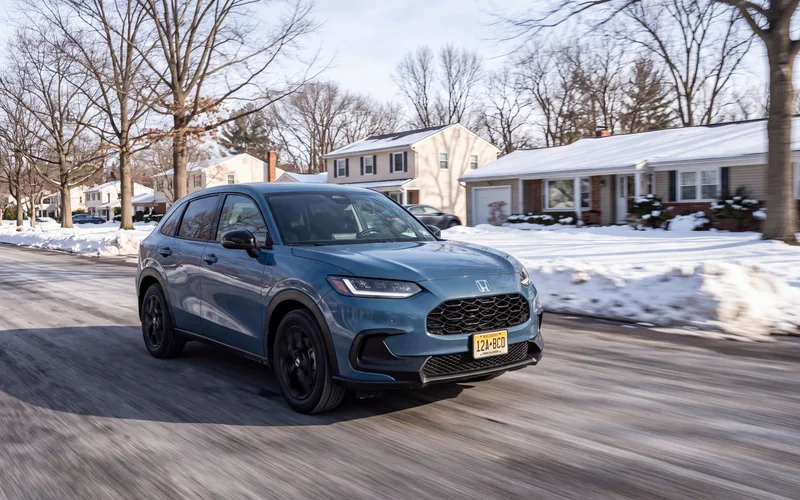 Honda HR-VSubcompact SUVBetter at: Reliability
Similar money and similar space, but with materially better reliability odds and stronger resale — the low-risk version of the same purchase.
Compare 1.93C-
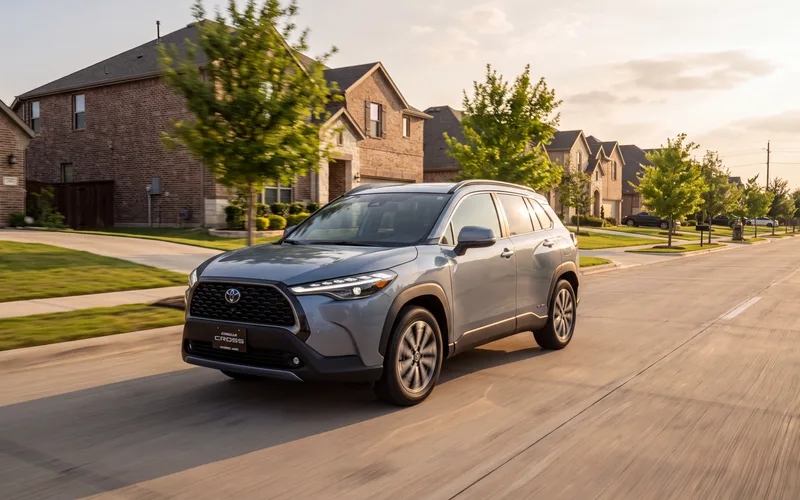 Toyota Corolla CrossSubcompact SUVBetter at: Fuel economy
Offers the hybrid powertrain the Taos lacks entirely, cutting fuel bills roughly a third while adding Toyota's dependability record.
Compare 2.05C
2.05C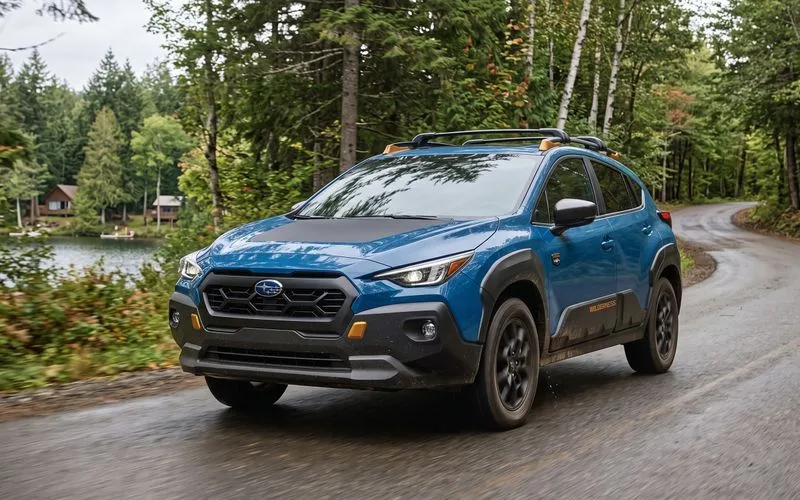 Subaru CrosstrekSubcompact SUVBetter at: AWD capability
Standard all-wheel drive, more ground clearance, and an actual tow rating for buyers who want a small SUV that handles dirt roads and a bike rack.
CompareSubject scores by year
Hover or tap a score to see what moved it versus the year before. A corner mark flags a big swing.
| Year | Performance | Efficiency | Safety | Space | Cost | Reliability | Tech | Use-case | Driving | Value |
|---|---|---|---|---|---|---|---|---|---|---|
| 2026 | 30 | 76 | 65 | 48 | 67 | 53 | 61 | 62 | 66 | 67 |
| 2025 | 30 | 71 | 61 | 48 | 69 | 52 | 60 | 61 | 66 | 68 |
| 2024 | 26 | 71 | 61 | 47 | 68 | 56 | 54 | 55 | 66 | 68 |
| 2023 | 27 | 71 | 61 | 46 | 67 | 53 | 55 | 56 | 63 | 66 |
| 2022 | 28 | 71 | 54 | 46 | 68 | 44 | 55 | 55 | 63 | 61 |
Compare two years
Best fit & conditions
Higher scores mean a better fit for that use case. Learn more about use-case fit →
Subject profile
Academic Probation · NHTSA safety recalls
Apr 22, 2026Fuel system, gasoline: delivery: pressure sensorIn the event of a rear-end crash, the fuel pressure sensor may dislodge or separate from the fuel tank. As such, these vehicles fail to comply with the requirements of Federal Motor Vehicle Safety Standard number 301, "Fuel System Integrity."
Defect
Volkswagen Group of America, Inc. (Volkswagen) is recalling certain 2025-2026 Taos vehicles. In the event of a rear-end crash, the fuel pressure sensor may dislodge or separate from the fuel tank. As such, these vehicles fail to comply with the requirements of Federal Motor Vehicle Safety Standard number 301, "Fuel System Integrity."
Risk
A fuel tank with a dislodged or separated fuel pressure sensor can leak fuel after a rollover crash, increasing the risk of a fire.
Remedy
Dealers will install a fuel pressure sensor wiring harness extension, free of charge. Owner notification letters were mailed June 4, 2026. Owners may contact Volkswagen customer service at 1-800-893-5298. Volkswagen's number for this recall is 97TH. Vehicle Identification Numbers (VINs) involved in this recall will be searchable on NHTSA.gov beginning April 29, 2026.
NHTSA campaign 26V258000 ↗Manufacturer no. 97TH38,710 vehicles potentially affected (all models in the campaign)Owners notified Jun 4, 2026Filed by Volkswagen Group of America, Inc.Filed as TAOS
7 recalls on other model years of the Taos (2022, 2025)
Mar 25, 2026Electrical system: instrument cluster/panelThe instrument panel may fail to display warning lights or gauges. As such, these vehicles fail to comply with the requirements of Federal Motor Vehicle Safety Standard number 101, "Control and Displays."
Defect
Volkswagen Group of America, Inc. (Volkswagen) is recalling certain 2025 Jetta and Taos vehicles. The instrument panel may fail to display warning lights or gauges. As such, these vehicles fail to comply with the requirements of Federal Motor Vehicle Safety Standard number 101, "Control and Displays."
Risk
An instrument panel that does not display critical safety information, such as the speedometer or warning lights, can increase the risk of a crash.
Remedy
Dealers will update the instrument panel software and replace the instrument panel as necessary, free of charge. Owner notification letters were mailed May 22, 2026. Owners may contact Volkswagen customer service at 1-800-893-5298. Volkswagen's number for this recall is 90Z5. Vehicle Identification Numbers (VINs) involved in this recall became searchable on NHTSA.gov on March 22, 2026.
NHTSA campaign 26V185000 ↗Manufacturer no. 90Z575,323 vehicles potentially affected (all models in the campaign)Owners notified May 21, 2026Filed by Volkswagen Group of America, Inc.Filed as TAOSMar 29, 2023Fuel system, gasoline: delivery: fuel pumpThe fuel delivery pump may break, which could cause a sudden engine stall.
Defect
Volkswagen Group of America, Inc. (Volkswagen) is recalling certain 2022 TAOS vehicles. The fuel delivery pump may break, which could cause a sudden engine stall.
Risk
A sudden engine stall can increase the risk of a crash.
Remedy
Dealers will replace the fuel pump, free of charge. Owner notification letters are expected to be mailed May 26, 2023. Owners may contact Volkswagen's customer service at 1-800-893-5298. Volkswagen's number for this recall is 20DV.
NHTSA campaign 23V214000 ↗Manufacturer no. 20DV15,874 vehicles potentially affected (all models in the campaign)Owners notified May 24, 2023Filed by Volkswagen Group of America, Inc.Filed as TAOSSep 14, 2022Engine and engine cooling: engine: engine control module (ecu/ecm): softwareThe engine control unit (ECU) software may cause a stall when coming to a stop.
Defect
Volkswagen Group of America, Inc. (Volkswagen) is recalling certain 2022 TAOS vehicles equipped with all-wheel drive. The engine control unit (ECU) software may cause a stall when coming to a stop.
Risk
An engine that stalls may increase the risk of a crash.
Remedy
Dealers will update the ECU software, free of charge. Owner notification letters were mailed September 28, 2022. Owners may contact Volkswagen's customer service at 1-800-893-5298. Volkswagen's number for this recall is 24iL.
NHTSA campaign 22V687000 ↗Manufacturer no. 24iL2 vehicles potentially affected (all models in the campaign)Owners notified Sep 27, 2022Filed by Volkswagen Group of America, Inc.Filed as TAOSJul 20, 2022Back over prevention: sensing system: camera · Equipment: electrical: infotainment: softwareThe manufacturing process of the eMMC memory module in the infotainment system may cause the rearview camera image not to display. As such, these vehicles fail to comply with the requirements of Federal Motor Vehicle Safety Standard number 111, "Rear Visibility."
Defect
Volkswagen Group of America, Inc. (Volkswagen) is recalling certain 2021 Golf GTI, Jetta GLI, Jetta NF, Arteon FL, Tiguan LWB, 2022 Taos, Jetta PA, Tiguan PA, 2021-2022 Atlas Cross Sport, and Atlas FL vehicles. The manufacturing process of the eMMC memory module in the infotainment system may cause the rearview camera image not to display. As such, these vehicles fail to comply with the requirements of Federal Motor Vehicle Safety Standard number 111, "Rear Visibility."
Risk
A rearview camera that does not display an image reduces the driver's rear view, increasing the risk of a crash.
Remedy
Dealers will update the infotainment software, free of charge. Owner notification letters are expected to be mailed September 16, 2022. Owners may contact Volkswagen's customer service at 1-800-893-5298. Volkswagen's number for this recall is 91DV.
NHTSA campaign 22V514000 ↗Manufacturer no. 91DV43,091 vehicles potentially affected (all models in the campaign)Owners notified Aug 2, 2022Filed by Volkswagen Group of America, Inc.Filed as TAOSMar 23, 2022SuspensionA second notice will be sent once remedy parts become available. The left or right rear suspension knuckles may corrode, crack, and break.
Defect
Volkswagen Group of America, Inc. (Volkswagen) is recalling certain 2022 Tiguan, Taos, and 2021 Tiguan long wheel base (LWB) vehicles. A second notice will be sent once remedy parts become available. The left or right rear suspension knuckles may corrode, crack, and break.
Risk
A broken rear suspension knuckle can cause a loss of stability, increasing the risk of a crash.
Remedy
Dealers will inspect and, if necessary, replace one or both rear suspension knuckles, free of charge. Owner notification letters were mailed June 13, 2022. Owners may contact Volkswagen customer service at 1-800-893-5298. Volkswagen's number for this recall is 42L8.
NHTSA campaign 22V176000 ↗Manufacturer no. 42L810,119 vehicles potentially affected (all models in the campaign)Owners notified Jun 13, 2022Filed by Volkswagen Group of America, Inc.Filed as TAOSAug 20, 2021Fuel system, gasoline: delivery: hoses, lines/piping, and fittingsThe underhood fuel supply quick-connector may detach from the fuel supply line causing a fuel leak in the engine compartment.
Defect
Volkswagen Group of America, Inc. (Volkswagen) is recalling certain 2022 Taos vehicles. The underhood fuel supply quick-connector may detach from the fuel supply line causing a fuel leak in the engine compartment.
Risk
A fuel leak may cause a stall, increasing the risk of a crash. A fuel leak also increases the risk of fire in the presence of an ignition source.
Remedy
Dealers will inspect the connection and replace the fuel supply line and connector as necessary, free of charge. Owner notification letters were mailed August 31, 2021. Owners may contact Volkswagen customer service at 1-800-893-5298. Volkswagen's number for this recall is 20DB.
NHTSA campaign 21V651000 ↗Manufacturer no. 20DB16,737 vehicles potentially affected (all models in the campaign)Owners notified Aug 31, 2021Filed by Volkswagen Group of America, Inc.Filed as TAOSAug 6, 2021Engine and engine cooling: engine: engine control module (ecu/ecm): softwareThe engine control unit (ECU) software may cause a stall when coming to a stop.
Defect
Volkswagen Group of America, Inc. (Volkswagen) is recalling certain 2022 Taos vehicles equipped with all-wheel drive. The engine control unit (ECU) software may cause a stall when coming to a stop.
Risk
An engine stall increases the risk of a crash.
Remedy
Dealers will update the ECU software, free of charge. Owner notification letters were mailed October 5, 2021. Owners may contact Volkswagen customer service at 1-800-893-5298. Volkswagen's number for this recall is 24HH.
NHTSA campaign 21V615000 ↗Manufacturer no. 24HH5,092 vehicles potentially affected (all models in the campaign)Owners notified Oct 5, 2021Filed by Volkswagen Group of America, Inc.Filed as TAOS
Source: NHTSA Office of Defects Investigation recall database, model years 2022–2026. Recalls are listed by model year as the manufacturer filed them; whether a specific car is affected depends on its VIN — check a VIN at nhtsa.gov ↗. NHTSA model names matched to this page: TAOS.
Detailed scoring by subject
1Performance & PowertrainThe Taos's lowest-graded category.0.00F
Every 2026 Taos trim (S, SE, SE Black, SEL) uses the same turbocharged 1.5-liter EA211 evo2 four making 174 hp, up 16 hp from the pre-2025-refresh engine via revised piston rings and injectors, a modified turbo housing and a larger intercooler. There is no optional or uplevel engine.
Peak torque stayed at 184 lb-ft through the 2025 refresh and carries into 2026 unchanged; it arrives low in the rev range, which reviewers credit for the Taos feeling torquier around town than its output suggests.
Volume-trim FWD Taos with the 8-speed automatic has been timed at 8.0 seconds to 60 mph; VW's own claim is optimistic at 7.5 s FWD and 7.4 s with 4Motion, and a MotorTrend run of an SEL 4Motion came in slower still at 8.9 s. 8.0 s is the defensible mid-point for the trim most buyers take.
The evo2 1.5T is smooth and essentially lag-free off the line thanks to a 1,750-rpm torque peak, and reviewers consistently describe low-speed response as sprightly — but it audibly runs out of breath at highway speed, making passes and merges feel strained. Solidly mid-band for a subcompact SUV: refined in daily use, short on reserve.
The 2025 refresh replaced both the FWD 8-speed's old pairing and, more importantly, the 4Motion model's balky 7-speed DSG with a single conventional 8-speed automatic across the whole 2026 lineup. Reviewers rate it a clear upgrade — quick, unobtrusive shifts and clean low-speed manners — held just below the top band because it prioritizes economy shift logic over decisiveness and offers no meaningful manual mode.
Volkswagen does not certify the Taos for trailer towing in the US market and publishes no tow rating; no factory hitch is offered. Third-party sites that quote ~1,000 lbs are extrapolating from other markets, not citing a manufacturer figure. Buyers needing to tow are pointed to the Tiguan or Atlas.
4Motion AWD is optional on S, SE and SE Black and standard on the SEL — available across the entire range rather than locked behind a top trim — and the AWD models add selectable drive modes including an Off-Road setting with hill-descent control. It stops short of the top band: it is a reactive on-demand clutch-based system with no low range or true torque vectoring, and it costs about $1,700 on lower trims.
4Motion versions gain 7.6 in of ground clearance (vs 6.5 in FWD) plus an Off-Road drive mode with hill-descent assist, which covers dirt roads and campsite tracks. But there is no dedicated off-road trim, no skid plating, no locker or low range, all-season tires are standard, and the base S 4Motion can't even select Off-Road Custom — firmly a pavement crossover with light unpaved ability.
One engine, one transmission, no electrification: every 2026 Taos is the 174-hp 1.5T with the 8-speed automatic, and the only drivetrain choice is FWD vs 4Motion. Rivals in the segment offer hybrids (Kona, Niro, Corolla Cross) or a second turbo engine — the Taos offers neither.
2Efficiency & RangeThe Taos's best-graded category.3.13B
Volume-trim SE FWD with the 174-hp 1.5T EA211 and 8-speed automatic is EPA-rated 31 mpg combined; the $2,250 4MOTION AWD option (7-speed DSG) drops it to 28 mpg combined. Competitive for a gas-only subcompact SUV but well behind hybrid rivals like the Corolla Cross Hybrid or Kona Hybrid.
28 mpg city for the FWD volume trim — respectable for a turbo gas subcompact SUV, but the absence of any hybrid assist leaves it far below segment leaders in stop-and-go driving.
36 mpg highway is the Taos's strongest efficiency figure and near the top of the gas-only subcompact SUV set, helped by the tall-geared 8-speed automatic and the 2025-refresh 1.5T's gasoline particulate filter and revised turbo hardware.
FWD models carry a 13.2-gallon tank, AWD a 14.5-gallon tank, so both configurations land in the 405–410 mile range — solidly above average for a subcompact SUV without being class-leading.
At EPA's standard 15,000 mi/yr and 55/45 city/highway split, the 31-mpg FWD Taos burns roughly 484 gallons of regular a year — about $1,550 at prevailing EPA regular-grade pricing. AWD's 28-mpg rating pushes it to roughly $1,710/yr, the figure most third-party cost pages quote for the model.
The 1.5T TSI runs on regular 87-octane unleaded — no premium requirement or recommendation, unusual among turbocharged German powertrains and a real running-cost advantage over premium-sipping rivals like the Audi Q3 and Mini Countryman. No special fueling, DEF, or charging infrastructure needed.
3SafetyMid-pack among this car's ten categories.2.41C+
NHTSA rates the 2026 Taos 4 out of 5 stars overall — five stars in the side crash test but only four in frontal crash and rollover. Replaces the placeholder 4.2-star estimate with the real published figure.
The Taos has never earned a Top Safety Pick. It posts Good results in driver-side small overlap, roof strength and the original side test, but only Acceptable in passenger-side small overlap and head restraints, and the updated moderate overlap front came back Marginal on elevated rear-passenger chest injury risk. VW added rear-seatbelt pretensioners and load limiters on 2025 builds after January 2025 — standard across the 2026 line — but IIHS has not published an improved award, so no credit beyond the mid band.
IQ.DRIVE is standard on every 2026 trim including the $26,500 base S — Front Assist (FCW + AEB with pedestrian and cyclist monitoring), Active Blind Spot Monitor, Rear Traffic Alert, ACC with Stop and Go, Lane Assist with Travel Assist lane centering, and Emergency Assist. Nothing in the core AEB/ACC/LKA/BSM/RCTA set is locked behind a trim walk, which is unusually complete for a subcompact SUV.
Front Assist rates well vehicle-to-vehicle (Superior in the older IIHS protocol) but IIHS rates the standard system only Marginal for pedestrian front crash prevention, carried across 2024 and 2025 test years with no hardware change for 2026. That marginal pedestrian result is one of the specific reasons the Taos is shut out of a Top Safety Pick, and it caps this item at the bottom of the middle band.
Active Blind Spot Monitor and Rear Traffic Alert are standard on all trims, and the blind-spot system goes beyond warning — with Lane Assist active it applies gentle countersteer to resist an unsafe lane change. No safe-exit alert and no rear cross-traffic braking, which keeps it out of the top of the band.
Reviewers report Travel Assist holds the Taos centered with minimal back-and-forth and meaningfully cuts highway fatigue — better than the wandering typical of the class. The knock is packaging rather than quality: lane centering only functions in tandem with adaptive cruise, never standalone, and the steering-wheel buttons for the two systems look alike.
Full-speed-range ACC with Stop and Go is standard on every trim and integrates cleanly with Travel Assist for combined highway assist. Reviewers found speed and gap keeping reliable but the braking and re-acceleration less polished than the smoothest systems, which is a mid-to-upper-band result rather than a top one.
Volkswagen offers no hands-free highway system on the Taos at any trim — Travel Assist is a hands-on lane-centering system that requires continuous steering-wheel torque. There is no BlueCruise/Super Cruise equivalent anywhere in the 2026 VW US lineup.
LED projector headlights are standard on every 2026 trim and the 2026 Taos is reported Good for headlight illumination — an improvement over 2025, where IIHS rated two headlight variants and the standard one came back Marginal. Automatic high beams are standard. Scored just below the top band because the recent Marginal variant and the trim-level split leave the across-the-range Good unconfirmed.
Genuinely good natural sightlines for the class — upright seating position, slim pillars and large third-side windows keep over-the-shoulder blind zones small. Camera compensation is the weak half: a rearview camera is standard and front/rear park distance control appears on upper trims, but no surround-view camera is offered at any price, unlike Hyundai and Kia rivals.
IIHS rates the Taos LATCH hardware Good for ease of use — two complete sets of lower anchors in the outboard positions plus a center tether anchor, with anchors that are easy to reach and hard to confuse with other seat hardware. Rear legroom is generous for a subcompact SUV, though three-across remains tight at this width.
4Space & ComfortOne of the Taos's weakest categories.1.17D
The 2026 Taos is a two-row, five-passenger subcompact SUV across every trim (S, SE, SE Black, SEL) in both FWD and 4MOTION form.
VW publishes 40.7 in of front headroom without the sunroof, dropping to 39.5 in when the panoramic roof is fitted; generous for the subcompact class thanks to the upright roofline.
Front legroom is 40.1 in — adequate in absolute terms but at the very bottom of the SUV normalization band, which spans 40–44.5 in across all SUV sizes.
39.8 in of second-row headroom is near the top of the SUV band and a standout for a subcompact — the Taos' boxy greenhouse pays off in the back seat.
37.9 in of second-row legroom on a 105.9-in wheelbase is class-leading among subcompact SUVs and closer to compact-SUV territory than to rivals like the Kicks or Venue.
The Taos is strictly a two-row, five-seat SUV — no third row is offered on any 2026 trim, so this item scores in the low band by definition.
27.9 cu ft behind the second row on FWD models (24.9 cu ft on 4MOTION, whose multilink rear suspension eats into the floor) is class-leading for a subcompact SUV, though modest against the all-SUV 25–80 cu ft normalization band.
With the 60/40-split rear seat folded the Taos opens up to 65.9 cu ft (FWD) or 60.2 cu ft (AWD) — among the best in the subcompact class, and a ski pass-through adds versatility.
Large front door pockets, a deep (if narrow) console bin and anti-tip cupholders are competent, but reviewers repeatedly flag the small armrest bin and near-useless secondary cutout — small-item storage is the Taos' weak spot next to its excellent cargo hold.
Front seats draw consistent praise for padding and bolstering, with an 8-way power driver's seat with lumbar from SE up; the rear bench is flat but benefits from the class-best legroom and headroom.
Composed and settled at highway speed, but firmer than most subcompact rivals over broken pavement — reviewers advise sticking with the 18-in wheels because the 19s let sharp impacts through.
Road noise is well suppressed for the class, but there is audible wind noise at highway speed and the 1.5T turbo four turns buzzy under hard throttle — average-to-good rather than segment-leading.
Heated front seats and a heated steering wheel, dual-zone Climatronic automatic climate control, remote start and an 8-way power driver's seat all arrive at the SE volume trim; ventilated front seats are SEL-only and there is no rear climate zone.
5Cost of OwnershipOne of the Taos's strongest categories.2.55C+
VW's 2026 lineup announcement puts the Taos S FWD at $26,500 MSRP with a $1,475 destination charge, one of the cheaper entry points in the subcompact-SUV class.
SE is the volume trim, adding heated seats, larger displays and the popular content most buyers want; $29,260 + $1,475 destination, with 4Motion a $1,700 option.
CarEdge puts scheduled maintenance alone near $507/yr (~$2,535 over five years), but VW's above-average repair costs and a ~24% chance of a major repair in the first five years push the combined figure well past the mainstream norm.
iSeeCars measures Taos five-year depreciation at 44.8% (55.2% retained) on its resale page and 48.1% (51.9% retained) in its head-to-head data; both are worse than the compact/subcompact SUV average of ~39.9% loss, so the Taos is mid-pack at best.
Volkswagen's New Vehicle Limited Warranty remains 4 years/50,000 miles for 2026 — a year longer than most mainstream rivals, though the mileage cap is tighter than the usual 36,000/3-year-plus-60,000-powertrain structure.
Volkswagen folds powertrain coverage into the single 4-year/50,000-mile New Vehicle Limited Warranty with no extended powertrain term, so the Taos is far behind Hyundai/Kia's 10-year/100,000-mile coverage and the 5-year/60,000-mile mainstream norm.
Carefree Coverage bundles two years/20,000 miles of included scheduled maintenance with three years/36,000 miles of 24-hour roadside assistance and a Car-Net connected-services trial — real value, but shorter than Toyota's 2-year/25,000-mile plan paired with longer roadside and well behind BMW/Jaguar-style multi-year programs.
$30,735 volume-trim price minus its estimated resale value after 5 years (53.5% retained, or about $16,443) leaves about $14,292 in depreciation. Add the projected $6,000 in 5-year maintenance and repairs, and owning this vehicle for 5 years costs about $20,292 in total.
6Reliability & QualityOne of the Taos's weakest categories.1.53D
Consumer Reports expects the 2026 Taos to be less reliable than the average new car, based on 2023–2025 owner data, while J.D. Power's predicted-reliability score for the model sits at an average 77/100 — genuinely mixed signals that land at the bottom of the average band. Owner-reported trouble spots cluster on infotainment (screen freezes requiring manual reboots) rather than hard mechanical failures, and the 2025 refresh reset some of the data.
Volkswagen is the least dependable brand in the 2026 J.D. Power Vehicle Dependability Study at 301 problems per 100 vehicles against a 204 PP100 industry average — a near-50% worse-than-average result, driven by infotainment defects, unintuitive controls and poor over-the-air update performance. Consumer Reports places VW 16th among brands with near-bottom owner satisfaction, so both major trackers agree the brand sits in the bottom third.
The 2026 Taos is directly implicated in a post-crash fire-risk recall — 38,710 2025–2026 units whose fuel-tank pressure-sensor wiring harness was built too short, allowing the sensor to dislodge and leak fuel after a rollover — and the same generation drew a separate 75,323-unit software recall for digital instrument clusters going fully black while driving. A fire-risk campaign plus a total loss of driver instrumentation are both severity-weighted safety defects, not routine housekeeping, and infotainment TSB activity is a persistent theme on this platform.
The 2026 Taos carries the 1.5-liter EA211 evo TSI (174 hp / 184 lb-ft, uprated for 2025 with revised piston rings and injectors, a modified turbo housing, larger intercooler and a gasoline particulate filter) — a widely deployed engine family that regularly exceeds 150,000 miles, but one with documented thermal-management weak points (water pump / thermostat housing leaks), a maintenance-item timing belt and sensitivity to fuel quality. The bigger durability win is the conventional eight-speed automatic, which replaced the balky seven-speed dual-clutch previously used in AWD Taos models — removing this drivetrain's most complaint-prone component.
The heavy 2025 refresh carried into 2026 substantially upgraded cabin materials: soft-touch dash surfaces and contrast stitching in the volume SE trim, a revised center console, and well-executed two-tone Cloud Tex leatherette that reviewers repeatedly describe as feeling more expensive than the price suggests. Hard plastics are still present but confined to low-touch lower door and console areas — better than most subcompact-SUV rivals though short of the Mazda CX-30's class benchmark.
Puebla-built body assembly is solid and the Taos itself posts a respectable 80/100 J.D. Power initial-quality score, but Volkswagen as a brand runs 225 PP100 in the 2025 Initial Quality Study — worse than the industry average and tied with Mazda well behind the leaders. Owner complaints skew toward electronics behavior (infotainment freezes, cluster software) rather than panel gaps or rattles, which keeps this mid-band rather than low.
Volkswagen sells through roughly 600–640 independent US dealers — adequate national coverage but roughly half the footprint of Toyota, Honda or Chevrolet, which means longer drives to a franchised service point in rural and interior markets. VW does not appear among the leaders in J.D. Power's dealer-service satisfaction rankings (Subaru 896, MINI 888, Honda 881 top the mass-market list), and the brand's bottom-ranked dependability result implies more service visits against that thinner network.
As a high-volume MQB-platform vehicle the Taos has broad parts availability and a genuinely large VW aftermarket, and its own running costs are modest for the class — about $187 a year in routine maintenance and roughly $2,536 over five years. The offset is brand-level repair economics: RepairPal pegs the average annual VW repair bill at $676, above the industry norm, with a ~24% chance of a major repair in the first five years and a timing belt that is a scheduled paid service rather than a lifetime chain.
7Technology & InfotainmentMid-pack among this car's ten categories.2.12C
The 2026 Taos carries a floating 8.0-inch center touchscreen standard on S, SE, SE Black and SEL, and unlike most rivals there is no larger display anywhere in the lineup. Replaces the placeholder 12.8-in figure, which was never a Taos screen size.
Post-refresh MIB3 system with a clean menu structure, large icons, hard shortcut buttons flanking the screen and — unusually for VW in 2026 — real volume and tuning knobs, which reviewers single out as an advantage over the newer MIB4 cars. Held back by an aging platform and a small display that limits split-screen usefulness.
Wireless App-Connect (Apple CarPlay and Android Auto) is standard on every 2026 Taos including the base S — a genuine strength against subcompact rivals that reserve wireless projection for upper trims. Falls short of a 100 only because the small 8-inch canvas limits how much of the projected interface is usable at once.
Command-word voice control arrives with the SE's Composition Media head unit (base S goes without), and built-in navigation is restricted to the top SEL trim. It works, but it is a pre-natural-language MIB3 assistant that most owners will bypass in favor of CarPlay/Android Auto maps.
Base six-speaker audio is unremarkable, but 2026 restores a premium option: an 8-speaker premium system on the SEL, filling the gap left when VW's Beats licensing lapsed at the end of 2024 and the 2025 SEL shipped with no upgrade at all. It is an unbranded system rather than a marquee Harman Kardon/Bose-grade setup.
A full-digital VW Digital Cockpit is standard on every trim — 8 inches with two views on the S, stepping to the 10.25-inch fully configurable Digital Cockpit Pro with up to four views (including full-screen map mirroring) on SE and SEL. Standard-fit full digital across the lineup is well ahead of the subcompact norm.
The Taos is OTA-eligible under VW's MY2020-and-newer program, with updates pushed and tracked through the myVW app after accepting the terms of service. Scope is infotainment and control-module software rather than Tesla-style feature-adding whole-vehicle releases; a mid-year update raising the wireless charger output to 15 watts is about the ceiling of what these deliver.
The myVW app covers the core set — remote lock/unlock, vehicle locate, status alerts, and remote start on trims equipped with it (SE and above) — but Remote Access runs on a Connected Services trial that converts to a paid subscription, and there is no phone-as-digital-key on the Taos.
Two 45-watt USB-C ports in the center stack are standard on every trim — unusually high output for the class — with rear USB-C on higher trims and a Qi wireless charging pad from the SE up. No household AC outlet, and the base S goes without wireless charging.
Keyless Access with push-button start and remote start begin at the SE — so the volume trim is covered, but the base S still uses a conventional key. No phone-as-key and no hands-free liftgate anywhere in the range.
A rearview camera is standard and front/rear Park Distance Control comes in at the SE, but no surround-view camera is offered on any 2026 Taos trim, and reviewers call out the backup camera's low resolution. Adequate rather than competitive in a class where 360-degree views are increasingly optional at least on the top trim.
No head-up display is offered on the 2026 Taos at any trim, including the loaded SEL. VW positions the 10.25-inch Digital Cockpit Pro as the driver-information answer instead.
8Use-Case FitMid-pack among this car's ten categories.2.15C
Class-leading rear-seat room (37.9 in legroom, 39.8 in headroom) genuinely accommodates rear-facing seats, IIHS rates LATCH ease-of-use Good, and the tall square 27.9 cu ft cargo bay swallows strollers — real strengths over most subcompact rivals. Held back from the top band by a fixed (non-sliding) rear bench and belt geometry that complicates seat-belt installs in some positions.
IQ.DRIVE is standard on every trim including the $27,975 base S — Front Assist, Active Blind Spot Monitor, Rear Traffic Alert, Travel Assist and ACC with Stop and Go — which is exactly the ADAS-on-the-trim-families-buy the item rewards. But the crash credentials underneath it are middling: NHTSA 4 stars overall and an IIHS sheet with Acceptable passenger-side small overlap and a Marginal pedestrian front-crash-prevention rating, so no Top Safety Pick, and there is no rear-occupant reminder.
Rear-seat space closer to a compact than a subcompact plus 27.9 cu ft of luggage room with all five seats occupied makes multi-hour trips workable for a family of four. Rear amenities are thin, though — rear vents and dual-zone climate only arrive at SE, and there is no rear entertainment or panoramic-roof-independent rear comfort kit; ride is a touch firm and there is wind noise at 70 mph.
The single biggest commuter upgrade of this generation is under the console: VW replaced the low-speed-jerky dual-clutch with a conventional 8-speed torque-converter automatic, and reviewers report no turbo lag and smooth, hesitation-free shifting in traffic. Standard ACC with Stop and Go plus Travel Assist on every trim, light controls and a commanding upright seating position make it a genuinely low-fatigue daily driver; only the firm-ish ride keeps it out of the top band.
31 mpg combined on regular unleaded (28 with 4Motion) works out to roughly $1,550/yr in fuel at EPA's 15,000-mile methodology, and two years of complimentary scheduled maintenance covers the early commuting miles. Good rather than exceptional: a hybrid subcompact rival clears 40 mpg, and VW's above-average out-of-warranty repair costs (~$507/yr average over five years) erode the fuel savings.
175.9 in long on a 105.6 in wheelbase, 72.5 in wide, with a tight ~35 ft turning circle and the thin-pillar/large-quarter-window greenhouse reviewers single out — this is easy urban hardware. Park Distance Control with maneuver braking is standard from SE up and a backup camera on every trim; the absence of any 360-degree camera option is the one gap versus better-equipped rivals.
VW does not certify the Taos for towing in the US at all — there is no published trailer rating, which removes the single most important work metric outright. With 174 hp, no bed, and a payload typical of a 3,200 lb unibody subcompact, its work value is limited to the (genuinely useful) 65.9 cu ft of enclosed cargo volume with the seats down.
The MQB A0 platform and EA211 1.5 TSI evo2 are high-volume global hardware (the Taos is built alongside the Chinese-market Tharu), and the 2026 engine revisions — new piston rings and injectors, modified turbo housing, larger intercooler — address known durability items. But there is no fleet or commercial track record for the Taos, no work-grade trim with washable surfaces, and VW's below-average brand reliability and repair-cost data argue against hard-use duty.
What is here is passenger-car standard: 60/40-split folding rear seat with pass-through, a near-flat load floor with an adjustable cargo floor and tie-down points, and silver roof rails from SE up that accept a ~165 lb aftermarket crossbar system. What is missing is everything work-specific — no 120V onboard outlet, no factory hitch (there is no tow rating to hang one off), no rubberized or washable cargo/floor package, and no upfit ecosystem.
Roughly 409 miles of range (13.2-gal tank at 31 mpg FWD), front seats testers found fatigue-free after three hours, and a Travel Assist lane-centering/ACC system that reviewers describe as smooth and genuinely fatigue-reducing make this a better mile-eater than its size suggests. Short of the top band because the ride is firm over broken pavement and there is audible wind noise at 70 mph.
4Motion AWD with a genuine Off-Road drive mode — hill descent control above a 10 percent grade, relaxed stability control, off-road brake tuning — plus 7.6 in of ground clearance on AWD cars covers gravel roads, trailheads and snow competently, and owners report exactly that. But the zero tow rating rules out a trailer or a hitch-mounted bike/gear rack, ground clearance is modest, there is no 120V outlet for camping, and FWD cars drop to 6.5 in.
27.9 cu ft behind the rear seat and 65.9 cu ft with it folded are near the top of the subcompact class, and the shape helps as much as the number — a tall square bay, a near-flat folded floor, 60/40 split with pass-through, an adjustable cargo floor and roof rails from SE up. Two deductions: 4Motion costs 3.0/5.7 cu ft to the rear differential, and with no tow rating there is no hitch option for a cargo tray or hitch bike rack.
9Driving ExperienceMid-pack among this car's ten categories.2.47C+
Nimble, taut and composed by subcompact-SUV standards — reviewers consistently call it one of the better-steering small crossovers — but instrumented grip is only mid-pack and the volume FWD trims use a torsion-beam rear axle that costs body control versus the 4Motion multilink setup. Sits below the class-best Mazda CX-30 while clearly ahead of the Trailblazer/Seltos tier.
Quick, accurate and light enough to be easy in town, but the effort build-up is artificial and there is little genuine feedback — precise rather than communicative.
Pedal feel is ordinary and the measured stop is long for the class — 188 ft from 70 mph is 12 ft worse than the pre-refresh car and well off the best subcompact SUVs. Adequate for everyday use, but it is the weakest link in the Taos's dynamic résumé.
The 2025 switch from the 7-speed DSG to a conventional 8-speed torque-converter automatic — carried into 2026 — removed the low-speed hesitation and jerkiness that dogged earlier Taos models, and the 174-hp/184-lb-ft 1.5T EA211 evo2 pulls cleanly. Marked down because outright response is unhurried: 8.0 seconds to 60 mph, slower than the lighter pre-refresh car.
The small-displacement turbo four sounds strained when worked hard and the tall 8-speed's downshifts hold it there, but isolation is decent for the price point and there is no meaningful vibration through the controls at cruise.
VW's own technical-specification sheet for this generation lists 37.6 ft curb-to-curb for both FWD and 4Motion, and the 2025 refresh left the wheelbase and track unchanged. Mid-pack for a subcompact SUV — usable but not the sub-36-ft city-car figure some rivals post.
Upright, commanding seating position with thin pillars and a large third side window gives genuinely good outward visibility, and the major controls are logically sited with generous front head- and legroom. Held short of the top band by VW's capacitive touch sliders and steering-wheel touch controls, which remain less satisfying than physical switchgear.
There is a recognizable VW crispness to the chassis that makes it more engaging than most budget subcompact crossovers, but modest thrust, a numb helm and a firm-without-reward ride keep it in pleasant-commuter territory rather than something enthusiasts seek out.
10Value & Market PositionOne of the Taos's strongest categories.2.51C+
Every 2026 Taos, including the $26,500 base S, carries the full IQ.DRIVE suite — AEB with pedestrian/cyclist detection, blind-spot warning, rear cross-traffic alert, lane-departure warning, lane-keeping and lane-centering assist, adaptive cruise and auto high-beams — plus an 8-inch touchscreen with wireless App-Connect, newly standard for 2026 along with rear-seat belt pretensioners. Content-per-dollar at base is competitive rather than class-leading: heated front seats, power driver's seat with lumbar, heated steering wheel, dual-zone auto climate and wireless charging all wait for the SE, where Kia and Hyundai rivals include several of those lower in the range.
The Taos backs its price with genuine substance — the roomiest rear seat and one of the largest cargo bays in the subcompact class, 174 hp from the updated 1.5T (up from 158 hp two years ago) and a conventional 8-speed automatic, and it out-accelerates and out-handles most rivals. Against that, it charges a real premium at the top: the SEL at $35,900 sits several thousand above a loaded Crosstrek or HR-V, and there is no hybrid variant in a segment where several competitors now offer one. Fair value with a price-of-entry-to-the-good-trims problem, not a bargain.
Four trims — S, SE, SE Black and SEL — spanning $26,500 to $35,900, with 4Motion AWD optional on every one, covers the budget range adequately. The spread is thinner than it looks, though: SE Black is an appearance package rather than a distinct equipment rung, there is a single powertrain with no hybrid or performance variant, and option flexibility is package-based rather than à la carte.
The Taos is an important volume model for VW and a steady mid-pack seller, but it has never been a segment force: it peaked at 65,876 units in 2024 and ran below that pace through 2025, well behind subcompact leaders like the Trax, Crosstrek, HR-V and Corolla Cross. Acceptance is solid and stable rather than rising.
Volkswagen reads as neutral in the US market — the German-brand driving-feel cachet and upscale cabin presentation help the Taos punch above mainstream rivals on showroom appeal, but middling reliability and dealer-service reputations offset it, and resale trails the class. That combination neither lifts nor materially drags the model.
Buyers get meaningful, publicly posted money on the hood without the model looking distressed: a $1,500 VW Customer Bonus running July 1–August 31, 2026, subvented financing from 3.9% APR, and advertised leases starting near $279/month. That is a genuine buyer benefit stacked on a normally selling mainstream model, not desperation pricing.
One generation, launched in the US for model year 2022 on the MQB A1 platform, given a substantial mid-cycle refresh for 2025 — new front fascia and LED light bar, redesigned interior with an 8-inch floating touchscreen, the uprated 174 hp 1.5T and an 8-speed automatic replacing the 7-speed dual-clutch. 2026 is the second year on that refresh and brings only minor equipment additions, so the car is current but no longer new, with a replacement not imminent and not announced.
Reviewers consistently rate the Taos well — a top-third finish in the subcompact class on the strength of adult-usable rear seats, a big square cargo bay, an upscale cabin and the best driving dynamics in its price bracket — but it is rarely the outright pick of a comparison test, and it holds no major award such as NACTOY or a 10Best nod. The recurring knocks are its price relative to rivals, a small infotainment display and an engine that can feel strained.