
The verdict
A capable sport compact, strong on safety and held back by efficiency.
The 2026 Integra Type S is one of the two or three best-driving front-wheel-drive cars you can buy — 320 hp, a 6-speed manual widely called the finest shifter at any price, Brembo brakes that stop from 70 mph in 148 feet, and a 24.3 cu ft hatch that still swallows a week's luggage. It is also a $54,000 four-seater that drinks 91-octane at 24 MPG combined and runs dry in under 300 miles. The trade you are making is money and running cost for driving pleasure and a genuinely luxurious cabin, because the mechanically similar Civic Type R does most of the driving part for roughly $6,000 less. Buy it if the daily refinement, the ELS Studio audio and the Acura badge are worth that premium; skip it if you need all-wheel drive, a fifth seatbelt, or an automatic.
Jump to scoresStrengths
- Class-leading chassis, steering and brakes
- A 320-hp engine and the best manual gearbox on sale
- Everything is standard — there is nothing to option
What holds it back
- Thirsty, premium-only, and out of fuel in under 300 miles
- Roughly $54,000 for a compact hatchback
- Four seats, and the back two are tight
Top alternatives
Cars shoppers cross-shop with the Acura Integra Type S 2.62C+
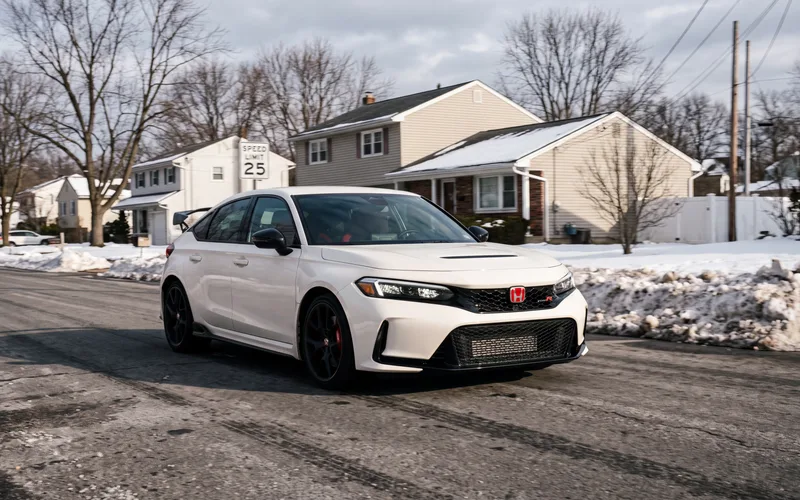 Honda Civic Type RHot HatchBetter at: Price
Same engine, same gearbox, nearly the same performance for roughly $6,000 less — the obvious cross-shop for anyone not paying for the Acura's extra refinement.
Compare 2.63C+
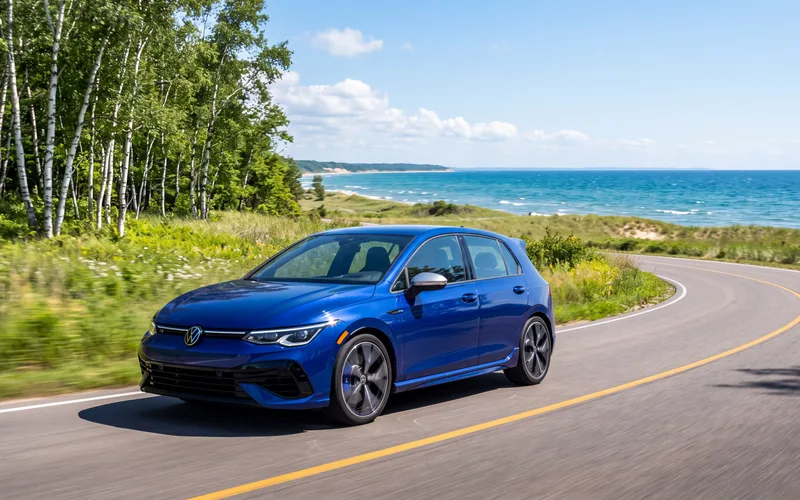 Volkswagen Golf RHot HatchBetter at: All-weather traction
Similar money buys all-wheel drive, an optional automatic and 30 MPG highway, making it far more usable as a year-round only car.
Compare 2.61C+
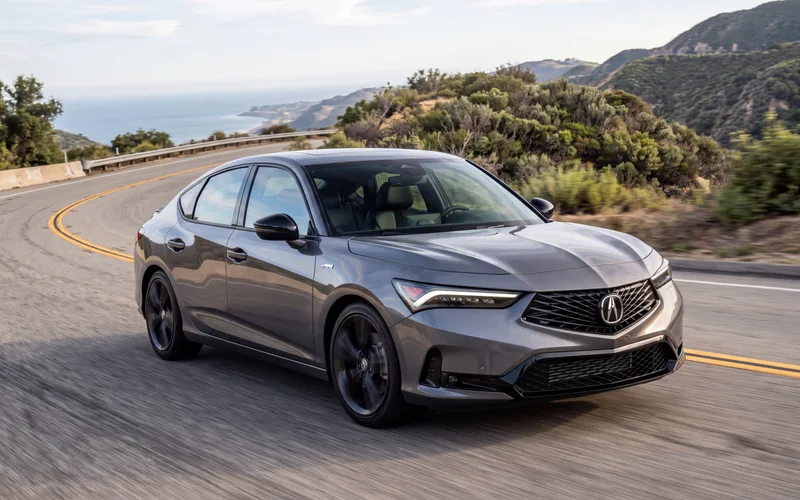 Acura IntegraSport CompactBetter at: Value
Nearly $20,000 cheaper with five seats and much better fuel economy, for buyers who want the package without the 320-hp premium.
CompareSubject scores by year
Hover or tap a score to see what moved it versus the year before. A corner mark flags a big swing.
| Year | Performance | Efficiency | Safety | Space | Cost | Reliability | Tech | Use-case | Driving | Value |
|---|---|---|---|---|---|---|---|---|---|---|
| 2026 | 58 | 16 | 78 | 54 | 54 | 77 | 70 | 51 | 77 | 72 |
| 2025 | 56 | 14 | 55 | 53 | 33 | 70 | 62 | 41 | 79 | 72 |
| 2024 | 56 | 14 | 74 | 53 | 41 | 70 | 61 | 41 | 79 | 71 |
Compare two years
Best fit & conditions
Higher scores mean a better fit for that use case. Learn more about use-case fit →
Subject profile
Academic Probation · NHTSA safety recalls
No NHTSA safety recall is on record for the 2026 Acura Integra Type S. Other model years of the Integra Type S have 2 — listed below.
2 recalls on other model years of the Integra Type S (2024–2025)
Nov 14, 2024Seats: critical fastenersThe driver's seat cushion frame may not have been tightened properly, which can result in an unsecured seat. As such, these vehicles fail to comply with the requirements of Federal Motor Vehicle Safety Standard number 207, "Seating Systems."
Defect
Honda (American Honda Motor Co.) is recalling certain 2023-2024 Honda Accord, Accord Hybrid, Civic Sedan, Civic Hatchback, Pilot, and 2024 HR-V, Acura Integra and Acura Integra Type S vehicles. The driver's seat cushion frame may not have been tightened properly, which can result in an unsecured seat. As such, these vehicles fail to comply with the requirements of Federal Motor Vehicle Safety Standard number 207, "Seating Systems."
Risk
An unsecured driver's seat may not adequately restrain the driver during a crash, increasing the risk of injury.
Remedy
Dealers will replace the driver's seat cushion frame, free of charge. Owner notification letters were mailed January 6, 2025. Owners may contact Honda customer service at 1-888-234-2138.
NHTSA campaign 24V859000 ↗121 vehicles potentially affected (all models in the campaign)Owners notified Jan 6, 2025Filed by Honda (American Honda Motor Co.)Filed as INTEGRA TYPE SOct 3, 2024SteeringThe steering gearbox assembly may have been manufactured incorrectly, which can cause excessive internal friction and lead to difficulty steering the vehicle.
Defect
Honda (American Honda Motor Co.) is recalling certain 2023-2025 Acura Integra, Civic Type R, CR-V Hybrid, CR-V, HR-V, 2022-2025 Civic, Civic Hatchback, 2024-2025 Acura Integra Type S, 2025 CR-V Fuel Cell EV, Civic Hybrid, and Civic Hatchback Hybrid vehicles. The steering gearbox assembly may have been manufactured incorrectly, which can cause excessive internal friction and lead to difficulty steering the vehicle.
Risk
Difficulty steering can increase the risk of a crash.
Remedy
Dealers will replace the worm gear spring and redistribute or add grease as necessary, free of charge. Owner notification letters were mailed November 18, 2024. Owners may contact Honda Customer Service at 1-888-234-2138. Honda's numbers for this recall are SJS, MJU, QJT and VJV.
NHTSA campaign 24V744000 ↗Manufacturer no. SJS, MJU, QJT, VJV1,693,199 vehicles potentially affected (all models in the campaign)Owners notified Nov 18, 2024Filed by Honda (American Honda Motor Co.)Filed as INTEGRA TYPE S
Source: NHTSA Office of Defects Investigation recall database, model years 2024–2026. Recalls are listed by model year as the manufacturer filed them; whether a specific car is affected depends on its VIN — check a VIN at nhtsa.gov ↗. NHTSA model names matched to this page: INTEGRA TYPE S.
Detailed scoring by subject
1Performance & PowertrainMid-pack among this car's ten categories.1.90C-
The 2026 Integra Type S carries over the K20C1 2.0L VTEC Turbo I-4 rated at 320 hp @ 6,500 rpm — 5 hp above the Civic Type R that shares the block, thanks to Acura's larger triple-outlet exhaust and revised intake. Single trim, no variants.
310 lb-ft on a broad 2,600–4,000 rpm plateau — one of the widest torque bands in the hot-hatch class and unchanged for 2026.
Car and Driver instrumented the Integra Type S at 4.8 s to 60 mph — a couple tenths quicker than the mechanically similar Civic Type R (5.0 s) despite FWD, aided by the extra 5 hp and helical LSD launch behavior. Powertrain is unchanged for 2026.
Same K20C1 as the Civic Type R but with added Acura sound damping and a more resonant triple-outlet exhaust — reviewers praise the linear turbo delivery, near-absent lag, and eager 7,000-rpm top end, with a marginally more premium NVH character than the Honda sibling.
Type S ships exclusively with the same 6-speed manual as the Civic Type R — widely cited as one of the best-shifting manuals sold at any price, with short precise throws, ideal gate spacing, and standard rev-match downshifting. No automatic option is offered.
FWD only — the Type S has no AWD option at any spec (single-trim model) and Acura has not offered SH-AWD on the Civic-platform Integra in any variant. A helical LSD tames torque steer but does not answer the AWD availability question.
Type S is sold as a single, purpose-built configuration — one 320 hp 2.0L turbo gas powertrain paired with the 6MT. No hybrid, PHEV, EV, or lower-output variant exists within the Type S nameplate (broader Integra 1.5T lineup is scored on its own record).
2Efficiency & RangeThe Integra Type S's lowest-graded category.0.00F
EPA-rated 24 mpg combined for the 320-hp 2.0T K20C1 with 6-speed manual (the only powertrain). Same combined figure as the mechanically related Civic Type R; weak within the hatchback bucket populated by efficient compacts.
21 mpg city reflects the high-output 320-hp turbo four, luxury-added curb weight (~3,220 lb), and lack of any stop/start or hybrid assist. One MPG below the lighter Civic Type R sibling.
28 mpg highway trails peer hot hatches (GTI 34, Golf R 30, GR Corolla 30) due to aggressive gearing and wide track shared with the FL5 Type R platform.
Small 12.4-gallon tank combined with 24 mpg combined yields under 300 mi of range — the shortest in the hot-hatch set and near the bottom of the hatchback band.
EPA annual fuel cost reflects 24 mpg combined × 15,000 mi × premium gas — near the top (worst) of the hatchback band, marginally higher than the CTR because of the 1 MPG city penalty.
Premium 91-octane fuel is required, not merely recommended, for the K20C1 turbo. No E85, diesel, or home-charging alternative.
3SafetyThe Integra Type S's best-graded category.3.27B+
NHTSA rated the 2024 Integra 4-door hatchback 5 stars overall; the Type S shares the same DE-generation body structure and inherits the rating.
The 2024 Integra earned IIHS Top Safety Pick+ with Good ratings in small overlap front, updated moderate overlap and side, and Good headlights; the Type S shares body structure and headlights so the crashworthiness result carries.
Type S is a single-trim configuration and includes the full AcuraWatch suite (CMBS with pedestrian AEB, ACC with Low-Speed Follow, LKAS, Road Departure Mitigation, Traffic Sign Recognition, Traffic Jam Assist) plus Blind Spot Information with Rear Cross Traffic Monitor as standard equipment.
CMBS on the current Civic/Integra platform earned Superior in IIHS vehicle-to-vehicle front crash prevention and Advanced in the updated pedestrian evaluation (day and night); the Type S runs the same sensor package.
Blind Spot Information and Rear Cross Traffic Monitor are standard on the 2026 Integra Type S; alert-only (no active steering or braking intervention).
Same LKAS and Road Departure Mitigation as base Integra; competent but reviewers describe Honda/Acura centering as slightly less confident than best-in-class systems, with occasional ping-ponging on wider lanes.
ACC and Traffic Jam Assist are standard, but the Type S is 6-speed manual only — full stop-and-go and Low-Speed Follow behavior are compromised versus the automatic base Integra because the driver must operate the clutch below the system's minimum speed.
The 2026 Integra Type S offers no hands-free highway driving system — Acura has not fielded a Super Cruise/BlueCruise equivalent on any current model.
Full LED 'Jewel Eye' headlights with auto high beams are standard on the Type S; IIHS rated the 2024 Integra's headlights Good across trims, contributing to the TSP+ award.
Same Civic-derived hatchback greenhouse as base Integra with relatively slim A-pillars; the sloping liftback compromises the rear three-quarter view slightly, offset by standard rearview camera and standard multi-view camera on Type S. Wider fenders and 19-inch wheels do not affect sightlines.
Two sets of outboard LATCH lower anchors with tether anchors on the seatback; anchors are somewhat buried in the seat bight (shared with Civic Hatchback). Compact hatchback rear seat is workable for a rear-facing seat but tight for three-across.
4Space & ComfortGrades below the middle of the scale.1.64D
Acura removed the rear center seatbelt and cushion on the Type S, replacing it with a plastic trim insert with dual cupholders — official capacity is 4 vs 5 on other Integra trims.
Type S deletes the moonroof standard on other Integra trims for chassis rigidity, adding ~1 in of front headroom over the base Integra's 37.6 in.
Shared Civic hatch platform; unchanged for 2026.
Liftback roofline yields tight rear headroom; unchanged for 2026 Type S.
Same 107.7-in wheelbase as the Civic hatch and base Integra; usable for two adults on short trips, but only two rear passengers are carried thanks to the seat delete.
The liftback body carries over unchanged from the base Integra — well above the 10-20 cu ft hatchback band; Acura does not publish a seats-folded figure.
Wide liftback opening and 60/40-split fold-flat rear seats carry over from the base Integra; console/door bins are modest, and the rear cupholder insert replacing the middle seat is a clever if polarizing storage solution. Wireless charge pad is standard.
Standard heated Ultrasuede sport seats with embossed Type S logos are heavily bolstered and praised for lateral support, with power adjustment on the driver's side; some owners report the aggressive bolsters and firm padding fatigue on long drives, and only two rear passengers are accommodated.
Standard adaptive dampers with Comfort/Sport/Sport+ modes give the Type S genuine daily-driver compliance despite performance tires and stiffer springs — reviewers describe Comfort mode as true to its name while Sport/Sport+ stay composed rather than harsh; noticeably firmer than a base Integra.
Quieter than a Civic Type R and marginally isolated versus the base Integra thanks to ANC and acoustic front glass, but larger performance tires and the tri-exit sport exhaust let more road and powertrain noise into the cabin at highway speeds — reviewers flag noise as a weakness relative to luxury small-car peers.
Standard heated front seats, dual-zone automatic climate, and a 12-way power driver's seat, but ventilated seats are not offered at all on Type S, the heated steering wheel is a ~$485 dealer accessory rather than standard, and there are no rear vents — a step behind A-Spec w/ Tech.
5Cost of OwnershipOne of the Integra Type S's weakest categories.1.62D
Single-trim Type S sits at the very top of the hatchback price band — nearly $20k above the base Integra A-Spec and only fractionally below a Golf R. Modest ~$1,000 bump over the 2025 Type S ($52,995 destination-in). The 6-speed manual, LSD, Brembos, adaptive dampers, and ELS Studio 3D audio are all standard.
Because Type S is a monospec, the 'volume' walk-up is the signature Interlagos Blue Pearl paint (~$600) that a majority of buyers pick. Adding the Performance Wheels & Tires Package (~$1,800, forged wheels + Michelin Cup 2) pushes as-typically-equipped closer to $56k for the enthusiast configuration.
Runs meaningfully higher than the base Integra (~$5,300) — 93-octane required for the K20C1, sticky performance tires that wear in ~25–30k mi, Brembo brake service is pricier, and Acura dealer labor. Still well below German premium-compact peers because the K20C1/6MT hardware is proven Honda parts.
Enthusiast-halo status, low production volume, 6MT-only, and steady dealer markups (routinely $2–5k over sticker at retail) keep residuals near the top of the segment — outperforms the base Integra (~57%) and rivals the Civic Type R (~64%). Only real risk to the number is if Acura substantially expands supply.
Acura's standard bumper-to-bumper — a full year longer than parent-brand Honda's 3/36 — applies identically to the Type S. Solid mid-pack for a premium compact; trails Hyundai/Kia/Genesis (5/60k) but beats every mainstream Japanese and most German rivals.
Same 6/70k powertrain coverage as the rest of the Integra family — only a modest step above Honda's 5/60k and well behind Hyundai/Kia/Genesis (10/100k). Adequate but the weakest coverage dimension for the Type S buyer.
Type S inherits the standard Acura Care package: 2 yr / 24,000 mi of factory-scheduled maintenance (oil, tire rotations, multi-point inspections), 4-yr/50k roadside assistance matching the warranty period, and the AcuraLink connected-services trial. Matches most premium peers; no charging credits since it's gas-only.
$54,595 volume-trim price minus its estimated resale value after 5 years (62% retained, or about $33,849) leaves about $20,746 in depreciation. Add the projected $6,600 in 5-year maintenance and repairs, and owning this vehicle for 5 years costs about $27,346 in total.
6Reliability & QualityOne of the Integra Type S's strongest categories.3.24B+
Consumer Reports has rated the DE5 Type S above-average since its 2024 launch, but the highly-strung K20C1 and shorter track record than the base Integra pull it a step below the mainstream car; JDP quality scores for Acura small cars remain competitive.
Acura has trended above the industry average in J.D. Power VDS the last several years and lands mid-pack in CR brand reliability — solid but a step behind Lexus/Toyota. Matches the base Integra for brand consistency.
The 2024-launch Type S has only picked up a small number of NHTSA campaigns (largely shared with the Integra/Civic Type R platform — backup camera software, minor electrical) with no systemic powertrain or safety-critical actions to date.
The K20C1 2.0T and Honda 6MT have proven durable across two generations of Civic Type R (FK8, FL5) with high-mileage examples in the field, but tracked cars have shown some oil-consumption/heat-soak sensitivity; slightly less field-proven than the base Integra's L15B7.
Type S upgrades the DE5 cabin with Ultrasuede-trimmed sport seats, unique red-and-black stitching, aluminum pedals and standard 16-speaker ELS Studio 3D audio — a meaningful step above the base Integra and a fair match for the price, though lower touchpoints still share Civic-grade plastics.
Built at Marysville, Ohio alongside the TLX and previously the NSX — assembly quality is a consistent Honda/Acura strength with tight panel gaps and minimal rattle complaints in owner surveys and long-term tests.
Acura runs roughly 270 US dealers — thinner than Honda/Toyota/Lexus and concentrated in metros, but service satisfaction scores are mid-pack among luxury brands and warranty coverage (4yr/50k basic, 6yr/70k powertrain) is competitive.
Core mechanicals (K20C1, 6MT, brakes) are shared with the Civic Type R and enjoy solid aftermarket support, but Type S-specific wide-body panels, Brembo hardware, and Michelin Pilot Sport 4S tires push consumables and body-repair costs well above the base Integra and mainstream hot hatches.
7Technology & InfotainmentGrades above the middle of the scale.2.77B-
Type S is a single-trim model with the 9-inch center touchscreen standard; no 7-inch option and no larger screen offered. Unchanged for 2026.
Same 9-inch Acura system as the A-Spec Technology trim — responsive, logically laid out, and reviewers consistently praise the retained physical volume knob and hard shortcut buttons. Menu graphics feel a step behind German rivals but not frustrating in daily use.
Wireless Apple CarPlay and wireless Android Auto are standard on the only Type S trim — no wired-only base variant to average against, unlike the broader Integra lineup.
Acura Navigation with 3D graphics is standard on Type S along with the associated voice-command system. Functional and above compact-hatch average, but most owners still default to CarPlay/AA maps rather than the native stack; not a natural-language assistant.
ELS Studio 3D 16-speaker premium audio (tuned by Grammy-winning producer Elliot Scheiner) is standard on Type S — a class-benchmark system that easily outperforms hot-hatch rivals' branded upgrades.
10.2-inch fully digital driver display is standard on Type S with configurable views, a dedicated Sport+ layout, and a boost/torque readout. Crisp and modern for the segment.
Acura/Honda OTA remains limited to infotainment and map updates in 2026 — no whole-vehicle OTA for powertrain, ADAS, or body electronics as Tesla, Rivian, Ford, or Hyundai/Kia offer. Any meaningful software refresh still requires a dealer visit.
AcuraLink app supports remote start, lock/unlock, vehicle finder, service scheduling, and maintenance alerts, with the 3-year Standard subscription included; premium features (concierge, geofencing, stolen-vehicle) require paid tiers. No phone-as-key.
Two front USB-C data/charge ports plus two rear USB-C charging ports and standard wireless phone charging. No household outlet, which is normal for a hot hatch.
Proximity smart entry with push-button start is standard, walk-away auto-lock available, and remote engine start is offered via key fob and AcuraLink app. No power liftgate (manual hatch on the sport model) and no phone-as-key.
Multi-angle rearview camera and front + rear parking sensors are standard on Type S — a step up from the base Integra's single-angle camera. Still no 360-degree surround-view camera, which keeps it below premium-segment leaders.
Full-color head-up display standard on Type S, showing speed, gear, shift-light, navigation prompts, and driver-assist status. Uncommon in the hot-hatch class where the Civic Type R and GR Corolla omit HUDs entirely.
8Use-Case FitOne of the Integra Type S's weakest categories.1.42D
Shares the base Integra's 37.4-in rear legroom, 60/40 split-folding rear seat, wide low-lift hatch, and 24.3 cu ft cargo hold — genuinely useful for strollers and daily kid duty. Deeply bolstered Type S front sport buckets are trickier to reach around when buckling a rear-facing seat, the manual-only powertrain is a chore in stop-and-go family duty, and IIHS LATCH ease-of-use is Marginal on the shared Civic Hatchback (anchors buried in the seat bight). Rear headroom of 36.5 in is also tight for taller kids under the sloped liftback roof.
AcuraWatch is standard on Type S (AEB w/ pedestrian detection, ACC w/ Low-Speed Follow, LKAS, RDM, Traffic Sign Recognition, Traffic Jam Assist), plus standard Blind Spot Info with Rear Cross Traffic Monitor. Shared 11th-gen Civic architecture earned NHTSA 5-star overall and IIHS Top Safety Pick+ (2024). Small demerits: no rear-occupant alert, and the Type S price of entry (~$54k) makes it a very expensive way to buy family safety versus a $32k Civic Hatchback Sport with the same ADAS.
24.3 cu ft cargo swallows a family's soft luggage without folding the bench, and the Type S adds standard ELS Studio 3D 16-speaker audio, heated/ventilated front sport seats, ANC, acoustic front glass, and adaptive dampers — a legitimately quiet, well-appointed tourer for the front row. Adaptive dampers in Comfort help, but the widebody's larger 265-section Michelin PS4S tires generate more road noise than the base car and Type S range is only ~298 mi on premium fuel (12.4-gal tank × 24 MPG combined) — well short of the base Integra's 400+ mi and a Civic Hybrid's 500+ mi. No rear HVAC vents, and rear passengers ride on a firmer bushings/damper package.
Manual-only transmission with a heavy clutch and 320 hp turbo is a fatiguing ask in bumper-to-bumper commutes, and the 265-section Pilot Sport 4S tires tramline on grooved pavement and pick up every seam. Adaptive dampers in Comfort make the Type S notably more livable than the fixed-damper Civic Type R (46.5), and standard AcuraWatch ACC with Low-Speed Follow + Traffic Jam Assist takes the sting out of highway commuting — but there is no auto option, no rev-match defeat penalty, and the sport seats trap heat despite ventilation. A meaningfully harder daily than the base Integra CVT.
EPA 24 MPG combined (21/28) is thirsty for a premium compact, and Acura specifies 91-octane premium — EPA pegs annual fuel cost at ~$3,050/yr on 15k mi/yr, nearly a third more than the base Integra. The staggered 265/30R19 Michelin Pilot Sport 4S rubber runs ~$400+/corner to replace and wears fast under sporting use. Cheaper to run than a Porsche 718, but well behind any mainstream compact commuter.
The widebody bumps overall width to 74.8 in (+2.9 in vs base Integra), noticeably wider in tight urban spots and lane-splitting parking garages, while the front lip and 4.3-in ground clearance snag on curbs and steep driveways. 185.8-in overall length and 107.7-in wheelbase are compact, standard multi-view camera helps, and the low nose gives clean forward sightlines — but the sloped liftback and wider fenders trim rear three-quarter visibility versus the base car.
No factory tow rating, no bed, and the widebody sport suspension + limited-slip diff + front lip make it even less work-suitable than the base Integra. The 24.3 cu ft cargo bay (~46 cu ft seats folded) with a wide low-lift hatch is genuinely useful to a mobile technician hauling small tools, but everything else about the car — clutch, low clearance, staggered performance tires — actively resists work duty.
The K20C1 2.0T + 6MT drivetrain is well-proven from a decade of Civic Type R fleet duty, but the Type S adds a low front lip, big Brembos vulnerable to curbing, staggered Michelin PS4S rubber, and a plush leather-trimmed interior with no washable-surface option. Less abuse-friendly than the base Integra and dramatically more expensive to repair after even minor jobsite scuffs.
No 120V AC outlet, no washable flooring, no factory hitch, and Acura does not publish a Type S tow spec. Some cargo-area tie-downs and the 60/40 fold-flat rear seat give a modest load bay for tools/parts, and the Civic-hatch body has broad aftermarket rack support — but the premium leather-trimmed interior and low, wide widebody stance discourage upfit and jobsite duty even more than the base Integra.
Aggressive but well-shaped Type S sport buckets (heated/ventilated 8-way power standard), adaptive dampers in Comfort, ANC, acoustic front glass, and standard ACC with Low-Speed Follow + Traffic Jam Assist make it a surprisingly capable long-hauler for a hot-hatch — a real step above the fixed-suspension Civic Type R. The ceiling is fuel range: 24 MPG × 12.4-gal tank = ~298 mi on premium, forcing a fuel stop every three hours, and 265-section PS4S tires generate steady road roar on coarse concrete.
FWD-only, 4.3-in ground clearance, low front lip, and staggered 265/30R19 summer-biased Michelin PS4S rubber together are actively hostile to gravel roads, snow, or a rutted trailhead — worse than a base Integra on all-seasons. No factory roof rails and no factory hitch. Aftermarket rack kits exist for the Civic Hatchback body, but no serious owner is taking a Type S off pavement.
24.3 cu ft cargo behind the rear seats expands to ~46 cu ft with the 60/40 rear seat folded, plus a wide low-lift liftback opening — near-wagon flexibility rare in a hot-hatch and identical to the base Integra. No factory hitch or roof rails, and the low-slung widebody makes strapping a rooftop cargo box less appealing than on a Golf R or GR Corolla; underfloor storage is modest.
9Driving ExperienceOne of the Integra Type S's strongest categories.3.23B+
Shares the Civic Type R's dual-axis front strut suspension, adaptive dampers, and helical LSD, wrapped in a slightly softer Acura tune that still delivers class-leading FWD body control and grip on 265/30ZR19 Michelin PS4S tires.
Dual-pinion EPS with a slightly different tune than the Civic Type R — quick, linear off-center, and unusually communicative for an electric rack; among the very best FWD setups sold today.
Brembo four-piston front calipers on 13.8-in cross-drilled rotors deliver strong initial bite, excellent pedal feel, and repeatable stops with virtually no fade in track use.
K20C1 2.0T (320 hp / 310 lb-ft) has minimal turbo lag, crisp tip-in, and a slick 6-speed manual with standard rev-matching; only downside is the light flywheel making smooth low-rpm launches slightly finicky.
More sound-deadening than the Civic Type R plus a triple-outlet exhaust give a fuller, less raspy soundtrack, but the K20C1 still buzzes at high rpm and there is noticeable synthesized engine sound piped through the speakers.
Wider front track and the aggressive 265-section front tires give the Type S a noticeably larger turning diameter than the base Integra (~37 ft) — a real weakness for tight urban U-turns.
Excellent bolstered sport seats with 8-way power adjustment, well-placed pedals for heel-toe, and a low-set wheel; slight demerits for a chunky A-pillar and rear visibility compromised by the roofline and small back glass.
Manual-only, 320-hp FWD hot hatch with an LSD, communicative steering, and adaptive dampers that let it toggle between commuter and canyon-carver — universally recommended by enthusiast press, with the Acura's slightly grown-up tune arguably making it more enjoyable on real roads than the Civic Type R.
10Value & Market PositionGrades above the middle of the scale.2.89B-
Single fully-loaded US trim with essentially no cost options: adaptive dampers, helical LSD, Brembo front brakes, 19-inch forged wheels, 16-speaker ELS Studio 3D audio, 9-inch touchscreen with wireless CarPlay/Android Auto, wireless charging, heated Ultrasuede sport seats, head-up display, and the full AcuraWatch suite — a step above the sister Civic Type R in luxury content.
At ~$52–53k MSRP the Type S packs 320 hp, adaptive dampers, LSD, Brembos and premium interior kit — fair value in premium-performance terms but roughly $5–6k above the mechanically similar Civic Type R (315 hp) which nearly every reviewer flags as the smarter dollar-for-dollar buy.
One trim, one transmission (6-speed manual), one drivetrain (FWD). Buyer choice is limited to paint color and dealer accessories — no automatic, no AWD, no track-focused variant. Slightly broader color palette than the Civic Type R, but structurally take-it-or-leave-it.
Very small annual volume — Type S runs in the low thousands of US units per year, roughly half the Civic Type R's pace and well below GR Corolla or Golf R. Consistent sell-through in its enthusiast niche but not a meaningful mainstream mover.
The Type S revival (first Integra Type S ever sold in the US and Acura's first Type S hatchback in a decade) carries real enthusiast weight and taps 1990s Integra Type R lore. Halo effect for Acura is significant, though the badge still lacks the global cult pull of the Honda red-H Type R.
Launch-era dealer markups have eased through 2025 and Acura Financial Services routinely posts modest promotional APR on the Type S, but the car generally transacts at or near MSRP with only small buyer benefit — better than the Civic Type R's harder-to-discount market but still not a deal-heavy nameplate.
Type S launched as a MY2024 model on the 5th-gen Integra / 11th-gen Civic platform, so 2026 is only year three — early mid-cycle, current tech and safety kit, no refresh yet announced and no imminent replacement risk.
Car and Driver 10Best winner 2024, MotorTrend Best Driver's Car contender, and near-universal praise for chassis, shifter, and daily-driver refinement. Loses head-to-head comparisons to the Civic Type R primarily on price rather than dynamics; reviewers routinely rank it as one of the two or three best FWD driver's cars sold today.