

The verdict
A mixed-report hot hatch, strong on reliability and held back by efficiency.
The 2026 Civic Type R is still the best-driving front-wheel-drive car you can buy. It pairs a 315-hp turbo four with a 6-speed manual that reviewers rank among the best at any price, and it keeps the hatchback's 24.5 cu ft of cargo space. At $48,090 with destination, it costs $1,000 more than last year, and most dealers are selling above sticker. You also give up a lot every day: 24 MPG on premium-recommended fuel, under 300 miles of range, a firm and noisy ride, four seats instead of five, and no automatic or AWD. Strong resale value takes some of the sting out of the price, but buy it because you want to drive it, not as a do-everything compact.
Jump to scoresStrengths
- The benchmark front-drive driver's car
- A manual gearbox and engine worth buying the car for
- Holds its value unusually well
What holds it back
- Thirsty, with a short range
- Expensive, and rarely sold at sticker
- Loud and firm as a daily driver
Top alternatives
Cars shoppers cross-shop with the Honda Civic Type R 2.69C+
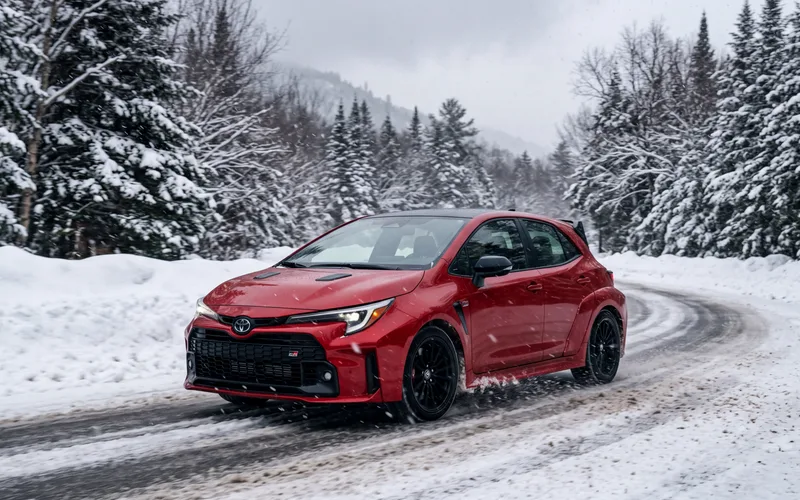 Toyota GR CorollaHot HatchBetter at: All-weather grip
It offers the same manual hot-hatch thrills as the Type R, plus all-wheel drive for buyers who face snow or rough roads.
Compare 2.63C+
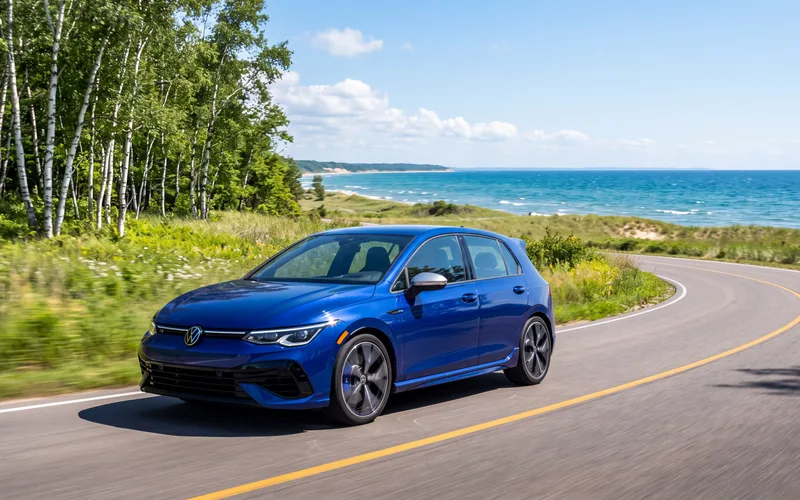 Volkswagen Golf RHot HatchBetter at: Daily livability
It pairs an automatic with all-wheel drive and calmer manners, making it the more livable everyday performance hatch.
Compare 2.72B-
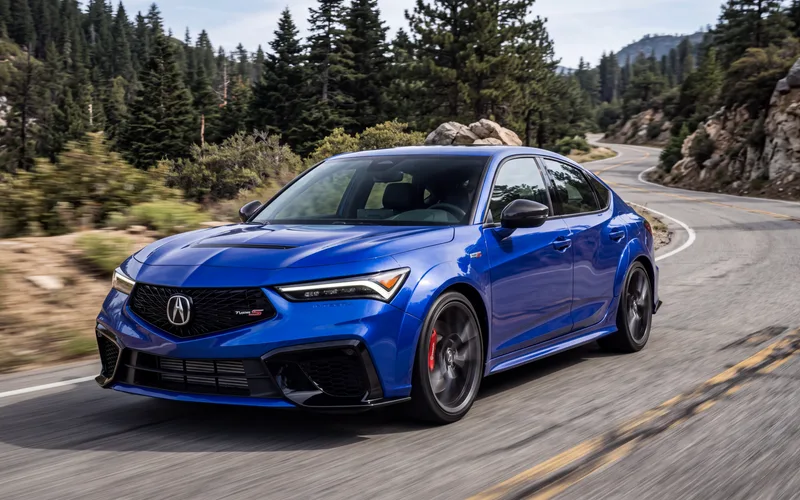 Acura Integra Type SSport CompactBetter at: Comfort
It shares the Type R's engine and hardware but wraps them in a softer, more premium package for buyers who'll drive it every day.
CompareHow it's evolved
9 scored model years · 2017–2026
Subject scores by year
Hover or tap a score to see what moved it versus the year before. A corner mark flags a big swing.
| Year | Performance | Efficiency | Safety | Space | Cost | Reliability | Tech | Use-case | Driving | Value |
|---|---|---|---|---|---|---|---|---|---|---|
| 2026 | 56 | 16 | 74 | 55 | 53 | 79 | 59 | 46 | 78 | 74 |
| 2025 | 57 | 13 | 75 | 54 | 46 | 79 | 57 | 43 | 80 | 74 |
| 2024 | 57 | 13 | 71 | 55 | 56 | 79 | 60 | 46 | 78 | 76 |
| 2023 | 57 | 13 | 73 | 55 | 59 | 77 | 59 | 46 | 78 | 76 |
| 2021 | 53 | 15 | 65 | 53 | 76 | 77 | 40 | 42 | 78 | 69 |
| 2020 | 53 | 15 | 65 | 53 | 76 | 77 | 40 | 42 | 78 | 71 |
| 2019 | 53 | 15 | 38 | 53 | 75 | 75 | 40 | 40 | 77 | 70 |
| 2018 | 53 | 15 | 22 | 53 | 75 | 74 | 38 | 40 | 77 | 71 |
| 2017 | 53 | 15 | 22 | 53 | 76 | 75 | 38 | 40 | 77 | 72 |
Compare two years
Best fit & conditions
Higher scores mean a better fit for that use case. Learn more about use-case fit →
Subject profile
Academic Probation · NHTSA safety recalls
No NHTSA safety recall is on record for the 2026 Honda Civic Type R. Other model years of the Civic Type R have 6 — listed below.
6 recalls on other model years of the Civic Type R (2017–2021, 2023–2025)
May 21, 2026Air bags: sensor: occupant classification: front passengerThe front passenger seat weight sensor may crack and short circuit, which can cause the air bags to deploy unintentionally during a crash.
Defect
Honda (American Honda Motor Co.) is recalling certain 2018-2021, 2023 Acura TLX, 2019-2024 RDX, 2017-2020, 2022-2026 MDX, 2017-2021, 2023, 2025 Honda Ridgeline, 2017-2022 Pilot, 2019-2021 Passport, 2018-2026 Odyssey, 2019-2022 Insight, 2019-2021 HR-V, 2018-2020 Fit, 2020-2022 CR-V Hybrid, 2017-2022 CR-V, 2017-2018, 2021 Civic Type R, 2017-2021 Civic hatchback, 2016-2020 Civic coupe, 2016-2022 Civic, 2017-2022 Accord Hybrid, and 2016-2022 Accord vehicles. The front passenger seat weight sensor may crack and short circuit, which can cause the air bags to deploy unintentionally during a crash.
Risk
Air bags that deploy unintentionally during a crash increase the risk of injury.
Remedy
Dealers will replace the seat weight sensors, free of charge. Owner notification letters were mailed July 7, 2026. Owners may contact Honda's customer service at 1-888-234-2138. Honda's numbers for this recall are BOL, WO9, OOA, WOM, XOH, NOC, POD, BOE, UOF, POB, EOG, AOI, QO8, TOJ, DO7, and SOK. This recall expands previous NHTSA recall number 24V064. Vehicle Identification Numbers (VINs) involved in this recall will be searchable on NHTSA.gov beginning May 29, 2026.
NHTSA campaign 26V332000 ↗Manufacturer no. Refer to Comments98,892 vehicles potentially affected (all models in the campaign)Owners notified Jul 6, 2026Filed by Honda (American Honda Motor Co.)Filed as CIVIC TYPE ROct 3, 2024SteeringThe steering gearbox assembly may have been manufactured incorrectly, which can cause excessive internal friction and lead to difficulty steering the vehicle.
Defect
Honda (American Honda Motor Co.) is recalling certain 2023-2025 Acura Integra, Civic Type R, CR-V Hybrid, CR-V, HR-V, 2022-2025 Civic, Civic Hatchback, 2024-2025 Acura Integra Type S, 2025 CR-V Fuel Cell EV, Civic Hybrid, and Civic Hatchback Hybrid vehicles. The steering gearbox assembly may have been manufactured incorrectly, which can cause excessive internal friction and lead to difficulty steering the vehicle.
Risk
Difficulty steering can increase the risk of a crash.
Remedy
Dealers will replace the worm gear spring and redistribute or add grease as necessary, free of charge. Owner notification letters were mailed November 18, 2024. Owners may contact Honda Customer Service at 1-888-234-2138. Honda's numbers for this recall are SJS, MJU, QJT and VJV.
NHTSA campaign 24V744000 ↗Manufacturer no. SJS, MJU, QJT, VJV1,693,199 vehicles potentially affected (all models in the campaign)Owners notified Nov 18, 2024Filed by Honda (American Honda Motor Co.)Filed as CIVIC TYPE RFeb 1, 2024Air bags: sensor: occupant classification: front passengerThe front passenger seat weight sensor may crack and short circuit, failing to suppress the air bag as intended.
Defect
Honda (American Honda Motor Co.) is recalling certain 2020-2022 Pilot, Accord, Civic sedan, HR-V, Odyssey, 2020 Civic coupe, Fit, 2021-2022 Civic hatchback, 2021 Civic Type R, Insight, 2020-2021 CR-V, CR-V Hybrid, Passport, Ridgeline, Accord Hybrid, 2020 Acura MDX, 2022 Acura MDX, 2020-2022 Acura RDX, and 2020-2021 Acura TLX vehicles. The front passenger seat weight sensor may crack and short circuit, failing to suppress the air bag as intended.
Risk
An air bag that deploys unintentionally during a crash can increase the risk of injury.
Remedy
Dealers will replace the seat weight sensors, free of charge. Owner notification letters were mailed March 28, 2024. This is a phased recall. Owners may contact Honda customer service at 1-888-234-2138. Honda's numbers for these recalls are XHP and VHQ.
NHTSA campaign 24V064000 ↗Manufacturer no. XHP, VHQ750,114 vehicles potentially affected (all models in the campaign)Owners notified Mar 28, 2024Filed by Honda (American Honda Motor Co.)Filed as CIVIC TYPE RDec 18, 2023Fuel system, gasoline: delivery: fuel pumpThe fuel pump inside the fuel tank may fail.
Defect
Honda (American Honda Motor Co.) is recalling certain 2013-2023 Honda Accord, Civic Coupe, Civic Sedan, Civic Hatchback, Civic Type R, CR-V, HR-V, Ridgeline, Odyssey, Acura ILX, MDX, MDX Hybrid, RDX, RLX, TLX, 2019-2022 Honda Insight, Passport, 2020 Honda CR-V Hybrid, 2018-2019 Honda Clarity PHEV, Fit, and 2015-2020 Honda Accord Hybrid, Pilot, Acura NSX vehicles. The fuel pump inside the fuel tank may fail.
Risk
Fuel pump failure can cause an engine stall while driving, increasing the risk of a crash.
Remedy
Dealers will replace the fuel pump module, free of charge. Owner letters were mailed September 6, 2024. Owners may contact Honda customer service at 1-888-234-2138. Honda's numbers for this recall are KGC and KGD. This recall is an expansion of NHTSA recall numbers 21V-215 and 20V-314.
NHTSA campaign 23V858000 ↗Manufacturer no. KGC, KGD2,490,460 vehicles potentially affected (all models in the campaign)Owners notified Mar 29, 2024Filed by Honda (American Honda Motor Co.)Filed as CIVIC TYPE RMar 30, 2023SeatsThe driver's seat frame may not have been welded properly, which can cause the seat cushion frame to break. As such, these vehicles fail to comply with the requirements of Federal Motor Vehicle Safety Standard number 207, "Seating Systems."
Defect
Honda (American Honda Motor Co.) is recalling certain 2023 Civic Type R vehicles. The driver's seat frame may not have been welded properly, which can cause the seat cushion frame to break. As such, these vehicles fail to comply with the requirements of Federal Motor Vehicle Safety Standard number 207, "Seating Systems."
Risk
A broken seat cushion frame may not adequately restrain the driver during a crash, increasing the risk of injury.
Remedy
Dealers will replace the front driver seat cushion frame assembly, free of charge. Owner notification letters were mailed May 10, 2023. Owners may contact Honda customer service at 1-888-234-2138. Honda's number for this recall is TDY.
NHTSA campaign 23V229000 ↗Manufacturer no. TDY640 vehicles potentially affected (all models in the campaign)Owners notified May 10, 2023Filed by Honda (American Honda Motor Co.)Filed as CIVIC TYPE RMar 25, 2021Fuel system, gasoline: delivery: fuel pumpThe low-pressure fuel pump inside the fuel tank may fail.
Defect
Honda (American Honda Motor Co.) is recalling certain 2019-2020 Acura MDX, MDX Sport Hybrid, RDX, TLX, Honda Accord, Civic Hatchback, Insight, 2019 Acura ILX, Honda Accord Hybrid, Civic Coupe, Civic Coupe Si, Civic Sedan, Civic Sedan Si, Civic Type R, Fit, HR-V, Odyssey, Passport, Pilot and Ridgeline, and 2018-2019 CR-V vehicles. The low-pressure fuel pump inside the fuel tank may fail.
Risk
Fuel pump failure can cause an engine stall while driving, increasing the risk of a crash.
Remedy
Honda will notify owners, and dealers will replace the fuel pump assembly, free of charge. Owner letters were mailed May 18, 2021. Owners may contact Honda customer service at 1-888-234-2138. Note: This recall is an expansion of recall 20V-314.
NHTSA campaign 21V215000 ↗Manufacturer no. Multiple Codes624,552 vehicles potentially affected (all models in the campaign)Owners notified May 18, 2021Filed by Honda (American Honda Motor Co.)Filed as CIVIC TYPE R
Source: NHTSA Office of Defects Investigation recall database, model years 2017–2026. Recalls are listed by model year as the manufacturer filed them; whether a specific car is affected depends on its VIN — check a VIN at nhtsa.gov ↗. NHTSA model names matched to this page: CIVIC TYPE R.
Detailed scoring by subject
1Performance & PowertrainMid-pack among this car's ten categories.1.79C-
The 2026 Civic Type R (FL5, carry-over year of the generation launched for 2023) keeps the 2.0L turbo K20C1 at 315 hp @ 6,500 rpm; single trim, no other output.
Peak torque of 310 lb-ft is spread across a broad 2,600–4,000 rpm plateau, one of the widest in the hot-hatch class.
Instrumented tests of the mechanically unchanged FL5 range from 4.9 s (Car and Driver) to 5.3 s (MotorTrend); 5.1 s is the midpoint, quick for a FWD-only car thanks to the helical LSD. The value moved from 5.0 to 5.1 s to reflect both tests rather than one.
Reviewers consistently praise the K20C1's linear turbo delivery, minimal lag and eager pull to the 7,000 rpm redline, a benchmark for a small-displacement turbo four in the hot-hatch class.
The 6-speed manual is widely cited as one of the best manual gearboxes at any price, with short precise throws, ideal gate spacing and standard rev-match control.
FWD only, and the Type R is a single trim, so AWD is not offered at all. The helical limited-slip differential handles traction well but does not answer the AWD question.
The Type R is sold as a single purpose-built configuration: one 315 hp turbo gas engine with a 6-speed manual. No automatic, hybrid or lower-output option exists within the nameplate.
2Efficiency & RangeThe Civic Type R's lowest-graded category.0.00F
EPA-rated 24 MPG combined for the 315 hp 2.0T with 6-speed manual, the only powertrain. That is weak among gas hatchbacks but typical for a high-output hot hatch.
22 MPG city reflects the high-output turbo four with no hybrid assist.
28 MPG highway trails efficient compact hatchbacks and some hot-hatch rivals, a result of the short gearing and wide performance tires.
The small 12.4-gallon tank combined with 24 MPG gives just under 300 miles of range, below the bottom of the hatchback band.
EPA's current figure is $3,400/yr, up from the ~$2,700 previously recorded because EPA's premium reference price has risen. That is above the worst end of the hatchback band.
Honda's own 2026 spec lists regular unleaded as acceptable with premium recommended, which fits the 'premium recommended but not required' band rather than 'required'. EPA certifies and costs it on premium, and the rated output assumes premium, so it scores at the low end of that band. Raised from 20 because the manufacturer figure outranks the earlier assumption that premium was required.
3SafetyGrades above the middle of the scale.2.99B-
NHTSA has published no overall score for the 2026 Type R — only a 5-star rollover rating (9.5% risk) — so the 11th-gen Civic Hatchback's 5-star overall result (4-star frontal, 5-star side/rollover) on the shared body structure stands in, consistent with how the fleet treats untested performance variants.
The 2026 Civic 4-door hatchback earned a Top Safety Pick (not TSP+) with Good ratings in small-overlap, updated moderate-overlap and updated side tests. IIHS tested Sport trims and does not list the Type R, so the award is inferred onto the shared unibody rather than earned outright. The previous note citing a plant-scoped TSP+ was wrong.
The Type R comes in a single trim, so everything is standard: Honda Sensing (CMBS AEB, FCW, LDW, Road Departure Mitigation, LKAS, ACC, Traffic Sign Recognition, Auto High-Beam), plus Blind Spot Information and Cross Traffic Monitor. Nothing is locked to a higher trim.
The Type R uses the same CMBS camera/radar hardware as the Civic Hatchback, and IIHS rates that car only Acceptable in both the vehicle-to-vehicle 2.0 and pedestrian front-crash-prevention tests. That is adequate rather than strong performance, and lower than the old score assumed.
Blind Spot Information and Cross Traffic Monitor are standard on the only trim. Both are alert-only: there is no active lane-change intervention, no rear cross-traffic braking and no safe-exit alert.
LKAS, Road Departure Mitigation and LDW are all standard and carry over the Civic's well-regarded calibration. Without Low-Speed Follow, though, the combined assist drops out in slow traffic, and Honda describes the steering input as only mild torque.
The Type R comes only with a 6-speed manual, so it gets plain Adaptive Cruise Control, not the Low-Speed Follow version that automatic Civics have. The system can't bring the car to a stop or follow traffic at crawling speeds, and Honda's own footnote says not to use it in heavy traffic. That makes it a highway-only aid. The previous file listed Low-Speed Follow, which was wrong.
Honda doesn't offer hands-free highway driving on any US Civic, including the Type R. LKAS requires the driver's hands on the wheel at all times.
LED headlights with Auto High-Beam are standard. IIHS rates every 2026 Civic Hatchback trim's LED headlights Good. The Type R's lamps weren't rated separately, so Good is inferred.
The Type R keeps the Civic's low cowl and thin A-pillars, but its tall rear wing cuts across the rear-window view and the deep bolsters on the front sport seats get in the way of over-the-shoulder checks. The only camera is a standard rearview camera with dynamic guidelines; there's no surround-view option.
The 2026 Type R is a 4-seater with LATCH on both outboard rear seats. The rear seat is the Civic Hatchback's, but the deeply bolstered front sport seats leave less room for rear-facing child seats. IIHS publishes no LATCH rating for this car.
4Space & ComfortMid-pack among this car's ten categories.1.70C-
The Type R's rear bench is shaped into two individual positions with no middle seatbelt, which cuts the standard Civic Hatchback's 5 seats to 4. That puts it at the bottom of the hatchback band.
With no moonroof offered, the Type R keeps the Civic Hatchback's full 39.3 in of front headroom, near the top of the hatchback band.
42.3 in of front legroom, the same as the Civic Hatchback, is mid-pack for compact hatchbacks. The low-mounted sport seat and good pedal spacing make the driving position feel tailored despite the middling number.
37.1 in of rear headroom matches the Civic Hatchback and sits mid-band for hatchbacks. It is adequate for average-height adults under the sloping fastback roof.
37.4 in of rear legroom matches the Civic Hatchback and is competitive for a compact hatch. The two rear seats work for adults, not just as token 2+2 seating.
The Type R keeps the hatchback's full 24.5 cu ft cargo hold and its 60/40 split-fold rear seat. That is unusually practical for a track-focused hot hatch.
It has the regular Civic's storage layout: a usable center console, door bins, a wireless charging tray, a wide low-lift hatch and a 60/40 fold-down rear seat. The Type R loses the middle rear seat and adds no storage features of its own.
Reviewers consistently praise the Type R's high-bolstered, suede-effect sport buckets as supportive on track and comfortable on long drives. The aggressive bolsters can squeeze larger occupants, and the front seats adjust manually with no power functions.
Comfort mode on the adaptive dampers takes the edge off, but the ride stays firm for daily use. The 19-in wheels on 265/30ZR19 Pilot Sport 4S tires send sharp impacts into the cabin, a deliberate trade-off for best-in-class body control.
Road roar from the wide, thin-sidewall summer tires is constant, and Active Sound Control adds engine noise through the speakers. Reviewers call it the Type R's biggest daily-driver weakness.
Dual-zone automatic climate control and rear-seat heater ducts are standard. The single Type R spec offers no heated or ventilated seats, no heated steering wheel, no moonroof and no remote start, which are notable gaps at its roughly $47k price.
5Cost of OwnershipOne of the Civic Type R's weakest categories.1.57D
Official 2026 pricing is $1,000 above 2025 and higher than the previous estimate of ~$46,745, so the score falls. It sits well above the hatchback band: the cost of 315 hp, adaptive dampers and Brembo brakes.
There is only one trim, so the base price is also the volume price. The official figure is higher than the earlier estimate. Dealer markups of a few thousand dollars are common but are not part of MSRP.
KBB's maintenance figure for the current FL5 is about $3,234, nearly double a base Civic's ~$1,786. Add an allowance for repairs and wear items (Michelin PS4S tires, performance brake pads, clutch) and the total is below the earlier ~$6,200 estimate, still above a regular compact hatchback.
KBB projects a 2025 Type R at about $28,425 after five years (about 60% retained). iSeeCars data on older Type Rs shows only about 20% five-year depreciation, so the true figure likely lands somewhat higher. Still one of the best residuals in the segment, trimmed slightly from the earlier 63%.
Standard Honda New Vehicle Limited Warranty, the floor of the band. It trails Hyundai/Kia at 5 years/60k.
Standard Honda 5-year/60k powertrain coverage, matching Toyota/Mazda/VW but well behind Hyundai/Kia at 10 years/100k. It is not extended for the high-output K20C1.
Honda Service Pass covers Maintenance Minder A1/B1 services (oil, filter, tire rotation, multi-point inspection) for a short period, cited as 2 yr/24k on 2026 Civics, though some dealers describe 12 mo/12k. Roadside is bundled with the 3-year/36k warranty. There are no performance-specific perks.
$48,090 volume-trim price minus its estimated resale value after 5 years (62% retained, or about $29,816) leaves about $18,274 in depreciation. Add the projected $5,200 in 5-year maintenance and repairs, and owning this vehicle for 5 years costs about $23,474 in total.
6Reliability & QualityThe Civic Type R's best-graded category.3.36B+
The 2026 Type R is a carry-over year of the FL5 generation (2023–), so it inherits the 11th-gen Civic's above-average predictions. Its higher-stress hardware (high-boost K20C1, Brembo brakes, helical LSD, adaptive dampers) and the lack of any Type R-specific predicted score keep it a notch below the regular Civic Hatchback.
Honda ranks top-5 in Consumer Reports' 2026 brand reliability rankings. J.D. Power's 2026 three-year dependability study put Honda at 211 PP100, slightly worse than the 204 industry average. Taken together the brand is still strong, but the softer J.D. Power result trims this score from the previous run.
The NHTSA feed lists no campaign for MY2026. Across the whole FL5 generation there are only two: a broad steering-gearbox campaign shared with most of Honda's lineup, and a 640-unit driver-seat weld recall on early 2023 cars. Neither involves the powertrain. The previous score cited 4–6 FL5 recalls, which the NHTSA feed does not support, so it is corrected upward.
The K20C1 2.0L turbo has been in production since the 2017 FK8 and carries into 2026 unchanged with the 6-speed manual. Maintained examples have a strong high-mileage reputation. It sits slightly below the mainstream Civic drivetrains because it runs high boost and owners often track it.
The cabin is the well-regarded 11th-gen Civic layout plus Type R-specific red suede bucket seats, red carpet, an aluminum shift knob and a serialized plaque. Reviewers rank it among the best interiors in the hot-hatch class.
The FL5 is built at Honda's Yorii plant in Japan, and long-term tests report tight assembly with few rattles. The only build-quality recall in the generation was the small seat-weld campaign on early 2023 cars.
Honda's dense US network of about 1,050 dealers makes warranty and routine service easy to reach. However, Type R-specific parts stocking and technician experience with the K20C1 and track hardware vary by dealer.
Body, chassis and electrical parts are shared with the high-volume Civic, so they are cheap and plentiful, and the K20C1 aftermarket is huge. Type R-only brakes, dampers, the LSD and interior pieces cost more and are sometimes back-ordered.
7Technology & InfotainmentMid-pack among this car's ten categories.1.95C-
A 9-inch color touchscreen with a volume knob is standard. The Type R comes in a single spec, so no larger screen is available.
Reviewers like Honda's 9-inch system for its quick responses and simple menus. It keeps a physical volume knob and customizable shortcuts, and the Type R adds the LogR performance data app. It is clean and quick but not class-leading.
Wireless Apple CarPlay and wireless Android Auto are standard on the single Type R spec.
Built-in navigation with voice recognition and live traffic is standard. The voice system uses fixed commands, so most owners default to phone projection.
A 12-speaker Bose premium system with subwoofer is standard, a strong result for a hot hatch.
A 10.2-inch fully digital cluster is standard. It has performance displays tied to the drive modes, including the +R layout, rev indicator and lap/G-force screens.
Over-the-air support is limited to infotainment and map updates through HondaLink connectivity, with no full-vehicle module updates. That trails GM, Ford and Tesla and is typical of Japanese rivals.
Corrected: the manual-only Type R has no factory remote engine start, so the HondaLink app is limited to remote lock/unlock, vehicle locate and service info. There is no digital key, and connected features are subscription-gated after the trial.
Corrected: Honda's 2026 spec sheet lists only two 2.5A USB-A ports, both in the front console, plus a wireless charger. There is no USB-C and no rear-seat port, a dated loadout for a premium-priced 2026 car.
Smart Entry with Walk Away Auto Lock and push-button start are standard. Corrected: there is no factory remote start on this manual-only car and no phone-as-key.
Corrected: the US Type R has a multi-angle rearview camera with dynamic guidelines but no front or rear parking sensors and no surround-view camera. Canadian and other-market cars get sensors; US cars do not.
No head-up display is offered; the 10.2-inch digital cluster carries all driver information.
8Use-Case FitOne of the Civic Type R's weakest categories.1.06D
With 4 seats and no rear center belt, it fits only two child seats, and the high-bolstered front seats crowd rear-door access during installs. The 60/40 fold and 24.5 cu ft cargo hold keep it usable for strollers and gear, but it is well behind the regular Civic Hatchback on family logistics.
As a single spec, the Type R includes Honda's full driver-assist suite: automatic emergency braking, forward-collision warning, road-departure mitigation, lane-keeping assist, adaptive cruise, traffic-sign recognition, auto high beams, driver attention monitoring, and blind-spot/cross-traffic monitoring. It shares the Civic Hatchback's highly rated body structure, but no parking sensors and a ~$47k entry price limit its appeal as a family car.
Four seats, a firm ride, loud tire roar, no heated seats and no rear USB ports work against family trips. The rear heater ducts, 12-speaker Bose system and 24.5 cu ft of luggage space for four people partly offset that.
A 6-speed manual is the only gearbox, so stop-and-go traffic is real work even with adaptive cruise and rev-match. Add the firm ride, aggressive bolsters and tire roar, and it is rewarding to drive but not relaxing.
It returns 22/28/24 MPG on premium fuel, and its 265/30ZR19 Pilot Sport 4S summer tires wear quickly and cost a lot to replace. Strong resale value claws some of that back, but per-mile running costs are high for a compact.
Corrected: the US Type R has no parking sensors and no surround camera, only a rearview camera. Its 39.9-ft turning circle is wide for a compact, and the rear wing cuts into rearward visibility. The compact 180.8-in footprint still slots into city spaces easily.
It has no tow rating and no bed. The 24.5 cu ft hold and 60/40 fold suit carrying small samples or tools, but the low ride and summer tires work against real loads.
Honda engineering is robust, but a high-output turbo engine, a manual clutch, a low front splitter and summer tires are poorly suited to rough jobsite use. Type Rs are enthusiast-owned, not fleet-proven.
There is no 120V outlet, no factory hitch and no washable surfaces, and the suede-effect seats don't suit dirty work. Only the hatch opening and fold-down seat help.
The 12.4-gal tank at 24 MPG combined gives about 298 miles of range. Add the firm ride, tire roar and manual-only gearbox, and long trips are tiring; standard adaptive cruise, lane keeping and supportive seats help somewhat.
It is front-wheel drive only, with a low splitter, summer tires that are unsuitable for snow or gravel, and no factory roof rails or hitch. The cargo hold still takes bikes and camping gear.
It carries 24.5 cu ft behind the rear seats, a 60/40 fold and a wide, low-lift hatch, which is real hauling ability for a hot hatch. There is no factory hitch or roof rails.
9Driving ExperienceOne of the Civic Type R's strongest categories.3.27B+
Dual-axis front struts kill torque steer, and the helical limited-slip diff and adaptive dampers deliver huge grip from the 265-section Pilot Sport 4S tires. It is widely called the best-handling front-drive car on sale.
The dual-pinion, variable-ratio electric steering is precise and well weighted, and reviewers say it gives genuine feedback. It is among the best electric steering systems in a front-drive car.
Brembo 4-piston front calipers on two-piece rotors deliver short, repeatable stops, a firm, easy-to-modulate pedal and strong fade resistance.
The 2.0T makes peak torque from 2,600 rpm and responds quickly. The rev-matched 6-speed manual is a benchmark, though there is a little softness below 2,000 rpm and the light single-mass flywheel needs care at low speed.
Active Sound Control pipes engine sound through the speakers, and the triple-outlet exhaust drones at highway cruising speeds. Enthusiasts like it under load, but it is tiring on long commutes.
Corrected to Honda's official 2026 figure of 39.9 ft, down from the 40.4 ft previously recorded. The wide 265 front tires still give it the largest turning circle among hatchbacks, well beyond the base Civic.
A low seat, ideal pedal and shifter placement, and physical climate and volume controls give it a driving position enthusiasts call class-leading. The fixed high bolsters make getting in tight for larger drivers.
It is the hot-hatch benchmark: manual-only, a sharp chassis and real breadth of ability, and among the most acclaimed driver's cars at any price.
10Value & Market PositionOne of the Civic Type R's strongest categories.3.05B
The single US trim comes fully equipped with no factory options list. Standard: adaptive dampers, Brembo front brakes, helical LSD, 19-inch wheels on Michelin PS4S, Bose audio, 9-inch touchscreen with wireless CarPlay/Android Auto, wireless charging, LogR datalogger and the full Honda Sensing suite.
It still delivers class-benchmark FWD dynamics and 315 hp, and it undercuts the Integra Type S, which uses the same engine. But the 2026 price rose $1,000 to $48,090, which narrows the gap to the GR Corolla and Golf R, and common dealer markups push the real cost past $50k.
One trim, one transmission (6-speed manual), one drivetrain (FWD). The only choices are paint and dealer accessories, a take-it-or-leave-it lineup.
Volume is low and Honda does not break the Type R out of Civic sales (238,661 Civics in 2025). Demand still outruns allocation: listings sit overwhelmingly above MSRP, which shows strong acceptance in its niche.
The red-H Type R badge is among the most aspirational in hot hatches, built on decades of racing heritage and FWD lap records. It has a strong cult following and lifts the whole Civic line.
Markups have returned rather than receded: almost all listed new Type Rs are priced above MSRP, and owners report paying 'market adjustments' of a few thousand dollars. There are effectively no factory incentives, so the score drops from the earlier 48.
The FL5 generation launched for MY2023, so 2026 is its fourth year with no announced mechanical or visual changes. That is mid-cycle: current but no longer new. Press is beginning to describe it as nearing the end of its life.
One of the most decorated hot hatches ever: Car and Driver 10Best, MotorTrend and Road & Track performance-car honors, and wins in essentially every hot-hatch comparison test. Reviewers treat it as the FWD benchmark.