
The verdict
A mixed-report sport compact, strong on driving and held back by efficiency.
The 2025 Integra Type S is one of the best front-drive driver's cars you can buy. It pairs a 320 hp turbo four with a superb 6-speed manual and Civic Type R-grade handling, and wraps it in a better-equipped, slightly more civilized hatchback with a big 24.3 cu ft cargo hold. You pay for it: $54,095 for the only configuration, 24 MPG on premium fuel, a projected 45% resale value after five years, and seats for just four. Buy it if you want to drive a manual every day and like a premium badge. Shoppers focused on value or practicality have cheaper and more flexible options.
Jump to scoresStrengths
- Benchmark front-drive handling and fun
- A great manual gearbox and an eager engine
- Fully loaded, no options to pick
What holds it back
- Thirsty, and only on premium fuel
- Expensive to buy and quick to depreciate
- Only four seats
Top alternatives
Cars shoppers cross-shop with the Acura Integra Type S 2.62C+
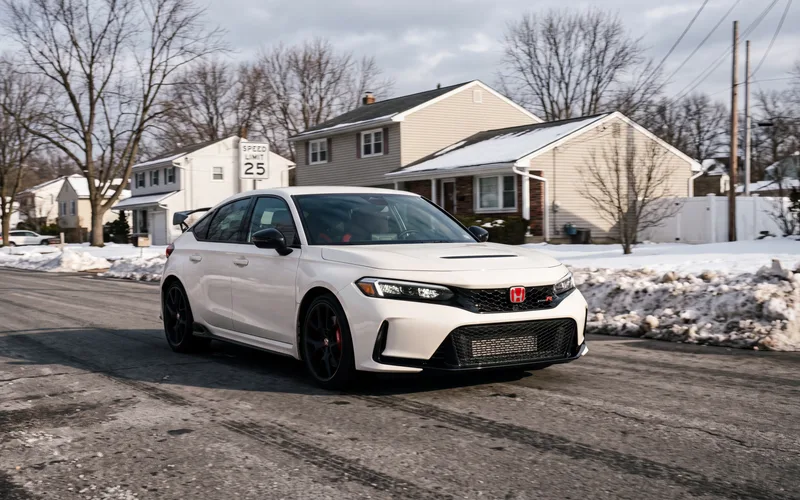 Honda Civic Type RHot HatchBetter at: Price
Same engine, same gearbox, nearly the same performance for roughly $6,000 less — the obvious cross-shop for anyone not paying for the Acura's extra refinement.
Compare 2.63C+
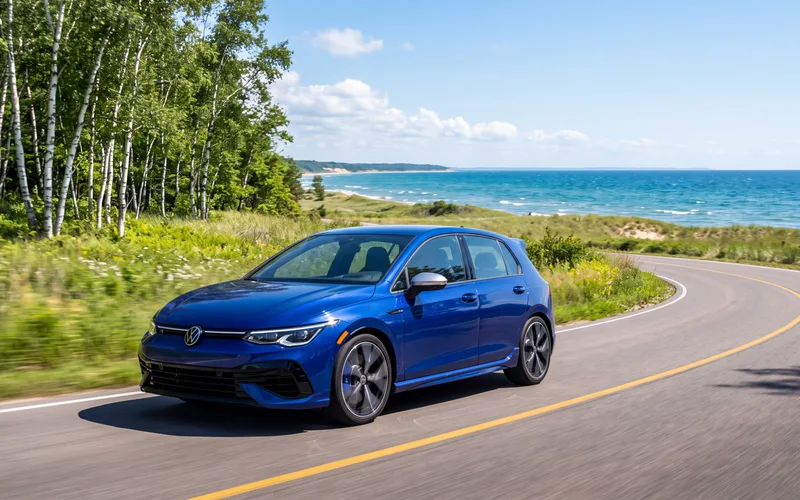 Volkswagen Golf RHot HatchBetter at: All-weather traction
Similar money buys all-wheel drive, an optional automatic and 30 MPG highway, making it far more usable as a year-round only car.
Compare 2.61C+
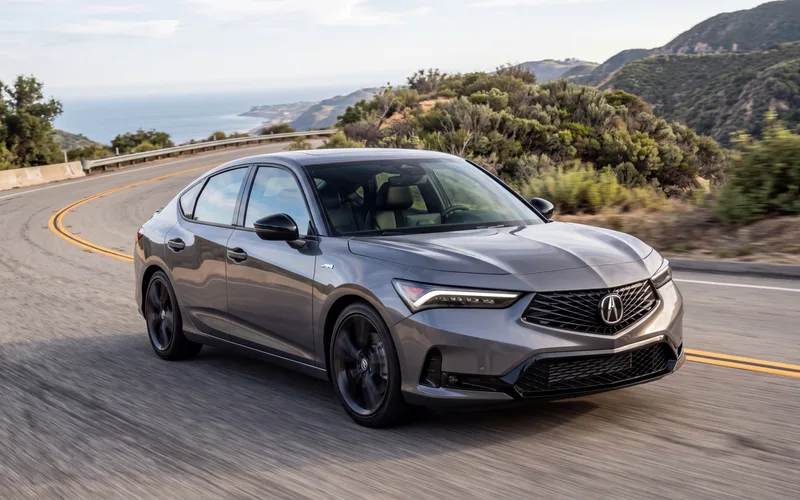 Acura IntegraSport CompactBetter at: Value
Nearly $20,000 cheaper with five seats and much better fuel economy, for buyers who want the package without the 320-hp premium.
CompareSubject scores by year
Hover or tap a score to see what moved it versus the year before. A corner mark flags a big swing.
| Year | Performance | Efficiency | Safety | Space | Cost | Reliability | Tech | Use-case | Driving | Value |
|---|---|---|---|---|---|---|---|---|---|---|
| 2026 | 58 | 16 | 78 | 54 | 54 | 77 | 70 | 51 | 77 | 72 |
| 2025 | 56 | 14 | 55 | 53 | 33 | 70 | 62 | 41 | 79 | 72 |
| 2024 | 56 | 14 | 74 | 53 | 41 | 70 | 61 | 41 | 79 | 71 |
Compare two years
Best fit & conditions
Higher scores mean a better fit for that use case. Learn more about use-case fit →
Subject profile
Academic Probation · NHTSA safety recalls
Oct 3, 2024SteeringThe steering gearbox assembly may have been manufactured incorrectly, which can cause excessive internal friction and lead to difficulty steering the vehicle.
Defect
Honda (American Honda Motor Co.) is recalling certain 2023-2025 Acura Integra, Civic Type R, CR-V Hybrid, CR-V, HR-V, 2022-2025 Civic, Civic Hatchback, 2024-2025 Acura Integra Type S, 2025 CR-V Fuel Cell EV, Civic Hybrid, and Civic Hatchback Hybrid vehicles. The steering gearbox assembly may have been manufactured incorrectly, which can cause excessive internal friction and lead to difficulty steering the vehicle.
Risk
Difficulty steering can increase the risk of a crash.
Remedy
Dealers will replace the worm gear spring and redistribute or add grease as necessary, free of charge. Owner notification letters were mailed November 18, 2024. Owners may contact Honda Customer Service at 1-888-234-2138. Honda's numbers for this recall are SJS, MJU, QJT and VJV.
NHTSA campaign 24V744000 ↗Manufacturer no. SJS, MJU, QJT, VJV1,693,199 vehicles potentially affected (all models in the campaign)Owners notified Nov 18, 2024Filed by Honda (American Honda Motor Co.)Filed as INTEGRA TYPE S
1 recall on other model years of the Integra Type S (2024)
Nov 14, 2024Seats: critical fastenersThe driver's seat cushion frame may not have been tightened properly, which can result in an unsecured seat. As such, these vehicles fail to comply with the requirements of Federal Motor Vehicle Safety Standard number 207, "Seating Systems."
Defect
Honda (American Honda Motor Co.) is recalling certain 2023-2024 Honda Accord, Accord Hybrid, Civic Sedan, Civic Hatchback, Pilot, and 2024 HR-V, Acura Integra and Acura Integra Type S vehicles. The driver's seat cushion frame may not have been tightened properly, which can result in an unsecured seat. As such, these vehicles fail to comply with the requirements of Federal Motor Vehicle Safety Standard number 207, "Seating Systems."
Risk
An unsecured driver's seat may not adequately restrain the driver during a crash, increasing the risk of injury.
Remedy
Dealers will replace the driver's seat cushion frame, free of charge. Owner notification letters were mailed January 6, 2025. Owners may contact Honda customer service at 1-888-234-2138.
NHTSA campaign 24V859000 ↗121 vehicles potentially affected (all models in the campaign)Owners notified Jan 6, 2025Filed by Honda (American Honda Motor Co.)Filed as INTEGRA TYPE S
Source: NHTSA Office of Defects Investigation recall database, model years 2024–2026. Recalls are listed by model year as the manufacturer filed them; whether a specific car is affected depends on its VIN — check a VIN at nhtsa.gov ↗. NHTSA model names matched to this page: INTEGRA TYPE S.
Detailed scoring by subject
1Performance & PowertrainMid-pack among this car's ten categories.1.78C-
2025 is the second model year of the DE5 Type S (launched for 2024) and carries the 2.0L VTEC Turbo I-4 unchanged at 320 hp, 5 hp above the Civic Type R that shares the engine. The Type S is sold as one trim.
Peak torque is 310 lb-ft, held across a broad 2,600–4,000 rpm plateau. That is strong for a front-drive hatchback.
Car and Driver instrumented a 2025 Type S at 5.1 s to 60 mph and 13.8 s @ 104 mph in the quarter mile. Across six published tests the average is about 5.25 s. This is quick for FWD, though a tick behind the AWD GR Corolla and Golf R.
Reviewers describe the K20C1 as linear and nearly lag-free, with an eager top end to 7,000 rpm. Acura adds a valved triple-outlet exhaust and extra sound damping over the Civic Type R. The rev hang typical of Honda turbo fours keeps it short of the top band.
The only transmission is the Type R's 6-speed manual, with short, precise throws and standard automatic rev-matching. Reviewers rank it among the best manual gearboxes sold at any price. There is no automatic, but that restricts availability rather than shift quality.
Front-wheel drive only, with a helical limited-slip differential. No AWD is offered on any Integra, while rivals such as the GR Corolla and Golf R are AWD.
One take-it-or-leave-it configuration: the 320 hp 2.0T with the 6-speed manual and FWD. There is no automatic and no electrified variant. The 1.5T Integra is scored as its own nameplate.
2Efficiency & RangeThe Integra Type S's lowest-graded category.0.00F
The EPA rates the 2025 Type S (2.0T, 6MT, FWD) at 24 mpg combined. That is low for a gas hatchback because the hatchback band includes economical compacts.
The EPA city figure is 21 mpg, with no start/stop or hybrid assist (EPA lists start-stop: N).
The EPA highway figure is 28 mpg. Short performance gearing holds it well below hot-hatch rivals such as the GTI.
A 12.4-gallon tank at 24 mpg combined gives just under 300 miles, below the floor of the hatchback band.
The EPA's current annual fuel cost estimate for this premium-fuel 24-mpg configuration is $3,400, above the top (worst) of the hatchback band.
Acura specifies premium 91-octane for the 25-psi high-boost engine. Its spec sheet lists premium as the 'Recommended Fuel', and the EPA rates the car on premium. There is no regular-fuel option, so in practice the fuel cost premium cannot be avoided. That puts it at the top of the low band rather than in the 'recommended only' range.
3SafetyMid-pack among this car's ten categories.1.73C-
NHTSA lists the 2025 Integra Type S as its own vehicle and has not crash-tested it: overall, frontal and side are all 'Not Rated', with only a calculated 5-star rollover rating. The base Integra's 5-star overall rating belongs to a separate NHTSA entry and is not borrowed here.
The 2025 Integra earned a Top Safety Pick (not TSP+) with Good small-overlap and updated side results, but only Acceptable in the updated moderate overlap test, where the rear-passenger restraints were rated Marginal. The IIHS page covers the Integra body structure and does not name the Type S, so the award applies to it by shared structure, not by its own test.
The Type S comes in one trim with the full AcuraWatch suite (CMBS with pedestrian detection, ACC, LKAS, Road Departure Mitigation, Traffic Sign Recognition) plus Blind Spot Information and Rear Cross Traffic Monitor as standard. It loses a little because its 6-speed manual means Low-Speed Follow, which comes only with the CVT, is not available.
The standard CMBS earned a Good IIHS pedestrian front-crash-prevention rating, with credit for high-beam assist, across 2024-26 Integras. IIHS publishes no current vehicle-to-vehicle rating for this generation, so the score stays below the top band.
Blind Spot Information and Rear Cross Traffic Monitor are standard on the single Type S trim. Both only warn the driver; neither steers or brakes, and there is no safe-exit alert.
LKAS and Road Departure Mitigation are standard and work, but reviewers find Honda/Acura lane centering less smooth than the best systems, with some wandering in wide lanes. On the manual Type S the centering is only available above the ACC minimum speed.
Adaptive Cruise Control is standard, but the Type S's manual gearbox rules out the Low-Speed Follow that lets the CVT Integra stop and go in traffic. The system cancels at low speed and the driver works the clutch, so it covers highway cruising only.
There is no hands-free driving system on the 2025 Integra Type S, and Acura sells no Super Cruise/BlueCruise-style system on any model.
IIHS rates the Integra's LED projector headlights Acceptable on all trims. Auto high beams are standard, but the lights do not swivel with the steering. The Type S uses the same lamp design, though IIHS does not list it separately.
The Civic-derived body has fairly slim A-pillars and a good view forward. The sloping liftback and the Type S's fixed rear wing restrict the view through the rear glass and over the rear quarters, though the rearview camera helps make up for it.
IIHS rates the Integra's LATCH Acceptable: full lower anchors in the two outboard rear seats, and a tether in the center seat that can borrow the lower anchors. The low hatchback rear seat and roofline make fitting a seat harder, especially a rear-facing one.
4Space & ComfortGrades below the middle of the scale.1.53D
Like the Civic Type R, the Type S deletes the rear center seat, so it carries four passengers versus five in every other Integra trim.
The Type S drops the moonroof fitted to other trims, gaining a full inch of front headroom over the 37.6 in of the base Integra.
Front legroom is shared with every Integra trim and is mid-pack for a compact.
The fastback liftback roofline pinches rear headroom; taller adults brush the headliner.
The 107.7-in wheelbase gives reasonable rear legroom for two adults, though only two rear seats are fitted.
The liftback body gives cargo space well above most hatchbacks and far above any compact sedan trunk.
The wide liftback opening and 60/40 fold-flat rear seats are useful, but console and door bins are ordinary and the cabin offers nothing clever beyond Civic-grade storage.
Perforated Ultrasuede sport seats with a 12-way power driver seat and power lumbar are supportive and well bolstered, but the passenger seat is manual and the firm bolsters do not suit every body over long trips.
Standard adaptive dampers make Comfort mode genuinely livable and half a step softer than the Civic Type R, but 19-in wheels on 265/30 tires still make the ride firm, and Sport+ is hard over bumps.
Wide summer tires and a buzzy engine make the cabin noisy at highway speeds, so conversation takes effort. It is quieter than a Civic Type R but well behind entry-luxury rivals.
Heated front seats and dual-zone automatic climate are standard, but ventilated seats, a heated steering wheel, memory seats and remote start are not offered on the Type S, which is thin equipment for its price.
5Cost of OwnershipOne of the Integra Type S's weakest categories.0.17F
The 2025 Type S is sold in one trim with the 6-speed manual, so the entry price is the only price. That puts it at the very top of the hatchback price band, about $7k above the mechanically related Civic Type R.
The Type S is a monospec model with no factory trim walk, so the volume-trim price equals the base MSRP. Premium paint and accessories are the only additions a buyer can make.
This is well above a regular Integra 1.5T. Performance tires, larger Brembo brakes and premium fuel requirements raise upkeep, though the total is slightly below KBB's figure for the Civic Type R (~$8,046).
KBB projects the Type S to lose nearly $30k over five years, much faster than the Civic Type R's ~60% retention. The Acura badge's higher entry price doesn't carry the Type R's used-market premium.
This is Acura's standard New Vehicle Limited Warranty, a year longer than Honda's 3/36k on the Civic Type R. It still trails Hyundai's 5/60k.
Acura's 6/70k powertrain coverage is one step above Honda/Toyota/VW's 5/60k but well short of Hyundai's 10/100k.
The 2025 Type S gets 1 year / 12,000 miles of complimentary maintenance (oil and filter, tire rotation, multi-point inspection), plus Acura's roadside assistance for the length of the 4/50k warranty and an AcuraLink trial. That is a short maintenance benefit, slightly better than Honda's overall package because the roadside coverage runs longer.
$54,095 volume-trim price minus its estimated resale value after 5 years (44.9% retained, or about $24,289) leaves about $29,806 in depreciation. Add the projected $7,113 in 5-year maintenance and repairs, and owning this vehicle for 5 years costs about $36,919 in total.
6Reliability & QualityOne of the Integra Type S's strongest categories.2.77B-
Consumer Reports puts the 2025 Integra at about average reliability for its model year; the Type S is a low-volume variant (launched for 2024) with little model-specific survey data, so it inherits the Integra's average prediction rather than a top-tier one. Third-party aggregators sit in the same mid-pack range.
Acura has slipped in J.D. Power's VDS for two straight studies, sitting well above the industry-average problem rate and among the bottom group of brands, largely on infotainment/tech complaints; Consumer Reports' brand rankings are kinder, keeping it mid-pack overall.
The 2025 Type S has one NHTSA campaign — the Honda-wide steering gearbox recall (excess internal friction can make steering difficult; fix is a new worm-gear spring and grease). That is a safety-relevant system but the remedy is simple and nothing is powertrain- or fire-related; the 2024-only seat-cushion-frame recall does not cover 2025.
The 320-hp K20C1 2.0T and six-speed manual are carried over from the Civic Type R (FK8 2017–2021, FL5 2023+) and have a solid long-term record with no systemic failure pattern; owners who track the car report heat-soak and some oil-consumption sensitivity, and the high-output tune carries more risk than a base commuter engine.
Type S adds Ultrasuede/leather sport seats, contrast stitching, aluminum pedals and the 16-speaker ELS Studio 3D audio, which lifts the DE5 cabin above the base Integra, but lower door and console plastics are Civic-grade at a ~$50k price point.
Assembled in Marysville, Ohio, with consistent panel gaps and few rattle complaints in reviews and owner forums; the 2024 seat-frame torque recall is a reminder that assembly slips happen, but it was a one-off and not a 2025 issue.
Acura has roughly 270 US dealers — a reasonable footprint for a luxury brand but far thinner than Honda's, and concentrated in metro areas; its service satisfaction is mid-pack among luxury brands, backed by a 4-yr/50k basic and 6-yr/70k powertrain warranty.
Engine, gearbox and many chassis parts are shared with the Civic Type R, which has strong aftermarket support, but the Type S's own wide-body front fenders, fascia, Brembo front brakes and 265-section performance tires make body repairs and consumables expensive compared with a regular compact.
7Technology & InfotainmentMid-pack among this car's ten categories.2.17C
The single Type S trim gets the larger 9-inch touchscreen; nothing bigger is offered.
The 9-inch system responds quickly and keeps a physical volume knob and shortcut buttons, which reviewers credit for easy use. The graphics look dated next to luxury rivals.
Wireless Apple CarPlay and Android Auto are standard on the only Type S trim.
There is no built-in navigation, and the Type S drops the Alexa Built-In fitted to the A-Spec Technology trim. Voice control is limited to Siri Eyes Free and basic commands, so owners rely on phone mirroring.
The 16-speaker ELS Studio 3D system is standard and well above hot-hatch norms, but reviewers say it lacks the power and richness of the ELS systems in the TLX and MDX.
A crisp, configurable 10.2-inch digital cluster is standard, with performance displays suited to the car's mission.
Acura offers no whole-vehicle over-the-air updates for the Integra, and software changes still go through the dealer. On the Type S, AcuraLink is only the Basic tier.
The Type S gets only Basic AcuraLink, and remote engine start is not available on it at all, so the app is limited to core status and lock/locate functions with paid tiers for more.
The front row gets one USB-A port, one 3A USB-C charge-only port, a 12-volt outlet and a Qi wireless pad. Rear passengers get no USB ports, since the rear USB-A pair on the A-Spec Technology trim is deleted on the Type S.
Smart entry with walk-away auto-lock (doors and tailgate) and push-button start are standard, but there is no remote start, phone-as-key or power liftgate.
A multi-view rear camera with dynamic guidelines, front and rear parking sensors and low-speed braking control are standard. A 360-degree camera is not offered.
A 5.3-inch head-up display is standard on the Type S. That is rare among hot hatches: the Civic Type R and GR Corolla don't offer one.
8Use-Case FitOne of the Integra Type S's weakest categories.0.73F
With only two rear seats, a low roofline, firm sport seats and a 4.0-in ground clearance, it handles one or two kids but is awkward for daily car-seat duty. The big hatch is the saving grace for strollers.
The full AcuraWatch suite, a rear-seat reminder and rear side airbags are standard. Because it is manual-only, the Type S loses low-speed follow on adaptive cruise and Traffic Jam Assist.
The cargo hold easily swallows a family's luggage, but the four-seat limit, firm ride, highway noise and rear row with no USB ports make long family trips a compromise.
A light, precise clutch and a livable Comfort damper mode make it manageable in traffic. Manual only, no low-speed-follow cruise, a stiff ride and road noise add fatigue in stop-and-go commuting.
At 24 mpg combined on 93-octane premium, with 265-section summer tires that wear quickly, it is expensive per commuting mile for a compact.
The compact 186-in footprint and front and rear parking sensors help, but the 39.7-ft turning circle, 74.8-in width and 4.0-in ground clearance make tight spaces, curbs and steep driveways a chore.
There is no published tow rating and payload is small. The liftback cargo hold is the only work asset, so it is not meaningfully work-capable.
The K20C turbo engine is robust in Type R service, but Ultrasuede upholstery, low clearance and track-focused tires suit neither hard use nor fleet duty.
Its only power source is a single 12-volt outlet, with no roof rails, hitch or work-oriented features.
Supportive seats, a standard head-up display, adaptive cruise and a usable Comfort mode help on long drives. Road noise, a firm ride and a 12.4-gal tank (about 350 highway miles) limit its stamina.
Front-wheel drive, 4.0 in of ground clearance and summer-only tires keep it strictly on pavement. Light gear goes inside the big hatch.
The 24.3-cu-ft liftback and 60/40 fold-down rear seats take bulky gear better than most compacts. There are no roof rails or hitch from the factory.
9Driving ExperienceThe Integra Type S's best-graded category.3.34B+
The Type S shares the Civic Type R's dual-axis front strut, adaptive dampers, helical LSD and wider tracks, and reviewers rank it among the best-handling front-drive cars sold, only half a step softer than the Type R.
The high-performance variable-ratio electric steering (11.62:1) is quick, naturally weighted and unusually communicative for an electric rack.
Brembo four-piston monobloc front calipers on 13.8-in two-piece rotors give strong, fade-resistant stops and excellent pedal feel.
The 320-hp 2.0T (310 lb-ft from 2,600 rpm) responds crisply with little lag, and the six-speed manual with rev-matching and a lightweight flywheel is a benchmark shifter. The light flywheel makes low-rpm smoothness take some practice.
The triple-outlet exhaust has character, but reviewers call the engine loud and buzzy at times, and Active Sound Control adds synthetic sound. It is more refined than the Civic Type R, though not luxury-smooth.
The wider front track and 265-section tires stretch the turning diameter well beyond the base Integra's, near the bottom of the hatchback band.
A low seat on a 12-way power base, a tilt-and-telescoping wheel and well-spaced pedals for heel-toe make an excellent driving position. The fastback roofline limits rear visibility.
A manual-only, 320-hp front-drive hatch with a limited-slip differential and adaptive dampers, it is universally recommended by enthusiast outlets and drives like a grown-up Civic Type R.
10Value & Market PositionOne of the Integra Type S's strongest categories.2.87B-
The one US trim comes fully loaded with no cost options: adaptive dampers, helical limited-slip differential, Brembo front brakes, 19-inch wheels, 16-speaker ELS Studio 3D audio, wireless CarPlay/Android Auto, wireless charging, head-up display and the full AcuraWatch suite. That is more luxury content than the sister Civic Type R.
At $54,095 you get 320 hp, an LSD, adaptive dampers and a premium interior, which is fair value for a premium performance car. But it costs about $7k more than the 315-hp Civic Type R ($47,045), which reviewers usually call the smarter buy per dollar, and it depreciates faster.
There is one trim, one transmission (6-speed manual) and one drivetrain (FWD). Buyers choose only the paint color and dealer accessories, with no automatic or AWD option.
The Type S makes up about a tenth of Integra sales, which means low-thousands of US units a year. Allocations sell through steadily in an enthusiast niche, but it is not a mainstream seller.
The Type S draws on 1990s Integra Type R heritage and is Acura's performance halo. Acura itself is a mid-pack premium brand, and the badge lacks the Honda Type R's global cult following, which shows up in weaker resale.
Launch-era dealer markups had mostly faded by the 2025 model year. Acura Financial Services posts occasional promotional APR, but the car usually sells near MSRP with only small discounts.
The Type S launched as a 2024 model on the current Integra/11th-gen Civic platform, so 2025 is its second model year. It carries over unchanged with current tech and no replacement on the horizon.
It won a Car and Driver 10Best award at launch and has kept a Car and Driver Editors' Choice rating, with near-universal praise for the chassis, shifter and daily usability. In comparisons it usually loses to the Civic Type R on price and ultimate pace rather than on quality.