
The verdict
A mixed-report luxury coupe, strong on driving and held back by efficiency.
The 2021 BMW 230i is the last of the old-school small BMWs — a rear-drive coupe on a 105.9-inch wheelbase, 248 hp, 0-60 in 5.6 seconds, and the final year you could order one with a real six-speed manual. That's the whole argument, and it's a good one: it drives better than almost anything else you can buy for $36,895, and eight years of production left it mechanically sorted with just two minor recalls. The catch is that 2021 was the F22's farewell lap and it shows — an 8.8-inch screen, analog gauges, no Android Auto, no lane centering, no head-up display, and IIHS-Marginal standard headlights. Buy it because you want to drive it, not because you want the newest thing in the showroom.
Jump to scoresStrengths
- Genuinely great to drive — the reason this car exists
- One of the best automatics of its era, behind a torquey little turbo
- A clean, mature machine in its eighth and final year
What holds it back
- The technology is a full generation behind, and it can't be optioned away
- Thin driver assistance and Marginal-rated standard headlights
- Premium fuel and a small tank make it costlier per mile than 28 MPG suggests
Top alternatives
Cars shoppers cross-shop with the BMW 2 Series 2.88B-
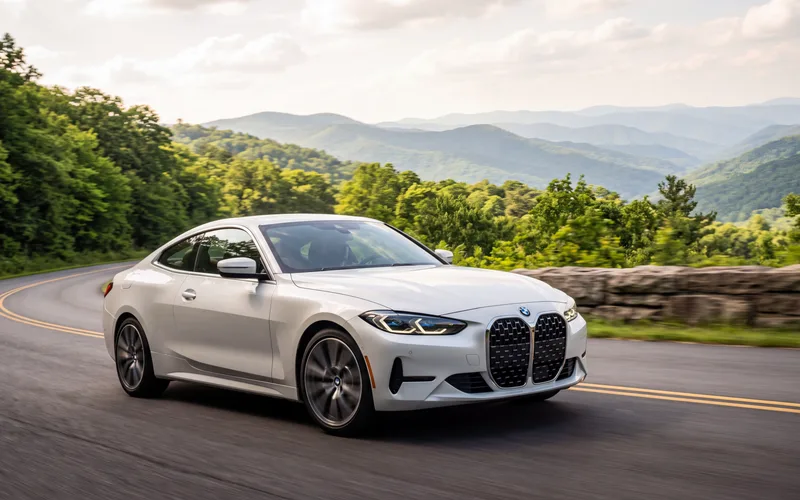 BMW 4 SeriesLuxury CoupeBetter at: Space and refinement
Same BMW driving character with a usable back seat, a calmer ride, and a much larger 14.9-inch display for a few thousand dollars more.
Compare 2.30C+
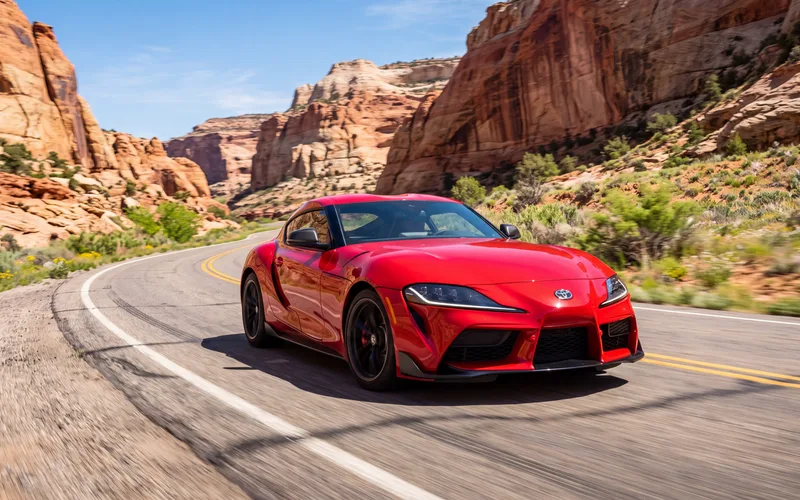 Toyota GR SupraSports CarBetter at: Ownership cost
Gets you the same B58 inline-six in a sharper two-seat package with Toyota service costs instead of BMW's roughly $7,800 five-year bill.
Compare 2.74B-
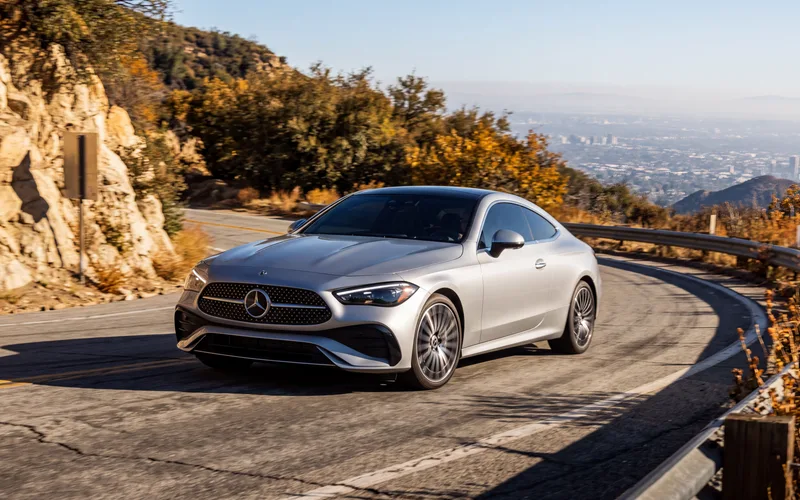 Mercedes-Benz CLE CoupeLuxury CoupeBetter at: Luxury feel
The pick if you want the coupe to feel like a luxury item rather than a sports car, with a plusher cabin and a softer ride.
CompareHow it's evolved
10 scored model years · 2017–2026
Subject scores by year
Hover or tap a score to see what moved it versus the year before. A corner mark flags a big swing.
| Year | Performance | Efficiency | Safety | Space | Cost | Reliability | Tech | Use-case | Driving | Value |
|---|---|---|---|---|---|---|---|---|---|---|
| 2026 | 59 | 34 | 74 | 58 | 43 | 79 | 77 | 47 | 78 | 73 |
| 2025 | 60 | 41 | 67 | 56 | 47 | 74 | 78 | 44 | 80 | 73 |
| 2024 | 60 | 35 | 60 | 52 | 49 | 75 | 78 | 39 | 76 | 75 |
| 2023 | 62 | 39 | 62 | 56 | 55 | 77 | 79 | 41 | 77 | 70 |
| 2022 | 57 | 39 | 62 | 52 | 59 | 75 | 73 | 40 | 78 | 70 |
| 2021 | 55 | 34 | 56 | 56 | 56 | 77 | 49 | 38 | 78 | 61 |
| 2020 | 56 | 31 | 56 | 55 | 60 | 77 | 42 | 38 | 78 | 62 |
| 2019 | 55 | 35 | 55 | 55 | 58 | 76 | 41 | 38 | 78 | 64 |
| 2018 | 55 | 35 | 51 | 56 | 61 | 76 | 39 | 37 | 78 | 65 |
| 2017 | 55 | 35 | 51 | 56 | 65 | 78 | 37 | 37 | 77 | 67 |
Compare two years
Best fit & conditions
Higher scores mean a better fit for that use case. Learn more about use-case fit →
Subject profile
Detailed scoring by subject
1Performance & PowertrainMid-pack among this car's ten categories.1.72C-
2021 is the final model year of the first-generation F22 2 Series Coupe in the US — the G42 was only revealed in July 2021 and did not begin production until September 2021 as a 2022 model — so the volume 230i runs the pre-G42 B48 2.0L TwinPower Turbo inline-four at 248 hp, not the 255 hp of the later car.
The F22 230i's B48 makes 258 lb-ft (350 Nm) across a broad 1,450–4,800 rpm plateau — meaningfully less than the 295 lb-ft the G42 230i would carry from 2022, and the single largest spec gap between the two generations.
BMW quotes 5.6 s for the rear-drive 230i Coupe with the 8-speed automatic, and independent instrumented tests of F22 230i coupes average about 5.6 s, so the manufacturer figure is well corroborated rather than conservative.
The B48 2.0L turbo four is a well-sorted, responsive engine with minimal turbo lag and a strong low-rpm torque plateau, but it is acoustically flat next to the M240i's B58 inline-six and reviewers consistently note the four-cylinder's coarser note under hard acceleration.
The volume configuration's ZF-sourced 8-speed Steptronic automatic is among the best conventional automatics of its era — quick, decisive, and never hunting — and 2021 is also the last year a genuine 6-speed manual was offered on a 2 Series coupe, which the G42 dropped entirely from 2022.
xDrive all-wheel drive is optional across the coupe range — on both the 230i and the M240i — but it is a rear-biased on-road system with no low range, terrain modes, or locking differentials, and choosing it forces the automatic transmission.
Two distinct gasoline engines are offered in the 2021 coupe — the 2.0L turbo four in the 230i and the 3.0L turbo inline-six in the M240i — with no hybrid, plug-in, or electric option anywhere in the range, which is the norm for the segment but leaves the lineup entirely conventional.
2Efficiency & RangeThe 2 Series's lowest-graded category.0.26F
EPA rates the volume 2021 230i Coupe — rear-wheel drive with the 8-speed automatic — at 28 MPG combined, a strong figure for a rear-drive luxury coupe and the direct result of the small-displacement 2.0L turbo four.
25 MPG in the city is respectable for a rear-drive turbocharged coupe, helped by the 8-speed automatic's tall gearing and stop-start.
32 MPG highway is solid in absolute terms but only mid-pack against the coupe band, which extends to 45 MPG and includes far more economy-oriented body styles.
The F22's small 13.7-gallon fuel tank is the limiting factor — despite good fuel economy, total range lands at 384 miles, below what larger-tanked rivals manage on worse MPG.
The EPA estimate is driven up by the premium-fuel requirement rather than by consumption — at 28 MPG combined the car burns roughly 536 gallons a year, but priced as premium that still lands at $2,700.
BMW specifies premium gasoline as recommended rather than strictly required — the B48 will run on lower octane with reduced output — but every EPA figure and cost estimate for the car assumes premium, so owners effectively pay the premium price.
3SafetyMid-pack among this car's ten categories.1.77C-
NHTSA never crash-tested the F22 2 Series Coupe; the agency's own database returns "Not Rated" on every frontal, side, pole and rollover measure for both the RWD and xDrive two-door body styles. The estimate leans on the one hard crash dataset that does exist for this exact car — IIHS Good in all five crashworthiness tests — discounted below a full 5 stars because it is a substitute measurement on a small, light body that NHTSA's frontal test (which weighs vehicle mass) tends to penalize.
IIHS actually tested this generation and the structure did well: Good in all five crashworthiness tests — small overlap front (driver), moderate overlap front, side, roof strength and head restraints/seats. It carries no Top Safety Pick, however, because the standard LED headlights rate Marginal and the car was never run through the passenger-side small overlap or the updated side test, so the award criteria are unmet even with clean crash results. That places it at the top of the middle band rather than in the award band.
The 2021 F22's standard content is the floor of BMW's Active Guard set — Frontal Collision Warning with City Collision Mitigation (low-speed AEB), Lane Departure Warning, rear park distance control, reversing camera, and Speed Limit Information newly made standard for 2021. Everything a buyer would actually shop on is extra-cost: Active Blind Spot Detection sits in the $500 Driving Assistance Package, Active Cruise Control is a separate option, no lane keeping/centering is offered at any price, and there is no rear cross-traffic alert on this bodystyle. Sources disagree on blind-spot status — several review write-ups call it standard — but BMW's own package content lists it inside the Driving Assistance Package, so it is scored as optional.
IIHS tested the system directly and rated it Advanced for vehicle-to-vehicle front crash prevention across the 2019-21 cars — solid daytime performance from standard equipment, not an optional upgrade. It falls short of the top band because IIHS published no pedestrian front crash prevention result for this coupe at all, day or night, and the standard function is city-speed collision mitigation rather than full-speed autonomous braking.
Active Blind Spot Detection is orderable on every trim but is not standard — it comes in the $500 Driving Assistance Package, so a base 230i leaves the lot without it. Coverage is alert-only with no steering or braking intervention, and the F22 two-door was never offered rear cross-traffic alert, which is the half of this item that matters most when backing a low coupe out of a parking row.
Warning-grade only. Lane Departure Warning is standard and vibrates the wheel, but there is no lane keep assist that steers and no lane centering available on the F22 at any price — BMW's Driving Assistant Professional / Steering and Lane Control Assistant was never offered on this bodystyle, which is why the car sits a full generation behind the 3 and 4 Series it shares showroom space with.
Active Cruise Control with Stop & Go is available and BMW's calibration of it is smooth and well-regarded — it brakes to a standstill and resumes cleanly in traffic. It is held to mid-band because it is an extra-cost option rather than standard on the volume 230i (dynamic, non-adaptive cruise is what the base car ships with), and because with no lane centering to pair it with there is no combined highway-assist mode at all; the driver steers every mile.
No hands-free capability at any trim or price. BMW had no hands-free highway system in the US lineup for 2021 at all — Highway Assistant did not arrive until the 2023 X7, iX and 7 Series — and the F22 2 Series lacks even the lane-centering hardware such a system would need.
This is the car's weakest safety measurement and it is measured, not inferred: IIHS rates the standard LED headlights Marginal, and even the optional Adaptive Full LED units with curve-adaptive lighting and high-beam assist only reach Acceptable. The volume 230i therefore leaves the factory with Marginal-rated lighting, and no configuration of this car can buy a Good rating — the same shortfall that kept it off the Top Safety Pick list.
Good for a coupe on the natural sightlines — the F22's relatively upright side glass and slim pillars keep over-the-shoulder blind spots modest, and forward visibility over the short hood is easy to place. The limitation is directly rearward: the shallow rear window makes it hard to judge what is behind, and while a reversing camera and rear park distance control are standard, the surround-view camera that would compensate is bundled into an option package.
The hardware itself is genuinely good — IIHS rates this car's LATCH ease of use Good, with two rear seating positions properly equipped, which is better than most two-doors manage. Architecture is what caps it: every installation goes through one long door after tumbling a front seat, and the sloping roofline cuts the vertical clearance needed to lift a seat in and out. Workable for one child seat, not a two-seat family car.
4Space & ComfortMid-pack among this car's ten categories.1.74C-
The F22 2 Series Coupe is a strict four-seater — two front buckets and a two-place rear bench split by a fixed center section — with no five-seat configuration offered on any 2021 trim.
At 40.1 in the F22 sits at the very top of the coupe band — its greenhouse is more upright and its roofline flatter than the fastback G42 that replaced it for 2022, which measures 39.8 in.
41.5 in is low-mid band — the F22's 105.9 in wheelbase is the shortest in the luxury-coupe set and front occupants get slightly less stretch-out room than the G42's 41.8 in, though the long seat travel means tall drivers still fit.
36.5 in of second-row headroom is genuinely good for a 2+2 and beats the fastback G42's 35.0 in by an inch and a half — the F22's more conventional notchback roof is the reason, and it is the one packaging dimension where the older car clearly wins.
33.0 in scores well inside the wide coupe band, but it is the binding practical constraint: reviewers put adults back there only for short hops, and the short wheelbase means the front seats have to give ground for anyone over about 5'8" to sit behind.
A 390-litre trunk is competitive for a compact luxury coupe — enough for a weekend's luggage for two — and unchanged from the G42 that followed, so this is one area the generation change did not move.
Thin, and dated by 2021 standards: shallow door pockets, a small covered console bin, two cupholders and a split-folding rear seatback are the whole story. There is no built-in wireless charging tray on the coupe — BMW sold a Qi cradle as a dealer accessory instead — and no underfloor or clever secondary storage anywhere.
The front seats are a genuine strength — reviewers call them comfortable and supportive with enough adjustment range to find an ideal driving position, and the optional sport seats add real bolstering. The rear bench is the drag on the score: firm, upright and short on legroom, so the pairing lands solidly mid-band rather than in the long-haul-benchmark band this item reserves for cars comfortable front AND rear.
Firm and short-travel — the F22's short wheelbase and standard run-flat tires let more sharp-edged impacts through than the segment norm, and the $4,200 M Sport package with its stiffer suspension and 18-inch wheels (a very common build) makes it busier still. Body control is excellent, which is the flip side of the same tuning, so it stays composed rather than crashy.
Average for the class and behind the newer G42. The eight-speed keeps the four-cylinder loafing at highway cruise and wind noise is well managed for a small two-door, but the F22 dates to 2014 acoustic standards and rides on run-flats, so tire roar over coarse surfaces is the dominant noise and there is no acoustic glass or active noise cancellation on the coupe at any trim.
Dual-zone automatic climate control is standard, but almost every comfort convenience is behind a package on the 230i: heated front seats and a heated steering wheel come only inside the $1,600 Premium Package, and the moonroof, Comfort Access keyless entry and auto-dimming mirrors only inside the $1,700 Convenience Package. Ventilated seats and rear climate controls are not offered at any price on this bodystyle.
5Cost of OwnershipMid-pack among this car's ten categories.1.77C-
2021 is the final model year of the F22 generation in the US — the G42 was only revealed in July 2021 and entered production 2 September 2021 as a 2022 car — so the entry coupe is the pre-G42 230i at $35,900 plus BMW's $995 destination charge, a $600 increase over 2020.
The 230i Coupe is the volume configuration, but BMW's à-la-carte structure means very few left the lot at the $36,895 base — the Convenience Package (~$1,700) and either M Sport or Premium content are near-universal on 2021 build sheets, putting a representative car around $41,500.
BMW's 3-year/36,000-mile Ultimate Care covers scheduled maintenance and the 4-year/50,000-mile warranty covers repairs, so out-of-pocket cost is effectively deferred to years 4–5, where run-flat tires, brake pads and rotors (explicitly excluded from standard Ultimate Care) and BMW parts/labor rates land at once.
A 2021 230i Coupe that stickered around $41,500 as equipped carries an August 2026 private-party value near $21,000, which matches the nameplate-level 5-year retention figure almost exactly — respectable in absolute terms but slightly worse than the luxury-compact class average.
$41,500 volume-trim price minus its estimated resale value after 5 years (52% retained, or about $21,580) leaves about $19,920 in depreciation. Add the projected $6,200 in 5-year maintenance and repairs, and owning this vehicle for 5 years costs about $26,120 in total.
BMW's 4-year/50,000-mile New Vehicle Limited Warranty is a full year longer than the 3/36 that Ford, Chevrolet and Nissan offer on their coupes, and matches Mercedes-Benz and Porsche at the premium end of the segment.
BMW is one of the brands that does not extend powertrain coverage beyond the bumper-to-bumper term, so engine and transmission protection expires with everything else at 4 years/50,000 miles — shorter than the 5/60 that mainstream rivals give and far short of the 10/100 offered by Hyundai-Kia.
BMW Ultimate Care covers all factory-recommended scheduled maintenance for 3 years/36,000 miles — oil and filter changes, brake fluid service, engine air and cabin microfilters, spark plugs, vehicle checks and certain key batteries — layered on 4 years of unlimited-mileage Roadside Assistance and standard ConnectedDrive Remote Services. The one real gap is that wear items (brake pads, rotors, wipers, clutch) require the paid Ultimate Care+ upgrade.
6Reliability & QualityOne of the 2 Series's strongest categories.3.23B+
2021 is the eighth and final model year of the F22 coupe, so the design, the B46 four and the ZF 8-speed were all long past their teething period — and J.D. Power rates the 2021 2 Series 83/100 for quality and reliability, inside its "Great" band. Held short of the 80+ tier because the corroboration is one-sided: Consumer Reports carries no predicted-reliability rating for the 2021 2 Series at all, with every trouble spot listed NA for lack of survey responses on a low-volume coupe.
BMW lands upper-mid-pack for this exact model year: the 2024 J.D. Power VDS, which surveys three-year-old MY2021 vehicles, put BMW 9th overall at 190 PP100 and 3rd among premium brands. Consumer Reports was volatile over the same period — BMW placed 2nd in the February 2021 Brand Report Card but fell to 17th in the November 2021 reliability survey — so the brand does not hold a consistent top-5 position across studies.
The 2021 coupe has just two NHTSA campaigns, neither systemic: an industry-wide passenger seat-belt ALR retractor compliance recall shared with roughly the entire BMW Group range and the Toyota Supra, and a roof-liner support recall that reached a single vehicle, notified by telephone. Nothing powertrain, electrical or fire-related, and no park-outside advisory — a materially cleaner sheet than the 2022 4 Series' starter-relay fire campaign.
The volume 230i runs the B46 2.0L turbo four — a B48 differing only in emissions hardware — behind the ZF 8HP automatic, and the M240i's B58 3.0L six is among BMW's most over-built modern engines; both are mature by 2021 and comfortably reach high mileage on routine maintenance. Docked from the top band for the family's well-documented wear items: the plastic oil filter housing (subject of a class action naming B46, B48 and B58), valve-cover gasket leaks, and plastic-impeller water pumps.
Reviewers consistently call the cabin well-built with high-quality materials and BMW's crisp switchgear, but it is a 2014-vintage interior in its last year — hard plastic panels in the lower and rear zones and a small, visually dated iDrive screen that the 2022 G42 redesign addressed. Competitive for a high-$30Ks luxury coupe rather than class-leading.
Eight model years of Leipzig production left the F22 structurally tight and free of any pattern of rattles or misalignment in owner and press reports. Kept out of the top band because BMW's initial-quality standing for this exact model year was slightly below the industry norm — 166 PP100 against a 162 average, 20th of all brands, well behind Lexus and Genesis.
BMW runs roughly 340 US centers with dense metro coverage and thinner rural reach, and rates above the premium-brand average on service satisfaction. Every 2021 2 Series also shipped with BMW Ultimate Care — three years/36,000 miles of included scheduled maintenance — so the early service relationship carries no out-of-pocket friction.
Availability is a strength — the F22 shares its B46/B58 engines, ZF transmission and most chassis hardware with the high-volume F30 3 Series, and the BMW specialist aftermarket (FCP Euro, ECS Tuning, Turner) is deep and cheap by luxury standards. Cost is what holds the score down: OEM parts pricing and BMW dealer labor put out-of-warranty upkeep well above mainstream norms.
7Technology & InfotainmentOne of the 2 Series's weakest categories.1.25D
The 230i ships with an 8.8-inch iDrive display — respectable when the F22 launched but well down the coupe band by 2021, when rivals were fitting 10- to 12-inch screens as standard.
The hardware is dated but the interaction model is not: the iDrive rotary controller with shortcut keys plus a touch-capable screen and full physical climate and audio controls is still one of the better ways to work a car's menus, and the system responds instantly. It loses ground for a menu structure reviewers describe as esoteric with a real learning curve, and for graphics a generation behind the iDrive 7 cars in the same showroom.
Half the equation is excellent and half is missing. Apple CarPlay became standard equipment on the 2 Series Coupe for 2021 — previously a subscription — and BMW's implementation is wireless with no cable option. Android Auto was never offered on this bodystyle at any price: it required iDrive 7, which the F22 never received, so it reached the 2 Series Gran Coupe but not the two-door.
Navigation became standard on the 230i for 2021 — with Advanced Real-Time Traffic Information also promoted to standard — and BMW's voice recognition of this era is singled out by reviewers as unusually accurate. It falls short of the top band because the maps and interface are the older iDrive 6 generation, without the natural-language Intelligent Personal Assistant BMW's iDrive 7 cars had by 2021.
A conventional but well-executed offering: the standard HiFi sound system is clear if unexceptional in a small cabin, a Harman Kardon surround system is available for about $875, and SiriusXM with a one-year All Access subscription became standard equipment for 2021. Nothing here is class-leading — no Bowers & Wilkins tier as on larger BMWs.
Analog only. The F22 was never offered BMW's Live Cockpit Professional digital cluster in any market or model year — the driver gets conventional dials with a small monochrome-style info window between them, and the fully digital 12.3-inch cluster only arrived on this nameplate with the G42 for 2022. The score is not zero because the gauges themselves are clear and legible.
Maps and services only. BMW's Remote Software Upgrade — whole-vehicle over-the-air updates that add features — launched with the iDrive 7 / Operating System 7 cars, and the F22 was never migrated to it. The 2021 2 Series can pull map and connected-services data over the air but cannot receive vehicle software updates without a dealer visit.
Remote Services became standard equipment for 2021, so every 230i can be locked, unlocked, located, flashed and sent destinations from the My BMW app without an extra subscription line — solid core functionality. It sits mid-band because BMW's Digital Key required NFC hardware the F22 never got, so there is no phone-as-key, and factory remote engine start is not offered on this bodystyle.
The weakest technology dimension: the 2021 coupe's device provisions are USB-A and a 12V socket up front, with nothing for the rear seats, no USB-C anywhere and no built-in wireless charging pad on this bodystyle — BMW's answer was a dealer-fit Qi cradle accessory. Adequate in 2014, clearly outdated against 2021 rivals fitting USB-C and standard charging trays.
Push-button start is standard, but proximity entry is not: Comfort Access keyless entry sits inside the $1,700 Convenience Package, so a base 230i still needs the fob pressed to unlock. Remote lock/unlock via the app is standard for 2021, which lifts it into the middle band, but there is no phone-as-key and no hands-free trunk release.
The standard content is genuinely good for the era — a reversing camera and rear Park Distance Control on every 230i — and Parking Assistant Plus adds a surround-view camera and self-parking for a modest sum. It is held to the middle band because surround view is optional rather than widely fitted and the camera resolution is a generation behind BMW's iDrive 7 cars.
Not offered at any price. BMW never made a factory head-up display available on the F22 platform in any model year — owners who want one fit an aftermarket or accessory unit — and the 2 Series only gained a factory HUD with the G42 for 2022.
8Use-Case FitOne of the 2 Series's weakest categories.0.51F
The hardware is better than the architecture: IIHS rates this car's LATCH ease of use Good with two properly equipped rear positions, which is unusual for a two-door. But every installation goes through one long door after tumbling a front seat forward, the sloping roof cuts the vertical clearance needed to lift a seat in, and there is no third belt position or seat-layout flexibility. Workable for one child seat, frustrating as a daily family routine.
The crash structure is proven — IIHS Good in all five crashworthiness tests — but the equipment families shop on is not standard at the family-relevant price. Blind-spot detection lives in an option package, there is no rear cross-traffic alert on this bodystyle, no lane keeping at any price, and the standard LED headlights rate Marginal, which is why the car holds no Top Safety Pick. There is also no rear-occupant reminder.
Fine for two adults, compromised for four: 33.0 in of rear legroom against 36.5 in of rear headroom means the back seat is legroom-limited rather than headroom-limited, there are no rear vents, outlets or amenities of any kind, and with four aboard the 13.8 cu ft trunk is the only luggage space. It sits slightly above the fastback G42 that replaced it purely on the extra inch and a half of rear headroom.
One of this car's strongest missions. The B48 turbo four and ZF eight-speed are smooth and unhurried in traffic, the footprint is small, the front seats support you, and physical climate and audio controls plus the iDrive rotary mean daily tasks do not require poking a screen. What holds it out of the top band is the firm run-flat ride over city pavement, adaptive cruise being an extra-cost option rather than standard, and the effort of dropping into a low two-door several times a day.
Middling to poor per commuting mile. 28 MPG combined from a 248 hp rear-drive coupe is respectable engineering, but the B48 requires premium fuel, EPA puts annual fuel spend near $2,700, and the consumables are luxury-priced — run-flat tires that must be replaced rather than repaired, BMW brake and service pricing, and post-warranty exposure from year four. The xDrive version at 24 MPG combined is worse still.
Easy city company: 174.7 inches long on a 105.9-inch wheelbase with a roughly 35.8 ft curb-to-curb circle, and a reversing camera plus rear Park Distance Control standard on every 230i. Two demerits keep it below the top band — the shallow rear window makes it hard to judge what is directly behind, and the long doors need real clearance in tight bays.
Not a work vehicle in any sense. BMW publishes no US towing or payload rating for the 2 Series Coupe, there is no bed or flat load floor, and useful cargo is limited to a 13.8 cu ft trunk plus a folded rear seatback reached through a narrow coupe aperture.
The mechanicals themselves are durable — the B48 and ZF 8HP have a good long-term record and this vehicle-year scores 80 on powertrain durability — but everything surrounding them points away from work use: leatherette and soft trim rather than wear surfaces, low-profile run-flats on a low-riding body, no fleet or trade presence to draw a reputation from, and luxury-tier repair costs when something does break.
Effectively nil. No onboard AC power, no bed or tie-down system, no factory hitch or roof-rail provision in the US market, no washable interior surfaces, and no upfit ecosystem of any kind. Not even a household outlet is available at any price.
A competent two-up tourer rather than a great one. Roughly 384 miles of EPA range from the 13.7-gallon tank, supportive front seats and an eight-speed that keeps the four-cylinder loafing at cruise are the strengths; the firm run-flat ride and road noise wear on you over a long day, and fatigue management is thin — Active Cruise Control is an extra-cost option and the F22 was never offered lane centering, so there is no highway assist to lean on.
xDrive all-wheel drive is optional on both the 230i and M240i, which makes the car credible on a snowy or wet road, and that is where the outdoor case ends: coupe ride height, run-flat performance tires, no loose-surface drive modes, no factory roof-rail provision, no US tow rating and no onboard power for camping.
Better than a strict two-seat sports car but restrictive in absolute terms: the split-folding rear seatback lets long items through into the 13.8 cu ft trunk and the rear bench doubles as a gear shelf, yet the trunk opening is a narrow coupe aperture with a high lip, and with no roof rails or hitch there is nothing to hang bulky gear off. Bikes, skis in a box or camping kit simply do not fit.
9Driving ExperienceThe 2 Series's best-graded category.3.29B+
The F22 is the enthusiast's favorite modern small BMW for a reason: a short 105.9-inch wheelbase, near-50/50 balance, rear drive and a curb weight around 3,250 lb for the RWD 230i make it eager to change direction and unusually communicative at the limit for a 2021 luxury car. It gives away outright grip and body control to a 911 or Supra, which is what keeps it just below the top of the class rather than at it.
Accurate and well-weighted, but this is the generation where BMW's electric racks lost most of their feedback — testers describe the F22's steering as sharp and precise yet numb through the rim. The variable sport steering that comes with the M Sport package quickens the response without restoring the road feel.
A strength. The 230i is light for its class and rides on performance run-flats, and instrumented tests of this generation put 70-0 mph stops in the low 150-foot range — genuinely short — with the firm, linear pedal BMW was known for before regenerative blending arrived. It stays below the top band because no fade testing is published for the standard non-M brake package and the M240i's extra mass leans harder on the same hardware.
A well-calibrated pairing: the B48 2.0T pulls from a 1,450 rpm torque plateau with minimal lag, and the ZF-sourced eight-speed Steptronic is among the best conventional automatics of its era — decisive, quick and never hunting. The rough edge is auto stop-start, which has no 48V mild-hybrid smoothing on this car and restarts audibly.
Inoffensive rather than pleasant. Vibration isolation is good and the four is near-silent at a cruise, but reviewers are consistent that the B48's top end is acoustically flat next to the B58 inline-six in the M240i sharing the same bodyshell — the one direct A/B comparison available, and the one that costs the 230i points here.
A 35.8 ft curb-to-curb circle is toward the tight end of the coupe band and tighter than the wider-tracked G42 that replaced it at 36.4 ft — the short wheelbase and narrow body make city U-turns easy.
A classically good BMW cockpit: a low, well-supported seating position with enough adjustment range for a wide range of drivers, a proper iDrive rotary controller, and full physical climate and audio switchgear rather than screen menus. Marked down for the shallow rear window, the effort of getting in and out of a low two-door, and an infotainment menu structure reviewers call esoteric.
This is the car's whole argument, and 2021 sharpens it: the last model year a 2 Series Coupe could be ordered with a genuine six-speed manual, on the last compact rear-drive BMW built on the old small-car architecture. Enthusiasts actively recommend it. What holds it short of the segment's best is the 230i's flat four-cylinder soundtrack — the character gap the M240i's inline-six fills.
10Value & Market PositionOne of the 2 Series's strongest categories.2.08C
2021 was a genuine content year for the F22 — Apple CarPlay, Real-Time Traffic Information, Remote Services and a one-year SiriusXM All Access subscription all became standard, with the Convenience, M Sport and Premium packages repriced downward as a result. It still reads thin for a car in the high-$30,000s: SensaTec vinyl rather than leather, 17-inch wheels, and heated seats, blind-spot monitoring and adaptive cruise all left on the options sheet, so the near-mandatory Convenience Package pushes real cars into the $40,000s.
Judged on content alone the 2 Series is unremarkable, but judged on what the money buys mechanically it is a segment standout: the $36,895 230i is the cheapest route into a rear-drive, roughly 50-50 BMW with the ZF 8-speed and a 5.6-second 0–60, and the M240i delivered 335 hp from the B58 straight-six for $47,345 — less than most rivals charged for a six-cylinder coupe. BMW's à-la-carte option pricing is what keeps this out of the top band.
For a small coupe the 2021 lineup was unusually broad — 230i and M240i, each in rear- or all-wheel drive, in coupe or convertible form, topped by the M2 Competition, spanning $35,900 to $58,900 before destination, with a six-speed manual still on the menu alongside the 8-speed automatic. The gap is at the bottom: there was no cheaper four-cylinder rung below the 230i.
The 2 Series nameplate moved 15,684 units in the US in 2021, but the bulk of that was the front-drive F44 Gran Coupe sedan — the F22 coupe and convertible were a low-volume run-out in their final year, in a small-luxury-coupe segment shrinking against SUVs across the board.
BMW is one of the strongest aspirational badges sold in the US and 2021 was a record year for the brand, and the 2 Series carried a specific enthusiast halo on top of it as the last small rear-drive BMW built in the old idiom — the reason its M240i and M2 variants still command attention in the used market.
2021 was the worst buyer's market in modern memory: the semiconductor shortage collapsed inventory and incentives hit record lows industry-wide, so the run-out pricing a final-year model normally attracts never materialized after the first few months. Scored on buyer benefit, this is close to the bottom of the band — a 2021 230i shopper had almost no leverage.
This is the weakest point in the car's whole case. The F22 launched for the 2014 model year, making 2021 its eighth and final year, and BMW revealed the all-new G42 replacement in July 2021 — mid-model-year — with production starting 2 September 2021. A 2021 buyer was knowingly purchasing an eight-year-old platform whose successor had already been shown, and the G42 arrived with a considerably more powerful 230i (295 lb-ft versus 258) and current-generation iDrive.
The F22 was one of the best-reviewed small cars of its era and reviewers stayed warm on it to the end — U.S. News ranked the 2021 car #2 in Luxury Small Cars at 8.2/10, praising handling immediacy that felt unlike other contemporary BMWs. But the awards belong to the generation's earlier years rather than to 2021 itself: it collected Car and Driver 10Best honors as the M235i (2015, 2016), M240i/M2 (2017) and M2 Competition (2019), then dropped off the list entirely for both 2020 and 2021.