
The verdict
A mixed-report luxury coupe, strong on driving and held back by efficiency.
The 2022 BMW 2 Series Coupe is the launch year of the all-new G42 generation, and it is one of the purest driver's cars BMW sold that year: rear-wheel drive, 51.6/48.4 weight distribution, a 255-hp turbo four (or a 382-hp inline-six in the M240i xDrive), and the class-benchmark ZF eight-speed automatic. It starts at $37,345 delivered — the cheapest this generation ever was — and four years on it has held roughly 63% of that, which is strong for a luxury compact. The catch is that it is a strict 2+2: four seats, a 10-cubic-foot trunk, 35.0 inches of rear headroom, and a back seat you reach by tumbling a front one. Buy it as a two-person car and it is excellent value; try to make it the only car in the household and its limits show up on day one.
Jump to scoresStrengths
- Genuinely great to drive
- Best-in-class automatic and a smooth engine
- Infotainment that still holds up
What holds it back
- Four seats, and only two of them are real
- Cheap to fuel per mile, expensive to fuel per year
- Driver-assist tech stops at warnings
Top alternatives
Cars shoppers cross-shop with the BMW 2 Series 2.88B-
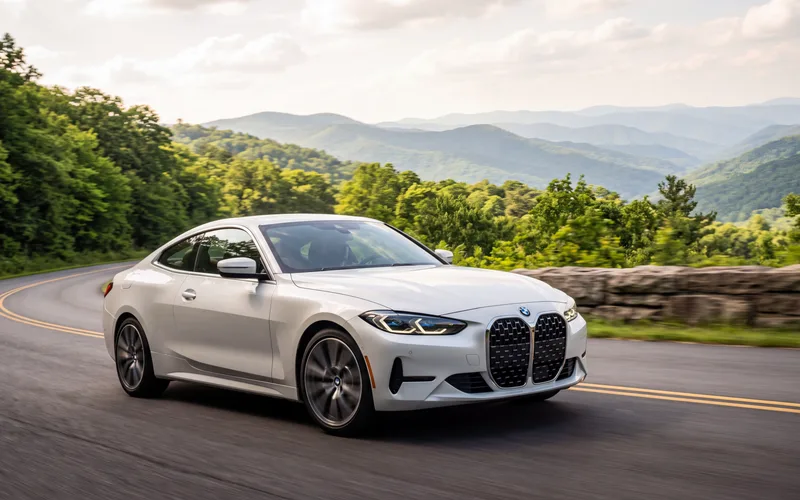 BMW 4 SeriesLuxury CoupeBetter at: Space and refinement
Same BMW driving character with a usable back seat, a calmer ride, and a much larger 14.9-inch display for a few thousand dollars more.
Compare 2.30C+
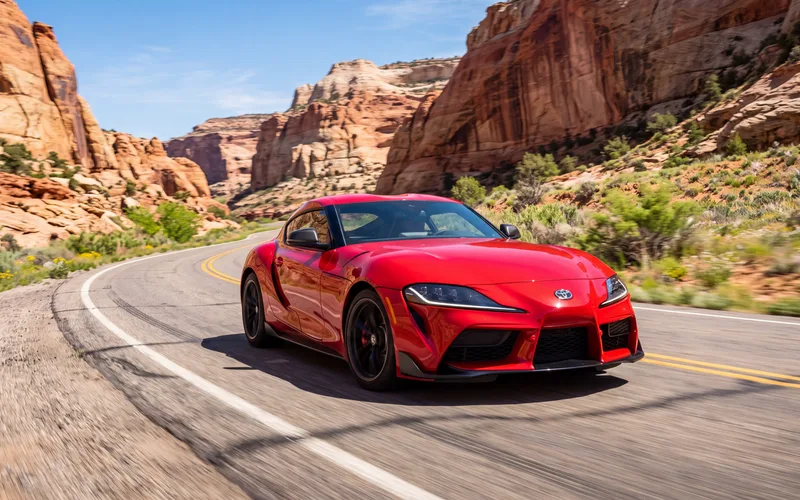 Toyota GR SupraSports CarBetter at: Ownership cost
Gets you the same B58 inline-six in a sharper two-seat package with Toyota service costs instead of BMW's roughly $7,800 five-year bill.
Compare 2.74B-
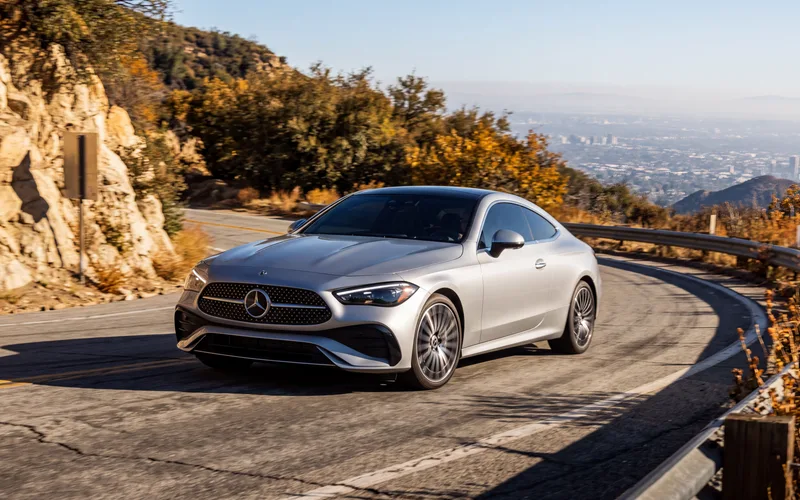 Mercedes-Benz CLE CoupeLuxury CoupeBetter at: Luxury feel
The pick if you want the coupe to feel like a luxury item rather than a sports car, with a plusher cabin and a softer ride.
CompareHow it's evolved
10 scored model years · 2017–2026
Subject scores by year
Hover or tap a score to see what moved it versus the year before. A corner mark flags a big swing.
| Year | Performance | Efficiency | Safety | Space | Cost | Reliability | Tech | Use-case | Driving | Value |
|---|---|---|---|---|---|---|---|---|---|---|
| 2026 | 59 | 34 | 74 | 58 | 43 | 79 | 77 | 47 | 78 | 73 |
| 2025 | 60 | 41 | 67 | 56 | 47 | 74 | 78 | 44 | 80 | 73 |
| 2024 | 60 | 35 | 60 | 52 | 49 | 75 | 78 | 39 | 76 | 75 |
| 2023 | 62 | 39 | 62 | 56 | 55 | 77 | 79 | 41 | 77 | 70 |
| 2022 | 57 | 39 | 62 | 52 | 59 | 75 | 73 | 40 | 78 | 70 |
| 2021 | 55 | 34 | 56 | 56 | 56 | 77 | 49 | 38 | 78 | 61 |
| 2020 | 56 | 31 | 56 | 55 | 60 | 77 | 42 | 38 | 78 | 62 |
| 2019 | 55 | 35 | 55 | 55 | 58 | 76 | 41 | 38 | 78 | 64 |
| 2018 | 55 | 35 | 51 | 56 | 61 | 76 | 39 | 37 | 78 | 65 |
| 2017 | 55 | 35 | 51 | 56 | 65 | 78 | 37 | 37 | 77 | 67 |
Compare two years
Best fit & conditions
Higher scores mean a better fit for that use case. Learn more about use-case fit →
Subject profile
Academic Probation · NHTSA safety recalls
Jan 30, 2026Electrical system: starter assemblyPlease see the recall report for a complete list of all models. The engine starter may overheat and catch fire due to wear on an internal component.
Defect
BMW of North America, LLC (BMW) is recalling certain 2021-2023 Toyota Supra, 2022-2023 2 Series Coupe, 2021-2024 5 Series (xDrive), 2021-2022 Z4, 2022-2024 4 Series (Gran Coupe), 2021-2024 4 Series (Convertible and xDrive Convertible), 2021-2023 4 Series (Coupe), 2021-2024 3 Series, 2021-2023 X4, 2021-2024 X3 vehicles. Please see the recall report for a complete list of all models. The engine starter may overheat and catch fire due to wear on an internal component.
Risk
Fire increases the risk of injury.
Remedy
Dealers will replace the engine starter, free of charge. Owner notification letters were mailed July 21, 2026. Owners may contact BMW customer service at 1-800-525-7417 or Toyota's customer service at 1-800-331-4331. Vehicle Identification Numbers (VINs) involved in this recall will be searchable on NHTSA.gov beginning March 24, 2026.
NHTSA campaign 26V056000 ↗87,394 vehicles potentially affected (all models in the campaign)Owners notified Mar 27, 2026Filed by BMW of North America, LLCFiled as 230ISep 23, 2025Electrical system: starter assembly: relayThe engine starter relay may corrode, causing the relay to overheat and short circuit.
Defect
BMW of North America, LLC (BMW) is recalling certain 2019-2021 BMW 330i, 2019-2022 BMW Z4, 2020-2022 BMW 530i, X3, X4, Toyota Supra, 2021-2022 BMW 430i, 430i Convertible, and 2022 BMW 230i vehicles. The engine starter relay may corrode, causing the relay to overheat and short circuit.
Risk
A short circuit in the starter relay may increase the risk of a fire.
Remedy
Owners are advised to park their vehicles outside and away from structures until the remedy is complete. Dealers will replace the engine starter, free of charge. Owner notification letters were mailed February 6, 2026. Owners may contact BMW customer service at 1-800-525-7417. Vehicle Identification Numbers (VINs) involved in this recall became searchable on NHTSA.gov November 14, 2025.
NHTSA campaign 25V636000 ↗199,674 vehicles potentially affected (all models in the campaign)Owners notified Feb 6, 2026Filed by BMW of North America, LLCFiled as 230IAug 16, 2023Electrical system: software · Seat beltsThe receiver audio module control unit software may fail to properly generate audible seat belt warnings to the driver to fasten their seat belt. As such, these vehicles fail to comply with the requirements of Federal Motor Vehicle Safety Standard number 208, "Occupant Crash Protection."
Defect
BMW of North America, LLC (BMW) is recalling certain 2019-2022 330i, 330i xDrive, M340i, 2022 430i Coupe, 2021-2022 430i, M440i Convertible, and 2020-2022 228i xDrive Gran Coupe vehicles. The receiver audio module control unit software may fail to properly generate audible seat belt warnings to the driver to fasten their seat belt. As such, these vehicles fail to comply with the requirements of Federal Motor Vehicle Safety Standard number 208, "Occupant Crash Protection."
Risk
An audible chime that does not properly alert the driver to fasten their seat belt increases the risk of injury in a crash.
Remedy
Dealers will update the receiver audio module software, free of charge. Owner notification letters were mailed October 12, 2023. Owners may contact BMW customer service at 1-800-525-7417.
NHTSA campaign 23V584000 ↗144 vehicles potentially affected (all models in the campaign)Owners notified Oct 12, 2023Filed by BMW of North America, LLCFiled as 228IJul 20, 2022Fuel system, gasoline: fuel injection system: fuel railThe high-pressure fuel rail may crack and result in a fuel leak within the engine compartment.
Defect
BMW of North America, LLC (BMW) is recalling certain 2022 X1 xDrive 28i, X3 xDrive30i, and 228i Gran Coupe vehicles. The high-pressure fuel rail may crack and result in a fuel leak within the engine compartment.
Risk
A fuel leak in the presence of an ignition source increases the risk of a fire.
Remedy
Dealers will replace the high-pressure fuel rail, free of charge. Owner notification letters were mailed September 19, 2022. Owners may contact BMW customer service at 1-800-525-7417.
NHTSA campaign 22V513000 ↗5 vehicles potentially affected (all models in the campaign)Owners notified Sep 19, 2022Filed by BMW of North America, LLCFiled as 228I
12 recalls on other model years of the 2 Series (2018–2021, 2023–2024, 2026)
Feb 4, 2026Exterior lightingThese vehicles are equipped with rear lights that may not function properly. As such, these vehicles fail to comply with the requirements of Federal Motor Vehicle Safety Standard (FMVSS) number 108, Lamps, reflective devices, and assoc. equipment."
Defect
BMW of North America, LLC (BMW) is recalling certain 2026 228i Gran Coupe, 228i xDrive Gran Coupe, and M235i xDrive Gran Coupe vehicles. These vehicles are equipped with rear lights that may not function properly. As such, these vehicles fail to comply with the requirements of Federal Motor Vehicle Safety Standard (FMVSS) number 108, Lamps, reflective devices, and assoc. equipment."
Risk
A rear taillight, brake light, or rear turn signal light that functions improperly, increases the risk of a crash.
Remedy
Dealers will replace the rear lights, free of charge. Owner notification letters were mailed April 2, 2026. Owners may contact BMW customer service at 1-800-525-7417. Vehicle Identification Numbers (VINs) involved in this recall will be searchable on NHTSA.gov beginning March 27, 2026.
NHTSA campaign 26V064000 ↗202 vehicles potentially affected (all models in the campaign)Owners notified Apr 2, 2026Filed by BMW of North America, LLCFiled as 228I GRAN COUPE, 228I XDRIVE GRAN COUPE, M235I XDRIVE GRAN COUPEOct 21, 2025Seat belts: rear/other: retractorThe housing pin in the rear (left and/or right) seat belt retractors may have been damaged during production, resulting in the retractor not locking the seat belt as intended. As such, these vehicles fail to comply to Federal Motor Vehicle Safety Standard number 209, "Seat Belt Assemblies."
Defect
BMW of North America, LLC is recalling certain 2026 2 Series Gran Coupe, X1, X2, and Mini Countryman S ALL4 vehicles. The housing pin in the rear (left and/or right) seat belt retractors may have been damaged during production, resulting in the retractor not locking the seat belt as intended. As such, these vehicles fail to comply to Federal Motor Vehicle Safety Standard number 209, "Seat Belt Assemblies."
Risk
A damaged seat belt retractor may not properly restrain an occupant during a crash, increasing the risk of injury.
Remedy
Dealers will replace the rear (left and/or right) seat belts, free of charge. Owner notification letters were mailed December 18, 2025. Owners may contact BMW customer service at 1-800-525-7417. Vehicle Identification Numbers (VINs) involved in this recall became searchable on NHTSA.gov December 12, 2025.
NHTSA campaign 25V717000 ↗1,024 vehicles potentially affected (all models in the campaign)Owners notified Dec 18, 2025Filed by BMW of North America, LLCFiled as 228I GRAN COUPE, 228I XDRIVE GRAN COUPE, M235I XDRIVE GRAN COUPESep 25, 2024Structure: bodyThe bolts that connect the front body structure to the vehicle chassis may not have been tightened properly.
Defect
BMW of North America, LLC (BMW) is recalling certain 2023-2024 228i, 228i xDrive, and 2025 MINI Countryman S ALL4 vehicles. The bolts that connect the front body structure to the vehicle chassis may not have been tightened properly.
Risk
A loose front body structure may not adequately protect occupants in a crash, increasing the risk of injury.
Remedy
Dealers will inspect and if necessary, tighten the front structure bolts, free of charge. Owner notification letters were mailed November 18, 2024. Owners may contact BMW Customer Service at 1-800-525-7417.
NHTSA campaign 24V711000 ↗7 vehicles potentially affected (all models in the campaign)Owners notified Nov 18, 2024Filed by BMW of North America, LLCFiled as 228I, 228I XDRIVENov 16, 2023SteeringThe steering gear may not have been tightened properly, which can allow it to loosen.
Defect
BMW of North America, LLC (BMW) is recalling certain 2024 2 Series Coupe (230i), 330i, X3 sDrive30i, X3 xDrive30i, X3 M40i, and X4 xDrive30i, X4 M40i vehicles. The steering gear may not have been tightened properly, which can allow it to loosen.
Risk
A loose steering gear can cause a loss of vehicle control, increasing the risk of a crash.
Remedy
Dealers will replace the steering gear, free of charge. Owner notification letters were mailed January 11, 2024. Owners may contact BMW customer service at 1-800-525-7417.
NHTSA campaign 23V770000 ↗201 vehicles potentially affected (all models in the campaign)Owners notified Jan 11, 2024Filed by BMW of North America, LLCFiled as 230IFeb 17, 2023Electrical system: software · Visibility: power window devices and controlsWhen the digital key is removed from the vehicle, the Electronic Control Unit (ECU) software may still allow the power windows and sunroof to be closed. As such, these vehicles fail to comply with the requirements of Federal Motor Vehicle Safety Standard number 118, "Power-operated Window Systems."
Defect
BMW of North Americal, LLC (BMW) is recalling certain 2023 8 Series Coupe (840i, 840i xDrive, M850i xDrive, M8), 8 Series Convertible (840i, 840i xDrive, M850i xDrive, M8), 8 Series Gran Coupe (840i, 840i xDrive, M850i xDrive, M8, Alpine B8 xDrive), 2 Series Coupe (230i, 230i xDrive, M240i xDrive, M2), and 2022-2023 Z4 sDrive30i, Z4 M40i vehicles. When the digital key is removed from the vehicle, the Electronic Control Unit (ECU) software may still allow the power windows and sunroof to be closed. As such, these vehicles fail to comply with the requirements of Federal Motor Vehicle Safety Standard number 118, "Power-operated Window Systems."
Risk
Unintentionally closing the windows or sunroof without the key present can increase the risk of injury to occupants inside the vehicle.
Remedy
Dealers will update the software for the Electronic Control Unit (ECU), free of charge. In addition, the digital key function via cellular service and Wi-Fi capability will be deactivated until the vehicle is updated with new software. Owner notification letters are expected to be mailed April 11, 2023. Owners may contact BMW customer service at 1-800-525-7417.
NHTSA campaign 23V099000 ↗3,193 vehicles potentially affected (all models in the campaign)Owners notified Apr 18, 2023Filed by BMW of North America, LLCFiled as 230I, M240IFeb 1, 2023Air bags: side/windowThe second-row seat backrest cover panels for the side air bags may break during deployment of the side air bags.
Defect
BMW of North America, LLC (BMW) is recalling certain 2023 2 Series Coupe (230i, 230i XDrive, M240i, M240i xDrive) vehicles. The second-row seat backrest cover panels for the side air bags may break during deployment of the side air bags.
Risk
A backrest cover panel that breaks during side air bag deployment may cause the air bag to deploy improperly, increasing the risk of injury to second-row seat occupants.
Remedy
Dealers will replace the rear seat backrest side air bag cover panels, free of charge. Owner notification letters were mailed March 31, 2023. Owners may contact BMW customer service at 1-800-525-7417.
NHTSA campaign 23V039000 ↗804 vehicles potentially affected (all models in the campaign)Owners notified Mar 31, 2023Filed by BMW of North America, LLCFiled as 230I, M240IJul 21, 2021Seat beltsThe passenger seat belt Automatic Locking Retractor (ALR) may deactivate early, before the webbing fully retracts. As such, these assemblies fail to comply with the requirements of Federal Motor Vehicle Safety Standard number 208, "Occupant Crash Protection."
Defect
BMW of North America, LLC (BMW) is recalling certain 2021 2 Series (230i, 230i xDrive, M240i, M240i xDrive), 330e, 330e Xdrive, 4 Series Coupe (430i, 430i xDrive, M440i xDrive) M4 Coupe, M4 Competition Coupe, BMW 4 Series Convertible (430i, M440i), BMW X1 sDrive28i, xDrive28i, 2 Series Gran Coupe (228i, 228i xDrive, M235i xDrive), M2 Competition Coupe, 330i, 330i xDrive, M340i, M340i xDrive, M3, M3 Competition, 530i, 530i xDrive, 540i, 540i xDrive, MINI Hardtop 2 Door (Cooper, CooperS, JCW), X2 sDrive28i, X2 xDrive28i, X2 M35i, Z4 sDrive30i, Z4 M40i, MINI Hardtop 2 Door (Cooper SE), MINI Convertible (Cooper, Cooper S, JCW), MINI Clubman (Cooper S, Cooper S All4, JCW), MINI Countryman (Cooper, Cooper All4, Cooper S, Cooper S All4, JCW All4), Rolls Royce Ghost, MINI Countryman (Cooper S E All4), Rolls Royce Phantom, Rolls Royce Cullinan, and Toyota Supra vehicles. The passenger seat belt Automatic Locking Retractor (ALR) may deactivate early, before the webbing fully retracts. As such, these assemblies fail to comply with the requirements of Federal Motor Vehicle Safety Standard number 208, "Occupant Crash Protection."
Risk
During a crash, a seat belt retractor that does not function as intended increases the risk of injury.
Remedy
Dealers will inspect the seat belt retractors (including the seat belts) and, if necessary, replace the retractors, free of charge. Owner notification letters were mailed on September 3, 2021. Owners may contact BMW customer service at 1-800-525-7417; 1-866-825-1525 (MINI); 1-877-877-3735 (Rolls Royce); and 1-888-270-9371 (Toyota).
NHTSA campaign 21V554000 ↗21,537 vehicles potentially affected (all models in the campaign)Owners notified Sep 3, 2021Filed by BMW of North America, LLCFiled as 228I, 230I, M235I, M240IMay 12, 2021Structure: body: roof and pillarsSupports within the roof liner may be insecurely attached.
Defect
BMW of North America, LLC (BMW) is recalling certain 2021 BMW 230i and M240i vehicles. Supports within the roof liner may be insecurely attached.
Risk
The support may separate from the roof liner and fall into the passenger compartment, increasing the risk of injury during a crash necessitating the deployment of the head air bag.
Remedy
Dealers will inspect and repair or replace the roof liner as necessary, free of charge. Owner notification letters will not be sent. The one owner was notified on June 15, 2021 by telephone and the vehicle has been repaired. Owners may contact BMW customer service at 1-800-525-7417.
NHTSA campaign 21V342000 ↗2 vehicles potentially affected (all models in the campaign)Owners notified Jun 15, 2021Filed by BMW of North America, LLCFiled as 230I, M240IFeb 18, 2021Visibility: power window devices and controls · Visibility: sun/moon roof assemblyIf the driver initiates an automatic closure of the sunroof, and the vehicle key status is changed to "off" or "lock," the sunroof may continue to close. As such, these vehicles fail to comply with the requirements of Federal Motor Vehicle Safety Standard (FMVSS) number 118, "Power-operated Window Systems."
Defect
BMW of North America, LLC (BMW) is recalling certain 2020-2021 228i, 228i xDrive, and M235i xDrive vehicles. If the driver initiates an automatic closure of the sunroof, and the vehicle key status is changed to "off" or "lock," the sunroof may continue to close. As such, these vehicles fail to comply with the requirements of Federal Motor Vehicle Safety Standard (FMVSS) number 118, "Power-operated Window Systems."
Risk
If the sunroof continues to close after the vehicle is shut off, it may increase the risk of injury.
Remedy
BMW will notify owners, and dealers will update the sunroof electronic coding software, free of charge. The recall began April 16, 2021. Owners may contact BMW customer service at 1-800-525-7417.
NHTSA campaign 21V091000 ↗14,011 vehicles potentially affected (all models in the campaign)Owners notified Apr 16, 2021Filed by BMW of North America, LLCFiled as 228I, M235IMay 9, 2019Air bags: knee bolsterThe driver and passenger knee air bag assemblies may have been improperly folded and assembled.
Defect
BMW of North America, LLC (BMW) is recalling certain 2019-2020 230i, 230i xDrive, M240i, M240i xDrive, M2 Competition Coupe, 430i, 430i xDrive, 440i, 440i xDrive, M4, and 2019 330i xDrive Sportswagon vehicles. The driver and passenger knee air bag assemblies may have been improperly folded and assembled.
Risk
An improperly folded and assembled air bag may not deploy as intended, increasing risk of injury.
Remedy
BMW will notify owners, and dealers will replace the knee air bag modules, free of charge. The recall began July 8, 2019. Owners may contact BMW customer service at 1-800-525-7417.
NHTSA campaign 19V352000 ↗5,079 vehicles potentially affected (all models in the campaign)Owners notified Jul 8, 2019Filed by BMW of North America, LLCFiled as 230I, M240IJul 11, 2018Engine and engine cooling: engineThe crankshaft sensor may be equipped with incorrect firmware, preventing the sensor from properly processing input from the crankshaft reluctor ring, possibly resulting in a vehicle stall. On September 12, 2018, BMW expanded the recall to a total of 5,309 vehicles including certain 2018-2019 BMW 540d xDrive, 230i M240i, M240i xDrive, X2 sDrive28i, X2 xDrive28i, X1 sDrive28i, X1 xDrive28i, 330i, 330i xDrive, 340i, 340i xDrive, 330i xDrive Gran Turismo, 530i, 530i xDrive, 540i, 540i xDrive, 530e, 530e xDrive, 640i xDrive Gran Turismo, 330e, 2019 430i Gran Coupe, 430i xDrive Gran Coupe, 440i Gran Coupe, 440i xDrive Gran Coupe, 430i, 430i xDrive, 440i, 440i xDrive, 740i, 740i xDrive, MINI Cooper, Cooper S, JCW, MINI Countryman (Cooper, Cooper All4, Cooper S, Cooper S All4, JCW All4), and MINI Clubman (Cooper, Cooper S, Cooper All4, Cooper S All4, JCW All4) vehicles.
Defect
BMW of North America, LLC (BMW) is recalling certain 2018 BMW 540d xDrive vehicles. The crankshaft sensor may be equipped with incorrect firmware, preventing the sensor from properly processing input from the crankshaft reluctor ring, possibly resulting in a vehicle stall. On September 12, 2018, BMW expanded the recall to a total of 5,309 vehicles including certain 2018-2019 BMW 540d xDrive, 230i M240i, M240i xDrive, X2 sDrive28i, X2 xDrive28i, X1 sDrive28i, X1 xDrive28i, 330i, 330i xDrive, 340i, 340i xDrive, 330i xDrive Gran Turismo, 530i, 530i xDrive, 540i, 540i xDrive, 530e, 530e xDrive, 640i xDrive Gran Turismo, 330e, 2019 430i Gran Coupe, 430i xDrive Gran Coupe, 440i Gran Coupe, 440i xDrive Gran Coupe, 430i, 430i xDrive, 440i, 440i xDrive, 740i, 740i xDrive, MINI Cooper, Cooper S, JCW, MINI Countryman (Cooper, Cooper All4, Cooper S, Cooper S All4, JCW All4), and MINI Clubman (Cooper, Cooper S, Cooper All4, Cooper S All4, JCW All4) vehicles.
Risk
A vehicle stall can increase the risk of a crash.
Remedy
BMW will notify owners, and dealers will replace the crankshaft sensor, free of charge. The recall began September 6, 2018. Owners may contact BMW customer service at 1-800-525-7417.
NHTSA campaign 18V465000 ↗5,309 vehicles potentially affected (all models in the campaign)Owners notified Sep 6, 2018Filed by BMW of North America, LLCFiled as 230I, M240INov 15, 2017Electrical system: instrument cluster/panelThese vehicles may have an error in the software for the instrument panel, causing the display to not properly illuminate. As such, these vehicles fail to comply with the requirements of Federal Motor Vehicle Safety Standard (FMVSS) number 101, "Control and Displays."
Defect
BMW of North America, LLC (BMW) is recalling certain 2018 230i, 230i xDrive, M240i, M240i xDrive, M2, and X3 xDrive 30i SAV vehicles. These vehicles may have an error in the software for the instrument panel, causing the display to not properly illuminate. As such, these vehicles fail to comply with the requirements of Federal Motor Vehicle Safety Standard (FMVSS) number 101, "Control and Displays."
Risk
If the display does not illuminate during start up or does not illuminate various control and warning symbols while driving, it can increase the risk of a crash.
Remedy
BMW will notify owners, and dealers will update the instrument cluster display software, free of charge. The recall is expected to begin January 8, 2018. Owners may contact BMW customer service at 1-800-525-7417.
NHTSA campaign 17V719000 ↗3,188 vehicles potentially affected (all models in the campaign)Owners notified Jan 12, 2018Filed by BMW of North America, LLCFiled as 230I, M240I
Source: NHTSA Office of Defects Investigation recall database, model years 2017–2026. Recalls are listed by model year as the manufacturer filed them; whether a specific car is affected depends on its VIN — check a VIN at nhtsa.gov ↗. NHTSA model names matched to this page: 228I, 228I GRAN COUPE, 228I XDRIVE, 228I XDRIVE GRAN COUPE, 230I, M235I, M235I XDRIVE GRAN COUPE, M240I.
Detailed scoring by subject
1Performance & PowertrainMid-pack among this car's ten categories.1.84C-
2022 is the launch year of the second-generation G42 Coupe, and the volume 230i uses BMW's B48 2.0L TwinPower Turbo inline-four at 255 hp. The US range topped out at the M240i xDrive's B58 inline-six — the G87 M2 did not arrive until the 2023 model year.
The 230i's B48 delivers 295 lb-ft (400 Nm) across a broad 1,550–4,400 rpm plateau, which is why reviewers repeatedly describe the car as feeling quicker than 255 hp implies in everyday driving.
BMW's own figure for the rear-drive 230i Coupe at launch; the AWD M240i xDrive covers the same sprint in 4.1 s. Reviewers consistently report the 230i feeling stronger than the number because of how early the torque plateau arrives.
The B48 is among the smoothest and least laggy turbo fours in the class — 2022 launch reviews describe it as a 'firecracker' with power accessible right through the low-to-mid range and no meaningful hesitation. There is no 48V mild-hybrid assist on the 230i, so auto stop-start is the one coarse note; the M240i's B58 six steps refinement up further.
Both 2022 US models use the ZF-sourced eight-speed Sport Steptronic, the class benchmark for crisp, decisive shifts and prompt paddle response, with Comfort, Sport and manual modes. The G42 is automatic-only — BMW dropped the manual entirely for this generation, and no three-pedal 2 Series Coupe existed in 2022.
For 2022 the US G42 Coupe range was rear-drive 230i plus M240i xDrive only — all-wheel drive was reachable solely by buying the range-topping six-cylinder car, and the 230i xDrive that broadened availability did not arrive until 2023. The rear-biased multi-plate xDrive system also has no low range or terrain modes.
Two gasoline engines covered the entire 2022 US Coupe range — the B48 2.0T in the 230i and the B58 3.0T six in the M240i xDrive — spanning everyday and fast duty but nothing beyond. There is no hybrid, PHEV or EV anywhere in the G42 Coupe body, the US gets none of the 220d diesel offered elsewhere, and the S58-powered M2 was still a year away.
2Efficiency & RangeThe 2 Series's lowest-graded category.0.57F
EPA combined rating for the volume 2022 230i Coupe with the B48 2.0L turbo four and eight-speed automatic — a strong gasoline figure for a rear-drive luxury coupe, and the best in the 2022 2 Series family.
EPA city rating for the 2022 230i RWD. The B48 has auto stop-start but no hybrid assist of any kind, so city economy is respectable for the segment without being standout.
EPA highway rating for the 2022 230i RWD — the tall top gears of the eight-speed Steptronic and the coupe's small frontal area make highway cruising the 230i's best efficiency showing.
EPA-published total range for the 2022 230i Coupe. Economy is good for the class, but the G42's small 13.7-gallon tank — confirmed in BMW's own launch press release — caps touring range well below larger luxury coupes such as the 4 Series.
EPA estimated annual fuel cost for the 2022 230i RWD at standard assumptions. The 29 MPG combined is good for the segment, but premium-grade pricing keeps the absolute annual bill high.
EPA lists the 2022 230i as premium gasoline recommended rather than required, so BMW's 91-AKI recommendation permits lower octane at a modest cost in output — the owner is not strictly locked out of regular. It remains a real running-cost premium, with no hybrid or plug-in alternative anywhere in the 2022 2 Series Coupe range.
3SafetyMid-pack among this car's ten categories.2.17C
NHTSA never crash-tested the G42 2 Series Coupe in its 2022 launch year; the agency's API returns "Not Rated" on every frontal, side, pole and rollover measure for both the RWD and xDrive body styles. The estimate is derived from the shared CLAR-platform 3 Series sedan, discounted slightly for the 2 Series' shorter, lighter body and the mid-band Euro NCAP occupant scores on this exact car.
IIHS has not tested the two-door G42 2 Series — the 2 Series ratings IIHS publishes for 2022 are for the unrelated front-drive F44 Gran Coupe four-door, which is the car that earned the Top Safety Pick; there is no award for the coupe. The only crashworthiness data on this exact vehicle is Euro NCAP's test, conducted in 2022 on this launch-year car: 4 stars overall (82% adult, 81% child occupant), with marginal control of body excursion in the side pole impact, no centre airbag, and weak head protection for the 10-year-old dummy in the side barrier. Scored below the 4 Series, which has real Good IIHS results, because untested-with-known-concerns is weaker evidence than tested-and-Good.
Active Driving Assistant is standard on both 2022 trims and the floor is genuinely good — frontal collision warning with braking that responds to moving and stationary vehicles, pedestrians and cyclists, Active Blind Spot Detection, rear cross-traffic alert, lane departure warning, rear-view camera and front and rear Park Distance Control. What holds it to the middle band is the ceiling: the standard cruise control is Dynamic Cruise Control with braking, not adaptive, so Active Cruise Control with Stop & Go must be bought as a stand-alone option, and the G42 was never offered a Driving Assistance Professional package, leaving lane centering unavailable at any price.
No IIHS front crash prevention result exists for the G42 coupe, but Euro NCAP tested this car's AEB directly in 2022 and it was the weaker half of the score: car-to-car AEB scored 3.7/6 (adequate — good on stationary and slower-moving targets but limited in some scenarios), pedestrian AEB 5.7/9 (good in daytime adult crossing, poor in reverse and turning manoeuvres), and cyclist AEB only 4/9, rated marginal with weak results approaching crossing cyclists. Adequate everyday hardware — BMW's usual camera-plus-radar suite — so this sits mid-band rather than low, but it is scored on measured results for this car, not inferred upward from the 3 Series.
Active Blind Spot Detection and rear cross-traffic alert are standard on both 2022 trims rather than trim-locked, which is the strongest part of the car's standard suite in its launch year. Coverage is alert-only on the volume 230i — illuminated mirror warnings with no active steering or braking intervention, and no safe-exit warning — which caps it below the top band.
Lane departure warning with a lane-return function is standard and operates between 44 and 130 mph, but true lane centering was not orderable on the 2022 US 2 Series at any price — there is no Driving Assistance Professional package on the G42, so the Steering and Lane Control Assistant available on the 3 and 4 Series has no path onto this car. Euro NCAP scored its lane support 1.8/4, rating emergency lane keeping marginal, which corroborates that what is fitted is warning-grade rather than centering-grade.
What is standard is Dynamic Cruise Control with a braking function, not adaptive; Active Cruise Control with Stop & Go is a stand-alone extra, and BMW's calibration when fitted is well-regarded — four proximity settings, and it will brake to a standstill and pull away again after pauses of up to 30 seconds. Two things hold it mid-band: it engages only over a 19–99 mph window rather than the full speed range, and with no Driving Assistance Professional package there is no lane centering to pair it with and therefore no integrated highway assist mode at all. As a 2022 launch-year car built through the worst of the semiconductor shortage, a meaningful share left without the option fitted.
No hands-free capability at any trim or price, and in 2022 none existed anywhere in BMW's US lineup. BMW's Highway Assistant did not reach the US until the 2023 model year, and then only inside the Driving Assistance Professional Package on the X7, iX and 7 Series/i7 — a package the 2 Series has never offered.
Full-LED headlights are standard — one circular LED unit per side with U-shaped daytime running light guides — but for 2022 both upgrades are package-locked: Adaptive LED Headlights with the cornering and navigation-based look-ahead function come only in the Premium Package, and even automatic high beams are not standard, arriving in the Convenience Package. IIHS has never rated the G42 coupe's headlights, and BMW's compact family has a documented weakness here: the related 2 Series Gran Coupe needed a headlight improvement before it could reach Top Safety Pick. Scored slightly below the same-generation 2023 car specifically because auto high beam was not yet standard equipment.
Better than the coupe stereotype: reviewers note the G42's relatively upright side glass and unobtrusive roof pillars keep over-the-shoulder blind spots modest for the class. The small rear window is the real limitation, making it hard to judge what is directly behind. A rear-view camera and both front and rear Park Distance Control are standard, which helps at low speed, but the 360-degree Surround View with 3D view is optional in the Parking Assistance Package, so the full camera compensation is not standard.
The hardware is adequate — two complete sets of LATCH connectors at the rear outboard seats, with anchors reviewers find easy to reach under plastic covers rather than buried in upholstery. The car is defeated by its architecture instead: a two-door 2+2 forces every installation through one doorway after tumbling a front seat, and the sloping roofline sharply cuts the vertical clearance needed to maneuver a seat in and out. Workable for one seat, impractical as a family car.
4Space & ComfortOne of the 2 Series's weakest categories.1.48D
BMW's own specification table lists four seats for both the 230i and M240i xDrive Coupe — the G42's rear bench is deliberately two sculpted individual seats with integrated headrests, not a three-place bench. That is one seat short of the segment's five-seat coupes (the G22 4 Series among them), which is the single largest reason this car trails its bigger brother on space.
The 230i's 39.8 inches is near the top of the coupe band and unusually good for a car with this roofline — the moonroof-less base configuration is what BMW publishes for the volume trim, and it is 1.7 inches more than the M240i's moonroof-equipped figure.
41.8 inches is mid-pack for the class — enough that reviewers repeatedly note the driving position accommodates tall drivers, but short of the roomiest coupes. Power sport seats with a wide adjustment range and extendable thigh support are standard, which stretches the usable envelope beyond what the raw number suggests.
Mid-band for a coupe and a real regression from the F22 it replaced — the G42's tapering roofline costs about 1.5 inches of rear headroom versus the previous generation. Reviewers consistently report the rear seat is headroom-limited before it is legroom-limited for adults.
32.2 inches sits well up the coupe band — genuinely better than the sports cars this car is cross-shopped against — but it is roughly an inch down on the F22 and only works if the front occupants give some back. Testers report adults up to about 5'7" fit tolerably; a six-footer fits only with the front seat slid forward.
BMW publishes 10.0 cubic feet for both 2022 Coupes — low in the coupe band and smaller than an Audi A3 or Mercedes CLA trunk, though the shape is usable: testers loaded two full-size suitcases plus soft bags. Some third-party spec aggregators list 14 cu ft for this car; BMW's own figure governs.
Competitive rather than clever. The G42 gets large door bins with integrated bottle holders, a reasonably sized glovebox, a decent center armrest bin and an open tray ahead of the gear selector that doubles as the phone spot — reviewers rate cabin storage as better than most small coupes. The offsetting problems are that the high, buttress-like center console eats the space a lower tunnel would free, the armrest is fixed rather than sliding, the console tray's access is partly blocked by the selector, and the rear has only a shallow shelf where a third seat would be. Nothing here is an innovation.
The front seats are the strong half and the rear is the weak half, which is what a 2+2 buys you. Power sport seats are standard with an unusually wide adjustment range and extendable thigh bolsters — reviewers praise them for long drives and for accommodating a range of body sizes — but the cushions are firm enough that testers report soreness on very long stints, and lumbar support is a separate stand-alone option rather than standard. The rear seats are individually contoured and fine for children, but adults are limited by the roofline and by having to fold and tumble a front seat to get in, even with BMW's Easy-Entry function.
Firm but rarely crude. The standard suspension uses lift-related dampers — a hydraulic secondary piston that adds damping progressively with wheel travel — which is why testers describe big impacts as absorbed quietly and small ones as nearly erased on open road. The problems are configuration-dependent: the widely fitted M Sport Package's stiffer springs and dampers, and the optional 19-inch performance rubber, turn the ride harsh in stop-and-go traffic, run-flat all-seasons are standard on the 230i, and adaptive dampers were never orderable on the 230i in 2022 — Adaptive M suspension is M240i-only equipment. A few reviewers also note unexpected body motions over undulating pavement.
Good for an entry-luxury coupe without being hushed. Wind and engine noise are well suppressed at highway speed — testers say conversation needs no raised voices — but tire roar over coarse pavement is the consistent complaint, unsurprising with run-flat all-seasons as standard fitment, and nobody mistakes it for the serenity of a larger BMW. No active noise cancellation is offered.
The climate system is genuinely generous for a compact coupe — automatic climate control is standard with independent driver, front passenger and rear-passenger temperature and ventilation settings, which BMW's standard-equipment list itemizes as three-zone, and the Intelligent Personal Assistant will adjust it by voice for one side of the cabin only. Everything beyond climate costs money on the volume 230i: heated front seats and a heated steering wheel are a $550 stand-alone option or come bundled in the Premium Package, remote engine start is another stand-alone box, ambient lighting is package-locked (standard only on M240i), and ventilated seats and rear-seat heating are not offered at any price.
5Cost of OwnershipMid-pack among this car's ten categories.1.98C-
MY2022 is the launch year of the G42 generation, and its $36,350 + $995 destination entry price is the cheapest the second-generation 2 Series ever was — every later year of this generation costs more. Only the 230i RWD and M240i xDrive were available at the November 2021 on-sale date; 230i xDrive and M240i RWD followed later in the model year.
The volume build is the 230i xDrive Coupe ($38,350 + $995 destination = $39,345) with the $2,650 Premium Package, which most US cars carry because heated front seats, a heated steering wheel, adaptive LED headlights and the Live Cockpit Pro navigation screens are not standard. Real 2022 transactions frequently ran above this figure — the chip-shortage inventory squeeze meant dealer market adjustments rather than discounts.
Years 1–3 are largely free — Ultimate Care covers factory-scheduled service to 36,000 miles and the 4-yr/50,000-mi warranty covers repairs — so out-of-pocket concentrates in years 4–5 plus the wear items Ultimate Care excludes: run-flat tires, brake pads and rotors, wipers. That still lands the 2 Series in the expensive half of the coupe band, which is normal for a German turbocharged rear-drive coupe. Edmunds' True Cost to Own line for the 2022 car is far higher ($10,921 maintenance + $7,669 repairs) but is computed for a used purchase today, covering roughly years 4–9 of the car's life rather than the from-new window this item measures.
The 2022 cars are now four years old and tracking well ahead of the nameplate's historical average: KBB puts a 2022 230i Coupe at about $23,600 resale today, roughly 63% of its $37,345 delivered MSRP, helped by the rear-drive G42's enthusiast demand and by 2022's constrained supply propping up used values. Projecting the fifth year forward lands near 57% — above the luxury-compact norm, and better than the 51.7% iSeeCars records for the 2 Series nameplate across earlier generations.
BMW's New Vehicle Limited Warranty runs 4 years or 50,000 miles, whichever comes first — the German luxury standard (matching Audi and Mercedes-Benz) and a year longer than the mainstream 3/36 norm, but short of Genesis and Jaguar at 5 years.
BMW publishes no extended powertrain warranty, so the B48 four and its driveline are covered only for the same 4 yr / 50,000 mi as the bumper-to-bumper term. That sits below the segment band floor of 5 years and far behind the Hyundai/Kia/Genesis 10-yr/100k standard — a real exposure on a turbocharged German coupe whose out-of-warranty repair bills are among the segment's steepest.
Every 2022 BMW arrives with BMW Ultimate Care — complimentary factory-scheduled maintenance for 3 years / 36,000 miles (engine oil and filter, brake fluid, engine air and cabin filters, spark plugs, vehicle checks, scheduled by Condition Based Service) — plus 4 years of unlimited-mileage roadside assistance and a BMW ConnectedDrive services trial. MY2022 is also the first year the maintenance coverage is transferable to a second owner, a genuine improvement over MY2021. That multi-year included maintenance beats Audi (Audi Care is a paid add-on) and Porsche and matches Genesis; it is held out of the 90s only because Ultimate Care excludes wear items — brake pads, rotors, run-flat tires, wipers — unless the buyer upgrades to Ultimate Care+.
$42,000 volume-trim price minus its estimated resale value after 5 years (57% retained, or about $23,940) leaves about $18,060 in depreciation. Add the projected $6,800 in 5-year maintenance and repairs, and owning this vehicle for 5 years costs about $24,860 in total.
6Reliability & QualityOne of the 2 Series's strongest categories.3.06B
2022 is the FIRST model year of the G42 second generation (US launch of the 230i/M240i xDrive; production began at San Luis Potosí on 2 September 2021), and Consumer Reports carries no prediction at all for it — every trouble spot reads NA because it is flagged as a redesign year. J.D. Power's 85/100 ('Great') and Auto Reliability Index's 74/100 ('Good') are the only real signals, and both are model-level projections rather than observed data, so a good-but-unproven read is right for a launch-year car.
BMW's standing around this model year is the best it has been: Consumer Reports ranked the brand 3rd of 24 in its 2022 Annual Auto Reliability Survey — a 10-place climb and BMW's first-ever top-three finish — and J.D. Power's 2025 VDS, which surveys three-year-old MY2022 vehicles (exactly this car), placed BMW 9th at 189 PP100 against a 202 PP100 industry average. Kept below the band ceiling because that top-3 CR result is a single strong year, not a consistent multi-year top-5 position.
The count is low — NHTSA lists three campaigns for the 2022 230i — but all three are the same defect and all three are fire risks: the starter/starter-relay can overheat and short. One of them (25V636) carries a park-outside advisory, telling owners to keep the car away from structures until the starter is replaced, and the July 2026 campaign is an expansion of the January 2026 one, meaning the remedy scope has already had to be widened once. A repeated do-not-park-indoors electrical defect is systemic rather than routine, which is what holds this below the segment median despite the light overall volume.
The volume 230i's B48 2.0L turbo four and the M240i xDrive's B58 3.0L turbo inline-six are BMW's two strongest modern engine families — the B58 is the unit Toyota bought for the GR Supra — and both run through the industry-benchmark ZF 8HP automatic, a combination with a deep high-mileage record. Marked down from the top band because the 2022 B48 cars are precisely the ones swept up by the starter-relay fire campaign, and G42-era owner reports include coolant loss (radiator, water pump, expansion-tank cap seal) and scattered turbocharger failures.
Reviewers of the launch-year 230i consistently rate the cabin as genuinely upscale for the money — materials, switchgear and steering-wheel feel all read premium at a low-$40Ks as-tested price, and the G42 is a clear step up from the F22 it replaced. It sits below the 4 Series and the Mercedes CLE because there is a noticeable expanse of piano-black plastic around the center console and harder plastics low in the cabin, and 2022 coupes shipped with the older iDrive 7 dashboard rather than the curved-display setup that later arrived elsewhere in the range.
BMW's initial quality for this exact model year was well ahead of the premium norm — 165 PP100, 9th of 33 brands, against a 196 PP100 premium-brand average and a 180 PP100 industry average — and press cars drew praise for solid structure and consistent panel work. Held out of the top band because 2022 is the first year of series production at BMW's San Luis Potosí plant, which had never built this model before, and early G42 owners report an ID8/head-unit-area rattle over rough roads plus central-locking, window-regulator and sensor niggles.
Roughly 340 BMW centers across all 50 states give dense metro and suburban coverage with thinner rural reach, and luxury service satisfaction sits above the premium average but behind Lexus and Cadillac. Every 2022 2 Series shipped with BMW Ultimate Care — three years/36,000 miles of included scheduled maintenance alongside the 4-year/50,000-mile warranty — which takes cost friction out of the early ownership years; BMW's high dealer labor rates are what cap the score.
Availability is a strength — the G42 shares its CLAR platform, B48/B58 engines and ZF 8HP transmission with the far higher-volume G20 3 Series and G22 4 Series, and the BMW specialist aftermarket (FCP Euro, ECS Tuning, Turner) is deep, so almost nothing is dealer-only for long. Out-of-warranty cost is the drag: OEM parts pricing, run-flat tires and BMW labor rates put annual upkeep well above mainstream norms, though the 2 Series runs modestly cheaper than the brand average.
7Technology & InfotainmentOne of the 2 Series's strongest categories.2.93B-
The 230i ships with an 8.8-inch touch control display — small for 2022 and the weakest single number in this category. Live Cockpit Professional grows it to 10.25 inches, but that is an extra-cost item, available either stand-alone or inside the Premium Package, so 8.8 inches is what the volume trim carries as delivered.
iDrive 7 was at the top of its class for daily usability in 2022, and the G42 keeps the hardware that makes it work: a rotary iDrive controller and hard keys on the center console alongside the touchscreen, so nothing frequently used is buried in a menu. Reviewers call the system intuitive and quick, with the split-screen layout letting phone projection and native functions share the display. It loses points only for the small base screen and the widget-heavy tile layout some testers find cluttered.
Both projection systems are wireless and standard on every 2022 2 Series Coupe — no trim gating, no subscription, and no cable required — which is still ahead of most rivals in this model year. CarPlay and Android Auto content can also be mirrored into the instrument cluster and the optional head-up display. Held just below the ceiling because the standard 8.8-inch display is a small canvas for either, and BMW's earlier CarPlay-subscription episode makes some buyers wary.
Navigation is standard rather than package-locked, and it is cloud-based BMW Maps with live traffic rather than a stale on-board database. The BMW Intelligent Personal Assistant is a genuine natural-language system for the era — it takes conversational climate commands and even works out which side of the cabin is speaking to adjust only that zone — and a tester who deliberately probed it reported impressive accuracy. Amazon Alexa is integrated as well.
A 10-speaker, 205-watt Hi-Fi system is standard — a real system rather than a token four-speaker base setup — and the optional Harman Kardon Surround Sound steps up to 14 speakers and 464 watts. That is a competent ladder rather than a standout one: the premium tier is Harman Kardon rather than the Bowers & Wilkins fitted to BMW's larger cars, and it is a stand-alone extra on top of an already option-heavy car.
The volume car does not get one. Standard equipment is a conventional analog gauge pair with a 5.1-inch digital info display between them; the crisp, configurable 12.3-inch full-digital cluster arrives only with Live Cockpit Professional, which is a stand-alone option or part of the Premium Package. The full-digital display is genuinely good when fitted — it mirrors CarPlay/Android Auto content and gets M-specific graphics on M cars — so this is a availability problem, not a quality one.
BMW Remote Software Upgrades are standard, and by this generation they are whole-vehicle rather than maps-only — BMW pushes packages that update infotainment, driver-assistance and vehicle functions over the air, installable from the car or triggered from the My BMW App, with no dealer visit. Below the top band only because BMW's cadence is a few substantial packages a year rather than the continuous feature-adding stream of the best EV software fleets.
The My BMW App is one of the better manufacturer apps of this era and the Connected Package Pro that feeds it is standard: remote lock/unlock, vehicle status and location, remote 3D View of the car's surroundings, software-update control, and BMW Digital Key, which turns a compatible iPhone into an NFC key shareable with up to five people. Two gaps keep it out of the top band — remote engine start needs the separate hardware option ticked, and the richer connected services renew on subscription after the included term.
The thinnest part of the car's tech case. BMW lists exactly two USB outlets for charging and data across the whole cabin, with nothing dedicated to the rear seats and no household AC outlet anywhere. Wireless charging is not itemized anywhere in BMW's published 2022 US standard or optional equipment list for this car — the standard center-console pad is the NFC reader for Digital Key — although the G42 console was built in two variants and press cars have been described with a Qi tray, so a small number of 2022 cars appear to carry it. Where fitted, testers note the selector lever partly blocks access to the pad.
Push-button start is standard, and BMW Digital Key gives the car genuine phone-as-key capability with NFC on a compatible iPhone. But proximity entry is not standard on the volume car: Comfort Access is standard only on the M240i xDrive and must be bought on the 230i through the $1,400 Convenience Package or the Premium Package, and remote engine start is a further separate option. A coupe has no liftgate, so hands-free tailgate access does not apply.
The standard floor is solid for a compact coupe — rear-view camera plus front and rear Park Distance Control on every car — which matters given how little the small rear window shows. The full kit is a $700 option: the Parking Assistance Package adds Surround View with Top, Panorama and 3D views, Parking Assistant Plus for automated parallel and perpendicular parking, active Park Distance Control and the BMW Drive Recorder. Good hardware, but the surround view that would earn a top-band score is not standard.
2022 is the first year a head-up display was offered on a 2 Series at all, and BMW's latest-generation unit is a good one — large projection area, full-color graphics, and it carries speed, speed limits, Check Control messages, navigation and even Google Maps guidance from Android Auto. It is optional and reachable only through the Premium Package, so a meaningful share of 230i buyers never see it, which caps this at the top of the middle band rather than above it.
8Use-Case FitOne of the 2 Series's weakest categories.0.62F
Two doors and two rear seats set the ceiling low, and the G42's geometry lowers it further. Every child and every seat goes in through one long door after folding and tumbling a front seat — BMW's Easy-Entry function slides the seat forward automatically, which helps but does not fix it — and the tapering roofline cuts the vertical clearance needed to maneuver a bulky seat past the B-pillar. The hardware itself is fine: two complete LATCH sets at the outboard positions with anchors under easy-to-reach plastic covers, and 32.2 inches of rear legroom is decent for a coupe. Workable for one child seat, a daily frustration for two.
The standard ADAS floor is genuinely good for a launch-year entry car — Active Driving Assistant with frontal collision warning and braking for vehicles, pedestrians and cyclists, Active Blind Spot Detection, rear cross-traffic alert and lane departure warning on both trims. What holds this to mid-band for family duty is the evidence and the gaps: neither NHTSA nor IIHS crash-tested the two-door G42, the only measured crashworthiness on this exact car is Euro NCAP's 4-star 2022 result with marginal side-pole body excursion and weak 10-year-old head protection in the side barrier, adaptive cruise is a paid extra rather than standard, and there is no rear-occupant alert because there is no rear door to trigger one.
Fine for two, punitive for four. The climate system is better than the body style deserves — automatic climate control with independent rear-passenger temperature and ventilation settings — but there are no rear USB outlets, no rear entertainment, no rear seat heating, and the two rear seats are headroom-limited enough that reviewers call them children-on-short-trips seats. With four aboard, the 10-cubic-foot trunk is the whole luggage allowance because the rear seatbacks can no longer fold.
The mechanical side is easy to live with: the B48's torque plateau starts at 1,550 rpm so the car never feels strained in traffic, the ZF eight-speed shifts smoothly at low load, Servotronic steering lightens up for parking, and the driving position and physical iDrive controls keep the cognitive load low. Two things nag daily — the firm suspension is at its worst in stop-and-go, especially with the commonly fitted M Sport Package and 19-inch wheels, and adaptive cruise with Stop & Go is a paid option rather than standard equipment, so the volume car gives you plain cruise control in exactly the traffic where the adaptive system earns its keep.
The efficiency itself is good — 29 MPG combined and 35 MPG highway from a rear-drive turbo four, and a tester recorded about 33 MPG in mixed real-world driving — but the bill per mile is not, because the B48 wants premium and the EPA puts the annual fuel spend at about $2,600. Consumables lean expensive too: standard run-flat tires cost more and last less than conventional rubber, and BMW-spec brakes and oil services are dearer than mainstream equivalents. The offset is BMW Ultimate Care, which covers scheduled maintenance for the first 3 years / 36,000 miles.
Small footprint, tight turn: 179.0 inches long on a 107.9-inch wheelbase with an 18.2-foot turning radius — a 36.4-foot curb-to-curb circle — plus a rear-view camera and front and rear Park Distance Control standard. Two urban penalties keep it out of the top band: the small rear window makes judging the tail difficult, and the long single doors need wide clearance in tight garages and parking structures, which reviewers flag repeatedly. Surround view and automated parking exist but cost $700.
Not a work vehicle in any sense the framework measures. BMW publishes no US towing capacity for the 2 Series Coupe — the specification table carries payload and gross weight but no tow rating, and no factory hitch is offered here — payload is 754 lb including occupants, and the load space is a 10-cubic-foot sedan-style trunk with a small opening. The only credit is that the B48 and ZF eight-speed would handle a load without complaint if there were anywhere to put one.
The mechanical package is durable — the B48 turbo four and ZF 8HP are two of the most widely proven units in the industry, shared with the far higher-volume 3 and 4 Series — but everything around them is luxury-coupe specification. SensaTec and Vernasca upholstery, carpeted trunk, 5.0 inches of ground clearance and run-flat performance-oriented tires are the opposite of wear-friendly, there is no fleet or work-package version of this car, and BMW's 4-year/50,000-mile warranty carries no separate powertrain term for hard-use buyers to lean on.
Essentially nothing here. No onboard AC power of any kind — the cabin has two USB outlets and no household outlet — no bed, no washable surfaces, no tie-down system beyond ordinary trunk hooks, no factory hitch, and no upfit ecosystem for a luxury coupe. A genuine BMW roof base support system exists as an accessory, which is the sole point of attachment for anything.
A capable two-person tourer with two clear limits. In its favor: 35 MPG highway, front sport seats with extendable thigh support that testers rate for long drives, well-suppressed wind and engine noise, and a trunk that swallows two full-size suitcases. Against it: the 13.7-gallon tank caps EPA total range near 400 miles despite the good economy, so it stops more often than larger GT coupes; the firm suspension and tire roar over coarse pavement wear on the driver over a long day; and adaptive cruise is an option, so the fatigue-reducing system that matters most on an interstate is missing from many cars.
Pavement-bound by design and, for 2022, by trim availability. The volume 230i was rear-drive only at launch — all-wheel drive meant buying the M240i xDrive, and the 230i xDrive did not arrive until later — ground clearance is 5.0 inches, the standard tires are run-flat all-seasons on 18s with 19-inch performance rubber commonly optioned, there is no tow rating for bike or gear trailers and no onboard power for camping. A genuine roof base support system takes BMW's roof boxes, bike and ski carriers, which is the one real adventure provision.
Better than a strict two-seater and worse than any hatchback. The 40/20/40 split-folding rear seat is standard — genuinely useful, since the center section opens a pass-through for skis or long items while two rear passengers stay seated — and a factory roof base carrier is available for boxes and bikes. But the starting point is a 10-cubic-foot trunk with a small sedan-style aperture, the seats fold into a load floor with a step rather than flat, and there is no hitch, no underfloor storage and no frunk.
9Driving ExperienceThe 2 Series's best-graded category.3.32B+
The G42 is the reason this car exists. It sits on the CLAR platform with a 51.6/48.4 weight distribution and a 107.9-inch wheelbase — 4.3 inches shorter than the 4 Series — and reviewers consistently describe the result as nimble and unusually communicative for a modern BMW, one calling the 230i on a mountain road 'an extension of your body and mind'. Standard lift-related dampers keep body control tight without a stiffness penalty everywhere, and the M Sport rear differential is available on the 230i in the Dynamic Handling Package. Kept out of the very top band by two things: some testers report unexpected body motions over undulating pavement, and the volume 230i cannot be had with adaptive dampers, so a single suspension calibration has to cover everything.
Precise and quick, but the feedback is thin — the standard Servotronic electric rack is 14.1:1 and testers describe it as super-direct and sharp while noting it 'doesn't necessarily communicate much', a criticism levelled at BMW's EPS generally since 2012 and explicitly not on a par with the class benchmarks. Variable Sport steering, standard on the M240i and part of the 230i's M Sport Package, sharpens the ratio further and adds a real weight difference between Comfort and Sport, which helps effort but not information.
Reviewers of both 2022 models report strong, confidence-inspiring stopping power with firm, responsive pedal engagement and — notably for a car with a 3,519-lb curb weight and modest standard rotors — remarkable resistance to fade under hard use. Two deductions: the pedal is described as sticky or grabby at low speed in traffic, a calibration quirk rather than a capability problem, and the four-piston-front M Sport brakes are optional on the 230i, so the volume car runs the standard system.
A benchmark pairing. The B48 2.0T lays 295 lb-ft across a 1,550–4,400 rpm plateau with minimal turbo lag, so tip-in is clean and mid-range response is immediate, and the ZF-derived eight-speed Sport Steptronic shifts quickly and smoothly at light load while snapping off decisive downshifts under throttle. The M240i's B58 six is smoother still. The one rough note is auto stop-start: there is no 48V mild-hybrid assist anywhere in the 2022 US range to smooth the restart.
Clean and inoffensive rather than characterful in the volume car — the B48 four is well isolated, with engine noise described as muted at cruise and no vibration of note through the controls, but it has none of the aural reward buyers of a rear-drive coupe often want. The M240i's inline-six is a different proposition, described as a 'silken' whir punctuated by crackling turbocharged snarls, which is what pulls this above the mid-band; the four-cylinder alone would sit lower.
BMW publishes an 18.2-foot turning radius for the 230i, giving a 36.4-foot curb-to-curb circle — a good, mid-upper figure for the class and independently corroborated by cars.com at 36 feet. The M240i xDrive's wider front tires and driven front axle cost it nearly two feet.
The cockpit is one of the car's quiet strengths: power sport seats with a wide adjustment range and extendable thigh bolsters, a steering wheel testers repeatedly call perfectly sized and shaped, and — crucially for 2022 — a control layout that keeps the iDrive rotary controller, gear selector, Start/Stop and drive-mode switches as physical hardware on the center console instead of burying them in the screen. The deductions are structural: a low seating position and long doors make getting in and out of tight spaces awkward, and the small rear window limits the over-shoulder view even though the upright side glass keeps blind spots modest.
This is the car enthusiasts pointed at in 2022 when arguing BMW still made a proper small rear-drive coupe — reviewers describe genuine driving pleasure on a favourite road, one scoring the 230i 9/10 and another saying the M240i channels 'BMW's golden age' with a level of involvement few current BMWs match. It stops short of the very top band for one reason enthusiasts kept raising: the G42 was never offered with a manual transmission, and the 2022 range had no M2 above it.
10Value & Market PositionGrades above the middle of the scale.2.72B-
At $37,345 delivered the 2022 230i includes 18-inch alloys, LED headlights with automatic high beams, Sensatec upholstery on power-adjustable sport seats, automatic climate control, an 8.8-inch iDrive 7 touchscreen with navigation and wireless Apple CarPlay/Android Auto, a 10-speaker 205-watt stereo, and the Active Driving Assistant bundle (forward-collision warning with automatic braking, lane-departure and blind-spot warning). Heated seats, a heated steering wheel, adaptive LED headlamps and the Live Cockpit Pro displays all sit inside the $2,650 Premium Package, so a realistically equipped car is roughly $3K above the advertised price — competitive for a German luxury coupe and a better walk than the 430i's, but plainly less generous at base than a Lexus RC or Genesis G70.
2022 is the cheapest this generation ever was, and the M240i xDrive is the standout: $49,545 delivered buys the 382-hp B58 turbo inline-six, standard xDrive, adaptive M suspension and an M Sport rear differential — essentially the M440i's drivetrain in a smaller, lighter body for several thousand less, with a BMW-quoted 4.1-second 0-60 that instrumented testing beat outright at 3.6 seconds. The 230i at $37,345 is fair rather than a bargain, trading standard content for the class-benchmark CLAR chassis, and it remains the cheapest way into a rear-drive BMW coupe.
The narrowest the G42 lineup ever got. Only two variants were on sale at the November 2021 launch — 230i RWD and M240i xDrive — with 230i xDrive and rear-drive M240i trickling in later in the model year, and the G87 M2 not arriving until 2023. Unlike the F22 it replaced, the second-generation 2 Series offers no convertible and no manual transmission at any trim level, and there is a $12,000 gap between the 230i and the M240i with nothing in between. Package flexibility is good; the lineup itself is take-it-or-leave-it.
BMW delivered 11,551 combined 1 Series/2 Series units in the US in 2022, down from 15,684 in 2021 — a two-year trough as the F22 wound down and G42 supply ramped through the chip shortage. The figure also absorbs the unrelated front-drive 2 Series Gran Coupe, so true G42 coupe volume is well below it and is dwarfed by the 4 Series. A niche two-door in a contracting coupe segment, holding on rather than growing, though the launch-year dip is as much constrained supply as weak demand.
BMW remains a top-tier aspirational luxury brand with unusually strong enthusiast credibility through the M sub-brand, and the 2 Series draws on it directly via the M240i. The G42 also escapes the biggest image drag on its stablemates — it kept conventionally proportioned kidney grilles rather than the oversized vertical units that dominate criticism of the contemporary 4 Series — and launch reviews framed it as the purist's modern BMW coupe.
The worst year of the generation to be a buyer looking for a deal. The 2022 semiconductor and inventory shortage pushed BMW dealers to market adjustments and addenda rather than discounts, manufacturer incentives thinned across the board, and a brand-new-for-2022 model with constrained San Luis Potosi output was among the least negotiable cars on the lot. The residual buyer benefit is limited to BMW's standing College Graduate (up to $1,000) and Military Appreciation (up to $4,000) allowances and captive-finance lease support, which the 2 Series qualified for as BMW's lowest-payment lease.
MY2022 is the launch year of the G42 — an all-new generation on the current CLAR platform with roughly 50-50 weight distribution, sharing hardware with the G20 3 Series and G22 4 Series, and the first BMW designed by BMW of Mexico. A buyer gets the freshest possible version of the car with zero redesign risk on the horizon; the only element that dates it at all is iDrive 7 with the widescreen Live Cockpit rather than the curved display arriving on other BMWs.
Launch reviews were consistently strong, with the M240i xDrive drawing the loudest praise — reviewers singled out the B58 inline-six paired to ZF's eight-speed, taut handling that stops short of punishing on the daily commute, and pace that embarrasses far pricier machinery. It stops short of award-winner status, though: no 2-series entry appears on Car and Driver's 2022 10Best list, the Euro NCAP result was four stars rather than five, and the same reviews flag the tight rear seat, the small trunk, a cabin that reads plain against the price, and the absence of any manual option.