
The verdict
A mixed-report luxury coupe, strong on technology and held back by efficiency.
The 2024 BMW 2 Series is the small rear-drive BMW enthusiasts keep asking for, and at $39,795 to start it is the cheapest way into a genuinely balanced BMW chassis. The 255-hp 230i is quick enough (5.3 seconds to 60 with xDrive), the ZF 8-speed automatic is close to faultless, and 2024 is the year the car finally got the 14.9-inch Curved Display and iDrive 8.5 as standard equipment. What you give up is everything behind the front seats — 32.2 inches of rear legroom, a 13.8 cu ft trunk, and driver-assist tech that stops at a $500 adaptive cruise box, with no lane centering offered at any price. Buy it as a two-seater that can carry two more in an emergency, budget for premium fuel and roughly $9,810 in five-year maintenance and repairs, and it is one of the most rewarding cars in its price bracket.
Jump to scoresStrengths
- A genuinely great chassis for the money
- The 2024 tech jump is the reason to pick this year
- Drivetrain you can trust for the long haul
What holds it back
- Driver-assist tech stops well short of the class
- Expensive to run, and the maintenance bill is the shock
- The back seat is a formality, not a seat
Top alternatives
Cars shoppers cross-shop with the BMW 2 Series 2.88B-
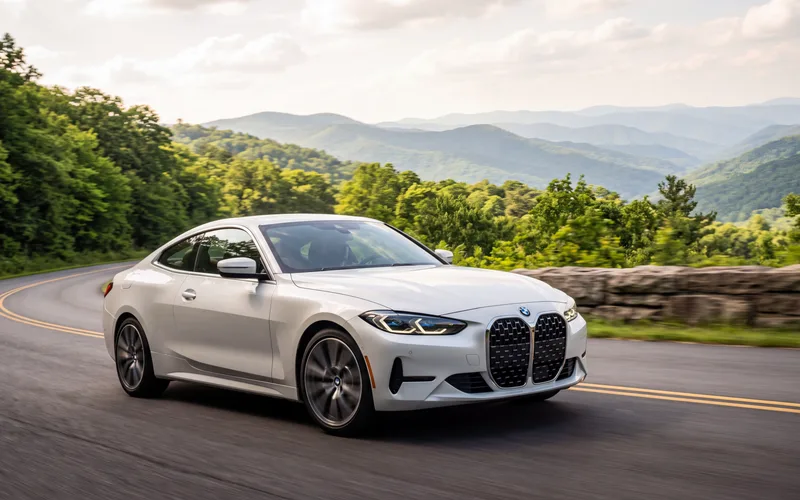 BMW 4 SeriesLuxury CoupeBetter at: Space and refinement
Same BMW driving character with a usable back seat, a calmer ride, and a much larger 14.9-inch display for a few thousand dollars more.
Compare 2.30C+
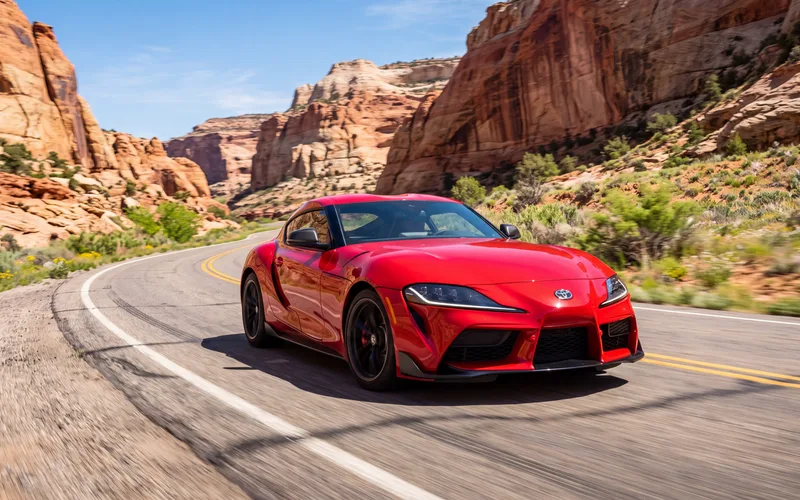 Toyota GR SupraSports CarBetter at: Ownership cost
Gets you the same B58 inline-six in a sharper two-seat package with Toyota service costs instead of BMW's roughly $7,800 five-year bill.
Compare 2.74B-
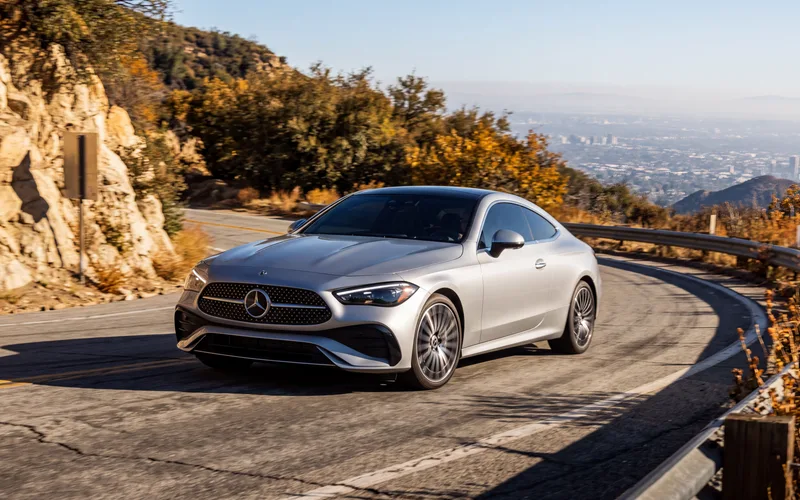 Mercedes-Benz CLE CoupeLuxury CoupeBetter at: Luxury feel
The pick if you want the coupe to feel like a luxury item rather than a sports car, with a plusher cabin and a softer ride.
CompareHow it's evolved
10 scored model years · 2017–2026
Subject scores by year
Hover or tap a score to see what moved it versus the year before. A corner mark flags a big swing.
| Year | Performance | Efficiency | Safety | Space | Cost | Reliability | Tech | Use-case | Driving | Value |
|---|---|---|---|---|---|---|---|---|---|---|
| 2026 | 59 | 34 | 74 | 58 | 43 | 79 | 77 | 47 | 78 | 73 |
| 2025 | 60 | 41 | 67 | 56 | 47 | 74 | 78 | 44 | 80 | 73 |
| 2024 | 60 | 35 | 60 | 52 | 49 | 75 | 78 | 39 | 76 | 75 |
| 2023 | 62 | 39 | 62 | 56 | 55 | 77 | 79 | 41 | 77 | 70 |
| 2022 | 57 | 39 | 62 | 52 | 59 | 75 | 73 | 40 | 78 | 70 |
| 2021 | 55 | 34 | 56 | 56 | 56 | 77 | 49 | 38 | 78 | 61 |
| 2020 | 56 | 31 | 56 | 55 | 60 | 77 | 42 | 38 | 78 | 62 |
| 2019 | 55 | 35 | 55 | 55 | 58 | 76 | 41 | 38 | 78 | 64 |
| 2018 | 55 | 35 | 51 | 56 | 61 | 76 | 39 | 37 | 78 | 65 |
| 2017 | 55 | 35 | 51 | 56 | 65 | 78 | 37 | 37 | 77 | 67 |
Compare two years
Best fit & conditions
Higher scores mean a better fit for that use case. Learn more about use-case fit →
Subject profile
Detailed scoring by subject
1Performance & PowertrainMid-pack among this car's ten categories.2.03C
The volume 230i uses BMW's 2.0L B48 TwinPower Turbo inline-4 rated at 255 hp; the M240i steps to the 382 hp B58 inline-six and the 2024 M2 tops the range at 453 hp — the pre-2025 S58 tune, before the 473 hp update.
The 230i's B48 peaks at 295 lb-ft from just 1,550 rpm, giving strong low-end response despite the modest displacement; M240i 369 lb-ft and 2024 M2 406 lb-ft.
BMW's own figure for the volume 230i xDrive Coupe is 5.3 s, with the rear-drive 230i at 5.5 s; the six-cylinder variants drop into the low-4s.
The B48 turbo-four delivers linear, well-damped thrust with only mild off-boost hesitation and a somewhat synthetic soundtrack; the optional B58 inline-six is a benchmark for smoothness and immediate response, lifting the lineup's ceiling well above segment norms.
Every 2024 2 Series Coupe uses the ZF 8-speed Steptronic Sport automatic — quick, decisive, and near-faultless in gear selection, with a genuinely useful manual mode; the M2 additionally offers a no-cost 6-speed manual.
xDrive is optional on both the 230i and the M240i for 2024 (EPA lists RWD and xDrive versions of each), so AWD reaches most of the range, but the M2 is rear-drive only and the system is a road-biased setup with no terrain modes or low range.
Gas-only for 2024 — no hybrid, PHEV or EV variant anywhere in the coupe range — but three genuinely distinct engines (255 hp 2.0T I4, 382 hp 3.0T I6, 453 hp twin-turbo S58) span entry-luxury through track-capable performance.
2Efficiency & RangeThe 2 Series's lowest-graded category.0.27F
EPA combined rating for the volume 230i xDrive Coupe (2.0L turbo I4, 8-speed automatic, AWD); rear-drive 230i rises to 30 combined and the six-cylinder M240i falls to 26.
EPA city rating for the 230i xDrive; auto stop-start and direct injection hold it within a point of the rear-drive car despite the extra AWD hardware.
EPA highway rating for the 230i xDrive — competitive for a turbocharged luxury coupe, with the tall top gears of the ZF 8-speed doing the work.
EPA's published total range for the 230i xDrive Coupe on its 13.7-gallon tank; the small tank, not the efficiency, is what caps it — a rear-drive 230i manages about 411 mi on the same capacity.
EPA's own annual-cost estimate for the 230i xDrive at 15,000 mi/yr on premium gasoline; the premium-grade requirement, not the MPG, is what pushes this above mainstream-coupe running costs.
EPA lists the 2024 2 Series as premium gasoline recommended rather than required, and BMW's US manual specifies 91 AKI as recommended — the car will run on lower octane with reduced output — but in practice owners buy premium, and there is no hybrid, flex-fuel or plug-in alternative to soften the cost.
3SafetyMid-pack among this car's ten categories.2.02C
NHTSA's database carries the 2024 2 Series Coupe (vehicle IDs 19184 RWD / 19185 AWD) but every result — overall, frontal, side, rollover — reads Not Rated; the low-volume G42 coupe has never been put through the battery. Estimate derives from the CLAR-derived G20 3 Series, which has earned 5-star overall, discounted for the shorter two-door structure never being independently verified.
IIHS has published no crashworthiness battery for the G42 2 Series Coupe — its 2-door coupe rating pages stop at the 2021 F22 — and the 2 Series appears nowhere on the 2024 Top Safety Pick list, which for BMW ran to the 5 Series, X1, X2, X3 and X5. The predecessor F22 was a 2017 TSP+ under the older protocols and the shared CLAR structure earns Good on small and moderate overlap front in the 3 Series, so there is no known structural concern — but there is also no current-protocol evidence, and BMW's family results under the updated side and front-crash-prevention tests have been uneven.
Standard on both 230i and M240i xDrive: Active Driving Assistant (frontal collision warning with city collision mitigation/AEB including pedestrian detection, active blind-spot detection, lane departure warning), rear cross-traffic alert, speed limit info, automatic LED headlights, front and rear parking sensors and a reversing camera — a genuinely broad standard list for a 2024 entry-luxury coupe. What holds it back is the ceiling rather than the floor: adaptive cruise is a $500 standalone extra, automatic high beams sit behind the $1,500 Convenience Package, and lane keeping with steering intervention is not offered at any price on the pre-LCI G42.
AEB with pedestrian detection is standard via the camera-and-radar Active Driving Assistant hardware, and BMW's earlier-protocol vehicle-to-vehicle results in this family were Superior. But the G42 has never been rated for front crash prevention, and the nearest tested relative under the updated protocol — the i4, on the same compact CLAR architecture — was rated Good for pedestrian detection yet Poor for vehicle-to-vehicle and motorcycle avoidance, which is exactly the test the 2 Series has not sat. Scored on the standard hardware being present and unverified rather than on an assumed carryover of the old Superior result.
Active Blind Spot Detection and rear cross-traffic alert are both standard on the 230i and M240i xDrive — no trim walk required, which matters more than usual on a car whose rear three-quarter sightlines are poor. Coverage is alert-only: no active steering correction, no rear automatic braking, no safe-exit warning, and the surround-view camera that would help most in a parking lot costs $700.
The pre-LCI G42 gets lane departure warning only — a haptic alert with no steering intervention — and BMW does not offer active lane keeping or lane centering on the 2024 2 Series Coupe at any price, because the Driving Assistance Professional Package that carries those functions on the 3 and 4 Series is simply not on the 2 Series order guide. The warning exists and works, which keeps this off the floor, but there is nothing here to steer the car.
The volume 230i ships with plain dynamic cruise control; Active Cruise Control with Stop & Go is a $500 standalone box — cheap enough that most buyers can have it, and BMW's calibration (smooth braking, natural gap keeping, prompt resume) is among the better systems in the class when fitted. It stays mid-band because it is unaccompanied: with no lane centering available there is no combined highway assist mode, so this is adaptive cruise on its own rather than a longitudinal-plus-lateral system like the 4 Series or Mercedes CLE offers.
No hands-free highway driving of any kind. BMW's Highway Assistant rides with the Driving Assistance Professional Package, which the 2024 2 Series Coupe cannot be ordered with — the function arrives on this nameplate only with the LCI/F74-era updates that follow this model year.
The volume 230i leaves the lot with fixed automatic LED headlights and no automatic high beams — those need the $1,500 Convenience Package, and the adaptive full-LED units are buried in the $3,350 Premium Package. IIHS has never rated the G42's lights, and the family's recent record is unflattering: the i4 drew Marginal-to-Poor on both of its headlight systems for inadequate high-beam reach. Good hardware is buyable here, but not on the car most people take home.
Forward and over-the-shoulder sightlines are better than the low roofline suggests — the G42's greenhouse is more upright than a 4 Series' — but the shallow rear window and thick C-pillars make judging what is behind you genuinely hard, and reviewers say so consistently. Standard front and rear parking sensors plus a reversing camera cover the low-speed cases; the 360-degree surround view that would close the gap is a $700 option rather than standard.
A 2+2 coupe is close to the worst case for car seats: every installation goes through one long door after tumbling and sliding a front seat, the anchors sit recessed in the seat bight, and the sloping roofline steals the headroom a rear-facing seat needs. Reviewers describe the back seat as usable only for small children, and it is tighter than the 4 Series' — two seats across is a struggle and three is impossible. The 3 Series' Good LATCH ease-of-use rating does not transfer through a two-door body.
4Space & ComfortGrades below the middle of the scale.1.47D
The G42 2 Series Coupe is a strict 2+2 across the whole 2024 range — 230i, 230i xDrive, M240i xDrive and M2 — with two individual rear buckets divided by a fixed center console, so there is no five-seat configuration at any price.
Unusually generous for a coupe: the G42's greenhouse is more upright than a 4 Series' and the volume 230i leaves the factory without a moonroof, so the full 39.8 in is what most buyers get.
Mid-pack for the class and identical to the larger 4 Series Coupe — the standard 8-way power sport seats have long travel and reviewers describe the front compartment as roomy even for tall drivers.
The fastback roofline is the binding constraint in back; 35.0 in is nominally mid-band for a coupe but reviewers uniformly describe the rear headroom as scrunched in practice because the seat cushion sits high relative to the glass.
Over two inches short of the 4 Series Coupe's 34.5 in on a wheelbase more than four inches shorter, and with no foot space under the front seats — the number flatters what is genuinely an occasional-use back seat.
BMW's own US figure for the G42 Coupe is 13.8 cu ft (390 L), a genuinely useful trunk for a two-door and bigger than the 4 Series Coupe's; some US outlets publish a stricter 10.0 cu ft SAE measurement of the same space, so the real-world figure sits between the two.
Typical small-coupe provision and nothing more: a shallow console bin, modest door pockets, a covered tray ahead of the shifter and small nets behind the front seats, with the fixed rear console eating the space a center bench would offer. The 40/20/40 folding rear seatback with a center pass-through is the one genuinely clever touch, and the wireless charging pad that would tidy the console is a $200 extra.
The standard sport seats are well bolstered and hold up over long stints — Consumer Reports found them comfortable on longer trips — but they lack lumbar adjustment unless optioned, the Sensatec upholstery is vinyl until you pay $1,500 for leather, and the rear buckets are punitive for anyone above child size, which caps a rating that asks about front AND rear comfort.
The volume 230i rides on passive dampers and run-flat tires, and reviewers consistently call it taut and a little crashy at low speeds with larger bumps jolting through into the cabin. It stops well short of punishing and never floats, but the adaptive M suspension that would smooth it out is an option rather than standard equipment.
Wind noise is well suppressed at highway speed and the small coupe body is tightly sealed, but the run-flat tires transmit noticeable road roar over coarse surfaces and there is no acoustic glass or active noise cancellation on the volume trim — respectable rather than luxury-quiet.
Dual-zone automatic climate control and auto-dimming mirrors are standard, but almost everything else is package-gated: heated front seats and a heated steering wheel ride with the Premium Package, ambient lighting and the moonroof with the $1,500 Convenience Package, and there are no ventilated seats, no rear climate provision and no rear vents at all. Remote climate pre-conditioning through the My BMW app is the one feature that comes free with the car.
5Cost of OwnershipOne of the 2 Series's weakest categories.1.29D
The 2024 entry trim is the rear-drive 230i Coupe at $38,800 plus BMW's $995 destination charge; xDrive adds $2,000 across the range. 2024 still offered a rear-drive 230i, which was dropped in later model years.
The volume configuration is the 230i xDrive at $41,795 delivered; most US buyers add the Premium Package (heated front seats, Comfort Access, moonroof, ambient lighting, head-up display) plus metallic paint, landing typical transactions in the mid-$45k range.
Edmunds' True Cost to Own projection for the 2024 230i xDrive puts five-year maintenance at about $6,923 and repairs at about $2,887 — well above the coupe segment's $2,500–$9,000 band despite the first three years of scheduled service being covered by BMW Ultimate Care. Premium parts, run-flat tires and BMW dealer labor rates drive years four and five.
The two-door 2 Series holds value notably better than the four-door Gran Coupe that shares the nameplate: iSeeCars measures 36.4% five-year depreciation for the coupe (63.6% retained) against 48.3% for the 2 Series overall, while Edmunds' more conservative projection implies about 55% retained on a 230i xDrive. 58% splits the two and stays above the coupe segment norm.
BMW's New Vehicle Limited Warranty runs 4 years or 50,000 miles, whichever comes first — a year longer than the mainstream 3/36 standard but with a lower mileage cap, and unchanged for 2024.
BMW folds powertrain coverage into the same 4-year/50,000-mile New Vehicle Limited Warranty rather than publishing a longer separate term, so engine and transmission protection expires with the bumper-to-bumper coverage — far short of the 5–10 year powertrain terms common elsewhere.
BMW Ultimate Care covers factory-scheduled maintenance for 3 years/36,000 miles (oil and filter changes, brake fluid, cabin filters, inspections) — among the stronger complimentary programs in luxury, where Audi and Mercedes-Benz offer little at that duration — paired with roadside assistance for the full 4-year warranty term and BMW ConnectedDrive/Assist service trials. No charging or fuel credits apply to this gas-only coupe.
$45,800 volume-trim price minus its estimated resale value after 5 years (58% retained, or about $26,564) leaves about $19,236 in depreciation. Add the projected $9,810 in 5-year maintenance and repairs, and owning this vehicle for 5 years costs about $29,046 in total.
6Reliability & QualityGrades above the middle of the scale.3.11B
2024 is a carry-over year for the G42 2 Series Coupe, three model years into a generation built on the well-understood B48/B58 + ZF 8HP hardware shared with the 3 and 4 Series, and the model is a J.D. Power segment quality winner. Consumer Reports predicted reliability tracks around average for the model, which pulls the score back from the top band.
BMW sits in the upper-middle of dependability studies — clearly better than Audi and Mercedes but well behind Lexus and Toyota. J.D. Power's 2024 VDS put BMW 9th overall at 190 PP100 (industry average 190) and 3rd among premium brands; Consumer Reports' 2024 used-car reliability study placed BMW 7th.
Only two NHTSA campaigns touch the 2024 230i, which is low volume for a BMW, but neither is trivial: a steering-gear fastener recall with a loss-of-control consequence and a later starter-motor fire recall covering the whole 2022–2025 2 Series Coupe run. A fire-risk action across the generation keeps this out of the clean band despite the small count.
The volume 230i's 2.0L B48 is regarded as one of BMW's better modern turbo fours — comfortably a 125,000–160,000-mile engine when serviced properly and a clear step up from the N20 it replaced — with known but manageable weak points (coolant/oil vent-hose leaks, plastic charge pipe, direct-injection carbon). It pairs with the industry-benchmark ZF 8HP automatic; the M240i's B58 six is stronger still, but the volume trim is graded here.
The 2024 cabin is solidly assembled with soft-touch dash and door surfaces, standard SensaTec sport seats and optional Vernasca leather, but reviewers consistently describe the materials as price-appropriate rather than rich — noticeably plainer than the 4 Series and behind what the LCI's 2025 interior trim and OS 8.5 update brought.
BMW's San Luis Potosí plant has delivered strong assembly on the G42 — the 2 Series Coupe topped its J.D. Power IQS segment for 2024, which is an initial-quality result the parent brand itself did not achieve. Panel gaps and structural solidity draw no consistent criticism; BMW's overall below-average IQS brand showing keeps it short of the very top.
Roughly 340 BMW dealers across all 50 states give strong metro and suburban coverage and thinner rural reach; luxury service satisfaction is upper-middle — ahead of Audi and Mercedes, behind Lexus and Cadillac — and BMW Ultimate Care covers scheduled maintenance for the first 3 years/36,000 miles. Dealer labor rates are among the highest in the industry.
Parts are abundant — the 230i shares most of its B48 driveline and much of its chassis hardware with the high-volume 3 Series, and the enthusiast aftermarket (FCP Euro, ECS, Turner) is deep — but out-of-warranty running costs sit well above mainstream norms: LL-01/LL-04 synthetic oil, run-flat tires, expensive brake service and dealer-only diagnostics. Slightly cheaper to keep than a 4 Series thanks to smaller consumables.
7Technology & InfotainmentThe 2 Series's best-graded category.3.29B+
2024 is the change year for this nameplate's tech: from July 2023 production the US G42 swapped the launch car's 8.8-inch control display for the BMW Curved Display, a 14.9-inch touchscreen fused with a 12.3-inch cluster, standard on every trim rather than optional.
The Snapdragon-powered OS 8.5 system is fast, sharply rendered and keeps the physical iDrive rotary controller, which puts it ahead of most touch-only rivals for driving-while-using. What holds it below the leaders is BMW's own menu redesign: climate and seat-heating controls now live inside touchscreen menus, and Consumer Reports found user-friendliness went backwards versus the previous generation.
Both wireless Apple CarPlay and wireless Android Auto are standard on every 2024 trim from the 230i up, with no wired-only base configuration and no subscription attached — the best available answer to this item.
BMW Maps cloud navigation and the BMW Intelligent Personal Assistant are standard for 2024 rather than package options — the nav does live-traffic cloud rerouting and the assistant takes natural-language commands including climate and seat heating, which is exactly the workaround for the buried touchscreen menus. It stops short of the top band because the assistant still misfires on complex requests and many owners default to CarPlay anyway.
The standard system is a competent if unremarkable 12-speaker setup, and the step up is a genuinely good 14-speaker, 464-watt Harman Kardon surround system that costs only $875 — cheap for the class. No higher tier (no Bowers & Wilkins as on the 8 Series) caps the ceiling.
For 2024 the 12.3-inch fully digital cluster became standard on every trim, up from the launch car's analog gauges with a 5.1-inch info window — crisp, bonded into the same curved glass as the center screen and with drive-mode-linked layouts. Marked down only because BMW's current gauge graphics draw persistent criticism for cramming the speedometer and tachometer into the screen edges.
BMW Remote Software Upgrade is whole-vehicle, not maps-only: the 2024 car ships with a built-in eSIM and has received feature-adding releases over the air, and the OS 8 to OS 8.5 QuickSelect jump itself was delivered to eligible cars this way. Short of the very top band because BMW's release cadence is a few times a year rather than continuous.
The My BMW app is one of the better OEM apps — remote lock/unlock, remote climate pre-conditioning, vehicle finder, status and service scheduling — and BMW Digital Key comes standard for 2024, turning an iPhone or Apple Watch into the key with sharing to other people. Basic remote functions are included free for the first years rather than being paywalled from day one.
Adequate and no better: USB-C in the front console and a 12V outlet, no meaningful rear-seat charging in a 2+2 whose back seat is barely usable, no household AC outlet, and the wireless charging pad is a $200 option rather than standard equipment on a car that starts near $40,000.
Push-button start is standard and BMW Digital Key gives phone-as-key on every trim, which is genuinely advanced. The catch is the ordinary end: Comfort Access proximity entry — the thing you use every day — is not standard, arriving only with the $1,500 Convenience Package or the Premium Package, so the volume car still asks you to press the fob button.
A reversing camera plus front and rear parking sensors are standard, which matters on a car with a shallow rear window and long doors. The 360-degree surround view and Parking Assistant automated parking are bundled into the $700 Parking Assistance Package — inexpensive, but still an extra rather than standard as on some rivals.
A full-color head-up display is offered and is good when fitted, but it cannot be ordered on its own — it comes only inside the Premium Package alongside adaptive LED headlights, heated seats and a moonroof, which puts it several thousand dollars above the volume 230i's as-configured price.
8Use-Case FitOne of the 2 Series's weakest categories.0.59F
Close to the worst case in the catalog for daily family logistics: every child-seat installation goes through one long door after tumbling and powering a front seat forward, the LATCH anchors sit recessed in the seat bight, the sloping roofline steals the height a rear-facing seat needs, and the fixed rear console means two seats across is a struggle and three is impossible. A stroller has to go in the trunk because the back seat cannot spare the room.
The standard list is decent — AEB with pedestrian detection, active blind-spot detection, rear cross-traffic alert, lane departure warning and parking sensors on the base 230i — but the family-relevant evidence is missing rather than good: NHTSA has never crash-tested the G42 and IIHS publishes no current-protocol rating for it, there is no rear-seat reminder in a two-door with a token back seat, and lane keeping with steering intervention is not offered at any price on this model year.
Four people can physically travel in it, but only two of them enjoyably. The rear buckets have 32.2 in of legroom and no foot space under the front seats, there are no rear air vents, no rear USB provision and no rear-seat amenities of any kind, and once the back seat is occupied the 13.8 cu ft trunk is all the luggage room there is.
The powertrain is the easy part — the B48 pulls from 1,550 rpm and the ZF 8-speed is essentially faultless in traffic, and the car is small enough to feel unintimidating. Against that, the passive-damper ride is firm and a little crashy over city pavement, the low seating position takes some agility to get in and out of every day, and the touchscreen climate menus add a step to something you adjust constantly.
28 MPG combined from the volume 230i xDrive is respectable for a rear-biased luxury coupe, but the running costs behind it are not cheap: premium fuel is required, the EPA estimates roughly $2,700 a year, and the standard run-flat tires are both expensive to replace and unrepairable when punctured. Average for the class, not a bargain.
At 179 inches long and 72.4 wide the 2 Series is one of the smallest cars in the luxury segment and threads city streets easily, helped by standard front and rear parking sensors and a reversing camera. Two things keep it out of the top band: the shallow rear window and thick C-pillars make reversing genuinely hard without the optional 360 camera, and the very long two-doors need clearance most parking spaces don't give you.
Not a work vehicle in any sense: BMW publishes no US tow rating for the 2 Series Coupe, there is no bed or load floor, payload is two adults and luggage, and the 13.8 cu ft trunk with a narrow two-door aperture rules out carrying anything long or bulky.
The B48 engine and ZF 8HP transmission are proven, high-mileage hardware shared across BMW's range, so the mechanicals are not fragile — but everything around them is wrong for hard use: Sensatec and leather trim with no washable option, low ground clearance, run-flat tires vulnerable to jobsite debris, and no fleet presence to draw a durability record from.
There is essentially nothing here: no onboard AC power, no bed or tie-downs, no roof rails, no factory hitch and no upfit ecosystem. The trunk has a small cargo net and that is the extent of the load-securing provision.
A better tourer than its size suggests for two people: the sport seats stay comfortable over long stints, wind noise is low at highway speed, and 13.7 gallons at 28 MPG combined gives roughly 384 miles between stops. It falls short of the top band because fatigue-reducing assistance is thin — adaptive cruise is a $500 option and lane centering is not offered at all for 2024 — and the firm passive suspension keeps working over broken interstate.
xDrive all-wheel drive on the volume trim means bad weather and a snowy trailhead road are within reach, which lifts it above a strict rear-drive sports car. Everything else works against it: sedan-grade ground clearance, run-flat summer or all-season tires with no off-pavement intent, no roof rails or rack provision, no tow rating for toys, and no cabin power for camping.
Genuinely good for a two-door — 13.8 cu ft is more trunk than the larger 4 Series Coupe offers, and the 40/20/40 split-folding rear seatback with a center pass-through lets skis or long items through while two people still sit in back. But the trunk opening is small, there is no underfloor storage, and with no roof rails or hitch there is no way to carry anything outside the car.
9Driving ExperienceOne of the 2 Series's strongest categories.3.19B
The G42 is the small, rear-drive BMW the enthusiast press keeps asking for: a 107.9-inch wheelbase, near-50/50 balance and taut body control give the 230i genuinely sharp responses even on passive dampers, and the range tops out in the G87 M2, which is among the most capable cars at any price for cornering grip. Held just below the very top band because the volume 230i on all-season run-flats runs out of front-end bite before the chassis does.
The single most consistent criticism of this car. The electric rack is quick, accurate and sensibly weighted outside Sport mode, so the car goes where you point it — but reviewers from Consumer Reports to evo say it transmits almost nothing about grip or road texture, which is a real shortfall in a coupe sold on driver appeal.
Strong and consistent with a firm, linear pedal that is easy to modulate — Car and Driver measured the mechanically identical M240i at 155 ft from 70 mph, and the lighter 230i carries the same braking hardware philosophy with less mass to stop. Fade resistance on a road drive is not an issue; the M2's M Compound brakes lift the range ceiling further.
The B48 turbo-four plus ZF 8HP eight-speed is close to the class benchmark for drivability: clean tip-in, 295 lb-ft available from 1,550 rpm so there is almost no lag to work around, and shifts that are both quick and imperceptible when you are not asking for them. A notch below the 4 Series only because the G42 has no 48V mild-hybrid starter-generator, so auto stop/start restarts are slightly more noticeable.
Well isolated at cruise with little vibration through the wheel or pedals, and the optional B58 inline-six in the M240i is one of the better-sounding engines on sale. The volume 230i's four-cylinder is the weak link — inoffensive but unremarkable under load, with a partly synthesized cabin note in Sport that reviewers find hollow.
38.1 ft is unremarkable for a car this small — a consequence of the rear-drive CLAR-derived front axle and wide front tires rather than the footprint — though it is still tighter than the longer-wheelbase 4 Series Coupe's 38.7 ft.
Low, properly sporty seating with generous seat and wheel adjustment, standard 8-way power sport seats and 39.8 in of front headroom, and the retained iDrive rotary controller keeps the main interface reachable without looking. Marked down for three real irritations: getting in and out takes some agility, rear three-quarter visibility is poor, and iDrive 8.5 pushes climate and seat heating into touchscreen submenus.
This is what the 2 Series Coupe is for, and enthusiasts say so unprompted: a compact rear-drive two-door with a proper automatic, a willing engine and enough chassis to reward a detour, sold at a price that undercuts everything else in the family. The G87 M2 — the only remaining BMW M car offered with a manual gearbox — anchors the top of the range. The numb steering is the one thing that stops it being unarguable.
10Value & Market PositionOne of the 2 Series's strongest categories.3.12B
The 2024 230i arrives with LED headlights, sport seats, dual-zone climate, wireless Apple CarPlay/Android Auto and Active Driving Assistant — respectable for a sub-$40k luxury coupe — but heated seats, Comfort Access keyless entry, moonroof, head-up display and heated steering wheel are all bundled into the extra-cost Convenience and Premium packages, and the Curved Display with iDrive 8.5 only reached the car partway through the model year (July 2023 production onward).
Performance per dollar is the 2 Series' strongest argument in 2024: the M240i xDrive delivers 382 hp from the B58 inline-six with adaptive M suspension for about $52k, the M2 offers 453 hp and a standard six-speed manual at $64,195 delivered, and even the $39,795 rear-drive 230i buys genuine RWD BMW chassis balance. Rivals ask materially more for equivalent output.
2024 is one of the broadest years of the G42 run: 230i and M240i each in rear- or all-wheel drive plus the rear-drive-only M2, spanning three distinct engines from 255 to 453 hp and roughly $40k to $64k, with a six-speed manual available on the M2. Content is still bundled into Convenience/Premium/M Sport packages rather than sold a la carte, and there is no coupe convertible or electrified variant.
BMW moved 15,384 2 Series in the US in 2024, up 32.4% year over year — a genuine riser at a time when two-door segments are shrinking and the Audi TT and A5 Coupe have exited — though the figure combines the RWD coupe with the front-drive Gran Coupe and still trails the 3 Series (31,330) and 4 Series (42,608) comfortably.
BMW is a top-tier aspirational premium brand with the deepest enthusiast following of the German three, and the M240i and M2 badges carry direct M-division halo; 2024 was a record US sales year for the brand, with only the polarizing current styling language working against it.
BMW Financial Services supports the 2 Series with subsidized lease programs and promotional APR financing, and by 2024 the pandemic-era markups had faded enough that modest dealer discounts off MSRP were normal — better buyer economics than a Porsche or a fresh-launch rival, but nothing approaching mainstream-brand cash rebates, and the M2 in particular transacted at or above sticker.
2024 is the third year of the G42 generation launched for MY2022 on the CLAR rear-drive platform — squarely mid-cycle, but freshened in-year by the arrival of the Curved Display (12.3-inch cluster plus 14.9-inch control screen) running iDrive 8.5 with QuickSelect, with the formal cosmetic refresh following for MY2025 and no full redesign on the near horizon.
The range-topping M2 was named MotorTrend's 2024 Performance Vehicle of the Year, following the G87's 2023 Auto Express Performance Car of the Year, and the M240i has been a repeat Car and Driver 10Best winner; reviewers across Car and Driver, MotorTrend and Edmunds consistently praise the steering, chassis balance and B58 six, reserving criticism for the styling and the cramped rear seat.