

The verdict
A struggling full-size truck, strong on space and held back by safety.
The 2017 Silverado 1500 is a capable, quiet, hard-working half-ton that is showing its age in exactly the places that matter most to a used-truck buyer today. It tows up to 12,500 lbs, runs every engine on regular unleaded, has one of the roomiest and best-insulated cabins of its era, and is cheap to service almost anywhere in the country. But it is also the weakest model year of its generation for reliability — Consumer Reports rated it 1 out of 5, and transmission surge and hard-shift complaints start as early as 3,000 miles — and its driver-assistance list is nearly empty: no blind-spot monitoring or adaptive cruise at any price, Poor-rated headlights, and a Marginal small-overlap crash result on the crew cab. Buy it as a work truck or a towing tool with a pre-purchase inspection and a service history in hand; don't buy it expecting modern safety tech or set-and-forget dependability.
Jump to scoresStrengths
- Serious towing and work capability
- A genuinely quiet, roomy cab
- Cheap and easy to keep running
What holds it back
- Driver-assistance tech is almost entirely missing
- The worst reliability year of its generation
- Poor headlights and a Marginal crash result
Top alternatives
Cars shoppers cross-shop with the Chevrolet Silverado 1500 2.66C+
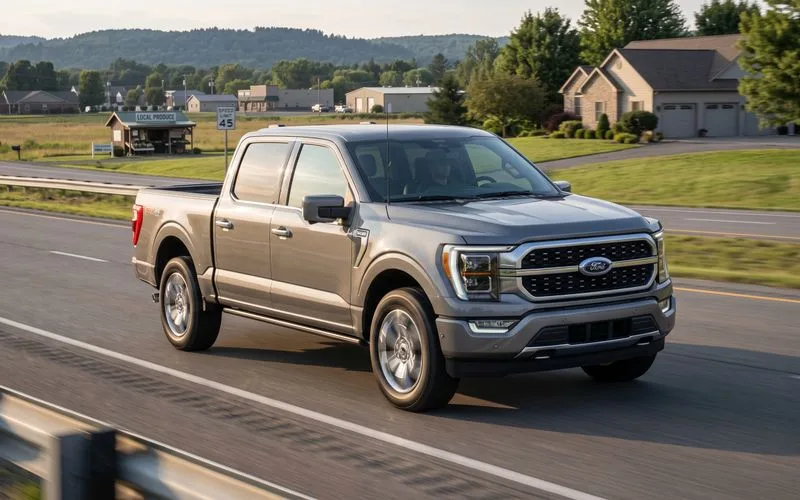 Ford F-150Full-Size TruckBetter at: Efficiency and resale
It matches or beats the Silverado on payload and work features, adds a PowerBoost hybrid at 23-25 MPG combined plus 7.2 kW of onboard jobsite power, and holds its value better.
Compare 2.42C+
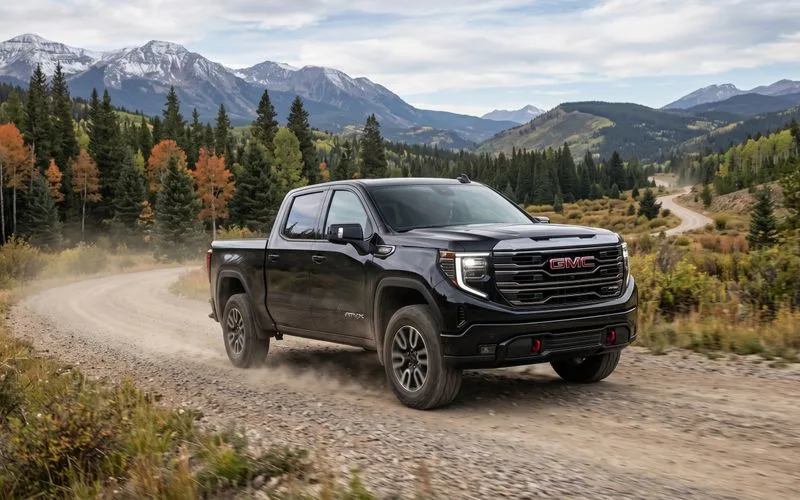 GMC Sierra 1500Full-Size TruckBetter at: Interior quality
Mechanically the same truck with a nicer cabin, the standard MultiPro tailgate on SLT and up, and slightly stronger residuals — worth the $3,000-$6,000 premium if the interior matters more than the invoice.
Compare 2.42C+
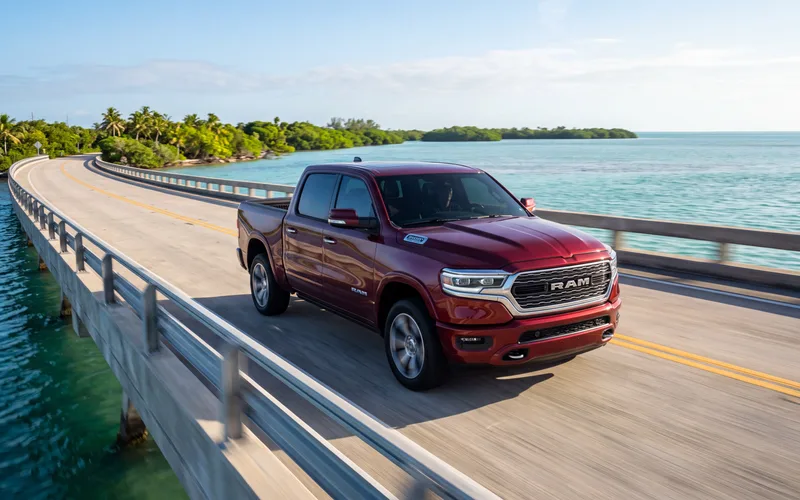 Ram 1500Full-Size TruckBetter at: Ride comfort
Its coil-sprung rear axle rides noticeably better unladen and its interiors are the segment's most comfortable, with a 33-gallon tank for longer legs between fills.
CompareHow it's evolved
10 scored model years · 2017–2026
Subject scores by year
Hover or tap a score to see what moved it versus the year before. A corner mark flags a big swing.
| Year | Performance | Efficiency | Safety | Space | Cost | Reliability | Tech | Use-case | Driving | Value |
|---|---|---|---|---|---|---|---|---|---|---|
| 2026 | 61 | 33 | 62 | 71 | 45 | 61 | 73 | 69 | 62 | 74 |
| 2025 | 61 | 29 | 61 | 73 | 45 | 66 | 73 | 67 | 62 | 74 |
| 2024 | 62 | 29 | 60 | 73 | 48 | 62 | 74 | 65 | 63 | 71 |
| 2023 | 61 | 31 | 64 | 70 | 45 | 59 | 69 | 66 | 62 | 73 |
| 2022 | 60 | 24 | 65 | 70 | 46 | 60 | 69 | 66 | 61 | 70 |
| 2021 | 59 | 37 | 43 | 68 | 56 | 50 | 54 | 65 | 60 | 64 |
| 2020 | 59 | 37 | 42 | 71 | 56 | 56 | 57 | 62 | 62 | 67 |
| 2019 | 59 | 37 | 37 | 68 | 56 | 53 | 55 | 60 | 59 | 66 |
| 2018 | 54 | 40 | 35 | 71 | 53 | 59 | 43 | 58 | 65 | 67 |
| 2017 | 54 | 40 | 36 | 69 | 61 | 56 | 43 | 61 | 65 | 67 |
Compare two years
Best fit & conditions
Higher scores mean a better fit for that use case. Learn more about use-case fit →
Subject profile
Trims & configurations
8 trimsScores above reflect the volume trim. Per-trim specs and scores are rolling out — the full lineup:
Detailed scoring by subject
1Performance & PowertrainGrades below the middle of the scale.1.65D
The volume 2017 Silverado 1500 — LT crew cab 4WD with the 5.3L EcoTec3 V8 (L83) — is SAE-certified at 355 hp, unchanged within the third generation (K2XX, 2014–2018). The 2017 lineup is all naturally aspirated: 285 hp from the 4.3L V6 on work trims up to 420 hp from the 6.2L V8 on LTZ and High Country.
383 lb-ft from the volume 5.3L small-block is mid-pack for a half-ton and identical to what the same engine family would still be making three model years later. With no diesel option in the 2017 light-duty range, the 6.2L V8's 460 lb-ft is the ceiling.
MotorTrend recorded 7.0 seconds to 60 mph for a 2017 Silverado 1500 LTZ Z71 crew cab 4WD with the 5.3L V8 — squarely mid-pack for a half-ton and roughly where the same drivetrain would still sit in the following generation. Dropping to 2WD is worth about two tenths, and the 6.2L V8 cuts more than a second off.
The 2017 range is entirely naturally aspirated direct-injected V6 and V8 EcoTec3 engines, so there is no turbo lag anywhere in the lineup and the 5.3L and 6.2L deliver the immediate, linear low-end torque reviewers consistently praise in this generation. What keeps it out of the top band is Active Fuel Management cylinder deactivation, which is audible as a change in exhaust note at light throttle and was the subject of widespread AFM lifter complaints on these engines, plus the 4.3L V6's ordinary manners on work trims.
2017 is a split transmission year: the Hydra-Matic 6L80 six-speed carries the 4.3L V6 and most 5.3L trucks, while the 8L90 eight-speed is fitted to the 5.3L and 6.2L on LTZ and High Country. Neither is a strength — the six-speed is dated and reluctant to hold a gear on grades, and the 8L90 drew persistent criticism (and eventual GM service bulletins) for torque-converter shudder and harsh, hesitant low-gear shifts, so the volume truck sits in the middle of the band rather than above it.
Properly equipped with the 6.2L V8 and the Max Trailering Package, the 2017 Silverado 1500 tows 12,500 lbs — a class-leading figure for its model year and high in the truck normalization band, though about 900 lbs shy of what the next generation would manage. The volume 5.3L tops out near 11,100 lbs, and real crew-cab 4WD configurations land well below the headline number.
Maximum payload is about 2,250 lbs when properly equipped — mid-band for a half-ton and typical of the era, with real-world crew cabs landing several hundred pounds lower. Published figures vary by cab, box, engine and axle, so this sits at MEDIUM rather than HIGH.
The core hardware is all here — an available integrated proportional (Spectrum) trailer brake controller in the Max Trailering Package, tow/haul mode, StabiliTrak with Trailer Sway Control standard on every trim, an automatic locking rear differential and a rear vision camera with hitch guidance lines. What is absent is everything that arrived with the next generation: no multi-camera trailering suite, no transparent-trailer view, no in-vehicle trailering app with profiles or pre-departure checklist, and no trailer tire-pressure or lighting diagnostics. That places it solidly in the middle band rather than the top.
Four-wheel drive is offered across the entire 2017 trim range from Work Truck to High Country, using a genuine two-speed transfer case with 4-Low, with Autotrac automatic 4WD available on higher trims and an automatic locking rear differential bundled with the Z71 package. It stops short of the top of the band because 4WD is an extra-cost option on every trim rather than standard anywhere — there is no 4WD-only trim in the 2017 lineup.
The Z71 Off-Road Package is a real if modest package — Rancho monotube shocks, skid plates, hill descent control, an automatic locking rear differential, recovery hooks and available 20-inch all-terrain tires. But it is a suspension-tuning package, not a lift: ground clearance stays around 8 inches, and 2017 predates both the Trail Boss (2019) and the ZR2 (2022), so there is no factory lift, no front locker and no 33-inch mud-terrains. That is capable light-duty off-road credibility, mid-band, not the dedicated-trim tier.
Three naturally aspirated gas engines — 4.3L V6, 5.3L V8 and 6.2L V8 — cover the mainstream half-ton needs and put this in the middle band, but that is the whole menu. There is no light-duty diesel (the 3.0L Duramax was three model years away), no turbocharged four, and nothing electrified: no hybrid, no plug-in, no EV variant. Choice within the 2017 range is really about displacement and transmission, not about powertrain type.
2Efficiency & RangeOne of the Silverado 1500's weakest categories.0.65F
The volume configuration — 5.3L V8 crew cab 4WD with the six-speed — is EPA-rated 18 MPG combined, low in the truck band but ordinary for a naturally aspirated V8 half-ton of this era. There is no economy powertrain to step to in 2017: the 4.3L V6 gains only two combined MPG in 2WD, and with no diesel or turbo four in the lineup, 20 MPG is the ceiling for the whole range.
16 MPG in town is unremarkable but not the worst of the 2017 range — Active Fuel Management cylinder deactivation keeps the 5.3L a point ahead of the 6.2L, and the four-cylinder mode only helps at steady cruise, so stop-and-start use is where this truck costs the most to run.
22 MPG on the highway is the best this configuration does and sits in the lower-middle of the truck band, which runs to 31 MPG. Notably the six-speed 4WD truck rates two MPG better on the highway than the eight-speed 4WD version, which carries the heavier-duty gearing found on LTZ and High Country trims.
A large 26-gallon standard tank does most of the work here: at 18 MPG combined the volume truck covers roughly 470 miles between fills, mid-band and genuinely better touring range than the thirstier figure alone suggests. The optional 34-gallon tank on the regular cab with the 8-foot box pushes past 600 miles. The figure is derived from the EPA combined rating and the published tank size rather than quoted directly by EPA.
EPA puts annual fuel spend for the volume 5.3L V8 4WD truck at $3,400 — high in absolute terms and in the upper half of the truck band. The spread across the whole 2017 range is narrow, only about $500 a year between the thriftiest V6 and the 6.2L V8, because there is no diesel or electrified option to escape to.
Every 2017 Silverado 1500 engine is EPA-listed on regular unleaded — including the 6.2L V8, which is unusual for a high-output engine and a real advantage over the later fourth-generation 6.2L that requires premium. Many 4.3L V6 and 5.3L V8 configurations are additionally E85 flex-fuel capable, adding a cheap-fuel option where E85 is sold. The score sits just below the top of the band because Chevrolet recommends premium on the 6.2L to realize its full 420 hp, and E85 operation costs roughly a quarter of the truck's range.
3SafetyThe Silverado 1500's lowest-graded category.0.35F
NHTSA rated every 2017 Silverado 1500 body style five stars overall; the volume crew cab 4WD earned 5/5 frontal, 5/5 side (5 side pole) and 4/5 rollover. The K2XX platform (2014–2018) was a strong NCAP performer from launch and 2017 is a carry-over year structurally.
Four of five IIHS crashworthiness tests come back Good, but the crew cab — the volume body style — takes a Marginal in driver-side small overlap, and Poor headlights foreclose any award. No Top Safety Pick for any 2017 Silverado 1500 configuration.
The volume LT crew cab leaves the factory with a rear vision camera, Teen Driver mode and StabiliTrak — and nothing else. Forward collision alert, lane keep assist and low-speed automatic braking exist only inside the Y86 Enhanced Driver Alert Package, which the 2017 order guide restricts on LT to Regular Cab models, so the buyer of the best-selling configuration could not order them at any price.
New for 2017 is UHY Low Speed Collision Mitigation Braking — a sub-highway-speed system with no pedestrian detection and no full-speed vehicle-to-vehicle capability — and it is bundled inside the same restricted Y86 package. IIHS never evaluated it, so there is not even a vehicle-to-vehicle rating to credit.
Blind-spot monitoring and rear cross-traffic alert were simply not offered on the 2017 Silverado 1500 on any trim, in a body style with wide rear quarters and a long bed — a gap the contemporary F-150 and Tundra had already closed. The only mitigation is the standard rear camera and, on some trims, rear park assist.
UHX Lane Keep Assist is a warn-and-nudge system with a vibrating Safety Alert Seat — departure correction only, with no lane centering of any kind — and like the rest of the suite it is locked inside the Y86 package and unavailable on the volume LT crew cab.
Fixed-speed cruise control only — the 2017 Silverado 1500 offered no adaptive cruise at any trim or price, a notable omission against an F-150 that had it, and there is no highway-assist function to speak of.
No hands-free highway system of any kind. Super Cruise launched for 2018 on the Cadillac CT6 and did not reach a Chevrolet truck until the T1 Silverado years later.
IIHS rated every 2017 Silverado 1500 headlight configuration Poor — the base HID projectors on WT/LS/LT, the LED projectors on LTZ/High Country, and even the high-beam-assist version — with excessive glare noted on one. IntelliBeam auto high beams exist only inside the restricted Y86 package.
The K2XX cab is squared-off with a low beltline, upright glass and relatively slim A-pillars, so forward and over-the-shoulder sightlines are better than the modern high-cowl trucks that replaced it. Against that, there is no surround-view camera option on the 2017 half-ton and no blind-spot electronics to cover the rear quarters — the standard rear camera on LT and above is the only compensation.
The crew cab's rear bench is genuinely large with wide-opening doors, so the space is there — but IIHS rates the hardware itself Poor for ease of use on both LS and LT crew cabs, with anchors buried in the seat bight and hard to reach.
4Space & ComfortThe Silverado 1500's best-graded category.2.69C+
The volume 2017 configuration — LT crew cab short box 4WD — leaves the factory with a 40/20/40 cloth split bench up front and a full-width rear bench, seating six. Ordering bucket seats and the center console drops it to five.
The K2XX cab is tall and squared-off, and 42.8 inches sits near the top of the full-size class — about two inches more than the contemporary F-150 crew cab. A power sunroof costs roughly an inch and a half.
45.3 inches is at the ceiling of the truck normalization band and among the most generous in the 2017 half-ton field, with a long seat track that accommodates tall drivers easily.
The crew cab's upright roofline gives 40.5 inches in the second row, near the top of the segment band and enough for six-footers to sit without ducking.
40.9 inches is genuinely spacious in absolute terms but mid-pack for a 2017 full-size crew cab — the F-150 SuperCrew offered 43.6 in and the Ram 1500 Crew Cab 40.3 in. The rear bench sits fairly upright with a flat floor.
The volume crew cab pairs with the 5'8" short box, whose 69.3-inch floor is the shortest of the three 2017 bed choices — the price of the biggest cab. A crew cab with the 6'6" box is available on a 153-inch wheelbase.
53.4 cubic feet of box volume in the short-box crew cab, marginally more than the aluminum-bed F-150 SuperCrew's 52.8 cu ft in the same 5.5-foot bed class. Two-tier loading and box-rail handholds make the space more usable than the raw number suggests.
Competitive rather than clever: a deep lockable center console (or a lockable armrest bin on bench-seat trucks), big door pockets, an under-rear-seat storage tray in the crew cab, and an available 110V household outlet. What it lacks is the standout innovation the category's top band asks for — no in-bed trunk, no fold-flat work surface, nothing on the order of the Ram's RamBox.
The volume LT's cloth seats draw the most consistent criticism in the truck — Consumer Reports found them short on support, and the 40/20/40 bench is flat by design. Leather LTZ and High Country chairs are notably better, and the driving position itself is roomy, so this is a mid-band result rather than a poor one.
Reviewer verdicts split, which is what puts it mid-pack: the standard suspension is soft and absorbs broken pavement well, but that softness shows up as rear-end bounce when a trailer is attached, and trucks fitted with the Max Trailering package ride noticeably stiffer. Consumer Reports called the ride stiff-side and preferred the coil-sprung Ram 1500 for daily comfort.
The clearest strength in the category. Triple door seals, inlaid doors and thick acoustic insulation make this generation one of the quietest half-tons of its era — Consumer Reports measured the cabin as quiet as a luxury car's, and reviewers repeatedly single out how little road and wind noise reaches the occupants at highway speed.
Key comfort equipment is real but sits behind option packages: heated front seats and dual-zone automatic climate arrive with the LT Convenience/Plus packages, a heated steering wheel with LTZ, and ventilated front seats only on High Country. The rear seat gets floor vents but no separate controls, and there is no remote pre-conditioning beyond plain remote start.
5Cost of OwnershipMid-pack among this car's ten categories.2.14C
The 2017 Silverado 1500 still opened with a genuine vinyl-floor Regular Cab Work Truck at $27,785 delivered, one of the lowest full-size entry prices of its model year and deep in the cheap end of the truck band. It is a fleet-oriented configuration nobody scores on, which is exactly why this item carries no weight of its own.
Silverado volume in 2017 sat in the LT Crew Cab 4WD band, which opened at $42,905 delivered — but that price buys the standard 4.3L V6, and the volume truck is the 5.3L EcoTec3 V8 scored in categories 1 and 2, roughly a $1,100 upcharge. Add the option content most LTs actually left the lot with (All Star Edition, Z71 Off-Road, the 8-inch MyLink screen) and a representative truck lands near $45,800, about $1,700 below the equivalent 2020 model.
Routine service on the pushrod 5.3L is cheap, parts are everywhere and Chevrolet runs the largest dealer service network in the segment, so scheduled maintenance sits at or below the full-size class norm. The repair half is what pushes the total to roughly class median: this generation's Active Fuel Management lifter failures are a well-documented four-figure repair, and the 2014–2018 trucks carry the long-running driveline vibration complaint. It lands slightly better than the 2020 truck because the volume 2017 configuration uses the durable 6L80 six-speed rather than the 8L90 eight-speed whose torque-converter shudder became that generation's signature transmission repair.
The 2017 model year hit its five-year mark in 2022, at the absolute peak of the pandemic used-pickup price spike, so it retained value well above what this nameplate structurally manages — Chevrolet's large fleet and rental share and its heavy incentive use normally leave Silverado residuals a couple of points behind the F-150 and Sierra. Retention here is quoted against as-equipped MSRP for the volume LT Crew Cab 4WD, not the stripped Work Truck price.
GM's standard bumper-to-bumper term, identical across the 2017 Chevrolet line and to the mechanically identical GMC Sierra 1500. It matched Ford, Ram, Toyota and Nissan in 2017 but sits at the industry floor and at the bottom of the 3–5 year band, well behind Hyundai/Kia's 5-year/60,000-mile coverage.
GM had cut its powertrain coverage from 5 years/100,000 miles to 5 years/60,000 miles beginning with the 2016 model year, so a 2017 buyer got the shorter term — the segment floor, matching Ford, Ram and Toyota but behind Nissan's 5-year/100,000-mile Titan coverage and far behind Hyundai's 10-year/100,000-mile. It scores at the bottom of the 5–10 year band.
2017 falls inside the more generous era of Chevrolet Complete Care: two complimentary maintenance visits within 2 years/24,000 miles, each covering an oil and filter change, a four-wheel tire rotation and a 27-point inspection — double what a 2019-or-later Chevrolet buyer received after the program was cut to a single visit. Alongside it come 5-year/60,000-mile roadside assistance and courtesy transportation and an OnStar plus 4G LTE Wi-Fi trial. That is a real if modest maintenance program rather than a token visit: ahead of Ford, which included no scheduled maintenance on the 2017 F-150 at all, and level with or ahead of Ram, but behind Toyota's ToyotaCare, which covered all factory-scheduled maintenance for 2 years/25,000 miles on the Tundra rather than counting visits.
$45,800 volume-trim price minus its estimated resale value after 5 years (67% retained, or about $30,686) leaves about $15,114 in depreciation. Add the projected $6,900 in 5-year maintenance and repairs, and owning this vehicle for 5 years costs about $22,014 in total.
6Reliability & QualityMid-pack among this car's ten categories.1.73C-
2017 is the year to avoid within the K2XX generation (2014–2018). Consumer Reports gives it a 1-out-of-5 overall reliability rating — the lowest score on its scale — and rates it less reliable than the average 2017 vehicle, and CarComplaints tags the model year with its 'Beware of the Clunker' badge on the strength of transmission surge/jerk and hard-shift reports that begin around 3,000 miles, still inside the basic warranty. J.D. Power pulls the other way at 84/100, but that is a 90-day owner-satisfaction measure, not a dependability one, and the complaints that define this truck arrive after it. Two sources in genuine conflict, with the long-horizon source at its floor, puts this in the below-average band rather than merely mixed.
The cohort-matched study for this truck is J.D. Power's 2020 Vehicle Dependability Study, which surveyed 36,555 original owners of 2017 model-year vehicles at three years. Chevrolet did not reach that study's top five (Genesis 89, Lexus 100, Buick 103, Porsche 104, Toyota 113 PP100 against a 134 industry average), though GM took five segment awards on 2017 vehicles including the Chevrolet Equinox, Silverado HD and Tahoe. Consumer Reports keeps Chevrolet in the lower third of mainstream brands across the same period. Net: a mid-pack brand with a decent 2017-cohort showing at model level but nothing that lifts it toward the top-five band, and a light-duty Silverado that shared in none of those awards.
Six NHTSA campaigns reach the 2017 Silverado 1500 — half the twelve carried by the 2020 truck, and a normal count for a full-size pickup of its era. Severity is what holds the score down rather than volume: two separate airbag/pretensioner non-deployment campaigns (16V651000, 17V437000), control arms with inadequate welds that can separate from the bushing (16V256000), and two braking defects — the engine-driven vacuum pump whose assist degrades over time (19V645000, part of GM's 3.4-million-vehicle campaign) and unintended activation of the driveline-protection system causing unintended braking (19V761000). Behind the recalls sit this generation's two long-running bulletin families, 8L90 torque-converter shudder (TSB 18-NA-355, Mobil 1 Blue Label flush) and AFM lifter collapse on the 5.3L L83 (TSB 19-NA-219), plus the P1429 brake vacuum pump code that the recall only partly addresses. Typical recall activity, but with braking and restraint systems repeatedly involved and a systemic driveline TSB trail underneath.
The scored volume configuration is the 5.3L EcoTec3 L83 V8 with the Hydra-Matic 6L80 six-speed — the more durable of the two 2017 transmissions, since the 8L90 eight-speed that carries the shudder defect was restricted to LTZ and High Country. The small-block architecture underneath is as proven as anything in the segment, with fleet operators reporting 250,000–350,000 miles. Against that, both halves have a named weak point: the L83's Active Fuel Management lifters collapse and drop lobe contact (cold-start tick, misfire, bent pushrods), a well-documented four-figure repair especially past 80,000 miles on stretched oil intervals, and the 6L80 has its own torque-converter shudder, valve-body wear and cracked 1-2-3-4 piston history that heavy towing accelerates. The 2017 model year's dominant owner complaint is precisely transmission surge, hesitation and hard shifting, with $2,600–$4,200 repairs at 22,000–38,000 miles. Proven bones, two documented failure modes, and the worst complaint record of its generation — mid-band, no better.
Judged against its own model year rather than against what came later, the K2XX cabin reviewed well: Edmunds found the plastics nicely textured and upscale-feeling even on basic models, and U.S. News described plenty of high-end materials with most touchpoints in soft rubber and higher trims bordering on luxury-vehicle quality. The 2017 truck predates the 2019 Ram 1500 that redefined the segment's interior expectations, so it was competing with the outgoing Ram DS and the 2017 F-150 and holding its own. What keeps it out of the top band is design rather than materials — a deliberately upright, conservative dashboard that Car and Driver contrasted with the more forward-looking Ram and Ford — plus a plain volume LT and scattered owner complaints about leather durability. Comfortably above the pre-refresh 2020 truck, whose cabin was the thing the 2022 overhaul existed to fix.
Structural assembly is a strength — Edmunds reported being impressed by build quality across every Silverado it tested, and out-of-the-box quality measured well, with J.D. Power's 84/100 consumer quality rating tying the truck for best in the large light-duty pickup class alongside the Tundra. The deduction is for component and electronic quality that shows up after delivery: infotainment screens that freeze or go blank (owners describe it as dangerous at speed), and transmission shift quality so coarse from behind the wheel that it reads as an assembly defect, appearing in some cases by 3,000 miles. Around 1,000 total complaints for the model year is a lot even allowing for the Silverado's sales volume. Generally solid with a persistent band of scattered complaints.
Chevrolet runs one of the two largest franchised dealer networks in the US at roughly 2,900–3,000 locations, so factory service for a Silverado is within reach almost anywhere — a material advantage over the Buick-GMC channel that supports the mechanically identical Sierra, and decisive in the rural markets where these trucks sell hardest. It matters more than usual on this model year: the vacuum-pump and driveline-protection campaigns arrived in 2019, two and three years into ownership, and were performed free at any Chevrolet dealer. Service satisfaction near the mainstream average rather than the top of it, plus the ordinary friction of getting a dealer to authorize an AFM lifter or torque-converter job under warranty, is what keeps this out of the highest band.
This is the truck's clearest strength. The Silverado 1500 is one of the two best-selling vehicles in America and the 5.3L small-block is the engine every independent shop in the country already knows, so parts depth is behind only the F-150. Nine model years out, the 2017 truck also has a fully mature used, reman and aftermarket channel plus parts commonality with the Sierra, Tahoe, Suburban, Yukon and Escalade of the same K2XX era. RepairPal puts annual repair cost at $714 against a $936 full-size-truck average, with unscheduled shop visits at 0.2 per year versus 0.3 for the class. The one caveat is severity rather than price or supply: RepairPal notes Silverado repairs skew more severe than average, and the AFM lifter and torque-converter jobs this model year is known for run $2,600–$4,200 well outside any factory coverage.
7Technology & InfotainmentOne of the Silverado 1500's weakest categories.0.83F
The volume LT comes standard with the 8-inch MyLink IO5 touchscreen, which is also the largest screen available in 2017 — the IO6 upgrade adds navigation on the same 8-inch panel. That was competitive for 2017 but sits at the very bottom of the truck band, which is anchored to today's 12-inch-plus displays.
MyLink in this generation was among the better-liked truck systems of its era: a simple tile home screen, quick responses, and — critically — a full bank of physical knobs and buttons beneath the screen for volume, tuning and climate. It is dated in graphics and shallow in features next to a modern system, but daily usability was rarely the complaint.
Wired Apple CarPlay and Android Auto are standard on both the 7-inch and 8-inch MyLink systems for 2017, so the volume LT has phone projection out of the box — genuinely ahead of much of the market at the time. Wireless projection did not exist on this truck at any price, and the base WT's IO3 head unit has no touchscreen and no projection at all.
Voice control is command-word based and limited to radio and phone functions — nothing resembling natural language. Native navigation is a paid upgrade (IO6) rather than standard, with OnStar turn-by-turn as the subscription alternative, and most owners default to CarPlay or Android Auto maps.
The LT's standard six-speaker system is adequate but unremarkable, and the step up is a modest Bose seven-speaker setup that is tied to ordering front bucket seats rather than being freely available. Competent, not a selling point.
Analog gauges throughout, with a small monochrome driver information center standard and a 4.2-inch color DIC arriving inside LT preferred-equipment groups. The 8-inch color cluster display is reserved for the top trims, so the volume truck is firmly in partial-digital territory.
No meaningful over-the-air updating. The K2XX electrical architecture predates GM's OTA rollout — infotainment and module software are dealer- or USB-serviced, and navigation map updates ship on physical media. GM's whole-vehicle OTA capability arrives with the Vehicle Intelligence Platform years later.
The myChevrolet/OnStar RemoteLink app covers the core set — remote start, lock/unlock, vehicle locate and diagnostics — and 2017 falls in the window when RemoteLink key-fob services came with five years of the no-cost OnStar Basic Plan rather than a paid subscription. There is no digital key, and the app is functional rather than polished.
Adequate for 2017 and dated now: USB-A ports and an auxiliary jack up front with 12V outlets, a 110V household outlet bundled into the convenience packages, and wireless phone charging available on LT and LTZ double/crew cabs ordered with bucket seats. No USB-C anywhere, and rear-seat charging is thin.
The volume LT still turns a physical key: remote keyless entry is standard, but Keyless Open and Start sits inside an option package on LT and is standard only from LTZ up. Remote start is available, and a truck bed has no powered tailgate to speak of, so the convenience ceiling here is low.
A rear vision camera became standard on LT for 2017, and front and rear park assist are available on upper trims — but there is no surround-view camera at any price on the 2017 Silverado 1500, and no automated parking. That is a real gap for a 230-inch-long vehicle.
No head-up display was offered on the 2017 Silverado 1500 on any trim, including High Country. GM's first full-size-truck HUD arrives with the 2019 Silverado and Sierra.
8Use-Case FitMid-pack among this car's ten categories.2.10C
The crew cab has the raw ingredients — four wide-opening conventional doors, 40.5 in of rear headroom and 40.9 in of legroom, a flat floor and a folding rear bench with under-seat storage — but the LATCH hardware itself is the weak link, and the high step-in height means small children need a hand or a running board to get aboard.
Five NHTSA stars overall is the good news; almost everything else is a gap at the price families actually pay. The crew cab takes a Marginal in the IIHS driver-side small overlap test, every headlight configuration is rated Poor, blind-spot monitoring and adaptive cruise are not offered on any trim, and the only automatic braking is a low-speed system bundled in an upper-trim package.
A quiet, roomy crew cab with a covered dry bed for the bulky luggage is a solid family tourer, but the rear compartment is thinly equipped: floor vents with no separate rear climate controls, no rear entertainment, sparse rear charging, and a flat bench that reviewers found short on support on long stints.
Around town the 5.3L V8 is smooth and immediately responsive with no turbo lag or stop/start shudder to manage, the steering is light and the upright glasshouse gives good sightlines. What tires you is the sheer footprint in traffic and the absence of any adaptive cruise or stop-and-go assistance to lean on.
18 MPG combined and roughly $3,400 a year in fuel at EPA assumptions is expensive commuting, even for a half-ton — the contemporary F-150 with the 2.7L EcoBoost was three to four MPG better. The saving grace is that every engine runs on regular unleaded and consumables are cheap and universally stocked.
A 230-inch-long crew cab with an 80-inch width and a 47.2-foot turning circle is a handful in structured parking and on urban streets. The standard-on-LT rear camera helps, but there is no surround-view system available and front park assist is an upper-trim option, so backing into tight spots relies on mirrors and the low beltline.
A serious work tool with headroom to spare: the volume 5.3L V8 is rated to 11,100 lbs of trailer when properly equipped and the lineup tops out at 12,500 lbs with the 6.2L and Max Trailering Package, with payload up to about 2,250 lbs. The naturally aspirated V8 pulls without drama, though a real crew-cab 4WD in the field tows closer to 9,300 lbs than the headline number.
A fleet staple with a steel bed, a fully boxed frame and the small-block V8 — a combination with a deep, well-understood service network and vinyl-floor Work Truck trims built to be hosed out. Holding it below the top band are the well-documented Active Fuel Management lifter failures on these EcoTec3 engines, which are exactly the kind of fault that bites hardest under load.
Strong on the fundamentals: CornerStep rear bumper, an EZ Lift-and-Lower damped tailgate, two-tier box loading, handholds moulded into the box-rail protectors, tie-downs in the bed, and an available 110V outlet plus LED cargo-box lighting and spray-in liner. The aftermarket upfit ecosystem for this platform is about as deep as it gets. It stops short of the top band only because onboard power is a single household outlet, not a generator-grade system.
The quiet cabin and roughly 470 miles from the 26-gallon tank make it a capable mile-eater, and the V8 cruises effortlessly. Against that, the seats give up on long stints, the ride floats and then thumps depending on suspension package, and there is no adaptive cruise or lane centering at all — the driver does all the work on a ten-hour day.
Genuine two-speed four-wheel drive is available across the entire trim range, the Z71 Off-Road Package adds Rancho monotube shocks, skid plates, hill descent control and a locking rear differential, and roughly 8.9 in of clearance plus five-figure tow ratings cover boats, campers and toy trailers. It is a capable trail and gravel truck rather than a rock-crawler — there is no Raptor-class or Trail Boss variant in 2017.
An open 53.4 cu ft bed with two-tier loading and a huge accessory ecosystem of racks, caps and bed extenders swallows bulky gear a closed SUV cannot, and the crew cab's folding rear bench with under-seat storage keeps valuables dry. The limits are the ones every short-box truck has: an open bed needs a tonneau or cap for weather and security, and the 5'8" floor means long items ride with the tailgate down.
9Driving ExperienceOne of the Silverado 1500's strongest categories.2.37C+
For a full-size half-ton the K2XX is secure and predictable — the fully boxed frame and 2014 redesign gave it near-car-like composure by truck standards, and it tracks straight and settled at speed. Push it and there is plenty of body lean, and it is not agile in any absolute sense; this is competence rather than engagement.
The electric-assist rack is accurately weighted and well isolated from bump steer, which makes it easy to place on the highway, but it tells the driver almost nothing about the front tires. Precise enough, numb by design.
Instrumented stops of 122 ft for a regular cab and 128 ft for a crew cab from 60 mph are good results for a 2017 half-ton, and the pedal is firm and progressive rather than the soft, long-travel setup common in the class. Repeated hard stops with a trailer attached are where the standard brakes start to feel their weight.
A naturally aspirated 5.3L V8 with no turbo lag and no engine stop/start to stumble over gives clean, linear tip-in and strong low-end torque — one of this truck's most-praised traits. It falls short of the top band on the transitions: Active Fuel Management changes cylinder count audibly at light throttle, and the six-speed in the volume truck occasionally hunts on rolling grades.
The small-block sounds good when asked to work and disappears almost entirely at a highway cruise inside this generation's heavily insulated cab. The blemish is the drone that accompanies Active Fuel Management in four-cylinder mode at light throttle, which owners and reviewers both note.
47.2 feet on the 143.5-inch wheelbase is typical for a full-size crew cab — marginally tighter than the contemporary F-150 SuperCrew's 47.8 ft, but still a three-point-turn vehicle in any parking structure.
A commanding, upright seating position with class-leading front headroom and legroom, a tilt-and-telescoping wheel, and controls laid out with real knobs and buttons that work in gloves. Marks come off for the flat bench-seat cushion in the volume LT and the high step-in that makes ingress a climb without the running boards most buyers add.
The V8 soundtrack and the easy, torquey response give it more character than the average work truck, and the 6.2L version is genuinely quick. In volume 5.3L form it is a pleasant, capable, entirely forgettable thing to drive — Consumer Reports went as far as calling the 5.3L lackluster.
10Value & Market PositionOne of the Silverado 1500's strongest categories.2.53C+
A genuinely split result. On infotainment the 2017 Silverado gave away more than its rivals: MyLink with Apple CarPlay and Android Auto, a 4G LTE Wi-Fi hotspot with OnStar, Teen Driver and — new for this model year — a rear vision camera all standard on the volume LT, at a time when Ford still charged for Sync 3 on lower F-150 trims. On driver assistance it gave away almost nothing: forward collision alert, the new low-speed automatic braking and lane keep assist were confined to option packages on upper trims, IntelliBeam and Enhanced Driver Alerts were High Country content, and blind-spot monitoring with rear cross-traffic alert was not offered on any 2017 Silverado 1500 at any price when both the F-150 and Ram 1500 had it. Competitive equipment for the money overall, with one conspicuous hole.
Capability per dollar is where this truck argued its case: a 12,500 lb maximum trailering rating that led the light-duty class for 2017, three naturally aspirated engines running on regular unleaded including the 420 hp 6.2L V8, and list prices a step under equivalent F-150s — then five-figure-adjacent incentives on top, so the money actually paid bought considerably more truck than the window sticker implied. Against that, the cabin was the standing criticism of the generation, there was no light-duty diesel to answer the F-150's 3.0L Power Stroke or the Ram EcoDiesel, and no amount of discounting buys a blind-spot monitor that was never on the order sheet. Fair value rather than a bargain.
Among the widest configurable ranges on sale for 2017: six core trims from vinyl-floor Work Truck to leather High Country plus a stack of appearance and equipment editions (Custom, Custom Sport, All Star, Z71 Midnight, Texas Edition), three cab styles, three bed lengths, 2WD or 4WD on essentially everything, and ten distinct trim configurations spanning $27,785 to $55,275. It sits a notch below the 2020 truck only because the powertrain menu is narrower — three naturally aspirated gas engines rather than the later five, with no turbo four and no diesel anywhere in the light-duty range.
The Silverado was the second-best-selling vehicle in the United States for calendar 2017 and grew about 2% to 585,864 units in a year when the overall US market fell — a fourth-year design still gaining share against a newer F-150 and an outgoing Ram. It falls short of the top of the band only because the F-Series remained the single-nameplate leader by a wide margin, and because that growth leaned on some of the heaviest incentive support in the industry rather than on pull demand alone.
Chevrolet carries real full-size truck credibility and unusually deep repeat-buyer loyalty, and the 2016 facelift's squared-off, retro-flavoured front end was better received than the divisive shape that replaced it in 2019 — owners rate the truck's styling and reliability as its strongest attributes. But the Silverado had no image halo of its own in 2017: the interior was the class's standing criticism, there was no headline halo variant to answer the Raptor, and the badge reads as competent and mainstream rather than aspirational the way Ram had begun to position itself. A neutral-to-good brand position.
Scored as buyer benefit, 2017 was about as good as it gets on a full-size pickup. GM was carrying 80-plus days of inventory and spending 13.5% of average transaction price on incentives in October 2017 — roughly $6,000 on a $45,000 truck before dealer discounting, layered on top of long-term 0% financing offers, and the fall clearance on outgoing 2017 Silverados ran deeper still as GM cleared the way for the 2018s and the T1 redesign behind them. This is generous negotiability rather than distress pricing, since the truck was growing sales at the same time.
2017 is the fourth year of the K2XX third generation launched for 2014 and the second year after its 2016 mid-cycle facelift, with the fourth-generation T1XX truck already known to be arriving for 2019 — so a buyer sat squarely in the back half of a generation with replacement visible on the horizon. The model year added genuine but small content: low-speed automatic braking became available, a capless fuel fill went standard across the line, the rear camera became standard on LT, and High Country picked up IntelliBeam and Enhanced Driver Alerts. Nothing structural changed, and the platform tech gaps against the aluminium-bodied 2015-on F-150 — no blind-spot monitoring, no adaptive cruise, a six-speed on the volume engine — were the visible cost of the age.
Reliably well reviewed and reliably not the trophy winner. Aggregators placed it at or near the top of the 2017 full-size class on the strength of its quiet cabin, engine breadth, segment-leading tow rating and five-star NHTSA result, but the recurring reviewer verdict is that it does everything competently while the F-150 does more of it better — old-school ride quality, an interior below its price, and missing driver aids are the standing marks against it. It won no major 2017 award: Truck Trend's Pickup Truck of the Year went to the Nissan Titan and the North American Truck of the Year to the Honda Ridgeline. Solidly mid-band, held there by the absence of comparison-test wins rather than by any weak review.