

The verdict
A mixed-report minivan, strong on space and held back by efficiency.
Overall 2.26 (C) across 10 graded subjects. Its strongest is space & comfort at 2.95 (B-), its weakest efficiency & range at 0.81 (F). 6 of 10 subjects grade at C− or better.
Jump to scoresStrengths
- Space & Comfort
- Safety
- Use-Case Fit
What holds it back
- Efficiency & Range
- Performance & Powertrain
- Cost of Ownership
Top alternatives
Cars shoppers cross-shop with the Chrysler Pacifica 2.71B-
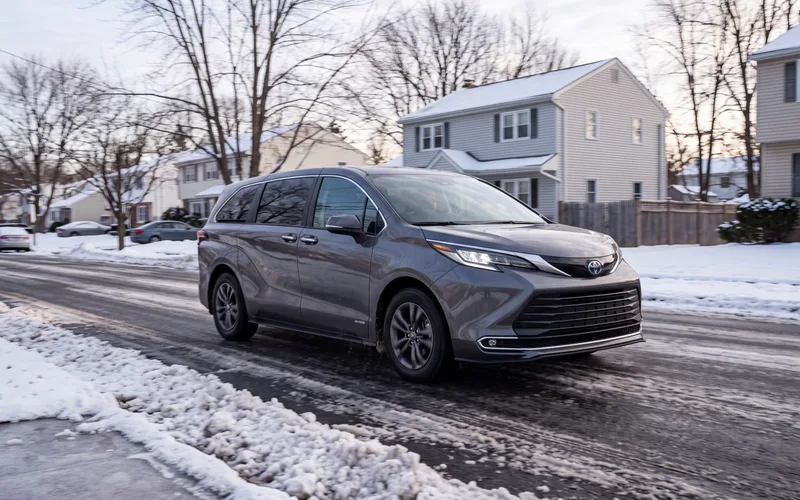 Toyota SiennaMinivan
Pacifica wins on cargo flexibility (Stow 'n Go's 140.5 cu ft flat load floor is untouchable) and offers the segment's only PHEV plus AWD on a gas engine.
Compare 2.54C+
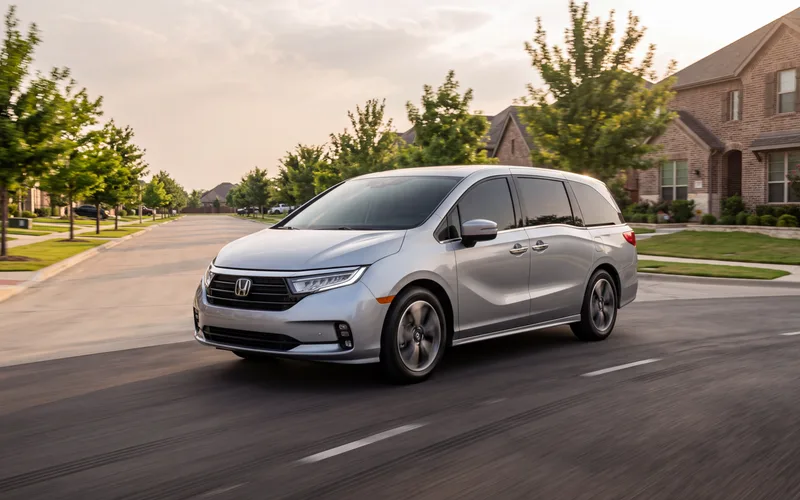 Honda OdysseyMinivan
Both are family-focused minivans; the Odyssey drives a bit sharper and has a smoother 10-speed transmission and better long-term reliability.
Compare 2.71B-
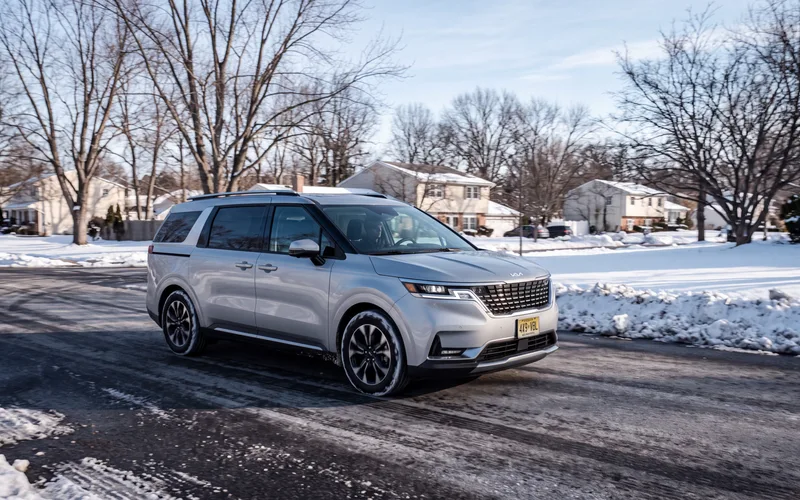 Kia CarnivalMinivan
The Carnival brings a longer 5/60 basic + 10/100k powertrain warranty and a fresher SUV-styled cabin at a lower base price.
CompareHow it's evolved
7 scored model years · 2020–2026
Subject scores by year
Hover or tap a score to see what moved it versus the year before. A corner mark flags a big swing.
| Year | Performance | Efficiency | Safety | Space | Cost | Reliability | Tech | Use-case | Driving | Value |
|---|---|---|---|---|---|---|---|---|---|---|
| 2026 | 44 | 44 | 73 | 69 | 37 | 49 | 69 | 68 | 64 | 71 |
| 2025 | 44 | 42 | 72 | 73 | 47 | 53 | 70 | 70 | 64 | 70 |
| 2024 | 44 | 43 | 74 | 73 | 49 | 50 | 68 | 70 | 65 | 72 |
| 2023 | 44 | 43 | 76 | 76 | 42 | 51 | 66 | 70 | 64 | 74 |
| 2022 | 44 | 47 | 82 | 73 | 40 | 51 | 71 | 72 | 64 | 78 |
| 2021 | 44 | 42 | 79 | 74 | 41 | 54 | 68 | 72 | 64 | 85 |
| 2020 | 40 | 42 | 66 | 72 | 52 | 52 | 51 | 63 | 64 | 72 |
Compare two years
Best fit & conditions
Higher scores mean a better fit for that use case. Learn more about use-case fit →
Subject profile
Academic Probation · NHTSA safety recalls
Sep 1, 2026Electronic stability control (esc)The brake pedal position sensor capacitor may be cracked, which can cause a loss of electronic stability control. As such, these vehicles fail to comply with the requirements of Federal Motor Vehicle Safety Standard number 126, "Electronic Stability Control Systems."
Defect
Chrysler (FCA US, LLC) is recalling certain 2025-2026 Chrysler Voyager, Chrysler Pacifica, and 2026 Chrysler Voyager Plug-In Hybrid Electric (PHEV) vehicles. The brake pedal position sensor capacitor may be cracked, which can cause a loss of electronic stability control. As such, these vehicles fail to comply with the requirements of Federal Motor Vehicle Safety Standard number 126, "Electronic Stability Control Systems."
Risk
A loss of electronic stability control increases the risk of a crash.
Remedy
Dealers will inspect and replace brake pedal position sensor, as necessary, free of charge. Owner notification letters were mailed September 17, 2026. Owners may contact FCA customer service at 1-800-853-1403. FCA's number for this recall is 69D. Vehicle Identification Numbers (VINs) involved in this recall will become searchable on NHTSA.gov beginning September 9, 2026.
NHTSA campaign 26V561000 ↗Manufacturer no. 69D2,017 vehicles potentially affected (all models in the campaign)Owners notified Sep 17, 2026Filed by Chrysler (FCA US, LLC)Filed as PACIFICA, PACIFICA PLUG-IN HYBRIDJun 2, 2026Air bags: frontalThe spring inside the front seat harness connector may contact electrical terminals.
Defect
Braun Corporation (Braun) is recalling certain 2023-2026 Chrysler Pacifica and Voyager vehicles. The spring inside the front seat harness connector may contact electrical terminals.
Risk
The unintended connection may prevent the air bags from deploying, increasing the risk of injury during a crash.
Remedy
Dealers will replace the spring, free of charge. Owner notification letters were mailed July 16, 2026. Owners may contact Braun's customer service at 1-800-488-0359.
NHTSA campaign 26V358000 ↗141 vehicles potentially affected (all models in the campaign)Owners notified Jul 16, 2026Filed by Braun CorporationFiled as PACIFICAMay 11, 2026Equipment adaptive/mobility: wheelchair restraints/securement: critical fastenersThe retractors may not lock, preventing the wheelchair from being properly secured.
Defect
Braun Corporation (Braun) is recalling certain 2023-2026 Chrysler Pacifica vehicles. The retractors may not lock, preventing the wheelchair from being properly secured.
Risk
An unsecured wheelchair can move during transit, increasing the risk of injury.
Remedy
Braun will work with Q'Straint to inspect and replace the retractors as necessary, free of charge. Owner notification letters were mailed June 16, 2026. Owners may contact Braun's customer service at 1-800-488-0359 or Q'Straint's customer service at 1-800-987-9987.
NHTSA campaign 26V296000 ↗476 vehicles potentially affected (all models in the campaign)Owners notified Jun 16, 2026Filed by Braun CorporationFiled as PACIFICAMar 26, 2026Air bags: side/window: curtainThe right and left side curtain air bags may have insufficient pressure retention. As such, these vehicles fail to comply with the requirements of Federal Motor Vehicle Safety Standard (FMVSS) number 226, "Ejection Mitigation."
Defect
Chrysler (FCA US, LLC) is recalling certain 2022-2026 Pacifica and Voyager vehicles. The right and left side curtain air bags may have insufficient pressure retention. As such, these vehicles fail to comply with the requirements of Federal Motor Vehicle Safety Standard (FMVSS) number 226, "Ejection Mitigation."
Risk
Air bags with insufficient pressure retention increase the risk of ejection and injury during a crash.
Remedy
Dealers will replace the side curtain air bags, as necessary, free of charge. Owner notification letters were mailed May 14, 2026. Owners may contact Chrysler customer service at 800-853-1403. Chrysler's numbers for this recall are 06D, 10D, and 11D. Vehicle Identification Numbers (VINs) involved in this recall will be searchable on NHTSA.gov beginning April 2, 2026. This recall expands and replaces previous NHTSA recall numbers 25V302 and 25V573. Vehicles previously repaired under a prior recall will need to have the new remedy completed.
NHTSA campaign 26V189000 ↗Manufacturer no. 06D, 10D, 11D293,264 vehicles potentially affected (all models in the campaign)Owners notified May 14, 2026Filed by Chrysler (FCA US, LLC)Filed as PACIFICADec 17, 2025Equipment adaptive/mobility: wheelchair restraints/securement: latch/anchorThe retractors may not lock, preventing the wheelchair from being properly secured.
Defect
Vantage Mobility, LLC (VM) is recalling certain 2021-2026 Honda Odyssey, 2021-2025 Chrysler Pacifica, and Toyota Sienna vehicles equipped with QRT-Deluxe and QRT-Max wheelchair restraints. The retractors may not lock, preventing the wheelchair from being properly secured.
Risk
An unsecured wheelchair can move during transit, increasing the risk of injury.
Remedy
Dealers will inspect and replace the retractors, free of charge. Owner notification letters was mailed January 27, 2026. Owners may contact Vantage Mobility customer service at 1-800-488-9082.
NHTSA campaign 25V877000 ↗1,019 vehicles potentially affected (all models in the campaign)Owners notified Jan 27, 2026Filed by Vantage MobilityFiled as PACIFICADec 17, 2025Equipment adaptive/mobility: wheelchair restraints/securement: latch/anchorPlease refer to Rollx's recall report for specific model year information. The retractors may not lock, preventing the wheelchair from being properly secured.
Defect
Rollx Vans (Rollx) is recalling certain GMC Yukon, Sierra, Chevrolet Express 2500, Ford Transit, E-250, Toyota Sienna, Sienna Hybrid, Honda Odyssey, Chrysler Town and Country, Voyager, Pacifica, Dodge Grand Caravan, and Ram Promaster vehicles equipped with QRT-Deluxe and QRT-Max wheelchair restraints. Please refer to Rollx's recall report for specific model year information. The retractors may not lock, preventing the wheelchair from being properly secured.
Risk
An unsecured wheelchair can move during transit, increasing the risk of injury.
Remedy
Rollx will work with Q'Straint to inspect and replace the retractors as necessary, free of charge. Owner notification letters were mailed February 5, 2026. Owners may contact Rollx's customer service at 1-800-956-6668.
NHTSA campaign 25V876000 ↗86 vehicles potentially affected (all models in the campaign)Owners notified Feb 5, 2026Filed by Rollx VansFiled as PACIFICASep 4, 2025Air bags: side/window: curtainThe right and left side curtain air bags may have insufficient pressure retention from improperly sealed seams. As such, these vehicles fail to comply with the requirements of Federal Motor Vehicle Safety Standard (FMVSS) number 226, "Ejection Mitigation."
Defect
Chrysler (FCA US, LLC) is recalling certain 2025 Pacifica and Voyager vehicles. The right and left side curtain air bags may have insufficient pressure retention from improperly sealed seams. As such, these vehicles fail to comply with the requirements of Federal Motor Vehicle Safety Standard (FMVSS) number 226, "Ejection Mitigation."
Risk
An air bag with insufficient pressure retention increases the risk of ejection and injury during a crash.
Remedy
Dealers will replace the side curtain air bags, as necessary free of charge. Owner notification letters were mailed October 14, 2025. Owners may contact Chrysler customer service at 800-853-1403. Chrysler's numbers for this recall are 82C, 86C, 87C. Vehicle Identification Numbers (VINs) involved in this recall will be searchable on NHTSA.gov beginning September 11, 2025. This recall is replaced by NHTSA recall number 26V189. Vehicles already repaired under this recall will need to have the new remedy completed.
NHTSA campaign 25V573000 ↗Manufacturer no. 82C, 86C, 87C985 vehicles potentially affected (all models in the campaign)Owners notified Oct 14, 2025Filed by Chrysler (FCA US, LLC)Filed as PACIFICAJul 17, 2025Back over prevention: sensing system: camera · Equipment: appliance: tv/radio/speakersThe vehicles were built with an incorrect radio, which can cause the rearview camera image not to display. As such, these vehicles fail to comply with the requirements of Federal Motor Vehicle Safety Standard (FMVSS) number 111, "Rear Visibility."
Defect
Chrysler (FCA US, LLC) is recalling certain 2024-2025 Chrysler Pacifica vehicles. The vehicles were built with an incorrect radio, which can cause the rearview camera image not to display. As such, these vehicles fail to comply with the requirements of Federal Motor Vehicle Safety Standard (FMVSS) number 111, "Rear Visibility."
Risk
A rearview image that does not display reduces the driver's view of what is behind the vehicle, increasing the risk of a crash.
Remedy
Dealers replaced the radio, free of charge. All affected vehicles have been repaired. Owner notification letters were mailed August 7, 2025. Owners may contact Chrysler customer service at 800-853-1403. Chrysler's number for this recall is 57C.
NHTSA campaign 25V471000 ↗Manufacturer no. 57C21 vehicles potentially affected (all models in the campaign)Owners notified Aug 7, 2025Filed by Chrysler (FCA US, LLC)Filed as PACIFICAMay 8, 2025Air bags: side/window: curtainThe right and left side curtain air bags may have insufficient pressure retention from improperly sealed seams. As such, these vehicles fail to comply with the requirements of Federal Motor Vehicle Safety Standard (FMVSS) number 226, "Ejection Mitigation."
Defect
Chrysler (FCA US, LLC) is recalling certain 2022-2025 Pacifica and Voyager vehicles. The right and left side curtain air bags may have insufficient pressure retention from improperly sealed seams. As such, these vehicles fail to comply with the requirements of Federal Motor Vehicle Safety Standard (FMVSS) number 226, "Ejection Mitigation."
Risk
An air bag with insufficient pressure retention increases the risk of ejection and injury during a crash.
Remedy
Dealers will replace the side curtain air bags, as necessary free of charge. Owner notification letters were mailed beginning October 14, 2025. Owners may contact Chrysler customer service at 800-853-1403. Chrysler's numbers for this recall are 06C, 54C, 55C. This recall is replaced by NHTSA recall number 26V189. Vehicles already repaired under this recall will need to have the new remedy completed.
NHTSA campaign 25V302000 ↗Manufacturer no. 06C, 54C, 55C250,651 vehicles potentially affected (all models in the campaign)Owners notified Oct 14, 2025Filed by Chrysler (FCA US, LLC)Filed as PACIFICAMar 27, 2025Service brakes, hydraulic: critical fasteners · Service brakes, hydraulic: foundation components: disc: caliperThe bolts securing the front brake caliper bracket may not be tightened properly, which can result in reduced steering control, a brake fluid leak, and a loss of front brake function.
Defect
Chrysler (FCA US, LLC) is recalling certain 2025 Chrysler Pacifica Plug-In Hybrid Electric (PHEV) vehicles. The bolts securing the front brake caliper bracket may not be tightened properly, which can result in reduced steering control, a brake fluid leak, and a loss of front brake function.
Risk
Reduced steering control, a brake fluid leak, and loss of front brake function increase the risk of a crash.
Remedy
Dealers will inspect and replace the front brake caliper brackets and bolts, as necessary, free of charge. Owner notification letters were mailed April 10, 2025. Owners may contact FCA customer service at 1-800-853-1403. FCA's number for this recall is 27C.
NHTSA campaign 25V191000 ↗Manufacturer no. 27C8 vehicles potentially affected (all models in the campaign)Owners notified Apr 10, 2025Filed by Chrysler (FCA US, LLC)Filed as PACIFICA PLUG-IN HYBRID
37 recalls on other model years of the Pacifica (2017–2024, 2026)
Aug 13, 2026Back over prevention: sensing system: cameraThe rearview camera image may fail to display when the vehicle is placed in reverse. As such, these vehicles fail to comply with the requirements of Federal Motor Vehicle Safety Standard (FMVSS) number 111, "Rear Visibility."
Defect
Chrysler (FCA US, LLC) is recalling certain 2026 Jeep Wrangler, Jeep Gladiator, Jeep Compass, Jeep Cherokee, Jeep Grand Cherokee, Jeep Grand Cherokee L, Jeep Grand Wagoneer, Jeep Grand Wagoneer L, Ram Promaster, Ram Promaster EV, Ram 1500, Ram 2500, Chrysler Pacifica Plug-In Hybrid, Chrysler Voyager, and 2026-2027 Chrysler Pacifica and Dodge Charger vehicles. The rearview camera image may fail to display when the vehicle is placed in reverse. As such, these vehicles fail to comply with the requirements of Federal Motor Vehicle Safety Standard (FMVSS) number 111, "Rear Visibility."
Risk
A rearview camera image that fails to display reduces the driver's view behind the vehicle, increasing the risk of a crash.
Remedy
Radio software will be updated by a dealer or through an over-the-air (OTA) update, free of charge. Owner notification letters were mailed beginning September 2, 2026. Owners may contact Chrysler customer service at 800-853-1403. Chrysler's number for this recall is 78D. Vehicle Identification Numbers (VINs) involved in this recall will be searchable on NHTSA.gov on August 20, 2026.
NHTSA campaign 26V531000 ↗Manufacturer no. 78D844,027 vehicles potentially affected (all models in the campaign)Owners notified Sep 2, 2026Filed by Chrysler (FCA US, LLC)Filed as PACIFICA, PACIFICA PLUG-IN HYBRIDJun 4, 2026Electrical system: propulsion system: traction batteryThe battery pack may cause a vehicle fire, even when the vehicle is parked with the ignition in the "Off" position.
Defect
Chrysler (FCA US, LLC) is recalling certain 2020-2022 Pacifica Plug-In Hybrid Electric (PHEV) vehicles. The battery pack may cause a vehicle fire, even when the vehicle is parked with the ignition in the "Off" position.
Risk
A vehicle fire increases the risk of injury.
Remedy
Owners are advised not to charge their vehicles, and to park outside and away from structures, until their vehicle is repaired. Dealers will update the high voltage battery pack control module software. In addition, dealers will inspect and replace the battery pack assembly, as necessary. All repairs will be performed free of charge. Owner notification letters were mailed beginning June 23, 2026. Owners may contact FCA US LLC customer service at 1-800-853-1403. FCA US LLC's number for this recall is 52D. The Vehicle Identification Numbers (VINs) involved in this recall will become searchable on NHTSA.gov on June 11, 2026.
NHTSA campaign 26V362000 ↗Manufacturer no. 52D17,277 vehicles potentially affected (all models in the campaign)Owners notified Jun 23, 2026Filed by Chrysler (FCA US, LLC)Filed as PACIFICAMay 21, 2026Back over prevention: sensing system: cameraContamination in the central vision processing module or improper programming may cause the rearview camera image not to display. As such, these vehicles fail to comply with the requirements of Federal Motor Vehicle Safety Standard (FMVSS) number 111, "Rear Visibility."
Defect
Chrysler (FCA US, LLC) is recalling certain 2019 and 2023 Chrysler Pacifica, 2024 Ram 1500, Ram 2500, and 2024-2025 Jeep Wrangler vehicles. Contamination in the central vision processing module or improper programming may cause the rearview camera image not to display. As such, these vehicles fail to comply with the requirements of Federal Motor Vehicle Safety Standard (FMVSS) number 111, "Rear Visibility."
Risk
A rearview image that does not display reduces the driver's view behind the vehicle, increasing the risk of a crash.
Remedy
Dealers will update the central vision processing module software or replace the module, as necessary, free of charge. Owner notification letters are expected to be mailed beginning July 16, 2026. Owners may contact Chrysler customer service at 800-853-1403. Chrysler's number for this recall is 46D. Vehicle Identification Numbers (VINs) involved in this recall will be searchable on NHTSA.gov on May 28, 2026.
NHTSA campaign 26V327000 ↗Manufacturer no. 46D16 vehicles potentially affected (all models in the campaign)Owners notified Jul 16, 2026Filed by Chrysler (FCA US, LLC)Filed as PACIFICAJun 12, 2025Back over prevention: sensing system: camera · Equipment: appliance: tv/radio/speakersDue to a manufacturing error, the rearview camera image may not display. As such, these vehicles fail to comply with the requirements of Federal Motor Vehicle Safety Standard (FMVSS) number 111, "Rear Visibility."
Defect
Chrysler (FCA US, LLC) is recalling certain 2023 Chrysler Pacifica and Voyager vehicles. Due to a manufacturing error, the rearview camera image may not display. As such, these vehicles fail to comply with the requirements of Federal Motor Vehicle Safety Standard (FMVSS) number 111, "Rear Visibility."
Risk
A rearview image that does not display reduces the driver's view of what is behind the vehicle, increasing the risk of a crash.
Remedy
Dealers will inspect and replace the rearview camera, as necessary free of charge. Owner notification letters were mailed July 3, 2025. Owners may contact Chrysler customer service at 800-853-1403. Chrysler's number for this recall is 34C.
NHTSA campaign 25V388000 ↗Manufacturer no. 34C140 vehicles potentially affected (all models in the campaign)Owners notified Jul 3, 2025Filed by Chrysler (FCA US, LLC)Filed as PACIFICANov 25, 2024Seats: barriersThe seat limiter may not have been installed, allowing the seat to move too far forward. As such, these vehicles fail to comply with the requirements of Federal Motor Vehicle Safety Standard number 208, "Occupant Crash Protection."
Defect
Braun Corporation (Braun) is recalling certain 2024 Chrysler Pacifica and Voyager vehicles. The seat limiter may not have been installed, allowing the seat to move too far forward. As such, these vehicles fail to comply with the requirements of Federal Motor Vehicle Safety Standard number 208, "Occupant Crash Protection."
Risk
A seat positioned too close to the air bag can increase the risk of injury during a crash.
Remedy
Dealers will inspect and install a seat limiter as necessary, free of charge. Owner notification letters were mailed December 17, 2024. Owners may contact Braun customer service at 1-800-488-0359.
NHTSA campaign 24V888000 ↗44 vehicles potentially affected (all models in the campaign)Owners notified Dec 17, 2024Filed by Braun CorporationFiled as PACIFICAOct 24, 2024Air bags: side/window: curtainAn improperly secured connector for the side curtain air bags may prevent the air bags from deploying. As such, these vehicles fail to comply with the requirements of Federal Motor Vehicle Safety Standard numbers 214, "Side Impact Protection" and 226, "Ejection Mitigation."
Defect
Chrysler (FCA US, LLC) is recalling certain 2020-2023 Pacifica and 2020-2021, 2023 Voyager vehicles. An improperly secured connector for the side curtain air bags may prevent the air bags from deploying. As such, these vehicles fail to comply with the requirements of Federal Motor Vehicle Safety Standard numbers 214, "Side Impact Protection" and 226, "Ejection Mitigation."
Risk
An air bag that does not deploy during a crash increases the risk of injury.
Remedy
Dealers will secure the connector, free of charge. All vehicles have been remedied. Owner notification letters were mailed October 22, 2024. Owners may contact FCA customer service at 1-800-853-1403. FCA's number for this recall is A8B.
NHTSA campaign 24V793000 ↗Manufacturer no. A8B26 vehicles potentially affected (all models in the campaign)Owners notified Oct 22, 2020Filed by Chrysler (FCA US, LLC)Filed as PACIFICAJul 18, 2024Hybrid propulsion systemThe battery pack may cause a vehicle fire when parked, even with the ignition in the "Off" position.
Defect
Chrysler (FCA US, LLC) is recalling certain 2019-2021 Pacifica Plug-In Hybrid Electric (PHEV) vehicles. The battery pack may cause a vehicle fire when parked, even with the ignition in the "Off" position.
Risk
A vehicle fire increases the risk of injury.
Remedy
Owners are advised not to charge their vehicles, and to park outside and away from structures, until they are repaired. Dealers will update the high voltage battery pack control module (BPCM) software. In addition, dealers will inspect and if necessary, replace the battery pack assembly. Repairs will be performed free of charge. Owner notification letters were mailed March 6, 2025. Owners may contact FCA US LLC customer service at 1-800-853-1403. FCA US LLC's number for this recall is 72B. This recall is an expansion of NHTSA recall number 22V-077.
NHTSA campaign 24V538000 ↗Manufacturer no. 72B3,606 vehicles potentially affected (all models in the campaign)Owners notified Mar 6, 2025Filed by Chrysler (FCA US, LLC)Filed as PACIFICA PLUG-IN HYBRIDJul 18, 2024Hybrid propulsion systemThe battery pack may cause a vehicle fire when parked, even with the ignition in the "Off" position.
Defect
Chrysler (FCA US, LLC) is recalling certain 2017-2018 Pacifica Plug-In Hybrid Electric (PHEV) vehicles that received a software update remedy under NHTSA recall number 22V-077. The battery pack may cause a vehicle fire when parked, even with the ignition in the "Off" position.
Risk
A vehicle fire increases the risk of injury.
Remedy
Owners are advised not to charge their vehicles, and to park outside and away from structures, until they are repaired. Dealers will update the high voltage battery pack control module (BPCM) software. In addition, dealers will inspect and if necessary, replace the battery pack assembly. Repairs will be performed free of charge. Interim notification letters, notifying owners of the safety risk, were mailed August 1, 2024. Owner notification letters were mailed December 12, 2024. Owners may contact FCA US LLC customer service at 1-800-853-1403. FCA US LLC's number for this recall is 73B. Vehicles previously repaired under recall 22V-077 will need to have the new remedy completed.
NHTSA campaign 24V536000 ↗Manufacturer no. 73B15,910 vehicles potentially affected (all models in the campaign)Owners notified Dec 12, 2024Filed by Chrysler (FCA US, LLC)Filed as PACIFICA PLUG-IN HYBRIDJun 13, 2024Back over prevention: sensing system: cameraThe radio software may prevent the rearview image from displaying. As such, these vehicles fail to comply with the requirements of Federal Motor Vehicle Safety Standard number 111, "Rear Visibility."
Defect
Chrysler (FCA US, LLC) is recalling certain 2021-2022 Dodge Durango, 2021-2023 Chrysler Pacifica, Jeep Grand Cherokee L, 2022 Ram 1500, 2500, 3500, Chrysler Voyager, 2022-2023 Jeep Compass, Grand Cherokee, Wagoneer, Grand Wagoneer, and Ram Promaster vehicles. The radio software may prevent the rearview image from displaying. As such, these vehicles fail to comply with the requirements of Federal Motor Vehicle Safety Standard number 111, "Rear Visibility."
Risk
A rearview camera image that does not display decreases the driver's visibility, increasing the risk of a crash.
Remedy
Dealers will update the radio software or the software will be OTA, "Over-The-Air," free of charge. Owner notification letters were mailed beginning July 9, 2024. Owners may contact FCA US, LLC customer service at 1-800-853-1403. FCA US, LLC's numbers for this recall are 66B and 79B.
NHTSA campaign 24V436000 ↗Manufacturer no. 66B, 79B1,033,433 vehicles potentially affected (all models in the campaign)Owners notified Jul 9, 2024Filed by Chrysler (FCA US, LLC)Filed as PACIFICAMar 28, 2024Traction control systemThe traction control system (TCS) does not function when cruise control is activated.
Defect
Chrysler (FCA US, LLC) is recalling certain 2024 Pacifica and Voyager vehicles. The traction control system (TCS) does not function when cruise control is activated.
Risk
An inactive traction control system can increase the risk of a crash.
Remedy
Dealers will update the TCS software, free of charge. Owner notification letters were mailed April 11, 2024. Owners may contact FCA customer service at 1-800-853-1403. FCA's number for this recall is 22B.
NHTSA campaign 24V240000 ↗Manufacturer no. 22B26,776 vehicles potentially affected (all models in the campaign)Owners notified Apr 11, 2024Filed by Chrysler (FCA US, LLC) (Stellantis)Filed as PACIFICAMar 28, 2024Visibility: windshield: critical fastenersThe windshield may not have been properly bonded to the vehicle, allowing it to detach during a crash. As such, these vehicles fail to comply with the requirements of Federal Motor Vehicle Safety Standard number 212, "Windshield Mounting."
Defect
Chrysler (FCA US, LLC) is recalling certain 2024 Pacifica and Voyager vehicles. The windshield may not have been properly bonded to the vehicle, allowing it to detach during a crash. As such, these vehicles fail to comply with the requirements of Federal Motor Vehicle Safety Standard number 212, "Windshield Mounting."
Risk
A windshield that detaches from the vehicle during a crash can increase the risk of injury.
Remedy
Dealers will replace the windshield, free of charge. Owner notification letters were mailed April 30, 2024. Owners may contact FCA customer service at 1-800-853-1403. FCA's number for this recall is 25B.
NHTSA campaign 24V238000 ↗Manufacturer no. 25B223 vehicles potentially affected (all models in the campaign)Owners notified Apr 30, 2024Filed by Chrysler (FCA US, LLC) (Stellantis)Filed as PACIFICAMar 14, 2024Air bags: frontal: driver clockspring/spiral cassette · Steering: columnThe steering column control module may not be welded properly, which can prevent the driver's air bag from deploying in a crash. As such, these vehicles fail to comply with the requirements of Federal Motor Vehicle Safety Standard number 208, "Occupant Crash Protection."
Defect
Chrysler (FCA US, LLC) (Stellantis) is recalling certain 2023-2024 Ram 1500, Jeep Wrangler, Jeep Wagoneer, Jeep Grand Wagoneer, Chrysler Pacifica, Ram 3500, Ram 3500 cab chassis, Ram 2500, Ram 4500 cab chassis, Ram 5500 cab chassis, 2023 Jeep Gladiator, Jeep Grand Cherokee, Jeep Grand Cherokee L, Ram 3500 Cab Chassis with a GVWR less than 10,000 lbs., and Chrysler Voyager vehicles. The steering column control module may not be welded properly, which can prevent the driver's air bag from deploying in a crash. As such, these vehicles fail to comply with the requirements of Federal Motor Vehicle Safety Standard number 208, "Occupant Crash Protection."
Risk
An air bag that does not deploy in a crash can increase the risk of injury.
Remedy
Dealers will inspect and replace the steering column control module, as necessary free of charge. Some owner notification letters were mailed April 11, 2024 through June 20, 2024. Owners may contact FCA US, LLC customer service at 1-800-853-1403. FCA US, LLC's numbers for this recall are 14B, 33B, 34B, 35B, 36B.
NHTSA campaign 24V199000 ↗Manufacturer no. 14B,33B,34B,35B,36B38,164 vehicles potentially affected (all models in the campaign)Owners notified Apr 11, 2024Filed by Chrysler (FCA US, LLC) (Stellantis)Filed as PACIFICANov 9, 2023Electrical system: 12v/24v/48v batteryAn electrical short may occur due to an incorrectly installed 12-volt battery isolator post, resulting in a fire while parked or driving.
Defect
Chrysler (FCA US, LLC) is recalling certain 2023 Chrysler Pacifica plug-in hybrid electric vehicles. An electrical short may occur due to an incorrectly installed 12-volt battery isolator post, resulting in a fire while parked or driving.
Risk
A fire while parked or driving can increase the risk of injury.
Remedy
Owners are advised to park outside and away from structures until the recall repair is complete. Dealers will correct the isolator to fit the anti-rotation stud, free of charge. Owner notification letters were mailed November 28, 2023. Owners may contact FCA US, LLC customer service at 1-800-853-1403. FCA US, LLC's number for this recall is B0A.
NHTSA campaign 23V753000 ↗Manufacturer no. B0A32 vehicles potentially affected (all models in the campaign)Owners notified Nov 28, 2023Filed by Chrysler (FCA US, LLC)Filed as PACIFICAJul 20, 2023Fuel system, gasoline: delivery: hoses, lines/piping, and fittingsThe fuel line may be deformed, causing a fuel leak.
Defect
Chrysler (FCA US, LLC) is recalling certain 2023 Pacifica Plug-In Hybrid Electric vehicles. The fuel line may be deformed, causing a fuel leak.
Risk
A fuel leak in the presence of an ignition source increases the risk of a fire.
Remedy
Dealers will inspect and replace the fuel line as necessary, free of charge. Owner notification letters were mailed August 31, 2023. Owners may contact FCA US, LLC customer service at 1-800-853-1403. FCA US, LLC's number for this recall is 77A.
NHTSA campaign 23V500000 ↗Manufacturer no. 77A967 vehicles potentially affected (all models in the campaign)Owners notified Aug 31, 2023Filed by Chrysler (FCA US, LLC)Filed as PACIFICAJan 17, 2023Electrical system: wiring: connectors/plugs/receptacles · Hybrid propulsion system: inverterAn internal transmission wiring connector may short circuit, resulting in an unexpected engine shutdown.
Defect
Chrysler (FCA US, LLC) is recalling certain 2017-2023 Pacifica Plug-In Hybrid Electric vehicles (PHEVs). An internal transmission wiring connector may short circuit, resulting in an unexpected engine shutdown.
Risk
An unexpected engine shutdown can cause a loss of drive power, increasing the risk of a crash.
Remedy
Dealers will update the Power Inverter Module (PIM) software and, if necessary, update the instrument panel cluster (IPC) and the electronic control module (ECM) software, free of charge. FCA US will notify dealers and begin notifying owners on or about: 03/21/2023 for 2021 model year vehicles, 05/02/2023 for 2019-2020 model year vehicles, and 06/15/2023 for 2017-2018 model year vehicles. FCA began notifying owners on February 23, 2023. Owners may contact FCA US, LLC customer service at 1-800-853-1403. FCA US, LLC's number for this recall is 03A.
NHTSA campaign 23V010000 ↗Manufacturer no. 03A67,117 vehicles potentially affected (all models in the campaign)Owners notified Feb 23, 2023Filed by Chrysler (FCA US, LLC)Filed as PACIFICAAug 11, 2022Visibility: windshield wiper/washer: linkagesThe windshield wiper arm nuts may be improperly tightened, which can cause the wipers to not function properly.
Defect
Chrysler (FCA US, LLC) is recalling certain 2022 Voyager and Pacifica vehicles. The windshield wiper arm nuts may be improperly tightened, which can cause the wipers to not function properly.
Risk
Improperly functioning wipers can reduce the driver's visibility in certain weather conditions, increasing the risk of a crash.
Remedy
Dealers will tighten the wiper arm nuts, free of charge. Owner notification letters were mailed August 30, 2022. Owners may contact FCA US, LLC customer service at 1-800-853-1403. FCA US's number for this recall is Z80.
NHTSA campaign 22V619000 ↗Manufacturer no. Z80508 vehicles potentially affected (all models in the campaign)Owners notified Aug 30, 2022Filed by Chrysler (FCA US, LLC)Filed as PACIFICAMar 24, 2022Seats: mid/rear assemblyThe second-row seat-to-floor mounting latch may bind and stick open, preventing the seat from properly securing to the floor. As such, these vehicles fail to comply with the requirements of Federal Motor Vehicle Safety Standard number 225, "Child Restraint Anchorage Systems."
Defect
Chrysler (FCA US, LLC) is recalling certain 2021-2022 Pacifica and 2021 Voyager vehicles. The second-row seat-to-floor mounting latch may bind and stick open, preventing the seat from properly securing to the floor. As such, these vehicles fail to comply with the requirements of Federal Motor Vehicle Safety Standard number 225, "Child Restraint Anchorage Systems."
Risk
An unsecured seat increases the risk of injury in a crash.
Remedy
Dealers will inspect and, if necessary, replace the second-row seat cushion frame, free of charge. Owner notification letters were mailed April 7, 2022. Owners may contact FCA US, LLC customer service at 1-800-853-1403. FCA US LLC's number for this recall is Z22.
NHTSA campaign 22V181000 ↗Manufacturer no. Z221,160 vehicles potentially affected (all models in the campaign)Owners notified Apr 7, 2022Filed by Chrysler (FCA US, LLC)Filed as PACIFICAFeb 11, 2022Hybrid propulsion systemA vehicle fire can occur when parked, even with the ignition in the "Off" position.
Defect
Chrysler (FCA US, LLC) is recalling certain 2017-2018 Pacifica Plug-In Hybrid Electric Vehicles (PHEV). A vehicle fire can occur when parked, even with the ignition in the "Off" position.
Risk
A vehicle fire increases the risk of injury.
Remedy
Owners are advised not to recharge their vehicles, and to park outside and away from structures, until they are repaired. Dealers will update the high voltage battery pack control module (BPCM) software. In addition, dealers will inspect and if necessary, replace the battery pack assembly. Repairs will be performed free of charge. Interim letters, informing owners of the safety risk were mailed on February 25, 2022. Final owner notification letters were mailed October 6, 2022. Owners may contact FCA US LLC customer service at 1-800-853-1403. FCA US LLC's number for this recall is Z11. This recall is superseded by NHTSA recall 24V-538.
NHTSA campaign 22V077000 ↗Manufacturer no. Z1116,741 vehicles potentially affected (all models in the campaign)Owners notified Oct 6, 2022Filed by Chrysler (FCA US, LLC)Filed as PACIFICA PLUG-IN HYBRIDSep 10, 2020Back over prevention: sensing system: cameraA software error can cause the rearview camera image to remain displayed after the vehicle has been shifted out of reverse. As such, these vehicles fail to comply with the requirements of Federal Motor Vehicle Safety Standard (FMVSS) number 111, "Rearview Mirrors."
Defect
Chrysler (FCA US LLC) is recalling certain 2020 Jeep Gladiator and Jeep Cherokee, 2019-2020 Ram 1500 Pickup, Ram 2500 Pickup, Ram 3500 Pickup, Chrysler Pacifica, Dodge Durango, Jeep Grand Cherokee, Jeep Wrangler, and Jeep Renegade and 2019 Dodge Challenger vehicles equipped with 8.4" or 12" radio displays. A software error can cause the rearview camera image to remain displayed after the vehicle has been shifted out of reverse. As such, these vehicles fail to comply with the requirements of Federal Motor Vehicle Safety Standard (FMVSS) number 111, "Rearview Mirrors."
Risk
The lingering rearview image can distract the driver, increasing the risk of a crash.
Remedy
Chrysler has notified owners, and dealers will update the radio display software, free of charge. Optionally, owners can choose to remotely update their software via an Over-The-Air (OTA) update available as of May 1, 2020. The recall began April 27, 2020. Owners may contact Chrysler customer service at 1-800-853-1403. Chrysler's number for this recall is W30-W37.
NHTSA campaign 20V191000 ↗Manufacturer no. W30-W37319,610 vehicles potentially affected (all models in the campaign)Owners notified Apr 27, 2020Filed by Chrysler (FCA US LLC)Filed as PACIFICAJun 9, 2020Electrical system: 12v/24v/48v battery: cables · Electrical system: wiring: interior/under dashThe 12 volt isolator post located behind the driver's seat may develop high resistance.
Defect
Chrysler (FCA US LLC) is recalling certain 2017-2020 Pacifica Plug-in Hybrid Electric Vehicles ("PHEV"). The 12 volt isolator post located behind the driver's seat may develop high resistance.
Risk
A high resistance electrical connection may result in the connection overheating, increasing the risk of a fire with the vehicle on or off.
Remedy
FCA will conduct a voluntary safety recall on affected vehicles to increase the torque and install a waterproof gasket to the 12v isolator post, the post will also be inspected for signs of contamination. In the event the post is compromised, the 12v isolator post and associated cables will be replaced. Until the final remedy is available, customers should bring their vehicles to dealers for an interim inspection of this joint. The recall remedy is currently under development. FCA US LLC will notify owners, and dealers will perform an interim inspection of this joint. If the inspection indicates the joint is compromised, owners will receive a loaner vehicle, until a final remedy is developed. Interim notifications are expected to begin around June 22, 2020. The recall began July 30, 2020. Owners may contact FCA US LLC customer service at 1-800-853-1403. FCA US LLC's number for this recall is W46. Note: Consumers are advised to exercise the following precautions until the vehicle has the final repair completed: do not park these vehicles inside of buildings or structures, or near other vehicles. Additionally, keep liquids out of the backseat area, including but not limited to beverages, wet items, umbrellas, or bottled liquids that may leak.
NHTSA campaign 20V334000 ↗Manufacturer no. W4623,079 vehicles potentially affected (all models in the campaign)Owners notified Jul 30, 2020Filed by Chrysler (FCA US LLC)Filed as PACIFICA PLUG-IN HYBRIDDec 12, 2019Back over prevention: sensing system: camera · Equipment: electrical: radio/tape deck/cd etc.A software error can cause the rearview camera image to remain displayed on the radio after the vehicle has been shifted out of reverse. As such, these vehicles fail to comply with the requirements of Federal Motor Vehicle Safety Standard (FMVSS) number 111, "Rearview Mirrors."
Defect
Chrysler (FCA US LLC) is recalling certain 2018-2019 Pacifica vehicles equipped with an 8.4 inch radio display, 360 degree surround view camera system, and seat back video screens. A software error can cause the rearview camera image to remain displayed on the radio after the vehicle has been shifted out of reverse. As such, these vehicles fail to comply with the requirements of Federal Motor Vehicle Safety Standard (FMVSS) number 111, "Rearview Mirrors."
Risk
The lingering rearview image can distract the driver, increasing the risk of a crash.
Remedy
Chrysler will notify owners, and dealers will update the radio software, free of charge. The recall began January 9, 2020. Owners may contact Chrysler customer service at 1-800-853-1403. Chrysler's number for this recall is VE2.
NHTSA campaign 19V886000 ↗Manufacturer no. VE220,441 vehicles potentially affected (all models in the campaign)Owners notified Jan 9, 2020Filed by Chrysler (FCA US LLC)Filed as PACIFICAMay 9, 2019Electrical system: 12v/24v/48v batteryA loose battery ground connection may result in an intermittent loss of power steering assist and/or a stall.
Defect
Chrysler (FCA US LLC) is recalling certain 2017-2019 Pacifica vehicles equipped with engine stop/start systems. A loose battery ground connection may result in an intermittent loss of power steering assist and/or a stall.
Risk
A loss of power steering assist or a stall can increase the risk of crash.
Remedy
Chrysler will notify owners, and dealers will inspect the battery ground surfaces, clean the contact surfaces as needed, and properly reassemble the ground connection, free of charge. The recall began May 24, 2019. Owners may contact Chrysler customer service at 1-800-853-1403. FCA US' number for this recall is V53.
NHTSA campaign 19V348000 ↗Manufacturer no. V53198,731 vehicles potentially affected (all models in the campaign)Owners notified May 24, 2019Filed by Chrysler (FCA US LLC)Filed as PACIFICAFeb 28, 2019Suspension: front: control arm: lower armThe right front lower control arm may separate from the steering knuckle.
Defect
Chrysler (FCA US LLC) is recalling certain 2018 Chrysler Pacifica and Pacifica hybrid vehicles. The right front lower control arm may separate from the steering knuckle.
Risk
A control arm separation could increase the risk of a crash.
Remedy
Chrysler will notify owners, and dealers will inspect the right front knuckle and lower control arm for damage, replacing the components as necessary. The right front lower control arm knuckle pinch bolt will be replaced with a larger-diameter pinch bolt. These repairs will be performed free of charge. The recall began April 26, 2019. Owners may contact Chrysler customer service at 1-800-853-1403. Chrysler's number for this recall is V15.
NHTSA campaign 19V143000 ↗Manufacturer no. V1547,771 vehicles potentially affected (all models in the campaign)Owners notified Apr 26, 2019Filed by Chrysler (FCA US LLC)Filed as PACIFICA, PACIFICA PLUG-IN HYBRIDOct 19, 2018Engine and engine cooling: exhaust system: emission control: catalytic convertor · Hybrid propulsion systemAfter the vehicle has been operating in PHEV propulsion mode, the gas-fueled engine may not restart properly resulting in unburned fuel entering the exhaust catalyst.
Defect
Chrysler (FCA US LLC) is recalling certain 2017-2018 Chrysler Pacifica Plug-in Hybrid Electric vehicles (PHEV). After the vehicle has been operating in PHEV propulsion mode, the gas-fueled engine may not restart properly resulting in unburned fuel entering the exhaust catalyst.
Risk
The improperly started engine could result in a loss of motive power increasing the risk of a crash or the unburned fuel in the catalyst may ignite increasing the risk of a fire.
Remedy
FCA will notify owners, and dealers will update the powertrain controller module software, and inspect and replace the catalytic converter as necessary, free of charge. The recall began November 15, 2018. Owners may contact Chrysler customer service at 1-800-853-1403. Chrysler's number for this recall is U94.
NHTSA campaign 18V740000 ↗Manufacturer no. U9410,260 vehicles potentially affected (all models in the campaign)Owners notified Nov 15, 2018Filed by Chrysler (FCA US LLC)Filed as PACIFICA PLUG-IN HYBRIDAug 9, 2018Electrical system: wiring: front underhoodThe powertrain control module may be equipped with a voltage regulator chip in the circuit board that may fail, causing a stall or a no start condition.
Defect
Chrysler (FCA US LLC) is recalling certain 2018 Jeep Renegade, Compass and Grand Cherokee, RAM 1500 and Promaster, Fiat 500x, Dodge Journey, Challenger, Charger and Durango and Chrysler 300x vehicles, 2017-2018 Jeep Wrangler, Dodge Grand Caravan and Chrysler Town and Country vehicles and 2018-2019 Jeep Cherokee and 2018 Chrysler Pacifica and Pacifica Hybrid vehicles. The powertrain control module may be equipped with a voltage regulator chip in the circuit board that may fail, causing a stall or a no start condition.
Risk
A vehicle stall can increase the risk of a crash.
Remedy
Chrysler will notify owners, and dealers will replace the powertrain control module, free of charge. The recall began October 2, 2018. Owners may contact Chrysler customer service at 1-800-853-1403. Chrysler's number for this recall is U87.
NHTSA campaign 18V524000 ↗Manufacturer no. U8712,779 vehicles potentially affected (all models in the campaign)Owners notified Oct 2, 2018Filed by Chrysler (FCA US LLC)Filed as PACIFICA, PACIFICA PLUG-IN HYBRIDJul 26, 2018Power train: axle assembly: axle shaftThe front axle halfshafts may have been incorrectly assembled, preventing the shaft from being properly secured to the constant-velocity (CV) joint.
Defect
Chrysler (FCA US LLC) is recalling certain 2018 Chrysler Pacifica vehicles. The front axle halfshafts may have been incorrectly assembled, preventing the shaft from being properly secured to the constant-velocity (CV) joint.
Risk
If the axle shaft disengages from the CV joint, the vehicle will have a loss of drive or allow the vehicle to move while in the "Park" position. Either condition may increase the risk of a crash.
Remedy
Chrysler will notify owners, and dealers will replace the left or right halfshaft assembly, free of charge. The recall began September 18, 2018. Owners may contact Chrysler customer service at 1-800-853-1403. Chrysler's number for this recall is U80.
NHTSA campaign 18V493000 ↗Manufacturer no. U8061 vehicles potentially affected (all models in the campaign)Owners notified Sep 18, 2018Filed by Chrysler (FCA US LLC)Filed as PACIFICAJul 26, 2018Power train: automatic transmissionA component in the transmission may not have been welded properly, possibly causing the transmission to not transmit engine power to the wheels.
Defect
Chrysler (FCA US LLC) is recalling certain 2019 Jeep Cherokee vehicles and 2018 Chrysler Pacifica non-hybrid vehicles. A component in the transmission may not have been welded properly, possibly causing the transmission to not transmit engine power to the wheels.
Risk
If the transmission weld fails, the vehicle will stop moving, increasing the risk of a crash.
Remedy
Chrysler will notify owners, and dealers will replace the transmission, free of charge. The recall is expected to begin September 2018. Owners may contact Chrysler customer service at 1-800-853-1403. Chrysler's number for this recall is U85.
NHTSA campaign 18V492000 ↗Manufacturer no. U855 vehicles potentially affected (all models in the campaign)Owners notified Aug 7, 2018Filed by Chrysler (FCA US LLC)Filed as PACIFICAJun 14, 2018Electrical system: ignition: anti-theft: control module · Equipment: electrical: anti-theft devicesThe Manual Park Release (MPR) plug may be removed without a tool. As such, these vehicles fail to comply with the requirements of Federal Motor Vehicle Safety Standard (FMVSS) number 114, "Theft Protection."
Defect
Chrysler (FCA US LLC) is recalling certain 2017-2018 Chrysler Pacifica vehicles. The Manual Park Release (MPR) plug may be removed without a tool. As such, these vehicles fail to comply with the requirements of Federal Motor Vehicle Safety Standard (FMVSS) number 114, "Theft Protection."
Risk
If the MPR is engaged unintentionally, the vehicle could roll away striking and injuring a bystander or cause a crash.
Remedy
Chrysler will notify owners, and dealers will replace the MPR plug, free of charge. The recall began July 9, 2018. Owners may contact Chrysler customer service at 1-800-853-1403. Chrysler's number for this recall is U50.
NHTSA campaign 18V395000 ↗Manufacturer no. U50240,242 vehicles potentially affected (all models in the campaign)Owners notified Jul 9, 2018Filed by Chrysler (FCA US LLC)Filed as PACIFICAMay 17, 2018Electrical system: software · Electrical system: wiring · Vehicle speed control: cruise controlThese vehicles are being recalled to address a defect that could prevent the cruise control system from disengaging. If, when using cruise control, there is a short circuit within the vehicle's wiring, the driver may not be able to shut off the cruise control either by depressing the brake pedal or manually turning the system off once it has been engaged, resulting in either the vehicle maintaining its current speed or possibly accelerating.
Defect
Chrysler (FCA US LLC) is recalling certain 2014-2018 Dodge Journey, Charger and Durango, RAM 2500, 3500, 3500 Cab Chassis (more than 10,000lb), 4500 Cab Chassis and 5500 Cab Chassis, Jeep Cherokee and Grand Cherokee and Chrysler 300, 2014-2019 RAM 1500, 2015-2018 Dodge Challenger, 2015-2017 Chrysler 200, 2016-2018 RAM 3500 Cab Chassis (less than 10,000 lb), 2017-2018 Chrysler Pacifica and 2018 Jeep Wrangler vehicles. These vehicles are being recalled to address a defect that could prevent the cruise control system from disengaging. If, when using cruise control, there is a short circuit within the vehicle's wiring, the driver may not be able to shut off the cruise control either by depressing the brake pedal or manually turning the system off once it has been engaged, resulting in either the vehicle maintaining its current speed or possibly accelerating.
Risk
If the vehicle maintains its speed or accelerates despite attempts to deactivate the cruise control, there would be an increased risk of a crash.
Remedy
Chrysler will notify owners, and dealers will inspect the software, and perform a software flash on the engine or powertrain control module, free of charge. The recall began June 4, 2018. Owners may contact Chrysler customer service at 1-800-853-1403. Note: Owners are advised to stop using cruise control until the software update has been performed. In the event that cruise control cannot be disengaged while driving, owners should firmly and steadily apply the brakes and shift the transmission to neutral, placing the vehicle in park once it has stopped.
NHTSA campaign 18V332000 ↗Manufacturer no. U49,U59-U65,U68,U734,815,661 vehicles potentially affected (all models in the campaign)Owners notified Jun 4, 2018Filed by Chrysler (FCA US LLC)Filed as PACIFICAJan 11, 2018Electrical system: software · Engine and engine cooling: engineThe engine control software may become out of sync with the crankshaft position sensor, possibly resulting in an engine stall.
Defect
Chrysler (FCA US LLC) is recalling certain 2017 Chrysler Pacifica vehicles equipped with a 3.6l engine. The engine control software may become out of sync with the crankshaft position sensor, possibly resulting in an engine stall.
Risk
An engine stall can increase the risk of a crash.
Remedy
Chrysler will notify owners, and dealers will update the engine control software, free of charge. The recall began March 7, 2018. Owners may contact Chrysler customer service at 1-800-853-1403. Chrysler's number for this recall is U01.
NHTSA campaign 18V049000 ↗Manufacturer no. U01153,859 vehicles potentially affected (all models in the campaign)Owners notified Mar 7, 2018Filed by Chrysler (FCA US LLC)Filed as PACIFICADec 21, 2017EquipmentChrysler (FCA US LLC) is recalling various Dodge, Chrysler, and RAM vehicles equipped with Kidde Plastic-Handle or Push Button 'Pindicator' Fire Extinguishers. A list of the affected trailer models is available at: https://static.nhtsa.gov/odi/rcl/2017/RMISC-17V824-0103.pdf. These extinguishers may become clogged, preventing the extinguisher from discharging as expected or requiring excessive force to activate the extinguisher. Additionally, in certain models, the nozzle may detach from the valve assembly with enough force that it could cause injury and also render the product inoperable. For a full list of the affected fire extinguisher models visit: https://static.nhtsa.gov/odi/rcl/2017/RMISC-17E062-5427.pdf
Defect
Chrysler (FCA US LLC) is recalling various Dodge, Chrysler, and RAM vehicles equipped with Kidde Plastic-Handle or Push Button 'Pindicator' Fire Extinguishers. A list of the affected trailer models is available at: https://static.nhtsa.gov/odi/rcl/2017/RMISC-17V824-0103.pdf. These extinguishers may become clogged, preventing the extinguisher from discharging as expected or requiring excessive force to activate the extinguisher. Additionally, in certain models, the nozzle may detach from the valve assembly with enough force that it could cause injury and also render the product inoperable. For a full list of the affected fire extinguisher models visit: https://static.nhtsa.gov/odi/rcl/2017/RMISC-17E062-5427.pdf
Risk
If the fire extinguisher does not function properly, it can increase the risk of injury in the event of a fire.
Remedy
Chrysler will notify owners instructing them to contact Kidde for a replacement fire extinguisher, free of charge. The recall began February 14, 2018. Owners may contact Chrysler customer service at 1-800-853-1403 or Kidde customer service service toll-free at 1-855-262-3540, or online at www.kidde.com and click on "Product Safety Recall" for more information. Chrysler's number for this recall is T82.
NHTSA campaign 17V824000 ↗Manufacturer no. T8261,791 vehicles potentially affected (all models in the campaign)Owners notified Feb 14, 2018Filed by Chrysler (FCA US LLC)Filed as PACIFICAAug 31, 2017Seat belts: rear/otherIn certain passenger seating and vehicle situations, the second-row center seating position seat belt buckle could cause the left outboard seat belt to become unlatched.
Defect
Chrysler (FCA US LLC) is recalling certain 2017-2018 Chrysler Pacifica vehicles equipped with the 8-passenger seating option. In certain passenger seating and vehicle situations, the second-row center seating position seat belt buckle could cause the left outboard seat belt to become unlatched.
Risk
Inadvertent unlatching of the left outboard seat belt can increase the risk of injury in the event of a crash.
Remedy
Chrysler will notify owners, and dealers will install a shorter second-row seat belt buckle, free of charge. The recall began October 26, 2017. Owners may contact Chrysler customer service at 1-800-853-1403. Chrysler's number for this recall is T54.
NHTSA campaign 17V542000 ↗Manufacturer no. T5447,927 vehicles potentially affected (all models in the campaign)Owners notified Oct 26, 2017Filed by Chrysler (FCA US LLC)Filed as PACIFICAJul 28, 2017Power train: driveline: differential unitThe rear pinion bracket on both sides of the vehicle may crack, causing the axle not to be centered and the wheel to wobble.
Defect
Vantage Mobility International, LLC (VMI) is recalling certain 2017 Chrysler Pacifica lowered floor vehicles modified by VMI. The rear pinion bracket on both sides of the vehicle may crack, causing the axle not to be centered and the wheel to wobble.
Risk
A wheel wobble may cause a possible loss of control, increasing the risk of a crash.
Remedy
VMI will notify owners, and dealers will replace the pinion brackets, free of charge. The recall began on August 14, 2017. Owners may contact VMI customer service at 1-800-488-9082. VMI's number for this recall is PAC20170728.
NHTSA campaign 17V482000 ↗Manufacturer no. PAC20170728524 vehicles potentially affected (all models in the campaign)Owners notified Aug 14, 2017Filed by Vantage Mobility International, LLCFiled as PACIFICAJun 13, 2017Equipment: other: labelsThe tire placard on the affected vehicles incorrectly lists the seating capacity as 6 occupants rather then 7 occupants, with a combined weight of 950lbs rather than 1,100lbs. As such, these vehicles fail to comply with the requirements of Federal Motor Vehicle Safety Standard (FMVSS) number 110, "Tire Selection and Rims."
Defect
Chrysler (FCA US LLC) is recalling certain 2017 Pacifica Plug-in Hybrid Electric vehicles (PHEV). The tire placard on the affected vehicles incorrectly lists the seating capacity as 6 occupants rather then 7 occupants, with a combined weight of 950lbs rather than 1,100lbs. As such, these vehicles fail to comply with the requirements of Federal Motor Vehicle Safety Standard (FMVSS) number 110, "Tire Selection and Rims."
Risk
The incorrect tire label may cause customer confusion, potentially resulting in vehicle overloading, increasing the risk of a crash.
Remedy
Chrysler will notify owners, and dealers will replace tire placard label, free of charge. The recall began July 6, 2017. Owners may contact Chrysler customer service at 1-800-853-1403. Chrysler's number for this recall is T37.
NHTSA campaign 17V375000 ↗Manufacturer no. T37100 vehicles potentially affected (all models in the campaign)Owners notified Jul 6, 2017Filed by Chrysler (FCA US LLC)Filed as PACIFICA PLUG-IN HYBRIDJun 9, 2017Hybrid propulsion system: inverterThe affected vehicles have diodes in the Power Inverter Module ("PIM") that may fail due to an overvoltage condition. If the diodes fail, the vehicle will not move under its own power.
Defect
Chrysler (FCA US LLC) is recalling certain 2017-2018 Pacifica Plug-in Hybrid Electric vehicles (PHEV). The affected vehicles have diodes in the Power Inverter Module ("PIM") that may fail due to an overvoltage condition. If the diodes fail, the vehicle will not move under its own power.
Risk
A vehicle that suddenly cannot be driven, increases the risk of a crash.
Remedy
Chrysler will notify owners, and dealers will reprogram the Powertrain Control Module, Battery Pack Control Module, On Board Charging Module, and PIM, free of charge. The PIM will be replaced as necessary. The recall began on September 14, 2017. Owners may contact Chrysler customer service at 1-800-853-1403. Chrysler's number for this recall is T34.
NHTSA campaign 17V371000 ↗Manufacturer no. T341,375 vehicles potentially affected (all models in the campaign)Owners notified Sep 14, 2017Filed by Chrysler (FCA US LLC)Filed as PACIFICA PLUG-IN HYBRIDMay 25, 2017Service brakes, hydraulic: foundation components: hoses, lines/piping, and fittingsThe affected vans have rear brake lines that might have been crossed during the modification. As such, these vehicles fail to comply with the requirements of Federal Motor Vehicle Safety Standard number 135, "Light Vehicle Brake Systems."
Defect
Vantage Mobility International, LLC (Vantage Mobility) is recalling certain 2017 Chrysler Pacifica lowered floor vans modified by Vantage Mobility for wheelchair accessibility. The affected vans have rear brake lines that might have been crossed during the modification. As such, these vehicles fail to comply with the requirements of Federal Motor Vehicle Safety Standard number 135, "Light Vehicle Brake Systems."
Risk
The crossed rear brake lines will cause the rear anti-lock brake system to be ineffective, increasing the risk of a crash.
Remedy
Vantage Mobility will notify owners, and dealers will correct the rear brake line attachments, free of charge. The recall began on July 3, 2017. Owners may contact Vantage Mobility customer service at 1-800-488-9082. Vantage Mobility's number for this recall is Pac-20170525.
NHTSA campaign 17V342000 ↗Manufacturer no. Pac-20170525371 vehicles potentially affected (all models in the campaign)Owners notified Jul 3, 2017Filed by Vantage Mobility International, LLCFiled as PACIFICAJun 30, 2016Seat belts: rear/otherThe center overhead seat belt stow clip may fracture and prevent use of the seat belt in the third-row and/or second-row center passenger seat (if so equipped).
Defect
Chrysler (FCA US LLC) is recalling certain model year 2017 Pacifica vehicles manufactured February 22, 2016, through April 28, 2016. The center overhead seat belt stow clip may fracture and prevent use of the seat belt in the third-row and/or second-row center passenger seat (if so equipped).
Risk
If passengers occupying the third-row and/or second-row center seats cannot use a seat belt, there is an increased risk of injury in the event of a crash.
Remedy
Chrysler will notify owners, and dealers will replace the third-row and, if necessary, second-row center overhead seat belt stow bezel, free of charge. The recall began on July 14, 2016. Owners may contact Chrysler customer service at 1-800-853-1403. Chrysler's number for this recall is S42.
NHTSA campaign 16V490000 ↗Manufacturer no. S423,620 vehicles potentially affected (all models in the campaign)Owners notified Jul 14, 2016Filed by Chrysler (FCA US LLC)Filed as PACIFICA
Source: NHTSA Office of Defects Investigation recall database, model years 2017–2026. Recalls are listed by model year as the manufacturer filed them; whether a specific car is affected depends on its VIN — check a VIN at nhtsa.gov ↗. NHTSA model names matched to this page: PACIFICA, PACIFICA PLUG-IN HYBRID.
Detailed scoring by subject
1Performance & PowertrainOne of the Pacifica's weakest categories.0.92F
The volume Select gas trim uses Chrysler's naturally aspirated 3.6-liter Pentastar V6 with 287 hp. The 2025 model consolidated trims but did not change this powertrain.
The Select gas trim's V6 produces 262 lb-ft, a typical naturally aspirated output for this segment.
The gas FWD Pacifica reaches 60 mph in an adequate, mid-pack 7.3 seconds; Chrysler does not publish a factory acceleration time.
The mature naturally aspirated V6 provides linear, predictable response without turbo lag, though its acceleration is merely adequate rather than effortless.
The nine-speed behaves properly in most driving but can choose an unsuitable gear on steep grades, keeping it below the best transmissions in the segment.
The gas Pacifica can tow 3,600 pounds when properly equipped, competitive for a minivan; the PHEV is not recommended for towing.
AWD is optional across all three 2025 gas trims, including Select, but it is an automatic on-demand system without low range or terrain modes; all PHEVs remain FWD-only.
This is a pavement-focused minivan with very low clearance, modest approach and departure angles, and no skid plates, lockers, terrain modes, or off-road trim.
The 2025 range offers two genuinely distinct choices—a gas V6 with FWD or AWD and a FWD plug-in hybrid—giving buyers more powertrain variety than most minivans.
2Efficiency & RangeThe Pacifica's lowest-graded category.0.81F
The volume Select FWD's 22 MPG combined is relatively thirsty because the gas model lacks hybrid assistance; optional AWD falls to 20 MPG.
The FWD gas Pacifica's 19 MPG city rating trails electrified minivans, while AWD costs another 2 MPG.
Tall gearing helps the FWD V6 return a respectable 28 MPG highway, though AWD lowers the rating to 25 MPG.
The 19-gallon tank gives the volume FWD gas trim 418 miles of manufacturer-estimated total range; AWD's lower economy reduces that to 380 miles.
At the EPA's standard 15,000-mile annual-use assumptions, the 22-MPG FWD Pacifica has a relatively high yearly fuel bill.
The gas V6 is designed for widely available regular 87-octane fuel and gains no benefit from premium, avoiding an added fuel-grade penalty.
3SafetyOne of the Pacifica's strongest categories.2.91B-
The gas-powered 2025 Pacifica earns NHTSA's maximum five-star overall rating, including five stars for frontal and side protection and four stars for rollover resistance.
The 2025 Pacifica has no IIHS award. It earns Good in small overlap, Marginal in the updated moderate-overlap test because of weaker rear-passenger protection, and Acceptable in the updated side test.
The volume gas Select includes all five core systems as standard: forward AEB with pedestrian detection, adaptive cruise with stop-and-go, lane-departure warning with lane-keep assist, blind-spot monitoring, and rear cross-path detection. Rear parking assistance can also brake automatically.
IIHS rates the standard pedestrian AEB Acceptable, not Advanced or Superior. It avoided several 12-25 mph conflicts, but managed only a 4-mph reduction in the 25-mph daytime child test and failed to slow for the 37-mph parallel-adult nighttime test on low beams.
Blind-spot monitoring and rear cross-path detection are standard on Select, but both are warning systems rather than active blind-zone or cross-traffic collision avoidance. The Pacifica also lacks safe-exit and trailer-aware blind-spot functions.
LaneSense is standard and supplies corrective steering after detecting drift, but it is lane-departure prevention rather than continuous lane centering. That makes it useful as a safety backstop, not a polished hands-on highway-centering system.
Standard full-speed adaptive cruise can stop and resume without additional driver input, which is unusually capable in traffic. Its ceiling is limited by the absence of continuous lane centering or a unified highway-assist mode.
No hands-free highway-driving system is offered on any 2025 Pacifica trim. LaneSense and adaptive cruise remain separate, hands-on assistance features.
Every trim uses the same Acceptable-rated LED projector low beams with standard high-beam assist. Illumination is fair on the straightaway and mixed on curves, with inadequate low-beam reach on the gradual left curve, keeping it below the Good tier.
The tall minivan greenhouse provides excellent natural all-around visibility, and the standard rear camera and parking aids cover close obstacles. The volume Select's 360-degree camera is optional through Safety Sphere rather than standard.
Wide sliding-door access and three complete rear LATCH positions make the Pacifica family-friendly, and Cars.com gave the second-row installations straight A grades. IIHS rates overall anchor usability only Acceptable because several tether anchors are hard to find and some hardware can be confused or must be borrowed; Cars.com also found third-row installation compromises.
4Space & ComfortThe Pacifica's best-graded category.2.95B-
The volume gas Select uses second-row Stow 'n Go buckets and seats seven; an optional FWD-only bench raises capacity to eight.
The no-sunroof volume Select preserves the full published front headroom.
Front legroom is adequate but falls near the low end of CarScore's minivan normalization range.
The tall, unsunroofed Select cabin provides excellent second-row headroom.
Second-row room is generous, although the fold-flat buckets sacrifice some cushion comfort and adjustment to achieve Stow 'n Go packaging.
A 36.5-inch legroom figure, low step-in and wide sliding-door access make the third row genuinely adult-usable, though it is best for shorter adults on long trips.
Stowing the third row creates a large, flat load bay while retaining the second row.
The gas model's second- and third-row seats fold into the floor, producing an exceptionally useful flat space without seat removal.
Dual-row Stow 'n Go is a segment-defining solution: the seat wells become deep hidden bins when occupied and both rear rows disappear into a flat floor when cargo is the priority.
The firm front seats remain comfortable over long drives, but the thin, less-adjustable second-row Stow 'n Go chairs trail rival captain's chairs.
The suspension is compliant and generally smooth over varied roads, with acceptable body control for a minivan.
Active noise cancellation and laminated glass support relaxed cruising, although the V6 becomes audible when worked hard.
The Select includes heated front seats, heated steering wheel and tri-zone climate, while ventilation and heated second-row seats remain available higher in the range or through packages.
5Cost of OwnershipOne of the Pacifica's weakest categories.1.15D
For 2025, Select replaced Touring and Touring L as the entry gas trim. Its destination-inclusive sticker is toward the expensive end of the mainstream minivan field.
The newly consolidated Select is the representative volume gas trim: it absorbs the former Touring/Touring L territory and includes the equipment most family buyers require. AWD and the Limited/Pinnacle trims move the price materially higher.
CarEdge's model-level projection is relatively modest in the warranty-heavy first five years, although it also finds a worse-than-segment-average chance of a major repair. This estimate is not trim-specific, but directly covers the Pacifica nameplate.
The Pacifica retains less value than the minivan category average, materially increasing its depreciation cost despite frequent new-car discounts.
Chrysler's basic coverage matches Honda and Toyota but sits at the bottom of the scoring band and trails Kia's five-year coverage.
The gas Pacifica's five-year powertrain warranty is conventional for the segment but is the floor of this item's normalization band.
Chrysler includes no factory scheduled-maintenance plan, so the package remains in the low band. Five-year/60,000-mile roadside assistance and Uconnect trial services provide limited owner support.
$44,445 volume-trim price minus its estimated resale value after 5 years (48.8% retained, or about $21,689) leaves about $22,756 in depreciation. Add the projected $3,624 in 5-year maintenance and repairs, and owning this vehicle for 5 years costs about $26,380 in total.
6Reliability & QualityGrades below the middle of the scale.1.59D
Signals are mixed but lean below average: J.D. Power rates the 2025 Pacifica 77/100 for Quality & Reliability, while Consumer Reports' survey-based outlook for the Pacifica has been substantially weaker. The scored gas model avoids the PHEV's extra high-voltage-system risk, but it remains below the segment's Japanese leaders.
Chrysler lacks enough recent survey volume for consistent stand-alone placement, but the available multi-year evidence is below average rather than mid-pack. Its 2024 dependability result was far worse than the 2025 industry benchmark, and Consumer Reports omitted Chrysler from its 2025 brand table for insufficient data rather than validating a turnaround.
Recall activity is heavy for a single model year and includes occupant-protection defects, even though the gas model is not implicated in the PHEV battery-fire history. Two 2025 side-curtain-airbag campaigns and rear-camera actions are meaningful safety issues, not merely convenience fixes.
The naturally aspirated 3.6-liter Pentastar V6 is mature and widely supported, but its rocker-arm/cam ticking history and the 948TE nine-speed's mixed shift-quality and durability record prevent an above-average rating. This assessment is specifically for the volume gas Select, not the PHEV system.
The volume Select is pleasant and well equipped but uses leatherette and has some conspicuous hard plastics, so it does not earn the near-luxury reputation of the expensive Pinnacle. Material quality is competitive for a mainstream minivan rather than class-leading in this representative trim.
Basic assembly presentation is decent, but the Pacifica does not show the consistently tight, trouble-free execution needed for an upper-band score. Its average J.D. Power quality result and long-running electrical, trim and infotainment complaint pattern point to generally acceptable construction with scattered flaws.
The shared Chrysler-Dodge-Jeep-Ram franchise footprint gives owners broad nationwide access, but service execution is merely average and Chrysler was not among J.D. Power's leading mass-market service brands. The model's own dealership-experience score supports adequate rather than standout support.
Gas-model mechanical parts benefit from a long-running domestic platform, broad Pentastar use and a healthy independent aftermarket. Repair costs are generally favorable, although Pacifica-specific sliding-door, body-electronics and large assemblies can still be expensive.
7Technology & InfotainmentGrades above the middle of the scale.2.76B-
Every 2025 Pacifica uses the same 10.1-inch central display; upper equipment adds navigation rather than a larger screen.
Uconnect 5 combines crisp graphics and prompt responses with sensible menus and retained physical audio and climate controls.
Wireless Apple CarPlay and Android Auto are standard throughout the 2025 Pacifica range.
Voice control works promptly, but native TomTom navigation is package-dependent on Select and most owners can use the excellent wireless phone projection instead.
The six-speaker base system is ordinary, but a 13-speaker Alpine upgrade and 19-speaker Harman Kardon system provide credible premium choices.
A configurable 7-inch driver information screen is useful but remains flanked by analog gauges, behind newer full-width digital clusters.
Firmware and map updates can arrive over the air, but Chrysler does not promise broad whole-vehicle feature additions.
Chrysler Connect supplies useful remote access and vehicle-status functions, but lacks a phone-as-key experience and connected services become subscription-dependent.
USB-A and USB-C coverage is broad across the cabin, and packages add third-row charging, wireless charging and a 115-volt outlet.
Proximity entry, push-button start, remote start, power sliding doors and a power liftgate cover the essentials; hands-free doors are optional and phone-as-key is absent.
A rear camera and rear parking assist are standard, while the useful surround-view system and front sensors require the Safety Sphere package.
A color head-up display is available, but only on the more expensive Limited and Pinnacle rather than the volume Select.
8Use-Case FitOne of the Pacifica's strongest categories.2.77B-
Low sills, huge power sliding doors, accessible LATCH anchors, a deep luggage well and fold-into-floor seats make daily family logistics exceptionally easy.
Full-speed adaptive cruise, lane keeping, blind-spot monitoring and automatic emergency braking are standard, but updated IIHS crash tests are only Marginal for moderate overlap and Acceptable for side impact.
Three usable rows, tri-zone climate, a smooth ride and 32.3 cu ft behind the occupied third row suit long family journeys; available seatback entertainment and FamCAM deepen the bench.
Excellent visibility, compliant ride, standard stop-and-go adaptive cruise and straightforward controls reduce fatigue, though the nine-speed can hunt on hills.
The gas Select's 22-mpg combined rating is poor beside hybrid minivans, despite regular fuel and mainstream tires and maintenance.
Sliding doors and excellent glass area help, but the 204.3-inch body and 39.7-foot turning circle demand care; surround view costs extra.
A flat 140.5-cu-ft enclosed cargo floor and 3,600-pound maximum tow rating handle light trade or delivery work, but this is not a heavy-duty platform.
The mature V6 is widely supported, but the family-focused trim and below-average reliability reputation do not make the Pacifica a convincing hard-use fleet tool.
Stow 'n Go and hidden bins are useful for tools, but there is no work-van package, washable cargo treatment, onboard-power system or meaningful upfit ecosystem.
Comfortable seats, a quiet and compliant highway ride, usable third row, standard adaptive cruise and roughly 400 miles per tank make it an excellent tourer.
Available AWD, roof rails, a 3,600-pound tow ceiling and a flat sleeping/cargo floor enable four-season trips, but roughly five inches of clearance keeps it off serious trails.
Both rear rows vanish into the gas model's floor without removal, shifting instantly among seven seats, hidden bins and a huge flat 140.5-cu-ft gear bay.
9Driving ExperienceMid-pack among this car's ten categories.2.35C+
The Pacifica feels secure and carlike with respectable body control, but noticeable lean and modest grip keep it below the Odyssey dynamically.
Steering is accurate and appropriately light for daily use but offers little feedback or engagement.
The conventional gas-model brakes deliver average stopping performance and predictable operation without regenerative-blending concerns.
The naturally aspirated 287-hp V6 responds linearly and provides adequate pace, but the nine-speed sometimes chooses the wrong gear on grades.
Active noise cancellation and extensive sealing keep the V6 subdued at cruise, although it becomes plainly audible under acceleration.
The volume FWD configuration is relatively wide-turning for the segment, with AWD slightly wider still.
A broad adjustment range, low-effort ingress, excellent outward visibility and well-placed physical controls make the cabin easy to operate.
Strong V6 output and composed road manners make it pleasant, but numb steering, body lean and occasional transmission indecision limit enthusiasm.
10Value & Market PositionGrades above the middle of the scale.2.73B-
The new Select base trim brings useful former Touring L content into every gas Pacifica, including an auto-dimming mirror, one-touch second-row windows, universal garage-door opener, premium carpets, Stow 'n Go seating, and broad standard driver assistance. The starting price is high, preventing an elite score.
A strong safety suite, unique fold-flat second-row Stow 'n Go seating, available AWD, and best-in-class 3,600-pound towing make the gas van capable. Its $44,445 entry price and weak residual value offset much of that benefit, though real-world discounts improve the equation substantially.
Gas buyers can choose Select, Limited, or Pinnacle with FWD or AWD, while the wider nameplate also offers a plug-in hybrid. Three gas grades are not the segment's deepest trim ladder, but the drivetrain variety is unmatched among direct rivals.
The Pacifica remained a major-volume minivan rather than a niche entrant, with broad retail and fleet acceptance. Its mature generation has meaningful recognition, though its trajectory is no longer that of a fast-rising model.
The Pacifica has strong recognition as Chrysler's flagship family vehicle, but the diminished Chrysler lineup and below-category resale retention weaken the brand halo. It lacks the loyalty and residual-strength advantages of Toyota and Honda.
The 2025 Pacifica is exceptionally negotiable: market-based purchase guidance shows multi-thousand-dollar reductions across the range. That is a major buyer benefit, even if such discounting also signals soft pricing power.
The 2025 is the ninth model year of the generation that began in 2017 and four years removed from its 2021 facelift; its 2025 changes are primarily trim and equipment packaging. The announced second facelift for 2027 makes replacement risk concrete for buyers.
Reviewers continue to praise the Pacifica's flexible cabin, polished road manners, AWD availability, and safety performance, and the generation has a strong award history. Age and ownership/reliability concerns keep it below consistent class-winner territory for 2025.