

The verdict
A mixed-report minivan, strong on safety and held back by ownership.
The 2026 Chrysler Pacifica is still the most versatile minivan you can buy — dual Stow 'n Go seats fold flat into the floor for 140.5 cu ft of hauling space no rival can match, and it's the only minivan on sale with a plug-in hybrid option (though Chrysler is winding the PHEV down for 2026). But that shopping win comes with real tradeoffs: the volume gas V6 manages just 22 MPG combined, Chrysler's reliability record trails Toyota and Honda by a wide margin, and the platform is entering its ninth year with no redesign in sight. Best for family buyers who prize cargo flexibility and heavy discounts over long-term dependability and fuel economy.
Jump to scoresStrengths
- Segment-benchmark cargo and interior flexibility
- Family-hauler practicality that's hard to beat
- Broadest powertrain lineup in the segment
What holds it back
- Thirsty gas V6 with no standard hybrid
- Reliability record trails Toyota and Honda by a wide margin
- Warranty and ownership perks are bare-bones
Top alternatives
Cars shoppers cross-shop with the Chrysler Pacifica 2.71B-
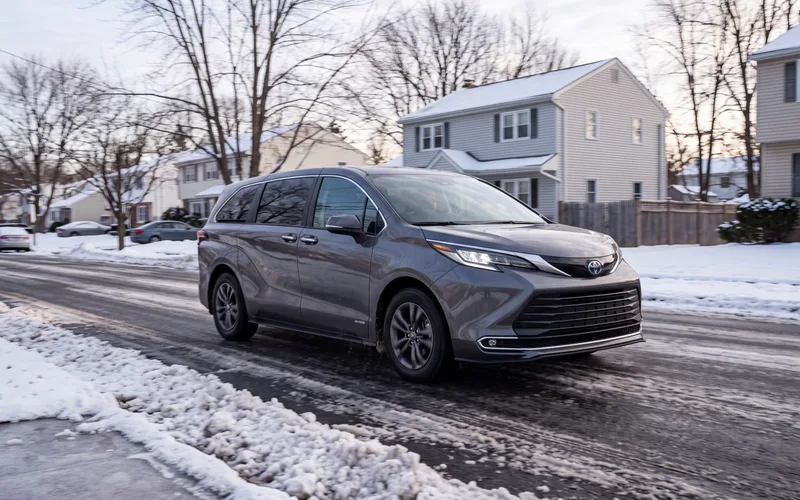 Toyota SiennaMinivan
Pacifica wins on cargo flexibility (Stow 'n Go's 140.5 cu ft flat load floor is untouchable) and offers the segment's only PHEV plus AWD on a gas engine.
Compare 2.54C+
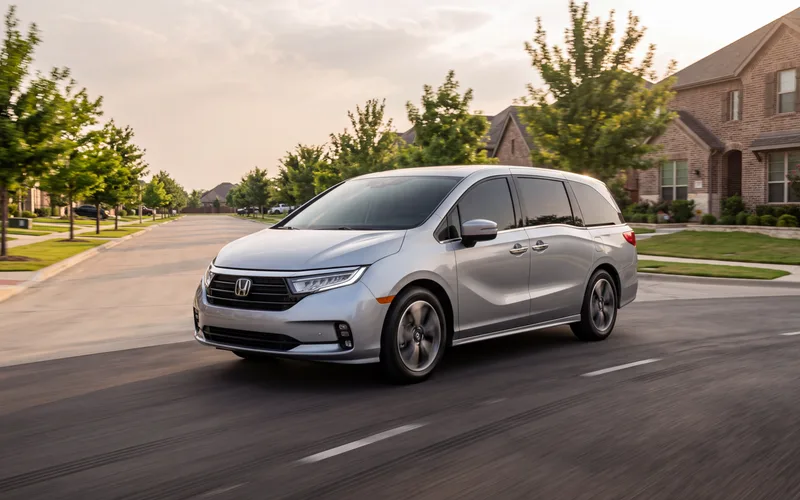 Honda OdysseyMinivan
Both are family-focused minivans; the Odyssey drives a bit sharper and has a smoother 10-speed transmission and better long-term reliability.
Compare 2.71B-
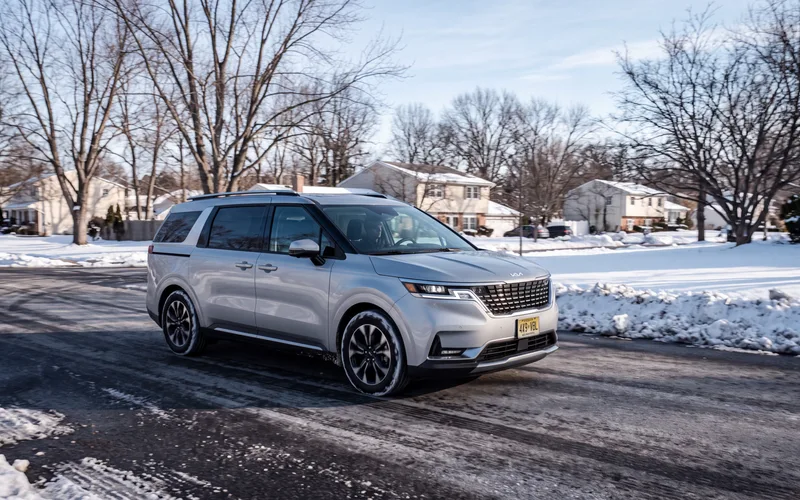 Kia CarnivalMinivan
The Carnival brings a longer 5/60 basic + 10/100k powertrain warranty and a fresher SUV-styled cabin at a lower base price.
CompareHow it's evolved
7 scored model years · 2020–2026
Subject scores by year
Hover or tap a score to see what moved it versus the year before. A corner mark flags a big swing.
| Year | Performance | Efficiency | Safety | Space | Cost | Reliability | Tech | Use-case | Driving | Value |
|---|---|---|---|---|---|---|---|---|---|---|
| 2026 | 44 | 44 | 73 | 69 | 37 | 49 | 69 | 68 | 64 | 71 |
| 2025 | 44 | 42 | 72 | 73 | 47 | 53 | 70 | 70 | 64 | 70 |
| 2024 | 44 | 43 | 74 | 73 | 49 | 50 | 68 | 70 | 65 | 72 |
| 2023 | 44 | 43 | 76 | 76 | 42 | 51 | 66 | 70 | 64 | 74 |
| 2022 | 44 | 47 | 82 | 73 | 40 | 51 | 71 | 72 | 64 | 78 |
| 2021 | 44 | 42 | 79 | 74 | 41 | 54 | 68 | 72 | 64 | 85 |
| 2020 | 40 | 42 | 66 | 72 | 52 | 52 | 51 | 63 | 64 | 72 |
Compare two years
Best fit & conditions
Higher scores mean a better fit for that use case. Learn more about use-case fit →
Subject profile
Academic Probation · NHTSA safety recalls
Sep 1, 2026Electronic stability control (esc)The brake pedal position sensor capacitor may be cracked, which can cause a loss of electronic stability control. As such, these vehicles fail to comply with the requirements of Federal Motor Vehicle Safety Standard number 126, "Electronic Stability Control Systems."
Defect
Chrysler (FCA US, LLC) is recalling certain 2025-2026 Chrysler Voyager, Chrysler Pacifica, and 2026 Chrysler Voyager Plug-In Hybrid Electric (PHEV) vehicles. The brake pedal position sensor capacitor may be cracked, which can cause a loss of electronic stability control. As such, these vehicles fail to comply with the requirements of Federal Motor Vehicle Safety Standard number 126, "Electronic Stability Control Systems."
Risk
A loss of electronic stability control increases the risk of a crash.
Remedy
Dealers will inspect and replace brake pedal position sensor, as necessary, free of charge. Owner notification letters were mailed September 17, 2026. Owners may contact FCA customer service at 1-800-853-1403. FCA's number for this recall is 69D. Vehicle Identification Numbers (VINs) involved in this recall will become searchable on NHTSA.gov beginning September 9, 2026.
NHTSA campaign 26V561000 ↗Manufacturer no. 69D2,017 vehicles potentially affected (all models in the campaign)Owners notified Sep 17, 2026Filed by Chrysler (FCA US, LLC)Filed as PACIFICA, PACIFICA PLUG-IN HYBRIDAug 13, 2026Back over prevention: sensing system: cameraThe rearview camera image may fail to display when the vehicle is placed in reverse. As such, these vehicles fail to comply with the requirements of Federal Motor Vehicle Safety Standard (FMVSS) number 111, "Rear Visibility."
Defect
Chrysler (FCA US, LLC) is recalling certain 2026 Jeep Wrangler, Jeep Gladiator, Jeep Compass, Jeep Cherokee, Jeep Grand Cherokee, Jeep Grand Cherokee L, Jeep Grand Wagoneer, Jeep Grand Wagoneer L, Ram Promaster, Ram Promaster EV, Ram 1500, Ram 2500, Chrysler Pacifica Plug-In Hybrid, Chrysler Voyager, and 2026-2027 Chrysler Pacifica and Dodge Charger vehicles. The rearview camera image may fail to display when the vehicle is placed in reverse. As such, these vehicles fail to comply with the requirements of Federal Motor Vehicle Safety Standard (FMVSS) number 111, "Rear Visibility."
Risk
A rearview camera image that fails to display reduces the driver's view behind the vehicle, increasing the risk of a crash.
Remedy
Radio software will be updated by a dealer or through an over-the-air (OTA) update, free of charge. Owner notification letters were mailed beginning September 2, 2026. Owners may contact Chrysler customer service at 800-853-1403. Chrysler's number for this recall is 78D. Vehicle Identification Numbers (VINs) involved in this recall will be searchable on NHTSA.gov on August 20, 2026.
NHTSA campaign 26V531000 ↗Manufacturer no. 78D844,027 vehicles potentially affected (all models in the campaign)Owners notified Sep 2, 2026Filed by Chrysler (FCA US, LLC)Filed as PACIFICA, PACIFICA PLUG-IN HYBRIDJun 2, 2026Air bags: frontalThe spring inside the front seat harness connector may contact electrical terminals.
Defect
Braun Corporation (Braun) is recalling certain 2023-2026 Chrysler Pacifica and Voyager vehicles. The spring inside the front seat harness connector may contact electrical terminals.
Risk
The unintended connection may prevent the air bags from deploying, increasing the risk of injury during a crash.
Remedy
Dealers will replace the spring, free of charge. Owner notification letters were mailed July 16, 2026. Owners may contact Braun's customer service at 1-800-488-0359.
NHTSA campaign 26V358000 ↗141 vehicles potentially affected (all models in the campaign)Owners notified Jul 16, 2026Filed by Braun CorporationFiled as PACIFICAMay 11, 2026Equipment adaptive/mobility: wheelchair restraints/securement: critical fastenersThe retractors may not lock, preventing the wheelchair from being properly secured.
Defect
Braun Corporation (Braun) is recalling certain 2023-2026 Chrysler Pacifica vehicles. The retractors may not lock, preventing the wheelchair from being properly secured.
Risk
An unsecured wheelchair can move during transit, increasing the risk of injury.
Remedy
Braun will work with Q'Straint to inspect and replace the retractors as necessary, free of charge. Owner notification letters were mailed June 16, 2026. Owners may contact Braun's customer service at 1-800-488-0359 or Q'Straint's customer service at 1-800-987-9987.
NHTSA campaign 26V296000 ↗476 vehicles potentially affected (all models in the campaign)Owners notified Jun 16, 2026Filed by Braun CorporationFiled as PACIFICAMar 26, 2026Air bags: side/window: curtainThe right and left side curtain air bags may have insufficient pressure retention. As such, these vehicles fail to comply with the requirements of Federal Motor Vehicle Safety Standard (FMVSS) number 226, "Ejection Mitigation."
Defect
Chrysler (FCA US, LLC) is recalling certain 2022-2026 Pacifica and Voyager vehicles. The right and left side curtain air bags may have insufficient pressure retention. As such, these vehicles fail to comply with the requirements of Federal Motor Vehicle Safety Standard (FMVSS) number 226, "Ejection Mitigation."
Risk
Air bags with insufficient pressure retention increase the risk of ejection and injury during a crash.
Remedy
Dealers will replace the side curtain air bags, as necessary, free of charge. Owner notification letters were mailed May 14, 2026. Owners may contact Chrysler customer service at 800-853-1403. Chrysler's numbers for this recall are 06D, 10D, and 11D. Vehicle Identification Numbers (VINs) involved in this recall will be searchable on NHTSA.gov beginning April 2, 2026. This recall expands and replaces previous NHTSA recall numbers 25V302 and 25V573. Vehicles previously repaired under a prior recall will need to have the new remedy completed.
NHTSA campaign 26V189000 ↗Manufacturer no. 06D, 10D, 11D293,264 vehicles potentially affected (all models in the campaign)Owners notified May 14, 2026Filed by Chrysler (FCA US, LLC)Filed as PACIFICA
42 recalls on other model years of the Pacifica (2017–2025)
Jun 4, 2026Electrical system: propulsion system: traction batteryThe battery pack may cause a vehicle fire, even when the vehicle is parked with the ignition in the "Off" position.
Defect
Chrysler (FCA US, LLC) is recalling certain 2020-2022 Pacifica Plug-In Hybrid Electric (PHEV) vehicles. The battery pack may cause a vehicle fire, even when the vehicle is parked with the ignition in the "Off" position.
Risk
A vehicle fire increases the risk of injury.
Remedy
Owners are advised not to charge their vehicles, and to park outside and away from structures, until their vehicle is repaired. Dealers will update the high voltage battery pack control module software. In addition, dealers will inspect and replace the battery pack assembly, as necessary. All repairs will be performed free of charge. Owner notification letters were mailed beginning June 23, 2026. Owners may contact FCA US LLC customer service at 1-800-853-1403. FCA US LLC's number for this recall is 52D. The Vehicle Identification Numbers (VINs) involved in this recall will become searchable on NHTSA.gov on June 11, 2026.
NHTSA campaign 26V362000 ↗Manufacturer no. 52D17,277 vehicles potentially affected (all models in the campaign)Owners notified Jun 23, 2026Filed by Chrysler (FCA US, LLC)Filed as PACIFICAMay 21, 2026Back over prevention: sensing system: cameraContamination in the central vision processing module or improper programming may cause the rearview camera image not to display. As such, these vehicles fail to comply with the requirements of Federal Motor Vehicle Safety Standard (FMVSS) number 111, "Rear Visibility."
Defect
Chrysler (FCA US, LLC) is recalling certain 2019 and 2023 Chrysler Pacifica, 2024 Ram 1500, Ram 2500, and 2024-2025 Jeep Wrangler vehicles. Contamination in the central vision processing module or improper programming may cause the rearview camera image not to display. As such, these vehicles fail to comply with the requirements of Federal Motor Vehicle Safety Standard (FMVSS) number 111, "Rear Visibility."
Risk
A rearview image that does not display reduces the driver's view behind the vehicle, increasing the risk of a crash.
Remedy
Dealers will update the central vision processing module software or replace the module, as necessary, free of charge. Owner notification letters are expected to be mailed beginning July 16, 2026. Owners may contact Chrysler customer service at 800-853-1403. Chrysler's number for this recall is 46D. Vehicle Identification Numbers (VINs) involved in this recall will be searchable on NHTSA.gov on May 28, 2026.
NHTSA campaign 26V327000 ↗Manufacturer no. 46D16 vehicles potentially affected (all models in the campaign)Owners notified Jul 16, 2026Filed by Chrysler (FCA US, LLC)Filed as PACIFICADec 17, 2025Equipment adaptive/mobility: wheelchair restraints/securement: latch/anchorThe retractors may not lock, preventing the wheelchair from being properly secured.
Defect
Vantage Mobility, LLC (VM) is recalling certain 2021-2026 Honda Odyssey, 2021-2025 Chrysler Pacifica, and Toyota Sienna vehicles equipped with QRT-Deluxe and QRT-Max wheelchair restraints. The retractors may not lock, preventing the wheelchair from being properly secured.
Risk
An unsecured wheelchair can move during transit, increasing the risk of injury.
Remedy
Dealers will inspect and replace the retractors, free of charge. Owner notification letters was mailed January 27, 2026. Owners may contact Vantage Mobility customer service at 1-800-488-9082.
NHTSA campaign 25V877000 ↗1,019 vehicles potentially affected (all models in the campaign)Owners notified Jan 27, 2026Filed by Vantage MobilityFiled as PACIFICADec 17, 2025Equipment adaptive/mobility: wheelchair restraints/securement: latch/anchorPlease refer to Rollx's recall report for specific model year information. The retractors may not lock, preventing the wheelchair from being properly secured.
Defect
Rollx Vans (Rollx) is recalling certain GMC Yukon, Sierra, Chevrolet Express 2500, Ford Transit, E-250, Toyota Sienna, Sienna Hybrid, Honda Odyssey, Chrysler Town and Country, Voyager, Pacifica, Dodge Grand Caravan, and Ram Promaster vehicles equipped with QRT-Deluxe and QRT-Max wheelchair restraints. Please refer to Rollx's recall report for specific model year information. The retractors may not lock, preventing the wheelchair from being properly secured.
Risk
An unsecured wheelchair can move during transit, increasing the risk of injury.
Remedy
Rollx will work with Q'Straint to inspect and replace the retractors as necessary, free of charge. Owner notification letters were mailed February 5, 2026. Owners may contact Rollx's customer service at 1-800-956-6668.
NHTSA campaign 25V876000 ↗86 vehicles potentially affected (all models in the campaign)Owners notified Feb 5, 2026Filed by Rollx VansFiled as PACIFICASep 4, 2025Air bags: side/window: curtainThe right and left side curtain air bags may have insufficient pressure retention from improperly sealed seams. As such, these vehicles fail to comply with the requirements of Federal Motor Vehicle Safety Standard (FMVSS) number 226, "Ejection Mitigation."
Defect
Chrysler (FCA US, LLC) is recalling certain 2025 Pacifica and Voyager vehicles. The right and left side curtain air bags may have insufficient pressure retention from improperly sealed seams. As such, these vehicles fail to comply with the requirements of Federal Motor Vehicle Safety Standard (FMVSS) number 226, "Ejection Mitigation."
Risk
An air bag with insufficient pressure retention increases the risk of ejection and injury during a crash.
Remedy
Dealers will replace the side curtain air bags, as necessary free of charge. Owner notification letters were mailed October 14, 2025. Owners may contact Chrysler customer service at 800-853-1403. Chrysler's numbers for this recall are 82C, 86C, 87C. Vehicle Identification Numbers (VINs) involved in this recall will be searchable on NHTSA.gov beginning September 11, 2025. This recall is replaced by NHTSA recall number 26V189. Vehicles already repaired under this recall will need to have the new remedy completed.
NHTSA campaign 25V573000 ↗Manufacturer no. 82C, 86C, 87C985 vehicles potentially affected (all models in the campaign)Owners notified Oct 14, 2025Filed by Chrysler (FCA US, LLC)Filed as PACIFICAJul 17, 2025Back over prevention: sensing system: camera · Equipment: appliance: tv/radio/speakersThe vehicles were built with an incorrect radio, which can cause the rearview camera image not to display. As such, these vehicles fail to comply with the requirements of Federal Motor Vehicle Safety Standard (FMVSS) number 111, "Rear Visibility."
Defect
Chrysler (FCA US, LLC) is recalling certain 2024-2025 Chrysler Pacifica vehicles. The vehicles were built with an incorrect radio, which can cause the rearview camera image not to display. As such, these vehicles fail to comply with the requirements of Federal Motor Vehicle Safety Standard (FMVSS) number 111, "Rear Visibility."
Risk
A rearview image that does not display reduces the driver's view of what is behind the vehicle, increasing the risk of a crash.
Remedy
Dealers replaced the radio, free of charge. All affected vehicles have been repaired. Owner notification letters were mailed August 7, 2025. Owners may contact Chrysler customer service at 800-853-1403. Chrysler's number for this recall is 57C.
NHTSA campaign 25V471000 ↗Manufacturer no. 57C21 vehicles potentially affected (all models in the campaign)Owners notified Aug 7, 2025Filed by Chrysler (FCA US, LLC)Filed as PACIFICAJun 12, 2025Back over prevention: sensing system: camera · Equipment: appliance: tv/radio/speakersDue to a manufacturing error, the rearview camera image may not display. As such, these vehicles fail to comply with the requirements of Federal Motor Vehicle Safety Standard (FMVSS) number 111, "Rear Visibility."
Defect
Chrysler (FCA US, LLC) is recalling certain 2023 Chrysler Pacifica and Voyager vehicles. Due to a manufacturing error, the rearview camera image may not display. As such, these vehicles fail to comply with the requirements of Federal Motor Vehicle Safety Standard (FMVSS) number 111, "Rear Visibility."
Risk
A rearview image that does not display reduces the driver's view of what is behind the vehicle, increasing the risk of a crash.
Remedy
Dealers will inspect and replace the rearview camera, as necessary free of charge. Owner notification letters were mailed July 3, 2025. Owners may contact Chrysler customer service at 800-853-1403. Chrysler's number for this recall is 34C.
NHTSA campaign 25V388000 ↗Manufacturer no. 34C140 vehicles potentially affected (all models in the campaign)Owners notified Jul 3, 2025Filed by Chrysler (FCA US, LLC)Filed as PACIFICAMay 8, 2025Air bags: side/window: curtainThe right and left side curtain air bags may have insufficient pressure retention from improperly sealed seams. As such, these vehicles fail to comply with the requirements of Federal Motor Vehicle Safety Standard (FMVSS) number 226, "Ejection Mitigation."
Defect
Chrysler (FCA US, LLC) is recalling certain 2022-2025 Pacifica and Voyager vehicles. The right and left side curtain air bags may have insufficient pressure retention from improperly sealed seams. As such, these vehicles fail to comply with the requirements of Federal Motor Vehicle Safety Standard (FMVSS) number 226, "Ejection Mitigation."
Risk
An air bag with insufficient pressure retention increases the risk of ejection and injury during a crash.
Remedy
Dealers will replace the side curtain air bags, as necessary free of charge. Owner notification letters were mailed beginning October 14, 2025. Owners may contact Chrysler customer service at 800-853-1403. Chrysler's numbers for this recall are 06C, 54C, 55C. This recall is replaced by NHTSA recall number 26V189. Vehicles already repaired under this recall will need to have the new remedy completed.
NHTSA campaign 25V302000 ↗Manufacturer no. 06C, 54C, 55C250,651 vehicles potentially affected (all models in the campaign)Owners notified Oct 14, 2025Filed by Chrysler (FCA US, LLC)Filed as PACIFICAMar 27, 2025Service brakes, hydraulic: critical fasteners · Service brakes, hydraulic: foundation components: disc: caliperThe bolts securing the front brake caliper bracket may not be tightened properly, which can result in reduced steering control, a brake fluid leak, and a loss of front brake function.
Defect
Chrysler (FCA US, LLC) is recalling certain 2025 Chrysler Pacifica Plug-In Hybrid Electric (PHEV) vehicles. The bolts securing the front brake caliper bracket may not be tightened properly, which can result in reduced steering control, a brake fluid leak, and a loss of front brake function.
Risk
Reduced steering control, a brake fluid leak, and loss of front brake function increase the risk of a crash.
Remedy
Dealers will inspect and replace the front brake caliper brackets and bolts, as necessary, free of charge. Owner notification letters were mailed April 10, 2025. Owners may contact FCA customer service at 1-800-853-1403. FCA's number for this recall is 27C.
NHTSA campaign 25V191000 ↗Manufacturer no. 27C8 vehicles potentially affected (all models in the campaign)Owners notified Apr 10, 2025Filed by Chrysler (FCA US, LLC)Filed as PACIFICA PLUG-IN HYBRIDNov 25, 2024Seats: barriersThe seat limiter may not have been installed, allowing the seat to move too far forward. As such, these vehicles fail to comply with the requirements of Federal Motor Vehicle Safety Standard number 208, "Occupant Crash Protection."
Defect
Braun Corporation (Braun) is recalling certain 2024 Chrysler Pacifica and Voyager vehicles. The seat limiter may not have been installed, allowing the seat to move too far forward. As such, these vehicles fail to comply with the requirements of Federal Motor Vehicle Safety Standard number 208, "Occupant Crash Protection."
Risk
A seat positioned too close to the air bag can increase the risk of injury during a crash.
Remedy
Dealers will inspect and install a seat limiter as necessary, free of charge. Owner notification letters were mailed December 17, 2024. Owners may contact Braun customer service at 1-800-488-0359.
NHTSA campaign 24V888000 ↗44 vehicles potentially affected (all models in the campaign)Owners notified Dec 17, 2024Filed by Braun CorporationFiled as PACIFICAOct 24, 2024Air bags: side/window: curtainAn improperly secured connector for the side curtain air bags may prevent the air bags from deploying. As such, these vehicles fail to comply with the requirements of Federal Motor Vehicle Safety Standard numbers 214, "Side Impact Protection" and 226, "Ejection Mitigation."
Defect
Chrysler (FCA US, LLC) is recalling certain 2020-2023 Pacifica and 2020-2021, 2023 Voyager vehicles. An improperly secured connector for the side curtain air bags may prevent the air bags from deploying. As such, these vehicles fail to comply with the requirements of Federal Motor Vehicle Safety Standard numbers 214, "Side Impact Protection" and 226, "Ejection Mitigation."
Risk
An air bag that does not deploy during a crash increases the risk of injury.
Remedy
Dealers will secure the connector, free of charge. All vehicles have been remedied. Owner notification letters were mailed October 22, 2024. Owners may contact FCA customer service at 1-800-853-1403. FCA's number for this recall is A8B.
NHTSA campaign 24V793000 ↗Manufacturer no. A8B26 vehicles potentially affected (all models in the campaign)Owners notified Oct 22, 2020Filed by Chrysler (FCA US, LLC)Filed as PACIFICAJul 18, 2024Hybrid propulsion systemThe battery pack may cause a vehicle fire when parked, even with the ignition in the "Off" position.
Defect
Chrysler (FCA US, LLC) is recalling certain 2019-2021 Pacifica Plug-In Hybrid Electric (PHEV) vehicles. The battery pack may cause a vehicle fire when parked, even with the ignition in the "Off" position.
Risk
A vehicle fire increases the risk of injury.
Remedy
Owners are advised not to charge their vehicles, and to park outside and away from structures, until they are repaired. Dealers will update the high voltage battery pack control module (BPCM) software. In addition, dealers will inspect and if necessary, replace the battery pack assembly. Repairs will be performed free of charge. Owner notification letters were mailed March 6, 2025. Owners may contact FCA US LLC customer service at 1-800-853-1403. FCA US LLC's number for this recall is 72B. This recall is an expansion of NHTSA recall number 22V-077.
NHTSA campaign 24V538000 ↗Manufacturer no. 72B3,606 vehicles potentially affected (all models in the campaign)Owners notified Mar 6, 2025Filed by Chrysler (FCA US, LLC)Filed as PACIFICA PLUG-IN HYBRIDJul 18, 2024Hybrid propulsion systemThe battery pack may cause a vehicle fire when parked, even with the ignition in the "Off" position.
Defect
Chrysler (FCA US, LLC) is recalling certain 2017-2018 Pacifica Plug-In Hybrid Electric (PHEV) vehicles that received a software update remedy under NHTSA recall number 22V-077. The battery pack may cause a vehicle fire when parked, even with the ignition in the "Off" position.
Risk
A vehicle fire increases the risk of injury.
Remedy
Owners are advised not to charge their vehicles, and to park outside and away from structures, until they are repaired. Dealers will update the high voltage battery pack control module (BPCM) software. In addition, dealers will inspect and if necessary, replace the battery pack assembly. Repairs will be performed free of charge. Interim notification letters, notifying owners of the safety risk, were mailed August 1, 2024. Owner notification letters were mailed December 12, 2024. Owners may contact FCA US LLC customer service at 1-800-853-1403. FCA US LLC's number for this recall is 73B. Vehicles previously repaired under recall 22V-077 will need to have the new remedy completed.
NHTSA campaign 24V536000 ↗Manufacturer no. 73B15,910 vehicles potentially affected (all models in the campaign)Owners notified Dec 12, 2024Filed by Chrysler (FCA US, LLC)Filed as PACIFICA PLUG-IN HYBRIDJun 13, 2024Back over prevention: sensing system: cameraThe radio software may prevent the rearview image from displaying. As such, these vehicles fail to comply with the requirements of Federal Motor Vehicle Safety Standard number 111, "Rear Visibility."
Defect
Chrysler (FCA US, LLC) is recalling certain 2021-2022 Dodge Durango, 2021-2023 Chrysler Pacifica, Jeep Grand Cherokee L, 2022 Ram 1500, 2500, 3500, Chrysler Voyager, 2022-2023 Jeep Compass, Grand Cherokee, Wagoneer, Grand Wagoneer, and Ram Promaster vehicles. The radio software may prevent the rearview image from displaying. As such, these vehicles fail to comply with the requirements of Federal Motor Vehicle Safety Standard number 111, "Rear Visibility."
Risk
A rearview camera image that does not display decreases the driver's visibility, increasing the risk of a crash.
Remedy
Dealers will update the radio software or the software will be OTA, "Over-The-Air," free of charge. Owner notification letters were mailed beginning July 9, 2024. Owners may contact FCA US, LLC customer service at 1-800-853-1403. FCA US, LLC's numbers for this recall are 66B and 79B.
NHTSA campaign 24V436000 ↗Manufacturer no. 66B, 79B1,033,433 vehicles potentially affected (all models in the campaign)Owners notified Jul 9, 2024Filed by Chrysler (FCA US, LLC)Filed as PACIFICAMar 28, 2024Traction control systemThe traction control system (TCS) does not function when cruise control is activated.
Defect
Chrysler (FCA US, LLC) is recalling certain 2024 Pacifica and Voyager vehicles. The traction control system (TCS) does not function when cruise control is activated.
Risk
An inactive traction control system can increase the risk of a crash.
Remedy
Dealers will update the TCS software, free of charge. Owner notification letters were mailed April 11, 2024. Owners may contact FCA customer service at 1-800-853-1403. FCA's number for this recall is 22B.
NHTSA campaign 24V240000 ↗Manufacturer no. 22B26,776 vehicles potentially affected (all models in the campaign)Owners notified Apr 11, 2024Filed by Chrysler (FCA US, LLC) (Stellantis)Filed as PACIFICAMar 28, 2024Visibility: windshield: critical fastenersThe windshield may not have been properly bonded to the vehicle, allowing it to detach during a crash. As such, these vehicles fail to comply with the requirements of Federal Motor Vehicle Safety Standard number 212, "Windshield Mounting."
Defect
Chrysler (FCA US, LLC) is recalling certain 2024 Pacifica and Voyager vehicles. The windshield may not have been properly bonded to the vehicle, allowing it to detach during a crash. As such, these vehicles fail to comply with the requirements of Federal Motor Vehicle Safety Standard number 212, "Windshield Mounting."
Risk
A windshield that detaches from the vehicle during a crash can increase the risk of injury.
Remedy
Dealers will replace the windshield, free of charge. Owner notification letters were mailed April 30, 2024. Owners may contact FCA customer service at 1-800-853-1403. FCA's number for this recall is 25B.
NHTSA campaign 24V238000 ↗Manufacturer no. 25B223 vehicles potentially affected (all models in the campaign)Owners notified Apr 30, 2024Filed by Chrysler (FCA US, LLC) (Stellantis)Filed as PACIFICAMar 14, 2024Air bags: frontal: driver clockspring/spiral cassette · Steering: columnThe steering column control module may not be welded properly, which can prevent the driver's air bag from deploying in a crash. As such, these vehicles fail to comply with the requirements of Federal Motor Vehicle Safety Standard number 208, "Occupant Crash Protection."
Defect
Chrysler (FCA US, LLC) (Stellantis) is recalling certain 2023-2024 Ram 1500, Jeep Wrangler, Jeep Wagoneer, Jeep Grand Wagoneer, Chrysler Pacifica, Ram 3500, Ram 3500 cab chassis, Ram 2500, Ram 4500 cab chassis, Ram 5500 cab chassis, 2023 Jeep Gladiator, Jeep Grand Cherokee, Jeep Grand Cherokee L, Ram 3500 Cab Chassis with a GVWR less than 10,000 lbs., and Chrysler Voyager vehicles. The steering column control module may not be welded properly, which can prevent the driver's air bag from deploying in a crash. As such, these vehicles fail to comply with the requirements of Federal Motor Vehicle Safety Standard number 208, "Occupant Crash Protection."
Risk
An air bag that does not deploy in a crash can increase the risk of injury.
Remedy
Dealers will inspect and replace the steering column control module, as necessary free of charge. Some owner notification letters were mailed April 11, 2024 through June 20, 2024. Owners may contact FCA US, LLC customer service at 1-800-853-1403. FCA US, LLC's numbers for this recall are 14B, 33B, 34B, 35B, 36B.
NHTSA campaign 24V199000 ↗Manufacturer no. 14B,33B,34B,35B,36B38,164 vehicles potentially affected (all models in the campaign)Owners notified Apr 11, 2024Filed by Chrysler (FCA US, LLC) (Stellantis)Filed as PACIFICANov 9, 2023Electrical system: 12v/24v/48v batteryAn electrical short may occur due to an incorrectly installed 12-volt battery isolator post, resulting in a fire while parked or driving.
Defect
Chrysler (FCA US, LLC) is recalling certain 2023 Chrysler Pacifica plug-in hybrid electric vehicles. An electrical short may occur due to an incorrectly installed 12-volt battery isolator post, resulting in a fire while parked or driving.
Risk
A fire while parked or driving can increase the risk of injury.
Remedy
Owners are advised to park outside and away from structures until the recall repair is complete. Dealers will correct the isolator to fit the anti-rotation stud, free of charge. Owner notification letters were mailed November 28, 2023. Owners may contact FCA US, LLC customer service at 1-800-853-1403. FCA US, LLC's number for this recall is B0A.
NHTSA campaign 23V753000 ↗Manufacturer no. B0A32 vehicles potentially affected (all models in the campaign)Owners notified Nov 28, 2023Filed by Chrysler (FCA US, LLC)Filed as PACIFICAJul 20, 2023Fuel system, gasoline: delivery: hoses, lines/piping, and fittingsThe fuel line may be deformed, causing a fuel leak.
Defect
Chrysler (FCA US, LLC) is recalling certain 2023 Pacifica Plug-In Hybrid Electric vehicles. The fuel line may be deformed, causing a fuel leak.
Risk
A fuel leak in the presence of an ignition source increases the risk of a fire.
Remedy
Dealers will inspect and replace the fuel line as necessary, free of charge. Owner notification letters were mailed August 31, 2023. Owners may contact FCA US, LLC customer service at 1-800-853-1403. FCA US, LLC's number for this recall is 77A.
NHTSA campaign 23V500000 ↗Manufacturer no. 77A967 vehicles potentially affected (all models in the campaign)Owners notified Aug 31, 2023Filed by Chrysler (FCA US, LLC)Filed as PACIFICAJan 17, 2023Electrical system: wiring: connectors/plugs/receptacles · Hybrid propulsion system: inverterAn internal transmission wiring connector may short circuit, resulting in an unexpected engine shutdown.
Defect
Chrysler (FCA US, LLC) is recalling certain 2017-2023 Pacifica Plug-In Hybrid Electric vehicles (PHEVs). An internal transmission wiring connector may short circuit, resulting in an unexpected engine shutdown.
Risk
An unexpected engine shutdown can cause a loss of drive power, increasing the risk of a crash.
Remedy
Dealers will update the Power Inverter Module (PIM) software and, if necessary, update the instrument panel cluster (IPC) and the electronic control module (ECM) software, free of charge. FCA US will notify dealers and begin notifying owners on or about: 03/21/2023 for 2021 model year vehicles, 05/02/2023 for 2019-2020 model year vehicles, and 06/15/2023 for 2017-2018 model year vehicles. FCA began notifying owners on February 23, 2023. Owners may contact FCA US, LLC customer service at 1-800-853-1403. FCA US, LLC's number for this recall is 03A.
NHTSA campaign 23V010000 ↗Manufacturer no. 03A67,117 vehicles potentially affected (all models in the campaign)Owners notified Feb 23, 2023Filed by Chrysler (FCA US, LLC)Filed as PACIFICAAug 11, 2022Visibility: windshield wiper/washer: linkagesThe windshield wiper arm nuts may be improperly tightened, which can cause the wipers to not function properly.
Defect
Chrysler (FCA US, LLC) is recalling certain 2022 Voyager and Pacifica vehicles. The windshield wiper arm nuts may be improperly tightened, which can cause the wipers to not function properly.
Risk
Improperly functioning wipers can reduce the driver's visibility in certain weather conditions, increasing the risk of a crash.
Remedy
Dealers will tighten the wiper arm nuts, free of charge. Owner notification letters were mailed August 30, 2022. Owners may contact FCA US, LLC customer service at 1-800-853-1403. FCA US's number for this recall is Z80.
NHTSA campaign 22V619000 ↗Manufacturer no. Z80508 vehicles potentially affected (all models in the campaign)Owners notified Aug 30, 2022Filed by Chrysler (FCA US, LLC)Filed as PACIFICAMar 24, 2022Seats: mid/rear assemblyThe second-row seat-to-floor mounting latch may bind and stick open, preventing the seat from properly securing to the floor. As such, these vehicles fail to comply with the requirements of Federal Motor Vehicle Safety Standard number 225, "Child Restraint Anchorage Systems."
Defect
Chrysler (FCA US, LLC) is recalling certain 2021-2022 Pacifica and 2021 Voyager vehicles. The second-row seat-to-floor mounting latch may bind and stick open, preventing the seat from properly securing to the floor. As such, these vehicles fail to comply with the requirements of Federal Motor Vehicle Safety Standard number 225, "Child Restraint Anchorage Systems."
Risk
An unsecured seat increases the risk of injury in a crash.
Remedy
Dealers will inspect and, if necessary, replace the second-row seat cushion frame, free of charge. Owner notification letters were mailed April 7, 2022. Owners may contact FCA US, LLC customer service at 1-800-853-1403. FCA US LLC's number for this recall is Z22.
NHTSA campaign 22V181000 ↗Manufacturer no. Z221,160 vehicles potentially affected (all models in the campaign)Owners notified Apr 7, 2022Filed by Chrysler (FCA US, LLC)Filed as PACIFICAFeb 11, 2022Hybrid propulsion systemA vehicle fire can occur when parked, even with the ignition in the "Off" position.
Defect
Chrysler (FCA US, LLC) is recalling certain 2017-2018 Pacifica Plug-In Hybrid Electric Vehicles (PHEV). A vehicle fire can occur when parked, even with the ignition in the "Off" position.
Risk
A vehicle fire increases the risk of injury.
Remedy
Owners are advised not to recharge their vehicles, and to park outside and away from structures, until they are repaired. Dealers will update the high voltage battery pack control module (BPCM) software. In addition, dealers will inspect and if necessary, replace the battery pack assembly. Repairs will be performed free of charge. Interim letters, informing owners of the safety risk were mailed on February 25, 2022. Final owner notification letters were mailed October 6, 2022. Owners may contact FCA US LLC customer service at 1-800-853-1403. FCA US LLC's number for this recall is Z11. This recall is superseded by NHTSA recall 24V-538.
NHTSA campaign 22V077000 ↗Manufacturer no. Z1116,741 vehicles potentially affected (all models in the campaign)Owners notified Oct 6, 2022Filed by Chrysler (FCA US, LLC)Filed as PACIFICA PLUG-IN HYBRIDSep 10, 2020Back over prevention: sensing system: cameraA software error can cause the rearview camera image to remain displayed after the vehicle has been shifted out of reverse. As such, these vehicles fail to comply with the requirements of Federal Motor Vehicle Safety Standard (FMVSS) number 111, "Rearview Mirrors."
Defect
Chrysler (FCA US LLC) is recalling certain 2020 Jeep Gladiator and Jeep Cherokee, 2019-2020 Ram 1500 Pickup, Ram 2500 Pickup, Ram 3500 Pickup, Chrysler Pacifica, Dodge Durango, Jeep Grand Cherokee, Jeep Wrangler, and Jeep Renegade and 2019 Dodge Challenger vehicles equipped with 8.4" or 12" radio displays. A software error can cause the rearview camera image to remain displayed after the vehicle has been shifted out of reverse. As such, these vehicles fail to comply with the requirements of Federal Motor Vehicle Safety Standard (FMVSS) number 111, "Rearview Mirrors."
Risk
The lingering rearview image can distract the driver, increasing the risk of a crash.
Remedy
Chrysler has notified owners, and dealers will update the radio display software, free of charge. Optionally, owners can choose to remotely update their software via an Over-The-Air (OTA) update available as of May 1, 2020. The recall began April 27, 2020. Owners may contact Chrysler customer service at 1-800-853-1403. Chrysler's number for this recall is W30-W37.
NHTSA campaign 20V191000 ↗Manufacturer no. W30-W37319,610 vehicles potentially affected (all models in the campaign)Owners notified Apr 27, 2020Filed by Chrysler (FCA US LLC)Filed as PACIFICAJun 9, 2020Electrical system: 12v/24v/48v battery: cables · Electrical system: wiring: interior/under dashThe 12 volt isolator post located behind the driver's seat may develop high resistance.
Defect
Chrysler (FCA US LLC) is recalling certain 2017-2020 Pacifica Plug-in Hybrid Electric Vehicles ("PHEV"). The 12 volt isolator post located behind the driver's seat may develop high resistance.
Risk
A high resistance electrical connection may result in the connection overheating, increasing the risk of a fire with the vehicle on or off.
Remedy
FCA will conduct a voluntary safety recall on affected vehicles to increase the torque and install a waterproof gasket to the 12v isolator post, the post will also be inspected for signs of contamination. In the event the post is compromised, the 12v isolator post and associated cables will be replaced. Until the final remedy is available, customers should bring their vehicles to dealers for an interim inspection of this joint. The recall remedy is currently under development. FCA US LLC will notify owners, and dealers will perform an interim inspection of this joint. If the inspection indicates the joint is compromised, owners will receive a loaner vehicle, until a final remedy is developed. Interim notifications are expected to begin around June 22, 2020. The recall began July 30, 2020. Owners may contact FCA US LLC customer service at 1-800-853-1403. FCA US LLC's number for this recall is W46. Note: Consumers are advised to exercise the following precautions until the vehicle has the final repair completed: do not park these vehicles inside of buildings or structures, or near other vehicles. Additionally, keep liquids out of the backseat area, including but not limited to beverages, wet items, umbrellas, or bottled liquids that may leak.
NHTSA campaign 20V334000 ↗Manufacturer no. W4623,079 vehicles potentially affected (all models in the campaign)Owners notified Jul 30, 2020Filed by Chrysler (FCA US LLC)Filed as PACIFICA PLUG-IN HYBRIDDec 12, 2019Back over prevention: sensing system: camera · Equipment: electrical: radio/tape deck/cd etc.A software error can cause the rearview camera image to remain displayed on the radio after the vehicle has been shifted out of reverse. As such, these vehicles fail to comply with the requirements of Federal Motor Vehicle Safety Standard (FMVSS) number 111, "Rearview Mirrors."
Defect
Chrysler (FCA US LLC) is recalling certain 2018-2019 Pacifica vehicles equipped with an 8.4 inch radio display, 360 degree surround view camera system, and seat back video screens. A software error can cause the rearview camera image to remain displayed on the radio after the vehicle has been shifted out of reverse. As such, these vehicles fail to comply with the requirements of Federal Motor Vehicle Safety Standard (FMVSS) number 111, "Rearview Mirrors."
Risk
The lingering rearview image can distract the driver, increasing the risk of a crash.
Remedy
Chrysler will notify owners, and dealers will update the radio software, free of charge. The recall began January 9, 2020. Owners may contact Chrysler customer service at 1-800-853-1403. Chrysler's number for this recall is VE2.
NHTSA campaign 19V886000 ↗Manufacturer no. VE220,441 vehicles potentially affected (all models in the campaign)Owners notified Jan 9, 2020Filed by Chrysler (FCA US LLC)Filed as PACIFICAMay 9, 2019Electrical system: 12v/24v/48v batteryA loose battery ground connection may result in an intermittent loss of power steering assist and/or a stall.
Defect
Chrysler (FCA US LLC) is recalling certain 2017-2019 Pacifica vehicles equipped with engine stop/start systems. A loose battery ground connection may result in an intermittent loss of power steering assist and/or a stall.
Risk
A loss of power steering assist or a stall can increase the risk of crash.
Remedy
Chrysler will notify owners, and dealers will inspect the battery ground surfaces, clean the contact surfaces as needed, and properly reassemble the ground connection, free of charge. The recall began May 24, 2019. Owners may contact Chrysler customer service at 1-800-853-1403. FCA US' number for this recall is V53.
NHTSA campaign 19V348000 ↗Manufacturer no. V53198,731 vehicles potentially affected (all models in the campaign)Owners notified May 24, 2019Filed by Chrysler (FCA US LLC)Filed as PACIFICAFeb 28, 2019Suspension: front: control arm: lower armThe right front lower control arm may separate from the steering knuckle.
Defect
Chrysler (FCA US LLC) is recalling certain 2018 Chrysler Pacifica and Pacifica hybrid vehicles. The right front lower control arm may separate from the steering knuckle.
Risk
A control arm separation could increase the risk of a crash.
Remedy
Chrysler will notify owners, and dealers will inspect the right front knuckle and lower control arm for damage, replacing the components as necessary. The right front lower control arm knuckle pinch bolt will be replaced with a larger-diameter pinch bolt. These repairs will be performed free of charge. The recall began April 26, 2019. Owners may contact Chrysler customer service at 1-800-853-1403. Chrysler's number for this recall is V15.
NHTSA campaign 19V143000 ↗Manufacturer no. V1547,771 vehicles potentially affected (all models in the campaign)Owners notified Apr 26, 2019Filed by Chrysler (FCA US LLC)Filed as PACIFICA, PACIFICA PLUG-IN HYBRIDOct 19, 2018Engine and engine cooling: exhaust system: emission control: catalytic convertor · Hybrid propulsion systemAfter the vehicle has been operating in PHEV propulsion mode, the gas-fueled engine may not restart properly resulting in unburned fuel entering the exhaust catalyst.
Defect
Chrysler (FCA US LLC) is recalling certain 2017-2018 Chrysler Pacifica Plug-in Hybrid Electric vehicles (PHEV). After the vehicle has been operating in PHEV propulsion mode, the gas-fueled engine may not restart properly resulting in unburned fuel entering the exhaust catalyst.
Risk
The improperly started engine could result in a loss of motive power increasing the risk of a crash or the unburned fuel in the catalyst may ignite increasing the risk of a fire.
Remedy
FCA will notify owners, and dealers will update the powertrain controller module software, and inspect and replace the catalytic converter as necessary, free of charge. The recall began November 15, 2018. Owners may contact Chrysler customer service at 1-800-853-1403. Chrysler's number for this recall is U94.
NHTSA campaign 18V740000 ↗Manufacturer no. U9410,260 vehicles potentially affected (all models in the campaign)Owners notified Nov 15, 2018Filed by Chrysler (FCA US LLC)Filed as PACIFICA PLUG-IN HYBRIDAug 9, 2018Electrical system: wiring: front underhoodThe powertrain control module may be equipped with a voltage regulator chip in the circuit board that may fail, causing a stall or a no start condition.
Defect
Chrysler (FCA US LLC) is recalling certain 2018 Jeep Renegade, Compass and Grand Cherokee, RAM 1500 and Promaster, Fiat 500x, Dodge Journey, Challenger, Charger and Durango and Chrysler 300x vehicles, 2017-2018 Jeep Wrangler, Dodge Grand Caravan and Chrysler Town and Country vehicles and 2018-2019 Jeep Cherokee and 2018 Chrysler Pacifica and Pacifica Hybrid vehicles. The powertrain control module may be equipped with a voltage regulator chip in the circuit board that may fail, causing a stall or a no start condition.
Risk
A vehicle stall can increase the risk of a crash.
Remedy
Chrysler will notify owners, and dealers will replace the powertrain control module, free of charge. The recall began October 2, 2018. Owners may contact Chrysler customer service at 1-800-853-1403. Chrysler's number for this recall is U87.
NHTSA campaign 18V524000 ↗Manufacturer no. U8712,779 vehicles potentially affected (all models in the campaign)Owners notified Oct 2, 2018Filed by Chrysler (FCA US LLC)Filed as PACIFICA, PACIFICA PLUG-IN HYBRIDJul 26, 2018Power train: axle assembly: axle shaftThe front axle halfshafts may have been incorrectly assembled, preventing the shaft from being properly secured to the constant-velocity (CV) joint.
Defect
Chrysler (FCA US LLC) is recalling certain 2018 Chrysler Pacifica vehicles. The front axle halfshafts may have been incorrectly assembled, preventing the shaft from being properly secured to the constant-velocity (CV) joint.
Risk
If the axle shaft disengages from the CV joint, the vehicle will have a loss of drive or allow the vehicle to move while in the "Park" position. Either condition may increase the risk of a crash.
Remedy
Chrysler will notify owners, and dealers will replace the left or right halfshaft assembly, free of charge. The recall began September 18, 2018. Owners may contact Chrysler customer service at 1-800-853-1403. Chrysler's number for this recall is U80.
NHTSA campaign 18V493000 ↗Manufacturer no. U8061 vehicles potentially affected (all models in the campaign)Owners notified Sep 18, 2018Filed by Chrysler (FCA US LLC)Filed as PACIFICAJul 26, 2018Power train: automatic transmissionA component in the transmission may not have been welded properly, possibly causing the transmission to not transmit engine power to the wheels.
Defect
Chrysler (FCA US LLC) is recalling certain 2019 Jeep Cherokee vehicles and 2018 Chrysler Pacifica non-hybrid vehicles. A component in the transmission may not have been welded properly, possibly causing the transmission to not transmit engine power to the wheels.
Risk
If the transmission weld fails, the vehicle will stop moving, increasing the risk of a crash.
Remedy
Chrysler will notify owners, and dealers will replace the transmission, free of charge. The recall is expected to begin September 2018. Owners may contact Chrysler customer service at 1-800-853-1403. Chrysler's number for this recall is U85.
NHTSA campaign 18V492000 ↗Manufacturer no. U855 vehicles potentially affected (all models in the campaign)Owners notified Aug 7, 2018Filed by Chrysler (FCA US LLC)Filed as PACIFICAJun 14, 2018Electrical system: ignition: anti-theft: control module · Equipment: electrical: anti-theft devicesThe Manual Park Release (MPR) plug may be removed without a tool. As such, these vehicles fail to comply with the requirements of Federal Motor Vehicle Safety Standard (FMVSS) number 114, "Theft Protection."
Defect
Chrysler (FCA US LLC) is recalling certain 2017-2018 Chrysler Pacifica vehicles. The Manual Park Release (MPR) plug may be removed without a tool. As such, these vehicles fail to comply with the requirements of Federal Motor Vehicle Safety Standard (FMVSS) number 114, "Theft Protection."
Risk
If the MPR is engaged unintentionally, the vehicle could roll away striking and injuring a bystander or cause a crash.
Remedy
Chrysler will notify owners, and dealers will replace the MPR plug, free of charge. The recall began July 9, 2018. Owners may contact Chrysler customer service at 1-800-853-1403. Chrysler's number for this recall is U50.
NHTSA campaign 18V395000 ↗Manufacturer no. U50240,242 vehicles potentially affected (all models in the campaign)Owners notified Jul 9, 2018Filed by Chrysler (FCA US LLC)Filed as PACIFICAMay 17, 2018Electrical system: software · Electrical system: wiring · Vehicle speed control: cruise controlThese vehicles are being recalled to address a defect that could prevent the cruise control system from disengaging. If, when using cruise control, there is a short circuit within the vehicle's wiring, the driver may not be able to shut off the cruise control either by depressing the brake pedal or manually turning the system off once it has been engaged, resulting in either the vehicle maintaining its current speed or possibly accelerating.
Defect
Chrysler (FCA US LLC) is recalling certain 2014-2018 Dodge Journey, Charger and Durango, RAM 2500, 3500, 3500 Cab Chassis (more than 10,000lb), 4500 Cab Chassis and 5500 Cab Chassis, Jeep Cherokee and Grand Cherokee and Chrysler 300, 2014-2019 RAM 1500, 2015-2018 Dodge Challenger, 2015-2017 Chrysler 200, 2016-2018 RAM 3500 Cab Chassis (less than 10,000 lb), 2017-2018 Chrysler Pacifica and 2018 Jeep Wrangler vehicles. These vehicles are being recalled to address a defect that could prevent the cruise control system from disengaging. If, when using cruise control, there is a short circuit within the vehicle's wiring, the driver may not be able to shut off the cruise control either by depressing the brake pedal or manually turning the system off once it has been engaged, resulting in either the vehicle maintaining its current speed or possibly accelerating.
Risk
If the vehicle maintains its speed or accelerates despite attempts to deactivate the cruise control, there would be an increased risk of a crash.
Remedy
Chrysler will notify owners, and dealers will inspect the software, and perform a software flash on the engine or powertrain control module, free of charge. The recall began June 4, 2018. Owners may contact Chrysler customer service at 1-800-853-1403. Note: Owners are advised to stop using cruise control until the software update has been performed. In the event that cruise control cannot be disengaged while driving, owners should firmly and steadily apply the brakes and shift the transmission to neutral, placing the vehicle in park once it has stopped.
NHTSA campaign 18V332000 ↗Manufacturer no. U49,U59-U65,U68,U734,815,661 vehicles potentially affected (all models in the campaign)Owners notified Jun 4, 2018Filed by Chrysler (FCA US LLC)Filed as PACIFICAJan 11, 2018Electrical system: software · Engine and engine cooling: engineThe engine control software may become out of sync with the crankshaft position sensor, possibly resulting in an engine stall.
Defect
Chrysler (FCA US LLC) is recalling certain 2017 Chrysler Pacifica vehicles equipped with a 3.6l engine. The engine control software may become out of sync with the crankshaft position sensor, possibly resulting in an engine stall.
Risk
An engine stall can increase the risk of a crash.
Remedy
Chrysler will notify owners, and dealers will update the engine control software, free of charge. The recall began March 7, 2018. Owners may contact Chrysler customer service at 1-800-853-1403. Chrysler's number for this recall is U01.
NHTSA campaign 18V049000 ↗Manufacturer no. U01153,859 vehicles potentially affected (all models in the campaign)Owners notified Mar 7, 2018Filed by Chrysler (FCA US LLC)Filed as PACIFICADec 21, 2017EquipmentChrysler (FCA US LLC) is recalling various Dodge, Chrysler, and RAM vehicles equipped with Kidde Plastic-Handle or Push Button 'Pindicator' Fire Extinguishers. A list of the affected trailer models is available at: https://static.nhtsa.gov/odi/rcl/2017/RMISC-17V824-0103.pdf. These extinguishers may become clogged, preventing the extinguisher from discharging as expected or requiring excessive force to activate the extinguisher. Additionally, in certain models, the nozzle may detach from the valve assembly with enough force that it could cause injury and also render the product inoperable. For a full list of the affected fire extinguisher models visit: https://static.nhtsa.gov/odi/rcl/2017/RMISC-17E062-5427.pdf
Defect
Chrysler (FCA US LLC) is recalling various Dodge, Chrysler, and RAM vehicles equipped with Kidde Plastic-Handle or Push Button 'Pindicator' Fire Extinguishers. A list of the affected trailer models is available at: https://static.nhtsa.gov/odi/rcl/2017/RMISC-17V824-0103.pdf. These extinguishers may become clogged, preventing the extinguisher from discharging as expected or requiring excessive force to activate the extinguisher. Additionally, in certain models, the nozzle may detach from the valve assembly with enough force that it could cause injury and also render the product inoperable. For a full list of the affected fire extinguisher models visit: https://static.nhtsa.gov/odi/rcl/2017/RMISC-17E062-5427.pdf
Risk
If the fire extinguisher does not function properly, it can increase the risk of injury in the event of a fire.
Remedy
Chrysler will notify owners instructing them to contact Kidde for a replacement fire extinguisher, free of charge. The recall began February 14, 2018. Owners may contact Chrysler customer service at 1-800-853-1403 or Kidde customer service service toll-free at 1-855-262-3540, or online at www.kidde.com and click on "Product Safety Recall" for more information. Chrysler's number for this recall is T82.
NHTSA campaign 17V824000 ↗Manufacturer no. T8261,791 vehicles potentially affected (all models in the campaign)Owners notified Feb 14, 2018Filed by Chrysler (FCA US LLC)Filed as PACIFICAAug 31, 2017Seat belts: rear/otherIn certain passenger seating and vehicle situations, the second-row center seating position seat belt buckle could cause the left outboard seat belt to become unlatched.
Defect
Chrysler (FCA US LLC) is recalling certain 2017-2018 Chrysler Pacifica vehicles equipped with the 8-passenger seating option. In certain passenger seating and vehicle situations, the second-row center seating position seat belt buckle could cause the left outboard seat belt to become unlatched.
Risk
Inadvertent unlatching of the left outboard seat belt can increase the risk of injury in the event of a crash.
Remedy
Chrysler will notify owners, and dealers will install a shorter second-row seat belt buckle, free of charge. The recall began October 26, 2017. Owners may contact Chrysler customer service at 1-800-853-1403. Chrysler's number for this recall is T54.
NHTSA campaign 17V542000 ↗Manufacturer no. T5447,927 vehicles potentially affected (all models in the campaign)Owners notified Oct 26, 2017Filed by Chrysler (FCA US LLC)Filed as PACIFICAJul 28, 2017Power train: driveline: differential unitThe rear pinion bracket on both sides of the vehicle may crack, causing the axle not to be centered and the wheel to wobble.
Defect
Vantage Mobility International, LLC (VMI) is recalling certain 2017 Chrysler Pacifica lowered floor vehicles modified by VMI. The rear pinion bracket on both sides of the vehicle may crack, causing the axle not to be centered and the wheel to wobble.
Risk
A wheel wobble may cause a possible loss of control, increasing the risk of a crash.
Remedy
VMI will notify owners, and dealers will replace the pinion brackets, free of charge. The recall began on August 14, 2017. Owners may contact VMI customer service at 1-800-488-9082. VMI's number for this recall is PAC20170728.
NHTSA campaign 17V482000 ↗Manufacturer no. PAC20170728524 vehicles potentially affected (all models in the campaign)Owners notified Aug 14, 2017Filed by Vantage Mobility International, LLCFiled as PACIFICAJun 13, 2017Equipment: other: labelsThe tire placard on the affected vehicles incorrectly lists the seating capacity as 6 occupants rather then 7 occupants, with a combined weight of 950lbs rather than 1,100lbs. As such, these vehicles fail to comply with the requirements of Federal Motor Vehicle Safety Standard (FMVSS) number 110, "Tire Selection and Rims."
Defect
Chrysler (FCA US LLC) is recalling certain 2017 Pacifica Plug-in Hybrid Electric vehicles (PHEV). The tire placard on the affected vehicles incorrectly lists the seating capacity as 6 occupants rather then 7 occupants, with a combined weight of 950lbs rather than 1,100lbs. As such, these vehicles fail to comply with the requirements of Federal Motor Vehicle Safety Standard (FMVSS) number 110, "Tire Selection and Rims."
Risk
The incorrect tire label may cause customer confusion, potentially resulting in vehicle overloading, increasing the risk of a crash.
Remedy
Chrysler will notify owners, and dealers will replace tire placard label, free of charge. The recall began July 6, 2017. Owners may contact Chrysler customer service at 1-800-853-1403. Chrysler's number for this recall is T37.
NHTSA campaign 17V375000 ↗Manufacturer no. T37100 vehicles potentially affected (all models in the campaign)Owners notified Jul 6, 2017Filed by Chrysler (FCA US LLC)Filed as PACIFICA PLUG-IN HYBRIDJun 9, 2017Hybrid propulsion system: inverterThe affected vehicles have diodes in the Power Inverter Module ("PIM") that may fail due to an overvoltage condition. If the diodes fail, the vehicle will not move under its own power.
Defect
Chrysler (FCA US LLC) is recalling certain 2017-2018 Pacifica Plug-in Hybrid Electric vehicles (PHEV). The affected vehicles have diodes in the Power Inverter Module ("PIM") that may fail due to an overvoltage condition. If the diodes fail, the vehicle will not move under its own power.
Risk
A vehicle that suddenly cannot be driven, increases the risk of a crash.
Remedy
Chrysler will notify owners, and dealers will reprogram the Powertrain Control Module, Battery Pack Control Module, On Board Charging Module, and PIM, free of charge. The PIM will be replaced as necessary. The recall began on September 14, 2017. Owners may contact Chrysler customer service at 1-800-853-1403. Chrysler's number for this recall is T34.
NHTSA campaign 17V371000 ↗Manufacturer no. T341,375 vehicles potentially affected (all models in the campaign)Owners notified Sep 14, 2017Filed by Chrysler (FCA US LLC)Filed as PACIFICA PLUG-IN HYBRIDMay 25, 2017Service brakes, hydraulic: foundation components: hoses, lines/piping, and fittingsThe affected vans have rear brake lines that might have been crossed during the modification. As such, these vehicles fail to comply with the requirements of Federal Motor Vehicle Safety Standard number 135, "Light Vehicle Brake Systems."
Defect
Vantage Mobility International, LLC (Vantage Mobility) is recalling certain 2017 Chrysler Pacifica lowered floor vans modified by Vantage Mobility for wheelchair accessibility. The affected vans have rear brake lines that might have been crossed during the modification. As such, these vehicles fail to comply with the requirements of Federal Motor Vehicle Safety Standard number 135, "Light Vehicle Brake Systems."
Risk
The crossed rear brake lines will cause the rear anti-lock brake system to be ineffective, increasing the risk of a crash.
Remedy
Vantage Mobility will notify owners, and dealers will correct the rear brake line attachments, free of charge. The recall began on July 3, 2017. Owners may contact Vantage Mobility customer service at 1-800-488-9082. Vantage Mobility's number for this recall is Pac-20170525.
NHTSA campaign 17V342000 ↗Manufacturer no. Pac-20170525371 vehicles potentially affected (all models in the campaign)Owners notified Jul 3, 2017Filed by Vantage Mobility International, LLCFiled as PACIFICAJun 30, 2016Seat belts: rear/otherThe center overhead seat belt stow clip may fracture and prevent use of the seat belt in the third-row and/or second-row center passenger seat (if so equipped).
Defect
Chrysler (FCA US LLC) is recalling certain model year 2017 Pacifica vehicles manufactured February 22, 2016, through April 28, 2016. The center overhead seat belt stow clip may fracture and prevent use of the seat belt in the third-row and/or second-row center passenger seat (if so equipped).
Risk
If passengers occupying the third-row and/or second-row center seats cannot use a seat belt, there is an increased risk of injury in the event of a crash.
Remedy
Chrysler will notify owners, and dealers will replace the third-row and, if necessary, second-row center overhead seat belt stow bezel, free of charge. The recall began on July 14, 2016. Owners may contact Chrysler customer service at 1-800-853-1403. Chrysler's number for this recall is S42.
NHTSA campaign 16V490000 ↗Manufacturer no. S423,620 vehicles potentially affected (all models in the campaign)Owners notified Jul 14, 2016Filed by Chrysler (FCA US LLC)Filed as PACIFICA
Source: NHTSA Office of Defects Investigation recall database, model years 2017–2026. Recalls are listed by model year as the manufacturer filed them; whether a specific car is affected depends on its VIN — check a VIN at nhtsa.gov ↗. NHTSA model names matched to this page: PACIFICA, PACIFICA PLUG-IN HYBRID.
Detailed scoring by subject
1Performance & PowertrainOne of the Pacifica's weakest categories.0.92F
Volume trim uses the naturally-aspirated 3.6L Pentastar V6 rated at 287 hp; the PHEV pairs an Atkinson-cycle version of the same V6 with dual e-motors for 260 combined hp. Competitive with Odyssey and Voyager, ahead of Sienna's hybrid-only 245 hp.
Pentastar V6 delivers 262 lb-ft at 4,000 rpm — typical for a naturally-aspirated 3.6L; the PHEV's e-motor assist supplements low-end torque but Chrysler does not publish a combined figure.
Instrumented tests of the gas FWD volume trim land near 7.3 s; AWD and PHEV variants are slightly slower. Adequate but unremarkable for the segment — Odyssey and Sienna hybrid are in the same neighborhood.
The Pentastar V6 is a well-developed engine praised for smoothness and linear power delivery; throttle response is direct and there is no forced-induction lag. In the PHEV, gas-to-electric transitions are largely seamless.
The gas van's ZF-based 9-speed 948TE has been refined via software updates but still draws occasional criticism for hunting between gears and slow kickdowns. The PHEV's eCVT is seamless. Behind Odyssey's smoother 10-speed but not offensive.
Rated at 3,600 lbs when properly equipped with the optional Trailer-Tow Group; competitive with class norms but well behind body-on-frame utility vehicles.
AWD is optional on gas Touring L, Limited, and Pinnacle trims (not the base Touring, and not on the Hybrid PHEV, which is FWD-only). Chrysler's on-demand Auto AWD system is basic — no low range, no terrain modes, no torque vectoring. Notable class advantage over FWD-only Odyssey but less integrated than Sienna's standard hybrid AWD option.
Pavement-oriented family minivan with low ground clearance (~5.4 in), no skid plates, no terrain modes, and no off-road trim. AWD helps in snow/rain but nothing beyond that.
Two distinct powertrains — the 3.6L gas V6 and a plug-in hybrid rated at ~32 miles of EV range — with AWD offered on gas trims. Along with Sienna, one of only two US minivans with electrification, and the only one offering a plug-in option.
2Efficiency & RangeOne of the Pacifica's weakest categories.0.90F
3.6L Pentastar V6 with 9-speed automatic is thirsty for a minivan; AWD gives up another 2 MPG. Score reflects the volume gas Select FWD.
Weak city figure without any standard hybrid assist; near the bottom of the minivan set.
Highway figure is respectable; the 9-speed and tall gearing help on the interstate even if city numbers lag.
Range computed from EPA combined MPG and 19-gal fuel tank; PHEV extends usable range to ~520 mi combined per Chrysler.
EPA 5-year cost puts the gas Pacifica in the higher end of the minivan set; the PHEV is far cheaper to run but is no longer a mainstream option.
3.6L V6 runs on regular 87 octane; the PHEV likewise uses regular and a standard 120/240V Level 2 home charger — no premium or unusual energy needs.
3SafetyThe Pacifica's best-graded category.2.92B-
NHTSA awarded the 2026 Pacifica five-star overall crashworthiness, with 5-star frontal and side ratings and a 4-star rollover result.
Pacifica did NOT earn 2026 Top Safety Pick: Good in small-overlap front, Acceptable in updated side, but Marginal in the updated moderate-overlap test (elevated back-seat head/neck/chest injury risk). Front crash prevention Acceptable, headlights Acceptable.
Comprehensive suite is standard across every trim: forward and reverse AEB with pedestrian detection, full-speed-range adaptive cruise with stop-and-go, lane-departure warning plus lane-keep assist, blind-spot monitoring, rear cross-traffic alert, and rear park sensors — the 360 camera is the main upgrade reserved for the Safety Sphere package or Pinnacle.
IIHS front-crash-prevention system rated Acceptable overall but earns Advanced ratings in both daytime and nighttime pedestrian tests — strong pedestrian coverage held back by the overall Acceptable (rather than Superior) award.
Blind-spot monitoring and rear cross-path detection are broadly available across the lineup (standard on volume Limited trim and up, part of the Safety Sphere package on Select). Alert-only rather than active-intervention BSM, and no trailer-aware coverage since the Pacifica isn't sold for meaningful towing.
LaneSense Lane Departure Warning-Plus provides audible alerts and steering torque to nudge the van back toward the lane center, but reviewers describe it as a keep-assist rather than a true confident centering system — helpful but not class-leading.
Full-speed-range adaptive cruise with stop-and-go is standard across the range and generally well reviewed, though it lacks a tightly integrated hands-on highway-assist mode — after long stops the driver must tap Resume or the throttle to re-engage.
No hands-free highway driving system is offered on the 2026 Pacifica — Stellantis has not brought a BlueCruise/Super Cruise equivalent to the minivan lineup.
IIHS rates the Pacifica's headlights Acceptable across every trim — a consistent mid-tier result rather than a Good outcome, with automatic high-beam assist standard.
Classic minivan sightlines with a tall greenhouse, large side glass, low beltline, and a big rear window give excellent natural visibility; volume Limited trims add rear cross-path detection and Pinnacle/Safety Sphere adds a 360-degree surround-view camera.
Sliding rear doors with huge openings, a flat second row, and easily reached LATCH anchors make car-seat installation among the easiest in the class; three-across in the second row is workable and the third row remains usable for boosters. Stow 'n Go floor bins slightly complicate anchor visibility on non-hybrid trims.
4Space & ComfortMid-pack among this car's ten categories.2.67C+
Volume Touring/Limited configuration seats 7 with 2nd-row captain's chairs; a 2nd-row bench option raises it to 8 on select trims.
Front headroom of 38.4 in is average for the minivan segment — high seating position is offset by a shallow header.
41.1 in front legroom is at the lower end of the minivan band (40–44.5 in); Sienna and Odyssey push closer to 41.5–41.7.
38.0 in of 2nd-row headroom sits mid-pack — comfortable for adults but not class-leading.
39.0 in of 2nd-row legroom is generous, and the sliding captain's chairs let owners trade 2nd- and 3rd-row legroom as needed.
38.7 in of 3rd-row headroom and 36.5 in of legroom is genuinely adult-usable, and the sliding 2nd-row captain's chairs make walk-through access easy. Slightly firmer bench and lower cushions keep it just short of Honda's class-leading Magic Slide 3rd-row experience.
Third-row Stow 'n Go drops flush into the floor without removing seats, exposing a large, flat load area behind the 2nd row. Segment-leading for everyday cargo.
Gas Pacifica's dual Stow 'n Go leaves a fully flat load floor stem-to-stern, giving one of the largest cargo holds in any passenger vehicle sold in the US. PHEV loses 2nd-row Stow 'n Go because the battery occupies the underfloor bins.
Stow 'n Go floor bins double as hidden storage when seats are up; available Stow 'n Vac (built-in RIDGID-powered vacuum), rear-seat entertainment, multi-row USB, and a deep center console are segment standouts. Only the gas trims get the full Stow 'n Go trick — PHEV forfeits the 2nd-row underfloor bins.
Front seats are comfortable on long trips despite firmish padding, but the fold-into-floor Stow 'n Go 2nd-row buckets are widely called out as thinner and less plush than Odyssey's or Sienna's captain's chairs — the price of the segment's best cargo trick.
Compliant, well-damped ride that soaks up broken pavement and stays composed at highway speed; reviewers repeatedly call it one of the better-riding minivans, especially on long trips. AWD adds a touch of firmness but stays within the segment sweet spot.
Acoustic front glass and thick insulation keep road and powertrain noise well-suppressed; some wind noise around the mirrors at highway speed keeps it from matching Sienna/Odyssey top-trim quiet. PHEV EV-mode operation is notably hushed.
Tri-zone automatic climate and heated front seats are standard even at entry Touring; higher trims layer on Nappa leather, ventilated front seats, heated 2nd-row captain's chairs, heated wheel, dual-zone rear controls, and available rear-seat entertainment. Feature depth matches or beats most minivan rivals.
5Cost of OwnershipThe Pacifica's lowest-graded category.0.47F
Entry-level 2026 Pacifica Select FWD starts at $45,640 including the $1,995 destination charge — priced above Sienna/Odyssey/Carnival base trims and near the top of the minivan segment band.
The Limited is the volume trim for 2026 at roughly $49,240 including destination. Pricing runs meaningfully higher than the Sienna XLE (~$44k) or Odyssey EX-L (~$45k) as-equipped.
Edmunds TCO pegs annual maintenance around $1,050, and CarEdge estimates $11,453 in 10-year maintenance + repair (about $2,180 better than the minivan average). Front-loaded to ~$5,000 for years 1–5 given warranty coverage of most early repairs.
iSeeCars pegs 5-year depreciation at 54.7% for Pacifica gas (54.3% hybrid), noticeably worse than the minivan-segment average of 49.4% depreciation. Chrysler-brand residuals lag Toyota and Honda by a wide margin.
Standard Chrysler bumper-to-bumper coverage — 3 years / 36,000 miles. Matches Toyota, Honda, and Kia industry-standard basic terms and sits at the floor of the segment band.
Powertrain coverage is 5 yr / 60,000 mi — half the length of Kia's segment-leading 10/100k terms. PHEV Pacificas carry the mandated 10-year HV battery coverage on top.
Chrysler does not offer factory complimentary scheduled maintenance — Stellantis brands sell prepaid plans instead. Buyers do get 5 yr / 60,000 mi 24/7 roadside assistance and standard connected-service trials, which is basic-tier compared to Toyota's ToyotaCare (2 yrs free maintenance) or Hyundai/Kia included maintenance.
$49,240 volume-trim price minus its estimated resale value after 5 years (45.3% retained, or about $22,306) leaves about $26,934 in depreciation. Add the projected $5,000 in 5-year maintenance and repairs, and owning this vehicle for 5 years costs about $31,934 in total.
6Reliability & QualityGrades below the middle of the scale.1.29D
Pacifica has trended below average in Consumer Reports predicted reliability for the current (RU) generation, and J.D. Power's Vehicle Dependability Study consistently places it beneath segment leaders. The PHEV variant has been particularly weak on predicted dependability.
Chrysler brand consistently ranks in the bottom third of Consumer Reports brand reliability rankings and near the bottom of J.D. Power's VDS over multiple recent years — one of the weakest brand-level reliability records in the US market.
The RU Pacifica has a long recall history including multiple PHEV high-voltage battery fire campaigns (2022 stop-charge advisory, subsequent battery replacements), 9-speed transmission and side-curtain airbag actions, plus various electrical bulletins. Recalls are frequent and some are safety-critical.
The 3.6L Pentastar V6 is a proven high-mileage engine, but the 9-speed ZF (948TE) automatic has a mixed durability record across Stellantis products. The PHEV/eHybrid powertrain is comparatively newer with a rougher recall history that undermines confidence in long-term durability.
Reviewers consistently rate Pacifica interior materials as class-leading for a minivan — extensive soft-touch surfaces, upscale switchgear, and near-luxury feel in Pinnacle trim. This is the strongest point in Chrysler's build-quality story.
Assembly is generally solid with reasonable panel gaps, but Chrysler has middling scores in J.D. Power's Initial Quality Study and owner forums cite rattles and trim squeaks emerging in the first years of ownership. Not disastrous, but noticeably behind Honda/Toyota.
Stellantis maintains a broad Chrysler/Dodge/Jeep/Ram dealer footprint across the US — coverage is not the issue. Service satisfaction has slipped in recent J.D. Power Customer Service Index results, where Chrysler frequently sits below the mass-market average.
Pentastar and RU platform parts are abundant and reasonably priced with a healthy aftermarket. PHEV-specific components (battery pack, high-voltage system) are dealer-dependent and pricier, which drags the average on hybrid variants.
7Technology & InfotainmentOne of the Pacifica's strongest categories.2.70B-
Uconnect 5 uses a 10.1-inch center touchscreen on every trim; no larger screen option is offered.
Uconnect 5 is consistently praised as one of the better mainstream infotainment systems — quick to boot, snappy touch response, clear menu logic, and useful preservation of some physical HVAC controls beneath the screen. Occasional lag noted with heavy background tasks but no significant frustration in reviews.
Wireless Apple CarPlay and wireless Android Auto are standard on all 2026 Pacifica trims via the Uconnect 5 10.1" touchscreen — a best-in-class posture for the minivan segment.
Uconnect 5 offers Alexa Built-in and an improved natural-language voice assistant plus available embedded TomTom navigation with over-the-air map updates. Functional and better than most rivals' systems, but most owners still default to CarPlay/Android Auto maps.
Base six-speaker audio is adequate; Limited steps up to a 13-speaker Alpine with subwoofer, and Pinnacle offers a 19-speaker Harman Kardon system with 10-inch subwoofer and Logic 7 surround — one of the strongest premium audio options in the minivan class.
Pacifica uses a hybrid analog cluster with a 7-inch color reconfigurable driver information display flanked by traditional analog gauges rather than a full digital cluster. Content is useful and configurable, but the presentation is a generation behind rivals offering full 10-12" digital clusters.
Uconnect 5 supports over-the-air software and map updates delivered via Wi-Fi or embedded modem, but the scope is primarily infotainment and connected services rather than whole-vehicle feature additions like Tesla or Rivian.
Chrysler Connect app provides remote start, remote lock/unlock, vehicle locator, diagnostics and PHEV charge management, and 2026 buyers get 10 years of Chrysler Connect ONE included at no charge — a strong value. No digital-key/phone-as-key capability, and app polish/reliability is mid-tier.
Standard USB-C ports distributed across all three rows, available wireless phone charging pad, and optional 115V household AC outlet — a well-equipped family-hauler charging suite. Falls short of top scorers only in that wireless charging and some rear-row USB-C provisions vary by trim.
Proximity Keyless Enter 'N Go, push-button start and remote start are standard from the base Select trim, and hands-free power sliding doors and hands-free power liftgate are available on upper trims — very well equipped by minivan standards. No phone-as-key offered.
Rear camera with dynamic gridlines and rear park assist are standard; the available Safety Sphere package adds a 360-degree surround-view camera plus front and rear parking sensors. Image quality is competitive but surround view is not available on volume trims.
A color Head-Up Display is offered on the 2026 Pacifica but is limited to upper trims (Limited/Pinnacle) rather than being available on the volume Touring/Select trims. Coverage is useful (speed, nav, alerts) when equipped.
8Use-Case FitMid-pack among this car's ten categories.2.63C+
Segment-benchmark family logistics: dual sliding doors with huge openings, easy-to-reach LATCH anchors, second-row captain's chairs that slide fore/aft to open a stroller-friendly walk-through, and available FamCAM interior camera plus built-in Stow 'n Vac. Stow 'n Go floor bins on gas trims slightly complicate LATCH-anchor visibility versus rivals but the overall daily-family workflow is class-leading.
Strong ADAS breadth on family-friendly trims — AEB (fwd+rev) with pedestrian detection, ACC stop-and-go, LKA, LDW+ standard from Select; BSM/RCTA standard on the volume Limited trim; rear-occupant alert included. But 2026 IIHS ratings drop the Pacifica short of Top Safety Pick (moderate-overlap Marginal, side Acceptable, AEB Acceptable), while NHTSA gives 5 stars overall. Solid but no longer segment-elite.
Tri-zone auto climate, USB-C across all three rows, heated 2nd-row captain's chairs available, Uconnect Theater rear-seat entertainment, 38.7 in of 3rd-row headroom and 36.5 in of 3rd-row legroom — genuinely adult-usable back seats plus 87.5 cu ft of cargo behind the 2nd row. Only knock is the Stow 'n Go 2nd-row buckets are firmer than Odyssey/Sienna's plush captain's chairs on multi-hour trips.
Smooth 287-hp Pentastar V6 with linear throttle response, compliant ride, ACC with stop-and-go standard across trims, and outstanding outward visibility make city and suburban duty relaxed. Held back by the 9-speed 948TE occasionally hunting between gears at part throttle and LaneSense LDW+ that torques the wheel rather than centering smoothly. No hands-free option offered.
The volume-trim 3.6L gas V6 returns just 22 MPG combined (FWD) / 20 MPG (AWD) with an EPA-estimated $2,700/yr fuel cost — near the bottom of the minivan class and well behind the Sienna hybrid's ~36 MPG. The far cheaper Pacifica PHEV (~$1,450/yr) is officially discontinued for 2026 and not the mainstream choice.
Physically a ~204-in-long minivan, but a tall greenhouse, low beltline, huge side glass, and sliding doors make it easier to place than its footprint suggests. The 360-degree surround-view camera is limited to the Safety Sphere package / Pinnacle rather than standard on the volume Limited trim, and no active park-assist system is offered.
Rated 3,600 lb towing when properly equipped with the Trailer-Tow Group, and 140.5 cu ft of max cargo with dual Stow 'n Go creates the largest flat load floor in any passenger vehicle sold in the US — genuinely capable of hauling ladders, plywood, or bikes without a rack. Still a light-duty tool with limited payload versus a full-size pickup.
The Pentastar V6 and 948TE 9-speed are proven, but Consumer Reports and J.D. Power place the Pacifica below the minivan average for long-term reliability, and the family-focused cabin (soft-touch panels, cloth or Nappa seats, chrome accents) isn't built to shrug off construction abuse. No fleet reputation to lean on.
The dual Stow 'n Go fold-flat floor and available 115V household AC outlet make it usable as a light work platform, with roof rails and a hitch (Trailer-Tow Group) offered for racks. But there is no factory work-van variant, no washable-floor package, and no meaningful upfitter ecosystem — the Ram ProMaster and dedicated work vans occupy that space.
Compliant, well-damped ride, acoustic-laminated front glass, ACC with stop-and-go standard, and ~418 mi gas FWD range (rising to ~520 mi combined on the PHEV) make it a genuinely good mile-eater. Mild wind noise around the mirrors and the absence of any hands-free highway-assist mode keep it a step behind the very best long-haulers.
Available on-demand Auto AWD on gas Touring L / Limited / Pinnacle is a rare minivan advantage (only Pacifica and Sienna offer AWD), and the 3,600-lb hitch plus optional roof rails handle bikes, kayaks and small trailers. But ~5.4 in of ground clearance, no skid plates, no terrain modes, no PHEV AWD and no lifted trim keep it firmly pavement-plus-gravel rather than trail-ready.
Class-leading. Dual Stow 'n Go drops both 2nd- and 3rd-row seats flat into the floor without removal for 140.5 cu ft of unobstructed cargo — no other minivan matches it. Underfloor bins double as hidden storage when seats are up, and optional roof rails plus a hitch cover roof and rear gear. PHEV forfeits 2nd-row Stow 'n Go (battery lives in those bins), but the volume gas trim gets the full trick.
9Driving ExperienceMid-pack among this car's ten categories.2.35C+
Composed, car-like body control for a minivan on its unibody platform; more engaging than the Voyager it shares bones with, but soft-edged and floaty at the limit versus the Odyssey/Sienna.
Electric-assist rack is accurate and appropriately weighted for parking-lot maneuvers, but feedback is muted — typical minivan tuning prioritizing ease over engagement.
Stopping distances tested about average for the class; pedal is progressive on the gas V6, and PHEV regen blending is generally smooth though not as polished as the Sienna hybrid.
3.6L Pentastar V6 with 9-speed automatic delivers strong tip-in and brisk mid-range; the ZF-derived 9AT has been refined but can still show occasional low-speed hesitation. PHEV variant transitions between EV and gas modes smoothly.
Pentastar V6 has a pleasant, unobtrusive character under load and the cabin is well isolated; PHEV is quieter still in EV mode. Not silent under hard acceleration but never coarse.
Curb-to-curb turning diameter for the volume FWD configuration. AWD models are slightly wider at 40.2 ft. Figure has been carried across the current generation.
Commanding, upright seating with excellent outward visibility, generous seat and wheel adjustment, and easy ingress/egress. Uconnect controls are logically placed with real buttons for climate.
Most powerful mainstream minivan (287 hp V6) with the most composed chassis in the class; not a driver's car, but reviewers repeatedly call it the pick for anyone who cares about how a minivan drives. Sienna's hybrid smoothness edges it on refinement, but Pacifica has the power advantage.
10Value & Market PositionOne of the Pacifica's strongest categories.2.79B-
Volume Touring trim includes Uconnect 5 with 10.1-inch touchscreen, wireless Apple CarPlay/Android Auto, tri-zone climate, power sliding doors and liftgate, Stow 'n Go seating (unique in class), and a full ADAS suite (adaptive cruise, lane keep, forward collision) — generous versus Odyssey EX/Sienna LE at similar price points, though 360-camera and heated seats require stepping up.
Only PHEV minivan on sale — Pacifica Hybrid delivers ~32 mi EV range plus 82 MPGe combined, and typically qualifies for a federal tax credit that no Odyssey or Sienna can match. Stow 'n Go, available AWD (ICE), and heavy Chrysler incentives further stretch the dollar, though below-average predicted reliability limits the value case.
Broadest lineup in the segment: Select, Touring, Limited, and Pinnacle trims, both 3.6L V6 and PHEV powertrains, and available AWD on ICE — no rival offers both a plug-in hybrid and AWD. Special editions (Road Tripper) add further choice.
Solid mid-pack seller: Pacifica alone runs roughly 60-70k US units/year, trailing Toyota Sienna and Honda Odyssey but competitive with Kia Carnival. Volume is stable-to-declining as the minivan segment contracts and the platform ages, but Pacifica remains the best-selling PHEV in the segment.
Chrysler is a diminished brand — Pacifica and Voyager are effectively the entire lineup, and below-average Consumer Reports and JD Power reliability rankings drag on desirability. No luxury or aspirational halo like Honda or Toyota carry, though the Pacifica nameplate has real family-market recognition.
Chrysler is one of the most incentive-heavy brands: routine cash rebates, low-APR financing, and frequent employee-pricing promotions bring transaction prices well below MSRP. PHEV variant additionally qualifies buyers for the federal clean-vehicle credit in many cases. Buyer benefit is high even though heavy incentives signal soft demand.
Current generation launched for 2017 with a mid-cycle refresh in 2021 (added AWD, new interior tech). By 2026 the platform is ~9 years old with only minor annual updates; a full redesign is anticipated and buyers face genuine replacement risk. Odyssey and Sienna are both fresher.
Award pedigree is strong for the generation — 2017 MotorTrend Car of the Year, 2017 NACTOY Utility of the Year, multi-year KBB Best Buy Minivan winner, and frequent Car and Driver / Edmunds comparison-test victories driven by Stow 'n Go and the PHEV option. Reliability critiques from Consumer Reports keep it from the top tier.