
The verdict
A mixed-report full-size truck, strong on technology and held back by ownership.
Overall 2.26 (C) across 10 graded subjects. Its strongest is technology & infotainment at 3.04 (B), its weakest cost of ownership at 0.00 (F). 8 of 10 subjects grade at C− or better.
Jump to scoresStrengths
- Technology & Infotainment
- Value & Market Position
- Space & Comfort
What holds it back
- Cost of Ownership
- Reliability & Quality
- Efficiency & Range
Top alternatives
Cars shoppers cross-shop with the Ford F-150 Lightning 2.66C+
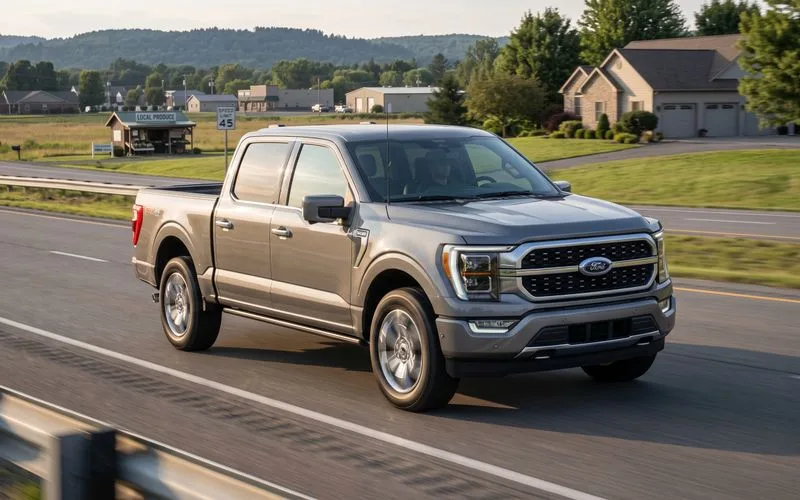 Ford F-150Full-Size TruckBetter at: Towing and resale
Same cab and same dealer, but with 13,500-lb towing, five-minute refuels and vastly better resale — the obvious choice if you can't charge at home or you tow far.
Compare 2.60C+
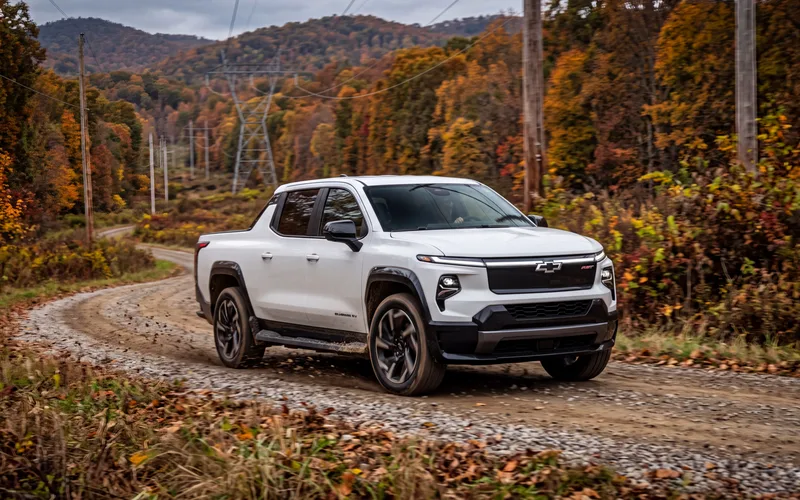 Chevrolet Silverado EVFull-Size TruckBetter at: Range
A much longer-range electric truck on an 800-volt architecture, which is what the Lightning's 320-mile rating and ~182 kW ceiling can't answer on a road trip.
Compare 2.44C+
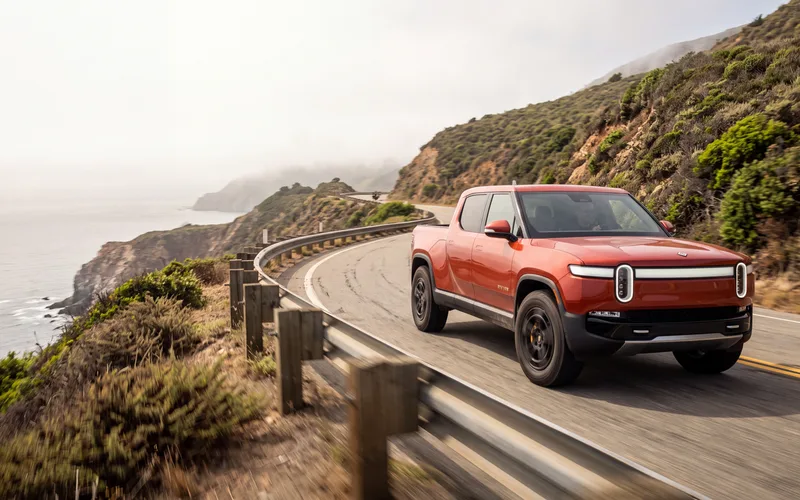 Rivian R1TFull-Size TruckBetter at: Resale value
Costs more but drives better, goes further off pavement, and holds roughly 66–70% of its value where the Lightning holds 43%.
CompareSubject scores by year
Hover or tap a score to see what moved it versus the year before. A corner mark flags a big swing.
| Year | Performance | Efficiency | Safety | Space | Cost | Reliability | Tech | Use-case | Driving | Value |
|---|---|---|---|---|---|---|---|---|---|---|
| 2025 | 65 | 65 | 67 | 69 | 34 | 50 | 72 | 69 | 73 | 60 |
| 2024 | 70 | 64 | 69 | 69 | 32 | 41 | 75 | 67 | 70 | 61 |
| 2023 | 69 | 63 | 69 | 69 | 27 | 38 | 75 | 69 | 70 | 68 |
| 2022 | 70 | 63 | 65 | 71 | 24 | 40 | 74 | 68 | 64 | 72 |
Compare two years
Best fit & conditions
Higher scores mean a better fit for that use case. Learn more about use-case fit →
Subject profile
Academic Probation · NHTSA safety recalls
Dec 12, 2025Power train: automatic transmission: internal: park pawlThe integrated park module may fail to lock into the park position when the driver shifts into park. As such, these vehicles fail to comply with the requirements of Federal Motor Vehicle Safety Standard (FMVSS) number 114, "Theft Protection and Rollaway Prevention."
Defect
Ford Motor Company (Ford) is recalling certain 2022-2026 F-150 Lightning BEV, 2024-2026 Mustang Mach-E, and 2025-2026 Maverick vehicles. The integrated park module may fail to lock into the park position when the driver shifts into park. As such, these vehicles fail to comply with the requirements of Federal Motor Vehicle Safety Standard (FMVSS) number 114, "Theft Protection and Rollaway Prevention."
Risk
A loss of park function can allow the vehicle to rollaway, increasing the risk of a crash.
Remedy
The park module software will be updated over-the-air (OTA) or by a dealer, free of charge. Owner notification letters were mailed February 3, 2026. Owners may contact Ford customer service at 1-866-436-7332. Ford's number for this recall is 25C69. Vehicle Identification Numbers (VINs) involved in this recall will be searchable on NHTSA.gov beginning January 26, 2026.
NHTSA campaign 25V863000 ↗Manufacturer no. 25C69272,645 vehicles potentially affected (all models in the campaign)Owners notified Feb 3, 2026Filed by Ford Motor CompanyFiled as F-150 LIGHTNING BEVOct 24, 2025Exterior lightingThe rear lightbar may have microcracks in the outer lens that allows moisture to accumulate, which can result in inoperative or flickering reverse lights.
Defect
Ford Motor Company (Ford) is recalling certain 2022-2023 F-150 Lightning BEV vehicles previously repaired under recall number 23V418. The rear lightbar may have microcracks in the outer lens that allows moisture to accumulate, which can result in inoperative or flickering reverse lights.
Risk
Inoperative or flickering reverse lights may not alert other driver's that the vehicle is reversing, increasing the risk of injury or crash.
Remedy
Dealers will inspect and replace the rear lightbar and fasteners as necessary, free of charge. Owner notification letters were mailed June 3, 2026. Owners may contact Ford customer service at 1-866-436-7332. Ford's number for this recall is 25SB6. Vehicle Identification Numbers (VINs) involved in this recall became searchable on NHTSA.gov on October 29, 2025.
NHTSA campaign 25V731000 ↗Manufacturer no. 25SB614,843 vehicles potentially affected (all models in the campaign)Owners notified Jun 3, 2026Filed by Ford Motor CompanyFiled as F-150 LIGHTNING BEVMay 23, 2025Tires: pressure monitoring and regulating systemsThe tire pressure monitoring system (TPMS) light may not illuminate as intended, failing to warn the driver of low tire pressure. As such, these vehicles fail to comply with the requirements of Federal Motor Vehicle Safety Standard number 138, "Tire Pressure Monitoring Systems."
Defect
Ford Motor Company (Ford) is recalling certain 2022 F-150 Lightning BEV vehicles equipped with 20" or 22" all season tires that were repaired incorrectly under recall 22V-453. The tire pressure monitoring system (TPMS) light may not illuminate as intended, failing to warn the driver of low tire pressure. As such, these vehicles fail to comply with the requirements of Federal Motor Vehicle Safety Standard number 138, "Tire Pressure Monitoring Systems."
Risk
Low tire pressure can lead to poor vehicle handling and a loss of vehicle control, increasing the risk of a crash.
Remedy
Dealers will update the body control module (BCM) software, free of charge. Owner notification letters were mailed June 27, 2025. Owners may contact Ford customer service at 1-866-436-7332. Ford's number for this recall is 25C20.
NHTSA campaign 25V340000 ↗Manufacturer no. 25C20197 vehicles potentially affected (all models in the campaign)Owners notified Jun 27, 2025Filed by Ford Motor CompanyFiled as F-150 LIGHTNING BEVMay 9, 2025Electronic stability control (esc)The SYNC software may fail to activate the electronic stability control (ESC) system at the beginning of each ignition cycle. As such, these vehicles fail to comply with the requirements of Federal Motor Vehicle Safety Standard number 126, "Electronic Stability Control Systems."
Defect
Ford Motor Company (Ford) is recalling certain 2022-2023 F-150 Lightning vehicles previously repaired incorrectly under recall number 23V801. The SYNC software may fail to activate the electronic stability control (ESC) system at the beginning of each ignition cycle. As such, these vehicles fail to comply with the requirements of Federal Motor Vehicle Safety Standard number 126, "Electronic Stability Control Systems."
Risk
Failure to reset the ESC to active may result in the driver unknowingly operating the vehicle without electronic stability control, increasing the risk of a crash.
Remedy
Dealers will update the Accessory Protocol Interface Module (APIM) software, free of charge. Owner notification letters were mailed June 18, 2025. Owners may contact Ford customer service at 1-866-436-7332. Ford's number for this recall is 25C15.
NHTSA campaign 25V313000 ↗Manufacturer no. 25C156 vehicles potentially affected (all models in the campaign)Owners notified Jun 18, 2025Filed by Ford Motor CompanyFiled as F-150 LIGHTNING BEVApr 23, 2025Electrical system: propulsion system: traction batteryThe fasteners that secure the junction box bus bars inside the high-voltage battery pack may not have been tightened securely, which can cause electrical arcing at the busbars.
Defect
Ford Motor Company (Ford) is recalling certain 2023 F-150 Lightning vehicles. The fasteners that secure the junction box bus bars inside the high-voltage battery pack may not have been tightened securely, which can cause electrical arcing at the busbars.
Risk
Electrical arcing increases the risk of a fire. In addition, a loss of drive power may occur, which can increase the risk of a crash.
Remedy
Dealers will inspect and repair the busbar fasteners and replace any damaged components as necessary, free of charge. Owner notification letters were mailed on May 21, 2025. Owners may contact Ford Customer Service at 1-866-436-7332. Ford's number for this recall is 24S11. This recall expands previous recall number 24V-144.
NHTSA campaign 25V272000 ↗Manufacturer no. 24S113 vehicles potentially affected (all models in the campaign)Owners notified May 21, 2025Filed by Ford Motor CompanyFiled as F-150 LIGHTNING BEVFeb 28, 2025Electrical system: propulsion system: traction batteryA manufacturing defect in the high voltage battery cells may result in an internal short circuit.
Defect
Ford Motor Company (Ford) is recalling certain 2022-2024 F-150 Lightning battery electric vehicles. A manufacturing defect in the high voltage battery cells may result in an internal short circuit.
Risk
A battery short circuit increases the risk of a fire.
Remedy
Owners are advised to only charge their vehicles to a maximum of 80% battery capacity until the repair has been completed. Dealers will inspect and replace the high voltage battery array as necessary, free of charge. Owner notification letters were mailed June 27, 2025. Owners may contact Ford customer service at 1-866-436-7332. Ford's number for this recall is 25S18.
NHTSA campaign 25V131000 ↗Manufacturer no. 25S18950 vehicles potentially affected (all models in the campaign)Owners notified Jun 27, 2025Filed by Ford Motor CompanyFiled as F-150 LIGHTNING BEVNov 28, 2023Electronic stability control (esc)The SYNC software may fail to activate the electronic stability control (ESC) system at the beginning of each ignition cycle. As such, these vehicles fail to comply with the requirements of Federal Motor Vehicle Safety Standard number 126, "Electronic Stability Control Systems."
Defect
Ford Motor Company (Ford) is recalling certain 2022-2023 F-150 Lightning vehicles. The SYNC software may fail to activate the electronic stability control (ESC) system at the beginning of each ignition cycle. As such, these vehicles fail to comply with the requirements of Federal Motor Vehicle Safety Standard number 126, "Electronic Stability Control Systems."
Risk
Failure to reset the ESC to active may result in the driver unknowingly operating the vehicle without electronic stability control, increasing the risk of a crash.
Remedy
The Accessory Protocol Interface Module (APIM) software will be updated by a dealer or through an over-the-air (OTA) update, free of charge. Owner notification letters were mailed December 21, 2023. Owners may contact Ford customer service at 1-866-436-7332. Ford's number for this recall is 23C38.
NHTSA campaign 23V801000 ↗Manufacturer no. 23C385,118 vehicles potentially affected (all models in the campaign)Owners notified Dec 21, 2023Filed by Ford Motor CompanyFiled as F-150 LIGHTNING BEVJun 9, 2023Exterior lightingThe rear lightbar may have microcracks in the outer lens that allows moisture to accumulate, which can result in inoperative or flickering reverse lights.
Defect
Ford Motor Company (Ford) is recalling certain 2022-2023 F-150 BEV vehicles. The rear lightbar may have microcracks in the outer lens that allows moisture to accumulate, which can result in inoperative or flickering reverse lights.
Risk
Inoperative or flickering reverse lights may not alert other driver's that the vehicle is reversing, increasing the risk of injury or crash.
Remedy
Dealers will replace the rear lightbar, free of charge. Owner notification letters were mailed October 9, 2023. Owners may contact Ford customer service at 1-866-436-7332. Ford's number for this recall is 23S30.
NHTSA campaign 23V418000 ↗Manufacturer no. 23S3016,375 vehicles potentially affected (all models in the campaign)Owners notified Oct 9, 2023Filed by Ford Motor CompanyFiled as F-150 LIGHTNING BEVJun 24, 2022Tires: pressure monitoring and regulating systemsThe tire pressure monitoring system (TPMS) light may not illuminate as intended, failing to warn the driver of low tire pressure. As such, these vehicles fail to comply with the requirements of Federal Motor Vehicle Safety Standard number 138, "Tire Pressure Monitoring Systems."
Defect
Ford Motor Company (Ford) is recalling certain 2022 F-150 BEV vehicles equipped with 20" or 22" all season tires. The tire pressure monitoring system (TPMS) light may not illuminate as intended, failing to warn the driver of low tire pressure. As such, these vehicles fail to comply with the requirements of Federal Motor Vehicle Safety Standard number 138, "Tire Pressure Monitoring Systems."
Risk
Low tire pressure can lead to poor vehicle handling and a loss of vehicle control, increasing the risk of a crash.
Remedy
The body control module (BCM) software will be updated by a dealer, or through an over-the-air (OTA) update, free of charge. Owner notification letters were mailed July 20, 2022. Owners may contact Ford customer service at 1-866-436-7332. Ford's number for this recall is 22C15.
NHTSA campaign 22V453000 ↗Manufacturer no. 22C152,666 vehicles potentially affected (all models in the campaign)Owners notified Jul 20, 2022Filed by Ford Motor CompanyFiled as F-150 LIGHTNING BEV
6 recalls on other model years of the F-150 Lightning (2023–2025)
Jun 27, 2025Service brakes, hydraulic: foundation components: hoses, lines/piping, and fittingsThe front brake jounce hose bracket screws may loosen and detach, which can allow the jounce hose to contact the tire and result in a brake fluid leak.
Defect
Ford Motor Company (Ford) is recalling certain 2025 F-150 Lightning BEV vehicles. The front brake jounce hose bracket screws may loosen and detach, which can allow the jounce hose to contact the tire and result in a brake fluid leak.
Risk
A brake fluid leak can extend the distance needed to stop the vehicle, increasing the risk of a crash.
Remedy
Dealers will inspect the front brake hose and replace both brake jounce hose bracket screws, free of charge. Owner notification letters were mailed July 15, 2025. Owners may contact Ford customer service at 1-866-436-7332. Ford's number for this recall is 25S71.
NHTSA campaign 25V438000 ↗Manufacturer no. 25S715 vehicles potentially affected (all models in the campaign)Owners notified Jul 15, 2025Filed by Ford Motor CompanyFiled as F-150 LIGHTNING BEVMay 23, 2025Suspension: front: control arm: upper ball jointThe front upper control arm ball joint nut may not have been tightened properly, allowing the front upper control arm to detach from the knuckle assembly.
Defect
Ford Motor Company (Ford) is recalling certain 2024-2025 F-150 Lightning BEV vehicles. The front upper control arm ball joint nut may not have been tightened properly, allowing the front upper control arm to detach from the knuckle assembly.
Risk
A detached control arm can cause a loss of vehicle steering and control, increasing the risk of a crash.
Remedy
Dealers will inspect the upper control arm ball joint nut, and replace the nut and/or knuckle assembly, as necessary, free of charge. Owner notification letters were mailed June 6, 2025. Owners may contact Ford customer service at 1-866-436-7332. Ford's number for this recall is 24S76. This recall expands previous NHTSA recall number 24V949.
NHTSA campaign 25V341000 ↗Manufacturer no. 24S7629,501 vehicles potentially affected (all models in the campaign)Owners notified Jun 6, 2025Filed by Ford Motor CompanyFiled as F-150 LIGHTNING BEVDec 19, 2024Suspension: front: control arm: upper ball jointThe front upper control arm ball joint nut may not have been tightened properly, allowing the front upper control arm to detach from the knuckle assembly.
Defect
Ford Motor Company (Ford) is recalling certain 2023-2024 F-150 Lightning BEV vehicles. The front upper control arm ball joint nut may not have been tightened properly, allowing the front upper control arm to detach from the knuckle assembly.
Risk
A detached control arm can cause a loss of vehicle steering and control, increasing the risk of a crash.
Remedy
Dealers will inspect the upper control arm ball joint nut, and replace the nut and/or knuckle assembly, as necessary, free of charge. Owner notification letters were mailed February 10, 2025. Owners may contact Ford customer service at 1-866-436-7332. Ford's number for this recall is 24S76.
NHTSA campaign 24V949000 ↗Manufacturer no. 24S7611,922 vehicles potentially affected (all models in the campaign)Owners notified Feb 10, 2025Filed by Ford Motor CompanyFiled as F-150 LIGHTNING BEVFeb 23, 2024Electrical system: propulsion system: traction batteryThe fasteners that secure the junction box bus bars inside the high-voltage battery pack may not have been tightened securely, which can cause electrical arcing at the busbars.
Defect
Ford Motor Company (Ford) is recalling certain 2023 F-150 Lightning vehicles. The fasteners that secure the junction box bus bars inside the high-voltage battery pack may not have been tightened securely, which can cause electrical arcing at the busbars.
Risk
Electrical arcing increases the risk of a fire. In addition, a loss of drive power may occur, which can increase the risk of a crash.
Remedy
Dealers will inspect and repair the busbar fasteners and replace any damaged components as necessary, free of charge. Owner notification letters were mailed on May 31, 2024. Owners may contact Ford customer service at 1-866-436-7332. Ford's number for this recall is 24S11.
NHTSA campaign 24V144000 ↗Manufacturer no. 24S11216 vehicles potentially affected (all models in the campaign)Owners notified Mar 22, 2024Filed by Ford Motor CompanyFiled as F-150 LIGHTNING BEVOct 13, 2023Visibility: defroster/defogger/hvac system: windshield: electrical heating elementThe electronic cabin coolant heater module may be missing a solder joint, which can cause intermittent or no cabin heat and result in an inoperative windshield defrosting and defogging system. As such, these vehicles fail to comply with the requirements of Federal Motor Vehicle Safety Standard number 103, "Windshield Defrosting and Defogging Systems."
Defect
Ford Motor Company (Ford) is recalling certain 2023 F-150 Lightning pickup trucks. The electronic cabin coolant heater module may be missing a solder joint, which can cause intermittent or no cabin heat and result in an inoperative windshield defrosting and defogging system. As such, these vehicles fail to comply with the requirements of Federal Motor Vehicle Safety Standard number 103, "Windshield Defrosting and Defogging Systems."
Risk
An inoperative windshield defrosting and defogging system may decrease the driver's visibility, increasing the risk of a crash.
Remedy
Dealers will replace the electronic cabin coolant heater, free of charge. Owner notification letters were mailed January 3, 2024. Owners may contact Ford customer service at 1-866-436-7332. Ford's number for this recall is 23C32.
NHTSA campaign 23V688000 ↗Manufacturer no. 23C32931 vehicles potentially affected (all models in the campaign)Owners notified Jan 3, 2024Filed by Ford Motor CompanyFiled as F-150 LIGHTNING BEVMar 15, 2023Electrical system: propulsion system: traction batteryThe high-voltage battery pack may experience an electrical short-circuit when the battery is fully charged or near fully charged.
Defect
Ford Motor Company (Ford) is recalling certain 2023 F-150 Lightning pickup trucks. The high-voltage battery pack may experience an electrical short-circuit when the battery is fully charged or near fully charged.
Risk
A battery short-circuit increases the risk of a fire.
Remedy
Dealers will replace the high-voltage battery pack, free of charge. Owner notification letters were mailed March 31, 2023. Owners may contact Ford customer service at 1-866-436-7332. Ford's number for this recall is 23S15.
NHTSA campaign 23V168000 ↗Manufacturer no. 23S1518 vehicles potentially affected (all models in the campaign)Owners notified Mar 31, 2023Filed by Ford Motor CompanyFiled as F-150 LIGHTNING BEV
Source: NHTSA Office of Defects Investigation recall database, model years 2022–2025. Recalls are listed by model year as the manufacturer filed them; whether a specific car is affected depends on its VIN — check a VIN at nhtsa.gov ↗. NHTSA model names matched to this page: F-150 LIGHTNING BEV.
Detailed scoring by subject
1Performance & PowertrainGrades above the middle of the scale.2.71B-
Ford's production-spec output for the Extended-Range battery pack, the most commonly ordered configuration on retail XLT/Lariat trims for the Lightning's launch model year; the Standard-Range pack (Pro fleet trucks) makes noticeably less power from the same dual-motor layout.
Peak torque is unchanged between the two battery/output tiers since both use the same dual permanent-magnet motor architecture; instant, class-leading torque for a 2022 full-size truck.
Instrumented testing of a 2022 F-150 Lightning with the Extended-Range battery recorded 0-60 mph in roughly 4.0 seconds, among the quickest full-size trucks on sale that year regardless of powertrain.
Dual electric motors deliver instant, seamless torque with zero lag and no turbo/engine coarseness — reviewers consistently praised the Lightning's linear, immediate throttle response as a highlight of the truck.
Single-speed direct-drive EV powertrain has no gear shifts to hunt or clunk through; power delivery is continuous and seamless from a stop through highway speed.
Ford's advertised maximum conventional tow rating for the Lightning's launch model year, achieved only with the Extended-Range battery and Max Trailer Tow Package — well below the segment-leading gas F-150's 14,000 lbs.
The lighter Standard-Range battery pack yields the highest payload figure in the lineup; the more popular Extended-Range trucks carry meaningfully less payload because of added battery mass, a real EV-specific trade-off versus gas F-150 payload of over 3,300 lbs.
The Lightning launched with one of the most complete towing suites in the class: Pro Trailer Backup Assist, Pro Trailer Hitch Assist, Trailer Reverse Guidance, an integrated trailer brake controller, Smart Hitch tongue-weight sensing, onboard scales, trailer cameras, and Smart Trailer Tow Connection.
Standard all-wheel drive via a front and rear electric motor on every configuration and trim, with independently controlled torque split for traction — no FWD/RWD-only option exists, though there is no low-range transfer case.
Standard front/rear skid plates protecting the battery and motors, a standard locking rear differential, and a dedicated off-road drive mode give real light-duty capability (8.4-9.4 in ground clearance, 24.4°/23.6° approach/departure), but there is no low-range transfer case and no dedicated off-road trim (no Lightning Raptor) in 2022.
The Lightning is EV-only — there is no gas, hybrid, or PHEV option on this nameplate. The two battery/output tiers (Standard-Range 452 hp / Extended-Range 580 hp) are a single powertrain type at different capacity levels, not distinct powertrain choices.
2Efficiency & RangeOne of the F-150 Lightning's weakest categories.2.25C
2022 is the F-150 Lightning's launch model year (production began April 2022); EPA certified the Extended Range battery at 70 MPGe combined, the strongest efficiency figure of any full-size truck on sale that year.
City-cycle MPGe is exceptional for a 6,000-plus-pound full-size truck thanks to regenerative braking and zero idle losses, though it sits mid-pack against dedicated EV trucks with lighter or more aerodynamic packaging.
Highway MPGe drops off from the city figure as is typical for EVs losing the regen advantage at speed, and the Lightning's production-truck aerodynamics limit it further than a purpose-built EV pickup body would.
320 miles on the Extended Range pack is mid-pack among EV trucks and well short of a gas F-150's 400–700 mile tank range; the launch-year Standard Range battery trails further at 230 miles (Ford raised the Standard Range certification to 240 mi for 2023, which does not apply to the 2022 rating).
The Lightning uses a 400-volt architecture and Ford rates the Extended Range pack at a 155 kW peak — modest against the 350 kW 800V EV trucks (Silverado EV, Cybertruck) that arrived after it, though the truck holds near its peak unusually long rather than spiking and tapering immediately.
Ford's launch-year quote is 41 minutes for 15–80% on a 150 kW charger, and independent 10–80% sessions on the 2022 truck landed between 38 and 43 minutes, so 41 minutes represents both the manufacturer figure and the measured 10–80% average for this model year; the software update that shortened Lightning charging came later and does not apply to the 2022 certification.
EPA's estimated annual energy cost is far below any gas or hybrid full-size truck, but the Lightning's ~48 kWh/100 mi consumption makes it one of the thirstier EVs on a per-mile basis, so it does not lead its own powertrain class. Revised up from the previously recorded $1,050 to match the current fueleconomy.gov figure for this model year.
Runs entirely on electricity with no fuel-grade concerns and charges cheaply at home; launch-year Lariat Extended Range and Platinum trims include the 80-amp Ford Charge Station Pro for the fastest Level 2 home charging in the class, and Intelligent Backup Power lets the truck power a house during an outage. Held short of the very top only because 2022 public charging was CCS-only via the BlueOval Charge Network, with no Tesla Supercharger access.
3SafetyMid-pack among this car's ten categories.2.42C+
NHTSA tested the SuperCrew F-150 Lightning (introduced for MY2022, same structure through MY2024) at 5 stars overall, with a 5-star side rating offsetting 4-star frontal and rollover scores.
The Lightning has never earned an IIHS Top Safety Pick award. Testing of this same SuperCrew generation (introduced MY2022, unchanged through MY2024/2025) found real crashworthiness concerns: a Poor rating in the updated moderate-overlap front test due to rear-seat restraint issues (lap belt sliding onto the abdomen, elevated chest/head/neck injury risk), plus Marginal LATCH ease-of-use and only Acceptable headlights — despite a structurally sound cab and Good driver-side protection.
Ford Co-Pilot360 2.0 is standard on every 2022 Lightning trim including base Pro, bundling AEB/Pre-Collision Assist, Lane Keeping Alert/Assist, Blind Spot Information System (BLIS), and rear cross-traffic alert. However, adaptive cruise control and lane centering (Co-Pilot360 Active 2.0) are optional on XLT/Lariat and standard only on Platinum, keeping this out of the top band.
IIHS front crash prevention testing of this generation rated pedestrian AEB performance Good; Ford's Pre-Collision Assist with AEB is standard on every trim including base Pro, giving broad coverage even if not the top Superior/Advanced tier for night pedestrian detection.
BLIS blind-spot monitoring and rear cross-traffic alert are standard on every 2022 trim (alert-only, no active braking). An optional BLIS-with-Trailer-Coverage extension covers trailers up to 33 ft, a useful trailer-aware feature for a truck, though it is an option rather than standard.
Lane Keeping Alert and Lane Keeping Assist are standard on every trim and functional, but true lane centering only arrives with the optional Co-Pilot360 Active 2.0 package (standard on Platinum) — reviewers describe the base lane-keep system as a basic nudge/alert rather than confident centering.
Adaptive cruise control with lane centering (Co-Pilot360 Active 2.0) is available on XLT and Lariat and standard on Platinum; early reviews (Motor1, J.D. Power) found it smooth and capable in daily driving and towing, though it isn't standard across the lineup.
BlueCruise (bundled into Co-Pilot360 Active 2.0) launched with the 2022 Lightning, hands-free capable on roughly 100,000+ miles of pre-mapped divided highways in the US/Canada; it's standard on Platinum but an add-on for Lariat and unavailable on Pro/XLT.
IIHS rated this SuperCrew generation's headlights Acceptable rather than Good, and ratings vary by trim/lighting package, keeping the Lightning out of the top headlight tier despite standard LED lighting.
A 360-degree camera is available from XLT up (base Pro gets a standard rearview camera only), and BLIS compensates for typical full-size-truck blind zones; J.D. Power's 2022 review specifically called out the reversing camera and blind-spot warning as the most useful visibility aids.
IIHS rated LATCH ease-of-use Marginal for this SuperCrew generation — anchors are harder to locate/use than top-rated rivals despite the crew cab's wide rear doors and generous rear-seat space.
4Space & ComfortOne of the F-150 Lightning's strongest categories.2.78B-
Lightning ships SuperCrew-only for its 2022 launch year; Pro was the most popular and highest-volume trim (and the only one Ford could keep in stock), with a standard front bench for 6-passenger seating.
Lightning reuses the 14th-generation F-150's SuperCrew cab structure unchanged, so front headroom matches the gas truck's published figure.
Front legroom carries over directly from the shared SuperCrew cab, landing toward the top of the full-size-truck band.
The tall SuperCrew roofline gives Lightning segment-competitive rear headroom, identical to the gas F-150's SuperCrew figure.
Lightning's SuperCrew-only lineup gives every buyer the F-150's longest-wheelbase rear seat, a near-limousine figure versus compact and mid-size EV trucks.
Unlike the gas F-150, Lightning is not available with a longer 6.5-ft or 8-ft box for 2022, so every buyer gets the shorter bed regardless of trim.
Bed volume matches the gas F-150's 5.5-ft box exactly since the box is shared hardware; the Lightning's real cargo advantage comes from its frunk, captured separately in the storage item below.
The 14.1 cu ft, 400-lb-capacity Mega Power Frunk — with a rubberized drainable floor, its own lighting, and up to four 120V outlets — is a genuine segment first, and it's paired with Pro Power Onboard exportable power (2.4 kW standard, up to 9.6 kW on extended-range trims) that turns the truck into a jobsite generator; this combination is unmatched by any gas F-150 or most rivals bar the Rivian R1T.
The high-volume Pro trim's vinyl bench is durable but basic and work-truck firm; Lariat and Platinum add leather-trimmed heated/ventilated buckets (with massage on Platinum) that reviewers rate as genuinely comfortable for long stints, so the trim spread pulls the overall rating to competent-but-not-exceptional.
Lightning trades the gas F-150's leaf-spring solid rear axle for an independent multi-link rear suspension, and despite weighing over 6,000 lb, reviewers consistently say it rides better than any F-150 before it, with the battery's low center of gravity aiding composure over broken pavement.
With no engine noise or vibration, the cabin is notably hushed at low-to-moderate speeds and reviewers call it "utterly quiet" inside and out overall, though some road and wind noise still intrudes at highway speed on this large, tall body.
Heated front seats and a heated steering wheel arrive on Lariat, with ventilated front seats and heated rear seats added at Lariat/Platinum; the EV powertrain also enables app-based remote cabin preconditioning while plugged in, a comfort perk gas F-150 buyers don't get, though the base Pro work trim keeps equipment sparse.
5Cost of OwnershipThe F-150 Lightning's lowest-graded category.0.00F
The Pro (commercial/fleet-oriented trim, standard-range battery) launched at $39,974 before Ford's $1,795 destination charge, the entry point Ford advertised at the Lightning's spring 2022 launch — one of the lowest starting prices of any full-size truck including EVs.
Lariat with the extended-range battery was the retail sweet-spot trim for 2022 buyers (Pro allocation skewed heavily fleet); Ford raised Lightning pricing multiple times through calendar 2022 amid battery-material cost increases, so Lariat ER MSRP moved from a base of ~$67,474 up toward $85,974 over the model year — this figure reflects a mid-year as-tested example.
As a single-speed-reduction-gear EV with no oil changes, spark plugs, or transmission service, the Lightning's routine maintenance is inherently cheaper than a gas F-150's — brakes (extended by regen), cabin/battery coolant, and tire rotations are the main line items; estimates vary widely by source.
As a first-model-year EV truck, the Lightning has depreciated well beyond full-size-truck norms — accelerated by Ford's own 2023–2024 sticker-price cuts on later model years, which hit early buyers' resale values hard; CarEdge projects roughly 56% five-year depreciation versus ~50% for the gas F-150.
Standard Ford bumper-to-bumper coverage, identical to the gas F-150 and the segment floor.
In place of a traditional powertrain warranty, Ford covers the high-voltage battery and electric drive components for 8 years/100,000 miles, guaranteeing at least 70% retained battery capacity over that span — well above the gas F-150's 5-year/60,000-mile powertrain term.
No prepaid scheduled-maintenance plan, but retail buyers received 250 kWh of complimentary DC fast charging at Electrify America (roughly 575 miles' worth), two years of complimentary BlueOval Charge Network network access, and Ford's standard 5-year/60,000-mile roadside assistance — real perks, though short of a multi-year maintenance plan.
$80,014 volume-trim price minus its estimated resale value after 5 years (44% retained, or about $35,206) leaves about $44,808 in depreciation. Add the projected $2,230 in 5-year maintenance and repairs, and owning this vehicle for 5 years costs about $47,038 in total.
6Reliability & QualityOne of the F-150 Lightning's weakest categories.0.64F
Consumer Reports rates the 2022 F-150 Lightning's predicted/actual reliability as below average relative to same-model-year vehicles, tracking the conventional F-150's below-average reliability, with owner-reported trouble concentrated in EV charging, the battery system, and electrical accessories.
J.D. Power's 2025 U.S. Vehicle Dependability Study — which evaluates original owners of 3-year-old vehicles and therefore covers this exact 2022 model year — showed Ford improving 10 spots to 13th among mass-market brands, a meaningful recovery but still shy of the consistently top-tier dependability standing of leaders like Toyota and Lexus.
Across its ownership life the 2022 F-150 Lightning has accumulated a heavy recall count for a single model year, including several safety-critical actions: an integrated park module that can fail to lock into Park (rollaway risk, later folded into a broader 2022-2026 rollaway recall), a high-voltage battery cell manufacturing defect covering 2022-2024 trucks (short-circuit/fire risk), plus rear lightbar moisture cracking that disables reverse lights and headlight-triggered parking-light flicker.
As Ford's first dedicated EV truck powertrain, the 2022 Lightning has no long-mileage durability track record, and early build quality directly implicated a batch of suspect SK On battery cells produced in a four-week window spanning late 2022 that fed a 2023 fire/recall investigation, plus a broader 2025 battery-cell short-circuit recall reaching back to 2022 units.
Launch reviewers found the cabin functional and well-equipped — a large touchscreen, a fold-flat front work surface, and small wood-trim accents — but material richness leans heavily on hard black plastics and reads as carried over from the conventional F-150 rather than a premium step up for the price.
Owner consumer reviews describe assembly as tight with an intuitive layout, but the launch-year integrated park module failure and rear lightbar moisture-ingress recalls point to real first-model-year assembly and sealing inconsistencies that a mature nameplate wouldn't carry.
Ford's dealer footprint is the largest of any full-size truck maker, and Lightning owners get EV-certified dealer technicians plus Ford Mobile Service and Roadside Assistance for at-home routine maintenance — strong practical coverage even in this nameplate's launch year.
Scheduled maintenance is cheap with no engine oil or transmission service — RepairPal/YourMechanic estimate roughly $178/year average — and owners save an estimated one-third to one-half versus a gas F-150 over five years, though faster tire wear from battery weight and torque, and a still-immature parts/labor ecosystem for a first-generation EV powertrain outside the 8-year/100k-mile battery warranty, temper the picture.
7Technology & InfotainmentThe F-150 Lightning's best-graded category.3.04B
At launch, the volume Pro/XLT trims carry the 12-inch landscape SYNC 4 touchscreen, with Lariat and Platinum stepping up to the larger 15.5-inch portrait SYNC 4A display.
SYNC 4/4A launched on the Lightning with fast response, clean graphics, and retained physical climate controls; as a launch-year EV, early software was solid but slightly less refined than the polish it gained over subsequent update cycles.
Wireless Apple CarPlay and Android Auto shipped standard across the entire 2022 Lightning lineup at launch, from base Pro through Platinum.
SYNC 4/4A includes cloud-connected voice recognition and embedded TomTom-based navigation with live traffic, functional but generally secondary to CarPlay/Android Auto maps for most owners.
Base Pro/XLT trims get a competent standard system, Lariat steps up to a 9-speaker Bang & Olufsen system, and Platinum tops the lineup with a 19-speaker Bang & Olufsen setup — a real upper-trim differentiator.
A crisp, fully configurable 12-inch digital instrument cluster is standard across the entire 2022 Lightning lineup, including the base Pro trim — no analog gauges are offered.
The 2022 Lightning launched with Ford's full whole-vehicle OTA architecture ("Power-Up"), which delivered substantive updates to this same hardware over its life — Phone-as-a-Key activation within its first year, progressive BlueCruise hands-free driving improvements, and a later DC fast-charge current increase (~450A to 500A, cutting 10-80% charge time by about five minutes) — well beyond infotainment/maps-only scope.
The free FordPass app covers remote start/stop, lock/unlock, climate/defrost preconditioning, vehicle locate, and EV-specific charge status/scheduling; Phone-as-a-Key arrived via OTA update shortly after launch rather than on day one, and early-adopter forums reported occasional connectivity hiccups typical of a launch-year EV.
The Lightning's Pro Power Onboard is best-in-class at launch: 2.4 kW standard with a 9.6 kW upgrade available, feeding household 120V outlets spread across the frunk, bed, and cab plus USB ports — effectively a mobile generator and a segment-defining differentiator.
Proximity keyless entry with push-button start, remote start via key fob/FordPass app, and a SecuriCode B-pillar keypad are standard at launch; Phone-as-a-Key followed within months via an OTA update rather than at day one.
A 360-degree camera system (grille, tailgate, and both mirror-mounted cameras) plus a forward parking sensor system are standard from the XLT trim up, with a rear camera on every trim including base Pro — broader 360-camera availability than typical segment rivals.
No head-up display is offered on any 2022 F-150 Lightning trim; the feature did not reach the Lightning lineup at all, leaving buyers to rely on aftermarket units.
8Use-Case FitMid-pack among this car's ten categories.2.60C+
Launch-year Lightning is SuperCrew-only, so every trim gets full-size, wide-opening rear doors with easy LATCH access, and the 14.1 cu-ft lockable, weatherproof Mega Power Frunk adds stroller/gear space no gas F-150 offers, making daily kid-and-cargo logistics easy for a full-size truck.
Ford Co-Pilot360 (AEB with pedestrian detection, lane-keeping, rear-occupant alert) is standard on every 2022 trim including base Pro, but NHTSA rated the launch-year truck 4-star overall (dragged down by a 4-star rollover result) versus 5-star for the gas F-150, IIHS had not yet rated the model, and BlueCruise hands-free driving was not available at launch — it arrived later via an over-the-air update in fall 2022 — so families paid full price without the era's best driver-assist safety net for the first several months on sale.
The EV powertrain and independent rear suspension give a quieter, smoother ride than the leaf-spring gas F-150, and the frunk supplements the 5.5-ft bed for real luggage room with all seats occupied, but rear-seat legroom/amenities are on par with rather than exceeding other full-size crew cabs, and range anxiety on longer multi-stop trips takes some shine off the comfort gains.
Dual-motor, standard-AWD powertrain delivers instant torque and smooth one-pedal driving from launch, with no shifting or engine noise, making stop-and-go traffic notably more relaxed than a gas or diesel full-size truck.
Home charging is far cheaper per mile than gasoline for a full-size truck and there are no oil-change/consumables costs, giving strong savings versus an equivalent gas F-150, though curb weight keeps combined MPGe efficiency in the high-60s rather than class-leading for an EV.
It remains a full-size SuperCrew truck with a large footprint and wide turning circle; a standard 360-degree camera helps in tight parking but doesn't offset the truck's overall size in dense urban settings.
Payload is strong out of the gate (up to 2,235 lbs on the standard-range Pro) and max tow with the optional Max Trailer Tow Package reaches 10,000 lbs, but the single 5.5-ft bed length and steep real-world range loss while towing cap true work-duty usefulness relative to a comparable gas/diesel F-150.
As a brand-new first-model-year EV powertrain, the 2022 Lightning enters with zero fleet track record, and a battery fire during pre-delivery quality testing at Ford's Michigan proving grounds in February 2022 prompted a shipment pause that pushed the truck's original spring delivery timeline back to May 2022 — a rocky start that leaves durability under sustained work abuse genuinely unproven.
The optional 9.6 kW Pro Power Onboard system is available from launch and turns the truck into a genuine mobile generator across up to 11 outlets (cab, bed, and frunk), a standout for jobsite tool use, on top of the lockable frunk and standard bed tie-downs; the fleet-oriented Pro trim is purpose-built for commercial upfitting from day one.
The cabin is quiet and comfortable for highway miles, but EPA range tops out around 320 miles on the extended-range battery and drops further in cold weather or at sustained highway speeds, meaning more frequent charging stops than a gas F-150's fuel fill-ups — and the fatigue-reducing BlueCruise hands-free system wasn't yet available on the earliest 2022 trucks.
Standard dual-motor AWD and strong low-end torque help on gravel, sand, and light trails, but there's no low-range transfer case and the independent rear suspension trades some off-road articulation for on-road comfort, making it capable but not an outright off-road-focused adventure truck; available Pro Power Onboard is a genuine plus for camping.
The 14.1 cu-ft frunk meaningfully expands weatherproof gear capacity beyond the 5.5-ft bed, and the truck supports a factory hitch and standard bed tie-downs, though only one bed length is offered versus the gas F-150's range of bed/cab configurations.
9Driving ExperienceMid-pack among this car's ten categories.2.35C+
The Lightning's lower center of gravity from the underfloor battery pack and revised suspension tuning slightly improve turn-in response and rear stability over bumps versus the gas F-150, but body roll in sharp corners and generally clumsy, truck-like reflexes carry over largely unchanged.
Steering effort and gearing are shared with the conventional F-150 — precise enough for a full-size truck at low speed but light, slow, and largely numb, with no meaningful feedback added despite the EV powertrain.
Single-stop performance is competitive for the class and one-pedal regen braking is smoothly and confidently calibrated, but the upgraded 4-wheel discs showed pronounced fade and an overheating warning during repeated hard-braking test cycles, a real weakness for a heavy work truck.
Dual-motor EV torque delivery is linear and instantaneous with no shift shock or turbo lag, and regenerative braking is exceptionally well blended with the friction brakes, allowing confident one-pedal driving with essentially no relearning curve.
With no combustion engine, the Lightning's cabin is exceptionally isolated from powertrain noise and vibration even under full-throttle acceleration, a standout advantage over every gas or hybrid full-size truck rival.
Curb-to-curb turning diameter is wider than the conventional F-150 (~47.8 ft), on the poor end of the full-size truck band, likely reflecting the Lightning's added curb weight and battery packaging.
The Lightning inherits the F-150's well-regarded cab proportions, control layout, and command seating position essentially unchanged, plus a flatter rear floor (no driveshaft tunnel) that improves rear-seat space; front seats offer good adjustability and visibility is excellent for a full-size truck.
Instant EV torque makes the extended-range Lightning genuinely quick and satisfying in a straight line (0-60 in about 4.0 seconds for the Platinum), which adds novelty and character, but the retained body-on-frame ride, body roll, and numb steering keep it from being an engaging back-road truck — reviewers frame it as a 'familiar brute' rather than a driver's machine.
10Value & Market PositionOne of the F-150 Lightning's strongest categories.2.86B-
Even the work-focused Pro trim ships with 10.5kW Pro Power Onboard (upgradeable to 9.6kW export via optional Extended Range battery + charge station), a lockable front trunk, 12-inch touchscreen, and full driver-assist suite as standard — content rivals charge extra for on comparable gas trims.
At its original launch pricing the Lightning undercut every other electric pickup on sale (Hummer EV, Rivian R1T) while matching or beating them on power, frunk space, and home-backup capability, but Ford raised prices twice during the 2022 model year (Pro rising toward $52k, Platinum toward $97k) which eroded the initial bang-for-buck story.
Four trims (Pro, XLT, Lariat, Platinum) span fleet-work to luxury, but unlike the gas F-150 the Lightning offers only one body configuration — SuperCrew cab with 5.5-ft bed — and a binary standard/extended-range battery choice, so buyers needing a regular cab, longer bed, or bench-seat interior have no option.
Demand vastly outstripped supply — over 200,000 reservations accumulated and Ford had to close the reservation book and put new orders on a multi-year wait — making the Lightning the clear demand leader among electric pickups at launch, even though actual 2022 deliveries were capped by battery and production constraints (~15,600 units).
Riding on the F-150's status as America's best-selling vehicle for over four decades, the Lightning benefited from strong brand trust in truck buyers plus halo excitement as Ford's flagship EV, though some traditional truck buyers remained skeptical of an electric F-150.
Launch-year demand was so far ahead of supply that dealers routinely marked units up $10,000-$30,000 over MSRP instead of discounting; no meaningful manufacturer incentives existed and the vehicle's battery sourcing initially disqualified it from the full federal EV tax credit.
2022 is the debut model year of an all-new nameplate — a dedicated electric powertrain grafted onto the 14th-gen F-150 body — representing the newest platform tech in the segment with no imminent redesign risk.
Reviewers were near-unanimous in praising the Lightning as the best-driving F-150 to date, and it swept the industry's top truck honors — MotorTrend's 2023 Truck of the Year (first unanimous EV winner) and the North American Truck of the Year — recognition earned by this launch-generation truck.