
The verdict
A mixed-report full-size truck, strong on technology and held back by ownership.
Overall 2.29 (C) across 10 graded subjects. Its strongest is technology & infotainment at 3.09 (B), its weakest cost of ownership at 0.11 (F). 8 of 10 subjects grade at C− or better.
Jump to scoresStrengths
- Technology & Infotainment
- Driving Experience
- Performance & Powertrain
What holds it back
- Cost of Ownership
- Reliability & Quality
- Value & Market Position
Top alternatives
Cars shoppers cross-shop with the Ford F-150 Lightning 2.66C+
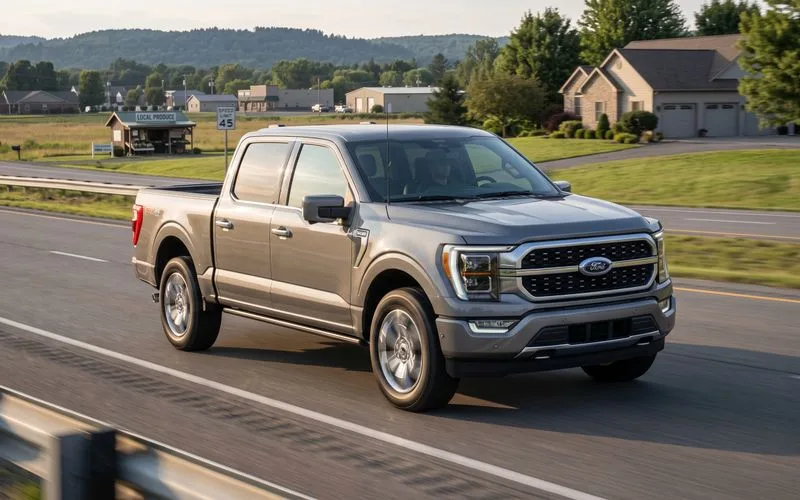 Ford F-150Full-Size TruckBetter at: Towing and resale
Same cab and same dealer, but with 13,500-lb towing, five-minute refuels and vastly better resale — the obvious choice if you can't charge at home or you tow far.
Compare 2.60C+
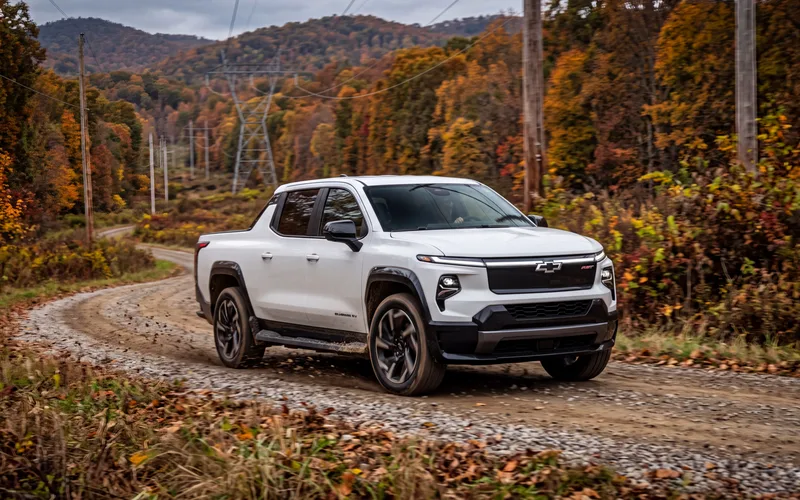 Chevrolet Silverado EVFull-Size TruckBetter at: Range
A much longer-range electric truck on an 800-volt architecture, which is what the Lightning's 320-mile rating and ~182 kW ceiling can't answer on a road trip.
Compare 2.44C+
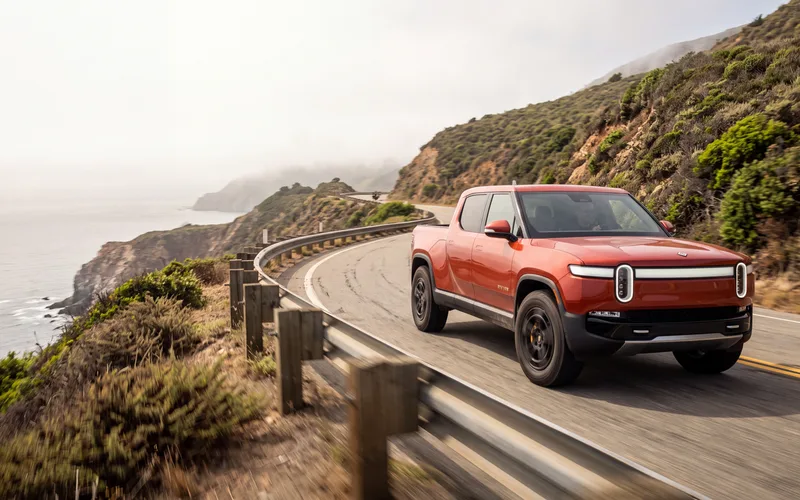 Rivian R1TFull-Size TruckBetter at: Resale value
Costs more but drives better, goes further off pavement, and holds roughly 66–70% of its value where the Lightning holds 43%.
CompareSubject scores by year
Hover or tap a score to see what moved it versus the year before. A corner mark flags a big swing.
| Year | Performance | Efficiency | Safety | Space | Cost | Reliability | Tech | Use-case | Driving | Value |
|---|---|---|---|---|---|---|---|---|---|---|
| 2025 | 65 | 65 | 67 | 69 | 34 | 50 | 72 | 69 | 73 | 60 |
| 2024 | 70 | 64 | 69 | 69 | 32 | 41 | 75 | 67 | 70 | 61 |
| 2023 | 69 | 63 | 69 | 69 | 27 | 38 | 75 | 69 | 70 | 68 |
| 2022 | 70 | 63 | 65 | 71 | 24 | 40 | 74 | 68 | 64 | 72 |
Compare two years
Best fit & conditions
Higher scores mean a better fit for that use case. Learn more about use-case fit →
Subject profile
Detailed scoring by subject
1Performance & PowertrainOne of the F-150 Lightning's strongest categories.2.77B-
Lariat is the F-150 Lightning's traditional volume trim and for 2024 comes standard with the Extended-Range battery pack, which produces the higher of the two available outputs.
Both 2024 Lightning battery configurations share the same 775 lb-ft peak torque figure, a class-leading number at launch and still among the highest in the segment.
MotorTrend's instrumented test of the Extended-Range dual-motor Lightning recorded 3.8 seconds to 60 mph; Consumer Reports and U.S. News tests of the same configuration ran slightly slower (4.0–4.3 s), and Ford made no powertrain changes for 2024 so the figure carries forward.
Dual electric motors deliver smooth, nearly silent, immediate torque with no lag or coarseness — reviewers describe the Lightning as an uncommonly sophisticated pickup to drive.
Single-speed reduction gearing on each motor delivers seamless, instantaneous power with no shift events, hunting, or drone of any kind.
Ford's maximum conventional tow rating for the 2024 Lightning requires the Extended-Range battery and Max Trailer Tow Package; trims without the package still tow a substantial 7,700 lbs.
Ford revised the Lightning's Standard-Range payload rating upward to 2,235 lbs, its highest figure in the lineup; Extended-Range and Platinum models carry meaningfully less due to added battery mass.
For 2024 Ford standardized much of the former Tow Technology Package on XLT and above — Pro Trailer Backup Assist, On-Board Scales with Smart Hitch, Pro Trailer Hitch Assist, a 360-degree camera, and Trailer Reverse Guidance — a full modern towing suite.
Every 2024 Lightning trim comes standard with dual-motor all-wheel drive, including independent per-axle torque delivery and multiple drive/terrain modes, though it lacks a traditional low-range transfer case.
Decent geometry (8.4 in ground clearance, 24.4°/23.6° approach/departure) and an off-road drive mode give light-duty capability, but there is no dedicated off-road trim (no Raptor/TRD Pro-class variant) and factory skid-plate protection is limited.
The Lightning is offered only as a battery-electric truck, with the 2024 model year adding the Flash and Platinum Black trims but no new powertrain choice; the sole variable is battery size/output (Standard- vs Extended-Range), not a spread of distinct powertrain types.
2Efficiency & RangeMid-pack among this car's ten categories.2.29C
2024 is a carry-over year for the Lightning's dual-motor powertrain, so the EPA combined MPGe is unchanged from 2022–2023 despite the new-for-2024 battery heat pump fitted to every trim (a cold-weather range aid the EPA cycle does not reward). Strong within the EV-truck class, though the Lightning's blunt production-truck aerodynamics keep it behind the most efficient EV pickups.
City MPGe is the Lightning's best efficiency metric — regenerative braking and zero idle loss suit stop-and-go truck duty — and is unchanged for 2024 with the powertrain carried over.
Highway MPGe falls well below the city figure — normal for an EV losing the regen advantage, and worse than usual for a full-size pickup pushing a large frontal area at speed. Unchanged for 2024.
320 miles is mid-pack among EV trucks — behind the Silverado EV and Rivian R1T, ahead of the Hummer EV — and far short of a gas F-150's 400–700 mile tank range. The 2024-specific change is trim availability rather than range: Ford dropped the ER XLT and SR Lariat and added the Flash, which makes the 320-mile ER pack the standard configuration from Flash upward.
The Lightning's 400-volt architecture keeps peak power modest against the 350 kW 800V EV trucks (Silverado EV, Cybertruck), but it holds near peak unusually long rather than spiking and tapering. The 2024 truck is the first to leave the factory with the 500-amp current limit that 2022–2023 trucks only received by software update in late 2024, so if anything it charges harder than Ford's published 155 kW headline.
The 2024 truck ships with the 500-amp limit from the factory, which is the configuration measured at just under 40 minutes for 10–80% — about five minutes quicker than the 450-amp 2022–2023 trucks as delivered. It is still a long stop in absolute terms: 70% of a 131 kWh pack is roughly 92 kWh to move at a peak the 400V architecture caps well below the 800V competition.
Replaces the previous derived ~$1,150 estimate with EPA's own published annual cost for this model year, which is $1,100. Roughly a third of what a gas full-size truck costs to run and cheaper still on off-peak home charging — but unremarkable measured against other EVs, which is the class this item is normalized within, because ~48 kWh/100 mi makes the Lightning one of the thirstier EVs per mile.
Runs entirely on electricity with no fuel-grade concerns and charges cheaply at home. 2024 is the year Supercharger access became real rather than promised — Ford opened its NACS adapter program on 29 February 2024 and shipped the adapter free through 30 June 2024, making Lightning owners the first non-Tesla customers on the network. That gain is offset by genuine decontenting: Ford dropped the dual 80 A (19.2 kW) onboard charger from Extended-Range trucks for 2024, leaving every trim on a single 48 A (11.3 kW) unit, so a full Level 2 charge of the ER pack now takes about 14.6 hours instead of roughly 8 with the Charge Station Pro. Net result holds level with 2023.
3SafetyMid-pack among this car's ten categories.2.64C+
NHTSA tested the F-150 Lightning Super Crew 4WD as part of the MY2022 program; results carried forward unchanged through the 2024 model year with no structural revisions.
The Lightning does not carry a Top Safety Pick award (unlike the gas F-150) and posted a Poor rating in the moderate front overlap test with weak rear-occupant protection, plus a Marginal LATCH result — a clear weak point versus rival EV trucks.
Ford Co-Pilot360 2.0 is standard on every 2024 Lightning trim, bundling AEB with pedestrian detection, forward collision warning, lane keeping assist/departure warning, blind-spot monitoring, rear cross-traffic alert, rear parking sensors, and auto high-beams — a broad standard suite, though adaptive cruise control and lane centering are gated to the Co-Pilot360 Active 2.0 package on higher trims.
IIHS front crash prevention testing rated the Lightning's pedestrian AEB Good, indicating solid daytime and general performance, though full superior/nighttime pedestrian ratings weren't documented separately.
Blind-spot monitoring and rear cross-traffic alert are standard across all trims, and Ford extends BLIS coverage to include the length of an attached trailer — a genuinely useful feature for a truck that tows.
Base lane keeping assist/departure warning is standard, but smoother lane-centering behavior is tied to the optional Co-Pilot360 Active 2.0 package (or BlueCruise trims); reviewers describe centering as functional but unremarkable rather than class-leading.
Adaptive cruise control with stop-and-go is available (standard on Lariat and above, optional lower trims) and integrates with BlueCruise on equipped trims; reviewers rate it as capable with only minor rough edges.
BlueCruise is available on Lariat, Platinum, and Flash trims and is widely regarded as one of the most mature hands-free systems on the market, rivaling GM Super Cruise; it covers over 130,000 miles of mapped North American Blue Zone highways, with the 1.4 update (hands-free lane change) rolled out to 2022–2024 Lightning models — mature capability and broad coverage, even though it is not standard on base trims.
IIHS rated the Lightning's headlights Acceptable rather than Good, placing it mid-pack — usable but not class-leading illumination.
The raised hood line (shared with the gas F-150's pedestrian-safety-driven design) limits direct forward sightlines; the standard 360-degree camera system helps but is restricted to low speeds and reverse, leaving gaps at highway speed.
IIHS rated LATCH ease of use Marginal, meaning installing some child seats requires extra care compared with trucks that have more accessible anchors.
4Space & ComfortMid-pack among this car's ten categories.2.68C+
The Lightning's battery packaging and console architecture preclude the gas F-150's optional 40/20/40 front bench, capping every 2024 trim (Pro through Platinum) at 5-passenger seating.
Front headroom is identical to the gas F-150 SuperCrew, as the Lightning shares the same cab structure and the MY2024 mid-cycle refresh changed only the front fascia and console, not cabin dimensions.
Front legroom matches the gas F-150 SuperCrew's figure, sitting near the top of the full-size-truck band and unchanged by the 2024 styling/console refresh.
The Lightning is SuperCrew-only, so it inherits the tall-roofline SuperCrew's segment-competitive rear headroom rather than any smaller-cab figure.
Rear legroom matches the gas SuperCrew's near-limousine figure, and the flat rear floor (no driveshaft tunnel, since there's no transmission or transfer case) adds usable foot space reviewers repeatedly praise.
Unlike the gas F-150, the Lightning is offered exclusively with the 5.5-ft box paired to SuperCrew for 2024; there is no longer-bed or Regular/SuperCab option, so buyers cannot trade cab space for bed length.
Bed volume matches the gas F-150's 5.5-ft box figure and lands mid-pack for the full-size-truck segment.
The MY2024 refresh moved the gear selector from the rotary console dial to a column-mounted stalk, opening a much larger, flatter center-console workspace on top of the 14.1 cu ft / 400 lb Mega Power Frunk and Pro Power Onboard (up to 9.6 kW across 11 outlets on Extended Range) — a genuine step up over the earlier console layout and beyond what the gas F-150 offers.
Reviewers describe large, supportive, well-padded seats front and rear with generous rear legroom ('all-day comfort', 'undeniably cushy'), though the base Pro trim ships with manual-adjust vinyl seats and richer bolstering/heating-ventilation only arrives on XLT/Lariat and above.
The battery pack's low center of gravity and fully independent rear suspension give the Lightning a notably smoother, more planted ride than the gas F-150, though its roughly 6,500-6,900 lb curb weight can still produce some softness and float ('wallowy') over undulating pavement unladen.
The electric powertrain eliminates engine and exhaust noise entirely, and reviewers consistently call out virtually nonexistent wind noise and a serene cabin at highway speed with only tire noise intruding, putting it near the top of the truck segment for quietness.
Heated/ventilated front seats, a heated steering wheel, and heated rear seats are available climbing the trim ladder (Lariat/Platinum), and the EV powertrain enables remote cabin preconditioning via FordPass while plugged in, but the base Pro trim is comparatively spartan with manual, unheated vinyl seating.
5Cost of OwnershipThe F-150 Lightning's lowest-graded category.0.11F
Ford adjusted 2024 Lightning pricing multiple times through the model year; by the April 2024 round of trim-price changes (which cut Flash/XLT/Lariat pricing but left the entry Pro Standard Range untouched), Pro settled at $57,090 including the $2,095 destination charge — higher than the earlier-in-year figure this category previously carried.
The Flash trim (new for 2024) remains the volume pick for retail buyers wanting real-world usable range at XLT-level equipment, but Ford cut its starting price by $5,500 in an April 2024 adjustment aimed at boosting EV demand, settling at $70,090 incl. destination — meaningfully lower than the pre-cut figure this category previously carried.
No oil changes or transmission service keep routine upkeep low, but Lightning-specific estimates (as opposed to generalized EV assumptions) put combined 5-year maintenance-plus-minor-repair cost somewhat higher than this category previously carried, once tires and wear items on a heavy work-capable truck are factored in.
CarEdge projects roughly 56% depreciation over 5 years (Kelley Blue Book's independent figure is nearly identical at 43.1% retention) — notably steeper than the gas F-150 and most rivals, driven by buyer concerns over EV truck range, battery durability, and the segment's fast-moving pricing/tech cycle; Recharged notes the Lightning loses ~48% of value in just its first 3 years.
Ford's standard 3-year/36,000-mile bumper-to-bumper coverage applies to the Lightning same as the rest of the lineup — the industry's low-end standard.
Every Lightning carries Ford's EV-specific 8-year/100,000-mile high-voltage battery warranty with a 70%-capacity retention guarantee, on top of the standard 5-year/60,000-mile powertrain component coverage shared with gas F-150s.
Ford Power Promise bundles a complimentary Level 2 home charger with standard installation, 24/7 EV-specific roadside assistance, and access to the BlueOval Charge Network (including Tesla Superchargers) — a meaningful EV-ownership perk package — though complimentary scheduled maintenance is capped at 24 months, shorter than the multi-year plans some rivals offer.
$70,090 volume-trim price minus its estimated resale value after 5 years (44% retained, or about $30,840) leaves about $39,250 in depreciation. Add the projected $3,800 in 5-year maintenance and repairs, and owning this vehicle for 5 years costs about $43,050 in total.
6Reliability & QualityOne of the F-150 Lightning's weakest categories.0.75F
Consumer Reports continues to rate the F-150 Lightning generation among its least-reliable vehicles two-plus model years into ownership data — the 2024MY scored in the high-30s/100 at introduction and the 2025MY has since fallen further to 28/100, with owner-reported issues in electronics, charging, and battery systems.
Signals diverged through 2026: Consumer Reports moved Ford up to roughly 11th-14th of 26 brands (its best showing in over a decade), but J.D. Power's 2026 Vehicle Dependability Study — which tracks 3-year-old vehicles like this 2024MY truck — showed Ford regressing to 228 PP100, near the bottom of the industry and worse than its 2025 result, driven by infotainment and OTA-update complaints.
The 2024 model year carries two severe, safety-critical recalls that have since expanded in scope: the front upper control-arm ball-joint nut recall (NHTSA 24S76, expanded via a follow-on campaign) covering a loss-of-steering risk grew to 29,501 2024-2025MY trucks (up from an initial ~3,905), and NHTSA 25V131/25S18 for a high-voltage battery cell manufacturing defect tied to 5 reported fires and 1 injury.
With over two years of fleet data since the platform's 2022 debut, the dual-motor EV powertrain and battery pack still lack a high-mileage durability track record, and 2026 owner guides continue to flag charging-behavior faults (failed/slow/incomplete charge sessions) alongside the active battery-cell fire recall as the dominant concerns.
Cabin is shared with the gas F-150 aside from the portrait touchscreen; reviewers call out surprisingly premium-feeling cloth upholstery on lower trims and upgraded leather/massaging seats on Platinum, but base-trim hard plastics keep it from class-leading.
Owner reviews specifically cite 'great fit and finish' and solid cabin assembly on the mature F-150 platform, and Ford's brand-wide assembly quality has since been validated by a first-place finish in J.D. Power's 2026 Initial Quality Study, an upgrade from the prior below-average dependability-only picture.
Ford's dealer network remains among the largest of any US automaker, but 2026 reporting continues to document uneven EV-service readiness at the dealer level — inconsistent charging-etiquette policies and technician EV-diagnostic experience vary widely by store, trailing the brand's gas-truck service reputation.
Body, chassis, and interior parts are shared with the high-volume gas F-150 and widely available, but battery-pack and EV-drivetrain components remain dealer-only and expensive, with the open battery-replacement recall underscoring high standalone component cost outside of warranty/recall coverage.
7Technology & InfotainmentThe F-150 Lightning's best-graded category.3.09B
XLT is the volume retail trim and carries the 12-in SYNC 4 screen; the larger 15.5-in SYNC 4A unit is standard from the newly-introduced Flash trim up through Lariat and Platinum.
SYNC 4/4A is fast and logically laid out with a strong physical-control balance (climate knobs retained), though the portrait 15.5-in menu structure on upper trims draws some reviewer complaints about buried functions.
Wireless Apple CarPlay and Android Auto are standard across the full 2024 trim lineup (Pro through Platinum), not gated to upper trims.
SYNC 4A's cloud-connected navigation with real-time traffic and voice controls is functional and EV-aware (routes to chargers), but most owners still default to CarPlay/Android Auto maps for daily use.
Base audio on Pro/XLT is adequate but unremarkable; the Bang & Olufsen premium system is a genuine upgrade but is reserved for the new Flash trim and above rather than standard fleet-wide.
Every 2024 Lightning trim, including base Pro, gets a 12-in full digital gauge cluster — there is no analog option anywhere in the lineup, a genuine EV-platform advantage.
Lightning supports whole-vehicle over-the-air updates, Tesla-style rather than infotainment-only; by 2024 these had already added BlueCruise enablement and Pro Power Onboard remote-control functionality, though some 2024 owners reported inconsistent update delivery.
The FordPass app covers remote start/climate preconditioning, lock/locate, charge scheduling and status, and Intelligent Backup Power monitoring at no extra cost — a richer feature set than a typical ICE truck app given the EV-specific functions, though 2024-model owners reported some post-update regressions (e.g. loss of remote climate/seat-heater control on the app for a period).
Best-in-class onboard power: available 9.6 kW Pro Power Onboard across 11 total outlets (four in the frunk alone) including a bed power panel with 120V/240V outlets, plus USB-C ports and a 120V cabin outlet — enough to run a home for days.
Proximity keyless entry with pushbutton start and Ford's SecuriCode keypad are available from XLT up, with remote start standard; full phone-as-key is not confirmed across the lineup, keeping it just short of the top band.
For 2024 Ford made the Tow Technology Package — 360-degree camera, Pro Trailer Backup Assist, Pro Trailer Hitch Assist, and Trailer Reverse Guidance — standard equipment on the XLT volume trim and above, rather than a paid option as in prior model years.
A factory head-up display is new to the Lightning lineup for 2024 (it wasn't offered on 2022-2023 models), available as an option starting on Lariat and carrying through Platinum — a genuine addition, though it remains optional rather than standard and skips the Pro/XLT/Flash volume trims.
8Use-Case FitMid-pack among this car's ten categories.2.56C+
SuperCrew-only body gives full-size, wide-opening rear doors and a genuinely spacious back seat with easy LATCH access; the Mega Power Frunk adds huge stroller/gear space up front, though loading a child seat over the tall load floor and high beltline is still a truck-scale reach.
NHTSA's 5-star overall rating and standard Ford Co-Pilot360 (AEB, blind-spot, lane-keep) across every 2024 trim including base Pro are strong, but the shared-structure Lightning was found 'Poor' in IIHS's moderate-overlap front test (rear dummy chest/head/neck metrics) on the same body used since MY2022; a December 2025 NHTSA recall (25V863/25C69) also covers 2022-2026 Lightnings for an integrated park module defect that can let the truck roll away even with the shifter in Park, a rollaway risk that's a specific concern with kids and pets around the vehicle.
Independent rear suspension gives a smoother, quieter ride than the gas F-150 for rear-row passengers, and the frunk plus 5.5-ft bed swallow luggage easily; the standard-for-2024 battery heat pump helps cabin climate hold up on long cold-weather trips, but ride can feel soft/wallowy over undulating pavement and rear-seat amenities don't exceed the gas Lariat/Platinum equivalents.
Well-tuned one-pedal driving is strong and predictable enough that reviewers rarely touch the brake pedal, instant EV torque makes low-speed maneuvers effortless, and the cabin is notably quiet — among the most relaxing full-size trucks to drive daily.
Home-charged electricity cost per mile undercuts every gas or hybrid full-size truck by a wide margin, and the new-for-2024 standard battery heat pump improves real-world cold-weather efficiency; the Lightning's 68 MPGe combined (Standard Range) / 70 MPGe combined (Extended Range) still trails lighter EV trucks and rivals like the Rivian R1T, and public DC fast charging narrows the savings.
Full-size crew-cab footprint (over 232 in long) makes tight urban parking and multi-story garages a real chore despite a standard 360-degree camera and parking sensors that ease the process somewhat.
10,000 lb max tow (Extended Range battery) and up to 2,000 lb payload (Standard Range) are usable for moderate work, but both trail the gas F-150's 13,500 lb tow/2,445 lb payload ceilings by a wide margin, and towing at capacity can cut range to roughly 150-210 miles — a real limitation for job-site round trips.
Shares its aluminum-intensive body with the fleet-proven gas F-150 and the Pro trim has real commercial/fleet uptake, but 2024-built trucks fall inside NHTSA recall 25V131 (March 2025) for a battery-cell manufacturing defect risking internal short circuit/fire, and a second, unrelated NHTSA recall (25V863, Dec 2025) covers the same 2022-2024 trucks for an integrated park module defect that can let the truck roll away out of Park — two separate safety-critical defects surfacing within a year is a meaningfully worse durability/reliability record than the gas F-150's decades-long fleet reputation.
Segment-leading job-site power: up to 9.6 kW Pro Power Onboard with up to 11 outlets across frunk, cab and bed (including a 240V outlet), zone on/off control from the SYNC screen, and the Mega Power Frunk itself functions as weatherproof lockable job-site storage — a genuine differentiator over gas trucks' smaller inverter options.
Quiet, comfortable highway cruiser with BlueCruise hands-free driving available to ease fatigue, and the newly-standard-for-2024 battery heat pump measurably improves cold-weather range retention versus prior model years; still, the Extended Range battery's EPA 320-mile rating drops at sustained highway speed, and road trips depend on DC fast-charging availability rather than the gas F-150's 5-minute refuels.
Standard dual-motor AWD and instant torque help on loose surfaces, and Pro Power Onboard is genuinely useful for camping/tailgating, but there is no off-road-focused trim (no Tremor/Raptor equivalent) for the 2024 Lightning lineup, ground clearance and approach/departure angles are unremarkable, and towing toys meaningfully cuts already-limited range.
Combination of a standard 5.5-ft bed, the large lockable Mega Power Frunk, standard trailer hitch, and available bed/frunk power outlets gives strong flexibility for bulky gear beyond what a typical crew-cab truck offers, though roof rail/rack options are more limited than dedicated adventure-trim rivals.
9Driving ExperienceOne of the F-150 Lightning's strongest categories.2.77B-
A low center of gravity from the underfloor battery and independent rear suspension give the Lightning more composure than a leaf-sprung gas F-150, but reviewers still note slow steering and unremarkable, secure-but-not-engaging handling for something this heavy (~6,500-6,900 lbs).
Steering is accurate and communicative by full-size-pickup standards, aided by the lower center of gravity, but it remains numb and slow-ratio rather than precise or engaging.
Strong regenerative braking with a well-tuned one-pedal mode does most of the stopping work; a brake-by-wire system with vented rotors front/rear blends regen and friction smoothly, and testers report rarely needing the mechanical brakes.
Dual permanent-magnet motors deliver instant, linear torque with no gear shifts or turbo lag; throttle and brake-pedal calibration is smooth and predictable, contributing directly to its close-quarters maneuverability and drivability.
As a dual-motor EV there is no combustion noise or vibration under load; cabin is exceptionally quiet with only minor wind/road noise at speed, a class advantage over every gas or hybrid full-size truck.
Curb-to-curb turning diameter sits at the wide end of the full-size truck band, reflecting the Lightning's long wheelbase and size class; front-wheel steering geometry is unchanged from the ICE F-150 platform.
Carries over the F-150's well-regarded cab: high seating position with good sightlines, wide adjustment range, and the familiar SYNC 4A control layout on the 15.5-inch portrait touchscreen; the flat load floor and available Pro Power Onboard workspace add everyday usability.
Blistering low-speed acceleration (as low as ~4.0 seconds 0-60 on extended-range/Platinum trims) makes the Lightning genuinely entertaining in a straight line and gives it a novel, 'addicting' character reviewers don't associate with pickups, even though its size and soft-ish suspension keep it from being an engaging back-road truck.
10Value & Market PositionOne of the F-150 Lightning's weakest categories.2.10C
Ford slashed 2024 Lightning pricing sharply versus 2023, and even the work-focused Pro trim carried Ford Co-Pilot360 driver-assist, a 12-inch touchscreen with SYNC 4A, LED lighting, and 2.4 kW Pro Power Onboard as standard — strong content for the reduced base price, though top-tier extras (BlueCruise, 15-inch screen graphics, extended-range battery) still require stepping up trims.
The 2024 refresh paired steep price cuts with a genuine spec bump (LFP standard-range battery raising range, standard NACS charge port, quicker DC fast-charging) so buyers got more truck for less money than 2023 — but the extended-range battery, up to 580 hp dual-motor output, and 10,000 lb towing are gated behind pricier trims, and the EV still costs more than a comparably equipped gas F-150.
2024 spans Pro, XLT, Flash (new mid-range trim), Lariat, and Platinum, each pairable with standard- or extended-range battery packs (where offered) — a reasonably wide spread from fleet-focused work truck to loaded flagship, though fewer body/cab configurations than the gas F-150 since Lightning is SuperCrew-only.
U.S. EV truck demand cooled sharply through 2024 and Lightning volumes declined year-over-year from the 2023 peak, prompting Ford to repeatedly cut production shifts and idle the Rouge Electric Vehicle Center — a weak-seller trajectory despite the price cuts intended to spur demand.
The F-150 nameplate carries decades of truck-buyer trust and Ford's broader EV push gives Lightning credibility, but the model-specific image took hits from 2023-2024 battery-fire recalls and stop-sale actions plus well-publicized inventory buildup, tempering the halo that the gas F-150 enjoys.
Soft demand pushed Ford to combine list-price cuts with additional dealer incentives, lease specials, and financing offers through 2024 to move Lightning inventory — meaningfully favorable for buyers even as it signals underlying market weakness.
Lightning debuted for model year 2022, so 2024 is its third year on an unchanged core platform, but it received a meaningful mid-cycle update (LFP standard-range battery, NACS port, revised front fascia, added Flash trim) that keeps it from feeling stale even as newer rivals (Silverado EV, Cybertruck) entered the field.
Lightning earned strong reviews and a 2023 North American Truck of the Year win at launch, but by 2024 coverage shifted toward reliability concerns (battery recalls), price volatility, and intensifying competition, so it's no longer the comparison-test pick it was at debut.