

The verdict
A struggling full-size van, strong on value and held back by efficiency.
Overall 1.62 (D) across 10 graded subjects. Its strongest is value & market position at 2.34 (C+), its weakest efficiency & range at 0.00 (F). 4 of 10 subjects grade at C− or better.
Jump to scoresStrengths
- Value & Market Position
- Use-Case Fit
- Driving Experience
What holds it back
- Efficiency & Range
- Cost of Ownership
- Reliability & Quality
Top alternatives
Cars shoppers cross-shop with the Ford Transit 2.22C
2.22C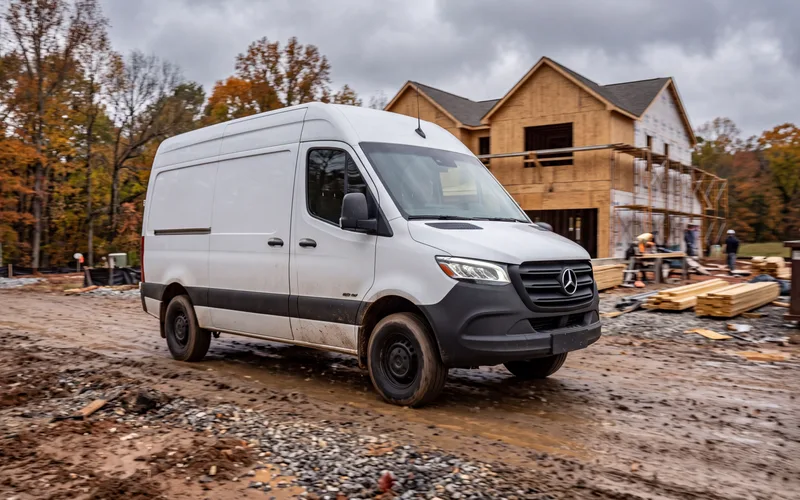 Mercedes-Benz SprinterFull-Size VanBetter at: Efficiency
Spend more up front for a better-driving, far more efficient van whose diesel economy can claw back the price difference over a high-mileage life.
Compare 1.47D
1.47D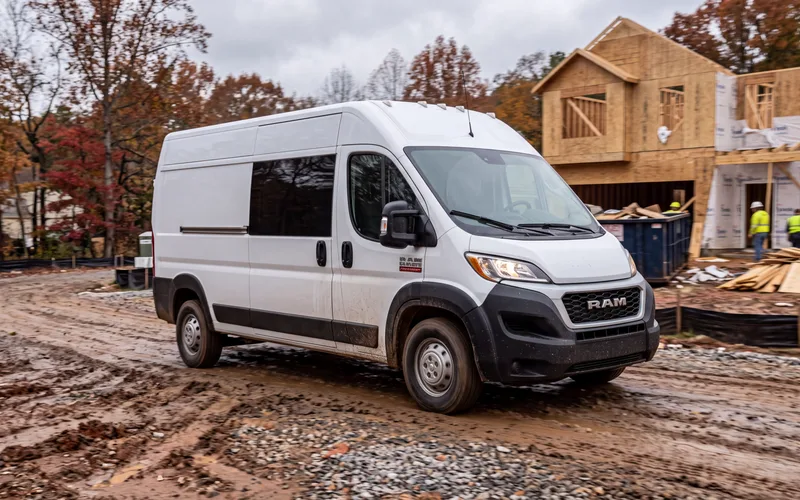 Ram ProMasterFull-Size VanBetter at: City maneuvering
Its front-drive layout delivers a lower load floor and a much tighter turning circle, which is the right trade for dense urban delivery routes.
Compare 2.04C
2.04C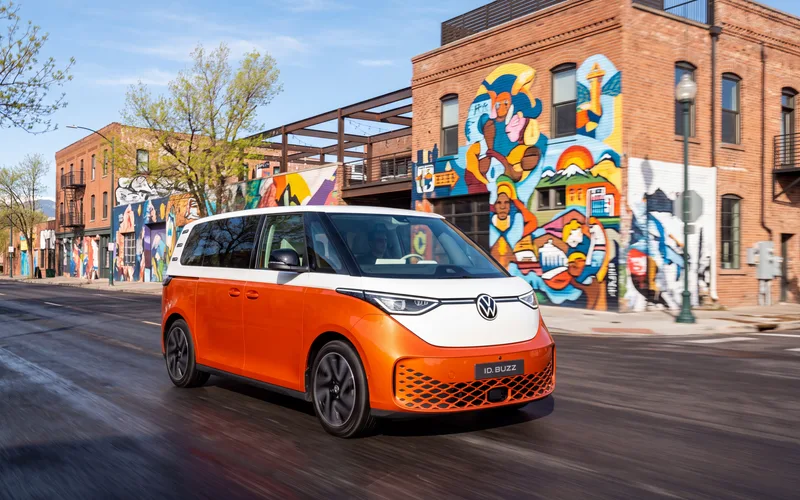 Volkswagen ID. BuzzMinivanBetter at: Family use
If the van is really a family vehicle rather than a work tool, the electric Buzz offers a genuinely pleasant cabin and no fuel cost at all.
CompareHow it's evolved
10 scored model years · 2017–2026
Subject scores by year
Hover or tap a score to see what moved it versus the year before. A corner mark flags a big swing.
| Year | Performance | Efficiency | Safety | Space | Cost | Reliability | Tech | Use-case | Driving | Value |
|---|---|---|---|---|---|---|---|---|---|---|
| 2026 | 50 | 28 | 56 | 57 | 40 | 51 | 67 | 64 | 64 | 65 |
| 2025 | 50 | 28 | 54 | 57 | 41 | 58 | 51 | 61 | 59 | 71 |
| 2024 | 57 | 22 | 52 | 52 | 38 | 49 | 51 | 62 | 59 | 64 |
| 2023 | 53 | 27 | 48 | 57 | 39 | 54 | 47 | 61 | 56 | 65 |
| 2022 | 49 | 27 | 41 | 55 | 45 | 56 | 37 | 59 | 61 | 62 |
| 2021 | 45 | 41 | 48 | 55 | 50 | 67 | 42 | 62 | 58 | 66 |
| 2020 | 45 | 41 | 46 | 54 | 52 | 61 | 40 | 62 | 58 | 67 |
| 2019 | 46 | 42 | 41 | 54 | 52 | 57 | 33 | 59 | 54 | 63 |
| 2018 | 46 | 39 | 27 | 54 | 54 | 56 | 29 | 56 | 55 | 61 |
| 2017 | 46 | 42 | 25 | 54 | 52 | 58 | 29 | 53 | 60 | 61 |
Compare two years
Best fit & conditions
Higher scores mean a better fit for that use case. Learn more about use-case fit →
Subject profile
Academic Probation · NHTSA safety recalls
Feb 3, 2026Structure: frame and membersThe engine crossmember may not be secured properly, which can cause the engine to shift and possibly result in a loss of drive power or brake failure.
Defect
Ford Motor Company (Ford) is recalling certain 2023-2024 Transit vehicles. The engine crossmember may not be secured properly, which can cause the engine to shift and possibly result in a loss of drive power or brake failure.
Risk
A loss of drive power or brake failure increases the risk of a crash.
Remedy
Dealers will replace the cross member fasteners, free of charge. Owner notification letters were mailed May 22, 2026. Owners may contact Ford customer service at 1-866-436-7332. Ford's number for this recall is 26S04. Vehicle Identification Numbers (VINs) involved in this recall became searchable on NHTSA.gov on February 4, 2026.
NHTSA campaign 26V061000 ↗Manufacturer no. 26S041,403 vehicles potentially affected (all models in the campaign)Owners notified May 22, 2026Filed by Ford Motor CompanyFiled as TRANSITDec 17, 2025Equipment adaptive/mobility: wheelchair restraints/securement: latch/anchorPlease refer to Rollx's recall report for specific model year information. The retractors may not lock, preventing the wheelchair from being properly secured.
Defect
Rollx Vans (Rollx) is recalling certain GMC Yukon, Sierra, Chevrolet Express 2500, Ford Transit, E-250, Toyota Sienna, Sienna Hybrid, Honda Odyssey, Chrysler Town and Country, Voyager, Pacifica, Dodge Grand Caravan, and Ram Promaster vehicles equipped with QRT-Deluxe and QRT-Max wheelchair restraints. Please refer to Rollx's recall report for specific model year information. The retractors may not lock, preventing the wheelchair from being properly secured.
Risk
An unsecured wheelchair can move during transit, increasing the risk of injury.
Remedy
Rollx will work with Q'Straint to inspect and replace the retractors as necessary, free of charge. Owner notification letters were mailed February 5, 2026. Owners may contact Rollx's customer service at 1-800-956-6668.
NHTSA campaign 25V876000 ↗86 vehicles potentially affected (all models in the campaign)Owners notified Feb 5, 2026Filed by Rollx VansFiled as TRANSITDec 12, 2025Power train: axle assembly: axle shaftThe left rear axle half shaft may partially disengage from the power drive unit, which can result in a loss of drive power.
Defect
Ford Motor Company (Ford) is recalling certain 2022-2025 E-Transit vehicles. The left rear axle half shaft may partially disengage from the power drive unit, which can result in a loss of drive power.
Risk
A loss of drive power increases the risk of a crash. In addition, a half shaft that is not fully engaged to the primary drive unit can result in a vehicle rollaway if the parking brake is not applied, increasing the risk of a crash or injury.
Remedy
Dealer will inspect and replace the rear half shaft and power drive unit components as necessary, free of charge. Owner notification letters were mailed April 3, 2026. Owners may contact Ford customer service at 1-866-436-7332. Ford's number for this recall is 25SD9. Vehicle Identification Numbers (VINs) involved in this recall became searchable on NHTSA.gov on December 15, 2025.
NHTSA campaign 25V860000 ↗Manufacturer no. 25SD932,160 vehicles potentially affected (all models in the campaign)Owners notified Apr 3, 2026Filed by Ford Motor CompanyFiled as E-TRANSITSep 18, 2025Steering · TiresAn incorrect steering coupler cover and tires that were not designed for the vehicle may have been installed during a previous repair.
Defect
Ford Motor Company (Ford) is recalling certain 2023-2024 Transit vehicles repaired incorrectly under recall numbers 24V226 and 24V591. An incorrect steering coupler cover and tires that were not designed for the vehicle may have been installed during a previous repair.
Risk
Incorrect tires and an incorrect steering coupler cover can cause a loss of brake function, loss of steering control, or damage to tires, increasing the risk of a crash.
Remedy
Dealers will inspect and if necessary, replace the tires, tire placard, and certification label, and also recalibrate the vehicle. Additionally, dealers will remove the steering coupler cover. Repairs will be performed free of charge. Owner notification letters were mailed April 10, 2026. Owners may contact Ford customer service at 1-866-436-7332. Ford's number for this recall is 25S95. Vehicle Identification Numbers (VINs) involved in this recall will be searchable on NHTSA.gov beginning September 24, 2025.
NHTSA campaign 25V623000 ↗Manufacturer no. 25S95212 vehicles potentially affected (all models in the campaign)Owners notified Apr 10, 2026Filed by Ford Motor CompanyFiled as TRANSITMay 9, 2025Back over prevention: softwareA software error may cause the rearview camera image to delay, freeze, or not display when the vehicle is in reverse.
Defect
Ford Motor Company (Ford) is recalling certain 2021-2024 Bronco, F-150, 2021-2024 Edge, 2022-2025 Escape, F-250, F-350, F-450, F-550, F-600, 2022-2024 Expedition, 2022-2025 Transit, 2021-2023 Mach-E, 2024 Ranger, Mustang, 2021-2023 Lincoln Nautilus, 2022-2024 Navigator, and 2023-2024 Corsair vehicles. A software error may cause the rearview camera image to delay, freeze, or not display when the vehicle is in reverse.
Risk
A frozen or missing rearview camera image can reduce the driver's view behind the vehicle, increasing the risk of a crash.
Remedy
The accessory protocol interface module (APIM) software will be updated by a dealer or through an over-the-air update, free of charge. This will be a phased campaign, with the remedy becoming available in different phases based on model and model years. Interim letters notifying owners of the safety risk were mailed on June 26, 2025. Additional letters will be mailed once the final remedy is available on each phase. Owner notification letters were sent on October 8, 2025. Owners may contact Ford customer service at 1-866-436-7332. Ford's number for this recall is 25S49.
NHTSA campaign 25V315000 ↗Manufacturer no. 25S491,076,138 vehicles potentially affected (all models in the campaign)Owners notified Oct 8, 2025Filed by Ford Motor CompanyFiled as TRANSITOct 25, 2024Power train: axle assembly: axle shaftIncorrect bolts may have been used to attach the rear axle shaft, which can lead to the rear wheel locking up or separating from the axle.
Defect
Ford Motor Company (Ford) is recalling certain 2023-2024 Ford Transit vehicles previously repaired under recall number 24V-102. Incorrect bolts may have been used to attach the rear axle shaft, which can lead to the rear wheel locking up or separating from the axle.
Risk
Rear wheel lock-up or separation of the wheel from the axle shaft can result in loss of vehicle control or loss of drive power. In addition, the vehicle may roll in park if the parking brake is not applied. Any of these scenarios can increase the risk of a crash.
Remedy
Dealers will inspect the rear axle shaft bolts, replace incorrect bolts as necessary, and fill the differential fluid if needed, free of charge. Owner notification letters were mailed December 13, 2024. Owners may contact Ford customer service at 1-866-436-7332. Ford's number for this recall is 24S67.
NHTSA campaign 24V805000 ↗Manufacturer no. 24S671,075 vehicles potentially affected (all models in the campaign)Owners notified Dec 13, 2024Filed by Ford Motor CompanyFiled as TRANSITAug 23, 2024Equipment: other: labelsThe front gross axle weight rating may be labeled incorrectly on the vehicle B-pillar label and the owner's manual label, which can result in an overloaded vehicle.
Defect
Ford Motor Company (Ford) is recalling certain 2024 Transit vehicles. The front gross axle weight rating may be labeled incorrectly on the vehicle B-pillar label and the owner's manual label, which can result in an overloaded vehicle.
Risk
An overloaded vehicle may result in steering knuckle failure and a loss of steering control, increasing the risk of a crash.
Remedy
Dealers will replace the labels, free of charge. Owner notification letters were mailed September 23, 2024. Owners may contact Ford customer service at 1-866-436-7332. Ford's number for this recall is 24S53.
NHTSA campaign 24V636000 ↗Manufacturer no. 24S53373 vehicles potentially affected (all models in the campaign)Owners notified Sep 23, 2024Filed by Ford Motor CompanyFiled as TRANSITAug 9, 2024Steering: columnThe steering column intermediate shaft may have been secured to the steering gear pinion shaft with an incorrect bolt, which can result in the separation of steering components and cause a loss of steering control.
Defect
Ford Motor Company (Ford) is recalling certain 2023-2024 Transit vehicles. The steering column intermediate shaft may have been secured to the steering gear pinion shaft with an incorrect bolt, which can result in the separation of steering components and cause a loss of steering control.
Risk
A loss of steering control can increase the risk of a crash.
Remedy
Dealers will replace the steering column intermediate shaft bolt, free of charge. Owner notification letters were mailed on February 14, 2025. Owners may contact Ford customer service at 1-866-436-7332. Ford's number for this recall is 24S48.
NHTSA campaign 24V591000 ↗Manufacturer no. 24S481,902 vehicles potentially affected (all models in the campaign)Owners notified Feb 14, 2025Filed by Ford Motor CompanyFiled as TRANSITJul 19, 2024Steering: electric power assist systemThe electronic power assist steering (EPAS) ground eyelet joint may experience corrosion, which can result in a loss of power steering assist.
Defect
Ford Motor Company (Ford) is recalling certain 2023-2024 Transit vehicles equipped with a Transit Trail package. The electronic power assist steering (EPAS) ground eyelet joint may experience corrosion, which can result in a loss of power steering assist.
Risk
A loss of power steering assist can increase the risk of a crash.
Remedy
Dealers will install a new EPAS ground pigtail kit, free of charge. Owner notification letters were mailed on January 10, 2025. Owners may contact Ford customer service at 1-866-436-7332. Ford's number for this recall is 24S46.
NHTSA campaign 24V542000 ↗Manufacturer no. 24S461,902 vehicles potentially affected (all models in the campaign)Owners notified Jan 10, 2025Filed by Ford Motor CompanyFiled as TRANSITMar 22, 2024TiresThe tires may contact the front wheel arch liner and body flange, causing damage to the tires.
Defect
Ford Motor Company (Ford) is recalling certain 2023-2024 Transit vehicles equipped with the Transit Trail package. The tires may contact the front wheel arch liner and body flange, causing damage to the tires.
Risk
Damaged tires may experience a sudden loss of air pressure or tread separation, causing a loss of vehicle control and increasing the risk of a crash.
Remedy
Dealers will replace the tires, tire placard, and certification label, and also recalibrate the vehicle, free of charge. Owner notification letters were mailed on March 26, 2025. Owners may contact Ford customer service at 1-866-436-7332. Ford's number for this recall is 24S21.
NHTSA campaign 24V226000 ↗Manufacturer no. 24S211,902 vehicles potentially affected (all models in the campaign)Owners notified Mar 26, 2025Filed by Ford Motor CompanyFiled as TRANSITFeb 9, 2024Power train: driveline: driveshaftAn inadequate amount of rear axle lubricant may cause rear axle tail bearing damage and seizure, which can result in wheel lock-up or driveshaft separation.
Defect
Ford Motor Company (Ford) is recalling certain 2023-2024 Ford Transit vehicles. An inadequate amount of rear axle lubricant may cause rear axle tail bearing damage and seizure, which can result in wheel lock-up or driveshaft separation.
Risk
Wheel lock-up or driveshaft separation can result in a loss of drive power. A disconnected driveshaft can also result in a roll away when the vehicle is in park without the parking brake applied. Any of these scenarios can increase the risk of a crash.
Remedy
Dealers will inspect the rear axle, and replace the axle bearings or axle assembly as necessary, free of charge. Owner notification letters were mailed March 4, 2024. Owners may contact Ford customer service at 1-866-436-7332. Ford's number for this recall is 24S05.
NHTSA campaign 24V102000 ↗Manufacturer no. 24S05113,320 vehicles potentially affected (all models in the campaign)Owners notified Mar 4, 2024Filed by Ford Motor CompanyFiled as TRANSIT
47 recalls on other model years of the Transit (2017–2023, 2025–2026)
Sep 9, 2026Seat belts: rear/other: buckle assemblyThe wireless seat belt reminder system (SBR) within the rear seat belt buckles may malfunction and fail to show a change in buckle status.
Defect
Ford Motor Company (Ford) is recalling certain 2026-2027 Transit vehicles. The wireless seat belt reminder system (SBR) within the rear seat belt buckles may malfunction and fail to show a change in buckle status.
Risk
A faulty seat belt status indicator may fail to alert occupants to an unfastened seat belt, increasing the risk of injury.
Remedy
Dealers will inspect the rear seat belts and replace the wireless seat belt buckles, as necessary, free of charge. Interim letters, notifying owners of the safety risk, were mailed October 12, 2026. Additional letters will be sent once the remedy is available, anticipated in December 2026. Owners may contact Ford customer service at 1-866-436-7332. Ford's number for this recall is 26S67. Vehicle Identification Numbers (VINs) involved in this recall became searchable on NHTSA.gov on September 10, 2026.
NHTSA campaign 26V579000 ↗Manufacturer no. 26S671,945 vehicles potentially affected (all models in the campaign)Filed by Ford Motor CompanyFiled as TRANSITFeb 20, 2026Electrical system: integrated trailer brake control · Exterior lighting: tail lightsWhen towing a trailer, the integrated trailer module (ITRM) may lose communication with the vehicle, possibly causing a loss of brake and turn signal lights, or a loss of brake function. As such, these vehicles fail to comply with the requirements of Federal Motor Vehicle Safety Standard number 108, " Lamps, Reflective Devices, and Associated Equipment."
Defect
Ford Motor Company (Ford) is recalling certain 2021-2026 F-150, 2022-2026 F-250 SD, F-350 SD, F-450 SD, F-550 SD, Maverick, 2024-2026 Ranger, 2023-2026 F-600 SD, 2022-2027 Lincoln Navigator, Expedition, and 2026 E-Transit vehicles. When towing a trailer, the integrated trailer module (ITRM) may lose communication with the vehicle, possibly causing a loss of brake and turn signal lights, or a loss of brake function. As such, these vehicles fail to comply with the requirements of Federal Motor Vehicle Safety Standard number 108, " Lamps, Reflective Devices, and Associated Equipment."
Risk
Trailer lights or brakes that do not function can reduce the driverâs ability to control the trailer and decrease the trailers visibility to other road users, increasing the risk of a crash.
Remedy
The integrated trailer module software will be updated by a dealer, or through an over-the-air (OTA) update, free of charge. Owner notification letters were mailed March 25, 2026. Owners may contact Ford customer service at 1-866-436-7332. Ford's number for this recall is 26C10. Vehicle Identification Numbers (VINs) involved in this recall will be searchable on NHTSA.gov beginning March 17, 2026.
NHTSA campaign 26V104000 ↗Manufacturer no. 26C104,381,878 vehicles potentially affected (all models in the campaign)Owners notified Mar 25, 2026Filed by Ford Motor CompanyFiled as E-TRANSITFeb 17, 2026Service brakes, hydraulic: pedals and linkagesThe brake pedal may disconnect from the brake booster pushrod, causing a loss of brake function. As such, these vehicles fail to comply with the requirements of Federal Motor Vehicle Safety Standard (FMVSS) number 105, "Hydraulic and Electric Brake Systems."
Defect
Ford Motor Company (Ford) is recalling certain 2025 Transit vehicles. The brake pedal may disconnect from the brake booster pushrod, causing a loss of brake function. As such, these vehicles fail to comply with the requirements of Federal Motor Vehicle Safety Standard (FMVSS) number 105, "Hydraulic and Electric Brake Systems."
Risk
A loss of brake function increases the risk of a crash.
Remedy
Owners are advised not to drive their vehicles until the remedy has been completed. Dealers will inspect and repair the brake booster assembly as necessary, free of charge. Owner notification letters were mailed February 24, 2026. Owners may contact Ford customer service at 1-866-436-7332. Ford's number for this recall is 26C07. Vehicle Identification Numbers (VINs) involved in this recall became searchable on NHTSA.gov on February 18, 2026.
NHTSA campaign 26V090000 ↗Manufacturer no. 26C0715,965 vehicles potentially affected (all models in the campaign)Owners notified Feb 24, 2026Filed by Ford Motor CompanyFiled as TRANSITFeb 3, 2026Electrical system: propulsion system: traction batteryBolts inside the high-voltage battery pack may be missing washers, which can cause high electrical resistance or electrical arcing.
Defect
Ford Motor Company (Ford) is recalling certain 2026 E-Transit vehicles. Bolts inside the high-voltage battery pack may be missing washers, which can cause high electrical resistance or electrical arcing.
Risk
Electrical arcing increases the risk of a fire. In addition, a loss of drive power may occur, which can increase the risk of a crash.
Remedy
Dealers will inspect and repair the busbar fasteners and replace the busbar if necessary, free of charge. Owner notification letters were mailed on February 13, 2026. Owners may contact Ford Customer Service at 1-866-436-7332. Ford's number for this recall is 26S05. Vehicle Identification Numbers (VINs) involved in this recall became searchable on NHTSA.gov on February 4, 2026.
NHTSA campaign 26V062000 ↗Manufacturer no. 26S0598 vehicles potentially affected (all models in the campaign)Owners notified Feb 13, 2026Filed by Ford Motor CompanyFiled as E-TRANSITDec 18, 2025Back over prevention: display functionThe rearview camera supplied in the Rear Video Camera and Prep Kit may not function when installed by the final stage manufacturer (upfitter), resulting in a blank rearview image.
Defect
Ford Motor Company (Ford) is recalling certain 2022 Transit vehicles previously repaired incorrectly under recall number 22V183. The rearview camera supplied in the Rear Video Camera and Prep Kit may not function when installed by the final stage manufacturer (upfitter), resulting in a blank rearview image.
Risk
A camera that does not display a rearview image while reversing can reduce the driver's view of what is behind the vehicle, increasing the risk of a crash.
Remedy
Dealers will update the audio control module software, free of charge. Owner notification letters were mailed February 5, 2026. Owners may contact Ford customer service at 1-866-436-7332. Ford's number for this recall is 25S68. Vehicle Identification Numbers (VINs) involved in this recall will be searchable on NHTSA.gov beginning January 16, 2026.
NHTSA campaign 25V887000 ↗Manufacturer no. 25S682 vehicles potentially affected (all models in the campaign)Owners notified Feb 5, 2026Filed by Ford Motor CompanyFiled as TRANSITSep 3, 2025Back over prevention: sensing system: cameraThe rearview camera may display a distorted, inverted, or blank image when the vehicle is in reverse.
Defect
Ford Motor Company (Ford) is recalling certain 2015-2019 Lincoln MKC, Mustang, F-350 SD, F-250 SD, F-450 SD, 2015-2017 Lincoln Navigator, Expedition, 2015-2018 Edge, Transit Connect, 2016-2019 F-550 SD, Transit, 2017-2019 Econoline, and 2019 Ranger vehicles. The rearview camera may display a distorted, inverted, or blank image when the vehicle is in reverse.
Risk
A rearview camera that displays an inverted, distorted, or blank image can reduce the driverâs view behind the vehicle, increasing the risk of a crash.
Remedy
Dealers will inspect and replace the rearview camera as necessary, free of charge. Owner notification letters were mailed January 13, 2026. Ford owners will receive letters in phases, beginning January 2026 and June 2026. Owners may contact Ford customer service at 1-866-436-7332. Ford's number for this recall is 25S89. This recall expands previous NHTSA recall number 25V270. Vehicle Identification Numbers (VINs) involved in this recall will be searchable on NHTSA.gov beginning September 8, 2025.
NHTSA campaign 25V572000 ↗Manufacturer no. 25S891,456,417 vehicles potentially affected (all models in the campaign)Owners notified Jan 13, 2026Filed by Ford Motor CompanyFiled as TRANSITJun 27, 2025Back over prevention: softwareA software error may cause the rearview camera to display a blank image, or the image may remain on the display after the backing event has ended.
Defect
Ford Motor Company (Ford) is recalling certain 2018-2022 Transit Connect, 2019-2020 MKZ, MKX, Edge, Continental, F-150, Nautilus, Fusion, 2019-2023 Ranger, Mustang, 2020-2021 EcoSport, Expedition, Navigator, 2020-2022 Escape, F-250 SD, Corsair, 2020-2023 Aviator, Transit, 2020-2024 Explorer, 2021-2024 Bronco Sport, and 2022-2024 Maverick vehicles. A software error may cause the rearview camera to display a blank image, or the image may remain on the display after the backing event has ended.
Risk
A rearview camera that displays a blank image can reduce the driver's view behind the vehicle. A rearview image that continues to be displayed after the vehicle is shifted out of reverse may distract the driver. Both of these situations can increase the risk of a crash.
Remedy
Dealers will update the rearview camera software, free of charge. Owner notification letters were mailed September 4, 2025. Owners may contact Ford customer service at 1-866-436-7332. Ford's number for this recall is 25S72.
NHTSA campaign 25V442000 ↗Manufacturer no. 25S72200,237 vehicles potentially affected (all models in the campaign)Owners notified Sep 4, 2025Filed by Ford Motor CompanyFiled as TRANSITJun 13, 2025Engine and engine cooling: engine: hard parts internal/mechanicalThe connecting rod and rod bearing components may have manufacturing defects that can lead to engine damage and engine failure.
Defect
Ford Motor Company (Ford) is recalling certain 2025 Transit, F-150, and Explorer vehicles. The connecting rod and rod bearing components may have manufacturing defects that can lead to engine damage and engine failure.
Risk
A damaged engine can result in engine failure and a stall, increasing the risk of a crash.
Remedy
Dealers will inspect the connecting rods and replace the engine long block assembly as necessary, free of charge. Owner notification letters were mailed August 15, 2025. Owners may contact Ford customer service at 1-866-436-7332. Ford's number for this recall is 25S55.
NHTSA campaign 25V344000 ↗Manufacturer no. 25S55156 vehicles potentially affected (all models in the campaign)Owners notified Aug 15, 2025Filed by Ford Motor CompanyFiled as TRANSITMay 23, 2025Electrical system: instrument cluster/panelThe Instrument Panel Cluster may not properly illuminate warning lights or gauges. As such, these vehicles fail to comply with the requirements of Federal Motor Vehicle Safety Standard number 101, "Control and Displays."
Defect
Ford Motor Company (Ford) is recalling certain 2022-2023 Transit vehicles previously repaired incorrectly under recall number 22V415. The Instrument Panel Cluster may not properly illuminate warning lights or gauges. As such, these vehicles fail to comply with the requirements of Federal Motor Vehicle Safety Standard number 101, "Control and Displays."
Risk
An instrument panel that does not illuminate critical safety information, such as the speedometer or warning lights, can increase the risk of a crash.
Remedy
Dealers will update the instrument panel cluster software, free of charge. Owner notification letters were mailed June 23, 2025. Owners may contact Ford customer service at 1-866-436-7332. Ford's number for this recall is 25C19.
NHTSA campaign 25V339000 ↗Manufacturer no. 25C193,506 vehicles potentially affected (all models in the campaign)Owners notified Jun 23, 2025Filed by Ford Motor CompanyFiled as TRANSITApr 11, 2025Back over prevention: sensing system: cameraThe rearview camera, or 360-degree view camera if equipped, may not display a rearview image when the vehicle is placed in reverse.
Defect
Ford Motor Company (Ford) is recalling certain 2022-2023 Transit vehicles previously repaired incorrectly under recall number 23V-598. The rearview camera, or 360-degree view camera if equipped, may not display a rearview image when the vehicle is placed in reverse.
Risk
Loss of the rearview camera image can reduce the driver's rear visibility, increasing the risk of a crash.
Remedy
Dealers will update the rearview camera software, free of charge. Owner notification letters were mailed May 23, 2025. Ford's number for this recall is 25S38.
NHTSA campaign 25V242000 ↗Manufacturer no. 25S384,625 vehicles potentially affected (all models in the campaign)Owners notified May 23, 2025Filed by Ford Motor CompanyFiled as TRANSITMar 14, 2025Visibility: defroster/defogger/hvac systemThe heating, ventilation, and air-conditioning (HVAC) system's controls, including those for defog and defrost, may become inoperative.
Defect
Ford Motor Company (Ford) is recalling certain 2022-2023 Transit vehicles previously repaired incorrectly under recall number 22V-791. The heating, ventilation, and air-conditioning (HVAC) system's controls, including those for defog and defrost, may become inoperative.
Risk
Loss of the ability to control the defrost or defog function decreases the driver's visibility under certain driving conditions, increasing the risk of a crash.
Remedy
Dealers will update the remote climate control module software, free of charge. Owner notification letters were mailed April 21, 2025. Owners may contact Ford customer service at 1-866-436-7332. Ford's number for this recall is 25S23.
NHTSA campaign 25V168000 ↗Manufacturer no. 25S23471 vehicles potentially affected (all models in the campaign)Owners notified Apr 21, 2025Filed by Ford Motor CompanyFiled as TRANSITAug 25, 2023Back over prevention: sensing system: cameraThe rearview camera, or 360-degree view camera if equipped, may not display a rearview image when the vehicle is placed in reverse.
Defect
Ford Motor Company (Ford) is recalling certain 2020-2023 Lincoln Aviator, 2018-2021 Lincoln Navigator, 2022-2023 Ford Transit, and 2021 Ford Bronco vehicles. The rearview camera, or 360-degree view camera if equipped, may not display a rearview image when the vehicle is placed in reverse.
Risk
Loss of the rearview camera image can reduce the driver's rear visibility, increasing the risk of a crash.
Remedy
Dealers will replace the rearview camera, and update the software and wiring as necessary, free of charge. Owner notification letters were mailed November 20, 2023 to Lincoln owners. Ford vehicle owners notification letters were mailed March 4, 2024. Ford remedy parts are anticipated 2nd Quarter 2024. Ford's number for this recall is 23S48.
NHTSA campaign 23V598000 ↗Manufacturer no. 23S48177,402 vehicles potentially affected (all models in the campaign)Owners notified Nov 20, 2023Filed by Ford Motor CompanyFiled as TRANSITJul 19, 2023Fuel system, gasoline: delivery: hoses, lines/piping, and fittingsThe fuel hose between the inline fuel filter and the Injection Pump Module (IPM) may not be properly secured, which can cause a gas leak.
Defect
Quality Vans (Quality Vans) is recalling certain 2020-2023 Ford Transit vans equipped with Onan QG 2800i EVAP generators, part number 2.8HGLAA-8303A. The fuel hose between the inline fuel filter and the Injection Pump Module (IPM) may not be properly secured, which can cause a gas leak.
Risk
A gasoline leak in the presence of an ignition source may increase the risk of fire.
Remedy
Dealers will inspect and replace the fuel hose and clamps as necessary, free of charge. Owner notification letters were mailed August 4, 2023. Owners may contact Quality Vans customer service at 1-480-464-7007.
NHTSA campaign 23V499000 ↗10 vehicles potentially affected (all models in the campaign)Owners notified Aug 7, 2023Filed by QUALITY VANSFiled as TRANSITFeb 24, 2023Visibility: defroster/defogger/hvac systemWhen the accessory kit is installed, the auxiliary wire harness will disable the heating, air-conditioning, and ventilation (HVAC) including the defrost and defog systems. As such, these vehicles fail to comply with the requirements of Federal Motor Vehicle Safety Standard number 103, "Windshield Defrosting and Defogging Systems."
Defect
Ford Motor Company (Ford) is recalling certain 2023 Transit vehicles equipped with the Special Vehicle Operations Accessory Service Kit #1 or #2 with a High Specification Vehicle Interface Connector. When the accessory kit is installed, the auxiliary wire harness will disable the heating, air-conditioning, and ventilation (HVAC) including the defrost and defog systems. As such, these vehicles fail to comply with the requirements of Federal Motor Vehicle Safety Standard number 103, "Windshield Defrosting and Defogging Systems."
Risk
An inoperative windshield defrosting and defogging system may decrease the driver's visibility under certain driving conditions, increasing the risk of a crash.
Remedy
Dealers will repair the auxiliary wire harness by modifying the wire harness to include the necessary twisted loop, free of charge. Owner notification letters were mailed April 20, 2023. Owners may contact Ford customer service at 1-866-436-7332. Ford's number for this recall is 23C02.
NHTSA campaign 23V122000 ↗Manufacturer no. 23C024,804 vehicles potentially affected (all models in the campaign)Owners notified Apr 20, 2023Filed by Ford Motor CompanyFiled as TRANSITFeb 10, 2023Fuel system, gasoline: storage: tank assemblyThe fuel tank grade vent valve may not be properly welded to the fuel tank shell, which can result in a fuel leak.
Defect
Ford Motor Company (Ford) is recalling certain 2023 Transit vehicles. The fuel tank grade vent valve may not be properly welded to the fuel tank shell, which can result in a fuel leak.
Risk
A fuel leak in the presence of an ignition source increases the risk of a fire.
Remedy
Dealers will replace the fuel tank, free of charge. Owner notification letters were mailed March 28, 2023. Owners may contact Ford customer service at 1-866-436-7332. Ford's number for this recall is 23S04.
NHTSA campaign 23V071000 ↗Manufacturer no. 23S041,159 vehicles potentially affected (all models in the campaign)Owners notified Mar 28, 2023Filed by Ford Motor CompanyFiled as TRANSITOct 20, 2022Electrical system: instrument cluster/panel · Visibility: defroster/defogger/hvac systemThe heating, ventilation, and air-conditioning (HVAC) system's controls, including those for defog and defrost, may become inoperative.
Defect
Ford Motor Company (Ford) is recalling certain 2022-2023 Transit vehicles. The heating, ventilation, and air-conditioning (HVAC) system's controls, including those for defog and defrost, may become inoperative.
Risk
Loss of the ability to control the defrost or defog function decreases the driver's visibility under certain driving conditions, increasing the risk of a crash.
Remedy
Dealers will update the remote climate control module software, free of charge. Owner notification letters were mailed on November 11, 2022. Owners may contact Ford customer service at 1-866-436-7332. Ford's number for this recall is 22S65.
NHTSA campaign 22V791000 ↗Manufacturer no. 22S6531,339 vehicles potentially affected (all models in the campaign)Owners notified Nov 11, 2022Filed by Ford Motor CompanyFiled as TRANSITAug 12, 2022Back over prevention: display functionThese vehicles may have a missing audio control module (ACM), resulting in no rearview camera image while in reverse gear.
Defect
Ford Motor Company (Ford) is recalling certain 2022 Transit vehicles equipped with a rearview camera. These vehicles may have a missing audio control module (ACM), resulting in no rearview camera image while in reverse gear.
Risk
A missing rearview camera image reduces the driver's visibility of what is behind the vehicle, increasing the risk of a crash.
Remedy
Dealers will install the audio control module and program the unit, free of charge. Owner notification letters were mailed October 7, 2022. Owners may contact Ford customer service at 1-866-436-7332. Ford's number for this recall is 22S54.
NHTSA campaign 22V621000 ↗Manufacturer no. 22S5446 vehicles potentially affected (all models in the campaign)Owners notified Oct 7, 2022Filed by Ford Motor CompanyFiled as TRANSITJun 10, 2022Electrical system: instrument cluster/panelThe Instrument Panel Cluster may not properly illuminate telltales or gauges and the speedometer and tachometer pointers. As such, these vehicles fail to comply with the requirements of Federal Motor Vehicle Safety Standard numbers 101, "Control and Displays," and 102, "Trans Shift Lever Seq/Starter Interlock/Trans Braking Effect," and 105, "Hydraulic and Electric Brake Systems," and 208, "Occupant Crash Protection."
Defect
Ford Motor Company (Ford) is recalling certain 2022 Transit vehicles. The Instrument Panel Cluster may not properly illuminate telltales or gauges and the speedometer and tachometer pointers. As such, these vehicles fail to comply with the requirements of Federal Motor Vehicle Safety Standard numbers 101, "Control and Displays," and 102, "Trans Shift Lever Seq/Starter Interlock/Trans Braking Effect," and 105, "Hydraulic and Electric Brake Systems," and 208, "Occupant Crash Protection."
Risk
Failure to illuminate the cluster display could render safety-related telltales and gauges unreadable, increasing the risk of a crash.
Remedy
Dealers will update the instrument panel cluster software, free of charge. Owner notification letters were mailed May 26, 2023. Owners may contact Ford customer service at 1-866-436-7332. Ford's number for this recall is 22C11.
NHTSA campaign 22V415000 ↗Manufacturer no. 22C1130,467 vehicles potentially affected (all models in the campaign)Owners notified Jul 28, 2022Filed by Ford Motor CompanyFiled as TRANSITMay 27, 2022Equipment: other: labelsIn addition, certain 2016 E-Series, 2017 and 2019 F-450, 2021 F-350, and 2021 Transit vehicles that received a reprinted label are also included in this recall. The Safety Certification Labels are missing the tire size, rim type, and tire pressure values for both the front and rear axles. As such, these vehicles fail to comply with the requirements of Federal Motor Vehicle Safety Standard numbers 110, "Tire Selection and Rim", and 120, "Wheels and Rims-Other Than Passenger Cars."
Defect
Ford Motor Company (Ford) is recalling certain 2022 F-Super Duty F-250, F-350, F-450, F-550, F600, and 2023 E-Series vehicles. In addition, certain 2016 E-Series, 2017 and 2019 F-450, 2021 F-350, and 2021 Transit vehicles that received a reprinted label are also included in this recall. The Safety Certification Labels are missing the tire size, rim type, and tire pressure values for both the front and rear axles. As such, these vehicles fail to comply with the requirements of Federal Motor Vehicle Safety Standard numbers 110, "Tire Selection and Rim", and 120, "Wheels and Rims-Other Than Passenger Cars."
Risk
Missing tire information could lead to an incorrect tire or rim being installed, or incorrect tire pressure, increasing the risk of a crash.
Remedy
Dealers will replace the Safety Certification Label, free of charge. Owner notification letters were mailed July 6, 2022. Owners may contact Ford customer service at 1-866-436-7332. Ford's number for this recall is 22C09.
NHTSA campaign 22V384000 ↗Manufacturer no. 22C095,247 vehicles potentially affected (all models in the campaign)Owners notified Jul 6, 2022Filed by Ford Motor CompanyFiled as TRANSITMar 25, 2022Back over prevention: display function · Back over prevention: softwareThe image processing module for the 360-degree camera system may not process the image from the rearview camera under certain rear loading vehicle conditions.
Defect
Ford Motor Company (Ford) is recalling certain 2022 Transit vehicles. The image processing module for the 360-degree camera system may not process the image from the rearview camera under certain rear loading vehicle conditions.
Risk
Loss of the rearview camera image while reversing can reduce the driver's view of what is behind the vehicle, increasing the risk of a crash.
Remedy
Dealers will update the Image Processing Module B (IPMB) software, free of charge. Owner notification letters were mailed April 7, 2022. Owners may contact Ford customer service at 1-866-436-7332. Ford's number for this recall is 22S16.
NHTSA campaign 22V186000 ↗Manufacturer no. 22S16305 vehicles potentially affected (all models in the campaign)Owners notified Apr 7, 2022Filed by Ford Motor CompanyFiled as TRANSITMar 25, 2022Back over prevention: display functionThe rearview camera supplied in the Rear Video Camera and Prep Kit will not function when installed by the final stage manufacturer (upfitter), resulting in a blank rearview image.
Defect
Ford Motor Company (Ford) is recalling certain 2022 Transit vehicles. The rearview camera supplied in the Rear Video Camera and Prep Kit will not function when installed by the final stage manufacturer (upfitter), resulting in a blank rearview image.
Risk
A camera that does not display a rearview image while reversing can reduce the driver's view of what is behind the vehicle, increasing the risk of a crash.
Remedy
Dealers will update the audio control module configuration settings, free of charge. Owner notification letters were mailed on April 12, 2022. Owners may contact Ford customer service at 1-866-436-7332. Ford's number for this recall is 22S18.
NHTSA campaign 22V183000 ↗Manufacturer no. 22S18119 vehicles potentially affected (all models in the campaign)Owners notified Apr 12, 2022Filed by Ford Motor CompanyFiled as TRANSITDec 16, 2021Power train: driveline: driveshaftThe bolts that attach the rear driveshaft to the transfer case may become loose or damaged, which can result in separation of the driveshaft from the transfer case.
Defect
Ford Motor Company (Ford) is recalling certain 2020 Transit vehicles equipped with All Wheel Drive (AWD). The bolts that attach the rear driveshaft to the transfer case may become loose or damaged, which can result in separation of the driveshaft from the transfer case.
Risk
Driveshaft separation can result in a loss of drive power, or unintended movement while parked if the parking brake is not engaged, increasing the risk of a crash.
Remedy
Dealers will inspect and replace the driveshaft bolts. If any loose bolts are found, the driveshaft, attachment hardware, transfer case flange kit, and seal will also be replaced. Repairs will be performed free of charge. Owner notification letters were mailed February 4, 2022. Owners may contact Ford customer service at 1-866-436-7332. Ford's number for this recall is 21S54.
NHTSA campaign 21V978000 ↗Manufacturer no. 21S544,548 vehicles potentially affected (all models in the campaign)Owners notified Feb 4, 2022Filed by Ford Motor CompanyFiled as TRANSITAug 11, 2021Parking brake: conventional: mechanical: linkage and cableAn incorrect driveshaft torsional damper service kit may have been installed, which can allow the damper shield to contact the parking brake cable, possibly resulting in parking brake failure.
Defect
Ford Motor Company (Ford) is recalling certain 2015-2020 Transit vehicles. An incorrect driveshaft torsional damper service kit may have been installed, which can allow the damper shield to contact the parking brake cable, possibly resulting in parking brake failure.
Risk
Parking brake failure can result in unintended vehicle movement, increasing the risk of a crash.
Remedy
Dealers will replace the passenger side parking brake cable with a cable that provides sufficient clearance to the damper shield, free of charge. Interim owner notification letters were mailed on September 24, 2021. Owner notification letters were mailed on March 14, 2022. Owners may contact Ford customer service at 1-866-436-7332. Ford's number for this recall is 21S39.
NHTSA campaign 21V631000 ↗Manufacturer no. 21S3930 vehicles potentially affected (all models in the campaign)Owners notified Mar 14, 2022Filed by Ford Motor CompanyFiled as TRANSITJul 30, 2021Seat belts: front: retractorThe front passenger seat belt automatic locking retractor (ALR) may deactivate early, which can prevent the child restraint system from securing properly. As such, these vehicles fail to comply with the requirements of Federal Motor Vehicle Safety Standard number 208, "Occupant Crash Protection."
Defect
Ford Motor Company (Ford) is recalling certain 2021-2022 Transit and 2021 Transit Connect vehicles. The front passenger seat belt automatic locking retractor (ALR) may deactivate early, which can prevent the child restraint system from securing properly. As such, these vehicles fail to comply with the requirements of Federal Motor Vehicle Safety Standard number 208, "Occupant Crash Protection."
Risk
An unsecured child restraint system can increase the risk of injury during a crash.
Remedy
Dealers will inspect the front passenger seat belt assembly, and replace the assembly as necessary, free of charge. Interim owner notification letters were mailed on September 14, 2021. Owner notification letters were mailed on December 30, 2021. Owners may contact Ford customer service at 1-866-436-7332. Ford's number for this recall is 21C18.
NHTSA campaign 21V592000 ↗Manufacturer no. 21C1842,493 vehicles potentially affected (all models in the campaign)Owners notified Dec 30, 2021Filed by Ford Motor CompanyFiled as TRANSITMay 7, 2021Suspension: rear: axle: non-powered axle assemblyThe wheel mounting surface of the axle flange may be warped and cause the wheel studs to fracture.
Defect
Ford Motor Company (Ford) is recalling certain 2019 Transit T150, T250, T350 vehicles equipped with aluminum alloy wheels. The wheel mounting surface of the axle flange may be warped and cause the wheel studs to fracture.
Risk
Fractured studs may allow the wheel to detach, increasing the risk of crash.
Remedy
Dealers will inspect and if necessary, replace the rear axle shaft assembly, axle shaft mounting bolts, and rear wheel lug nuts, free of charge. Owner notification letters were mailed on June 28, 2021. Owners may contact Ford customer service at 1-866-436-7332. Ford's number for this recall is 21S21.
NHTSA campaign 21V324000 ↗Manufacturer no. 21S212,503 vehicles potentially affected (all models in the campaign)Owners notified Jun 28, 2021Filed by Ford Motor CompanyFiled as TRANSITSep 23, 2020Back over prevention: sensing system: cameraDue to a poor electrical connection, the rearview camera may intermittently display a blank or distorted image. As such, these vehicles fail to comply with the requirements of Federal Motor Vehicle Safety Standard (FMVSS) number 111, "Rear Visibility."
Defect
Ford Motor Company (Ford) is recalling certain 2020 Ford F-150, F-250, F-350, F-450, F-550, Explorer, Mustang, Transit, Expedition, Escape, Ranger and Edge, and Lincoln Nautilus and Corsair vehicles. Due to a poor electrical connection, the rearview camera may intermittently display a blank or distorted image. As such, these vehicles fail to comply with the requirements of Federal Motor Vehicle Safety Standard (FMVSS) number 111, "Rear Visibility."
Risk
Reduced rearward visibility can increase the risk of a crash.
Remedy
Ford will notify owners, and dealers will replace the rearview camera, free of charge. The recall began November 17, 2020. Remedy became available on February 1, 2021. Owner notification letters were mailed on February 1, 2021. Owners may contact Ford customer service at 1-866-436-7332. Ford's number for this recall is 20C19.
NHTSA campaign 20V575000 ↗Manufacturer no. 20C19620,246 vehicles potentially affected (all models in the campaign)Owners notified Feb 1, 2021Filed by Ford Motor CompanyFiled as TRANSITJul 17, 2020Air bags: side/windowThe affected vehicles may have an improperly crimped diffuser in the side curtain air bags which may result in the diffuser detaching from the inflator in the event of an air bag deployment.
Defect
Ford Motor Company (Ford) is recalling certain 2020 Escape and Transit vehicles. The affected vehicles may have an improperly crimped diffuser in the side curtain air bags which may result in the diffuser detaching from the inflator in the event of an air bag deployment.
Risk
In the event of a crash, if the diffuser detaches from the inflator during air bag deployment, the curtain air bag may not inflate properly, increasing the risk of injury.
Remedy
Ford will notify owners, and dealers will replace the side curtain air bag modules, free of charge. An interim letter notifying owners of the safety risk was mailed August 3, 2020. The recall began January 11, 2021. Owners may contact Ford's customer service at 1-866-436-7332. Ford's number for this recall is 20S35.
NHTSA campaign 20V415000 ↗Manufacturer no. 20S3568 vehicles potentially affected (all models in the campaign)Owners notified Jan 11, 2021Filed by Ford Motor CompanyFiled as TRANSITMay 5, 2020Seat belts: front: retractorThe seat belt retractor block out zone may have not been set correctly, potentially resulting in a seat belt that may not properly secure the occupant. As such, these vehicles fail to comply with the requirements of Federal Motor Vehicle Safety Standard (FMVSS) number 209, "Seat Belt Assemblies."
Defect
National Van Builders, Inc. (National Van Builders) is recalling certain vehicles based on 2019-2020 Ford Transit and 2019 Ram Promaster vans equipped with Freedman GO-ES foldaway seats. The seat belt retractor block out zone may have not been set correctly, potentially resulting in a seat belt that may not properly secure the occupant. As such, these vehicles fail to comply with the requirements of Federal Motor Vehicle Safety Standard (FMVSS) number 209, "Seat Belt Assemblies."
Risk
An unsecured occupant has an increased risk of injury in the event of a crash.
Remedy
National Van Builders will notify owners, and dealers will replace the retractors, free of charge. The recall began May 19, 2020. Owners may contact Freedman customer service at 1-800-443-4540 or National Van Builders customer service at 1-800-527-7477.
NHTSA campaign 20V250000 ↗Manufacturer no. 20E-0045 vehicles potentially affected (all models in the campaign)Owners notified May 19, 2020Filed by National Van Builders, Inc.Filed as TRANSITApr 20, 2020Seat belts: front: retractorThe seat belt retractor block out zone may have not been set correctly, potentially resulting in a seat belt that may not properly secure the occupant. As such, these vehicles fail to comply with the requirements of Federal Motor Vehicle Safety Standard (FMVSS) number 209, "Seat Belt Assemblies."
Defect
TransitWorks is recalling certain Driverge vehicles based on 2019-2020 Ford Transit vans equipped with Freedman Seating Company (FSC) PT Foldaway and GO-ES 3-point Foldaway seats. The seat belt retractor block out zone may have not been set correctly, potentially resulting in a seat belt that may not properly secure the occupant. As such, these vehicles fail to comply with the requirements of Federal Motor Vehicle Safety Standard (FMVSS) number 209, "Seat Belt Assemblies."
Risk
An unsecured occupant has an increased risk of injury in the event of a crash.
Remedy
TransitWorks will notify owners, and dealers will replace the retractors, free of charge. The recall began May 13, 2020. Dealers can contact Freedman Seating Company for parts and reimbursement information at 1-800-443-4540.
NHTSA campaign 20V222000 ↗205 vehicles potentially affected (all models in the campaign)Owners notified May 13, 2020Filed by TransitWorksFiled as TRANSITOct 25, 2019Power train: driveline: driveshaftThis recall includes all full-size Transit vehicles previously recalled under 17V-408 except ones that received mechanical universal joint (u-joint) as a remedy and any 156" or 178" wheelbase Chassis Cab and Cut-Away bodies models. The flexible coupling connecting the transmission to the driveshaft may prematurely fail.
Defect
Ford Motor Company (Ford) is recalling certain 2015-2017 Transit vehicles. This recall includes all full-size Transit vehicles previously recalled under 17V-408 except ones that received mechanical universal joint (u-joint) as a remedy and any 156" or 178" wheelbase Chassis Cab and Cut-Away bodies models. The flexible coupling connecting the transmission to the driveshaft may prematurely fail.
Risk
If the coupling fails, the vehicle will not be able to move under its own power and the disconnected driveshaft may impact and damage the brake and fuel lines. Additionally, the separated driveshaft may allow the vehicle to roll if the vehicle is exited when the transmission is in 'Park' but the parking brake is not applied. These scenarios may increase the risk of a crash or injury.
Remedy
Ford will notify owners, and as an interim repair, dealers will replace the flexible coupling every 40,000 miles until the final remedy is available. The final remedy will consist of installation of a driveshaft front section equipped with a mechanical u-joint in place of the flexible coupling. These repairs will be made free of charge. Owner notification letters were mailed on April 1, 2020. Owners may contact Ford customer service at 1-866-436-7332. Ford's number for this recall is 19S38. Note: This recall supersedes recall number 17V-408.
NHTSA campaign 19V767000 ↗Manufacturer no. 19S38293,558 vehicles potentially affected (all models in the campaign)Owners notified Apr 1, 2020Filed by Ford Motor CompanyFiled as TRANSITJun 11, 2019Structure: emergency: escape/egress/exitTemperature and vibration stresses may cause the tempered glass roof hatch to shatter.
Defect
LA West Inc. (LA West) is recalling certain 2018-2019 Ford Transit vehicles modified to be equipped with glass roof hatches. Temperature and vibration stresses may cause the tempered glass roof hatch to shatter.
Risk
If the tempered glass roof hatch shatters, glass fragments may fall onto passengers, increasing the risk of an injury.
Remedy
LA West will notify owners, and dealers will replace the hatch lids, free of charge. The recall began July 11, 2019. Owners may contact LA West customer service at 1-704-498-4940.
NHTSA campaign 19V439000 ↗15 vehicles potentially affected (all models in the campaign)Owners notified Jul 11, 2019Filed by LA West Inc.Filed as TRANSITApr 29, 2019SeatsWhen the back seat cushion is rotated from the stowed position to the upright position, the seat cushion may not remain locked into place when under load, such as in a crash or a sudden stop.
Defect
New England Wheels (New England) is recalling certain 2014-2018 Ford Transit and 2014-2019 Ram Promaster 2500 and 3500 vehicles modified to be equipped with Freedman Go-ES Foldaway seats. When the back seat cushion is rotated from the stowed position to the upright position, the seat cushion may not remain locked into place when under load, such as in a crash or a sudden stop.
Risk
In the event of a crash, if the seat back moves, the seat occupant has an increased risk of injury.
Remedy
New England has notified owners, directing them to contact Freedman for repairs to the foldaway seats, free of charge. The recall began May 27, 2019. Owners may contact Freedman customer service at 1-800-443-4540 or New England at 1-800-886-9247.
NHTSA campaign 19V333000 ↗Manufacturer no. 18E-076544 vehicles potentially affected (all models in the campaign)Owners notified May 27, 2019Filed by New England WheelsFiled as TRANSITApr 26, 2019SeatsWhen the back seat cushion is rotated from the stowed position to the upright position, the seat cushion may not remain locked into place when under load, such as in a crash or a sudden stop.
Defect
Fenton Mobility Products, Inc. (Fenton Mobility) is recalling certain 2015-2018 Ford Transit vehicles modified to be equipped with Freedman GO-ES Foldaway Seats, part numbers 43705, 45467, 48923, and 75719. When the back seat cushion is rotated from the stowed position to the upright position, the seat cushion may not remain locked into place when under load, such as in a crash or a sudden stop.
Risk
In the event of a crash, if the seat back moves, the seat occupant has an increased risk of injury.
Remedy
Fenton Mobility will notify owners, and a Fenton Mobility technician will repair the foldaway seats, free of charge. The recall is expected to begin in June 2019. Owners may contact Fenton Mobility customer service at 1-716-484-7014.
NHTSA campaign 19V329000 ↗Manufacturer no. 18E-076360 vehicles potentially affected (all models in the campaign)Filed by Fenton Mobility Products, Inc.Filed as TRANSITApr 18, 2019SeatsWhen the back seat cushion is rotated from the stowed position to the upright position, the seat cushion may not remain locked into place when under load, such as in a crash or a sudden stop.
Defect
Mobility Transportation Services (MobilityTrans) is recalling certain 2014-2018 Ford Transit and Ram Promaster vehicles and 2014-2015 Ford Econoline vehicles modified to be equipped with Freedman GO-ES Foldaway Seats, part numbers 43705, 45467, 48923, and 75719. When the back seat cushion is rotated from the stowed position to the upright position, the seat cushion may not remain locked into place when under load, such as in a crash or a sudden stop.
Risk
In the event of a crash, if the seat back moves, the seat occupant has an increased risk of injury.
Remedy
MobilityTrans will notify owners and Freedman Seating dealers will inspect and repair the foldaway seat, free of charge. The recall began May 19, 2019. Owners may contact Mobility Transportation Services customer service at 1-734-453-6452.
NHTSA campaign 19V313000 ↗2,080 vehicles potentially affected (all models in the campaign)Owners notified May 19, 2020Filed by Mobility Transportation ServicesFiled as TRANSITApr 3, 2019Equipment adaptive/mobilityThe wheelchair lift positioning input cam may fail while the lift is in use, allowing the platform to travel higher than the vehicle's floor height.
Defect
Mobility Specialists, Inc. (Mobility Specialists) is recalling certain 2014-2017 Ford E-150 and Transit vans modified to be equipped with Ricon S-Series and K-Series wheel chair lifts. The wheelchair lift positioning input cam may fail while the lift is in use, allowing the platform to travel higher than the vehicle's floor height.
Risk
If the wheelchair lift platform stops above the vehicle floor, the wheelchair user can tip inwards toward the vehicle when exiting the lift, increasing their risk of injury.
Remedy
Mobility Specialists, working with Ricon, has notified the owners. Ricon will provide instructions and materials for replacing defective parts. Owners may contact Ricon customer service at 1-800-322-2884.
NHTSA campaign 19V271000 ↗Manufacturer no. 18E-0444 vehicles potentially affected (all models in the campaign)Filed by Mobility Specialists, Inc.Filed as TRANSITMar 28, 2019SeatsWhen the back seat cushion is rotated from the stowed position to the upright position, the seat cushion may not remain locked into place when under load, such as in a crash or a sudden stop.
Defect
Waldoch Crafts, Inc. (Waldoch) is recalling certain 2018 Ford Transit shuttle vans modified to be equipped with Freedman GO-ES Foldaway Seats, part number 43705. When the back seat cushion is rotated from the stowed position to the upright position, the seat cushion may not remain locked into place when under load, such as in a crash or a sudden stop.
Risk
In the event of a crash, if the seat back moves, the seat occupant has an increased risk of injury.
Remedy
Waldoch will notify owners and dealers will inspect and repair the foldaway seat, free of charge. The recall began September 25, 2020. Owners may contact Waldoch customer service at 1-651-464-3215.
NHTSA campaign 19V252000 ↗15 vehicles potentially affected (all models in the campaign)Owners notified Sep 25, 2020Filed by Waldoch Crafts, IncFiled as TRANSITMar 28, 2019SeatsWhen the back seat cushion is rotated from the stowed position to the upright position, the seat cushion may not remain locked into place when under load, such as in a crash or a sudden stop.
Defect
Cabot Coach Builders, Inc. DBA Royale Limousine (Royale) is recalling certain 2015-2018 Ford Transit-based mini-coaches equipped with Freedman GO-ES foldaway seats recalled under 18E-076. When the back seat cushion is rotated from the stowed position to the upright position, the seat cushion may not remain locked into place when under load, such as in a crash or a sudden stop.
Risk
In the event of a crash, if the seat back moves, the seat occupant has an increased risk of injury.
Remedy
Royale will notify owners and dealers will inspect and repair the seat. The recall began June 6, 2019. Owners may contact Royale customer service at 1-800-544-5587.
NHTSA campaign 19V247000 ↗4 vehicles potentially affected (all models in the campaign)Owners notified Jun 6, 2019Filed by Cabot Coach Builders inc DBA RoyaleFiled as TRANSITMar 26, 2019SeatsWhen the back seat cushion is rotated from the stowed position to the upright position, the seat cushion may not remain locked into place when under load, such as in a crash or a sudden stop.
Defect
Vantage Mobility International, LLC (Vantage) is recalling certain 2015-2018 Ford Transit Van, Mercedes-Benz Sprinter, and 2007 Ford F-250-based shuttle vehicles equipped with Freedman GO-3S foldaway seats. When the back seat cushion is rotated from the stowed position to the upright position, the seat cushion may not remain locked into place when under load, such as in a crash or a sudden stop.
Risk
In the event of a crash, if the seat back moves, the seat occupant has an increased risk of injury.
Remedy
Vantage has notified owners, instructing them to contact Freedman for a repair kit, free of charge. The recall began March 25, 2019. Owners may contact Freedman customer service at 1-800-443-4540.
NHTSA campaign 19V238000 ↗12 vehicles potentially affected (all models in the campaign)Owners notified Mar 25, 2019Filed by Vantage Mobility International, LLCFiled as TRANSITMar 22, 2019SeatsWhen the back seat cushion is rotated from the stowed position to the upright position, the seat cushion may not remain locked into place when under load, such as in a crash or a sudden stop.
Defect
TransitWorks is recalling certain 2015-2018 Ford Transit, 2018 Ford Transit Connect, and 2016 Dodge Ram ProMaster vehicles modified to be equipped with Freedman Seating GO-ES seats. When the back seat cushion is rotated from the stowed position to the upright position, the seat cushion may not remain locked into place when under load, such as in a crash or a sudden stop.
Risk
In the event of a crash, if the seat back moves, the seat occupant has an increased risk of injury.
Remedy
TransitWorks has notified owners and instructed them to contact Freedman seats for a repair kit. The recall began December 19, 2019. Owners may contact Freedman Seating customer service at 1-800-443-4540 or TransitWorks customer service at 1-855-337-9543.
NHTSA campaign 19V229000 ↗776 vehicles potentially affected (all models in the campaign)Owners notified Dec 19, 2019Filed by TransitWorksFiled as TRANSITMar 18, 2019SeatsThe seat cushion may not remain locked into place when under load, such as in a crash or a sudden stop. As such, these vehicles fail to comply with the requirements of Federal Motor Vehicle Safety Standard (FMVSS) number 207, "Seating Systems."
Defect
Quality Van Sales, Inc. (Quality Van) is recalling certain 2015-2018 Ford Transit and E-350 vehicles modified to be equipped with Freedman GO-ES Foldaway Seat back cushions. The seat cushion may not remain locked into place when under load, such as in a crash or a sudden stop. As such, these vehicles fail to comply with the requirements of Federal Motor Vehicle Safety Standard (FMVSS) number 207, "Seating Systems."
Risk
In the event of a crash, if the seat back moves, the seat occupant has an increased risk of injury.
Remedy
Quality Van will notify owners and dealers will inspect and repair the foldaway seat, free of charge. The recall began March 21, 2019. Owners may contact Quality Van customer service at 1-800-408-8550.
NHTSA campaign 19V205000 ↗471 vehicles potentially affected (all models in the campaign)Owners notified Mar 21, 2019Filed by Quality Van Sales, Inc.Filed as TRANSITMar 6, 2019Equipment adaptive/mobilityThe wheelchair lift positioning input cam may fail while the lift is in use, allowing the platform to travel higher than the vehicle's floor height. As such, these vehicles fail to comply with the requirements of Federal Motor Vehicle Safety Standard (FMVSS) number 403, "Platform Lift Systems."
Defect
Fenton Mobility Products, Inc. (Fenton) is recalling certain 2015-2017 Ford Transit passenger vans modified to be equipped with Ricon S & K Titanium Wheelchair Lifts. The wheelchair lift positioning input cam may fail while the lift is in use, allowing the platform to travel higher than the vehicle's floor height. As such, these vehicles fail to comply with the requirements of Federal Motor Vehicle Safety Standard (FMVSS) number 403, "Platform Lift Systems."
Risk
If the wheelchair lift platform stops above the vehicle floor, the wheelchair user can tip inwards toward the vehicle when exiting the lift, increasing their risk of injury.
Remedy
Fenton will notify owners, and a service technician will install Ricon Recall Parts Kit RI61396, free of charge. The recall began April 24, 2019. Owners may contact Fenton Mobility customer service at 1-716-484-7014. Fenton's number for this recall is RI61396.
NHTSA campaign 19V183000 ↗Manufacturer no. RICON RECALL RI61396137 vehicles potentially affected (all models in the campaign)Owners notified Apr 24, 2019Filed by Fenton Mobility Products, Inc.Filed as TRANSITMar 1, 2019SeatsWhen the seat back cushion is rotated from the stowed position to the upright position, the seat cushion may not remain locked into place when under load, such as in a crash or a sudden stop.
Defect
Prime-Time Specialty Vehicles (Prime-Time) is recalling certain 2016-2018 Ram ProMaster and Ford Transit vehicles modified to be equipped with Freedman GO-ES Foldaway Seats. When the seat back cushion is rotated from the stowed position to the upright position, the seat cushion may not remain locked into place when under load, such as in a crash or a sudden stop.
Risk
In the event of a crash, if the seat back moves, the seat occupant has an increased risk of injury.
Remedy
Prime-Time Specialty Vehicles has notified owners, and Freedman dealers have inspected and repaired the foldaway seats, free of charge. The recall began November 16, 2018. Owners may contact Freedman customer service at 1-800-443-4540 or Prime-Time Specialty Vehicles at 1-574-293-9191.
NHTSA campaign 19V332000 ↗90 vehicles potentially affected (all models in the campaign)Owners notified Nov 16, 2018Filed by Prime-Time Specialty VehiclesFiled as TRANSITFeb 21, 2019Power train: driveline: driveshaft · Power train: driveline: universal jointThe cardan (universal) joint on the front driveshaft may fail, possibly causing the front driveshaft to detach.
Defect
XL Hybrids, Inc (XL) is recalling certain 2015-2018 Ford Transit vehicles modified to be equipped with XL's electric hybrid system. The cardan (universal) joint on the front driveshaft may fail, possibly causing the front driveshaft to detach.
Risk
If the front driveshaft detaches from the vehicle, drive power will be lost, increasing the risk of a crash. The detached driveshaft may also create a road hazard, increasing the risk of a crash for following traffic.
Remedy
XL will notify owners, and dealers will replace the front driveshaft with an updated one, free of charge. The recall began April 15, 2019. Owners may contact XL Hybrid's customer service at 1-833-953-5338.
NHTSA campaign 19V103000 ↗174 vehicles potentially affected (all models in the campaign)Owners notified Apr 15, 2019Filed by XL Hybrids INCFiled as TRANSITNov 6, 2018SeatsWhen the back seat cushion is rotated from the stowed position to the upright position, the seat cushion may not remain locked into place when under load, such as in a crash or a sudden stop. As such, these vehicles fail to comply with the requirements of Federal Motor Vehicle Safety Standard (FMVSS) number 207, "Seating Systems."
Defect
National Van Builders, Inc. (National Van) is recalling certain 2015-2018 Ford Transit vehicles equipped with Freedman GO-ES Foldaway Seats, part numbers 43705, 45467, 48923, and 75719. When the back seat cushion is rotated from the stowed position to the upright position, the seat cushion may not remain locked into place when under load, such as in a crash or a sudden stop. As such, these vehicles fail to comply with the requirements of Federal Motor Vehicle Safety Standard (FMVSS) number 207, "Seating Systems."
Risk
In the event of a crash, if the seat back moves, the seat occupant has an increased risk of injury.
Remedy
National Van will notify owners, and dealers will inspect and repair the foldaway seat, free of charge. The recall began November 26, 2018. Owners may contact National Van customer service at 1-508-222-2272.
NHTSA campaign 18V782000 ↗475 vehicles potentially affected (all models in the campaign)Owners notified Nov 26, 2018Filed by National Van Builders, Inc.Filed as TRANSITApr 30, 2018Electrical system: wiringWater can enter the tow modules and corrode the wiring causing issues such as rapidly flashing turn signals, loss of instrument panel display, an electrical short and possibly the deployment of seatbelt pretensioner.
Defect
Ford Motor Company (Ford) is recalling certain 2015-2017 Ford Transit vehicles, equipped with a trailer tow module. Water can enter the tow modules and corrode the wiring causing issues such as rapidly flashing turn signals, loss of instrument panel display, an electrical short and possibly the deployment of seatbelt pretensioner.
Risk
An electrical short can increase the risk of a fire. Turn signal, instrument cluster or seatbelt pretensioner problems can increase the risk of a crash.
Remedy
Ford will notify owners, and dealers will add a drainage hole in the driver's door stepwell and incorporate a fuse into the vehicle's wiring harness, free of charge. Owners may contact Ford customer service at 1-866-436-7332. Note: This is an expansion of recall 17V-668 (Ford recall 17S34). Ford's number for this recall expansion is 17S34-S1.
NHTSA campaign 18V275000 ↗Manufacturer no. 17S34-S125,658 vehicles potentially affected (all models in the campaign)Owners notified May 18, 2018Filed by Ford Motor CompanyFiled as TRANSITOct 23, 2017Electrical system: wiringWater can enter the tow modules and corrode the wiring causing issues such as rapidly flashing turn signals, loss of instrument panel display, an electrical short and possibly the deployment of seatbelt pretensioner.
Defect
Ford Motor Company (Ford) is recalling certain 2015-2017 Ford Transit vehicles, equipped with a trailer tow module. Water can enter the tow modules and corrode the wiring causing issues such as rapidly flashing turn signals, loss of instrument panel display, an electrical short and possibly the deployment of seatbelt pretensioner.
Risk
An electrical short can increase the risk of a fire. Turn signal, instrument cluster or seatbelt pretensioner problems can increase the risk of a crash.
Remedy
Ford will notify owners, and dealers will add a drainage hole in the driver's door stepwell and incorporate a fuse into the vehicle's wiring harness, free of charge. The recall began on February 9, 2018. Owners may contact Ford customer service at 1-866-436-7332. Ford's number for this recall is 17S34.
NHTSA campaign 17V668000 ↗Manufacturer no. 17S3465,206 vehicles potentially affected (all models in the campaign)Owners notified Feb 9, 2018Filed by Ford Motor CompanyFiled as TRANSITJun 26, 2017Power train: driveline: driveshaftFord Motor Company (Ford) is recalling all 2015-2017 Transit vehicles except 156" and 178" wheelbase Chassis Cab and Cut-Away bodies. In the affected vehicles, the flexible coupling connecting the transmission to the driveshaft may prematurely fail.
Defect
Ford Motor Company (Ford) is recalling all 2015-2017 Transit vehicles except 156" and 178" wheelbase Chassis Cab and Cut-Away bodies. In the affected vehicles, the flexible coupling connecting the transmission to the driveshaft may prematurely fail.
Risk
If the coupling fails, the vehicle will not be able to move under its own power and the disconnected driveshaft may impact and damage the brake and fuel lines. Additionally, the separated driveshaft may allow the vehicle to roll if the vehicle is exited when the transmission is in 'Park' but the parking brake is not applied. These scenarios may increase the risk of a crash.
Remedy
Ford will notify owners, and as an interim repair, dealers will replace the flexible coupling on any vehicle with more than 30,000 miles. A final remedy repair of a redesigned flexible coupling or a revised driveshaft equipped with a universal joint is being developed and is expected in early 2018. These repairs will be made free of charge. Interim notifications informing owners of the safety risk were mailed July 21, 2017. Owners will receive a second notice when remedy parts become available. Owners may contact Ford customer service at 1-866-436-7332. Ford's number for this recall is 17S15.
NHTSA campaign 17V408000 ↗Manufacturer no. 17S15372,991 vehicles potentially affected (all models in the campaign)Owners notified Jun 20, 2018Filed by Ford Motor CompanyFiled as TRANSIT
Source: NHTSA Office of Defects Investigation recall database, model years 2017–2026. Recalls are listed by model year as the manufacturer filed them; whether a specific car is affected depends on its VIN — check a VIN at nhtsa.gov ↗. NHTSA model names matched to this page: E-TRANSIT, TRANSIT.
Detailed scoring by subject
1Performance & PowertrainMid-pack among this car's ten categories.1.84C-
The naturally aspirated 3.5L PFDi V6 is the standard, volume engine across Cargo Van, Passenger Van, Cutaway and Chassis Cab trims for the 2024 model year; the 310 hp EcoBoost V6 is a paid upgrade aimed at towing/AWD buyers, not the standard configuration.
Peak torque of the standard 3.5L PFDi V6 at 4,000 rpm; the EcoBoost option raises this substantially but is not the volume powertrain.
Instrumented test of a base-engine T250 medium-roof cargo van recorded 7.0s to 60 mph; the EcoBoost-equipped Transit is meaningfully quicker given its 35 hp/140 lb-ft advantage, but the base V6 is the volume configuration.
The naturally aspirated 3.5L V6 delivers smooth, predictable power with no turbo lag; the optional EcoBoost V6 adds strong mid-range pull but occasional boost lag under heavy load, per fleet/commercial reviews of the current-generation Transit powertrains carried into 2024.
The standard 10-speed automatic shifts smoothly and decisively across both engine options, well regarded in commercial-van reviews with no notable hunting or harshness reported for the 2024 lineup.
Maximum conventional towing rating across the 2024 Transit lineup, achieved with the EcoBoost V6 and factory tow package; ratings vary by trim, drivetrain and roof/wheelbase configuration.
Intelligent AWD is available (not standard) on Cargo Van, Passenger XL/XLT, Cutaway and Chassis-Cab across roof heights and wheelbases, pairing with either V6 — broad availability but a single, basic on-demand system with no low-range or terrain modes.
The 2024 model year is one of only two years (2023-2024) offering the Transit Trail off-road package: a 3.5-inch body lift, roughly 2.75-inch wider front/rear track, all-terrain tires and unique skid protection layered on top of AWD — genuine light-duty off-road credibility that Ford discontinued starting with the 2025 model year over supply-chain and recall issues.
Three distinct powertrains span the 2024 Transit family: base 3.5L V6, optional 3.5L EcoBoost V6, and the redesigned E-Transit with a 198 kW (266 hp/317 lb-ft) motor and a larger 89 kWh usable battery (up from 68 kWh) for up to 159 mi EPA range on low-roof models — solid breadth including a full EV option, though no diesel or hybrid.
2Efficiency & RangeThe Transit's lowest-graded category.0.00F
The gas Transit cargo van (3.5L PFDi V6, 10-speed auto) exceeds 8,500 lbs GVWR on its volume configurations, so the EPA does not test full-size cargo vans and no official combined figure exists; 2024-model-year owner data on Fuelly (Transit-350, 9 owners) averages ~13.1 mpg combined, with the broader multi-year Transit fleet (294 owners, 4.2M+ miles) around 14.4-14.7 mpg.
No official EPA city figure exists for the cargo van; 2024-model-year Fuelly data and the broader Transit fleet average land around 13-14 mpg in mixed/city-weighted driving for the gas V6, slightly below the highway figure per typical van driving-cycle spread.
Instrumented highway testing of the RWD gas Transit (3.5L V6, unchanged powertrain for MY2024) recorded 17 mpg at a steady 75 mph; AWD models trail slightly at roughly 16 mpg highway.
Ford's 2024 Transit order guide lists a 25-gallon standard fuel tank (31-gallon optional); combined with the ~14 mpg real-world combined figure that yields roughly 350 miles of range on the standard tank.
At the standard 15,000 mi/yr assumption and the ~14 mpg real-world combined figure, the gas Transit burns roughly 1,070 gallons/year; at a representative ~$3.50/gal this lands near the top of (worse than) the van cost band, reflecting the segment's weakest fuel economy versus the diesel Sprinter and gas ProMaster.
Both the 3.5L PFDi and EcoBoost V6 run on regular 87-octane unleaded with no premium requirement; the E-Transit variant supports standard Level 2 home/depot AC charging, so the lineup has no costly or complicated fuel/energy requirements.
3SafetyGrades below the middle of the scale.1.46D
NHTSA has not published an overall star rating for the Transit; full-size commercial vans are not routinely subjected to the full NCAP battery. Estimated at segment norm pending real testing.
IIHS had not launched any commercial-van evaluation program as of the 2024 model year (that program began in 2026), so no crashworthiness ratings or award status exist for the 2024 Transit. Score reflects unknown crashworthiness with no reported red flags.
Ford Co-Pilot360 bundles Pre-Collision Assist with AEB, Lane-Keeping System, and auto high-beam headlamps as standard across the 2024 Transit range, but Blind Spot Information System with trailer coverage is standard only on XLT and adaptive cruise control remains a paid option ($485) even on XLT.
Pre-Collision Assist with AEB is standard and Ford markets it as vehicle-detecting, but no IIHS front-crash-prevention test results exist for the 2024 Transit to confirm day/night or pedestrian-detection performance.
BLIS with trailer coverage is a useful work-van feature that extends blind-spot monitoring along an attached trailer, but it is standard only on the XLT trim and an extra-cost option on base Transit configurations.
The standard Lane-Keeping System on the 2024 Transit is a warning-plus-corrective-steer system, not true lane centering — that capability was only added with the Co-Pilot360 2.0 suite introduced for the 2026 model year.
Adaptive Cruise Control is offered only as a standalone option ($485 on XLT) and is not integrated with any highway-assist or lane-centering function for 2024, a step behind the bundled Co-Pilot360 2.0 ACC package added in 2026.
Ford BlueCruise is not offered on the Transit — it is limited to Mustang Mach-E, F-150, F-150 Lightning, Expedition, and Explorer. No hands-free highway driving option exists on the 2024 Transit.
Auto on/off reflector halogen headlamps with auto high-beam are standard across most 2024 Transit trims; HID/LED lighting is available only as a factory option on higher trims, and IIHS has not published headlight ratings for the Transit.
The tall, upright driving position gives commanding forward sightlines typical of the segment, and optional BLIS helps compensate for large rear blind zones on windowless cargo configurations, but rearward visibility on cargo variants remains camera-dependent and BLIS is not standard fleet-wide.
Passenger van configurations offer multiple LATCH-equipped bench positions, and the wide sliding side door plus tall cabin ease car-seat installation versus a typical passenger vehicle; cargo van variants are not relevant to this item.
4Space & ComfortGrades below the middle of the scale.1.52D
The Passenger Wagon volume configuration seats up to 15, far above the van norm band ceiling; Cargo Van variants are 2-seat commercial haulers.
Front headroom sits in the upper half of the van norm band; the front cab structure is shared across Low/Medium/High Roof variants so this figure is constant regardless of cargo-box roof height.
Front legroom lands in the lower half of the van norm band — the flat-fronted commercial-van cab keeps the driver closer to the wheel wells than a car-like footwell.
Second-row headroom clears the van norm band ceiling comfortably thanks to the Transit's tall, boxy cargo-box roofline continuing over the passenger rows.
Second-row legroom sits in the lower third of the van norm band; the multi-row 15-passenger layout packs the second row tighter than lower-capacity rivals configured with fewer, more spread-out rows, though rows 3-5 gain back some space.
Rows 2-5 of the Passenger Wagon offer genuine adult-usable headroom (38-41 in per row) and tall walk-in access through the sliding door, though second-row legroom is notably tighter (33.7 in) than rows further back and than lower-capacity rivals.
Cargo space behind the fully-seated last row lands in the upper half of the van norm band, with the Extended-Length body pushing well above it.
Even the mid-size Cargo Van configuration dwarfs the van norm band ceiling; the largest High Roof, Extended Length Transit-350 build tops out near 487 cu ft.
The stock cab keeps door pockets, a standard center console (on non-bench-seat trims), and seatback map pockets fairly basic rather than standout, but the 2024 refresh's new Ford Pro Upfit Integration System lets drivers control aftermarket shelving/electrical upfits via digital buttons on the touchscreen, and the broad third-party upfitter ecosystem (shelving, ladder racks, partitions) is class-competitive.
The driver's seat is repeatedly described as supportive and comfortable over long trips despite an awkward driving position, but rear bench seating is flatter and less contoured — acceptable for a heavy-duty van but behind car-like or premium-van competitors.
Reviewers describe a surprisingly composed ride even in heavy-duty, near-capacity multi-passenger configurations, with precise steering and responsive brakes contributing to a smooth long-distance ride; some busier secondary motions typical of a commercial-van chassis remain unladen.
Road and wind noise are noticeable given the tall, boxy body, but coverage is mixed — some reviewers call it surprisingly quiet at highway speed — landing the Transit at an average noise level for the segment rather than class-leading or notably loud.
10-way power heated front seats, dual-zone climate control, and leather-trimmed seating (via a premium package) are available on the XLT trim, but the base XL trim ships with unheated cloth seats and single-zone climate — comfort equipment is mid-trim-and-up rather than broad-based.
5Cost of OwnershipOne of the Transit's weakest categories.0.54F
Entry price for the cheapest 2024 Transit configuration, the 150 Cargo Van Low Roof on the standard wheelbase.
The 250 Medium Roof LWB is Ford's recommended configuration for most commercial buyers (stand-up cargo height); priced as typically equipped with common fleet/contractor options above the $50,205 T-250 starting MSRP.
Projected from RepairPal's per-model annual repair/maintenance cost figures for the Transit lineup, extended to a 5-year total; commercial-duty use raises costs versus a comparable passenger van but Ford's proven engine/transmission keeps parts and service widely available and inexpensive relative to the segment.
No official 5-year residual is published for a commercial cargo van; extrapolated from KBB's 3-year depreciation figures (29–44% loss by trim, heavier commercial mileage accelerating wear) to a 5-year horizon.
Standard Ford New Vehicle Limited Warranty term for 2024, at the bottom of the segment normalization band.
Standard retail powertrain term sits at the low end of the band; commercial buyers with a Ford Fleet Identification Number get an extended 100,000-mile cap, but that is not the default retail term.
No complimentary scheduled maintenance is standard on the 2024 Transit; Ford includes multi-year roadside assistance with the New Vehicle Limited Warranty, which covers the basic-roadside-only band. Commercial buyers can add paid Ford Pro Protect service plans, but those are not included at purchase.
$54,000 volume-trim price minus its estimated resale value after 5 years (47% retained, or about $25,380) leaves about $28,620 in depreciation. Add the projected $4,700 in 5-year maintenance and repairs, and owning this vehicle for 5 years costs about $33,320 in total.
6Reliability & QualityOne of the Transit's weakest categories.1.27D
Consumer Reports has no published reliability score for the 2024 Transit and owner sentiment on KBB is only moderately positive (65% recommend across cargo/passenger trims); combined with Ford's below-industry-average 2024 J.D. Power Vehicle Dependability Study showing, predicted reliability lands below average for the segment.
Ford placed in the bottom third of brands in the 2024 J.D. Power Vehicle Dependability Study; Ford's own communications note a 10-spot climb to 13th in the 2025 study, implying a materially worse mid-20s ranking in 2024.
The 2024 Transit carries multiple safety-critical recalls: a rear axle lubricant defect (24S05, 2023-2024 MY) that can cause tail bearing seizure and wheel lock-up or driveshaft separation, an incorrect front axle weight rating label (24S53), a steering coupler/tire mis-installation issue from earlier recall rework (25S95, 2023-2024 MY), and the 3.5L EcoBoost connecting rod/rod bearing manufacturing defect recall that covers 2022-2025 model years and can cause engine failure — a pattern of repeated safety-system and powertrain recalls, not isolated incidents.
The 3.5L EcoBoost V6 has a long high-mileage service history in other Ford applications, but the connecting rod/rod bearing manufacturing defect recall directly covers 2022-2025 Transit engines (including this model year), tempering confidence in this specific powertrain's durability.
The 2024 model year brought a cabin refresh — digital instrument cluster and a new 12.0-inch touchscreen — with reviewers describing a 'massive quality uplift' feeling similarly upmarket to the Mercedes Sprinter, though materials remain commercial-grade hard plastics in low-touch zones.
Reviewers note tight, fully-trimmed assembly with no exposed paintwork as part of the 2024 refresh, though the switch to touchscreen-only climate controls in this update drew usability criticism unrelated to build quality itself.
Ford operates one of the largest dealer networks in the US alongside a dedicated Ford Pro commercial service network, giving Transit fleet buyers dense, nationwide service coverage.
RepairPal data across Transit trims shows annual repair/maintenance costs around $888-$972, roughly in line with the commercial van segment average, with parts widely available through Ford's large dealer and aftermarket network given the Transit's high production volume.
7Technology & InfotainmentGrades below the middle of the scale.1.43D
The 2024 Transit lineup is split: XLT (the better-equipped of the two trims) gets a 12-inch SYNC 4 touchscreen standard, while the base XL keeps a small ~4-inch legacy display — this generation would not standardize the 12-inch screen fleet-wide until the 2025/2026 model years.
On XLT, SYNC 4's tile-based interface is quick and modern, a real step up from the outgoing SYNC 3 unit still used on the base XL — but the split between two very different infotainment experiences on the same model year holds the overall rating below a fully modernized system.
Wireless Apple CarPlay and Android Auto are offered through the 12-inch SYNC 4 display, but that display — and by extension wireless projection — is only standard on the XLT trim; the base XL's smaller SYNC 3 setup is a wired-first experience.
SYNC 4 on XLT includes voice recognition and available Connected Navigation, functional but not class-leading, and most owners default to CarPlay/Android Auto navigation via phone; base XL's older SYNC 3 voice/nav experience is weaker still.
No branded premium audio system (e.g. B&O) is documented for the full-size Transit in this generation; the standard speaker setup is basic and function-first, typical of a commercial van rather than a passenger-focused vehicle.
The 2024 Transit carries a mostly analog gauge cluster with a small monochrome/LCD trip-computer readout rather than a configurable full-digital display — Ford would not introduce a true 8-inch digital cluster on the Transit until the 2026 refresh.
FordPass Connect enables SYNC software and map updates over the air on SYNC 4-equipped XLT models, but whole-vehicle OTA updates (Ford Power-Up) were not enabled on the Transit until the 2026 model year's move to Ford's Fully Networked Vehicle architecture — so 2024 is limited to infotainment/map-level updates at best.
FordPass Connect is standard and pairs with the Ford Pro/FordPass app for remote start, lock/unlock, vehicle status and fleet-oriented telematics — solid functional coverage for a commercial van, though the experience skews toward fleet management rather than a polished consumer digital-key app.
The volume cab layout offers just one USB-A port plus a 12V outlet near the console and one USB-C port plus a 12V outlet above the instrument cluster — modest coverage with no wireless charging pad documented for the full-size Transit.
Remote start, a keyless entry keypad, and push-button start are available on the premium XLT trim, but the base XL retains a traditional key setup — full lineup-wide keyless convenience wouldn't arrive until the 2026 refresh made push-button start standard across all trims.
Ford Co-Pilot360 is standard on the 2024 Transit, bringing a standard backup camera plus front and rear parking sensors, but a 360-degree surround camera is not available on this generation — that capability arrives with the Co-Pilot360 Assist 2.0 package introduced later.
No head-up display is offered on any 2024 Transit trim; head-up displays are not a feature commercial full-size vans in this segment typically offer.
8Use-Case FitOne of the Transit's strongest categories.2.17C
Passenger Wagon's dual sliding side doors and cavernous cabin ease loading kids and gear, but a high step-in height, commercial-van seating, and no dedicated family-focused trim make daily car-seat duty more effortful than a minivan or SUV.
Ford Co-Pilot360 (Pre-Collision Assist w/ AEB, Lane-Keeping System, Blind Spot Information System w/ trailer coverage, automatic high beams) is standard across the 2024 Transit lineup including affordable XL trims, but neither NHTSA nor IIHS has crash-tested the Transit or its rivals.
Passenger Wagon offers vast interior volume for occupants and gear, but XL/XLT trims keep amenities strictly utilitarian (no rear entertainment or premium climate zones), fine for medium trips but thin on the comforts that make long family journeys pleasant.
Standard 3.5L V6 (275 hp) with 10-speed automatic is smooth and easy to drive, and new-for-2024 Delivery Assist (auto-hazards while parked in gear on long-wheelbase automatics) and a wider-opening 253-degree rear door add daily-use convenience, though full-size van bulk still demands more attention than a car or SUV.
Combined fuel economy in the mid-teens mpg is unremarkable for commuting, but a starting MSRP around $47,000-49,000 for the base Cargo Van keeps entry cost more reasonable than the segment's priciest options, and Ford's straightforward V6 requires no exotic maintenance.
Full-size van footprint remains large and cameras/sensors are option-dependent on lower trims, but the segment-typical tight turning radius for the wheelbase and available rear/side camera packages make it manageable with care in tight urban settings.
Strong work-van fundamentals for 2024: payload ranging roughly 3,300 lbs (T-150) to about 4,500 lbs (T-350), GVWR spanning 8,670-11,000 lbs across T-150 through T-350HD, and up to 6,900 lbs towing with the optional 310-hp/400 lb-ft EcoBoost V6 give real capacity headroom for job-site duty.
The Transit carries a well-established fleet-proven reputation on its current-generation platform (no major mechanical changes for 2024), with a mature service network and predictable V6/10-speed powertrain that fleets already trust for high-mileage duty.
Four platform strengths (T-150/T-250/T-350/T-350HD) across 130/148-inch wheelbases and three roof heights, plus a rear door now opening to 253 degrees for easier interior access, give the Transit one of the deepest upfit ecosystems in the segment; the medium-roof standard-wheelbase gas variant was dropped for 2024, trimming the configuration count slightly.
Gas V6 models offer solid highway range and a comfortable, quiet cabin for touring, but the E-Transit's EPA range of roughly 126-159 miles (even after a larger 89 kWh usable battery for 2024, up from 68 kWh) remains a poor long-haul option, dragging down the segment's overall road-trip story for the nameplate.
Not off-road-oriented, but AWD availability across cargo configurations and the Transit's status as the dominant base platform for camper-van conversions (roof racks, solar, upfit ecosystem) give it genuine adventure-enabling credentials beyond pavement.
Cargo volume spans roughly 246.7 cu ft (T-150) to 487.3 cu ft (T-350 extended, high roof), with rear barn doors now opening wider (253 degrees) plus dual sliding side doors, making the Transit an exceptional gear-hauler across its many length/roof-height combinations.
9Driving ExperienceOne of the Transit's strongest categories.1.97C-
Reviewers describe the Transit as composed and predictable through corners for a full-size van, with cornering behavior likened to a car rather than a commercial box van — above the class average, though short of the Sprinter's benchmark chassis tuning.
Steering is accurate and returns to center naturally, giving a reasonable sense of the road for a commercial van, and is light enough for maneuvering in tight quarters without feeling numb or twitchy.
Everyday pedal feel is easy and responsive with enough modulation to slow comfortably, but instrumented panic-stop testing found the Transit needs more distance than rival vans in its class — no 2024-specific brake recall applies (the later cotter-pin recall covers only Jan-Apr 2025-built units).
The standard naturally aspirated 3.5L PFDi V6 (275 hp/260 lb-ft) is smooth if unhurried, and the optional twin-turbo 3.5L EcoBoost V6 (310 hp/400 lb-ft, not offered on RWD low/medium-roof cargo configs for 2024) delivers strong, well-modulated response; the 10-speed automatic shifts smoothly under load.
No 2024-specific instrumented noise testing was found; consumer reviews note only mediocre overall ride refinement with some roughness under load, so noise/vibration is placed at segment-typical rather than a standout in either direction.
Ford's published turning radius of roughly 21.5 ft doubles to a ~43 ft curb-to-curb circle on the standard wheelbase, unchanged for this generation — outside the van normalization band (34-42 ft), a size penalty inherent to full-size vans of this wheelbase.
The high seating position gives good forward visibility and the 12-in touchscreen/controls sit within easy reach, but overall ride comfort is only mediocre and some owners note a rough feel when loaded, tempering the driving experience.
Mostly an appliance-like work van as expected for the segment, but reviewers specifically note car-like handling and predictable cornering that nudge it a notch above the typical full-size cargo van.
10Value & Market PositionThe Transit's best-graded category.2.34C+
For 2024 the Transit gains SYNC 4 with a 12-inch center touchscreen, an 8-inch digital gauge cluster, automatic halogen headlamps, and 16-inch wheels as standard equipment across the range at a base MSRP around $46,710-$49,260 — a real step up from the segment's typically bare-bones base spec, though options like AWD, upfit packages, and driver-assist extras still cost more.
Undercuts the Sprinter on price while matching or beating it on payload/capability tiers, and the 2024 model year adds a new 8-speed automatic for FWD models plus higher GVM/GTM ratings (up to 4,250 kg / 6,000 kg) at no extra cost — strong capability-per-dollar that helps explain the Transit's segment-leading sales.
Four platform strengths (T-150/T-250/T-350/T-350 HD), 130- or 148-inch wheelbases, three roof heights, RWD or AWD, and separate Cargo, Passenger Wagon, Chassis Cab, Cutaway, and electric E-Transit variants give it one of the widest practical configuration spreads in the segment.
Commanding, still-growing segment sales leader — Q1 2024 deliveries rose 20% to 36,999 units for a 60% full-size van segment share (up 18 points year-over-year), even as the overall segment contracted 15%; combined with E-Series, Ford held 77% of the segment.
No lifestyle cachet the way the Mercedes Sprinter badge carries, but the Transit is a deeply trusted, well-established fleet nameplate backed by Ford Pro's servicing/telematics ecosystem, keeping brand perception solidly neutral-to-positive among commercial and upfit buyers.
Incentives were thin through most of 2024 — by August the only offer was a narrow $1,500 conquest-cash rebate for owners/lessees of a competitor van in select markets, with no broader cash-back or low-APR program, consistent with a model selling briskly enough that Ford doesn't need to discount it.
The current unibody Transit generation has been in US production since 2015; for 2024 it gets a meaningful mid-cycle update (SYNC 4/12-in touchscreen/8-in digital cluster standard, new 8-speed auto for FWD, higher GVM/GTM, redesigned wheel hubs/brakes) but not a full redesign — buyers get current tech on an aging structural base, with the next visual refresh not landing until 2026.
Reviewers consistently praise the Transit's smooth ride, comfortable cabin, and class-leading driver-assist tech, and owner sentiment is mostly positive (65% of KBB owners recommend it), but Edmunds consumer reviews average a middling 3/5 and no marquee comparison-test or industry award was identified for the 2024 model year.