
The verdict
A mixed-report mid-size sedan, strong on value and held back by performance.
The 2019 Accord was the critics' favorite mid-size sedan of its year, and it still drives like one: sharp handling, a smooth 192-hp turbo, a huge 40.4-inch-legroom back seat and 33 mpg combined (48 mpg for most Hybrid trims). Top crash scores, standard adaptive cruise and automatic braking on every trim, and about 70% resale retention after five years make it one of the smartest used sedans for the money. The catches are a heavier-than-usual recall record, a high-volume 1.5T with some owner-reported engine trouble, dated tech below the top trim, and no AWD. Shop for a car with all recalls completed and a clean service history.
Jump to scoresStrengths
- Exceptional value and class-leading acclaim
- Top-tier crash protection with standard safety tech
- Strong resale and cheap everyday upkeep
What holds it back
- Factory warranty is long gone, and repairs add up
- No all-wheel drive and little rough-road ability
- Base engine is merely adequate on paper
Top alternatives
Cars shoppers cross-shop with the Honda Accord 2.84B-
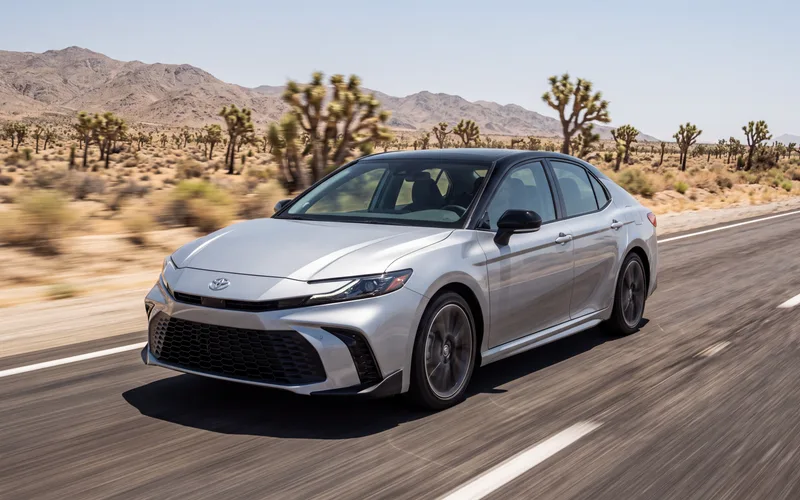 Toyota CamryMid-Size SedanBetter at: AWD availability
It's the one rival that matches the Accord's hybrid economy and reliability while adding the all-wheel drive Honda refuses to offer, plus a quieter highway cabin.
Compare 2.56C+
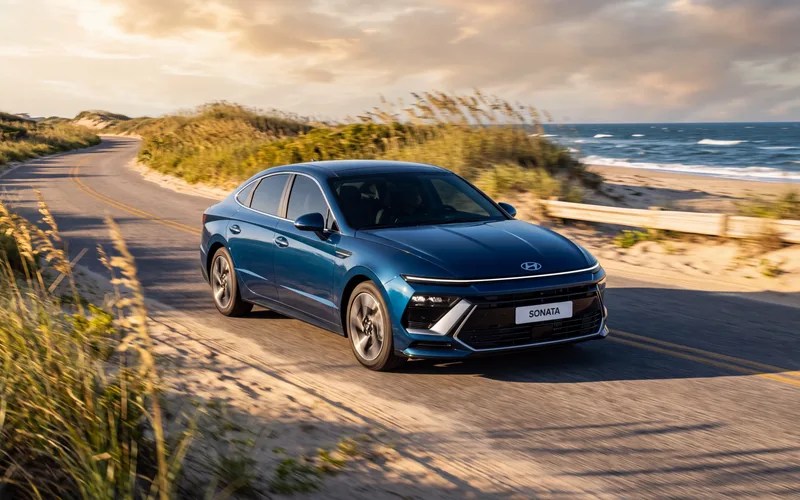 Hyundai SonataMid-Size SedanBetter at: Warranty
Far longer warranty coverage, available AWD, and a surround-view camera make it the value play if you can live with a much tighter back seat.
Compare 2.44C+
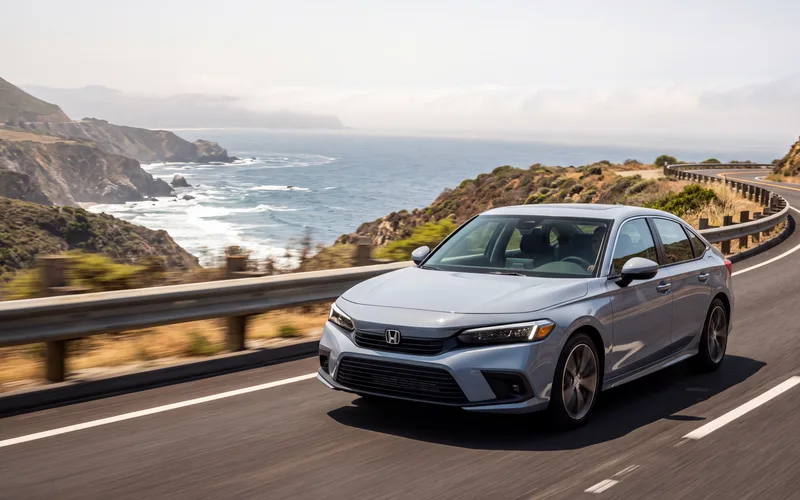 Honda CivicCompact SedanBetter at: Price
Nearly the same safety and hybrid tech in a smaller, cheaper, easier-to-park car if you rarely carry rear passengers.
CompareHow it's evolved
10 scored model years · 2017–2026
Subject scores by year
Hover or tap a score to see what moved it versus the year before. A corner mark flags a big swing.
| Year | Performance | Efficiency | Safety | Space | Cost | Reliability | Tech | Use-case | Driving | Value |
|---|---|---|---|---|---|---|---|---|---|---|
| 2026 | 44 | 91 | 77 | 78 | 63 | 82 | 70 | 61 | 73 | 77 |
| 2025 | 45 | 87 | 82 | 75 | 63 | 77 | 72 | 61 | 74 | 83 |
| 2024 | 45 | 88 | 82 | 77 | 77 | 75 | 71 | 62 | 76 | 84 |
| 2023 | 44 | 88 | 81 | 79 | 66 | 72 | 71 | 62 | 76 | 89 |
| 2022 | 44 | 59 | 77 | 76 | 61 | 76 | 55 | 61 | 75 | 81 |
| 2021 | 38 | 64 | 77 | 79 | 64 | 78 | 56 | 65 | 76 | 87 |
| 2020 | 46 | 57 | 78 | 76 | 52 | 78 | 50 | 64 | 75 | 87 |
| 2019 | 41 | 63 | 78 | 77 | 68 | 64 | 51 | 63 | 77 | 90 |
| 2018 | 43 | 92 | 74 | 71 | 60 | 68 | 44 | 55 | 64 | 77 |
| 2017 | 44 | 96 | 71 | 65 | 66 | 66 | 39 | 51 | 66 | 69 |
Compare two years
Best fit & conditions
Higher scores mean a better fit for that use case. Learn more about use-case fit →
Subject profile
Trims & configurations
6 trimsScores above reflect the volume trim. Per-trim specs and scores are rolling out — the full lineup:
Academic Probation · NHTSA safety recalls
May 21, 2026Air bags: sensor: occupant classification: front passengerThe front passenger seat weight sensor may crack and short circuit, which can cause the air bags to deploy unintentionally during a crash.
Defect
Honda (American Honda Motor Co.) is recalling certain 2018-2021, 2023 Acura TLX, 2019-2024 RDX, 2017-2020, 2022-2026 MDX, 2017-2021, 2023, 2025 Honda Ridgeline, 2017-2022 Pilot, 2019-2021 Passport, 2018-2026 Odyssey, 2019-2022 Insight, 2019-2021 HR-V, 2018-2020 Fit, 2020-2022 CR-V Hybrid, 2017-2022 CR-V, 2017-2018, 2021 Civic Type R, 2017-2021 Civic hatchback, 2016-2020 Civic coupe, 2016-2022 Civic, 2017-2022 Accord Hybrid, and 2016-2022 Accord vehicles. The front passenger seat weight sensor may crack and short circuit, which can cause the air bags to deploy unintentionally during a crash.
Risk
Air bags that deploy unintentionally during a crash increase the risk of injury.
Remedy
Dealers will replace the seat weight sensors, free of charge. Owner notification letters were mailed July 7, 2026. Owners may contact Honda's customer service at 1-888-234-2138. Honda's numbers for this recall are BOL, WO9, OOA, WOM, XOH, NOC, POD, BOE, UOF, POB, EOG, AOI, QO8, TOJ, DO7, and SOK. This recall expands previous NHTSA recall number 24V064. Vehicle Identification Numbers (VINs) involved in this recall will be searchable on NHTSA.gov beginning May 29, 2026.
NHTSA campaign 26V332000 ↗Manufacturer no. Refer to Comments98,892 vehicles potentially affected (all models in the campaign)Owners notified Jul 6, 2026Filed by Honda (American Honda Motor Co.)Filed as ACCORD, ACCORD HYBRIDDec 18, 2023Fuel system, gasoline: delivery: fuel pumpThe fuel pump inside the fuel tank may fail.
Defect
Honda (American Honda Motor Co.) is recalling certain 2013-2023 Honda Accord, Civic Coupe, Civic Sedan, Civic Hatchback, Civic Type R, CR-V, HR-V, Ridgeline, Odyssey, Acura ILX, MDX, MDX Hybrid, RDX, RLX, TLX, 2019-2022 Honda Insight, Passport, 2020 Honda CR-V Hybrid, 2018-2019 Honda Clarity PHEV, Fit, and 2015-2020 Honda Accord Hybrid, Pilot, Acura NSX vehicles. The fuel pump inside the fuel tank may fail.
Risk
Fuel pump failure can cause an engine stall while driving, increasing the risk of a crash.
Remedy
Dealers will replace the fuel pump module, free of charge. Owner letters were mailed September 6, 2024. Owners may contact Honda customer service at 1-888-234-2138. Honda's numbers for this recall are KGC and KGD. This recall is an expansion of NHTSA recall numbers 21V-215 and 20V-314.
NHTSA campaign 23V858000 ↗Manufacturer no. KGC, KGD2,490,460 vehicles potentially affected (all models in the campaign)Owners notified Mar 29, 2024Filed by Honda (American Honda Motor Co.)Filed as ACCORD, ACCORD HYBRIDMar 9, 2023Seat belts: front: buckle assemblyA manufacturing issue with the front seat belts may cause the seat belt buckle channel to interfere with the release button, preventing the seat belt buckle from latching.
Defect
Honda (American Honda Motor Co.) is recalling certain 2017-2020 CR-V, 2018-2019 Accord and Accord Hybrid, 2018-2020 Odyssey, 2019 Insight, and 2019-2020 Acura RDX vehicles. A manufacturing issue with the front seat belts may cause the seat belt buckle channel to interfere with the release button, preventing the seat belt buckle from latching.
Risk
An unlatched seat belt cannot properly restrain the seat occupant during a crash, increasing their risk of injury.
Remedy
Dealers will replace the driver and front passenger seat belt buckle release buttons or the buckle assemblies as necessary, free of charge. Owner notification letters were mailed April 18, 2023. Owners may contact Honda customer service at 1-888-234-2138. Honda's numbers for this recall are NDA, QDB, BDC, MDD, LD9. TDF, FDG, ODH, YDI, ZDE.
NHTSA campaign 23V158000 ↗Manufacturer no. NDA, QDB, BDC, MDD448,613 vehicles potentially affected (all models in the campaign)Owners notified Apr 18, 2023Filed by Honda (American Honda Motor Co.)Filed as ACCORD, ACCORD HYBRIDMar 25, 2021Fuel system, gasoline: delivery: fuel pumpThe low-pressure fuel pump inside the fuel tank may fail.
Defect
Honda (American Honda Motor Co.) is recalling certain 2019-2020 Acura MDX, MDX Sport Hybrid, RDX, TLX, Honda Accord, Civic Hatchback, Insight, 2019 Acura ILX, Honda Accord Hybrid, Civic Coupe, Civic Coupe Si, Civic Sedan, Civic Sedan Si, Civic Type R, Fit, HR-V, Odyssey, Passport, Pilot and Ridgeline, and 2018-2019 CR-V vehicles. The low-pressure fuel pump inside the fuel tank may fail.
Risk
Fuel pump failure can cause an engine stall while driving, increasing the risk of a crash.
Remedy
Honda will notify owners, and dealers will replace the fuel pump assembly, free of charge. Owner letters were mailed May 18, 2021. Owners may contact Honda customer service at 1-888-234-2138. Note: This recall is an expansion of recall 20V-314.
NHTSA campaign 21V215000 ↗Manufacturer no. Multiple Codes624,552 vehicles potentially affected (all models in the campaign)Owners notified May 18, 2021Filed by Honda (American Honda Motor Co.)Filed as ACCORD, ACCORD HYBRIDDec 10, 2020Back over prevention: sensing system: camera · Electrical system: body control module: software · Exterior lighting · Visibility/wiper · Visibility: defroster/defogger/hvac system · Visibility: power window devices and controlsA software error may cause intermittent or continuous disruptions in communication between the Body Control Module (BCM) and other components. This may result in malfunctions of various systems such as the windshield wipers and defroster, rearview camera, exterior lights, audible warning of a stopped vehicle, and power window operation. As such, these vehicles fail to comply with the requirements of Federal Motor Vehicle Safety Standard (FMVSS) number 103, "Windshield Defrosting and Defogging Systems" and number 111, "Rear Visibility" as well as FMVSS numbers 104, 108, 114, 118, and 305.
Defect
Honda (American Honda Motor Co.) is recalling certain 2018-2020 Accord Sedan, Accord Hybrid, and 2019-2020 Insight vehicles. A software error may cause intermittent or continuous disruptions in communication between the Body Control Module (BCM) and other components. This may result in malfunctions of various systems such as the windshield wipers and defroster, rearview camera, exterior lights, audible warning of a stopped vehicle, and power window operation. As such, these vehicles fail to comply with the requirements of Federal Motor Vehicle Safety Standard (FMVSS) number 103, "Windshield Defrosting and Defogging Systems" and number 111, "Rear Visibility" as well as FMVSS numbers 104, 108, 114, 118, and 305.
Risk
Various system malfunctions such as inoperative windshield wipers, defroster, rearview camera, or exterior lighting can increase the risk of a crash.
Remedy
Honda will notify owners, and dealers will update the BCM software, free of charge. The recall is expected to begin February 22, 2021. Owners may contact Honda customer service at 1-888-234-2138. Honda's number for this recall is X95.
NHTSA campaign 20V771000 ↗Manufacturer no. X95737,233 vehicles potentially affected (all models in the campaign)Owners notified Feb 22, 2021Filed by Honda (American Honda Motor Co.)Filed as ACCORD, ACCORD HYBRIDMay 28, 2020Fuel system, gasoline: delivery: fuel pumpThe low-pressure fuel pump inside the fuel tank may fail.
Defect
Honda (American Honda Motor Co.) is recalling certain 2018-2019 Acura NSX, 2019 Acura RDX, RLX and RLX Sport Hybrid, 2018-2019 Honda Accord, Civic Hatchback, Civic Type R and HR-V, 2019-2020 Insight and 2019 Fit vehicles. The low-pressure fuel pump inside the fuel tank may fail.
Risk
If the fuel pump fails, the engine can stall while driving, increasing the risk of a crash.
Remedy
Honda will notify owners and dealers will replace the fuel pump assembly, free of charge. The recall began July 22, 2020. Owners may contact Honda customer service at 1-888-234-2138.
NHTSA campaign 20V314000 ↗135,995 vehicles potentially affected (all models in the campaign)Owners notified Jul 22, 2020Filed by Honda (American Honda Motor Co.)Filed as ACCORD
14 recalls on other model years of the Accord (2017–2018, 2020–2026)
Oct 8, 2026Tires: temporary/emergency spare tireWhen using the tire repair kit, pressure may build within the sealant bottle, causing the bottle cap to detach.
Defect
Honda (American Honda Motor Co.) is recalling certain 2023-2026 CR-V Hybrid, Accord Hybrid, and 2025 CR-V Fuel Cell EV vehicles that were previously remedied under NHTSA recall number 26V366. When using the tire repair kit, pressure may build within the sealant bottle, causing the bottle cap to detach.
Risk
A detached bottle cap can become a projectile and strike the user or others nearby, increasing the risk of injury.
Remedy
Dealers will inspect and replace the tire repair kit nozzle, as necessary, free of charge. Owner notification letters are expected to be mailed November 16, 2026. Owners may contact Honda's customer service at 1-866-784-1870. Honda's number for this recall is PPW. Vehicle Identification Numbers (VINs) involved in this recall will be searchable on NHTSA.gov beginning October 17, 2026. Vehicles previously repaired under recall 26V366 will need to have the new remedy completed.
NHTSA campaign 26V663000 ↗Manufacturer no. PPW4,804 vehicles potentially affected (all models in the campaign)Filed by Honda (American Honda Motor Co.)Filed as ACCORD HYBRIDJun 4, 2026Tires: temporary/emergency spare tireWhen using the tire repair kit, pressure may build within the sealant bottle, causing the bottle cap to detach.
Defect
Honda (American Honda Motor Co.) is recalling certain 2023-2026 CR-V Hybrid, Accord Hybrid, and 2025-2026 CR-V Fuel Cell EV vehicles. When using the tire repair kit, pressure may build within the sealant bottle, causing the bottle cap to detach.
Risk
A detached bottle cap can become a projectile and strike the user or others nearby, increasing the risk of injury.
Remedy
Dealers will replace the tire repair kit nozzle or sealant bottle, free of charge. Interim letters notifying owners of the safety risk were mailed July 27, 2026. Additional letters will be sent once the final remedy is available, anticipated in Fall 2026. Owners may contact Honda's customer service at 1-866-784-1870. Honda's number for this recall is DOV. Vehicle Identification Numbers (VINs) involved in this recall will be searchable on NHTSA.gov beginning June 11, 2026.
NHTSA campaign 26V366000 ↗Manufacturer no. DOV1,048,613 vehicles potentially affected (all models in the campaign)Filed by Honda (American Honda Motor Co.)Filed as ACCORD HYBRIDJan 29, 2026Seats: critical fastenersThe driver's seat cushion frame may not have been tightened properly, which can result in a loose seat. As such, these vehicles fail to comply with the requirements of Federal Motor Vehicle Safety Standard number 207, "Seating Systems."
Defect
Honda (American Honda Motor Co.) is recalling certain 2023 Honda Accord, Accord Hybrid, and 2024 HR-V, Pilot, and Acura Integra vehicles. The driver's seat cushion frame may not have been tightened properly, which can result in a loose seat. As such, these vehicles fail to comply with the requirements of Federal Motor Vehicle Safety Standard number 207, "Seating Systems."
Risk
A loose driver's seat may not adequately restrain the driver during a crash, increasing the risk of injury.
Remedy
Dealers will replace the driver's seat cushion frame, free of charge. Owner notification letters were mailed March 10, 2026. Owners may contact Honda's customer service at 1-888-234-2138. Honda's numbers for this recall are ONC, KND, BNE and ZNF. Vehicle Identification Numbers (VINs) involved in this recall will become searchable on NHTSA.gov beginning February 5, 2026. This recall expands previous NHTSA recall number 24V859.
NHTSA campaign 26V054000 ↗Manufacturer no. ONC, KND, BNE, ZNF32 vehicles potentially affected (all models in the campaign)Owners notified Mar 9, 2026Filed by Honda (American Honda Motor Co.)Filed as ACCORD, ACCORD HYBRIDNov 13, 2025Electrical system: propulsion system: hybrid management: power control unit/module (hpcu): softwareDue to a software error, the integrated control module (ICM) central processing unit (CPU) may reset while driving, causing a loss of drive power.
Defect
Honda (American Honda Motor Co.) is recalling certain 2023-2025 Honda Accord Hybrid vehicles. Due to a software error, the integrated control module (ICM) central processing unit (CPU) may reset while driving, causing a loss of drive power.
Risk
A loss of drive power increases the risk of a crash or injury.
Remedy
Dealers will reprogram the ICM CPU software, free of charge. Owner notification letters were mailed January 6, 2026. Owners may contact Honda's customer service at 1-888-234-2138. Honda's number for this recall is TN2. Vehicle Identification Numbers (VINs) involved in this recall will be searchable on NHTSA.gov beginning November 18, 2025.
NHTSA campaign 25V785000 ↗Manufacturer no. TN2256,603 vehicles potentially affected (all models in the campaign)Owners notified Jan 5, 2026Filed by Honda (American Honda Motor Co.)Filed as ACCORD HYBRIDNov 14, 2024Seats: critical fastenersThe driver's seat cushion frame may not have been tightened properly, which can result in an unsecured seat. As such, these vehicles fail to comply with the requirements of Federal Motor Vehicle Safety Standard number 207, "Seating Systems."
Defect
Honda (American Honda Motor Co.) is recalling certain 2023-2024 Honda Accord, Accord Hybrid, Civic Sedan, Civic Hatchback, Pilot, and 2024 HR-V, Acura Integra and Acura Integra Type S vehicles. The driver's seat cushion frame may not have been tightened properly, which can result in an unsecured seat. As such, these vehicles fail to comply with the requirements of Federal Motor Vehicle Safety Standard number 207, "Seating Systems."
Risk
An unsecured driver's seat may not adequately restrain the driver during a crash, increasing the risk of injury.
Remedy
Dealers will replace the driver's seat cushion frame, free of charge. Owner notification letters were mailed January 6, 2025. Owners may contact Honda customer service at 1-888-234-2138.
NHTSA campaign 24V859000 ↗121 vehicles potentially affected (all models in the campaign)Owners notified Jan 6, 2025Filed by Honda (American Honda Motor Co.)Filed as ACCORD, ACCORD HYBRIDOct 14, 2024Fuel system, gasoline: delivery: fuel pumpThe high-pressure fuel pump may crack and leak fuel.
Defect
Honda (American Honda Motor Co.) is recalling certain 2023-2024 Honda Accord, Accord Hybrid, 2023-2025 Honda CR-V Hybrid, and 2025 Honda Civic and Civic Hybrid vehicles. The high-pressure fuel pump may crack and leak fuel.
Risk
A fuel leak in the presence of an ignition source can increase the risk of a fire.
Remedy
Dealers will inspect and replace the high-pressure fuel pump as necessary, free of charge. Owner letters were mailed February 20, 2025. Owners may contact Honda customer service at 1-888-234-2138. Honda's number for this recall is PJW.
NHTSA campaign 24V763000 ↗Manufacturer no. PJW720,810 vehicles potentially affected (all models in the campaign)Owners notified Feb 20, 2025Filed by Honda (American Honda Motor Co.)Filed as ACCORD, ACCORD HYBRIDFeb 1, 2024Air bags: sensor: occupant classification: front passengerThe front passenger seat weight sensor may crack and short circuit, failing to suppress the air bag as intended.
Defect
Honda (American Honda Motor Co.) is recalling certain 2020-2022 Pilot, Accord, Civic sedan, HR-V, Odyssey, 2020 Civic coupe, Fit, 2021-2022 Civic hatchback, 2021 Civic Type R, Insight, 2020-2021 CR-V, CR-V Hybrid, Passport, Ridgeline, Accord Hybrid, 2020 Acura MDX, 2022 Acura MDX, 2020-2022 Acura RDX, and 2020-2021 Acura TLX vehicles. The front passenger seat weight sensor may crack and short circuit, failing to suppress the air bag as intended.
Risk
An air bag that deploys unintentionally during a crash can increase the risk of injury.
Remedy
Dealers will replace the seat weight sensors, free of charge. Owner notification letters were mailed March 28, 2024. This is a phased recall. Owners may contact Honda customer service at 1-888-234-2138. Honda's numbers for these recalls are XHP and VHQ.
NHTSA campaign 24V064000 ↗Manufacturer no. XHP, VHQ750,114 vehicles potentially affected (all models in the campaign)Owners notified Mar 28, 2024Filed by Honda (American Honda Motor Co.)Filed as ACCORD, ACCORD HYBRIDNov 21, 2023Seat belts: frontThe front seat belt pretensioners may be missing the rivet that secures the quick connector and wire plate. As such, these vehicles fail to comply with the requirements of Federal Motor Vehicle Safety Standard numbers 208, "Occupant Crash Protection," 209, "Seat Belt Assembles," and 210, "Seat Belt Assembly Anchorages."
Defect
Honda (American Honda Motor Co.) is recalling certain 2023-2024 Accord and HR-V vehicles. The front seat belt pretensioners may be missing the rivet that secures the quick connector and wire plate. As such, these vehicles fail to comply with the requirements of Federal Motor Vehicle Safety Standard numbers 208, "Occupant Crash Protection," 209, "Seat Belt Assembles," and 210, "Seat Belt Assembly Anchorages."
Risk
A seat belt pretensioner missing a rivet will not properly restrain the occupant, increasing the risk of injury during a crash.
Remedy
Dealers will inspect and replace the seat belt pretensioner assemblies as necessary, free of charge. Owner notification letters were mailed January 8, 2024. Owners may contact Honda customer service at 1-888-234-2138. Honda's numbers for this recall are MG7 and NG5.
NHTSA campaign 23V782000 ↗Manufacturer no. MG7, NG5303,770 vehicles potentially affected (all models in the campaign)Owners notified Jan 8, 2024Filed by Honda (American Honda Motor Co.)Filed as ACCORDAug 17, 2023Power train: automatic transmission: internal: cvtThe electronic transmission may have been improperly manufactured, which can result in a loss of drive power.
Defect
Honda (American Honda Motor Co.) is recalling certain 2023 CR-V Hybrid and Accord Hybrid vehicles. The electronic transmission may have been improperly manufactured, which can result in a loss of drive power.
Risk
A loss of drive power can increase the risk of a crash.
Remedy
Dealers will replace the electronic continuously variable transmission (e-CVT), free of charge. Owner notification letters were mailed October 11, 2023. Owners may contact Honda customer service at 1-888-234-2138. Honda's numbers for this recall are NFG and HFF.
NHTSA campaign 23V588000 ↗Manufacturer no. NFG, HFF19 vehicles potentially affected (all models in the campaign)Owners notified Oct 11, 2023Filed by Honda (American Honda Motor Co.)Filed as ACCORD HYBRIDJun 15, 2023Service brakes, hydraulic: antilock/traction control/electronic limited slip: control unit/moduleA ball valve in the vehicle stability assist (VSA) modulator may leak brake fluid, which can result in unintended vehicle movement when the brake hold feature is engaged or an unexpected increase in brake pedal travel.
Defect
Honda (America Honda Motor Co.) is recalling certain 2023 Civic, Acura RDX, Acura Integra, and 2022 Honda Accord vehicles. A ball valve in the vehicle stability assist (VSA) modulator may leak brake fluid, which can result in unintended vehicle movement when the brake hold feature is engaged or an unexpected increase in brake pedal travel.
Risk
Unintended vehicle movement or an unexpected increase in brake pedal travel can increase the risk of a crash or injury.
Remedy
Dealers will replace the VSA modulator, free of charge. Owner notification letters were mailed July 24, 2023. Owners may contact Honda customer service at 1-888-234-2138. Honda's numbers for this recall are OEJ, XEK, AEY, XEX and OEW.
NHTSA campaign 23V430000 ↗Manufacturer no. OEJ,XEK,AEY,XEX,OEW386 vehicles potentially affected (all models in the campaign)Owners notified Jul 24, 2023Filed by Honda (American Honda Motor Co.)Filed as ACCORDNov 18, 2021Seat belts: rear/other: retractorThe automatic locking retractor on the second-row center seat belt assembly may deactivate improperly, which can result in an unsecured child restraint system. As such, these vehicles fail to comply with the requirements of Federal Motor Vehicle Safety Standard number 208, "Occupant Crash Protection."
Defect
Honda (American Honda Motor Co.) is recalling certain 2021 Accord Sedan, Accord Hybrid, CR-V, Ridgeline, 2022 Insight and CR-V Hybrid vehicles. The automatic locking retractor on the second-row center seat belt assembly may deactivate improperly, which can result in an unsecured child restraint system. As such, these vehicles fail to comply with the requirements of Federal Motor Vehicle Safety Standard number 208, "Occupant Crash Protection."
Risk
An unsecured child restraint system can increase the risk of injury during a crash.
Remedy
Dealers will replace the second-row center seat belt assembly, free of charge. Owner notification letters were mailed January 14, 2022. Owners may contact Honda customer service at 1-888-234-2138.
NHTSA campaign 21V900000 ↗Manufacturer no. ABS, BBT, NBQ, RBR4,346 vehicles potentially affected (all models in the campaign)Owners notified Jan 14, 2022Filed by Honda (American Honda Motor Co.)Filed as ACCORD, ACCORD HYBRIDDec 17, 2020Electrical system: 12v/24v/48v battery · Electrical system: propulsion system: charging: module: software · Electrical system: propulsion system: dc/dc converterThe DC-DC converter may shut down and prevent the 12-volt battery from recharging, possibly resulting in a loss of drive power.
Defect
Honda (American Honda Motor Co.) is recalling certain 2020 CR-V Hybrid, Accord Hybrid, and 2020-2021 Insight vehicles. The DC-DC converter may shut down and prevent the 12-volt battery from recharging, possibly resulting in a loss of drive power.
Risk
A loss of drive power can increase the risk of a crash.
Remedy
Honda will notify owners, and dealers will update the power converter unit (PCU) software, free of charge. The recall began February 12, 2021. Owners can contact Honda customer service at 1-888-234-2138. Honda's number for this recall is K9E.
NHTSA campaign 20V798000 ↗Manufacturer no. K9E27,838 vehicles potentially affected (all models in the campaign)Owners notified Feb 12, 2021Filed by Honda (American Honda Motor Co.)Filed as ACCORD HYBRIDJan 29, 2019Fuel system, other: delivery: fuel pumpParticulates in fuel may adhere to the internal components of the fuel pump, reducing its performance.
Defect
Honda (American Honda Motor Co.) is recalling certain 2016-2018 Acura MDX, 2015-2019 Acura TLX and 2015-2017 Honda Accord vehicles, equipped with a 3.5L V6 engine. Particulates in fuel may adhere to the internal components of the fuel pump, reducing its performance.
Risk
Reduced fuel pump performance can result in an engine stall, increasing the risk of crash.
Remedy
Honda will notify owners, and dealers will update the fuel injection engine control unit (FI-ECU) software and, if necessary, replace the fuel pump, free of charge. The recall began March 25, 2019. Owners may contact customer service at 1-888-234-2138. Acura's recall number for this recall is P3W. Honda's recall number for this recall is N3X.
NHTSA campaign 19V060000 ↗Manufacturer no. N3X, P3W437,032 vehicles potentially affected (all models in the campaign)Owners notified Mar 25, 2019Filed by Honda (American Honda Motor Co.)Filed as ACCORDSep 13, 2018Back over prevention: sensing system: camera · Visibility: rearview mirrors/devicesIn certain scenarios, the back-up camera center display may not function properly. As such, these vehicles fail to comply with the requirements of Federal Motor Vehicle Safety Standard (FMVSS) number 111, "Rearview Mirrors."
Defect
Honda (American Honda Motor Co.) is recalling certain 2018 Honda Accord and 2019 Honda Insight vehicles. In certain scenarios, the back-up camera center display may not function properly. As such, these vehicles fail to comply with the requirements of Federal Motor Vehicle Safety Standard (FMVSS) number 111, "Rearview Mirrors."
Risk
If the rearview camera display does not show what is behind the vehicle, it can increase the risk of a crash.
Remedy
Honda will notify owners, and dealers will reprogram the display audio unit software, free of charge. The recall began October 30, 2018. Owners may contact Honda customer service at 1-888-234-2138. Honda's numbers for this recall are K2G and V2F.
NHTSA campaign 18V629000 ↗Manufacturer no. K2G, V2F232,140 vehicles potentially affected (all models in the campaign)Owners notified Oct 30, 2018Filed by Honda (American Honda Motor Co.)Filed as ACCORD
Source: NHTSA Office of Defects Investigation recall database, model years 2017–2026. Recalls are listed by model year as the manufacturer filed them; whether a specific car is affected depends on its VIN — check a VIN at nhtsa.gov ↗. NHTSA model names matched to this page: ACCORD, ACCORD HYBRID.
Detailed scoring by subject
1Performance & PowertrainThe Accord's lowest-graded category.0.70F
The volume configuration is the 1.5-liter turbo/CVT, rated at 192 hp. The range also includes a 212-hp hybrid system and a substantially stronger 252-hp 2.0T.
The volume 1.5T develops a strong 192 lb-ft from low engine speed, while the available 2.0T increases peak torque to 273 lb-ft.
The representative 1.5T/CVT reached 60 mph in 7.3 seconds in instrumented testing. The mechanically unchanged 2019 model also offered a much quicker 2.0T/10-speed configuration.
The volume 1.5T has a broad torque curve, light-throttle responsiveness, and generally smooth delivery, though it sounds somewhat grainier than the 2.0T under load. The hybrid can also become coarse when driven hard.
Honda's volume CVT responds promptly and uses simulated steps to make acceleration feel more natural, making it one of the better CVTs of the period. Some sustained-throttle drone keeps it just below the top band, while the optional 10-speed is nearly seamless.
Every 2019 Accord powertrain and trim is front-wheel drive; Honda offered no AWD or 4WD configuration.
Three distinct choices cover economy, performance, and electrification: a 1.5T, a 2.0T, and a two-motor hybrid. Gas models also offered CVT, 10-speed automatic, and selected six-speed-manual configurations, unusually broad choice for a mainstream sedan.
2Efficiency & RangeOne of the Accord's weakest categories.2.27C
The representative high-volume 1.5T/CVT configuration earns 33 mpg combined. Other gas configurations span 26-31 mpg, while the separately offered Hybrid reaches 48 mpg combined in all but Touring trim.
The volume 1.5T/CVT configuration is EPA-rated at 30 mpg city. The optional Hybrid provides a major city-efficiency improvement, at 48 mpg for the non-Touring trims.
The representative 1.5T/CVT configuration earns a strong 38 mpg highway. Gas variants with the Sport calibration, manual transmission, or 2.0T range from 32 to 35 mpg highway.
The representative 1.5T/CVT's EPA combined rating and Honda-specified tank capacity imply approximately 488 miles on a full tank. This is a calculated full-tank range using official model-year inputs.
The current EPA-based estimate for the 33-mpg 1.5T/CVT is $1,900 per year at 15,000 miles. The dollar estimate changes when EPA updates its reference fuel price, so confidence is lower than for the fixed model-year MPG rating.
Every gasoline Accord configuration runs on widely available regular unleaded, avoiding a premium-fuel cost penalty. Honda recommends 87 octane or higher and permits gasoline containing up to 15% ethanol.
3SafetyOne of the Accord's strongest categories.3.32B+
The 2019 Accord earned NHTSA's maximum five-star overall safety rating for this exact model year.
The 2019 Accord was an IIHS Top Safety Pick and earned Good ratings in every crashworthiness evaluation used for that model year's award. The award was limited by headlight performance rather than occupant protection.
Honda Sensing made AEB, forward-collision warning, road-departure mitigation, lane-departure warning, lane keeping, and adaptive cruise with Low-Speed Follow standard on the base LX. Blind-spot information and rear cross-traffic monitoring required EX or higher, keeping the suite short of comprehensive across all trims.
The standard system earned IIHS Superior vehicle-to-vehicle and Advanced daytime pedestrian ratings, strong results for a 2019 mainstream sedan. It predates IIHS nighttime pedestrian testing, so it does not reach the top of the band reserved for proven day-and-night performance.
Blind Spot Information with rear cross-traffic monitoring was available from EX upward but absent on LX and Sport. It provided warnings rather than active steering or braking, and there was no safe-exit function.
Standard LKAS supplies useful active centering on marked highways, but contemporary reviews describe the intervention as sensitive rather than consistently natural. It is a capable early lane-centering implementation, not hands-free highway automation.
Automatic-transmission Accords had full-speed ACC with Low-Speed Follow that could brake to a stop, paired with LKAS for competent highway assistance. Reviewers found it mostly effective but noted occasional neighboring-lane detection in curves; manual-transmission versions lacked Low-Speed Follow.
No factory hands-free driving system was offered for the 2019 Accord. LKAS and ACC remained hands-on driver-assistance features.
IIHS rated the headlights Acceptable on the volume LX, Sport, EX, and EX-L configurations, while the ostensibly upgraded all-LED Touring lights were Marginal. Automatic high-beam assist was included, but no trim earned a Good rating.
Thin pillars, a low nose, and broad glass give excellent forward visibility with no serious traffic blind spots. The high rear beltline and trunk reduce over-the-shoulder visibility, partly offset by the standard multi-angle rear camera and available blind-spot monitoring but not a 360-degree camera.
IIHS awarded the Accord its exceptional Good+ rating: two complete outboard LATCH positions plus a center tether and borrowable lower anchors. Its exceptionally roomy rear seat also accommodates rear-facing seats with little impact on front occupants.
4Space & ComfortOne of the Accord's strongest categories.3.23B+
The 2019 Accord is a conventional two-row sedan with seating for five across the lineup.
The volume-oriented Sport 1.5T has no standard moonroof, so the rubric's without-moonroof measurement applies; moonroof-equipped trims sacrifice 2.0 inches.
Front legroom is competitive for a mid-size sedan and does not vary by trim or powertrain.
The no-moonroof volume configuration has decent measured rear headroom, though the sloping roof makes tall occupants feel more constrained than the number suggests.
The exceptionally generous second row is one of this generation Accord's strongest packaging advantages.
The large trunk is identical in gas and hybrid models because the hybrid battery sits under the rear seat.
A generous console bin, large anti-tip cupholders, bottle-friendly door pockets, phone cubby, seatback pockets and folding rear seat make daily storage easy, but there is no standout innovation and the glovebox is shallow.
Supportive front seatbacks, excellent rear legroom and available 12-way driver adjustment suit long trips, although the leather cushions can feel thin and the low roof limits taller rear passengers.
The Accord combines disciplined body control with excellent bump absorption; rough pavement can produce some busyness, while Touring's adaptive dampers further improve compliance.
Standard active noise cancellation and strong traffic-noise isolation make the cabin quiet around town, but tire and some wind noise remain evident at freeway speed.
Dual-zone automatic climate control is standard, EX adds heated front seats and remote start, and Touring adds ventilated fronts, heated rear outboard seats and wireless charging; the richest amenities are confined to the costly top trim.
5Cost of OwnershipMid-pack among this car's ten categories.2.59C+
The entry 2019 Accord was the LX 1.5T CVT at $23,720 before destination. Adding the model-year $930 destination charge produces the required delivered MSRP.
The Sport 1.5T is used as the representative volume configuration; contemporary inventory and market evidence show Sport as the prevalent step-up trim. Its $26,180 MSRP becomes $27,110 with destination.
Edmunds no longer publishes a usable 2019 Accord TCO figure. Its adjacent 2020 tenth-generation Accord 1.5T CVT estimate is the closest like-for-like proxy and reflects the higher maintenance and repair exposure of buying this generation used today.
Accord resale is exceptionally strong for a midsize sedan. The estimate is model-level rather than a trim-specific 2019 forecast, but it is based on observed age cohorts and a large transaction dataset.
Honda provided the mainstream-standard three-year basic warranty for the 2019 Accord.
The five-year powertrain term is standard for mainstream sedans and sits at the bottom of this rubric's normalization band.
Honda included no complimentary scheduled maintenance, but did provide meaningful 24-hour roadside service throughout the 3-year/36,000-mile basic-warranty term. That fits the rubric's basic-roadside-only band.
$27,110 volume-trim price minus its estimated resale value after 5 years (69.7% retained, or about $18,896) leaves about $8,214 in depreciation. Add the projected $7,905 in 5-year maintenance and repairs, and owning this vehicle for 5 years costs about $16,119 in total.
6Reliability & QualityMid-pack among this car's ten categories.2.35C+
Owner-derived results are mixed rather than top-tier: J.D. Power calls quality and reliability average, while RepairPal's broader Accord data is excellent. Six recalls and the volume 1.5T's emerging engine-related repair pattern keep this below the strongest midsize-sedan choices.
Honda retained a generally sound durability reputation, but period dependability data placed it below the leaders and slightly worse than the industry average. That supports a mid-pack score for the brand as it stood around this model year, not a present-day or legacy-based top-tier score.
Recall activity is heavier and more consequential than normal, including campaigns that can cause an engine stall and widespread electrical malfunctions. This is a meaningful negative even though recall remedies are provided without charge.
The 2.0T/10-speed and two-motor hybrid are the more reassuring configurations, but the high-volume 1.5T/CVT has accumulated recurring owner reports of fuel-injector, head-gasket, and turbo failures at higher mileage. The lineup therefore has a mixed durability record rather than the uniformly proven reputation of older naturally aspirated Accords.
The cabin is notably upscale for a mainstream midsize sedan, with extensive soft-touch surfaces, handsome furnishings, and controls that feel appropriate to the price. Some shiny or hard plastics remain on lower trims and rear-door areas, preventing a luxury-level score.
Interior assembly generally feels tight, but documented uneven exterior gaps and hood flutter indicate inconsistent body fit on some cars. The result is solid overall assembly with enough scattered defects to remain below class-leading.
Honda has a dense nationwide dealer footprint and independent shops are broadly familiar with the Accord. Coverage is a clear ownership advantage, though service experience varies by dealer and period evidence does not justify a best-in-industry rating.
Accord parts are abundant through both Honda and a very large aftermarket, and routine repair costs are substantially below the midsize-car average. Turbo, cylinder-head, or hybrid-battery failures can be expensive, but they do not erase the model's strong everyday cost and sourcing advantage.
7Technology & InfotainmentOne of the Accord's weakest categories.1.45D
The volume-oriented Sport trim uses Honda's 8-inch Display Audio touchscreen, which is also the largest screen offered for 2019.
The 8-inch system is quick, logically arranged, customizable, and restores helpful physical volume and tuning knobs. It was one of the easier mainstream systems of its period, though its graphics and processing now feel dated.
Apple CarPlay and Android Auto are wired on Sport and higher trims, while LX lacks both; wireless projection was not offered on any 2019 Accord.
Command-based voice recognition and Garmin-based native navigation are confined to Touring, while the volume trim relies mainly on wired phone projection and phone assistants. The native system is functional but not conversational.
Sport's 180-watt eight-speaker setup is adequate, and EX-L/Touring offer a stronger 450-watt 10-speaker system with a subwoofer. The upgrade is useful but is not a high-end branded system.
Every trim has a configurable 7-inch color driver-information display, but it is only the left half of a mixed digital/analog cluster rather than a full-width digital panel.
Equipped Display Audio systems can download audio/connectivity firmware over Wi-Fi, but this is infotainment-level maintenance rather than regular whole-vehicle feature delivery.
HondaLink is available on equipped trims, but rich subscription remote functions such as app-based start, lock/unlock, locating, and geofencing are limited to the Touring telematics hardware. There is no digital key, and the volume Sport does not receive that full remote suite.
Sport has a single 2.5A front USB smartphone port and 12-volt power, with additional USB provision on higher trims. Rear USB charging and Qi wireless charging are upper-trim equipment, and USB-C and household AC power are absent.
Push-button start and remote entry are standard, while proximity Smart Entry and Walk Away Auto Lock begin with EX; remote engine start is available with automatic-transmission configurations. There is no phone-as-key or hands-free trunk.
All trims have a multi-angle rear camera with dynamic guidelines, but front/rear parking sensors are limited to Touring. No U.S. 2019 Accord offers a surround-view camera or automated parking.
A useful color head-up display is available, but only on the top Touring trim rather than the volume Sport or mid-level EX/EX-L.
8Use-Case FitMid-pack among this car's ten categories.2.28C
The unusually roomy rear seat, wide-opening sedan doors, easy-to-use LATCH anchors, and class-leading trunk make daily child-seat and stroller duty notably easy. The base LX has a one-piece folding rear backrest rather than the more flexible 60/40 split fitted from Sport upward.
Excellent crash performance and a full Honda Sensing suite on even the base trim make this a standout affordable family-safety package. It lacks a rear-occupant alert, and blind-spot monitoring is limited to EX and higher trims.
Five-person space, exceptional rear legroom, a large trunk, supportive seating, and standard dual-zone climate make the Accord highly suitable for long family trips. Rear USB charging and heated rear seats require upper trims, and there is no third row.
The volume 1.5T/CVT is smooth and responsive, the cabin controls are straightforward, and standard brake hold plus adaptive cruise with low-speed follow reduce traffic fatigue. The low seating position and sloping roof are the principal everyday compromises.
The volume 1.5T CVT is very economical for a spacious midsize sedan, while the available hybrid is exceptional; mainstream tires and service needs keep consumable costs reasonable. Sport's 19-inch tires and the 2.0T consume more fuel and cost more to replace.
A standard multi-angle reversing camera and light steering help, but this is a long, wide sedan with a merely average turning circle. Parking sensors are reserved for Touring, so volume trims require more care in tight spaces.
Strong engines can carry passengers and ordinary trunk loads, but the Accord has no bed, published US tow mission, or work-oriented payload headroom. It is transportation to a jobsite, not a work vehicle.
The Accord has a broad service network and inexpensive cloth-seat trims, but its low sedan body, turbo powertrain, and passenger-car interior are not intended for repeated hard-duty abuse. Model-year reliability evidence is average rather than exceptional.
Beyond a trunk light, 12-volt outlet, and folding rear seat, there are essentially no jobsite provisions. It lacks onboard AC power, cargo tie-downs, washable cargo surfaces, factory racks, bed access, and an upfit ecosystem.
Supportive seats, generous space, a composed chassis, strong highway economy, and standard lane-centering/adaptive-cruise aids make it an excellent mile-eater. Some road noise and limited rear amenities on lower trims keep it short of the very top band.
It can manage maintained gravel access roads and accept aftermarket bike racks, but front-wheel drive, sedan clearance, no tow rating, and no factory roof-rail system sharply limit adventure use. There are no camping-oriented power or cargo features.
The 16.7-cu-ft trunk is outstanding for a sedan and the folding rear seat accommodates longer items. A restricted trunk opening, one-piece seatback on LX, and lack of factory rails or meaningful underfloor storage constrain truly bulky gear.
9Driving ExperienceGrades above the middle of the scale.3.22B+
The volume 1.5T/CVT Accord has eager turn-in, tightly controlled pitch and roll, and unusually polished chassis balance for a mainstream mid-size sedan. The Touring's adaptive dampers improve it further, but even standard-suspension cars rank near the top of the class.
Steering is accurate, predictable, and quick enough to support the excellent chassis, but effort is light and genuine road feedback is limited. It is better calibrated than most mainstream rivals without delivering true sport-sedan tactility.
A firm, progressive, easily judged pedal inspires confidence, although measured stopping distance for the volume 1.5T/CVT is merely average to below average. The subjective calibration is a strength; ultimate stopping performance is not.
The volume 192-hp 1.5T and CVT respond quickly and deliver power smoothly, with unusually natural ratio simulation and little of the hesitation common to economy-oriented turbo/CVT pairings. The available 252-hp 2.0T/10-speed is quicker and shifts nearly seamlessly, while the hybrid adds smooth electric response.
The turbo four is smooth and unobtrusive in normal use, and active noise control helps, but the Accord is not the quietest sedan in its class and becomes more audible under load. Tire and road noise, rather than harsh vibration, is the more consistent refinement complaint.
The volume 1.5T/CVT's diameter is manageable for a spacious mid-size sedan but falls toward the wide end of the category's 34-40-ft normalization band. Larger-wheel 2.0T and manual versions need still more room.
Clear instruments, sensibly grouped physical controls, excellent outward visibility, and broad seat and steering-wheel adjustment make the Accord easy to acclimate to. The volume EX's 12-way power driver's seat with four-way lumbar support is especially accommodating, though the seat cushion can feel thin on long drives.
The Accord combines an alert chassis, responsive powertrain, and confident controls in a way few mainstream family sedans match. The volume 1.5T/CVT remains engaging, while the available manual and muscular 2.0T meaningfully raise the enthusiast ceiling.
10Value & Market PositionThe Accord's best-graded category.4.00A+
The $23,720 LX included alloy wheels, dual-zone climate control, push-button start, LED low beams, a multi-angle camera, and the complete Honda Sensing suite, including adaptive cruise with low-speed follow and lane keeping. Its basic 7-inch non-CarPlay audio interface was the main omission, but the safety and convenience content was exceptional at this price in 2019.
The Accord paired near-base-segment pricing with a roomy cabin, strong standard safety, and unusually broad performance choices: the volume Sport added an 8-inch CarPlay/Android Auto display, power driver's seat, and 19-inch wheels, while a 252-hp 2.0T with a manual or 10-speed automatic offered near-luxury performance without near-luxury pricing. The efficient hybrid and well-equipped EX grades strengthened the value case across the range.
The lineup was exceptionally flexible for a mainstream sedan: five core gas grades, four hybrid grades, two turbo engines, a naturally aspirated hybrid system, and manual, CVT, 10-speed automatic, or hybrid direct-drive choices. The Sport could be ordered with either turbo engine and either applicable transmission, producing a well-spaced ladder from economy to genuinely quick luxury-equipped variants.
About 268,000 U.S. sales made the Accord one of America's highest-volume passenger cars and one of the two dominant midsize sedans. Volume declined from 2018 and trailed the Camry, preventing a segment-leading score, but acceptance remained extraordinarily broad in a contracting sedan market.
Honda's reputation for engineering, durability, efficiency, and strong resale gave the Accord unusually high desirability for a non-luxury sedan, while the new generation's styling and driving dynamics added enthusiast appeal. It was a trusted and beloved mainstream choice rather than an aspirational luxury badge, which caps the score below the very top.
Accords were negotiable and Honda periodically offered useful promotional APR and targeted graduate or loyalty cash, with larger dealer discounts appearing as the 2019 model year aged. Support was meaningful enough to help buyers but generally less aggressive than slow-selling rivals' rebates, consistent with the car's strong demand.
The 2019 was only the second model year of the tenth-generation Accord and carried over without significant changes, so buyers received a nearly new platform and current powertrain and safety technology with little redesign risk. It preceded the generation's 2021 facelift by two model years.
The 2019 Accord was the critical benchmark of its class: it earned another Car and Driver 10Best award, inherited the freshly redesigned generation's 2018 North American Car of the Year win, and repeatedly won contemporary comparison tests for its dynamics, packaging, and powertrains. Few mainstream sedans combined such unanimous praise with major-award recognition.