
The verdict
A capable mid-size sedan, strong on value and held back by performance.
Overall 2.78 (B-) across 10 graded subjects. Its strongest is value & market position at 3.90 (A+), its weakest performance & powertrain at 0.50 (F). 9 of 10 subjects grade at C− or better.
Jump to scoresStrengths
- Value & Market Position
- Space & Comfort
- Reliability & Quality
What holds it back
- Performance & Powertrain
- Technology & Infotainment
- Cost of Ownership
Top alternatives
Cars shoppers cross-shop with the Honda Accord 2.84B-
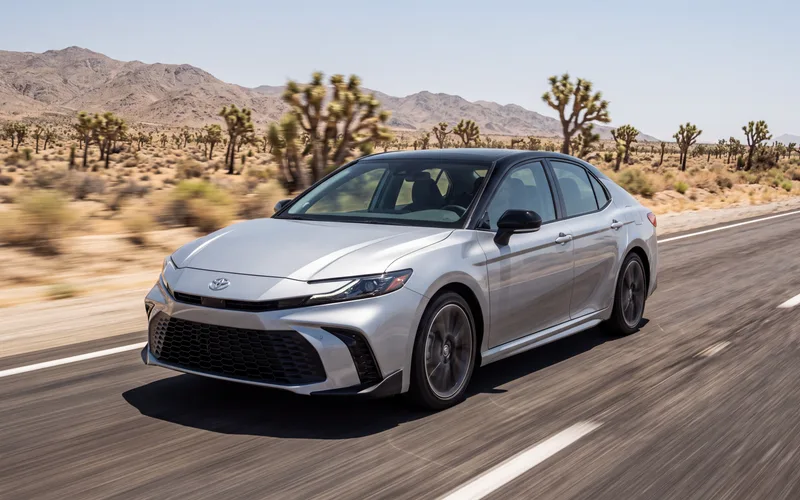 Toyota CamryMid-Size SedanBetter at: AWD availability
It's the one rival that matches the Accord's hybrid economy and reliability while adding the all-wheel drive Honda refuses to offer, plus a quieter highway cabin.
Compare 2.56C+
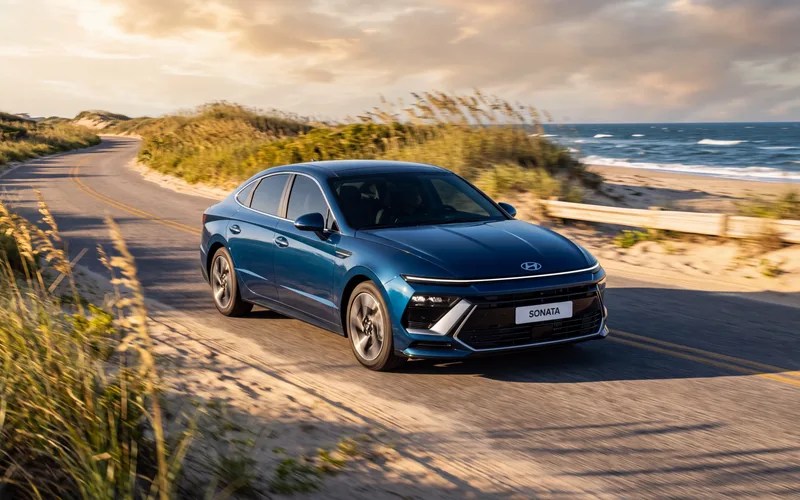 Hyundai SonataMid-Size SedanBetter at: Warranty
Far longer warranty coverage, available AWD, and a surround-view camera make it the value play if you can live with a much tighter back seat.
Compare 2.44C+
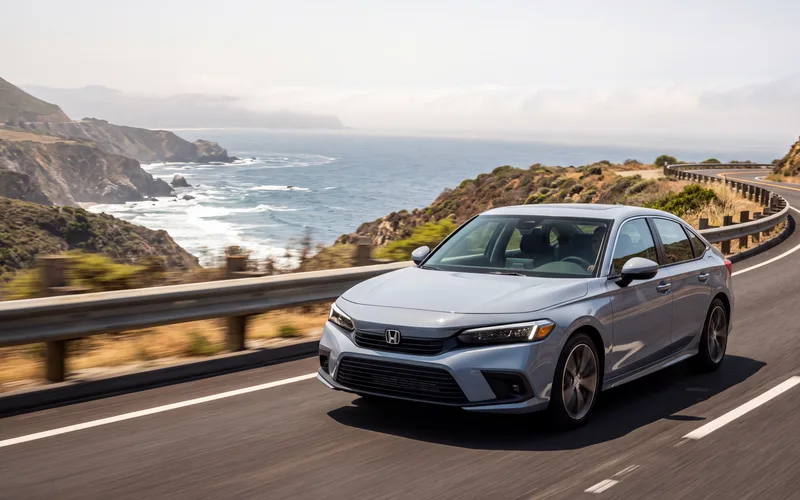 Honda CivicCompact SedanBetter at: Price
Nearly the same safety and hybrid tech in a smaller, cheaper, easier-to-park car if you rarely carry rear passengers.
CompareHow it's evolved
8 scored model years · 2019–2026
Subject scores by year
Hover or tap a score to see what moved it versus the year before. A corner mark flags a big swing.
| Year | Performance | Efficiency | Safety | Space | Cost | Reliability | Tech | Use-case | Driving | Value |
|---|---|---|---|---|---|---|---|---|---|---|
| 2026 | 44 | 91 | 77 | 78 | 63 | 82 | 70 | 61 | 73 | 77 |
| 2025 | 45 | 87 | 82 | 75 | 63 | 77 | 72 | 61 | 74 | 83 |
| 2024 | 45 | 88 | 82 | 77 | 77 | 75 | 71 | 62 | 76 | 84 |
| 2023 | 44 | 88 | 81 | 79 | 66 | 72 | 71 | 62 | 76 | 89 |
| 2022 | 44 | 59 | 77 | 76 | 61 | 76 | 55 | 61 | 75 | 81 |
| 2021 | 38 | 64 | 77 | 79 | 64 | 78 | 56 | 65 | 76 | 87 |
| 2020 | 46 | 57 | 78 | 76 | 52 | 78 | 50 | 64 | 75 | 87 |
| 2019 | 41 | 63 | 78 | 77 | 68 | 64 | 51 | 63 | 77 | 90 |
Compare two years
Best fit & conditions
Higher scores mean a better fit for that use case. Learn more about use-case fit →
Subject profile
Trims & configurations
6 trimsScores above reflect the volume trim. Per-trim specs and scores are rolling out — the full lineup:
Detailed scoring by subject
1Performance & PowertrainThe Accord's lowest-graded category.0.50F
The 1.5-liter turbo is the representative volume engine because it is standard on four core gas trims. The Sport 2.0T and Touring provide a substantially stronger 252-hp option.
The volume 1.5T delivers its 192 lb-ft across a broad 1,600-5,000-rpm plateau, giving useful everyday response. The optional 2.0T raises output to 273 lb-ft.
The tested 1.5T volume configuration is merely average in straight-line acceleration for a mainstream midsize sedan, although its immediate response makes it feel alert. The optional 2.0T is dramatically quicker.
The 1.5T responds quickly and delivers torque smoothly with little objectionable lag in ordinary driving. Refinement falls just short of the top band because hard acceleration brings pronounced four-cylinder noise, while the hybrid is smoother and more linear.
Honda's CVT is smooth, responsive, and well matched to the volume 1.5T in normal use. It loses points for the sustained revs and engine drone typical under full throttle; the optional 10-speed automatic is the more satisfying gearbox.
Every 2021 Accord, including the hybrid and both turbo-engine variants, is front-wheel drive. There is no AWD option at any trim level.
Three genuinely distinct choices cover economy, performance, and electrification: a 1.5T/CVT, a 2.0T/10-speed automatic, and a two-motor hybrid. That is unusually broad for a 2021 mainstream midsize sedan, though there is no plug-in or EV.
2Efficiency & RangeMid-pack among this car's ten categories.2.29C
The representative volume LX uses the 1.5-liter turbo and CVT and earns 33 MPG combined. For this 2021 refresh, Honda retained the gas and hybrid choices but discontinued the manual and removed the EX-L 2.0T configuration.
The volume LX's EPA city rating is 30 MPG, solid for a conventional turbo mid-size sedan but well below the available hybrid's 48 MPG.
The LX's 38-MPG highway rating is the best gas-only result in the range and matches the EX-L 1.5T; the 19-inch-wheel Sport variants give up 3 MPG.
EPA does not publish a populated total-range field for this conventional-gas record, so the representative range is calculated from Honda's 14.8-gallon tank and the EPA 33-MPG combined rating. The optional hybrid uses a smaller 12.8-gallon tank but can travel about 614 miles at 48 MPG combined.
EPA's current standard-assumption estimate for the 33-MPG LX/CVT record is $1,850 per year. Regular fuel prevents the additional cost penalty imposed by premium-fuel rivals.
Every 2021 Accord powertrain—including both turbo engines and the hybrid—runs on regular unleaded, with no premium requirement. The hybrid also needs no external charging, keeping refueling simple and broadly available.
3SafetyGrades above the middle of the scale.3.25B+
The facelifted 2021 Accord earned NHTSA's maximum overall vehicle rating for this exact model year.
The 2021 Accord earned Top Safety Pick+ with Good results in every crashworthiness test used for the award. The later, tougher updated side test produced a Marginal result for the same 2018-22 structure, preventing a near-perfect score.
Every trim includes the Honda Sensing core of AEB, ACC with Low-Speed Follow, lane-departure warning, lane keeping, and road-departure mitigation. Blind-spot information and rear cross-traffic monitoring are restricted to EX-L and Touring, so the LX and volume-oriented Sport/Sport SE lack the complete five-feature suite.
Standard CMBS earned Superior ratings in both vehicle-to-vehicle and daytime pedestrian testing, plus Advanced nighttime pedestrian performance. Inconsistent nighttime low-beam results keep it below the very best systems.
Blind-spot information and rear cross-traffic monitoring are useful but limited to EX-L and Touring variants. Both are alert-only systems, with no active blind-spot steering, reverse braking, or safe-exit alert.
For the 2021 refresh Honda recalibrated standard LKAS for more natural centering and less lane ping-pong, a meaningful model-year-specific improvement. It remains a camera-based hands-on system that can make frequent corrections rather than providing class-leading confidence.
Full-speed ACC with Low-Speed Follow is standard, and the 2021 recalibration improved braking and resumption behavior. Testing was mixed, however: Car and Driver found the former rubber-band response substantially improved, while MotorTrend still observed late, uneven braking and sluggish acceleration.
No hands-free highway-driving system was offered on any 2021 Accord trim. Honda Sensing's ACC and LKAS require continuous driver supervision and hands-on steering.
The 2021 refresh's LED-reflector headlights rate Good on Sport, Sport SE, EX-L, Touring, and upper Hybrid trims, including the representative Sport. LX and base Hybrid headlights are only Acceptable because of glare, so Good performance is not universal.
A low cowl, thin A-pillars, airy cabin, and standard multi-angle rear camera give the Accord unusually strong natural sightlines for a sedan. It lacks a surround-view camera, so some rear-three-quarter obstruction remains uncompensated.
IIHS's rare Good+ rating reflects accessible outboard anchors plus an extra usable center position. Exceptional rear legroom and wide access also make multiple and rear-facing child seats easier to install than in most sedans.
4Space & ComfortOne of the Accord's strongest categories.3.39B+
Every 2021 Accord gas and hybrid trim seats five.
The representative non-moonroof configuration has excellent front headroom; moonroof-equipped versions sacrifice two inches.
Front legroom is identical across the 2021 gas and hybrid range.
Rear headroom is competitive, though the sloping roof can make tall passengers duck when entering or exiting.
This is exceptionally generous second-row legroom for a mainstream midsize sedan and applies across all trims.
The large trunk is unchanged across gas and hybrid models, avoiding the hybrid cargo penalty common in older sedans.
Storage is exceptionally well executed for a sedan, with a large console bin, useful phone cubby, broad cupholders, door pockets, and split-folding rear seat, though it lacks a genuinely novel storage system.
Support and driving position are good and rear space is outstanding, but thin lower cushions and somewhat broad, under-bolstered front seats keep it just below the top band.
On the volume 17-inch-wheel configuration, the Accord combines unusually plush impact absorption with disciplined body control; 19-inch versions are less consistently comfortable.
Wind and powertrain isolation are generally good and active noise cancellation is standard, but coarse-road and highway tire noise prevent a class-leading score.
Dual-zone automatic climate control is standard, heated front seats arrive on the volume-oriented Sport SE, and Touring adds ventilation and heated rear outboard seats; the best amenities remain confined to costly top trims.
5Cost of OwnershipOne of the Accord's weakest categories.2.29C
The facelifted 2021 Accord's entry configuration was the LX 1.5T CVT. Its delivered price remained near the low end of the sedan normalization band.
The Sport 1.5T CVT is used as the representative volume configuration; it combines the popular Sport equipment package with the standard 192-hp engine rather than the costlier 2.0T. The 2021 lineup also added a Sport SE, but that was a higher-content derivative rather than the core Sport.
Edmunds' current used-vehicle projection for the representative 2021 Accord Sport totals maintenance and repairs over the next five years at 15,000 miles annually. The estimate reflects an already five-year-old vehicle entering higher-mileage service, so it is much higher than an original-owner first-five-years estimate.
The model-year-specific KBB resale estimate is $17,750; compared with the 2021 LX delivered MSRP of $25,725, that is 69.0% retention. KBB places the 2021 Accord in the top 10% among 2021 sedans for depreciation.
Honda's basic warranty sits at the minimum of the sedan scoring band.
Honda's powertrain term is standard for mainstream Japanese sedans but is the minimum of this item's 5-to-10-year scoring band. Hybrid models separately receive 8-year/100,000-mile high-voltage-battery coverage.
The 2021 Accord included no complimentary scheduled maintenance, but Honda Roadside Assistance supplied towing, lockout, jump-start, fuel-delivery, flat-tire, and related help throughout the 3-year/36,000-mile warranty term. That fits the rubric's basic-roadside-only tier.
$28,185 volume-trim price minus its estimated resale value after 5 years (69% retained, or about $19,448) leaves about $8,737 in depreciation. Add the projected $9,067 in 5-year maintenance and repairs, and owning this vehicle for 5 years costs about $17,804 in total.
6Reliability & QualityOne of the Accord's strongest categories.3.30B+
Owner-survey and quality-study results agree that the 2021 Accord is substantially above average, although its later recall history keeps it short of the very top score.
Honda had a strong, near-top-tier brand record around this model year, though it was not consistently a top-five finisher in every dependability study.
Four listed campaigns are worse than a clean or merely minor history: they include an engine-stall-capable fuel pump, rear-center child-restraint locking risk, and passenger-seat occupant-sensor faults. The 2026 sensor campaign expands the earlier action, so the raw count somewhat overstates the number of distinct defect families.
The volume 1.5T/CVT is established and 2021 owner-survey reliability is strong, but the engine family has a mixed long-term reputation for fuel dilution and reported head-gasket/injector trouble. The available 2.0T/10-speed and hybrid configurations avoid some 1.5T-specific concern, so powertrain choice matters.
The Accord's soft-touch coverage, tactile switchgear, and overall cabin materials were repeatedly judged among the midsize segment's best, with hard plastic mainly confined to lower areas.
Professional reviews consistently found tight assembly and excellent fit and finish, supporting a high score despite scattered owner reports of cabin rattles.
Honda has broad nationwide mainstream-brand coverage and an official US dealer locator, making routine and recall service readily accessible; service experience still varies by independently operated dealer.
A very common US-built sedan benefits from abundant OEM and aftermarket supply, while measured repair costs are low for the class.
7Technology & InfotainmentOne of the Accord's weakest categories.1.79C-
The 2021 refresh made the same 8-inch Display Audio touchscreen standard across the entire gas and hybrid range, so the volume trim and maximum available size are both 8 inches.
Clean graphics, sensible menus, a responsive-enough screen and physical knobs/hard keys make the system easy to use, though involved tasks still have a learning curve and it is not as fluid as today's best systems.
Both phone-projection platforms are standard, but the volume Sport 1.5T and lower trims require a cable. Wireless Apple CarPlay and Android Auto are limited to Hybrid EX and higher gas/hybrid trims (and Sport 2.0T).
Touring alone receives Honda's built-in Garmin-based navigation and command-style voice recognition; the maps are clear but voice commands require exact syntax, leaving most owners better served by standard phone projection.
The volume Sport receives an adequate 180-watt eight-speaker system, while EX-L and Touring offer a 450-watt 10-speaker upgrade. The premium setup plays loudly without distortion but reviewers found its sound quality unexceptional.
Every Accord has a clear, configurable 7-inch Driver Information Interface, but it occupies only the left side of a hybrid analog/digital cluster rather than being a full-width digital panel.
The Display Audio system can receive software and navigation updates over Wi-Fi, but this is maintenance-oriented infotainment/telematics updating rather than regular feature-adding, whole-vehicle OTA capability.
HondaLink offers useful remote lock/unlock, remote start, vehicle location and assistance functions, but the rich connected-services suite is Touring-only and subscription-dependent, with no digital key.
The volume Sport 1.5T supplies four 2.5-amp USB-A ports across both rows, which is adequate for 2021, but there are no USB-C or household outlets. Wireless charging is reserved for upper trims and Sport 2.0T.
Push-button start and remote entry are standard, while Smart Entry with walk-away locking and fob remote start reach most trims but not the volume Sport 1.5T. There is no phone-as-key or hands-free trunk.
All trims have a multi-angle rear camera with dynamic guidelines, but the volume trims lack parking sensors. Sensors begin at EX-L, and no 360-degree camera, automated parking or front-camera view is offered.
A useful windshield-projected HUD is available, but only on the top Touring and Hybrid Touring trims, squarely fitting the top-trim-only band.
8Use-Case FitMid-pack among this car's ten categories.2.38C+
The Accord is exceptionally accommodating by sedan standards: unusually generous rear-seat space, wide access, a large trunk, and a rare Good+ LATCH rating make rear-facing seats and stroller duty straightforward. It still lacks the taller opening and walk-in flexibility of a crossover or minivan.
Crash protection and affordable-trim active safety are excellent: the 2021 Accord earned five stars overall and Top Safety Pick+, while AEB, full-speed adaptive cruise, lane keeping, and road-departure mitigation are standard. Blind-spot and rear cross-traffic alerts require EX-L or Touring, and no rear-occupant or safe-exit alert was offered.
Four adults get exceptional legroom, a composed ride, effective dual-zone climate control, and a class-leading 16.7-cu-ft trunk that does not shrink on the hybrid. The sloping roof limits rear headroom for tall passengers, and heated rear seats and the richest comfort features are Touring-only.
Responsive controls, a smooth CVT, excellent outward visibility, a comfortable ride, and standard low-speed-follow adaptive cruise make the volume 1.5T a low-effort commuter. Coarse-pavement tire noise and engine drone under hard acceleration are the main daily irritants.
The regular-fuel volume LX is economical at 33 mpg combined, and commuters could choose a 48-mpg hybrid without losing trunk space. It is inexpensive for a midsize sedan, though the representative turbo model is not as cheap per mile as the hybrid or the most efficient compact sedans.
Thin pillars, a low cowl, excellent all-around visibility, and a standard multi-angle reversing camera make the Accord easier to place than its long body suggests. At roughly 196 inches it remains a large sedan, and no 360-degree camera or automated parking system was available.
The Accord can carry people, sales samples, or small equipment in its large trunk, but it is not meaningfully work-capable: there is no bed, no U.S. tow rating, and no heavy-duty configuration. The optional 252-hp 2.0T adds speed rather than hauling capability.
The Accord has a strong high-mileage fleet reputation, inexpensive parts and repairs, and this exact model year scores well in owner reliability data. It is nevertheless a carpeted, low-clearance passenger sedan with no heavy-duty cooling, suspension, or wear-resistant work trim, and the volume 1.5T has some long-term durability concerns.
There are essentially no jobsite provisions: no household-power outlet, bed, factory roof rails, tow package, washable flooring, or work-upfit ecosystem. The folding rear seat and ordinary trunk are useful for light office equipment, but external racks and hitches are aftermarket solutions.
A supportive cabin, excellent ride on 17-inch wheels, strong passenger room, standard full-speed adaptive cruise, and roughly 488 miles of gas-trim range make this an excellent highway sedan; the 48-mpg hybrid approaches 614 miles. Tire noise on coarse pavement and merely adequate seat cushioning keep it short of the very top band.
The Accord is suitable for paved trailheads and maintained gravel roads, but its adventure credentials largely end there. Every version is front-wheel drive, with no AWD, U.S. tow rating, factory roof rails, off-road modes, or camping-power outlet.
The 16.7-cu-ft trunk is excellent for normal luggage, the hybrid sacrifices no cargo space, and a folding rear seat permits longer items. Bulky gear still must pass through a sedan opening, split-fold flexibility varies by trim, and Honda offered no factory rails or hitch for overflow.
9Driving ExperienceGrades above the middle of the scale.3.13B
The volume 1.5T Accord combines unusually disciplined body control and balance with a firm but compliant ride, placing it at the top of the mainstream mid-size class. Its economy-focused tires limit ultimate grip, while Sport and Hybrid configurations demonstrate the chassis's higher ceiling.
Accurate, predictable steering and quick response inspire confidence, but the light effort and modest road feedback keep the volume Accord just below the genuinely communicative top band. Sport and refreshed Hybrid calibrations add welcome weight and directness.
The volume 1.5T's pedal is progressive and easy to modulate in normal driving, but soft initial bite and a relatively long stop on its low-rolling-resistance tires reduce emergency confidence. Higher-grip Sport and Hybrid tests stop much shorter, although Sport pedal softness remains.
The volume 1.5T and CVT deliver exceptionally smooth tip-in, intuitive response, and relaxed cruising without lurching. The hybrid's calmer 2021 calibration and the 2.0T's nearly seamless 10-speed broaden the lineup's strengths, though occasional 2.0T hesitation prevents an elite score.
The Accord is quiet and settled at cruise, but the volume 1.5T transmits a little idle buzz and sounds uninspiring when worked. The hybrid is similarly calm in ordinary driving yet becomes clamorous under heavy throttle, making the overall experience audible but generally inoffensive.
The 38.2-ft curb-to-curb diameter of the volume 17-inch-wheel configurations is toward the wide end of the sedan normalization band. Larger-wheel and 2.0T versions require slightly more room.
Airy sightlines, broad adjustability, supportive seating, and a simple physical-control layout make the Accord exceptionally easy to settle into and operate. The wide, lightly bolstered front seats and sloping-roof rear blind spots are the few drawbacks.
Balanced handling, fluid controls, and responsive turbo power make even the practical volume Accord more engaging than nearly every mainstream mid-size rival. The 252-hp 2.0T adds genuine everyday performance, while the CVT 1.5T and muted engine note cap the lineup-wide score.
10Value & Market PositionThe Accord's best-graded category.3.90A+
The $24,770 LX was unusually complete for a base 2021 family sedan, with the full Honda Sensing suite, adaptive cruise control, lane keeping, dual-zone automatic climate control, alloy wheels, and an 8-inch touchscreen with Apple CarPlay and Android Auto. Blind-spot monitoring and convenience upgrades still required moving up the range, but the essentials and major driver assists did not.
Across a roughly $25,725-$37,655 delivered-price range, the Accord combined a large cabin, strong standard safety technology, an available 48-mpg hybrid, and an available 252-hp 2.0T capable of sub-six-second acceleration. That breadth of efficiency, performance, refinement, and equipment at mainstream prices made it a segment benchmark rather than merely fair value.
Honda offered nine named 2021 configurations across gas and hybrid branches, including value, sporty, luxury, high-performance, and high-efficiency choices. The discontinued manual and lack of AWD reduced flexibility somewhat, but two turbo engines plus the hybrid and a well-spaced trim ladder still covered far more buyer priorities than most rivals.
The Accord remained one of America's dominant midsize sedans, selling 202,676 units in 2021, up 1.6% year over year and representing 22.0% of the segment. Only the Camry sold more, so this is near-leader rather than outright segment-leader performance.
Honda's reputation for sensible engineering, durability, efficiency, and resale gave the Accord exceptional mainstream-brand appeal, while the Accord's long enthusiast and family-car following added model-specific prestige. It was not a luxury badge, but among mainstream sedans its image actively strengthened satisfaction and retained value.
Honda Financial offered useful low-rate financing around 1.9% for qualified buyers, but the popular Accord generally did not need large cash rebates. As the 2021 supply shortage intensified, inventory tightened and some cars commanded premiums, leaving buyers modest financing help but limited negotiating leverage.
The tenth generation began with MY2018, making 2021 its fourth model year, but 2021 received a meaningful mid-cycle refresh rather than being a pure carry-over. Updated styling and lighting, retuned powertrains, standard 8-inch smartphone integration, available wireless connectivity, and revised trims kept it current, though the underlying platform was already mid-cycle.
The 2021 Accord was a rare consensus winner: Car and Driver ranked it first in the class and awarded its 35th 10Best trophy, KBB named it the Midsize Car Best Buy, and MotorTrend declared it the winner in multiple direct and multi-car comparisons. The volume and consistency of top-tier recognition place it at the ceiling of this rubric.