
The verdict
A capable mid-size sedan, strong on efficiency and held back by performance.
The 2025 Accord is the mid-size sedan that gets the fundamentals right: a 5-star NHTSA rating and IIHS Top Safety Pick+, the roomiest back seat in the class at 40.8 inches of legroom, a 16.7 cu ft trunk the hybrid battery doesn't eat into, and 44 MPG combined on regular gas from the volume Sport Hybrid at $34,805. It drives better than almost anything else in the segment and costs the least to repair — RepairPal ranks it first of 24 mid-size cars at about $400 a year. The catches are real but narrow: there is no all-wheel drive at any price, Honda's 3-year/36,000-mile warranty is the industry floor, and useful gear like parking sensors, a head-up display and native navigation is locked to trims above the one most people buy. If you want a front-drive family sedan and don't need snow traction on demand, this is the class benchmark.
Jump to scoresStrengths
- Best-in-class safety credentials, on the trim you'd actually buy
- A truly critic-approved package for the money
- The smoothest hybrid drivetrain in the mainstream class
What holds it back
- The warranty is the shortest in the business
- No all-wheel drive, at any price
- Modest power on paper
Top alternatives
Cars shoppers cross-shop with the Honda Accord 2.84B-
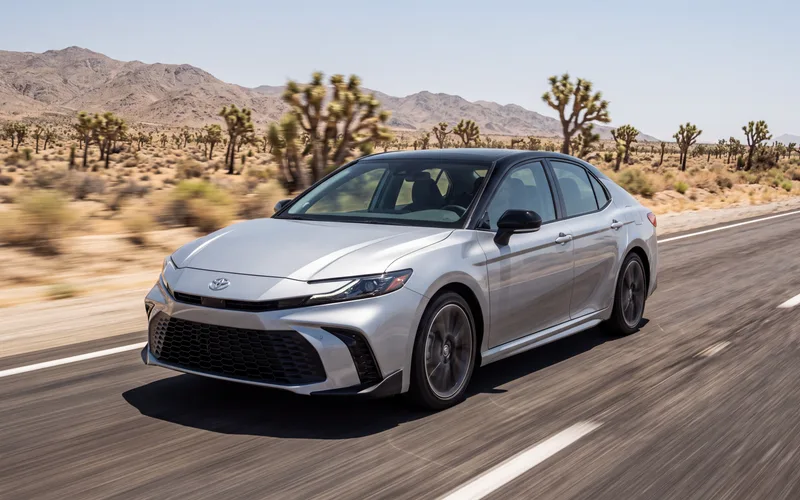 Toyota CamryMid-Size SedanBetter at: AWD availability
It's the one rival that matches the Accord's hybrid economy and reliability while adding the all-wheel drive Honda refuses to offer, plus a quieter highway cabin.
Compare 2.56C+
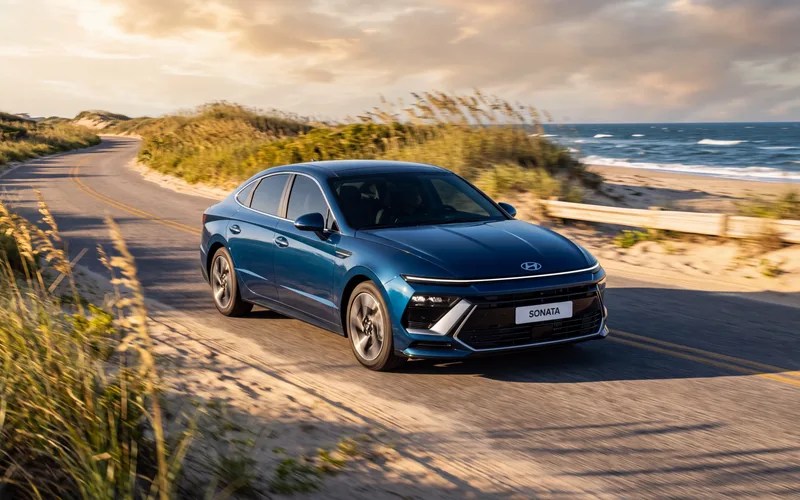 Hyundai SonataMid-Size SedanBetter at: Warranty
Far longer warranty coverage, available AWD, and a surround-view camera make it the value play if you can live with a much tighter back seat.
Compare 2.44C+
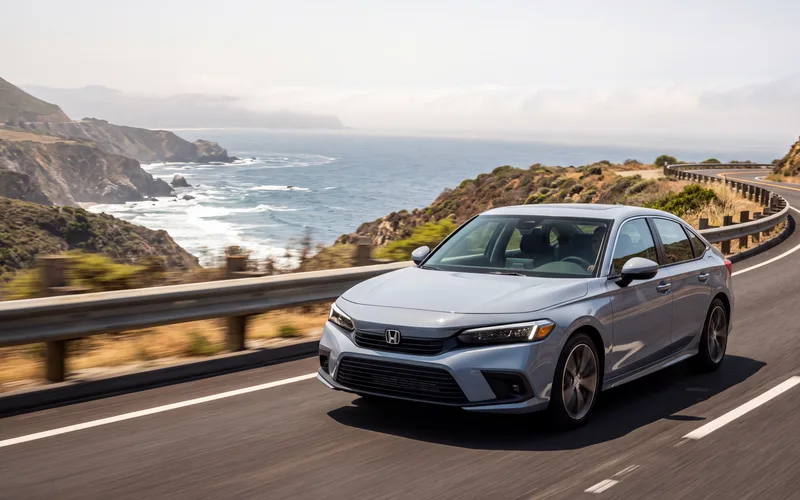 Honda CivicCompact SedanBetter at: Price
Nearly the same safety and hybrid tech in a smaller, cheaper, easier-to-park car if you rarely carry rear passengers.
CompareHow it's evolved
10 scored model years · 2017–2026
Subject scores by year
Hover or tap a score to see what moved it versus the year before. A corner mark flags a big swing.
| Year | Performance | Efficiency | Safety | Space | Cost | Reliability | Tech | Use-case | Driving | Value |
|---|---|---|---|---|---|---|---|---|---|---|
| 2026 | 44 | 91 | 77 | 78 | 63 | 82 | 70 | 61 | 73 | 77 |
| 2025 | 45 | 87 | 82 | 75 | 63 | 77 | 72 | 61 | 74 | 83 |
| 2024 | 45 | 88 | 82 | 77 | 77 | 75 | 71 | 62 | 76 | 84 |
| 2023 | 44 | 88 | 81 | 79 | 66 | 72 | 71 | 62 | 76 | 89 |
| 2022 | 44 | 59 | 77 | 76 | 61 | 76 | 55 | 61 | 75 | 81 |
| 2021 | 38 | 64 | 77 | 79 | 64 | 78 | 56 | 65 | 76 | 87 |
| 2020 | 46 | 57 | 78 | 76 | 52 | 78 | 50 | 64 | 75 | 87 |
| 2019 | 41 | 63 | 78 | 77 | 68 | 64 | 51 | 63 | 77 | 90 |
| 2018 | 43 | 92 | 74 | 71 | 60 | 68 | 44 | 55 | 64 | 77 |
| 2017 | 44 | 96 | 71 | 65 | 66 | 66 | 39 | 51 | 66 | 69 |
Compare two years
Best fit & conditions
Higher scores mean a better fit for that use case. Learn more about use-case fit →
Subject profile
Trims & configurations
6 trimsScores above reflect the volume trim. Per-trim specs and scores are rolling out — the full lineup:
Academic Probation · NHTSA safety recalls
Oct 8, 2026Tires: temporary/emergency spare tireWhen using the tire repair kit, pressure may build within the sealant bottle, causing the bottle cap to detach.
Defect
Honda (American Honda Motor Co.) is recalling certain 2023-2026 CR-V Hybrid, Accord Hybrid, and 2025 CR-V Fuel Cell EV vehicles that were previously remedied under NHTSA recall number 26V366. When using the tire repair kit, pressure may build within the sealant bottle, causing the bottle cap to detach.
Risk
A detached bottle cap can become a projectile and strike the user or others nearby, increasing the risk of injury.
Remedy
Dealers will inspect and replace the tire repair kit nozzle, as necessary, free of charge. Owner notification letters are expected to be mailed November 16, 2026. Owners may contact Honda's customer service at 1-866-784-1870. Honda's number for this recall is PPW. Vehicle Identification Numbers (VINs) involved in this recall will be searchable on NHTSA.gov beginning October 17, 2026. Vehicles previously repaired under recall 26V366 will need to have the new remedy completed.
NHTSA campaign 26V663000 ↗Manufacturer no. PPW4,804 vehicles potentially affected (all models in the campaign)Filed by Honda (American Honda Motor Co.)Filed as ACCORD HYBRIDJun 4, 2026Tires: temporary/emergency spare tireWhen using the tire repair kit, pressure may build within the sealant bottle, causing the bottle cap to detach.
Defect
Honda (American Honda Motor Co.) is recalling certain 2023-2026 CR-V Hybrid, Accord Hybrid, and 2025-2026 CR-V Fuel Cell EV vehicles. When using the tire repair kit, pressure may build within the sealant bottle, causing the bottle cap to detach.
Risk
A detached bottle cap can become a projectile and strike the user or others nearby, increasing the risk of injury.
Remedy
Dealers will replace the tire repair kit nozzle or sealant bottle, free of charge. Interim letters notifying owners of the safety risk were mailed July 27, 2026. Additional letters will be sent once the final remedy is available, anticipated in Fall 2026. Owners may contact Honda's customer service at 1-866-784-1870. Honda's number for this recall is DOV. Vehicle Identification Numbers (VINs) involved in this recall will be searchable on NHTSA.gov beginning June 11, 2026.
NHTSA campaign 26V366000 ↗Manufacturer no. DOV1,048,613 vehicles potentially affected (all models in the campaign)Filed by Honda (American Honda Motor Co.)Filed as ACCORD HYBRIDNov 13, 2025Electrical system: propulsion system: hybrid management: power control unit/module (hpcu): softwareDue to a software error, the integrated control module (ICM) central processing unit (CPU) may reset while driving, causing a loss of drive power.
Defect
Honda (American Honda Motor Co.) is recalling certain 2023-2025 Honda Accord Hybrid vehicles. Due to a software error, the integrated control module (ICM) central processing unit (CPU) may reset while driving, causing a loss of drive power.
Risk
A loss of drive power increases the risk of a crash or injury.
Remedy
Dealers will reprogram the ICM CPU software, free of charge. Owner notification letters were mailed January 6, 2026. Owners may contact Honda's customer service at 1-888-234-2138. Honda's number for this recall is TN2. Vehicle Identification Numbers (VINs) involved in this recall will be searchable on NHTSA.gov beginning November 18, 2025.
NHTSA campaign 25V785000 ↗Manufacturer no. TN2256,603 vehicles potentially affected (all models in the campaign)Owners notified Jan 5, 2026Filed by Honda (American Honda Motor Co.)Filed as ACCORD HYBRID
17 recalls on other model years of the Accord (2017–2024)
May 21, 2026Air bags: sensor: occupant classification: front passengerThe front passenger seat weight sensor may crack and short circuit, which can cause the air bags to deploy unintentionally during a crash.
Defect
Honda (American Honda Motor Co.) is recalling certain 2018-2021, 2023 Acura TLX, 2019-2024 RDX, 2017-2020, 2022-2026 MDX, 2017-2021, 2023, 2025 Honda Ridgeline, 2017-2022 Pilot, 2019-2021 Passport, 2018-2026 Odyssey, 2019-2022 Insight, 2019-2021 HR-V, 2018-2020 Fit, 2020-2022 CR-V Hybrid, 2017-2022 CR-V, 2017-2018, 2021 Civic Type R, 2017-2021 Civic hatchback, 2016-2020 Civic coupe, 2016-2022 Civic, 2017-2022 Accord Hybrid, and 2016-2022 Accord vehicles. The front passenger seat weight sensor may crack and short circuit, which can cause the air bags to deploy unintentionally during a crash.
Risk
Air bags that deploy unintentionally during a crash increase the risk of injury.
Remedy
Dealers will replace the seat weight sensors, free of charge. Owner notification letters were mailed July 7, 2026. Owners may contact Honda's customer service at 1-888-234-2138. Honda's numbers for this recall are BOL, WO9, OOA, WOM, XOH, NOC, POD, BOE, UOF, POB, EOG, AOI, QO8, TOJ, DO7, and SOK. This recall expands previous NHTSA recall number 24V064. Vehicle Identification Numbers (VINs) involved in this recall will be searchable on NHTSA.gov beginning May 29, 2026.
NHTSA campaign 26V332000 ↗Manufacturer no. Refer to Comments98,892 vehicles potentially affected (all models in the campaign)Owners notified Jul 6, 2026Filed by Honda (American Honda Motor Co.)Filed as ACCORD, ACCORD HYBRIDJan 29, 2026Seats: critical fastenersThe driver's seat cushion frame may not have been tightened properly, which can result in a loose seat. As such, these vehicles fail to comply with the requirements of Federal Motor Vehicle Safety Standard number 207, "Seating Systems."
Defect
Honda (American Honda Motor Co.) is recalling certain 2023 Honda Accord, Accord Hybrid, and 2024 HR-V, Pilot, and Acura Integra vehicles. The driver's seat cushion frame may not have been tightened properly, which can result in a loose seat. As such, these vehicles fail to comply with the requirements of Federal Motor Vehicle Safety Standard number 207, "Seating Systems."
Risk
A loose driver's seat may not adequately restrain the driver during a crash, increasing the risk of injury.
Remedy
Dealers will replace the driver's seat cushion frame, free of charge. Owner notification letters were mailed March 10, 2026. Owners may contact Honda's customer service at 1-888-234-2138. Honda's numbers for this recall are ONC, KND, BNE and ZNF. Vehicle Identification Numbers (VINs) involved in this recall will become searchable on NHTSA.gov beginning February 5, 2026. This recall expands previous NHTSA recall number 24V859.
NHTSA campaign 26V054000 ↗Manufacturer no. ONC, KND, BNE, ZNF32 vehicles potentially affected (all models in the campaign)Owners notified Mar 9, 2026Filed by Honda (American Honda Motor Co.)Filed as ACCORD, ACCORD HYBRIDNov 14, 2024Seats: critical fastenersThe driver's seat cushion frame may not have been tightened properly, which can result in an unsecured seat. As such, these vehicles fail to comply with the requirements of Federal Motor Vehicle Safety Standard number 207, "Seating Systems."
Defect
Honda (American Honda Motor Co.) is recalling certain 2023-2024 Honda Accord, Accord Hybrid, Civic Sedan, Civic Hatchback, Pilot, and 2024 HR-V, Acura Integra and Acura Integra Type S vehicles. The driver's seat cushion frame may not have been tightened properly, which can result in an unsecured seat. As such, these vehicles fail to comply with the requirements of Federal Motor Vehicle Safety Standard number 207, "Seating Systems."
Risk
An unsecured driver's seat may not adequately restrain the driver during a crash, increasing the risk of injury.
Remedy
Dealers will replace the driver's seat cushion frame, free of charge. Owner notification letters were mailed January 6, 2025. Owners may contact Honda customer service at 1-888-234-2138.
NHTSA campaign 24V859000 ↗121 vehicles potentially affected (all models in the campaign)Owners notified Jan 6, 2025Filed by Honda (American Honda Motor Co.)Filed as ACCORD, ACCORD HYBRIDOct 14, 2024Fuel system, gasoline: delivery: fuel pumpThe high-pressure fuel pump may crack and leak fuel.
Defect
Honda (American Honda Motor Co.) is recalling certain 2023-2024 Honda Accord, Accord Hybrid, 2023-2025 Honda CR-V Hybrid, and 2025 Honda Civic and Civic Hybrid vehicles. The high-pressure fuel pump may crack and leak fuel.
Risk
A fuel leak in the presence of an ignition source can increase the risk of a fire.
Remedy
Dealers will inspect and replace the high-pressure fuel pump as necessary, free of charge. Owner letters were mailed February 20, 2025. Owners may contact Honda customer service at 1-888-234-2138. Honda's number for this recall is PJW.
NHTSA campaign 24V763000 ↗Manufacturer no. PJW720,810 vehicles potentially affected (all models in the campaign)Owners notified Feb 20, 2025Filed by Honda (American Honda Motor Co.)Filed as ACCORD, ACCORD HYBRIDFeb 1, 2024Air bags: sensor: occupant classification: front passengerThe front passenger seat weight sensor may crack and short circuit, failing to suppress the air bag as intended.
Defect
Honda (American Honda Motor Co.) is recalling certain 2020-2022 Pilot, Accord, Civic sedan, HR-V, Odyssey, 2020 Civic coupe, Fit, 2021-2022 Civic hatchback, 2021 Civic Type R, Insight, 2020-2021 CR-V, CR-V Hybrid, Passport, Ridgeline, Accord Hybrid, 2020 Acura MDX, 2022 Acura MDX, 2020-2022 Acura RDX, and 2020-2021 Acura TLX vehicles. The front passenger seat weight sensor may crack and short circuit, failing to suppress the air bag as intended.
Risk
An air bag that deploys unintentionally during a crash can increase the risk of injury.
Remedy
Dealers will replace the seat weight sensors, free of charge. Owner notification letters were mailed March 28, 2024. This is a phased recall. Owners may contact Honda customer service at 1-888-234-2138. Honda's numbers for these recalls are XHP and VHQ.
NHTSA campaign 24V064000 ↗Manufacturer no. XHP, VHQ750,114 vehicles potentially affected (all models in the campaign)Owners notified Mar 28, 2024Filed by Honda (American Honda Motor Co.)Filed as ACCORD, ACCORD HYBRIDDec 18, 2023Fuel system, gasoline: delivery: fuel pumpThe fuel pump inside the fuel tank may fail.
Defect
Honda (American Honda Motor Co.) is recalling certain 2013-2023 Honda Accord, Civic Coupe, Civic Sedan, Civic Hatchback, Civic Type R, CR-V, HR-V, Ridgeline, Odyssey, Acura ILX, MDX, MDX Hybrid, RDX, RLX, TLX, 2019-2022 Honda Insight, Passport, 2020 Honda CR-V Hybrid, 2018-2019 Honda Clarity PHEV, Fit, and 2015-2020 Honda Accord Hybrid, Pilot, Acura NSX vehicles. The fuel pump inside the fuel tank may fail.
Risk
Fuel pump failure can cause an engine stall while driving, increasing the risk of a crash.
Remedy
Dealers will replace the fuel pump module, free of charge. Owner letters were mailed September 6, 2024. Owners may contact Honda customer service at 1-888-234-2138. Honda's numbers for this recall are KGC and KGD. This recall is an expansion of NHTSA recall numbers 21V-215 and 20V-314.
NHTSA campaign 23V858000 ↗Manufacturer no. KGC, KGD2,490,460 vehicles potentially affected (all models in the campaign)Owners notified Mar 29, 2024Filed by Honda (American Honda Motor Co.)Filed as ACCORD, ACCORD HYBRIDNov 21, 2023Seat belts: frontThe front seat belt pretensioners may be missing the rivet that secures the quick connector and wire plate. As such, these vehicles fail to comply with the requirements of Federal Motor Vehicle Safety Standard numbers 208, "Occupant Crash Protection," 209, "Seat Belt Assembles," and 210, "Seat Belt Assembly Anchorages."
Defect
Honda (American Honda Motor Co.) is recalling certain 2023-2024 Accord and HR-V vehicles. The front seat belt pretensioners may be missing the rivet that secures the quick connector and wire plate. As such, these vehicles fail to comply with the requirements of Federal Motor Vehicle Safety Standard numbers 208, "Occupant Crash Protection," 209, "Seat Belt Assembles," and 210, "Seat Belt Assembly Anchorages."
Risk
A seat belt pretensioner missing a rivet will not properly restrain the occupant, increasing the risk of injury during a crash.
Remedy
Dealers will inspect and replace the seat belt pretensioner assemblies as necessary, free of charge. Owner notification letters were mailed January 8, 2024. Owners may contact Honda customer service at 1-888-234-2138. Honda's numbers for this recall are MG7 and NG5.
NHTSA campaign 23V782000 ↗Manufacturer no. MG7, NG5303,770 vehicles potentially affected (all models in the campaign)Owners notified Jan 8, 2024Filed by Honda (American Honda Motor Co.)Filed as ACCORDAug 17, 2023Power train: automatic transmission: internal: cvtThe electronic transmission may have been improperly manufactured, which can result in a loss of drive power.
Defect
Honda (American Honda Motor Co.) is recalling certain 2023 CR-V Hybrid and Accord Hybrid vehicles. The electronic transmission may have been improperly manufactured, which can result in a loss of drive power.
Risk
A loss of drive power can increase the risk of a crash.
Remedy
Dealers will replace the electronic continuously variable transmission (e-CVT), free of charge. Owner notification letters were mailed October 11, 2023. Owners may contact Honda customer service at 1-888-234-2138. Honda's numbers for this recall are NFG and HFF.
NHTSA campaign 23V588000 ↗Manufacturer no. NFG, HFF19 vehicles potentially affected (all models in the campaign)Owners notified Oct 11, 2023Filed by Honda (American Honda Motor Co.)Filed as ACCORD HYBRIDJun 15, 2023Service brakes, hydraulic: antilock/traction control/electronic limited slip: control unit/moduleA ball valve in the vehicle stability assist (VSA) modulator may leak brake fluid, which can result in unintended vehicle movement when the brake hold feature is engaged or an unexpected increase in brake pedal travel.
Defect
Honda (America Honda Motor Co.) is recalling certain 2023 Civic, Acura RDX, Acura Integra, and 2022 Honda Accord vehicles. A ball valve in the vehicle stability assist (VSA) modulator may leak brake fluid, which can result in unintended vehicle movement when the brake hold feature is engaged or an unexpected increase in brake pedal travel.
Risk
Unintended vehicle movement or an unexpected increase in brake pedal travel can increase the risk of a crash or injury.
Remedy
Dealers will replace the VSA modulator, free of charge. Owner notification letters were mailed July 24, 2023. Owners may contact Honda customer service at 1-888-234-2138. Honda's numbers for this recall are OEJ, XEK, AEY, XEX and OEW.
NHTSA campaign 23V430000 ↗Manufacturer no. OEJ,XEK,AEY,XEX,OEW386 vehicles potentially affected (all models in the campaign)Owners notified Jul 24, 2023Filed by Honda (American Honda Motor Co.)Filed as ACCORDMar 9, 2023Seat belts: front: buckle assemblyA manufacturing issue with the front seat belts may cause the seat belt buckle channel to interfere with the release button, preventing the seat belt buckle from latching.
Defect
Honda (American Honda Motor Co.) is recalling certain 2017-2020 CR-V, 2018-2019 Accord and Accord Hybrid, 2018-2020 Odyssey, 2019 Insight, and 2019-2020 Acura RDX vehicles. A manufacturing issue with the front seat belts may cause the seat belt buckle channel to interfere with the release button, preventing the seat belt buckle from latching.
Risk
An unlatched seat belt cannot properly restrain the seat occupant during a crash, increasing their risk of injury.
Remedy
Dealers will replace the driver and front passenger seat belt buckle release buttons or the buckle assemblies as necessary, free of charge. Owner notification letters were mailed April 18, 2023. Owners may contact Honda customer service at 1-888-234-2138. Honda's numbers for this recall are NDA, QDB, BDC, MDD, LD9. TDF, FDG, ODH, YDI, ZDE.
NHTSA campaign 23V158000 ↗Manufacturer no. NDA, QDB, BDC, MDD448,613 vehicles potentially affected (all models in the campaign)Owners notified Apr 18, 2023Filed by Honda (American Honda Motor Co.)Filed as ACCORD, ACCORD HYBRIDNov 18, 2021Seat belts: rear/other: retractorThe automatic locking retractor on the second-row center seat belt assembly may deactivate improperly, which can result in an unsecured child restraint system. As such, these vehicles fail to comply with the requirements of Federal Motor Vehicle Safety Standard number 208, "Occupant Crash Protection."
Defect
Honda (American Honda Motor Co.) is recalling certain 2021 Accord Sedan, Accord Hybrid, CR-V, Ridgeline, 2022 Insight and CR-V Hybrid vehicles. The automatic locking retractor on the second-row center seat belt assembly may deactivate improperly, which can result in an unsecured child restraint system. As such, these vehicles fail to comply with the requirements of Federal Motor Vehicle Safety Standard number 208, "Occupant Crash Protection."
Risk
An unsecured child restraint system can increase the risk of injury during a crash.
Remedy
Dealers will replace the second-row center seat belt assembly, free of charge. Owner notification letters were mailed January 14, 2022. Owners may contact Honda customer service at 1-888-234-2138.
NHTSA campaign 21V900000 ↗Manufacturer no. ABS, BBT, NBQ, RBR4,346 vehicles potentially affected (all models in the campaign)Owners notified Jan 14, 2022Filed by Honda (American Honda Motor Co.)Filed as ACCORD, ACCORD HYBRIDMar 25, 2021Fuel system, gasoline: delivery: fuel pumpThe low-pressure fuel pump inside the fuel tank may fail.
Defect
Honda (American Honda Motor Co.) is recalling certain 2019-2020 Acura MDX, MDX Sport Hybrid, RDX, TLX, Honda Accord, Civic Hatchback, Insight, 2019 Acura ILX, Honda Accord Hybrid, Civic Coupe, Civic Coupe Si, Civic Sedan, Civic Sedan Si, Civic Type R, Fit, HR-V, Odyssey, Passport, Pilot and Ridgeline, and 2018-2019 CR-V vehicles. The low-pressure fuel pump inside the fuel tank may fail.
Risk
Fuel pump failure can cause an engine stall while driving, increasing the risk of a crash.
Remedy
Honda will notify owners, and dealers will replace the fuel pump assembly, free of charge. Owner letters were mailed May 18, 2021. Owners may contact Honda customer service at 1-888-234-2138. Note: This recall is an expansion of recall 20V-314.
NHTSA campaign 21V215000 ↗Manufacturer no. Multiple Codes624,552 vehicles potentially affected (all models in the campaign)Owners notified May 18, 2021Filed by Honda (American Honda Motor Co.)Filed as ACCORD, ACCORD HYBRIDDec 17, 2020Electrical system: 12v/24v/48v battery · Electrical system: propulsion system: charging: module: software · Electrical system: propulsion system: dc/dc converterThe DC-DC converter may shut down and prevent the 12-volt battery from recharging, possibly resulting in a loss of drive power.
Defect
Honda (American Honda Motor Co.) is recalling certain 2020 CR-V Hybrid, Accord Hybrid, and 2020-2021 Insight vehicles. The DC-DC converter may shut down and prevent the 12-volt battery from recharging, possibly resulting in a loss of drive power.
Risk
A loss of drive power can increase the risk of a crash.
Remedy
Honda will notify owners, and dealers will update the power converter unit (PCU) software, free of charge. The recall began February 12, 2021. Owners can contact Honda customer service at 1-888-234-2138. Honda's number for this recall is K9E.
NHTSA campaign 20V798000 ↗Manufacturer no. K9E27,838 vehicles potentially affected (all models in the campaign)Owners notified Feb 12, 2021Filed by Honda (American Honda Motor Co.)Filed as ACCORD HYBRIDDec 10, 2020Back over prevention: sensing system: camera · Electrical system: body control module: software · Exterior lighting · Visibility/wiper · Visibility: defroster/defogger/hvac system · Visibility: power window devices and controlsA software error may cause intermittent or continuous disruptions in communication between the Body Control Module (BCM) and other components. This may result in malfunctions of various systems such as the windshield wipers and defroster, rearview camera, exterior lights, audible warning of a stopped vehicle, and power window operation. As such, these vehicles fail to comply with the requirements of Federal Motor Vehicle Safety Standard (FMVSS) number 103, "Windshield Defrosting and Defogging Systems" and number 111, "Rear Visibility" as well as FMVSS numbers 104, 108, 114, 118, and 305.
Defect
Honda (American Honda Motor Co.) is recalling certain 2018-2020 Accord Sedan, Accord Hybrid, and 2019-2020 Insight vehicles. A software error may cause intermittent or continuous disruptions in communication between the Body Control Module (BCM) and other components. This may result in malfunctions of various systems such as the windshield wipers and defroster, rearview camera, exterior lights, audible warning of a stopped vehicle, and power window operation. As such, these vehicles fail to comply with the requirements of Federal Motor Vehicle Safety Standard (FMVSS) number 103, "Windshield Defrosting and Defogging Systems" and number 111, "Rear Visibility" as well as FMVSS numbers 104, 108, 114, 118, and 305.
Risk
Various system malfunctions such as inoperative windshield wipers, defroster, rearview camera, or exterior lighting can increase the risk of a crash.
Remedy
Honda will notify owners, and dealers will update the BCM software, free of charge. The recall is expected to begin February 22, 2021. Owners may contact Honda customer service at 1-888-234-2138. Honda's number for this recall is X95.
NHTSA campaign 20V771000 ↗Manufacturer no. X95737,233 vehicles potentially affected (all models in the campaign)Owners notified Feb 22, 2021Filed by Honda (American Honda Motor Co.)Filed as ACCORD, ACCORD HYBRIDMay 28, 2020Fuel system, gasoline: delivery: fuel pumpThe low-pressure fuel pump inside the fuel tank may fail.
Defect
Honda (American Honda Motor Co.) is recalling certain 2018-2019 Acura NSX, 2019 Acura RDX, RLX and RLX Sport Hybrid, 2018-2019 Honda Accord, Civic Hatchback, Civic Type R and HR-V, 2019-2020 Insight and 2019 Fit vehicles. The low-pressure fuel pump inside the fuel tank may fail.
Risk
If the fuel pump fails, the engine can stall while driving, increasing the risk of a crash.
Remedy
Honda will notify owners and dealers will replace the fuel pump assembly, free of charge. The recall began July 22, 2020. Owners may contact Honda customer service at 1-888-234-2138.
NHTSA campaign 20V314000 ↗135,995 vehicles potentially affected (all models in the campaign)Owners notified Jul 22, 2020Filed by Honda (American Honda Motor Co.)Filed as ACCORDJan 29, 2019Fuel system, other: delivery: fuel pumpParticulates in fuel may adhere to the internal components of the fuel pump, reducing its performance.
Defect
Honda (American Honda Motor Co.) is recalling certain 2016-2018 Acura MDX, 2015-2019 Acura TLX and 2015-2017 Honda Accord vehicles, equipped with a 3.5L V6 engine. Particulates in fuel may adhere to the internal components of the fuel pump, reducing its performance.
Risk
Reduced fuel pump performance can result in an engine stall, increasing the risk of crash.
Remedy
Honda will notify owners, and dealers will update the fuel injection engine control unit (FI-ECU) software and, if necessary, replace the fuel pump, free of charge. The recall began March 25, 2019. Owners may contact customer service at 1-888-234-2138. Acura's recall number for this recall is P3W. Honda's recall number for this recall is N3X.
NHTSA campaign 19V060000 ↗Manufacturer no. N3X, P3W437,032 vehicles potentially affected (all models in the campaign)Owners notified Mar 25, 2019Filed by Honda (American Honda Motor Co.)Filed as ACCORDSep 13, 2018Back over prevention: sensing system: camera · Visibility: rearview mirrors/devicesIn certain scenarios, the back-up camera center display may not function properly. As such, these vehicles fail to comply with the requirements of Federal Motor Vehicle Safety Standard (FMVSS) number 111, "Rearview Mirrors."
Defect
Honda (American Honda Motor Co.) is recalling certain 2018 Honda Accord and 2019 Honda Insight vehicles. In certain scenarios, the back-up camera center display may not function properly. As such, these vehicles fail to comply with the requirements of Federal Motor Vehicle Safety Standard (FMVSS) number 111, "Rearview Mirrors."
Risk
If the rearview camera display does not show what is behind the vehicle, it can increase the risk of a crash.
Remedy
Honda will notify owners, and dealers will reprogram the display audio unit software, free of charge. The recall began October 30, 2018. Owners may contact Honda customer service at 1-888-234-2138. Honda's numbers for this recall are K2G and V2F.
NHTSA campaign 18V629000 ↗Manufacturer no. K2G, V2F232,140 vehicles potentially affected (all models in the campaign)Owners notified Oct 30, 2018Filed by Honda (American Honda Motor Co.)Filed as ACCORD
Source: NHTSA Office of Defects Investigation recall database, model years 2017–2026. Recalls are listed by model year as the manufacturer filed them; whether a specific car is affected depends on its VIN — check a VIN at nhtsa.gov ↗. NHTSA model names matched to this page: ACCORD, ACCORD HYBRID.
Detailed scoring by subject
1Performance & PowertrainThe Accord's lowest-graded category.0.99F
The scored powertrain is the two-motor e:HEV hybrid, whose volume trim is the Sport Hybrid: a 2.0L Atkinson-cycle I4 (146 hp) paired with a 181 hp traction motor for 204 hp combined. The gas LX/SE trims use the carry-over 1.5L turbo at 192 hp.
System torque on the hybrid comes from the traction motor at 247 lb-ft and is available from a standstill, which is what gives the Accord Hybrid its off-the-line urgency despite modest peak horsepower. The 2.0L engine itself contributes 134 lb-ft; the 1.5T trims make 192 lb-ft.
Instrumented results for the 11th-gen Accord Hybrid cluster tightly: Car and Driver recorded 6.6 s for the Touring Hybrid, and published test aggregates put the lighter Sport Hybrid at 6.4 s and Touring at 6.7 s. 6.5 s represents the volume Sport Hybrid; the 1.5T gas trims are roughly a second slower.
Honda's series-parallel e:HEV is among the smoothest mainstream hybrid systems: motor-driven at most speeds with a direct-drive lock-up clutch at cruise, so there is no turbo lag and the engine start/stop handoffs are hard to detect. Reviewers single it out for avoiding the coarse, buzzy note common to rival hybrid fours under load.
The hybrid's e-CVT is not a belt CVT — it drives through the motor with a direct-drive clutch at highway speed, and Honda's Linear Shift Control simulates stepped upshifts so revs track road speed instead of flaring. Reviewers report minimal drone even under hard throttle or engine braking; the 1.5T's conventional CVT on LX/SE is smooth but less decisive.
The 2025 Accord is front-wheel drive on every trim, gas and hybrid alike — no AWD is offered at any price. That is a real competitive gap in the mid-size class, where the Camry (standard hybrid with optional AWD), Sonata, K5 and Altima all offer all-wheel drive.
Two genuinely distinct powertrains span the range — the 1.5L turbo on LX/SE and the 2.0L two-motor hybrid on the four upper trims — and the electrified option is the volume seller rather than a niche variant. Breadth stops there: no PHEV, no EV, no performance engine, and the 2.0T and manual gearbox of the previous generation are both gone.
2Efficiency & RangeThe Accord's best-graded category.3.95A+
EPA combined MPG for the Sport Hybrid, the entry hybrid trim in a 2025 lineup where hybrids are over half of Accord sales. The 19-inch wheels shared by Sport/Sport-L/Touring cost 4 MPG against the EX-L's 48.
EPA city MPG for the Sport Hybrid volume trim. The two-motor e:HEV system drives the wheels electrically at low speed, so city is its strongest cycle — 17 MPG clear of the gas 1.5T.
EPA highway MPG for the Sport Hybrid volume trim. Good in absolute terms, but the hybrid's weakest cycle relative to its rivals — the engine-driven lock-up gear does the work at cruise, and the gas LX comes within 4 MPG.
EPA total range for the Sport Hybrid. The hybrid's 12.8-gallon tank — two gallons smaller than the gas car's 14.8 — claws back much of the MPG advantage, leaving range merely average among hybrid sedans.
EPA estimated annual fuel cost at 15,000 mi/yr, 55% city / 45% highway, on regular gasoline. Sits between the 46-MPG Camry Hybrid ($1,350) and the 41-MPG Crown ($1,500) already in this dataset, consistent with its 44 MPG combined.
Regular 87-octane unleaded across the whole 2025 lineup, gas and hybrid alike, with E15 tolerance and no charging hardware to buy or find. Honda's press-kit spec table carries a '91 Octane Recommended' row across every column, but the 2025 Accord Hybrid owner's manual and EPA both specify regular — the press sheet is the outlier, so this is scored as a regular-fuel car.
3SafetyOne of the Accord's strongest categories.3.61A-
NHTSA gives the 2025 Accord Hybrid its maximum 5-Star Overall Vehicle Score, with five stars in every sub-rating — frontal (driver and passenger), side barrier and pole, and rollover.
The 2025 Accord is a 2025 IIHS TOP SAFETY PICK+ — Good in all four crashworthiness evaluations including the tougher updated moderate-overlap front and updated side tests, plus Good seat belt reminders. When IIHS ran the rear-passenger-focused updated moderate overlap test on this generation, the Accord was the only midsize car of seven tested to earn Good.
Honda Sensing is standard on every 2025 Accord (CMBS AEB, ACC with Low-Speed Follow, LDW, LKAS, Road Departure Mitigation, Traffic Jam Assist, Traffic Sign Recognition, Forward Collision Warning), and Blind Spot Information with Cross Traffic Monitor is standard from the SE up — which means all four hybrid trims, including the volume Sport Hybrid, get the full AEB/ACC/LKA/BSM/RCTA set as standard. Only the gas LX, which is not the configuration being scored, goes without blind-spot coverage.
IIHS rates the Accord's pedestrian front crash prevention Acceptable rather than Good: it avoided the collision outright in the 12 mph daytime crossing test and performed well at night on high beams, but low-beam nighttime results are where it loses ground. IIHS publishes no current vehicle-to-vehicle front-crash-prevention rating for this Accord; Honda Sensing earned Superior under the retired protocol.
Blind Spot Information with Cross Traffic Monitor is standard equipment on every hybrid trim, which is better than the segment norm of paying up for it — but the system is alert-only. There is no active blind-spot steering, no rear automatic braking (only the Touring adds Low Speed Braking Control for parking-lot speeds) and no safe-exit warning, so it stays out of the top band.
LKAS, Lane Departure Warning, Road Departure Mitigation and Traffic Jam Assist are all standard, giving usable hands-on centering at highway and crawling speeds. Reviewers rate it competent rather than polished — a late lane-departure alert that lets the car reach the line before warning, and at least one instrumented test where lane centering was engaged but failed to apply steering.
Adaptive Cruise Control with Low-Speed Follow is standard on all trims and works the full speed range — it brings the car to a complete stop behind traffic and resumes — and pairs with Traffic Jam Assist for low-speed lane centering. It is one of the better-integrated hands-on highway packages in the mainstream mid-size class, short only of mapped premium systems.
No hands-free highway driving is offered on the 2025 Accord at any trim — there is no Honda equivalent to BlueCruise, Super Cruise or FSD-supervised. Traffic Jam Assist and LKAS are hands-on aids requiring continuous steering-wheel torque.
IIHS rates the Accord's LED headlights Good, and the rating is explicitly marked as applying to all trims — there is no weaker volume-trim headlight variant to fall into, which is part of why the car clears the TSP+ headlight requirement.
The eleventh-generation Accord's low beltline, slim A-pillars and generous glass give better-than-average sedan sightlines, and the standard multi-angle rearview camera adds normal, wide and top-down views with dynamic guidelines. No surround-view camera is offered on any trim, which is where rivals such as the Sonata Limited pull ahead.
IIHS gives the Accord a Good LATCH ease-of-use rating with credit for extra LATCH positions — two complete outboard positions plus a center tether and borrowable lower anchors. Rear doors open wide and the back seat is roomy enough for two seats comfortably; three-across remains tight, as in any mid-size sedan.
4Space & ComfortGrades above the middle of the scale.3.09B
The eleventh-generation Accord is a conventional five-seat mid-size sedan; the hybrid's battery sits under the rear seat and costs no seating position, so Sport/Sport-L/EX-L/Touring Hybrid all carry five.
Every hybrid trim from Sport up carries a standard one-touch power moonroof, so 37.5 in is the figure that describes the scored configuration — the 39.5 in number belongs only to the moonroof-less 1.5T LX. Mid-pack against the 36–40 in sedan band and the Accord's weakest passenger dimension.
42.3 in of front legroom is a fraction ahead of the Camry's 42.1 in and comfortably mid-band for the segment, with 57.9 in of front shoulder room alongside it.
37.2 in is adequate but the low, fastback-influenced roofline is the one place the Accord's rear seat gives ground — reviewers note taller passengers find rear headroom tight even though legroom is abundant.
40.8 in is best-in-class for a mainstream mid-size sedan — 2.8 in more than the redesigned Camry and near the top of the 32–42 in sedan band; it is the single strongest number on the Accord's spec sheet.
Because the eleventh-generation packs the lithium-ion pack beneath the rear seat rather than in the boot, the hybrid keeps the full 16.7 cu ft trunk — a class-leading figure that beats the hybrid-only Camry's 15.1 cu ft with no electrification penalty.
A deep, well-shaped center console with a covered bin and open shelf beneath the stack, front and rear door pockets, a sunglasses holder and 60/40 folding rear seatbacks make for competitive everyday storage, and 15W Qi wireless charging is standard from Sport Hybrid up — but there is no packaging trick here on the order of a frunk or a giga console.
Reviewers consistently describe the front buckets as supportive and comfortable over long stints with enough adjustment range for most builds, and the vast rear legroom makes the back bench genuinely usable for adults; the recurring criticisms are thin driver's-seat padding and the absence of a power passenger seat or ventilation below Touring.
The Accord's damping is a segment high point — compliant over broken neighborhood pavement without wallow, and body control stays tied down through corners, a combination the outgoing car and most rivals only manage one half of.
Thick sound insulation and acoustic side glass keep wind and road noise well suppressed at highway speed, and the two-motor hybrid runs on electricity often enough that the engine is rarely audible; it only intrudes when the powertrain is worked hard and the engine speed decouples from road speed.
Dual-zone automatic climate control with rear vents and heated front seats are standard on every hybrid trim including the volume Sport, which is generous for the price — but ventilated front seats, a heated steering wheel and a memory power passenger seat are all locked behind the top Touring trim, and there is no separate rear climate zone.
5Cost of OwnershipOne of the Accord's weakest categories.2.25C
The 2025 Accord opens at $29,445 with destination for the gas LX — a $45 increase over 2024 and one of the cheapest entry points in the mid-size sedan class, undercutting the hybrid-only Camry LE by $50. The hybrid ladder starts three trims up, so the headline price and the powertrain scored here are not the same car.
Hybrids took more than half of Accord sales through 2024, and the Sport Hybrid is both the entry point to that powertrain and its volume seller at $34,805 with destination. That is roughly $5,400 above the gas LX but buys 44 MPG combined and the more powerful two-motor drivetrain, and it still sits well under the mid-size sedan band midpoint.
The Accord Hybrid is cheap to keep running by mid-size sedan standards — the two-motor system has no conventional transmission or starter/alternator to fail, and regenerative braking stretches pad life — but Honda's dealer labor rates and the 2025 cut to complimentary maintenance push the first-five-years figure a little above the Camry's. Sources agree closely here, which is unusual for this item.
Resale is one of the Accord's structural advantages — it retains well above the ~45% a typical new vehicle keeps at five years, and hybrid demand in the used mid-size market has firmed residuals further. Estimates split by methodology, with KBB's trim-level residuals at the conservative end and transaction-based trackers well above, so this figure deliberately sits near the low end of the spread.
Honda's 36-month/36,000-mile New Vehicle Limited Warranty is the industry floor and unchanged for 2025 — level with Toyota and the domestics, two full years short of Hyundai, Kia and Genesis.
Five years/60,000 miles matches Toyota and most domestics but sits at the bottom of the framework band and half of Hyundai/Kia's 10-year/100,000-mile terms. The separate 8-year/100,000-mile hybrid battery coverage is the federal minimum rather than a Honda differentiator, though it does mean the most expensive hybrid component outlasts the powertrain warranty by three years.
Honda halved the giveaway for 2025: Honda Service Pass drops from 2 years/24,000 miles on 2023–2024 models to 1 year/12,000 miles on all 2025 and newer vehicles, covering oil and filter changes, tire rotations and multi-point inspections. That is one scheduled service for most drivers, against ToyotaCare's 2 years/25,000 miles on the rival Camry. Three-year/36,000-mile 24-hour roadside assistance and complimentary HondaLink basic connected services round it out — a genuine but thin package, and a real year-over-year downgrade rather than a carry-over.
$34,805 volume-trim price minus its estimated resale value after 5 years (60% retained, or about $20,883) leaves about $13,922 in depreciation. Add the projected $4,750 in 5-year maintenance and repairs, and owning this vehicle for 5 years costs about $18,672 in total.
6Reliability & QualityGrades above the middle of the scale.3.26B+
2025 is the third year of the eleventh-generation Accord and a carry-over year mechanically — the EX trim became the blacked-out SE, and nothing in the e:HEV powertrain changed — so predictions rest on two years of real 2023-24 owner data rather than a first-year guess. J.D. Power puts predicted reliability at 80/100, the top of its "Average" band, and Consumer Reports predicts the 2025 Accord Hybrid to be more reliable than the average new car off 2023-2024 data. Both flag the same soft spot: in-car electronics, not the drivetrain.
Honda is a strong second tier rather than the Toyota/Lexus lock. Consumer Reports ranks Honda 4th overall on its 2026 Automotive Brand Report Card and inside the top ten on brand reliability. J.D. Power's dependability data is cooler: Honda sits above the 204 PP100 industry average in the 2026 VDS but outside the top ten brands, and Acura — Honda's own premium arm — lands in the bottom ten at 233 PP100. The Civic taking the 2026 VDS compact car award shows the mass-market side of the house still delivers.
Two NHTSA campaigns touch the 2025 Accord Hybrid, and one of them is serious in consequence: a software error that can reset the integrated control module CPU while driving and cut drive power, covering roughly 256,000 2023-2025 Accord Hybrids. The remedy is a dealer reflash rather than hardware, no fire risk is involved, and the second recall — a tire repair kit whose sealant bottle cap can launch itself — is trivial. Notably the gas 2025 Accord has zero recalls, and the wider generation's campaigns (Denso fuel pump, seat fasteners, front seat belts) were shared industry-wide or confined to 2023-24 builds. TSB and owner-report activity clusters almost entirely on infotainment software.
The 2.0-litre Atkinson-cycle four paired with Honda's two-motor e:HEV is one of the mechanically simplest drivetrains sold — no conventional automatic, no CVT belt, no clutch packs, with a single lock-up clutch for highway cruising and the engine spending most of its life as a generator under light load. The architecture has been in Accords since the 2014 model year and the engine sees far gentler duty than a comparable turbo four. Points come off for hybrid battery capacity fade as the documented high-mileage wear item, and because the ICM control software proved fallible enough to require a fleet-wide reflash.
Reviewers consistently rate the material quality itself high — soft-touch surfaces where hands land, the honeycomb vent band, and switchgear that moves with unusual precision for the money. What holds it back is the Sport Hybrid's presentation rather than its substance: the volume hybrid trim leans heavily on gloss and matte black plastic, which several reviewers said reads entry-level despite nothing actually feeling cheap. Sport-L and Touring, with leather-trimmed seats, close most of that gap.
Assembly is the Accord's quiet strength. Reviewers of 2025 cars report no squeaks, no rattles and no panel-gap complaints, and the nameplate is built on a mature high-volume North American line that has been assembling Accords since 1982. The reason this is not in the high 80s is electronic rather than structural: enough owners report the infotainment display freezing or going fully black — with updates available only at a dealer — that screen behaviour has become the generation's recurring initial-quality complaint.
Roughly 1,060-1,080 franchised Honda dealerships cover the US, which is dense enough that parts and hybrid-qualified technicians are within reach in nearly any market, and satisfaction with that network is genuinely near the top of the industry — Honda placed third among all mass-market brands in J.D. Power's 2026 Customer Service Index. The network is somewhat thinner than Toyota's, which is the main thing separating this from a 90.
The Accord has been a US volume leader for four decades, so parts are cheap, universally stocked and backed by one of the largest aftermarkets of any car sold here, and independent shops treat Honda service as routine work. RepairPal ranks it first of 24 mid-size cars with average annual repair cost well under the segment norm and a below-average chance of a severe repair. The reservation is hybrid-specific: the intelligent power unit and control modules are dealer-supplied items, so an out-of-warranty electrified failure is expensive in a way the running costs do not reflect.
7Technology & InfotainmentGrades above the middle of the scale.2.86B-
The Sport Hybrid is the volume trim of the scored hybrid powertrain and carries the 12.3-inch wide touchscreen, which is standard on every Accord Hybrid; only the gasoline LX and SE use the 7-inch unit. 2025 is a carry-over year for the screen hardware — the larger displays on LX/SE did not arrive until the 2026 update.
The hybrid's ultrawide 12.3-inch system is one of the better mainstream interfaces: sharp, quick, swipeable between apps with a split two-app view, and — unusually for 2025 — backed by real tuning and volume knobs plus separate physical climate controls, so the common adjustments never require a menu. It is held short of the very top of the band by the 7-inch gas-trim system being markedly more basic, and by owner reports of the display freezing or blanking that require a dealer visit to resolve.
Wireless Apple CarPlay and wireless Android Auto are standard on every hybrid trim from the volume Sport Hybrid upward, so within the scored powertrain class there is no trim gate at all. It sits at the bottom of the top band rather than higher because the nameplate as a whole still gates it: the gasoline LX and SE are wired-only.
The volume Sport Hybrid gets Alexa Built-in, which handles natural-language requests for media, weather and smart-home control competently but is not a navigation system — there is no native nav on any Accord below the top trim. Google built-in, with Google Maps, Google Assistant and Google Play, is exclusive to the Touring Hybrid, so the great majority of hybrid buyers will navigate by phone projection.
The volume Sport Hybrid runs a 180-watt eight-speaker system with HD Radio — adequate and clear but unremarkable — and the meaningful upgrade, a 12-speaker Bose system with subwoofer, is locked to the Touring Hybrid at the top of the range. The gas LX's 160-watt four-speaker setup is genuinely weak and pulls the nameplate average down.
A customizable 10.2-inch fully digital instrument cluster is standard on every 2025 Accord trim including the base gas LX — no trim gating whatsoever — and reviewers find it crisp and easy to read. Only the absence of a Touring-grade extra (native Google Maps rendered in the cluster) on lower trims keeps it out of the mid-90s.
The Accord does update wirelessly — Honda advertises Wi-Fi hotspot capability and wireless software updates from the base trim, and the owner's manual documents update notifications appearing on the meter or audio screen with a Remote System Update path through HondaLink. But this is infotainment and system software maintenance, not a whole-vehicle platform that adds features over time, and owners report that some infotainment updates still have to be done at a dealer. That places it squarely in the middle band.
HondaLink covers the core set — remote lock/unlock, vehicle finder, vehicle status, remote start — and remote engine start from the key fob is standard on every trim, so the basic capability is never optional. What holds it to the middle band is that the app-side remote package is subscription-gated once the trial lapses, and there is no phone-as-key or digital key of any kind on the Accord.
Better provisioned than the segment average and than earlier Accords: a 3.0-amp USB-C smartphone/audio interface plus a 3.0-amp USB-C console charging port and two 3.0-amp USB-C ports for the second row are standard all the way down to the base LX, and the volume Sport Hybrid adds a wireless phone charger as standard rather than as a top-trim item. The only gap is the absence of any household-style AC outlet or onboard power.
Smart Entry with Walk Away Auto Lock, push-button start and key-fob remote engine start are all standard on every 2025 Accord including the base LX, so the volume Sport Hybrid wants for nothing in ordinary keyless convenience. It falls short of the top of the band only because Honda offers no phone-as-key or digital key, and as a sedan there is no hands-free liftgate feature to earn.
This is the Accord's clearest technology weakness. Every trim gets a multi-angle rearview camera with dynamic guidelines, but front and rear parking sensors do not appear until the EX-L Hybrid — one step above the volume Sport Hybrid — and no 2025 Accord at any price offers a surround-view camera or any automated parking function. Rivals in the same segment offer 360-degree views well below their top trims, so the volume hybrid is effectively rear-camera-only.
A head-up display is offered and is a genuinely useful one, but it is confined to the single top Touring Hybrid trim — three steps above the volume Sport Hybrid — and cannot be optioned onto anything below it. Available-but-top-trim-only places it near the bottom of the middle band.
8Use-Case FitOne of the Accord's weakest categories.2.13C
The best family packaging in the mainstream mid-size sedan class without leaving sedan constraints behind: IIHS rates LATCH ease of use Good with credit for extra positions (complete lower anchors at both outboard seats plus tether anchors at all three), 40.8 in of rear legroom means a rear-facing seat does not force the front passenger forward the way it does in a Camry, and the 16.7 cu ft trunk is the largest hold in the class for strollers. Held out of the top band by ordinary sedan limits — three car seats will not fit across, everything loads through a trunk lid rather than a hatch, and the fixed rear head restraints push convertible and booster seats off the seatback so the tether has to be routed over them.
Top safety credentials on the trims families actually buy: NHTSA 5 stars overall, a 2025 IIHS TOP SAFETY PICK+, Good headlights on every trim (not the Acceptable rating the Camry carries), and Honda Sensing standard across the range with Blind Spot Information and Cross Traffic Monitor standard on the SE and every hybrid trim including the $34,750 volume Sport Hybrid. The rear-seat evidence is the standout — the Accord was the only midsize car of seven IIHS tested to earn Good in the updated rear-passenger-focused moderate overlap test. Short of the top only because pedestrian front crash prevention rates Acceptable rather than Good, there is no safe-exit alert, and rear automatic braking is Touring-only.
2025 is the model year Honda fixed the Accord's biggest family-touring gap — rear air-conditioning vents and two second-row USB-C charging ports became standard on every trim, alongside dual-zone climate and now-standard heated front seats on all hybrids. Combine that with a class-best 40.8 in of rear legroom and a 16.7 cu ft trunk that the under-seat battery leaves untouched, and four adults plus a week of luggage genuinely fit. It stops short of the top band because the fastback roofline leaves rear headroom at 37.2 in, and there is no separate rear climate zone, no rear sunshades and no rear-seat entertainment at any price; heated rear seats arrive only on the $40,395 Touring.
The two-motor e:HEV is the commuting-friendliest hybrid in the class — it drives the wheels electrically at city speeds with 247 lb-ft available from rest, and reviewers single it out for avoiding the drone and coarseness rival hybrid fours produce under load. Adaptive Cruise with Low-Speed Follow that brings the car to a full stop and resumes, plus Traffic Jam Assist, are standard on every trim, and Honda kept physical climate controls and a volume knob rather than burying them in the 12.3-inch screen. Docked for lane centering reviewers found unreliable and a late lane-departure alert, and for the 235/40 R19 tires unique to the Sport Hybrid, which let more sharp-edged impacts through than the EX-L's 17s.
Cheap to run on both halves of the equation: 44 MPG combined and 46 MPG city on the volume Sport Hybrid, on 87-octane regular, for an EPA-estimated $1,400/yr at 15,000 miles — and the lowest repair burden in the segment, with RepairPal ranking the Accord 1st of 24 midsize cars at $400/yr average. Regenerative braking stretches pad life and there is no belt CVT or torque converter to service. It is not the class ceiling because the Sport Hybrid's 19-inch wheels cost 4 MPG against the EX-L Hybrid's 48 and put it behind the hybrid-only Camry's 47–51, and those 235/40 R19 tires are meaningfully dearer to replace than the 17s the rest of the lineup wears.
Manageable with care rather than easy. At 195.7 in long on a 111.4-in wheelbase with a 38.4 ft turning circle, the Accord is one of the larger cars in its class and about two inches longer than a Camry, though the low beltline, slim pillars and generous glass give better-than-average sightlines out of it. The camera help is thin on the trim being scored: the volume Sport Hybrid gets only the standard multi-angle rearview camera with dynamic guidelines, because front and rear parking sensors arrive on the EX-L Hybrid and no surround-view camera or self-parking system is offered on any 2025 Accord. Standard blind-spot monitoring with Cross Traffic Monitor is the offset.
Not work-capable, and Honda says so in stronger terms than most rivals: the owner's manual states the car cannot safely tow a trailer and that a tow hitch must not be installed at all, so there is no towing, no hitch-mounted carrier and no payload headroom beyond five occupants and their luggage. There is no bed, the only hold is a 16.7 cu ft trunk reached through a sedan lid, and the 204 hp front-drive e:HEV is calibrated for economy rather than sustained load. The class-best trunk is the only thing keeping it off the floor.
As a high-mileage service car the Accord is about as proven as the segment gets — RepairPal ranks it 1st of 24 midsize cars at $400/yr, the e:HEV transaxle has no belt, torque converter or step-gear wear items and has been in US Hondas since 2018, and the nameplate is a fleet and rideshare staple. Two open recalls temper it: a hybrid control-module software fault that can reset the CPU, and a tire-repair-kit seal issue that matters because these cars carry no spare. But "work duty" means abuse tolerance, and a 5.3-in-clearance front-drive unibody sedan with carpeted floors, no heavy-duty option and no vinyl or skid protection has essentially none.
Almost no work-oriented provisions, and fewer than most rivals because the hitch route is closed by the manufacturer. Onboard power stops at one 12-volt console outlet plus USB-C ports — there is no 120V household outlet or inverter on any trim — and there is no factory tow hitch (installing one is expressly prohibited), no factory roof rails or crossbars, no washable flooring, and only basic trunk anchor points. Honda's Accord accessory catalog is cosmetic and protective rather than upfit equipment; anything rack-related is aftermarket, fitted to a naked roof.
A genuinely good mile-eater. Ride damping is a segment high point — compliant over broken pavement without wallow — Active Noise Cancellation is standard from the base trim up and reviewers describe the cabin as very quiet with the engine rarely audible, the front seats draw praise for long-stint support, and standard ACC with Low-Speed Follow cuts highway fatigue. Two things keep it out of the top band: the hybrid's 12.8-gallon tank is two gallons smaller than the gas car's, so the Sport Hybrid's 563-mile range trails a Camry's 611 despite similar economy, and there is no hands-free highway mode while the lane centering itself is inconsistent. Ventilated seats and a heated wheel are Touring-only.
Pavement-bound with little outdoor utility. Every 2025 Accord is front-wheel drive — no AWD at any price, a real gap against the Camry, Sonata, K5 and Altima that all offer it — and 5.3 in of ground clearance limits it to graded gravel. The usual ways of carrying toys are closed off: the manual forbids fitting a tow hitch, so no hitch bike or cargo rack, there are no factory roof rails on the naked roof, there is no 120V outlet for camp power, and the rear seat folds 60/40 rather than flat. There is also no spare tire, only a repair kit, which is the wrong equipment to be carrying down a forest road.
Normal luggage fits with room to spare; bulky gear is where it runs out. The 16.7 cu ft trunk is the largest in the mainstream mid-size class and, because the lithium-ion pack sits under the rear seat rather than in the boot, the hybrid gives up nothing to the gas car — it out-carries a Camry Hybrid by 1.6 cu ft. A 60/40 split fold-down seatback from the SE and Sport Hybrid up opens it for skis or long boxes. But everything still passes through a sedan lid rather than a hatch, there is no underfloor storage, and with no factory rails and no hitch permitted there is no way to move overflow outside the car.
9Driving ExperienceGrades above the middle of the scale.3.02B
The 11th-gen Accord is the mainstream mid-size sedan reviewers reach for when they want one that actually handles: MacPherson-strut front/multi-link rear, a low center of gravity with the hybrid battery under the rear seat, and on the volume Sport Hybrid a thicker 27.2 mm front bar with 235/40R19 rubber. It is composed and genuinely eager for the class, but grip is only average in absolute terms and the e:HEV system trims power when pushed hard through a corner, so it stops short of a true sport sedan.
Honda's dual-pinion-assist EPS is quick and accurate — a 13.9:1 ratio and 2.7 turns lock-to-lock is sharper than most mid-size rivals — and Sport mode adds usable weight. Feedback is the limit: it is precise and naturally weighted but does not tell the driver much about the road surface, which keeps it out of the top band.
Hybrid trims get larger 12.3-inch front rotors (vs 11.5 on the 1.5T) and Honda's electric servo brake, which blends friction and regenerative braking well enough that the handoff is not obvious — a common failing on rival hybrids. Measured stopping power is mid-pack rather than strong, and the by-wire pedal is confident without being genuinely firm; steering-wheel deceleration paddles give four regen levels but there is no true one-pedal mode.
The two-motor e:HEV is series-hybrid at most speeds with a direct-drive lock-up clutch at cruise, so there is no turbo lag, no torque-converter slur and no perceptible engine start/stop event — 247 lb-ft from the traction motor is available from rest. Reviewers consistently rate it among the best-calibrated hybrid systems sold, and Linear Shift Control keeps revs tracking road speed instead of flaring.
The 2.0L Atkinson four is well isolated and, because the e-CVT simulates stepped upshifts, it avoids the sustained high-rpm drone that defines rival hybrids under hard throttle; there is no vibration of note through the wheel or pedals. It is not silent — the engine is clearly audible when the battery is being worked hard on a long climb or a highway merge.
Honda publishes 38.4 ft curb-to-curb for every 2025 Accord trim, gas and hybrid alike. Despite the quick 13.9:1 steering ratio, the 111.4-inch wheelbase and 195.7-inch overall length make this a wide-turning car by mid-size sedan standards — noticeably worse than a Camry or Sonata in a parking structure.
The Accord seats the driver low and lets them stretch out — a genuine car driving position rather than a crossover perch — with a broad seat and telescoping-wheel adjustment range that suits a wide range of body sizes, wide door openings, and a dash that keeps real knobs and buttons for climate and volume instead of burying them in the screen. Marks come off for thin seat padding, a low fixed passenger cushion, and the sloping roofline taller rear passengers must duck under.
The Accord is the enthusiast's pick among mainstream mid-size sedans — Car and Driver has put it on 10Best a record number of times largely on chassis merit, and the low seating position, crisp turn-in and instant motor torque make ordinary roads enjoyable. It is capped below the top band by the hybrid's efficiency-first calibration and the loss of the 2.0T and the manual gearbox: it is satisfying and confident, not thrilling, and no one buys one for its sound.
10Value & Market PositionOne of the Accord's strongest categories.3.64A-
The LX includes adaptive cruise control, lane centering, traffic-jam assist, traffic-sign recognition, a digital gauge cluster, LED lighting, and smartphone integration, while the volume-oriented SE adds blind-spot monitoring, a moonroof, heated seats, and a power driver's seat. The base trim's small 7-inch screen and lack of standard blind-spot monitoring keep it short of loaded-at-base status.
At $28,295 before destination, the spacious and refined LX is competitively priced, and the 204-hp hybrid trims combine strong economy, performance, and a 12.3-inch wireless-connectivity interface. Value is excellent overall, though the hybrid entry price is higher than key rivals and neither all-wheel drive nor a higher-performance engine is available.
Six trims span affordable gas models, four hybrid grades, efficiency-focused luxury, sporty appearance packages, and a well-equipped Touring flagship. Choice is good but constrained by front-wheel drive only, no standalone factory-option structure, and the forced split between gas on the bottom two trims and hybrid on the upper four.
The Accord remains one of America's highest-volume sedans with 150,196 U.S. sales in 2025, demonstrating broad acceptance of the current generation. However, sales fell 7.7% from 162,723 in 2024 and trail the Camry by a wide margin, preventing a leader-level score.
Honda carries a strong mainstream reputation, and the Accord nameplate has unusually deep recognition and enthusiast credibility for a family sedan. Its image is beloved and resale-friendly rather than aspirational in the luxury sense.
The 2025 Accord has been meaningfully negotiable below sticker, delivering real buyer benefit without the extreme fire-sale behavior of a failed nameplate. Discounts became larger as remaining 2025 inventory aged, so this score reflects typical observed transactions rather than a universal national rebate.
The 2025 model is the third model year of the 11th-generation Accord introduced for 2023, so its platform and cabin technology remain current but no longer brand-new. The year-specific update is modest: the EX was replaced by the black-accented SE rather than a full refresh.
The 2025 Accord is a major-award recipient and a direct comparison winner, with reviewers consistently praising its packaging, ride, efficiency, usability, and class-leading dynamics. A separate four-car MotorTrend test placed it third, so reception is outstanding rather than unanimous.