
The verdict
A capable mid-size sedan, strong on value and held back by performance.
Overall 2.79 (B-) across 10 graded subjects. Its strongest is value & market position at 3.94 (A+), its weakest performance & powertrain at 1.06 (D). 7 of 10 subjects grade at C− or better.
Jump to scoresStrengths
- Value & Market Position
- Reliability & Quality
- Safety
What holds it back
- Performance & Powertrain
- Technology & Infotainment
- Cost of Ownership
Top alternatives
Cars shoppers cross-shop with the Honda Accord 2.84B-
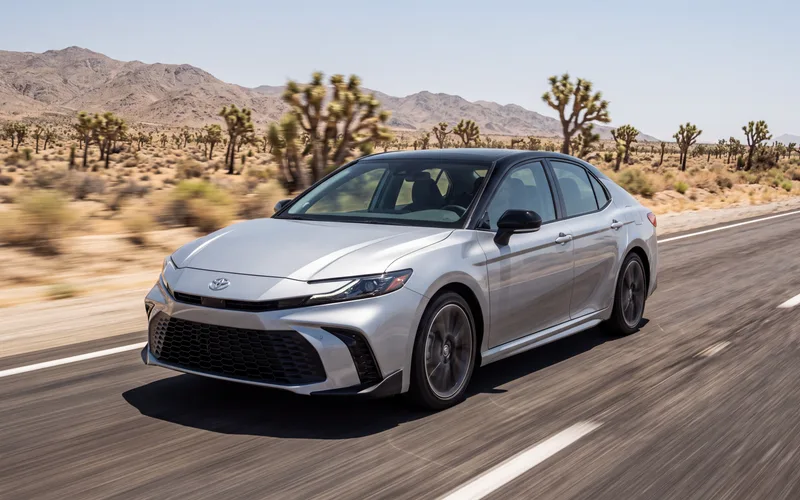 Toyota CamryMid-Size SedanBetter at: AWD availability
It's the one rival that matches the Accord's hybrid economy and reliability while adding the all-wheel drive Honda refuses to offer, plus a quieter highway cabin.
Compare 2.56C+
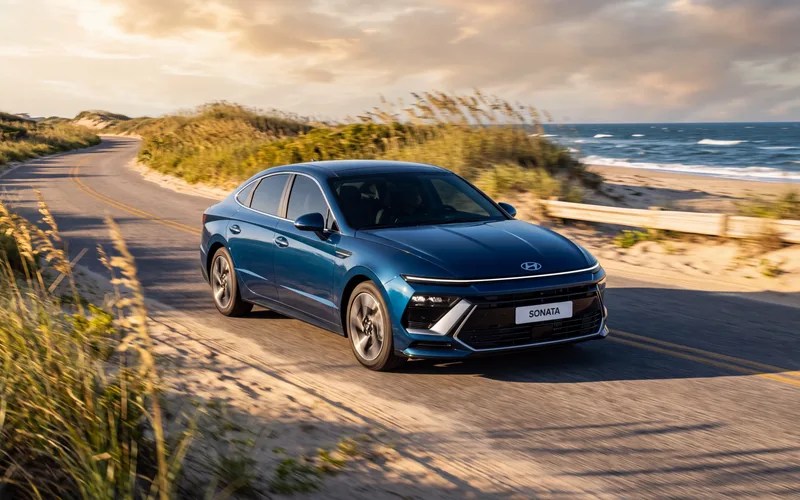 Hyundai SonataMid-Size SedanBetter at: Warranty
Far longer warranty coverage, available AWD, and a surround-view camera make it the value play if you can live with a much tighter back seat.
Compare 2.44C+
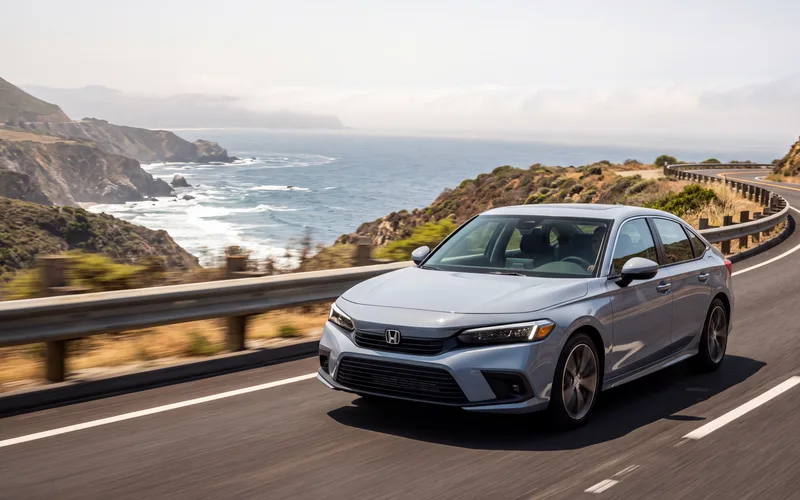 Honda CivicCompact SedanBetter at: Price
Nearly the same safety and hybrid tech in a smaller, cheaper, easier-to-park car if you rarely carry rear passengers.
CompareHow it's evolved
8 scored model years · 2019–2026
Subject scores by year
Hover or tap a score to see what moved it versus the year before. A corner mark flags a big swing.
| Year | Performance | Efficiency | Safety | Space | Cost | Reliability | Tech | Use-case | Driving | Value |
|---|---|---|---|---|---|---|---|---|---|---|
| 2026 | 44 | 91 | 77 | 78 | 63 | 82 | 70 | 61 | 73 | 77 |
| 2025 | 45 | 87 | 82 | 75 | 63 | 77 | 72 | 61 | 74 | 83 |
| 2024 | 45 | 88 | 82 | 77 | 77 | 75 | 71 | 62 | 76 | 84 |
| 2023 | 44 | 88 | 81 | 79 | 66 | 72 | 71 | 62 | 76 | 89 |
| 2022 | 44 | 59 | 77 | 76 | 61 | 76 | 55 | 61 | 75 | 81 |
| 2021 | 38 | 64 | 77 | 79 | 64 | 78 | 56 | 65 | 76 | 87 |
| 2020 | 46 | 57 | 78 | 76 | 52 | 78 | 50 | 64 | 75 | 87 |
| 2019 | 41 | 63 | 78 | 77 | 68 | 64 | 51 | 63 | 77 | 90 |
Compare two years
Best fit & conditions
Higher scores mean a better fit for that use case. Learn more about use-case fit →
Subject profile
Trims & configurations
6 trimsScores above reflect the volume trim. Per-trim specs and scores are rolling out — the full lineup:
Detailed scoring by subject
1Performance & PowertrainThe Accord's lowest-graded category.1.06D
The representative volume powertrain is the 1.5-liter turbo/CVT used across the core LX, Sport, EX, and EX-L lineup. Honda also offered a 212-hp hybrid and a substantially stronger 252-hp 2.0T for 2020.
The volume 1.5T supplies a broad 192 lb-ft plateau from 1,600 to 5,000 rpm, giving the base powertrain useful low-speed response. The optional 2.0T raises peak torque to 273 lb-ft.
The mainstream 1.5T/CVT is unusually quick for a base-engine family sedan, while the optional 2.0T reaches near-sport-sedan acceleration. The 6.6-second representative result comes from a 2020 model-year comparison test.
The 1.5T responds promptly and delivers its torque smoothly with little disruptive lag in normal driving. It is refined for a mainstream turbo four, though sustained hard acceleration can make the engine more audible and less polished than the best electrified systems.
Honda's volume CVT is exceptionally well calibrated: smooth, quick to respond, and convincing in its simulated shifts rather than droning or fumbling. The 2020 range also offered a crisp 10-speed automatic with the 2.0T and six-speed manuals on Sport trims.
Every 2020 Accord configuration is front-wheel drive; Honda offered no AWD or 4WD option at any trim or with any powertrain. This leaves buyers without the extra all-weather traction available on some midsize-sedan rivals.
The 2020 lineup is unusually broad for a mainstream sedan: an efficient 1.5T, a genuinely fast 2.0T, and a 212-hp two-motor hybrid, plus CVT, 10-speed automatic, and then-available six-speed manual choices. The only meaningful omissions are plug-in and full-electric variants.
2Efficiency & RangeMid-pack among this car's ten categories.1.80C-
The volume-oriented Sport 1.5T CVT is the representative configuration and earns 31 MPG combined. The exact 2020 lineup ranges from 26 MPG for 2.0T Sport/Touring configurations to 48 MPG for the optional hybrid.
The representative Sport 1.5T CVT is EPA-rated at 29 MPG city. Choosing the 2020 Accord Hybrid raises the city rating substantially to 48 MPG.
The representative Sport 1.5T CVT earns 35 MPG highway. The 2020 hybrid is rated at 47 MPG highway, while the gas LX, EX, and EX-L 1.5T CVT trims reach 38 MPG.
Multiplying Honda's 14.8-gallon tank by the representative trim's 31 MPG combined rating gives about 459 miles. The 12.8-gallon, 48-MPG hybrid works out to about 614 miles under the same combined-rating method.
EPA-derived listings put the representative 31-MPG Sport 1.5T CVT at about $1,900 per year on regular gasoline under the standard 15,000-mile assumption. This figure is fuel-price-sensitive and therefore less durable than the official MPG rating.
Every 2020 Accord powertrain, including both turbocharged gas engines and the hybrid, runs on widely available regular unleaded. There is no premium-fuel requirement or charging dependency.
3SafetyOne of the Accord's strongest categories.3.29B+
The 2020 Accord earned the maximum five-star NHTSA overall safety rating.
The 2020 Accord was an IIHS Top Safety Pick when equipped with specific headlights and earned Good ratings in every crashworthiness test used for its 2020 award. It missed Top Safety Pick+ because qualifying headlights were not standard across the lineup.
Honda Sensing provides the core suite on every trim, including AEB, road-departure mitigation, adaptive cruise, and lane keeping. Blind-spot information and rear cross-traffic monitoring are absent from LX, base Hybrid, and most Sport configurations, keeping it short of a comprehensive all-trim suite.
The standard system was excellent in vehicle tests and broadly effective in daytime pedestrian tests, but it failed to slow for a crossing child in the 25-mph test. IIHS did not publish a nighttime pedestrian rating for this model year.
Blind-spot information with cross-traffic monitoring is standard on the EX, EX-L, and Touring and included with the Sport 2.0T, but unavailable on several lower-volume configurations. The system is alert-oriented and offers neither active blind-spot intervention nor rear automatic braking or safe-exit assistance.
LKAS and road-departure mitigation are standard and provide useful steering support, but this generation's system can wander or ping-pong and requires continuous driver supervision. It is functional lane support rather than a polished modern hands-free centering system.
Adaptive cruise is standard, and automatic-transmission cars add low-speed follow for stop-and-go usefulness. It generally works well but can track vehicles in neighboring lanes through curves, and manual-transmission versions lack low-speed follow.
Honda offered no factory hands-free highway-driving system on the 2020 Accord. ACC and LKAS require the driver to remain attentive and keep control of the vehicle.
Most trims, including the volume configurations, receive IIHS Acceptable-rated LED low beams with automatic high beams. Counterintuitively, the full-LED Touring lamps are Marginal because of glare and weaker illumination in some directions, so no configuration earns Good.
The airy cabin and sensible glass area provide above-average natural sightlines, supplemented by a standard multi-angle rearview camera. There is no surround-view camera, and the low roof and seating position impose some compromises when entering and looking rearward.
IIHS awards its best Good+ rating: two complete outboard LATCH positions plus a center tether and borrowable lower anchors. The anchors are close to the surface under marked flaps, and the roomy rear seat accommodates bulky child seats well.
4Space & ComfortGrades above the middle of the scale.3.17B
Every 2020 Accord sedan configuration seats five in two rows.
The representative 1.5T configuration without a moonroof has generous 39.5-inch front headroom; moonroof-equipped 2.0T Sport, EX, EX-L, and Touring versions have 37.5 inches.
Front legroom is a competitive 42.3 inches on every gas and hybrid trim.
The volume configuration offers 37.3 inches of rear headroom, with only a 0.1-inch reduction on moonroof-equipped trims; taller riders may still notice the sloping roofline.
The 40.4-inch rear-legroom figure is outstanding for a mainstream midsize sedan and is identical across the lineup.
The large 16.7-cu-ft trunk is shared by every trim, including the hybrid, and ranks near the top of the midsize-sedan class.
Everyday storage is competitive, with a large center-console bin, door pockets, sunglasses holder, two 12-volt outlets, and a folding rear seat; it lacks a genuinely novel solution, and the LX rear seat is one-piece rather than 60/40 split.
Both rows are roomy and supportive enough for long trips, with a 12-way power driver's seat and lumbar support from Sport upward. The front cushions are somewhat lightly padded, and power passenger adjustment is limited to EX-L and Touring.
The Accord combines disciplined body control with good impact absorption and is firm without becoming harsh. Rough pavement can make the standard suspension feel busy, while Touring's adaptive dampers deliver a class-leading improvement.
Active Noise Cancellation is fitted across the 2020 lineup, and traffic and wind noise are well suppressed, but noticeable highway tire noise keeps the cabin from class-leading quietness.
Dual-zone automatic climate control is standard, heated front seats arrive on EX and most 2.0T models, and Touring adds ventilated fronts and heated rear outboard seats. These are strong available amenities, though the volume 1.5T trims lack seat heating and no heated steering wheel is listed for the US model.
5Cost of OwnershipOne of the Accord's weakest categories.1.46D
The entry 2020 Accord was the LX 1.5T CVT. This is the pre-facelift tenth-generation car; Wikipedia dates the minor facelift to the 2021 model year.
The broadly popular Sport 1.5T CVT is used as the representative volume configuration; it sits between the base LX and more expensive EX/EX-L trims. Honda published the Sport with either a manual or CVT at the same delivered MSRP.
Edmunds' trim-specific projection for the representative Sport totals $4,668 in maintenance and $2,711 in repairs over five years at 15,000 miles annually. The estimate includes scheduled and unscheduled maintenance, including wear items and tires.
The year- and trim-specific ALG forecast supplied in Honda's 2020 sales material is used rather than a nameplate-wide estimate for newer Accords. It projects the entry LX at 39% retention after five years.
Honda's basic warranty matches the minimum of the sedan normalization band and the mainstream-industry norm for this model year.
The standard powertrain warranty is 5 years/60,000 miles; hybrid versions add separate 8-year/100,000-mile high-voltage-battery capacity coverage. The scored value follows the rubric's powertrain-warranty measure for the representative gas trim.
Honda included no complimentary scheduled-maintenance plan on the 2020 Accord, but did provide 24-hour roadside assistance throughout the 3-year/36,000-mile basic-warranty term. That earns the bottom of the rubric's basic-roadside-only band.
$27,460 volume-trim price minus its estimated resale value after 5 years (39% retained, or about $10,709) leaves about $16,751 in depreciation. Add the projected $7,379 in 5-year maintenance and repairs, and owning this vehicle for 5 years costs about $24,130 in total.
6Reliability & QualityOne of the Accord's strongest categories.3.32B+
Owner-survey and repair-frequency evidence places the 2020 Accord above the typical same-year midsize sedan, though J.D. Power's quality result is merely average rather than elite. This is the pre-facelift third model year of the tenth generation, not the refreshed 2021 car.
Honda has a strong long-term record and improved materially in Consumer Reports' 2020 ranking, but its multi-year study performance has not been consistently top-five. That supports an upper-mid-pack rather than Toyota/Lexus-level score.
Recall volume is not extraordinary for a mass-market car, but the issues are more consequential than minor trim fixes: low-pressure fuel-pump failure can stall the engine, BCM faults can disable visibility-related equipment, and some hybrids later required control-software remediation. These repeated safety campaigns keep the score near the bottom of the average band.
The 2.0T/10-speed and Honda two-motor hybrid have generally solid records, but the volume 1.5T/CVT is less proven than Honda's older naturally aspirated combinations and has scattered long-term injector/head-gasket concerns. The fuel-pump recall also prevents an unequivocally high durability rating.
The Accord uses abundant soft-touch surfaces, crisp physical controls, and trim quality that reviewers considered among the midsize class leaders. Lower trims remain plainly finished, but material quality is unusually strong for the price.
Contemporary reviews consistently describe tight, upscale assembly and excellent cabin fit and finish. Some owner criticism centers on audio/driver-assistance behavior and road noise rather than widespread rattles or panel-alignment faults.
Honda's mainstream nationwide dealer footprint makes routine and recall service readily accessible across the United States. Individual dealer experiences vary, so the network earns an excellent rather than near-perfect score.
A very high-volume domestic-market Honda has abundant OEM and aftermarket parts, broad independent-shop familiarity, and substantially below-average repair costs. Hybrid-specific electronics can be dearer, but they do not define typical ownership expense.
7Technology & InfotainmentOne of the Accord's weakest categories.1.34D
The volume-oriented Sport has Honda's 8-inch Display Audio touchscreen, while LX and the base Hybrid use a smaller 7-inch color screen.
The 8-inch system is quick, attractive and intuitive, and its physical volume and tuning knobs plus shortcut keys make it unusually approachable. Some deeper functions still involve a learning curve, and the LX system is more basic.
The 2020 model offers only wired Apple CarPlay and Android Auto, and even those are absent from LX and the base Hybrid. Wireless projection arrived with the 2021 facelift and therefore does not count here.
Crisp, effective native navigation with traffic and voice recognition is available only on Touring, and its voice commands require rigid syntax. Most trims instead rely on wired phone projection where fitted.
Sport and EX receive an adequate 180-watt eight-speaker setup, while EX-L and Touring upgrade to a 450-watt ten-speaker system with subwoofer. Reviewers found the premium system loud and clean but sonically unexceptional, and no branded premium option is offered.
A clear, configurable digital information display occupies the left side of the cluster, but the right-side speedometer remains analog, so this is a useful partial-digital solution rather than a full digital cockpit.
Equipped Display Audio systems can download firmware updates over Wi-Fi, but the capability is confined to infotainment rather than whole-vehicle software or feature-adding updates.
HondaLink is fitted from Sport upward, but the connected subscription-service tier is Touring-only. Rich app-based remote access is therefore unavailable to the volume trim and gated at the very top of the range.
Sport provides just one 2.5-amp front USB-A data/charging port; EX and above add a second in the center console. Wireless charging is Touring-only, with no USB-C or household AC outlet offered.
Push-button start and remote entry are standard, but proximity Smart Entry and remote engine start are generally EX-and-up features; Sport receives them only with the 2.0T. There is no phone-as-key.
Every trim has a multi-angle rear camera with dynamic guidelines, but front/rear parking sensors are restricted to Touring. No surround-view camera or automated parking system is offered.
A useful head-up display is available, but only on the range-topping Touring rather than on volume trims.
8Use-Case FitMid-pack among this car's ten categories.2.33C+
Long rear doors, exceptional 40.4-inch rear legroom, easily reached anchors, and a wide 16.7-cu-ft trunk make daily child-seat and stroller duty unusually easy for a sedan. The sloping roof can make taller occupants duck, and the trunk opening remains less versatile than a liftgate.
Five-star NHTSA performance, an IIHS Top Safety Pick award, Good crashworthiness results, and standard AEB, adaptive cruise, lane keeping, and road-departure mitigation provide excellent protection even on affordable trims. It falls short of the top band because blind-spot monitoring is absent on LX, base Hybrid, and Sport 1.5T, no rear-occupant reminder is listed, and qualifying headlights are not universal.
A genuinely spacious rear bench, supportive seats, dual-zone climate, and the full 16.7-cu-ft trunk even in the hybrid make four-person trips easy. Highway tire noise, modest rear-seat amenities on volume trims, and limited rear headroom for tall adults prevent benchmark status.
Good visibility, intuitive physical controls, polished road manners, and standard adaptive cruise make the Accord a low-fatigue commuter; automatic versions add low-speed follow for stop-and-go traffic. The Sport trim's 19-inch tires can feel busy on rough pavement, and lower trims lack blind-spot monitoring.
The representative Sport 1.5T CVT returns a strong 31 MPG combined on regular fuel, while the no-compromise hybrid reaches an exceptional 48 MPG and retains the full trunk. Common tire sizes and mainstream Honda service costs further support economical commuting, though real-world 1.5T economy can trail its EPA figure.
The standard multi-angle rear camera, open sightlines, and 38.1-foot turning diameter keep this large sedan manageable. Its 192.2-inch length and lack of a surround-view camera add care in tight spaces, while parking sensors are Touring-only.
The Accord has useful passenger and trunk capacity but no cargo bed, AWD, or published U.S. tow rating, so it is not a meaningful work vehicle. Folding rear seatbacks accommodate occasional long tools, but payload and access are ordinary sedan fare.
The mainstream cloth-trimmed cabin, conventional front-drive chassis, and long Accord fleet reputation should tolerate ordinary high-mileage service better than luxury sedans. Turbocharged engines, CVT/eCVT hardware, low-profile Sport tires, and non-washable sedan trim are not designed for sustained jobsite abuse.
There is no bed, factory work-body ecosystem, onboard AC power, washable cargo area, or work-focused tie-down system. Two 12-volt outlets and folding rear seats are useful but no more than basic passenger-car provisions.
Supportive seating, controlled ride, abundant passenger space, standard adaptive cruise, and about 459 miles of combined-rated range make the Accord an excellent mile-eater; the hybrid calculates to roughly 614 miles. Tire noise and occasional adaptive-cruise tracking quirks keep it below the very best long-haul cars.
The front-drive, low-slung sedan is fundamentally pavement-oriented, with no AWD option or published U.S. tow rating for recreational trailers. Aftermarket roof and hitch racks can carry bikes, and ordinary maintained gravel roads are feasible, but the factory package offers little adventure capability.
The wide 16.7-cu-ft trunk is exceptional for a sedan and the 60/40 rear seat on most trims extends capacity for long items without sacrificing both rear positions. Bulky gear is still limited by the decklid opening, LX has a one-piece folding seat, and there is no hatch, factory roof-rail system, or underfloor cargo solution.
9Driving ExperienceGrades above the middle of the scale.3.10B
The volume 1.5T Accord has unusually disciplined body control and eager, stable turn-in for a mainstream mid-size sedan while preserving a balanced ride. It is one of the segment's dynamic benchmarks, though the 19-inch Sport and adaptive-damper Touring configurations feel somewhat different at the limit.
Steering is accurate, predictable, and well integrated with the agile chassis, but its light weighting and limited road feedback keep it below the genuinely communicative top band. The Sport/2.0T's quicker steering ratio does not represent the volume configuration.
The gas Accord delivers natural pedal action, straight and confidence-inspiring stops, and average-class stopping distance rather than standout ultimate performance. The hybrid blends regeneration naturally, but one year-specific test recorded unusually long emergency stops, so it is a meaningful weaker outlier.
The volume 192-hp 1.5T/CVT responds promptly and smoothly in ordinary driving, while the available 2.0T/10-speed is notably quick and nearly seamless. The hybrid adds strong low-speed response and generally smooth transitions, although it fades at higher speeds.
The turbo engines are smooth and the cabin is calm in normal use, but this Accord does not deliver near-luxury isolation. Highway tire noise is the larger complaint, while the powertrain itself is audible but generally inoffensive under load.
The volume configuration's 38.1-ft diameter is near the wide end of the sedan normalization band, so tight parking maneuvers are not an Accord strength. Sport and 2.0T configurations can require still more room.
A broad, low-set driving position, clear physical climate controls, and an intuitive cabin make the Accord easy to operate and comfortable for most drivers. High, wide door sills, a possible knee contact point for taller drivers, and unintuitive steering-wheel controls prevent a top-band score.
Even the volume Accord is responsive, stable, and unusually enjoyable for a family sedan; the available manual and muscular 2.0T raise the nameplate's enthusiast appeal further. Muted steering feedback stops it from feeling like a true sport sedan.
10Value & Market PositionThe Accord's best-graded category.3.94A+
The $24,975 LX included 192 hp, alloy wheels, LED low beams, dual-zone climate control and the full Honda Sensing driver-assistance suite, a strong safety-and-mechanical foundation for the price. It misses the top band because the base LX used a basic 7-inch non-touch display and lacked Apple CarPlay/Android Auto, blind-spot monitoring, heated seats and a power driver's seat; those conveniences arrived on Sport or EX.
Few rivals combined this much space, safety, efficiency and driving polish at roughly $25,000, and buyers could add a genuinely quick 252-hp 2.0T or 48-mpg hybrid without leaving the mainstream price band. Class-leading five-year ownership cost and resale recognition make the value case extend beyond the showroom price.
The 2020 range stretched from affordable LX through Sport, EX, EX-L and Touring, with conventional gas and four hybrid grades, two turbo engines, three automatic transmission types and rare six-speed-manual availability. Front-wheel drive was the only meaningful configuration gap, but otherwise the lineup covered economy, efficiency, enthusiast and near-luxury buyers unusually well.
The Accord remained one of America's dominant midsize sedans: 267,567 U.S. sales in 2019 placed it second only to Camry, and it held roughly one-fifth of the segment through pandemic-disrupted 2020. Its declining raw volume prevents a near-perfect score, but acceptance was clearly leader-tier rather than merely mid-pack.
Honda and the Accord carried unusually strong mainstream trust, loyalty and resale equity, while the tenth generation added an enthusiast halo through excellent handling and the manual 2.0T. It is beloved and respected rather than a luxury-status purchase, which keeps the score short of the very top.
The Accord generally did not need desperation pricing, but 2020 buyers could find worthwhile subsidized financing and targeted loyalty support, with stronger clearance discounts as the 2021 refresh approached. Offers varied by region and timing, so the buyer benefit was meaningful but not uniformly exceptional.
The 2020 Accord was year three of the tenth generation: still modern in platform, turbo and hybrid technology, but no longer newly redesigned. Honda says it carried over virtually unchanged, and the minor facelift arriving for 2021 created modest near-term refresh risk rather than full-redesign obsolescence.
The 2020 Accord was the consensus class benchmark: a Car and Driver 10Best selection and comparison-test winner, Edmunds' Top Rated Sedan, and KBB's Midsize Car Best Buy. That combination of repeat major awards and direct victory over the core midsize field is about as strong as critical reception gets.